Archive

Yearly Archives: 2020

‘The architectural production of India’s everyday modernism: middle-class housing in Pune, 1960-1980’ in Architecture Beyond Europe Journal, no.16, 2019.

Sarah Melsens, Inge Bertels et Amit Srivastava

img-5

Architects United, Freestanding Bungalow for Mrs. Shroff, Pune, 1966

The large-scale appropriation of modernist architectural features in everyday housing projects in postcolonial India is remarkable. This article examines how regional architects adapted their engagement with architectural modernism to the evolving circumstances of architectural production within the context of the developing world. Drawing on Pierre Bourdieu’s “field theory”, it presents a detailed case study of two decades of residential work by Architects United, a medium-scale architectural practice founded in the Indian city of Pune in 1961. While the architects’ earliest projects demonstrated an opportunity and desire for architectural innovation, this approach became increasingly restricted as new patterns for housing provision emerged, resulting in a more subdued and hybrid form of modernist architecture. The paper makes use of the architects’ previously undisclosed archive and oral history to demonstrate that these architectural adaptations were the indirect result of governance practices and societal change, particularly the government’s stimulation of co-operative housing initiatives and the emergence of a postcolonial middle class with distinct housing expectations. As such, this “peripheral” case exposes some of the processes that have been overlooked in the rhetoric of Architectural Modernism as a Western import in India, which is primarily centered around the discussion of exceptional public building commissions by “global experts” or their Indian disciples. The paper further highlights the need to investigate the processes of architectural production, in addition to the built product itself, so that a pluralistic rather than romanticized understanding of architectural practice may emerge.

The full article is freely available here: https://doi.org/10.4000/abe.7011
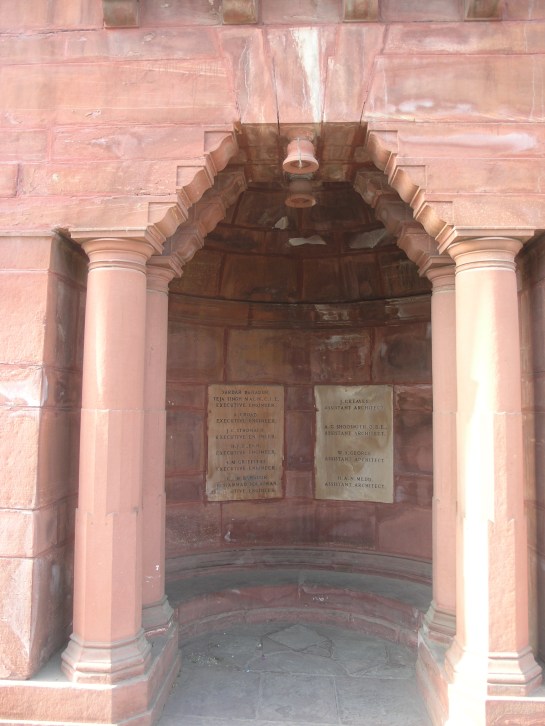
Herbert Baker, New Delhi and the reception of the classical tradition

by Soumyen Bandyopadhyay, Sagar Chauhan, in The Routledge Handbook on the Reception of Classical Architecture: https://doi.org/10.4324/9781315171104 

This chapter assesses the work of the British architect Sir Herbert Baker (1862–1946) for the imperial capital of New Delhi, a role he shared with Sir Edwin Lutyens (1869–1944) very much as an equal partner over more than a decade. This assessment is undertaken in the context of the reception and rereading of the classical project and the wider classical tradition among not only the imperialists, but also the colonised in India.

Herbert Baker: corbelled arch in New Delhi

corbelled arch in New Delhi

The reception of the classical tradition in India assumed a character distinct from other British colonies as a result of a long-standing history of interaction with the classical world, as well as the sheer immensity of its diverse historical, literary and material culture traditions. With the consolidation of the British Empire in India, European classical traditions assumed attributes and resonances they did not possess in Europe.

Infrastructure between Statehood and Selfhood: The Trans-African Highway

Kenny Cupers, Prita Meier


Focusing on the 1960s–70s project to build a trans-African highway network, Infrastructure between Statehood and Selfhood: The Trans-African Highway argues for the need to develop a more dialectical understanding of the relationship between people and infrastructure than current architectural and urban scholarship affords. As Kenny Cupers and Prita Meier describe, African leaders imagined infrastructure as a vehicle of Pan-African freedom, unity, and development, but the construction of the Trans-African Highway relied on expertise and funding from former colonial overlords. Based on archival research, visual analysis, and ethnographic fieldwork in Kenya, this article examines the highway’s imaginaries of decolonization to show how infrastructure was both the business of statehood and a means of selfhood.

Map of the Trans-African Highway project, late 1970s (Rolf Hofmeier, “Die Transafrikastraßen: Stand der Planung und Realisierung,” Africa Spectrum 14, no. 1 [1979], 35).

Map of the Trans-African Highway project, late 1970s (Rolf Hofmeier, “Die Transafrikastraßen: Stand der Planung und Realisierung,” Africa Spectrum 14, no. 1 [1979], 35).

From the automobile and the tarmac road to the aesthetics and practices of mobility these fostered, infrastructure was a vehicle for the production of subjectivity in postindependence Kenya. This new selfhood, future oriented and on the move, was both victim and agent of commodification.