The Architectural History of Postcolonial West African Universities
Adefola Toye is a PhD student at the University of Liverpool, co-supervised with The National Archives through a Collaborative Doctoral Partnership scheme. Her research examines university architecture in mid-twentieth-century Nigeria, tracing how campus design and construction shifted as political control transferred from colonial to independent governments.
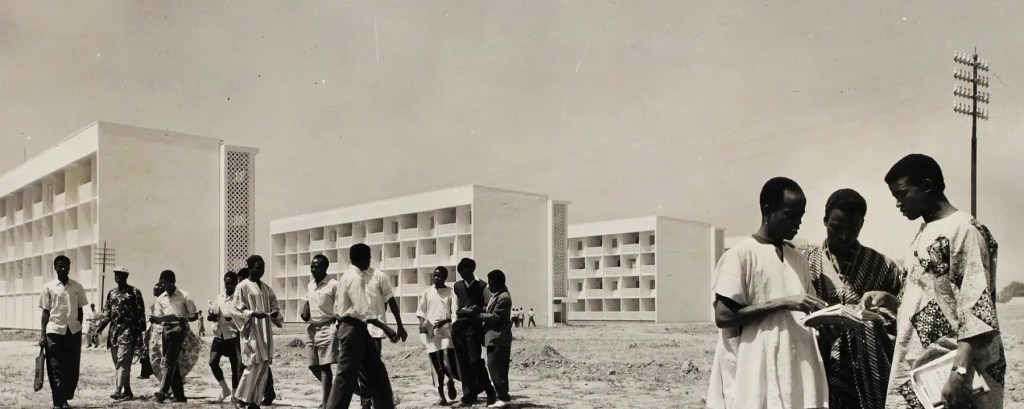
The post-war period saw a wave of university building across British West Africa, funded through Colonial Development and Welfare Acts and overseen by the Inter-University Council for Higher Education in the Colonies. University College Ibadan, designed by Maxwell Fry and Jane Drew, is the most widely studied example. But Adefola’s research moves beyond Ibadan to less well-known institutions: the Nigerian College of Art, Science and Technology (1951) and the four universities established immediately after independence in 1960, including Ahmadu Bello University, Obafemi Awolowo University, and the University of Lagos.
In this post for The National Archives, Adefola discusses how she has used colonial records at Kew to study these institutions and their built environments. She also addresses a problem central to any archival study of this period. As independence approached, British oversight diminished and documentation thinned out. The Colonial Office files become sparser, and the story can only be reconstructed by working across multiple archives and geographies, from the National Archives of Nigeria to the Bodleian Library in Oxford and Michigan State University. Her argument is clear: no single archive can sustain a full account of how these campuses were planned, negotiated, and built. The research demands a multi-archival and transnational approach.
Congratulations to Adefola on successfully defending her PhD on 8th May 2026.
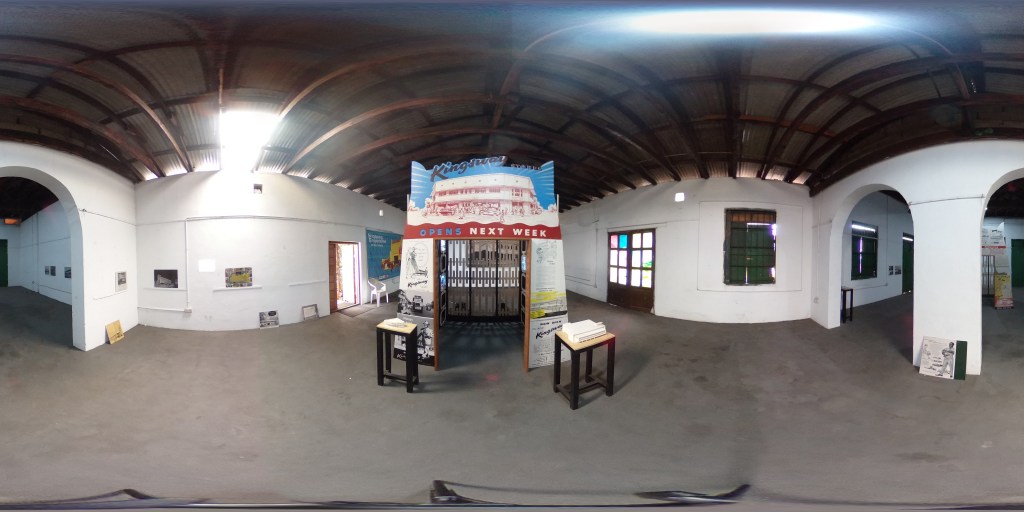
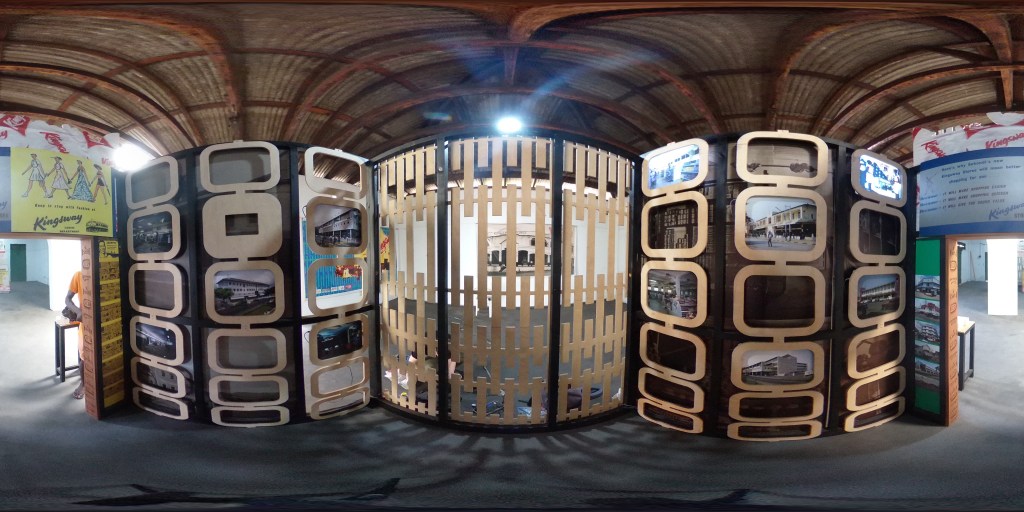
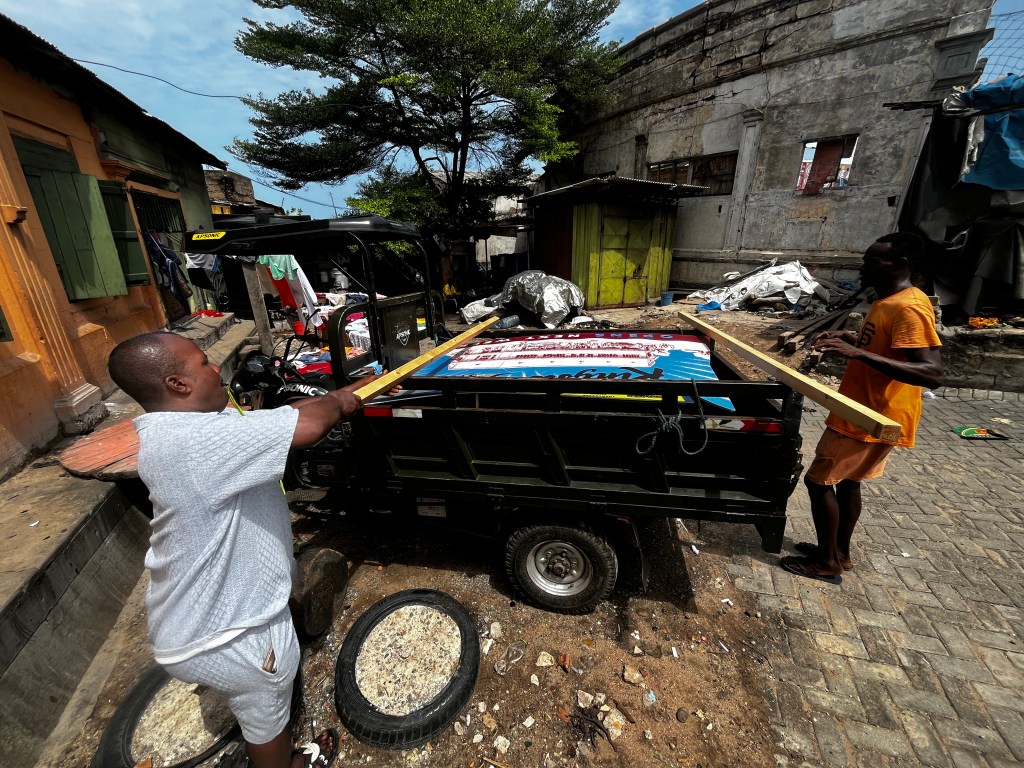
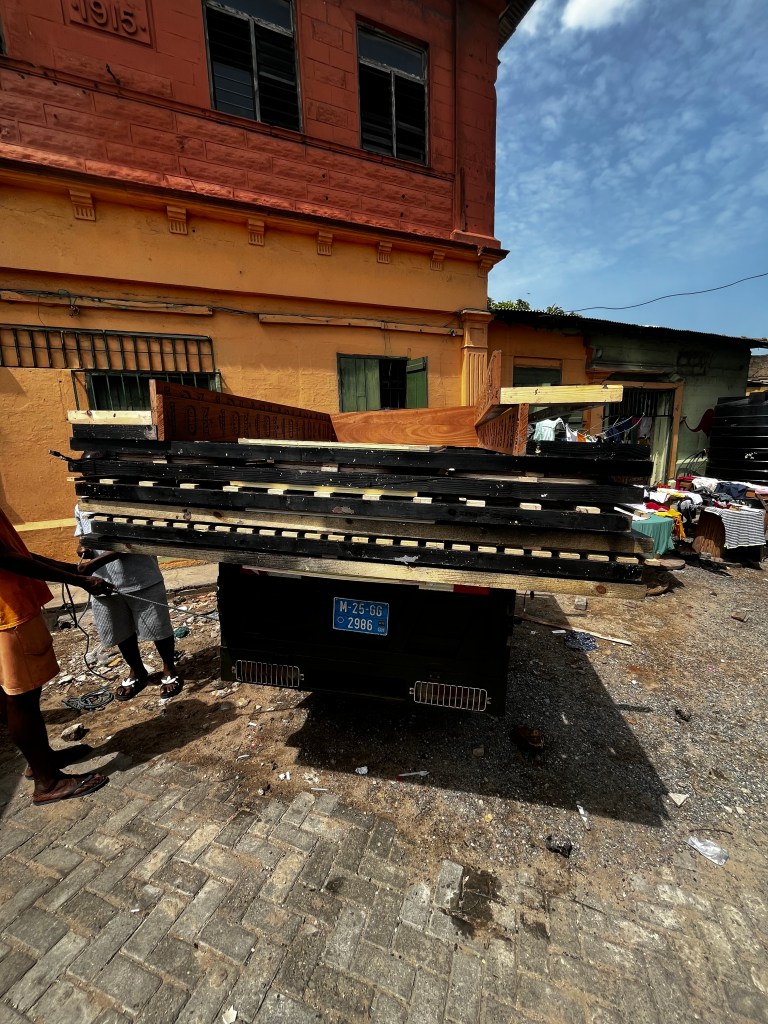
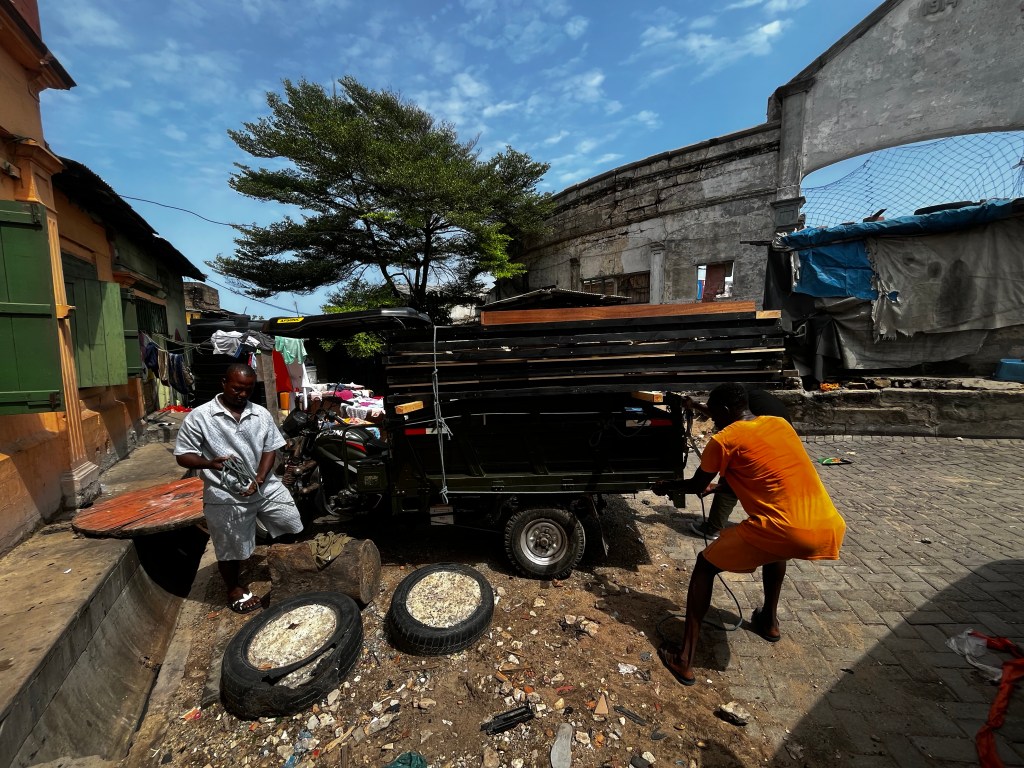
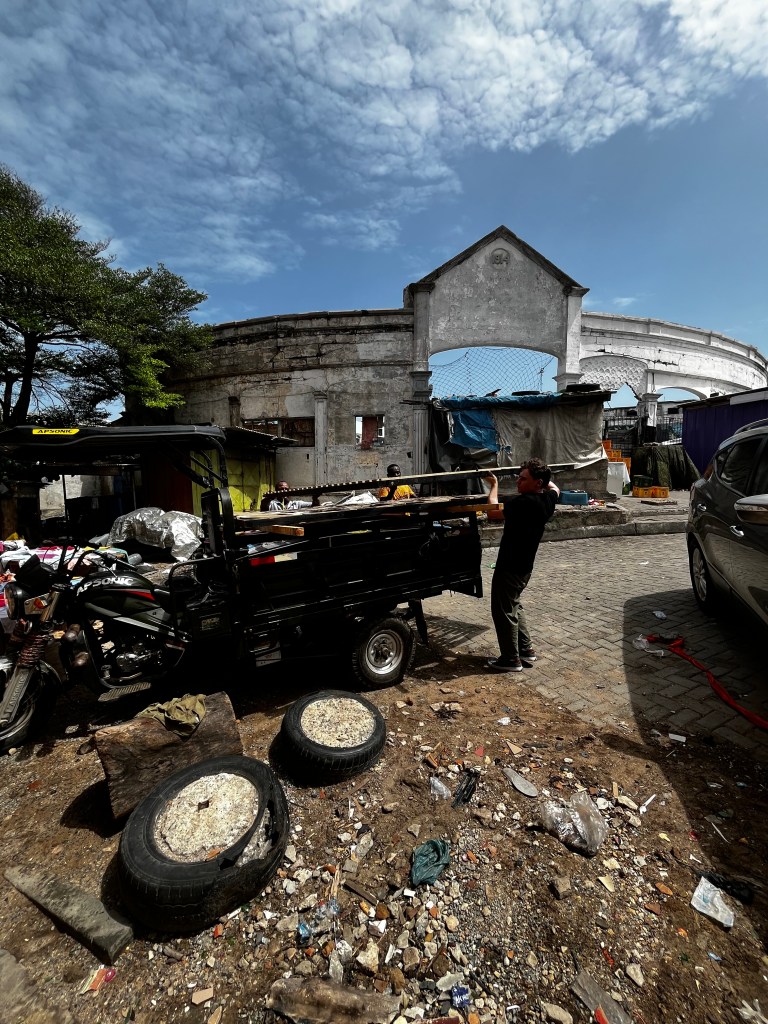
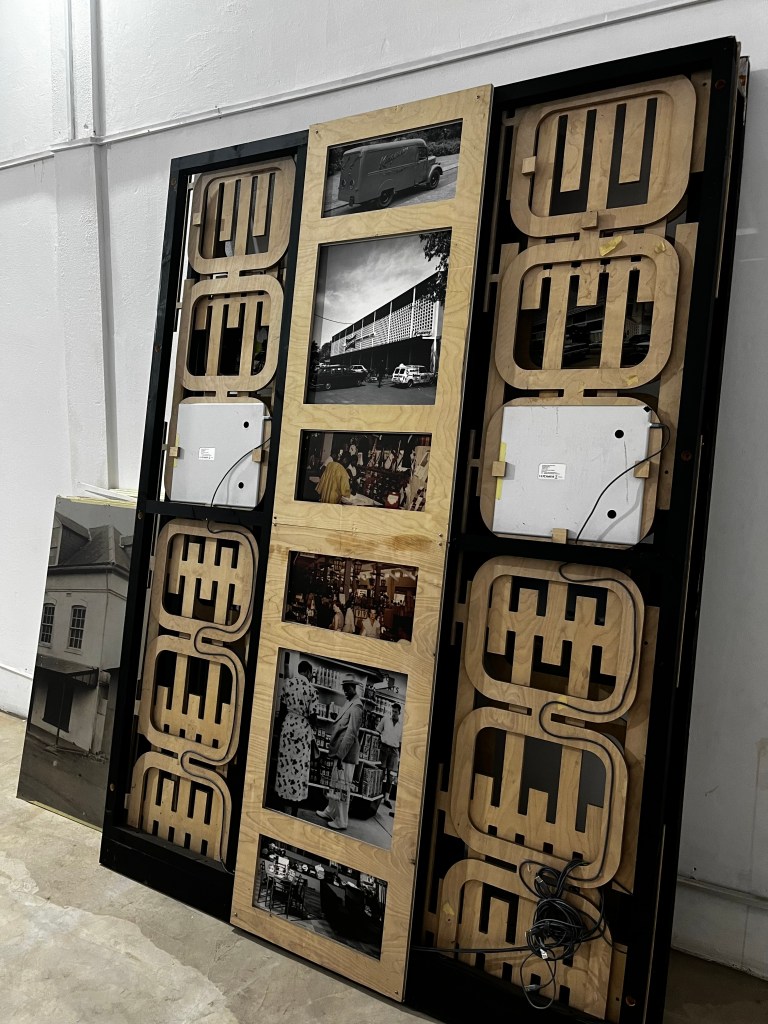
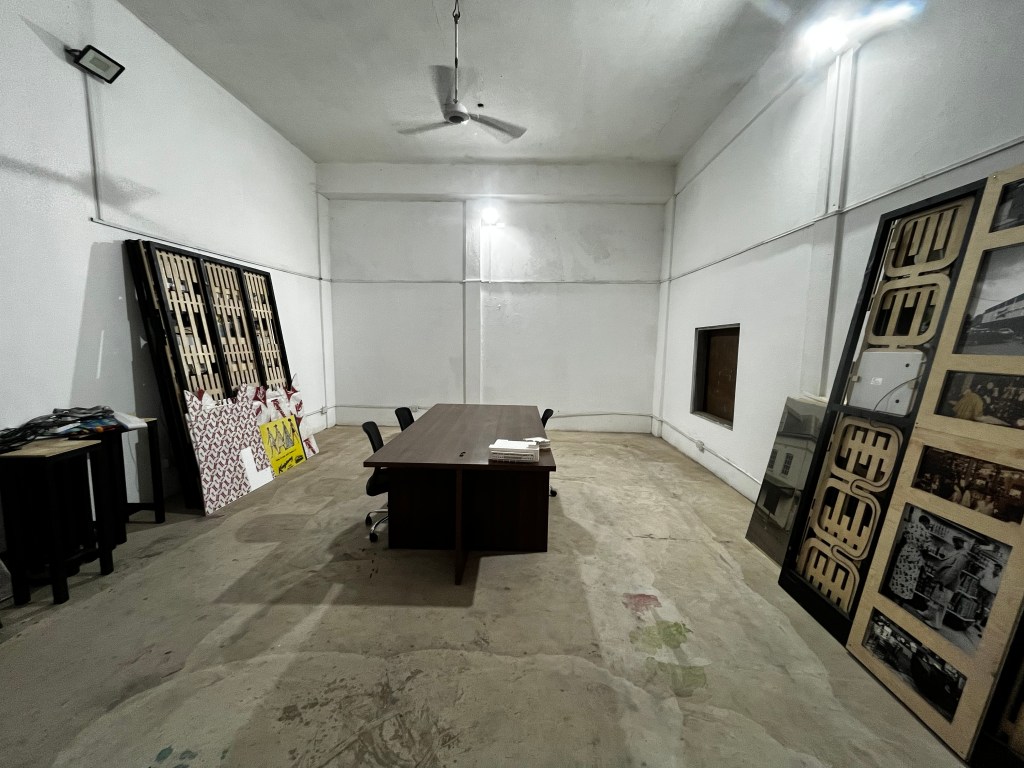
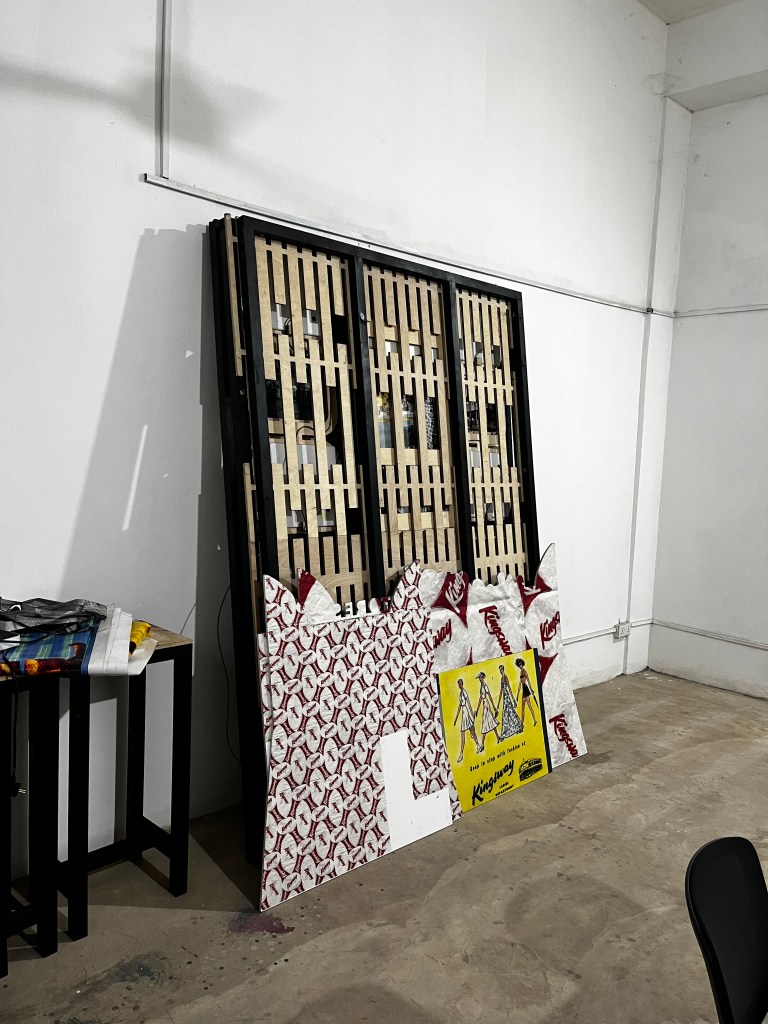
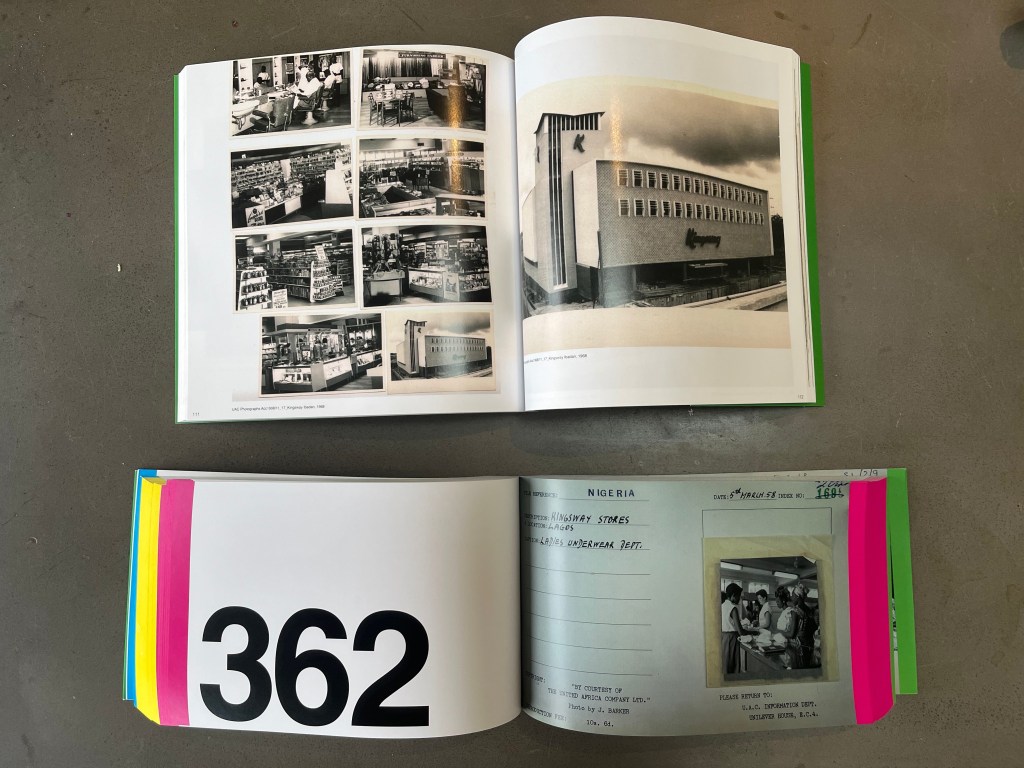
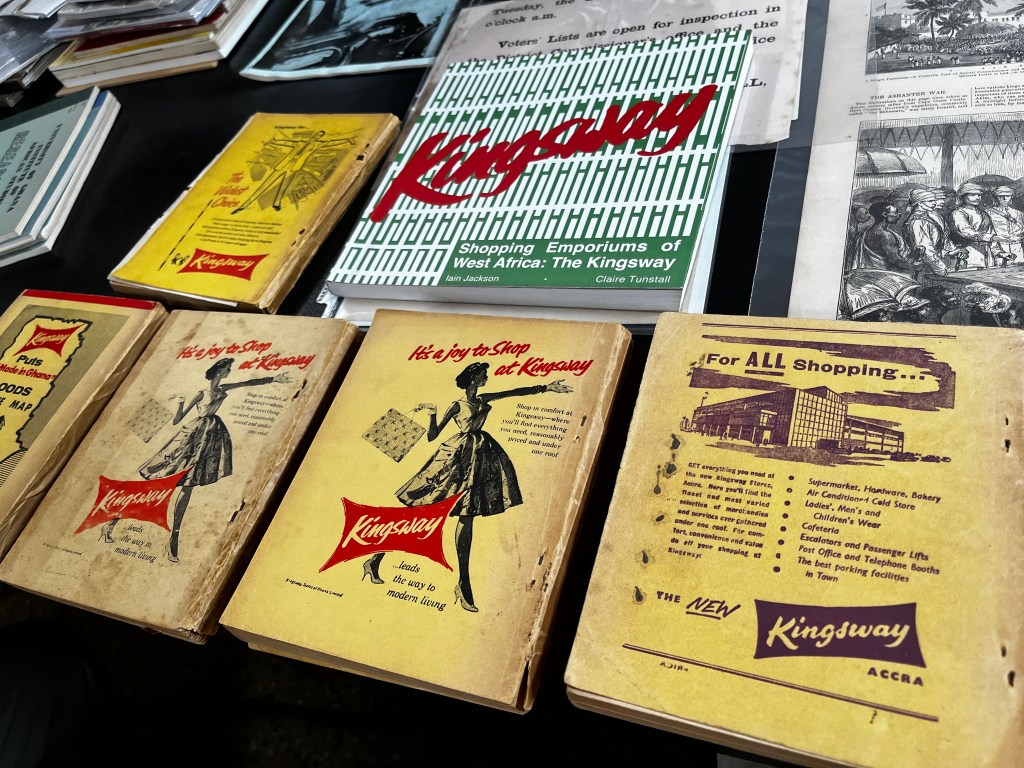
We returned to Accra to take down the Kingsway Stores exhibition. It’s currently in storage at the emerging and wonderful Si Hene Foundation. The future of the exhibition is quite exciting – the details are still being resolved, but it’s certainly going to travel around Ghana and onto Nigeria (details to follow – and we’ll post updates here). Si Hene has it’s own collection of Kingsway archive material too – so it’s the ideal spot. The exhibition was dismantled and transported on the motorbike-truck.
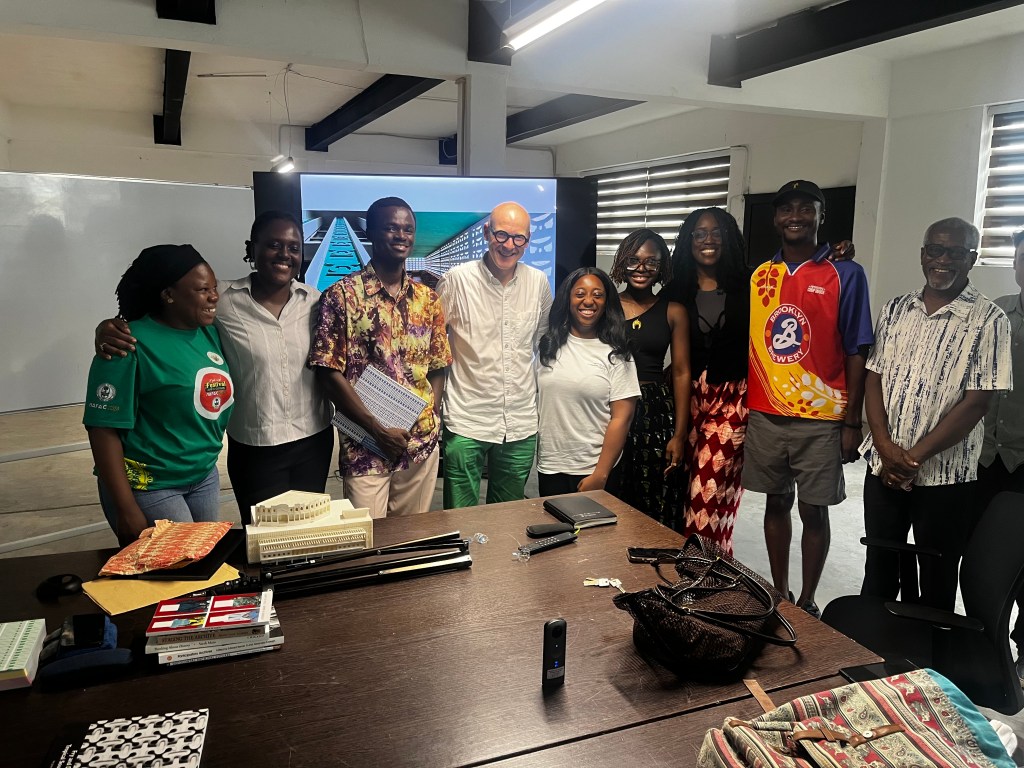
I gave a talk to the archivist-curator-artists at Si Hene on our work, methods, practice and community engagement. This was great fun and the quality of the projects being produced here is astonishing.
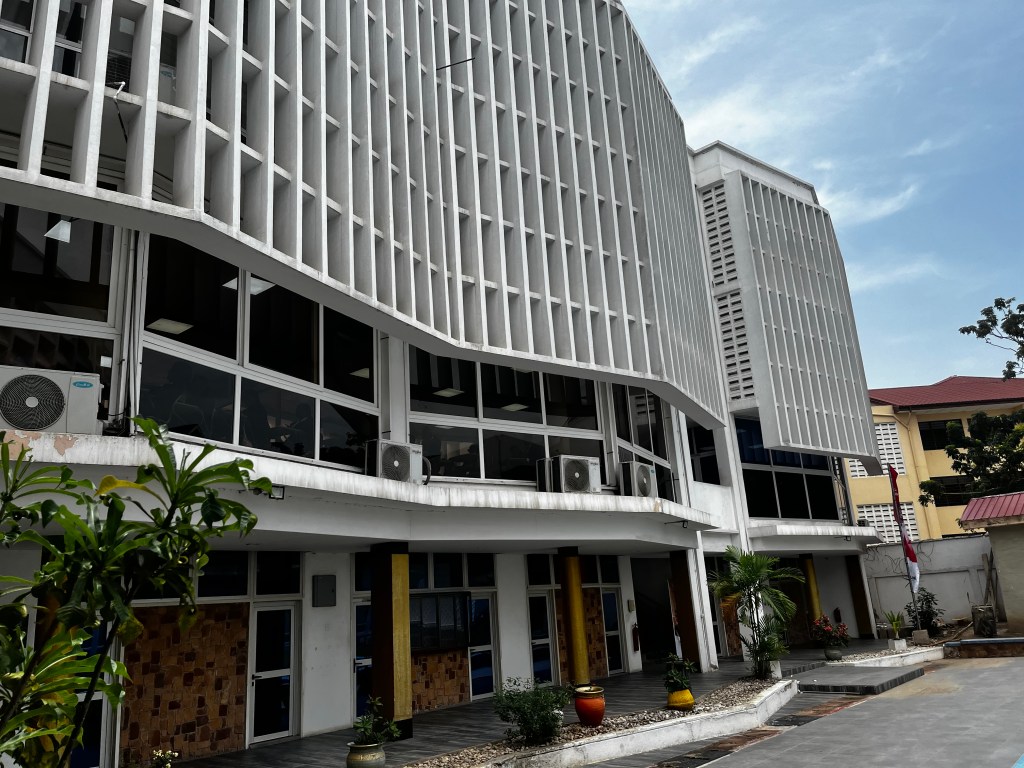
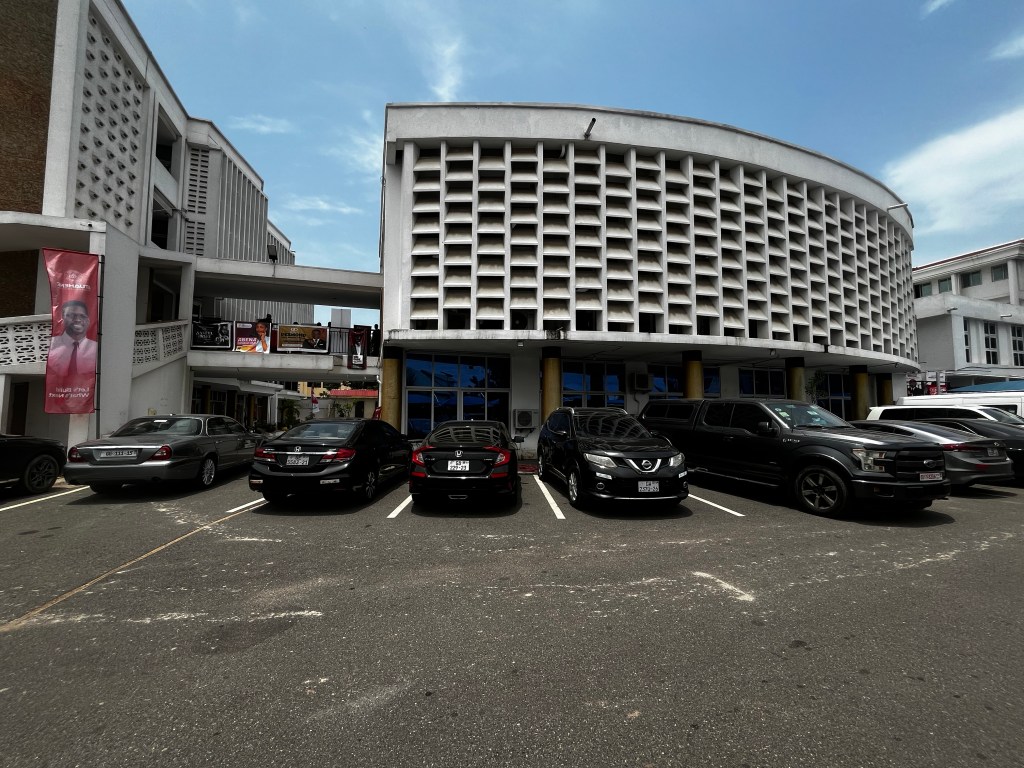
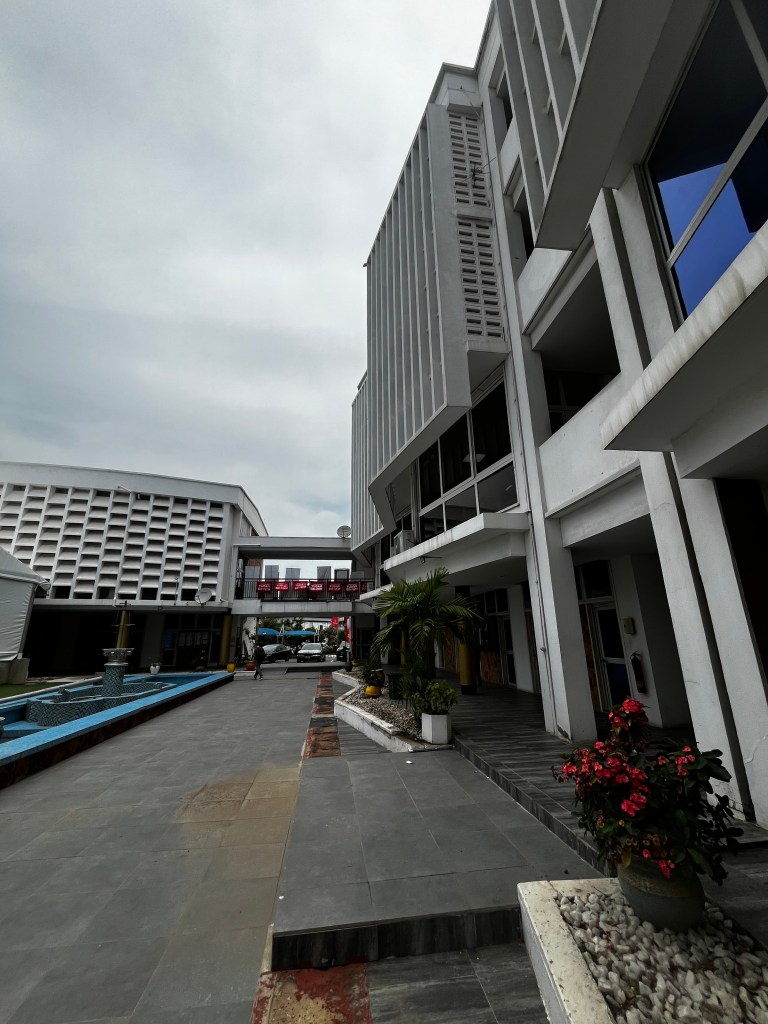
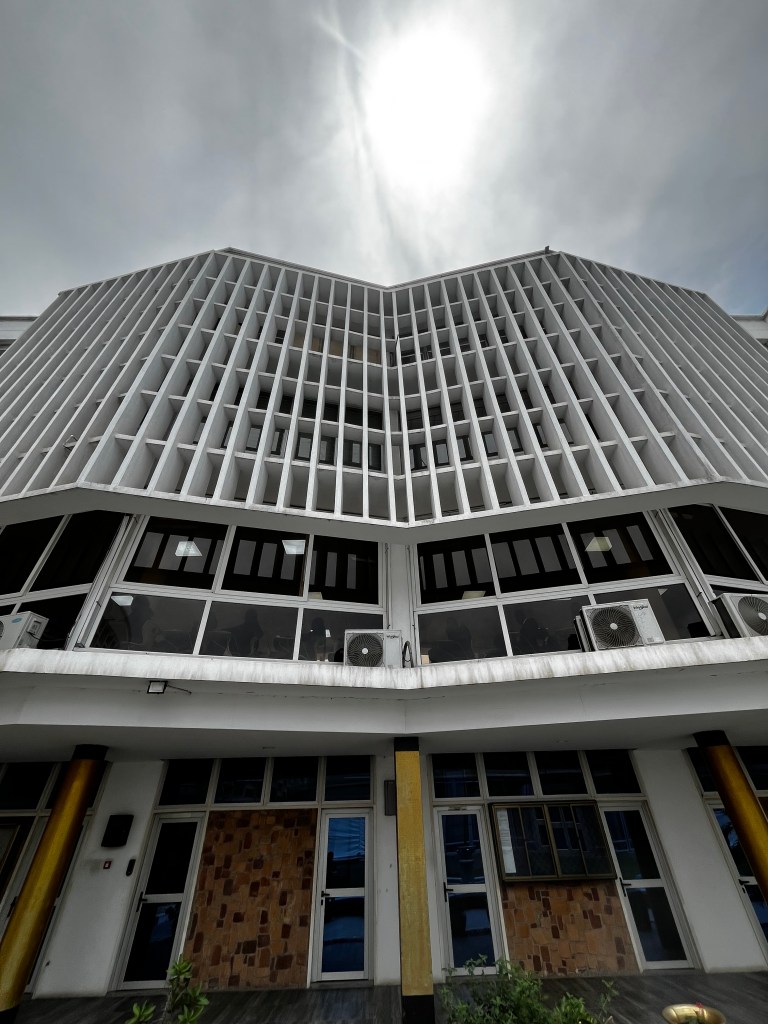
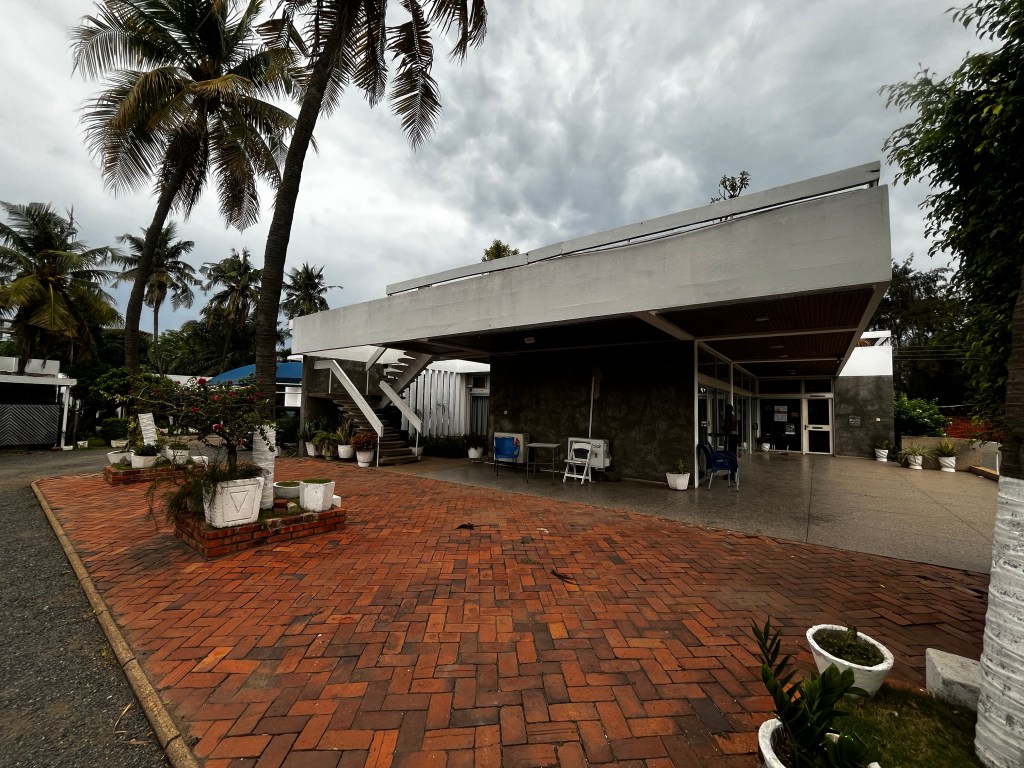
After dismantling the exhibition there was time to search out some new, old, and modified structures. First on the list was the School of Law from 1959. Designed by Zdzisław Borysowicz of Nickson and Borys. I came across an archival image of the building in the Borys archives – and was eager to visit…
The kind people at the School allowed us to explore and take some photos.
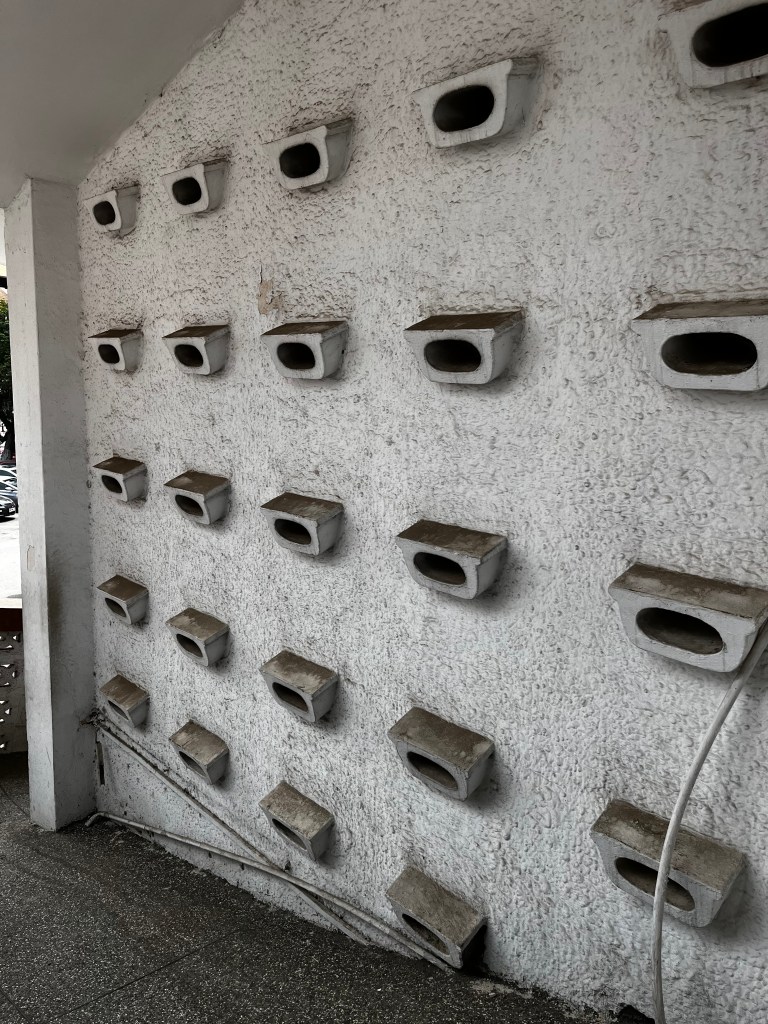
Check out the curved brise soleil – how was this cast with such accuracy? It’s a similar size and proportion to the nearby Library also designed by Borys – but this time curved. This would involve some very tricky and geometrically complex formwork and there doesn’t appear to be a climatic/comfort reason for doing so? There was also the usual terrazzo and concrete with crustacean aggregate – all carefully finished. The most dramatic part of the design is the zig-zag concrete solar shading. This is projecting from the main facade – and appears to hang, unsupported. It’s audacious and brave. There’s new glazing been added behind, but the overall effect is just about retained… The brise Soleil features on the south and north facing facades – was tropical modernism becoming more of a ’style’ than a pragmatic solution by this stage?
Borys designed some of the finest buildings in West Africa. In Accra alone this includes the library, Padmore Memorial Library, PRAAD, Court extension, the law school – and as we went onto see, some excellent housing too.
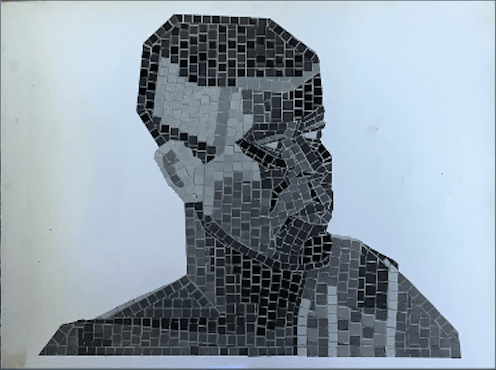
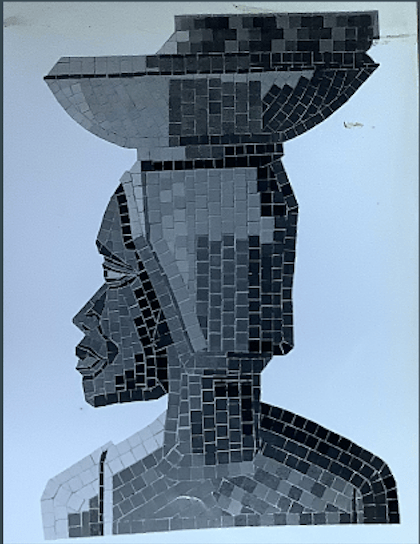
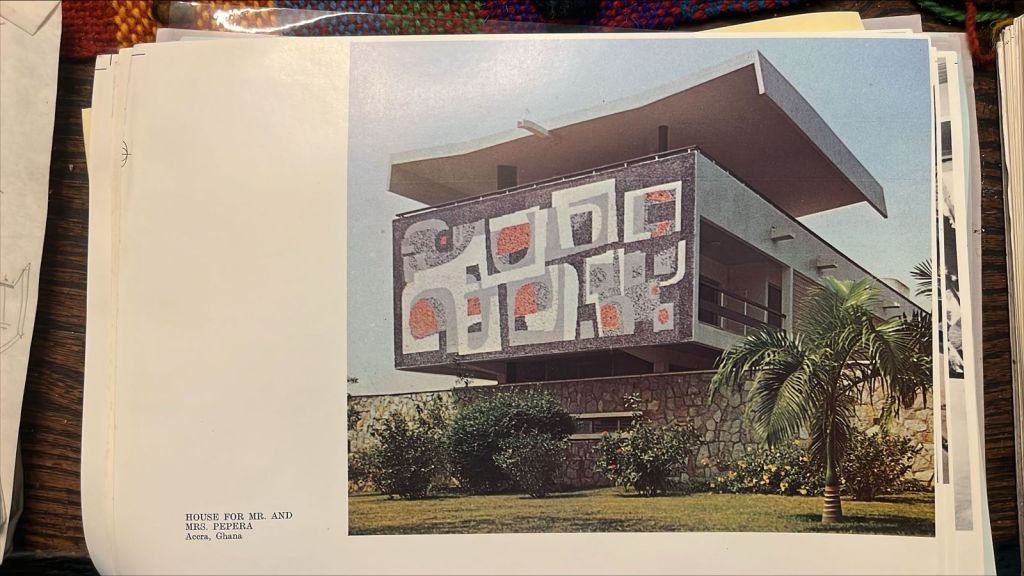
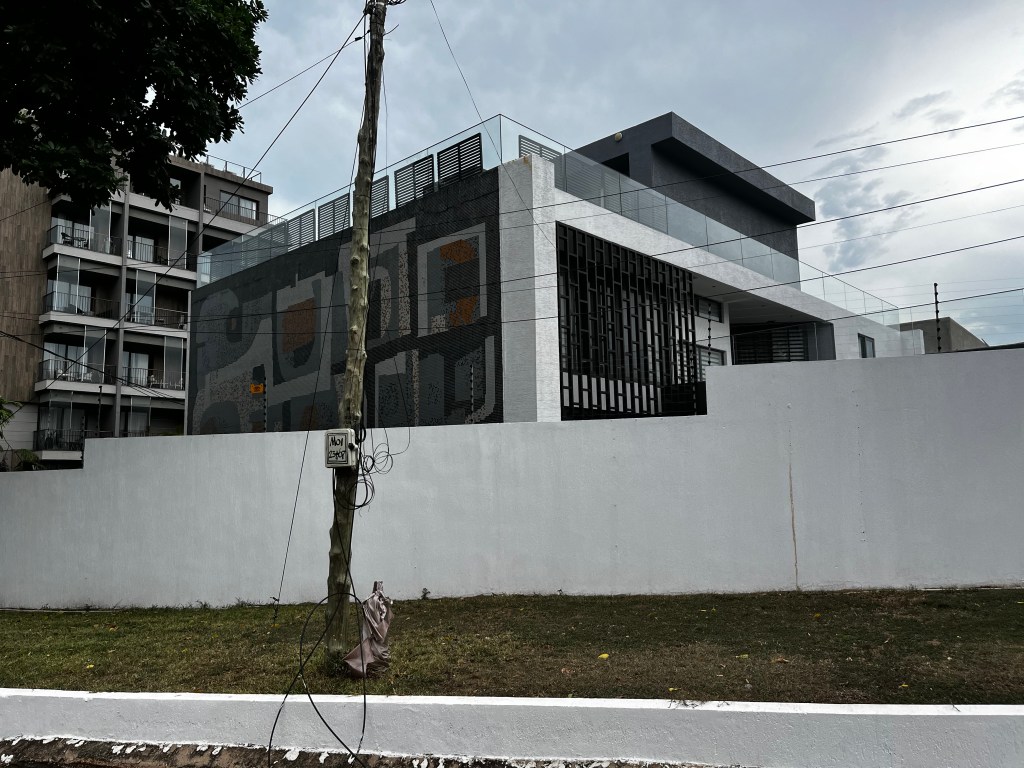
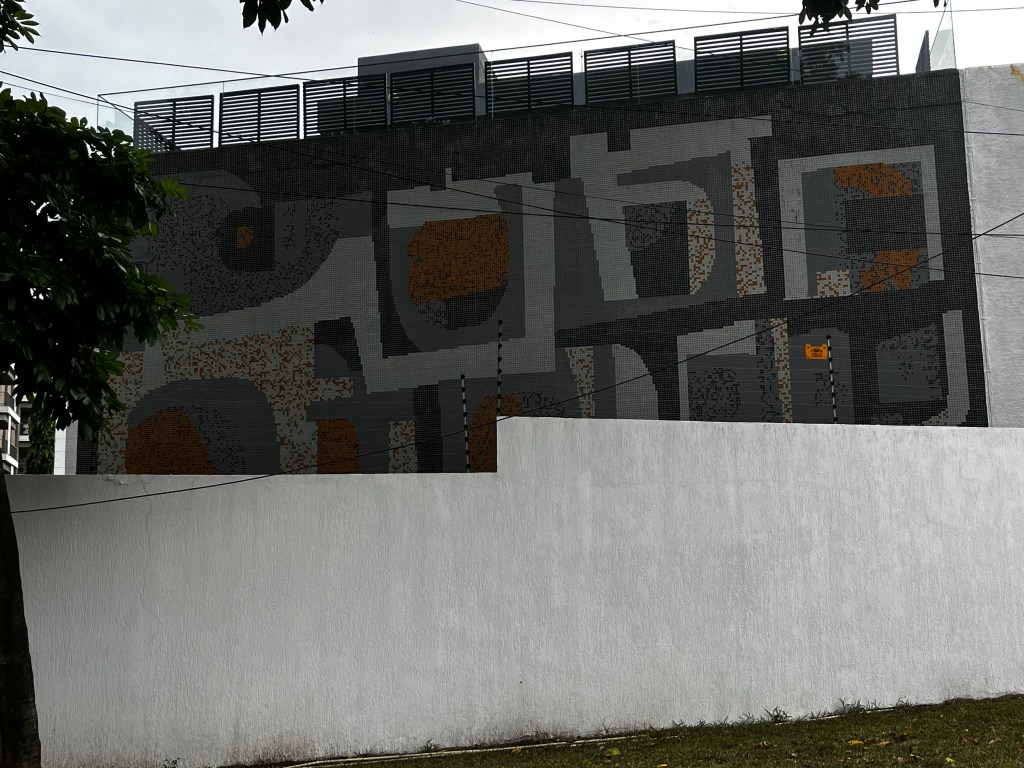
There’s a fascinating villa in the Borys archive. It’s a house for “Mr and Mrs Pepera, Accra, Ghana”. Pepera was an industrialist and business owner and his family owned some large plots of land across the city. He commissioned Borys to design a house on Switchback Road in Accra. One of the facades contains a distinct mosaic mural. With the help of Allotey Bruce Konuah the family told us that the house had been redeveloped, but the mural survived. We went to take a look. It seems that the house has been rebuilt in a similar style and the mural has either been remade, or possibly partially preserved.
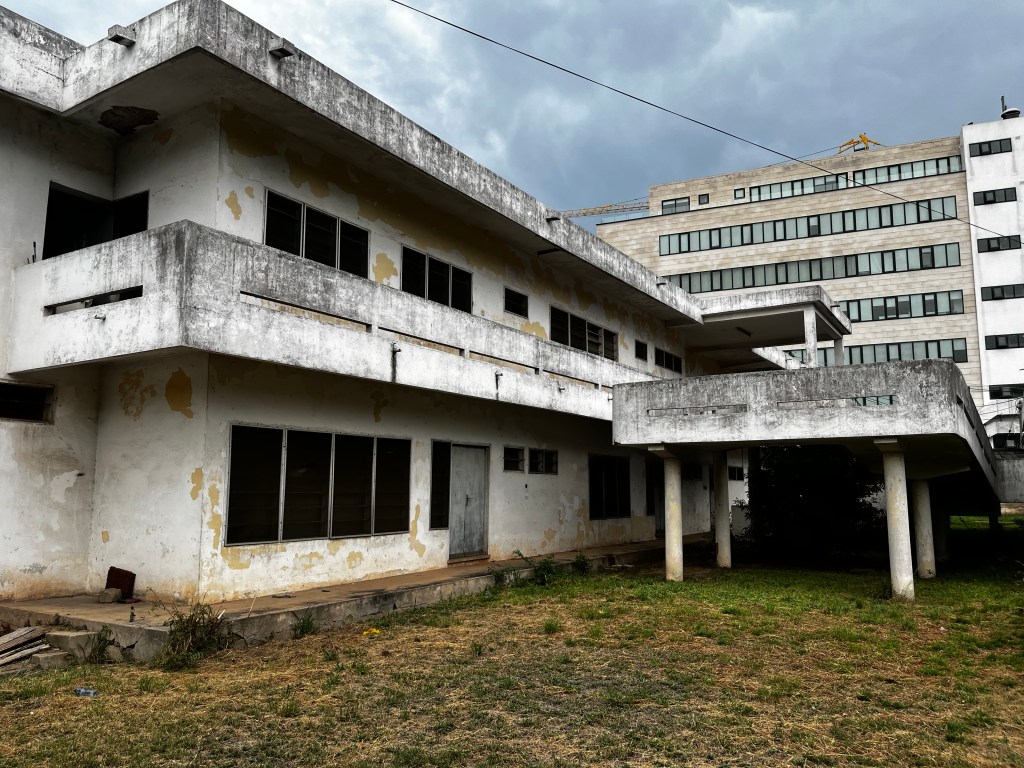
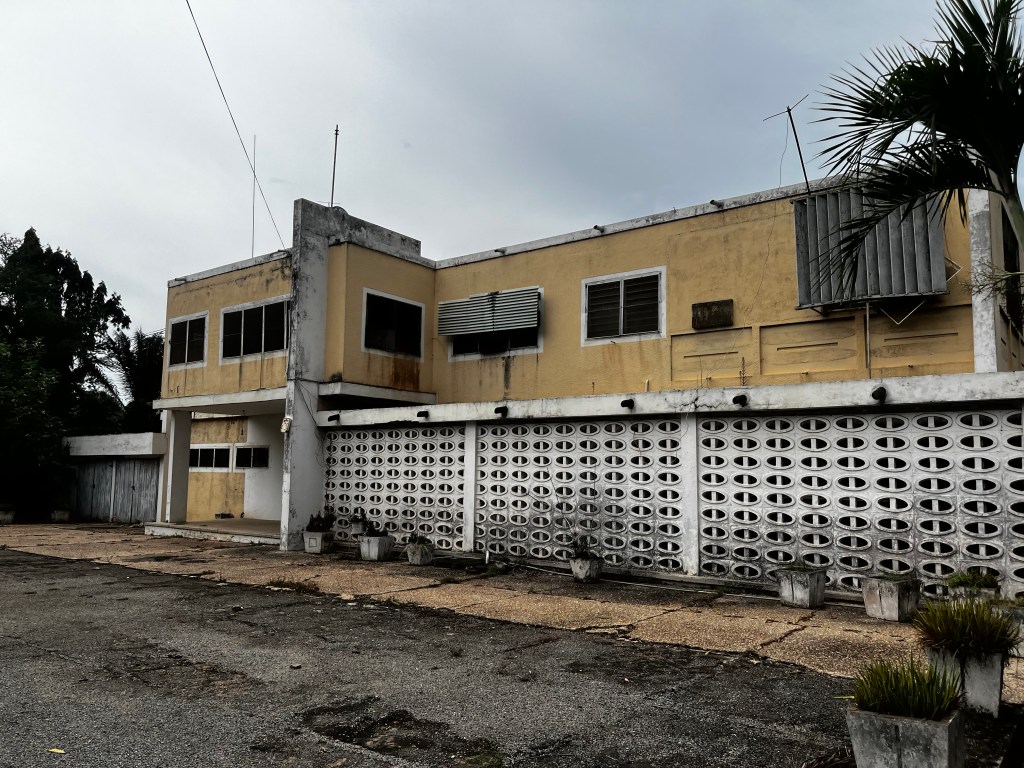
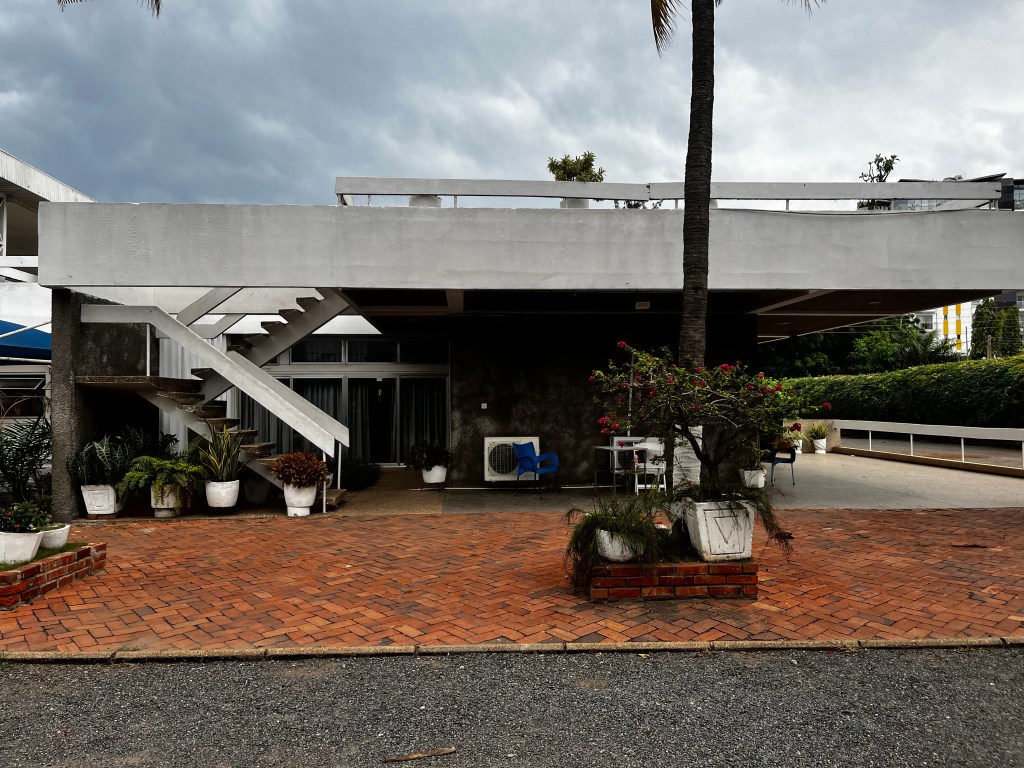
There’s a few other interesting dwellings on the same stretch of Switchback Road – how long they’ll remain isn’t certain – the land value and rapid development is forcing vast highrise construction here and these villas set within large landscaped gardens are at risk.
There are some smaller clinics and hospitals along this road too, with accompanying residences.
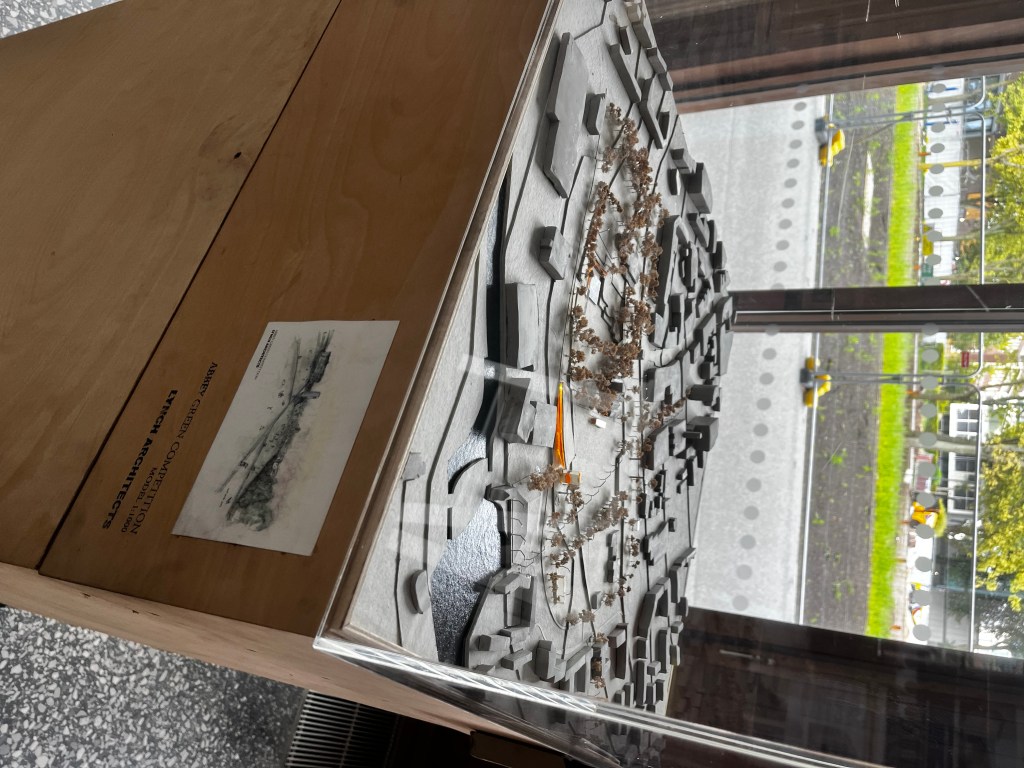
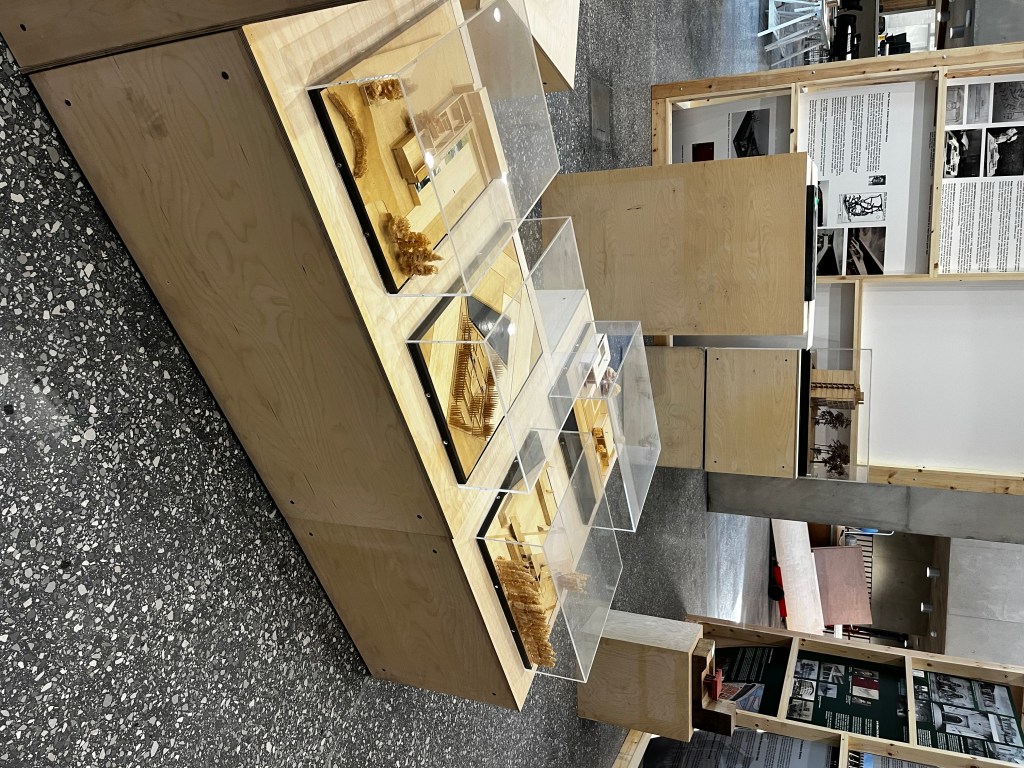
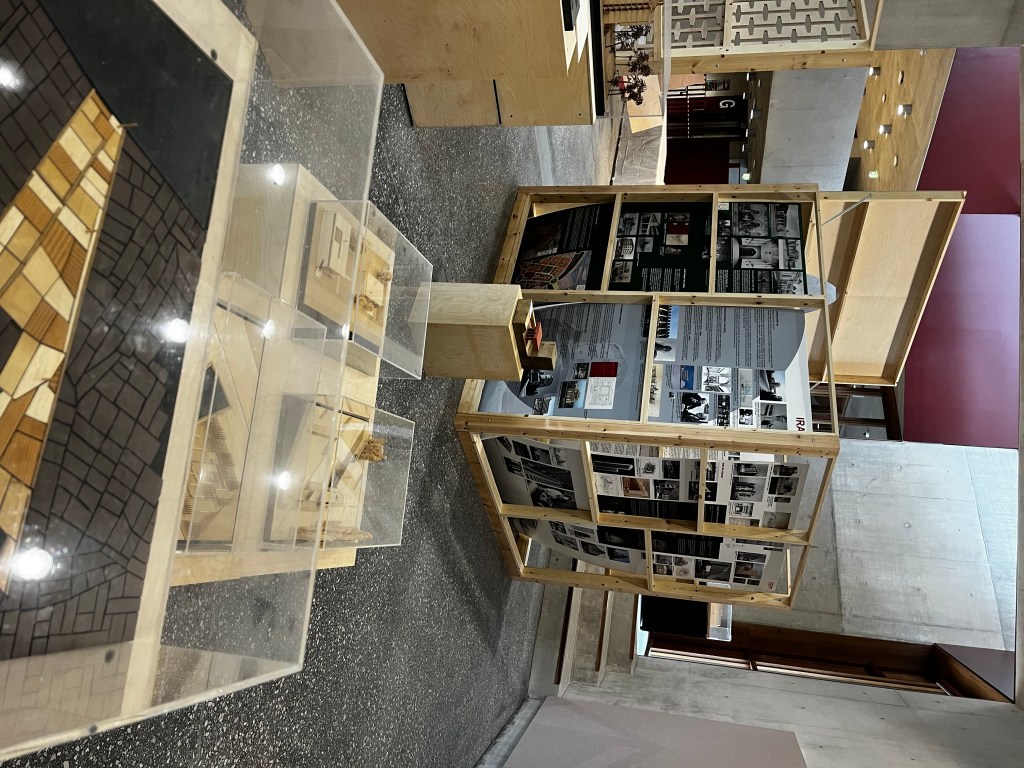
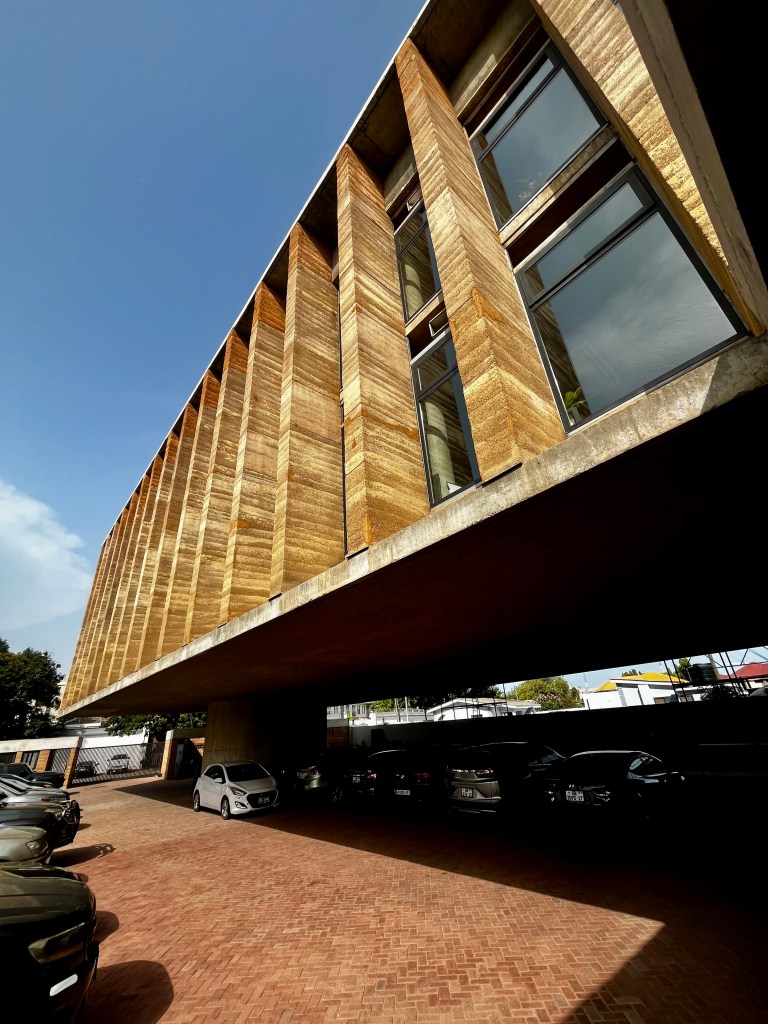
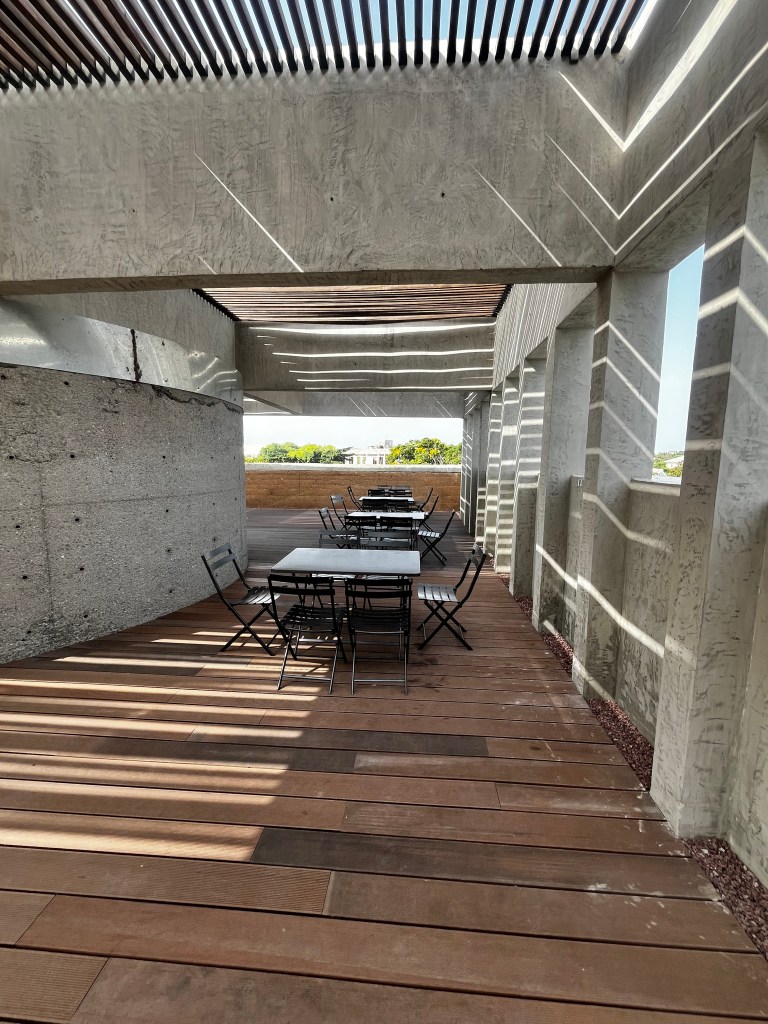
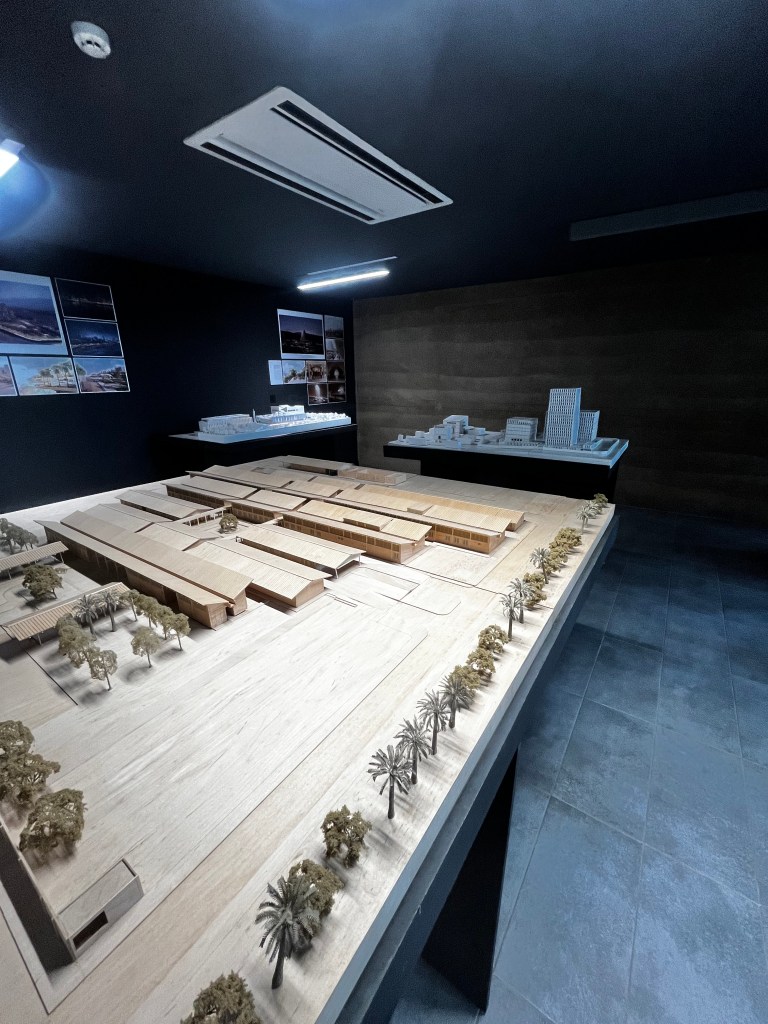
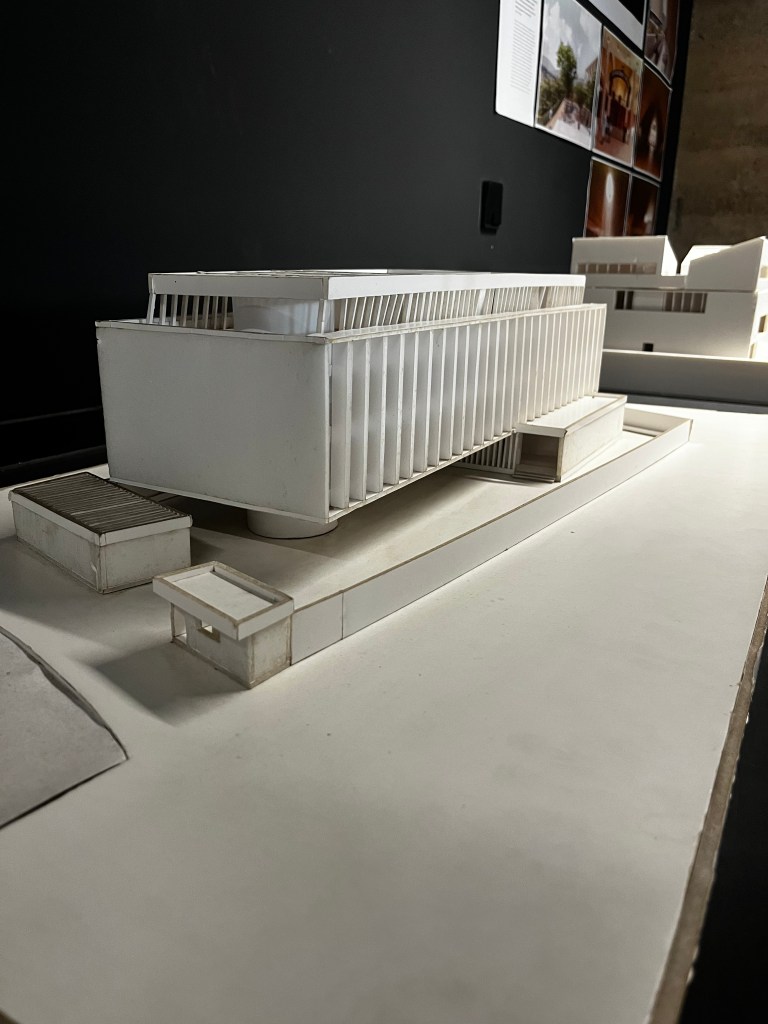
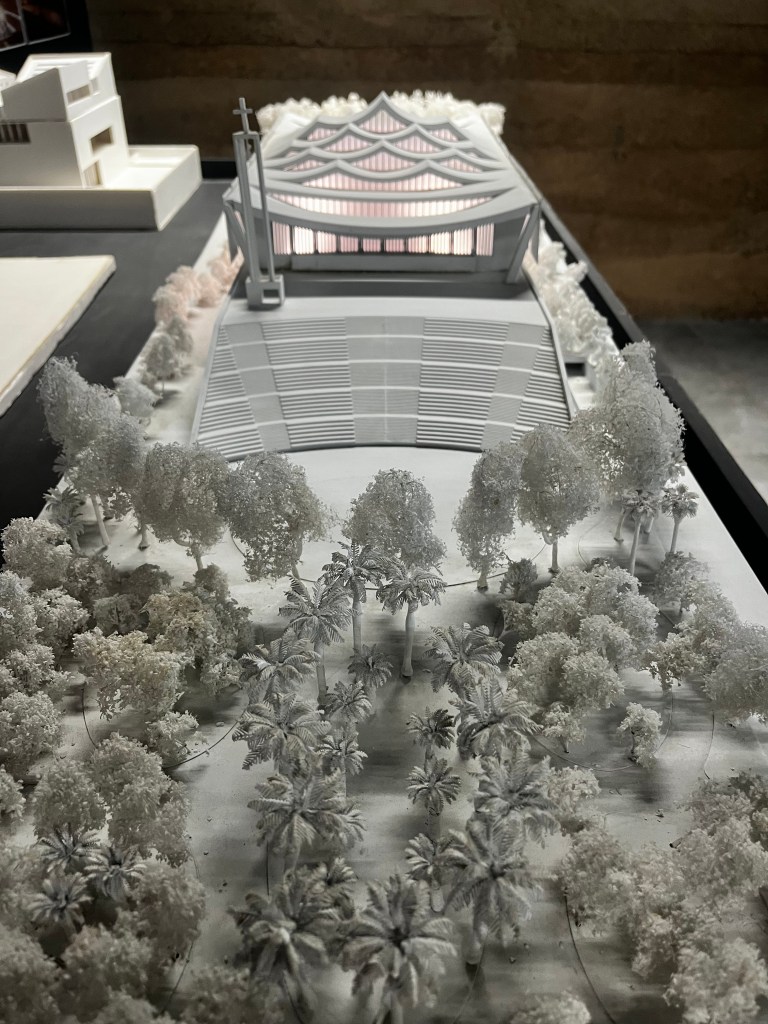
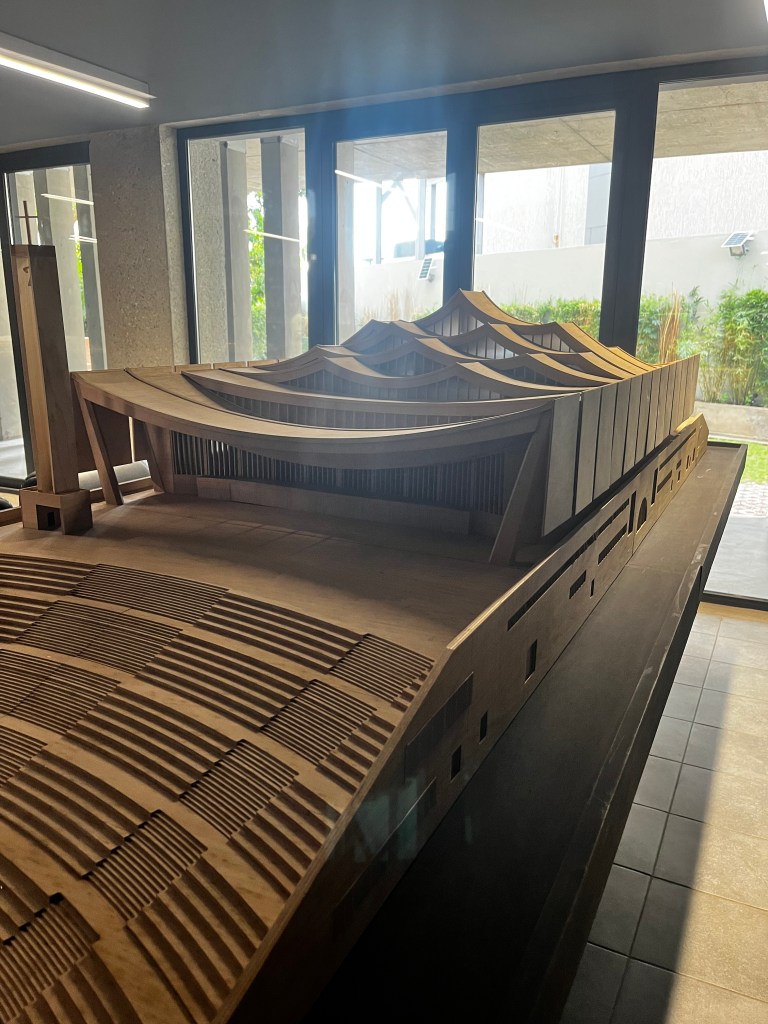
The new @adjayeassociates offices opened earlier this month in Accra. It’s an impressive structure with generous interior and exterior spaces for exchanges, meetings, displays, and studios. The gallery contains some of the most beautiful and carefully crafted models we’ve seen.
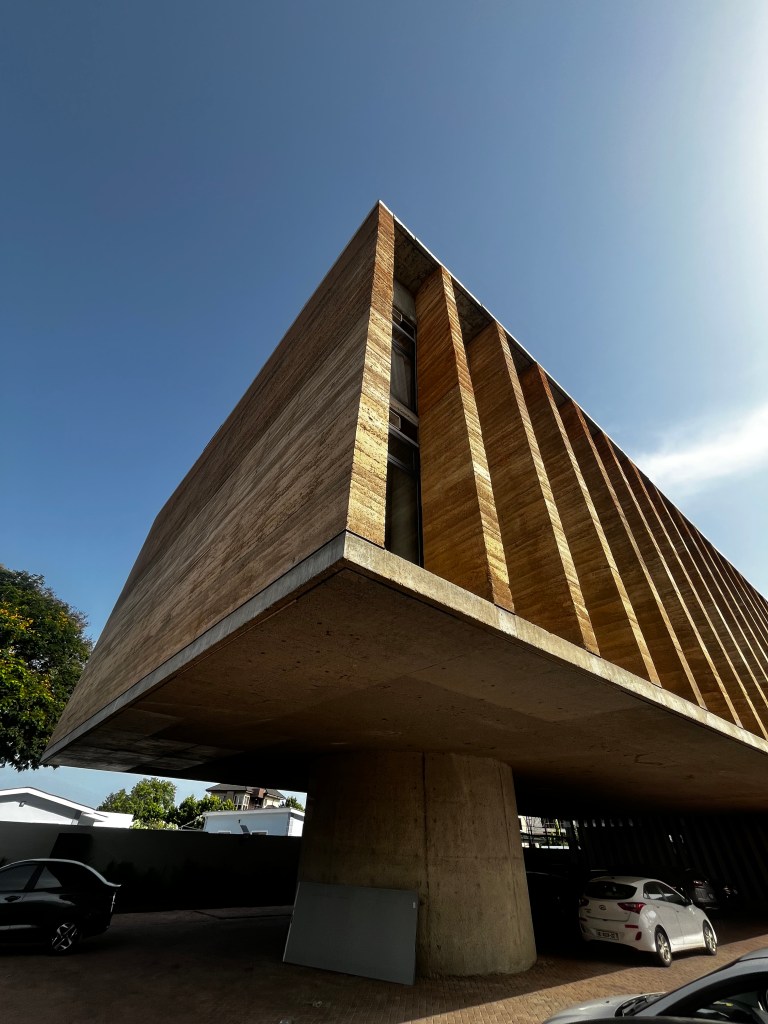
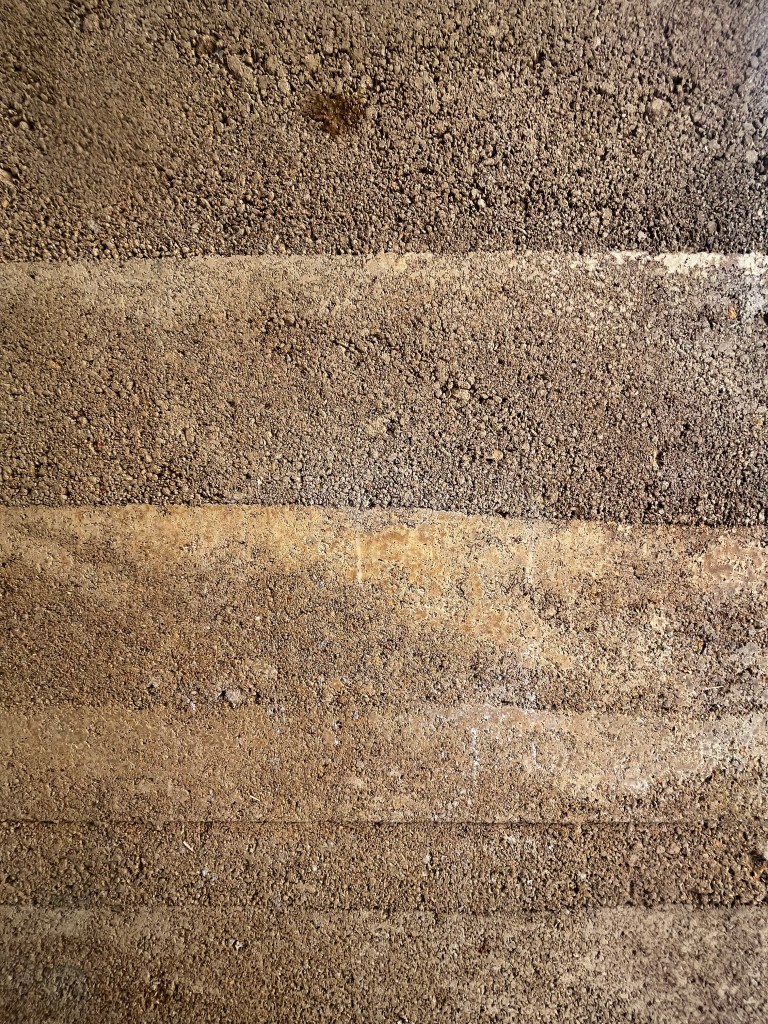
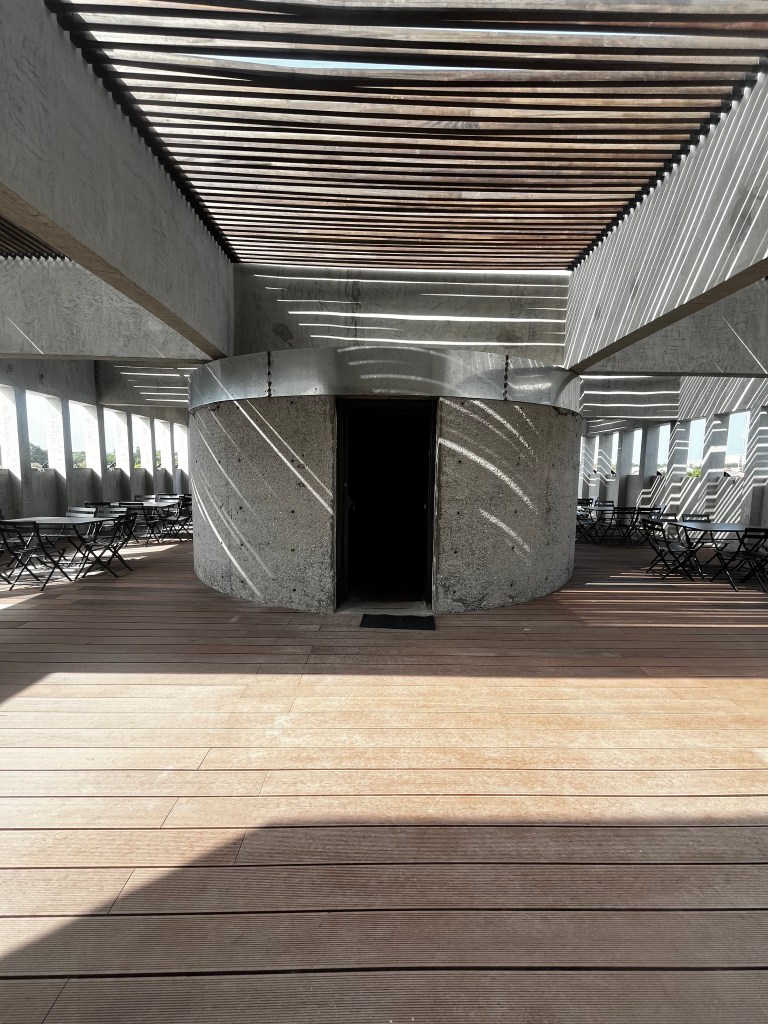
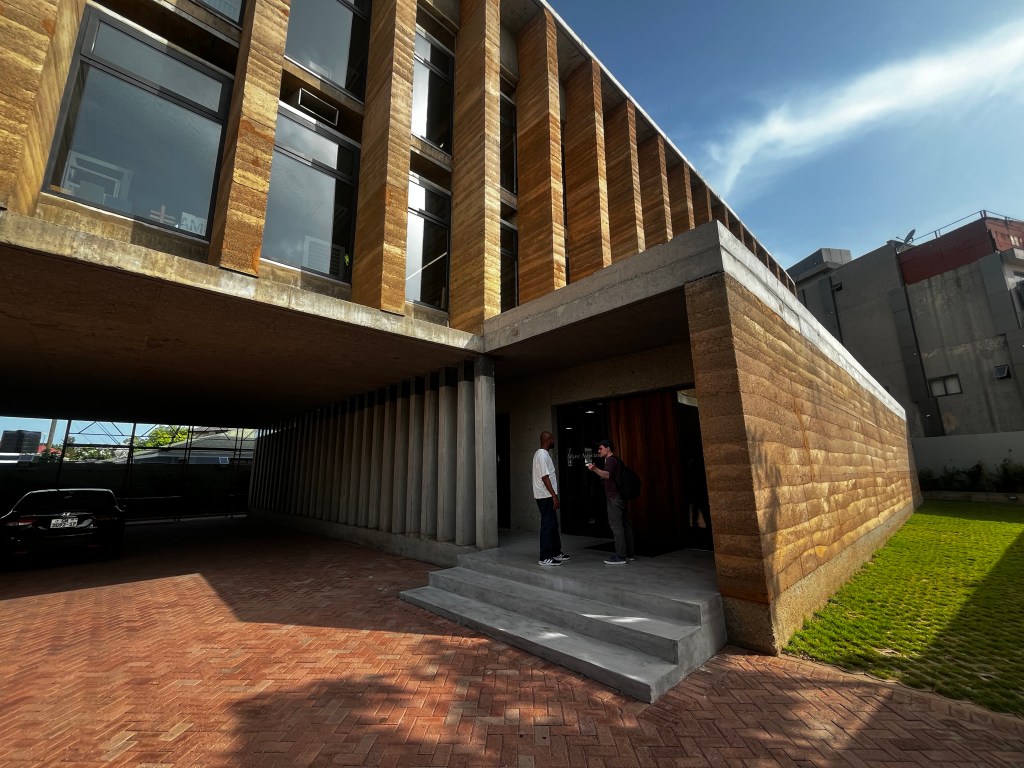
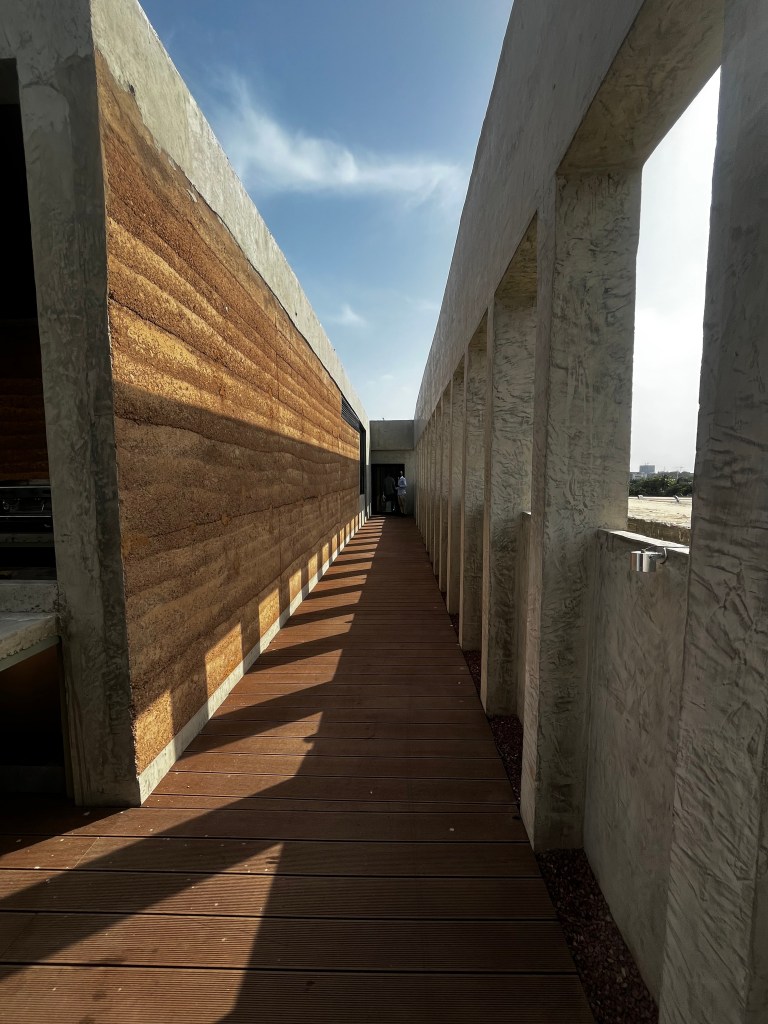
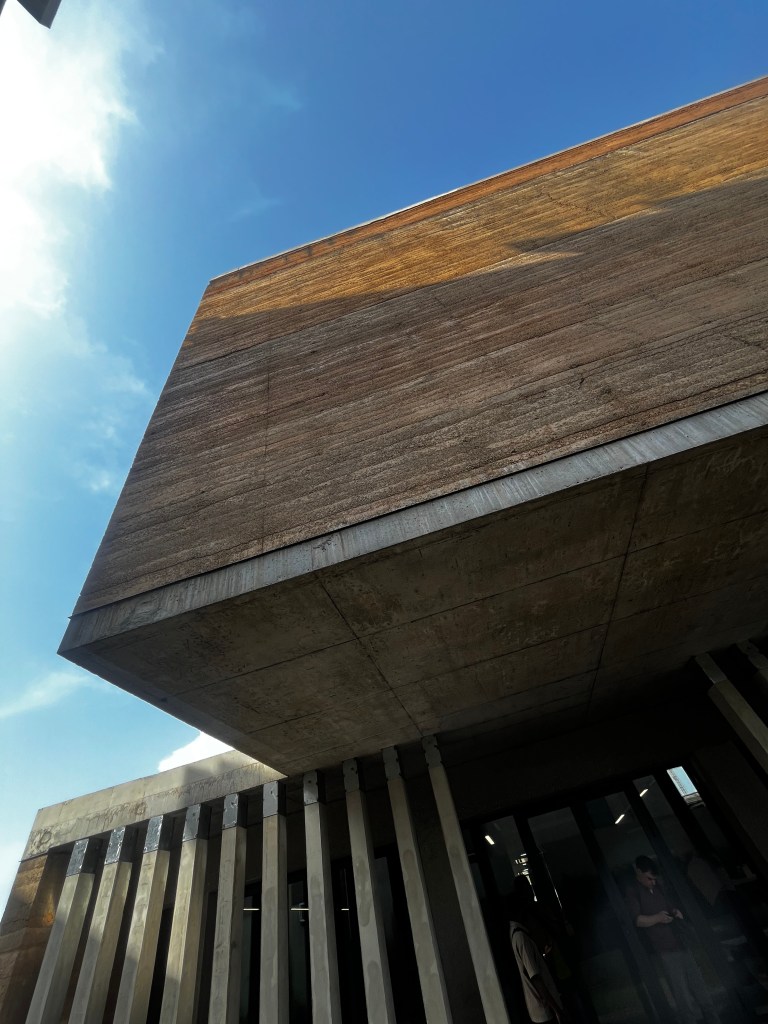
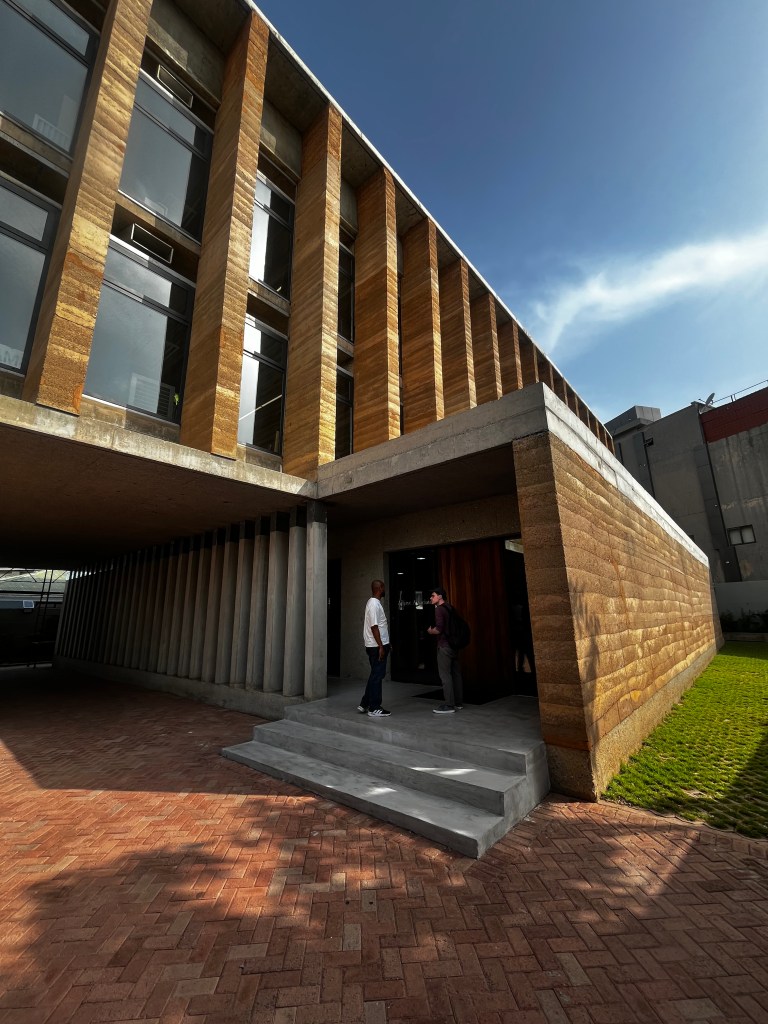
Stabilised rammed earth (swishcrete) features heavily on the exterior – mirroring the marble clad vertical fins and approach of Lasdun’s Takoradi bank . The most startling aspect of the design is the decision to raise the structure up from the ground level. The structural span is vast and courageous, with the entirely building appearing to perch on a large round concrete drum form at one end (it’s a kind of inhabitable piloti containing a fire escape). It’s quite an unusual gesture to only use as a means of escape.
The structural solution is impressive – but it left me wondering why was it done? Is it referencing the modernist piloti concept, or the colonial bungalow model, or perhaps the former US embassy in Accra ? The underpass could make for a great outside studio, exhibition space, or a spot for a planted garden and evaporation pool – but it’s only used to provide shade for parked cars at the moment… Perhaps the landscaping and activation of the space will follow – it takes time to bed into a space like this – and the roof garden and kitchen makes up for it with views to the ocean and across the city.
Going back to the ‘rammed earth’ – it would be good to know the cement content. Are we really dealing with a pigmented concrete solution here rather than adobe ?
Very grateful @phelim_owusu for kindly giving us a tour and to @k_of_i for organising the visit.
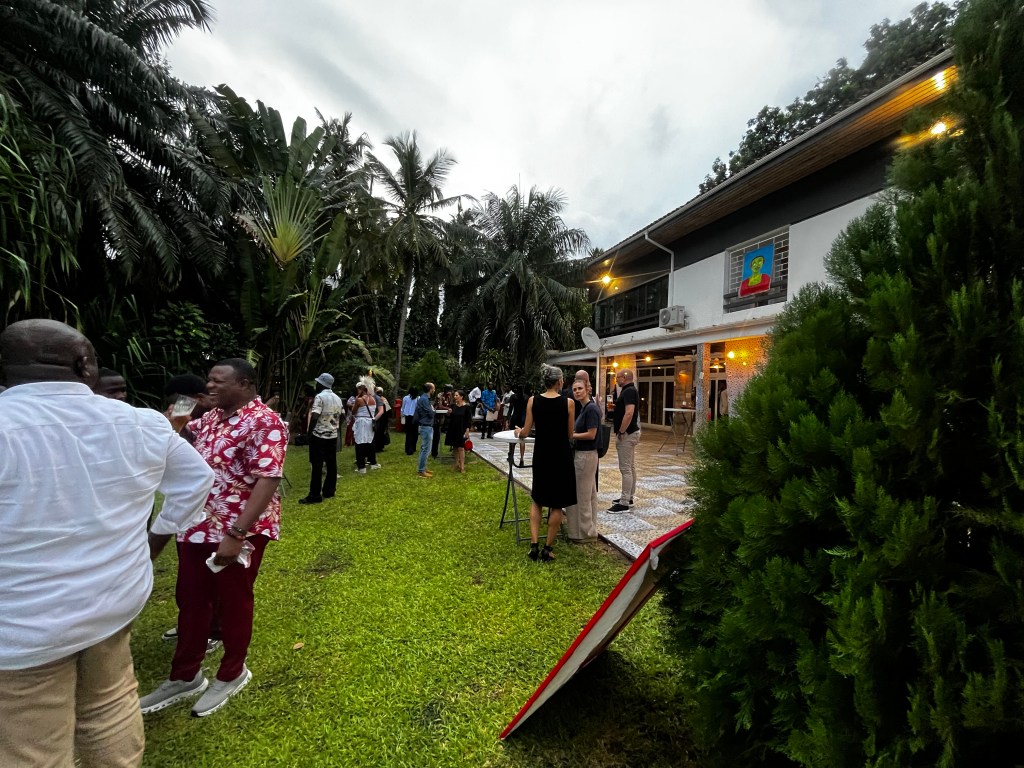
Finally a visit to the Danish embassy – a villa set in gardens in North Ridge. Architect unknown – but a careful design that blended the garden and interiors – perfect setting for the art exhibition, performance, and gathering.
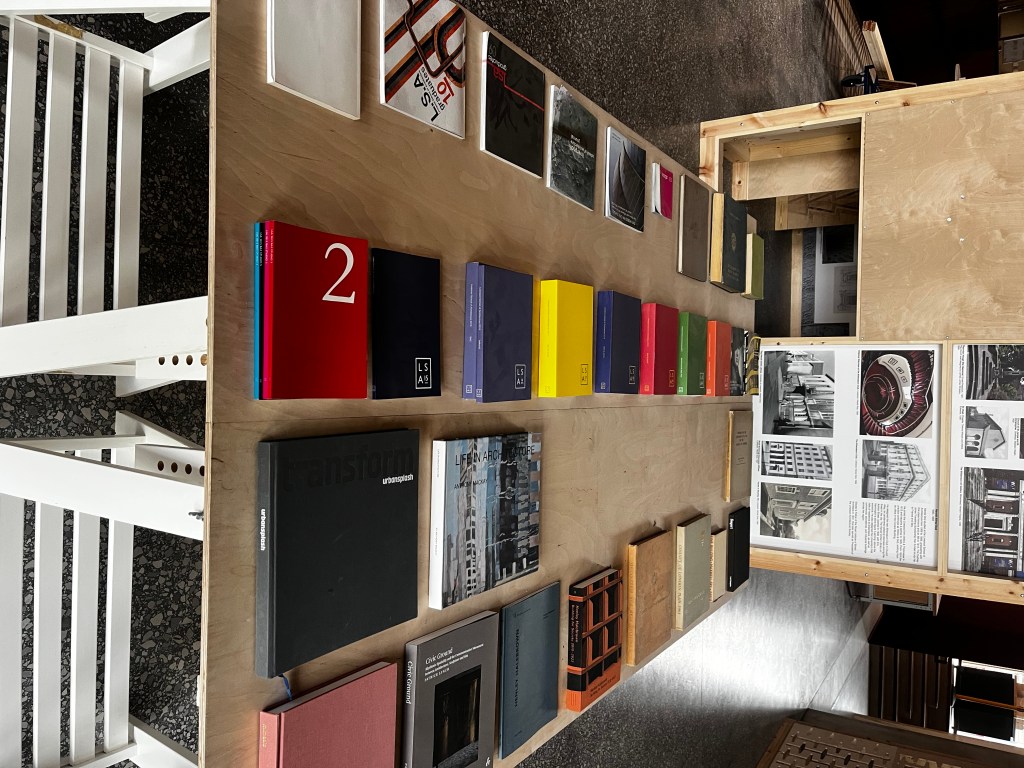
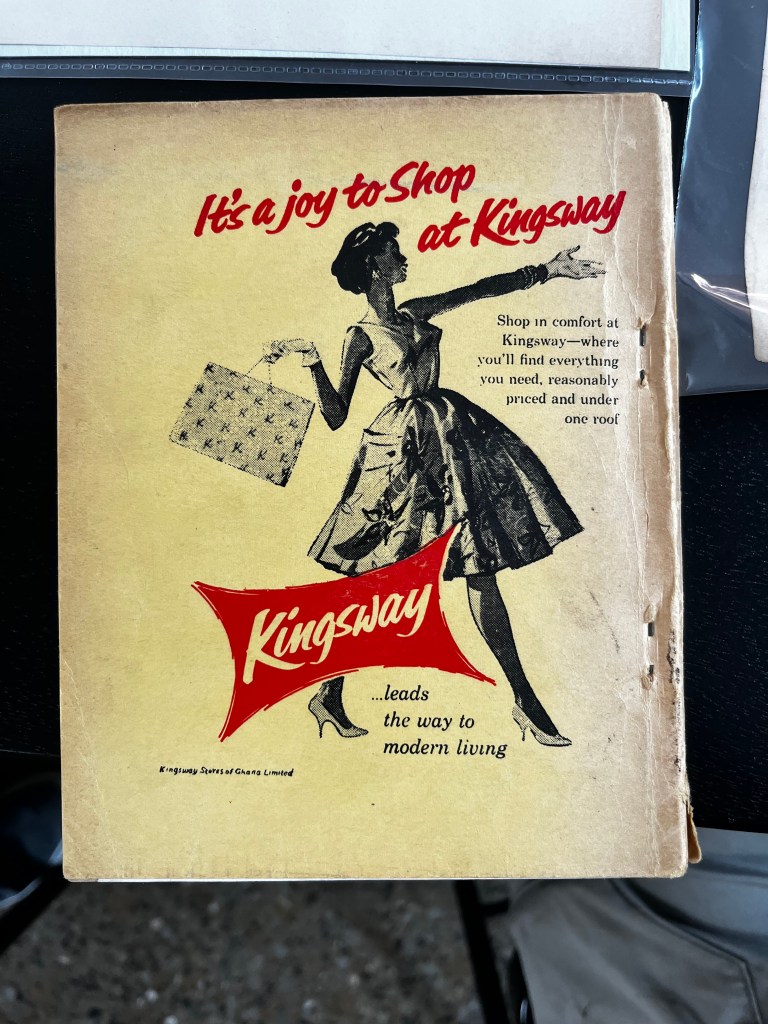
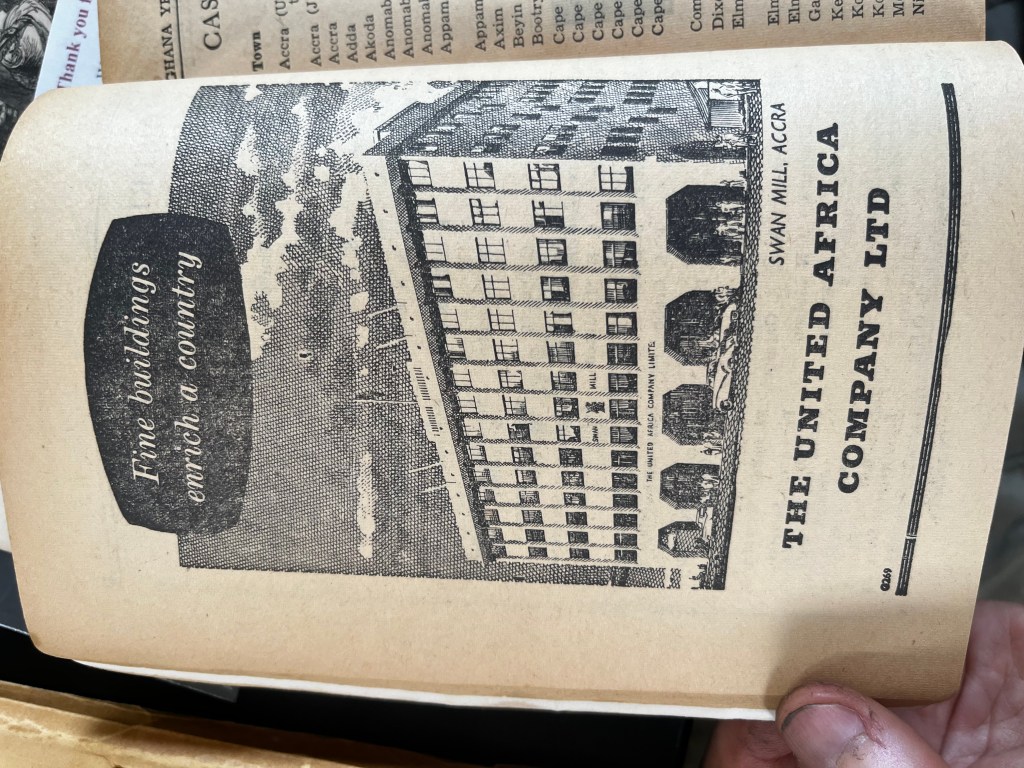
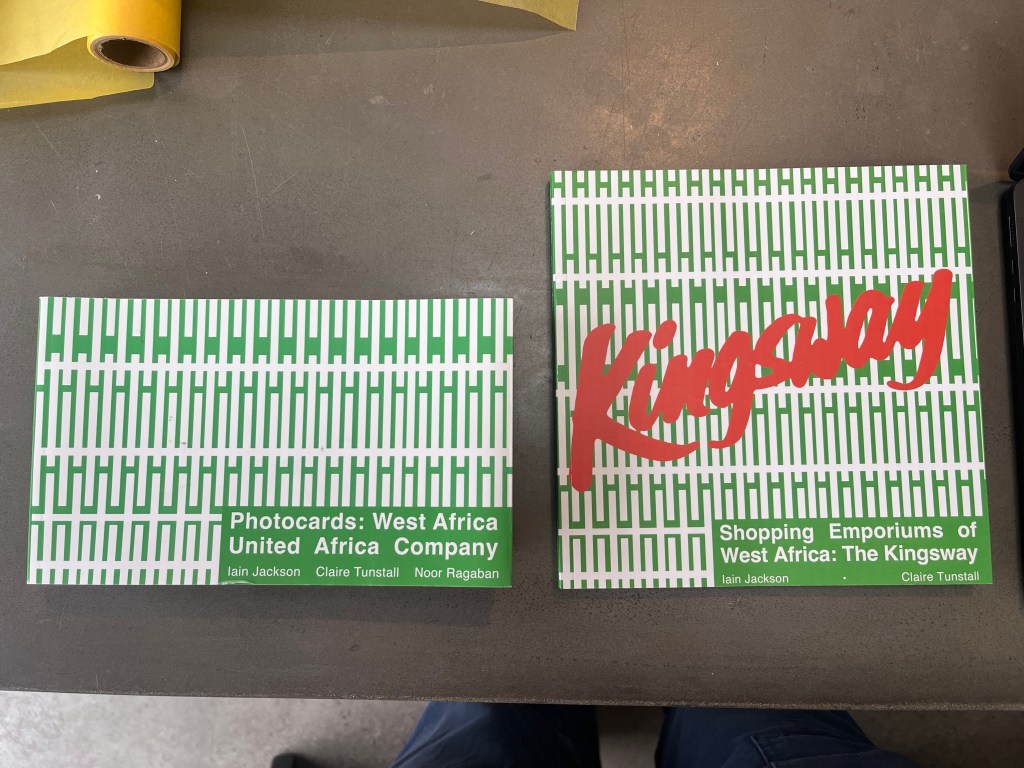
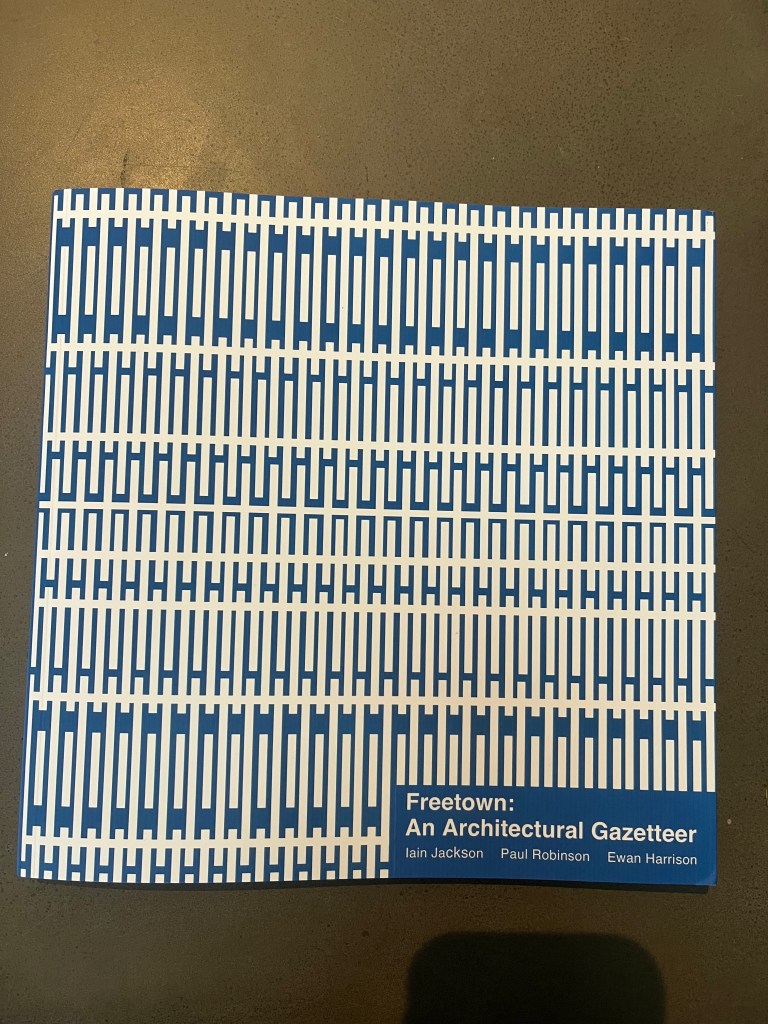
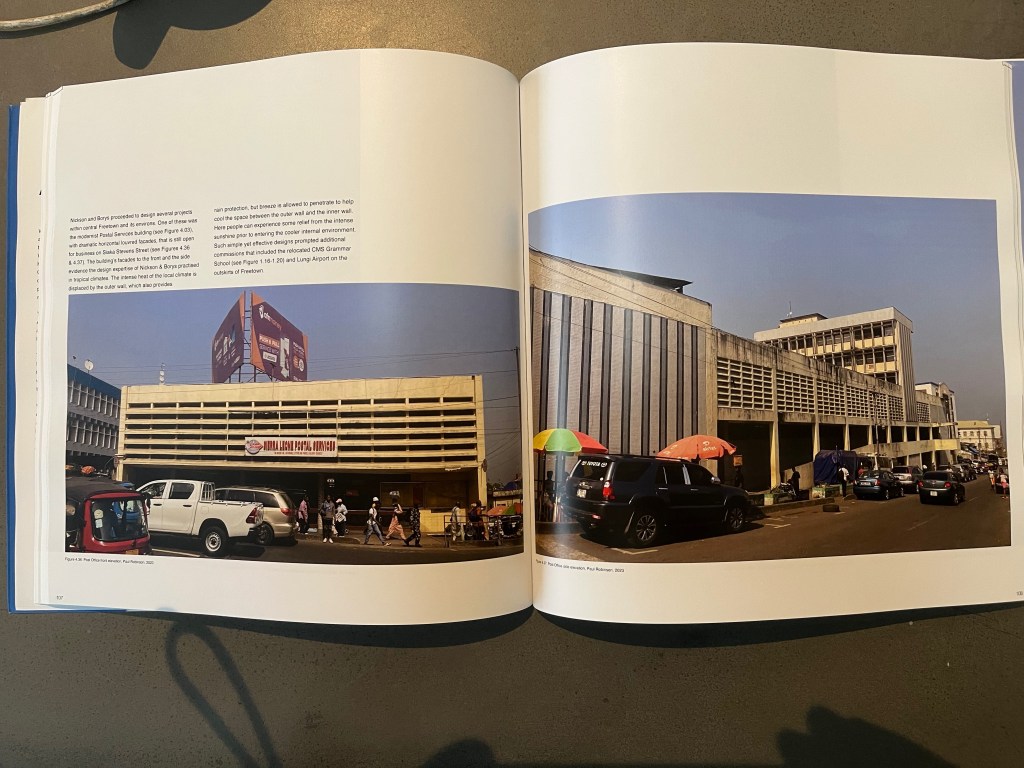
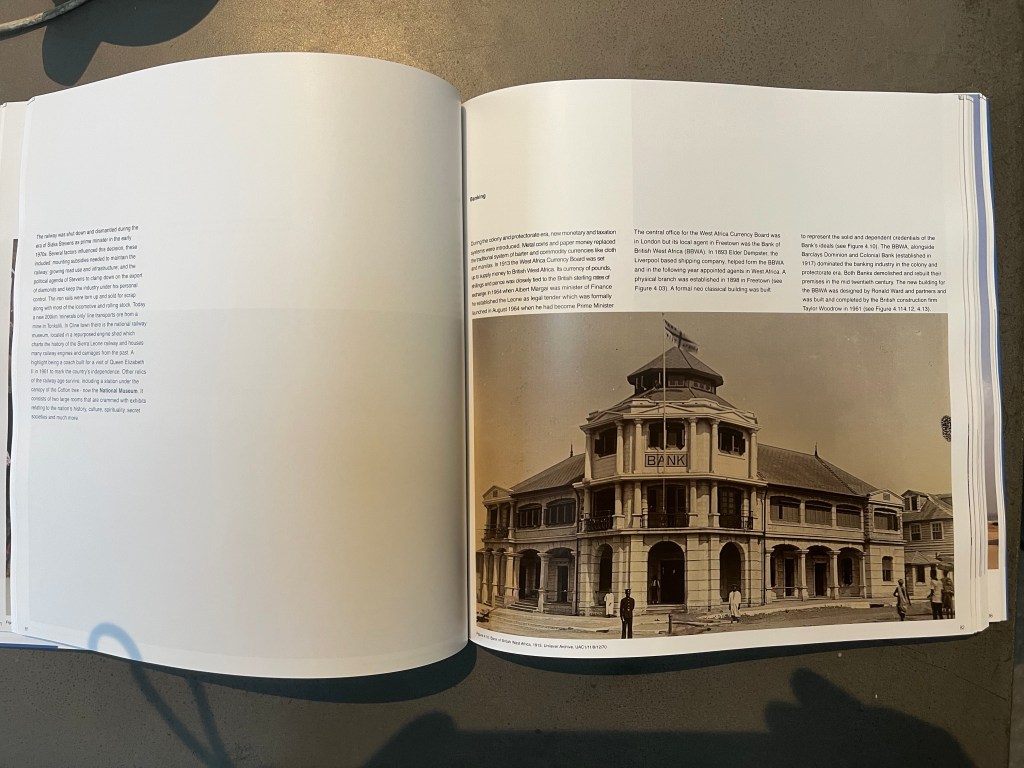
Our new monograph on the city of Freetown, Sierra Leone has (finally) been published – open access and you can download it here. It’s a major output stretching to 240 pages across a chunky 250x250mm format and is the third book in our series on sharing the archives of the United Africa Company. The other two books are on Kingsway Stores and The Photocard collection.
Photocard and Kingsway catalogue
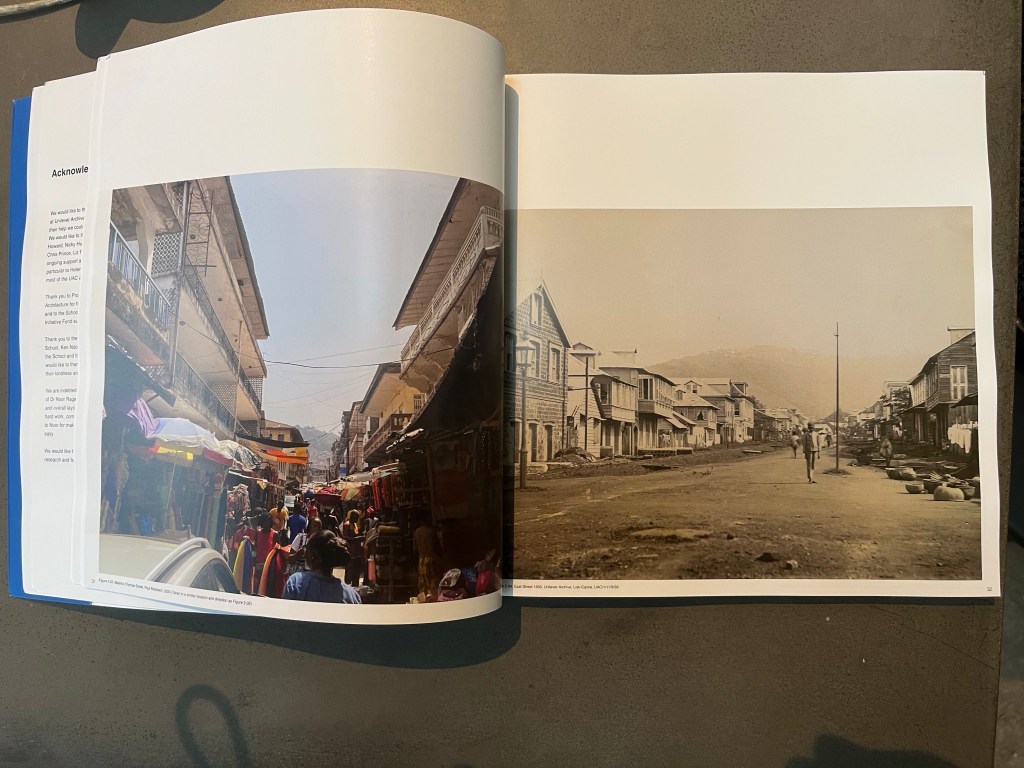
Our approach in Freetown was to identify and write brief historical narratives on the city’s development using archival photographs mainly from the Unilever UAC collection, alongside recent photographs. Archival work took place at Unilever, Bodlean Library, UK National Archives, as well as at Fourah Bay in Freetown – and this informed our fieldwork and photography. The approach is a classic ‘before and after’ set of images with descriptions. There isn’t an architectural guide book or detailed study of Freetown and it’s architecture – which is quite shocking considering the quality of the work and the architects involved (including Nickson and Borys; Jame Cubitt; Ronald Ward and many others….)
Freetown An Architectural Gazetteer
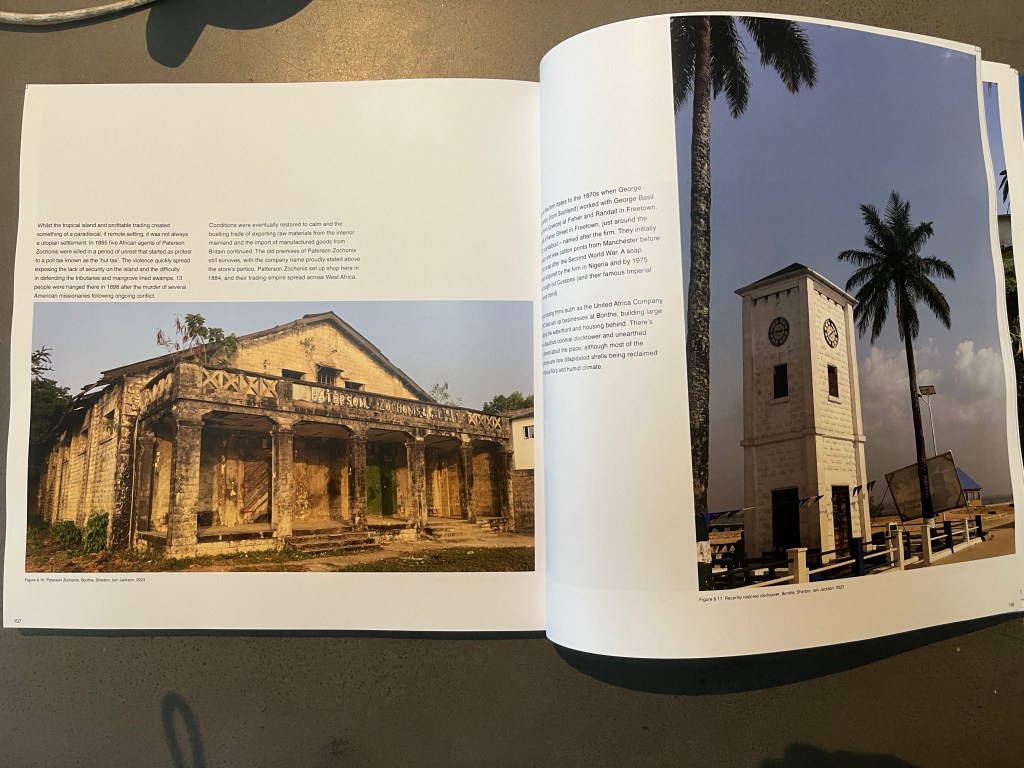
As well as covering the major buildings in the city we include an extended essay on Fourah Bay College, and a write up on Bonthe at Sherbro that we were fortunate to visit. We’re particularly proud of the Bonthe work – and there is certainly a lot more research to undertake into its history and architecture.
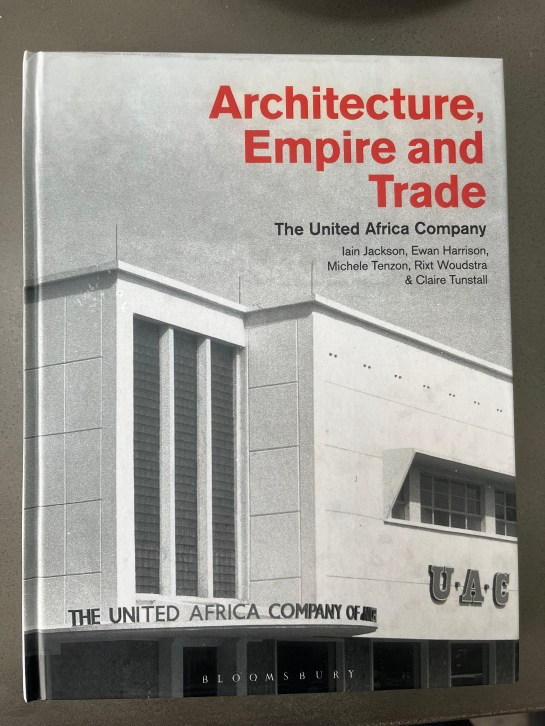
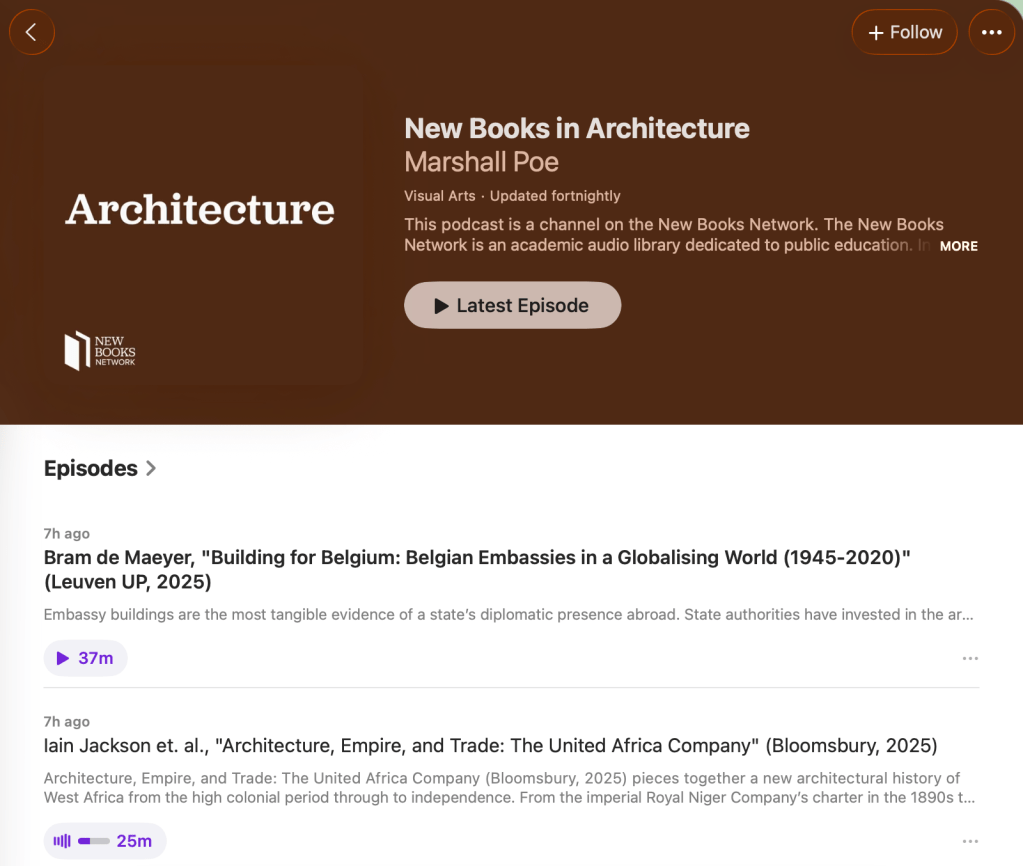
Have a listen to Rixt Woudstra and Ewan Harrison talking more about how we researched, made, and designed our latest book ‘Architecture, Empire and Trade‘ on the New Books in Architecture podcast series…. Thank you to Matthew Wells for hosting the podcast and for the super questions and comments.
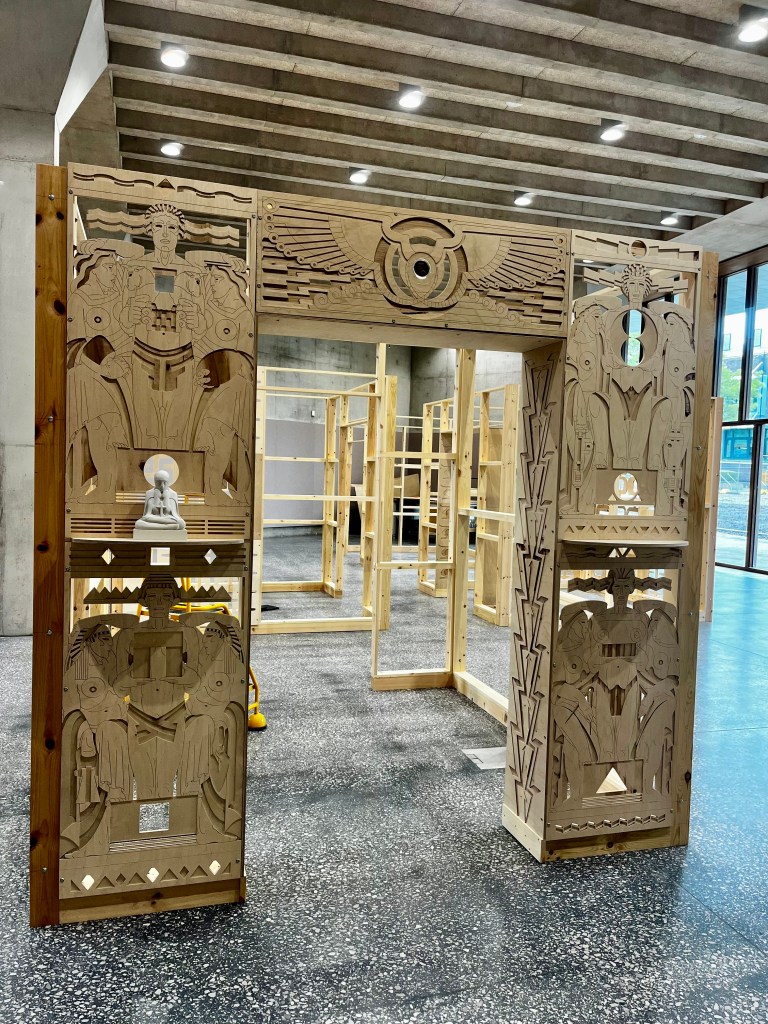
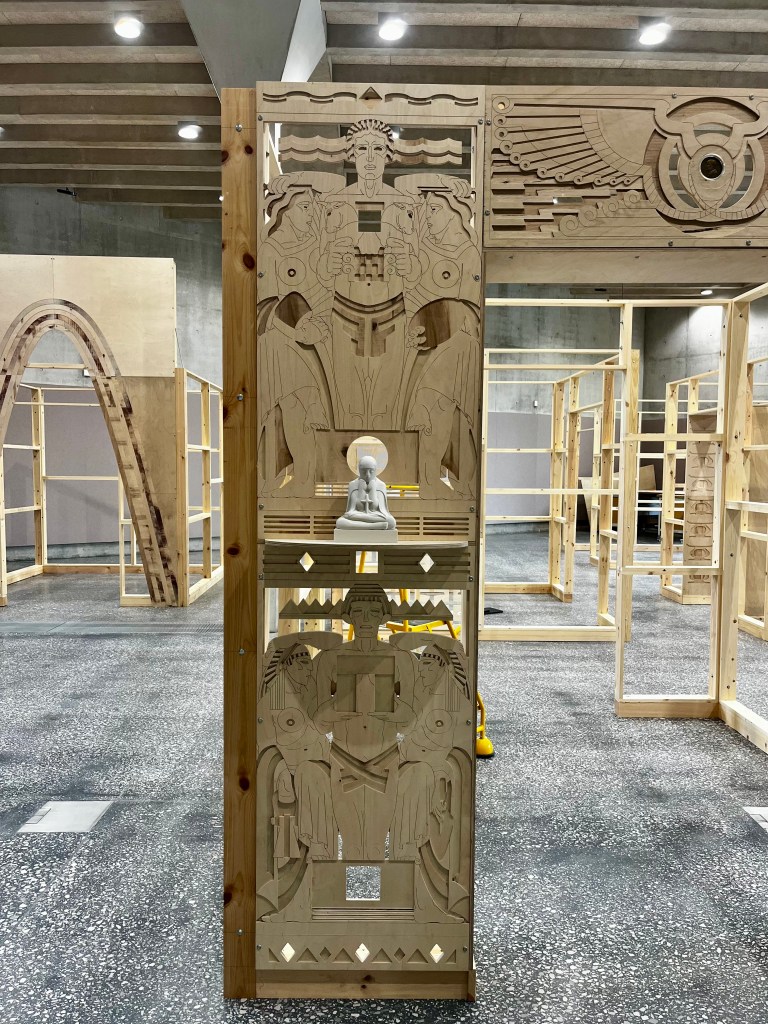
During the 1960s, Accra stood at the center of the anticolonial world. As the capital of Ghana—the first independent country in sub-Saharan Africa following European colonization—the city drew revolutionaries, intellectuals, and artists from across the continent and the Cold War divides. Ghana’s first leader, Kwame Nkrumah, envisioned Accra as a showcase of African statehood and invited architects to help shape its future.
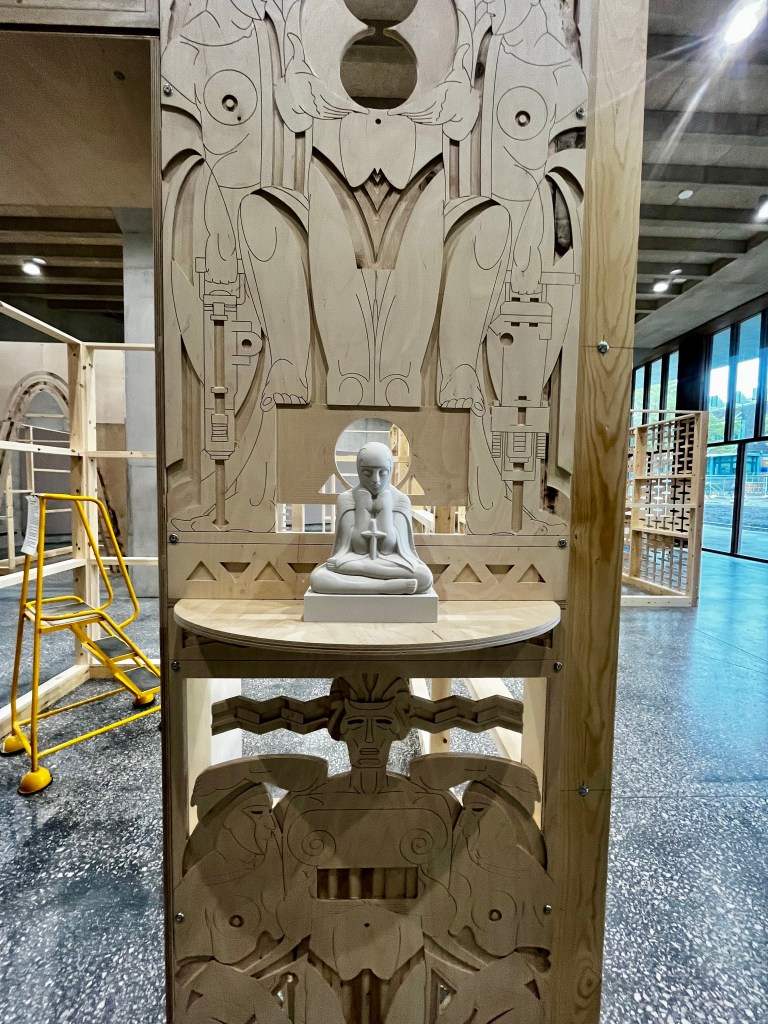
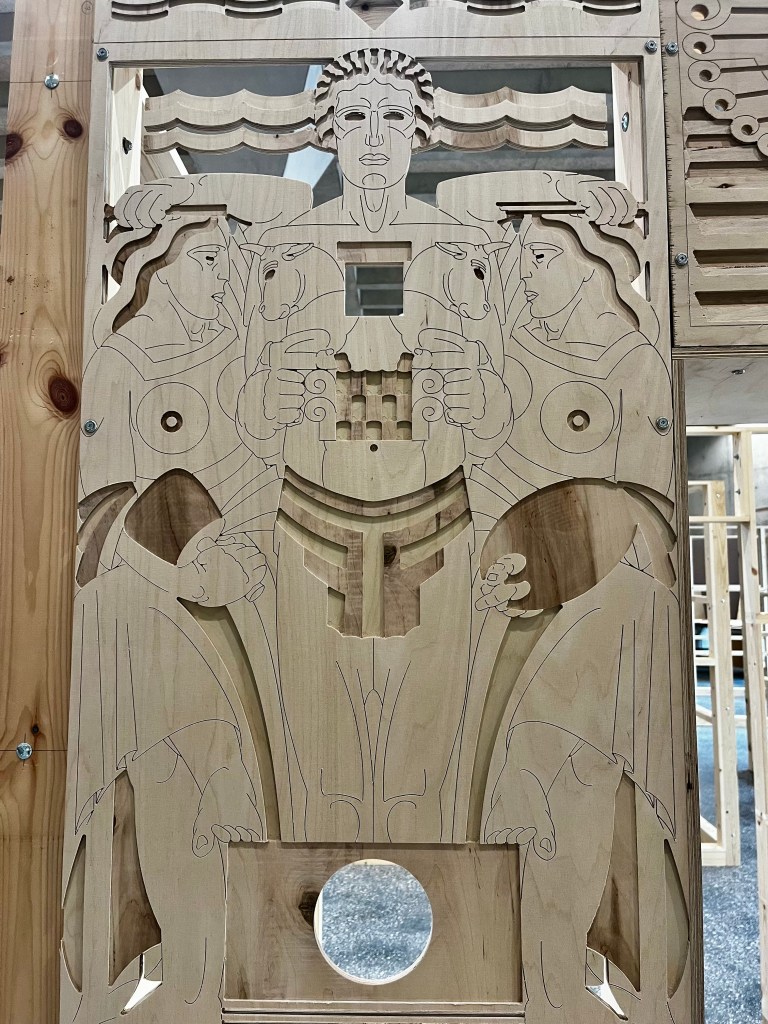
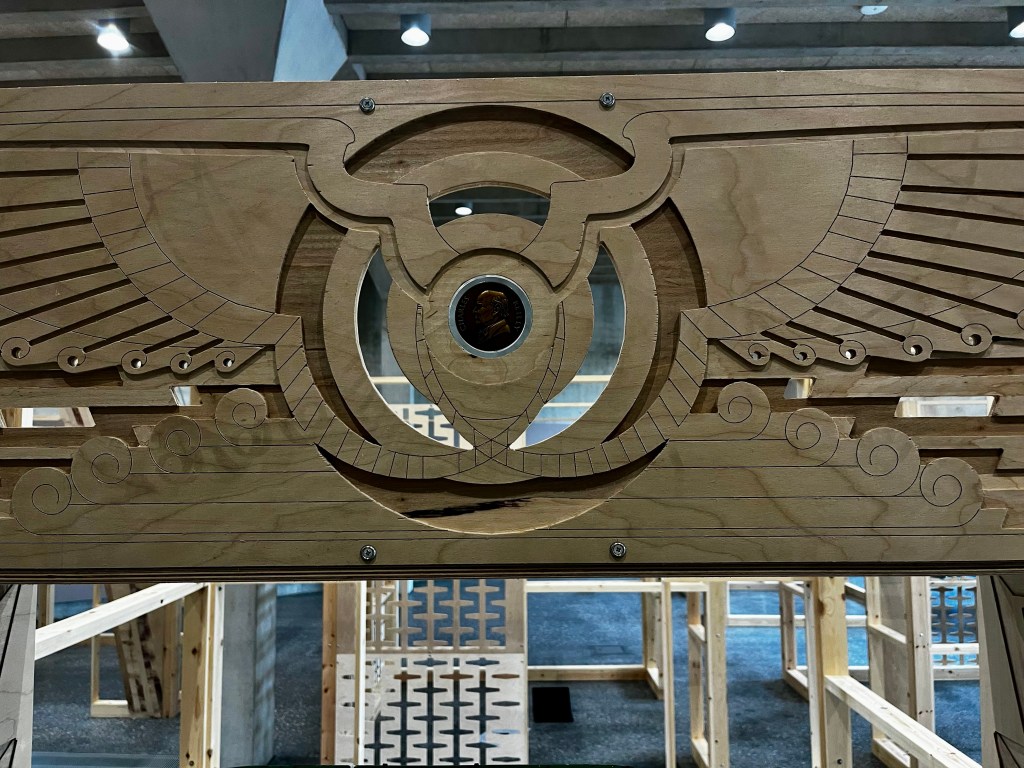
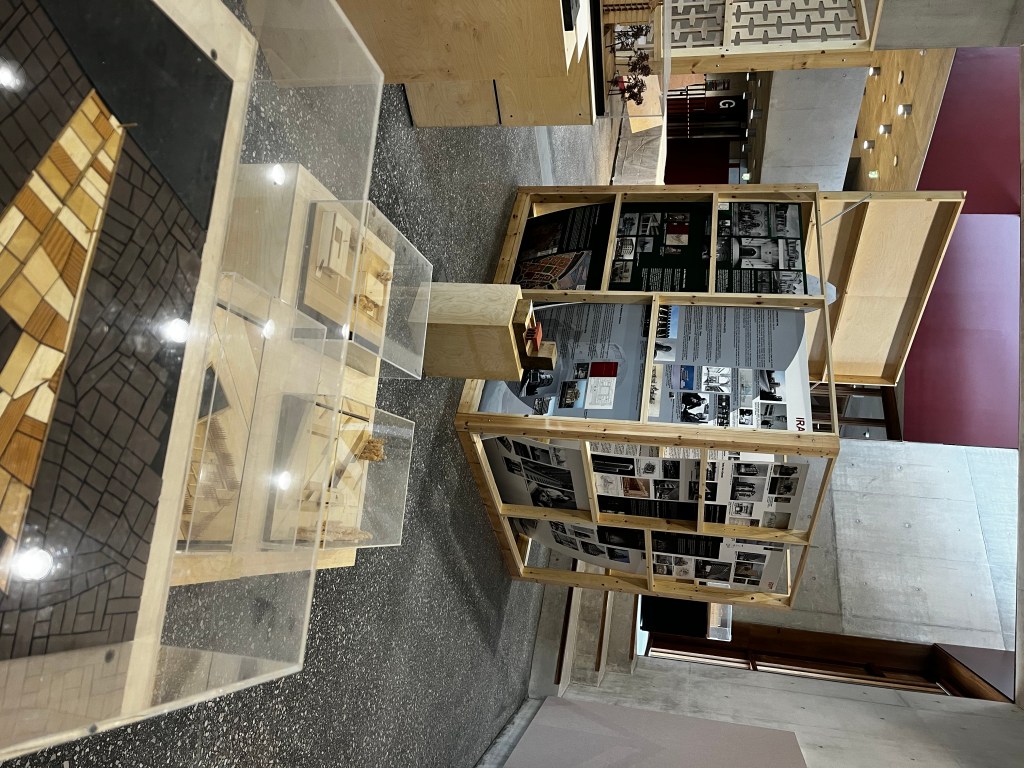
Exhibition Photograph, courtesy of Łukasz Stanek, 2025.
Intersections traces the collaboration of two architects who responded to that call: Ghanaian Victor Adegbite (1925–2014) and Hungarian Charles Polónyi (1928–2002). Polónyi arrived in Accra as part of Eastern European technical assistance programs supporting Ghana’s transition to socialism. He worked for the Ghana National Construction Corporation (GNCC), where Adegbite—a Howard University graduate—served as chief architect. In their work at the GNCC they mobilized architectural resources from the socialist, capitalist, and non-aligned countries and designed buildings that responded to Ghana’s needs, means, and aspirations.
The exhibition centers on the housing projects designed by Adegbite and Polónyi, which embodied the many dimensions of independence—from representing a new elite to the state’s provision of housing for all social groups. By juxtaposing family archives from the United States and Hungary—preserved by the architects’ daughters—the exhibition both reconstructs and reenacts an encounter from sixty years ago. By recording how the buildings designed by Adegbite and Polónyi have been appropriated by their inhabitants, it shows how the architects’ work continues to impact Accra’s urban landscapes.
Curators: Michael Dziwornu and Łukasz Stanek, in collaboration with Dana Salama.
As Hardly Found: Art and Tropical Architecture centres artists and artworks that have so far been overlooked by histories of ‘tropical architecture’. In this collection of essays, historians, artists and archivists address works of art connected to epicentres of teaching and practice within the movement – focusing on the Department of Tropical Architecture at the Architectural Association and its collaborators such as Kwame Nkrumah University of Science and Technology – which emerged in the mid-20th century alongside anticolonial struggles that dismantled the British Empire.
Here, authors use creative, critical and speculative methods to inhabit the gaps in archives of tropical architecture, highlighting artworks in Nigeria, Ghana, India, Indonesia, Singapore, Costa Rica, Cuba and the UK. Their contributions trace connections within a network of relations between art and architecture; one which recentres the rich and diverse forms of environmental knowledge, social values and material cultures contributed by artists working in these contexts.
We are delighted to welcome the editor, Albert Brenchat-Aguilar, and the team from AA Publications, who will give a short introduction to the book. A small installation will accompany, food and refreshments will be provided.
Hector Othon Corfiato (1892 – 3 May 1963) was a Greek architect (although some claim Egyptian). After studying at École nationale supérieure des Beaux-Arts in Paris, he established the firm of Corfiato, Thomson & Partners and was professor and director at The Bartlett School of Architecture, UCL from 1946 to 1959 (emeritus from 1960). He worked on various ecclesiastical projects including https://c20society.org.uk/c20-churches/notre-dame-de-france and https://www.architectsjournal.co.uk/news/grade-ii-listing-for-rare-corfiato-church and after his retirement the Church at Debre Libanos, Ethiopia (circa 1961).
Church at Debre Libanos, Ethiopia
He also completed some further projects in Burma, and in West Africa for the Nigerian College of Arts, Science and Technology (NCAS&T) in Zaria. Whilst in Nigeria he established an office at the collage and took on further projects including for the Manchester based firm G B Ollivant.
G B Ollivant (GBO) was bought by the United Africa Company in 1933 and transitioned from cotton and fabric trading into general retail, office supplies, and building management. Corfiato designed several bungalow types for the firm as well as a large retail store in Onitsha (1959) selling cottons, hardware, provisions, and fancy goods. The store was to connect to an existing Cosley store – which we suspect were hardware/builders merchants.
The building provided showroom spaces as well as retail and was probably used more for wholesaling than general retail. The exposed concrete frame of the building supported the overhanging roof to provide solar shading to the upper level whilst the ground floor had a further projecting canopy over pavement. It’s utilitarian and straightforward – but more than a mere warehouse and a considerable aesthetic departure from GBOs usual building style found elsewhere in West Africa. It’s looking more towards the ‘high end’ retail stores being built at the same time across Nigeria, and was part of the construction boom in Onitsha that saw the new cathedral (by Richard Nickson) and market hall (see Nigeria magazine no65, 1960).
Archive snaps of the GBO premises in Onitsha, 1959, designed by Corfiato and partners, from originals in the Unilever Archives, UAC/2/10/a1/4/4/1/5/2
Corfiato collaborated with various other architects about whom we know very little. They’re listed in Nigeria Magazine as just “Avis” and “Horner” and are given credit for designing the Dispensary at Zaria College and a store for Gottschalck in Kaduna. The Gottschalck store closely resembles the GBO store and was also part of the UAC group.
Above Gottschalck Store at Kaduna. BEAM on the right hand side was another UAC subsidiary, ‘Business Equipment And Machines’. From Nigeria Magazine no73, 1962.
These projects raise a number of questions: Did Corfiato ever visit West Africa? Was he responsible for obtaining these commissions in the UK and then establishing a satellite office in Nigeria? Who were Avis and Horner? They were clearly a capable team and delivered some significant residential, educational, and commercial projects across Nigeria.
It’s devoted to our work-in-progress on the Polish architect Zdzisław Borysowicz – complete with lots of photos, basic biog on ‘Borys’ and how we managed to finally find out more on this fascinating architect….
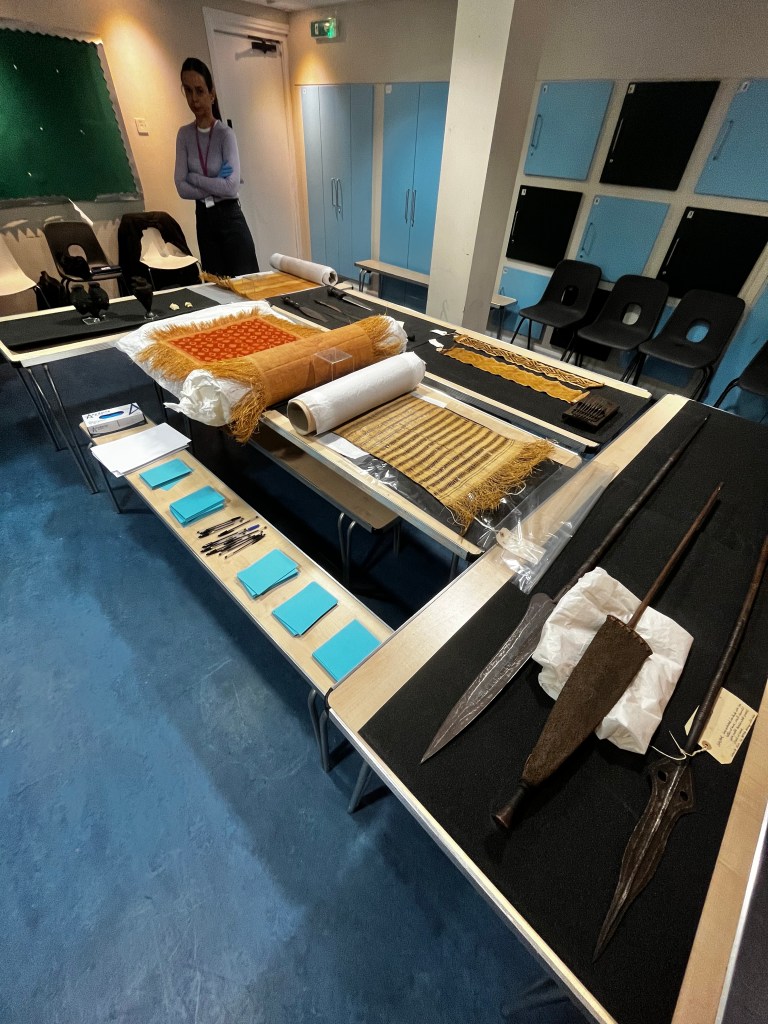
This report presents findings from a comprehensive survey of 48 archives, collections, and repositories across Northwest England that contain significant West African historical material (1880-1980). We should have an interactive map of the archive locations published here shortly….
Here is a list of the archives consulted and key information for each collection/location/repository:
The research reveals a substantial but under-explored archival landscape that offers exceptional opportunities for advancing historical research into West Africa and its relationship with Northwest England. The collections span diverse themes including colonial administration, trade networks, missionary activities, healthcare, urban development, and cultural exchange, providing rich source material for interdisciplinary research projects.
Research Scope and Methodology
Geographic and Temporal Parameters
The survey focused on historical West African material from former British colonies including Ghana, Gambia, Sierra Leone, and Nigeria, with additional consideration of materials from Congo, Cameroon, Senegal, Mali, and Niger. The temporal scope encompasses the period 1880-1980, capturing the late colonial period through to early post-independence developments.
Thematic Categories
Research materials were categorised across key themes:
History and heritage studies
Urban design and city planning
Public health and medical history
Architecture and built environment
Trade and commercial networks
Religious and missionary activities
Colonial administration
Collection Assessment Framework
Each archive was evaluated using a systematic approach that assessed:
Type and format of materials (books, photographs, manuscripts, ephemera, artifacts)
Primary thematic focus
Volume and extent of holdings
Accessibility and research potential
Relevance rating (1-5 star system that reflected how useful the archive would be to our research interests in the built environment and history)
Key Findings: Archive Landscape and Research Potential
Distribution and Scale
The survey identified 48 archives across Northwest England, primarily concentrated in the Merseyside region but extending to Manchester, Lancaster, and Chester. Seven archives achieved the highest relevance rating (5 stars), each containing over 20 linear metres of diverse West African materials spanning multiple themes and formats.
Material Types and Research Applications
The collections encompass diverse formats offering multiple research approaches:
Documentary Sources:
Colonial administrative records
Trade and shipping documentation
Medical and health records
Urban planning documents
Personal correspondence and diaries
Visual Materials:
Photographs documenting colonial life, urban development, and cultural practices
Architectural drawings and city plans
Maps and surveys
Artistic representations
Material Culture:
Artifacts and objects
Textiles and decorative arts
Ceramics and sculptures
Models and architectural elements
Corporate Archives: Exceptional Research Resources
Unilever and United Africa Company Archives: The Unilever archives, particularly the United Africa Company (UAC) collection, represent one of the most comprehensive corporate archives relating to West African economic history. UAC, established in 1929 through the merger of the Royal Niger Company and the African and Eastern Trade Corporation, became the largest trading company in West Africa. The archives contain:
Extensive Trading Records: Documentation of palm oil, cocoa, groundnut, and timber trades spanning decades
Infrastructure Development: Records of store construction, transport networks, and commercial facilities across West Africa
Labour and Employment: Personnel records, training programs, and workforce development initiatives
Technology Transfer: Documentation of agricultural techniques, processing methods, and industrial development
Local Partnerships: Records of relationships with African traders, suppliers, and business partners
Post-Independence Adaptation: Materials documenting corporate strategy during decolonization and nationalist movements
These materials offer unique insights into corporate colonialism, the mechanics of extractive economies, and the complex negotiations between European capital and African societies. The collection provides essential source material for understanding how global commodity chains operated at ground level and their impact on local communities.
Barclays Bank Archive: The Barclays collection contains extensive documentation of banking operations across West Africa, including:
Colonial Banking Development: Records of branch establishment, credit systems, and monetary policy
Financial Networks: Documentation of money transfers, currency exchange, and international finance
Agricultural Finance: Materials on crop financing, seasonal credit, and agricultural development programs
Commercial Lending: Records of business loans, trade financing, and commercial development
Post-Colonial Banking: Materials documenting the transition to independence and continued financial relationships
The banking records provide crucial insights into how financial systems shaped economic development, facilitated trade networks, and influenced social relations across West Africa. These materials are particularly valuable for understanding the mechanics of colonial extraction and the evolution of financial institutions in post-colonial Africa.
Thematic Strengths for Research Development
Urban Development and Planning: The Archives contain substantial materials on colonial urban development, infrastructure projects, and city planning initiatives. These sources offer opportunities to examine how European urban planning concepts were implemented in West African contexts and their lasting impact on contemporary cities.
Medical and Public Health History: Rich documentation of colonial health initiatives, medical practices, and public health campaigns provides foundation for research into the history of medicine in West Africa, disease management, and the development of healthcare infrastructure.
Commercial and Trade Networks: Extensive shipping, banking, and commercial records illuminate the economic relationships between Northwest England and West Africa, offering insights into trade networks, commodity flows, and economic development patterns. Of particular significance are the Unilever archives (including the United Africa Company records) and the Barclays Bank archive, which contain unparalleled documentation of corporate operations, trading networks, and financial systems that shaped West African economic development throughout the colonial and post-colonial periods.
Religious and Cultural Exchange: Missionary records, religious materials, and cultural documentation provide resources for examining religious transformation, cultural exchange, and the complex dynamics of colonial encounter.
Colonial Administration: Administrative records and governance documents enable research into colonial policy implementation, administrative structures, and the mechanics of imperial control.
Research Opportunities and Applications
Interdisciplinary Research Potential
The diversity of materials supports multiple disciplinary approaches:
Historical Research:
Comparative studies of colonial administration across West African territories
Economic history of trans-Atlantic trade networks
Social history of colonial encounters and cultural exchange
Urban Studies:
Evolution of colonial cities and urban planning
Infrastructure development and its contemporary implications
Architectural history and building practices
Medical History:
Development of tropical medicine
Public health initiatives and their outcomes
Medical knowledge transfer and adaptation
Cultural Studies:
Missionary activities and religious transformation
Cultural exchange and hybrid practices
Art, material culture, and aesthetic transformation
Collaborative Research Framework
The geographic concentration of archives creates opportunities for:
Multi-Archive Projects: Researchers can access complementary materials across institutions, enabling comprehensive studies that draw on diverse source types and perspectives.
Network Building: The established archive network provides foundation for collaborative research initiatives, shared resources, and coordinated access to materials. The University of Liverpool and AHUWA are particularly well-positioned to serve as coordinating institutions/centres for multi-archive research projects, leveraging their expertise in West African studies and established international partnerships.
Digital Humanities Applications: The variety of materials (textual, visual, material) offers opportunities for digital humanities projects, including digitization initiatives, database development, and online exhibitions. The University of Liverpool’s digital humanities infrastructure and AHUWA’s focus on accessibility make this an ideal location for developing innovative digital approaches to archival research.
Strategic Recommendations for Research Development
Institutional Research Capacity: University of Liverpool and AHUWA
University of Liverpool Research Infrastructure: The University of Liverpool is exceptionally well-positioned to capitalise on this rich archival landscape. As a leading institution in historical research with strong connections to West African studies, the university offers:
Established Research Expertise: Faculty with specialized knowledge in African history, colonial studies, and economic history
Interdisciplinary Capabilities: Departments spanning History, Geography, Politics, Development Studies, and Business that can support multifaceted research approaches
Digital Humanities Infrastructure: Technical resources for digitisation projects, database development, and online exhibitions
Graduate Research Programs: Capacity for training new researchers in archival methods and West African historical research
International Partnerships: Existing relationships with West African universities and research institutions
AHUWA Research Centre: The Architecture, Heritage, and Urbanism in Western Africa (AHUWA) research centre provides a specialized institutional framework for maximising the research potential of these archival collections. AHUWA’s mission and expertise make it ideally suited to:
Coordinate Multi-Archive Projects: Develop comprehensive research initiatives that draw on materials from multiple archives
Foster Collaborative Research: Facilitate partnerships between UK and West African researchers
Support Community Engagement: Connect archival research with contemporary West African communities
Promote Policy Relevance: Ensure research contributes to contemporary development and policy discussions
Develop Digital Platforms: Create online resources that make archival materials accessible to global researchers
The combination of Liverpool’s institutional resources and AHUWA’s specialised focus creates an unparalleled opportunity for developing the research potential of Northwest England’s West African archives.
Priority Research Areas
1. Comparative Colonial Studies The archives support comparative research across different West African territories, examining variations in colonial policy, administration, and outcomes.
2. Economic History Networks Trade and commercial records enable mapping of economic relationships, commodity flows, and the development of trans-Atlantic commercial networks. The Unilever/UAC and Barclays archives are particularly valuable for examining corporate colonialism, financial systems, and the evolution of global commodity chains. These collections support research into topics such as:
The role of European corporations in shaping West African economies
Banking and financial networks in colonial and post-colonial Africa
Labour relations and industrial development
Technology transfer and agricultural modernization
Corporate responses to decolonization and African nationalism
3. Urban Development Studies Planning documents and architectural materials provide foundation for examining colonial urban development and its contemporary implications.
4. Medical and Public Health History Healthcare records offer opportunities to examine the development of tropical medicine, public health initiatives, and medical knowledge transfer.
Methodological Approaches
Cross-Archive Analysis: Researchers should develop strategies for working across multiple archives to build comprehensive pictures of historical processes and relationships. The corporate archives (Unilever/UAC and Barclays) can be particularly productive when analysed in conjunction with government records, missionary materials, and local documentation.
Digital Integration: Consider developing digital platforms that integrate materials from multiple archives, enabling new forms of analysis and presentation. The University of Liverpool’s technical capabilities and AHUWA’s research focus provide ideal foundations for such initiatives.
Community Engagement: Explore opportunities for community-based research that connects archival materials with contemporary West African communities in Northwest England. AHUWA’s community engagement expertise and Liverpool’s diverse population create opportunities for participatory research approaches.
Future Research Directions
Emerging Themes
The archive survey suggests several promising research directions:
1. Infrastructure and Development: Examining colonial infrastructure projects and their long-term implications for contemporary development challenges.
2. Knowledge Transfer: Investigating how knowledge, practices, and technologies moved between West Africa and Northwest England.
3. Cultural Networks: Exploring the cultural connections and exchanges that developed through colonial relationships.
4. Corporate Colonialism and Business History: The Unilever/UAC and Barclays archives provide exceptional opportunities for examining the role of European corporations in shaping West African development, including studies of extractive economies, corporate-state relations, and business adaptation to decolonization.
5. Post-Colonial Continuities: Examining how colonial-era relationships evolved in the post-independence period, with particular attention to ongoing corporate and financial connections.
Methodological Innovation
The archives offer opportunities for methodological innovation in:
Digital humanities applications
Multi-sited archival research
Community-based research approaches
Interdisciplinary collaboration
Conclusion
The West African archival materials in Northwest England represent a significant and underutilised resource for historical research. The diversity of collections, spanning multiple themes and formats, provides foundation for innovative research projects that can advance understanding of West African history, colonial relationships, and their contemporary implications. The exceptional corporate archives, particularly the Unilever/UAC and Barclays collections, offer unique insights into the mechanics of colonial economies and corporate power in Africa.
The established network of 48 archives, combined with the research capacity of the University of Liverpool and the specialized expertise of AHUWA, offers exceptional opportunities for collaborative research, comparative studies, and interdisciplinary projects. With seven archives containing substantial holdings and many others providing specialized materials, researchers have access to comprehensive source bases for addressing complex historical questions about corporate colonialism, financial systems, and economic development.
The University of Liverpool’s institutional strengths and AHUWA’s focused mission create an ideal environment for developing the research potential of these collections. Their combined expertise in West African studies, digital humanities, and community engagement provides the foundation for innovative methodological approaches and collaborative research initiatives that can significantly advance historical understanding.
Moving forward, the research community should prioritize developing collaborative frameworks that maximise the potential of these collections, with particular attention to the corporate archives that offer unique insights into the mechanics of colonial extraction and economic development. The foundations established through this survey, combined with Liverpool’s institutional capacity and AHUWA’s specialised focus, provide the groundwork for a new generation of research that can significantly advance historical understanding of West Africa and its relationship with Northwest England.