An exhibition that we’ve been very much looking forward to opens this week at the V&A Museum in London. We’ve got a few of our models on display at the exhibition, and have been involved behind the scenes. There’s a large contingent from the Transnational Architecture Group making their way to various opening events this week and you can expect a series of reviews and critiques here shortly.
There’s also an article out today by Oliver Wainwright in The Guardian that discusses the exhibition concept – and some of our favourite buildings.
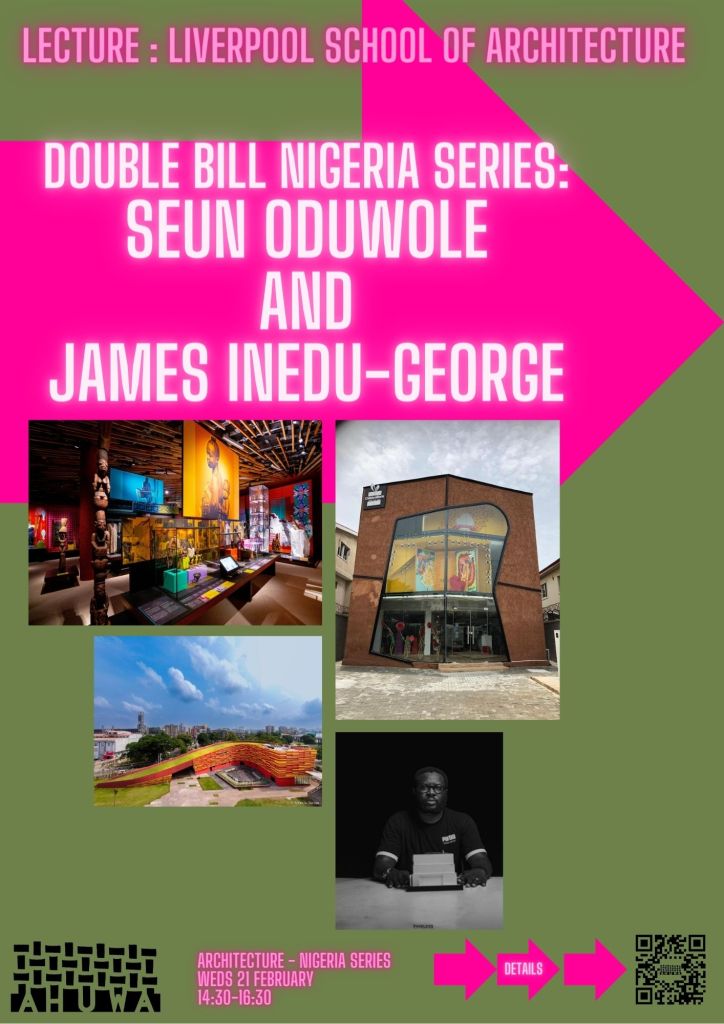
We inaugurated AHUWA’s Architecture in Nigeria Series this week with two talks from architects Seun Odowole and James Inedu George .
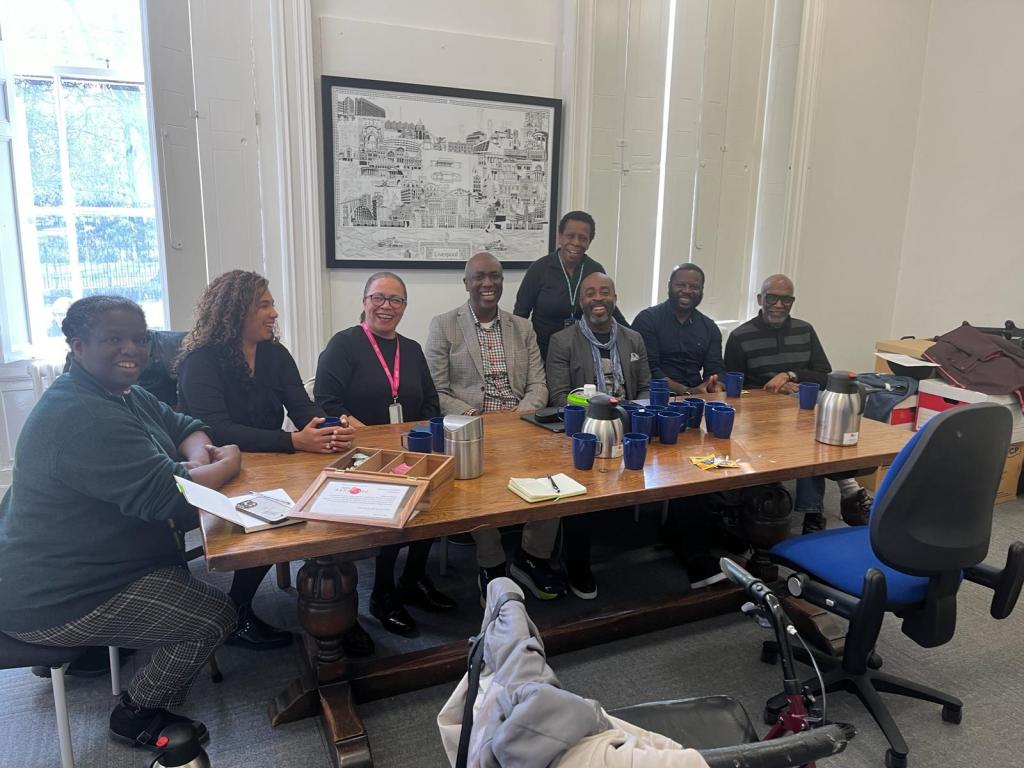
Pre-lecture tea with Susan Golligher; Maleka Egeonu-Roby, Michelle Charters, Obuks Ejohwomu; Ola Uduku, Seun Oduwole, James Inedu George, and Prof emeritus Tunde Zack Williams
After gathering at the Liverpool School of Architecture for pre-lecture tea, we talked across the Square to the new Yoko Ono Lennon Centre for the talks to begin. Both Seun and James are involved in designing new museums in Nigeria and Ghana, and we were joined by colleagues from the Liverpool International Slavery Museum who are collaborating with LSA and Feilden Clegg Bradley Studios on the refurbishment and reimagining of that space.
Join us at Liverpool School of Architecture this Wednesday 21st Feb 2024 at 14:30 for a lecture double bill discussing and showcasing contemporary Nigerian architecture, design practice and thinking.
We have two key players who are part of the the new contemporary West African Architecture scene. First we have Seun Oduwole, who graduated in Architecture from Nottingham University and after working in practice in the UK returned to Nigeria to set up his own practice Studio Imagine.Simply Architecture [SI.SA].
He will be speaking about his recently completed John Randle Centre in Lagos discussing the design history matters of heritage, and also the challenges of building on prime real estate in the Lagos central business district. As he has practiced both in the UK and now works as a diaspora returnee architect, we will hear his views on the contemporary West African Architecture scene.
We also have James Inedu George, a graduate of Ahmadu Bello University. He runs the architectural practice HTL Africa, whose main laboratory is in Lagos Nigeria. Currently, he and his firm, HTL Africa, are working towards creating canonical typologies for our cities from an intense research on (Hausa) Traditional Architecture.
James lectures internationally on a regular basis and has featured in several publications globally. HTL Africa’s interests range from cultural to cutting edge technological exploration through architecture. Creating what might be read as experimental architecture, this research and implementation firm has an output that is at once fresh, modern and forward thinking. HTL also has tentacles in Dubai.
Do come to join what is likely to be a really illuminating afternoon discussing contemporary Architecture and heritage issues in West Africa.
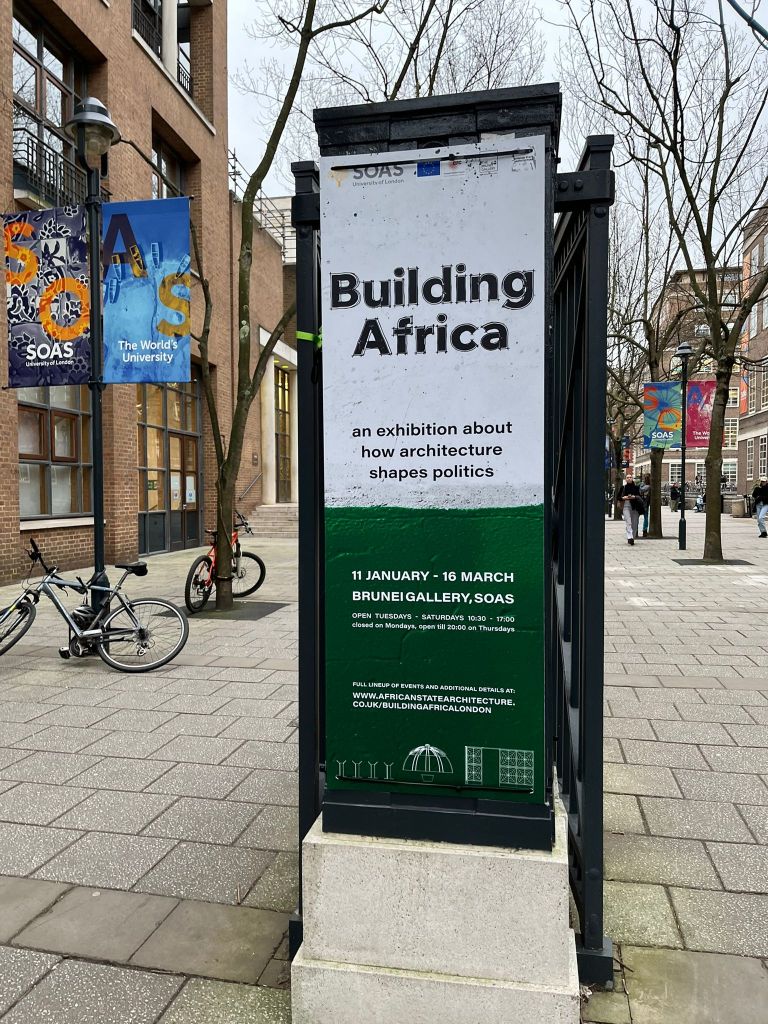
The Building Africa Exhibition curated by Julia Gallagher and Kuukuwa Manful is currently showing at the Brunei Gallery SOAS until 16 March 2024. This is a smaller version of the exhibition which was first shown in Ethiopia as part of the State Architecture Research project at SOAS with Prof Gallagher as its director.
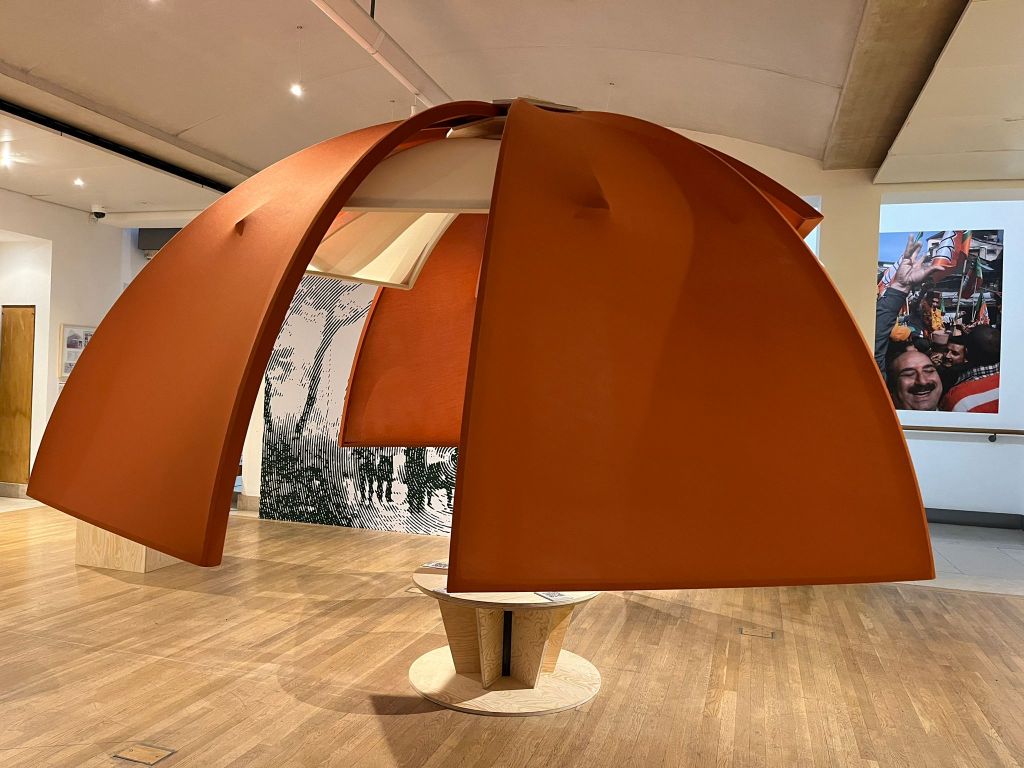
The SOAS exhibition is full of colour featuring, film, photography, a large-scale physical model-installation, publications and school uniforms and memorabilia. Located in the main gallery space, sections deal with the school history of Ghana, ‘state-built architecture in several African countries, highlighted in the exhibition by images of Ghana’s alternating seats of power, (Osu Castle and State House), and the African Unity building constructed in Addis Ababa. A conceptual installation structure evoking African unity has also been produced by the work of a young Ethiopian architect , Nahom Teklu whose umbrella structure enables exhibition visitors view in VR the ‘state’ architecture of different parts of Africa, it also harks back to the idea of pan-African unity where the umbrella unites all states on the continent.
The exhibition’s thesis that buildings shape us, is made clear to viewer and particularly how the state’s involvement is central to this process of power, positioning, and identity, particularly in Africa, from its colonial past to the now post-colonial contemporary situated-ness in Africa’s modern cities to secondary schools in Ghana in which the schools shaped would be future leaders. This was both by the design of the schools within a colonial frame but also school uniforms, motos and other paraphernalia of educational engagement.
State built institutions such as seats of government (state house in the case of Ghana) or stadia (exemplified in the exhibition by the main stadium in Kinshasa) have a more mixed relationship where they both are sites of power, and international events (the Muhammed Ali – Frazier rumble in the jungle, Kinshasa stadium film footage is on show) or symbols of African Unity (shown through AU building in Addis Abeba, which often results in tensions of perceptions and strategic plans for future use as regimes and state actors change.
The exhibition also connects the viewer to the research which has underpinned it. This includes the 2023 book Building African Futures edited by Gallagher and Emmanuel Ofori-Sarpong, and Manful; and Manful’s thesis – and a number of papers members of the State Architecture project have published as reports and in peer reviewed journals.
Building Africa packs a dense amount of African state-built architectural history into a a viewable gallery which audiences are invited to view, engage with and critique, helpful post-it notes are provided for this process. The curators explain that this is an adjusted version of the larger 7 panel exhibition and of the conceptual architectural installation has had to be cut short to fit the gallery space. This does not detract from this well-planned and already publicly pleasing and well- received exhibition.





 Transnational Architecture Group