Visit of Head of School, Sierra Leone School of Architecture and Academic Colleague Dr Joe Ben Davies Engineering Alumna University of Liverpool
Joe Ben Davies, Ola Uduku, Ken Ndomahina at LSA
Professor Ola Uduku was delighted to welcome Ken Ndomahina, Head of the recently established Sierra Leone School of Architecture who was visiting Liverpool with his academic colleague Dr. Joe Ben Davies, an alumna of the University of Liverpool, School of Engineering. A good discussion about what future Architecture teaching and research collaborations took place. Key curriculum pillars, sustainable materials, approaches to mass housing, architectural history research were discussed.
We agreed to the following; the sharing of the GAHTC digital lecture notes on the History of Tropical Architecture, LSA staff engaging in discussing and working with the Sierra Leone Architecture school to identify their future curriculum priorities and. Future possibilities of support and collaboration at Masters and other PG degree levels, including possibilities for future joint research projects.
We plan to stay in touch and consider possible future workshop possibilities, links to a possible future Masters in African urban heritage and planning, and Business School workshops on the economics and efficiencies of international teaching development .
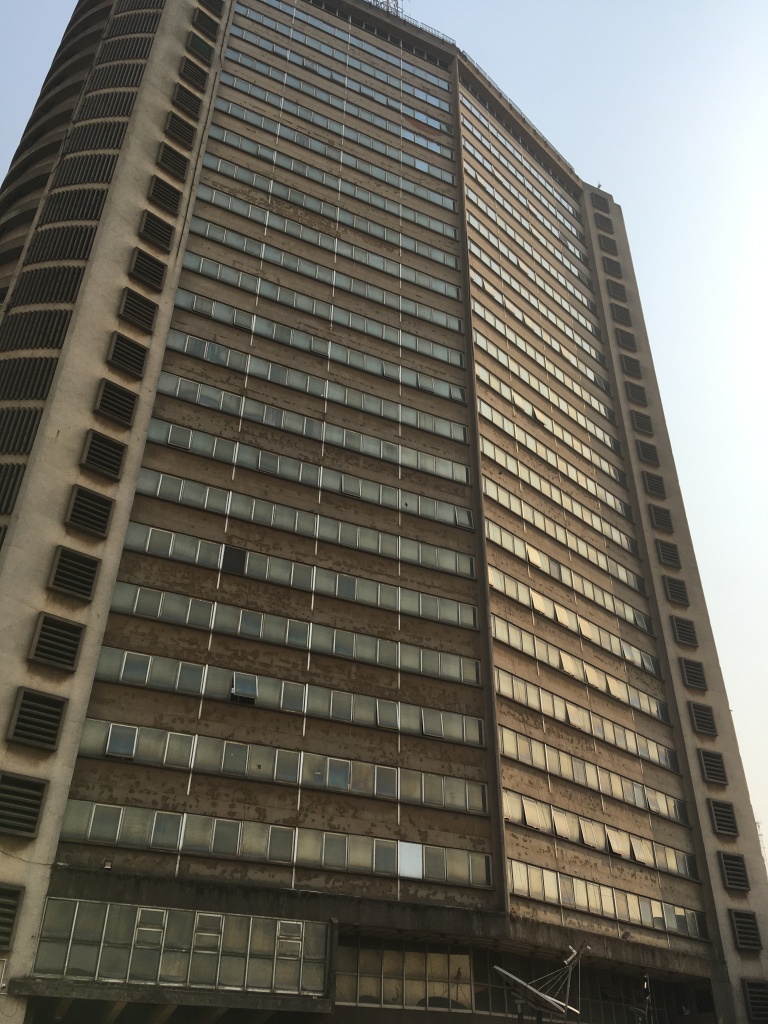
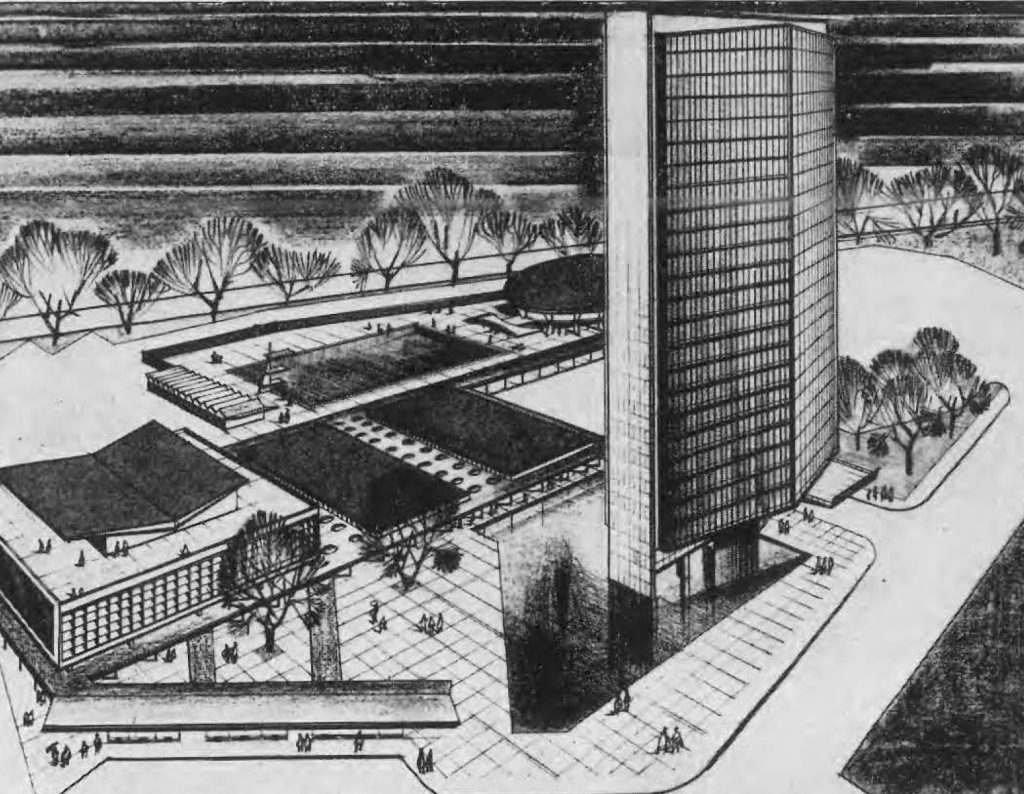
We searched various journals and articles from the time, and eventually came across a reference to a skyscraper shopping precinct project from 1960 in the journal Interbuild. Ola Uduku continued a different line of inquiry and traced the project down in West African Builder.…
The architects were listed as ‘The Plan Group (West Africa)’ – not a well-known practice or one that has featured heavily in existing literature and research, but it was a name that I’d certainly come across before.
I trawled through our old notes and archival references, and found a file on ‘The Plan Group’ from the archives in Fourah Bay, Sierra Leone (Box 661). It turns out that the Plan Group was a multidisciplinary practice/development agency established by Nickson and Borys. Their aim was to provide an integrated design service, with particularly attention given to cost control and engineering, as well as mitigating risk for the client on large complex design projects.
In a letter sent to the Sierra Leonian government from 1960, Borys set out his vision for the practice, including listing the projects they were already working on, such as a 20 storey block in Lagos, the Ibadan project mentioned above, and a township near Lagos for 35,000 people – were these other Nigerian projects completed? And if so, where/what are they?
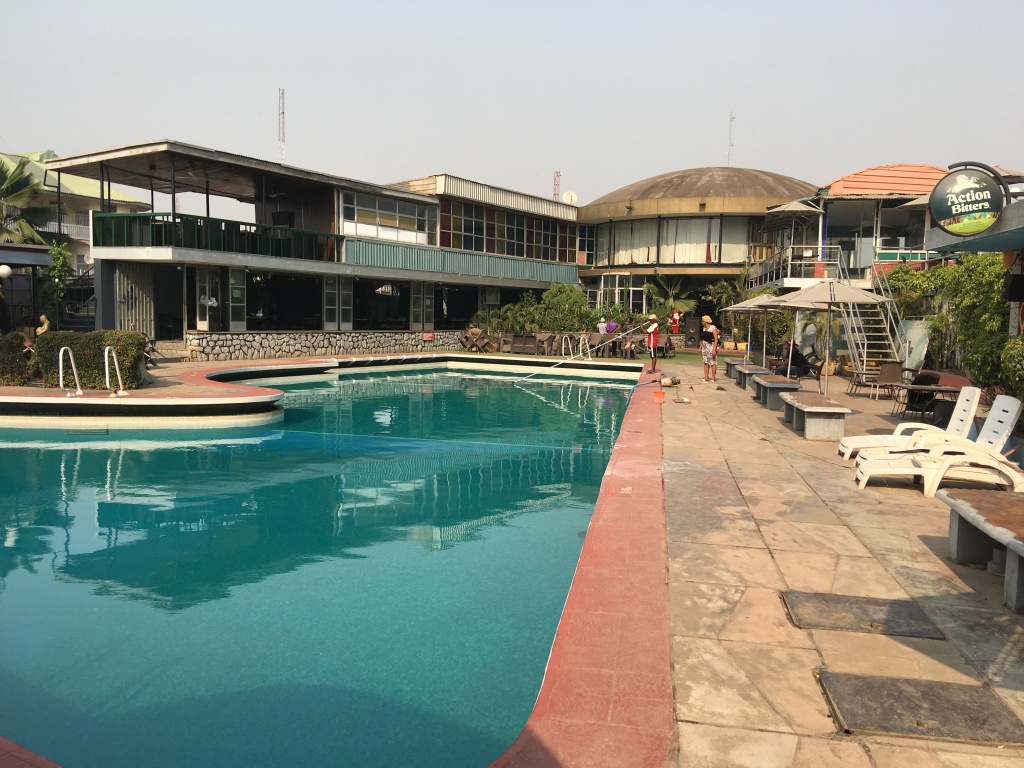
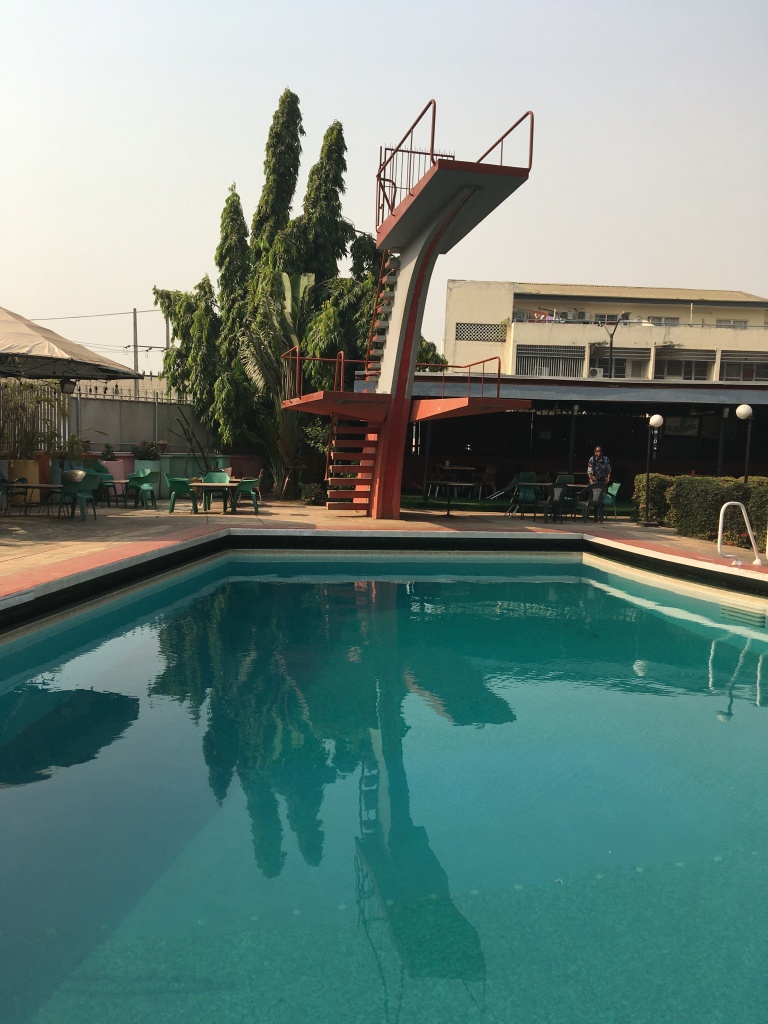
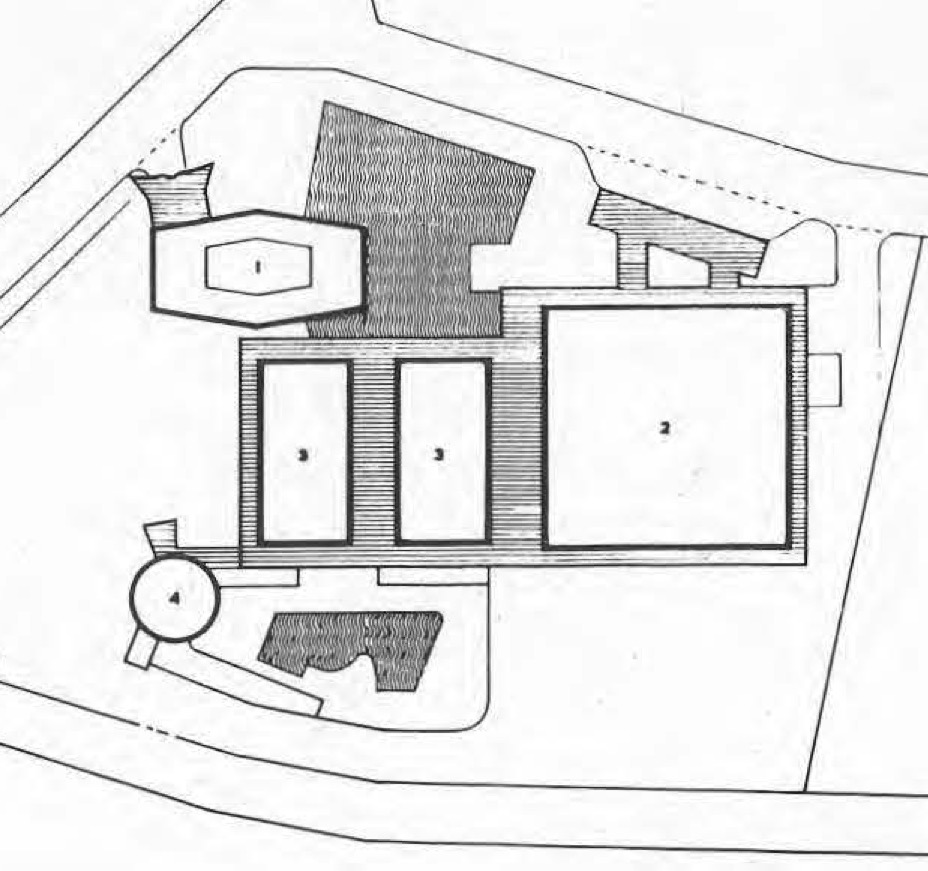
The Ibadan project was a multipurpose and speculative venture, aimed at providing office space as well as leisure facilities through the nightclub, swimming pool and cinema complex. There was also a large department store as part of the scheme. This wasn’t a Kingsway Store, so could it have been a competing UTC or A G Leventis?
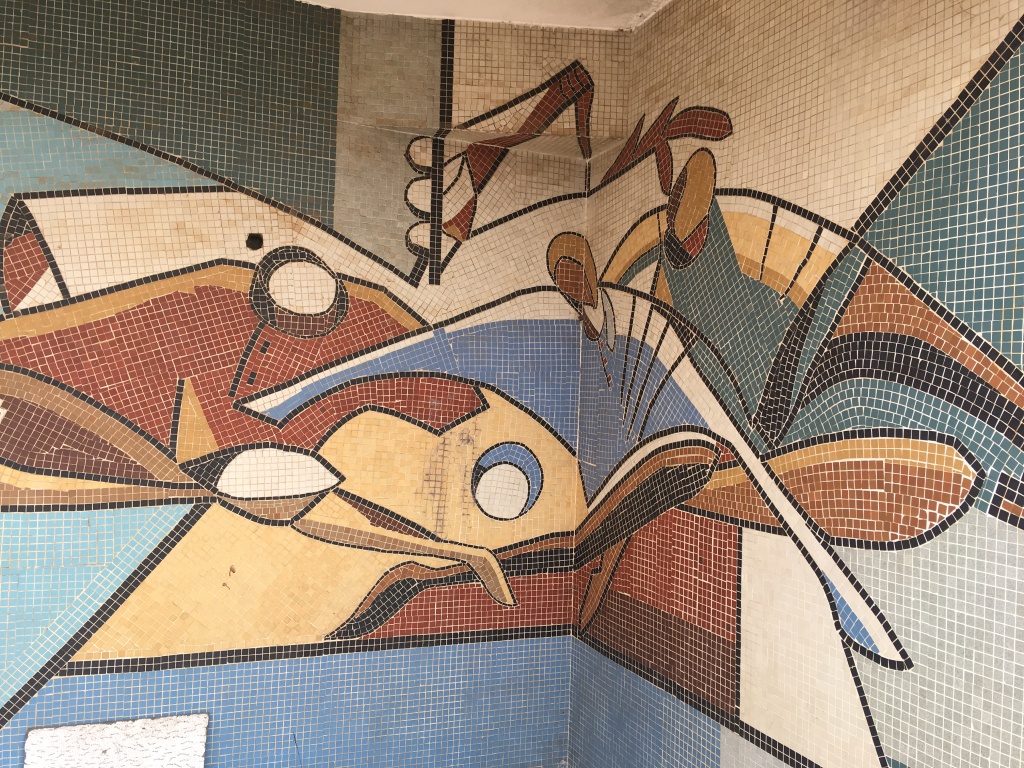
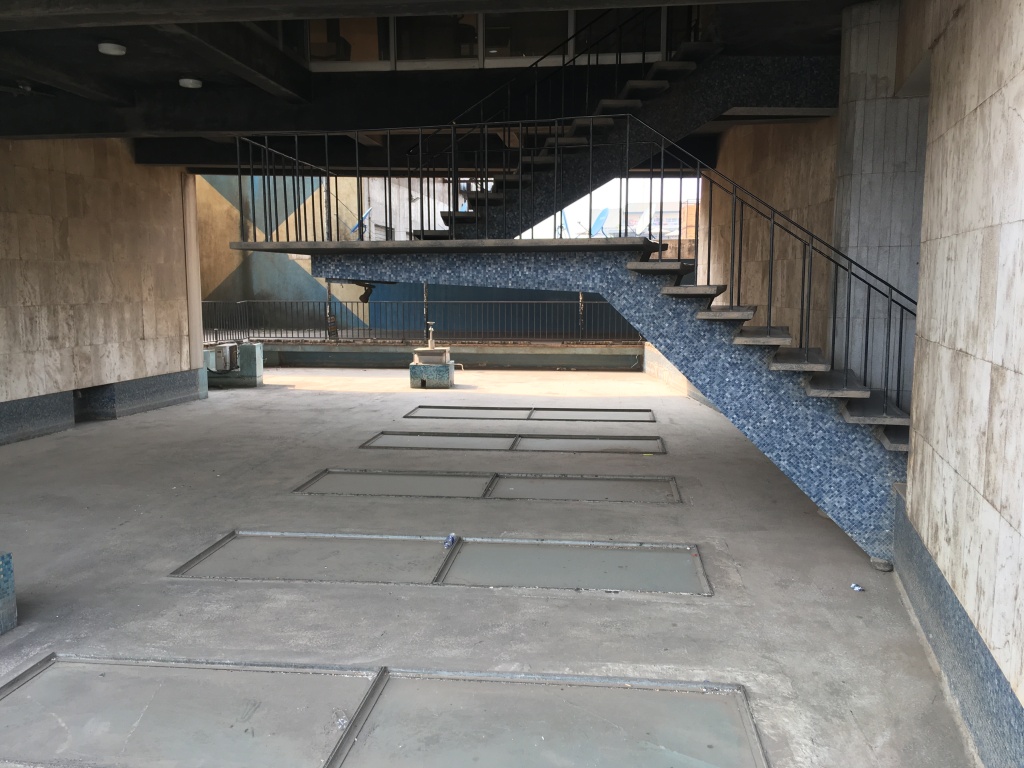
As well as the Cocoadome having mosaic decoration, Cocoa House roof garden also has some really special mosaic work clearly executed by a talented artist, but now hidden away from public view. If you visit the building be sure to venture to the top floor to spend an hour in the museum, and as to see the mosaic work and views out across the city.
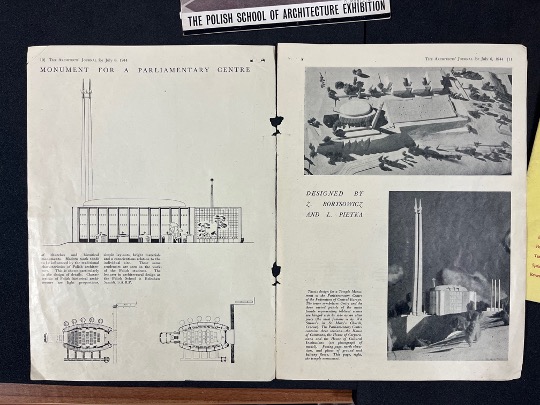
We’ve learned a lot about Nickson and Borys over the last 18 months – firstly finding out exactly who Borys is (Zdzisław Borysowicz), and that he studied at the Liverpool School of Architecture Polish School during WW2. We’d like to write a full biography on him and the practice. We’ve visited a number of his works in Sierra Leone, and now the Cocoa Project in Ibadan, and the intriguing references to Lagos too. Whilst the bulk of his practice was in the tropics he also worked in the Falkland Islands – so was clearly part of the colonial architectural infrastructure.
Here’s one of his student projects published in the The Architects’ Journal from 1944
As part of the Architecture of the United Africa Project I wanted to visit Banjul to investigate if there was any surviving buildings remaining from the UAC era. There was surprisingly little material in the UAC archive relating to the town and wider country – and we knew that the business focused its efforts elsewhere in West Africa. Despite this – there was a Kingsway Store, Palm Line Offices, and possibly several other European trading companies operating merchant stores, warehousing, wholesaling, and produce export businesses.
Kingsway StoresUAC warehousingPossibly African and Eastern Trading Corporation?
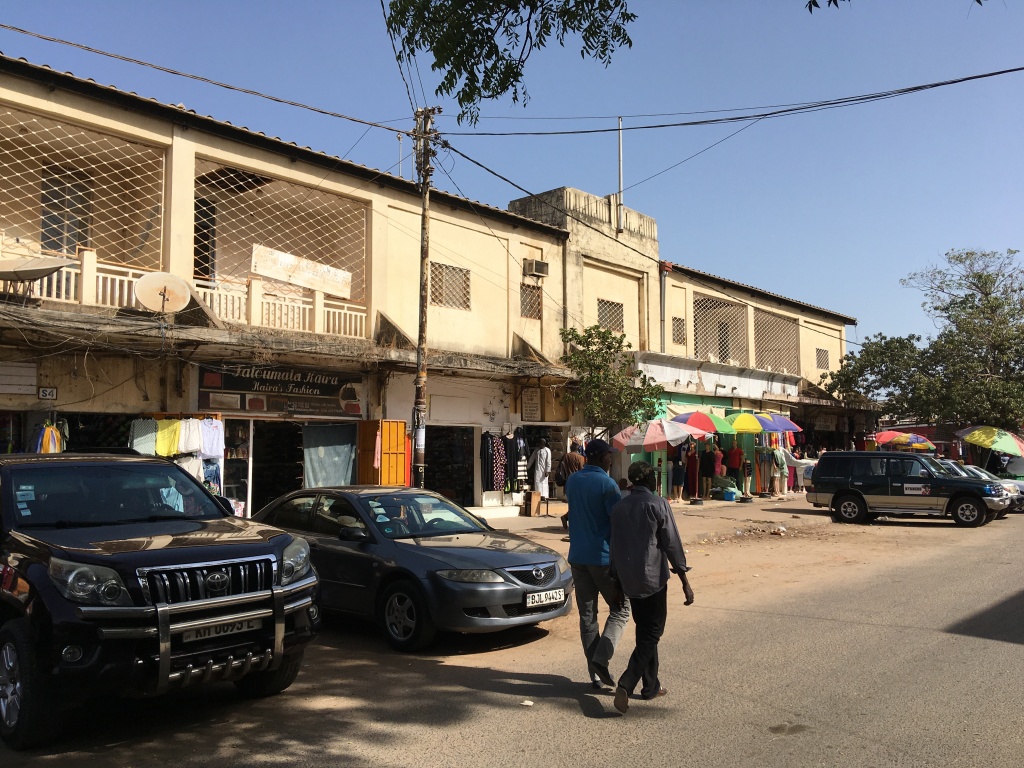
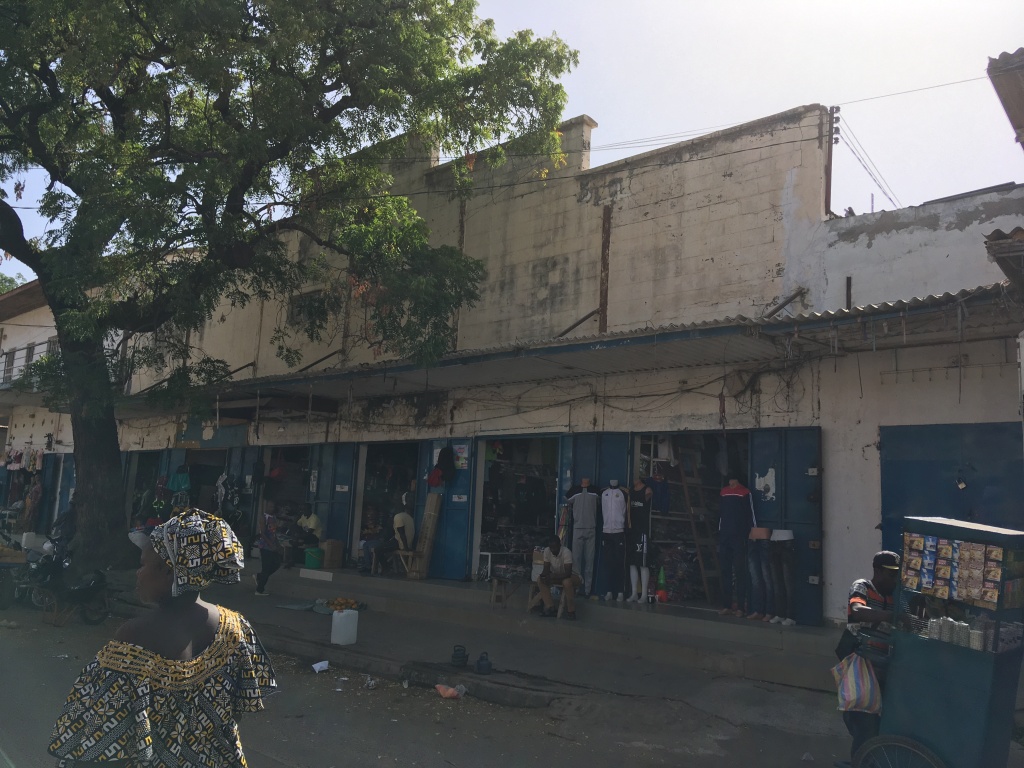
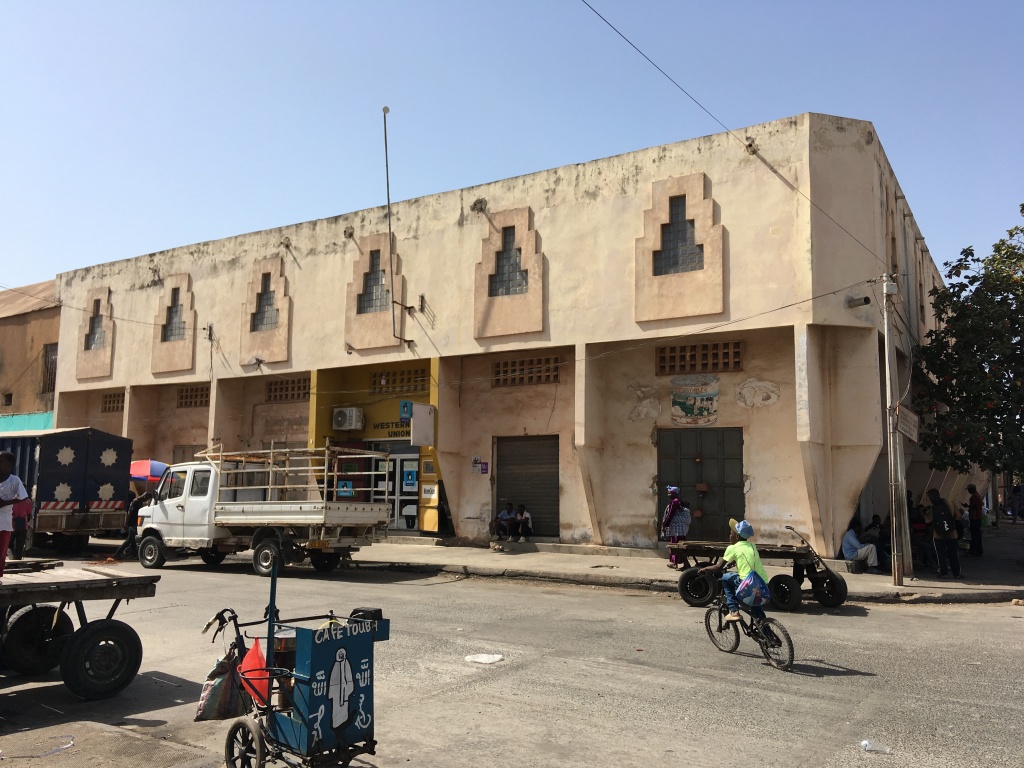
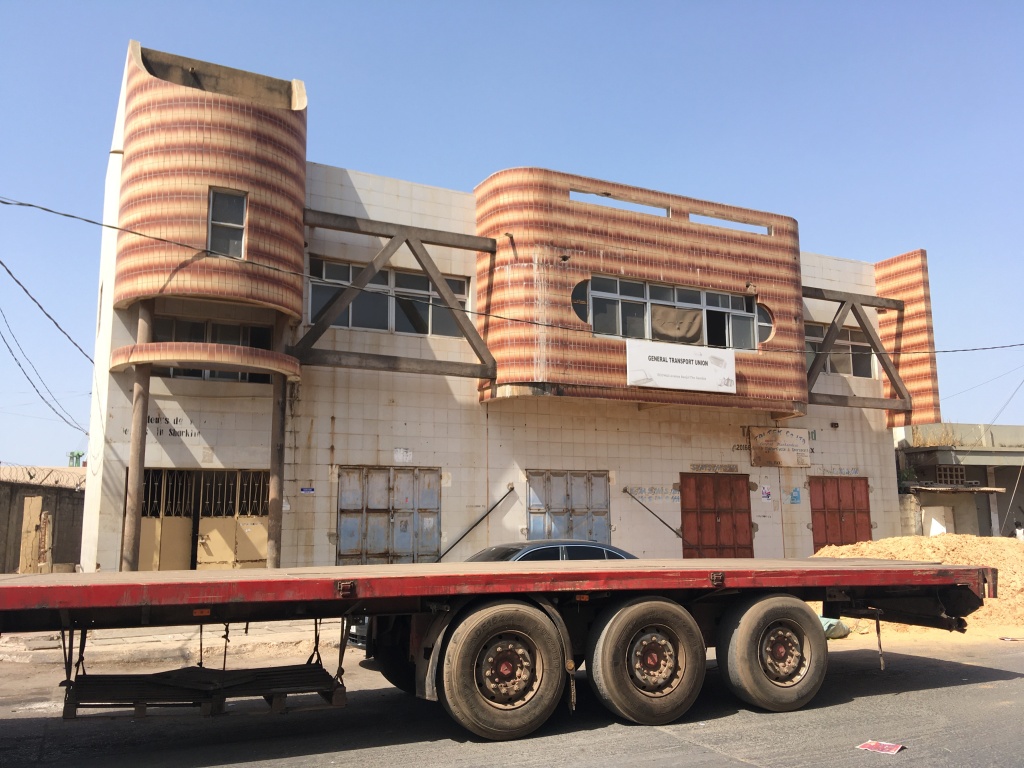
Banjul is a compact capital and we were able to quickly locate the old trading spots located around the Albert Market area. Here there are many traders importing fabric and textiles from China and India and it remains a thriving port. The Kingsway Stores and associated wholesaling lockups are still there, along with a series of other colonial period structures. Some of the older trading villas are now complete ruins and urgent documentation is required if rehabilitation isn’t possible.
Old Trading Store now ruined and overgrown
There are a number of Modern structures that we couldn’t identify, and some experimental architecture amongst the more restrained trading stores. There’s clearly a need for a mapping and documentation project to list and identify the history of these structures.
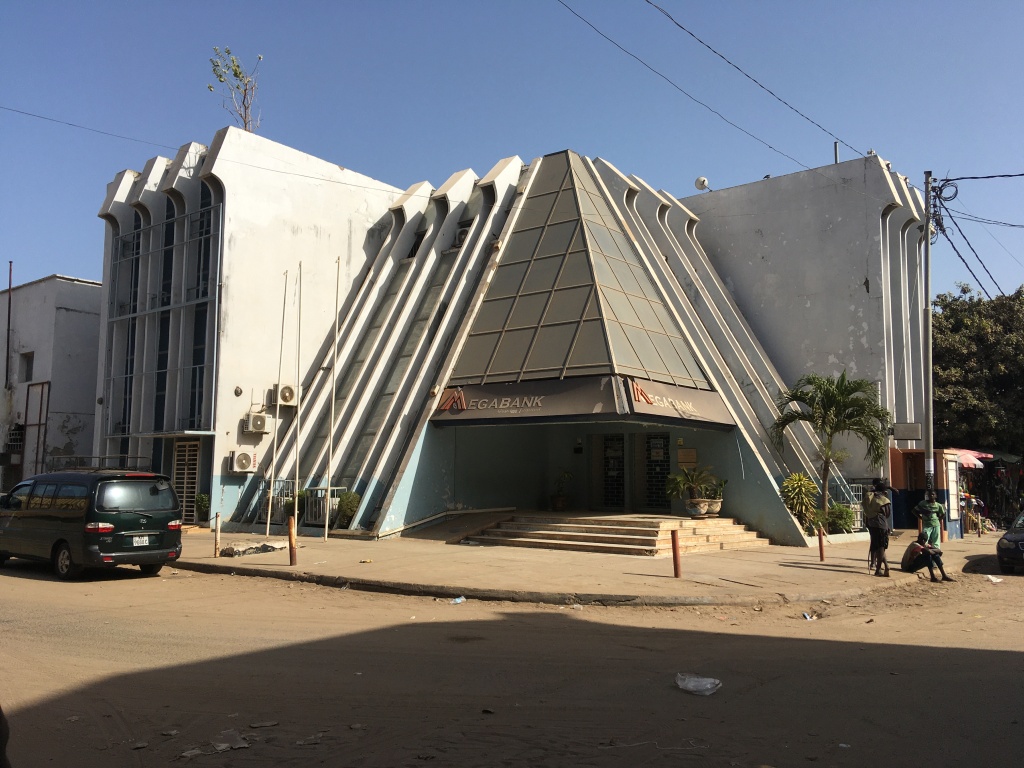
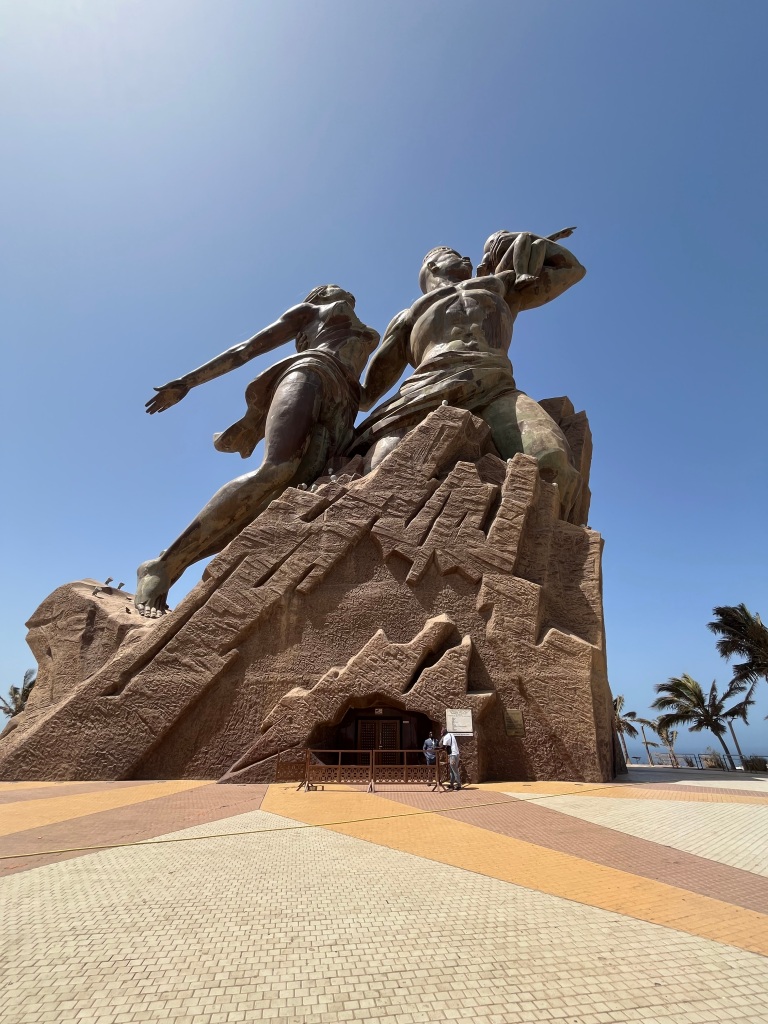
One of the highlights was the number of banking offices, including a design by Pierre Goudiaby (b 1947), the Senegalise architect responsible for Gambia’s airport, the National Theatre in Dakar, and the gigantic 49m tall African Renaissance Monument, also in Dakar.
Bank in Banjul by Pierre Goudiaby, 1985Banjul Airport, Pierre Goudiaby, 1997African Renaissance Monument, Pierre Goudiaby, 2008
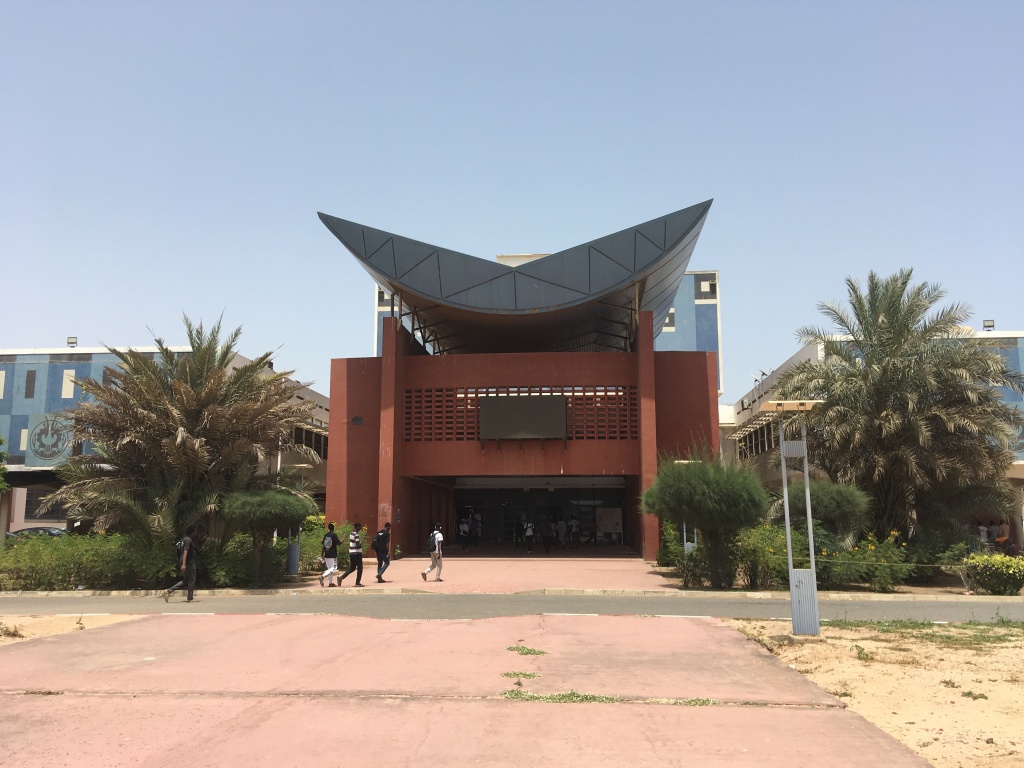
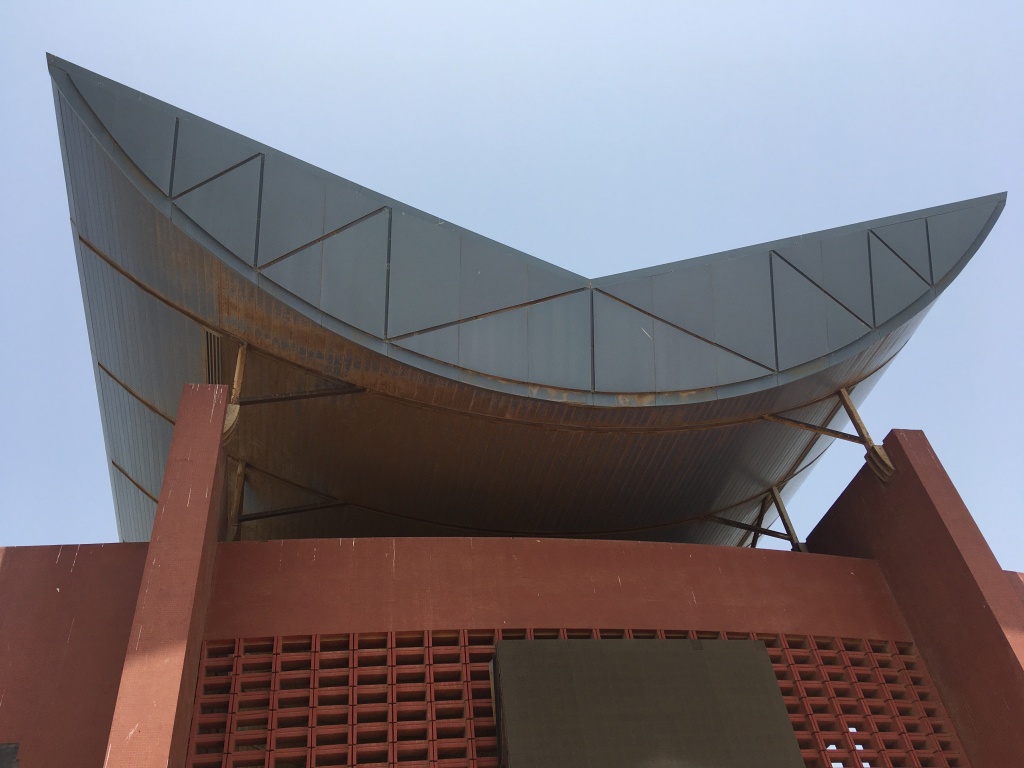
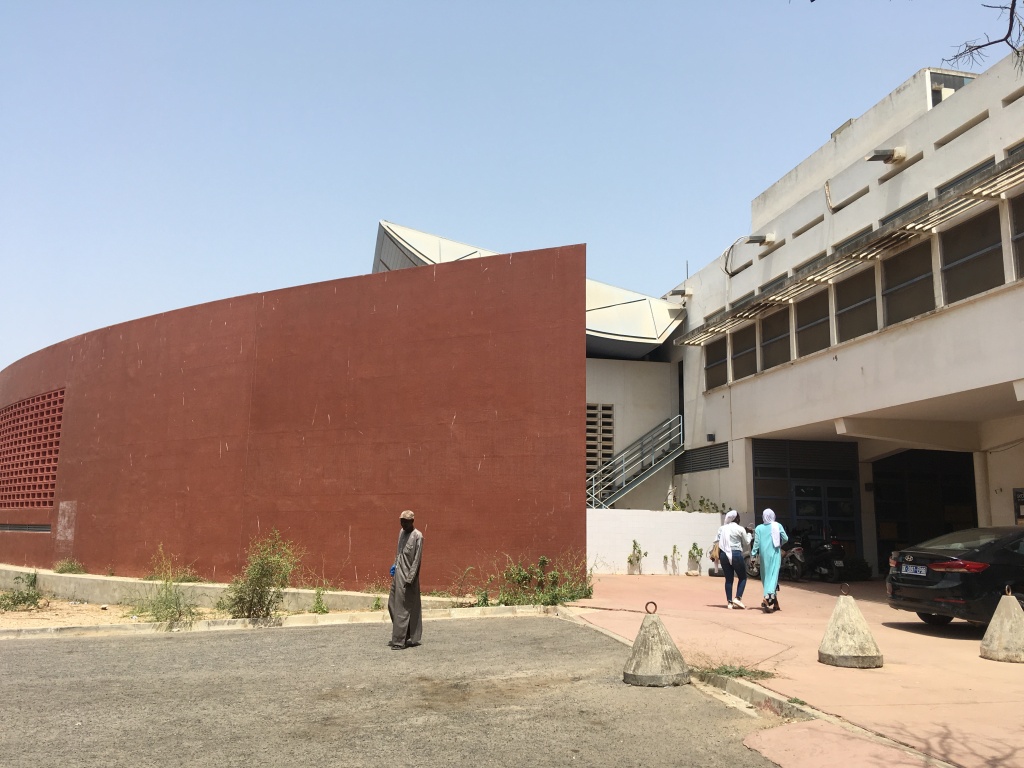
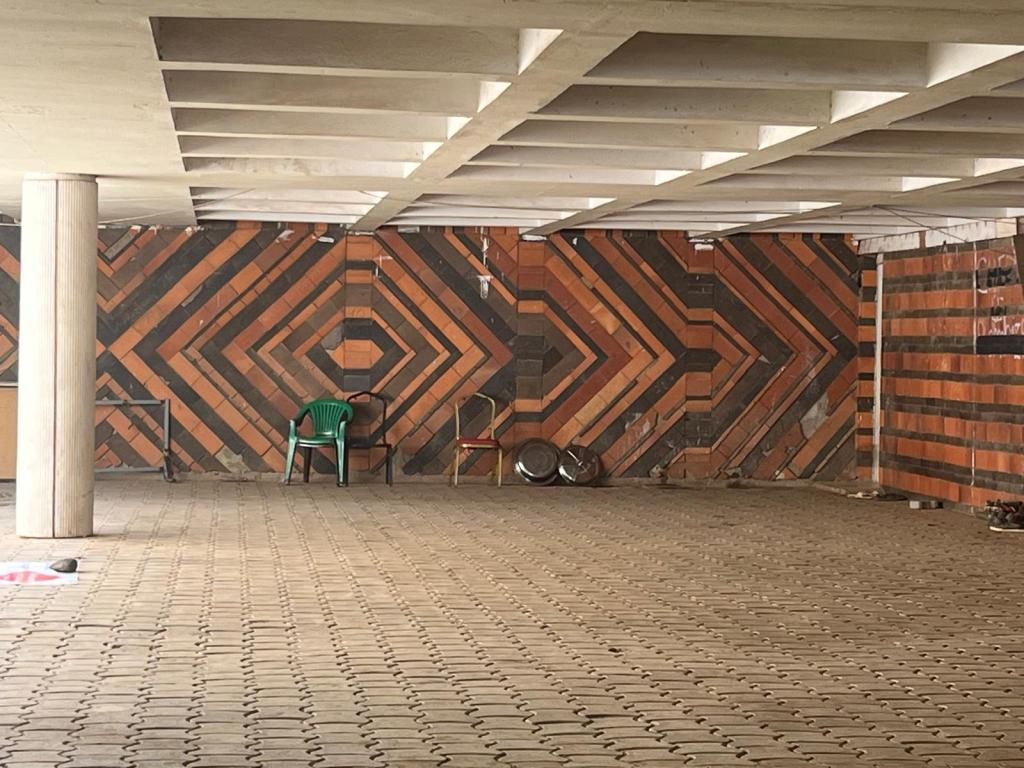
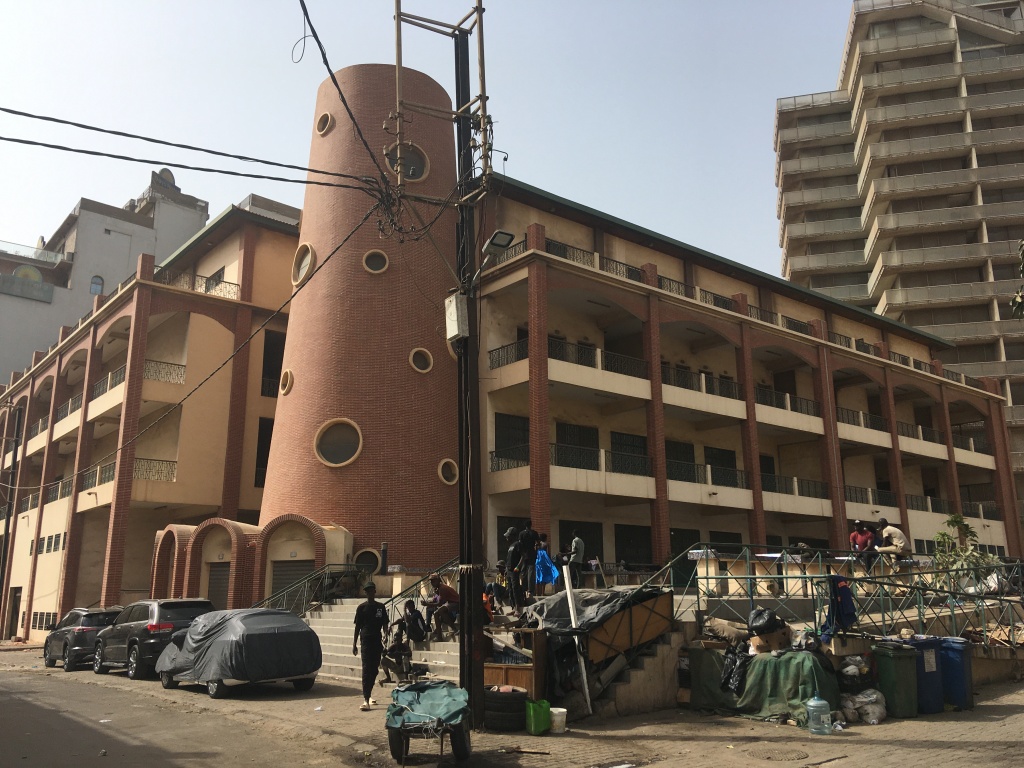
The old university library was completed shortly after Independence and located at the terminus of a long ceremonial avenue that cuts through the campus. By the late 1990s further space was required for study and new book acquisitions, but rather than build an extension or separate block, the solution was to partially wrap the old library with new segments and entrance portico to create additional room and atriums. The older structure is still clearly visible (see the rectilinear mosaic elements) but these forms are now joined by more playful additions whilst observing the strict symmetry. The inverted scoop of the entrance portico references Corbusier’s Assembly at Chandigarh (and is similar to Wilford’s Lowry Centre in Salford), but here it runs perpendicular to the main building with a zig-zag motif on the exposed gable. The addition was designed by Tétreault Parent Languedoc and Oscar Afrique in 2001.
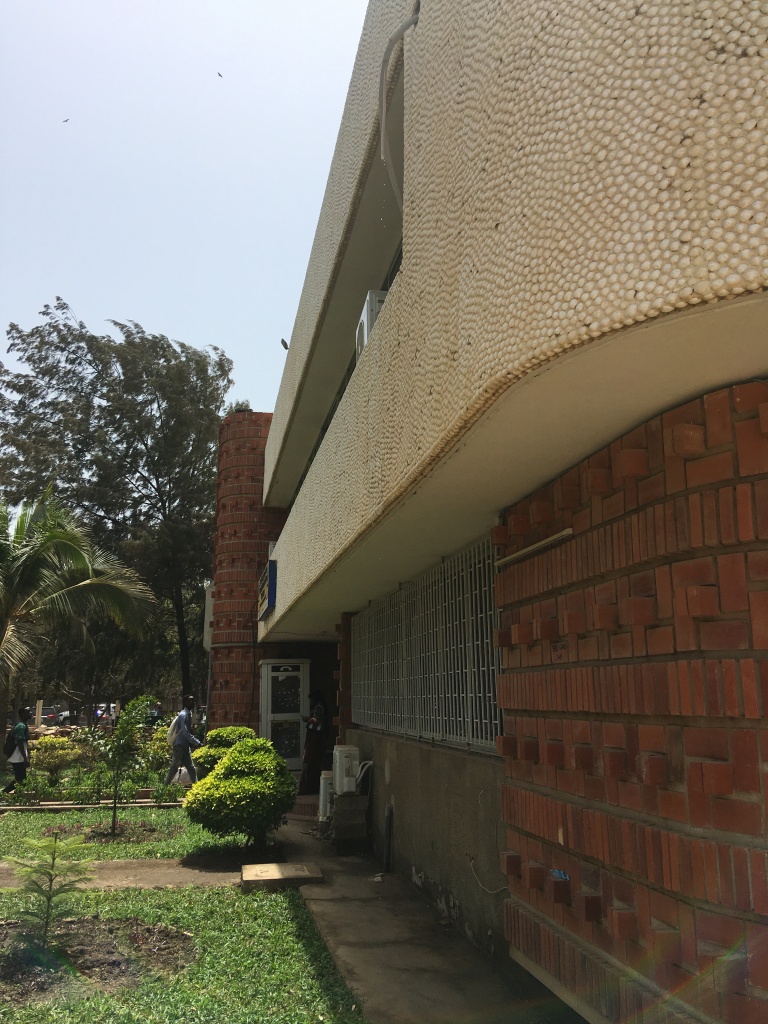
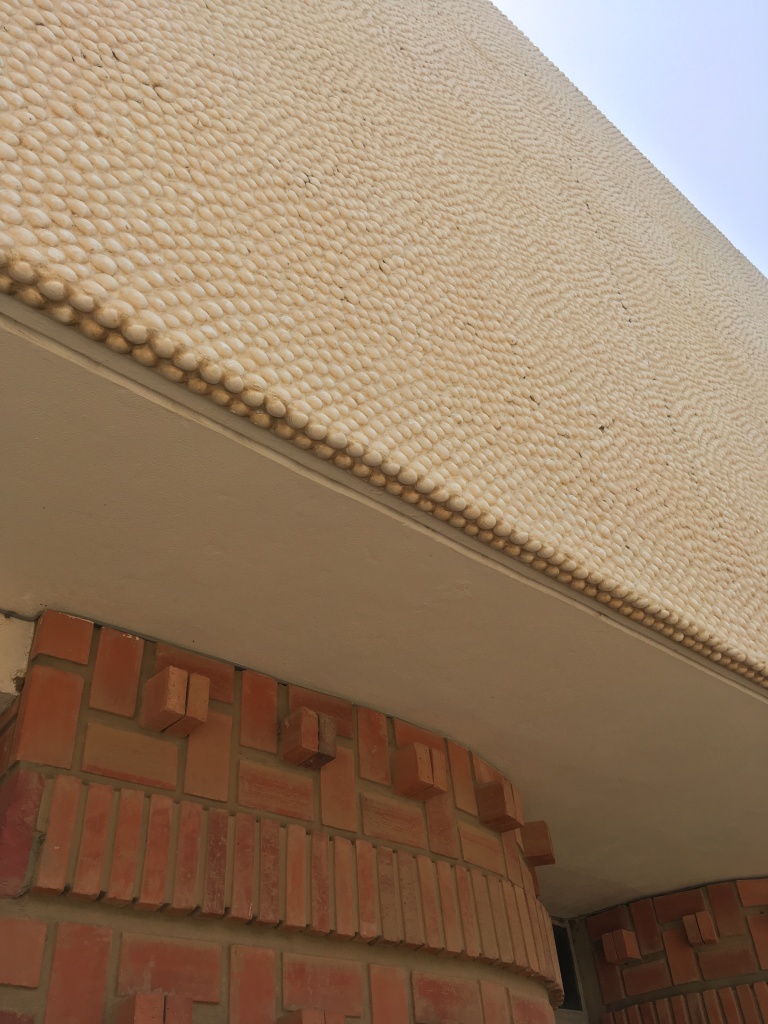
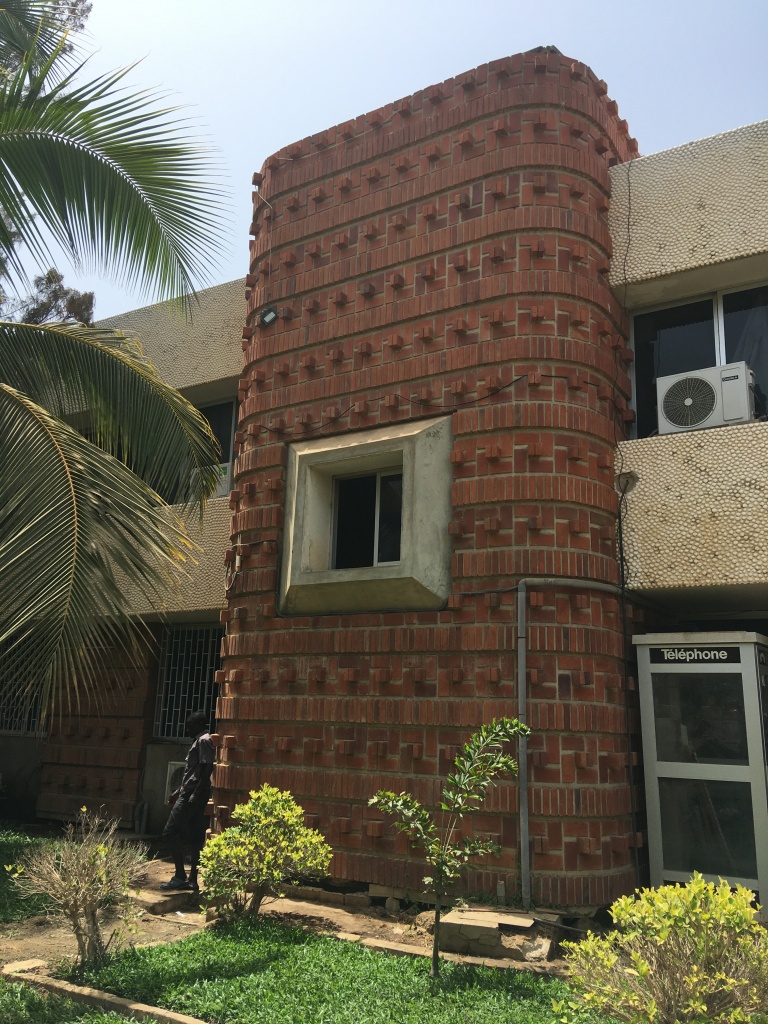
The flanks of the avenue include the University Conference centre buildings and the Archivist Department. On top of ornate red brick podiums, where the bricks are laid in soldier bond and proud of the building line, sit curved forms clad in sea shells that add subtle texture and shadow. The buildings were designed by Henri Chomette and Roland Depret in 1976.
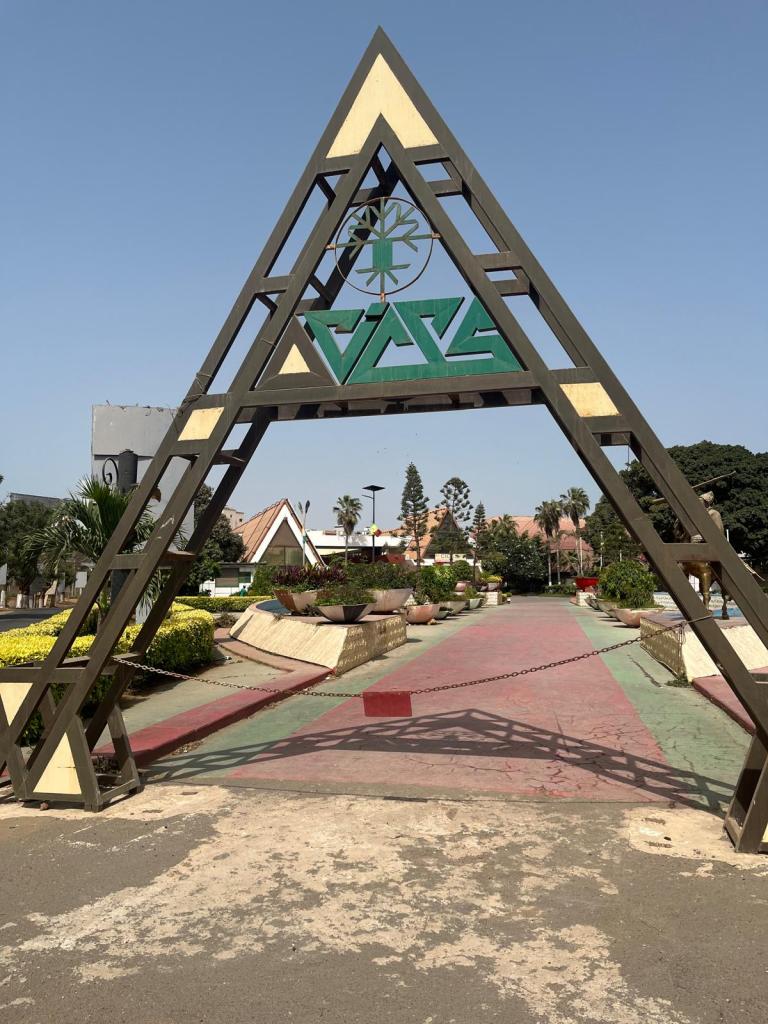
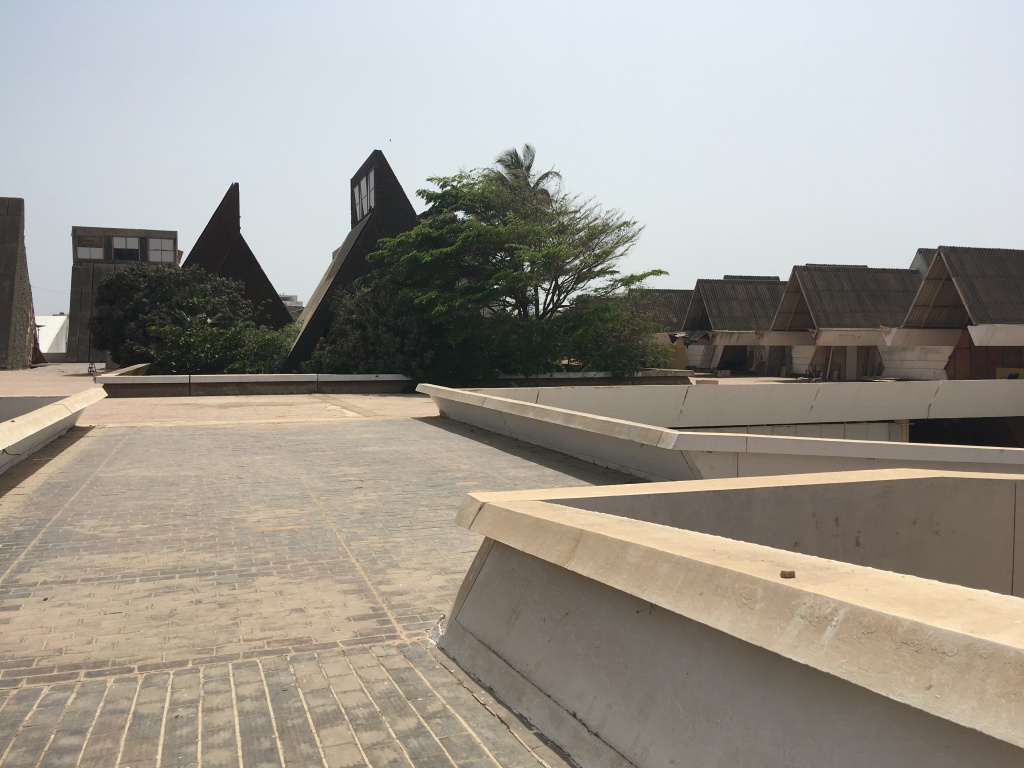
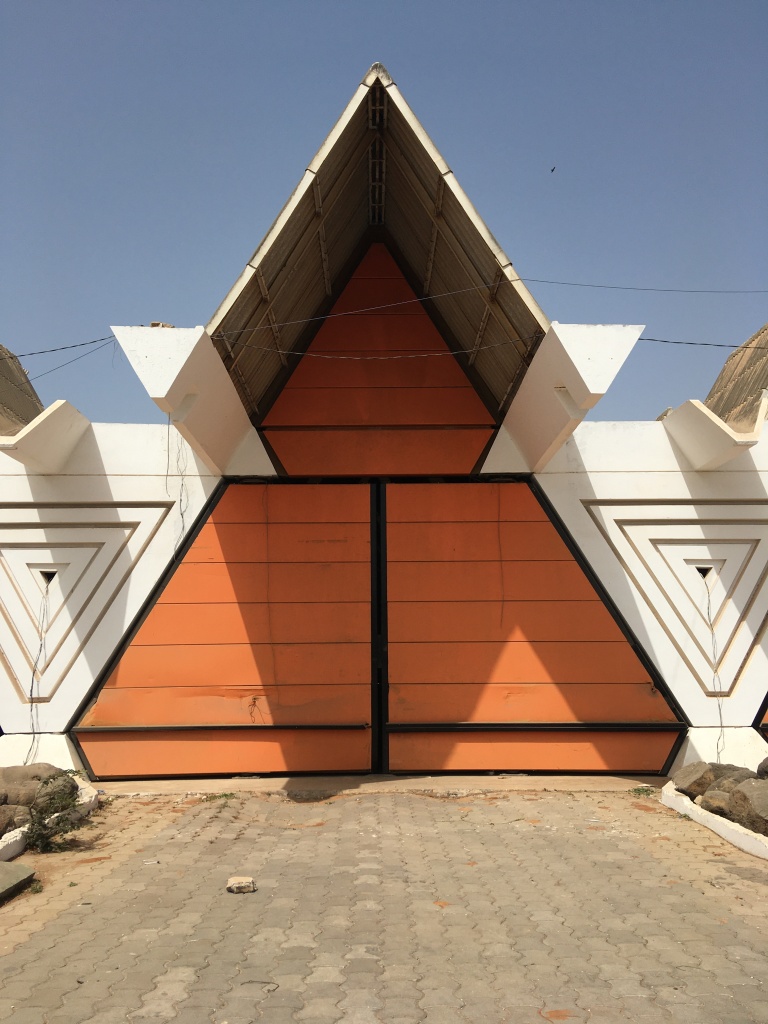
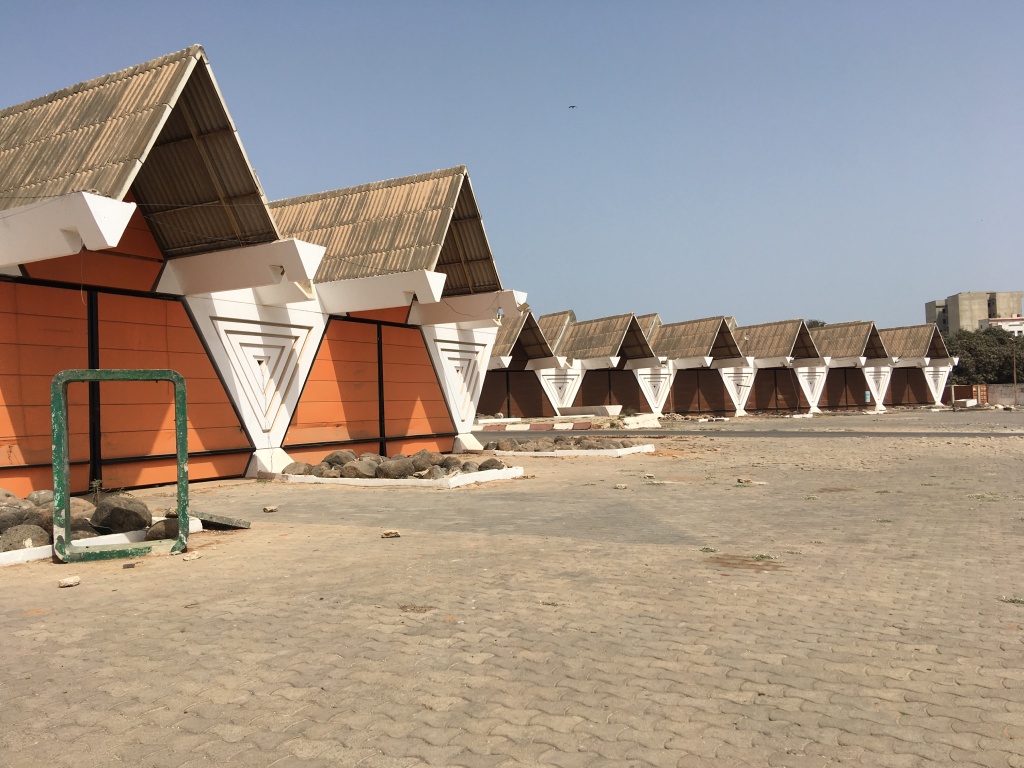
A visit to the international conference centre in Dakar is a must for late ‘modern’ architecture aficionados. The approach sets the scene, as one passes through the triangular entrance gates.
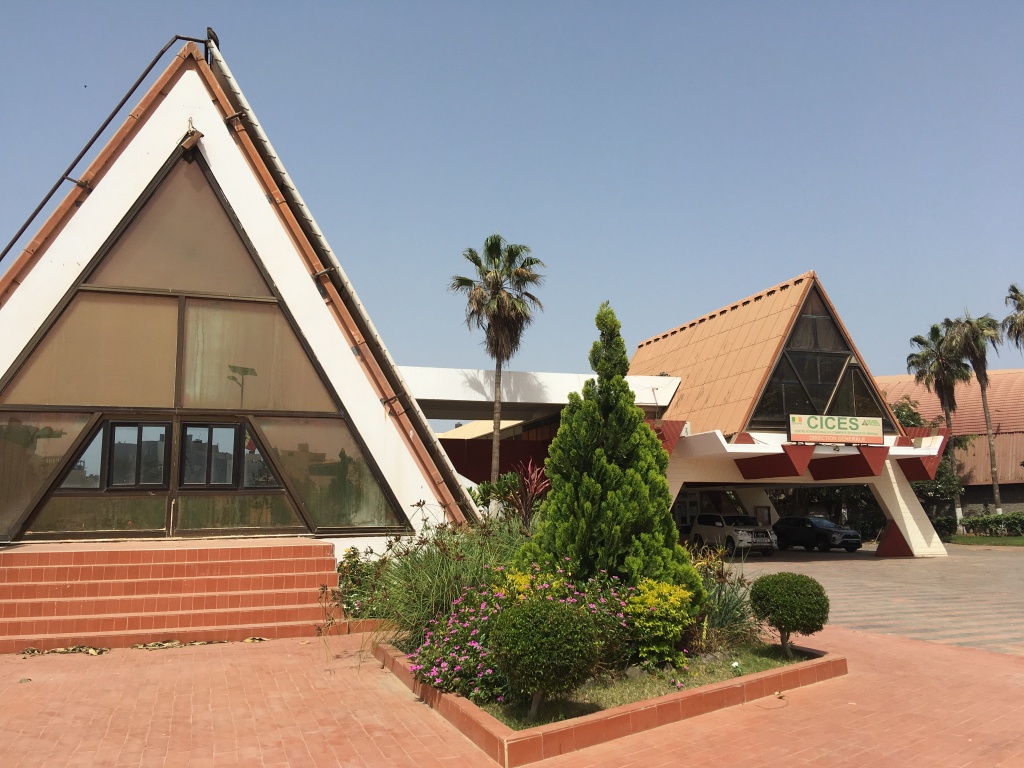
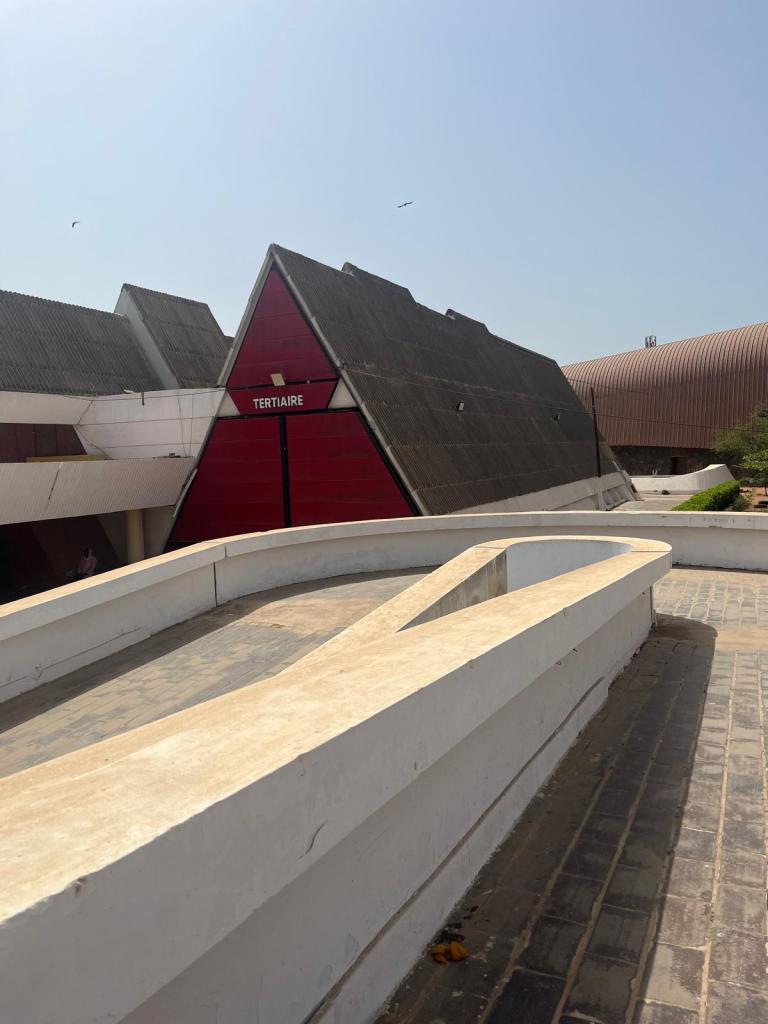
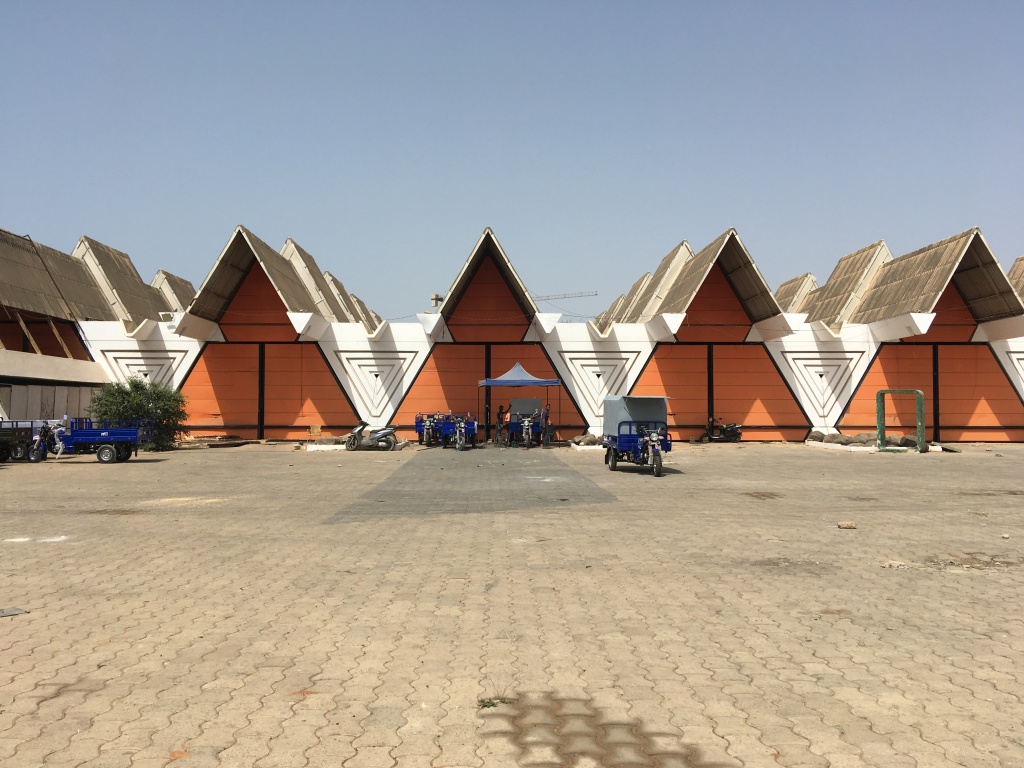
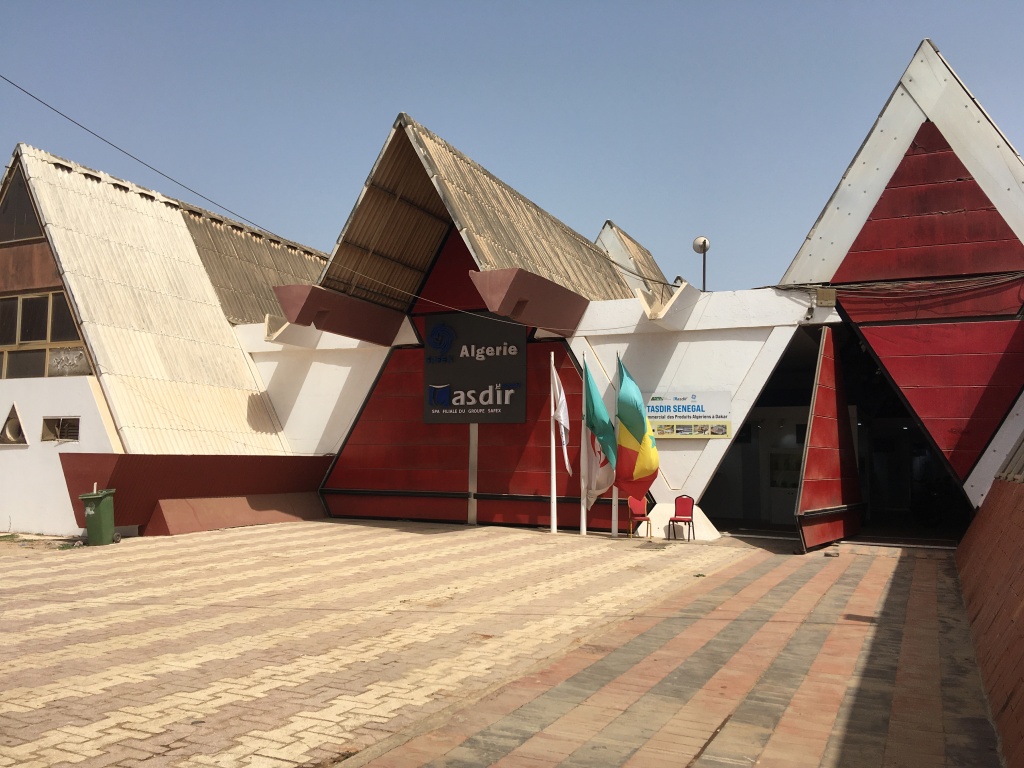
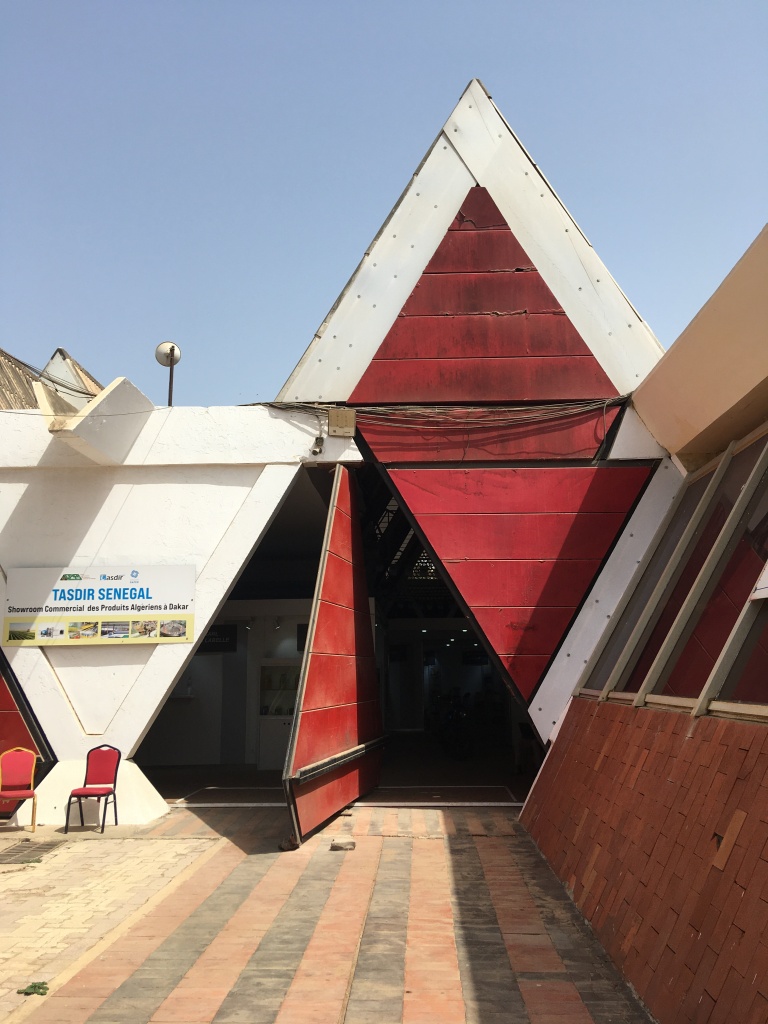
A creation of architect Fernand Bonamy designed and built following an architectural competition in 1974 its triangular programme is clear from the outset. This trade fair complex, which remains in working use, was designed to incorporate the triangle both in elevation and functional section. This has been a largely successful exercise in which the triangle is pre-eminent in all aspects of design.
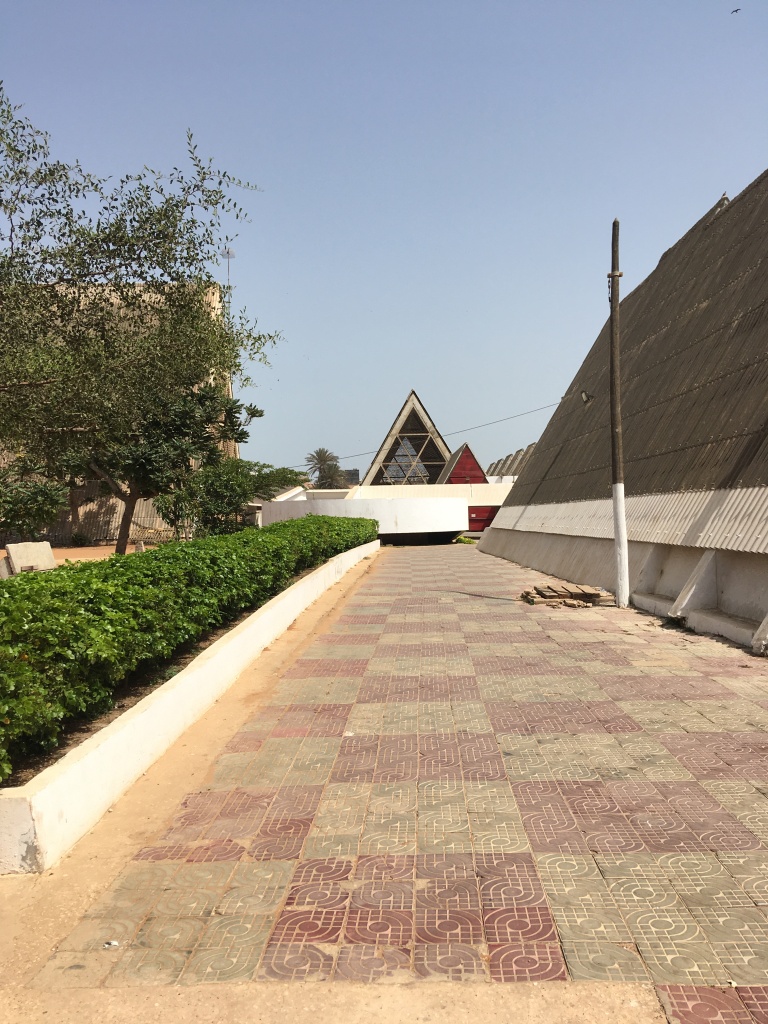
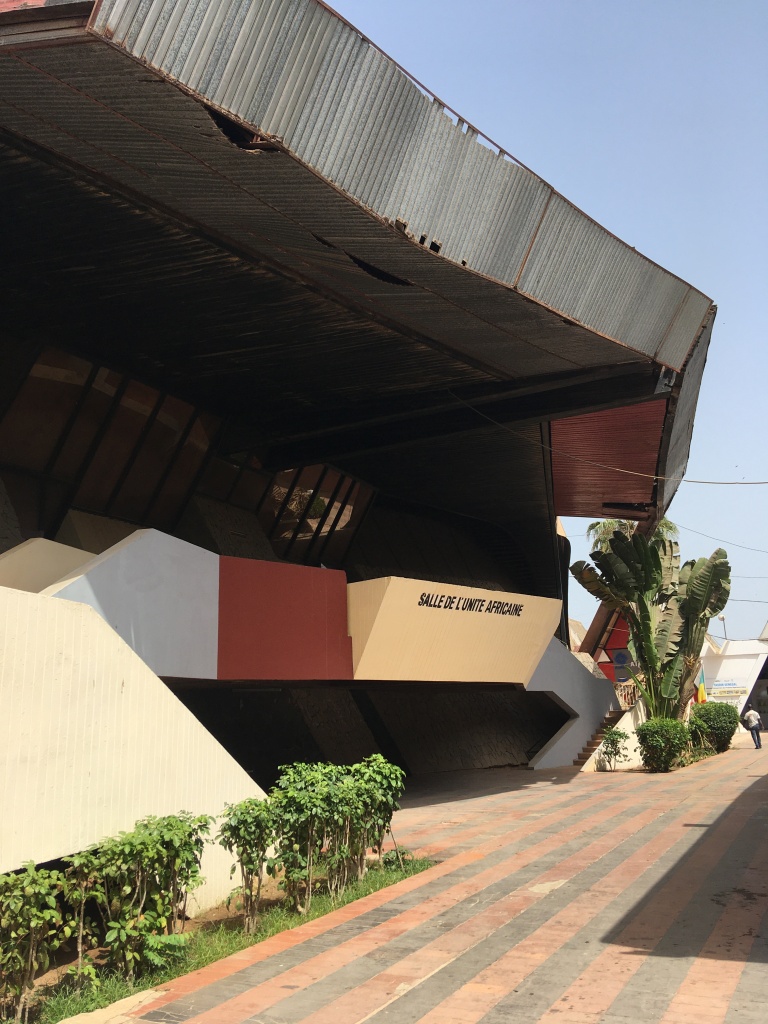
Walking around one feels the eerie nature of triangular space. Broken by long walkways with circular-cylindrical fulcrum points where the direction changes and the gradual slope continues upwards or downwards to the final traverse destination.
A series of exhibition pavilions are the centrepiece of this much recorded and photographed campus, whilst the main exhibition hall provides a glorious 70’s interior complete with psychedelic wall designs . The dogged following of the triangular programme does provide a coherent set of buildings – which also feel part of a giant Alice in Wonderland setting where the triangles are here there and everywhere. There are a few breaks as the HVAC external ductwork terminate in lozenge- and not triangular shaped flues .
As we walked around, the campus was being prepared for yet another exhibition / expo. This helps highlight the ongoing use and versatility of the exhibition space format, democratically giving each exhibitor the same space, shape and form to engage with, triangular in every way.
As I walk away from triangular wonderland I wonder what else this amazing set could support? A parkour and skate park for the suburban kids whose flats look down on the complex? A contained mini athletics course, it could certainly hold a 200m track circuit and many triangular spaces could provide storage for track and field equipment. Or could it indeed be a film set for the next James Bond Action or Hammer Horror movie – The return of the Triangles.
We’re making a visit into Dakar in Senegal this week. It’s mainly an exploratory trip as we’ve not ventured into Francophone Africa before and are eager to meet up with some architects here and friends from MOHOA .
Today was all about pounding the streets and exploring some of the everyday commercial architecture, public buildings, docklands, religious buildings, museums, and streetscapes of downtown Dakar. It didn’t disappoint and using our trusty Vol2 of the Sub-Saharan Africa guide we were quickly able to track down some of the classics (and many more that don’t feature in the impressive guide).
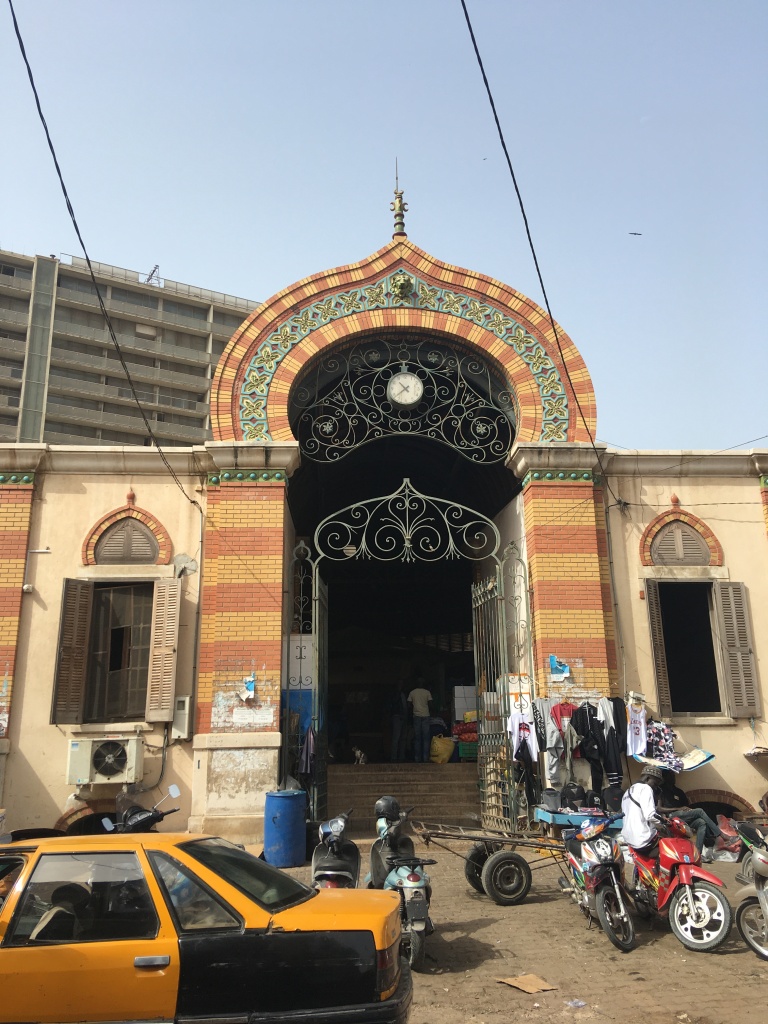
Chamber of Commerce, 1926.Kermel Market, 1910, Charles Pleyber
The Kermel market sits amongst an array of colonial era structures. It was destroyed by fire 1993, but rebuilt in 1997 to match the original design.
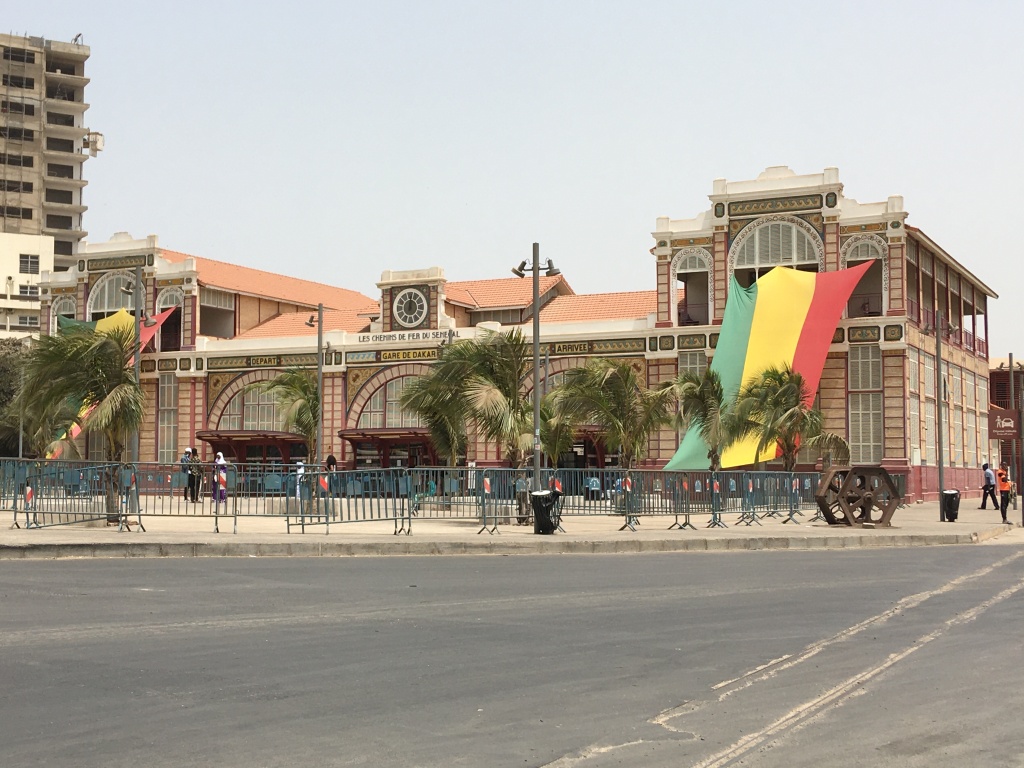
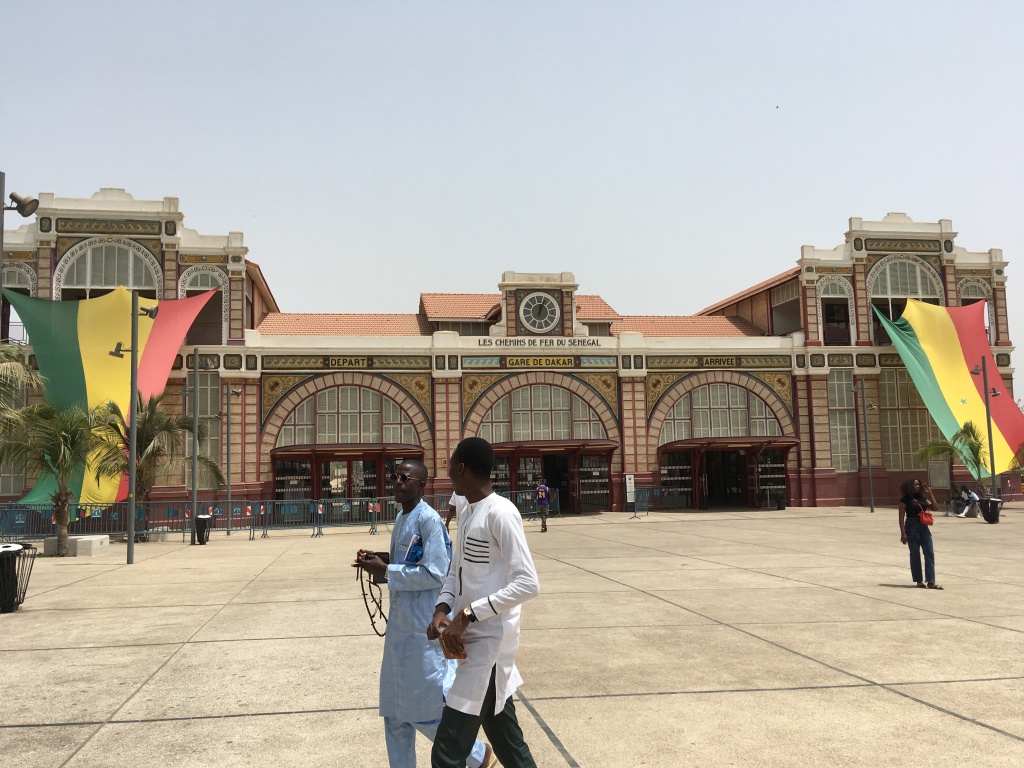
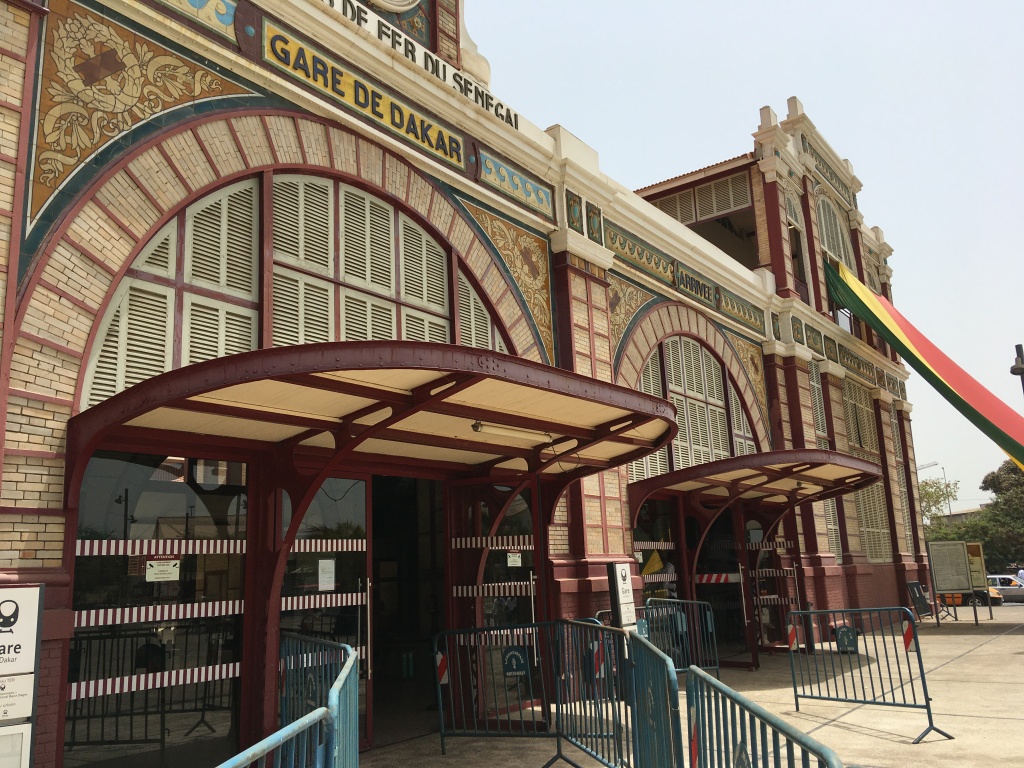
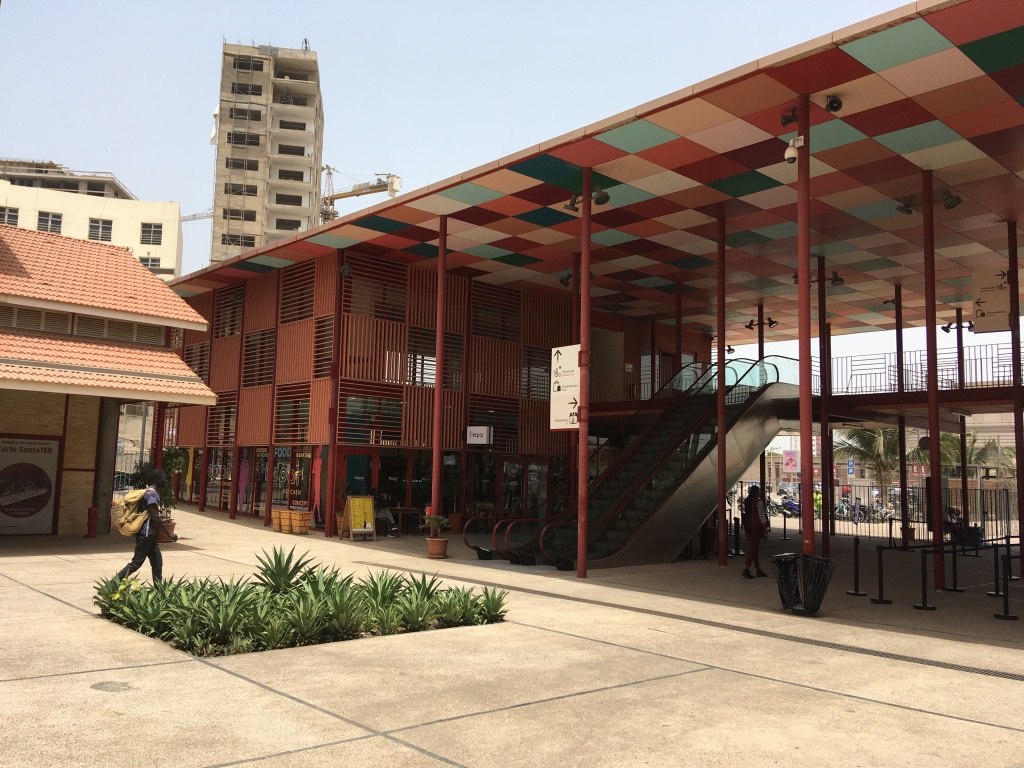
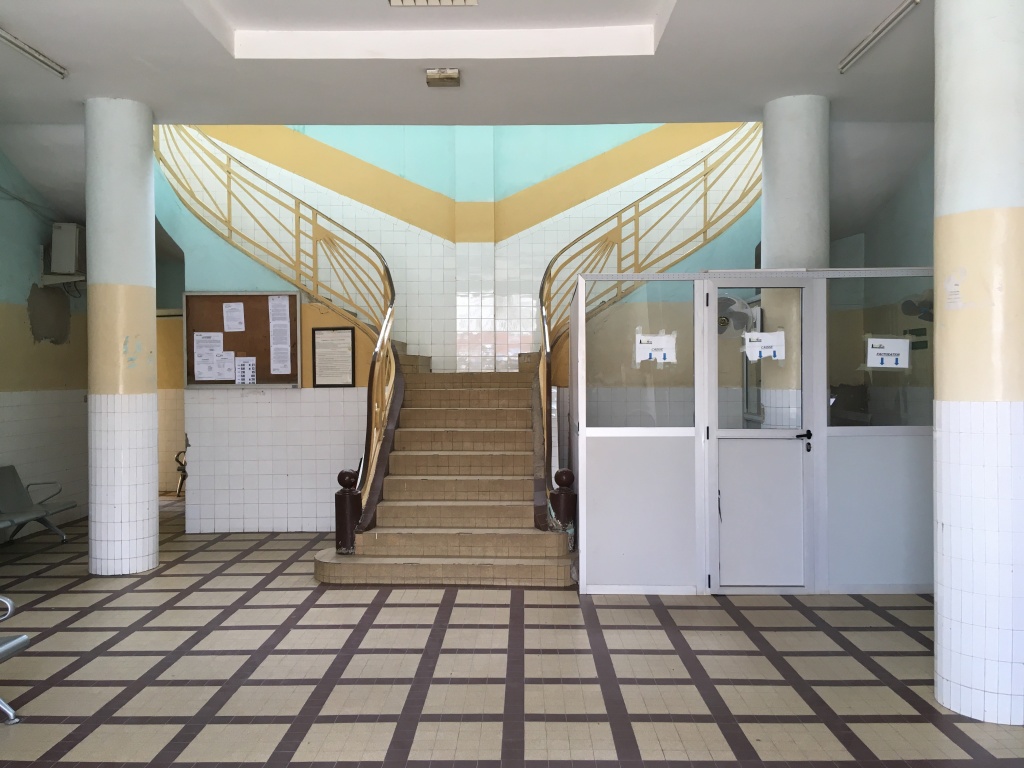
Dakar railway station with faience ceramic facade detailing. The newer interior structure provides control to the tracks and adds further commercial space.
Commercial structures, residences, markets, and banks by the docklands of Dakar. I thought the images top left and top middle were the Sandaga Market – but not sure now. There’s going to be a lot of further research and investigation required after this trip….
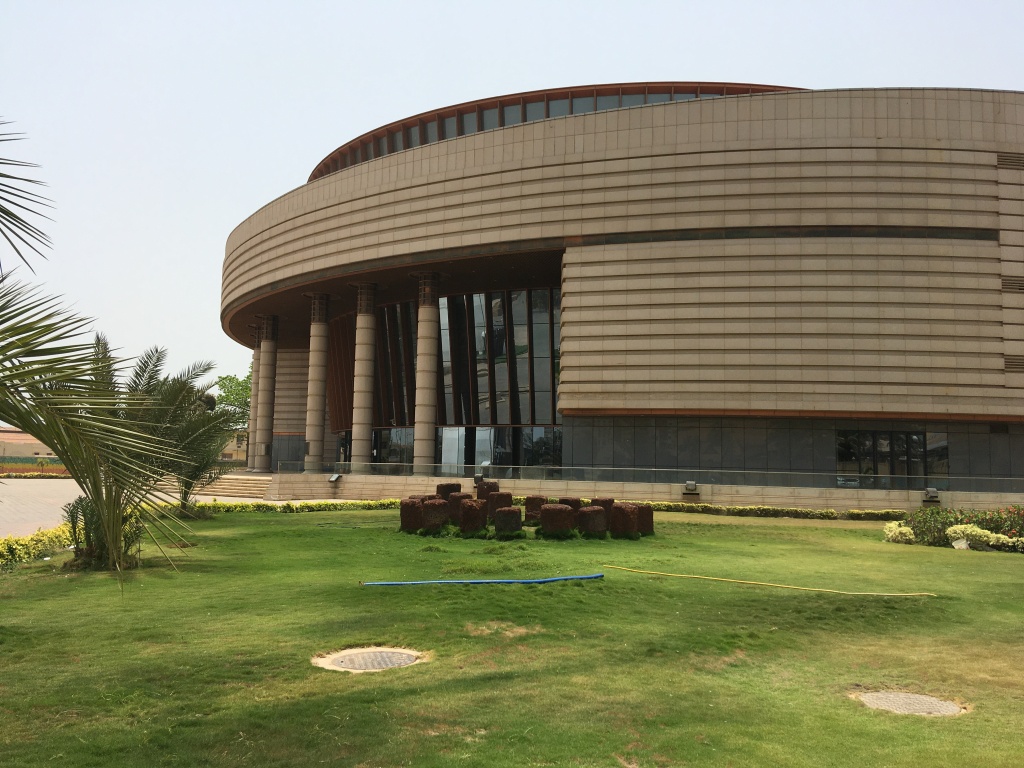
Museum of Black CivilisationGrand National Theatre, 2011, Pierre Goudiaby Atepa
Just beyond the Train Station are two vast civic structures – the National Theatre [the largest in Africa] and the Museum of Black Civilisation, built by the Shanghai Construction Group in 2018.
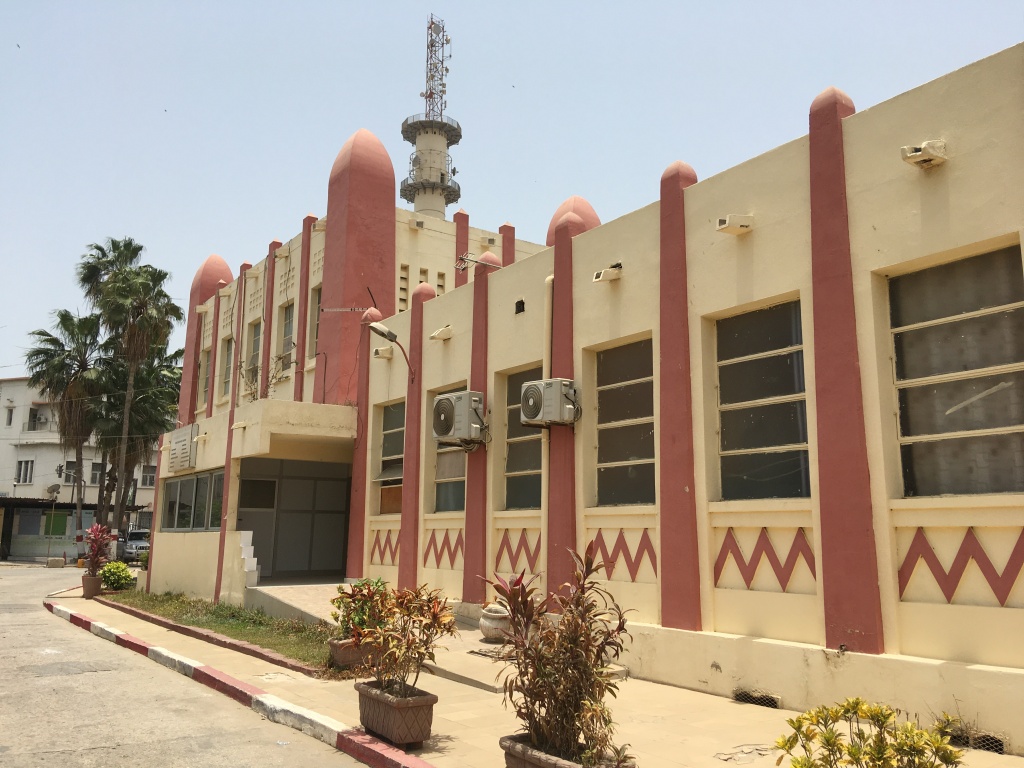
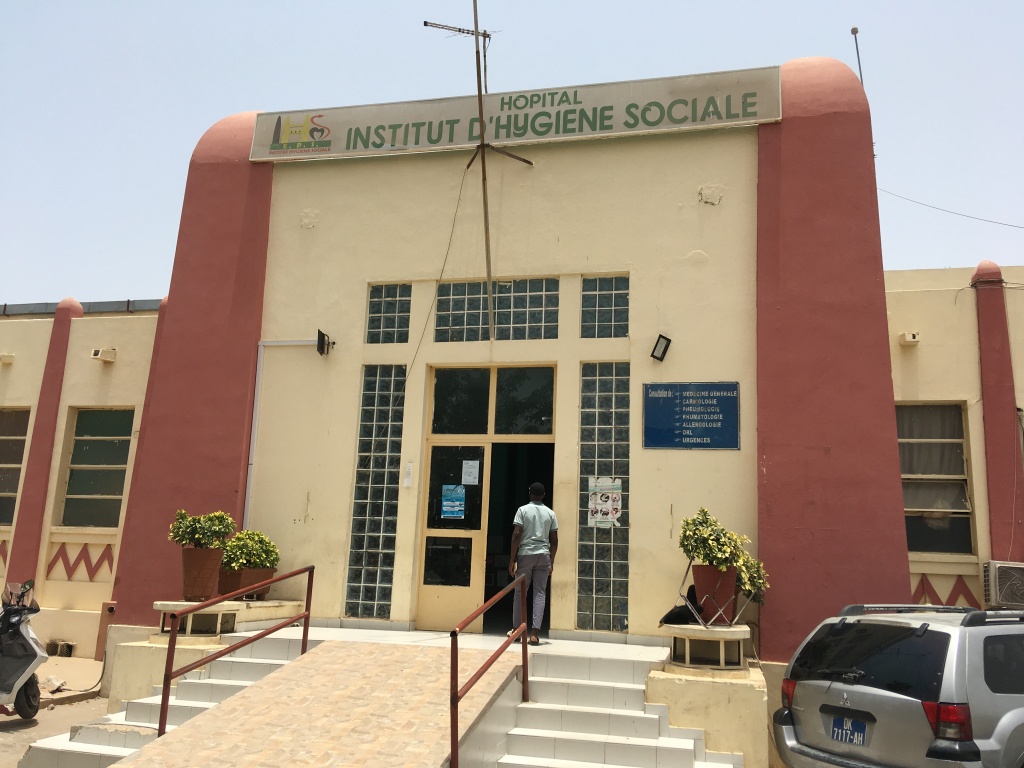
Institut d’Hygiène Sociale was a highlight today – designed by Henry Adenot around 1932 attempted to introduce more regional or local interpretations to the colonial architecture canon. This building has been described as Sudano-Sahelian but it borrows liberally from across Western African architecture, as well as introducing zig-zag motifs, sunbursts, and playful interiors.
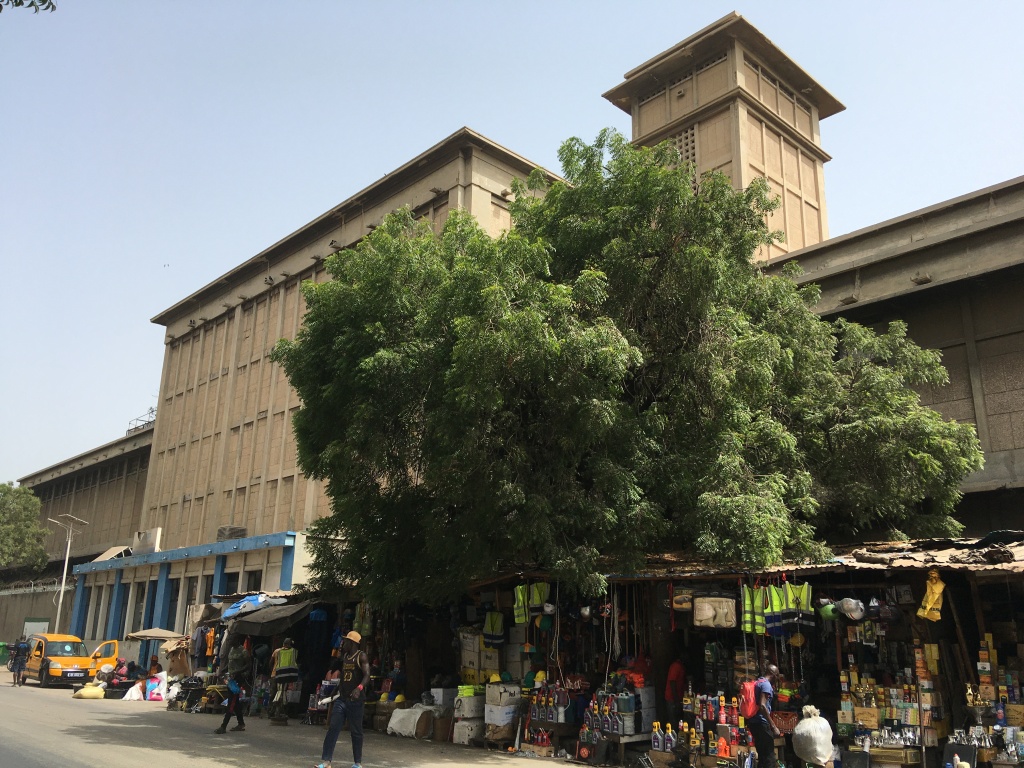
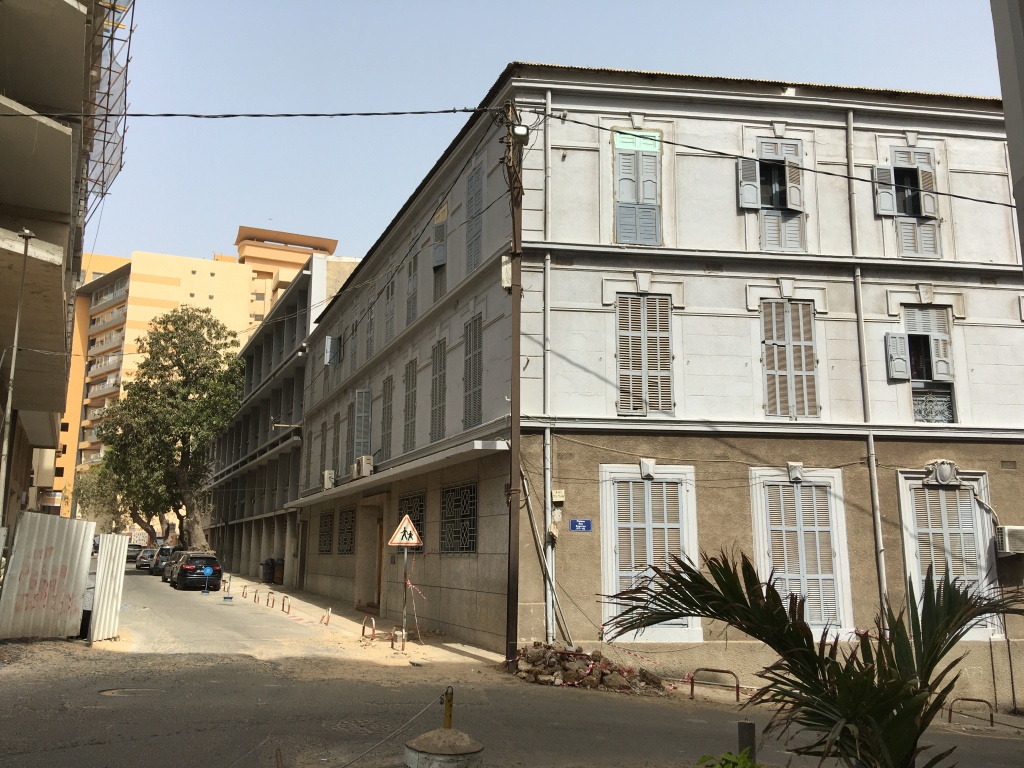
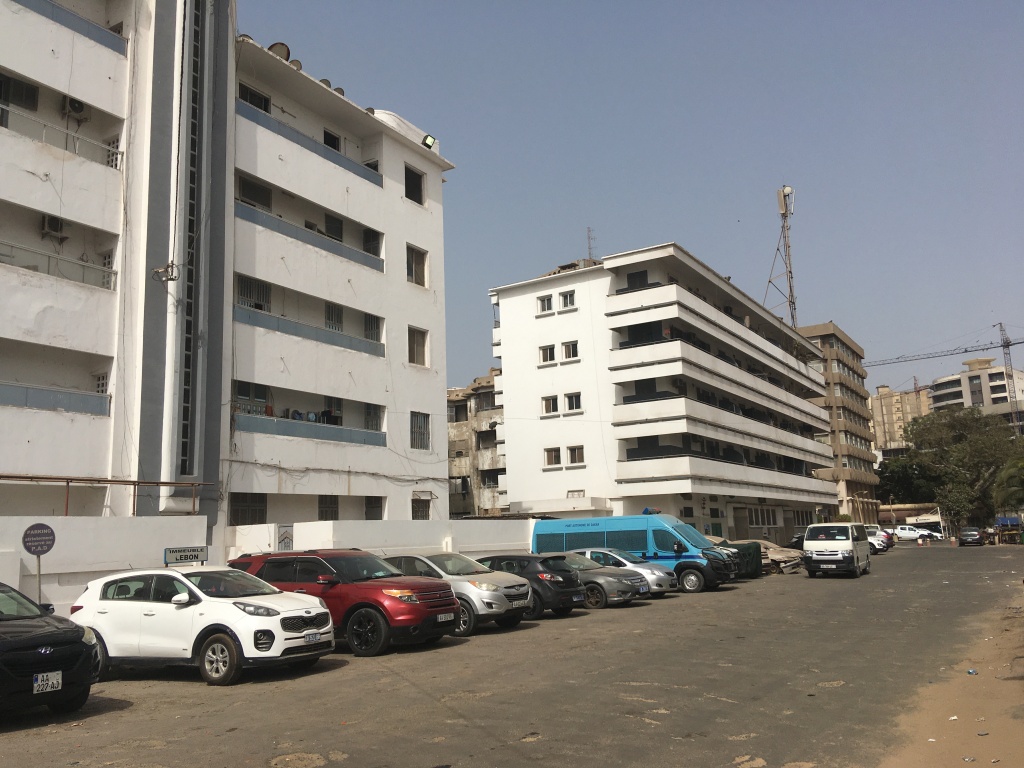
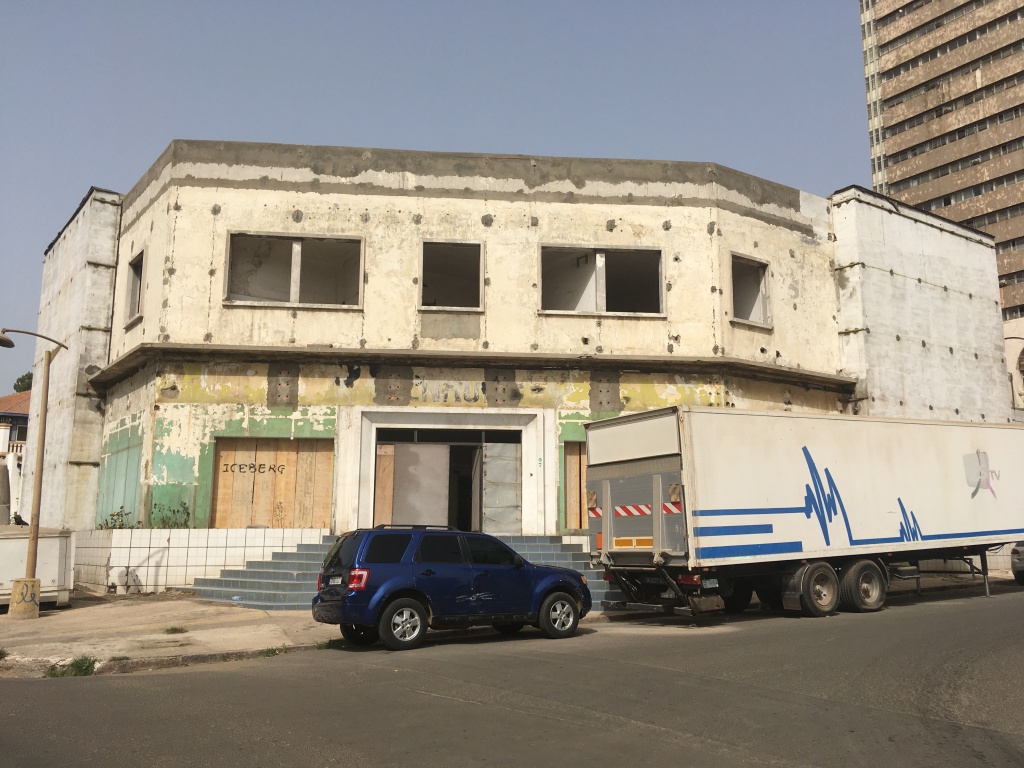
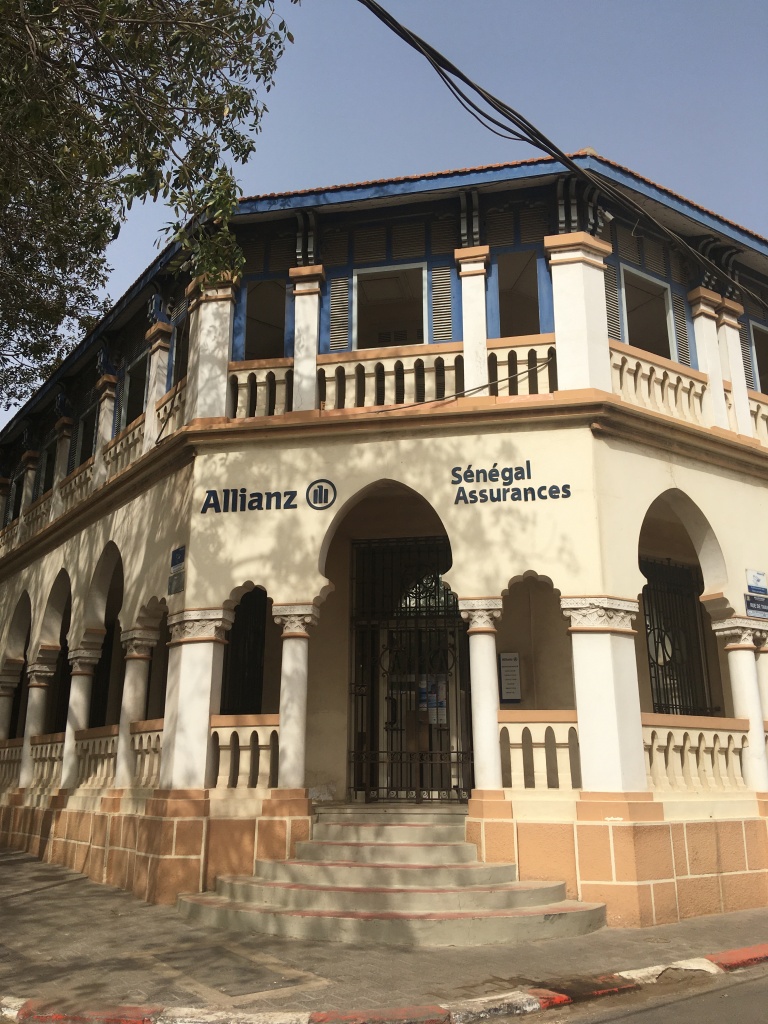
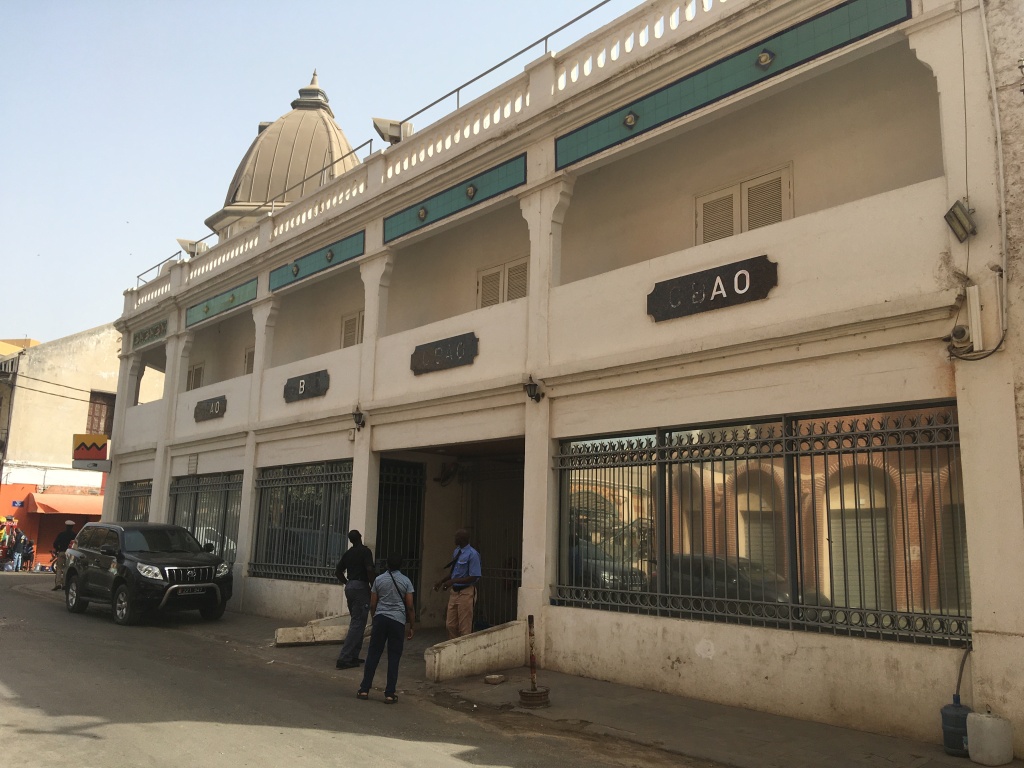
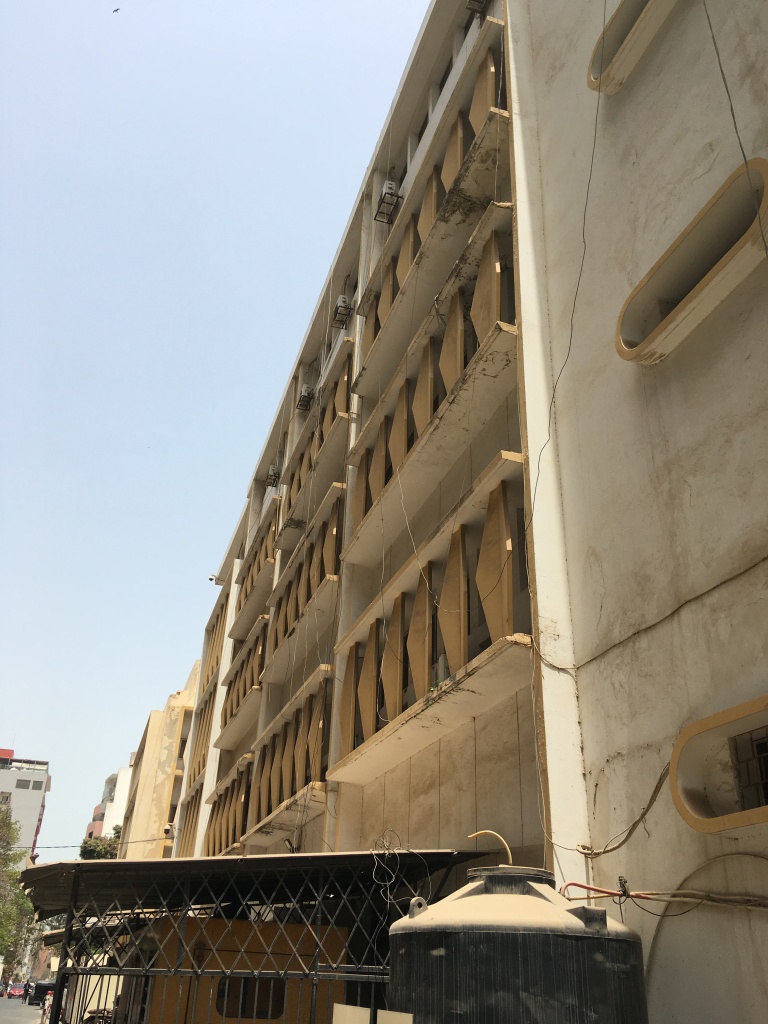
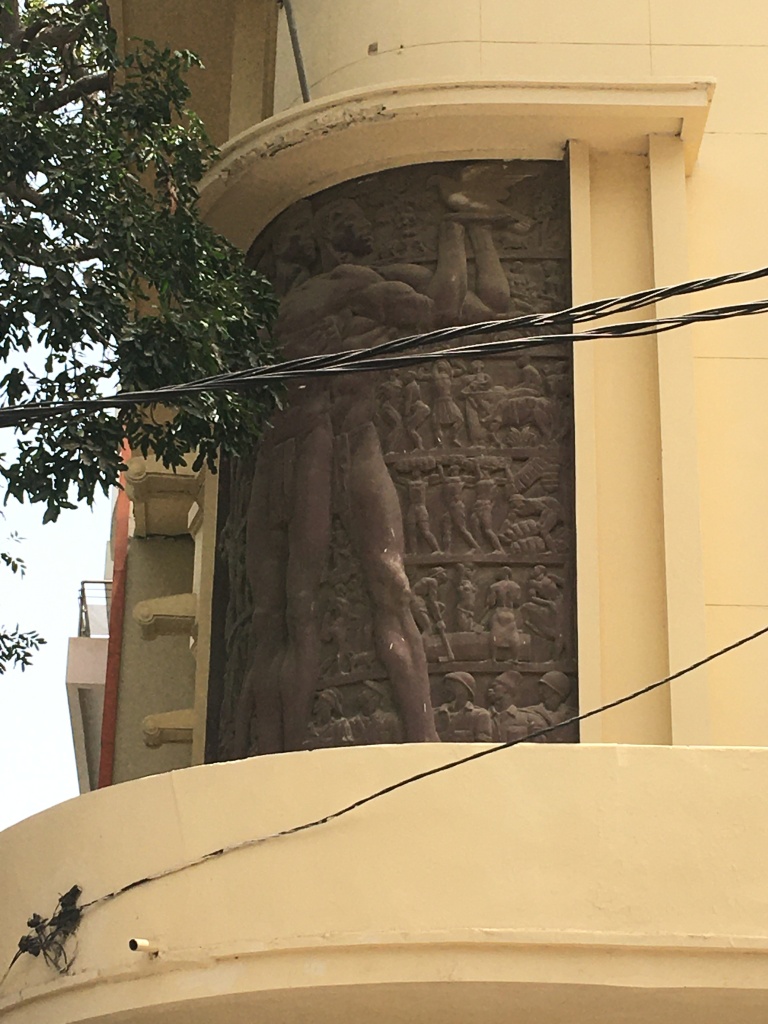
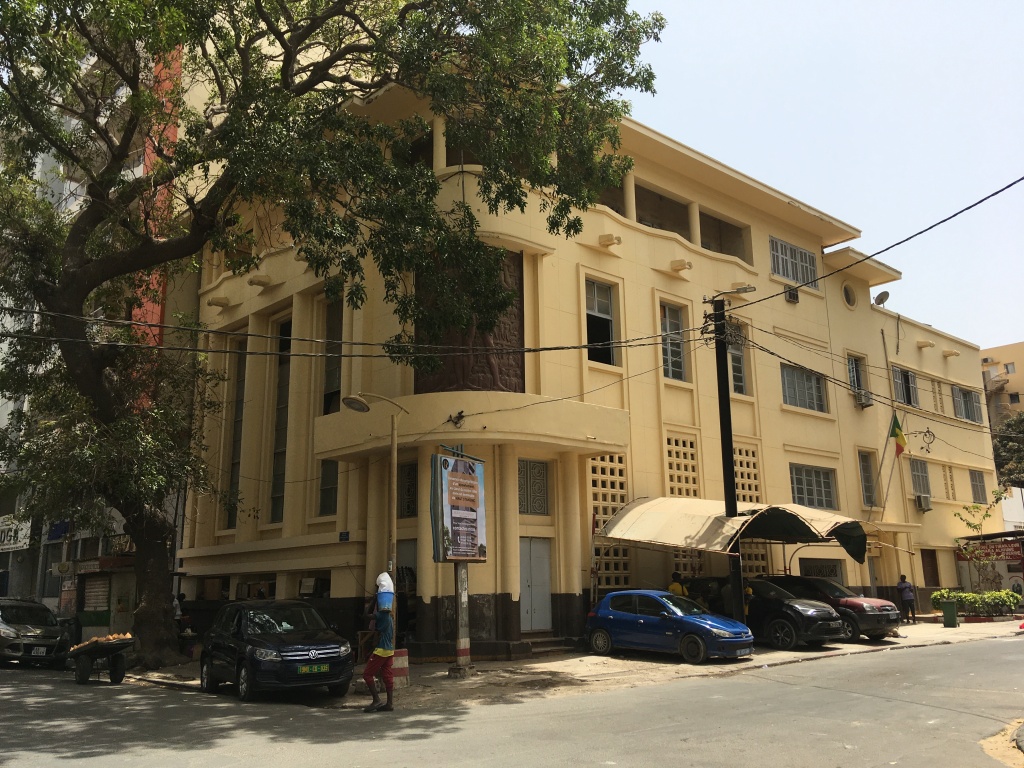
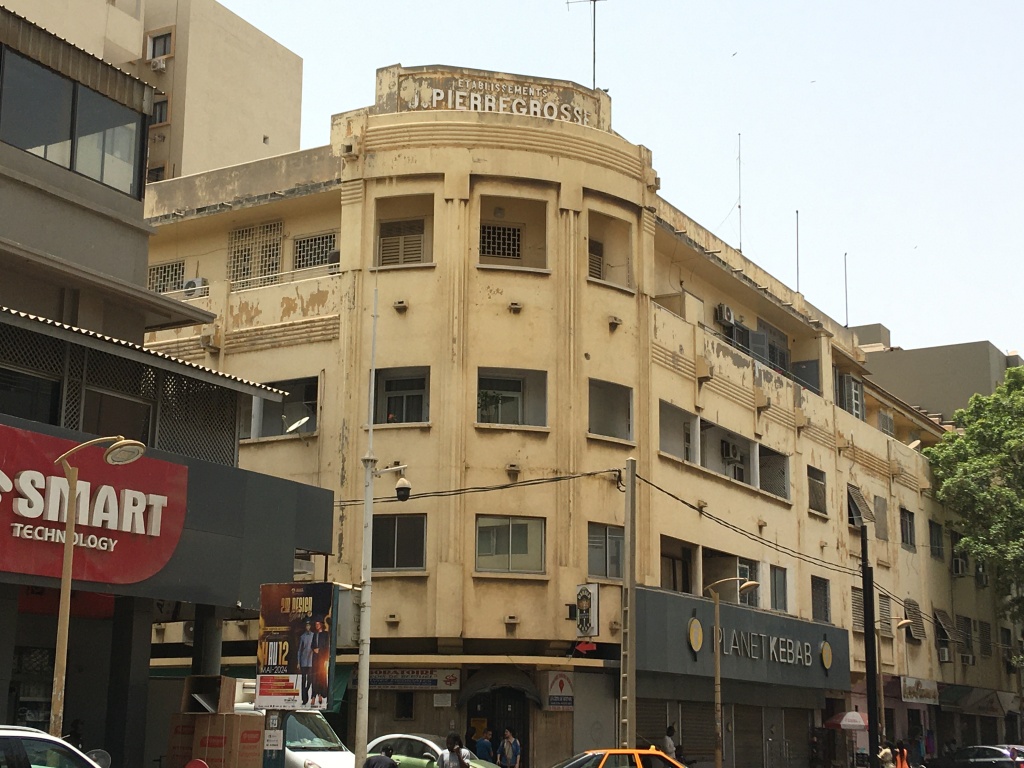
Most of the downtown area it set out according to a grid plan, with buildings reaching 4 or 5 stories in height. There’s a variety of commercial structures some bearing the name of the old trading companies and families, others depicting bas relief decorative panels or double-skin solar breakers.



































 Transnational Architecture Group