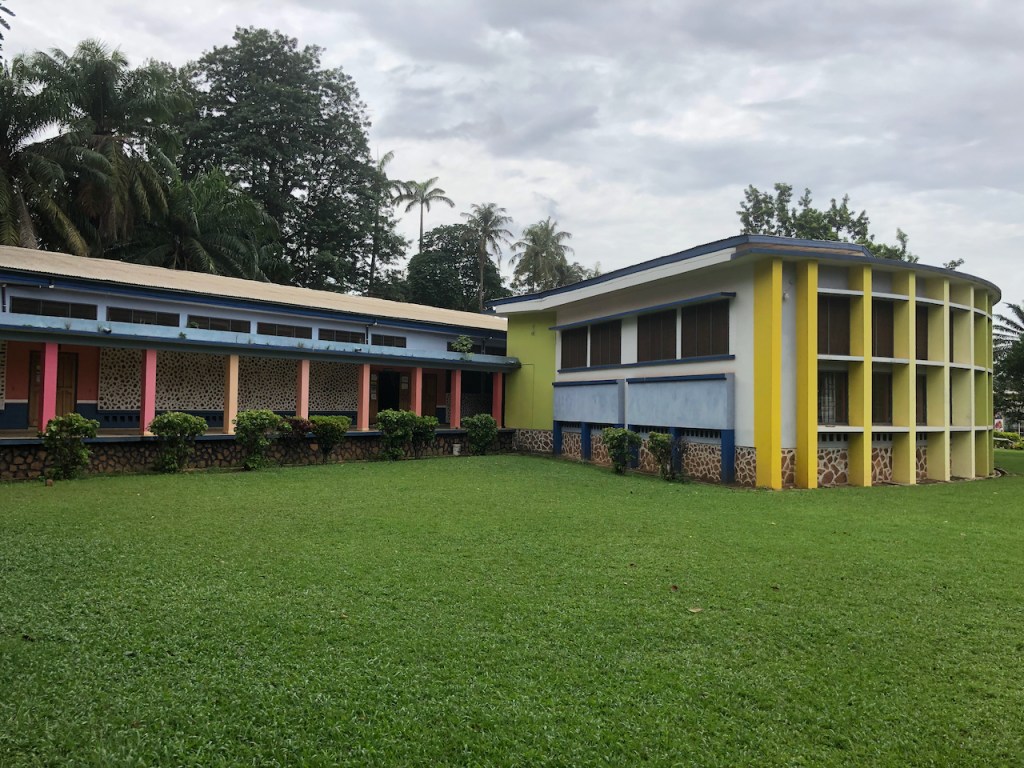
Professor Ken Ndomhina picked us up in his SUV and we drove through Fourah Bay College, Freetown to the Faculty of Architecture building of the University of Sierra Leone. My colleague, Iain Jackson, had been invited to give a lecture on the architecture of Fry and Drew in Western Africa. We parked up outside a two storey, white and green building with interesting post-modern ornament that included fluted ionic columns which captured swirling red dust in their profiles.
Iain Jackson giving a lecture to staff and students at Fourah Bay CollegeFourah Bay College: School of Architecture
When this Architecture School opened four years ago, twenty-one students enrolled, and the first cohort is about to graduate. The school now boasts around 150 students across four year groups.
Creating a new School of Architecture is a wonderful opportunity – the chance to ‘start again’ and to develop a new programme from scratch is very special. Equally the challenges are great – not least recruiting staff as there are only 25 accredited architects in the whole country.
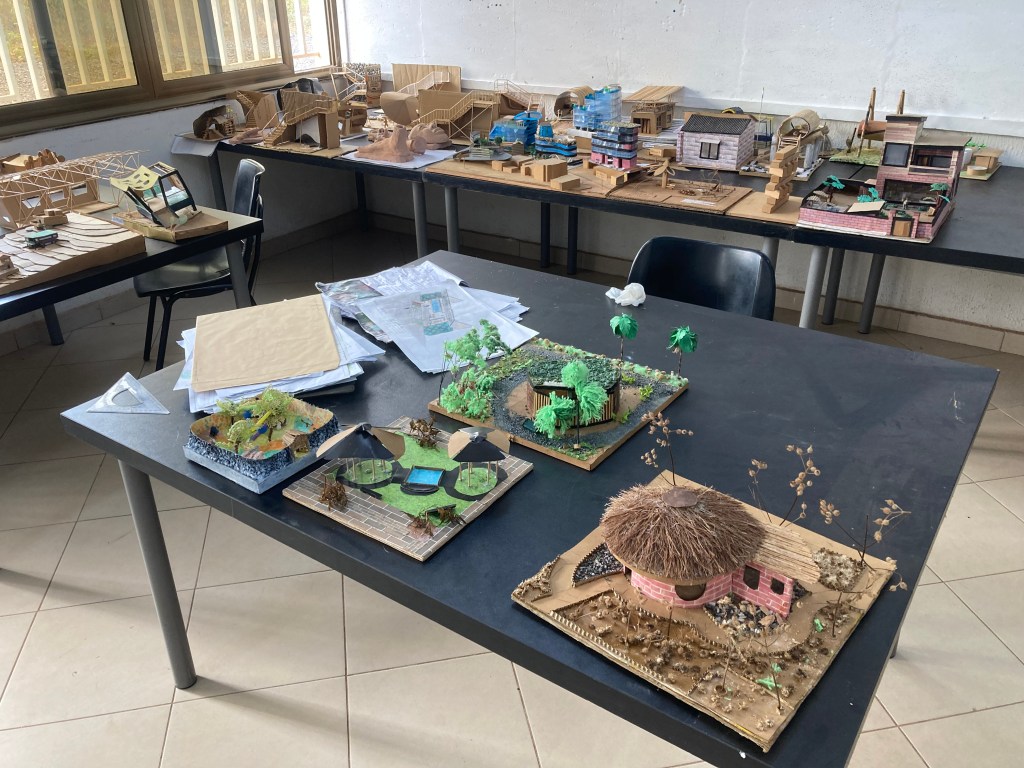
Student Models: Fourah Bay CollegeSchool of Architecture at Fourah Bay College
Yet progress is being made. Once the lecture was complete, we enjoyed light refreshments and conversation with local staff who had been trained far and wide in Cyprus, Morocco and England. They had returned ‘home’ to be involved with this exciting and growing project. The School is preparing for Commonwealth Association of Architects accreditation. It has a hands-on approach to teaching with many 1:1 scale building experiments and model-making, supplemented by history, environmental design, and building technology.
Student Representative: Rose Imah Paul giving a vote of thanks.Ken Ndomhina and Faculty with Paul Robinson, Ewan Harrison, and Iain JacksonStaff and Students in the Courtyard
Although change is slow the University of Sierra Leone architectural department vision is strong: to see men and women from Sierra Leone, trained as architects to positively impact the developing built environment of the nation. And to establish the role of architect within their communities. Knowing this, it made it a thrilling privilege to pose with this next generation for a celebratory photograph once the event ended.
As part of our project to research the architecture of the United Africa Company (UAC) we’re visiting Freetown in Sierra Leone.
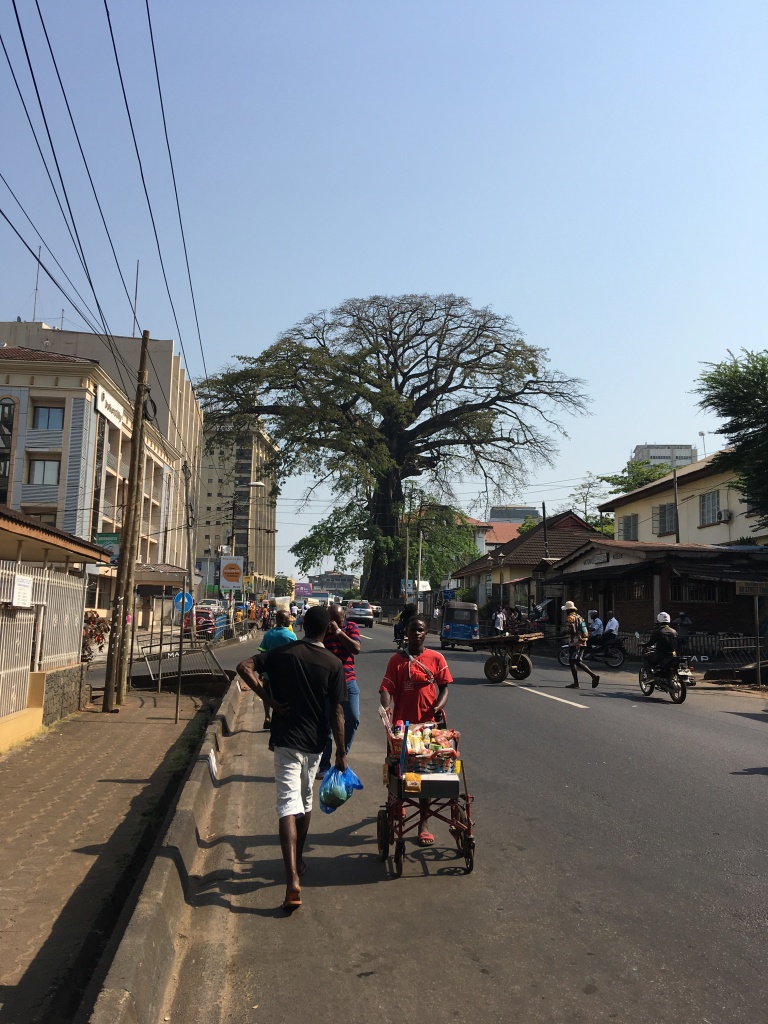
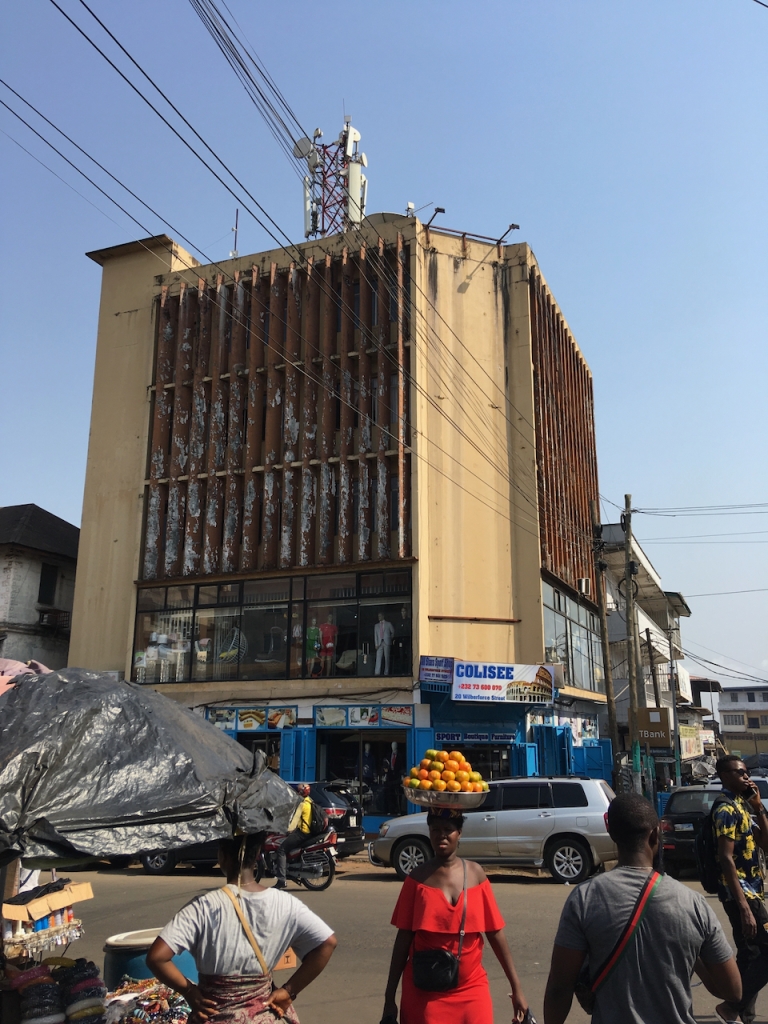
We spent the first day looking around the commercial business area wrapped around the giant cotton tree. The city grid was set out by the Sierra Leone Company surveyors in the 1790s and its wide streets and blocks are largely intact. Interspersed among the commercial properties are churches, houses, and schools, some dating back to the 19th Century.
The Cotton Tree, central Freetown
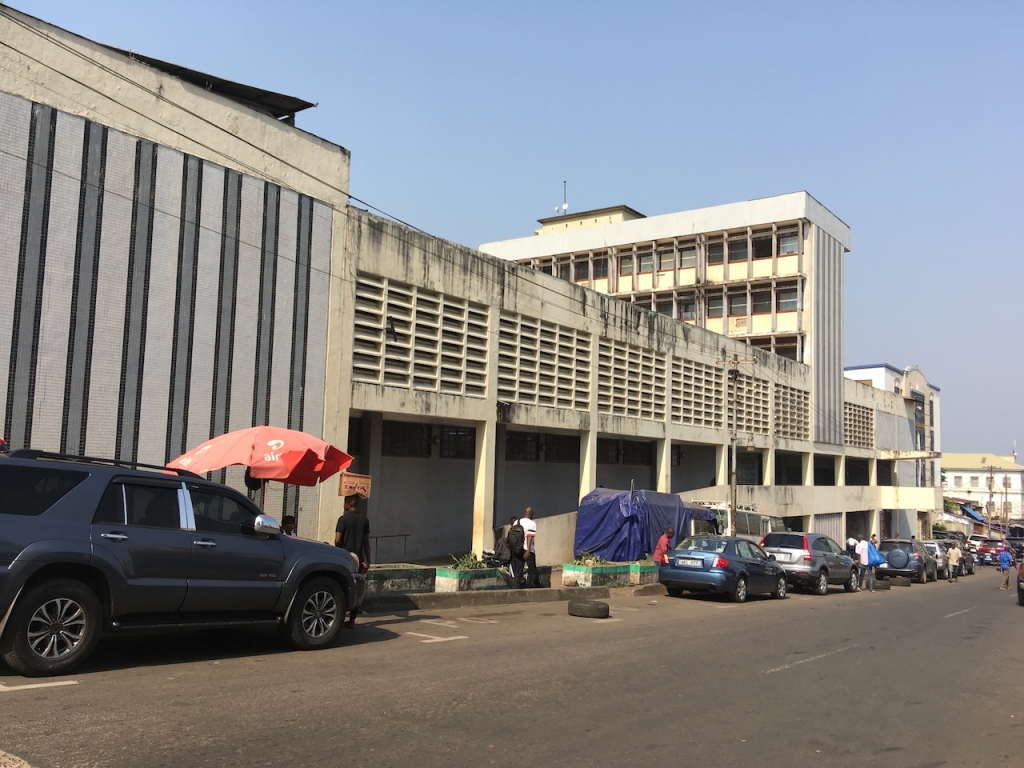
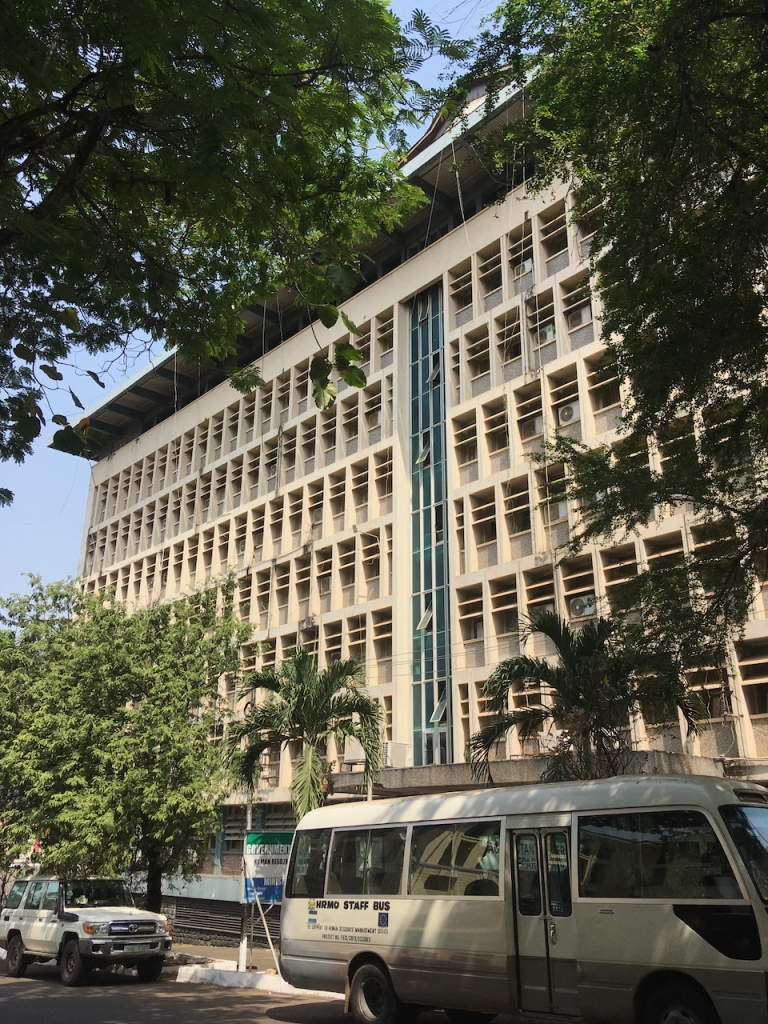
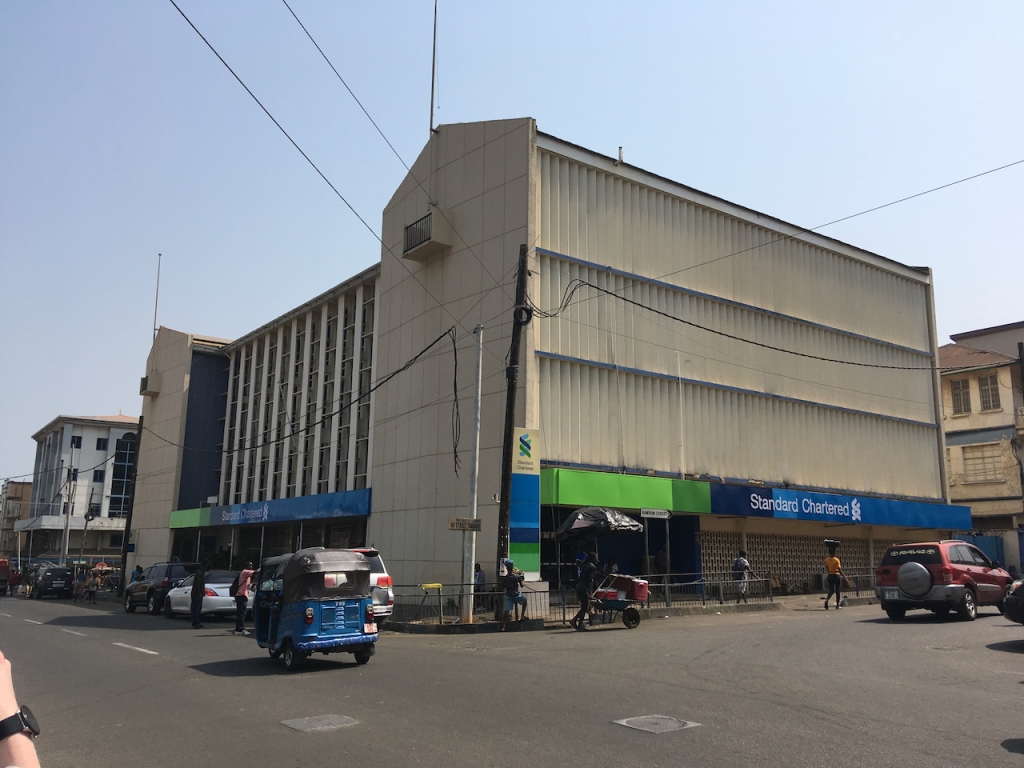
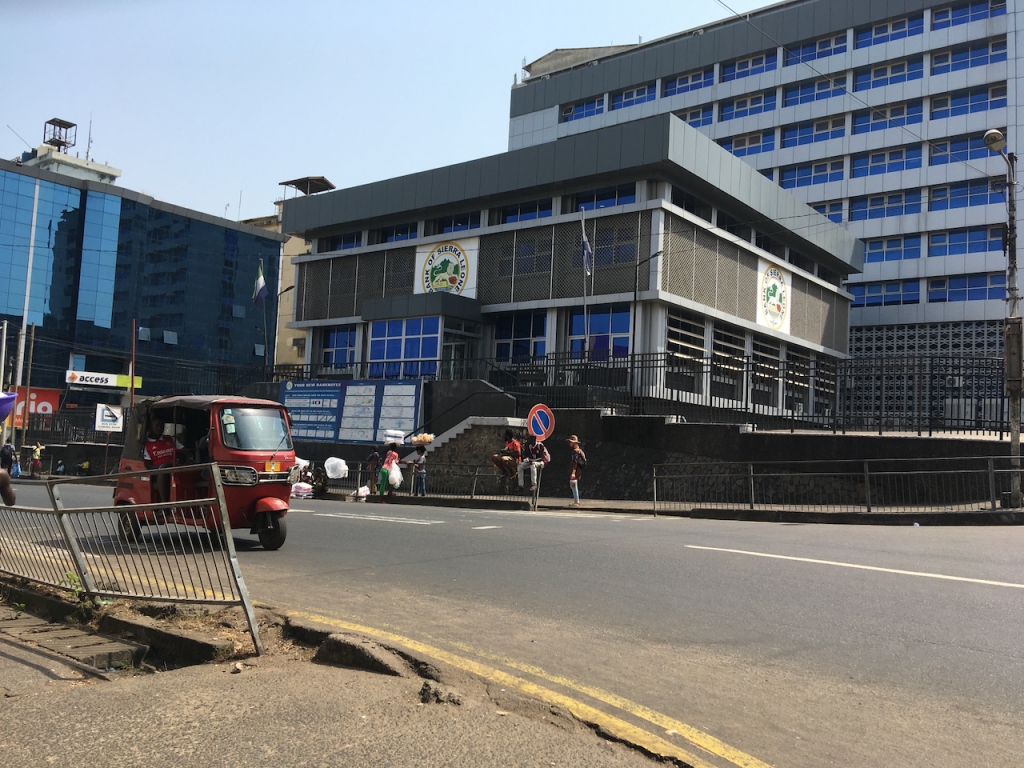
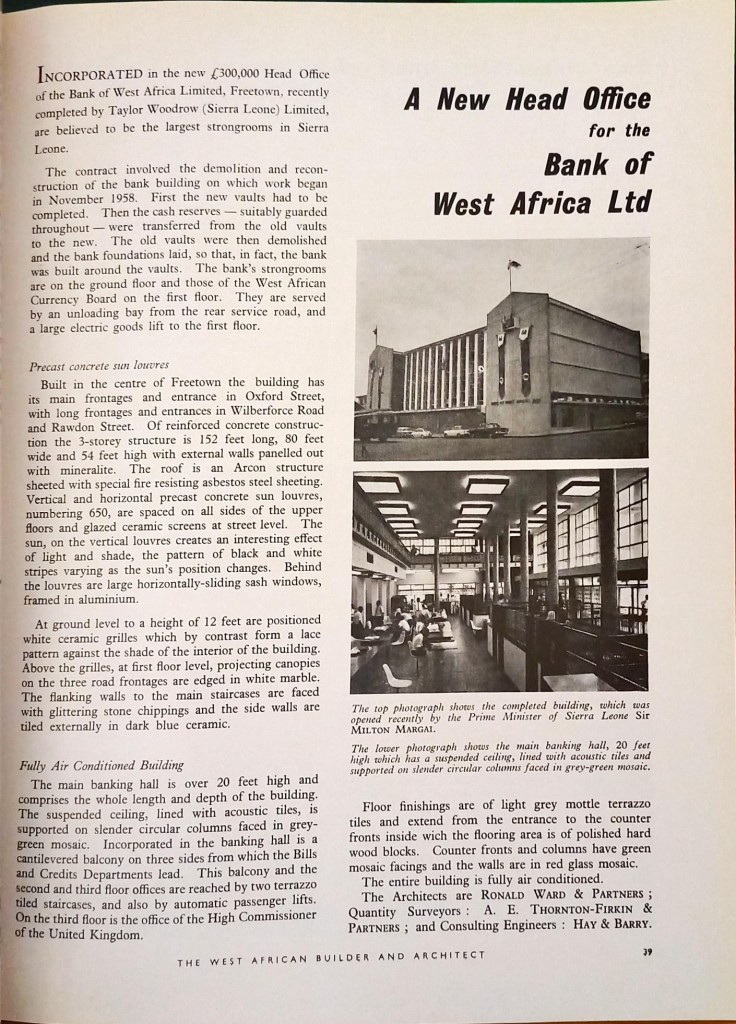
Adjacent to the Cotton Tree are the municipal offices, post office and former telephone exchange, and the major bank branches. Nickson and Borys designed a major branch for Barclays DCO and Ronald Ward for British Bank of West Africa (more on these by Ewan Harrison shortly). The Sierra Leone Central Bank is also located here – now refurbished and with its concrete mural sadly covered over with signage (designed by Ministry of Works in 1964).
GPO and Telephone Exchange, Nickson and BorysMunicipal Offices, Nickson and BorysBank of British West Africa, Ronald WardBank of Sierra Leone, Ministry of WorksBarclays DCO Bank, Nickson and Borys
Further downhill, towards the old railway station and harbour, are the major merchant stores and retailers.
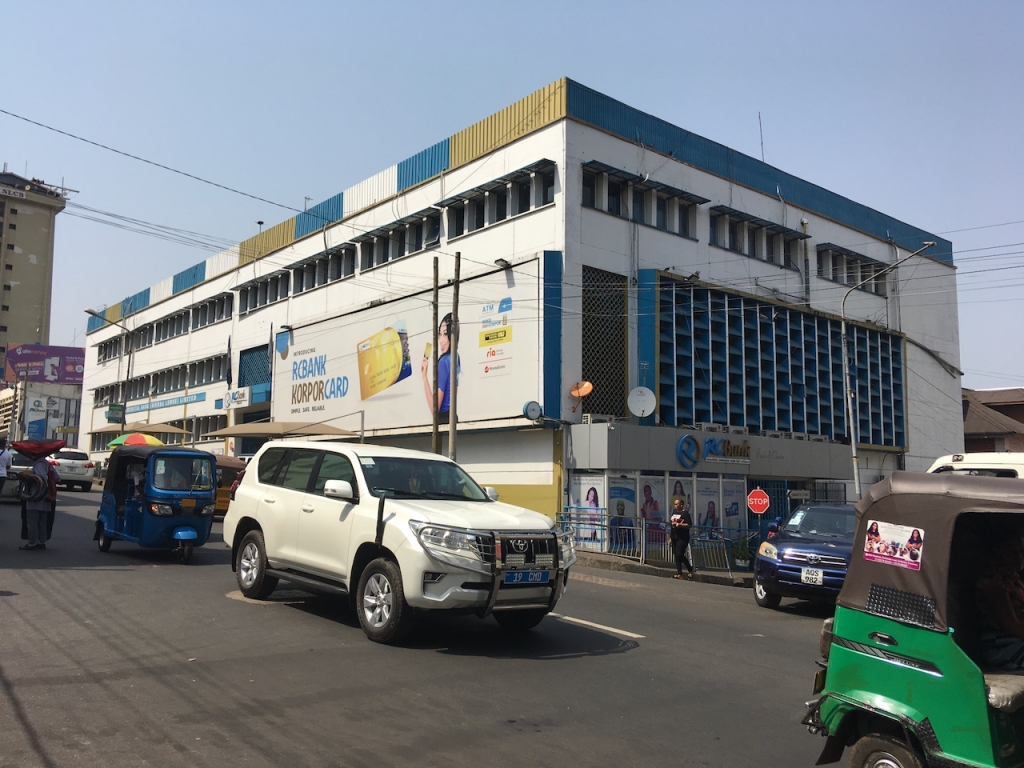
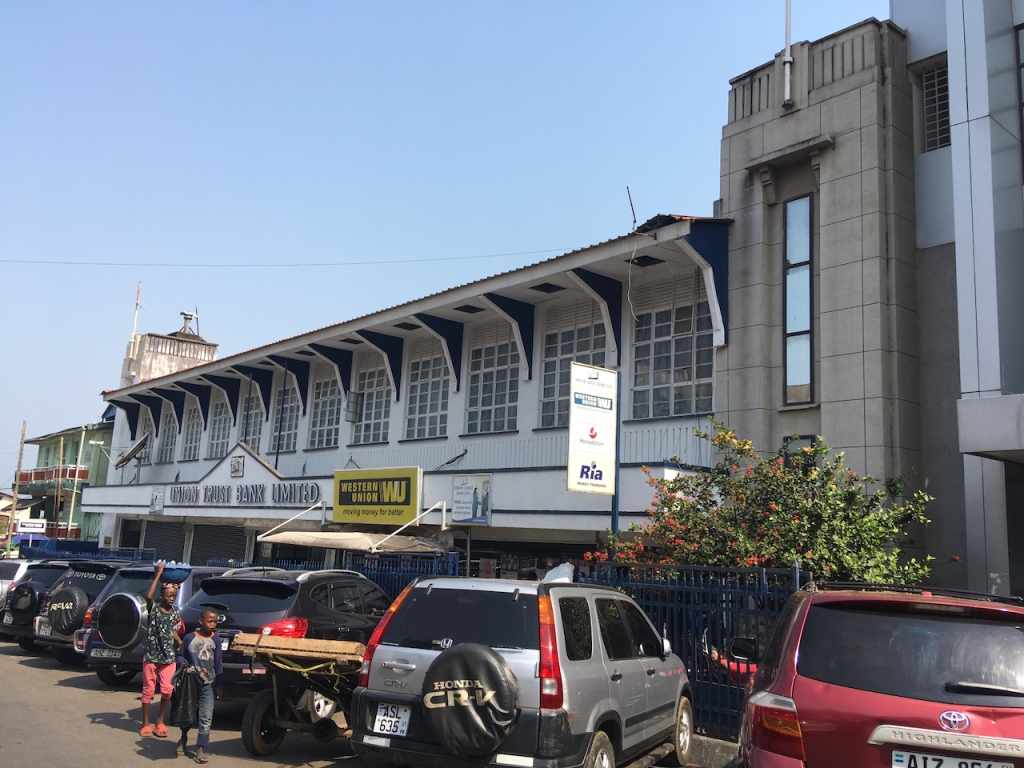
We visited the old Kingsway Stores – now a bank – but still with its deco-inspired flourishes at each end of the facade. The CFAO is still clearly recognisable, and several other stores display strong characteristics of GB Ollivant and Leventis properties we’ve seen elsewhere in Western Africa.
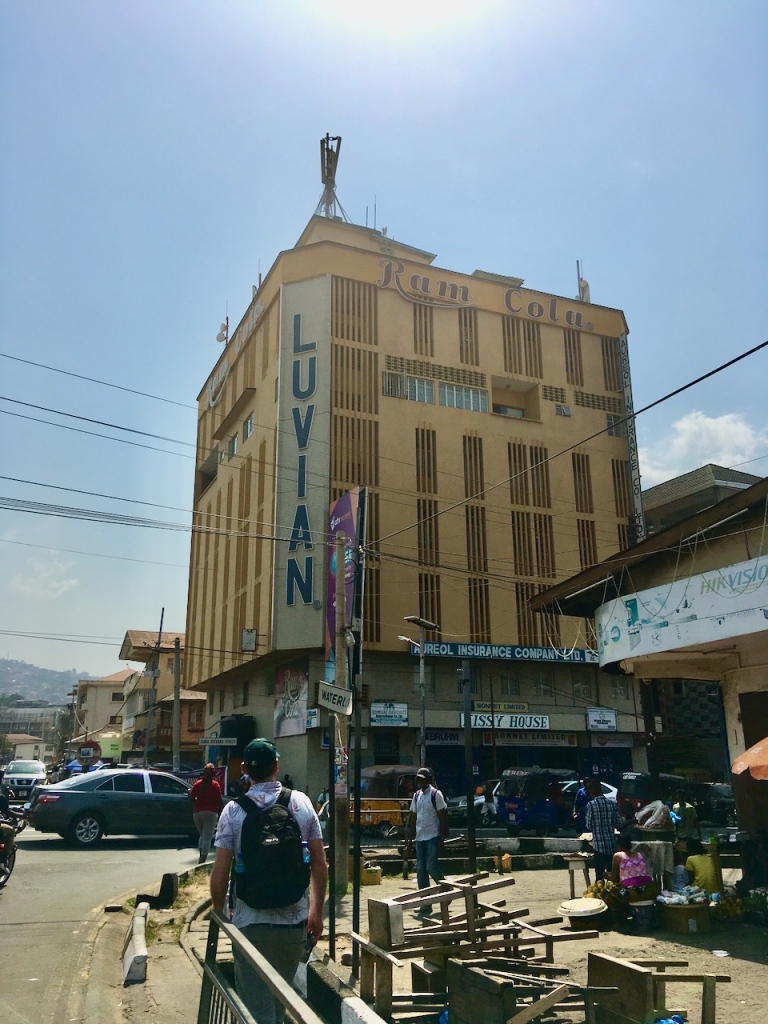
Former Kingsway Department StoreRetail: architect unknownLuvian Building, architect unknownFormer CFAO Building
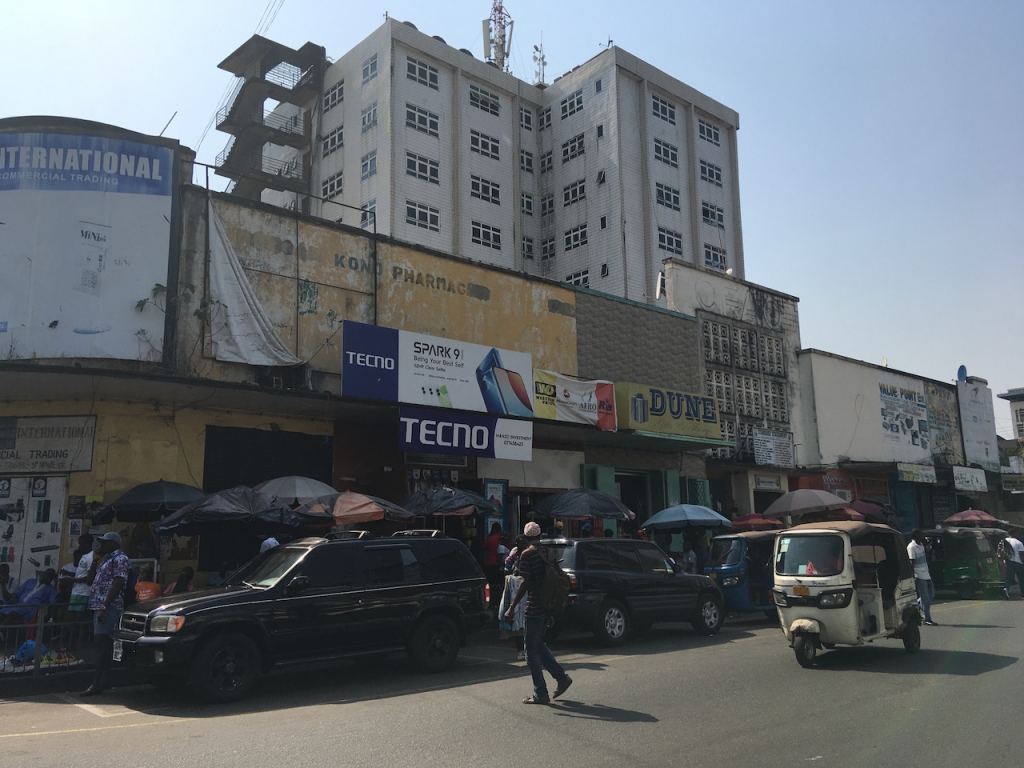
Heading further eastwards beyond the older city grid is ‘PZ Roundabout’ named after trading company Patterson Zochonis. Here the formality of the central business area gives way to more lively street markets and less formal city planning.
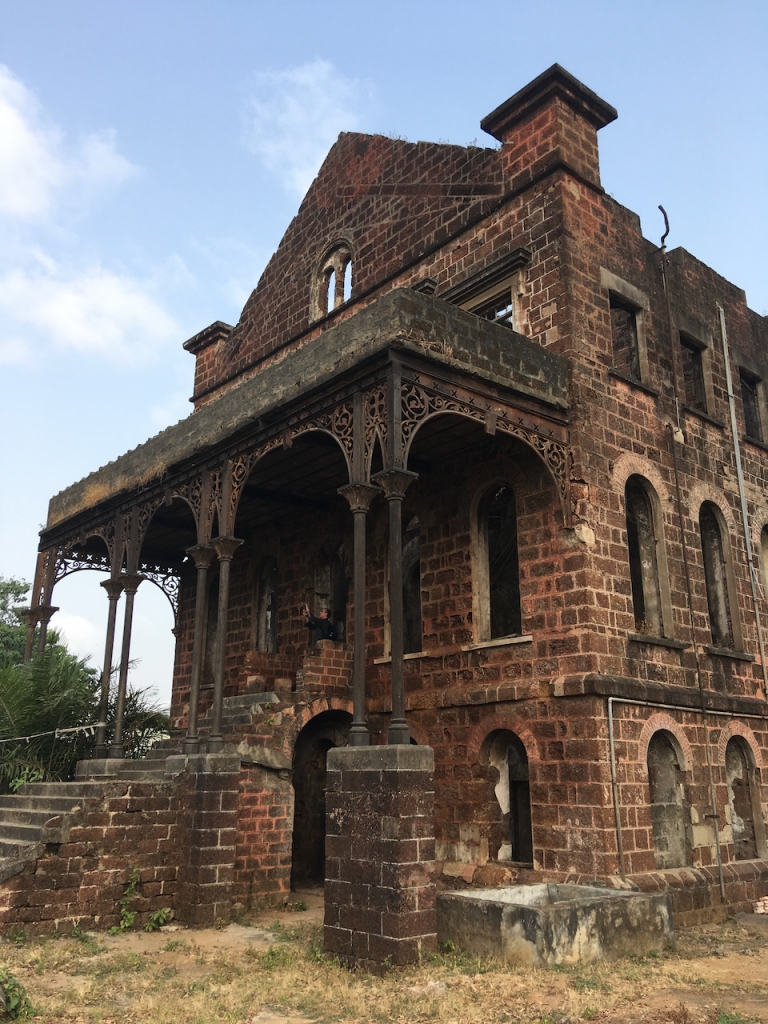
Further along Fourah Bay Road is the old Fourah Bay College building. The College was founded in 1827 in association with Durham University and was the first western style educational establishment in West Africa. It was mainly focused on missionary training. The delicate front verandah is formed with steel members bolted together and the ruinous state of the building has further exposed the steel structure inside. The beams were made by Glengarnock Iron and Steel Co in Ayrshire, Scotland and shipped out to Sierra Leone during the construction of the college building in the 1840s.
Old Fourah Bay College, founded in 1827, with construction starting in 1845, work supervised by Rev Edward Jones.
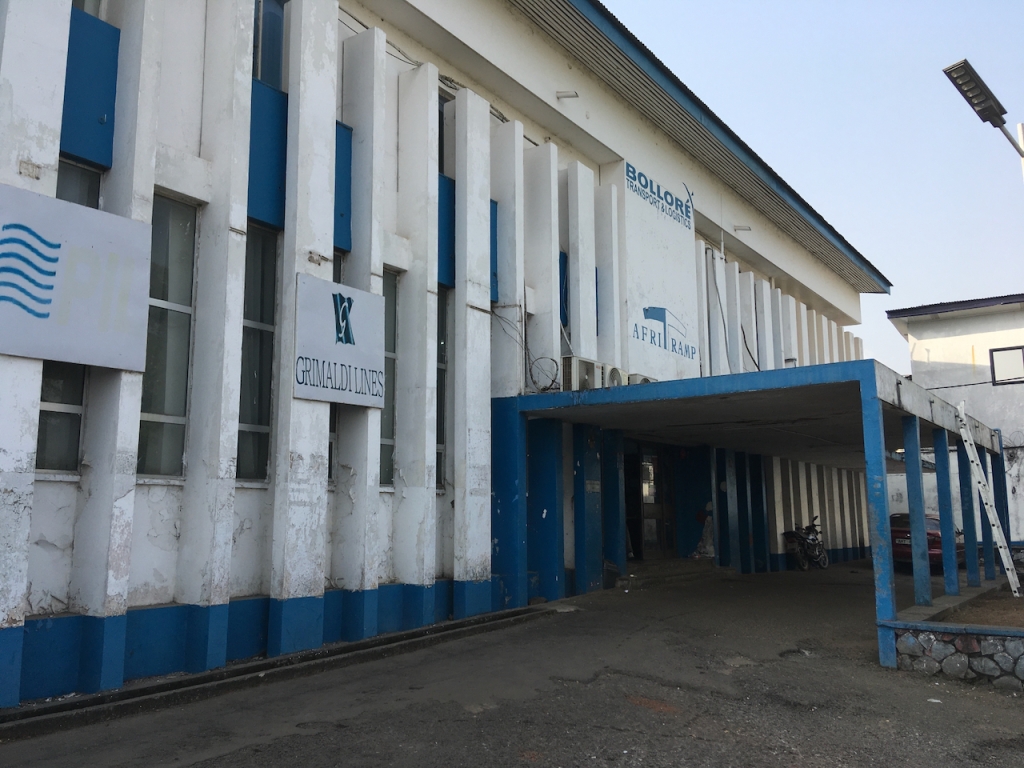
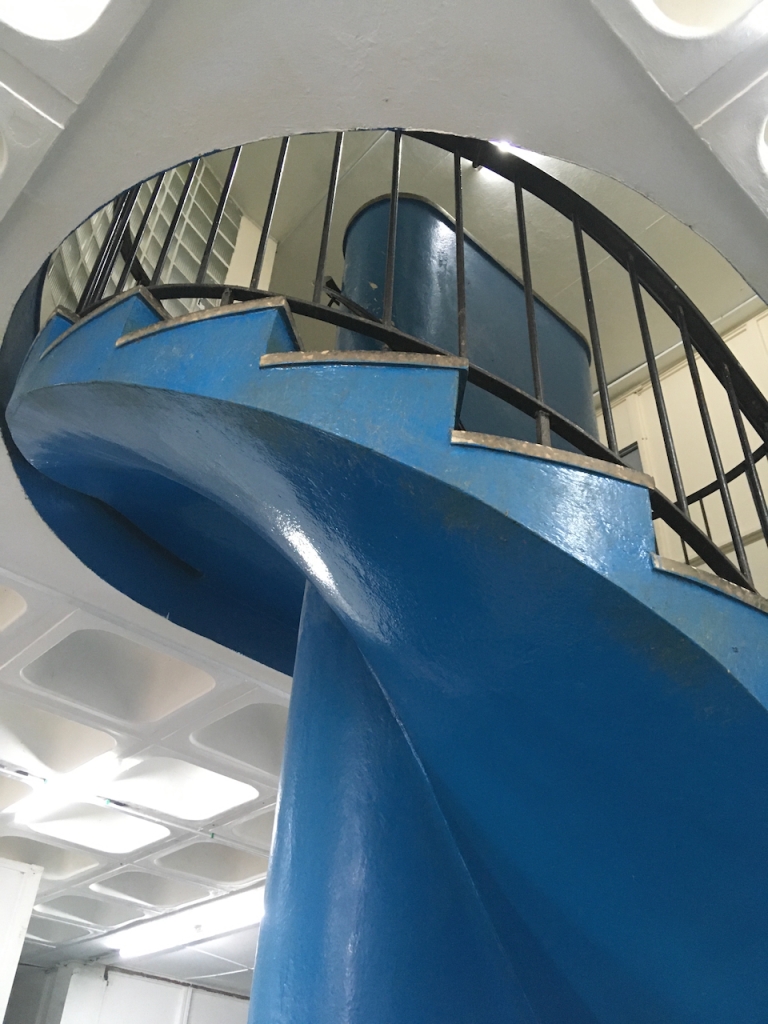
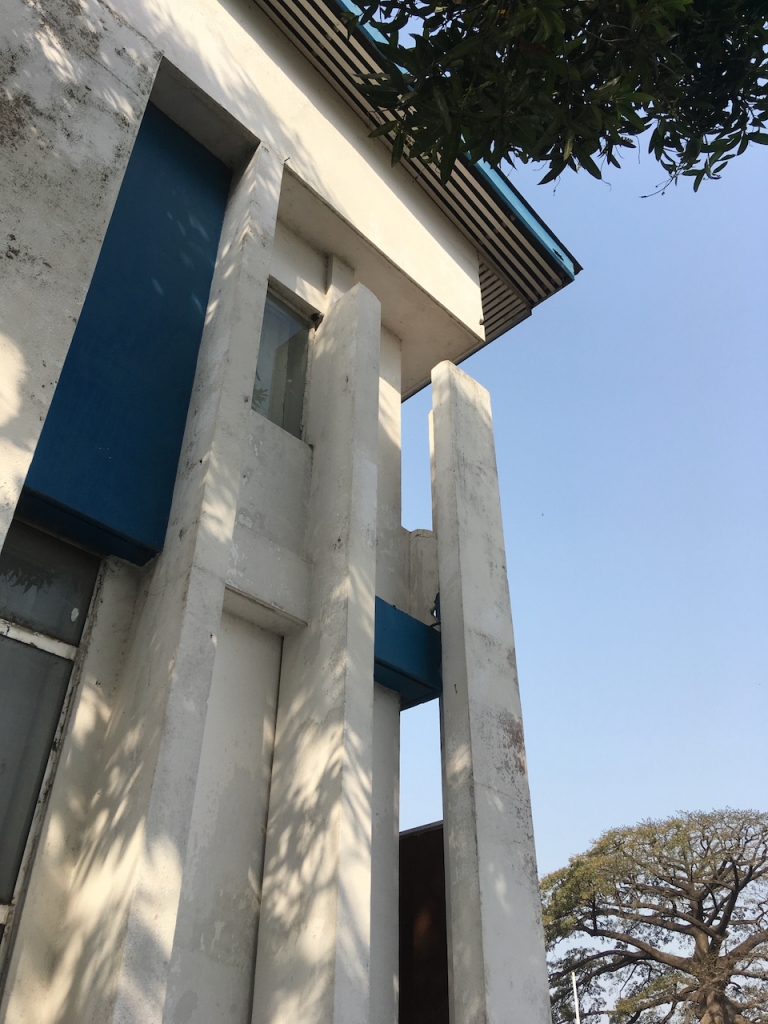
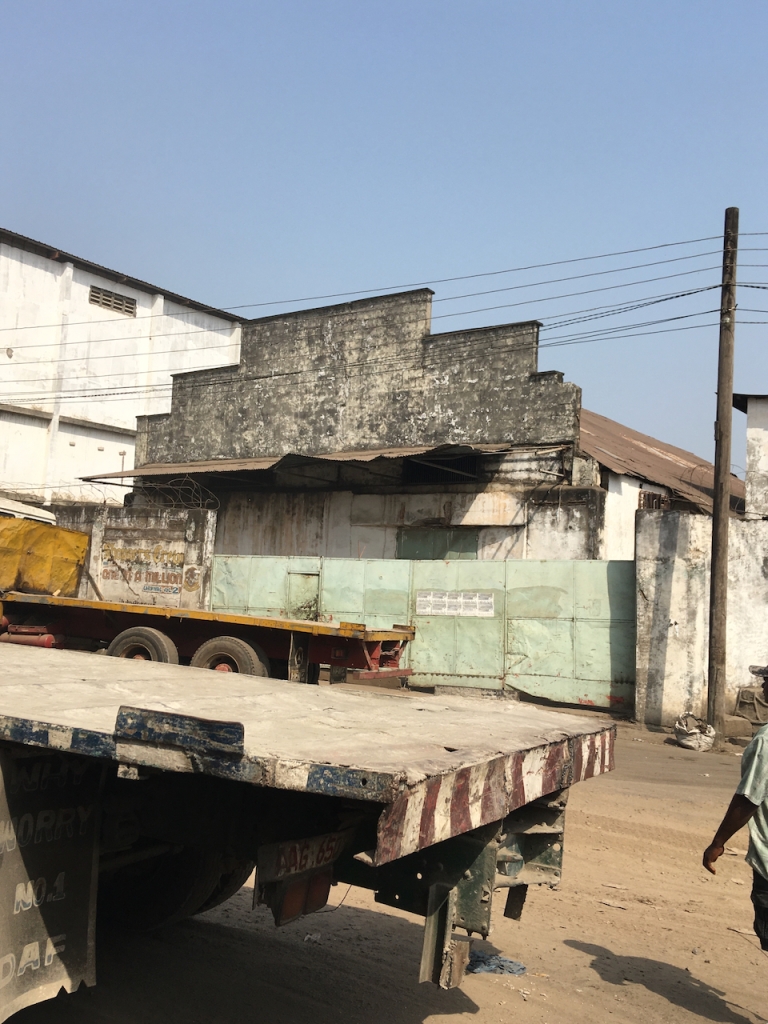
The college is located just a short distance from the sea, and what is now the busy port of Cline Town. Here the major shipping company Elder Dempster had their offices. They commissioned James Cubitt to design their premises in 1958. Cubitt also designed the Elder Dempster tower in Lagos, Nigeria, but rather than a dramatic tower overlooking the marina, here there is a more restrained horizontal solution with projecting concrete brise soleil and a porte-cochère. Inside the booking hall is a dramatic spiral staircase that wraps around what resembles a ship’s funnel. Warehouses and storage sheds dominate the area, including the former UAC stores opposite the National Railway Museum.
Former Elder Dempster Offices, James CubittInside Elder Dempster: waffle ceiling and spiral staircasedetail of the exteriorUAC warehouse Cline Town
There’s an impressive collection of architecture in this historic port city. In the UAC archive there are extensive photographic albums from 1915 through the 1960s documenting many of the streets and buildings we visited. Our task now is to identify more of these structures, and to research the history that resulted in their commissioning, design, and wider significance.
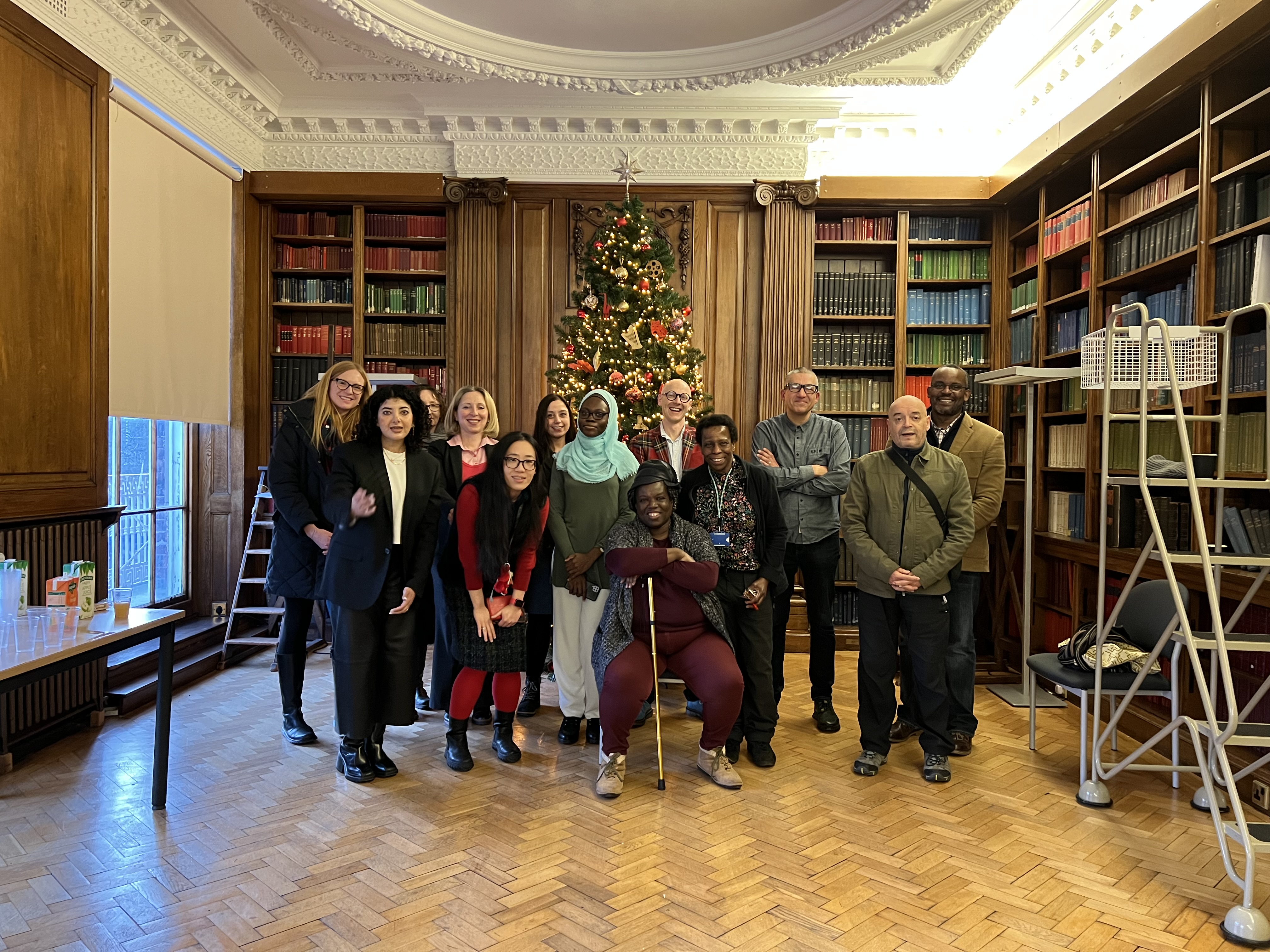
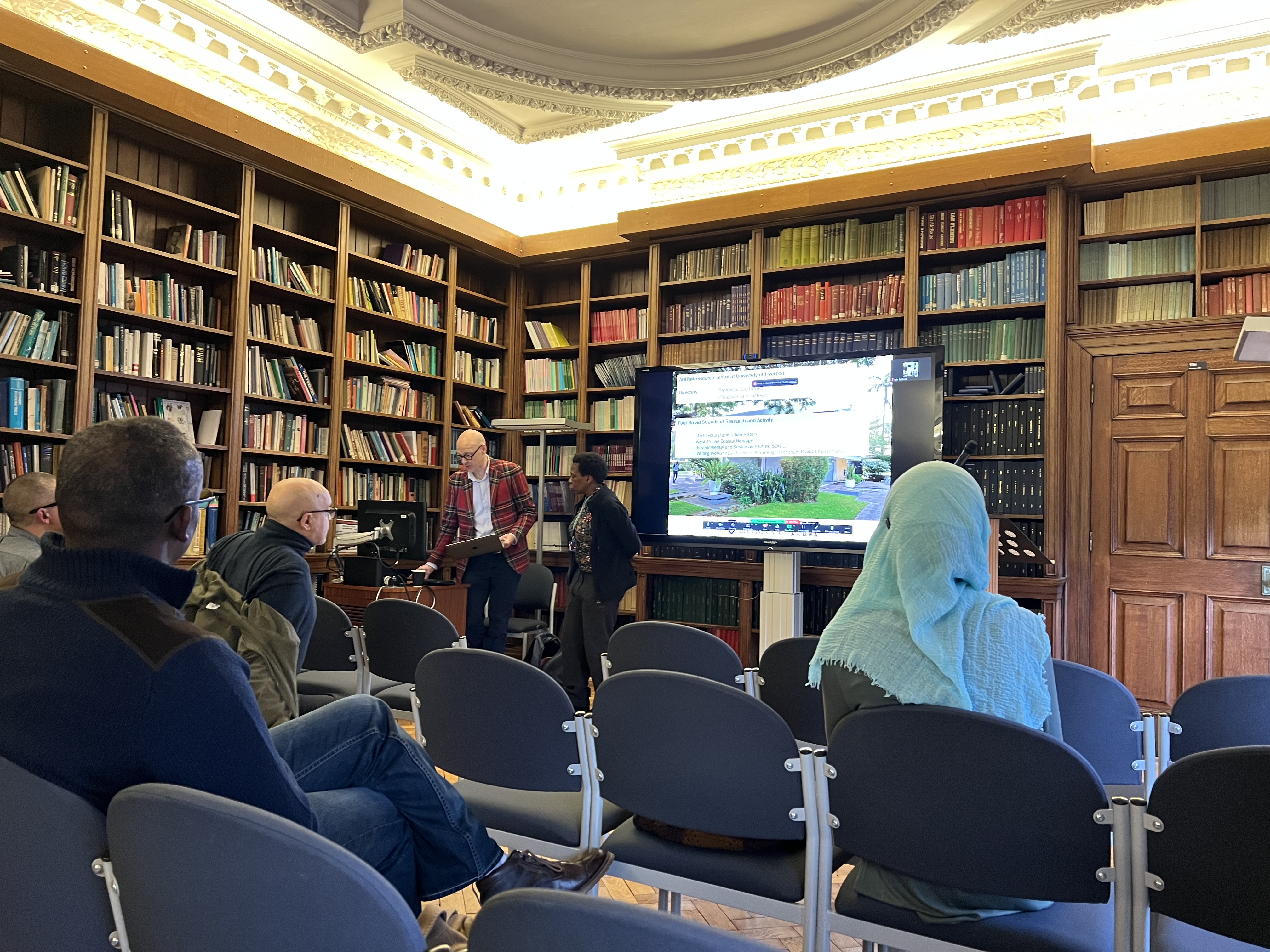
The Architectural History and Urbanism Research centre for Western Africa, AHUWA, was launched on Tuesday 13th December at the School of the Arts at the University of Liverpool. The launch involved a presentation of the research centre by the co-directors Professors Iain Jackson and Ola Uduku, about the key research themes, aims and ambitions of the AHUWA research centre followed by a short networking session over refreshments during the event. In attendance were invited members of the Liverpool university faculty and departments who had interests or links to West African Architecture and Urbanism history research, members of the local Liverpool community with African links, and a number of Architecture staff and post-graduate students. We were also pleased to welcome a representative from the Andrew Walls Centre from Liverpool Hope University and a host of academics who logged in online from the UK, West Africa, the USA and farther afield.
The key themes which AHUWA will focus on are:
Architectural and Urban History
West African Coastal Heritage
Sustainable and Healthy Cities [SDGs 11 and
Research outreach and collaboration via
Trans-national university collaborations
Writing workshops
Public outreach and engagement activities
Our aims and objectives are:
To be a repository and hub to consult for links to researchers and research collections pertaining to West Africa in North West England
To host and develop links with researchers in the North West of England and West Africa in order to promote future collaborative research links
Ultimately and importantly to strengthen research networks and institutions in West Africa through their collaboration with UK institutions from PG research and teaching opportunities to the collaboration and co-production of major research consultancy, and other potential outputs.
We are working in association with several collaborators including:
UCL and UCT (Modernist Heritage of Africa Project)
ACRC (University of Manchester) – the African Cities Research Consortium
DOCOMOMO International. (Shared Heritage Project)
ASAUK – Curating the proceedings and publication of the Online ASAUK Biennial conference 2022
UNILEVER – on the United Africa Company archive
We are in the process of undertaking the following:
Setting up MoU’s and working relations with colleagues at the IADS University of Lagos and IAAS University of Ghana, Legon.
Production of the first AHUWA newsletter in March/April 2023
Establishing links with the School of Architecture, Fourah Bay College, Sierra Leone
Undertaking scoping research in Freetown Sierra Leone
Working towards developing collaborative research grants within the scope of AHUWA’s research thematic areas.
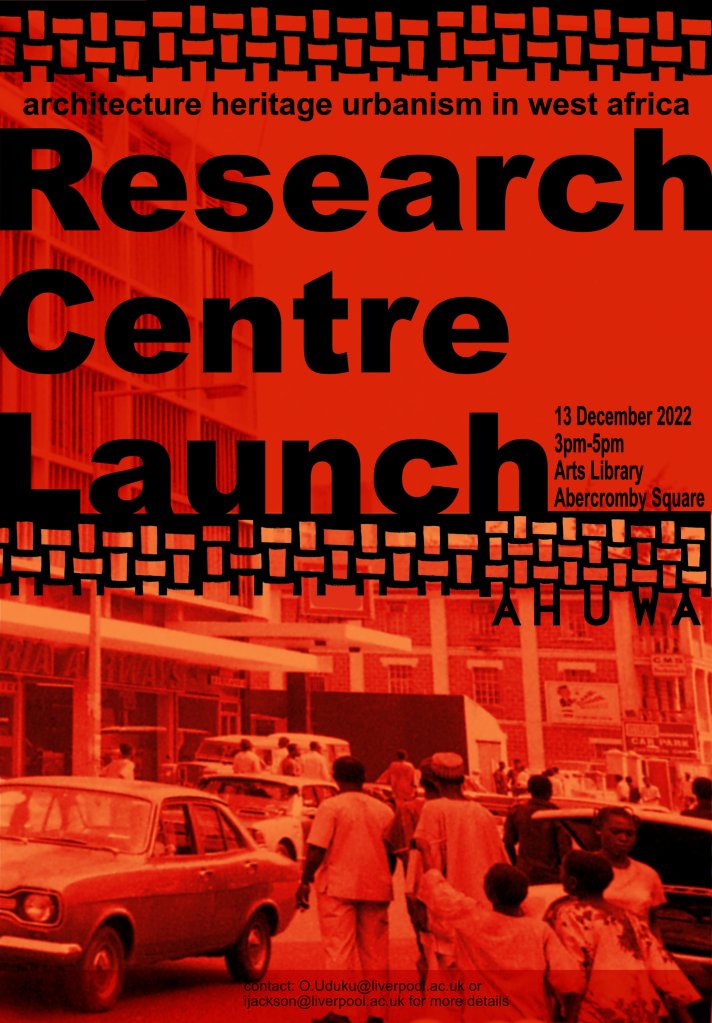
We have recently established a new research centre, based at the Liverpool School of Architecture called Architecture, Heritage, and Urbanism, in West Africa (AHUWA): https://ahuwa.org/ We’re hosting a launch event and would be honoured if you could join us on Tuesday 13th December, 3-5pm at the Arts Library, 19-23 Abercromby Square, Liverpool University for tea and cake.
Friends and colleagues from all of the North-West’s major collections, repositories, and archives with material on West Africa have been invited, and we’re excited to share ideas and build up new networks across the region and beyond.
If you could register here we’d appreciate it, and look forward to seeing you on the 13th. We’ll have an informal presentation at 3:30pm – please do come along and stay as long as you’re able. We’ll be on Zoom too from 3:30-4:00pm if you’d like to join us virtually for the presentation.
ECAS2023 is intended as a fully face-to-face conference. Please read the instructions on how to propose a paper on the Call for Papers page and then proceed to submit your contribution. All contributions must be submitted via the links on panel pages.
The calls will close on 9 January 2023, at 23:59 GMT
University of Cologne “African Futures” aims to explore the continent’s critical engagements with the past, present, and future of Africa’s global entanglements. Read the full theme and then browse the accepted panels.
Open Access online publication: “African Futures” The project started as part of the preparations for the ninth European Conference on African Studies (ECAS), jointly organized by the University of Cologne’s Global South Studies Center (GSSC) and the Catholic University of Leuven’s Institute for Anthropological Research in Africa (IARA), and due to be held in Cologne in June 2021 but the pandemic development to a postponement to Whitsun week 2023 (31 May . 3 June 2023). See the Brill website.
Exciting news that The V&A is planning an exhibition with emphasis on the architecture of Tropical Modernism in West Africa and India.
The exhibition will be accompanied by a major scholarly publication and a wide variety of other events, and will probably tour internationally following its staging at the V&A.
There is a vacancy for a Project Curator to work on the exhibition – details here
The Project Curator will research and develop activities associated with the project, supporting the creative vision set out by the Lead Curator. They will generate content and contribute to the delivery of the exhibition and accompanying publication.
To apply for this dream job, please submit your application online by Tuesday 22 November 2022 at 23:59.
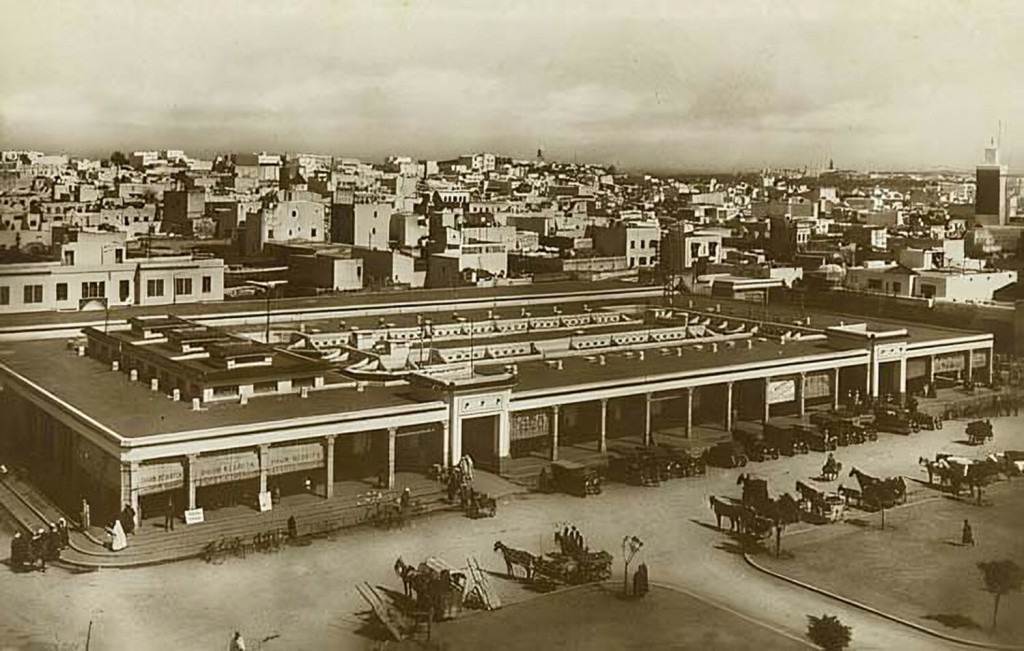
In 1925, the Central Market of Rabat was built at the outskirt of the medina (the old city) by French Colonial powers (1912-1956). Despite being the only element displayed in colonial maps of the medina, and one of Rabat’s current landmarks, the history of the market is still unknown. Drawing on the National Moroccan archives and on colonial postcards, the article explores the historical and urban significance of the Central Market for Rabat colonial and postcolonial history. It argues that the market constitutes a unique architectural and urban case for Rabat as it both challenged and reinforced the colonial agenda. Planning principles like the policy of association, the ‘image of the city’ and the ‘dual city’ were not only defied by the market, but also by the demolition of the part of the wall in front of it. This revealed the inconsistencies and lack of homogeneity of the colonial approach. Moreover, without the wall, the medina became penetrable by the ‘Ville Nouvelle‘ (New Town). Engaging with the Central Market is significant for the history of colonial planning, but also for today’s Rabat identity construction, inscribed in 2012 in the UNESCO World Heritage Sites and elected cultural capital in 2022.
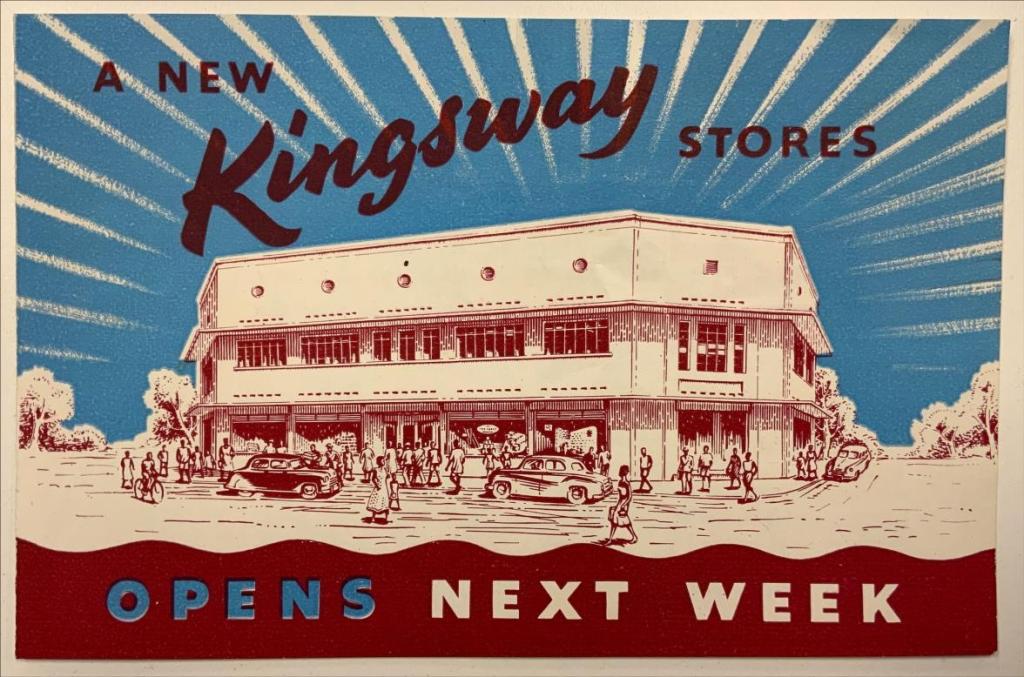
Kingsway, Sekondi Advertisement Picture courtesy of Unilever Archives
Kingsway Stores was the most exclusive retail chain in colonial British West Africa. Established by a British import-export firm, Miller Brothers, the chain’s first two department stores opened in Accra and Kumasi in 1915-1920 and were explicitly modelled on Harrods and Selfridges. Named for the boulevard in London’s Holborn, where Millers was headquartered in a stodgily baroque office building, the Kingsway Stores sold imported food, clothing and home wear to a primarily British expatriate clientele. By 1929, a series of mergers and takeovers saw Miller Brothers absorbed into Unilever’s vast African subsidiary, the United Africa Company, which is currently the subject of a collaborative research project led by the University of Liverpool and Unilever Archives, and funded by the Leverhulme Trust.
Kingsway Stores, Sekondi, 2022 Image: Iain Jackson
The Kingsway chain grew under the United Africa Co.’s ownership and by the early 1950s, Kingsway stores traded in each of the British West African capitals, Accra, Lagos, Freetown, Banjul, and in many of the larger towns and cities across the region: Kumasi, Cape Coast, Sekondi, and Tamale in the Ghana, and in Jos and Kaduna in Nigeria. Like many of these stores, the Sekondi store was designed by the Unilever In-House Architects and Engineering Department, headed by James Lomax-Simpson. A graduate of the University of Liverpool School of Architecture, Lomax-Simpson designed numerous buildings for Unilever, including housing at the famous company town, Port Sunlight. The designs that his team produced for United Africa Co. offices, warehouses and retail stores across West Africa tended towards the mildly moderne, with some slight modifications for local climatic conditions through the use of canopies and verandas to provide shading from the sun and allow for the higher loads of rainwater run-off required during the rainy season. The Sekondi Kingsway store is a paradigmatic example of this work.
Party at Kingsway Store in Bathurst/Banjul, Gambia, held in 1953. Picture courtesy of Unilever Archives.
The growth of the Kingsway chain in the interwar years reflected the expansion of British expatriate technicians, civil servants and businessmen during a period known as ‘the second colonial occupation.’ Increased investment in development projects, ultimately designed to maximise the flow of cocoa and precious metals from West Africa and thus boost Britain’s dollar reserves, saw not only an increase in British expatriate staff working in late colonial West Africa, but also their increasing embourgeoisement. The growth of the chain also reflected, and, indeed, facilitated, changes in the gender balance of British communities in West Africa. British women were originally discouraged from settling in the region, but by the 1940s the availability of malaria prophylaxis and yellow fever vaccines saw increasing numbers of women taking positions within colonial administrations, and wives joining their husbands on tours of duty across the region. As Laura Ann Stoler notes, the presence of European women ‘accentuated the refinements of privilege and the etiquettes of racial difference… women put new demands on the white communities to tighten their ranks, clarify their boundaries and mark out their social space.’ Racially segregated bungalow reservations proliferated across ‘British’ West Africa in this period. Within these reservations, ‘Europeanness’ was performed through a constant round of dinner parties, drinks parties, tennis parties, through the consumption of imported tinned and preserved food, through patterns of dress and home decoration. Kingsway stores, which emphasised that ‘orders were delivered direct to bungalows,’ supplied all the goods required for this memetic of bourgeoise English life.
By the mid-1950s, as political decolonisation neared in West Africa and both civil services and expatriate companies increasingly ‘Africanised’ their staff, the Kingsway Stores faced the loss of its primary customer base. Perhaps paradoxically, the company management combatted this through a programme of expansion. Boldly modernist new stores, designed by the British commercial architectural firm TP Bennett & Partners, were opened in Accra, in the Lagos suburbs, in Ibadan and Port Harcourt in Nigeria. At the same time, didactic marketing campaigns – exhibitions, product demonstrations, fashion shows – were instrumentalised to sell a vision of modern, and, indeed, modernist, domesticity to an elite African clientele. An Ideal Homes Exhibition, sponsored by the British Design Council and held at the Lagos Kingsway Store in 1962, for example, offered advice on ‘such subjects as how to create harmony with simple furnishings and the tricks of entertaining which make a house-wife into a hostess.’ Kingsway at the end of empire therefore shrewdly manoeuvred itself away from selling ‘Europeanness,’ to selling ‘Modernity’ to the emerging, post-colonial, African elite, a shift in mode that sheds light on the entanglements between modernist architecture and design on the one hand, and colonial and neo-colonial profit extraction on the other.
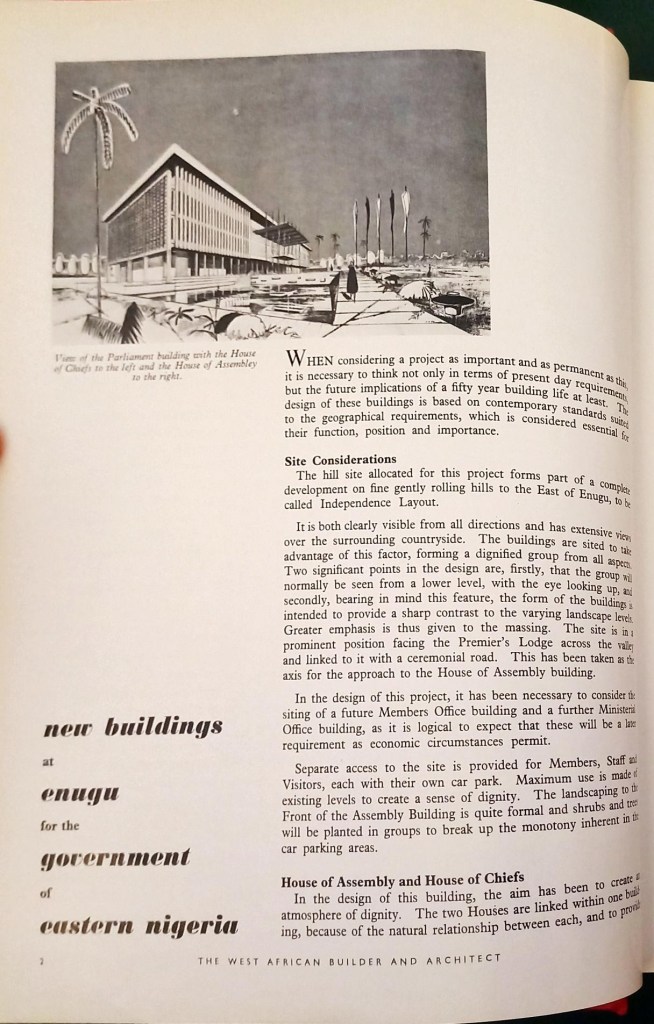
The first architectural journal in West Africa, The West African Builder and Architect (WABA) was published in 8 volumes between 1961 and 1968, and covered the field of architecture and building in the region. Nation-building programmes had started in newly independent West African nations by the early 1960s. These projects were centred on large-scale infrastructure projects for national development, which sparked a boom in design and construction. In contrast to earlier architecture journals on colonial Africa that were published for a metropolitan readership,i WABA was founded by and for professionals based in West African countries to share information on practice in the developing industry and encourage cooperation among practitioners. ii
The journal began with an editorial panel of British architects: Kennett Scott in Ghana, and Anthony Halliday and Robin Atkinson of Fry & Drew and Partners in Nigeria.iiiOluwole Olumuyiwa, one of the few Nigerian architects who studied abroad and established practices upon their return, was the only West African on the panel. Among the WABA’s target audience was the modest number of engineering and architecture students studying in West Africa. It aspired to equip them with valuable information regarding their future careers that were specific to their environment.
Published articles included news on new projects finished in Ghana, Nigeria, Liberia, and Sierra Leone as well as articles by skilled professionals discussing contemporary design and building methods in West Africa. Regular publication features included technical reviews of new products, updates on development work in the countries covered, and advertising placements.
At that time, British practices operating since the 1940s dominated the architecture field in the region. They completed late colonial buildings using tropical modernist designs. This group of foreign architectural firms, including James Cubitt & Partners, Kennett Scott Associates, Architects’ Co-Partnership, Fry, Drew & Partners, etc., produced a significant number of the new structures published in the WABA journal. The projects of the general contractor, Taylor Woodrow and the engineering consultant, Ove Arup & Partners were also listed. Buildings for government organisations, corporations, and residences, constituted the bulk of the reported projects. Facilities for telecommunications, transport and healthcare were also mentioned.
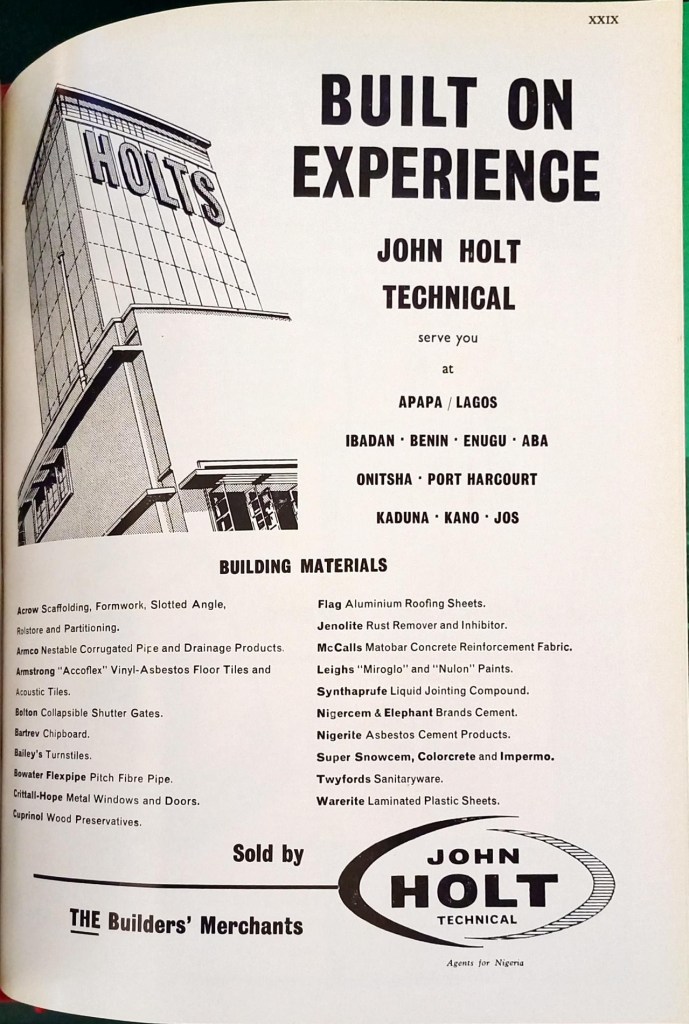
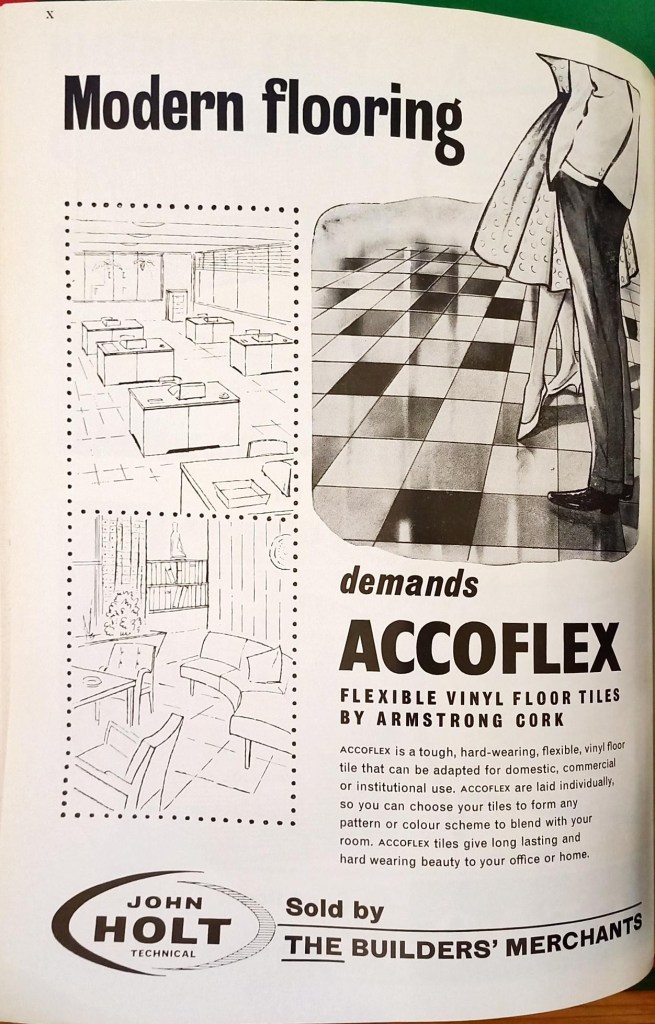
The WABA journal served as a reference for the purchase and sale of building supplies and services through advert placements, advertisers index and buyers’ guides. Advertisements in volumes 1 and 2 of the journal reflect the state of the construction industry in the early 1960s independent West Africa. As the region’s manufacturing industry was in its cradle, building supplies and equipment were primarily imported and distributed by West African-based agents. Most of the distributors’ advertisements in the journal were from multinational corporations that were at the forefront of trade in colonial West Africa such as United Africa Company, GBO (G.B. Ollivant) and CFAO (Compagnie Française de l’Afrique Occidentale). GBO Building Department for example was a former subsidiary of British merchant GB Ollivant and had been operating in Nigeria since the late 19th century. Vivian, Younger & Bond Ltd and John Holt Technical were among more well-known suppliers with numerous locations throughout West Africa.
By constructing new facilities and forming partnerships with public and private organisations, foreign manufacturers also expanded their presence in West Africa. In their various local factories, International Paints (West Africa) Ltd., Dorman Long (Ghana) Ltd., and Nigerite (in Nigeria) produced paint, steel, and asbestos sheets respectively. The headlines of these corporations’ advertisements in WABA highlighted the launch of new plants and their support of the local economy. Additionally, advertisements for locally produced goods included the clause “made in Ghana” or “made in Nigeria.”. There was a minimal presence of indigenous manufacturing companies. NIGERCEM-Nigeria’s first locally owned cement factory was the only producer to include this feat in its advertisement.
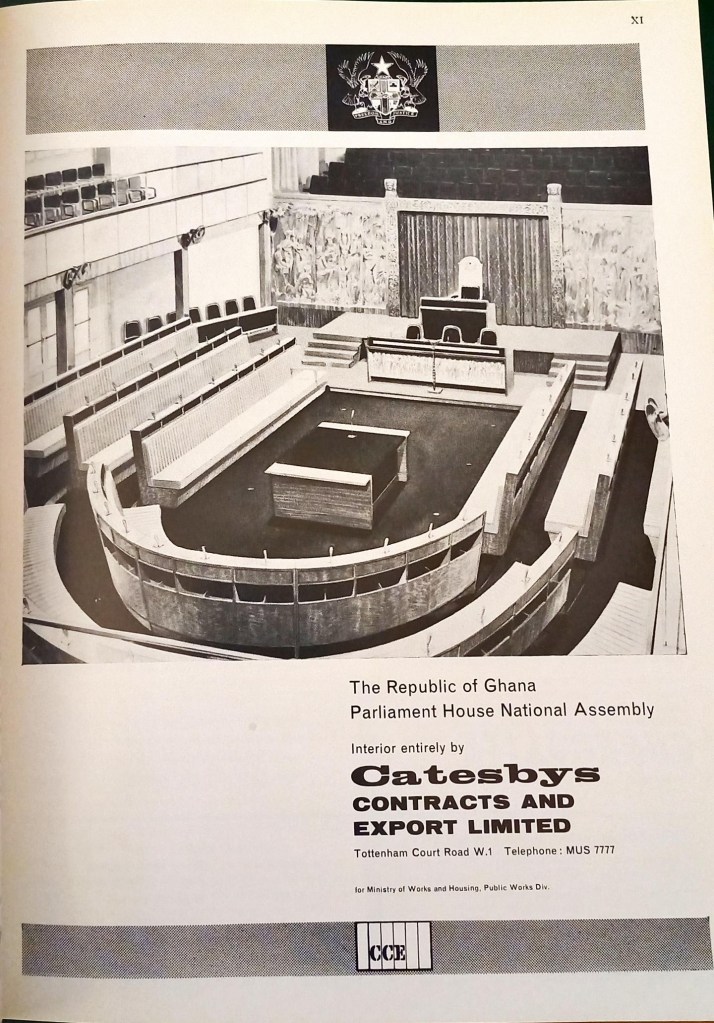
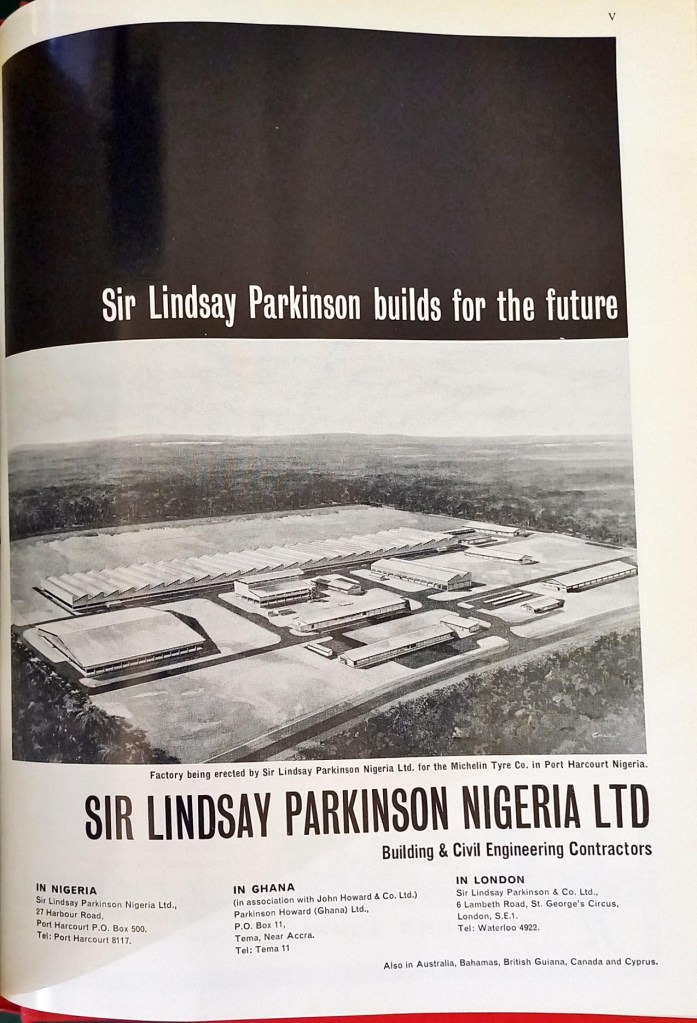
Some organizations used their advertisements to highlight their importance and reputation in the sector. Advertisements for general contractors and subcontractors were designed to appear as portfolios of completed and continuing projects. The advertisement pages for the metal component company Henry Hope & Sons Ltd always showed an image of a brand-new building fitted with their curtainwalls and/or sun breakers. This was displayed alongside a brief overview of the building including its location and architect’s name.
The journal adverts reflected companies’ recognition of their role in nation-building. Multinational corporations boasted of their delight and pride in partaking in the “progress” and “growth” of the economy and the future of new countries. Was this marketing approach merely chosen to appeal to the development-oriented nature of the new market, or was it implemented to emulate previous advertisements by foreign businesses (like UAC) in response to criticism of neo-colonialism? iv
Companies targeted their advertisements not only at professionals but also at citizens in West Africa. These advertisements directed at building occupants first appeared in the 1962 issues and frequently alluded to modernity. Adverts for flooring, sanitary fittings, and appliances included large texts with phrases like “gracefully modern” and “modern living.” This contrasted with building supplies adverts-directed at professionals-which hardly referenced modern living. The late colonial era’s ‘africanization’ programmes aided the growth of the middle class by giving priority to the education and employment of Africans by public and private sector organisations. Likewise, housing initiatives launched by government agencies like the Ghana Housing Corporation and the Nigerian LEDB (Lagos Executive Development Board) in the 1950s attracted this demographic. They were characterised by their higher economic and educational status, as well as a household lifestyle distinct from the traditional communal family structure.v Was the reference to a modern lifestyle a marketing strategy to attract the West African middle class who had adopted a western-oriented lifestyle?
The WABA journal provides an account of the building sector’s development in independent West Africa. The journal advertising demonstrated how companies promoted their products to appeal to both individual and national ideals of growth while navigating the shifting socio-political landscape.
i See Hannah le Roux and Ola Uduku, ‘The Media and the Modern Movement in Nigeria and the Gold Coast’, NKA (Brooklyn, N.Y.), 2004.19 (2004), 46–49.
ii ‘Introduction’, The West African Builder and Architect, 1:1 (1961), 1.
iii In 1961, the Nigerian office of Fry, Drew and Partners became Fry, Drew, Atkinson Architects Nigeria under the leadership of Robin Atkinson. ‘Nigeria Developments’, The West African Builder and Architect, 1.4 (1961), 108.
iv Bianca Murillo, ‘“The Devil We Know”: Gold Coast Consumers, Local Employees, and the United Africa Company, 1940–1960’, Enterprise & Society, 12.2 (2011), 317–55
v Daniel Immerwahr, ‘The Politics of Architecture and Urbanism in Postcolonial Lagos, 1960-1986’, Journal of African Cultural Studies, 19.2 (2007), 165–86 (p.175)
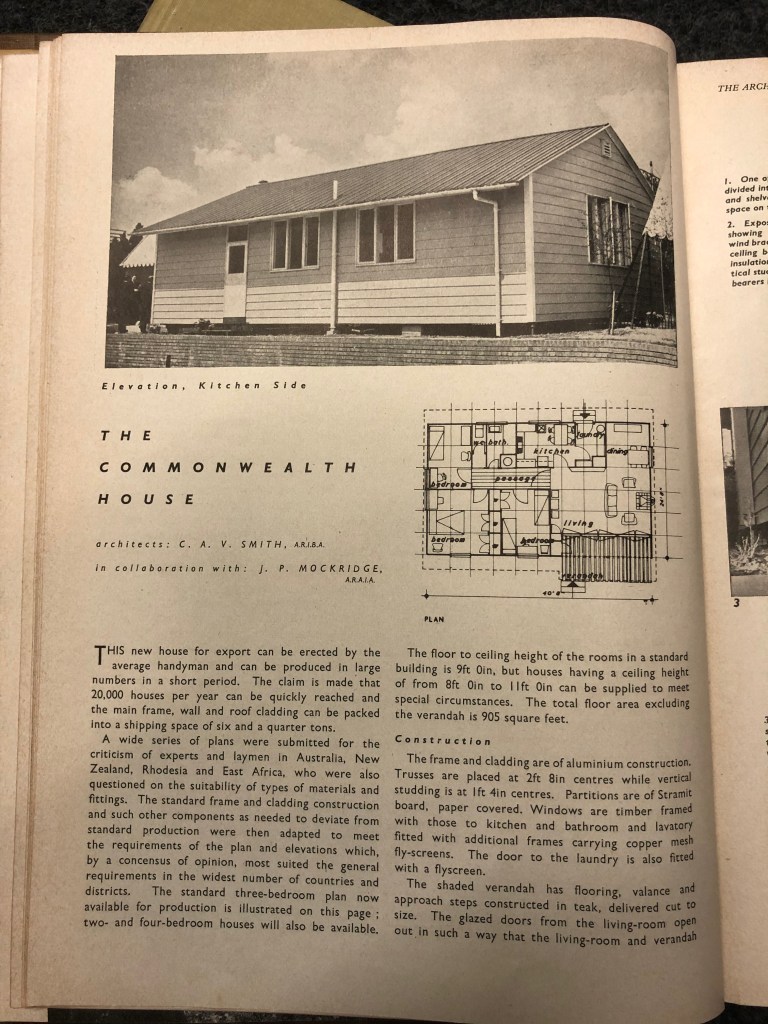
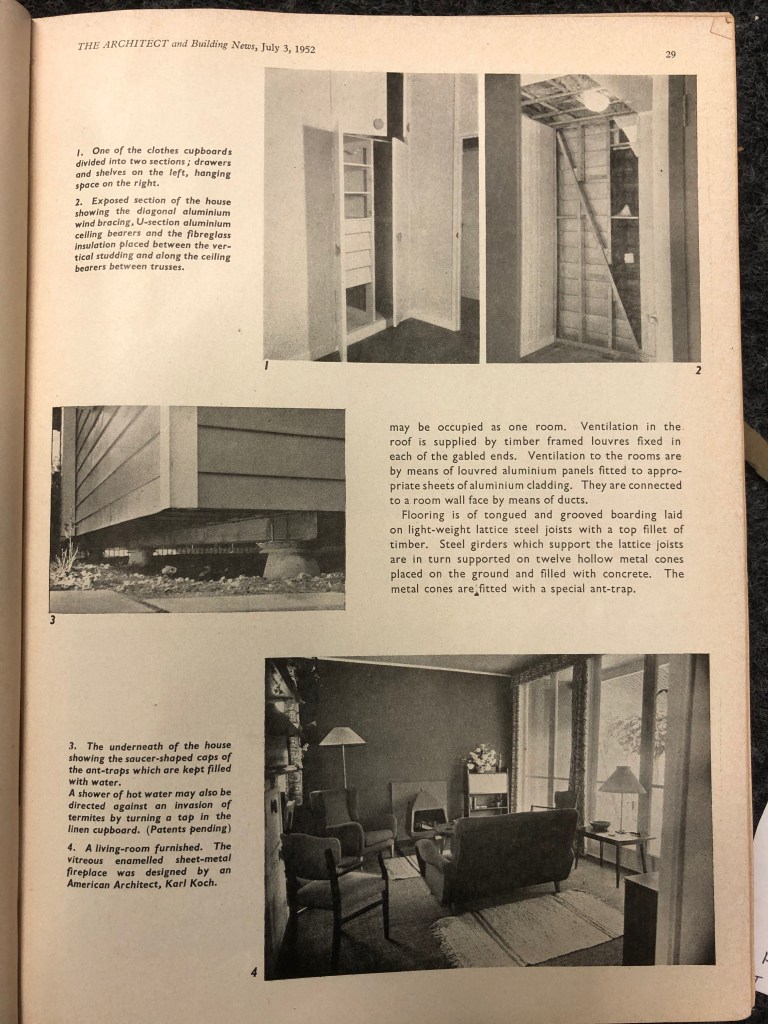
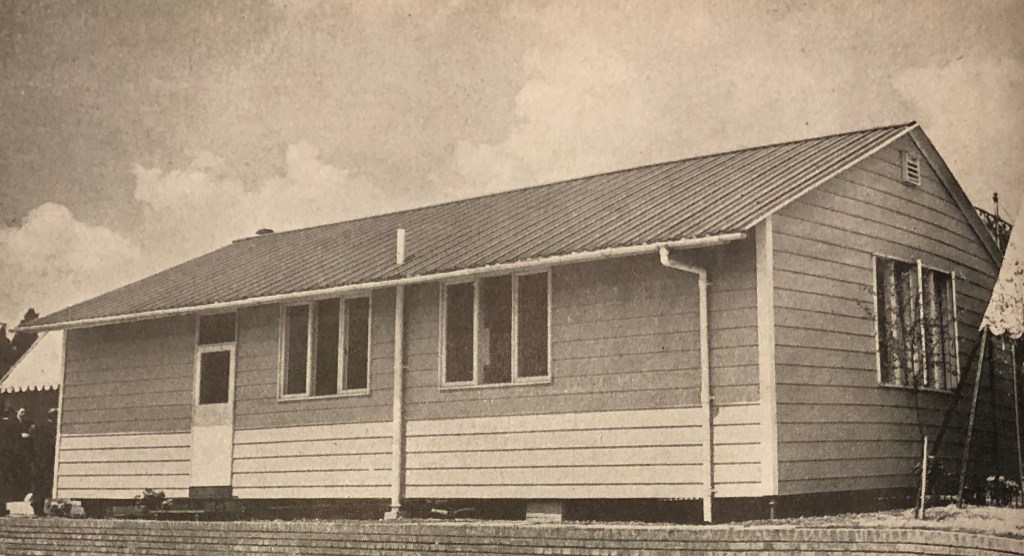
In the Architect and Building News from July 1952 there’s an intriguing article for a partially-prefabricated ‘Commonwealth House’.
The Commonwealth House
The house could be easily shipped and ‘erected by the average handyman’, aided by a standardised kit of parts would make manufacturing simple and predictable.
The house was designed by Charles A. V. Smith with John Pearce Mockridge, following a consultation with potential makers and inhabitants. The architects adjusted their designs to suit a consensus – resulting in a house very much designed by committee with a predictable, if utilitarian and efficient, floor plan.
The brief was to develop a house that would be suitable across the geographical and climatic zones of Australia, New Zealand, Rhodesia (now Zimbabwe), and East Africa. Over 20,000 units were expected to be built per year to meet the demand for emigrating workers and their families eager to escape war-torn Britain for opportunities elsewhere.
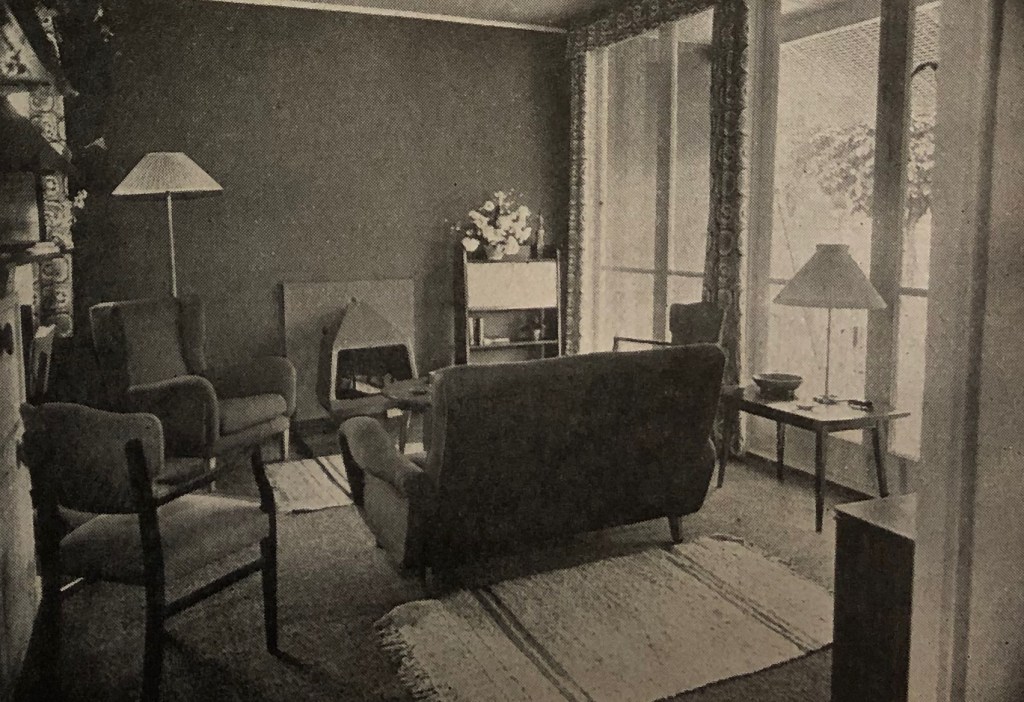
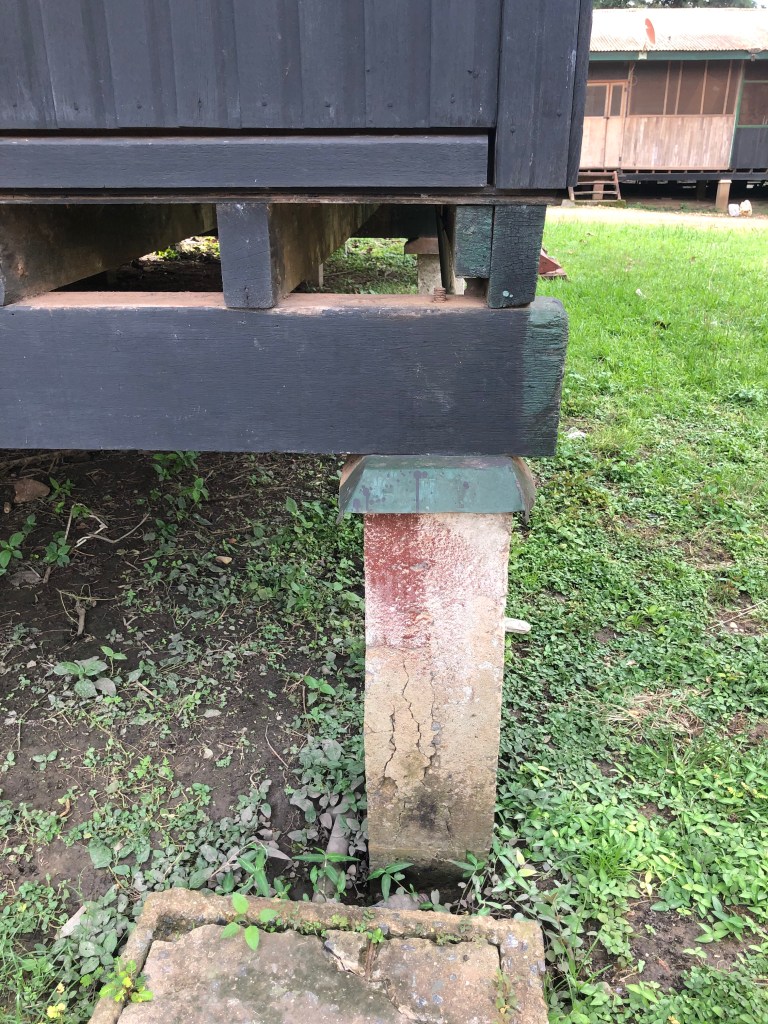
The house had an aluminium frame structure, and the cladding materials could vary depending on availability and final conditions. It was placed on concrete posts with an ant-trap to resist termite attack. The prototype erected on Great West Road in Hounslow was fitted out with furniture and a fireplace designed by American architect Carl Koch (1912-1998), who later pioneered several prefabricated house designs in the US.
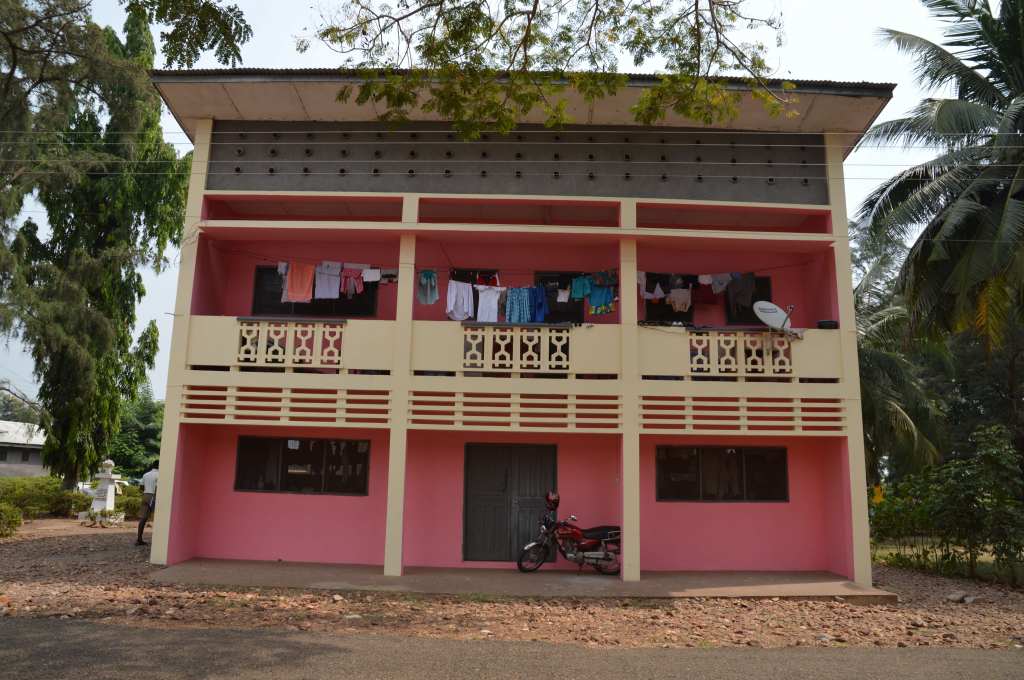
The Commonwealth House design was very similar to houses we saw in the timber saw-mill town of Samreboi in Ghana – even down to the ant-trap detailing.
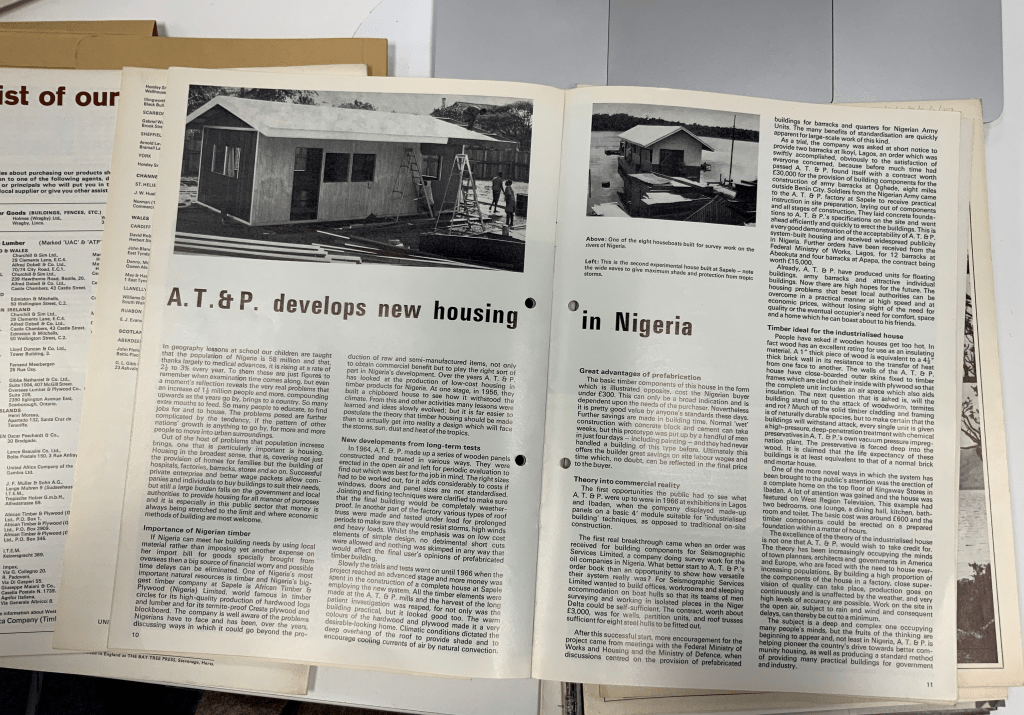
The African Timber and Plywood Company (AT&P), who owned the mill and were responsible for most of the housing, were also attempting to develop their own housing kits and to expand into new products and markets.
Timber framed housing in Samreboi, GhanaTimber framed housing in Samreboi, GhanaAnt trap detail
By 1954 AT&P had begun to discuss prefabrication techniques and processes at both Samreboi and their larger station at Sapele in Nigeria. The drive and urgency for this type of production was heightened by increased competition and political efforts to quickly improve housing standards in West Africa. The Dutch firm Schokbeton had been awarded a large order for prefabricated housing in Ghana, and contractors Taylor Woodrow were eager to expand their building products export wing.
Architect Edric Neel (1914-1952) developed a consortium of architectural consultants with Taylor Woodrow in 1944 to research new structures that could be quickly assembled and fabricated. The group was called Arcon and their first project was a temporary prefabricated house. The system developed into a set of lightweight tubular steel components that could be easily welded together. The façade, if required, could be made of local materials, metal sheets, or cement board cladding, as required. The system was intended for export and into ‘tropical conditions’ in particular. The units could be readily scaled and used to assemble large factories and sheds with large spans. Many of the factories and mills (including those at Samreboi) utilised this standardised and low-risk approach to construction.
Saw Mill at Samreboi, Ghana
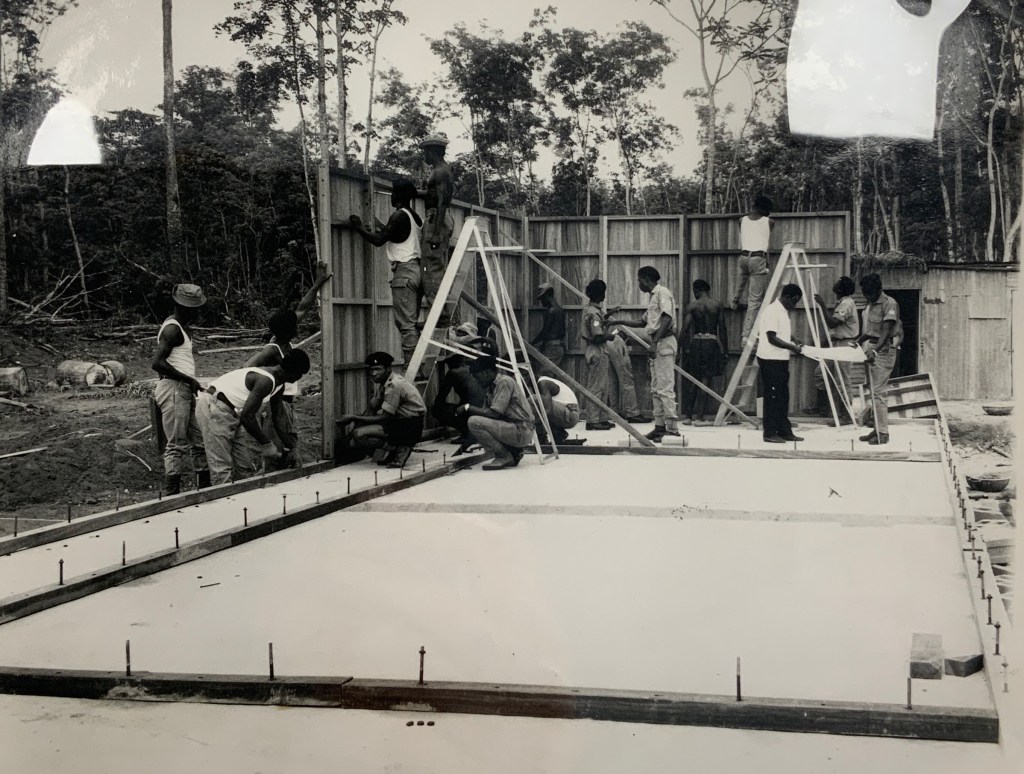
Over the next 15 years AT&P began developing a series of prefabricated houses, but rather than developing a frame and cladding approach they created integrated wall panels (like flat-pack furniture) with modular dimensions so that windows and doors could be added where required. They called it the AT&P System Building, and priced a small house at £500 – compared to the £1200 Schokbeton model.
The system was adopted for military projects and housing, and continued to be deployed into the 1970s with AT&P developing many different variations and types.