Archive

Author Archives: jacksoniain

Zamarian, Patrick. (2025). The Bombay School of Architecture and the Royal Institute of British Architects (1917–1948). Fabrications, 1–41. https://doi.org/10.1080/10331867.2025.2528267

 Technical Building, Sir J. J. School of Art, Bombay, 1909, designed by George Wittet and since 1926 home to the Bombay School of Architecture. Photographer unknown; from John Begg, Annual Report on Architectural Work in India 1909–1910 (Calcutta: Superintendent Government Printing, 1910).

In the early twentieth century, Bombay (now Mumbai) emerged as the largest and commercially most important city in what was then British India. With its rapid urban development offering opportunities for professional architects, the city produced the country’s first school of architecture, instituted in 1913 and, in terms of student numbers, soon among the largest such institutions in the British world. The Royal Institute of British Architects (RIBA) meanwhile claimed to promote and coordinate the training of architects across the British Empire. Using a broad range of archival records, government reports, and contemporary periodicals, this article traces the relations between the Bombay School of Architecture and the RIBA, which began during the First World War and ended following India’s independence. It argues that throughout this period the school was driven by its efforts to attain the RIBA’s “recognition,” which ultimately foundered on the RIBA’s intransigence. In contrast to its handling of schools in the settler colonies, the RIBA insisted on unrealistic metropolitan standards from the Bombay School. I therefore contend that the RIBA did not in fact pursue a coherent imperial policy; its lofty rhetoric notwithstanding, the RIBA’s role in coordinating architectural education beyond Great Britain remained limited.

General Post Office, Bombay, designed by John Begg and built between 1904 and 1913. Image from Report of the Civil and Military Works of the Public Works Department (General Branch), Bombay Presidency, for the Year 1909–1910 (Bombay: Government Central Press, 1910).

Full article available (creative commons) via the link above.

China’s Two Tropical Architectures: Climatic Regimes, Socialist Reconstruction, and Global Maoism in Guangzhou and Dar es Salaam, 1955-76, by Sun Zhijian, National University of Singapore, supervised by Prof Jiat-Hwee Chang.

Abstract:

In the contexts of decolonization and the Cold War, the tropical world became a contested arena with fierce competition among various old and new donors in the name of development aid, of which the infrastructural construction constituted the backbone. In the past decade, a growing body of literature on postcolonial tropical architecture has challenged current accounts weighed towards the built environment produced by either the former metropolitan powers or the Soviet-bloc, by shedding new light on the role of a third category of emerging aid donors, especially socialist China. Following the Sino-Soviet Split (1960), the Chinese attempted to promote an alternative socialist development path in newly-independent African states to that proposed by their Soviet-allied rivals. However, despite the allegedly age-old Sino-African solidarity, as latecomers in the unfamiliar tropics, the Chinese struggled against many challenges, among which the most crucial was the hot-and-humid climate as well as building problems it caused. This process almost coincided with their domestic socialist reconstruction through coping with the scorching heat and humidity in subtropical Guangdong under the Great Leap Forward (1958-62) and subsequent revolutions.

Based on archival materials from China, Tanzania and the UK, this thesis is a transnational history of China’s two tropical architectures in relation to both domestic politics and global geo-politics in the mid-to-late 20th century, i.e. China’s overseas architectural aid in decolonizing Dar es Salaam, Tanzania under Nyerere’s Ujamaa socialism, which was the largest sub-Saharan African recipient of China’s assistance in the Cold War, and China’s domestic subtropical modern architecture in Maoist Guangzhou, which has long been the stronghold of China’s subtropical knowledge production. Through case studies of sample projects of industrial and agricultural infrastructures in Guangzhou and Dar es Salaam, it answers two overarching questions: Since China’s two tropical architectures took place concurrently, were there any transnational interactions between their knowledge production and practice? (If so, how did they happen?) How did the Chinese socio-cultural construction of the tropics give rise to a distinctively “anti-imperialist” mechanism of tropical architecture from that of the West and socialist North? 

Moving beyond traditional architectural historiography relying primarily on stylistic analysis, it draws on theories of “techno-political regimes” and “critical temperature studies” to develop the notion of “climatic regimes” to capture the interdependence between tropical architecture’s climatic management and the exercise of socio-political power. As the socio-technical arrangements of an interlinked body of climatic knowledge, thermal comfort norms, sanitary discourses, urban typologies and architectural expertise transcending Cold-War rivalries, climatic regimes render intelligible a certain set of climatic parameters, trigger remedial strategies dealing with environmental concerns and normalize people’s thermal sensation for certain political goals. It argues that China’s two tropical architectures were not only concurrent, but more importantly, were co-constitutive with each other through a highly-centralized bureaucratic network of socialist state-run institutions rather than the genius of certain individuals, in which not only architects and planners, but also building physicists, meteorologists, physiologists, ventilating engineers and technocratic Party cadres were all active mediators of global flows of resources and expertise. Divergent from the Soviet-bloc’s climatic regimes paying particular attention to former colonial thermal segregations of mass housing in Africa, the Chinese endeavors driven by the Sino-Tanzanian common appetite for rapid industrialization and self-reliance under the principle of “Production First, Livelihood Second” resulted in the uneven distribution of climatic considerations between industrial and non-industrial spaces in the work-unit typologies both within and beyond China. By revealing how the Chinese tropicality worked from within and vice versa, it contributes to existing literature on the histories of both modern Chinese architecture’s transnational influence and global tropical architecture, as well as recent scholarly attention to thermal comfort in the built environment against the Anthropogenic climate change.

As Hardly Found: Art and Tropical Architecture centres artists and artworks that have so far been overlooked by histories of ‘tropical architecture’. In this collection of essays, historians, artists and archivists address works of art connected to epicentres of teaching and practice within the movement – focusing on the Department of Tropical Architecture at the Architectural Association and its collaborators such as Kwame Nkrumah University of Science and Technology – which emerged in the mid-20th century alongside anticolonial struggles that dismantled the British Empire.

Here, authors use creative, critical and speculative methods to inhabit the gaps in archives of tropical architecture, highlighting artworks in Nigeria, Ghana, India, Indonesia, Singapore, Costa Rica, Cuba and the UK. Their contributions trace connections within a network of relations between art and architecture; one which recentres the rich and diverse forms of environmental knowledge, social values and material cultures contributed by artists working in these contexts.

We are delighted to welcome the editor, Albert Brenchat-Aguilar, and the team from AA Publications, who will give a short introduction to the book. A small installation will accompany, food and refreshments will be provided.

More info here: https://www.aaschool.ac.uk/publicprogramme/whatson/as-hardly-found

Book contents:

  1. Foreword by Ingrid Schroder
  2. As Hardly Found by Albert Brenchat Aguilar
  1. Bea Gassman de Sousa, Pencils and Ink: Ben Enwonwu’s Boy Reading
  2. karî’kachä seid’ou, A Silent Witness: J C Okyere’s Lonely Woman
  3. Juliana Yat Shun KeiThe Unspeakable and the Unspoken: Theo Crosby’s Graphic Communication in Architectural Design
  4. Mark CrinsonThe Frontiers of Architecture: Eduardo Paolozzi’s Man with a Camera
  5. Kennii Ekundayo, Ecological Synthesis: Bruce Onobrakpeya’s Eketeke and Erhevbuye and Tree in a Landscape
  6. Ben Highmore, Flesh Feeling: Magda Cordell’s No 8
  7. Hannah Le Roux and Pedro Guedes, Zebra Attack: Pancho Guedes’s The ‘Buedes’ Mural 
  8. Pepe Menendez, Following (Foot)Prints: Tony Évora’s Poster for OSPAAAL
  9. Vandana BawejaCounter-Narratives of Tropicality: Asiru Olatunde’s Aluminium Repoussé Panels 
  10. Joleen Loh, Multi-Directionalities: The photographs of Kim Lim
  11. Adedoyin Teriba, Ever-Changing Nature-Cultures: Demas Nwoko’s Crafts Men at Work
  12. Albert Brenchat-Aguilar, Artemis Morgan, Çağla Kazanlı, Mina Gürsel Tabanlıoğlu, and Yiru Wang, Climate Anti-Determinism: Avinash Chandra’s Fire
  13. Rachel LeeWhere Are the Beautiful Moments? Homi J Bhabha’s Dove Sono i Belli Momenti?
  14. Lena Naumann, Forms of Significance: Susanne Wenger and the New Sacred Artists
  15. Antoni Malinowski, Hello, Shelagh: Shelagh Wakely’s KNUST Occasional Report cover
  16. Shirley Surya, Where Rivers Meet, a Dome: I Ketut Tagen’s Untitled (Bale, Bunder, Windhu, Anne, Bali, Ubud, Campuan)
  17. Courage Dzidula Kpodo, A Stranger Form: Kwaku bonsu’s Postcard of Prempeh II Sculpture
  18. Ikem OkoyeTesserae and Sovereignty at Risk: Yusuf Grillo’s Lagos City Hall Murals
  19. Zhijian Sun and Wei Weiting, Experts and Amateurs: Khoo Sui Hoe’s Children of the Sun
  20. Natalia Solano Meza, Experiments in Dissent: Felo García’s 20 Años de Pintura 
  21. Iain Jackson, Claire Tunstall, and Helen Unsworth, Something Unsettling and Subversive: Erhabor Emokpae’s Mural for the United Africa Company                               
  1. Epilogue by Bernard Akoi-Jackson (KNUST, Kumasi), A set of Artistic Speculations on Imperatives that are Structural and Systemic          
  2. Epilogues on Fiction: by Ella Adu, Mariana Castillo Deball, Ato Jackson, Debbie Meniru    
  3. Epilogue by Priya Basil, Archive Fever

Hector Othon Corfiato (1892 – 3 May 1963) was a Greek architect (although some claim Egyptian). After studying at École nationale supérieure des Beaux-Arts in Paris, he established the firm of Corfiato, Thomson & Partners and was professor and director at The Bartlett School of Architecture, UCL from 1946 to 1959 (emeritus from 1960). He worked on various ecclesiastical projects including https://c20society.org.uk/c20-churches/notre-dame-de-france and https://www.architectsjournal.co.uk/news/grade-ii-listing-for-rare-corfiato-church and after his retirement the Church at Debre Libanos, Ethiopia (circa 1961).

Church at Debre Libanos, Ethiopia

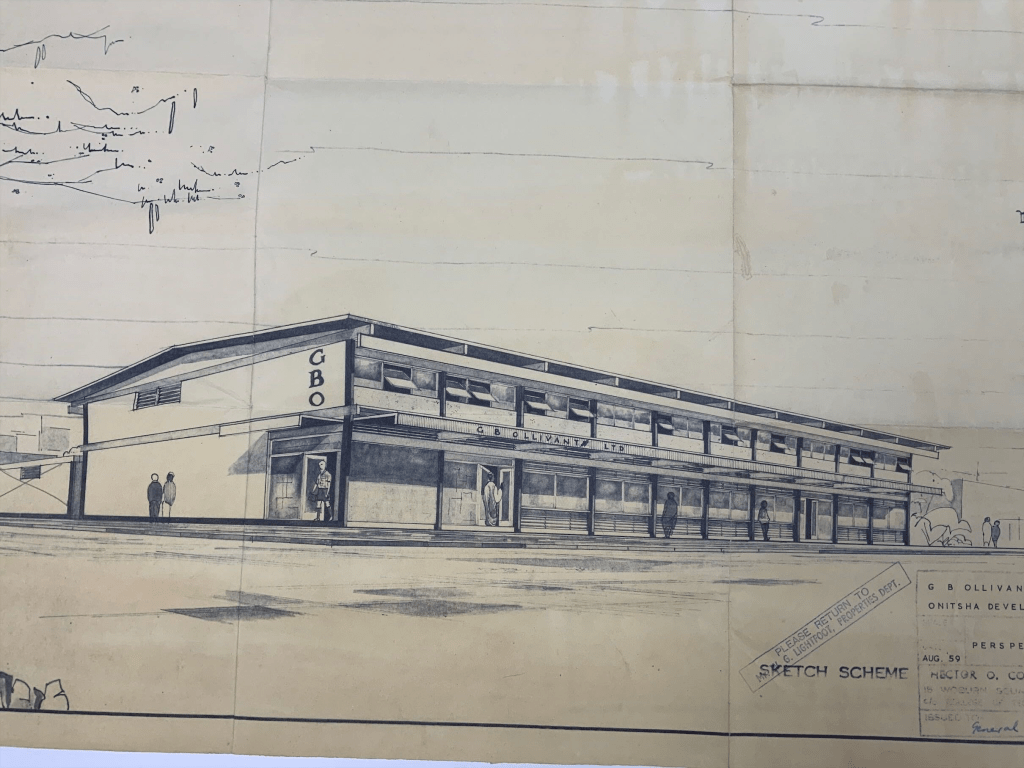
He also completed some further projects in Burma, and in West Africa for the Nigerian College of Arts, Science and Technology (NCAS&T) in Zaria. Whilst in Nigeria he established an office at the collage and took on further projects including for the Manchester based firm G B Ollivant.

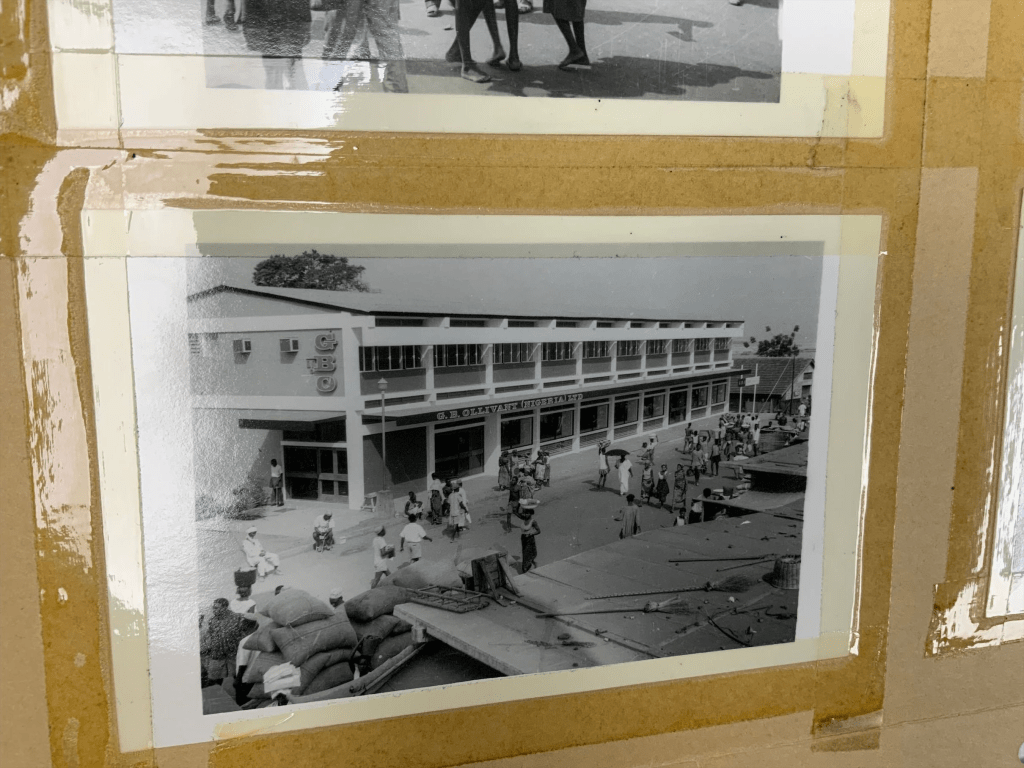
G B Ollivant (GBO) was bought by the United Africa Company in 1933 and transitioned from cotton and fabric trading into general retail, office supplies, and building management. Corfiato designed several bungalow types for the firm as well as a large retail store in Onitsha (1959) selling cottons, hardware, provisions, and fancy goods. The store was to connect to an existing Cosley store – which we suspect were hardware/builders merchants.

The building provided showroom spaces as well as retail and was probably used more for wholesaling than general retail. The exposed concrete frame of the building supported the overhanging roof to provide solar shading to the upper level whilst the ground floor had a further projecting canopy over pavement. It’s utilitarian and straightforward – but more than a mere warehouse and a considerable aesthetic departure from GBOs usual building style found elsewhere in West Africa. It’s looking more towards the ‘high end’ retail stores being built at the same time across Nigeria, and was part of the construction boom in Onitsha that saw the new cathedral (by Richard Nickson) and market hall (see Nigeria magazine no65, 1960).


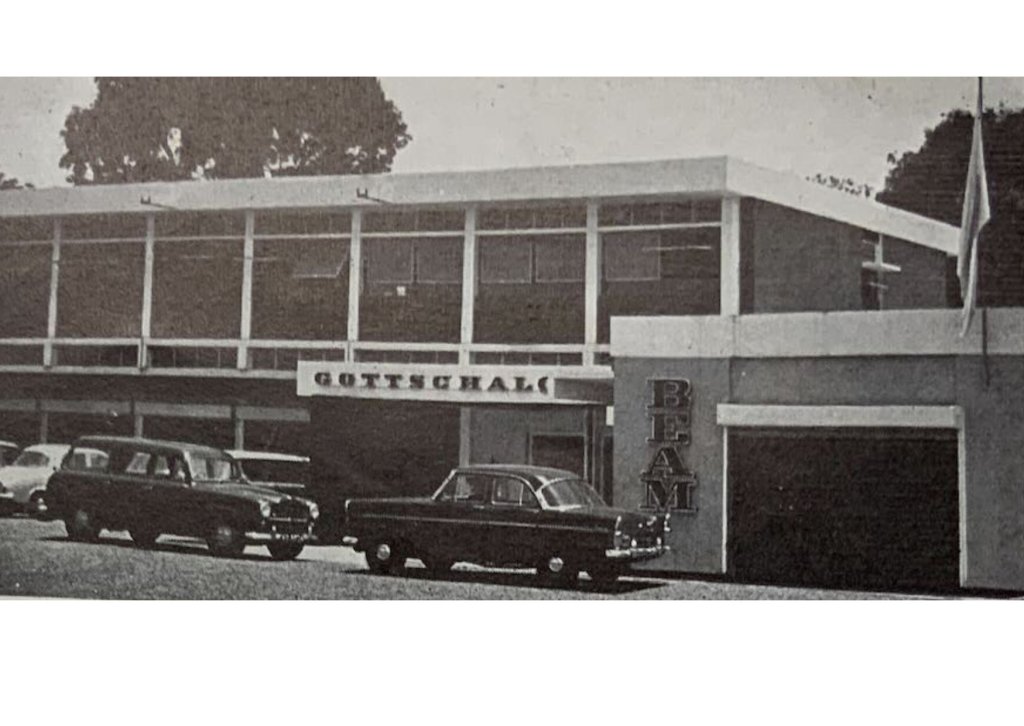
Corfiato collaborated with various other architects about whom we know very little. They’re listed in Nigeria Magazine as just “Avis” and “Horner” and are given credit for designing the Dispensary at Zaria College and a store for Gottschalck in Kaduna. The Gottschalck store closely resembles the GBO store and was also part of the UAC group.

Above Gottschalck Store at Kaduna. BEAM on the right hand side was another UAC subsidiary, ‘Business Equipment And Machines’. From Nigeria Magazine no73, 1962.

These projects raise a number of questions: Did Corfiato ever visit West Africa? Was he responsible for obtaining these commissions in the UK and then establishing a satellite office in Nigeria? Who were Avis and Horner? They were clearly a capable team and delivered some significant residential, educational, and commercial projects across Nigeria.

See https://bartletthistoryproject.tumblr.com/post/81996916344/hector-corfiato-extraordinary-man for more on Corfiato.

After the Global Turn: Current Colonial, Decolonial and Postcolonial Perspectives in Architecture

What is the status of postcolonial and decolonial discourse in architecture?

How has the “global turn” in architectural discourse evolved from histories of contact, conquest and colonization?

Forty years ago, the influential essays of “‘Race,’ Writing and Difference” appeared in Critical Inquiry (Gates, 1985, 1986). Essays by Edward Said, Homi Bhabha, Gayatri Chakravorty Spivak, Hazel Carby, Jacques Derrida, Abdul R. JanMohamed, and others created new critical models that interrogated how difference had been inscribed as “race” and explored the complex interactions of race, writing and difference, which influenced architectural history and theory for several decades.

That same year, Spiro Kostof’s textbook A History of Architecture (1985) spurred a “global turn” in architecture that has complicated the field’s canon. The new global discourse seeks to understand contemporary globalization as manifested in the built environment, exemplified by the foundation of the Global Architectural History Teaching Collaborative (GAHTC) and the publication of multiple volumes on global architecture.

The global turn has attempted to close the dichotomies of East and West, North and South imposed by earlier colonial and postcolonial theories, such as Edward Said’s formulation of Orientalism as the Occident’s “other” (Said, 1978). Perspectives from the “Global South” have emerged as important correctives to the hegemony of Northern Hemisphere-centered scholarship and practice. What has resulted from this “turn” has been ambiguous, however, as it often focuses on architects from the Global North operating in the Global South or developments modeled after Western architecture and urban design, without a concomitant innovation in truly global approaches and subject matter.

This Special Issue aims to explore the field’s development from colonial, decolonial and postcolonial theory to the global turn and beyond. We encourage papers that take innovative approaches to the colonial, postcolonial, decolonial and global in architecture, including such topics as:

  • Transnational connections and flows in excess of political boundaries;
  • Decentered models of global architecture;
  • Race and architecture;
  • Feminist, subaltern and minor perspectives on architecture,
  • Empire and decolonization;
  • Migration;
  • Indigenous architecture;
  • Informal architecture;
  • Landscapes of extraction and dispossession;
  • Modernization and development;
  • Other perspectives.

More info here https://www.mdpi.com/journal/architecture/special_issues/126537KTMW

References

Critical Inquiry: Autumn 1985 (vol. 12, no. 1) and Autumn 1986 (vol. 13, no. 1); Henry Louis Gates, ed. “Race,” Writing, and Difference. Chicago: University of Chicago Press, 1986.

Global Architectural History Teaching Collaborative https://www.gahtc.org/.

Kostof, Spiro. A History of Architecture: Settings and Rituals. New York: Oxford University Press, 1985.

Said, Edward. Orientalism: Western Representations of the Orient. London: Routledge & Kegan Paul, 1978.

Dr. Patricia Morton
Guest Editor

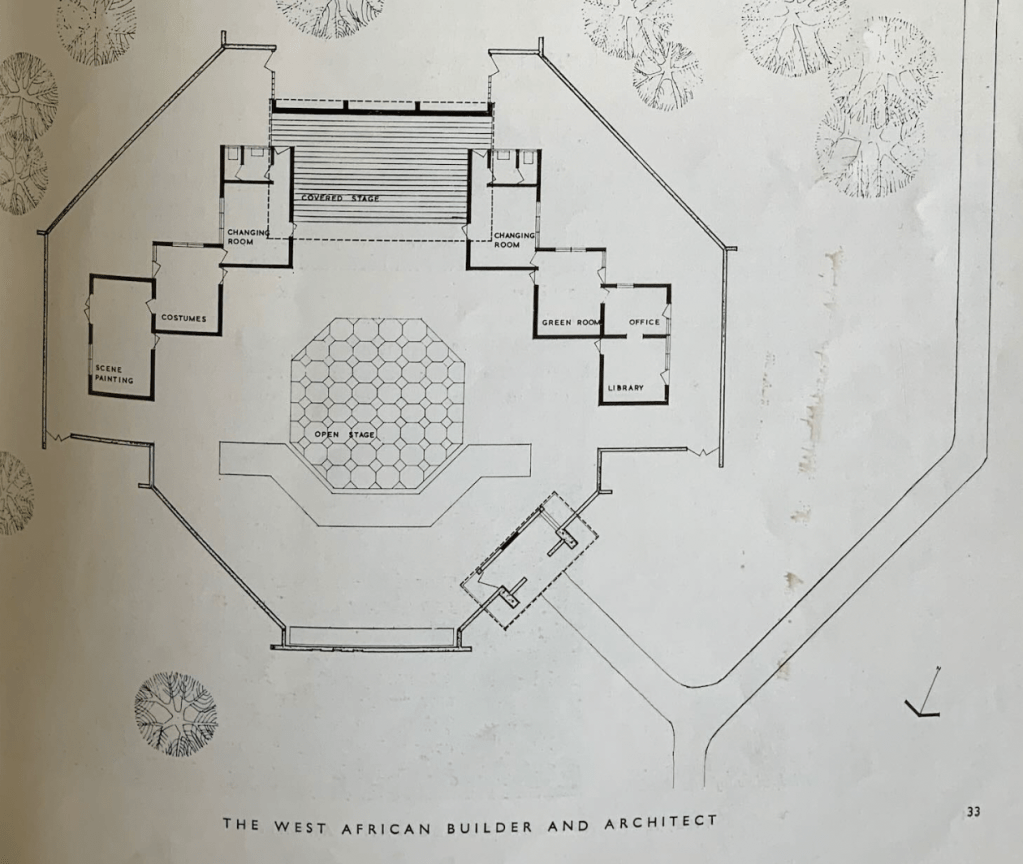
In 1958, the Ghana Arts Council and the Rockefeller Foundation provided the necessary funding to set up ‘the Experimental Theatre Players’ spearheaded by Efua Sutherland and Joe Degraft. Architects Gerlach and Gillies-Reyburn were commissioned to design the structure which was based around two performance stages – one ‘in the round’ and the other a proscenium arch theatre. It was Sutherland who generated the design strategy,

“Conceptualized by Sutherland, the dominance of traditional motifs in the architectural design of this theatre edifice was a statement of cultural renaissance, independence, and nationalism because she believed “political independence suggested cultural autonomy”

(Anku, S. S. (2022). (Post) Colonial Ghanaian Attitudes Towards Ibsen: An Overview of Ibsen Reception in Ghana Between 1930 and 1966. Ibsen Studies22(1), 3–30. https://doi.org/10.1080/15021866.2022.2063977).

The stages are enclosed by a series of interlocked rooms built from sandcrete and providing changing, offices, and other ancillary functions. The project received a full write up in the West African Builder and Architect journal in 1962.

“It was a small structure, unpretentious but handsome, traditional in inspiration yet modern in design. The dazzling whitewashed walls with their dark trim resembled a village compound and were meant to. Inside, at one end, a platform stage was covered by an overhanging roof; but the auditorium, with its seats of carved Ghanaian stools, was open to the night sky. It stood in a rough, weedy place approached by dusty footpaths, its simplicity contrasting sharply with the gaudy grandeur of Accra’s nearby Ambassador Hotel. The crowds were gathering at the entrance that was shaped like a huge traditional stool and flanked by two massive Akuaba dolls, sculpted male and female symbols of fertility”

(Anku, S. S. (2022). (Post) Colonial Ghanaian Attitudes Towards Ibsen: An Overview of Ibsen Reception in Ghana Between 1930 and 1966. Ibsen Studies22(1), 3–30. https://doi.org/10.1080/15021866.2022.2063977)

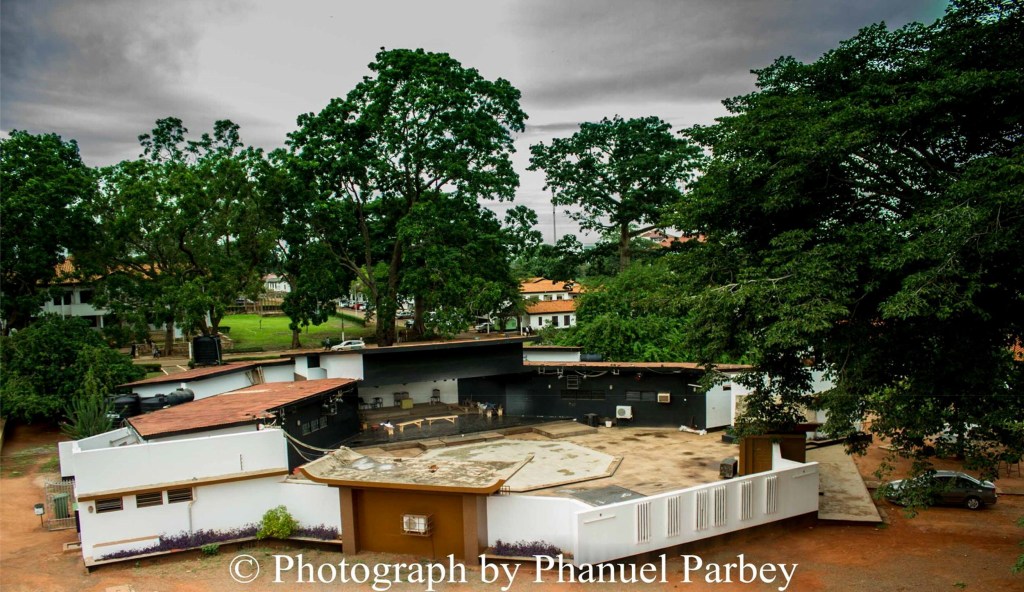
Anku further notes that the theatre was “replicated and relocated to the School of Performing Arts premises at the University of Ghana” – it’s unusual for a building to be entirely remade in a new location. The old site, as Anku notes, was near the Ambassador Hotel – this is now where the Mövenpick Hotel is located. Was the structure physically demolished, moved, and rebuilt? Perhaps the old site is where the National Theatre is located today?

The new Drama Studio at University of Ghana, Legon. Photograph by Phanuel Parbey

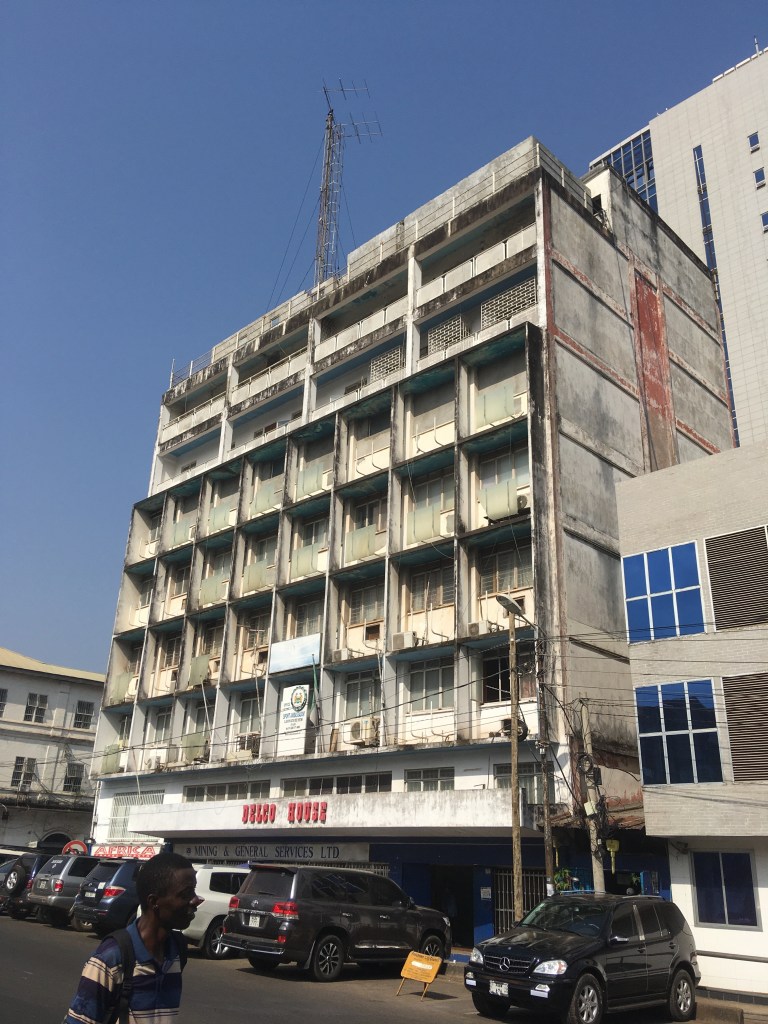
Delco Offices in Freetown, photographed in 2023, designed by Zdzisław Borysowicz in early 1960s

Have a peek at our inaugural AHUWA newsletter here: https://new.express.adobe.com/webpage/qgRzBtoiF2Snh

It’s devoted to our work-in-progress on the Polish architect Zdzisław Borysowicz – complete with lots of photos, basic biog on ‘Borys’ and how we managed to finally find out more on this fascinating architect….
The July-August 2025 edition of the Architectural Review has published an extended 9-page feature article written by Lois Quartey and Julia Gallagher on the Accra Community Centre, Ghana. The building designed by Maxwell Fry and Jane Drew, with Theo Crosby as the lead assistant, opened in 1951 and quickly became an important educational, cultural, and social hub in the city. It was paid for by the United Africa Company in an attempt to foster local support after its ‘Swanmill’ HQ was looted and burned following the 1948 Accra riots. TAG provided some drawings and photographs that accompany the article.

The primary thrust of the piece is to raise awareness of this significant historic structure – especially how it was used in the independence campaigns and beyond – and to stress just how vulnerable this building is. Currently being used as a mere store and at risk from the Marine Drive development plan – the article expands on what we covered here https://transnationalarchitecture.group/2022/06/22/accras-renaissance-fishing-harbour-marine-drive-and-a-new-cathedral/ back in 2022.

It’s a deceptively simple and even ordinary building at first sight – but after spending time exploring it’s two interconnected courtyards and assembly hall it quickly begins to feel at home, climatically comfortable, and a nice place to be. It’s also a significant structure because of its design pedigree and especially because of its political significance – so many important speeches, gatherings, and events took place here in the advent to independence and beyond. It’s also home to one of the largest installations by leading artist Kofi Antubam – that alone should secure its future. Our model that replicates one made by Fry and Drew featured in the recent V&A Tropical Modernism exhibition too.

If foreign and leading agencies such as the V&A museum and Architectural Review are prepared to give this seemingly humble building exposure, critique, and cause for preservation – surely the case can be made to restore this heritage structure and to weave it into the wider Marine Drive masterplan. Champions of Ghanaian culture https://www.design233.com/articles/in-trust-for-the-people are behind saving these works and raising awareness, but much more needs to be done.

To deliberately allow a ‘managed decline’ and slow demolition is a tragic waste and short sighted view of the building’s rich political history.

Accra’s James Fort is an iconic monument for Ghana and modern Africa. This lecture explores the fort’s evolution -from its role as a trading post in the early European-African encounters, through its significance during the trans-Atlantic trade and enslavement, to its later use as a modern colonial prison in the post-independence era. It also explores its connection to Ghana’s liberation movement, particularly its role in imprisoning Dr. Kwame Nkrumah and other political leaders during their resistance to British rule. Today, this monument represents the resilience, talent and creative potential of a sustainable future for Ghana and its youthful population.

Lecture by: Elsie Owusu OBE; Ghanaian-British architect and urban designer. She is principal of Elsie Owusu Architects, with projects in UK, Nigeria and Ghana. Talk given to Gresham College on 27 March 2025 https://www.gresham.ac.uk/watch-now/james-fort?mc_cid=71e42fe509&mc_eid=ca0f8caf85

Executive Summary

This report presents findings from a comprehensive survey of 48 archives, collections, and repositories across Northwest England that contain significant West African historical material (1880-1980). We should have an interactive map of the archive locations published here shortly….

Here is a list of the archives consulted and key information for each collection/location/repository:

The research reveals a substantial but under-explored archival landscape that offers exceptional opportunities for advancing historical research into West Africa and its relationship with Northwest England. The collections span diverse themes including colonial administration, trade networks, missionary activities, healthcare, urban development, and cultural exchange, providing rich source material for interdisciplinary research projects.

Research Scope and Methodology

Geographic and Temporal Parameters

The survey focused on historical West African material from former British colonies including Ghana, Gambia, Sierra Leone, and Nigeria, with additional consideration of materials from Congo, Cameroon, Senegal, Mali, and Niger. The temporal scope encompasses the period 1880-1980, capturing the late colonial period through to early post-independence developments.

Thematic Categories

Research materials were categorised across key themes:

  • History and heritage studies
  • Urban design and city planning
  • Public health and medical history
  • Architecture and built environment
  • Trade and commercial networks
  • Religious and missionary activities
  • Colonial administration

Collection Assessment Framework

Each archive was evaluated using a systematic approach that assessed:

  • Type and format of materials (books, photographs, manuscripts, ephemera, artifacts)
  • Primary thematic focus
  • Volume and extent of holdings
  • Accessibility and research potential
  • Relevance rating (1-5 star system that reflected how useful the archive would be to our research interests in the built environment and history)

Key Findings: Archive Landscape and Research Potential

Distribution and Scale

The survey identified 48 archives across Northwest England, primarily concentrated in the Merseyside region but extending to Manchester, Lancaster, and Chester. Seven archives achieved the highest relevance rating (5 stars), each containing over 20 linear metres of diverse West African materials spanning multiple themes and formats.

Material Types and Research Applications

The collections encompass diverse formats offering multiple research approaches:

Documentary Sources:

  • Colonial administrative records
  • Trade and shipping documentation
  • Medical and health records
  • Urban planning documents
  • Personal correspondence and diaries

Visual Materials:

  • Photographs documenting colonial life, urban development, and cultural practices
  • Architectural drawings and city plans
  • Maps and surveys
  • Artistic representations

Material Culture:

  • Artifacts and objects
  • Textiles and decorative arts
  • Ceramics and sculptures
  • Models and architectural elements

Corporate Archives: Exceptional Research Resources

Unilever and United Africa Company Archives: The Unilever archives, particularly the United Africa Company (UAC) collection, represent one of the most comprehensive corporate archives relating to West African economic history. UAC, established in 1929 through the merger of the Royal Niger Company and the African and Eastern Trade Corporation, became the largest trading company in West Africa. The archives contain:

  • Extensive Trading Records: Documentation of palm oil, cocoa, groundnut, and timber trades spanning decades
  • Infrastructure Development: Records of store construction, transport networks, and commercial facilities across West Africa
  • Labour and Employment: Personnel records, training programs, and workforce development initiatives
  • Technology Transfer: Documentation of agricultural techniques, processing methods, and industrial development
  • Local Partnerships: Records of relationships with African traders, suppliers, and business partners
  • Post-Independence Adaptation: Materials documenting corporate strategy during decolonization and nationalist movements

These materials offer unique insights into corporate colonialism, the mechanics of extractive economies, and the complex negotiations between European capital and African societies. The collection provides essential source material for understanding how global commodity chains operated at ground level and their impact on local communities.

Barclays Bank Archive: The Barclays collection contains extensive documentation of banking operations across West Africa, including:

  • Colonial Banking Development: Records of branch establishment, credit systems, and monetary policy
  • Financial Networks: Documentation of money transfers, currency exchange, and international finance
  • Agricultural Finance: Materials on crop financing, seasonal credit, and agricultural development programs
  • Commercial Lending: Records of business loans, trade financing, and commercial development
  • Post-Colonial Banking: Materials documenting the transition to independence and continued financial relationships

The banking records provide crucial insights into how financial systems shaped economic development, facilitated trade networks, and influenced social relations across West Africa. These materials are particularly valuable for understanding the mechanics of colonial extraction and the evolution of financial institutions in post-colonial Africa.

Thematic Strengths for Research Development

Urban Development and Planning: The Archives contain substantial materials on colonial urban development, infrastructure projects, and city planning initiatives. These sources offer opportunities to examine how European urban planning concepts were implemented in West African contexts and their lasting impact on contemporary cities.

Medical and Public Health History: Rich documentation of colonial health initiatives, medical practices, and public health campaigns provides foundation for research into the history of medicine in West Africa, disease management, and the development of healthcare infrastructure.

Commercial and Trade Networks: Extensive shipping, banking, and commercial records illuminate the economic relationships between Northwest England and West Africa, offering insights into trade networks, commodity flows, and economic development patterns. Of particular significance are the Unilever archives (including the United Africa Company records) and the Barclays Bank archive, which contain unparalleled documentation of corporate operations, trading networks, and financial systems that shaped West African economic development throughout the colonial and post-colonial periods.

Religious and Cultural Exchange: Missionary records, religious materials, and cultural documentation provide resources for examining religious transformation, cultural exchange, and the complex dynamics of colonial encounter.

Colonial Administration: Administrative records and governance documents enable research into colonial policy implementation, administrative structures, and the mechanics of imperial control.

Research Opportunities and Applications

Interdisciplinary Research Potential

The diversity of materials supports multiple disciplinary approaches:

Historical Research:

  • Comparative studies of colonial administration across West African territories
  • Economic history of trans-Atlantic trade networks
  • Social history of colonial encounters and cultural exchange

Urban Studies:

  • Evolution of colonial cities and urban planning
  • Infrastructure development and its contemporary implications
  • Architectural history and building practices

Medical History:

  • Development of tropical medicine
  • Public health initiatives and their outcomes
  • Medical knowledge transfer and adaptation

Cultural Studies:

  • Missionary activities and religious transformation
  • Cultural exchange and hybrid practices
  • Art, material culture, and aesthetic transformation

Collaborative Research Framework

The geographic concentration of archives creates opportunities for:

Multi-Archive Projects: Researchers can access complementary materials across institutions, enabling comprehensive studies that draw on diverse source types and perspectives.

Network Building: The established archive network provides foundation for collaborative research initiatives, shared resources, and coordinated access to materials. The University of Liverpool and AHUWA are particularly well-positioned to serve as coordinating institutions/centres for multi-archive research projects, leveraging their expertise in West African studies and established international partnerships.

Digital Humanities Applications: The variety of materials (textual, visual, material) offers opportunities for digital humanities projects, including digitization initiatives, database development, and online exhibitions. The University of Liverpool’s digital humanities infrastructure and AHUWA’s focus on accessibility make this an ideal location for developing innovative digital approaches to archival research.

Strategic Recommendations for Research Development

Institutional Research Capacity: University of Liverpool and AHUWA

University of Liverpool Research Infrastructure: The University of Liverpool is exceptionally well-positioned to capitalise on this rich archival landscape. As a leading institution in historical research with strong connections to West African studies, the university offers:

  • Established Research Expertise: Faculty with specialized knowledge in African history, colonial studies, and economic history
  • Interdisciplinary Capabilities: Departments spanning History, Geography, Politics, Development Studies, and Business that can support multifaceted research approaches
  • Digital Humanities Infrastructure: Technical resources for digitisation projects, database development, and online exhibitions
  • Graduate Research Programs: Capacity for training new researchers in archival methods and West African historical research
  • International Partnerships: Existing relationships with West African universities and research institutions

AHUWA Research Centre: The Architecture, Heritage, and Urbanism in Western Africa (AHUWA) research centre provides a specialized institutional framework for maximising the research potential of these archival collections. AHUWA’s mission and expertise make it ideally suited to:

  • Coordinate Multi-Archive Projects: Develop comprehensive research initiatives that draw on materials from multiple archives
  • Foster Collaborative Research: Facilitate partnerships between UK and West African researchers
  • Support Community Engagement: Connect archival research with contemporary West African communities
  • Promote Policy Relevance: Ensure research contributes to contemporary development and policy discussions
  • Develop Digital Platforms: Create online resources that make archival materials accessible to global researchers

The combination of Liverpool’s institutional resources and AHUWA’s specialised focus creates an unparalleled opportunity for developing the research potential of Northwest England’s West African archives.

Priority Research Areas

1. Comparative Colonial Studies The archives support comparative research across different West African territories, examining variations in colonial policy, administration, and outcomes.

2. Economic History Networks Trade and commercial records enable mapping of economic relationships, commodity flows, and the development of trans-Atlantic commercial networks. The Unilever/UAC and Barclays archives are particularly valuable for examining corporate colonialism, financial systems, and the evolution of global commodity chains. These collections support research into topics such as:

  • The role of European corporations in shaping West African economies
  • Banking and financial networks in colonial and post-colonial Africa
  • Labour relations and industrial development
  • Technology transfer and agricultural modernization
  • Corporate responses to decolonization and African nationalism

3. Urban Development Studies Planning documents and architectural materials provide foundation for examining colonial urban development and its contemporary implications.

4. Medical and Public Health History Healthcare records offer opportunities to examine the development of tropical medicine, public health initiatives, and medical knowledge transfer.

Methodological Approaches

Cross-Archive Analysis: Researchers should develop strategies for working across multiple archives to build comprehensive pictures of historical processes and relationships. The corporate archives (Unilever/UAC and Barclays) can be particularly productive when analysed in conjunction with government records, missionary materials, and local documentation.

Digital Integration: Consider developing digital platforms that integrate materials from multiple archives, enabling new forms of analysis and presentation. The University of Liverpool’s technical capabilities and AHUWA’s research focus provide ideal foundations for such initiatives.

Community Engagement: Explore opportunities for community-based research that connects archival materials with contemporary West African communities in Northwest England. AHUWA’s community engagement expertise and Liverpool’s diverse population create opportunities for participatory research approaches.

Future Research Directions

Emerging Themes

The archive survey suggests several promising research directions:

1. Infrastructure and Development: Examining colonial infrastructure projects and their long-term implications for contemporary development challenges.

2. Knowledge Transfer: Investigating how knowledge, practices, and technologies moved between West Africa and Northwest England.

3. Cultural Networks: Exploring the cultural connections and exchanges that developed through colonial relationships.

4. Corporate Colonialism and Business History: The Unilever/UAC and Barclays archives provide exceptional opportunities for examining the role of European corporations in shaping West African development, including studies of extractive economies, corporate-state relations, and business adaptation to decolonization.

5. Post-Colonial Continuities: Examining how colonial-era relationships evolved in the post-independence period, with particular attention to ongoing corporate and financial connections.

Methodological Innovation

The archives offer opportunities for methodological innovation in:

  • Digital humanities applications
  • Multi-sited archival research
  • Community-based research approaches
  • Interdisciplinary collaboration

Conclusion

The West African archival materials in Northwest England represent a significant and underutilised resource for historical research. The diversity of collections, spanning multiple themes and formats, provides foundation for innovative research projects that can advance understanding of West African history, colonial relationships, and their contemporary implications. The exceptional corporate archives, particularly the Unilever/UAC and Barclays collections, offer unique insights into the mechanics of colonial economies and corporate power in Africa.

The established network of 48 archives, combined with the research capacity of the University of Liverpool and the specialized expertise of AHUWA, offers exceptional opportunities for collaborative research, comparative studies, and interdisciplinary projects. With seven archives containing substantial holdings and many others providing specialized materials, researchers have access to comprehensive source bases for addressing complex historical questions about corporate colonialism, financial systems, and economic development.

The University of Liverpool’s institutional strengths and AHUWA’s focused mission create an ideal environment for developing the research potential of these collections. Their combined expertise in West African studies, digital humanities, and community engagement provides the foundation for innovative methodological approaches and collaborative research initiatives that can significantly advance historical understanding.

Moving forward, the research community should prioritize developing collaborative frameworks that maximise the potential of these collections, with particular attention to the corporate archives that offer unique insights into the mechanics of colonial extraction and economic development. The foundations established through this survey, combined with Liverpool’s institutional capacity and AHUWA’s specialised focus, provide the groundwork for a new generation of research that can significantly advance historical understanding of West Africa and its relationship with Northwest England.