Archive

Author Archives: jacksoniain

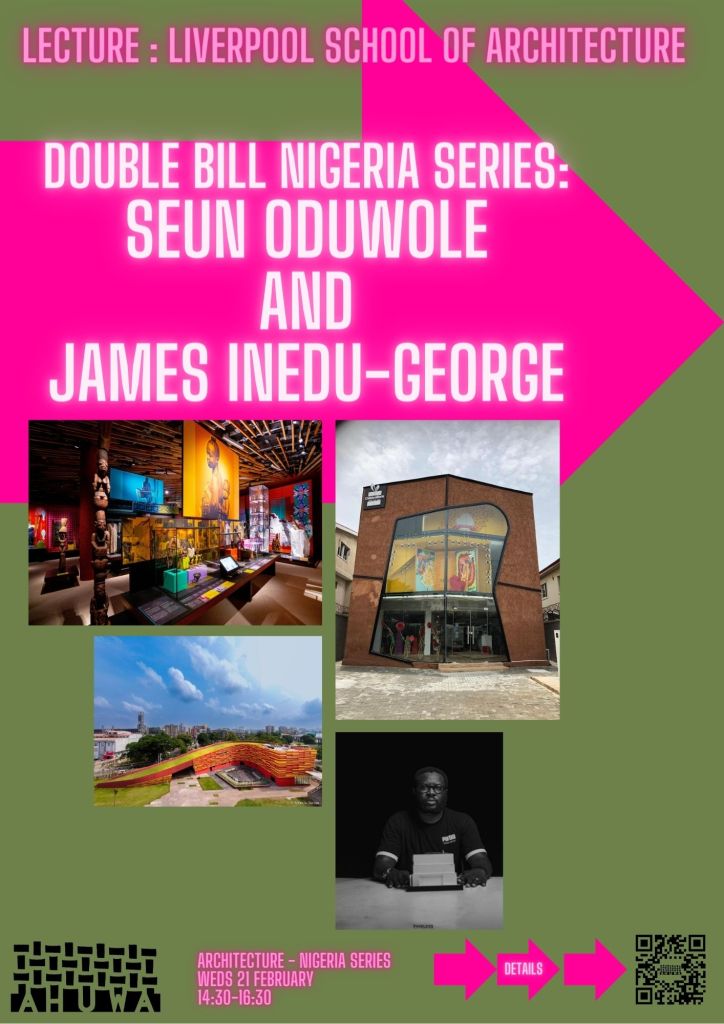
Join us at Liverpool School of Architecture this Wednesday 21st Feb 2024 at 14:30 for a lecture double bill discussing and showcasing contemporary Nigerian architecture, design practice and thinking.

We have two key players who are part of the the new contemporary West African Architecture scene. First we have Seun Oduwole, who graduated in Architecture from Nottingham University and after working in practice in the UK returned to Nigeria to set up his own practice Studio Imagine.Simply Architecture [SI.SA].

He will be speaking about his recently completed John Randle Centre in Lagos discussing the design history matters of heritage, and also the challenges of building on prime real estate in the Lagos central business district. As he has practiced both in the UK and now works as a diaspora returnee architect, we will hear his views on the contemporary West African Architecture scene.

We also have James Inedu George, a graduate of Ahmadu Bello University. He runs the architectural practice HTL Africa, whose main laboratory is in Lagos Nigeria. Currently, he and his firm, HTL Africa, are working towards creating canonical typologies for our cities from an intense research on (Hausa) Traditional Architecture.

James lectures internationally on a regular basis and has featured in several publications globally. HTL Africa’s interests range from cultural to cutting edge technological exploration through architecture. Creating what might be read as experimental architecture, this research and implementation firm has an output that is at once fresh, modern and forward thinking. HTL also has tentacles in Dubai.

Do come to join what is likely to be a really illuminating afternoon discussing contemporary Architecture and heritage issues in West Africa.

Architectures of Informal Empire in Architectural Theory Review

Recent efforts to understand the pervasiveness of empire and its legacies have done little to reorient and expand the geographic or theoretical focus of scholarship, often downplaying the broad range of political, commercial, and cultural relationships that empire was built upon. Yet imperial ambitions were almost always accompanied by multiple economic and civilisational claims that preceded or did not amount to direct colonisation. Aptly named the “Age of Empire” by Eric Hobsbawm, the nineteenth century witnessed unprecedented travel and exchanges made possible by the advances in technology and industry of the century, that served to advance economic and cultural aims simultaneously. A wide range of private and state actors, including missionaries, merchants, explorers, archaeologists, doctors, nurses, and scientists thus helped expand, articulate, and consolidate both the reach of western “civilisation” as a standard and the petrification of indigenous civilisations as backwards and “other.” Neither have all imperial activities been recognised as such. Some empires, like the United States, engaged in similar processes driven wholly by private actors, without the apparatus of a colonial state, while positioning themselves as “anti-imperial.” And some regions, like the Eastern Mediterranean, while never “formally” colonised—depending on our definition of colonialism—were significantly shaped by “informal” foreign interests. But almost three decades since Mark Crinson introduced the history of informal imperialism into architectural history, such areas remain marginal in studies of colonial architecture and urbanism. In these areas that were the site of informal or inter-imperial contestation, or that were subject to what Ann Laura Stoler calls “affective” security regimes, the projects of private actors often led to extensive economic, material, and spatial configurations whose reverberations continue to be felt, even today. Architecture, as an embodiment of territorial, political, economic, and cultural imaginations, was integral both to these processes and to their contemporary endurance.

This issue seeks to explore the boundaries of what can be considered “colonial” in histories of architecture and urbanism, in the past as in the present. It asks how we can define and describe the architectural and urban projects that accompany imperial ambitions, both formal or informal, and their spatial, material, and cultural imprint on the territories in which they are implemented. How can we meaningfully question the legacies of missionary projects, of infrastructural concessions, or developmental aid, to mention only a few examples, especially when such projects came without a colonial state? What do we learn about the entanglement of architecture and political power if we begin from the buildings and sites around which proto-imperial and para-imperial processes took place, rather than from the study of a single or formal imperial state?

We welcome contributions that explore new theoretical questions and methodological approaches to the study of architectures of informal empire—that foreground the affective power of buildings in the past or present; the entanglements of state and non-state actors in informally colonised regions; instances of intra- or inter-imperial contestation or collaboration, including with local elites; or the broader cultural and/or economic relationships inscribed in space that survive after the dismantling of colonial states. We also encourage empirical contributions that focus on geographies and actors that have remained marginal in the scholarship on colonial architecture and urbanism, that can dislodge the primacy of the single colonial state. By expanding our understanding of the “colonial” in architectural history, we hope to gain new insights into the contemporary and enduring manifestations of empire in the built environment—a necessary starting point for any true attempts at future decolonisation.

Full details here deadline 1st June 2024.

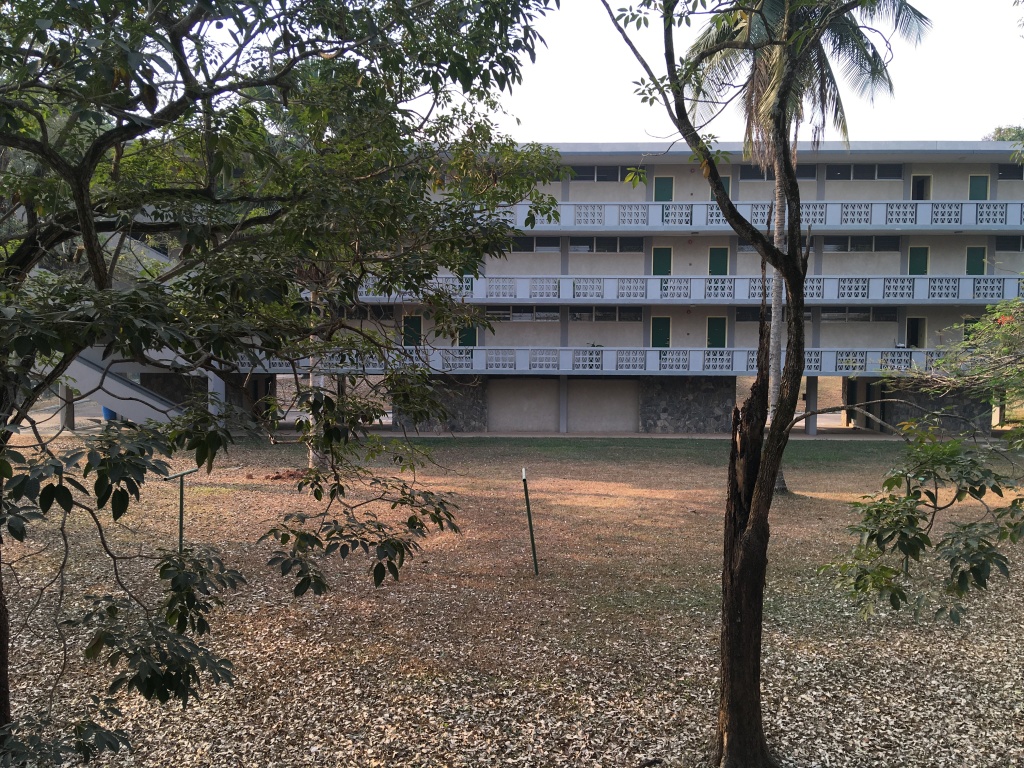
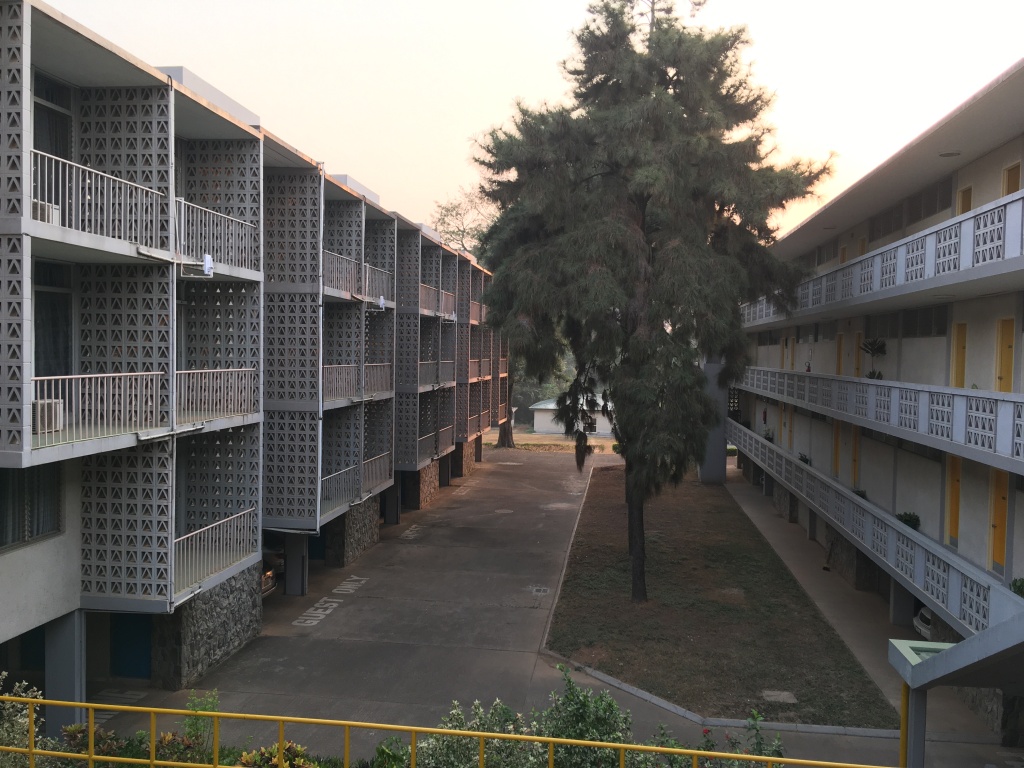
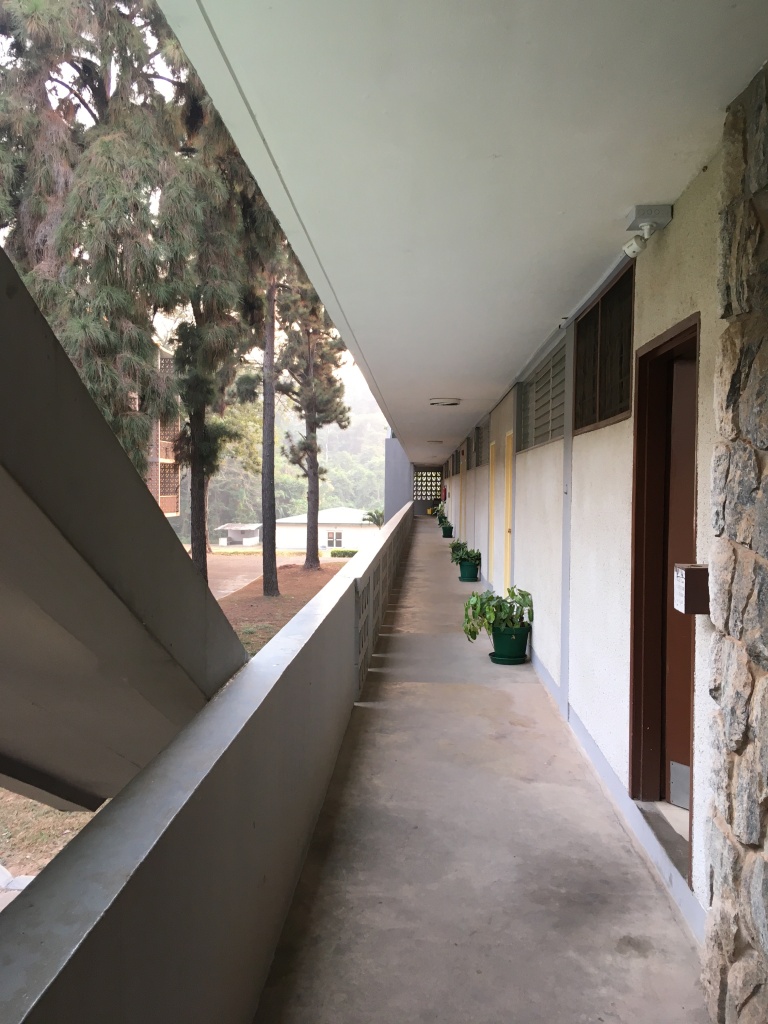
North of Ibadan is a 3000 acre site devoted to investigating farming, agriculture, and produce production in the tropical regions called the International Institute of Tropical Agriculture, or IITA. It’s a vast campus-laboratory established in 1967 and designed by Haines, Lundberg & Waehler – a US based architectural practice founded in 1888, and with various offices around the middle east and Africa. Whilst the main purpose of the campus is to conduct research (funded by various countries and conglomerates, and originally by the Ford and Rockefeller foundations) it also operates a hotel and contains all the usual facilities.

The bedrooms are arranged in large linear blocks with gallery access that utilises the dramatic level changes. The bedrooms all have cross-ventilation and louvred facades – although AC has been retro-installed at some point. It’s a pristine campus and a carefully manicured landscape.

Central Ibadan

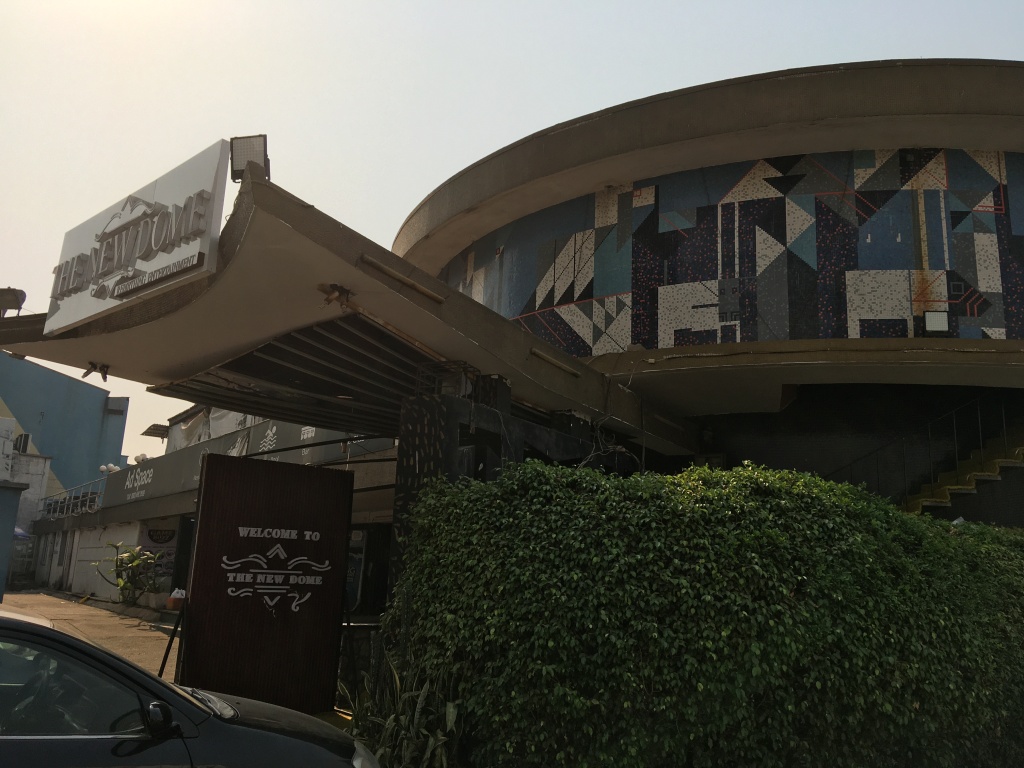
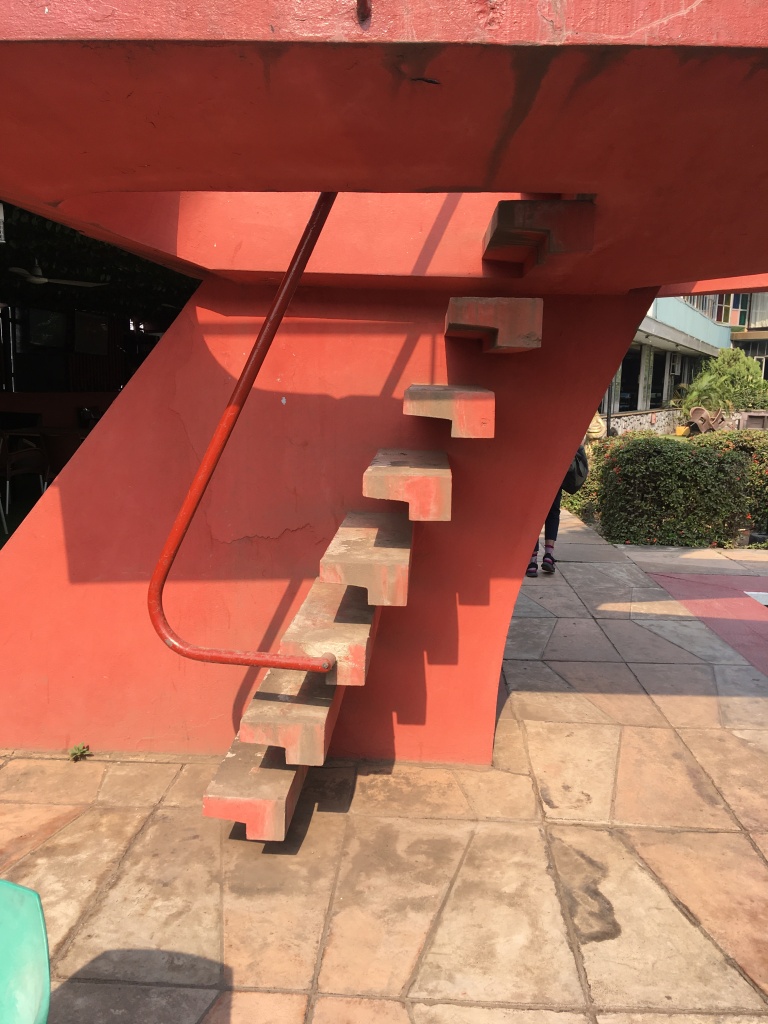
In the shadow of the 26 storey Cocoa House (Africa’s tallest structure at one point – 1964-65 , architect?, contractor Cappa and D’Alberto) is a small, much more interesting, circular building clad in mosaic and topped with a dome. The splayed cantilevered entrance leads to a swimming pool with beautiful concrete diving boards and viewing gallery. The circular building is now a night-club.

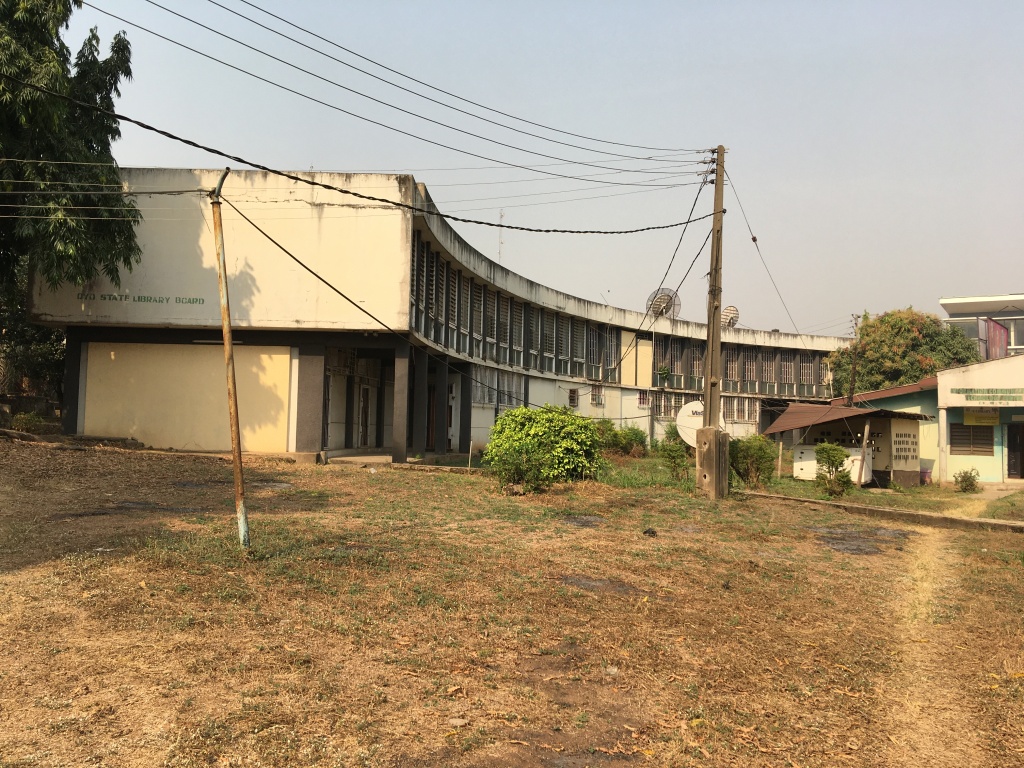
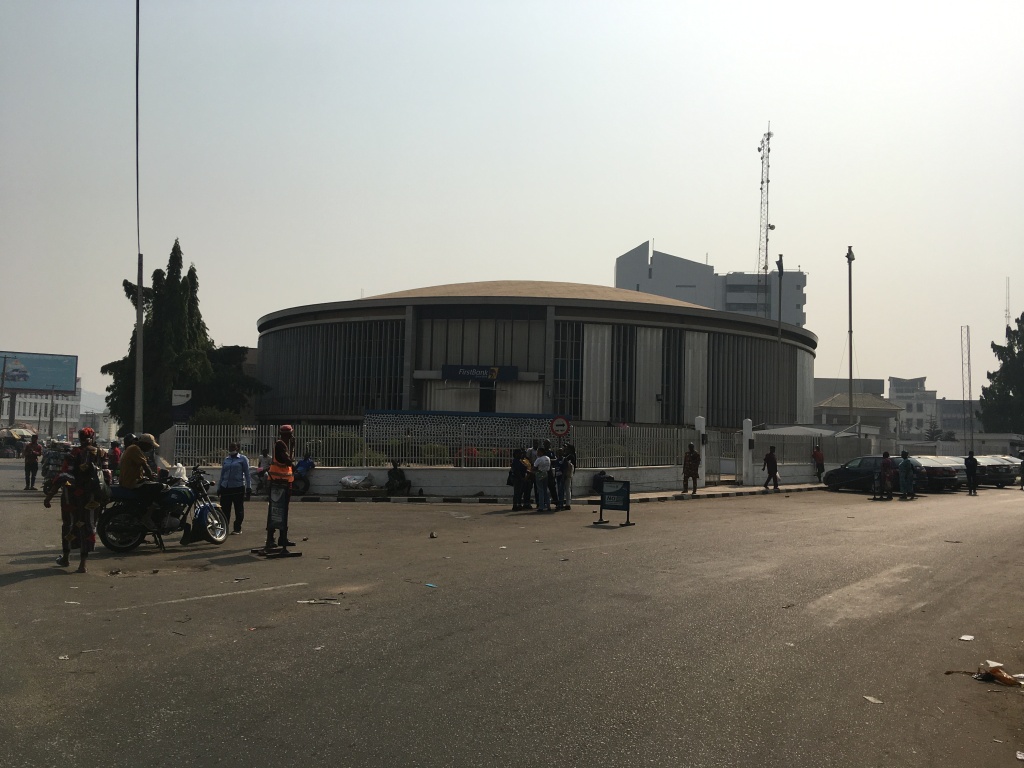
From here we visited the library complex and another domed building with vertical brise-soleil used by FirstBank. We continued to Fry and Drew’s Co-operative bank tower with its associated set of structures set behind, including the Obisesan Hall (similar to Trenchard Hall in its outline but lacking the expensive materials and finish) and a series of shops and flats. It’s an interesting grouping of projects covering a city block and bringing together office, assembly, retail, and residential spaces into a mixed use constellation.

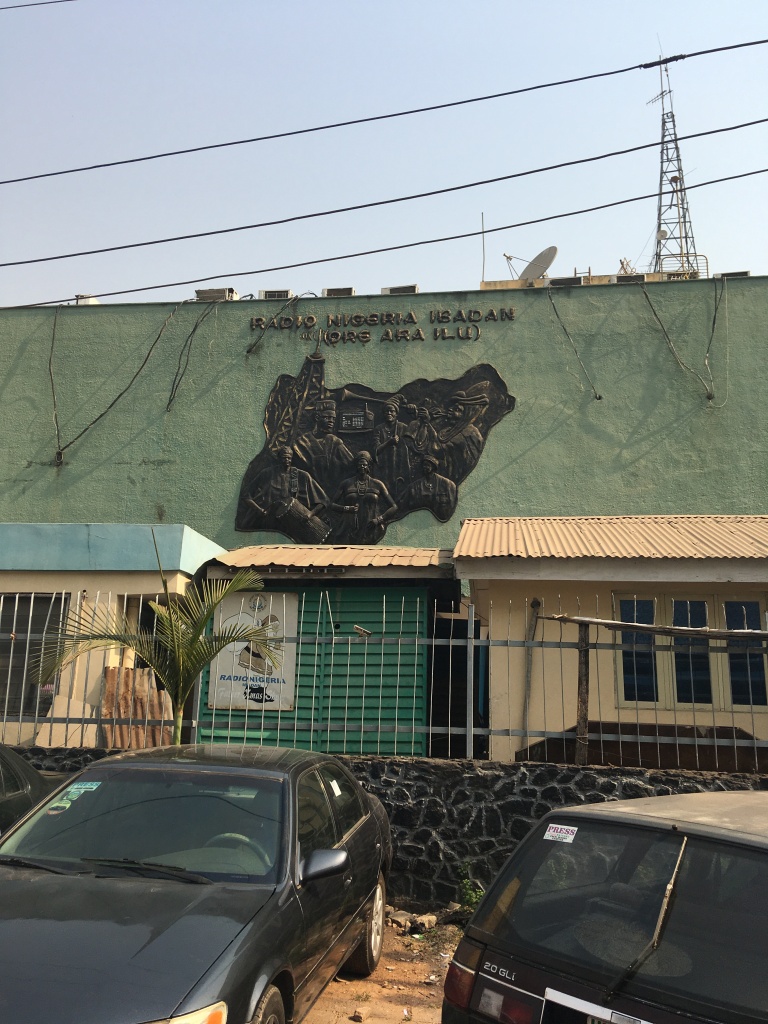
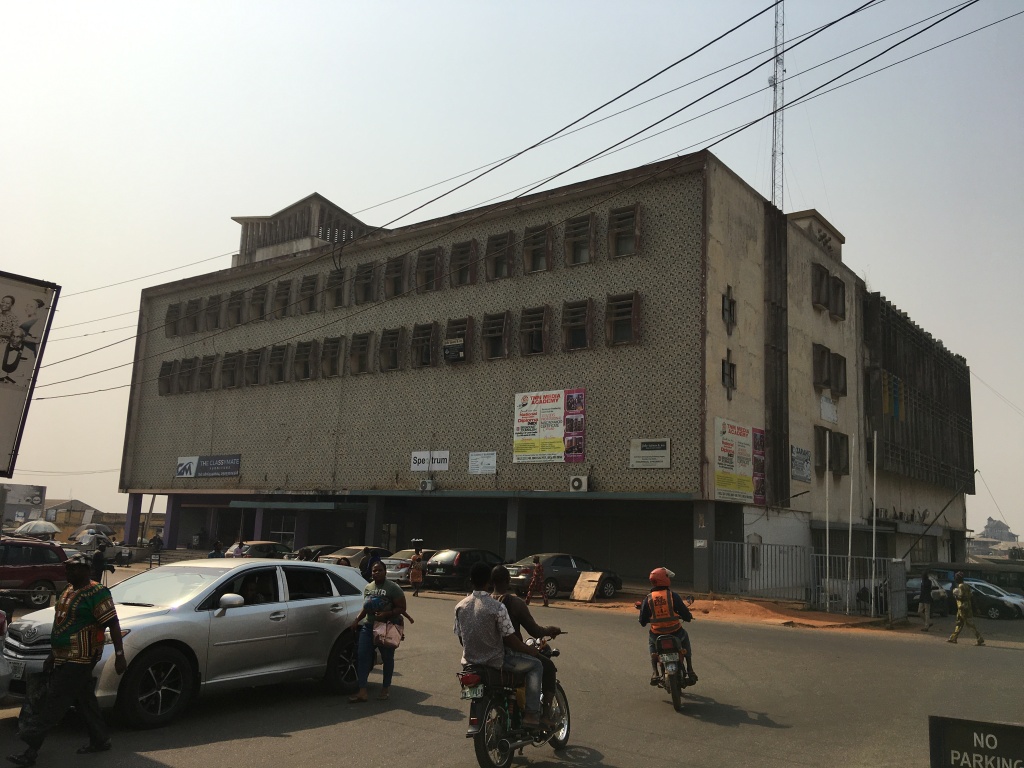
Opposite is Design Group’s Finance House (now Aje House) with the concave mosaic above the entrance. The Nigerian Broadcasting house is also here, again clad in the distinctive blue tessellating tiles that are a key feature of Ibadan’s modernist structures. The Kingsway store (by T P Bennett, 1960) has a distinctive tower competing for attention as Ibadan’s architecture increased its scale and storey heights during the post-independence boom. Each façade of the store is given a different treatment – the tricolour mosaic façade responds to the Broadcasting House opposite and whilst the east and west facing facades are treated with vast brise soleil built on rubble walling. It’s a major project, and once the largest store in the city fitted out with fine materials. Part of the building is still occupied, but it’s dilapidated and suffering from years of neglect. 

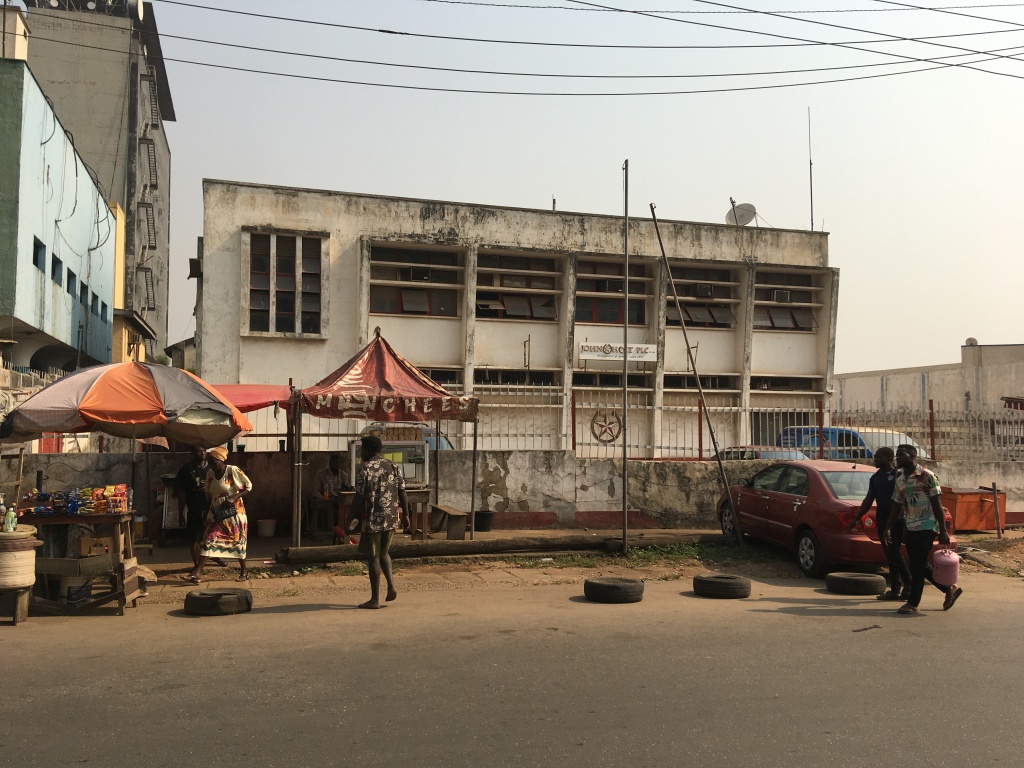
John Holts offices sits opposite and the United Africa Company offices is also amongst this mercantile cluster, with its distinctive symmetrical ‘deco’ façade and projecting canopies could be a late James Lomax-Simpson project?

We couldn’t visit Ibadan without calling at the modernist campus at University of Ibadan. We visited Trenchard Hall and the administrative block, as well as Kenneth Dike Library. As well as these Fry and Drew classics we revisited the small Chapel of the Resurrection designed by ecclesiastical architect George Pace (1915–75).

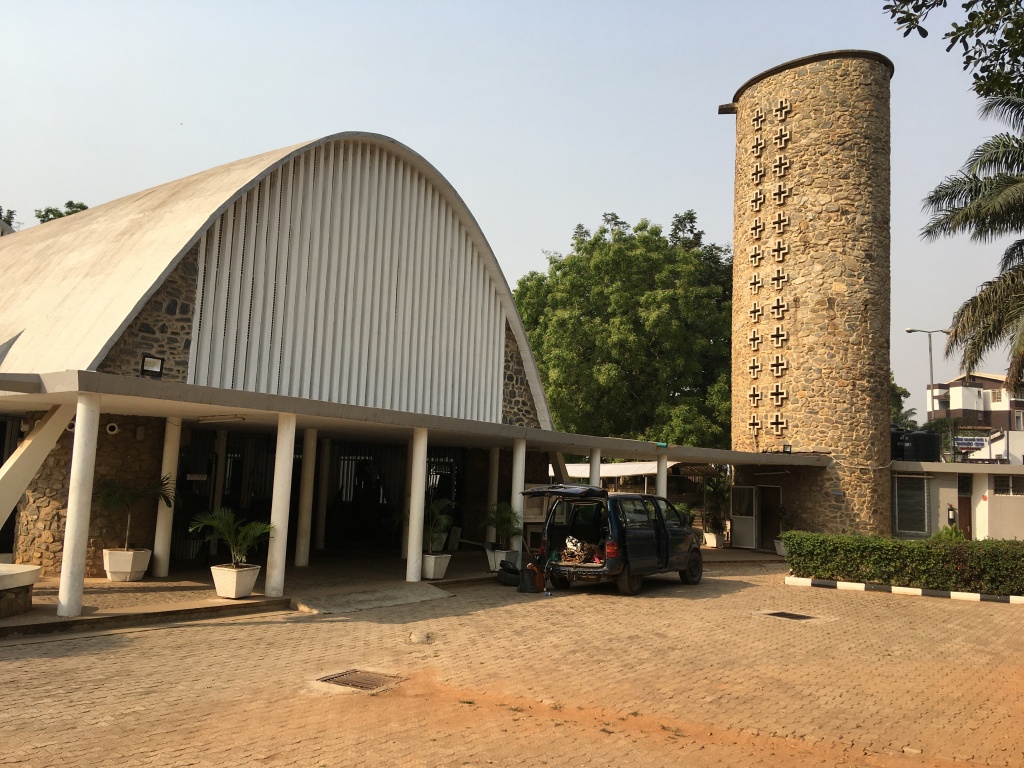
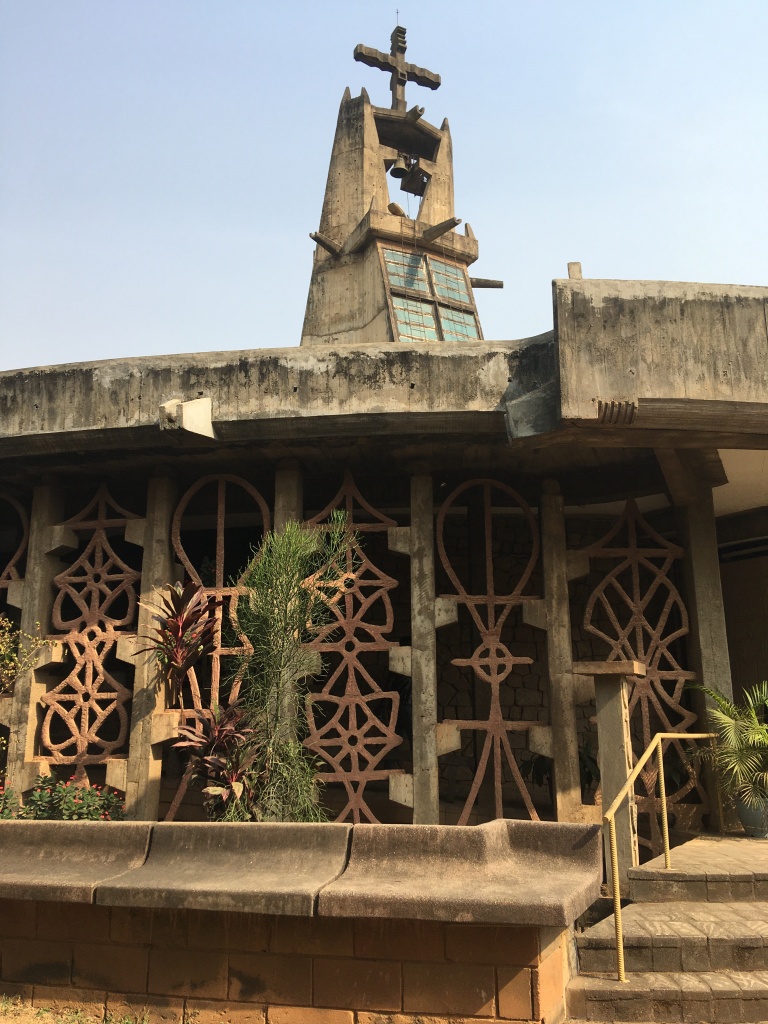
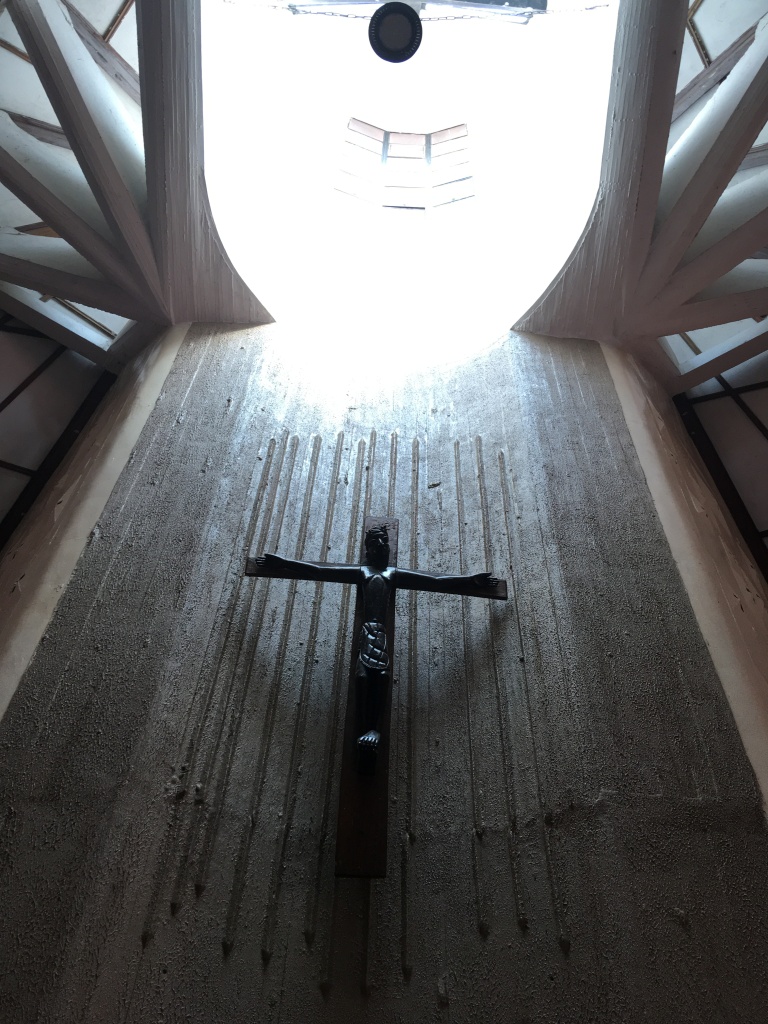
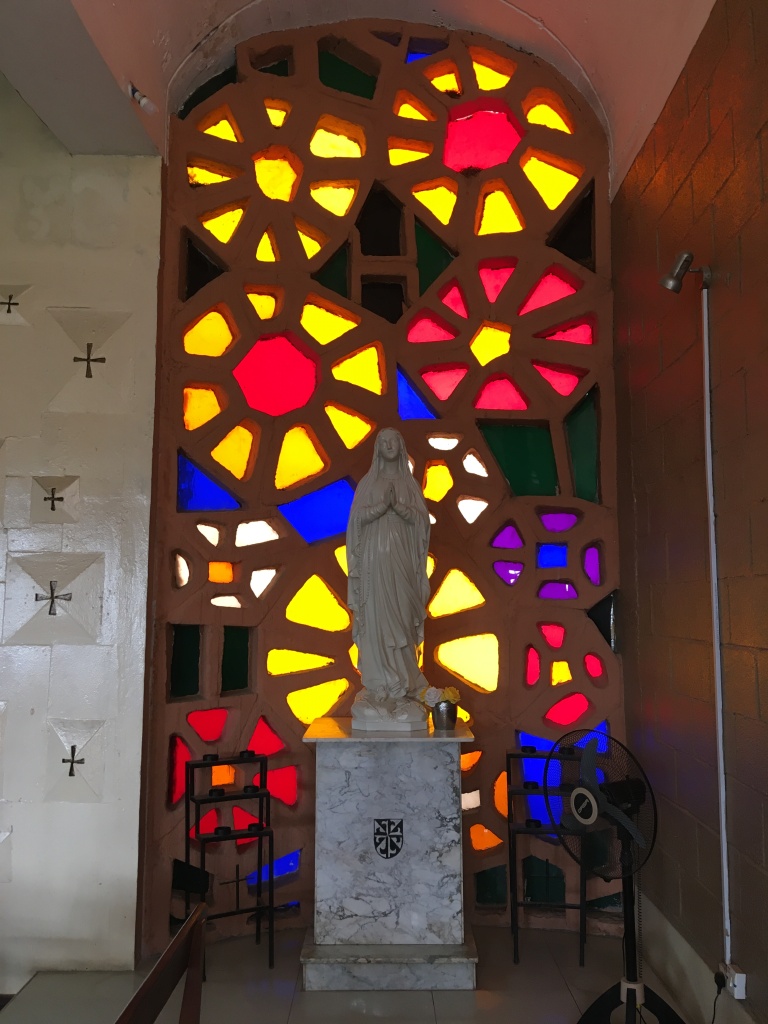
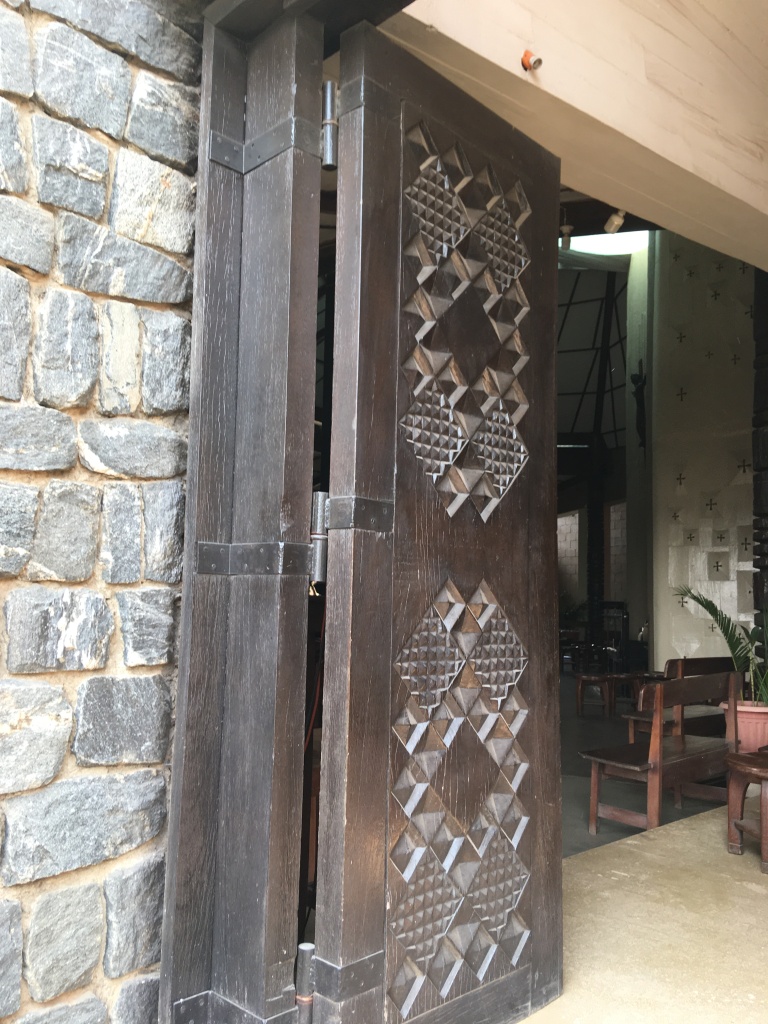
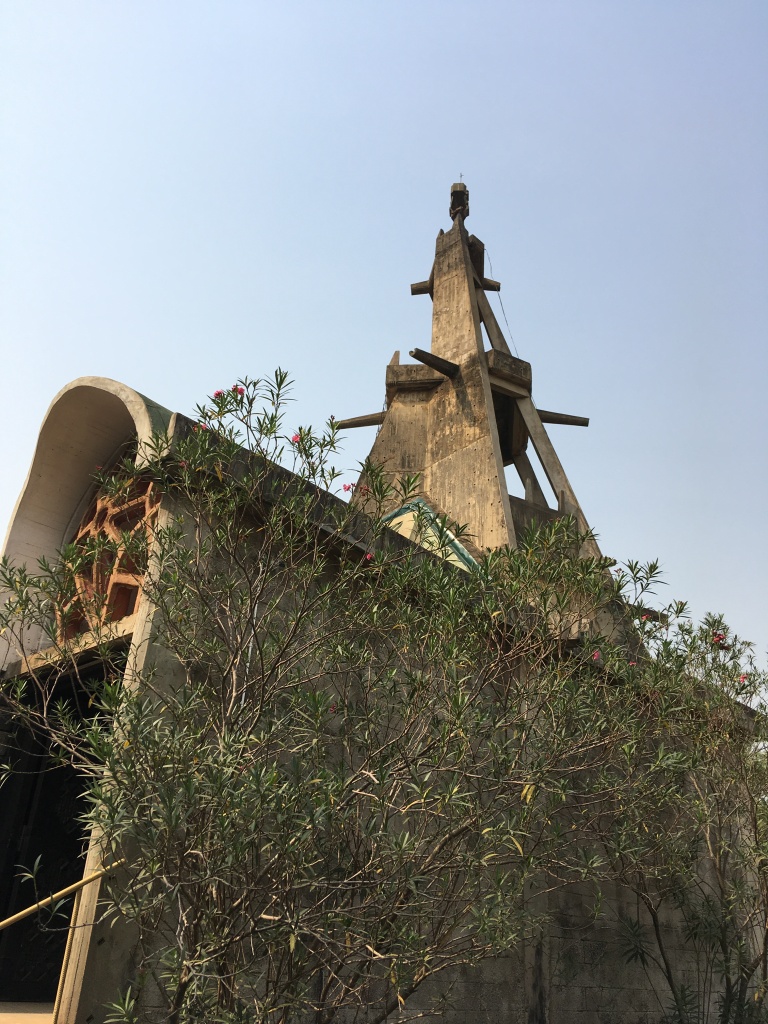
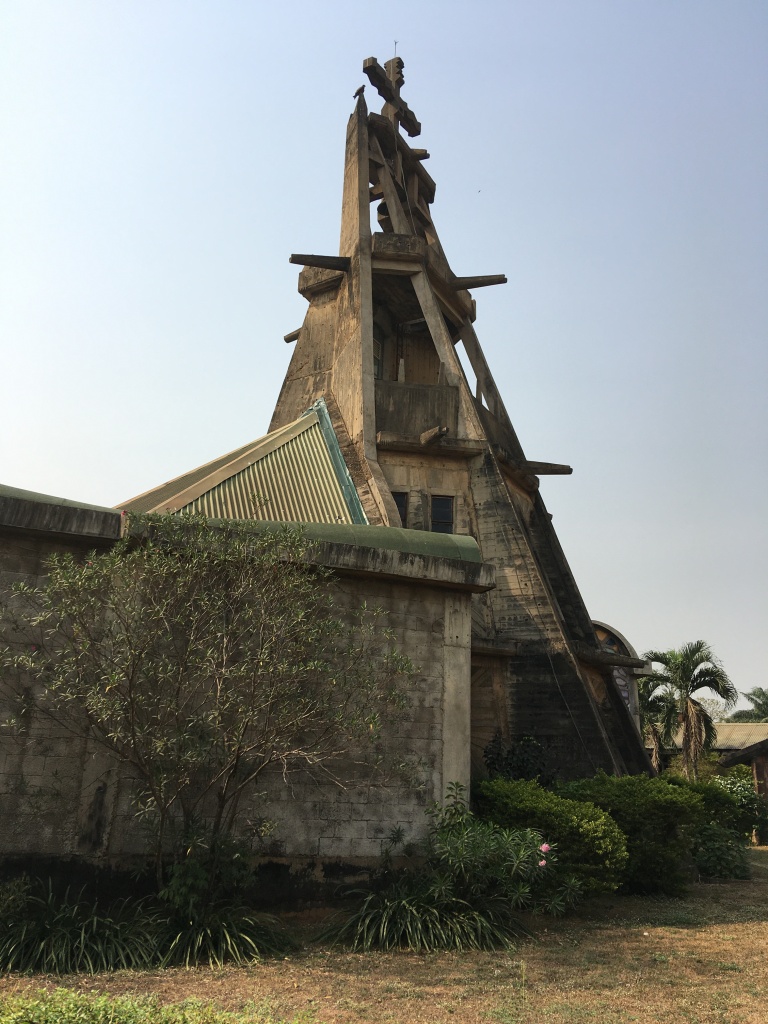
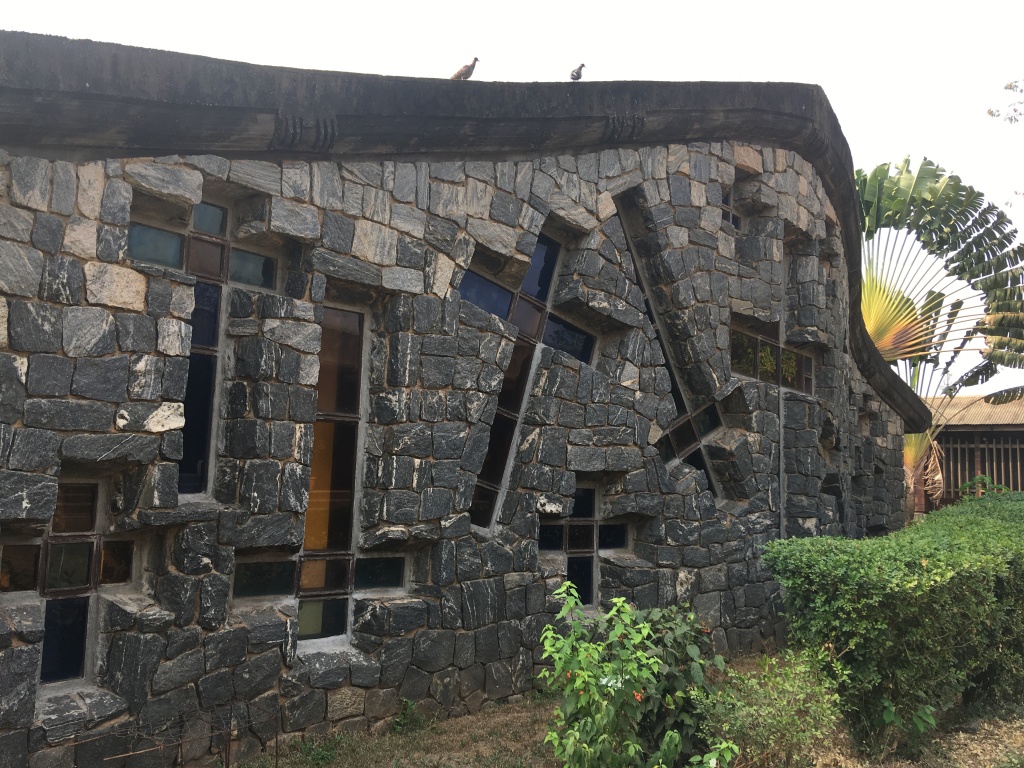
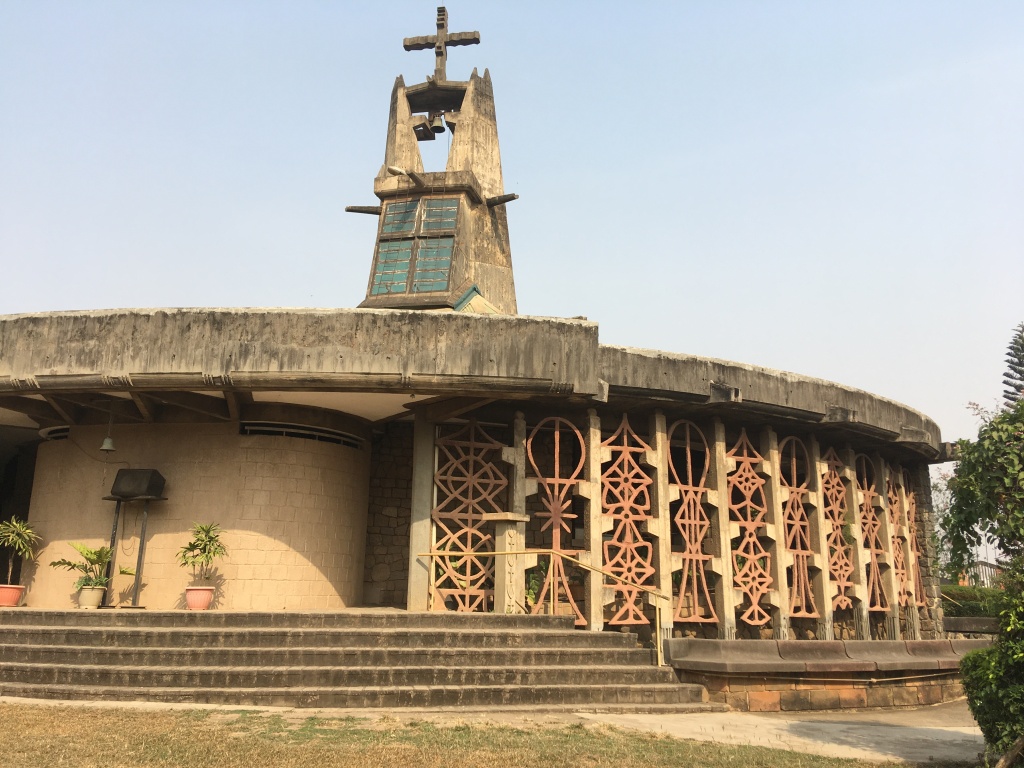
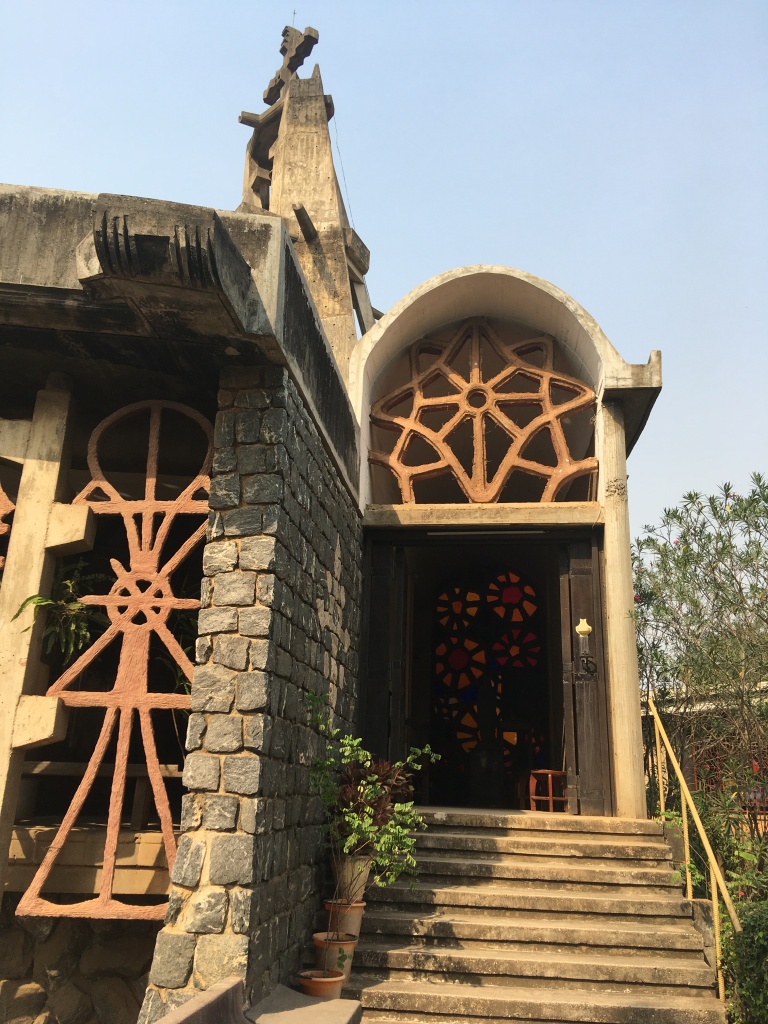
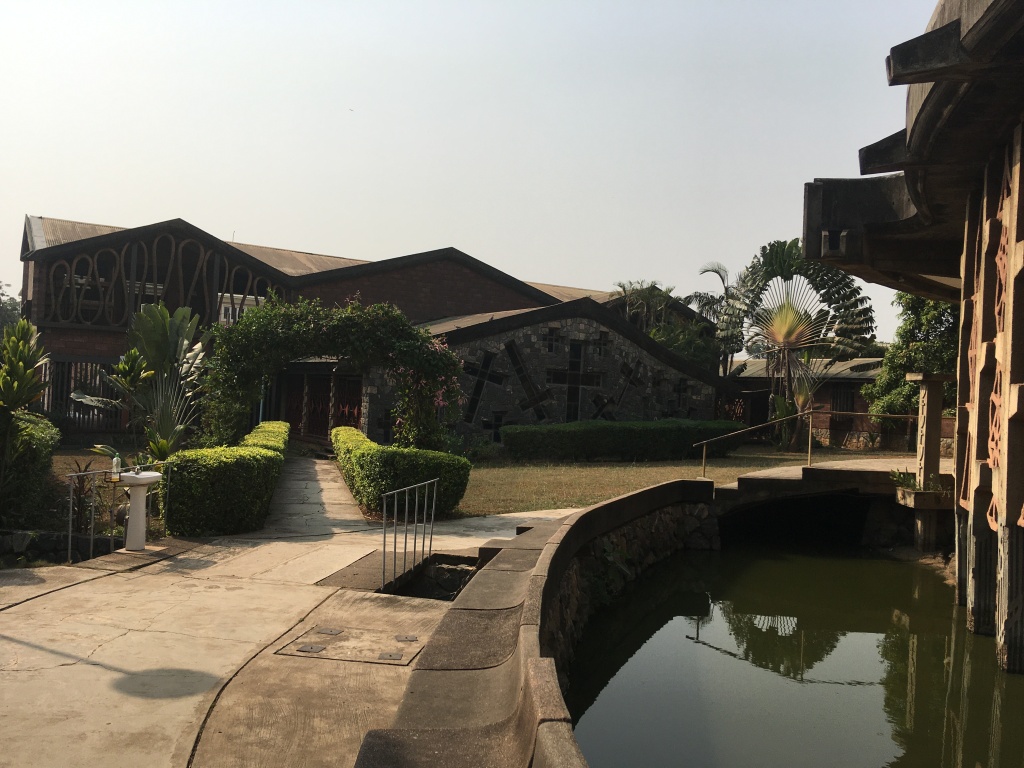
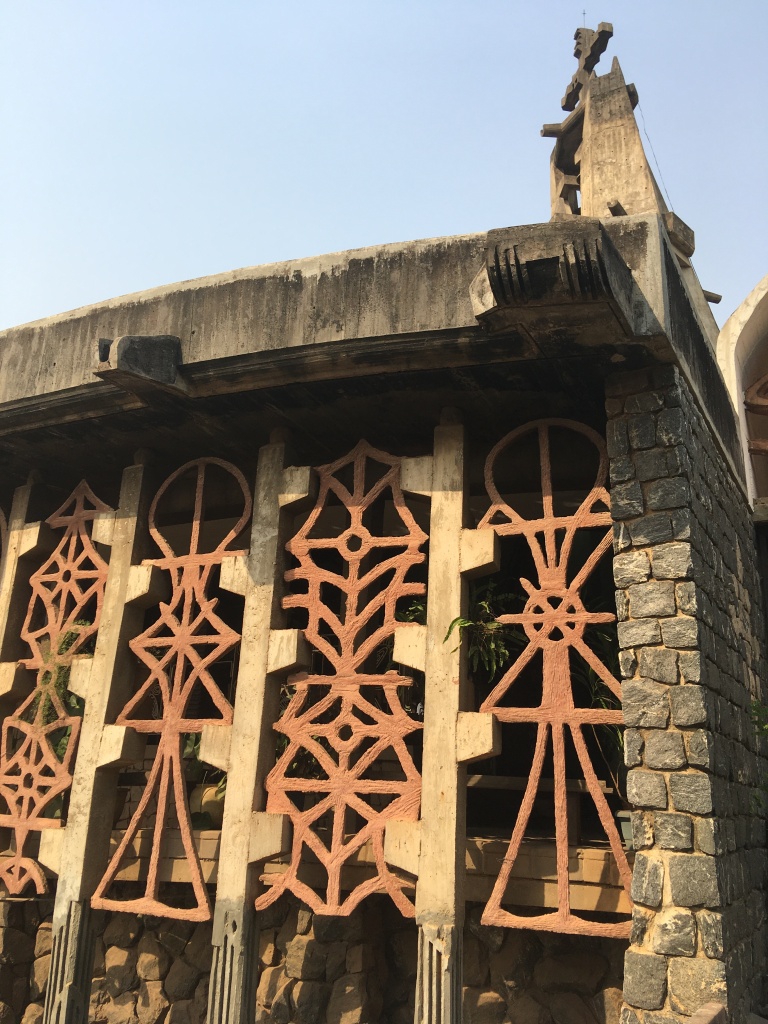
Off campus it was a real privilege to finally visit the Dominican Chapel by Demas Nwoko (b1935)- winner of the Venice Bienalle Golden Lion Award 2023. This tribute was long overdue for this visionary polymath artist. His work is difficult to describe, but easy to understand and enjoy. Architecture is Nwoko’s medium. He uses architecture (i.e. space, light, volume, materials, procession) as others sculpt clay or apply paint.

The chapel has various layers – each element works as a distinct component whilst adding to the whole. I particularly enjoyed the loggia at the back of the chapel, as well as the flow of light down from the steeple onto the alter below. It’s quirky and full of whimsey, but there are no gimmicks or affected gestures – it’s a beautiful chapel and a joyful place.

Buildings from Unilag Campus, Lagos.

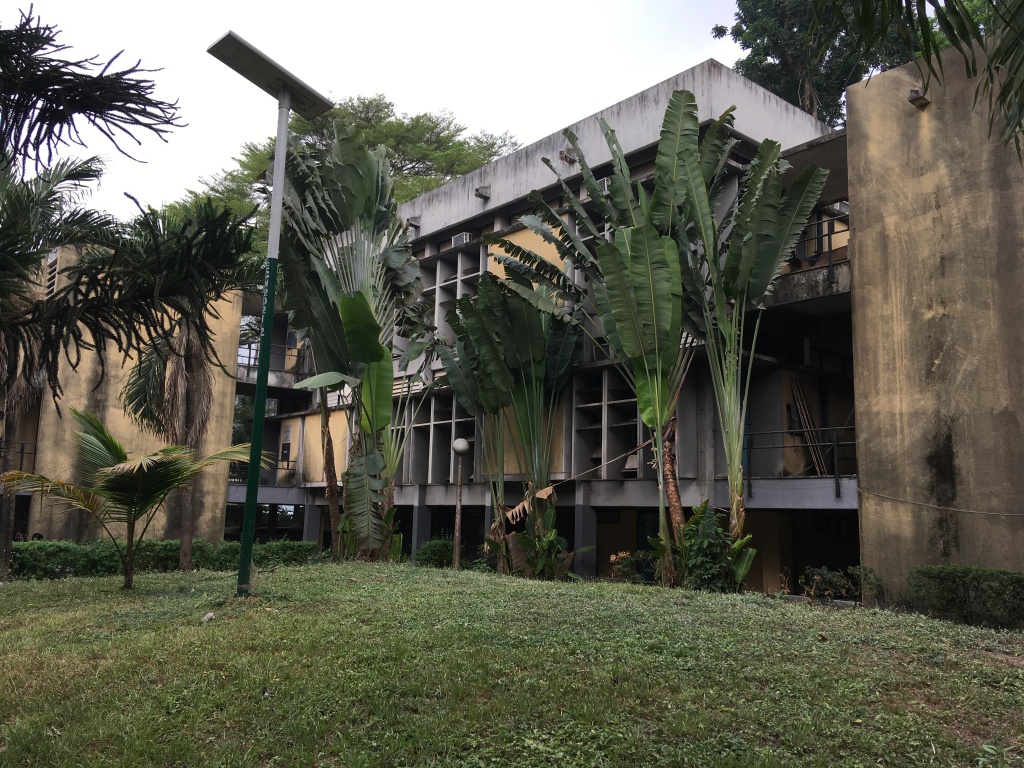
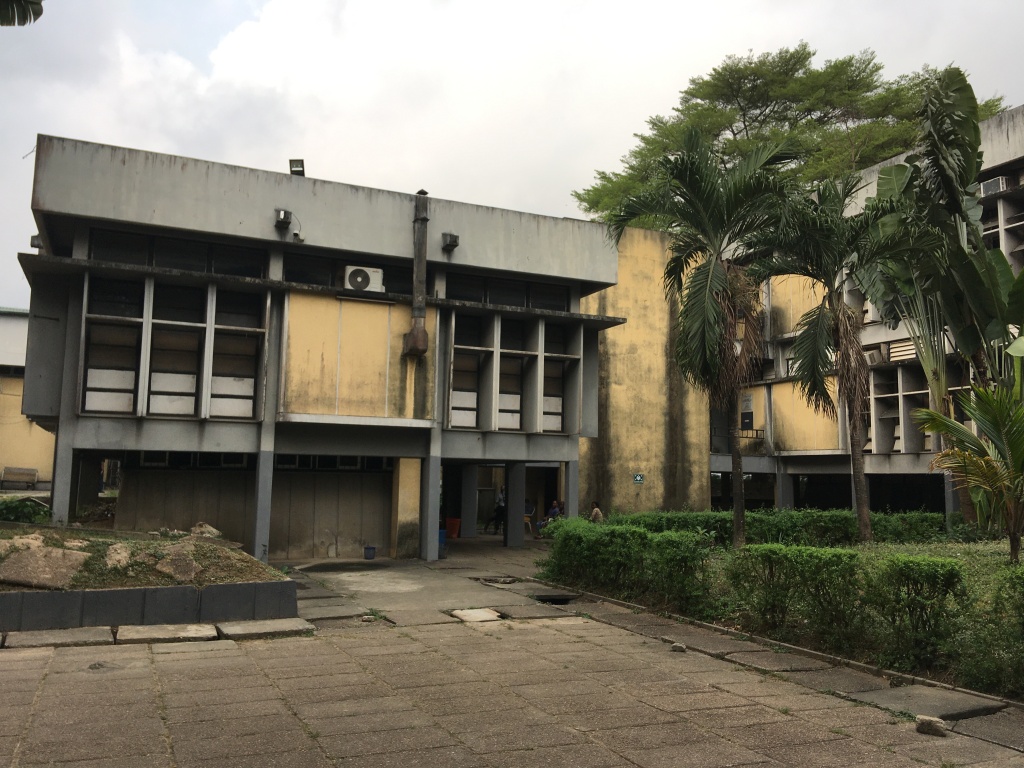
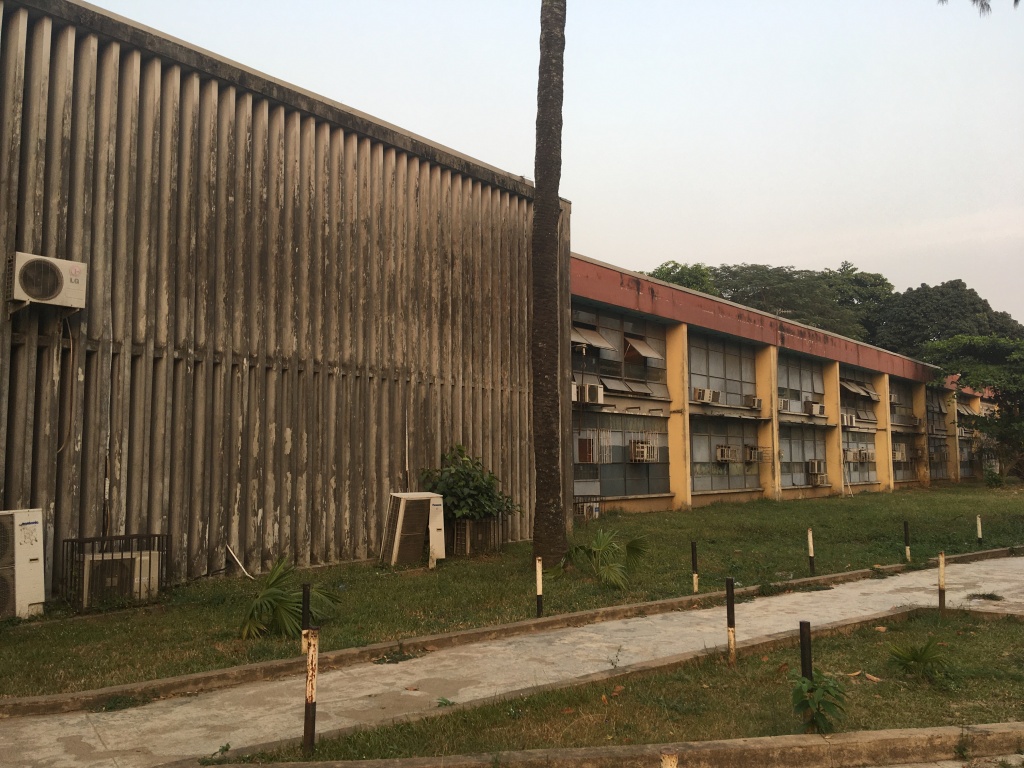
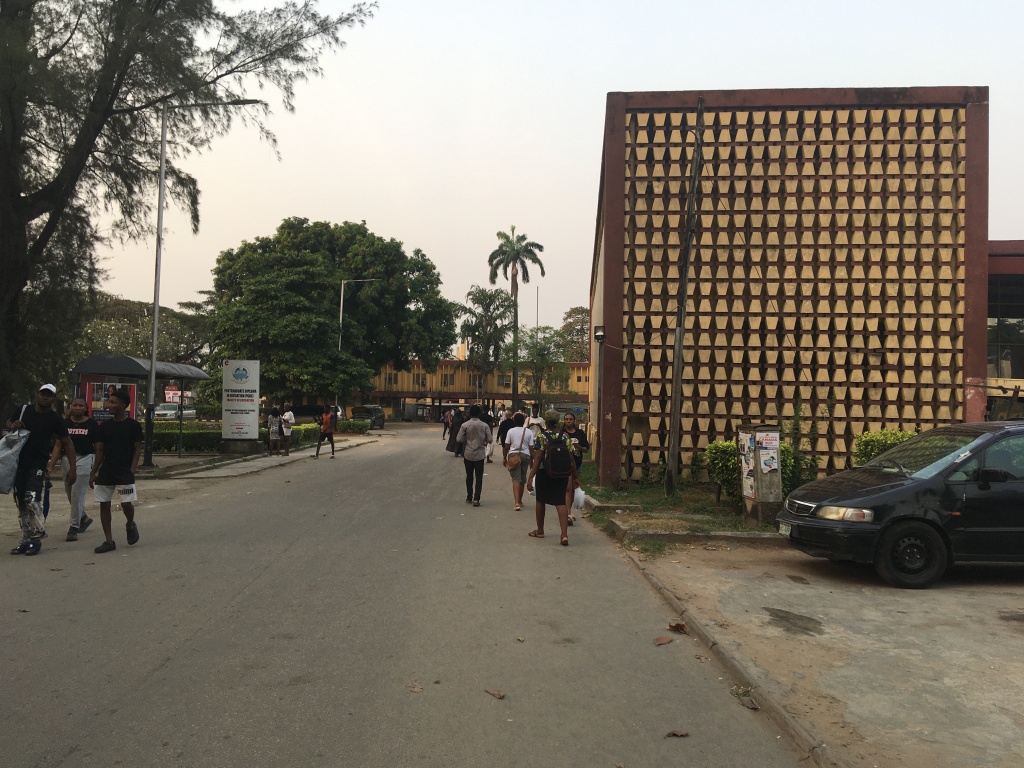
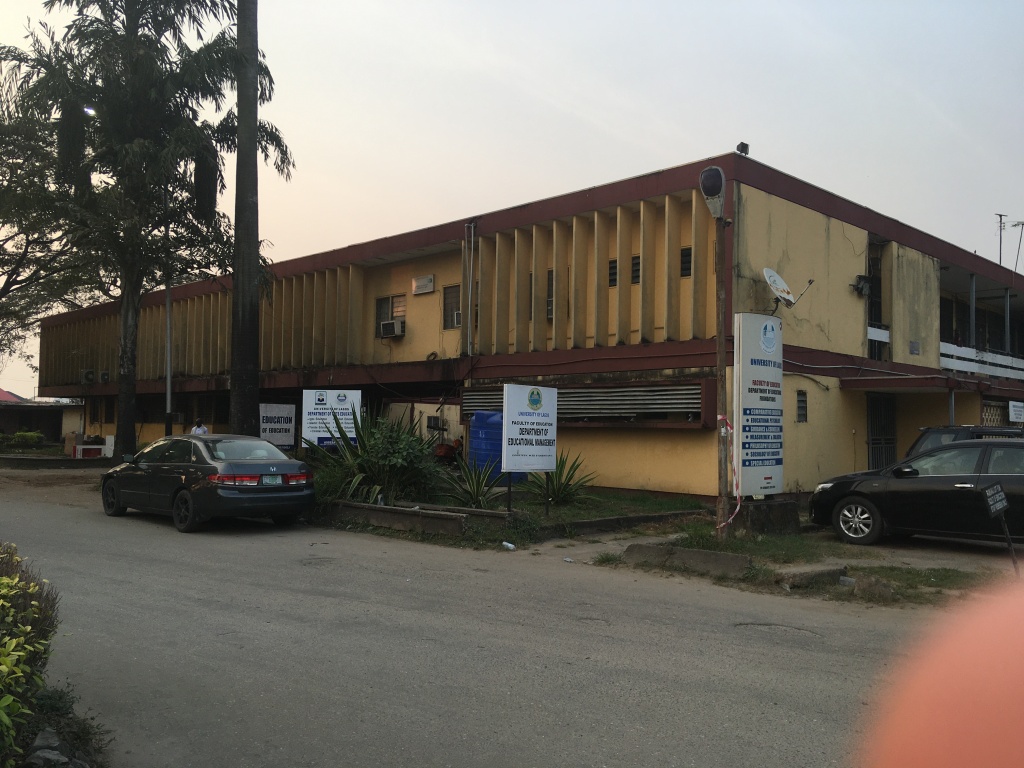
Here’s a few more structures from Unilag beyond the well-known examples from the centre of campus.

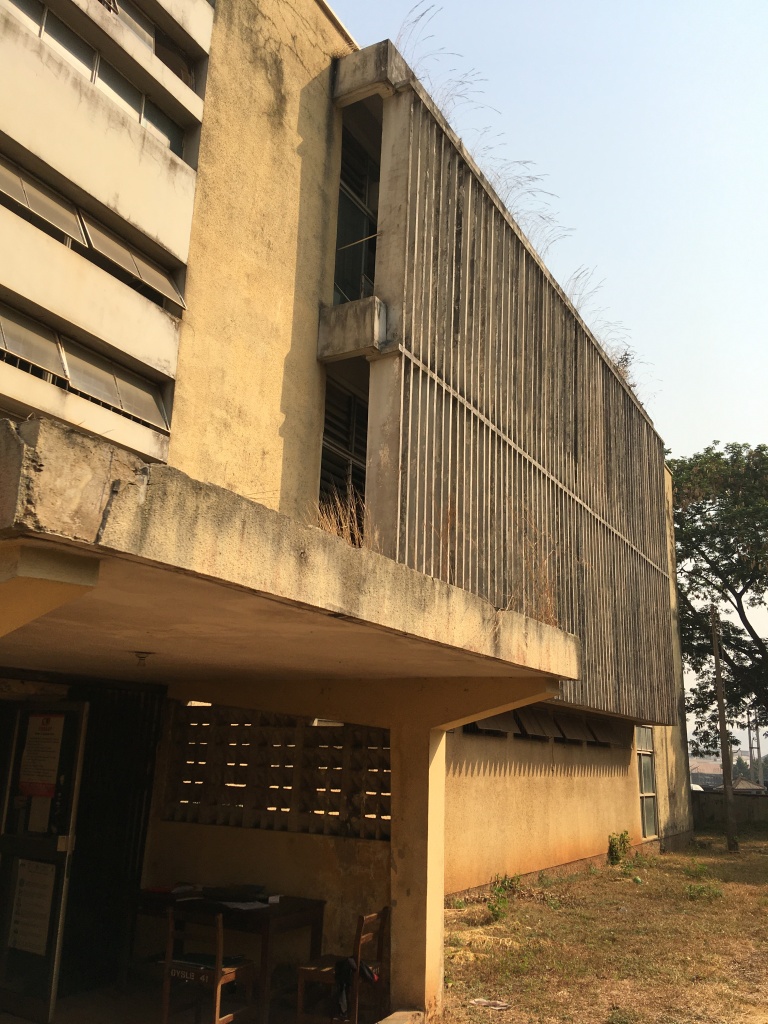
Architecture School and surrounding buildings.

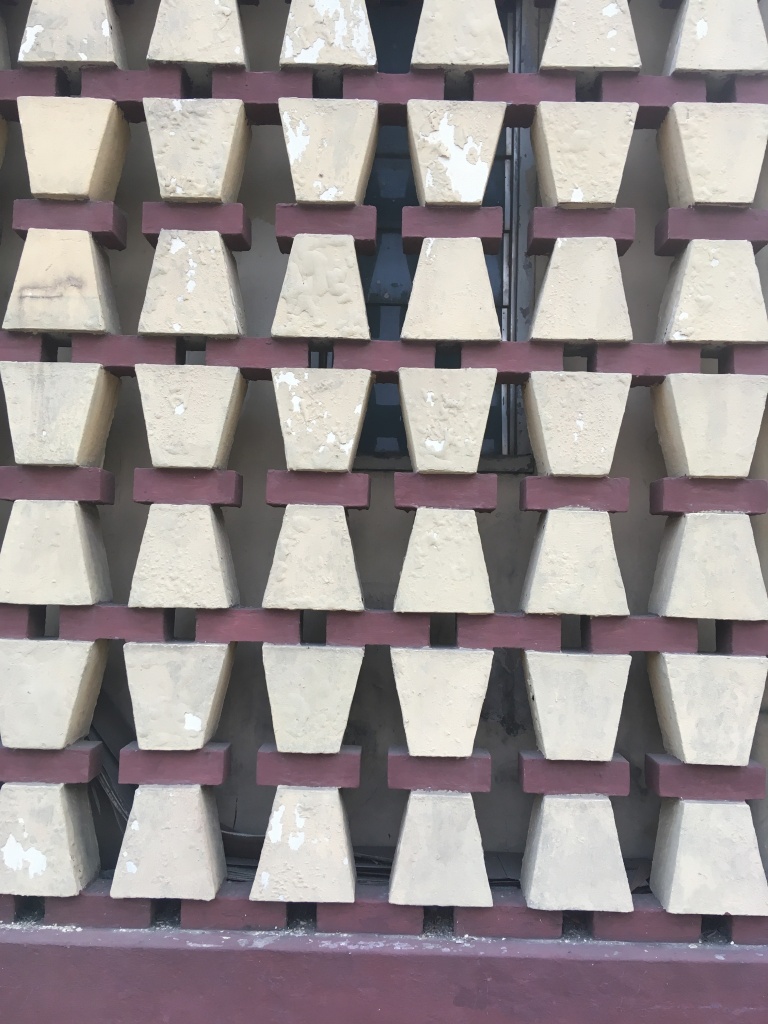
Queen Amina Hall – could this be a Design Group project? The concrete screens, elevational treatment and form suggest it might be [or an overlooked Alan Vaughan-Richards design perhaps?]. Opposite the Hall is another structure with a similar concrete screen motif, and adjacent is the Education building. These are carefully designed structures and expertly detailed and constructed – but we don’t know anything more on the design team and architect.

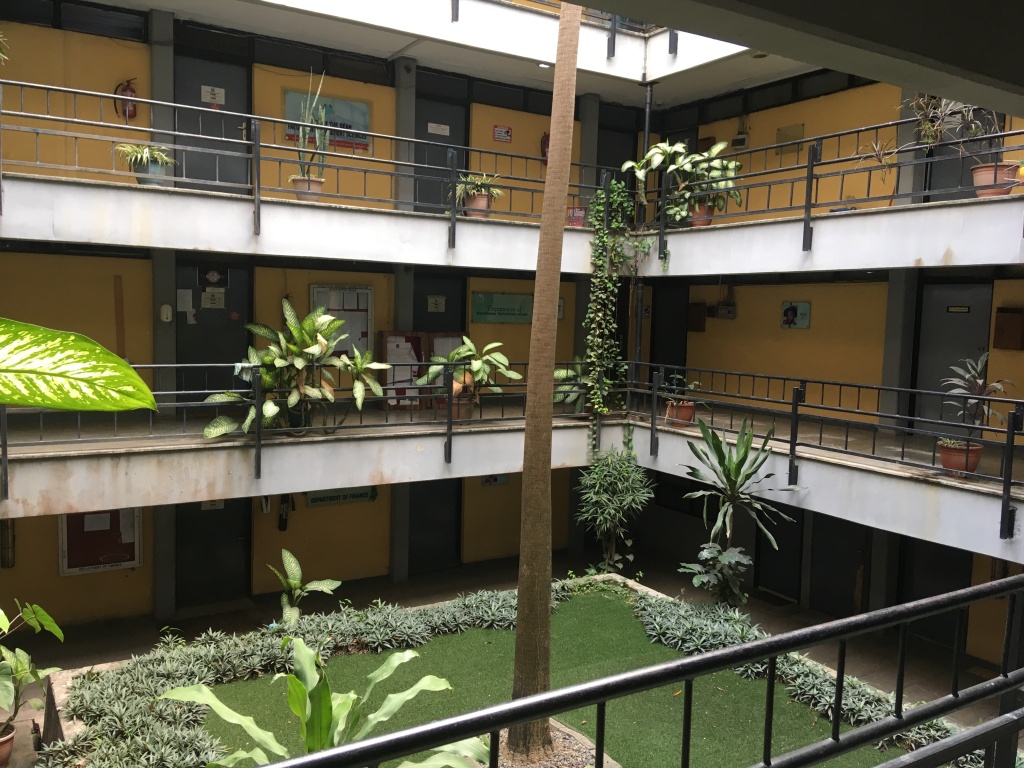
The Management building has an excellent (and overlooked) courtyard. It really enhances the space, creates a hidden garden, and turns the utilitarian corridor/circulation space into a place worth spending time in (just ignore the new extension/entrance lobby and plastic grass).

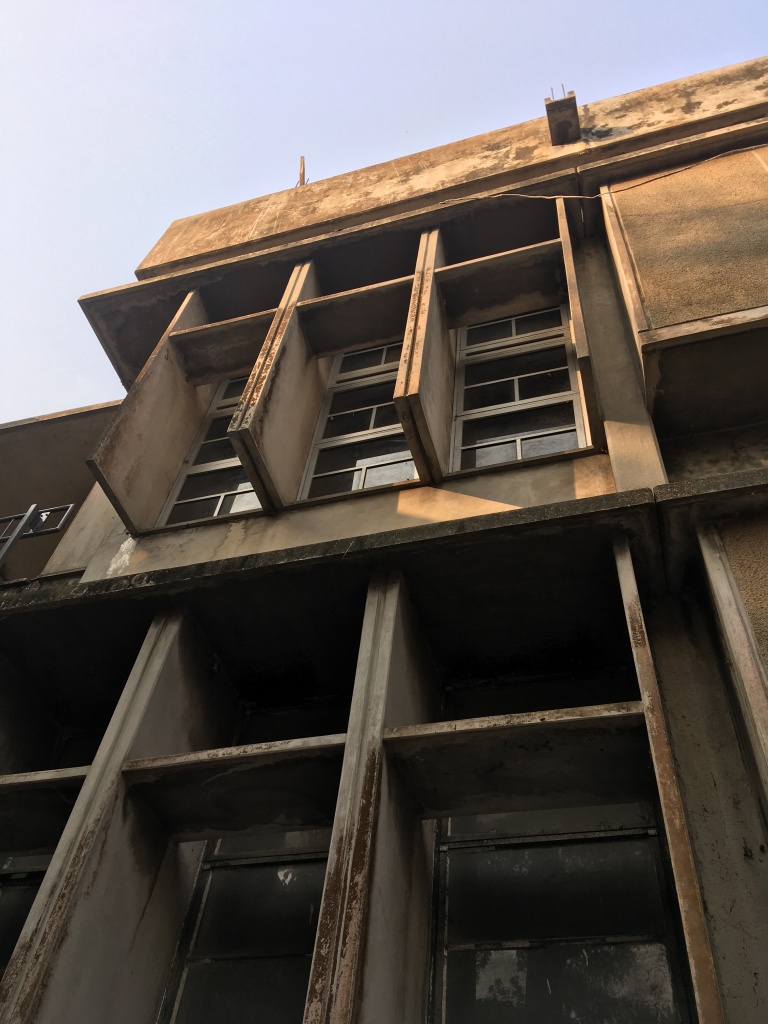
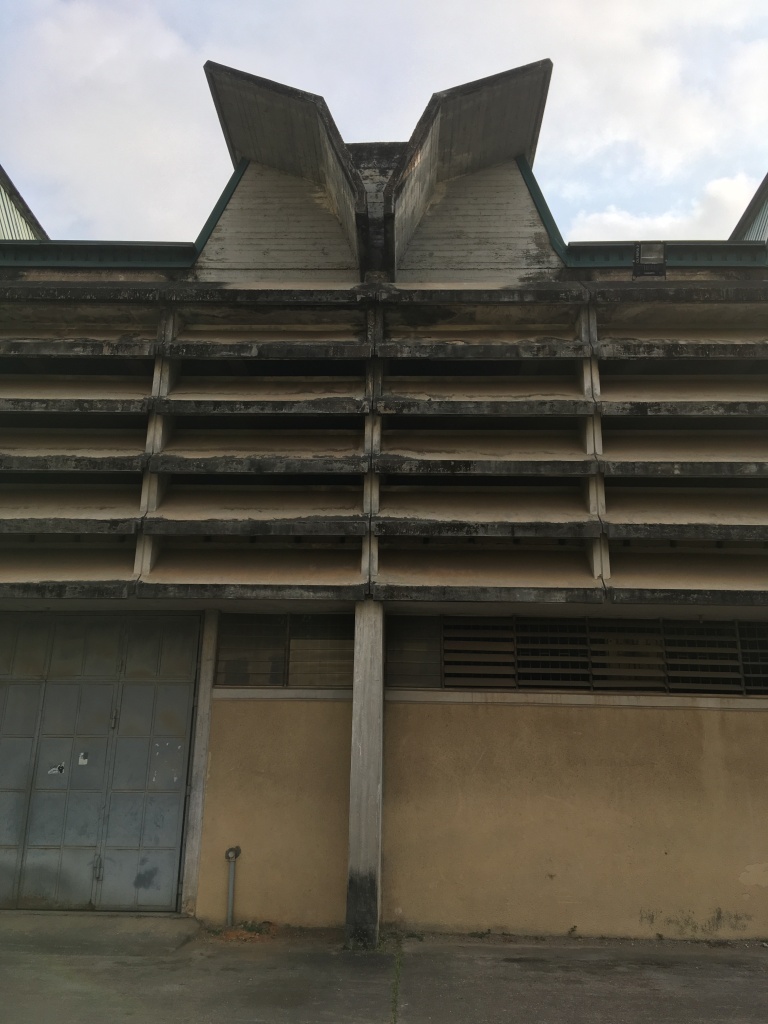
Engineering Labs: Heavy interlocking concrete louvres at first floor level with Y beams projecting beyond the building line at roof level supporting clerestory lights and roof structure. It’s a brutalist reimagining of the James Cubitt Engineering block at Kumasi – but twice the size….

Unilag is an important campus with a highly valuable and important set of late modernist post-colonial architecture. There’s a lot more work required here to identify the architects and to produce a campus map, gazetteer, and environmental analysis of these significant buildings.

Niger House by James Lomax-Simpson. Designed for the Niger Company after they were bought out in 1920 by Lever Brothers. Lever wanted to consolidate their various offices and retail units in Lagos into a central location overlooking the Marina. The only good site available was owned by Trading Association of Nigeria. To obtain the site Lever purchased the entire company and Lomax-Simpson designed the new building there. It had a retail space on the ground floor with staff lounges and accommodation above. It wasn’t to Lever’s taste and he complained about it having a ‘town hall’ feel.

New windows have been punched through the portico and an additional storey added. In the same district of Lagos is Wilberforce House, built for Manchester cotton traders G B Ollivant. The United Africa Company was formed by the merger of Niger Company and African and Eastern, and they went on to purchase G B Ollivant in 1933.

Wilberforce House was constructed by Taylor Woodrow West Africa (and the UAC had a 50% stake in this business too).

Perhaps the most well-known UAC owned business was Kingsway Stores. They had branches across West Africa. The Lagos branch filled an entire city block and was originally designed as a store and office for the African and Eastern Trading Corporation. The Deco style portico was added later.
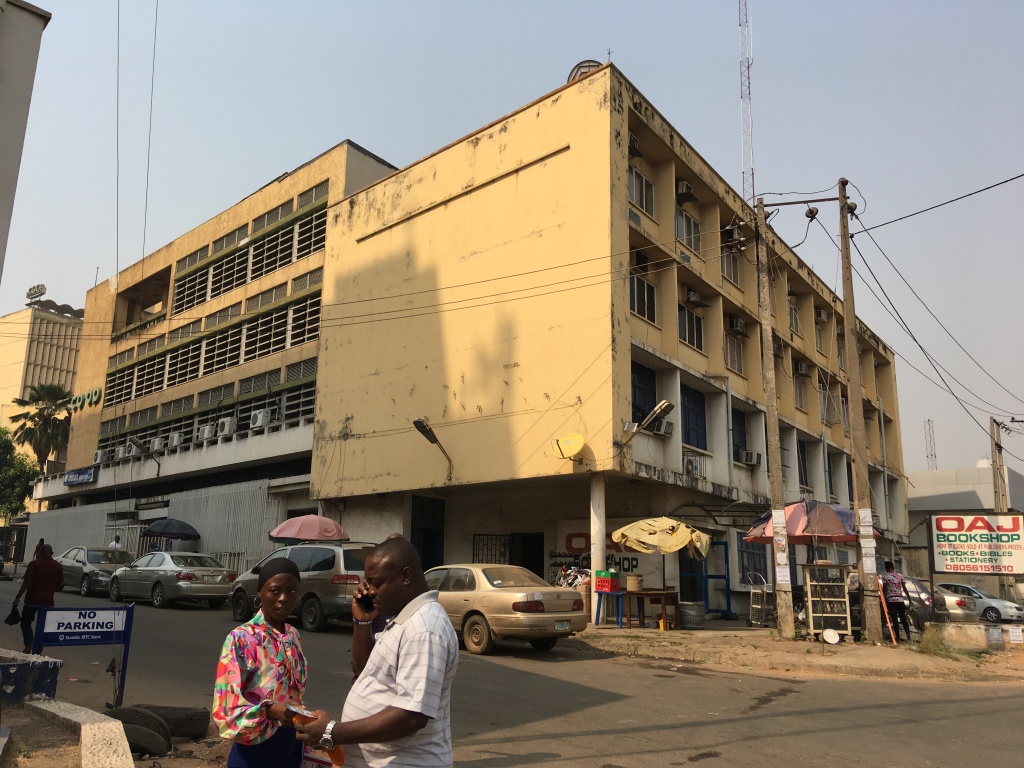
Central Lagos- quick picture show before (Nigeria Magazine 1962) and after (Jan 2024):

Western House by Nickson and Borys

Niger House for UAC by Watkins Grey

Book shop House Godwin Hopwood

Elder Dempster by James Cubitt – heavily modified with the new glazed facade.
Bristol Hotel by Godwin and Hopwood

Godwin and Hopwood Residence, Godwin and Hopwood

YMCA – slender single room deep plan, exposed staircase at the gable with concrete wrapping around. Commercial retail units at the base, pavilion and garden at the roof. Cracking scheme – but who is the architect?

Alan Vaughan-Richards House

Alan Vaughan-Richards (1925–1989) studied at the AA and worked for Architects Co-Partnership in Nigeria before establishing his own practice in Lagos.  His house and studio in Ikoyi, Lagos has featured on the TAG blog before as part of the archiving and digitisation of Vaughan-Richards’ drawings undertaken by Ola Uduku, and further published here: https://www.taylorfrancis.com/chapters/edit/10.4324/9780429506765-16/alan-vaughan-richards-archive-ola-uduku .

The house was originally planned as five interlocking circular rooms – responding to Yoruba housing forms. It contained a water feature, disco-lights, and a hardwood bar too. Set within the sweeping walls are built-in furniture, seating, storage and carefully curated spaces for art and sculpture. In section the light flows in from the roofscape, whilst also ventilating the passively cooled space. Vaughan-Richards collaborated with various artists and sculptors to produce door screens (one includes a carving of the house), furniture, and panels that feature in almost every space. A seating area cantilevers over the garden and once offered views over the lagoon beyond (now reclaimed land and gradually being built upon). The materials, natural ventilation, and careful positioning of the windows create delightful interiors with views out over the landscape and the giant trees that are home to African Greys. The house is a compact and modest scale with a refreshing lack of pretensions.  It was gradually extended by Vaughan-Richards to accommodate his growing family and a new floor was added above.

Outside the main property is a geodesic domed room providing additional visitor space and also used for exhibitions and events.

Vaughan-Richards designed many buildings across Nigeria. He really deserves a monograph dedicated to his important work. We also visited King JaJa hall at Unilag that was designed by Vaughan-Richards.

Thank you to Remi Vaughan-Richards for allowing us to visit the house and to Oluwaseyi Akerele for showing us JaJa and the campus.

UNILAG – The Central Core

The University of Lagos, located in Akoka district of the city, was established in the early 1960s to provide a new centre of learning for the city. The campus and its significance is currently being researched  by Adefola Toye as part of her PhD investigation, and she’s recently published an introductory article in the latest Docomomo special edition too).

We spent the morning walking around the campus, and this was the first quality that resonated – it is walkable. It’s also more integrated into its urban context – rather than isolated on a remote hilltop like so many other universities in the region. Equally, there are tranquil elements and solitude, especially along the waterfront overlooking the lagoon. 

The central core is overlooked by Senate House tower and podiums designed by James Cubitt architects in the 1980s – all of the familiar brise soleil and double-skin façade motifs but extruded, layered, and clad in mosaic tiles. The brise soleil are actually hollow forms with a thin layer of cement and mosaic. There’s the classic Cubitt curved concrete motif (as seen on the Elder Dempster buildings in Lagos and Freetown).

Senate House faces into the plaza-precinct of the university, and here the campus responds to the landscape – both reacting the gradient that leads to the lagoon beyond, and as a man-made series of platforms, routes, and under crofts. It’s a space that has been crafted to catch the lagoon breeze and designed for gatherings, ceremonies, performances, and spending time with friends. The core campus buildings, designed by American practice Robert S. McMillan Associates in the early 1960s, overlook and enclose the space, including the university library and council chamber drum. They’re not forming a street but more of a town square. The administrative buildings are also here, located within a protective shaded courtyard and solitary palm tree. The scale shifts from the large public space into a much more intimate enclosure. The concrete former is expressed on all these buildings to reveal the timber grain, expertly cast into projecting scooped forms, parapets, and balustrades. There’s a heavy, confident, solidity to the composition of the facades. The horizontal soffits of the roofscape frames the visas, respond to the multi-level precinct feel, and are adequately matched with the vertical window bays and concrete fins. The sombre materiality of the ubiquitous concrete is relieved with unexpected blasts of colour, such as the gold mosaic on the J F Ade Ajayi Auditorium.

Erhabor Ogieva Emokpae (1934-1984) and the timber carving at Unilever

The largest item in the Unilever archive at Port Sunlight is a carved timber mural by the Nigerian artist Emokpae. Stretching to over 4m x4.5m and made up of 35 individual panels, it depicts the story of palm oil harvesting and the production of palm oil.

The panels also show William Lever visiting Africa and his famous Sunlight soap brand. It’s a vast piece of history and story telling revealing that behind ever bar of Sunlight soap was a vast system of extraction, production, logistics, and international trade stemming from Western Africa. The work was commissioned for the refurbishment of Unilever House in London in 1979. As well as being an influential and important artist Emokpae was a Creative Design Director for the design agency Lintas (also one of Unilever’s subsidiary companies).

I produced a measured drawing of the carving to help me to study it more carefully and because it’s almost impossible to photograph the original work in a single frame whilst capturing the detail. Together with Unilever’s Global Head of Art, Archives, and Records Management Claire Tunstall, we began discussing using the drawing to produce an animation that would help to explain part of the work and also make it more accessible. We shared our ideas with the agency Stone and Glow and commissioned them to develop an animation based on our text, keyframes, and artistic direction. We’re delighted to be able to share this with you here and hope you enjoy it:

Have a look here for Claire’s article : https://www.archives-unilever.com/discover/stories/bringing-our-collections-to-life .

I wanted to know more about Emokpae’s work and found some fascinating material in the Nigeria Magazines. Emokpae had worked on some major projects in Lagos and I’ve been eager to view them ever since. At the National Theatre (designed and constructed by the Bulgarian Techno Exporstroy in 1976) Emokpae was commissioned to produce the friezes that wrap around the lower parapet of the theatre as well as a series of mosaic murals at the entrances.

He also won a competition to design a concrete installation at the Nigerian Institute of International Affairs – a significant building designed by Design Group. Here Emokpae’s ‘The Art of Understanding’ is composed of a large concrete mural with mosaic backing. The project also featured in Nigeria Magazine no.96 1968 with an extended article written by Alan Vaughan-Richards.

We’ve written a short article on Emokpae too that will feature in the forthcoming https://www.aaschool.ac.uk/publicprogramme/whatson/as-hardly-found-in-the-art-of-tropical-architecture publication in 2024.