Archive

Poland

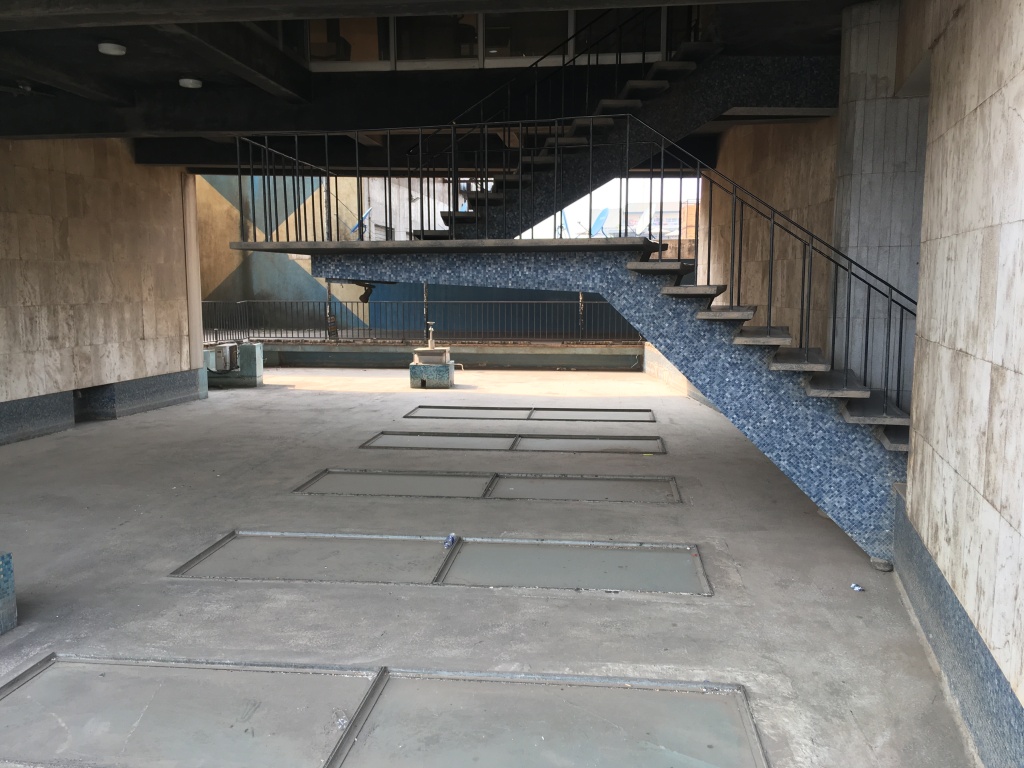
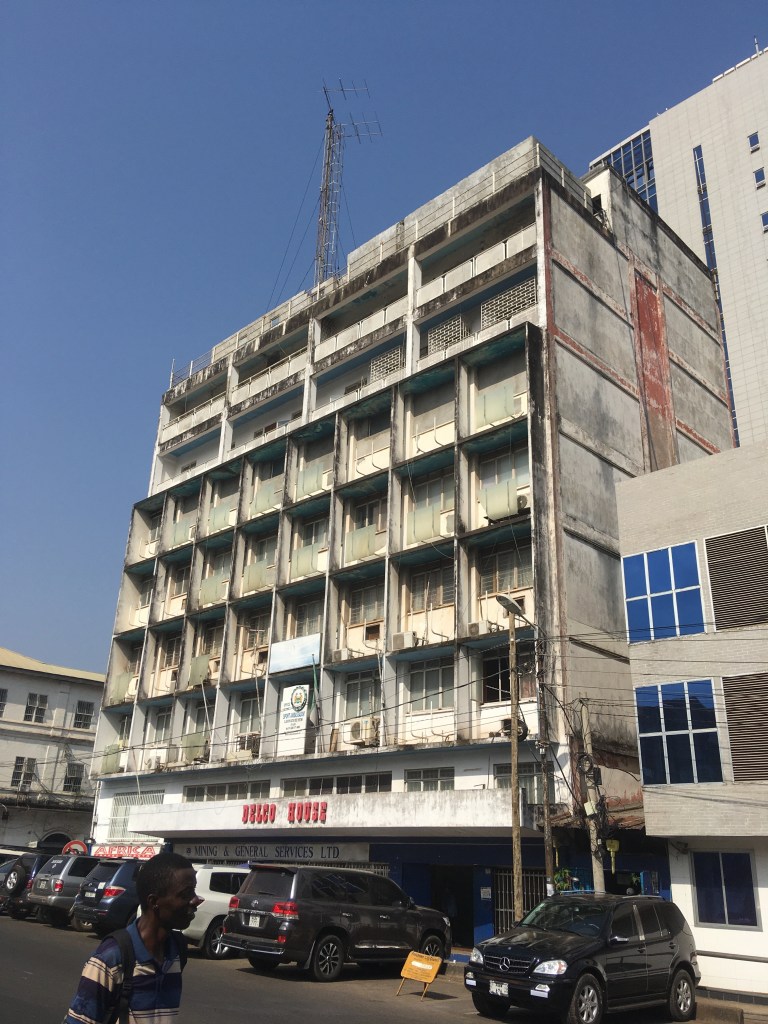
Delco Offices in Freetown, photographed in 2023, designed by Zdzisław Borysowicz in early 1960s

Have a peek at our inaugural AHUWA newsletter here: https://new.express.adobe.com/webpage/qgRzBtoiF2Snh

It’s devoted to our work-in-progress on the Polish architect Zdzisław Borysowicz – complete with lots of photos, basic biog on ‘Borys’ and how we managed to finally find out more on this fascinating architect….

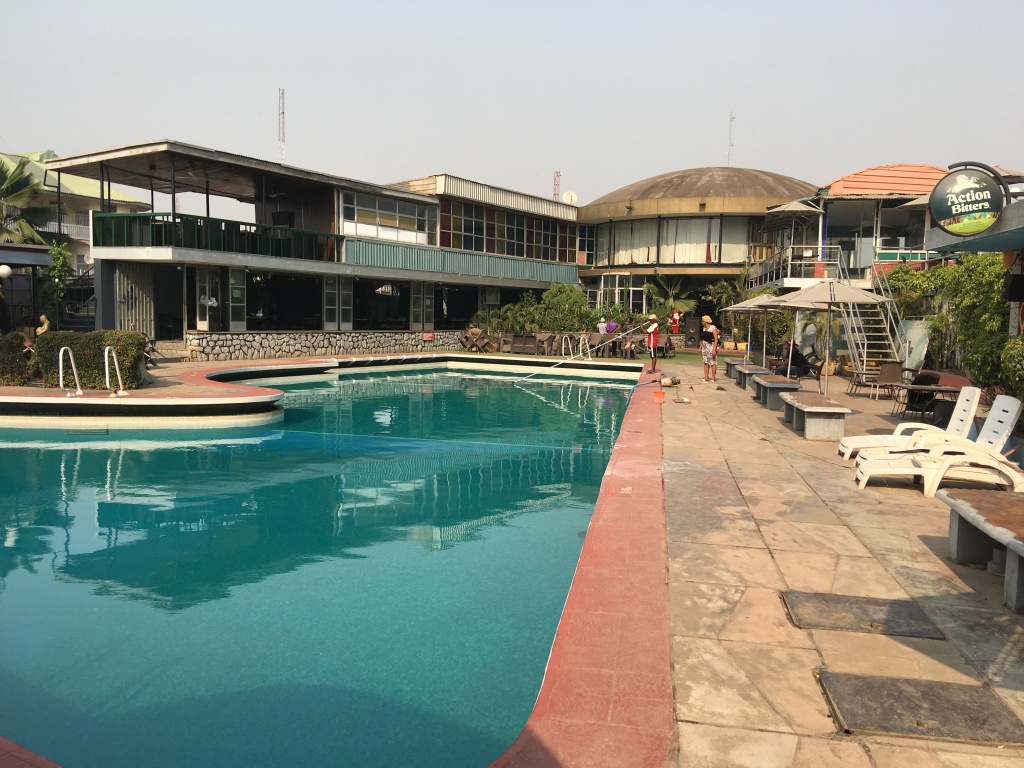
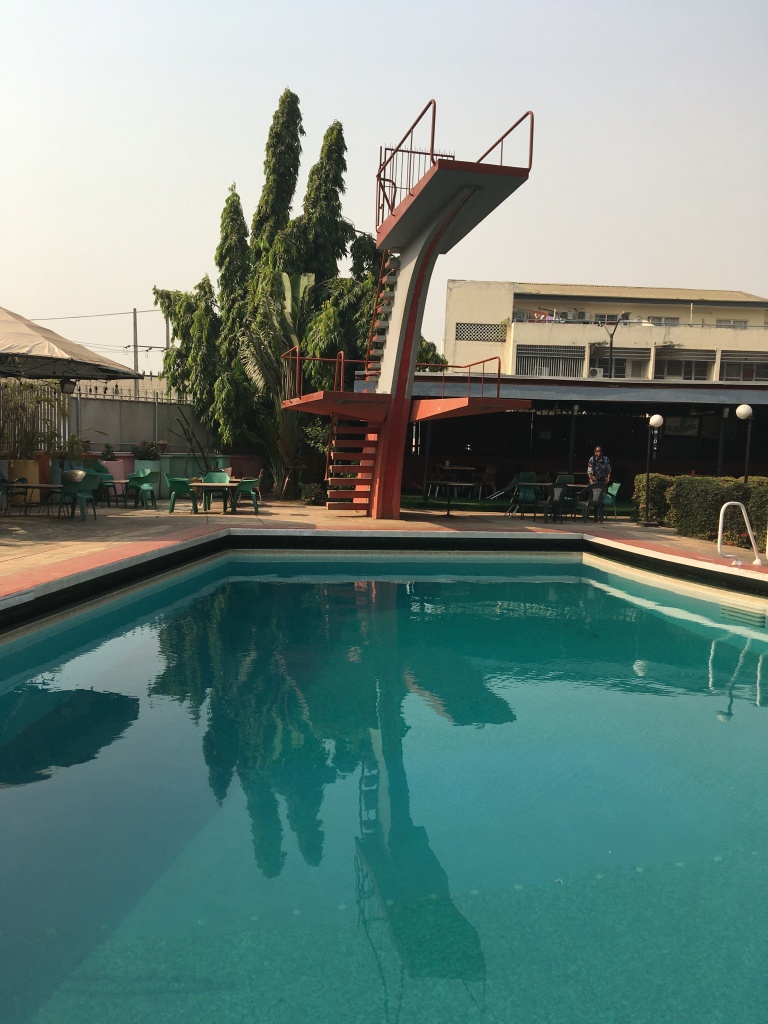
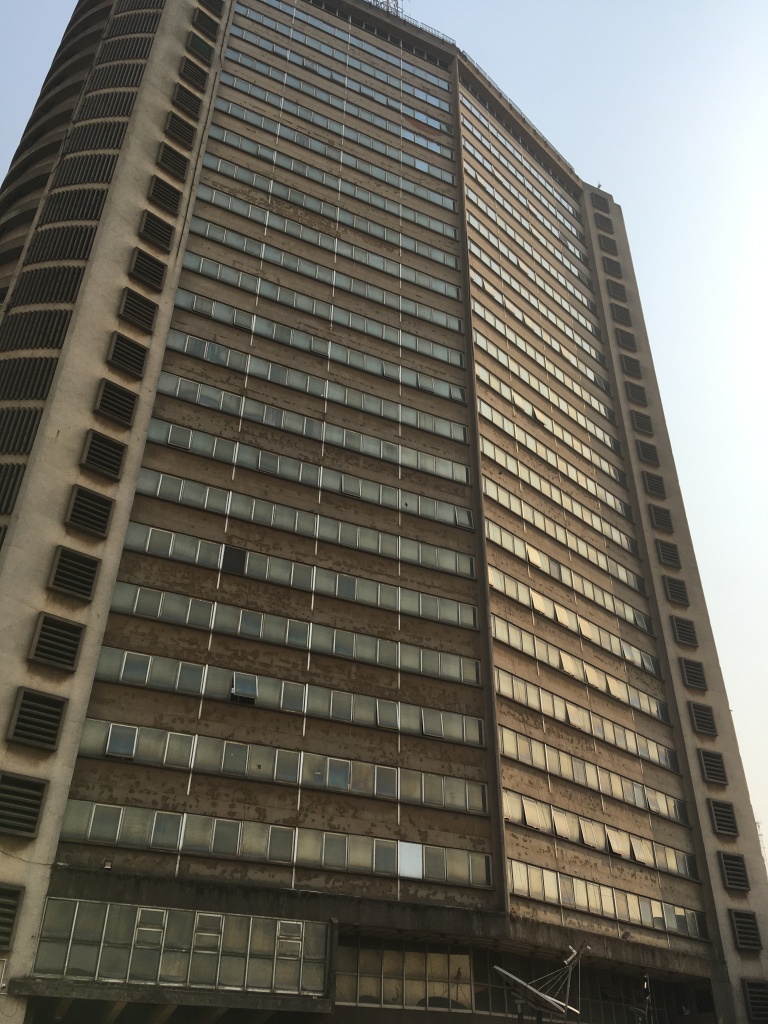
We reported on the largest building in Ibadan and the wonderful cocoa dome and swimming pool back in January – and whilst we knew the contractors were Cappa and D’Alberto, the architects remained unknown….

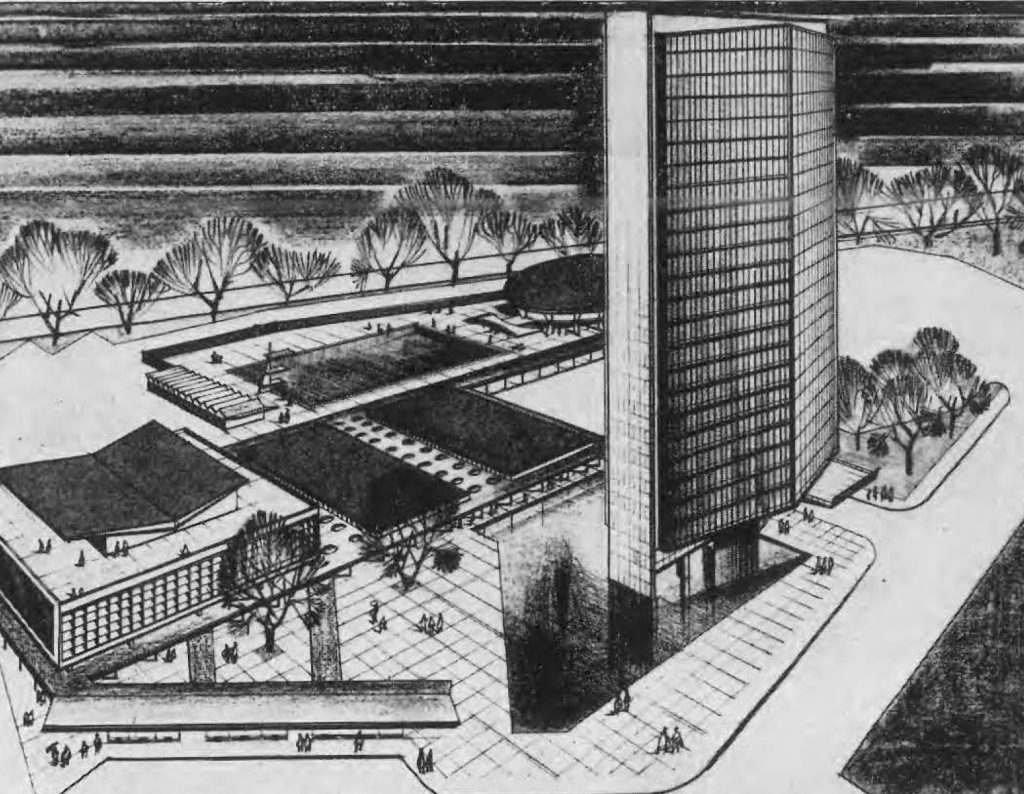
We searched various journals and articles from the time, and eventually came across a reference to a skyscraper shopping precinct project from 1960 in the journal Interbuild. Ola Uduku continued a different line of inquiry and traced the project down in West African Builder.

The architects were listed as ‘The Plan Group (West Africa)’ – not a well-known practice or one that has featured heavily in existing literature and research, but it was a name that I’d certainly come across before.

I trawled through our old notes and archival references, and found a file on ‘The Plan Group’ from the archives in Fourah Bay, Sierra Leone (Box 661). It turns out that the Plan Group was a multidisciplinary practice/development agency established by Nickson and Borys. Their aim was to provide an integrated design service, with particularly attention given to cost control and engineering, as well as mitigating risk for the client on large complex design projects.

In a letter sent to the Sierra Leonian government from 1960, Borys set out his vision for the practice, including listing the projects they were already working on, such as a 20 storey block in Lagos, the Ibadan project mentioned above, and a township near Lagos for 35,000 people – were these other Nigerian projects completed? And if so, where/what are they?

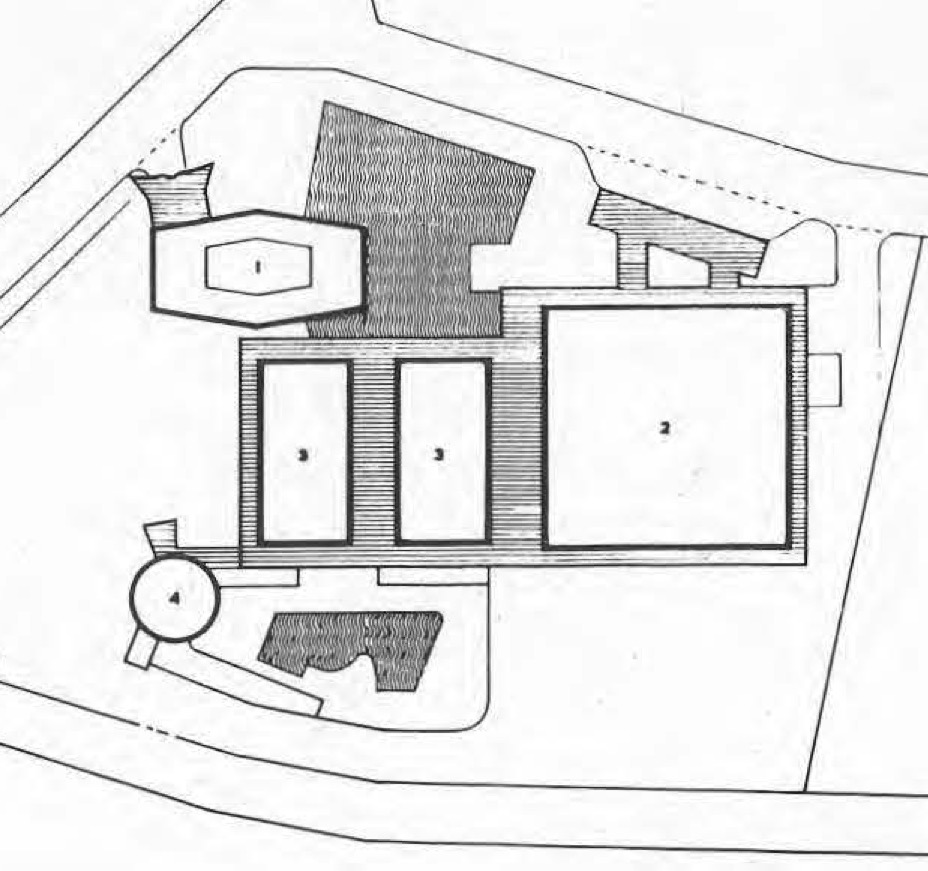
The Ibadan project was a multipurpose and speculative venture, aimed at providing office space as well as leisure facilities through the nightclub, swimming pool and cinema complex. There was also a large department store as part of the scheme. This wasn’t a Kingsway Store, so could it have been a competing UTC or A G Leventis?

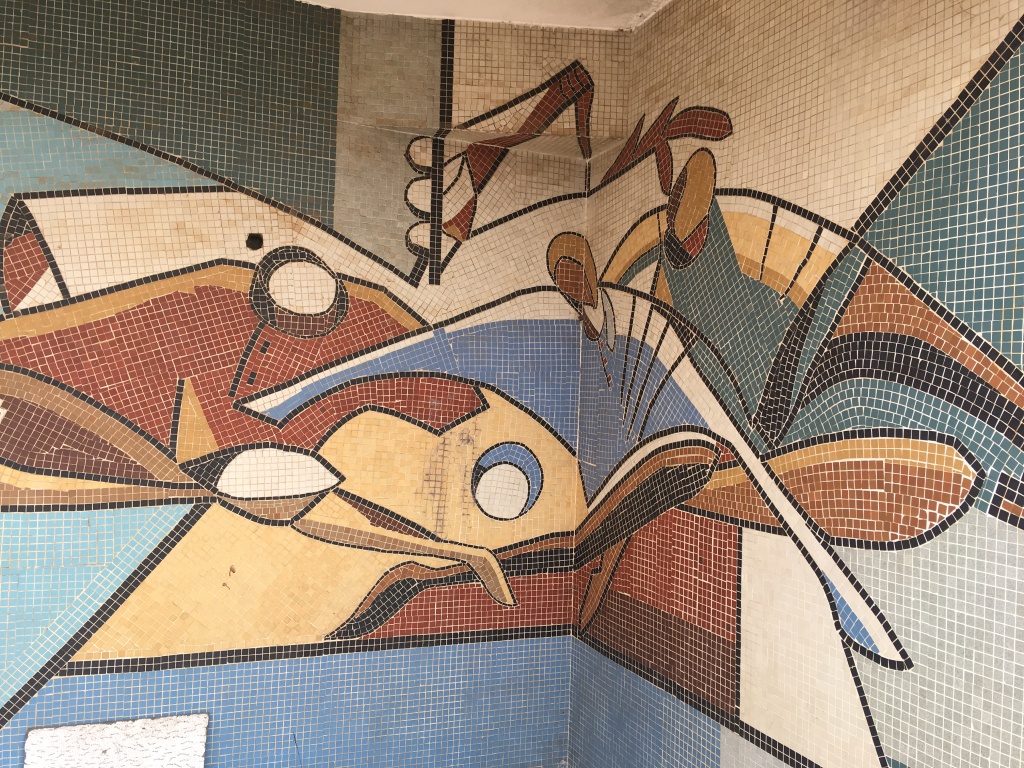
As well as the Cocoadome having mosaic decoration, Cocoa House roof garden also has some really special mosaic work clearly executed by a talented artist, but now hidden away from public view. If you visit the building be sure to venture to the top floor to spend an hour in the museum, and as to see the mosaic work and views out across the city.

We’ve learned a lot about Nickson and Borys over the last 18 months – firstly finding out exactly who Borys is (Zdzisław Borysowicz), and that he studied at the Liverpool School of Architecture Polish School during WW2. We’d like to write a full biography on him and the practice. We’ve visited a number of his works in Sierra Leone, and now the Cocoa Project in Ibadan, and the intriguing references to Lagos too. Whilst the bulk of his practice was in the tropics he also worked in the Falkland Islands – so was clearly part of the colonial architectural infrastructure.

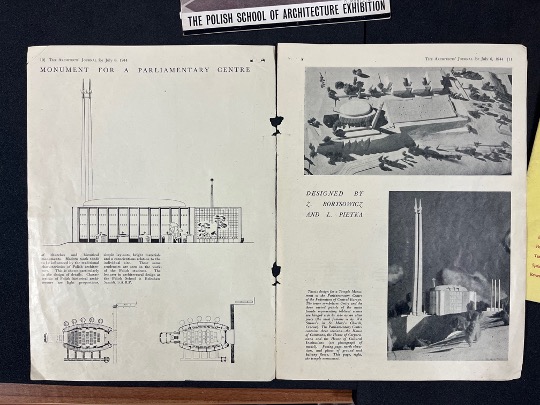
Here’s one of his student projects published in the The Architects’ Journal from 1944

Gifted buildings are potent mechanisms of geopolitical reshuffling, premised on an uneven power relation between giver and receiver. How do such exchanges shape cities in transition?

Frances Richard: You have been working for several years on ideas of the architectural gift, and have realized this research in a number of projects. To cite a few: an exhibition you’ve co-organized with Damjan Kokalevski called “The Gift: Stories of Generosity and Violence in Architecture” recently opened at the Architectural Museum in Munich. In 2022, you were convener for a conference at the British Academy titled “The Gift of Architecture: Spaces of Global Socialism and Their Afterlives.” And your 2020 monograph Architecture in Global Socialism: Eastern Europe, West Africa, and the Middle East in the Cold War explores issues of international largesse and exchange — what you call “socialist worldmaking.”

Housing project for Libya, designed by Romproiect (Romania), 1980s. The design and construction of buildings such as this were typically subject to barter agreements. [Arhivele Naţionale ale României, f. Romproiect, 7288]

A focus on architectural gift-giving affords new ways of thinking about the worldwide processes triggered by capitalist industrialization and colonial exploitation.

Would you talk about the parameters and findings of this research? What is the architectural gift, as exemplified in what kinds of sites? Why has the inquiry followed the trajectories it has?

Łukasz Stanek: Architectural gift-giving is embedded in a long tradition of imperial and religious donations of buildings. But my collaborators and I have been interested in its relationship to modern urbanism; in how a focus on architectural gift-giving affords new ways of thinking about the worldwide processes triggered by capitalist industrialization and colonial exploitation since the 18th century. In my book, the temporal frame is more restricted: I studied Cold War collaborations — often unequal — between architects, planners, and construction companies from socialist countries in Eastern Europe, and their counterparts in West Africa and the Middle East. The movement of labor, blueprints, and construction materials and technologies across these geographies shaped cities such as Accra, Lagos, Baghdad, Abu Dhabi, Kuwait City, and many others, from the 1950s to the 1980s. Gifted buildings were among the most visible interventions by means of which the Soviet Union, China, and other socialist countries both supported the newly independent countries, and hoped to achieve political leverage and economic gains. To cite a few examples: the National Assembly Building in Conakry, a Chinese gift to Guinea; the Kikwajuni housing district in Zanzibar, an East German gift; or the House of Culture and Youth Theatre Complex in Darkhan, a Soviet gift to Mongolia.

The conversation continues at https://placesjournal.org/article/the-architectural-gift/

Building on our Ghana theme I’d like to share an excellent paper recently published by a good friend of the TAG blog, Dr. Lukasz Stanek from Manchester University.

 “When seen from Labadi Road, the buildings of  Accra’s International Trade Fair (ITF) appear among abandoned billboards, scarce trees that offer shade to resting taxi drivers, and tables where coconuts, bottled water, sweets, and telephone cards are sold next to the road.

 The buildings neighbor the La settlement, where streets meander between houses, shops, bars, schools, and shrines,  while on the other sidof Labadi Road, at the seashore, luxurious housing estate is under construction next to upscale hotels that overlook Labadi Beach. Kwame Nkrumah, Ghana’s leader after the country achieved independence (1957), initiated the fair as a prestige project, but it was opened on 1 February 1967 by Joseph Arthur Ankrah the chairman of the National Liberation Council, who led the putsch that toppled Nkrumah in 1966. Once conveying a sense of radical moder-nity, the buildings have suffered from underinvestment and insufficient maintenance, but most of them are still in use, rented for exhibitions that take place every few months, for political rallies, and for religious services.
From 1962 to 1967, the Ghana National Construction Corporation (GNCC), the state office charged with design, construction, and maintenance of governmental buildings and infrastructure in Nkrumah’s Ghana, designed and con-structed the ITF. The designers of the fair were two young architects from socialist Poland, Jacek Chyrosz and Stanisław Rymaszewski, who worked with the Ghanaian Victor (Vic)  Adegbite, the chief architect. Chyrosz and Rymaszewski  were employed by the GNCC on a contract with Polservice, the so-called central agency of foreign trade, which mediated the export of labor from socialist Poland.
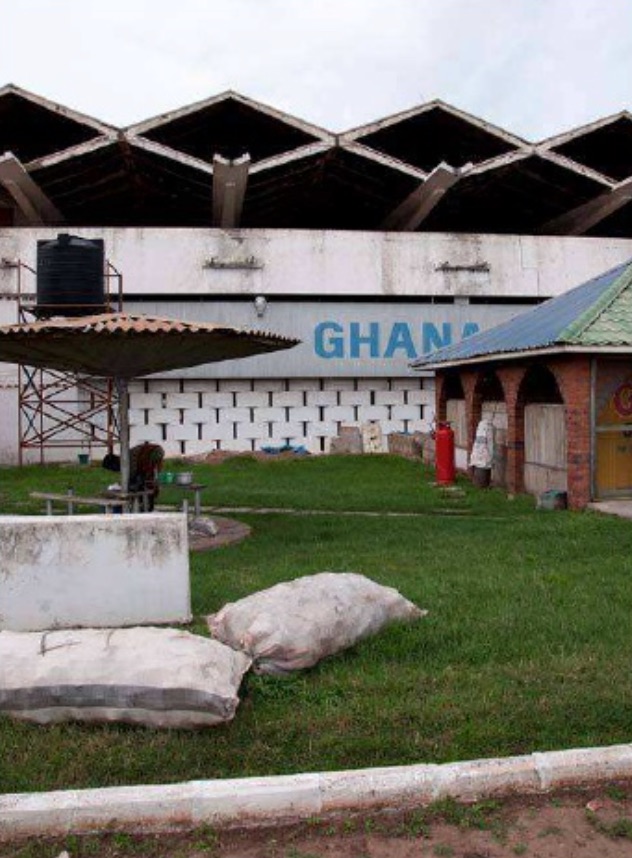
Ghana copy

“Made in Ghana Pavilion” 1967, International Trade Fair, designed by Jacek Chyrosz, Stanislaw Rymaszewski and Vic Adegbite


 At the GNCC, they worked together with Ghanaian architects and foreign professionals, many from socialist countries. This collaboration reflected the alliance of Nkrumah’s government with socialist countries, which was demonstrated at the fair by the exhibitions of Czechoslovakia, the German Democratic Republic (GDR), Hungary, and Poland (Figure 3). At the same time, the Ankrah administration used the fair to facilitate Ghana’s reopening toward the West. Hence, the Soviet Union and the People’s Republic of China (PRC), two major allies of Nkrumah, were absent.

 By contrast, the two pavilions not to be overlooked were those of Great Britain, Ghana’s former colonial ruler and its main trade partner, and the United States, which granted Ghana loans for its many infrastructural projects in the 1960s, in particular the Akosombo Dam, financed jointly with the United Kingdom and the World Bank. India was represented as a member of the Commonwealth rather than as a member of the Non-Aligned Movement, since Nkrumah’s attempt to position Ghana among Egypt, India, and Yugoslavia as one of the leading nations of the movement was abandoned after the change of the regime. Collaboration among African countries was particularly favored, not as a way of carrying on Nkrumah’s vision of pan-African union but with a more modest aim, that of the stimulation of trade among African countries. Displays representing African countries were gathered in the round Africa Pavilion at the end of the ramp through which visitors entered the fair, before they moved on to Pavilion A (the “Made in Ghana” pavilion) and the pavilions rented to other countries and Ghanaian state firms.”
“Zbigniew Dmochowski and the politics of architectural drawing in post-independence Nigeria” by Dr Łukasz Stanek

Dr Dr Łukasz Stanek from Manchester Architecture Research Centre will be presenting an illustrated lecture at the Goethe-Institut in Lagos on Saturday July 25 at 3PM. Dmochowski conducted some extraordinary studies into the architecture of Nigeria, expressing his findings through drawings and scale models.

TAG looks forward to hearing more about this research – updates to follow.

Łukasz-Stanek-PolandUK

Global Architectural History Teaching Collaborative at MIT

How do we teach the global history of architecture? What should we include in our classes and where can we gather the information, knowledge and sources that enable meaningful narratives to emerge? Is the global survey course even possible, or should we be utilising distinct and precise case studies to discuss the global condition instead?

These are just some of the questions that Global Architectural History Teaching Collaborative is attempting to answer as well as to create a community of scholars who will share and exchange knowledge to change the way we think about the history of architecture.. The GAHTC has been established by Mark Jarzombek and Vikramāditya Prakāsh with funding provided from Andrew W. Mellon Foundation, see http://gahtc.org for more information.

Grants are available for teaching teams to develop new teaching material and modes of teaching that deal with global history, from the beginning of time to the modern. This is a major challenge, but very exciting. In the current round of grants 9 teams have been accepted with the following ambitions:

Rachel_lee_MIT

Panorama of the participants (photo by Rachel Lee)
  • Architecture and Climate in a Global Perspective – Team Daniel Barber
  • Sites and Networks of Global Modernity – Team Bob Cowherd
  • Globalizing a Humanities Approach to Architectural History – Team Ann C Huppert
  • Scales of Modernity – Team Jonathan Massey
  • The Architecture of Global Modernity, 1000-2000 CE – Team Kenny Cupers
  • The Global Turn: Architecture and the Built Environment Since World War Two – Team Michelangelo Sabatino
  • Technologies of Movement and Communication – Team Shundana Yusaf
  • East Asian Architecture from A Global Perspective: Cultural Transactions and the Development of Traditions – Team Shuishan Yu
  • The Modern Metropolis – Team Eric Mumford

At the first workshop, held in MIT (9th and 10th October 2014), each group gave a presentation that outlined their position and ambition. Most also proposed a distinct module of lectures/seminars and a discussion/critique followed. Day two was composed of a number of workshops that discussed ‘Deliverables and Digitisation’, ‘Pedagogy’, ‘The problem of teaching architecture made before 1800’, and ‘future ambitions’. A digital resource has been developed that will contain some of the data: http://www.timescape.io/login

GAHTC_prakash

Vikram Prakash addressing conference.

Team Daniel Barber became known as the ‘Climate group’  – which is a perfectly accurate and succinct way of describing us, with the caveat that climate is not the only factor to determine the architecture we’re interested in.

We are proposing six themes/lectures, each to be lead by one team member:

“Architecture without Architects” and the Timeless Climatic Type [Albert Narath]

Colonial Architecture and Climate in Africa and Asia [Ola Uduku]

Sanitation, climate and statecraft in colonial societies [Iain Jackson]

Modernism, Climate, and Post-colonial development [Rachel Lee]

Universal Science and International Architecture after World War II [Daniel Barber]

Air Conditioning Takes Command [Jiat-Hwee Chang]

Rachel_lee_MIT2

Panorama of the Participants (photo by Rachel Lee)

TAG will continue to track the developments of GAHTC and to report on future developments…

Polish School of Architecture Symposium, Liverpool School of Architecture 28th November 2013

The programme for the Polish School of Architecture Symposium is as follows:

13h00 School of Arts Library.

Part 1: Modernism, Education and Migration.

Maria Jolanta Sołtysik – “Modernism in Poland: the New City of Gdynia and its Architecture in the 20s and 30s.”

Iain Jackson & Peter Richmond – “The Polish School of Architecture at Liverpool”

Przemek Kaniewski – “The Graduates of the Polish School of Architecture”

Łukasz Stanek – “Dmochowski”

Karolina Tulkowska – “Matthew Nowicki”

15h30

Coffee Break

16h00

Part 2: The influence of the Liverpool Polish School of Architecture on British architects and scholars.

Robert Maxwell – Influence of the Polish School

Alan Berman and  Marco Iuliano – James Stirling; from Liverpool to America

Dan Naegele – The Letters of Colin Rowe

David Warr

If you would like to join us, please register for the event at:  www.polisharchitects.eventbrite.co.uk

This event has been generously supported by the Polish Cultural Institute

Instytut Polski - ksiega znaku