Rachel Lee, ‘Engaging the Archival Habitat: Architectural Knowledge and Otto Koenigsberger’s Effects‘ Comparative Studies of South Asia, Africa and the Middle East (2020) 40 (3): 526–540; https://doi.org/10.1215/1089201X-8747502
Drawing on experiences of researching India’s architectural history, this article explores the affect generated by architectural archives as a source of knowledge. It traces the affective life of the archives and practices of a singular historical figure: Otto Koenigsberger, the chief architect and town planner of the princely state Mysore, the architect of Jamshedpur (a.k.a. Tatanagar, the “Steel City,” India’s first planned industrial town), the first director of housing of the federal government of India, cofounder and director of the Department of Tropical Studies of the Architectural Association in London, and architecture and planning consultant at-large to the United Nations.
Arguing that the affective archive has disruptive historiographical potential, the article posits that it exists fundamentally beyond the architectural object and archival documents themselves, and indeed fully in discourse with its users. The article argues for a more expansive and inclusive understanding of what constitutes an archive, designating the “archival habitat” as a place of active scholarly engagement.
The aim of this project is to investigate if, and to what extent do ‘tropical modernist’ structures modify or mitigate climatic conditions to create more ‘comfortable’ interiors.
Most of these structures were designed to be passively cooled and as such have a permeable façade composed of concrete screens or louvres to facilitate cross ventilation air-flow, and to create shade. A good example is the Children’s Library in Accra, designed by Nickson and Borys in 1957.
Mainly built during the 1930s-70s, these buildings are now at an age when they require refurbishment and rehabilitation – although this is mainly superficial and does not involve structural correction. There are various options pursued, many involving the installation of air-conditioning units. For the AC to be effective it ideally requires a sealed interior volume, rendering the existing permeable façade unsuitable.
Standard Chartered Bank: as built and passively cooled
Standard Chartered Bank: refurbished, clad in glazed panels and reliant on AC
One solution being increasingly used in Ghana is to externally clad the façades with a glazed screen, as seen on the Standard Chartered Bank on Accra’s High Street.
The glazing cuts out street and traffic noise and reduces dust infiltration, as well as enabling the interior to be mechanically cooled. But in terms of energy usage (consumption of AC and in the fabrication of the glazed units) it is far from ideal. Furthermore, there is the financial cost of cooling what is now effectively a greenhouse in a hot and humid climate. Architecturally the building has also been dramatically altered. It is now a bland non-descript block, and lacks the patterns, shading effects, and references to the floors behind the façade. I’m not suggesting that this example is a prestigious heritage monument, but rather using it to illustrate what is becoming an increasingly common approach to refurbishment. Fortunately, in this case glazing can be easily removed and the older structure has been preserved inside.
Our project has several objectives, including to:
Recognise and promote the significance of these 20thC modernist structures.
Determine if the passive cooling approach does create sufficiently comfortable interiors.
Investigate what conditions are comfortable for the occupants of these buildings.
Investigate alternatives to AC that provide low cost and low energy comfortable interiors without detrimentally impacting upon the architectural quality.
To test both inland and coastal conditions we’ve selected a case study at KNUST in Kumasi, and another at the University of Ghana, Accra. Both buildings are university libraries, and as such have a large number of daily visitors that we can consult. The library at KNUST was designed as a louvred screen wall, fully adjustable from the interior, and also has a later brutalist extension with a twin façade arrangement and partially air-conditioned interior.
KNUST Library: a facade of adjustable louvres
At Accra, the Balme Library takes a more colonial/traditional approach with a series of courtyards, loggias and high ceilings. Some of the rooms have been retro-fitted with air-conditioning, whilst at the same time naturally ventilated. Both libraries are large institutional buildings and have the potential to consume large amounts of energy should they be refurbished with full AC and cooled to ASHRAE recommendations. Furthermore, it is important for the health and education of the staff and students that these buildings are comfortable places to spend time in, and to study.
Balme Library at University of Ghana
In each building we’ve installed a number of Hobo data-loggers that record the temperature and humidity at regular intervals. Whilst this data allows us to determine whether the internal temperature/humidity is different to the external condition, it does not tell us if the conditions are comfortable to the inhabitants. To establish this, we’ve consulted the library users and staff to enquire how comfortable they feel in the various library spaces. The respondents also recorded their attire, age, sex, and how long they have been in the library prior to completing the survey. Over 250 people completed the survey at KNUST in January 2020. We will repeat this in the ‘rainy season’, and conduct similar surveys at Accra. When we’ve gathered this data we can correlate the data-logger findings with those of the user surveys. We’re also constructing 3d computer models of the buildings to test various refurbishment scenarios and cooling options.
Mojca Smode Cvitanovic, ‘New Paper: Tracing the Non-Aligned Architecture: Environments of Technical Cooperation and the Work of Croatian Architects in Kumasi, Ghana (1961-1970)’ Histories of Postwar Architecture, 3(6), 34-67. Full paper available here: DOI: https://doi.org/10.6092/issn.2611-0075/10450
Unity Hall, KNUST, designed by Miro Marasović and John Owusu Addo, 1968.
Focusing on the work of a group of Croatian i.e. Yugoslav architects in Ghana, the paper explains the nature of technical cooperation as a model of temporary international contract work in relation to the specificities of the environment built consequently. It focuses on the engagement of Miro Marasović as the head of the Kwame Nkrumah University of Science and Technology Development Office from 1961 to 1964. As its contextual framework, the paper addresses bilateral technical cooperation as a form of international communication and exchange, the practices of the Non-Aligned Movement, and the interrelations of the pre- and post-independence generation of modern architecture in Africa.
This thematic section of ABE Journal, edited by Jiat-Hwee Chang and Daniel J. Ryan, explores the wide-ranging socio-environmental implications of comfort for architectural history. The contributions over this and the next issue complicate and expand upon our understanding of comfort. Each essay unpacks how comfort was situated and assembled in the built environment of different temporalities and geographies, beyond the taken-for-granted immediacy of the present and the discursive familiarity of temperate European and North American contexts.
“The five zones showing in a graphic manner the climates, peoples, industries and productions of the earth” published by Western Publishing House, Chicago, in 1887
Drawing from the cognate fields of scholarship in, among others, Science and Technology Studies, Postcolonial Studies, and Sociology of Practice, the contributions show how, during the past two centuries, comfort and the built environment were historically entangled with (settler) colonialism and decolonization, and the various (dis)enchantments of modernities and modernization in Asia, Australia, Latin America, and West Africa. By understanding comfort in relation to these cross-cultural and cross-climatic encounters, these contributions have far-reaching implications for comprehending our shifting and situated relationships with not just built environmental transformations but also planetary climate change.
Call for Papers: British Architecture in the World
As part of its long-running series Twentieth Century Architecture, the Twentieth Century Society is planning a journal for publication on the relationship between British architecture and other countries of the world, particularly those beyond Europe.
Pansodan Street, Yangon, including Chartered Bank, Palmer & Turner, 1939–41.
The nature of the relationship may take a number of forms, such as British-based practices working overseas, British architects establishing offices in other countries, architects coming to Britain for training before returning home, or more general issues of how the profession in Britain set standards for education and validation elsewhere, in particular through the RIBA. We tend to favour actual buildings as subject matter in Twentieth Century Architecture, but on this occasion the field may be wider, including town planning, cultural responses, climatic adaptation, administrative histories, professional formations, and relationships to the later period of colonialism and its ending. Accounts of the scope of archival resources could be of interest, and we might also include reports on the current state of buildings, including threats and conservation projects.
Jane Drew, housing in Sector-22, Chandigarh, c. 1954.
The scope outlined above is larger than usual for what is a relatively small collection of published pieces – the journal usually contains about ten articles – but it seems preferable not to place limitations until we are aware of what might be available. Recently, research and publication in this area have grown rapidly, and our aim is to bring together articles that complement each other, but with a spread of periods (anything from 1914 to around 2000), styles and locations. The journal will be the sixteenth in the series, and will probably be published in 2023.
In the first instance, please send your ideas by 01 July 2020 in the form of an abstract of up to 300 words, along with a brief CV and list of publications to date, to elain.harwood@HistoricEngland.org.uk, who will also answer any queries. Abstracts will be reviewed by the editorial committee of the journal, drawn from members of the Twentieth Century Society Publications Committee, and selected for full submission. Completed texts will be peer-reviewed.
Following commissioning, delivery would be 1 March 2022, the length of articles should be between 2,000 and 5,000 words, with up to ten images per article. Contributors are expected to provide and pay for images of publishable quality.
‘The architectural production of India’s everyday modernism: middle-class housing in Pune, 1960-1980’ in Architecture Beyond Europe Journal, no.16, 2019.
Sarah Melsens, Inge Bertels et Amit Srivastava
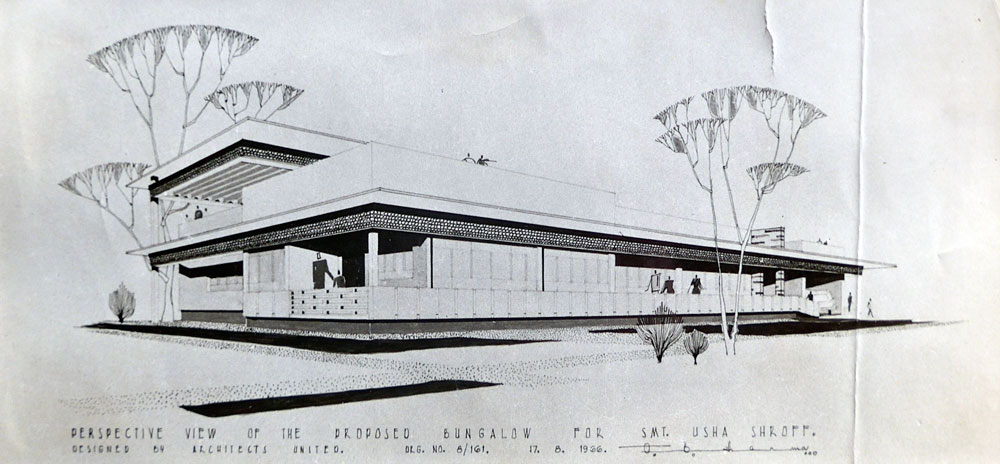
Architects United, Freestanding Bungalow for Mrs. Shroff, Pune, 1966
The large-scale appropriation of modernist architectural features in everyday housing projects in postcolonial India is remarkable. This article examines how regional architects adapted their engagement with architectural modernism to the evolving circumstances of architectural production within the context of the developing world. Drawing on Pierre Bourdieu’s “field theory”, it presents a detailed case study of two decades of residential work by Architects United, a medium-scale architectural practice founded in the Indian city of Pune in 1961. While the architects’ earliest projects demonstrated an opportunity and desire for architectural innovation, this approach became increasingly restricted as new patterns for housing provision emerged, resulting in a more subdued and hybrid form of modernist architecture. The paper makes use of the architects’ previously undisclosed archive and oral history to demonstrate that these architectural adaptations were the indirect result of governance practices and societal change, particularly the government’s stimulation of co-operative housing initiatives and the emergence of a postcolonial middle class with distinct housing expectations. As such, this “peripheral” case exposes some of the processes that have been overlooked in the rhetoric of Architectural Modernism as a Western import in India, which is primarily centered around the discussion of exceptional public building commissions by “global experts” or their Indian disciples. The paper further highlights the need to investigate the processes of architectural production, in addition to the built product itself, so that a pluralistic rather than romanticized understanding of architectural practice may emerge.
Infrastructure between Statehood and Selfhood: The Trans-African Highway
Kenny Cupers, Prita Meier
Journal of the Society of Architectural Historians, Vol. 79 No. 1, March 2020; (pp. 61-81) DOI: 10.1525/jsah.2020.79.1.61
Focusing on the 1960s–70s project to build a trans-African highway network, Infrastructure between Statehood and Selfhood: The Trans-African Highway argues for the need to develop a more dialectical understanding of the relationship between people and infrastructure than current architectural and urban scholarship affords. As Kenny Cupers and Prita Meier describe, African leaders imagined infrastructure as a vehicle of Pan-African freedom, unity, and development, but the construction of the Trans-African Highway relied on expertise and funding from former colonial overlords. Based on archival research, visual analysis, and ethnographic fieldwork in Kenya, this article examines the highway’s imaginaries of decolonization to show how infrastructure was both the business of statehood and a means of selfhood.
Map of the Trans-African Highway project, late 1970s (Rolf Hofmeier, “Die Transafrikastraßen: Stand der Planung und Realisierung,” Africa Spectrum 14, no. 1 [1979], 35).
From the automobile and the tarmac road to the aesthetics and practices of mobility these fostered, infrastructure was a vehicle for the production of subjectivity in postindependence Kenya. This new selfhood, future oriented and on the move, was both victim and agent of commodification.
New Research:Suzanne Francis-Brown & Peter Francis “Norman & Dawbarn, the UCWI, and Tropical Modernist Architecture in Jamaica” in Caribbean Quarterly, 65:1, 27-56, DOI: 10.1080/00086495.2019.1565219
The University College of the West Indies (UCWI) At Mona, Jamaica, established immediately following World War II, was one of the early greenfield university developments among British colonies in the Southern Hemisphere, as the British sought to ameliorate patently negative social conditions.
UCWI Designed by Norman and Dawbarn. Image courtesy of Special Collections and Archives at University of Liverpool
It was also one of the early tropical iterations of the modernist aesthetic that affected European landscapes from the early to middle decades of the twentieth century, sparked by the Bauhaus school of design and the work of iconic architects of the modern movement. British architectural firm Norman & Dawbarn received the contract to design the nascent West Indian university and its associated teaching hospital only weeks after the arrival of the first principal on site in Jamaica in 1946, and the overall scheme proposed in 1947, parts of which were built in stages between 1949 and the mid-1960s, remains recognisable today despite differences at the time and subsequent shifts in architectural approach.
New Research Paper: I. Jackson, O. Uduku, I. Appeaning Addo, R. Assasie Opong, “The Volta River Project: planning, housing and resettlement in Ghana, 1950–1965”, Journal of Architecture, vol 24 (4), 512-548.
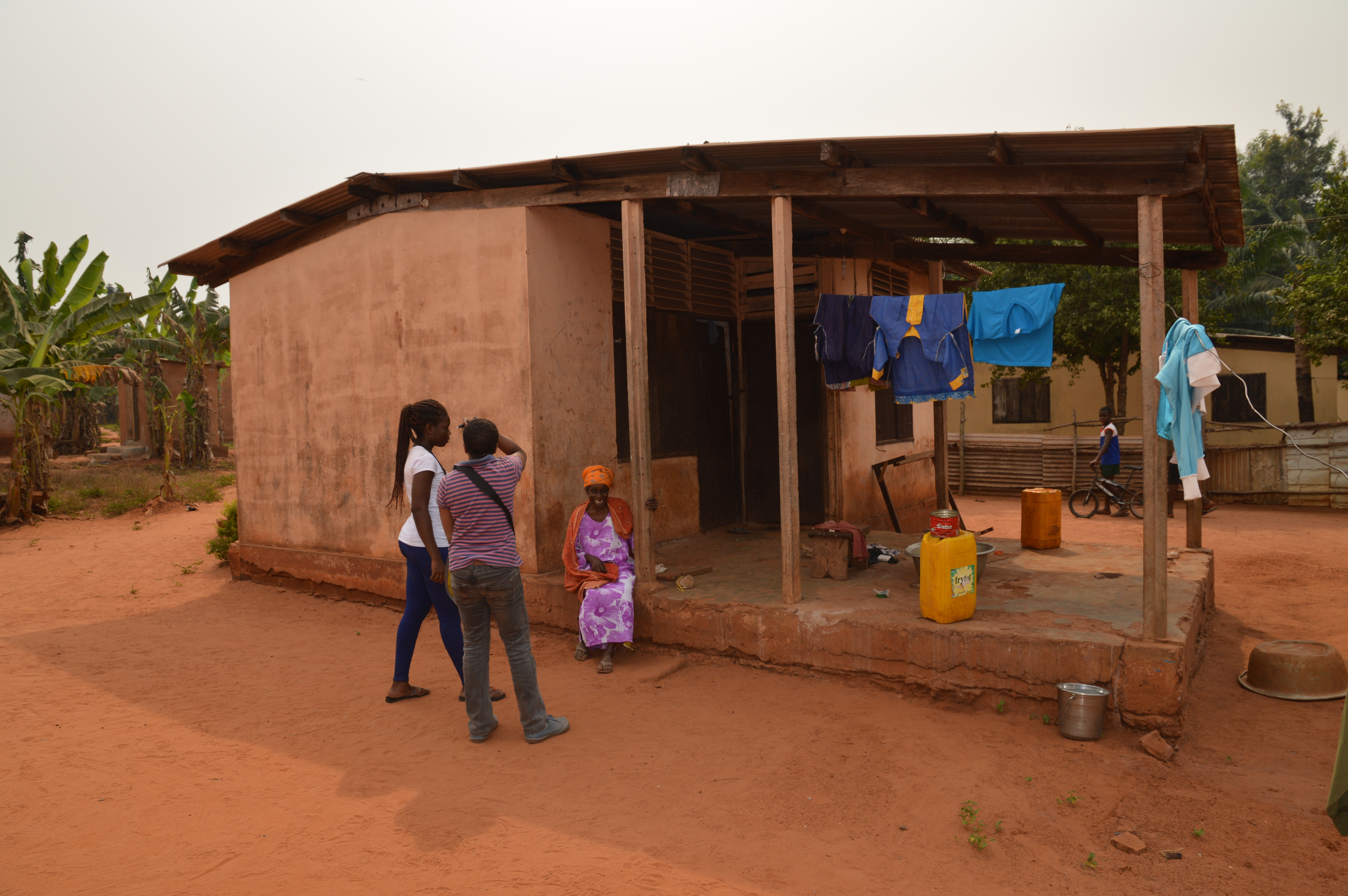
This paper investigates the housing schemes proposed in connection with the Volta River Project, Ghana, in the mid-1950s to early 1960s. The Volta River Project formed part of Kwame Nkrumah’s vision for Ghana’s modernisation and industrialisation in the wake of political independence. Three associated worker housing schemes demonstrated somewhat contradictory design and construction methods, from high specification, extensive amenities, and comprehensive servicing, through to self-build ‘core’ houses amounting to little more than single-room dwellings.
Core House at New Ajena, Ghana. Built c.1961, photographed in 2017
The paper traces the complex and controversial history of these schemes, supplemented with findings of several field trips to the settlements in question, to unravel the value of the ‘Core Houses’ approach. The most successful project to incorporate indigenous agency and true collaboration was the semi-formal ‘Combined Area’ housing at Akosombo, a positive model for shared agency and collaboration in planning, housing, and facilities delivery. Sitting alongside the carefully manicured plan of Akosombo, with its regulated market, excellent health care and desire to set high standards of cleanliness, the Combined Area has not only provided homes for the lower-paid and labouring workers of the town, but has developed over time into a settlement where professionals and retired government workers are also now residing, not out of necessity but by choice. By actively developing their own homes, shared spaces and amenities there has developed a strong sense of ownership, community, and identity. The success and level of attachment to this settlement clearly extends beyond its material presence and through the shared experience of helping to cultivate a place of one’s own.
Book Review by Robin Hartanto Honggare: “Southeast Asia’s modern architecture: questions of translation, epistemology and power” by Jiat-Hwee Chang and Imran bin Tajudeen, Planning Perspectives.




![Map of the Trans-African Highway project, late 1970s (Rolf Hofmeier, “Die Transafrikastraßen: Stand der Planung und Realisierung,” Africa Spectrum 14, no. 1 [1979], 35).](https://transnationalarchitecture.group/wp-content/uploads/2020/03/f2.large_.jpg)

 Transnational Architecture Group