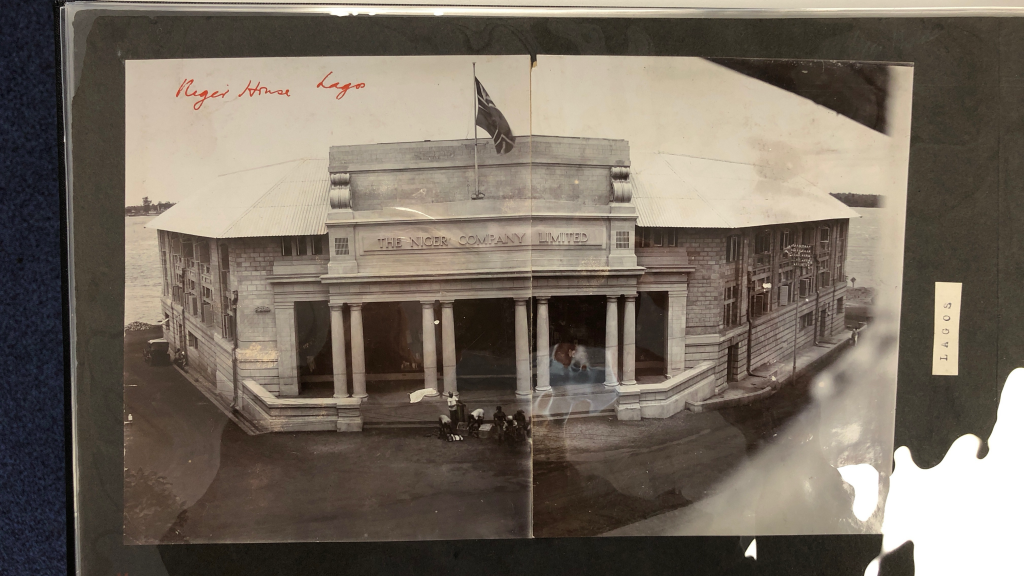
Niger House by James Lomax-Simpson. Designed for the Niger Company after they were bought out in 1920 by Lever Brothers. Lever wanted to consolidate their various offices and retail units in Lagos into a central location overlooking the Marina. The only good site available was owned by Trading Association of Nigeria. To obtain the site Lever purchased the entire company and Lomax-Simpson designed the new building there. It had a retail space on the ground floor with staff lounges and accommodation above. It wasn’t to Lever’s taste and he complained about it having a ‘town hall’ feel.
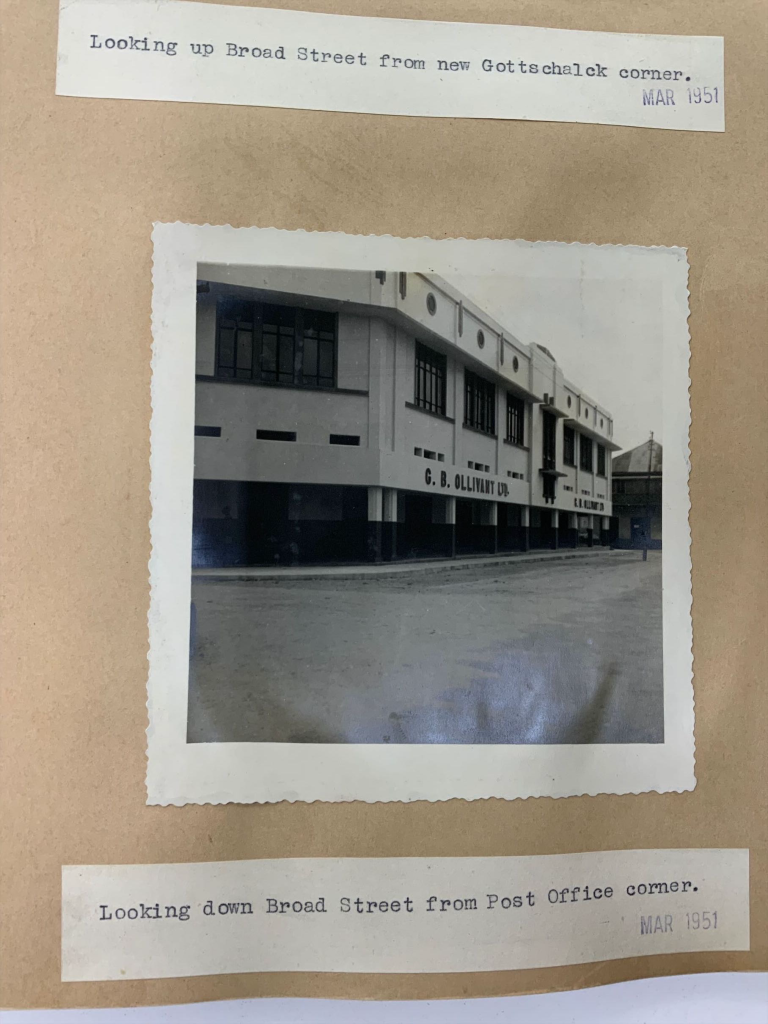
New windows have been punched through the portico and an additional storey added. In the same district of Lagos is Wilberforce House, built for Manchester cotton traders G B Ollivant. The United Africa Company was formed by the merger of Niger Company and African and Eastern, and they went on to purchase G B Ollivant in 1933.
Wilberforce House was constructed by Taylor Woodrow West Africa (and the UAC had a 50% stake in this business too).
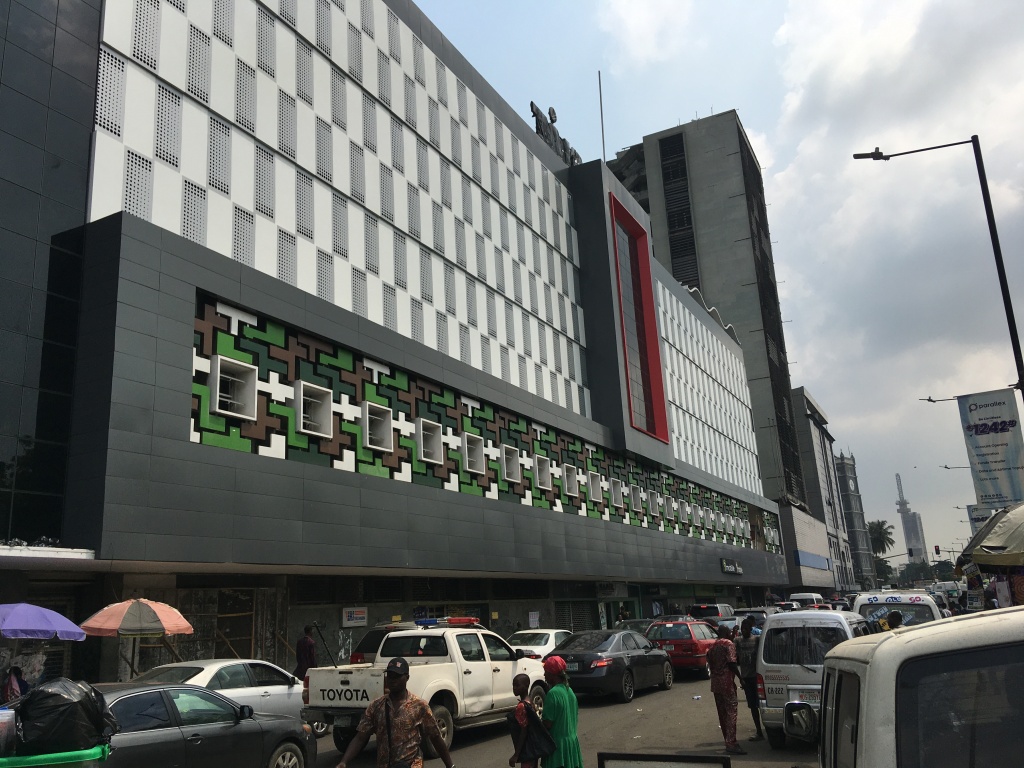
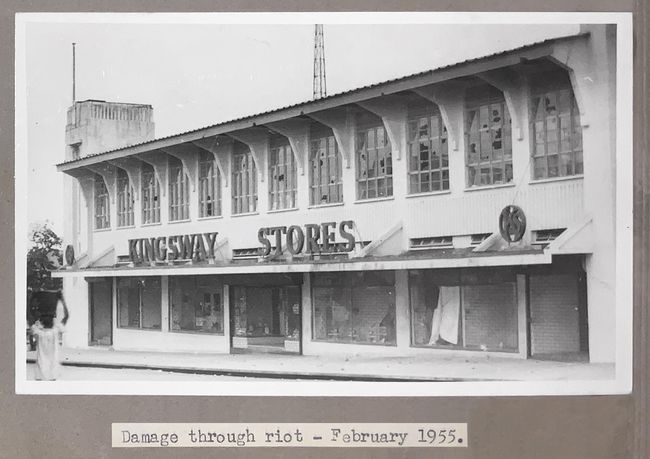
Perhaps the most well-known UAC owned business was Kingsway Stores. They had branches across West Africa. The Lagos branch filled an entire city block and was originally designed as a store and office for the African and Eastern Trading Corporation. The Deco style portico was added later.
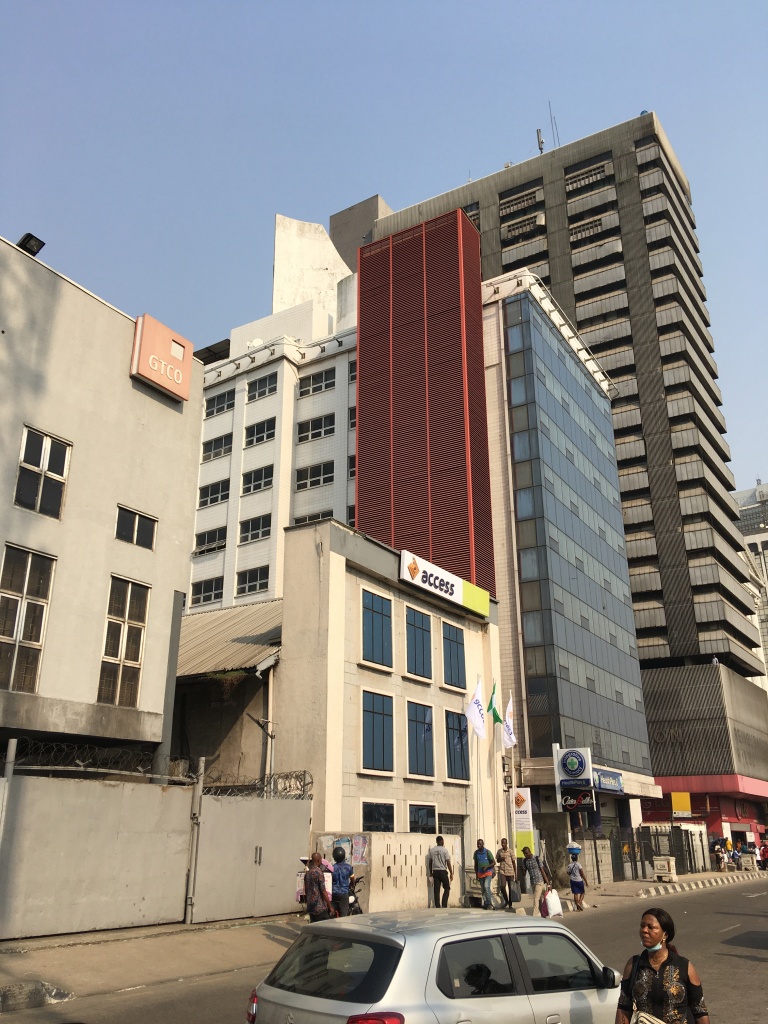
Elder Dempster by James Cubitt – heavily modified with the new glazed facade.
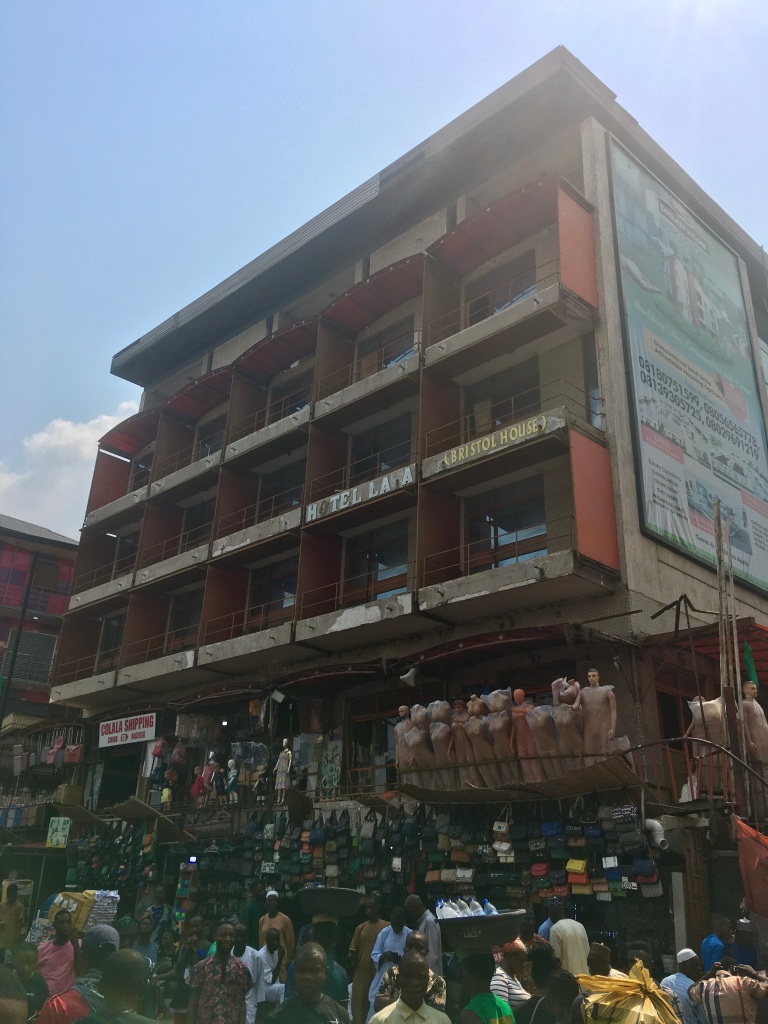
Bristol Hotel by Godwin and Hopwood
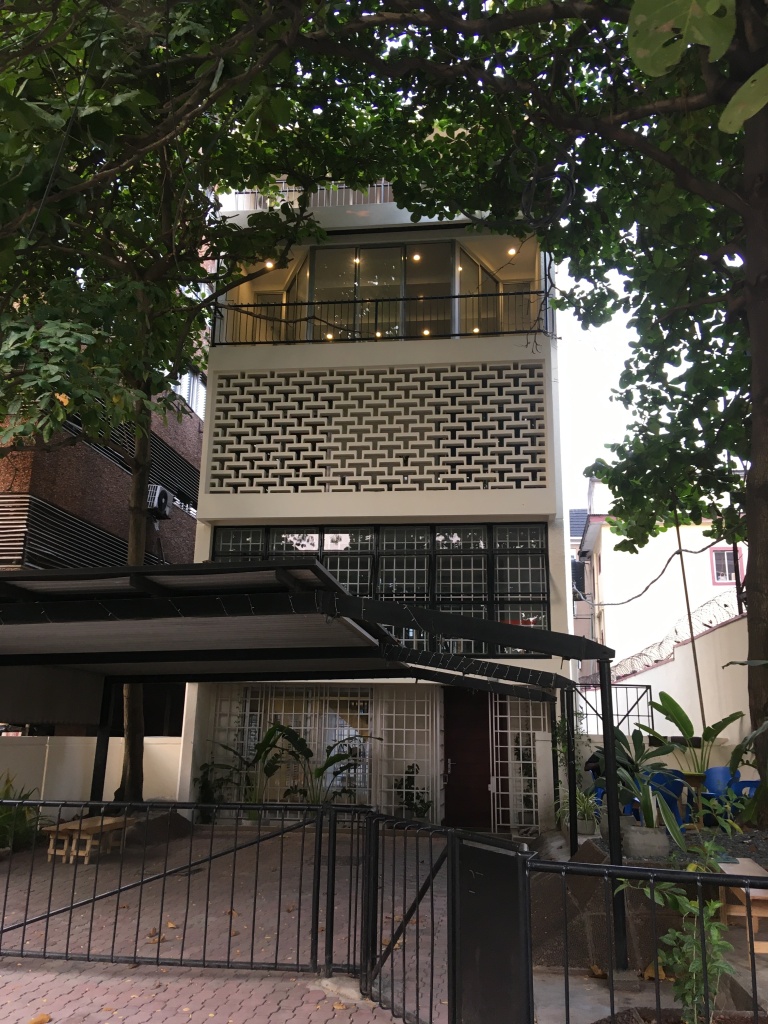
Godwin and Hopwood Residence, Godwin and Hopwood
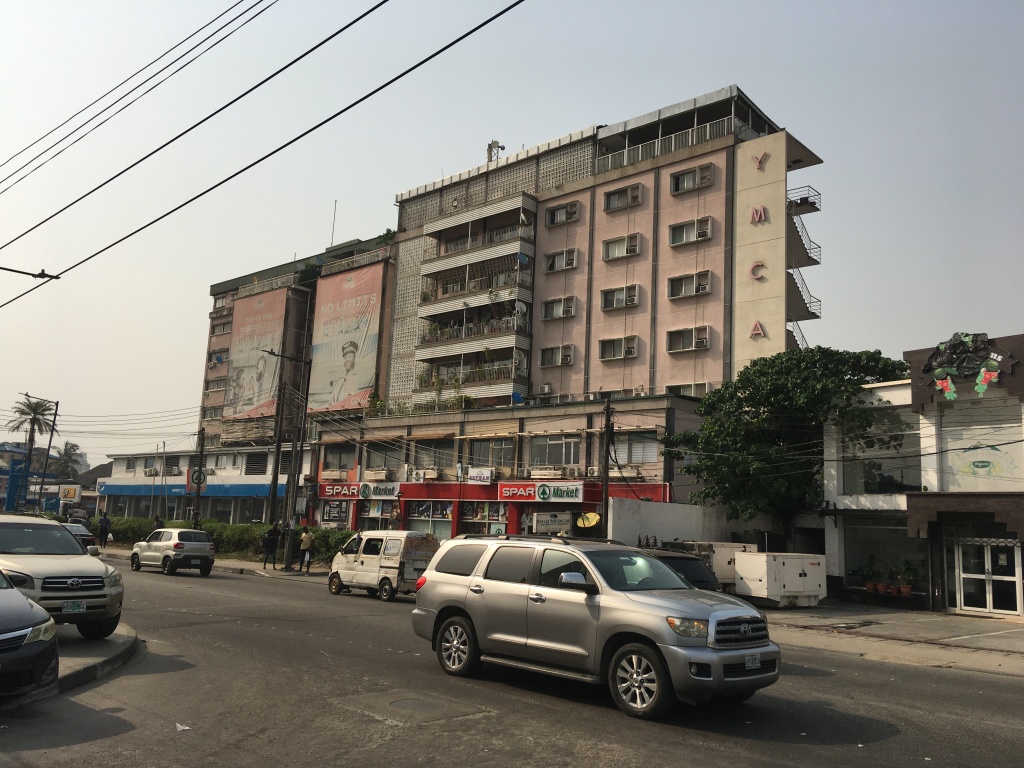
YMCA – slender single room deep plan, exposed staircase at the gable with concrete wrapping around. Commercial retail units at the base, pavilion and garden at the roof. Cracking scheme – but who is the architect?
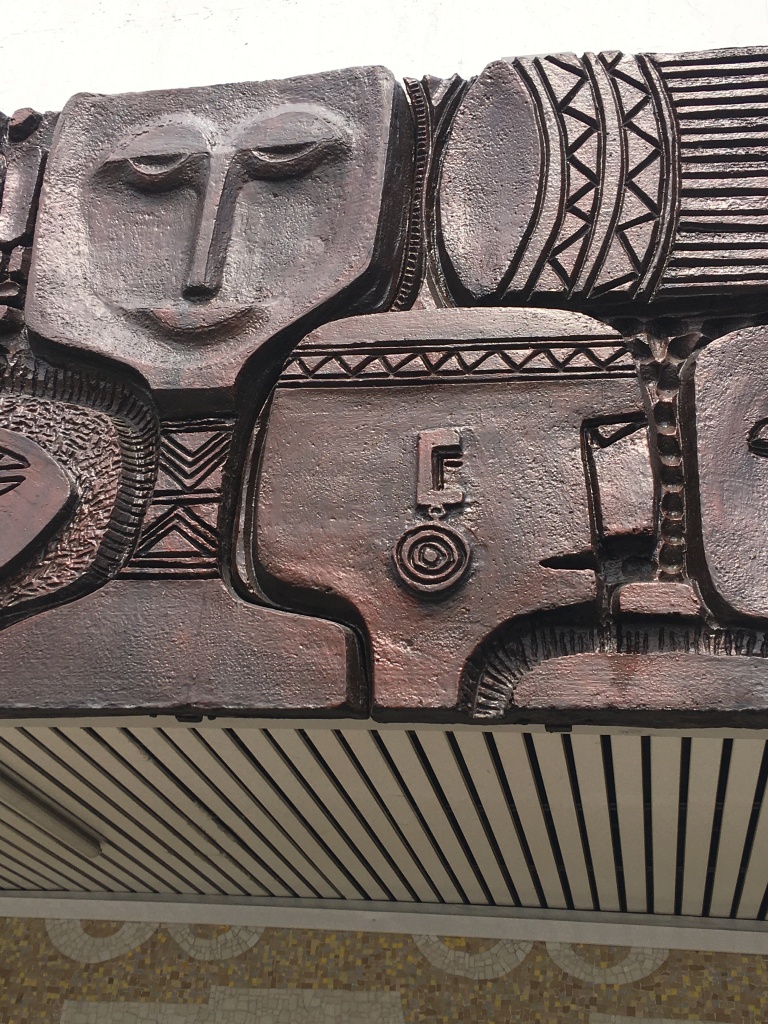
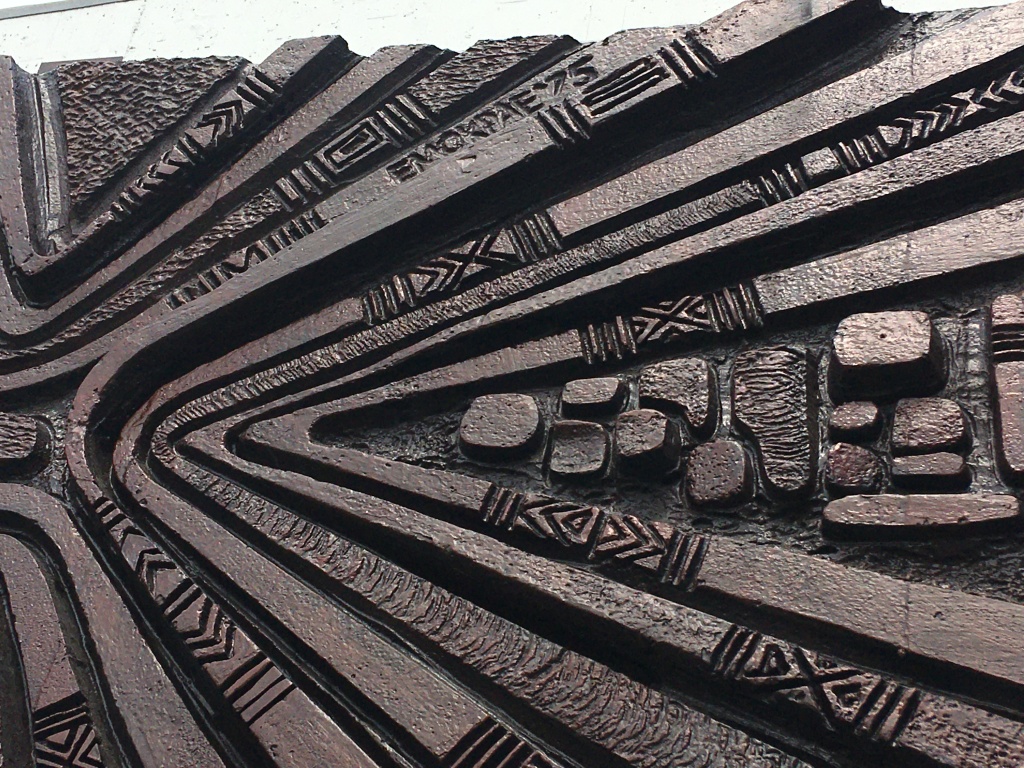
Erhabor Ogieva Emokpae (1934-1984) and the timber carving at Unilever
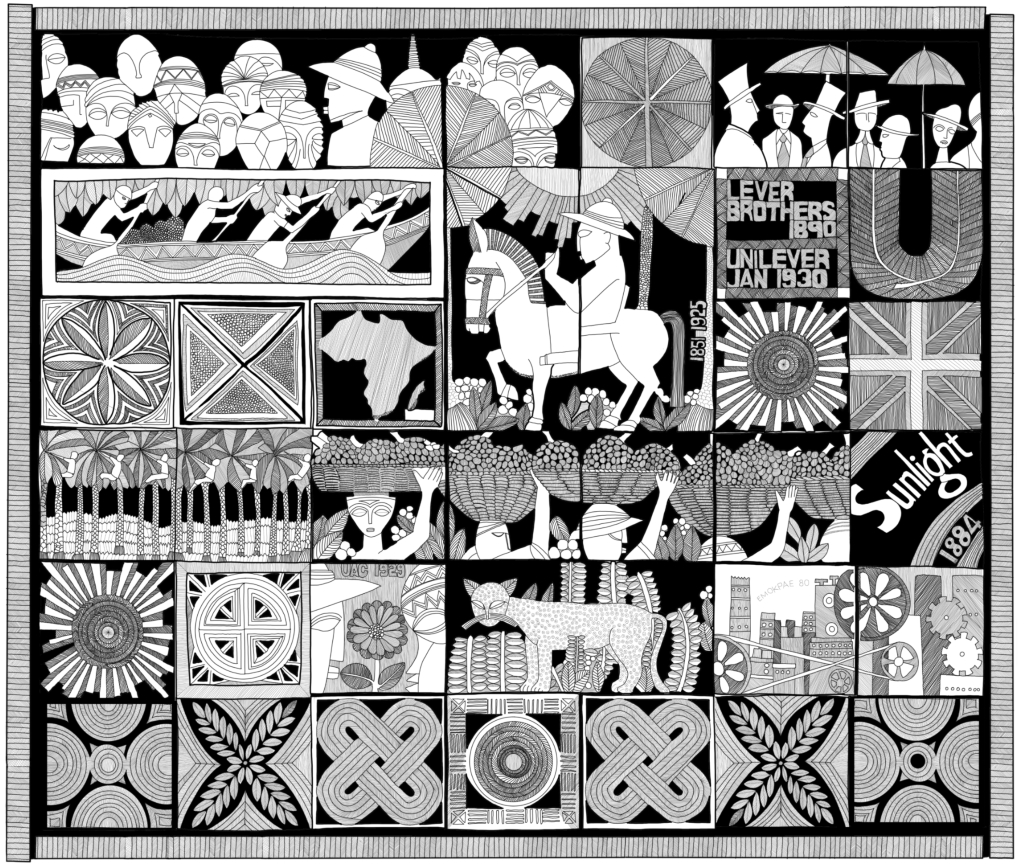
The largest item in the Unilever archive at Port Sunlight is a carved timber mural by the Nigerian artist Emokpae. Stretching to over 4m x4.5m and made up of 35 individual panels, it depicts the story of palm oil harvesting and the production of palm oil.
The panels also show William Lever visiting Africa and his famous Sunlight soap brand. It’s a vast piece of history and story telling revealing that behind ever bar of Sunlight soap was a vast system of extraction, production, logistics, and international trade stemming from Western Africa. The work was commissioned for the refurbishment of Unilever House in London in 1979. As well as being an influential and important artist Emokpae was a Creative Design Director for the design agency Lintas (also one of Unilever’s subsidiary companies).
I produced a measured drawing of the carving to help me to study it more carefully and because it’s almost impossible to photograph the original work in a single frame whilst capturing the detail. Together with Unilever’s Global Head of Art, Archives, and Records Management Claire Tunstall, we began discussing using the drawing to produce an animation that would help to explain part of the work and also make it more accessible. We shared our ideas with the agency Stone and Glow and commissioned them to develop an animation based on our text, keyframes, and artistic direction. We’re delighted to be able to share this with you here and hope you enjoy it:
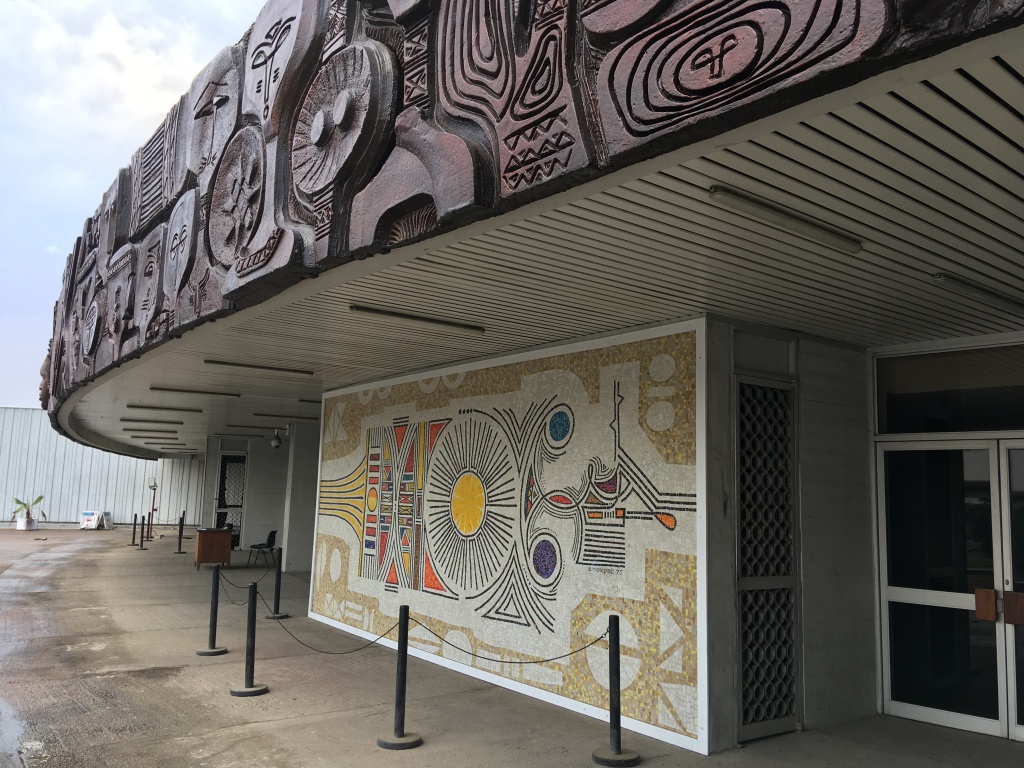
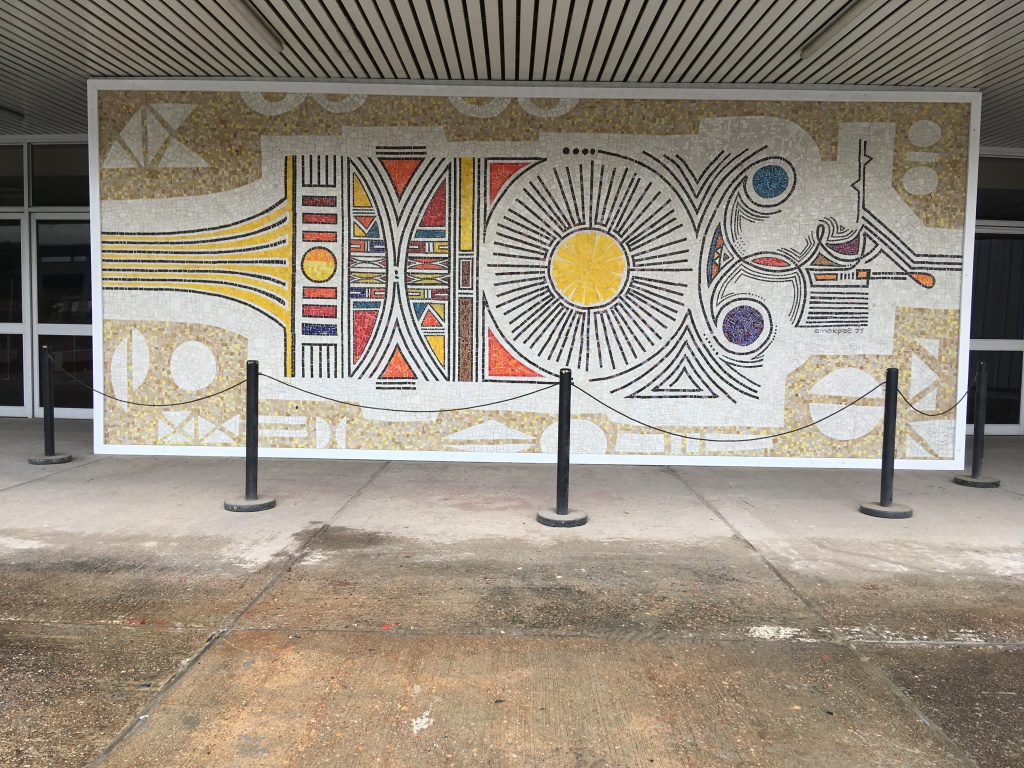
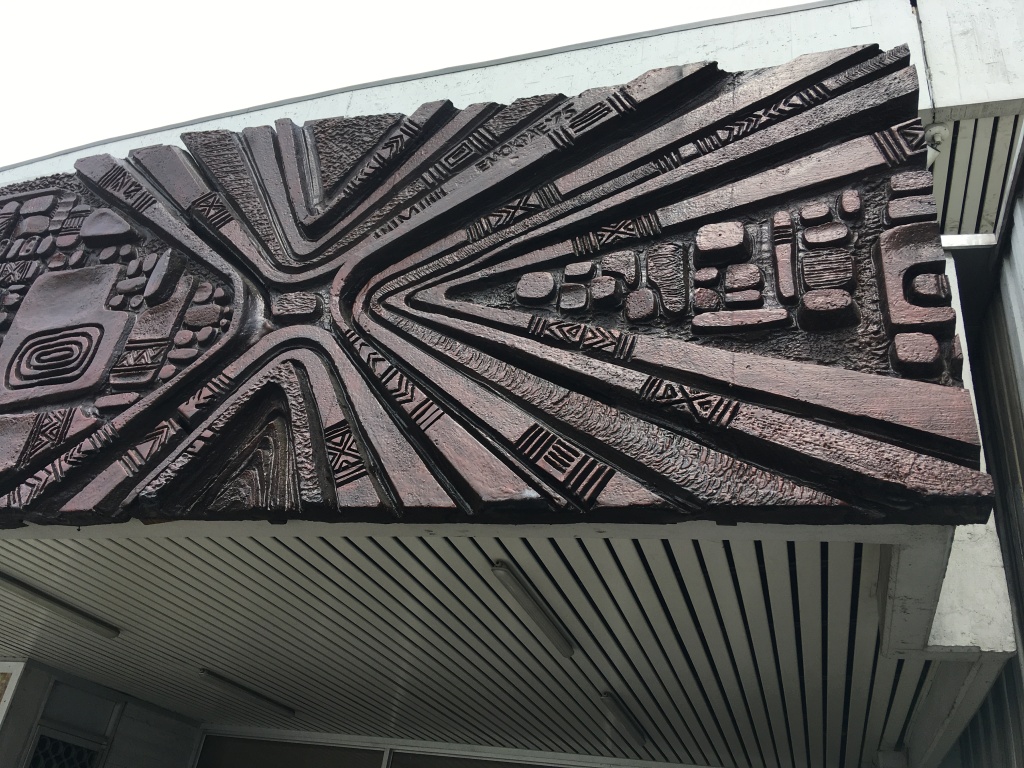
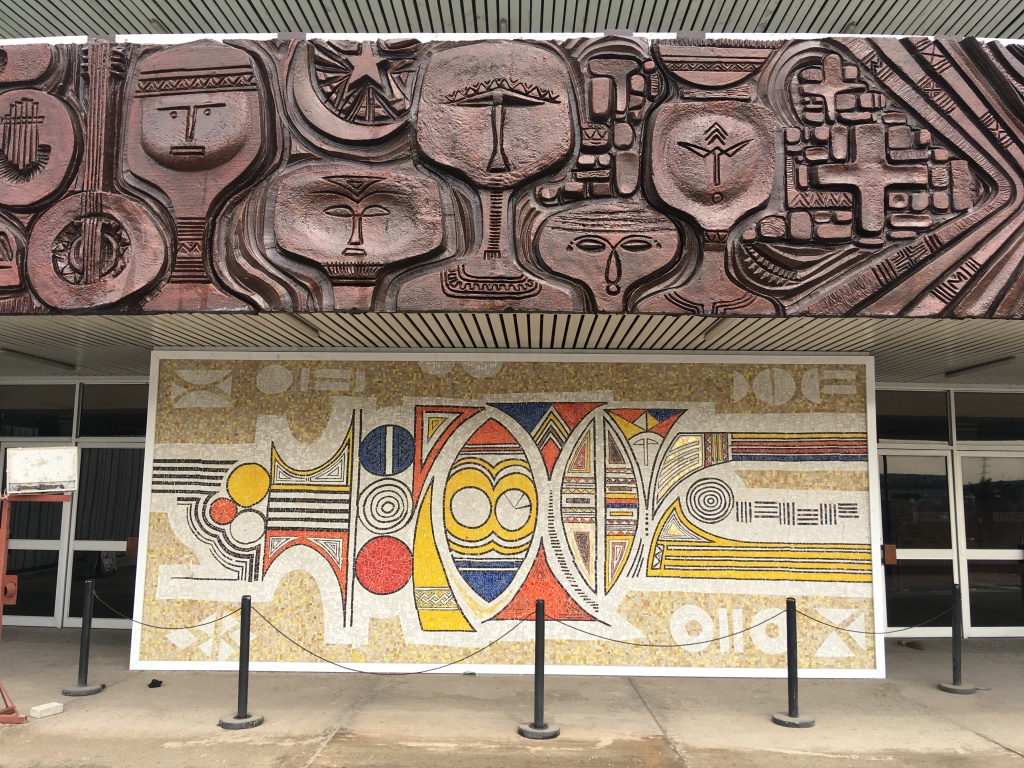
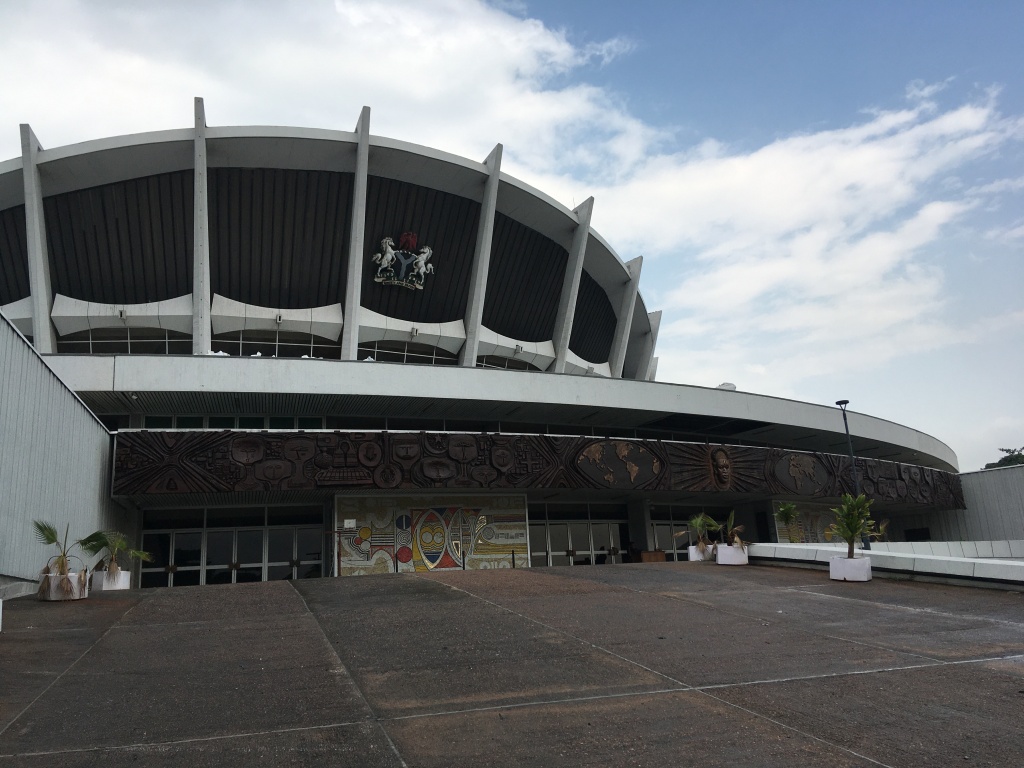
I wanted to know more about Emokpae’s work and found some fascinating material in the Nigeria Magazines. Emokpae had worked on some major projects in Lagos and I’ve been eager to view them ever since. At the National Theatre (designed and constructed by the Bulgarian Techno Exporstroy in 1976) Emokpae was commissioned to produce the friezes that wrap around the lower parapet of the theatre as well as a series of mosaic murals at the entrances.
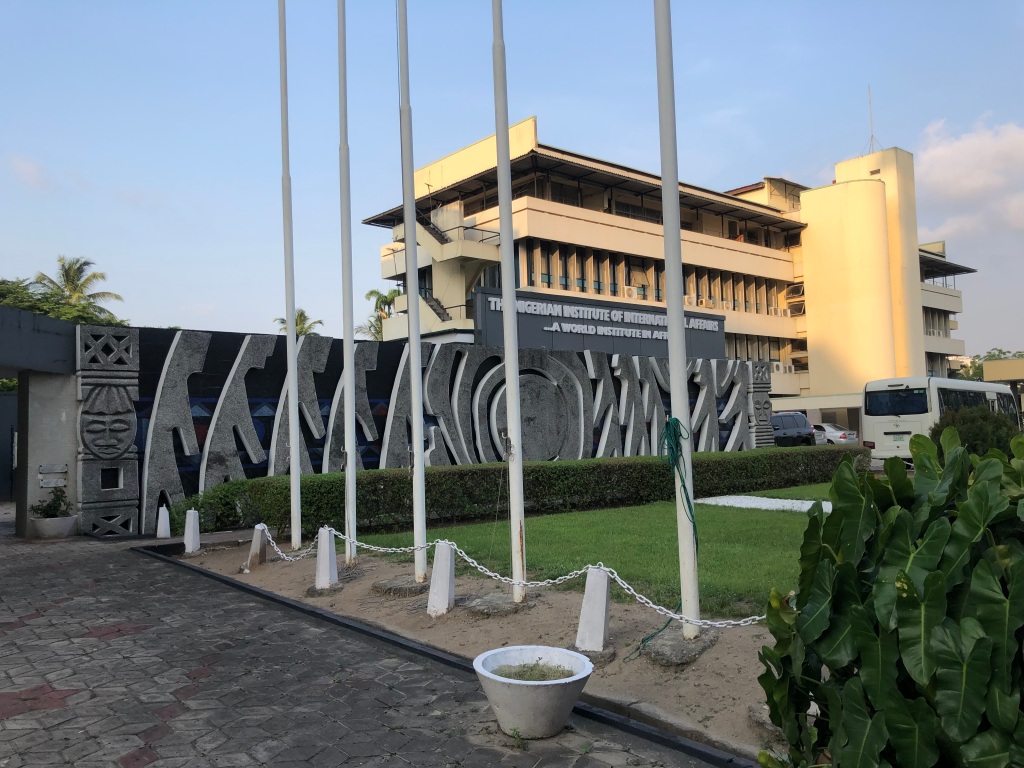
He also won a competition to design a concrete installation at the Nigerian Institute of International Affairs – a significant building designed by Design Group. Here Emokpae’s ‘The Art of Understanding’ is composed of a large concrete mural with mosaic backing. The project also featured in Nigeria Magazine no.96 1968 with an extended article written by Alan Vaughan-Richards.
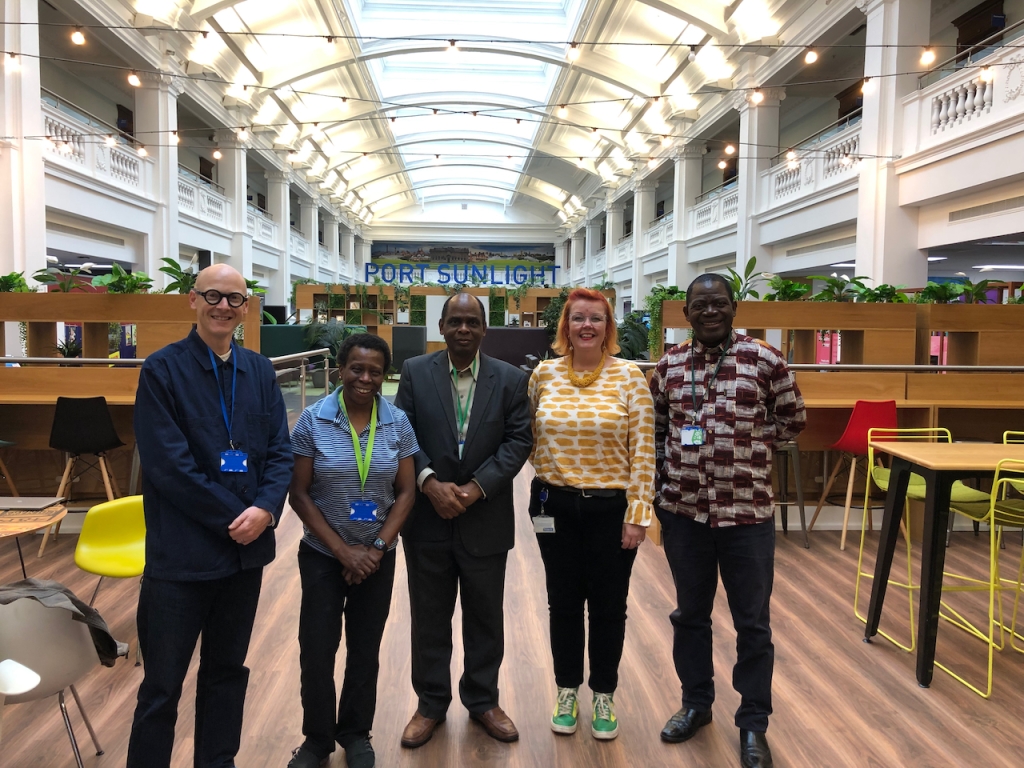
Iain Jackson, Ola Uduku, Ayo Olukoju, Claire Tunstall, Sam Ntewusu at Unilever, Port Sunlight
The objective of the visit was to visit and introduce Profs Olukoju and Ntewusu to the Unilever archive collection at Port Sunlight, particularly its subsidiary the United Africa Company’ (UAC)’s extensive holdings on Western Africa covering its various business interests in the region. The symposium which took place the next day involved presentations by Profs Olukoju and Ntewusu on the state of archives and archival research in West Africa, which was attended by Merseyside researchers and PhD students.
Professors Olukoju and Ntewusu at Unilever, Port Sunlight with bust of William Lever
The two-day visit also enabled discussions to be had about future collaborations at various levels, research, knowledge exchange capacity building at Masters degree level, and forms of impact for institutions in Western Africa and also the the UK and NW England in particular. Our thanks to all who contributed to the symposium. Particularly Claire Tunstall, and her team at the Unilever Archives, Dr Abraham Ng’an’ga of the Andrew Walls Centre, Liverpool Hope University, Alex Buchanan, Archival Studies, University of Liverpool History Department, Suzie Goligher, Afrograph Ltd, and all other individual and institutional contributors to the symposium.
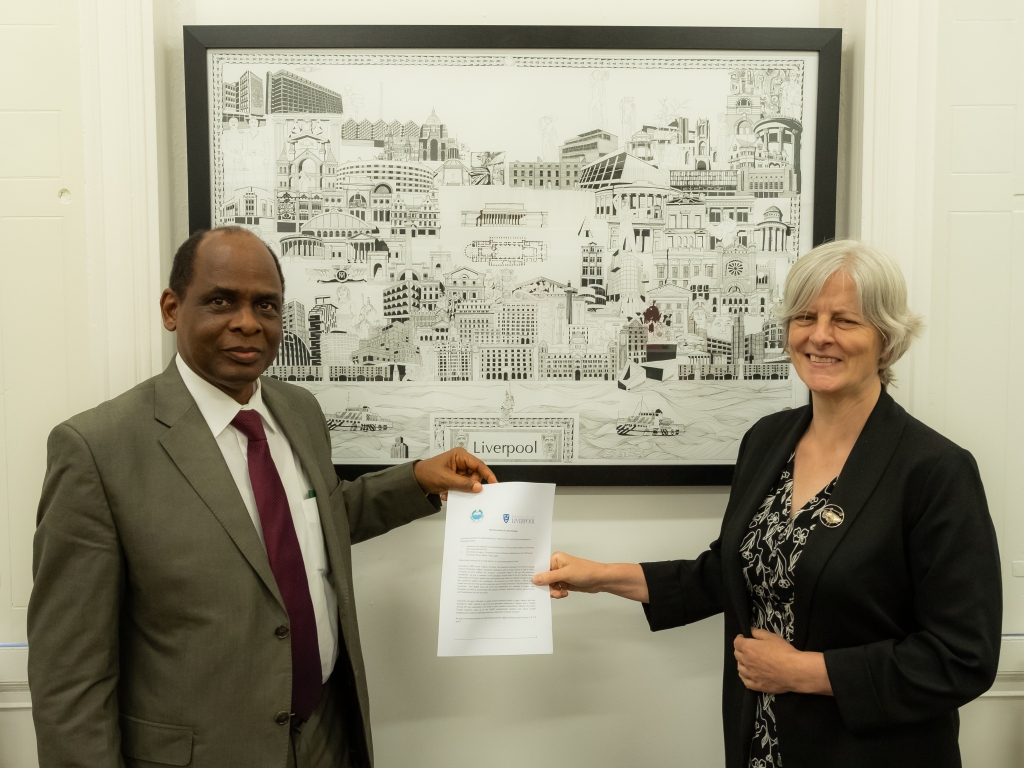
MoU signed by the University of Liverpool’s APVC for the Faculty of Humanities Professor Fiona Beveridge, and received by Professor Olukoju, on behalf of the University of Lagos
The visit also coincided with the finalised signing off of the Memorandum of Understanding which has now been established between the University of Liverpool and the University of Lagos. The formal MoU, was signed by the University of Liverpool’s APVC for the Faculty of Humanities Professor Fiona Beveridge, and received by Professor Olukoju, on behalf of the University of Lagos
We are delighted to be able to host Professor Ayo Olukoju (Institute of African and Diaspora studies, University of Lagos) and Professor Sam Ntewusu (Institute of African Studies University of Ghana) who are visiting the University of Liverpool and also the Unilever Archives to explore the possibilities of future collaborative research and teaching activities across our institutions and others in NW England.
Both Professors are historians who have worked with archival sources in their research in West Africa. They have generously agreed to share, through this seminar, the challenges and issues with working with archival material and sources from a West African perspective and also some of the hopes they have for future collaborations.
Do join us to hear their views and also join the conversation – how do we make the most of archives in the 21st century in different locations and places? Importantly do we need to decolonise the archive, and if so how?
Hosted by the AHUWA Research centre in association with Unilever Archives, School of History and Institutes of African Studies and African Diaspora Studies at the University of Ghana, and the University of Lagos
This is the first article in a series that considers reflections on the value of interpretation in combination with the technical practice of cataloguing, authored by CCA staff and invited scholars and introduced by Martien de Vletter. Here, we examine changing terminology. CCA cataloguer Jennifer Préfontaine considers context and the use of the term “peon” in cataloguing the Pierre Jeanneret fonds, and Michele Tenzon, Ewan Harrison, Iain Jackson, Claire Tunstall, and Rixt Woudstra sift through reworkings that were made in the development of the United Africa Company archives.
The Importance of Context
Jennifer Préfontaine weighs meaning and intent when cataloguing archival materials
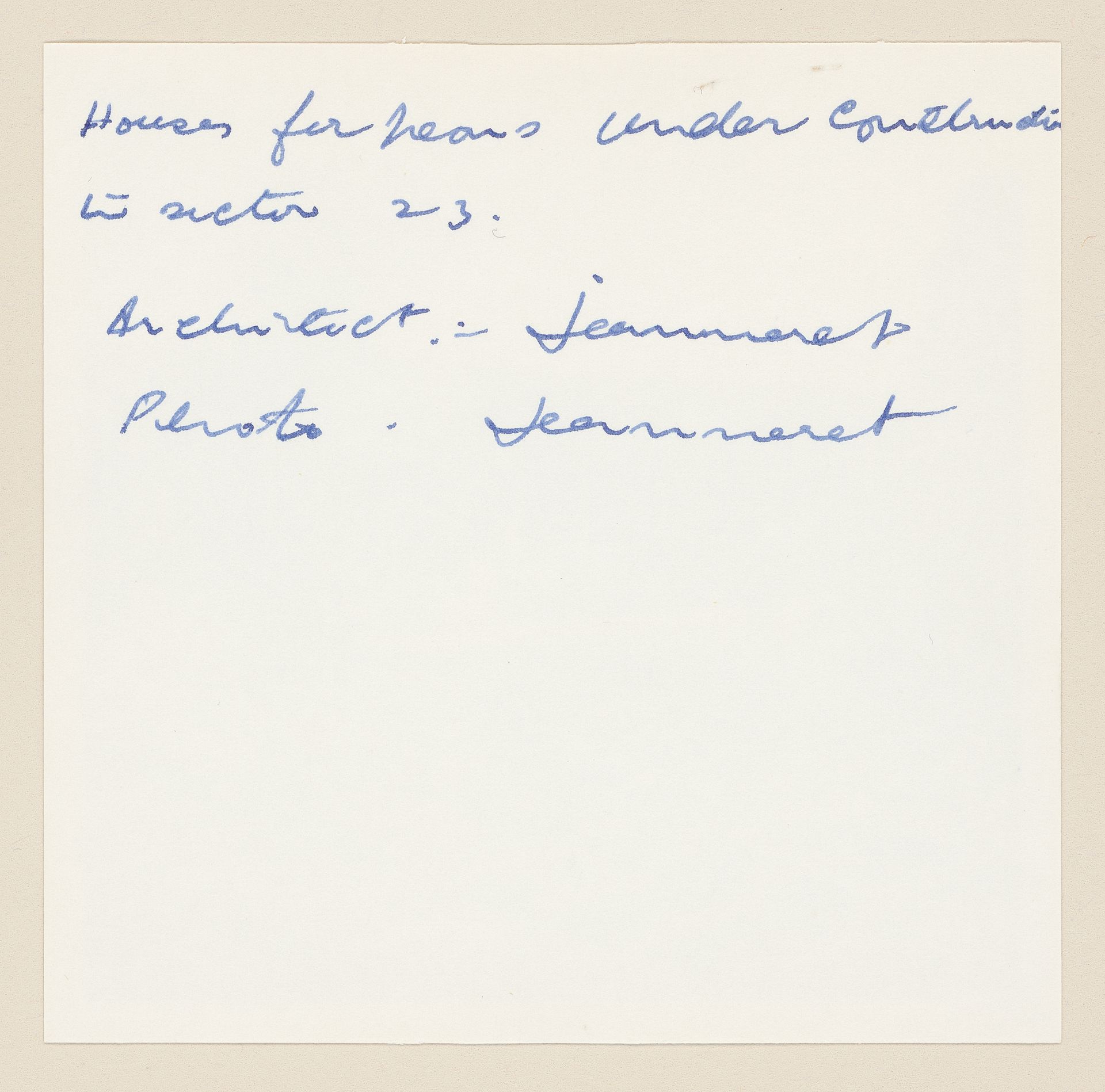
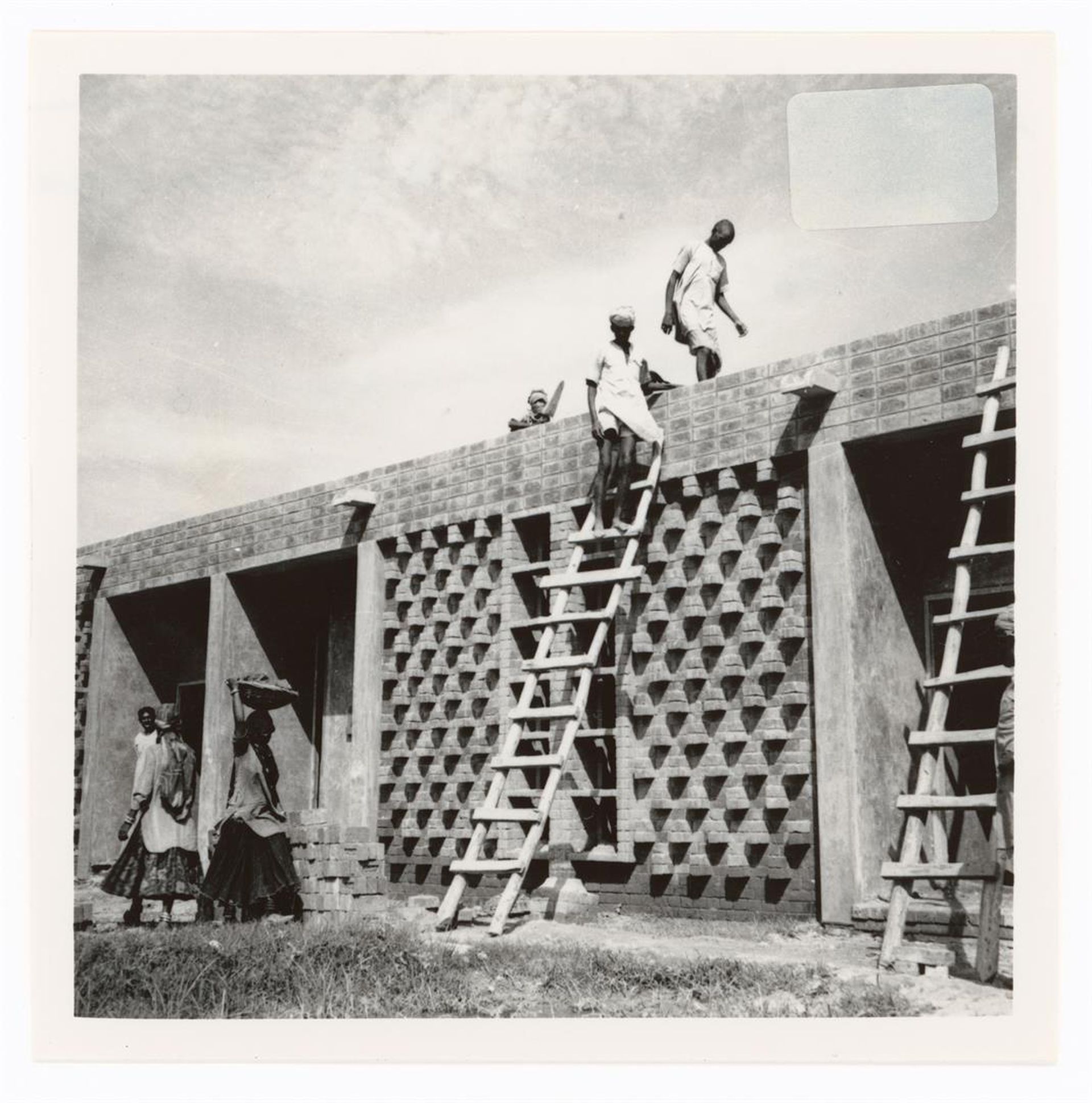
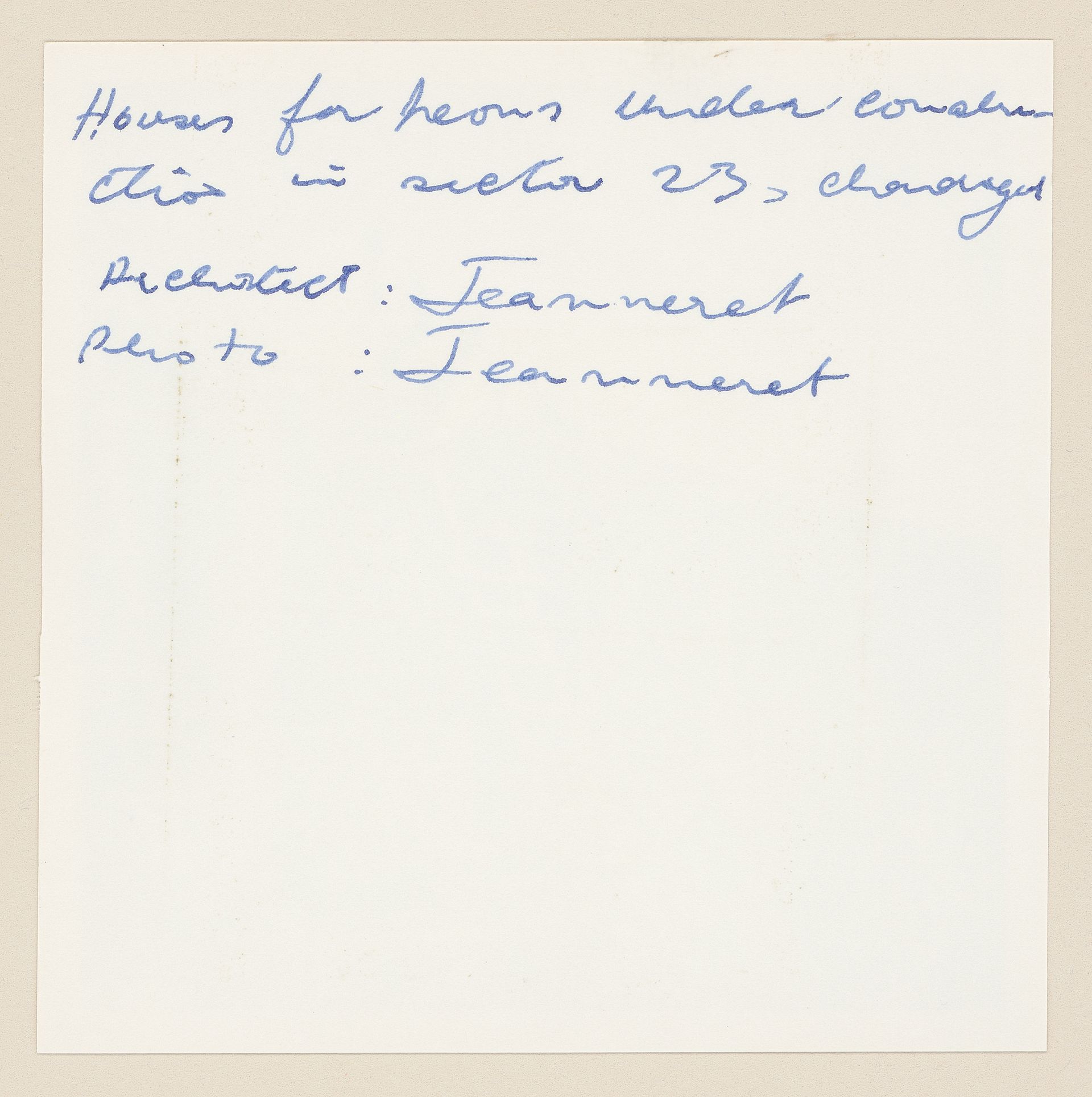
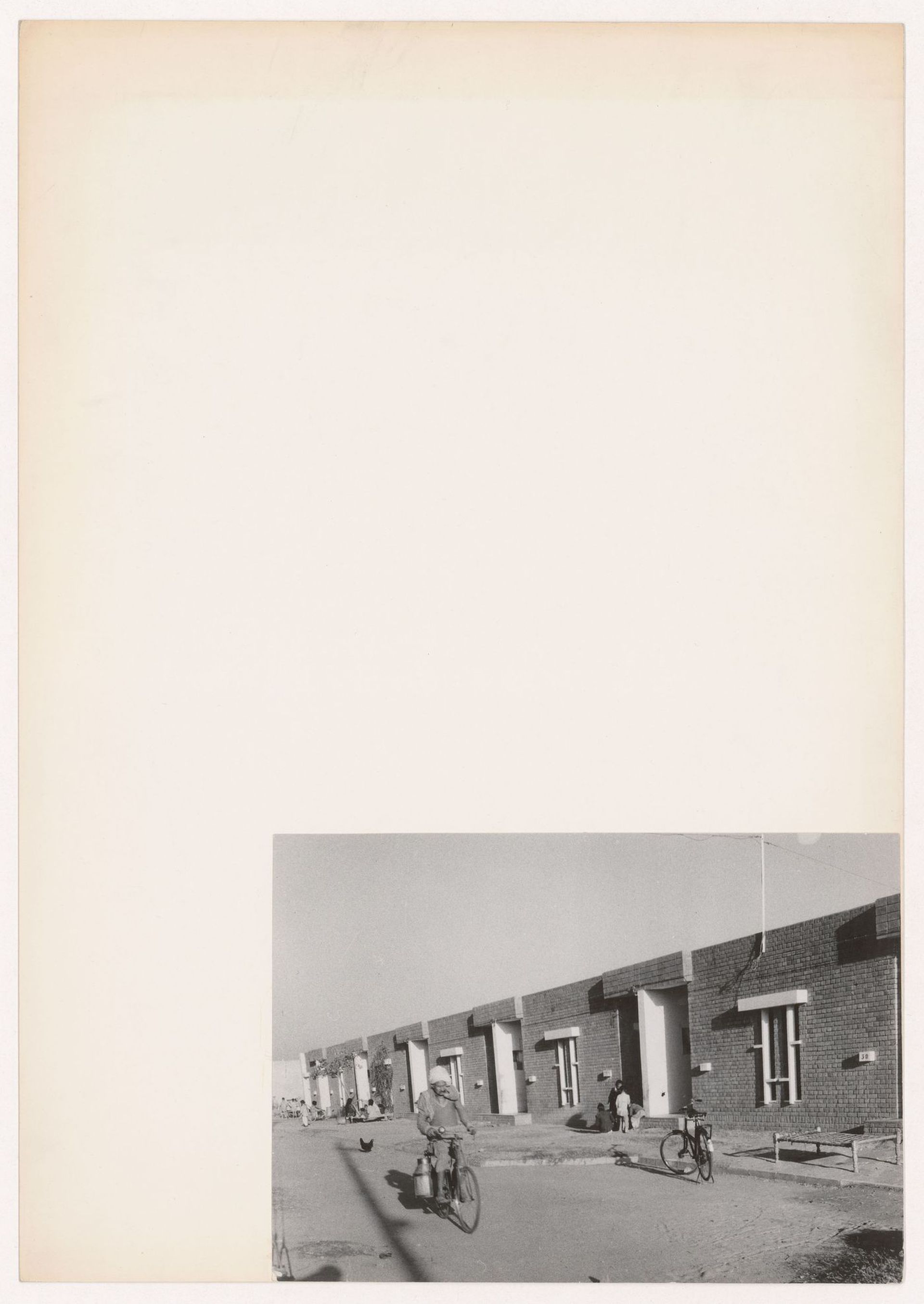
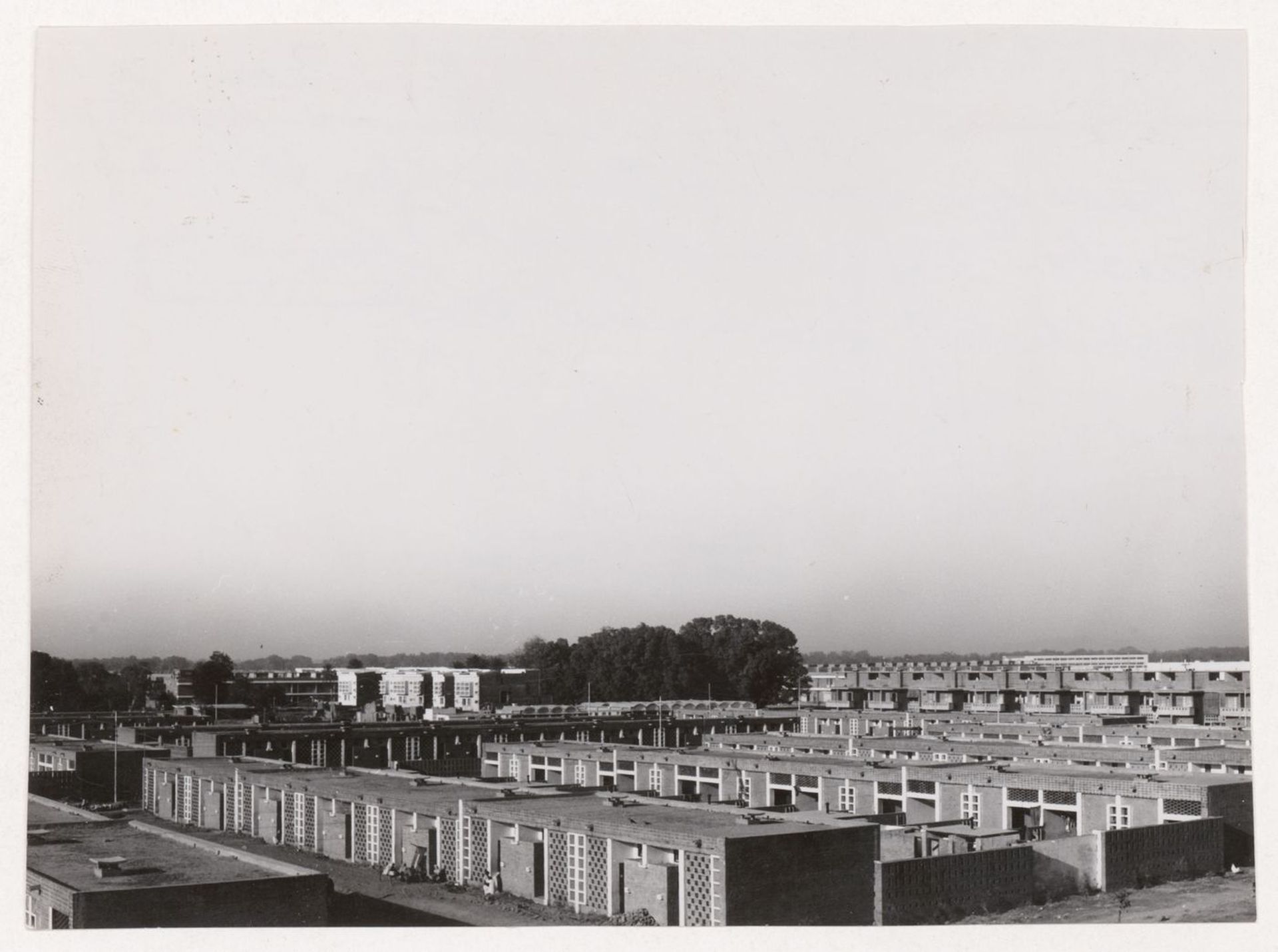
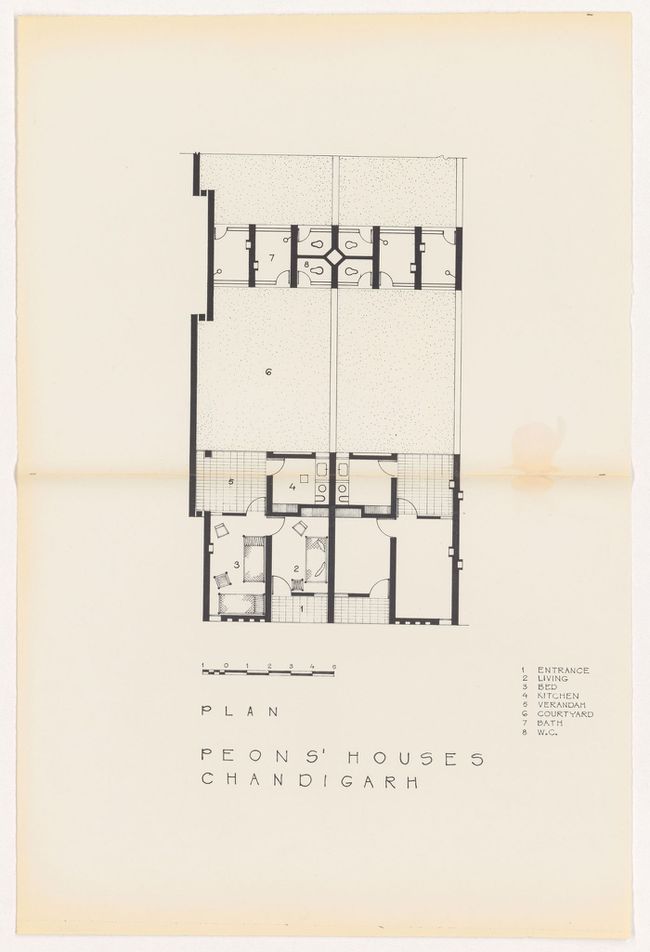
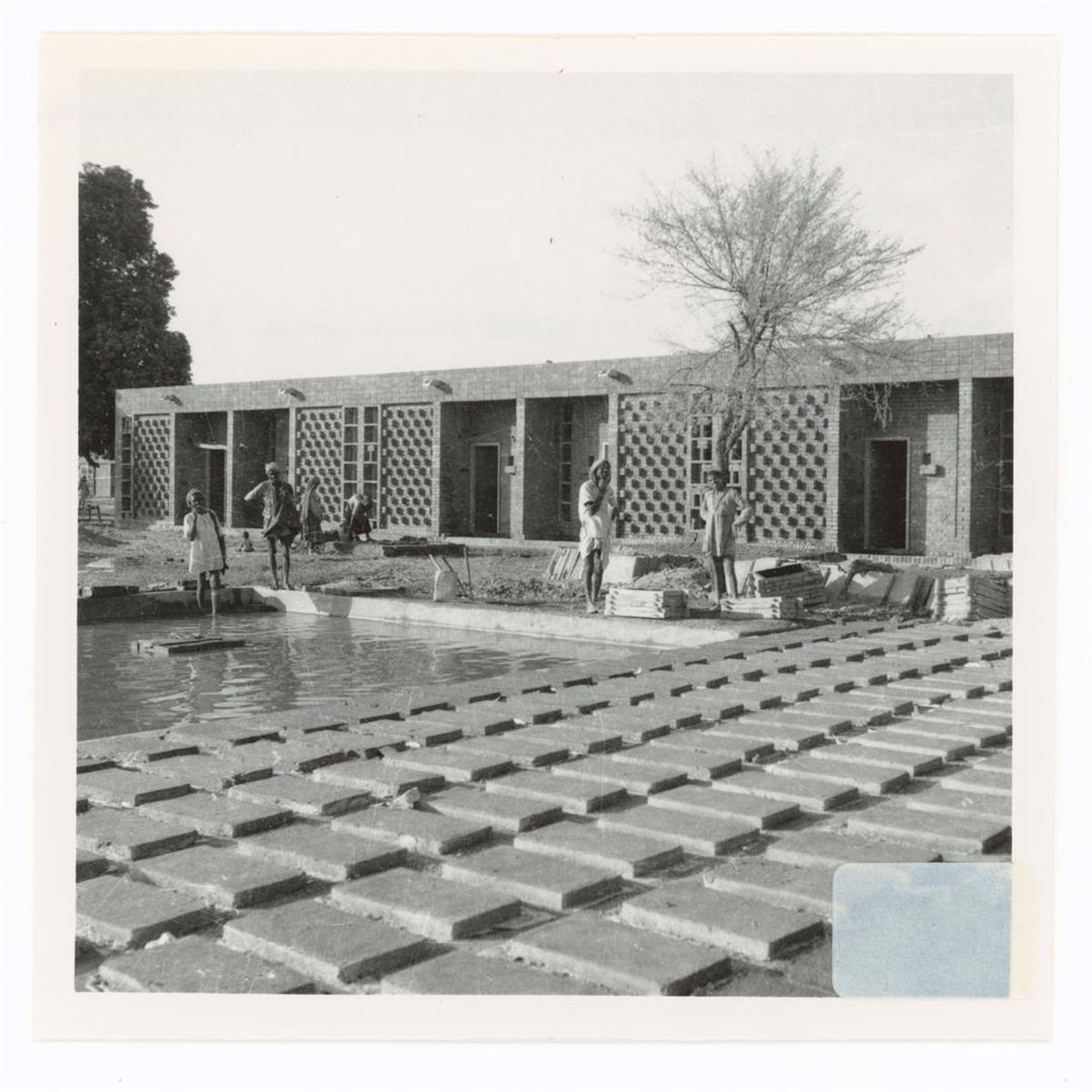
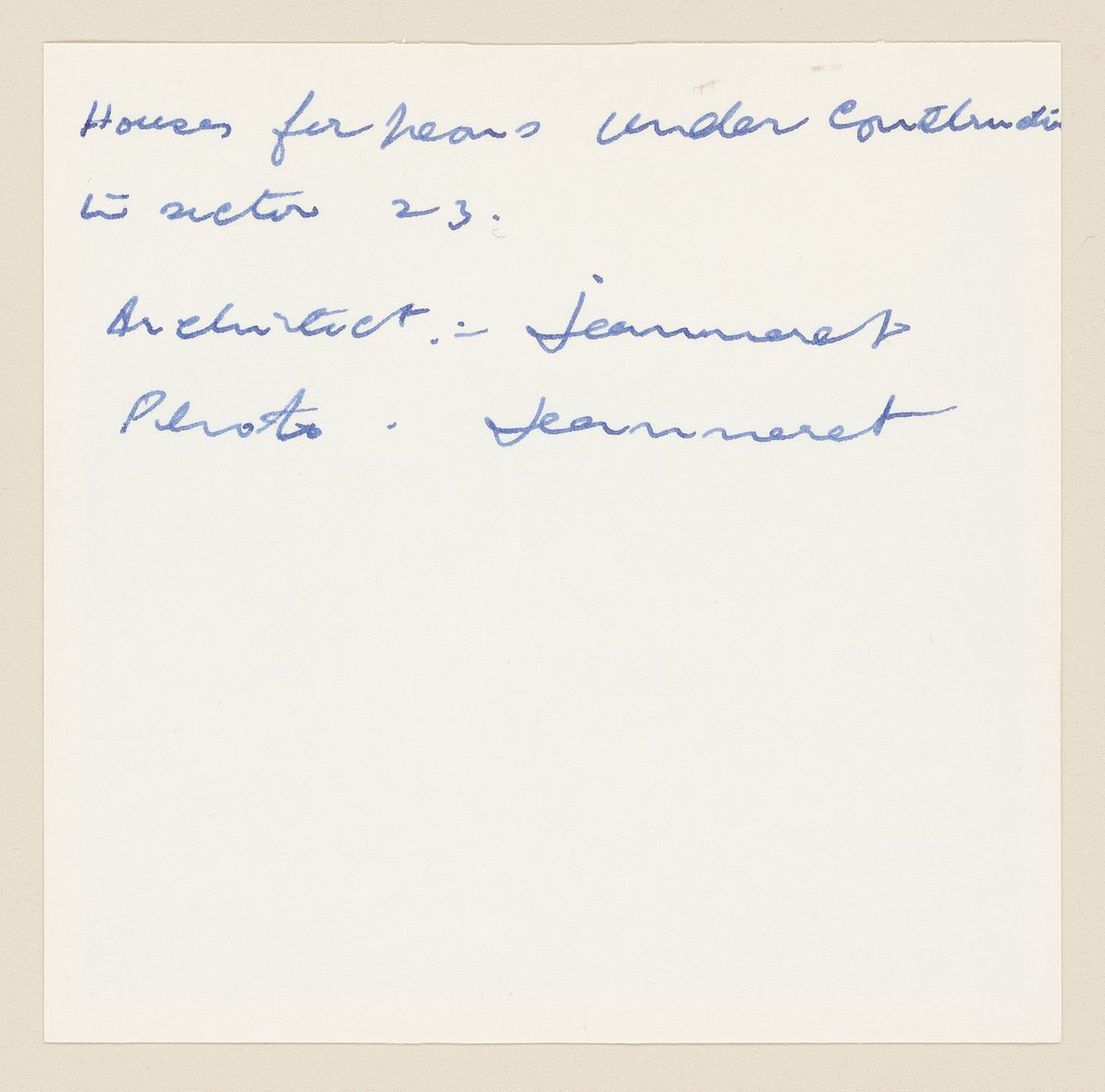
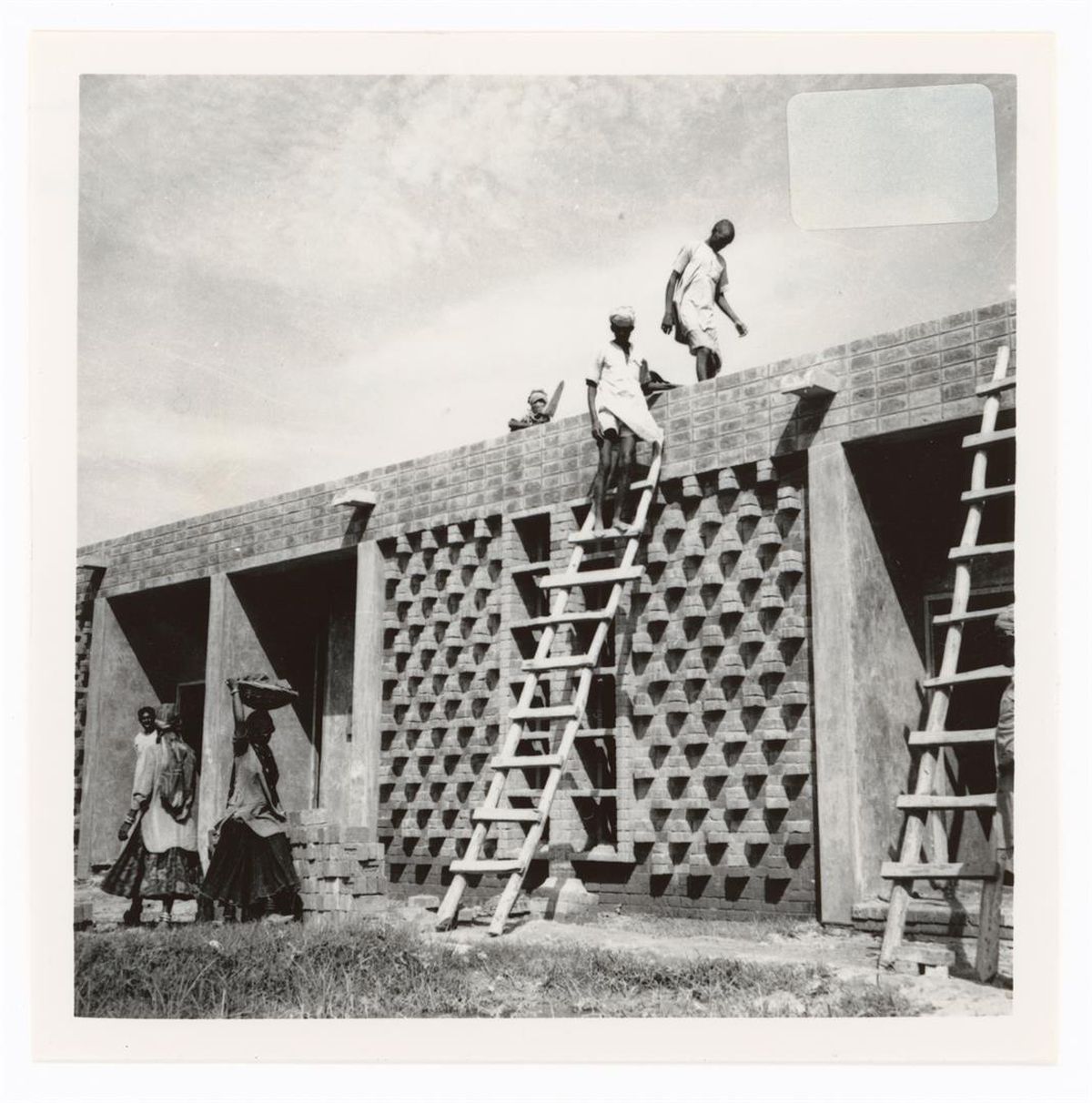
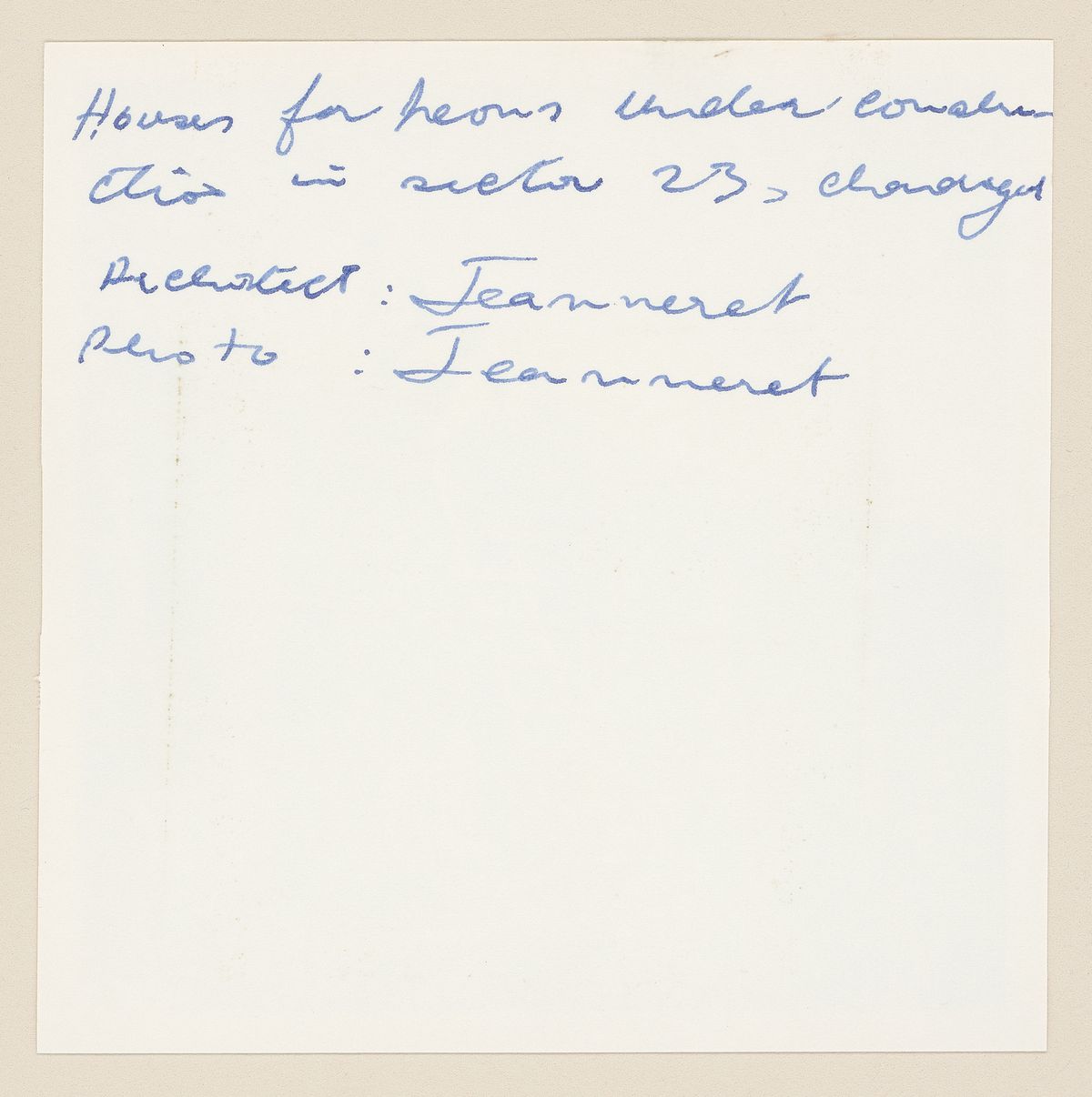
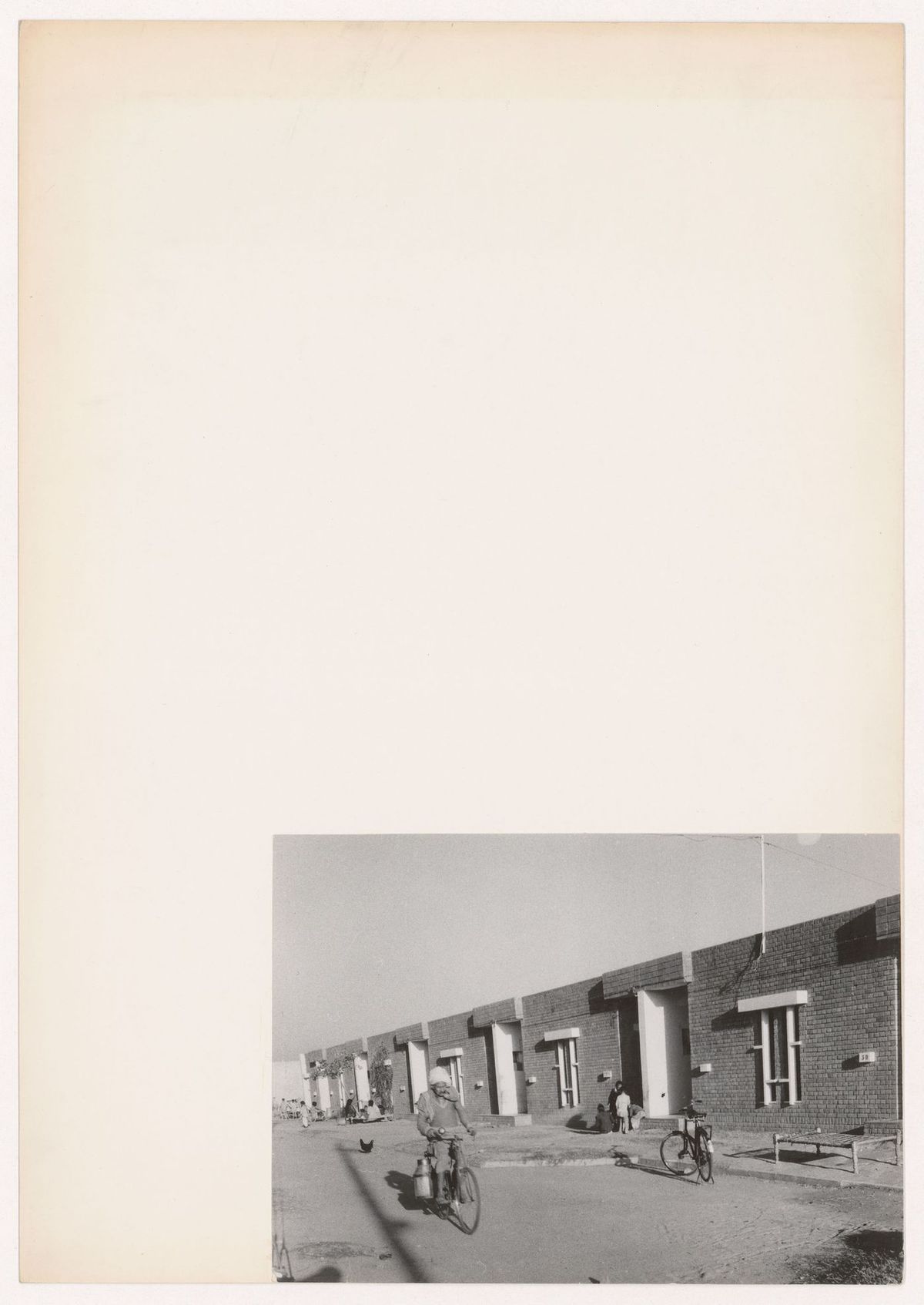
During Sangeeta Bagga’s Find and Tell residency in June 2019, we—the cataloguers at the CCA—came across material using a word with which we were uncertain. A plan drawing, held in the Pierre Jeanneret fonds that Bagga was studying, labels “Peons’ Houses” as the title of a project in Chandigarh, from 1952.1 From definitions found in print and online dictionaries, we felt that “peon” could be understood as harmful in some contexts but neutral in others. A word can have different meanings, different geographies, and even different histories, in particular colonial histories. In cataloguing work, the choice of vocabulary has important implications in how researchers access and understand information. We needed to consider, is there a problem with the use of the word “peon” when identifying people?
We learned that the word “peon” has different meanings and origins depending on where and when the term is used. Among other definitions, it means a labourer or a non-specialized worker.2 In Latin America, especially in Mexico, a “peon” has additionally come to denote a labourer that has an obligation to work for their employer until their debt was paid off.3 This type of “labor practice”4 has served as the basis of what would become known as “peonage” in the period after the abolition of enslavement in the United States, where many African American freedmen and freedwomen with limited options were forced and bound into this system that maintained an involuntary servitude.56 It seems within this American context that the use of this word in cataloguing should be reassessed. However, comparatively, in South Asian countries, particularly in India and Sri Lanka, the word “peon,” brought by the Portuguese, historically meant a foot soldier or a police officer.7 These days, it refers, in an Indian context, to a messenger or attendant, especially in an office,8 designating the entry-level position in governmental and non-governmental organizations.910
Considering that the materials from the Pierre Jeanneret fonds that include the word “peon” in their descriptions are related to Chandigarh, would it be acceptable to use the term despite the negative connotation it bears in another context, especially the American one? Shall we use a different term, or keep this “contentious” word with the possible addition of a contextual note?
As the CCA is an international institution located in North America, we wonder if it is preferable to remove a word that is potentially harmful from our descriptions, even if it remains in use and seemingly appropriate in other cultural contexts. What about the research behaviour of our users? Experts on Chandigarh, particularly on Le Corbusier and Pierre Jeanneret’s works, might be expecting the word “peon” and search for it in our catalogue. In order to understand the use of this term within the framework of the study of Indian architecture and society, we decided to reach out to experts of this field of research.
For Dr. Sangeeta Bagga,11 Principal at Chandigarh College of Architecture, Vikram Bhatt,12 author of Blueprint for a hack, Resorts of the Raj, and After the masters, and Dr. Vikramāditya Prakāsh,13 author of Chandigarh’s Le Corbusier and One Continuous Line, and editor of Rethinking Global Modernism, the word “peon” is an appropriate term used to designate an entry-level position at government levels in India. However, they point out that private corporations do not generally use the term anymore. Bhatt mentions that an equivalent word is “chaprasi,” and there might be other equivalent terms in other regions of India. Bagga argues that, although “office boy” is the term currently used in the private sector, “peon” still describes a position that allows people to work in dignity in a non-technical job, and people in India do not necessarily associate the word with a colonial background. It was institutionalized under the British period, but it still is in use today, without any negative connotations. Both Bhatt and Prakāsh acknowledge that while the term is still in use, it is not a word used in everyday conversation. To them, it could carry derogatory implications, depending on how it is used.
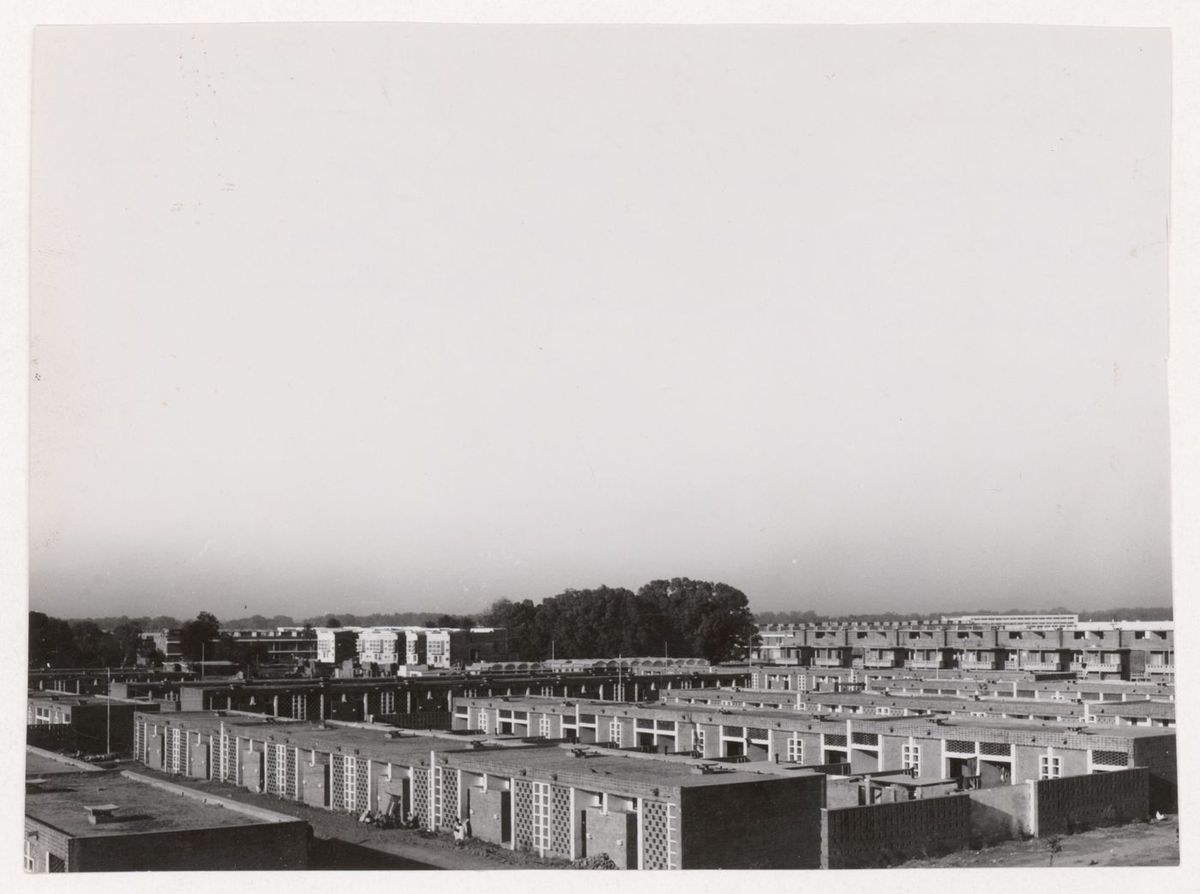
Bagga and Bhatt also mention that Chandigarh is a city that was laid down to a precise hierarchy initially with thirteen types of government housing in which the “peons” were at the lowest end.14 Bagga adds that with Jane Drew and Pierre Jeanneret’s work, it was the first time that the “peons” had planned housing accommodations.15 She underlines that the architectural drawings and other materials attest to this nomenclature; this type of housing was specifically called “peons’ houses,” as is depicted in the plan’s title. If the word is absent from the description, how would a researcher find it?
We might not be able to dissociate the use of the word from the context in which it appears. Prakāsh recommends keeping the term with respect to the Pierre Jeanneret fonds, noting that there is not a “right” interpretation of a word, certainly not based on an “original” meaning. For Bhatt, for as long as there have been contacts between the Western and Eastern worlds, languages have mutually influenced each other. With this in mind, Bhatt said that he would not be hesitant to use this word, but cataloguers should certainly recognize the different contexts in which it is used.
From these discussions, it seems apparent that the word “peon” carries different weights and meanings based on its context. All three experts recommend that we continue to use “peon” in our descriptions as part of the title field, and that we should add, if relevant, a contextual note explaining the word. As we recognize the importance of examining the changing meaning of words over time and context, especially when they are used in relation to how you refer to people directly, processes like this one, will help us set guidelines for more mindful descriptive work.
We would like to thank Sangeeta Bagga, Vikram Bhatt, and Vikramāditya Prakāsh for sharing their thoughts on this topic.
Reworking, Recaptioning, Moving Beyond
Michele Tenzon, Ewan Harrison, Iain Jackson, Claire Tunstall and Rixt Woudstra examine the Archives of the United Africa Company.
The Unilever Archives in Port Sunlight, United Kingdom, host a vast collection of items documenting the United Africa Company (UAC). A wholly owned subsidiary of Unilever, the UAC was a vast trading and manufacturing empire that itself in turn owned and managed numerous subsidiaries ranging from retail, textiles, timber, and raw material extraction mainly, but not exclusively in the British West African colonies. The scale of the UAC venture throughout the late nineteenth and twentieth century, the company’s role in colonial exploitation, as well as its economic and political manoeuvring into the post-Independence period, render its archive both a problematic and rich repository to catalogue and analyse. Archives have been the subject of a body of theoretical writing from post-colonial perspectives. This has framed the archive as both a locus of power and a technology of domination in and of itself. As the archive of the largest British business in West Africa, and one deeply implicated in the colonial patterns of resource and capital extraction in the region, the UAC archive can equally be theorised in this way. Yet, the UAC archive is also punctuated by moments of hesitancy, contestation, and challenges to the UAC’s attempted hegemony.
The UAC produced an archive as a by-product of the everyday transactions of business in the African colonies: its reports, board minutes, marketing plans, press releases, and ledgers have subsequently been ordered, catalogued, and cared for by a team of curators and archivists. But the UAC also pursued archival impulses of its own: UAC staff collected maps, African artworks and ephemera, personal correspondence and memoirs, as well as taking, collating and cataloguing thousands of photographs between 1880 and 1980. This impulse to collect and catalogue the African world around it shows the UAC’s attempts to impose an archival logic on the diverse, even unwieldy, business empire that it controlled, or attempted to control.
For architectural historians, the photographic collection is of particular interest with its bias towards recording buildings, places, people, and special events. The vast amount of visual material was produced by employees working for different subsidiary companies, each with their own objectives, vantage points, and outlooks. The contributors and content are also diverse in their geographical reach and emphasis, with records spanning vast tracts of the African continent, as well as smaller forays into the Middle East, India, and the Americas. Overall, and in coherence with the nature of a corporation which was indeed multiple, internally diverse, and geographically spread out, the collection appears as a corpus of interrelated but distinct archives each with their own provenance, consistency, detail, and granularity of data.
Considerable effort and expense were devoted to producing and presenting this photographic material. Each subsidiary produced its own documentary evidence by developing a visual record or compendium of their businesses that sat alongside the accounting records and lists. In providing sound evidence that business activity was taking place, the photographic medium was particularly useful to the parent company. Taken with a specific agenda and focus, the photographs were processed and printed before being selected to feature in specially produced albums and often accompanied by printed captions or handwritten comments. In many cases, the photographs became a surrogate for travel as many of the directors and business managers had never visited Africa and had no first-hand conception of what their business interests and assets looked like.
The images demonstrated that stores had been built, that goods were properly stocked on the shelfs and that everything was ‘as promised’. It provided reassurance for owners and shareholders, but also became a form of advertisement as is reflected by the careful organisation of these documents in the archive’s Public Relations folders. Through the photographs, distance and geographical separation seemed less important as the visual evidence which they offered ultimately delivered a sense of proximity by bringing a particular version of Africa back to the European shareholders. Photographs were meant to create a familiarity which could justify the company’s overseas presence and show that a colonial territory was ripe for development, therefore reassuring investors as well as European staff.
Because of the peculiar role of the photographic documentation for UAC’s activities, the forms of their collecting, defining, and claiming, offers a vantage point from which we can see how the company viewed, perceived, and chose to record the African social and physical environment. The image library was not fixed – it was added over time, revisited and modified. Titles were remade, notes were added, reflecting not only the transformation of the built environment, such as the extension or refurbishment of the company’s premises, or the acquisition or selling of properties, but also the shifting political situation after elections, riots, or strikes and the resulting legitimacy challenges that the company faced.
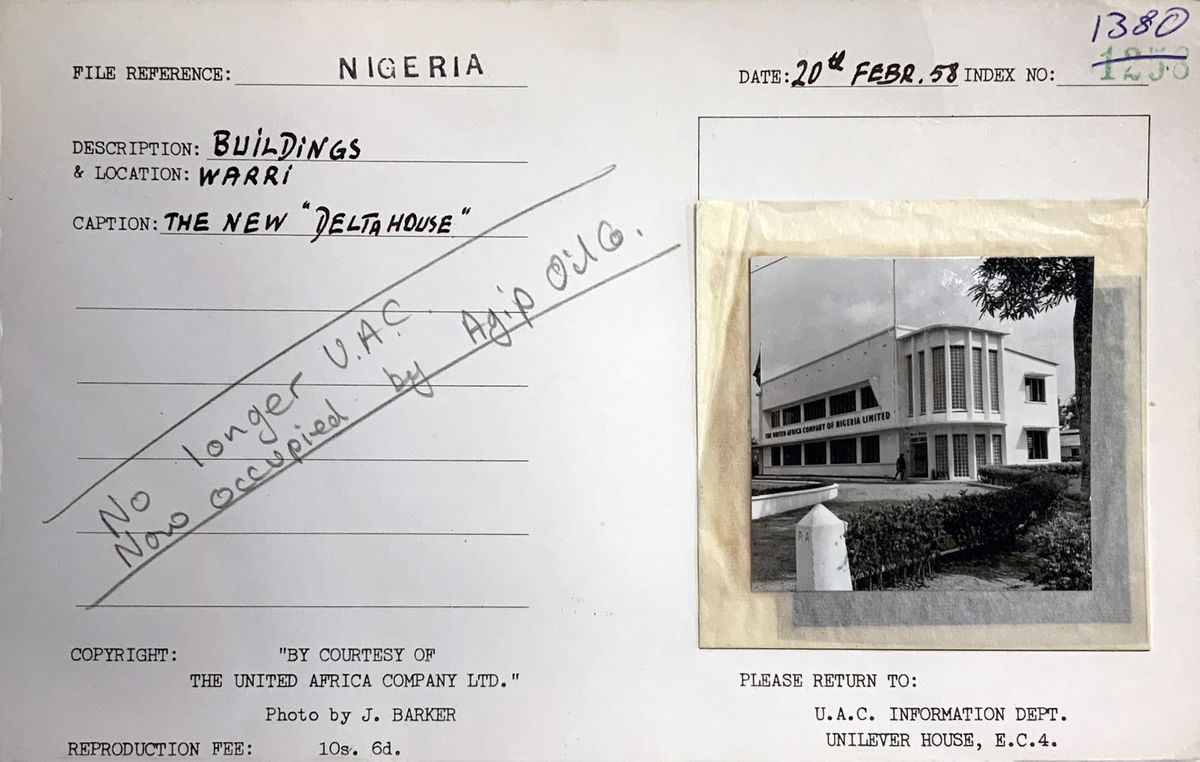
Such reworking of the archive is especially evident in those sections of the archive in which photographs have been selected and mounted onto cards, as a compiled photography library arranged first by country, then by themes. This collection was compiled to assist the production of marketing reports, company magazines, newsletters, press releases, and advertisements. The production of these publications and public relations material required the finest images and a cataloguing system allowing them to be quickly located. The notes written on the cards indicate that the UAC staff exercised a control towards what was deemed appropriate and suitable for the company’s image.
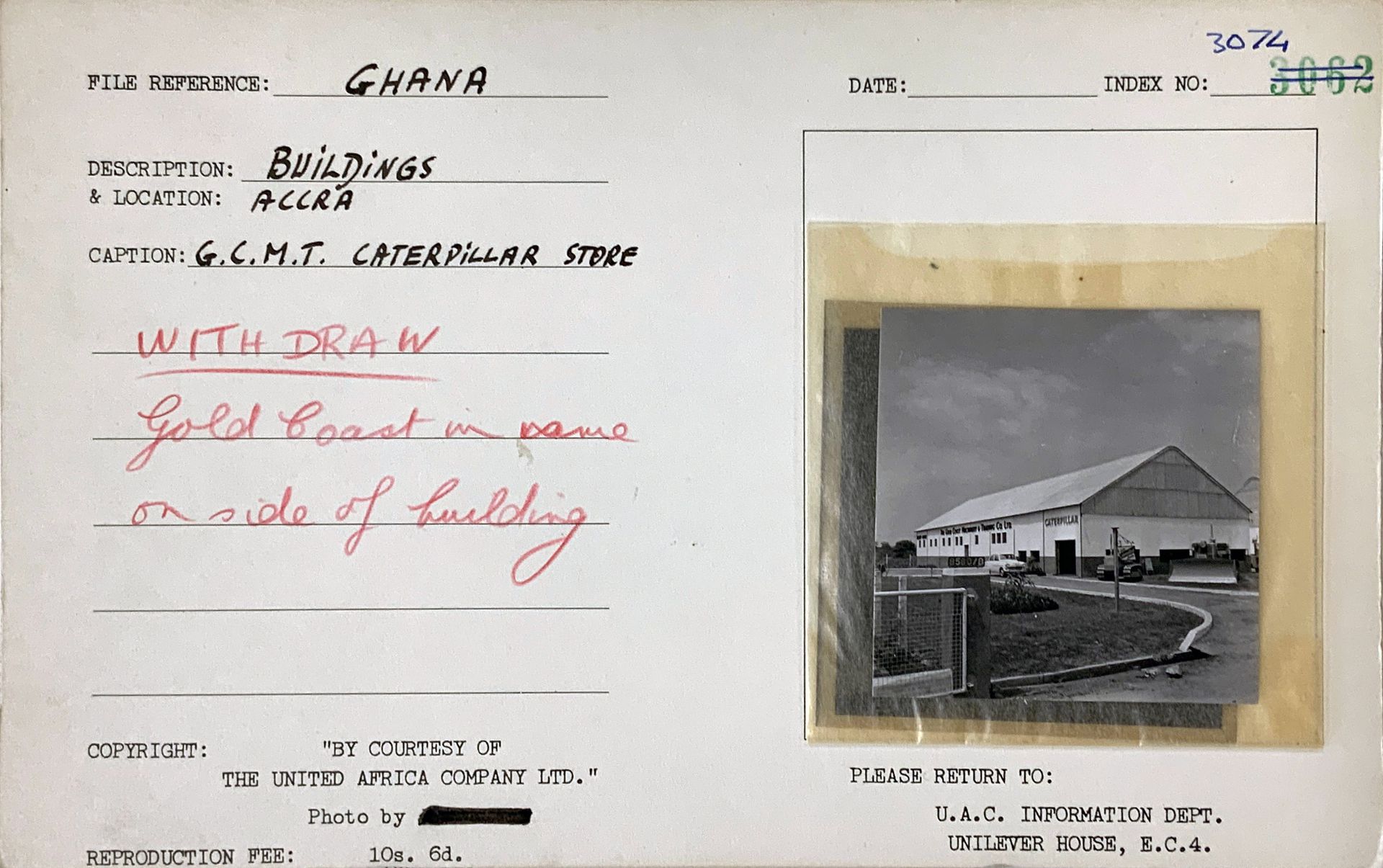
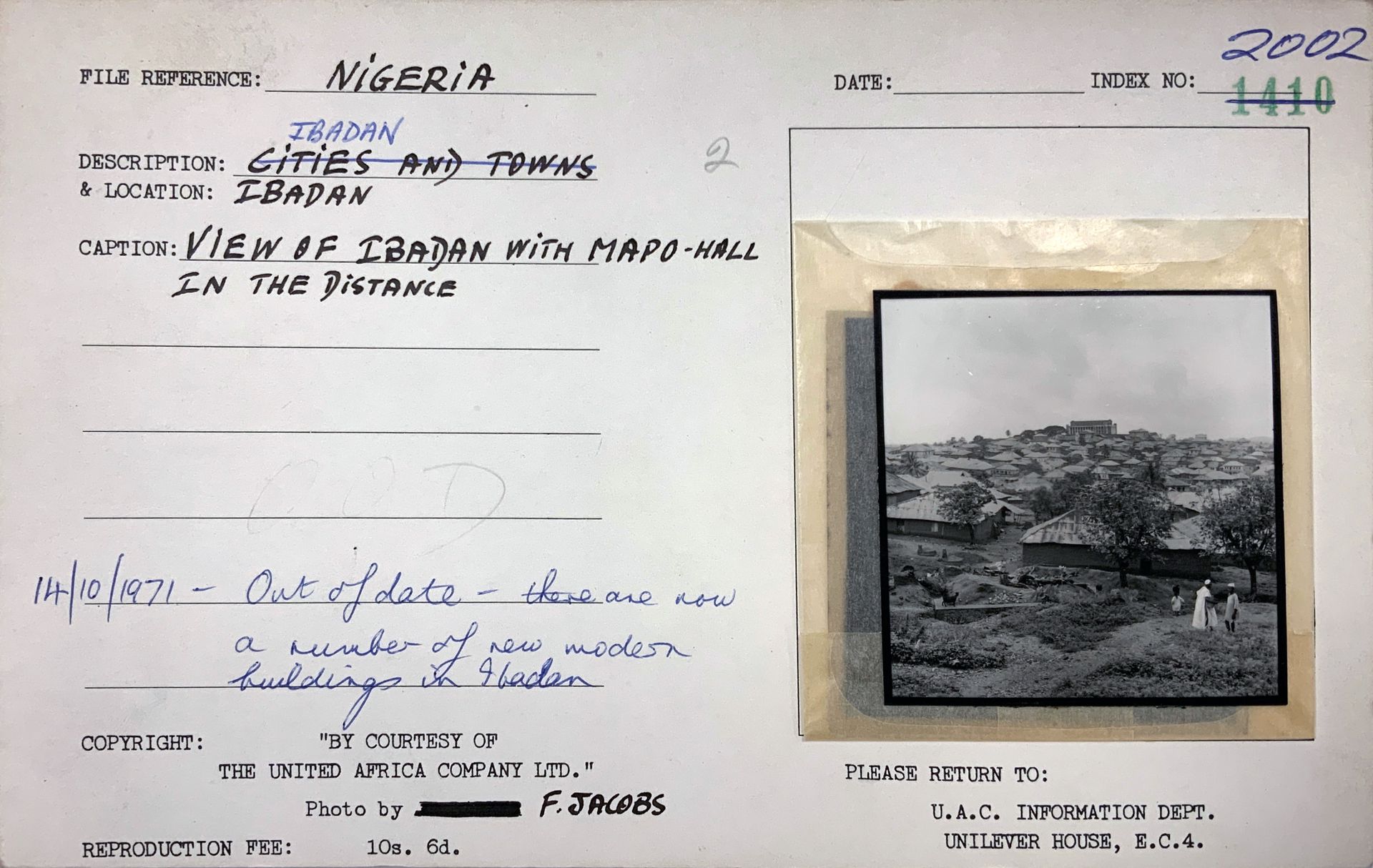
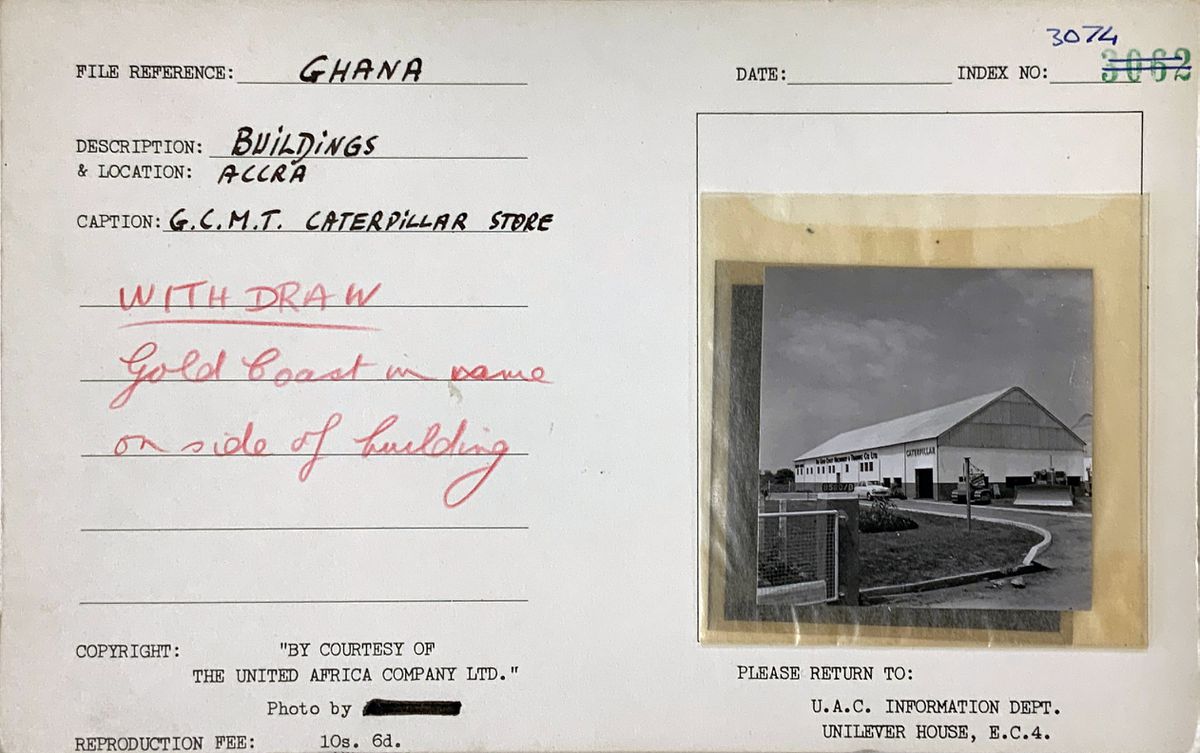
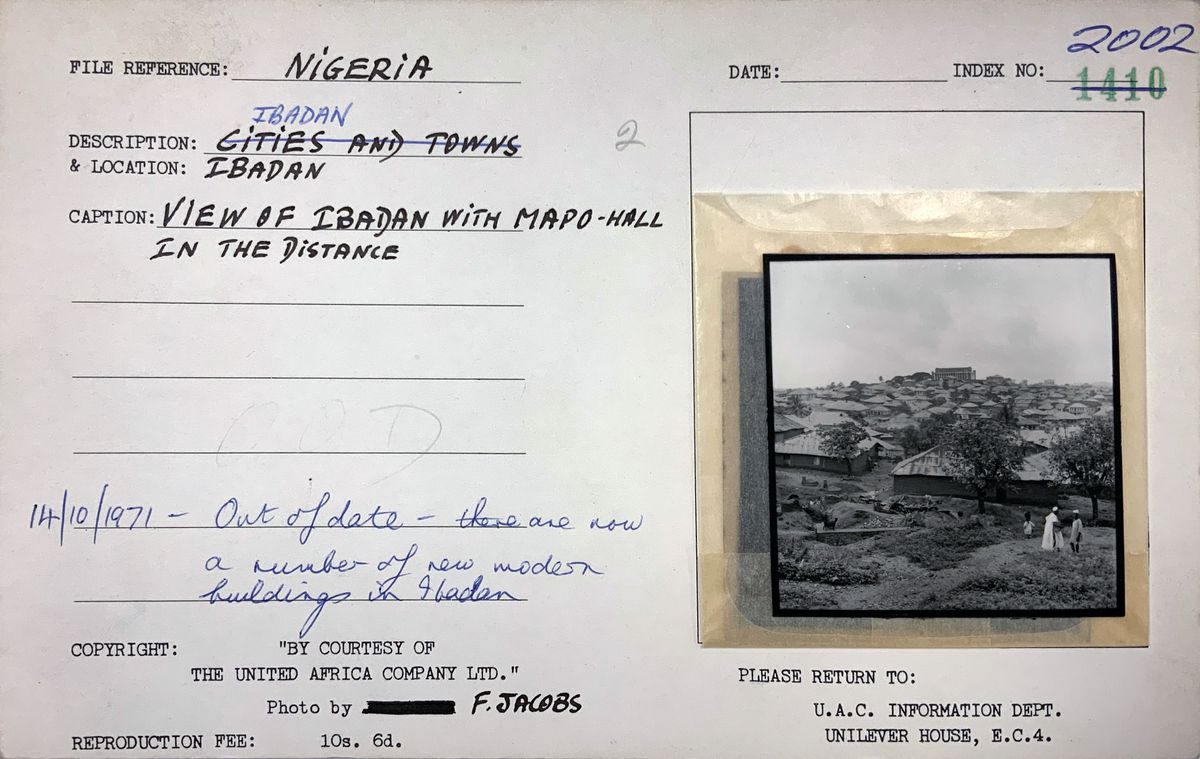
On some of these cards the captions were edited replacing terms which were perceived as outdated or inappropriate. Hence, an image described as “Native workers” was subsequently crossed out and replaced with “African workers”, before being relabelled again as “Employees”. In other instances, “African huts” was replaced by “African homes”, and “European Housing” was renamed “Management Housing” to reflect the Africanisation process of the 1950s – the recruitment and promotion of African staff within the company – which the UAC had embraced as a strategy to repair its legitimacy during the decolonisation phase. Some other images, instead, were marked as ‘to-be-withdrawn’ because the signage of shops of factories employed colonial toponyms which, after independence and for obvious reasons, had become offensive for African audiences. Whereas an image of Ibadan showing a district of low-rise houses built with adobe bricks was deemed no longer usable as it probably conveyed an unwanted sense of precariousness to the public and especially to potential investors.
We don’t know who exactly was making these decisions and how frequently the images were reassessed and relabelled. Unlike the archiving process where archivists generate titles, here they formed part of an image library. However, the fact that the photographs, rather than being re-mounted onto new cards were instead amended by striking through older labels, suggests that perhaps this context was considered valuable, if outdated. Nonetheless, letting this meta-analysis of the archive and its shifting cataloguing and labelling strategy to emerge, required challenging the traditional way in which archives are experienced.
Moving beyond the catalogue
We rarely get to see the archive in the way that one can peruse the books of a library. Instead, we experience it with no direct access to the stores and therefore no opportunity to examine the collection in person. In most cases, files are brought to the researcher after consulting a catalogue, making requests and completing slips and are examined one file at a time. While there are obvious reasons for such restrictions which aim at ensuring the integrity and safety of the material, the necessity of surveillance imposes an examination of the material in extremely compartmentalised or limited ways.
In our research project ‘The Architecture of the United Africa Company: Building Mercantile West Africa’ we have questioned this approach and attempted a different procedure that granted the research team access to the archival storage spaces. ‘Open access’ to the collection has been granted to the research team which has enabled browsing and the ability to quickly sample a box or file without even removing it from its location in the storeroom. The research team has been given extensive training in basic archive procedures, manual handling and health and safety. Retrieval slips were still completed and utilised, but the physical act of obtaining the files and accessing the store rooms was granted to the research team enabling the archive team to focus on their day to day work. The ability to compare boxes, view multiple files, or simply randomly ‘dip’ into boxes has enabled a far greater appreciation of the entire UAC collection, has accelerated our ability to ‘get through the material’, and also reduced the labour for the archives team. Viewing all the photograph albums on the shelves and to see how one album compares in size and scale to the others as well as the ability to visualise the files and their arrangement has helped us to understand the business structure in ways that would not have been possible otherwise.
This procedure, which was made possible by the prolonged collaboration between the academic team and the archive’s management team, has enabled a different working method to emerge. If the re-captioning of UAC’s photographic collection testifies how European capitalism coped with political change and pragmatically adapted itself to the shifting paradigms in the decolonisation phase, acknowledging such additional layers require ‘moving beyond’ the catalogue. The stratification of meanings and orientations which took the form of an almost curatorial approach to the cataloguing of the photographs reveals the biases and the shifting sensitivities of the actors involved in the production and management of the archive. However, such a critical interpretation of descriptive practices requires questioning the traditional interface between archivist and researchers, ultimately allowing engagement with the archive as a complete and stratified entity.
Notes
1 The term “peon” is also found on other material from the Pierre Jeanneret fonds.
2 The word has several meanings across times, languages, and cultures. Not all of them will be covered in this text. It also refers to the pawn in a chess game and to a low unit in some strategy computer games, for example.
3 William Wirt Howe, “The Peonage Cases,” Columbia Law Review 4, No. 4 (April 1904): 279.
4 Pete Daniel, “The Metamorphosis of Slavery, 1865-1900,” The Journal of American History 66, No. 1 (June 1979): 89.
5 Daniel, “The Metamorphosis of Slavery,” 1979.
6 Peonage is not exclusive to the United States. Various forms of “peonage” have existed or still exist across the world.
7 Collins English Dictionary, s.v. “peon,” accessed November 15, 2021, https://www.collinsdictionary.com/dictionary/english. Webster’s Third New International Dictionary of the English Language, Unabridged (1981), s.v. “peon.”
11 Dr. Sangeeta Bagga, Zoom meeting, November 19, 2021.
12 Vikram Bhatt, Zoom meeting, November 25, 2021.
13 Dr. Vikramāditya Prakāsh, Email exchanges, November 2021.
14 At the request of Jane Beverly Drew, one of the three architects with Pierre Jeanneret and Edwin Maxwell Fry responsible for the design of most of the government housing, an additional fourteenth type, known as “cheap houses,” was designed by Drew for, the previously unaccounted for, government employees who were earning the lowest-wage. Kiran Joshi, Documenting Chandigarh: The Indian Architecture of Pierre Jeanneret, Edwin Maxwell Fry, Jane Beverly Drew (Ahmedabad, India: Mapin Publishing Pvt Ltd.; Chandigarh, India: Chandigarh College of Architecture, 1999), Volume 1, 43. Sarbjit Bahga and Surinder Bahga, Le Corbusier and Pierre Jeanneret: Footprints on the Sands of Indian Architecture (New Delhi, India: Galgotia Publishing Company, 2000), 131.
15 Bagga also adds that this new housing typology for the “peons” continues to this day, with the same purpose, function, and responsibility of roles.
The Transnational Architecture Group is 10 year’s old this year. Thank you for supporting the blog and to all of our excellent contributors over the years for enriching the content and generously sharing their work. We’d also like to thank the communities in the places in which we work, the archivists and librarians for making material available to us and sharing their expertise, our respective institutions for supporting our research, and to the research funders who make travel, time, and resources available to us.
The blog started as a means to share our work-in-progress ideas and to promote events – and that is still at the core of what we do. We continue to add updates from our ventures into the archives, travel reports, and to share interesting events and innovative papers. These small reports and updates have compounded into something of a large resource and repository, and we’re delighted so many people have been able to make good use of (and to correct and expand upon) our work and attempts at writing these histories.
To celebrate the 10 year anniversary we held a small gathering at the Liverpool School of Architecture on Wednesday 8th March, curated and organised by Dr Alistair Cartwright. Our speakers were all PhD students, post-doctoral researchers, and research associates at the school. You may watch the proceedings here:
The speakers and titles of the presentations are below, with timings if you’d like to skip to a particular talk:
Rixt Woudstra, “Sapele and Samreboi: Building Company Towns in British West Africa” 5:25
Excy Hansda, “Indigenous Modernities in the Twentieth Century Architecture of Bombay” 20:00
Adefola Toye, “Tropical Modernism in Nigeria’s First Universities: Accessing Sources Beyond the Archives.” 37:00
Ewan Harrison, “Planning for Post/Neo Coloniality: the Paramount Hotel in Freetown” 1:11
Iain Jackson, “Erhabor Emokae and the curious case of the UAC Mural: tropical modernism and decorative arts” 1:31
Daneel Starr, “How and why has the vernacular architecture and intangible cultural heritage of the Akha people changed in the face of globalization: Using the village of A Lu Lao Zhai, Xishuangbanna (sipsongpanna) China, as a case study.” 1:50
Paul Robinson, “Freetown, the UAC and urban design” 2:20
Alistair Cartwright, “Ecologies of Vulnerability: Post-Cyclone Reconstruction in Mauritius, c. 1945” 2:35
We also heard an excellent paper from Razan Simbawa, “The Effects of Demolish-based Urban Regeneration on Displaced Residents in Jeddah, Saudi Arabia” – which cannot be shared on the video recording at the moment.
Thank you again to all of the speakers for their wonderful talks, presentations, and work-in-progress. There was such variety and richness in the topics and methods, and at the same time numerous connections and cross-overs between the work.
Please do get in touch if you’d like to know more, or to share your work on the blog.
Amongst the palms and mango trees is a K6 telephone box and the ruins of former trading stores and warehouses overlooking the quayside. This is Bonthe, a small town on the island of Sherbro located just off the West African Guinea coast. The remote tropical location is six hours drive from Sierra Leone’s Freetown and 45 minutes speedboat through a maze of mangrove lined coastline.
Bonthe was once a major trading post rivalling the port of Freetown. Conveniently located at the mouth of the Sherbro River it was perfectly positioned for trade. Along with the many other islands in the estuary it was initially a slaving post, occupied by Portuguese, French, and British slavers. After emancipation in 1807 the island was used to supress the now illicit trade, and also became a place for returning Krio – former slaves from the Caribbean, Canada and UK.
The Island stretches about 30 miles long with Bonthe its largest settlement. Set out on a grid plan like Freetown, but on a much smaller scale, the town rapidly became a place for trade, especially after a treaty was formed with the British in 1861, and around 4500 people lived there by the 1890s.
The linear harbour overlooking the river was once lined with trading houses, merchant stores, and warehouses, offering the latest goods and merchandise from Europe. Cast-iron standpipes imported from Liverpool tapped into the fresh water supply and by the early 20thC street lighting and power was available.
Behind the trading stores grew a community of Krio houses – many adopting features from the Americas blended with European style bungalows. The active missionary population competed for converts and a vast array of churches catered for nearly every flavour of Christian denomination.
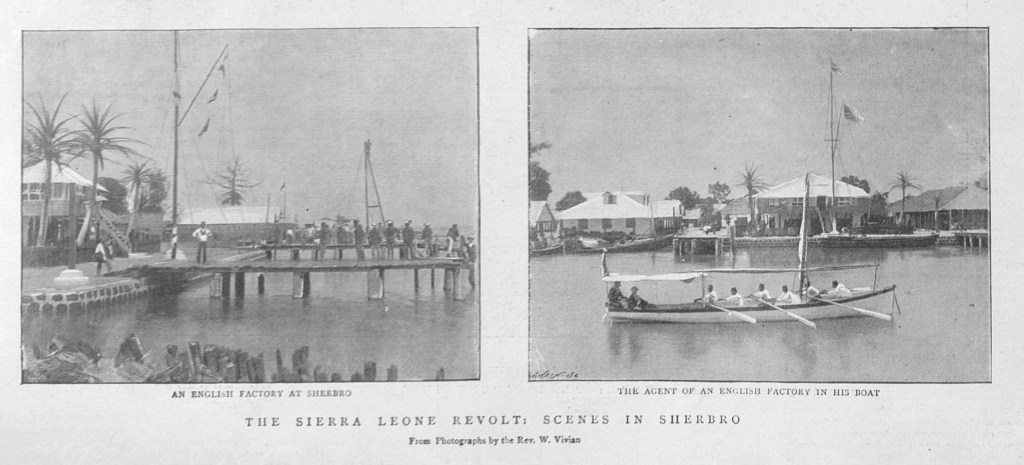
Whilst the tropical island and profitable trading created something of a paradisical, if remote setting, it wasn’t always a utopian settlement. In 1895 five African agents of Paterson Zochonis were killed in a period of unrest that started as protest to a poll tax known as the ‘hut tax’. The violence quickly spread exposing the lack of security on the island and the difficulty in defending the tributaries and mangrove lined swamps. 13 people were hanged there in 1898 after the murder of several American missionaries following ongoing conflict.
Sherbro in 1895: The Graphic Newspaper
Conditions were eventually restored to calm and the bustling trade of exporting raw materials from the interior mainland and the import of manufactured goods from Britain continued. The old premises of Paterson Zochonis still survives, with the company name proudly stated above the store’s portico. Patterson Zochonis set up shop here in 1884, and their trading empire spread across West Africa.
The origin of the firm dates to the 1870s when George Henry Paterson (from Scotland) worked with George Basil Zochonis (from Greece) at Fisher and Randall in Freetown. There’s still a Fisher Street in Freetown, just around the corner PZ roundabout – named after the firm. They initially traded calico and wax cotton prints from Manchester before moving into soap after the Second World War. A soap factory was acquired by the firm in Nigeria and by 1975 they’d bought out Cussons (and their famous Imperial Leather soap brand).
Other rival trading firms such as the United Africa Company and CFAO also set up businesses at Bonthe, building large stores along the waterfront and housing behind. There’s also the ubiquitous colonial clocktower and unearthed canons littered about the place, although most of the trading stores are now dilapidated shells being reclaimed by the tropical flora and humid climate.
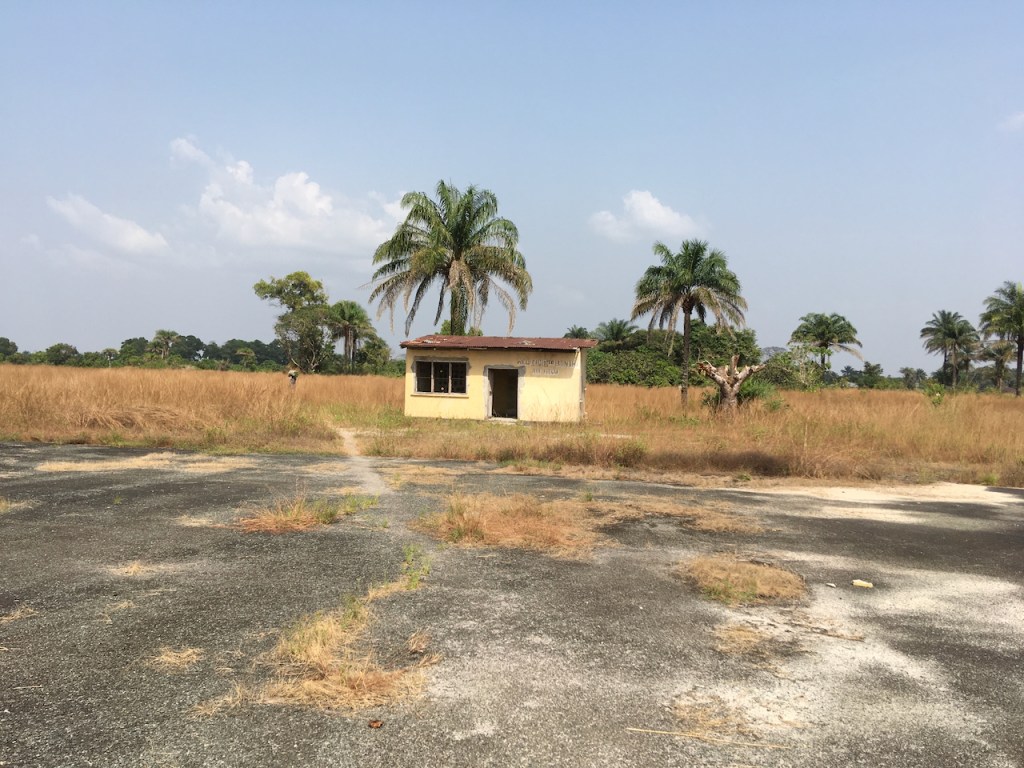
A landing strip was built here by the Allies during Second World War – complete with its own miniature terminal building – but the silting up of the river and the construction of new harbour facilities at the Queen Elizabeth II Dock in Freetown had a severe impact on the future prospects at Sherbro Island. There was a period of high-end holiday resorts catering for international visitors with a focus on nature lovers, birdwatchers, and fishing fanatics. A helicopter service even conveyed tourists to the Island from Freetown until about 2008.
Now it’s very much an overlooked backwater, but there are attempts to reverse its fortunes.
A new power plant is being built to restore mains power to the island and a few guest houses continue to give a warm welcome to all visitors. It’s a fascinating and beautiful place with such a rich history.
We’ve photographed most of the major structures that survive in Bonthe and will continue to investigate the archival material to uncover more of its past.
As part of our project to research the architecture of the United Africa Company (UAC) we’re visiting Freetown in Sierra Leone.
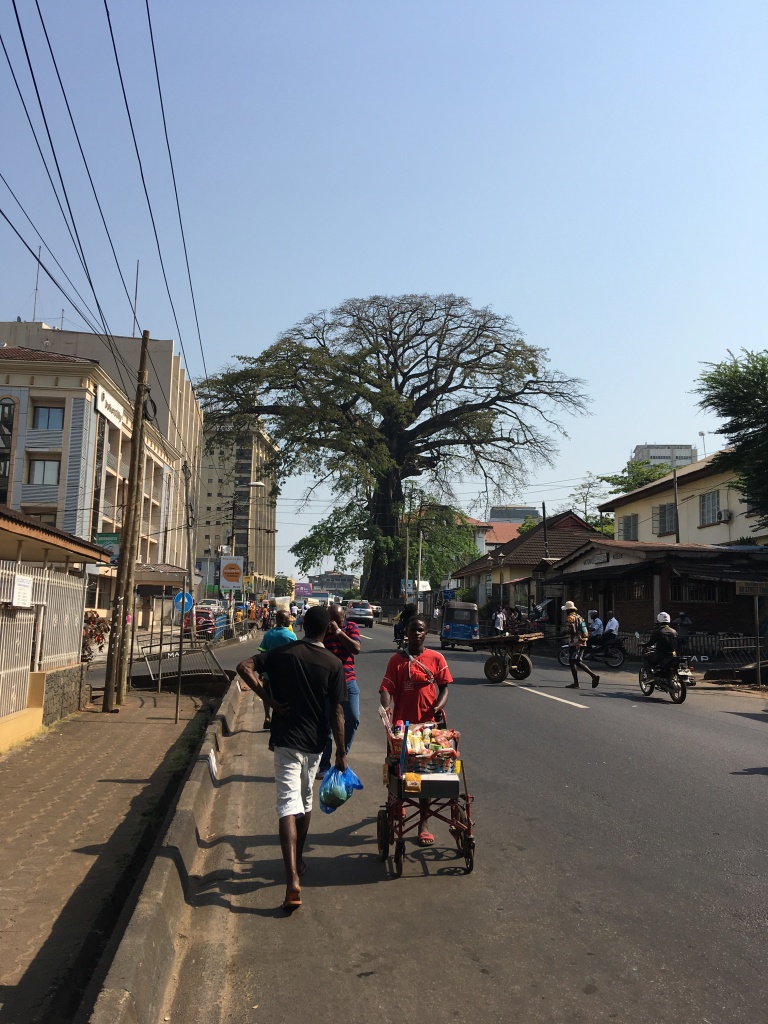
We spent the first day looking around the commercial business area wrapped around the giant cotton tree. The city grid was set out by the Sierra Leone Company surveyors in the 1790s and its wide streets and blocks are largely intact. Interspersed among the commercial properties are churches, houses, and schools, some dating back to the 19th Century.
The Cotton Tree, central Freetown
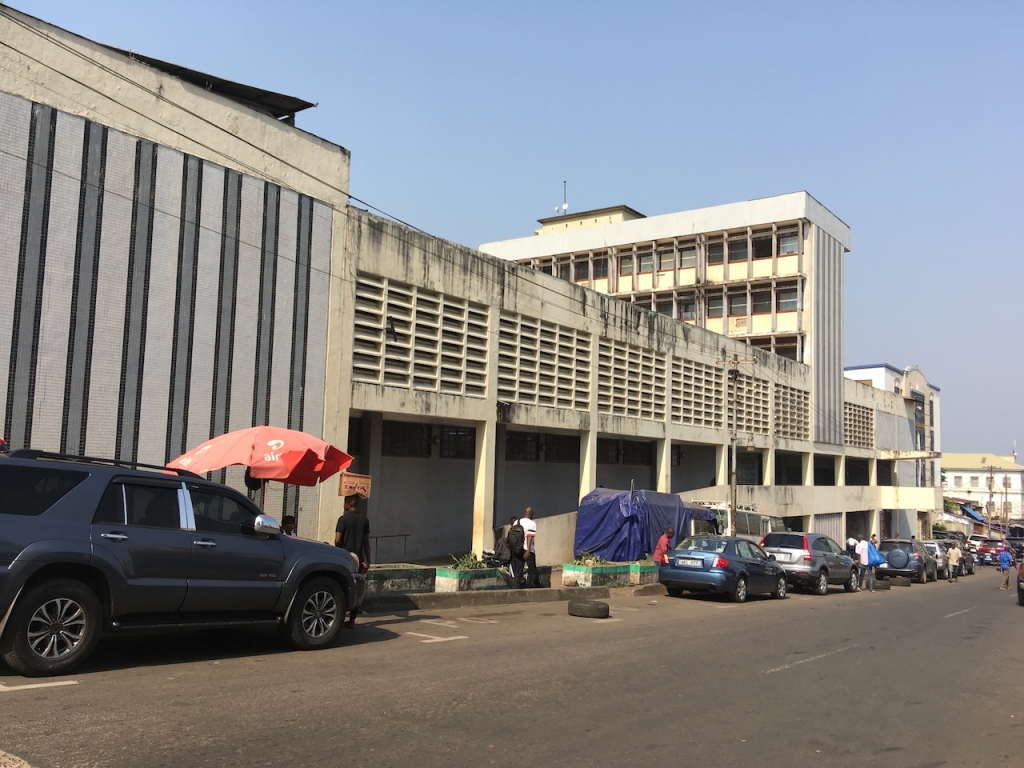
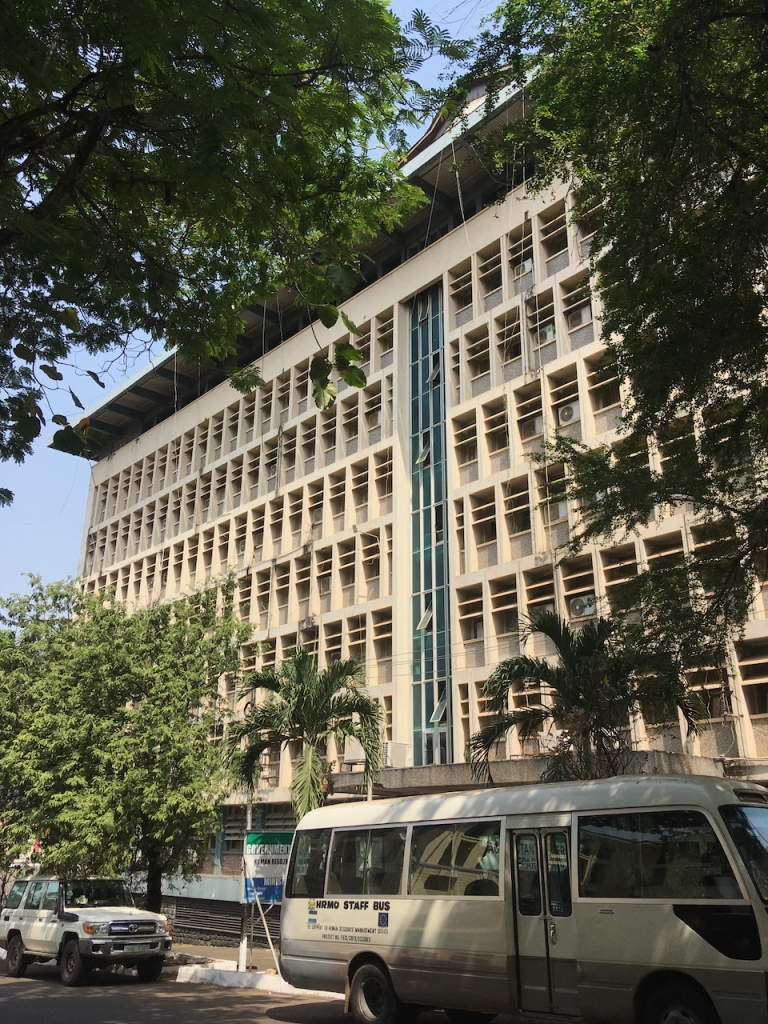
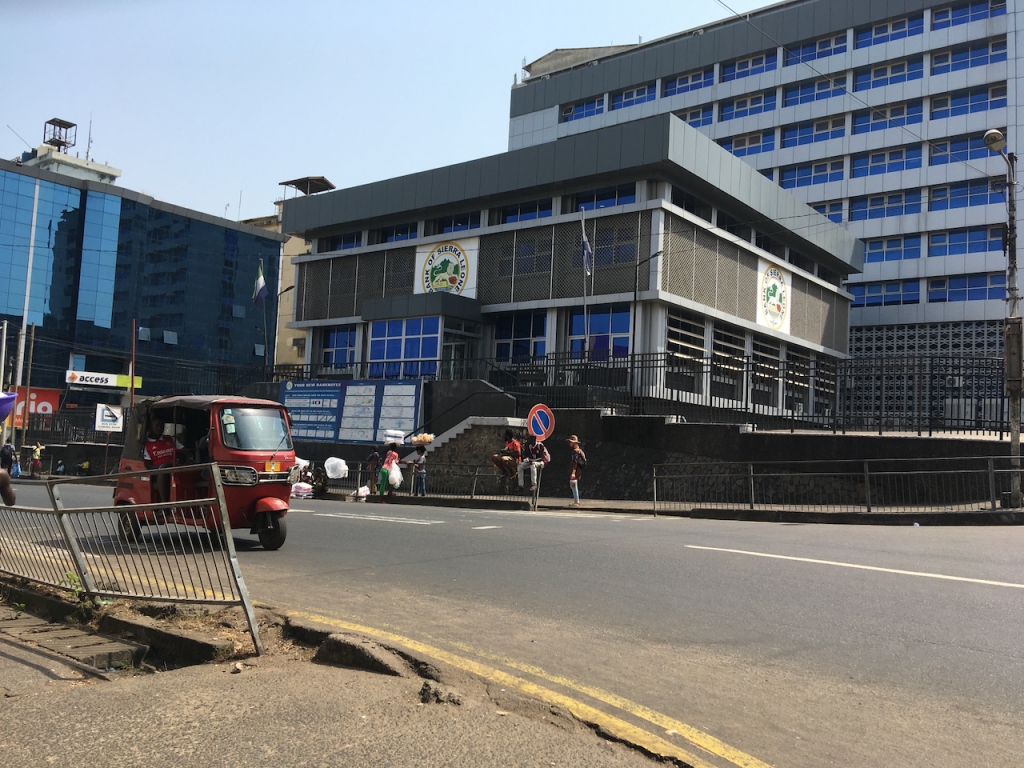
Adjacent to the Cotton Tree are the municipal offices, post office and former telephone exchange, and the major bank branches. Nickson and Borys designed a major branch for Barclays DCO and Ronald Ward for British Bank of West Africa (more on these by Ewan Harrison shortly). The Sierra Leone Central Bank is also located here – now refurbished and with its concrete mural sadly covered over with signage (designed by Ministry of Works in 1964).
GPO and Telephone Exchange, Nickson and BorysMunicipal Offices, Nickson and BorysBank of British West Africa, Ronald WardBank of Sierra Leone, Ministry of WorksBarclays DCO Bank, Nickson and Borys
Further downhill, towards the old railway station and harbour, are the major merchant stores and retailers.
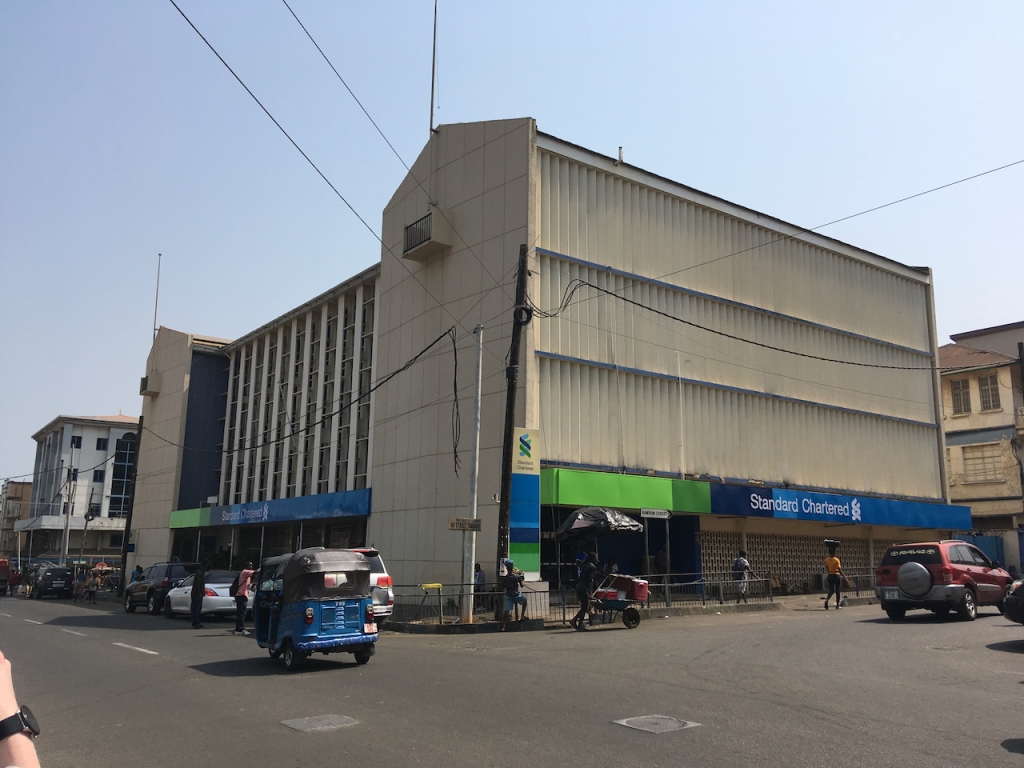
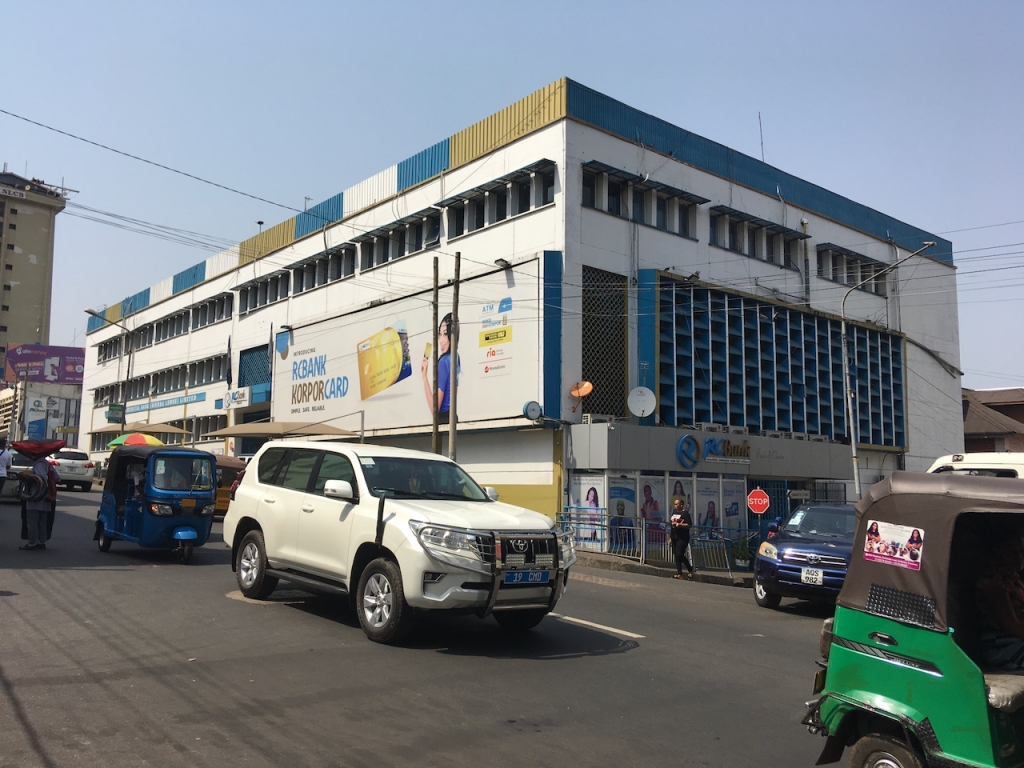
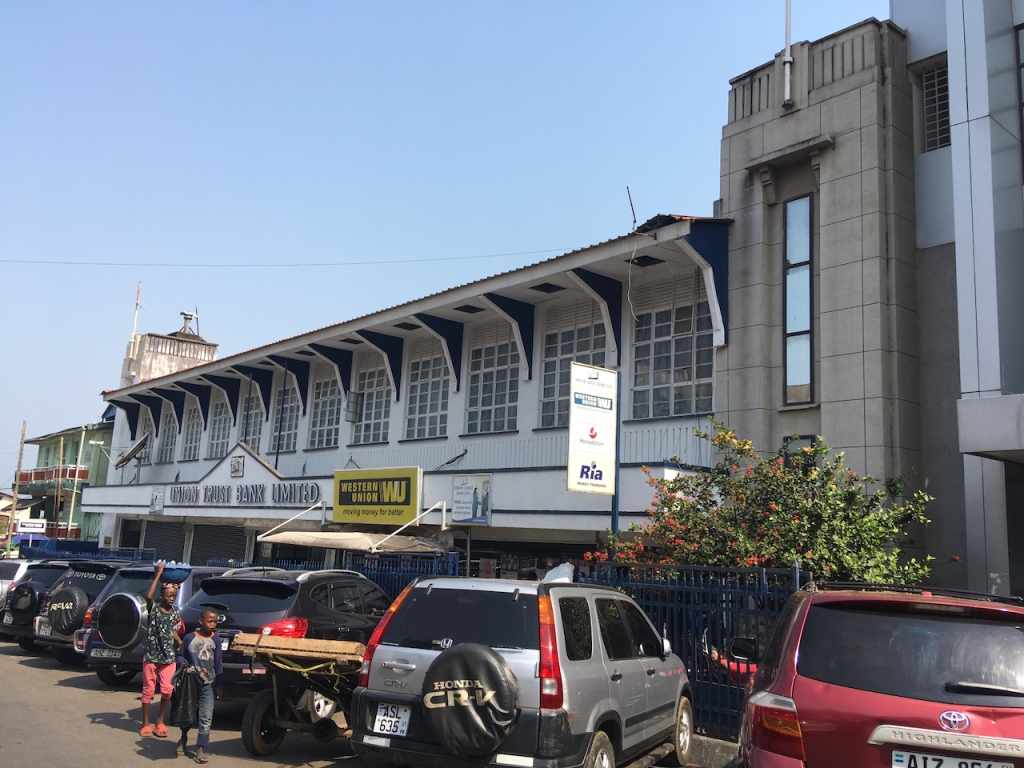
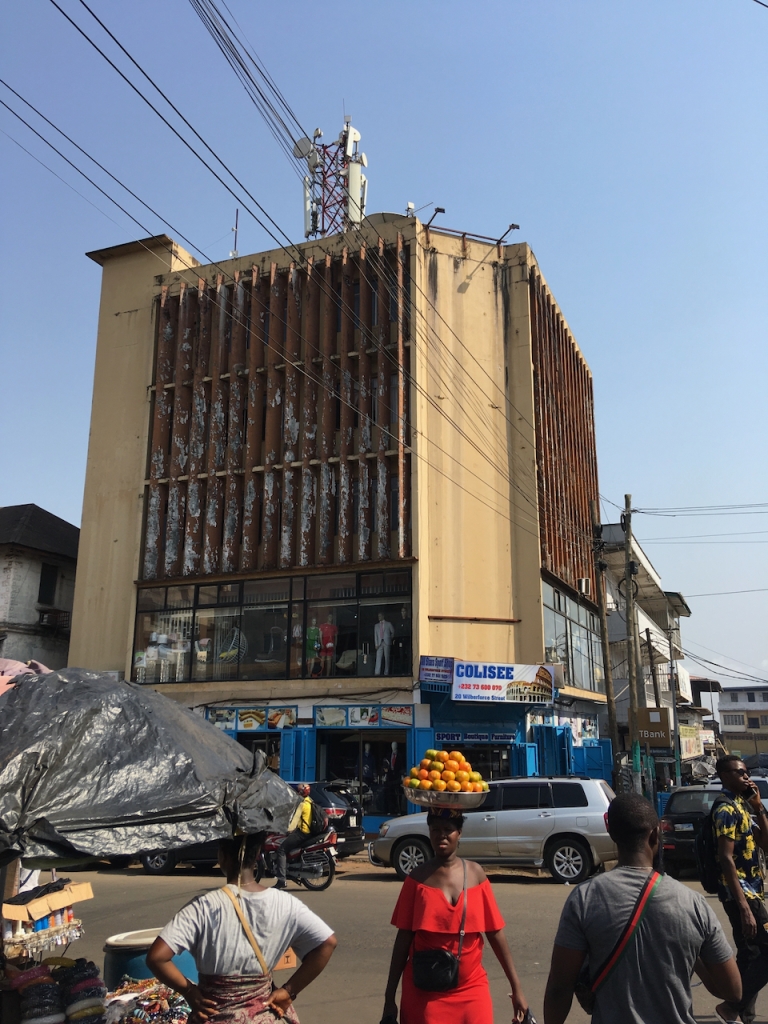
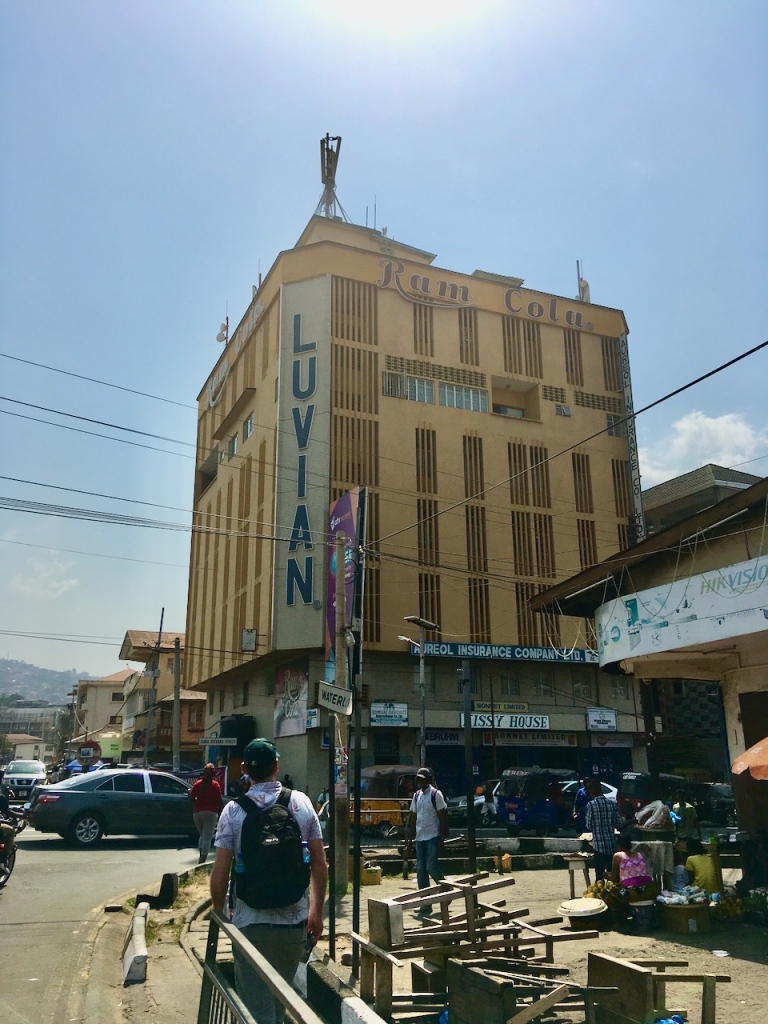
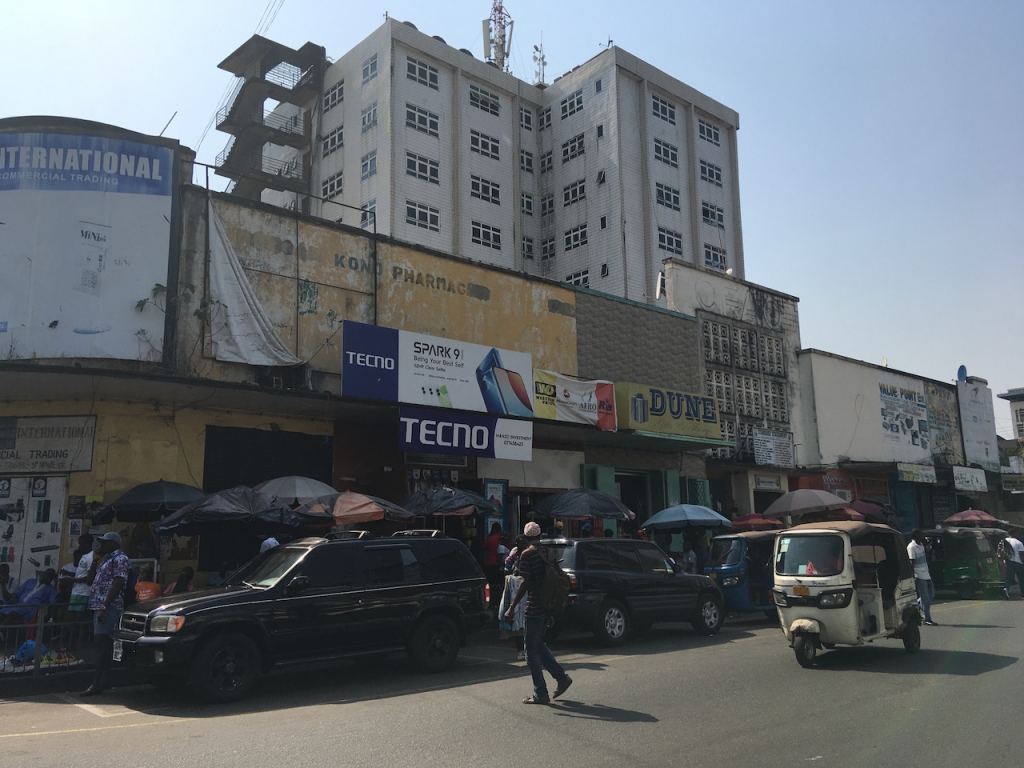
We visited the old Kingsway Stores – now a bank – but still with its deco-inspired flourishes at each end of the facade. The CFAO is still clearly recognisable, and several other stores display strong characteristics of GB Ollivant and Leventis properties we’ve seen elsewhere in Western Africa.
Former Kingsway Department StoreRetail: architect unknownLuvian Building, architect unknownFormer CFAO Building
Heading further eastwards beyond the older city grid is ‘PZ Roundabout’ named after trading company Patterson Zochonis. Here the formality of the central business area gives way to more lively street markets and less formal city planning.
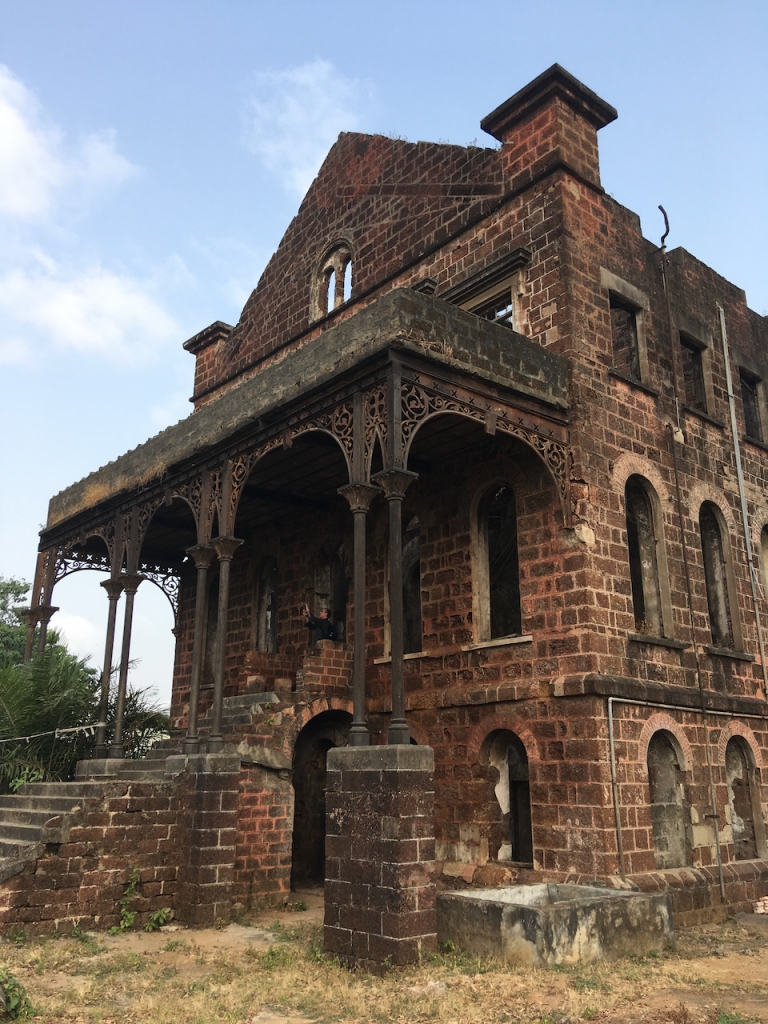
Further along Fourah Bay Road is the old Fourah Bay College building. The College was founded in 1827 in association with Durham University and was the first western style educational establishment in West Africa. It was mainly focused on missionary training. The delicate front verandah is formed with steel members bolted together and the ruinous state of the building has further exposed the steel structure inside. The beams were made by Glengarnock Iron and Steel Co in Ayrshire, Scotland and shipped out to Sierra Leone during the construction of the college building in the 1840s.
Old Fourah Bay College, founded in 1827, with construction starting in 1845, work supervised by Rev Edward Jones.
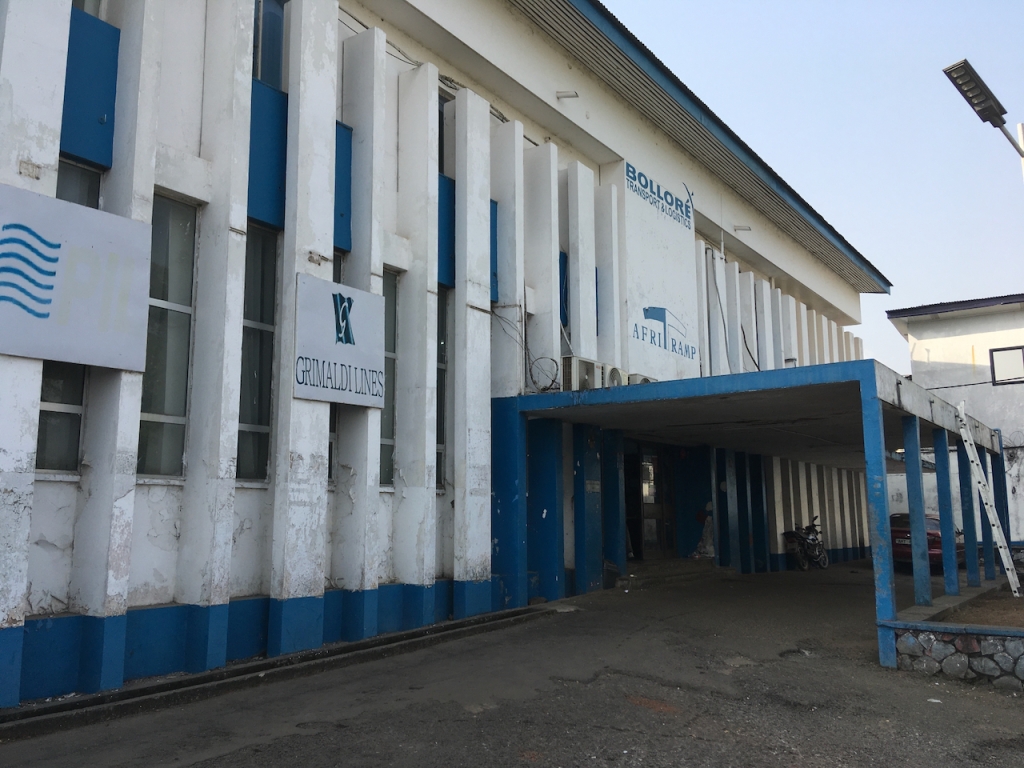
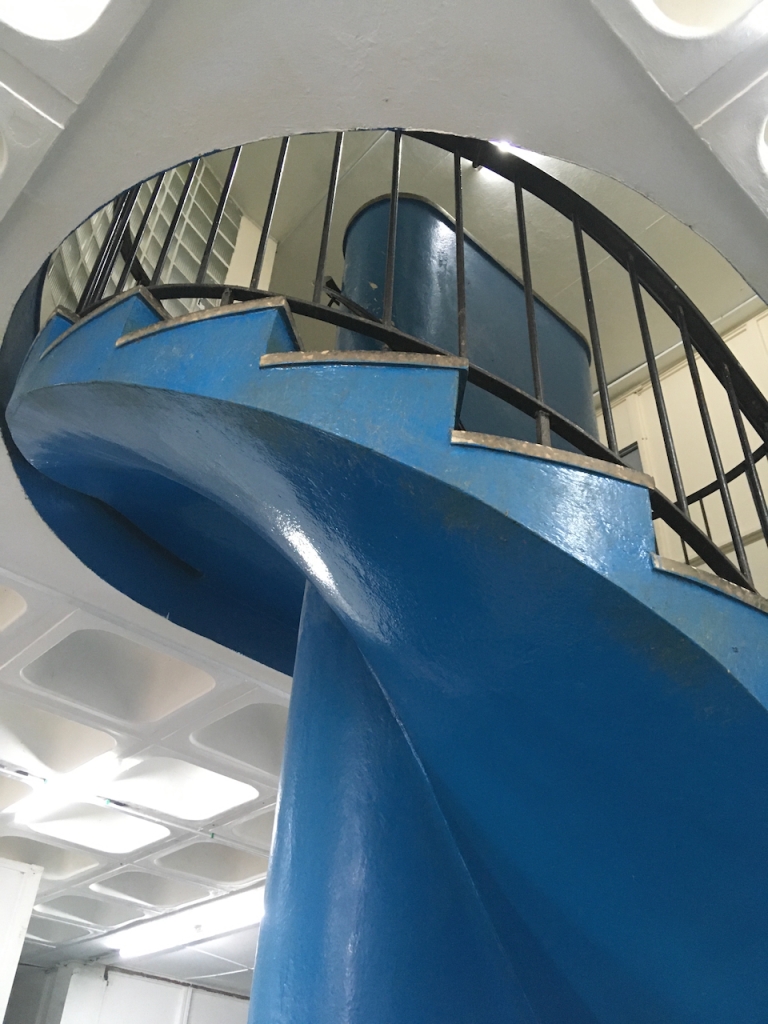
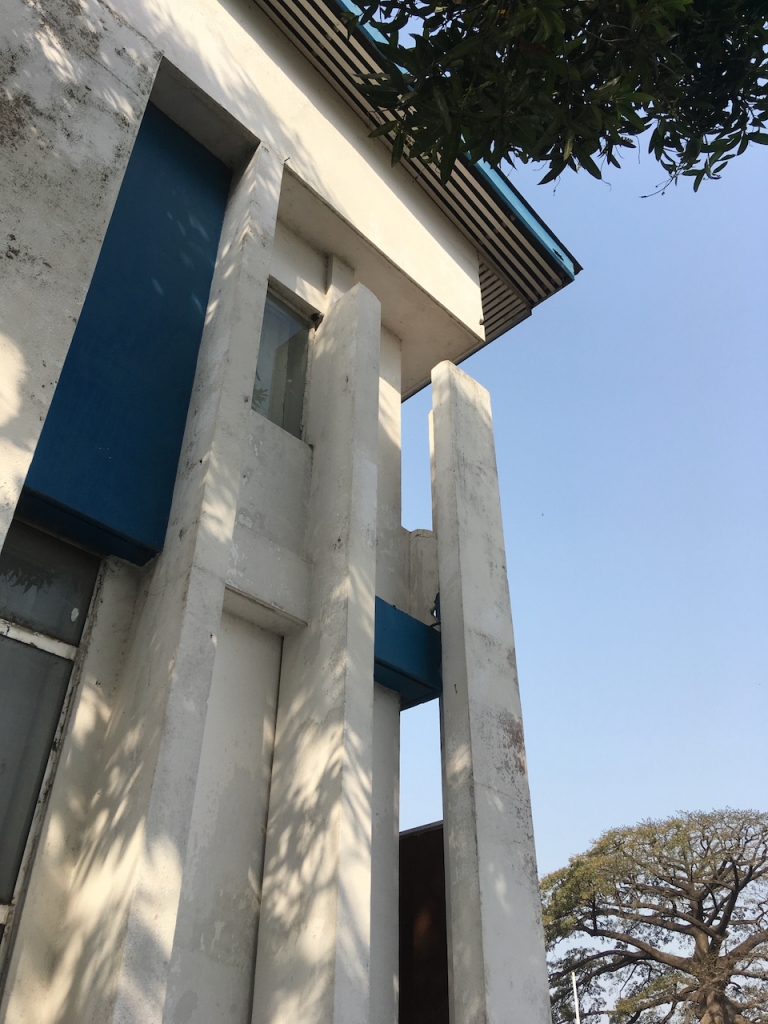
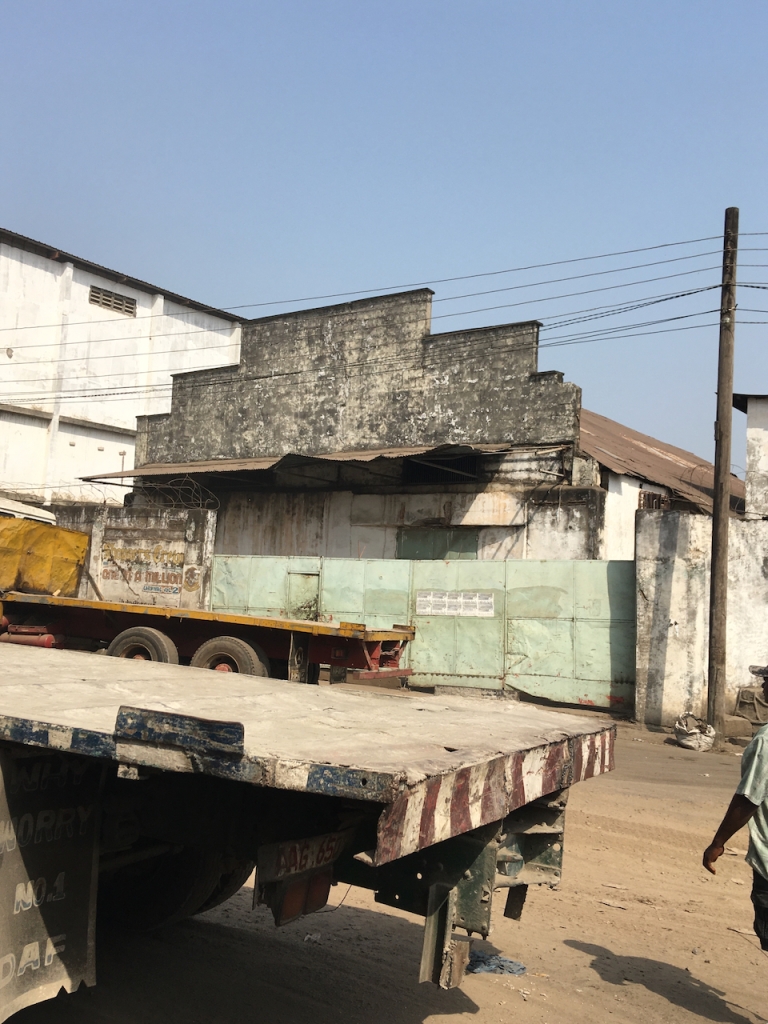
The college is located just a short distance from the sea, and what is now the busy port of Cline Town. Here the major shipping company Elder Dempster had their offices. They commissioned James Cubitt to design their premises in 1958. Cubitt also designed the Elder Dempster tower in Lagos, Nigeria, but rather than a dramatic tower overlooking the marina, here there is a more restrained horizontal solution with projecting concrete brise soleil and a porte-cochère. Inside the booking hall is a dramatic spiral staircase that wraps around what resembles a ship’s funnel. Warehouses and storage sheds dominate the area, including the former UAC stores opposite the National Railway Museum.
Former Elder Dempster Offices, James CubittInside Elder Dempster: waffle ceiling and spiral staircasedetail of the exteriorUAC warehouse Cline Town
There’s an impressive collection of architecture in this historic port city. In the UAC archive there are extensive photographic albums from 1915 through the 1960s documenting many of the streets and buildings we visited. Our task now is to identify more of these structures, and to research the history that resulted in their commissioning, design, and wider significance.
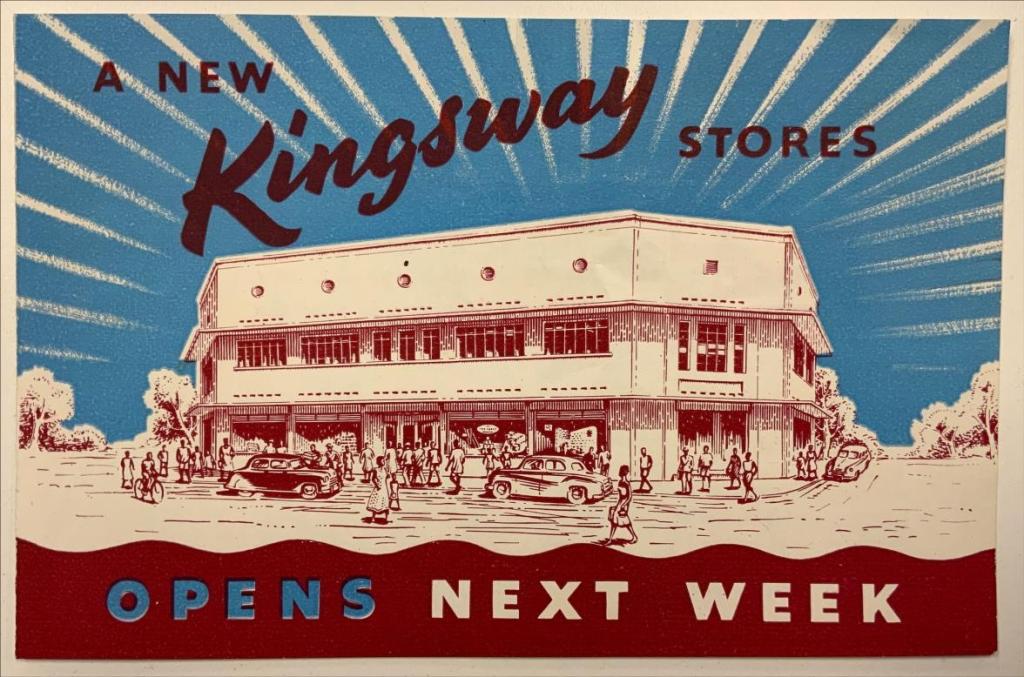
Kingsway, Sekondi Advertisement Picture courtesy of Unilever Archives
Kingsway Stores was the most exclusive retail chain in colonial British West Africa. Established by a British import-export firm, Miller Brothers, the chain’s first two department stores opened in Accra and Kumasi in 1915-1920 and were explicitly modelled on Harrods and Selfridges. Named for the boulevard in London’s Holborn, where Millers was headquartered in a stodgily baroque office building, the Kingsway Stores sold imported food, clothing and home wear to a primarily British expatriate clientele. By 1929, a series of mergers and takeovers saw Miller Brothers absorbed into Unilever’s vast African subsidiary, the United Africa Company, which is currently the subject of a collaborative research project led by the University of Liverpool and Unilever Archives, and funded by the Leverhulme Trust.
Kingsway Stores, Sekondi, 2022 Image: Iain Jackson
The Kingsway chain grew under the United Africa Co.’s ownership and by the early 1950s, Kingsway stores traded in each of the British West African capitals, Accra, Lagos, Freetown, Banjul, and in many of the larger towns and cities across the region: Kumasi, Cape Coast, Sekondi, and Tamale in the Ghana, and in Jos and Kaduna in Nigeria. Like many of these stores, the Sekondi store was designed by the Unilever In-House Architects and Engineering Department, headed by James Lomax-Simpson. A graduate of the University of Liverpool School of Architecture, Lomax-Simpson designed numerous buildings for Unilever, including housing at the famous company town, Port Sunlight. The designs that his team produced for United Africa Co. offices, warehouses and retail stores across West Africa tended towards the mildly moderne, with some slight modifications for local climatic conditions through the use of canopies and verandas to provide shading from the sun and allow for the higher loads of rainwater run-off required during the rainy season. The Sekondi Kingsway store is a paradigmatic example of this work.
Party at Kingsway Store in Bathurst/Banjul, Gambia, held in 1953. Picture courtesy of Unilever Archives.
The growth of the Kingsway chain in the interwar years reflected the expansion of British expatriate technicians, civil servants and businessmen during a period known as ‘the second colonial occupation.’ Increased investment in development projects, ultimately designed to maximise the flow of cocoa and precious metals from West Africa and thus boost Britain’s dollar reserves, saw not only an increase in British expatriate staff working in late colonial West Africa, but also their increasing embourgeoisement. The growth of the chain also reflected, and, indeed, facilitated, changes in the gender balance of British communities in West Africa. British women were originally discouraged from settling in the region, but by the 1940s the availability of malaria prophylaxis and yellow fever vaccines saw increasing numbers of women taking positions within colonial administrations, and wives joining their husbands on tours of duty across the region. As Laura Ann Stoler notes, the presence of European women ‘accentuated the refinements of privilege and the etiquettes of racial difference… women put new demands on the white communities to tighten their ranks, clarify their boundaries and mark out their social space.’ Racially segregated bungalow reservations proliferated across ‘British’ West Africa in this period. Within these reservations, ‘Europeanness’ was performed through a constant round of dinner parties, drinks parties, tennis parties, through the consumption of imported tinned and preserved food, through patterns of dress and home decoration. Kingsway stores, which emphasised that ‘orders were delivered direct to bungalows,’ supplied all the goods required for this memetic of bourgeoise English life.
By the mid-1950s, as political decolonisation neared in West Africa and both civil services and expatriate companies increasingly ‘Africanised’ their staff, the Kingsway Stores faced the loss of its primary customer base. Perhaps paradoxically, the company management combatted this through a programme of expansion. Boldly modernist new stores, designed by the British commercial architectural firm TP Bennett & Partners, were opened in Accra, in the Lagos suburbs, in Ibadan and Port Harcourt in Nigeria. At the same time, didactic marketing campaigns – exhibitions, product demonstrations, fashion shows – were instrumentalised to sell a vision of modern, and, indeed, modernist, domesticity to an elite African clientele. An Ideal Homes Exhibition, sponsored by the British Design Council and held at the Lagos Kingsway Store in 1962, for example, offered advice on ‘such subjects as how to create harmony with simple furnishings and the tricks of entertaining which make a house-wife into a hostess.’ Kingsway at the end of empire therefore shrewdly manoeuvred itself away from selling ‘Europeanness,’ to selling ‘Modernity’ to the emerging, post-colonial, African elite, a shift in mode that sheds light on the entanglements between modernist architecture and design on the one hand, and colonial and neo-colonial profit extraction on the other.


















 Transnational Architecture Group