Archive

Zanzibar

Spaces for Health and Healing in Africa

Symposium 16 – 17 April 

Liverpool School of Architecture 

Liverpool School of Architecture, at the University of Liverpool and the Program in the History of Science, Medicine, and Technology of the Johns Hopkins University invite proposals for a hybrid symposium to be held in Liverpool from the 17-18 April 2025.  

Pathology Labs, Korle Bu Hospital, Accra, c1958

We welcome presentations that explore various settings for health and healing, such as shrines, sacred healing huts, and herbal ‘apothecaries’ and other spaces for indigenous medicine and healing practices; ‘basic’ health care infrastructure incorporating dispensaries, clinics, and hospitals  developed for early missionary and colonial medicine; post-independence medical centres. We are also interested in papers examining the use of healthcare ‘vectors’ such as barefoot doctors, travelling midwives and paramedics and their spread of health care practices such as vaccinations, and childhood nutrition programmes in urban and rural areas. 

We are interested in the settings for full range of medical specialisms from paediatrics to psychiatry and also more contemporary physical design responses to contemporary pandemics such as Ebola and Covid. Evidence and records of mixtures of indigenous and western healthcare practices in some community settings and the emergence and involvement of teaching hospitals in healthcare planning is also of interest.  

Other possible topics include the role of military hospitals, colonial and modern, and contemporary healthcare infrastructure and provisions for displaced persons and refugees.  We encourage interdisciplinary approaches–history of medicine, medical anthropology and sociology, oral history, among others. 

Our area of interest is the African continent, from the ‘MEANA’ countries of the maghreb, north of the Sahara, to all countries South of the Kalahari and East and West of the Sahara. Health and healing facilities on islands in proximity to main continental mass such as Zanzibar, Mauritius, Fernando Po and Cape Verde are also of unique interest. 

We are seeking to publish selected outputs from the symposium in a volume currently under negotiation with the publisher. We welcome abstracts (500 words max) and short CVs (1page) Please also indicate whether you intend to deliver your paper in person or online. For more information please contact  Ola Uduku o.uduku@liverpool.ac.uk or Bill Leslie, swleslie@jhu.edu

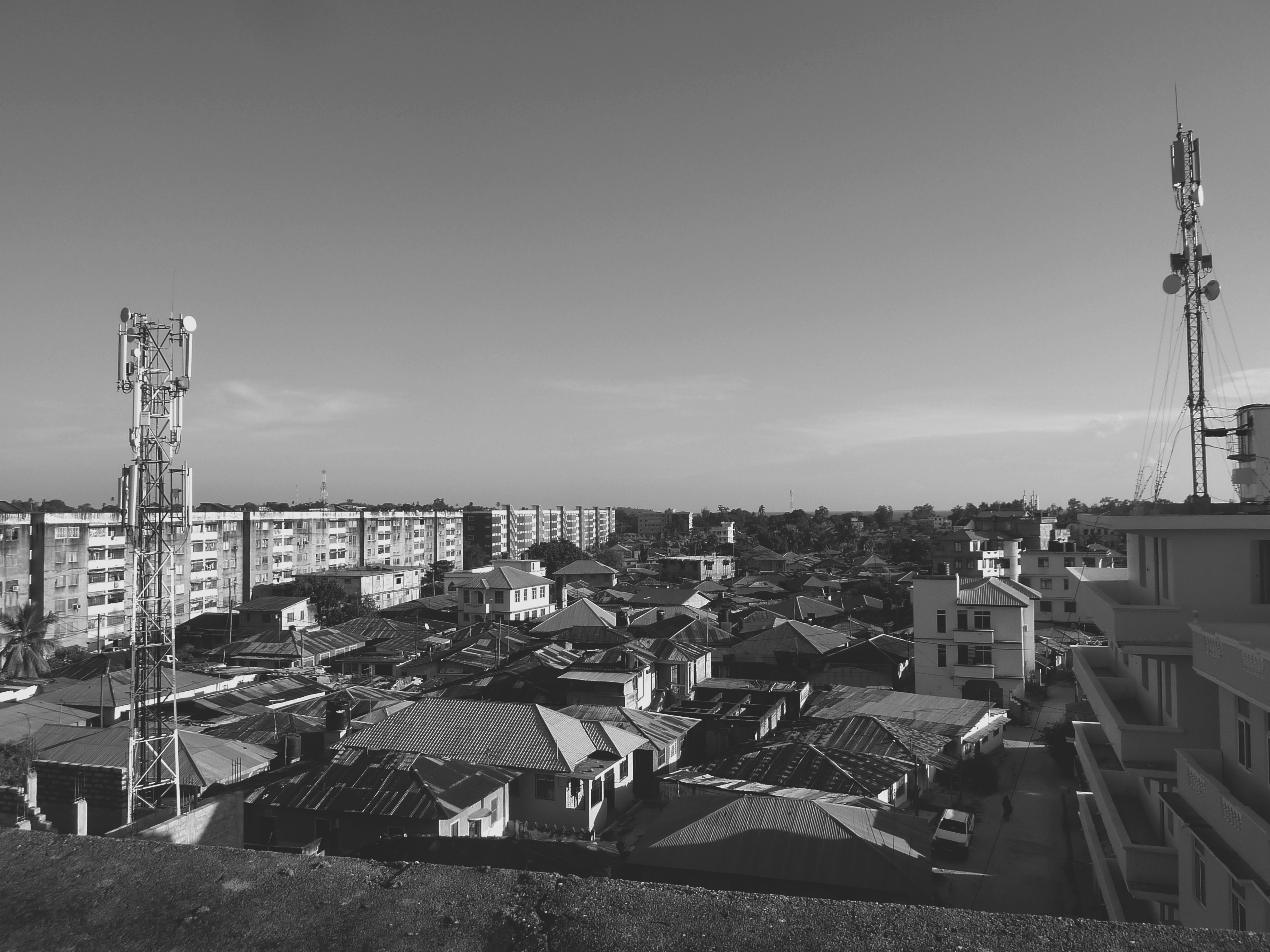
Ng’ambo Atlas. Historic Urban Landscape of Zanzibar Town’s ‘Other Side’

Ng’ambo is the lesser known ‘Other Side’ of Zanzibar Town. During the British Protectorate the area was designated as the ‘Native Quarters’, today it is set to become the new city centre of Zanzibar’s capital. Local and international perceptions of the cultural and historical importance of Ng’ambo have for a long time remained overshadowed by the social and cultural divisions created during colonial times. One thing is certain: despite its limited international fame and lack of recognition of its importance, Ng’ambo has played and continues to play a vital role in shaping the urban environment of Zanzibar Town.

image3

Ng’ambo Atlas. Historic Urban Landscape of Zanzibar Town’s ‘Other Side’ documents the material collected through the heritage-based urban planning project Ng’ambo Tuitakayo! carried out by the Government of Zanzibar in collaboration with African Architecture Matters and City of Amsterdam and under the auspices of UNESCO.

image5-1

The goal of the project was to prepare a local area plan (structure plan) for the new city centre of Zanzibar’s capital. The planning exercises were from the beginning grounded in the notions of urban culture and heritage, while the principles outlined in the UNESCO Recommendation on Historic Urban Landscape provided a framework for the subsequent stages of the work.

It quickly became clear that the cultural and historic richness of Stone Town’s ‘Other Side’ merited a wider recognition than a technical planning document would allow for. At the same time presenting the outcomes of the project to a wider public through an atlas was a way to promote the history and culture of the area and contribute to the argument that urban heritage should play a central role in sustainable development of cities.

IMG_8074 bis

The atlas brings together and presents Ng’ambo’s rich planning history and draws attention to the outcomes of the mapping of the material and immaterial cultural landscape.It presents over hundred years of Ng’ambo’s history and urban development through maps, plans, surveys and images, and provides insights into its present-day cultural landscape through subjects such as architecture, toponymy, cultural activities, public recreation, places for social interaction, handcrafts and urban heritage.

Post 14

Ng’ambo Atlas was produced by the Department of Urban and Rural Planning, Zanzibar and African Architecture Matters

Editors: Antoni Folkers and Iga Perzyna

Publication year: 2019

Available for free download from:

https://catalogue.leidenuniv.nl/primo-explore/fulldisplay?docid=UBL_ALMA51336909840002711&context=L&vid=UBL_V1&lang=en_US&search_scope=All_Content&adaptor=Local%20Search%20Engine&isFrbr=true&tab=all_content&query=any,contains,Ng%27ambo%20atlas&offset=0

Available for purchase at:

https://lmpublishers.nl/en/catalogus/ngambo-atlas-historic-urban-landscape-of-zanzibar-towns-other-side/