I’ve been visiting buildings in Accra that I don’t know much about today.
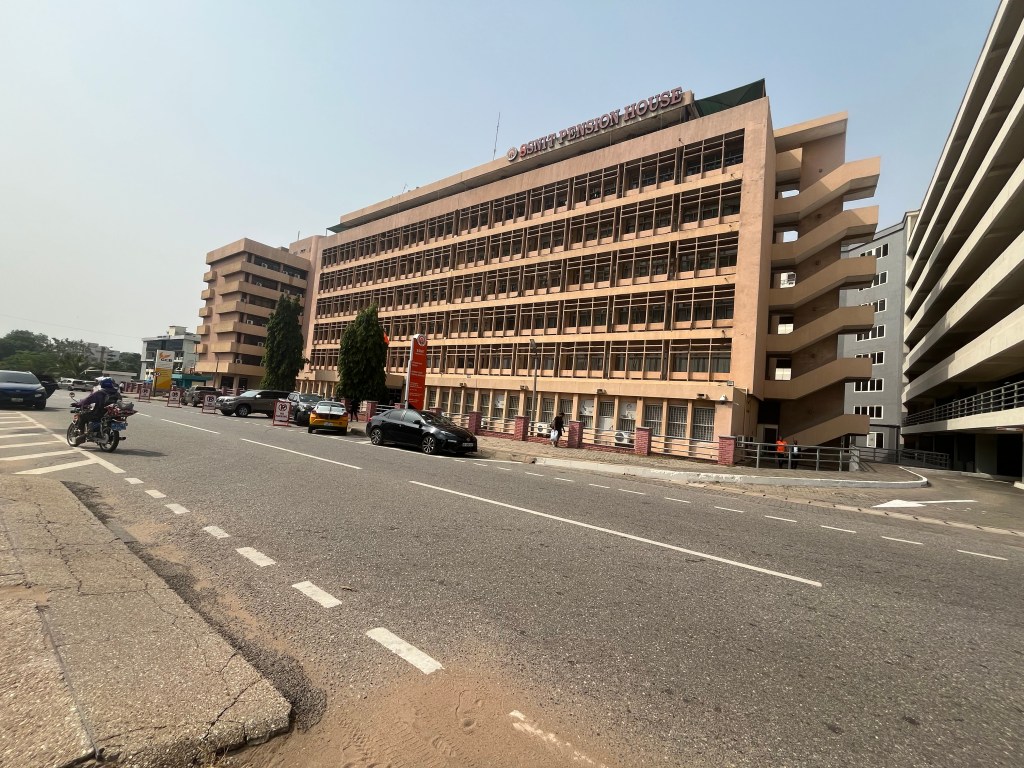
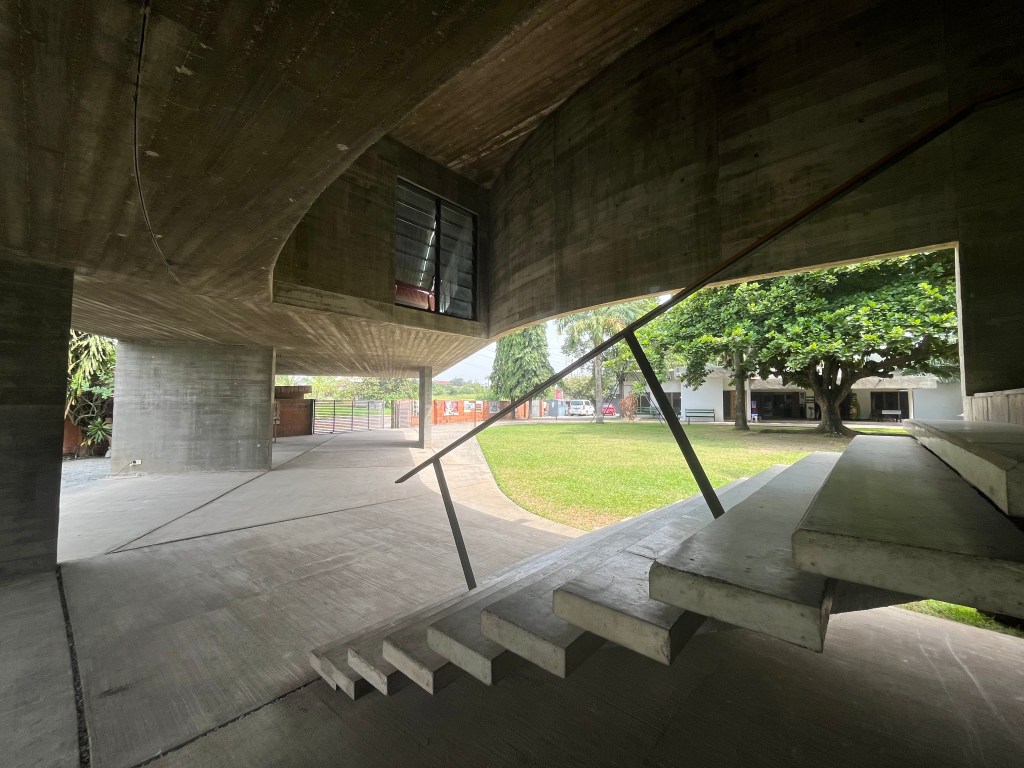
SSMIT Pension House: super bit of brutalism near the ministries. This building looks after the state pensions – but who designed it? Perhaps a forgotten Nickson & Borys? Rather nice open staircase and precise brise soleil…. I can’t find any references to it in my collections or at the RIBA library catalogue. I’ll have to check WABA Journal again, but don’t recall ever reading about this significant building?
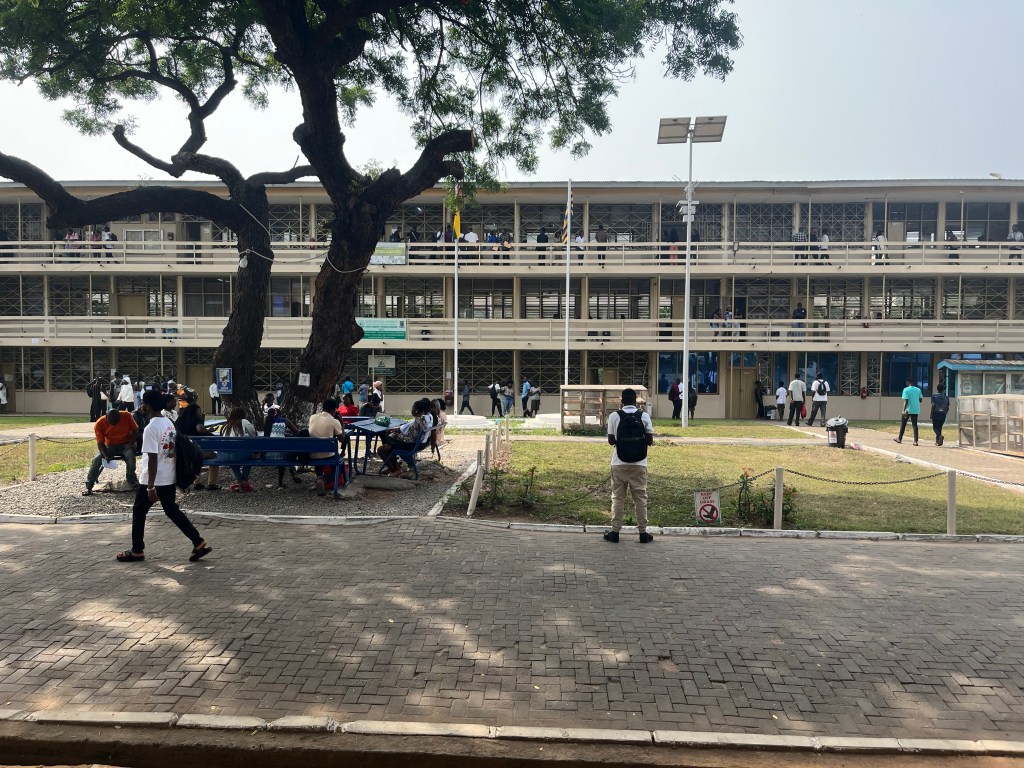
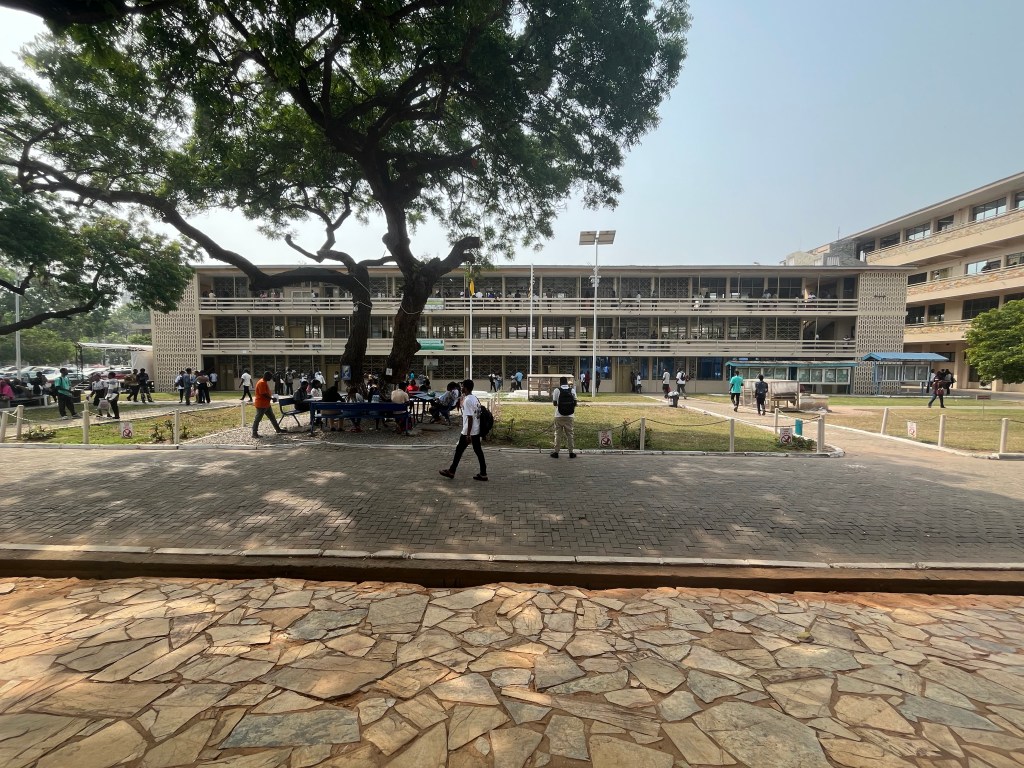
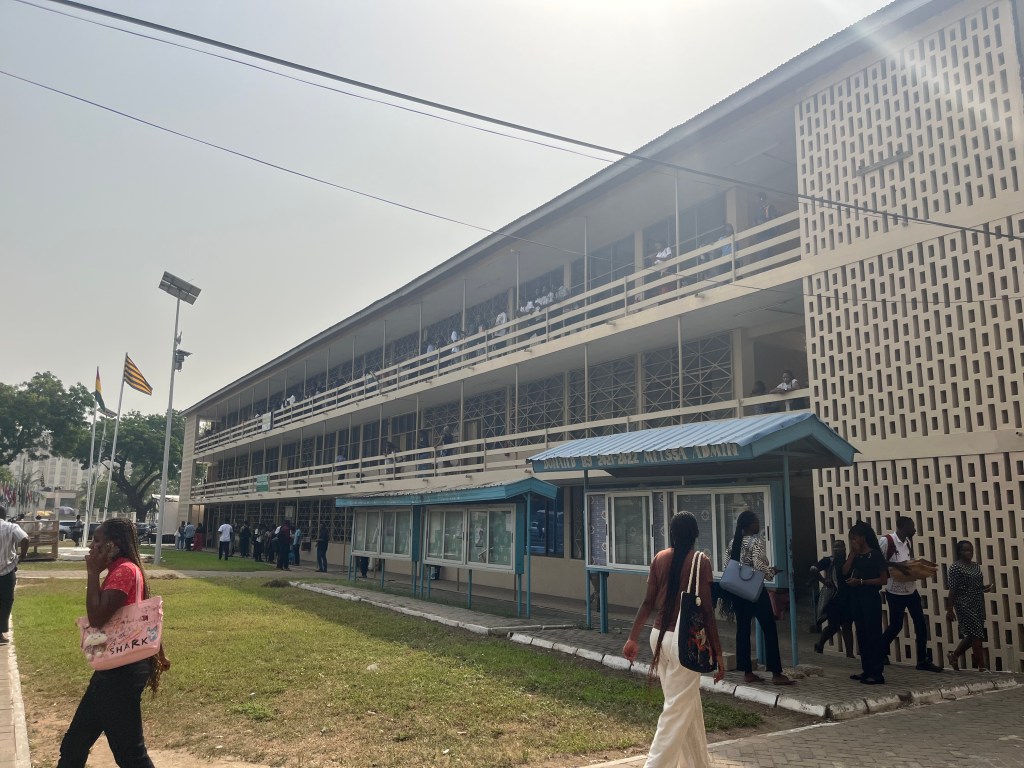
Accra Technical Institute. My reliable sources say it’s designed by none other than James Cubitt. Could be – it resembles his early work at KNUST, Kumasi. OR should I have gone to the Accra Technical College? But the dates for that institution don’t seem to add up.
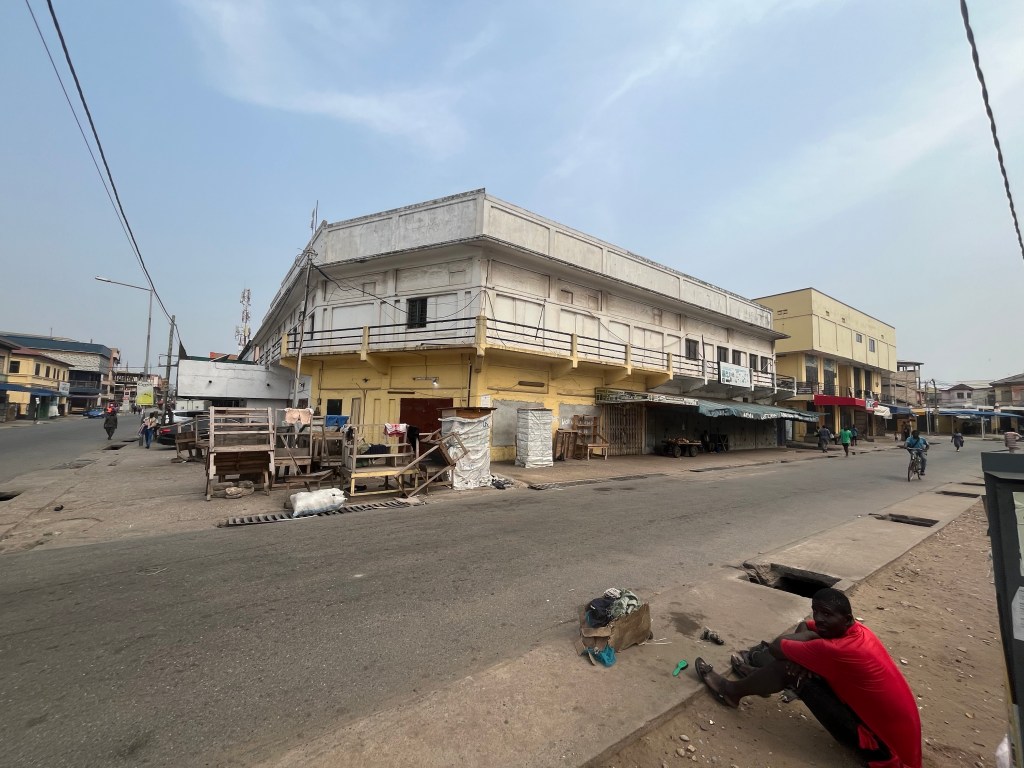
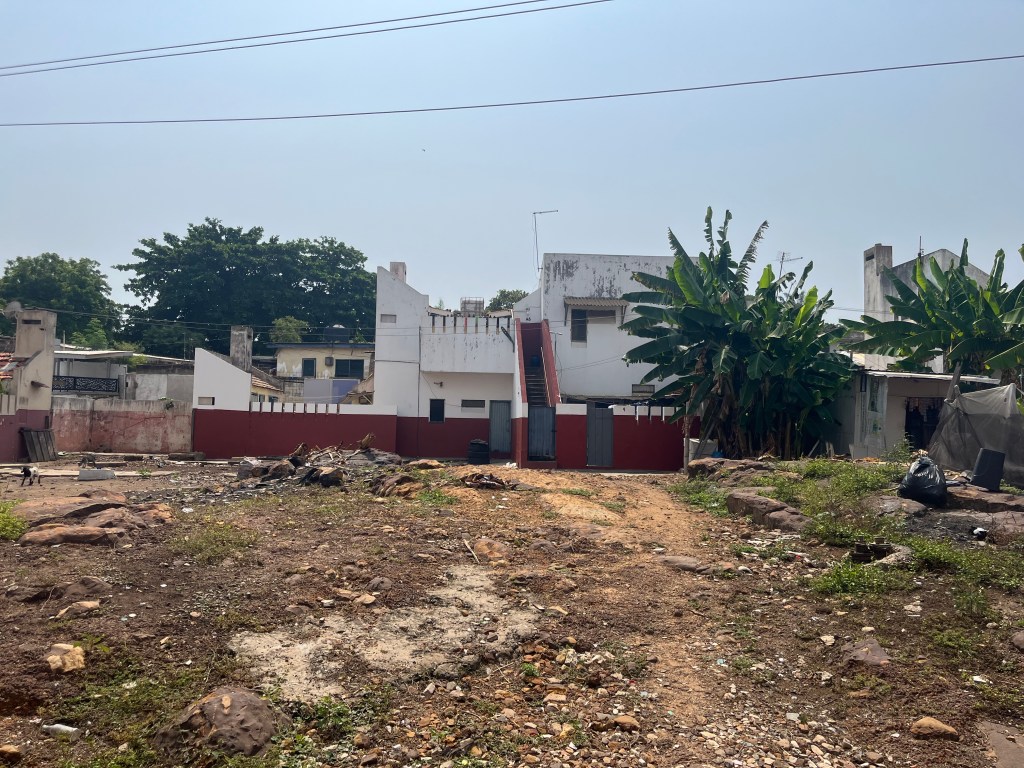
Then there’s a delightful commercial building in Jamestown. It resembles the UAC Kingsway Store in Sekondi. It definitely wasn’t a Kingsway, but perhaps was linked to the UAC?
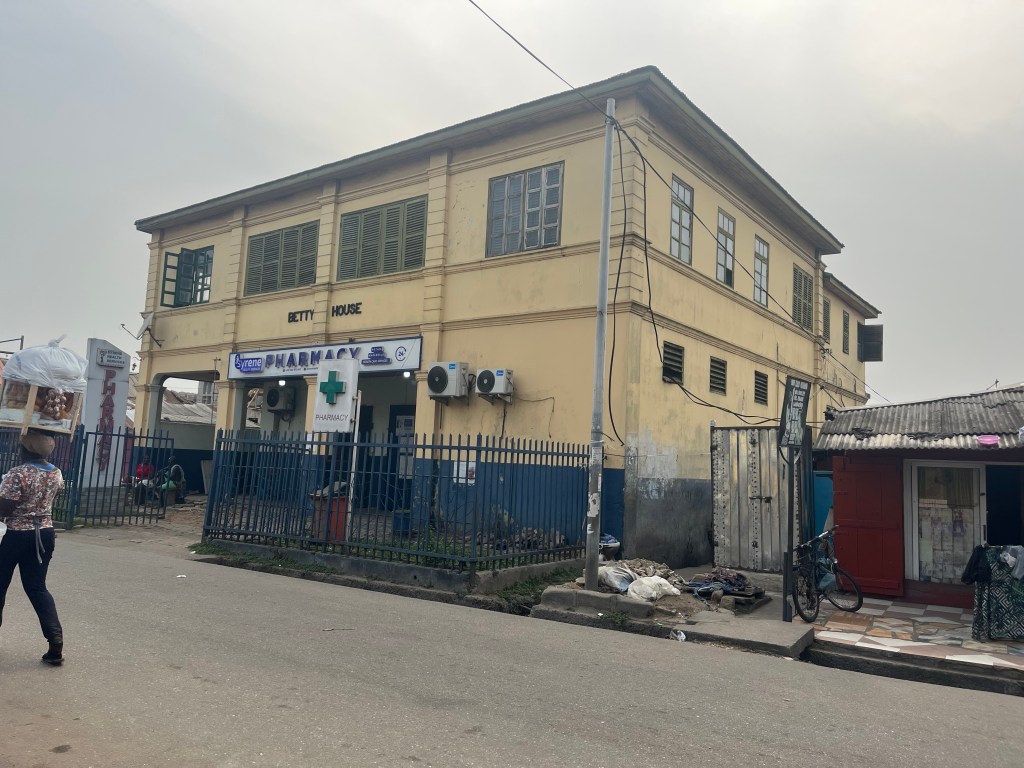
Finally “Betty House”. A rather large house in what was a prestigious neighbourhood in Jamestown at Korle Wokon. Historically important as the residence of Nana Akufo-Addo’s father and served as HQ for Ghana’s first political party, the United Gold Coast Convention (UGCC) after its formation in 1947.
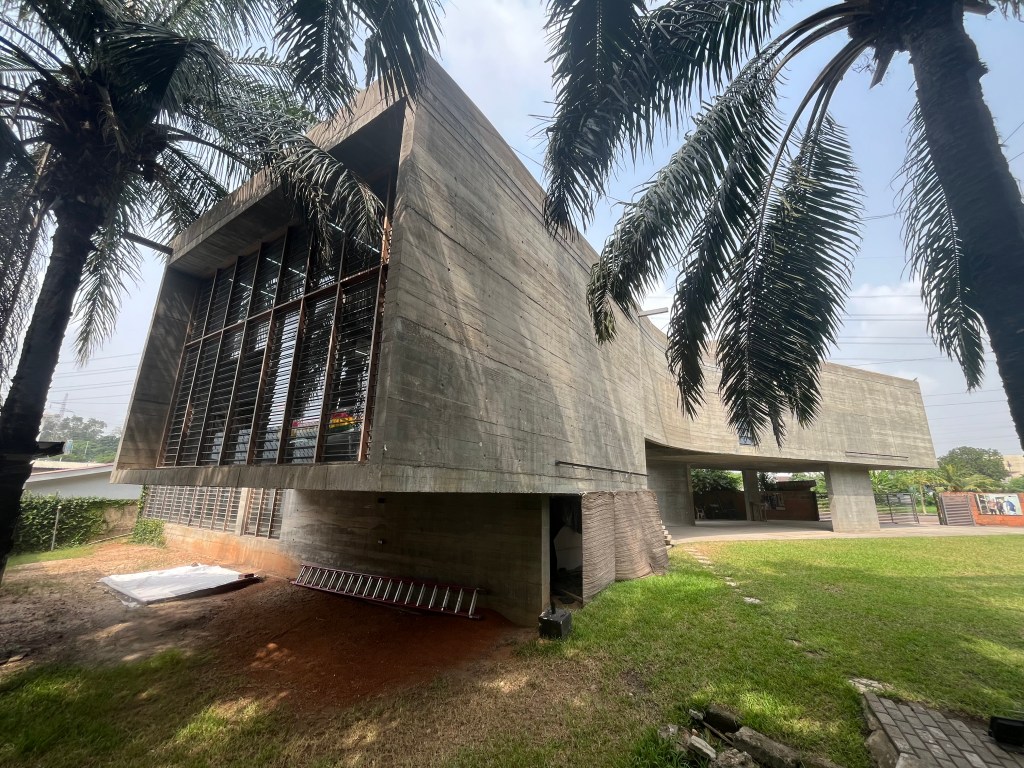
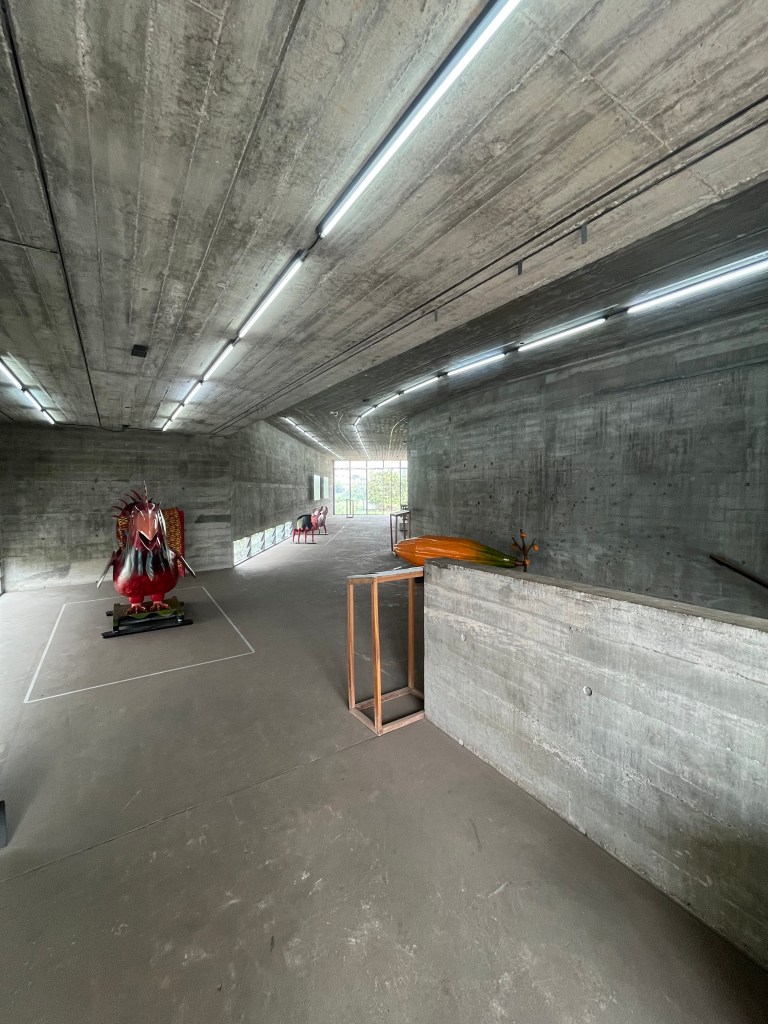
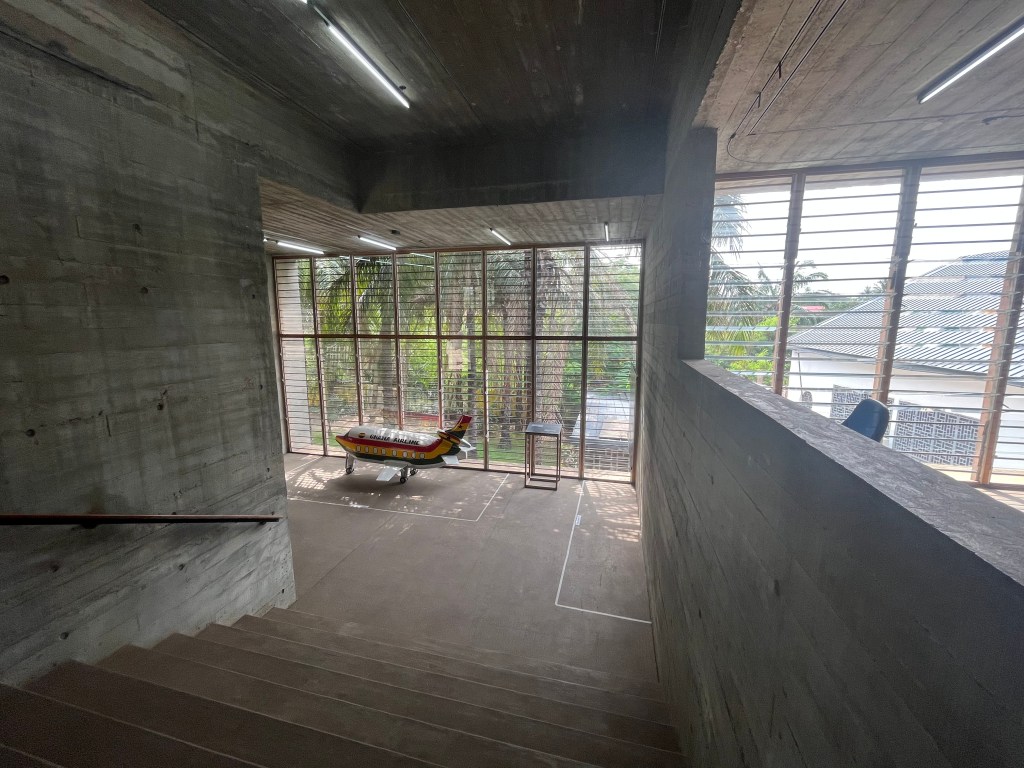
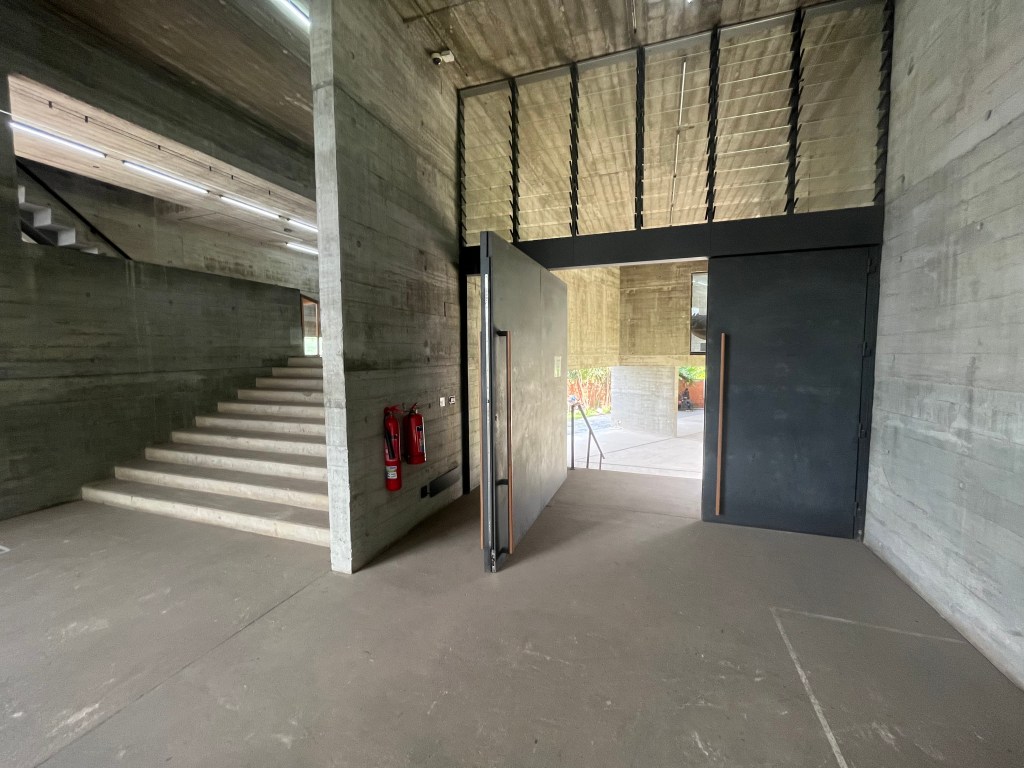
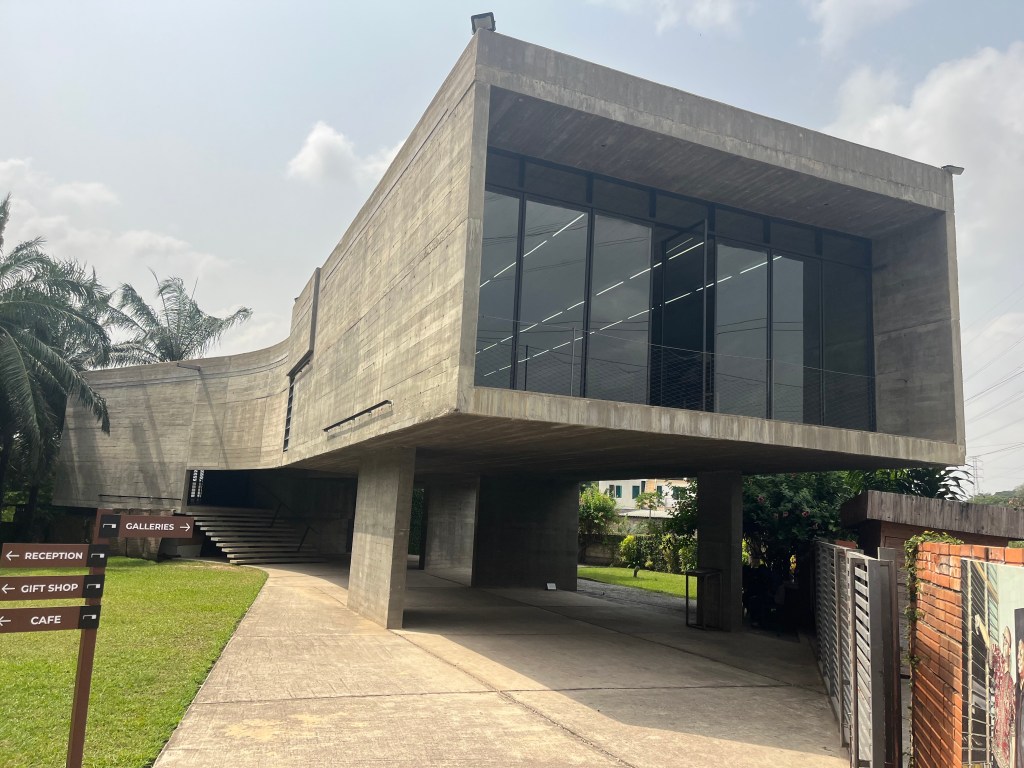
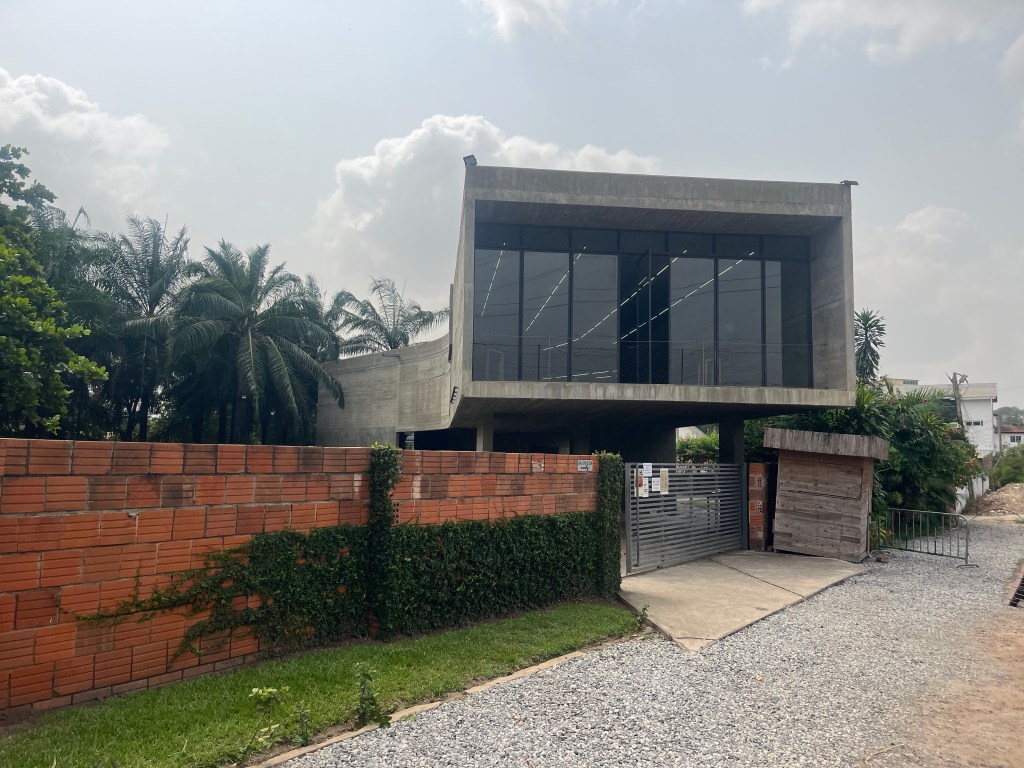
I finally visited the Nubuke_foundation today – a contemporary arts centre in East Legon, Accra . A very exciting structure that was fun to explore . I got there early and had the entire place to my self. Exclusively en situ concrete with the main gallery on piloti the space is lit from the large windows at either end of the linear structure. The shaded outside space under the gallery creates an exterior garden gallery (and cinema), and a carefully cast cantilevered staircase leads up the main entrance. The doors have the Le Corbusier inspired eccentric pivot, found frequently in Chandigarh, and there are certainly other motifs redeployed from the Modernist 5 points. It’s not derivative or cliched though – far from it. The building responds very well to the site and the vast -louvred window facades at each end offer fine views whilst being shaded from the concrete that projects beyond.
The campus was designed by Baerbel Mueller of http://www.nav-s.net/ and Foreign Affairs ([A]FA), Institute of Architecture, University of Applied Arts Vienna.
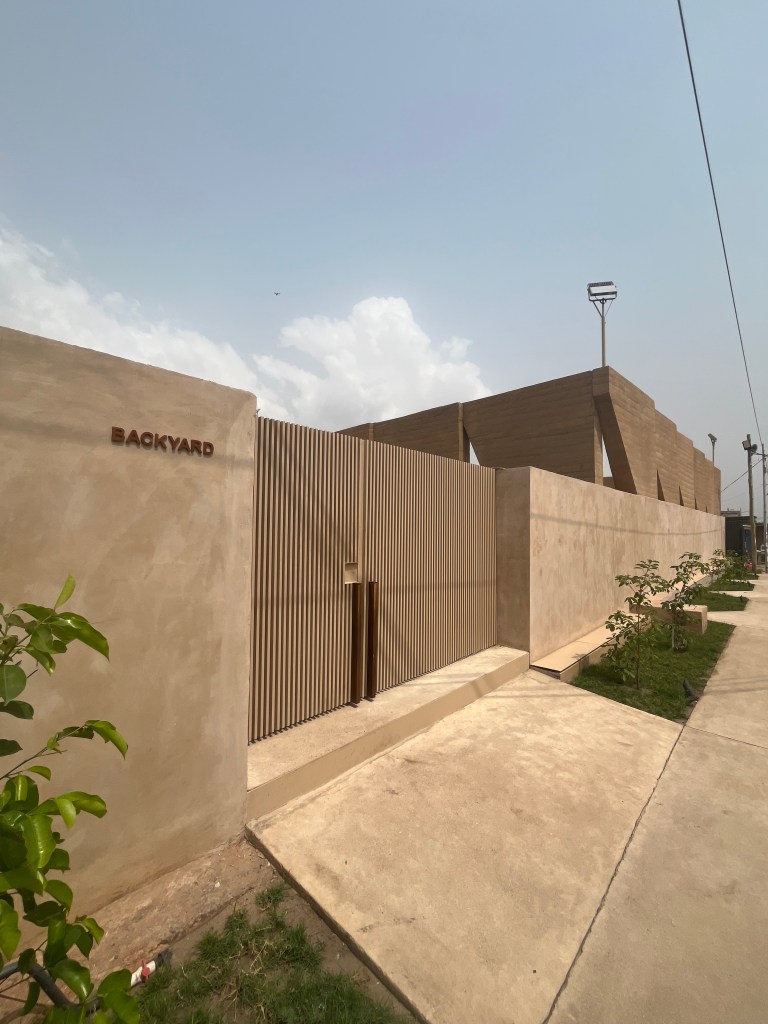
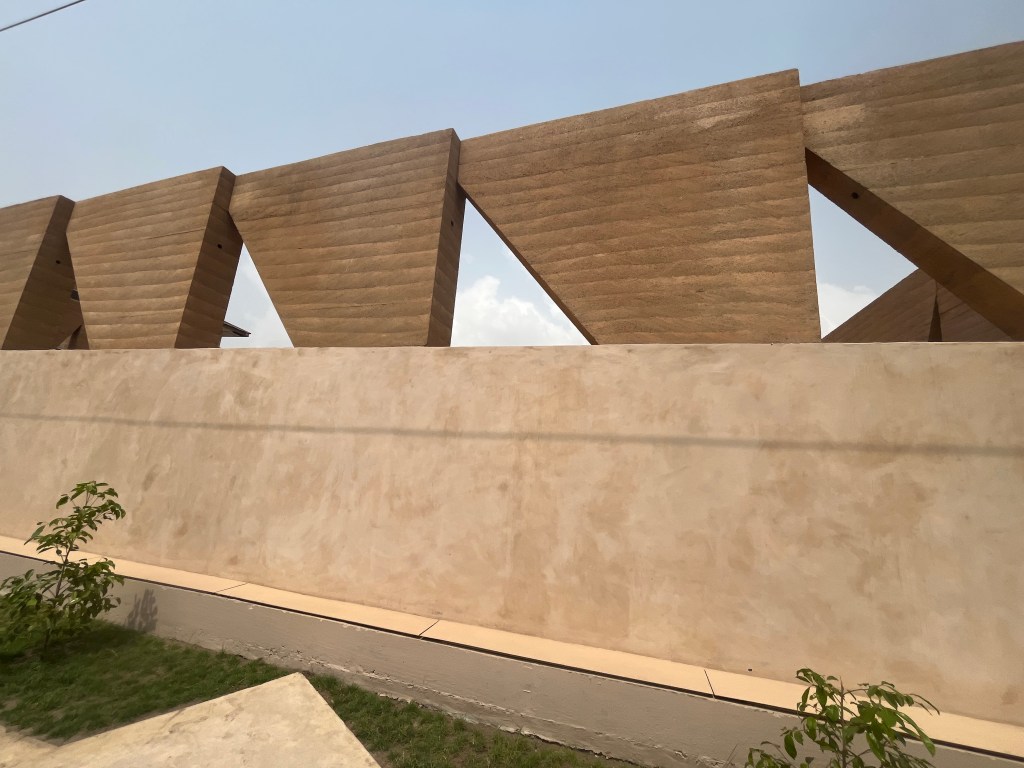
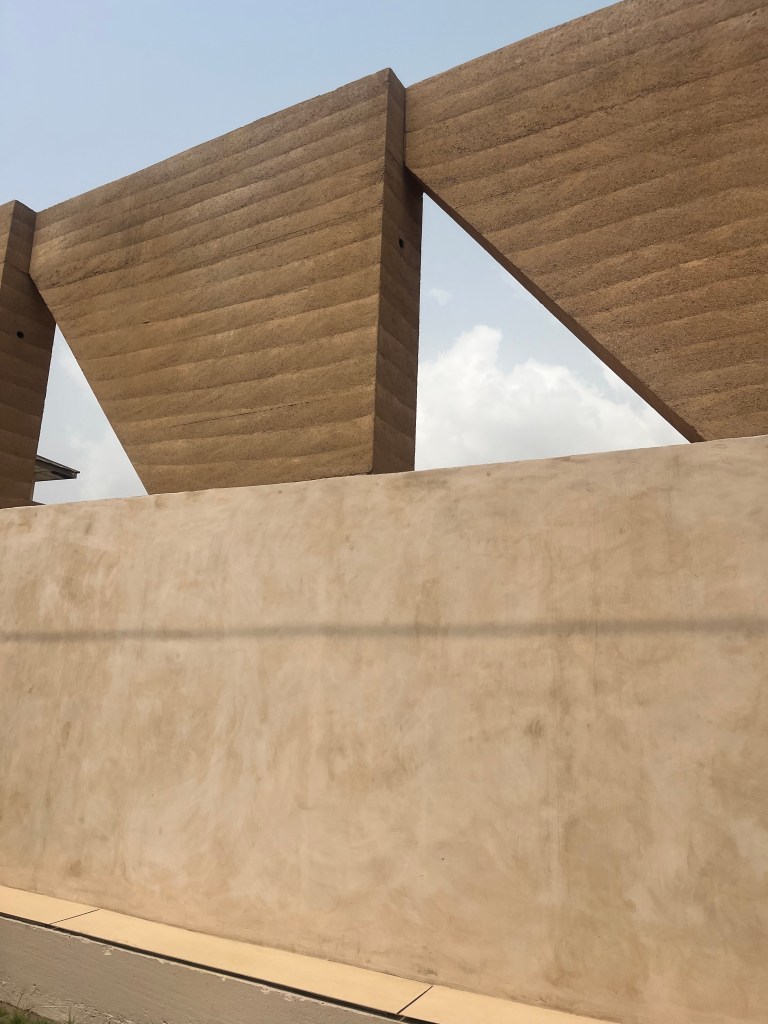
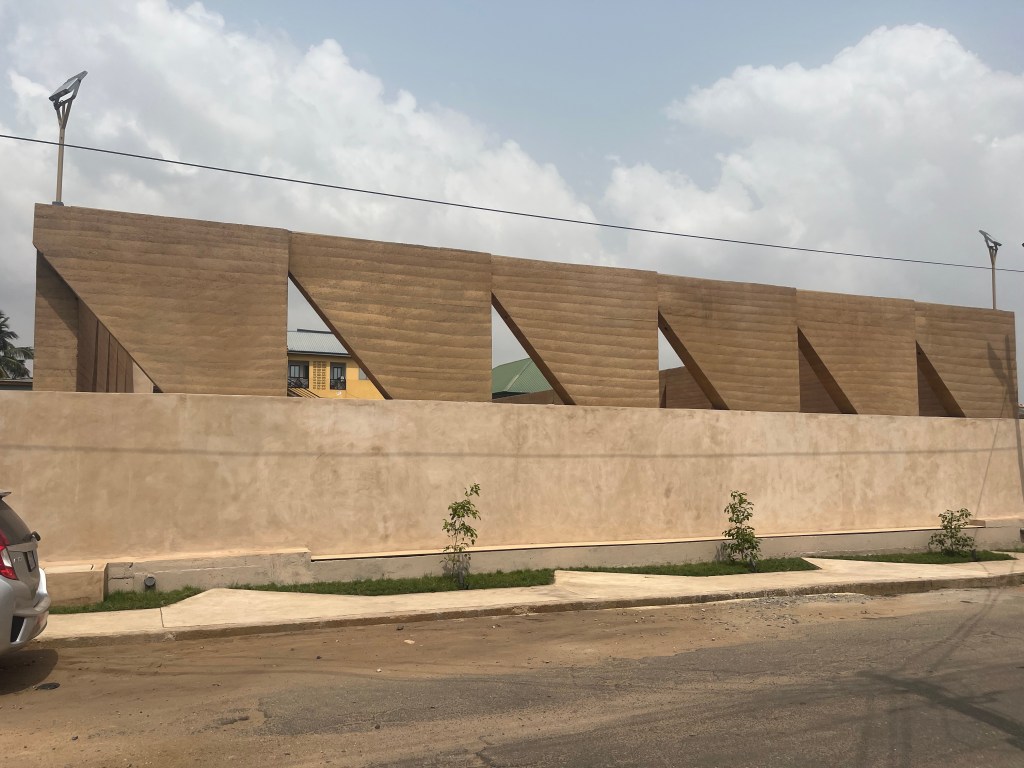
Elsewhere I had a less successful attempt to visit the Backyard Community Club – every time I visit it’s closed – but hopefully I’ll get full access soon. Designed by DeRoche Projects, it is the first project in Ghana using a precast rammed earth system. The modular precast elements provide shade whilst allowing cross ventilation. They also integrate cleverly into a bench for observers to watch the games. As well as tennis, there’s a kitchen garden and other gathering spaces for coaching and social events.
I’m intrigued by the precast panels and would like to learn more about the detailing. How was it possible to transport rammed earth – surely there’s a significant amount of cement in these panels to hold them together, and how is the top of the panels protected from the heavy rain? I’ll have to investigate further. Read more and see far better photos here: https://www.archdaily.com/1036713/backyard-community-club-deroche-projects. We saw at nearby Dot Atelier the flashing interventions being made around the windows to project the adobe ‘sandcrete’. I admire both buildings for experimenting and developing such uplifting and carefully designed spaces.
The two major projects under construction in the city that we reported on in 2022 – Cathedral and Marine Drive have both stalled, and both projects are now under-review and reassessment – leaving behind faded hoardings and large vacant sites. At least the Community Centre and Ghana Club have some reprieve.
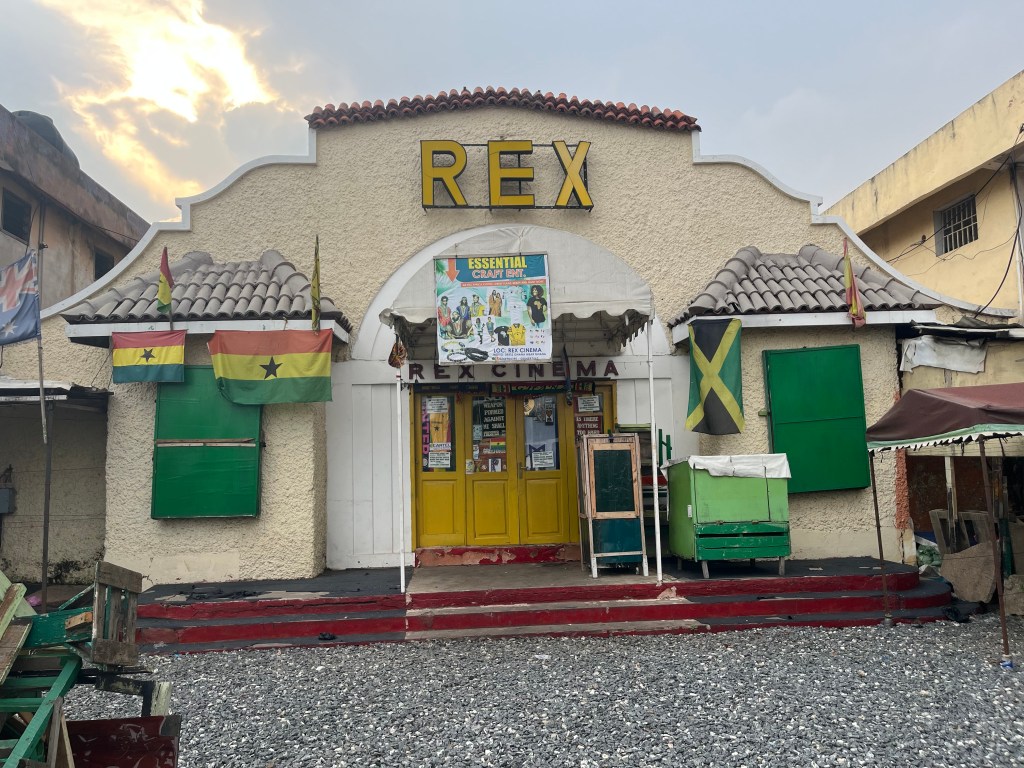
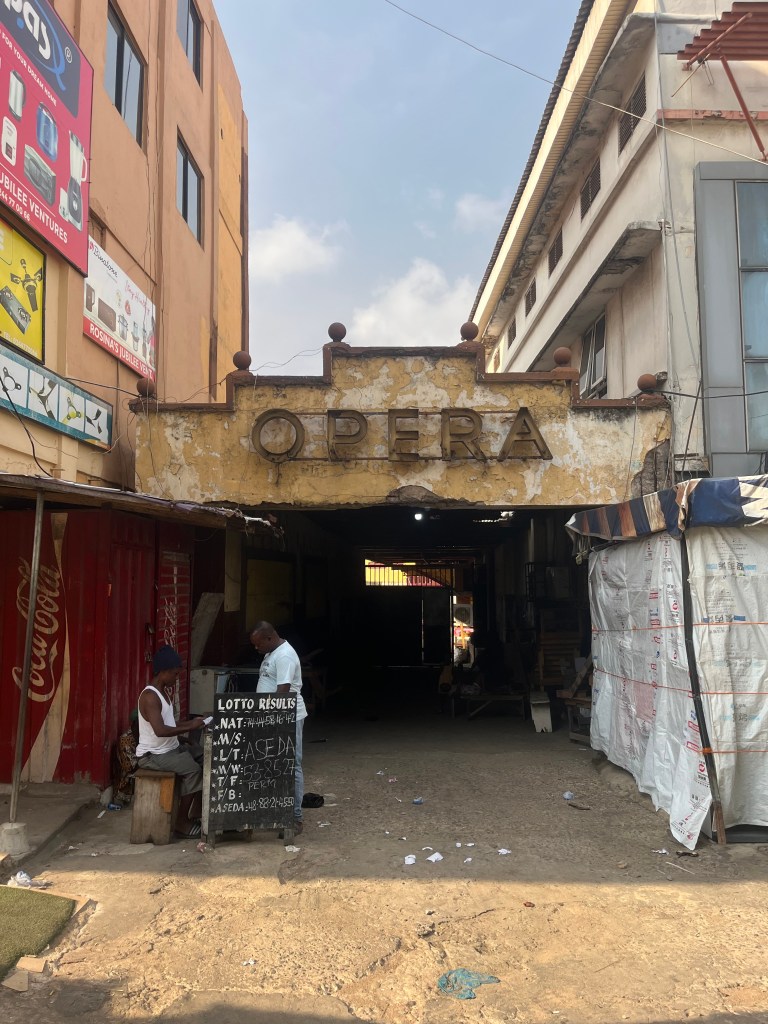
I also visited the Rex Cinema and Opera Cinema – both still looking excellent with their small scale intriguing entrance portals hiding their vast open-air screening areas.
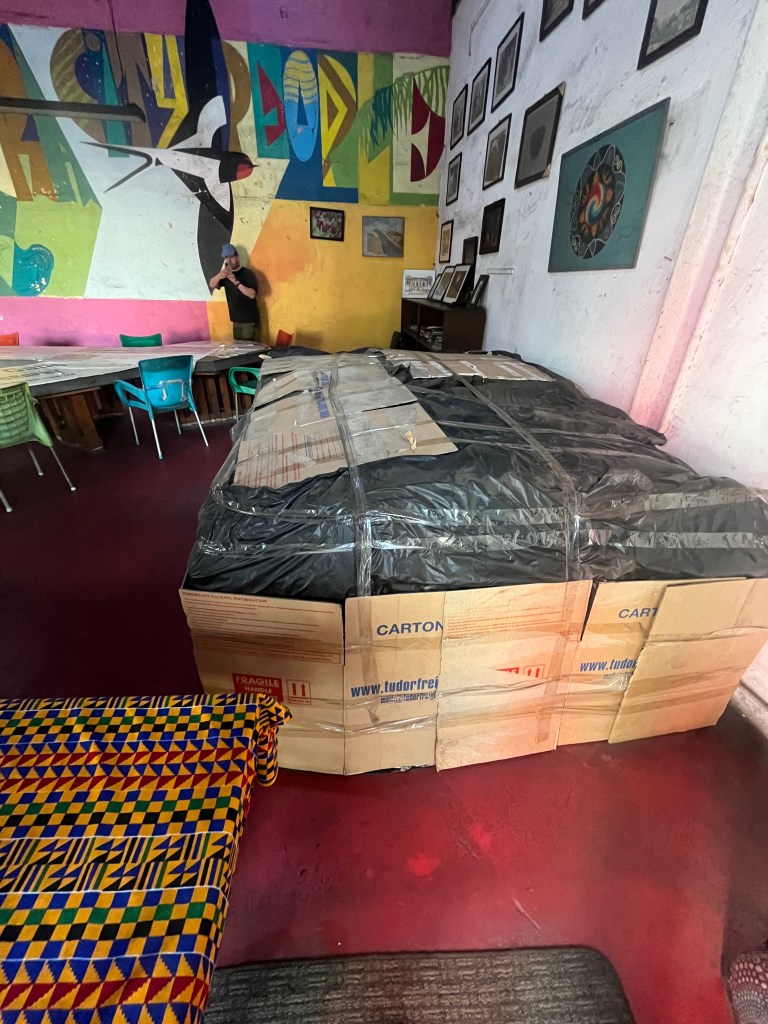
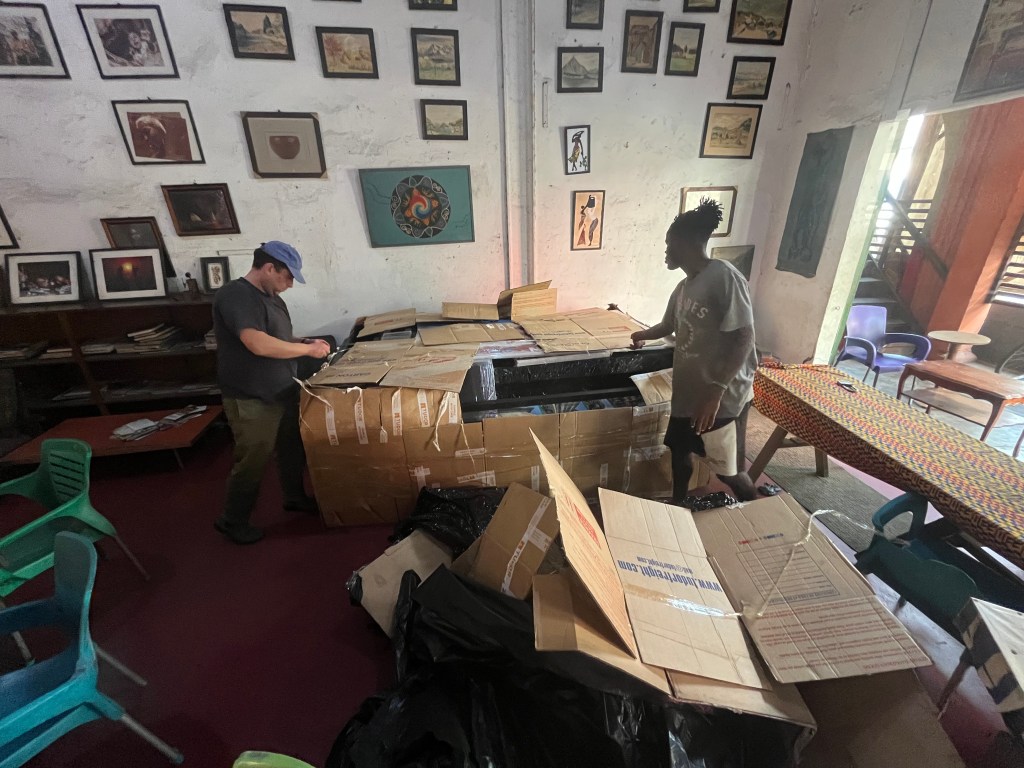
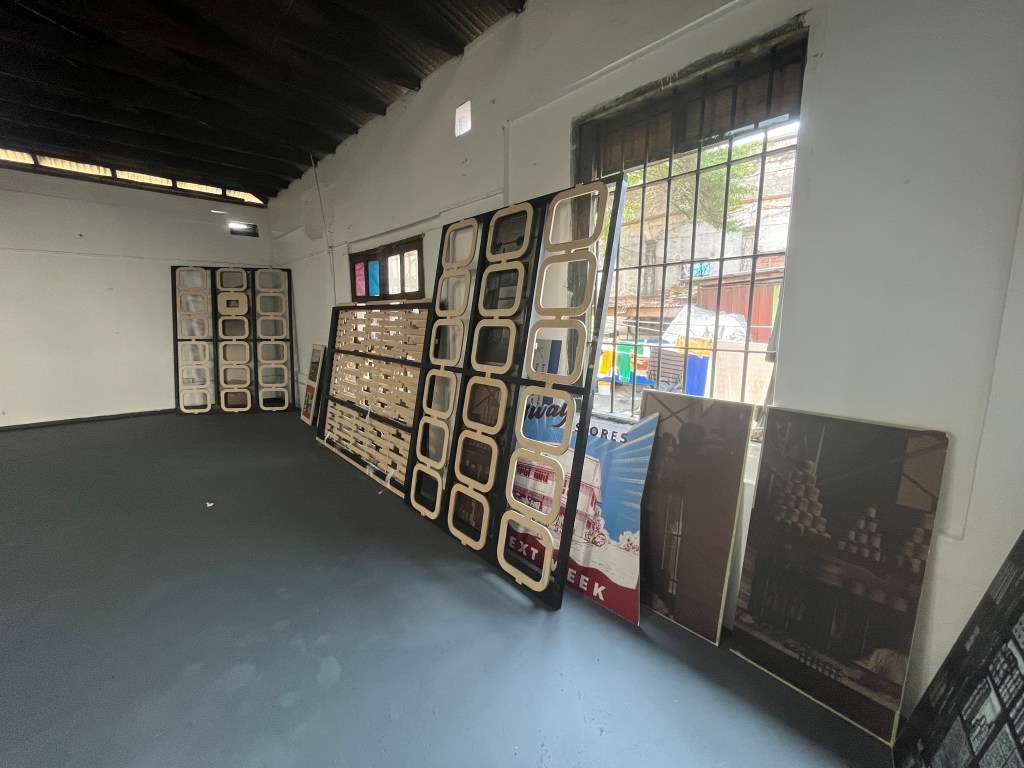
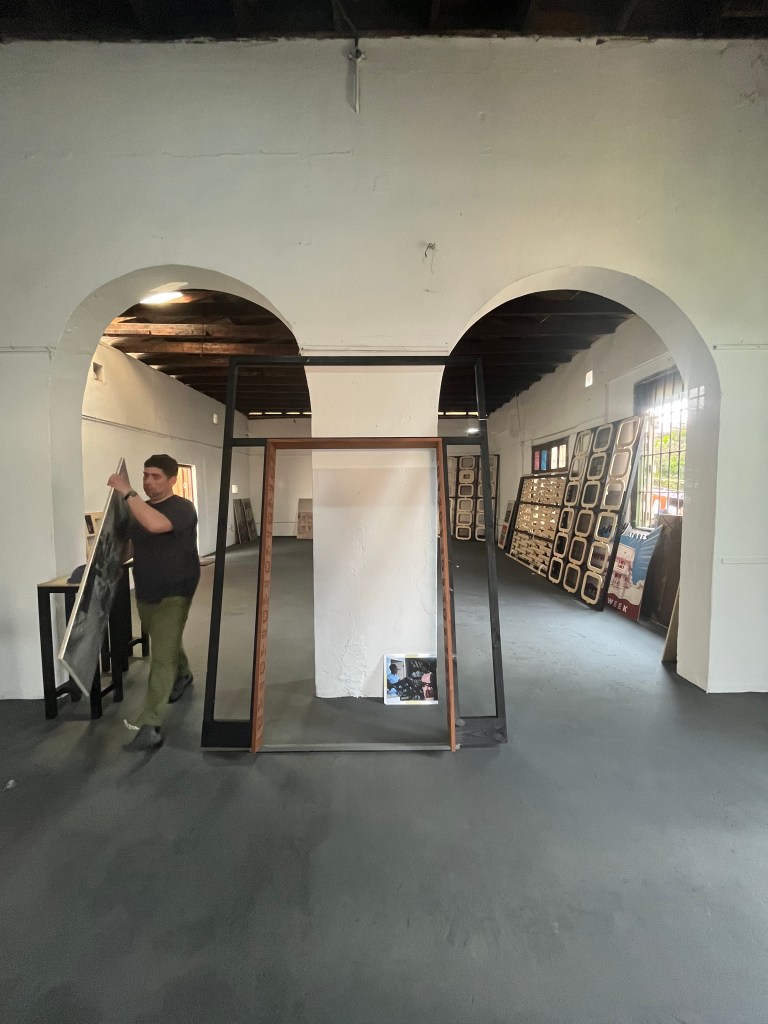
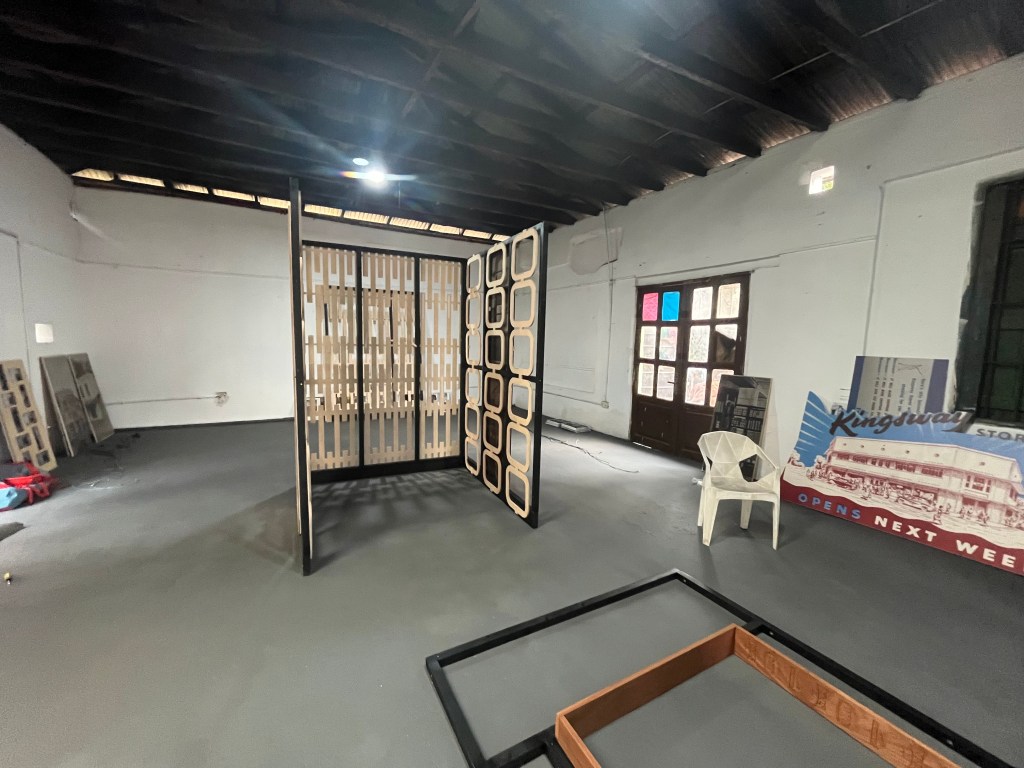
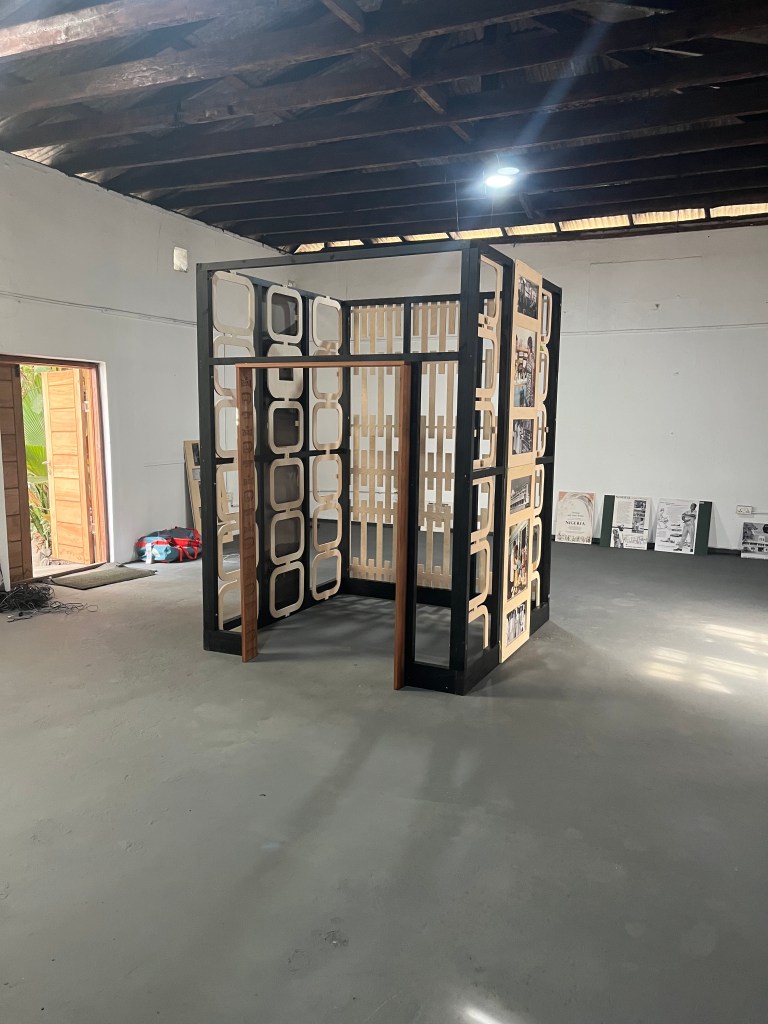
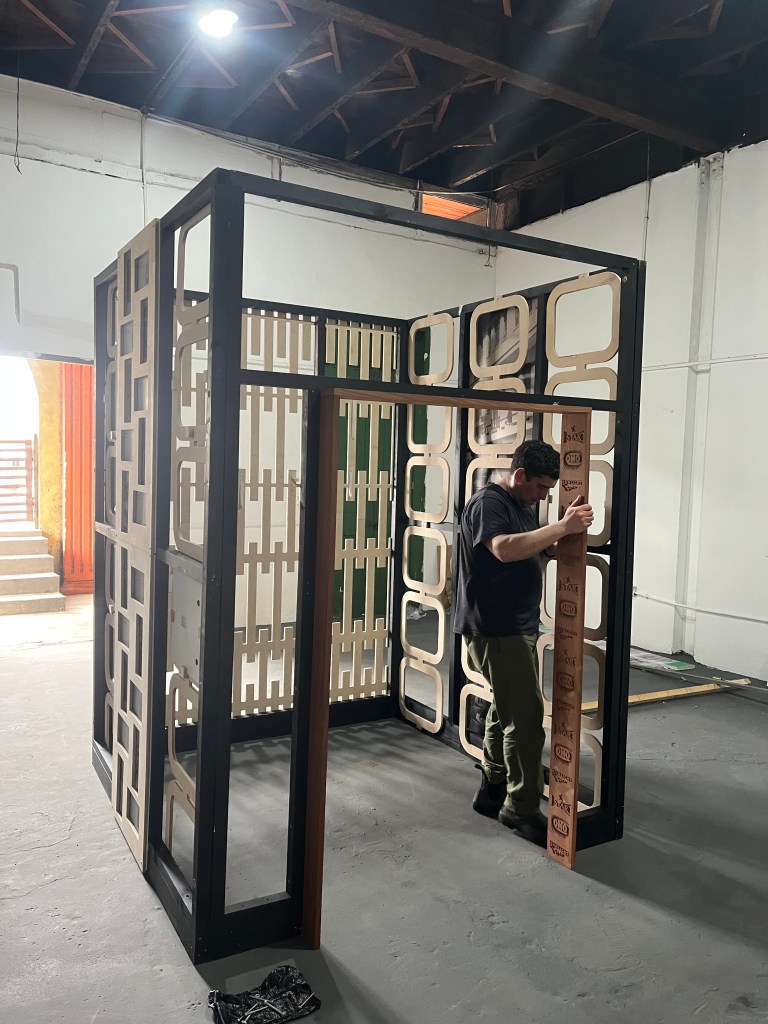
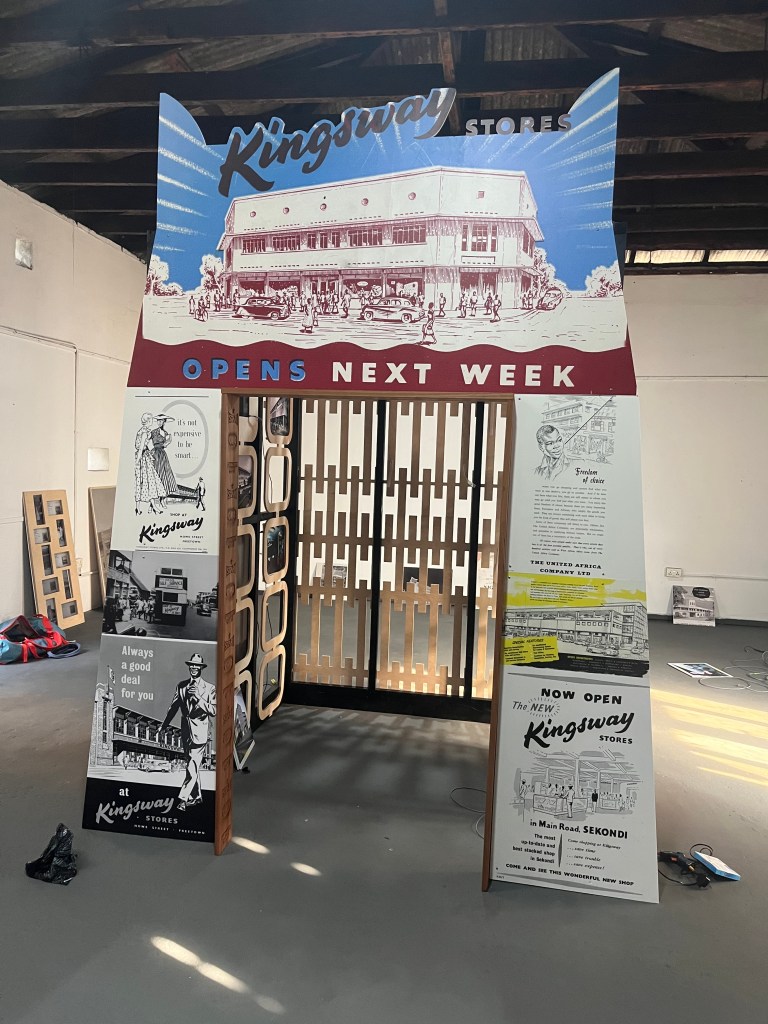
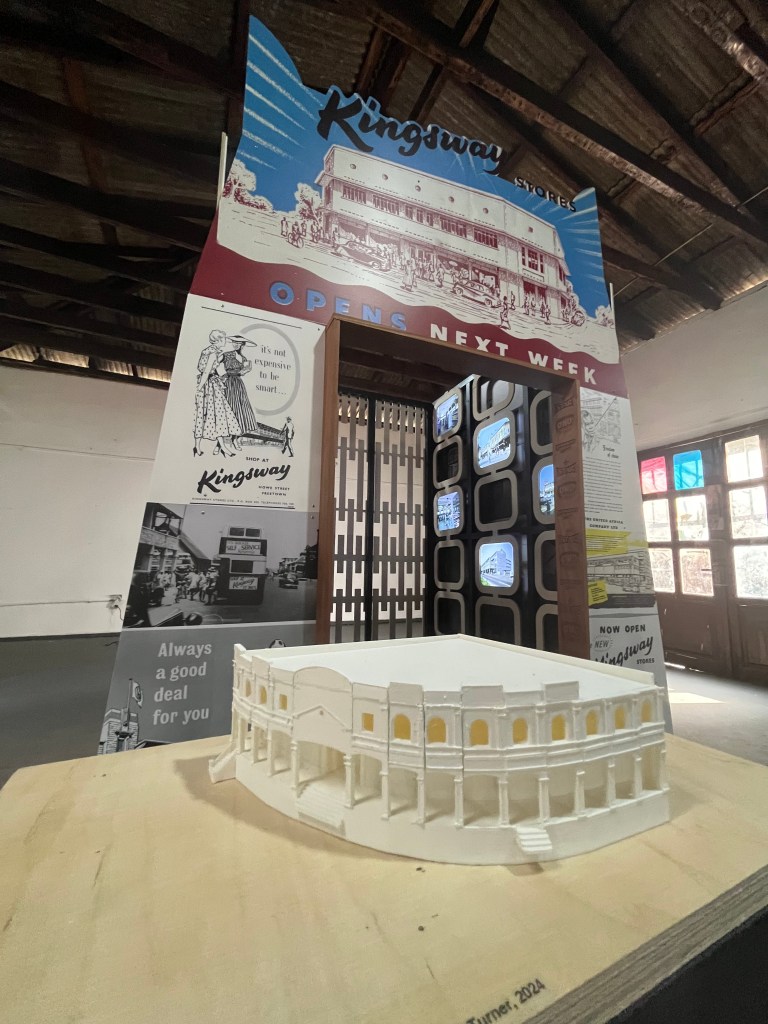
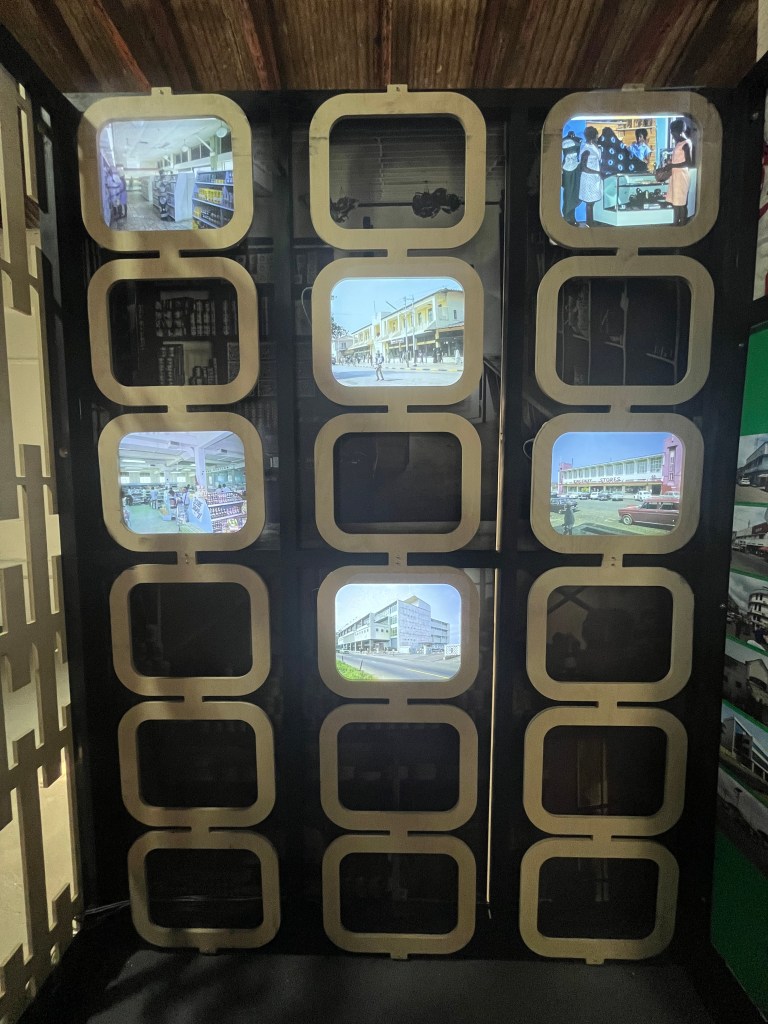
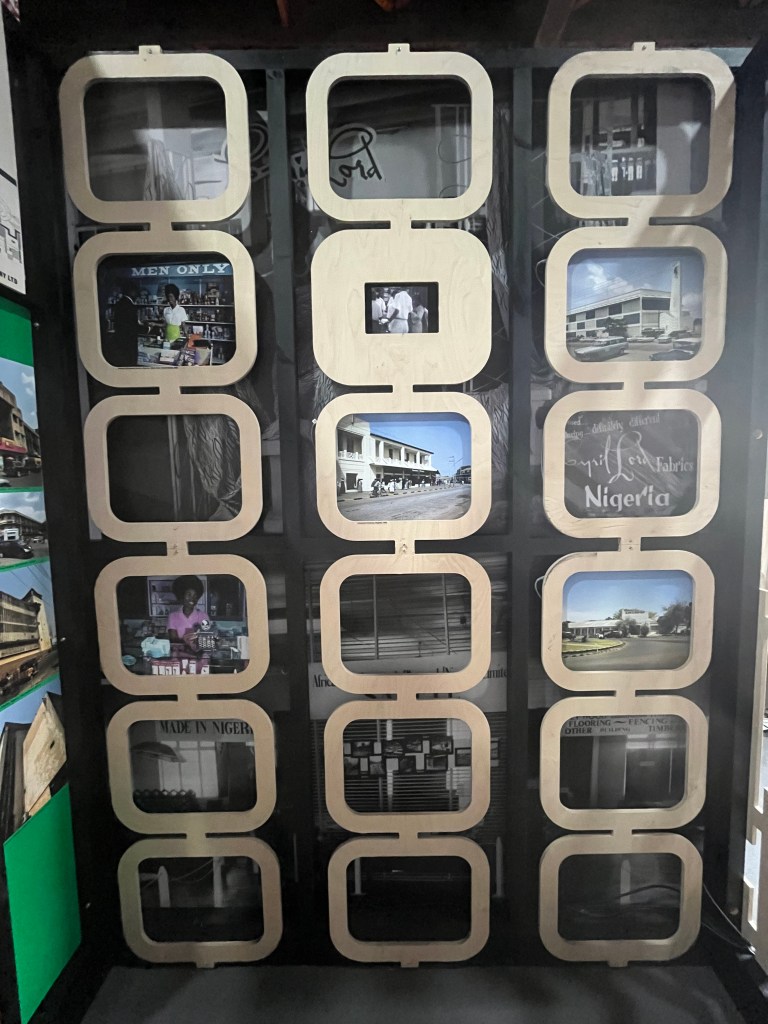
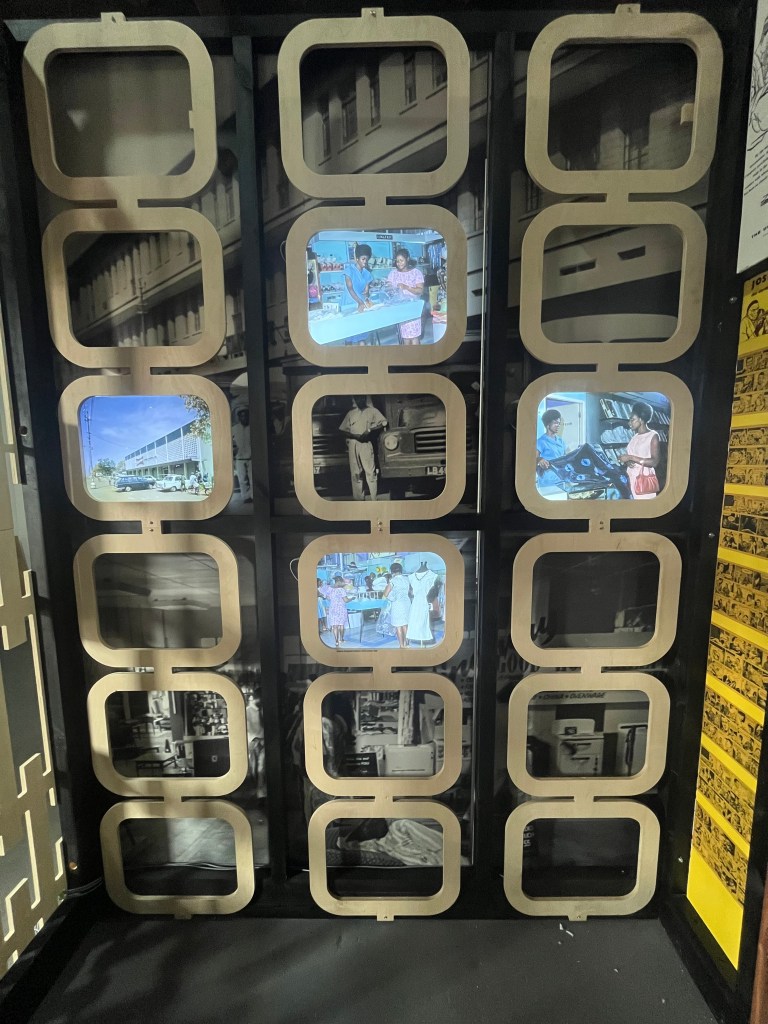
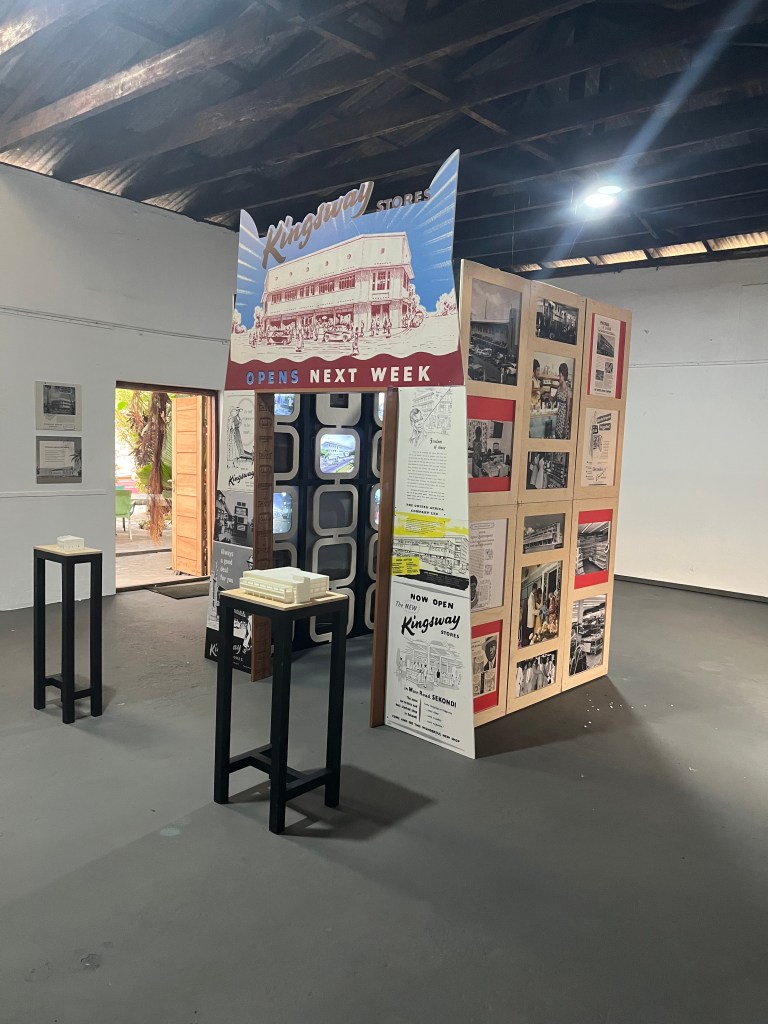
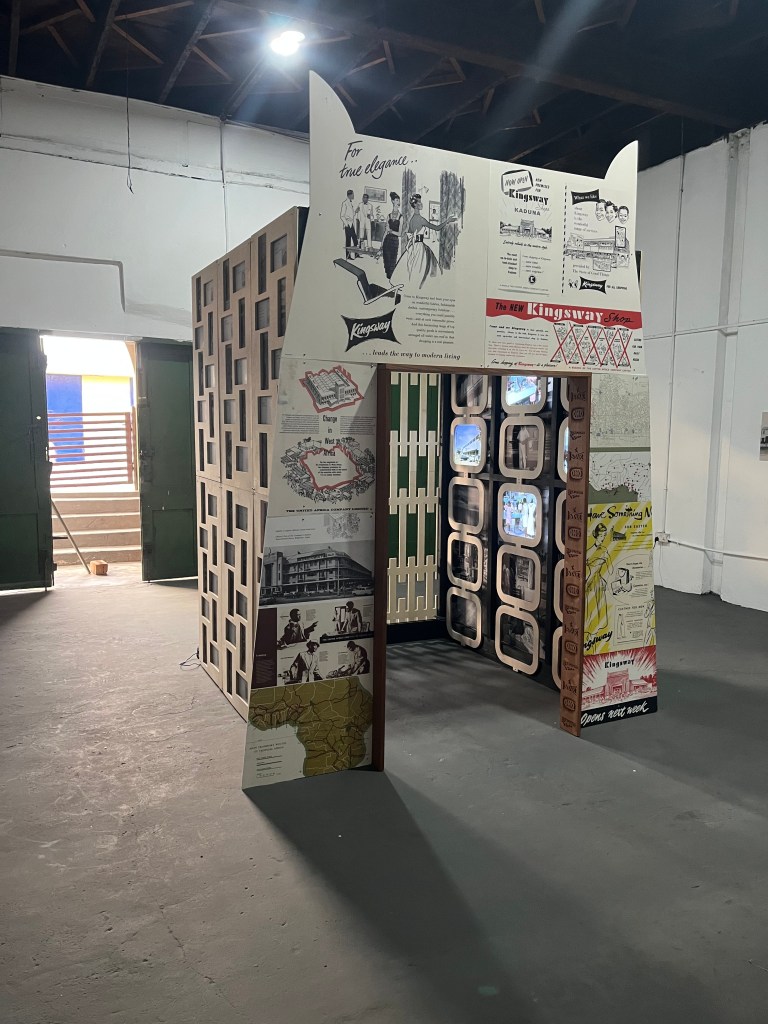
The Kingsway Exhibition has been sent to Accra and carefully stored at the Jamestown Cafe for a few months now. We were finally able to unpack the vast pallet on Friday morning and spent the weekend constructing the two pavilions and installing the light boxes and panels.
The exhibition is being extended and reimagined through a further collaboration with Allotey Bruce Konuah on a series of vinyl street banners that will be installed on the exterior walls of the gallery space, as well as on the old ruined Kingsway Stores portico located next door.
The opening night is 15th January and all welcome. The exhibition will remain until Easter before it moves on…
Thank you to James Galliford and the Liverpool School of Architecture Technical Team for their expertise on the fabrication and installation, and to Claire Tunstall and Unilever Archives team for all their help and support sourcing the images and visuals.
During the 1960s, Accra stood at the center of the anticolonial world. As the capital of Ghana—the first independent country in sub-Saharan Africa following European colonization—the city drew revolutionaries, intellectuals, and artists from across the continent and the Cold War divides. Ghana’s first leader, Kwame Nkrumah, envisioned Accra as a showcase of African statehood and invited architects to help shape its future.
Exhibition Photograph, courtesy of Łukasz Stanek, 2025.
Intersections traces the collaboration of two architects who responded to that call: Ghanaian Victor Adegbite (1925–2014) and Hungarian Charles Polónyi (1928–2002). Polónyi arrived in Accra as part of Eastern European technical assistance programs supporting Ghana’s transition to socialism. He worked for the Ghana National Construction Corporation (GNCC), where Adegbite—a Howard University graduate—served as chief architect. In their work at the GNCC they mobilized architectural resources from the socialist, capitalist, and non-aligned countries and designed buildings that responded to Ghana’s needs, means, and aspirations.
The exhibition centers on the housing projects designed by Adegbite and Polónyi, which embodied the many dimensions of independence—from representing a new elite to the state’s provision of housing for all social groups. By juxtaposing family archives from the United States and Hungary—preserved by the architects’ daughters—the exhibition both reconstructs and reenacts an encounter from sixty years ago. By recording how the buildings designed by Adegbite and Polónyi have been appropriated by their inhabitants, it shows how the architects’ work continues to impact Accra’s urban landscapes.
Curators: Michael Dziwornu and Łukasz Stanek, in collaboration with Dana Salama.
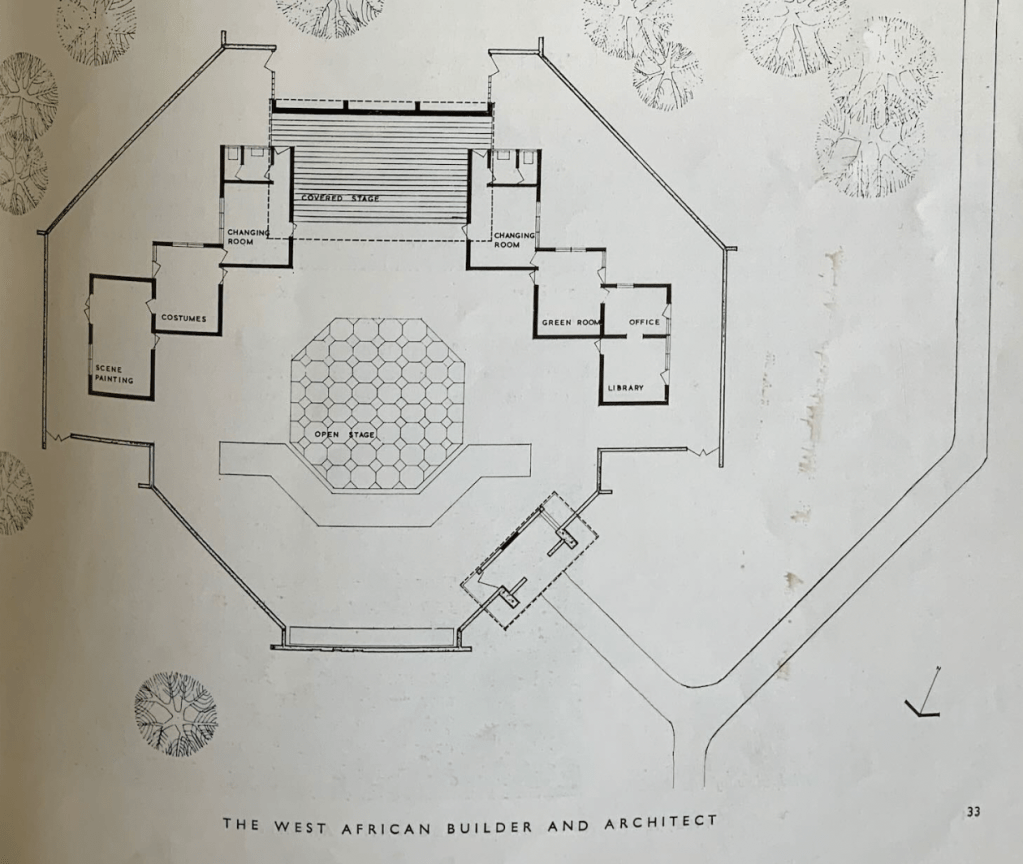
In 1958, the Ghana Arts Council and the Rockefeller Foundation provided the necessary funding to set up ‘the Experimental Theatre Players’ spearheaded by Efua Sutherland and Joe Degraft. Architects Gerlach and Gillies-Reyburn were commissioned to design the structure which was based around two performance stages – one ‘in the round’ and the other a proscenium arch theatre. It was Sutherland who generated the design strategy,
“Conceptualized by Sutherland, the dominance of traditional motifs in the architectural design of this theatre edifice was a statement of cultural renaissance, independence, and nationalism because she believed “political independence suggested cultural autonomy”
(Anku, S. S. (2022). (Post) Colonial Ghanaian Attitudes Towards Ibsen: An Overview of Ibsen Reception in Ghana Between 1930 and 1966. Ibsen Studies, 22(1), 3–30. https://doi.org/10.1080/15021866.2022.2063977).
The stages are enclosed by a series of interlocked rooms built from sandcrete and providing changing, offices, and other ancillary functions. The project received a full write up in the West African Builder and Architect journal in 1962.
Images from West African Builder and Architect, 1962
“It was a small structure, unpretentious but handsome, traditional in inspiration yet modern in design. The dazzling whitewashed walls with their dark trim resembled a village compound and were meant to. Inside, at one end, a platform stage was covered by an overhanging roof; but the auditorium, with its seats of carved Ghanaian stools, was open to the night sky. It stood in a rough, weedy place approached by dusty footpaths, its simplicity contrasting sharply with the gaudy grandeur of Accra’s nearby Ambassador Hotel. The crowds were gathering at the entrance that was shaped like a huge traditional stool and flanked by two massive Akuaba dolls, sculpted male and female symbols of fertility”
(Anku, S. S. (2022). (Post) Colonial Ghanaian Attitudes Towards Ibsen: An Overview of Ibsen Reception in Ghana Between 1930 and 1966. Ibsen Studies, 22(1), 3–30. https://doi.org/10.1080/15021866.2022.2063977)
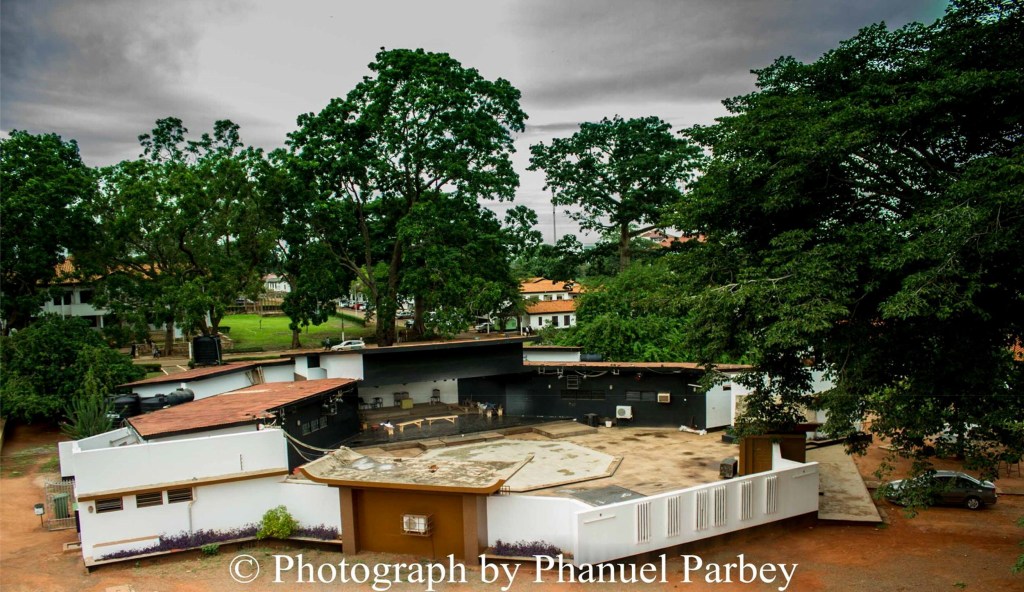
Anku further notes that the theatre was “replicated and relocated to the School of Performing Arts premises at the University of Ghana” – it’s unusual for a building to be entirely remade in a new location. The old site, as Anku notes, was near the Ambassador Hotel – this is now where the Mövenpick Hotel is located. Was the structure physically demolished, moved, and rebuilt? Perhaps the old site is where the National Theatre is located today?
The new Drama Studio at University of Ghana, Legon. Photograph by Phanuel Parbey
The July-August 2025 edition of the Architectural Review has published an extended 9-page feature article written by Lois Quartey and Julia Gallagher on the Accra Community Centre, Ghana. The building designed by Maxwell Fry and Jane Drew, with Theo Crosby as the lead assistant, opened in 1951 and quickly became an important educational, cultural, and social hub in the city. It was paid for by the United Africa Company in an attempt to foster local support after its ‘Swanmill’ HQ was looted and burned following the 1948 Accra riots. TAG provided some drawings and photographs that accompany the article.
The primary thrust of the piece is to raise awareness of this significant historic structure – especially how it was used in the independence campaigns and beyond – and to stress just how vulnerable this building is. Currently being used as a mere store and at risk from the Marine Drive development plan – the article expands on what we covered here https://transnationalarchitecture.group/2022/06/22/accras-renaissance-fishing-harbour-marine-drive-and-a-new-cathedral/ back in 2022.
It’s a deceptively simple and even ordinary building at first sight – but after spending time exploring it’s two interconnected courtyards and assembly hall it quickly begins to feel at home, climatically comfortable, and a nice place to be. It’s also a significant structure because of its design pedigree and especially because of its political significance – so many important speeches, gatherings, and events took place here in the advent to independence and beyond. It’s also home to one of the largest installations by leading artist Kofi Antubam – that alone should secure its future. Our model that replicates one made by Fry and Drew featured in the recent V&A Tropical Modernism exhibition too.
If foreign and leading agencies such as the V&A museum and Architectural Review are prepared to give this seemingly humble building exposure, critique, and cause for preservation – surely the case can be made to restore this heritage structure and to weave it into the wider Marine Drive masterplan. Champions of Ghanaian culture https://www.design233.com/articles/in-trust-for-the-people are behind saving these works and raising awareness, but much more needs to be done.
To deliberately allow a ‘managed decline’ and slow demolition is a tragic waste and short sighted view of the building’s rich political history.
Accra’s James Fort is an iconic monument for Ghana and modern Africa. This lecture explores the fort’s evolution -from its role as a trading post in the early European-African encounters, through its significance during the trans-Atlantic trade and enslavement, to its later use as a modern colonial prison in the post-independence era. It also explores its connection to Ghana’s liberation movement, particularly its role in imprisoning Dr. Kwame Nkrumah and other political leaders during their resistance to British rule. Today, this monument represents the resilience, talent and creative potential of a sustainable future for Ghana and its youthful population.
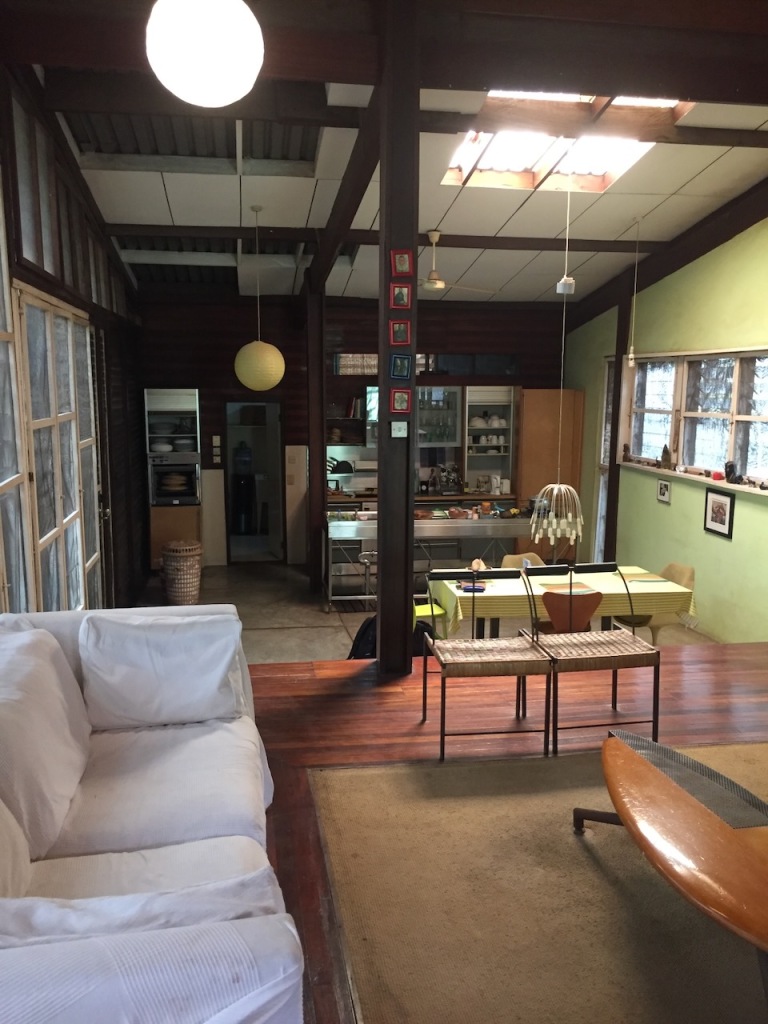
The latest edition of e-flux contains an interview with Joe Osae-Addo by Kwabena Appeaning Addo where they discuss Joe’s passively cooled house in Accra, Ghana.
Joe Osae-Addo in 2018 with architecture studentsInterior of Joe Osae-Addo’s house, AccraVerandah Exterior of the house with tree canopy, 2020
Kwabena Appeaning Addo: What inspired your design for the Inno-native House in Accra, Ghana?
Joe Osae-Addo: My first thought was “How do I create a building that responds to the weather better than most,” so that I don’t have to use air conditioning? That was my primary focus. I then began thinking about the landscape, about how trees can be used as the first line of defense against heat, and also about how to position a building so that there is no direct solar gain. I was working in Los Angeles at the time, and I learned that the worst heat comes not from the sun, but through conduction from the earth, through the floor slab. So I thought to raise the building by about a meter, removing all direct contact between the floors and the earth, and insulating the building with a pocket of air. Those were my design parameters.
KAA: What happened when you took those principles onto the building site?
JOA: The site and the climate drove the initial layout of the building. After pouring the raised foundation, the first thing I did was to plant mature trees. I didn’t want to plant seedlings, because I wanted the trees to cover the roof by the time construction was done. So, I took a drive out of Accra to the area between Tema and Shai Hills, where there is a natural forest of trees. I went on a rainy day when the soil was wet, with a truck and laborers, and dug out mature—but not fully grown—trees, approximately three meters tall. We brought them back and planted them immediately. A year later, when the house was done, the trees had fully grown in. The ground also had a high water table, so I planted papyrus plants, knowing that they would suck up water. But even so, the site is very wet. On a rainy day, the concrete walkway in front of the house gets wet both from above and below. For the driveway, I used gravel, not concrete, to allow water to flow through and absorb into the ground when it rains. The landscape was integral to the design from the beginning. It is what allowed me to create a cool building.
KAA: What about in the design of the building itself?
JOA: Glass louvres are typically undervalued in contemporary Ghanaian architecture, but they are fantastic at creating cross-ventilation. Many of the exterior walls include glass louvers, at times from floor to ceiling. The rest are made either of laterite blocks or of timber frame walls joined with a tongue and groove system. The interiors of these wood walls are covered with stucco plaster, which makes it feels like a typical cement block wall, but on the outside it is clearly wood. This construction technique, known as Type V construction, is how most buildings in California are built: a 2×4 timber stud frame, 24 inches on center. In my case, however, since there is no air conditioning, there is no need for insulation. The third type of wall in the house, which I am very proud of, is made of wooden slats with a mosquito net attached. The wooden slats have a half-inch gap between them so that air can come through, but because of the net, insects can’t. The interiors are therefore always aerated.
KAA: So does it work?
JOA: Yes, it works! If we had air conditioning, the timber studs would let out so much cold. But because the diurnal temperature variation in Ghana is not significant, designing for cross ventilation works so much better.
KAA: Can you further explain how the walls were designed?
JOA: At the entrance, for example, there is a wall that looks like it is painted concrete block, but it’s actually just plastered. To do this, we placed half-inch plywood against the timber studs, and then placed chicken-wire mesh over the plywood as the support for the plaster.
KAA: So on the inside, it looks like a normal wall, but on the outside, it has a wooden finish. What is it like to maintain the house?
JOA: Well, I haven’t touched it in twenty years.
KAA: Really?
JOA: Well, there was some damage to the surface of the wood deck in the back, but that was because of poor detailing—I shouldn’t have used galvanized nails, which can rust and rot the wood. I haven’t had to repair any of the vertical surfaces.
KAA: That means that it must have been really well constructed.
JOA: Yes, it was. I built it myself, so I made sure everything was right.
KAA: It also means that the wood was treated very well.
JOA: At that time in Ghana, kiln-dried wood wasn’t available. All of the wood we used had to be air dried, so I picked the hardest wood available, which was called “Odanta,” or iron wood. It’s expensive, but I knew that maintenance would be a big issue if we did not use quality wood.
KAA: Does the fact that it doesn’t touch the ground also help?
JOA: Yes! Termites are often an issue if you use wood in Ghana, but this was solved by elevating the building off the ground.
KAA: At the Presbyterian Boys’ Secondary School I went to, some of the teachers’ bungalows were made of wood and they sat on the ground, so I can attest to this! Can you speak further about the laterite walls?
JOA: The laterite walls are composed of compressed earth blocks. I made the blocks myself with the standard cement block formwork. They are stacked and kept together using cement mortar joints, and then finished with stucco. To make the render, we filtered laterite through a sieve to get the finest particles, and added a bit of cement and water. After it dried, we applied clear masonry sealer to protect it from the rain. This generally works, but direct rain can still create damage. So I placed some vertical and horizontal wooden fins on the balcony, so that water does not hit the building directly.
KAA: Is there any benefit to using laterite blocks over sandcrete, which is more typical in Ghana?
JOA: I don’t know the physics of it, but sandcrete seems to conduct more heat than laterite.
KAA: In the middle of the living and dining space, the roof material changes to a translucent acrylic panel. Why is that?
JOA: I wanted to bring in some light. Most of the roof is made of long span corrugated metal, so it serves as a kind of skylight. I didn’t use Perspex because over time it would melt. This is about twenty-years old, and it’s still in perfect shape. Though it occasionally needs cleaning from above to make sure the light doesn’t get too blocked.
KAA: What about the floors?
JOA: The house has polished concrete floors. But the flooring is actually timber, because the house is raised. At the bottom is the timber frame, then, on top of that, plywood, then roofing felt, then chicken wire, and finally concrete, which is primarily made of quarry dust to get as smooth of a finish as possible.
KAA: I also noticed that the kitchen and dining room are lower than the rest of the spaces.
JOA: Yes, they are lower because I was following the topography of the site, which slopes downward. If they were kept at the same level, it would have been very inefficient. Besides, it makes for a nice transition from living room to dining area.
KAA: What about the spatial organization of the rooms?
JOA: Well, the house has no corridors. So you either move from room to room, or use the wraparound deck to avoid disturbing people in adjacent rooms. The reason for this is that when you have an interior corridor, it is difficult to maximize cross ventilation.
KAA: What were some of the challenges with the project?
JOA: Well, one challenge was finding the right carpenters. In Ghana, we don’t often use wood to construct buildings, so getting workers to understand the details and the drawings was difficult.
KAA: How did you address this?
JOA: I wanted to complete everything in twelve months. Since the laborers and artisans were getting paid a daily rate, the longer the process lasted, the more I would have to pay. But since I was the contractor, I could set up systems to speed construction. After we built two bays of columns, for instance, the carpenters I hired to build the timber frames started prefabricating columns, so that we could erect them whenever we needed them. After a certain point, the process of construction became one of assembly.
KAA: Based on your experience, what advice would you give someone who wanted to create a similar design?
JOA: Designers need to make sure that they’re not putting materials in places where they’re going to be compromised very quickly. And, in general, the use of metal should be avoided. Rust is a big issue, particularly in coastal zones. The marine air is corrosive. I used louvres with plastic frames because the metal would have rusted by now. And if you use wood, after it rains, it should be cleaned. No matter how high quality the wood you use is, keeping it dry is best.
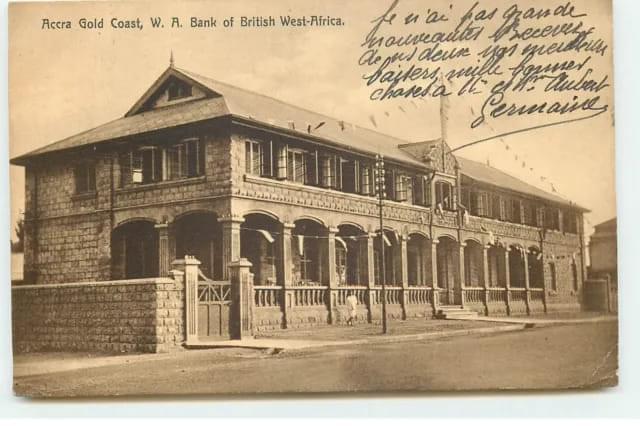
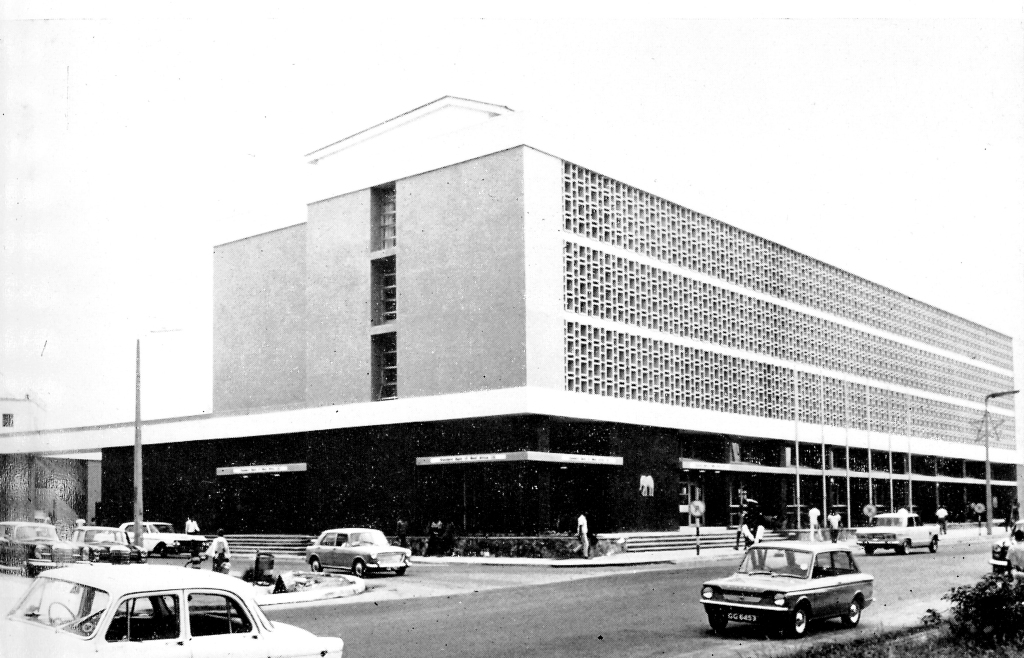
A few years ago we reported on our Keeping Cool project and included a photograph of the Standard Chartered Bank on Accra’s High Street. The bank had been refurbished, radically changing its passively cooled perforated facade to a sealed glass envelope relying on air-conditioning.
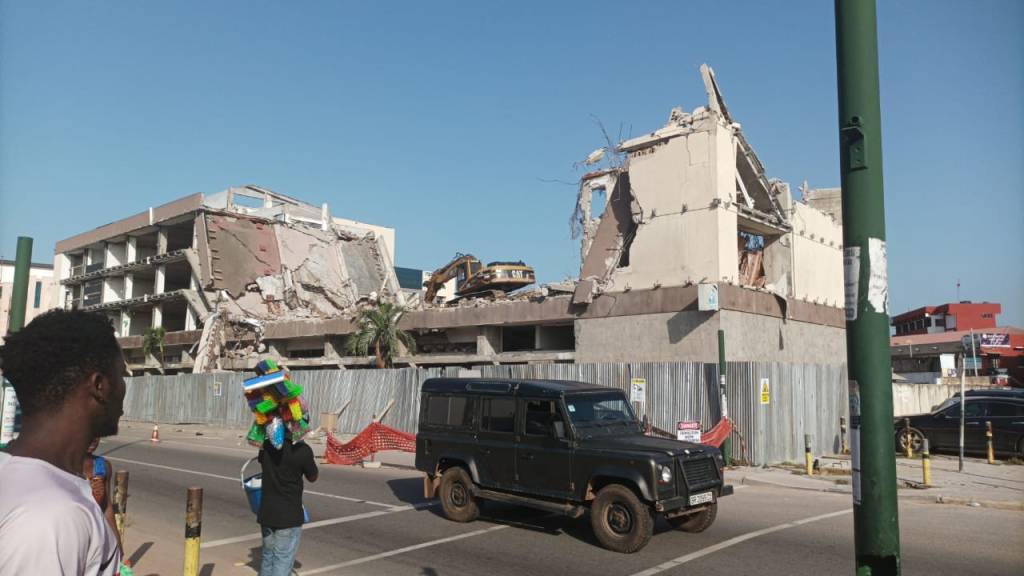
We’ve just received updates from Accra that the bank has now been demolished. No details have been released on what is to replace the bank.
The same site has been used as a banking hall since the late 19th Century. Below are some of the photographs of the site revealing the continuity and change over the last century and the variety of architectural solutions deployed. Joe Addo kindly sent over some photographs of the shock demolition taking place earlier this month.
Accra High Street: Bank of British West Africa shown on the right hand side with the arched loggiaPostcard showing the Bank of British West Africa on the same site of Accra’s High Street, c1900Standard Chartered Bank with passively cooled facade. Architect? unknown, c.late 1950sStandard Chartered with new blue glass facade. Glimpse of Barclays bank on far left.July 2023: Standard Chartered bank being demolished [Courtesy of Joe Addo]










 Transnational Architecture Group