Archive

Tag Archives: Africa

BP Headquarters, Lagos, Nigeria

On 1st October 1960, Nigeria gained independence from Great Britain. Jane Drew was in Lagos during this historic period and she wrote home to Maxwell Fry of the carnival atmosphere in the capital: ‘Lagos is electric with excitement.’

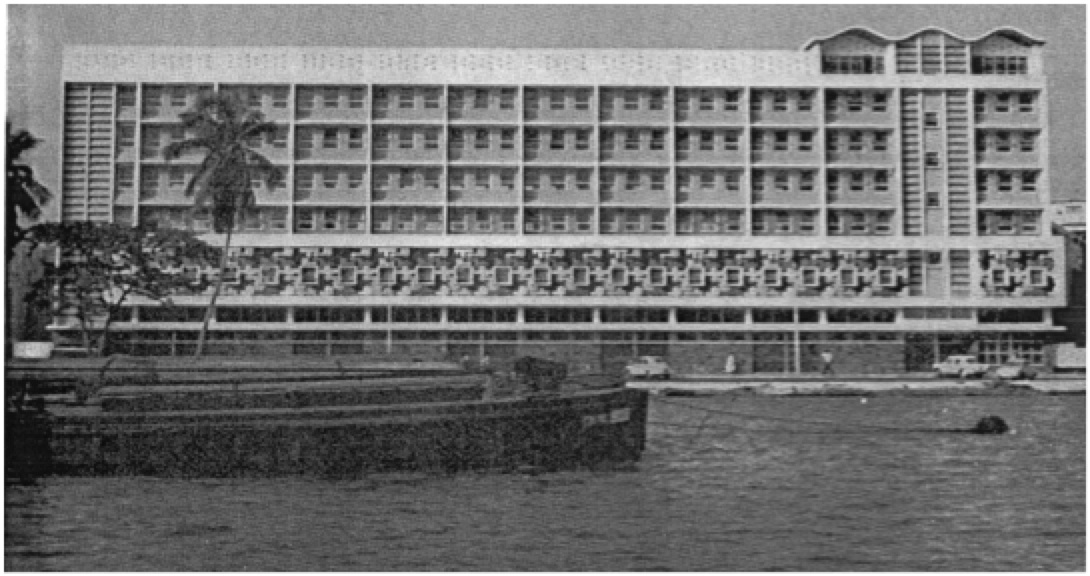
Drew was in town to attend the opening of the headquarters for British Petroleum in Lagos, designed by Fry, Drew & Partners. The office block is one of several lucrative projects designed by Fry and Drew for British companies in West Africa – others include the Co-operative Bank, just a few streets away from the BP building, and the Leventis Store in Accra.

13.2.11 BP HQ

Now African Petroleum House, the roof terrace has since been filled in to provide an extra floor of office space and the louvres have been altered – no doubt following the introduction or upgrading of the air conditioning. For images of the building shortly after its opening, see the RIBA online photograph collection.

Mfantsipim School, Cape Coast, Ghana

In 1947, Maxwell Fry and Jane Drew were commissioned to build a series of schools and teacher training colleges, primarily in the former British colony of the Gold Coast. The architects used the project as an opportunity to apply European ideals of modernism to a new environment, and their pioneering architectural approach was promoted as the realisation of a new era of mutual interest for Britain and the Gold Coast. Representative of newly-released resources from the Colonial and Welfare Development Fund, Fry and Drew’s educational buildings embodied the move toward colonial devolution.

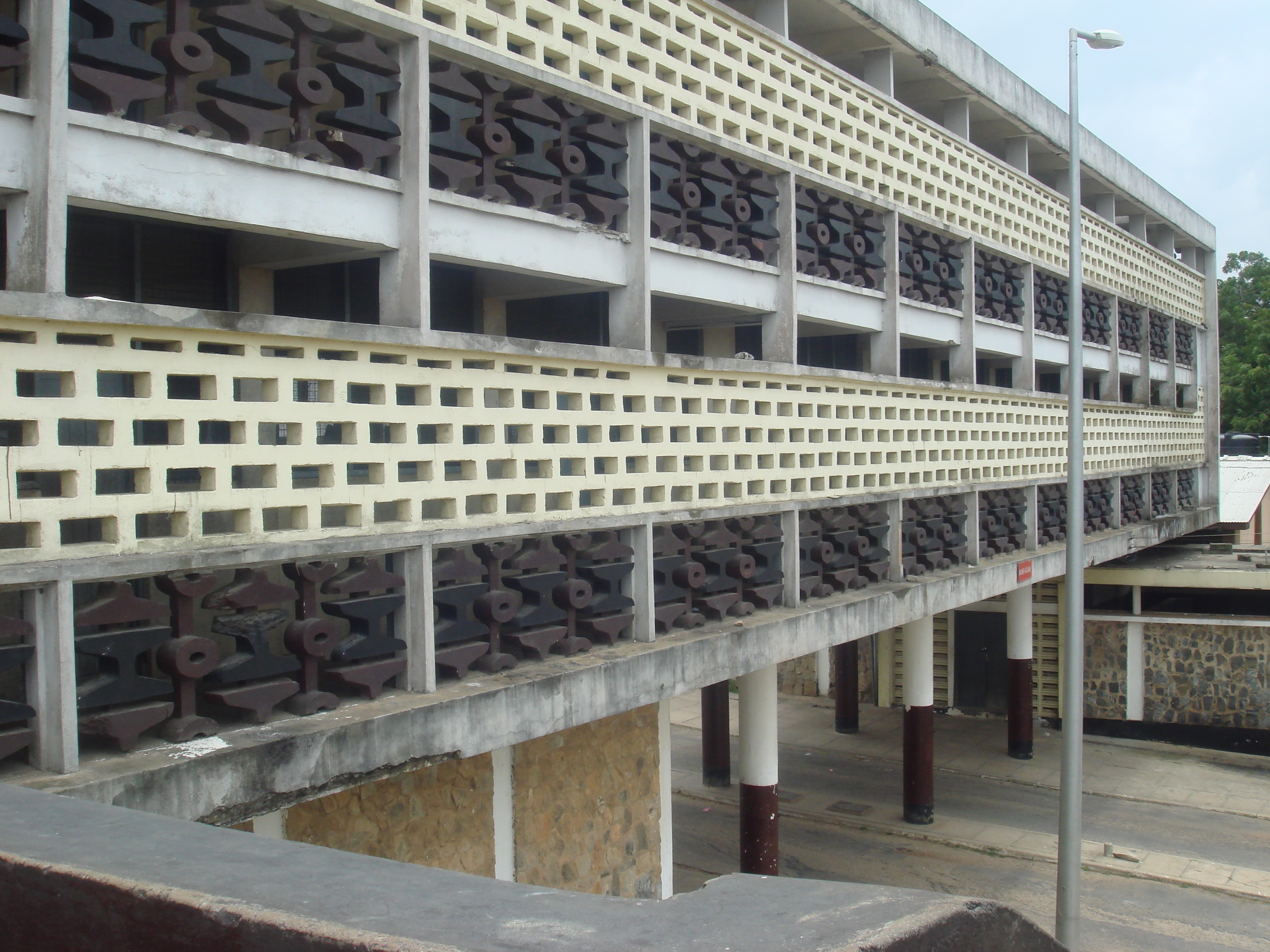
At Cape Coast, Fry and Drew worked on three projects (more on these soon), including a series of extensions for Mfantsipim School. The first secondary school in the Gold Coast, Mfantsipim School was established in 1876 as part of the Methodist mission. Phase one of building works comprised a series of staff houses and a water tower, followed by a second phase of dormitory blocks, shown below.

13.2.8 mfant dorm

This block forms a gateway to the site. The driveway passes under the building and up to the main, hill-top campus. The ground floor bathroom block sits at right-angles to the dormitories above. The perforated balustrade evidently provided scant shading to the south elevation as further brise-soleil have since been added:

13.2.8 mfantdorm

For further discussion of Fry and Drew’s work in West Africa see the excellent: Mark Crinson, Modern Architecture and the End of Empire (Ashgate, 2003).

A pictorial archive of Mfantsipim School, from which the first image is taken, is available here. The second image was taken during a TAG visit in September 2012, © Jessica Holland.

British Colonial Architecture in Nigeria, 1900-60.

Yemi Salami’s study explores British colonial architecture in pre-independent Nigeria. Beginning at the turn of the twentieth century and culminating in the year of independence, the investigation traces a significant period of transformation in the country’s history. Notably, it explores the rise of its colonial style buildings, which had come to cater for emerging uses in government, commerce, healthcare, transportation and other contemporary uses of the time.

Previous studies showcase a rich presence of these buildings in pre-independent Nigeria, particularly with reference to the climate responsive “tropical architecture” of the mid-twentieth century. The architectural careers of a few notable professionals are likewise widely explored. However, were these projects and professionals the only modern influences to Nigerian architecture at the time? Who were the other architects and what were they designing? Furthermore, what forms of colonial buildings existed before the mid-twentieth century climate responsive trend?

The aim of this PhD research, therefore, is to obtain a more accurate understanding of the events and circumstances which shaped colonial architectural forms and practice in pre-1960 Nigeria. It will employ a qualitative historical research strategy, by sourcing and investigating materials from previous literature, archival records and existing projects from the period.

‘Memories of African sculpture’

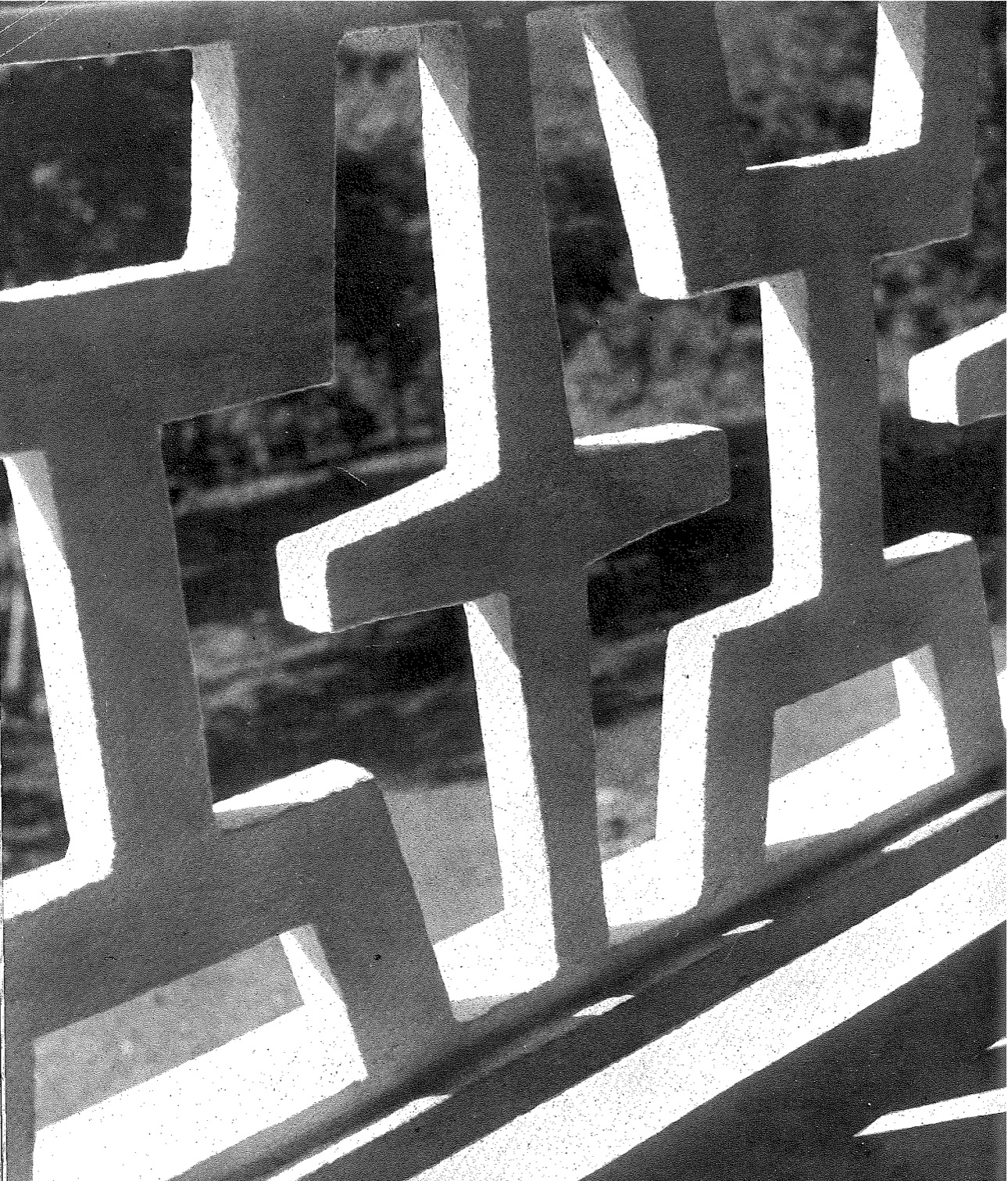
Maxwell Fry and Jane Drew developed the use of perforated screens in their West African ‘tropical architecture’. Designed to provide a sun-break whilst encouraging much-needed cross-ventilation in the hot and humid environment, the brise-soleil also provided an opportunity to add decorative forms to otherwise basic structures.

African influences – described in rather general terms by Fry and Drew as strong forms and colours – were used to bring regionalism to their imported modern ideas. Variants of sculptural ‘African’ forms are used in each of their school, university and hospital projects to provide an instantly recognizable Fry and Drew motif. Over the coming weeks images of these buildings will be posted.

13.2.4 ArchRev

Jane Drew said of their attempts to bring regional character to the modernist buildings:

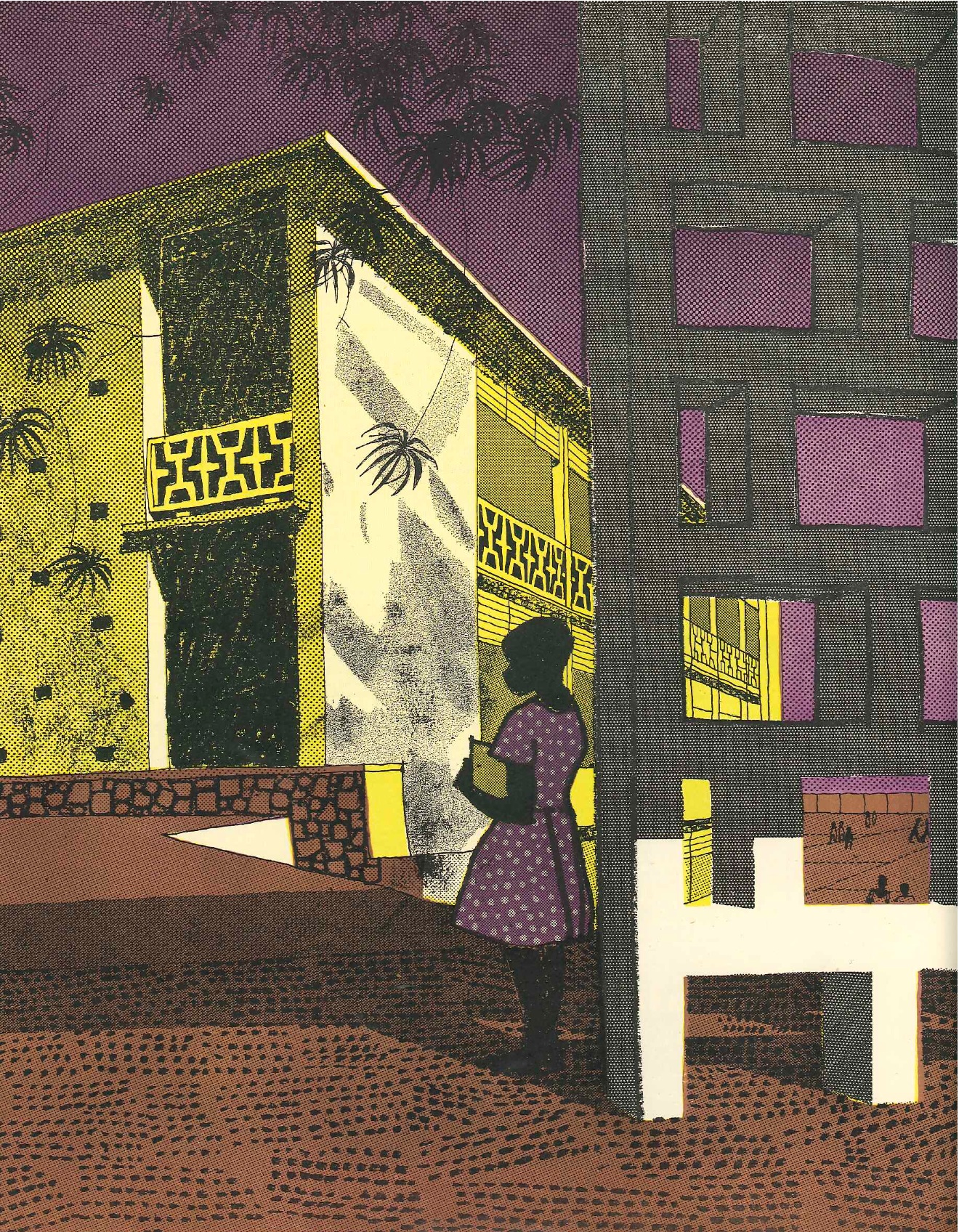
‘The particular architectural character comes not only from the mono-pitch roof and long low blocks … but from the sunbreakers, grilles and other shading but breeze-permitting devices. … the sunshine and moisture and heavy overcast sky and feeling of oppressive lethargy seem to call forth moulded forms which are rhythmical and strong, not spiky and elegant, but bold and sculptural.’

Below, Gordon Cullen’s sketch of bold forms and strong shadows emphasizes Drew’s words. These images are taken from an article on Fry and Drew’s ‘African Experiment’ published by Architectural Review in May 1953 and show the perforated balustrade designed for the Adisadel College extension at Cape Coast, Ghana.

13.2.4 Cullen

A Manual of Modernist Regionalism for Tropical Africa: The cultural environment shaped by Maxwell Fry & Jane Drew.

Edwin Maxwell Fry and his wife Jane Drew, with their West African designs in the 1940s, established a design system that had modernist theories as a starting point and developed ideas of climate responsiveness, development planning and adaptation to the new post-colonial social conditions. This system was promoted in the 1950s within the techno-scientific network of the new British Commonwealth, under the name of Tropical Architecture through publications, conferences and the institution of courses of studies in London and Kumasi.

Jacopo Galli’s PhD research will analyse Tropical Architecture from the factors that influenced its conception: the British medical-engineering tradition, the exportation of modernism and the highly experimental environment. Jacopo intends to analyse the numerous educational institutions built in West Africa by Fry & Drew and several other designers, for instance James Cubbitt & Partners, Godwin & Hopwood and the Architect’s Co-Partnership. These buildings were conceived as experiments to verify the functioning of climate devices and urban solutions. Finally, he will verify how this empire of good practice reached its highest point in the publication of Tropical Architecture in the Dry and Humid Zones in 1956: the textbook approach of the manual seen as the conclusion of the entire experience and its consequences in the history of bioclimatic architecture and planning for development.