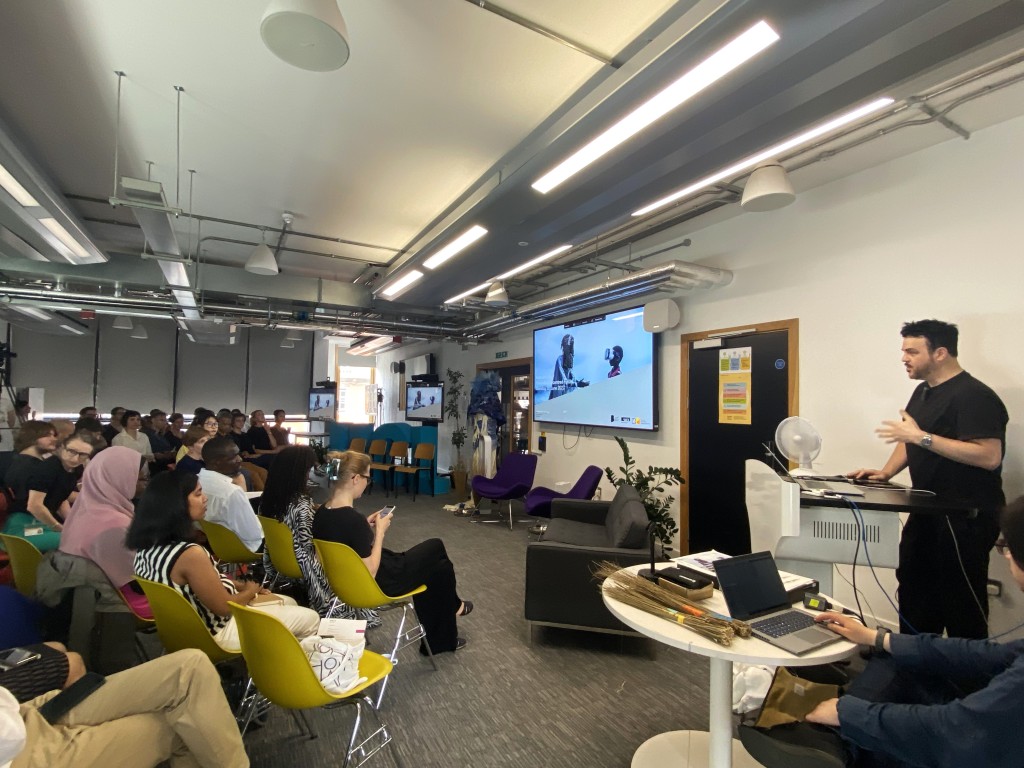
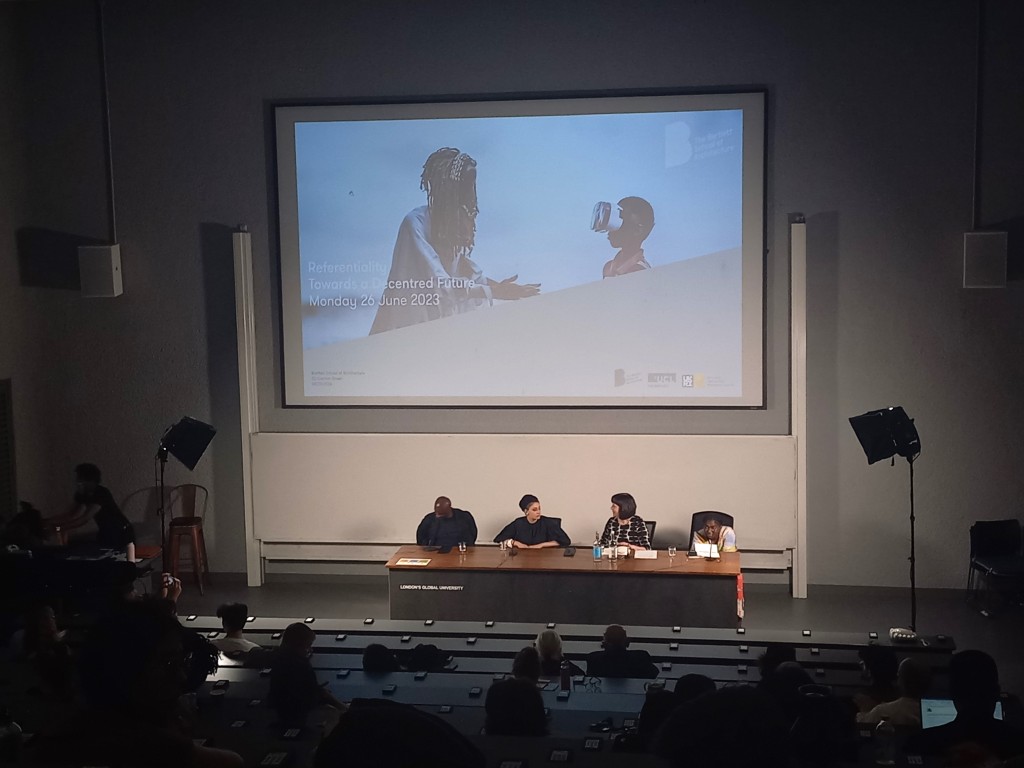
The event interrogated approaches that challenged the mainstream colonial, nationalist and social-cultural frameworks in architecture, art and heritage management scholarship and practice. It included discussions, talks and activities with a diverse range of speakers whose creative production explore approaches free from referential relationship with inequitable power structures.
A research conversation moderated by Edward Denison, Ievgenia Gubkina, Emily Mann and Shahid Vawda comprised speakers from multidisciplinary fields of research and practice with case studies from Africa, Asia and Europe. The speakers included Leverhulme Early Career Research Fellow, Dr. Alistair Cartwright and PhD researcher, Adefola Toye – both from Liverpool School of Architecture. Each speaker discussed the limitations they encounter when engaging mainstream sources for scholarship and research-in-practice which erases the agency of populations under study. Furthermore, they shared how they addressed this using participatory action research, public engagement, multidisciplinary methods and utilising crowdsourced open-access archives.
1. Image 1 by Edward Denison
2. Alistair Cartwright Presenting, by Edward Denison
The session concluded with talks from African heritage organizations, including the Direction du Patrimoine Culturel du Sénégal, Swahilipot Hub, and the University of Cape Town. They discussed existing and future initiatives for sustainable and inclusive heritage management on the continent. These included exhibitions, training workshops, public engagement tailored to different age groups and professions, and collaboration with local and global heritage partners.
Afterwards, a student-centered lunchtime activity with architect Sumayya Vally and BSA design tutor Jhono Bennett, explored referentiality in architectural research and practice through co-production and drawings based on the participants insights and experiences.
Image 3 by Adefola Toye
The remainder of the event was spent in conversations with notable speakers in the fields of architecture, art and curatorial practice.
Nana Ocran, founder and Editor of the People’s Stories Project, hosted discussions with multidisciplinary artists Christopher Samuel and Valerie Asiimwe Amani. They explained how their creative works use archives materials to create awareness about the underrepresentation of people with disabilities and colonial subjects.
Performers Peter Brathwaite and Kenneth Olumuyiwa Tharp examine ‘Rediscovering Black Portraiture’s use of domestic material culture to reimagine the historical image of black subjects as well as professional engagement with diverse art and culture foundations in the UK.
We are delighted to be able to host Professor Ayo Olukoju (Institute of African and Diaspora studies, University of Lagos) and Professor Sam Ntewusu (Institute of African Studies University of Ghana) who are visiting the University of Liverpool and also the Unilever Archives to explore the possibilities of future collaborative research and teaching activities across our institutions and others in NW England.
Both Professors are historians who have worked with archival sources in their research in West Africa. They have generously agreed to share, through this seminar, the challenges and issues with working with archival material and sources from a West African perspective and also some of the hopes they have for future collaborations.
Do join us to hear their views and also join the conversation – how do we make the most of archives in the 21st century in different locations and places? Importantly do we need to decolonise the archive, and if so how?
Hosted by the AHUWA Research centre in association with Unilever Archives, School of History and Institutes of African Studies and African Diaspora Studies at the University of Ghana, and the University of Lagos
The Transnational Architecture Group is 10 year’s old this year. Thank you for supporting the blog and to all of our excellent contributors over the years for enriching the content and generously sharing their work. We’d also like to thank the communities in the places in which we work, the archivists and librarians for making material available to us and sharing their expertise, our respective institutions for supporting our research, and to the research funders who make travel, time, and resources available to us.
The blog started as a means to share our work-in-progress ideas and to promote events – and that is still at the core of what we do. We continue to add updates from our ventures into the archives, travel reports, and to share interesting events and innovative papers. These small reports and updates have compounded into something of a large resource and repository, and we’re delighted so many people have been able to make good use of (and to correct and expand upon) our work and attempts at writing these histories.
To celebrate the 10 year anniversary we held a small gathering at the Liverpool School of Architecture on Wednesday 8th March, curated and organised by Dr Alistair Cartwright. Our speakers were all PhD students, post-doctoral researchers, and research associates at the school. You may watch the proceedings here:
The speakers and titles of the presentations are below, with timings if you’d like to skip to a particular talk:
Rixt Woudstra, “Sapele and Samreboi: Building Company Towns in British West Africa” 5:25
Excy Hansda, “Indigenous Modernities in the Twentieth Century Architecture of Bombay” 20:00
Adefola Toye, “Tropical Modernism in Nigeria’s First Universities: Accessing Sources Beyond the Archives.” 37:00
Ewan Harrison, “Planning for Post/Neo Coloniality: the Paramount Hotel in Freetown” 1:11
Iain Jackson, “Erhabor Emokae and the curious case of the UAC Mural: tropical modernism and decorative arts” 1:31
Daneel Starr, “How and why has the vernacular architecture and intangible cultural heritage of the Akha people changed in the face of globalization: Using the village of A Lu Lao Zhai, Xishuangbanna (sipsongpanna) China, as a case study.” 1:50
Paul Robinson, “Freetown, the UAC and urban design” 2:20
Alistair Cartwright, “Ecologies of Vulnerability: Post-Cyclone Reconstruction in Mauritius, c. 1945” 2:35
We also heard an excellent paper from Razan Simbawa, “The Effects of Demolish-based Urban Regeneration on Displaced Residents in Jeddah, Saudi Arabia” – which cannot be shared on the video recording at the moment.
Thank you again to all of the speakers for their wonderful talks, presentations, and work-in-progress. There was such variety and richness in the topics and methods, and at the same time numerous connections and cross-overs between the work.
Please do get in touch if you’d like to know more, or to share your work on the blog.
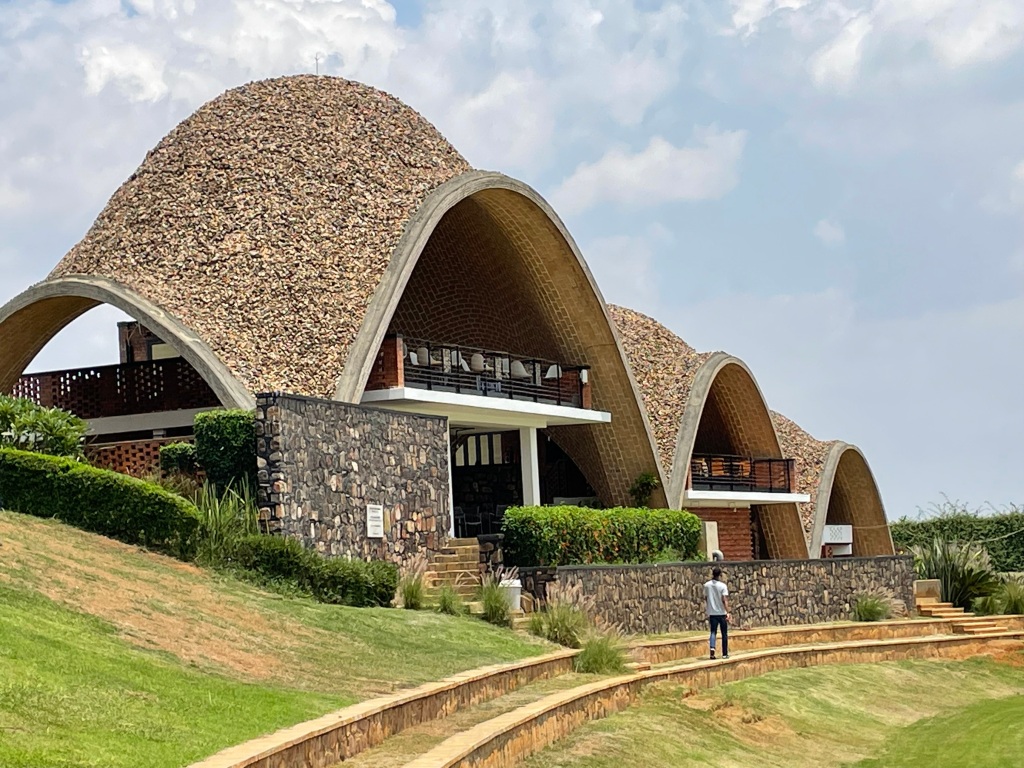
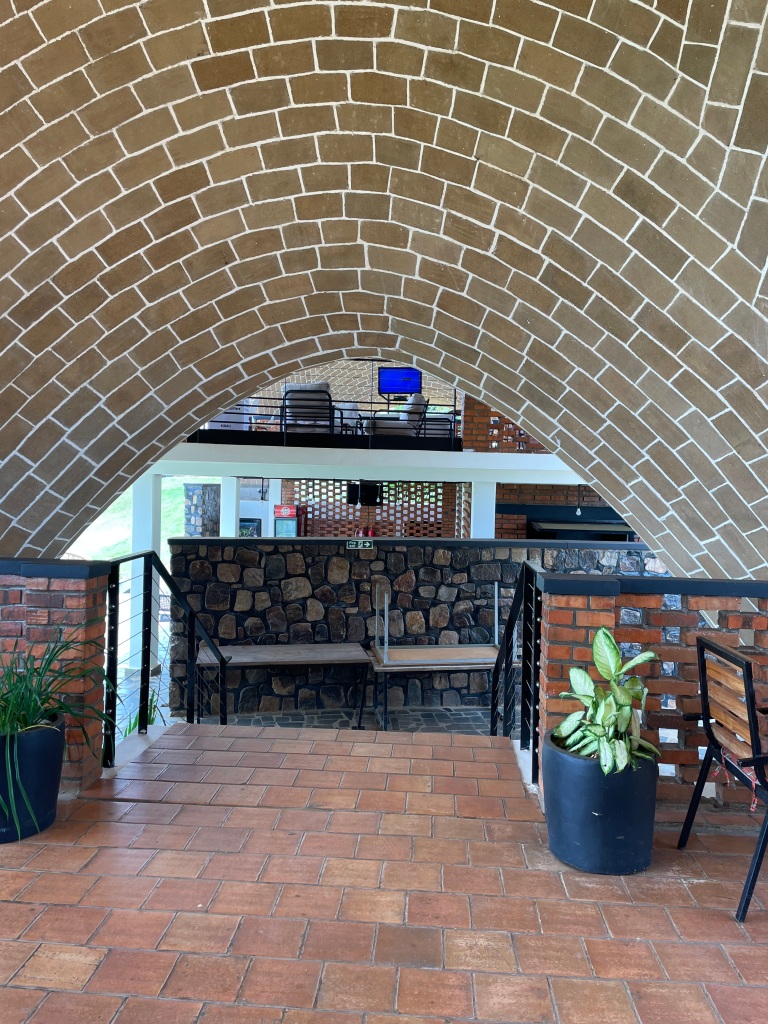
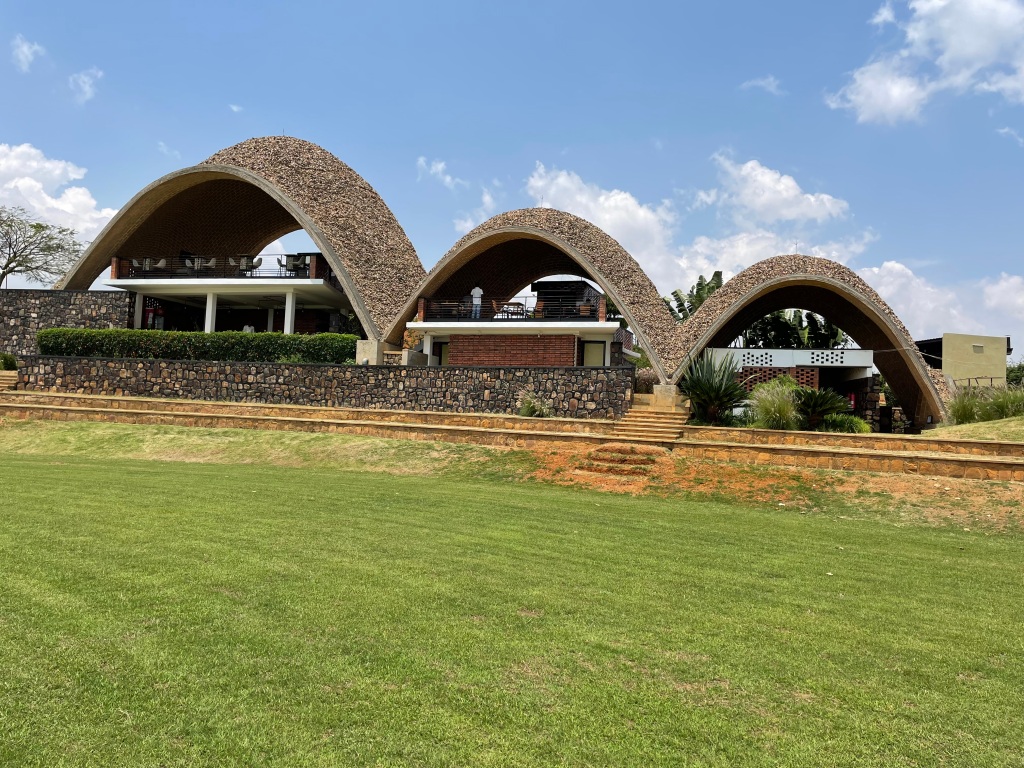
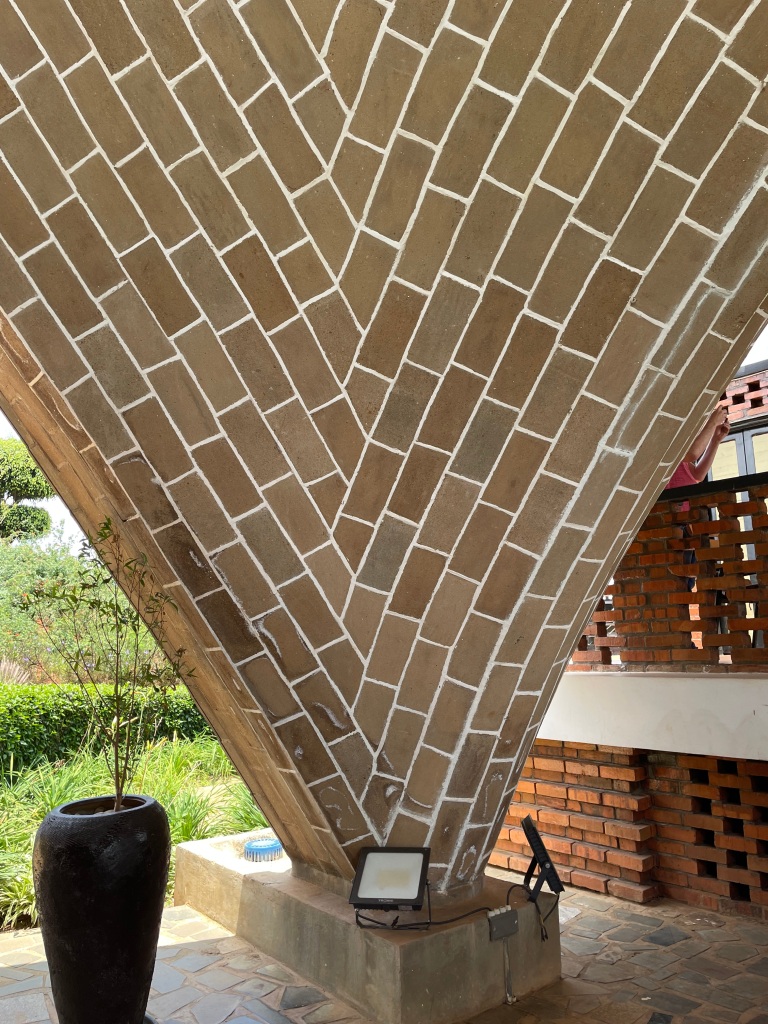
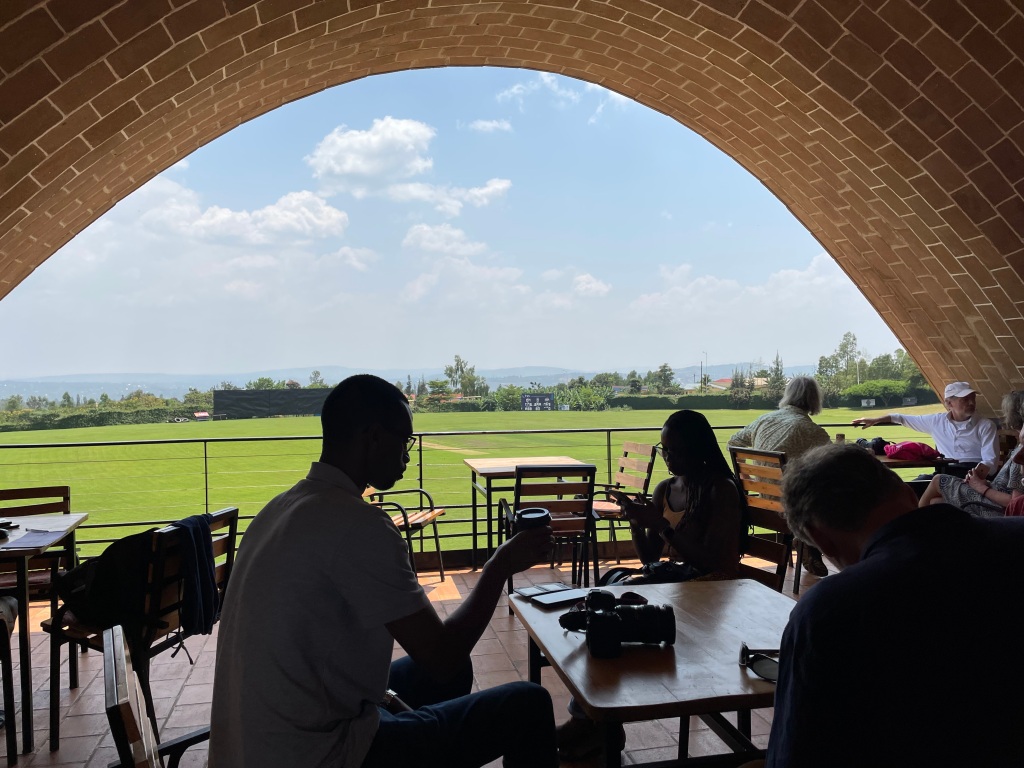
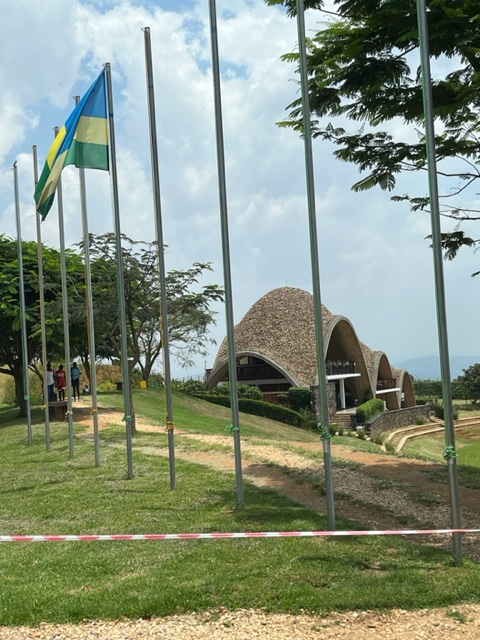
A visit to the Kigali Cricket Pavilion, the result of Peter Rich and Michael Ramage’s 2017 architecture-engineering collaboration, was pure visual joy to behold. The eight mile drive out of Kigali to find the pavilion was an adventure in itself as there were few signposts or digital map directions to follow. A well-judged turn off the main road, however resulted in an initial view of the structure. Built in 2017 it has weathered extremely well, with the quaternary arch form clearly expressed internally, and the local material cladding in superb condition. The three domes amply fulfil their basic programme of shelter and a viewing space for members of the Rwandan Cricket Association.
At our visit we were also able to drink great Ugandan coffee and access fast internet access as we sat down to admire the structure and the pavilion view. Unfortunately, no games were being played nor was there any cricket practice on our Saturday trip out to the pavilion, however the grounds were in perfect condition and we were informed that the Rwanda girls cricket team had recently beat their Ugandan counterparts in a regional match, having a home pavilion like Kigali’s must be a source of inspiration for Kigali’s youth cricketers.
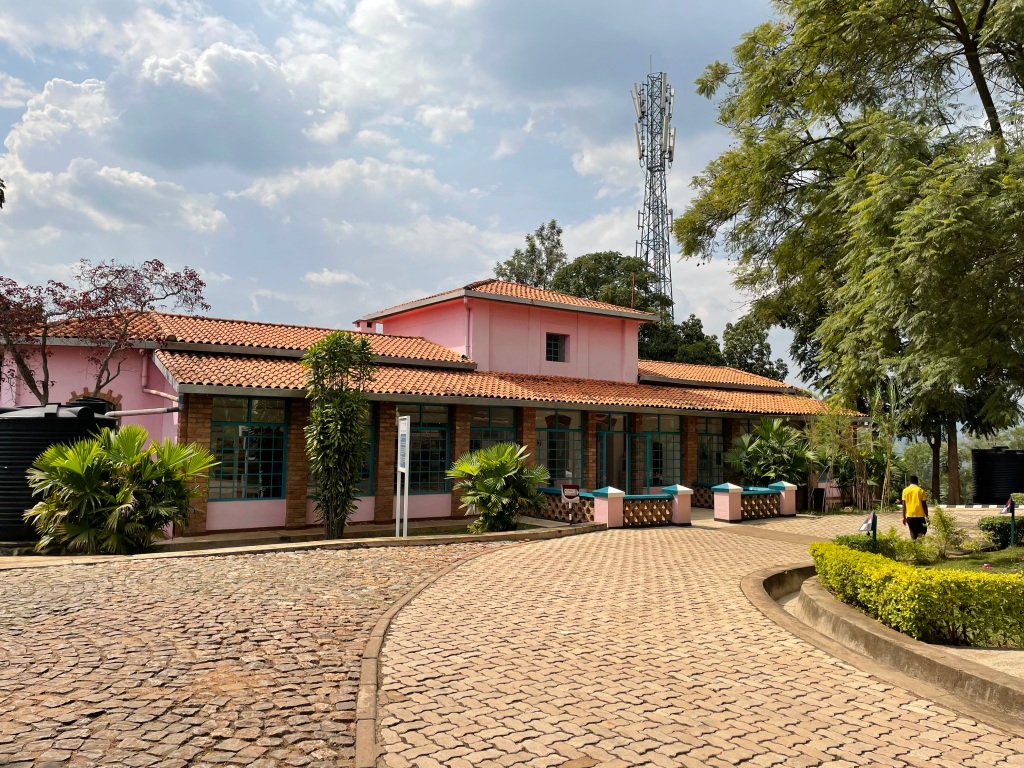
Back into the leafy former colonial government suburbs of Kigali, only one hill away from Kigali’s commercial hub a visit to the Kandt house took us straight back to colonial times,. This is the preserved home of Kigali’s first German governor now provides an extensive history of Kigali and Rwanda’s early mission and colonial history and heritage. A reptile zoo complete with crocodile was the bonus attraction to view.
Back into the leafy former colonial government suburbs of Kigali, only one hill away from Kigali’s commercial hub a visit to the Kandt house took us straight back to colonial times,. This is the preserved home of Kigali’s first German governor now provides an extensive history of Kigali and Rwanda’s early mission and colonial history and heritage. A reptile zoo complete with crocodile was the bonus attraction to view.
No trip to Kigali, should omit a visit to the genocide museum, this is a deeply emotional and heart-breaking site, which comprises both burial grounds and a landscaped garden of remembrance and also the Genocide memorial now connected to a genocide archive which may be visited on week days. The landscaping of the memorial garden allows for quiet contemplation and reflection, whilst the museum, assisted by the Aegis Trust, to the people of Rwanda tells the story of the 1994 genocide to the world, in the hope that we may all strive for peace and reconciliation. It was masterplanned by John McAslan and partners, and completed in 2014. Kigali Genocide Memorial Amphitheatre in a circular void, by WALL Corporation / Selim Senin remains unbuilt, and is still work in progress.
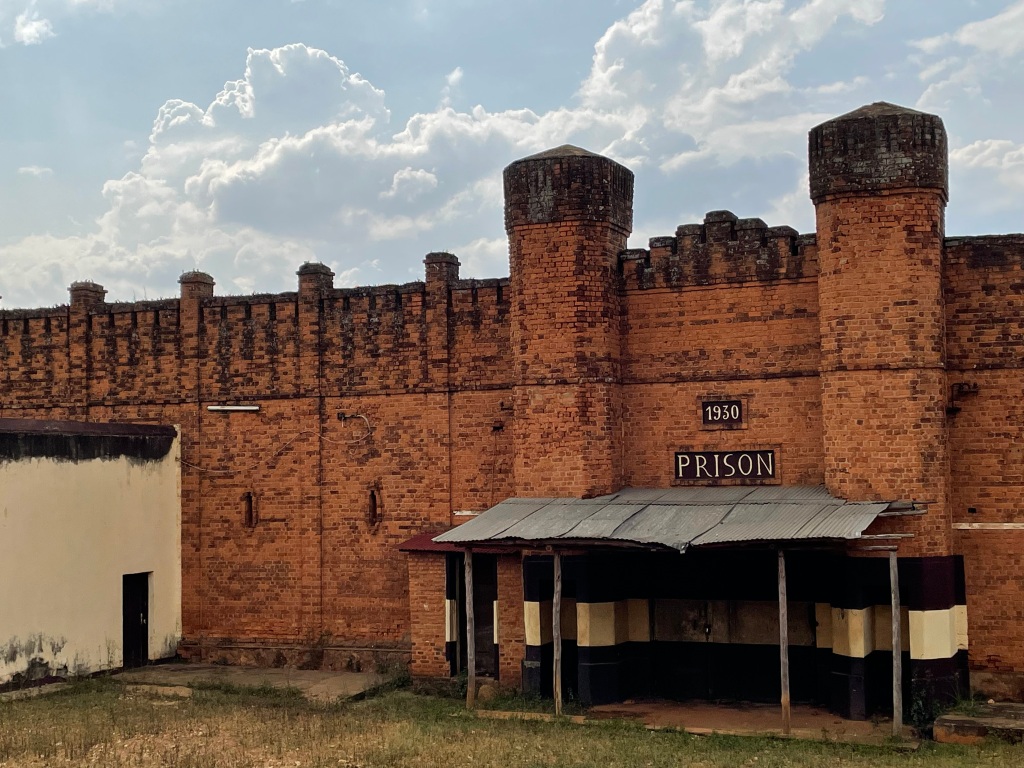
You might also catch a view of the remains of Rwanda’s central prison in Kigali, which is on another hill nearby. It is a large colonial jail which unfortunately is scheduled for erasure if future plans are put in place. Currently however with some persistence you can get in and view the structure which only closed in the early 2010s.
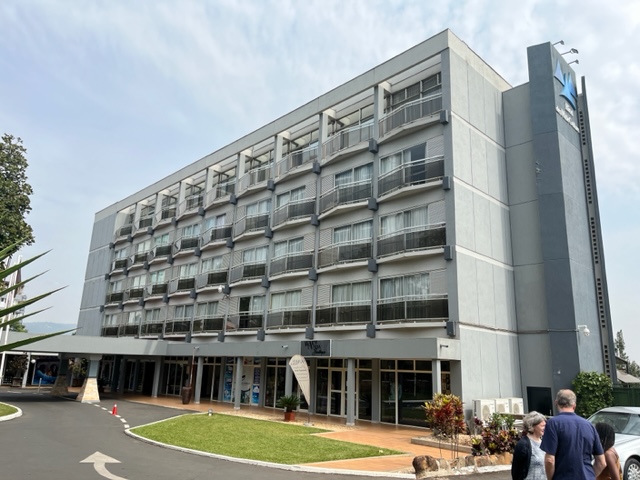
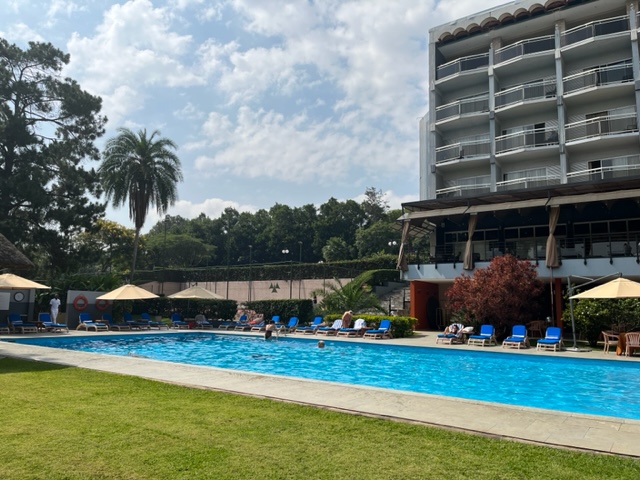
Finally, a visit to the now called ‘Hotel Milles Collines’, the true site of the Hotel Rwanda, takes one back to halcyon days of the modern intercontinental tropical hotel. Copies of this hotel style grace most of the globe’s tropical locations, with the swimming pool, bar area and tennis courts to view. This is a definite contrast to the boutique hotel we stayed in with its contemporary reinterpretation of space, complete with mosquito nets, and open-air dining.
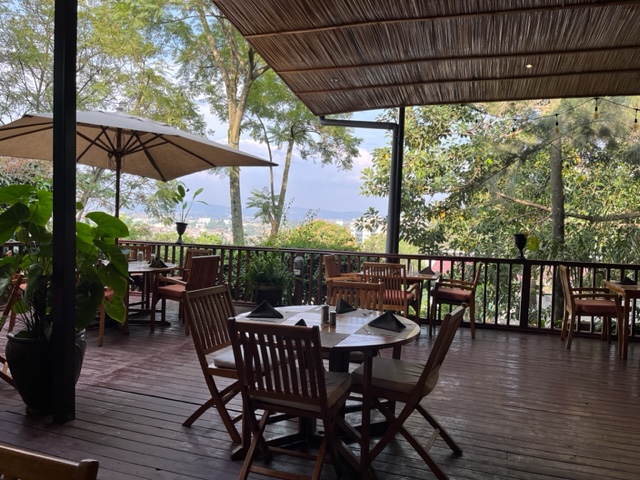
A great way to end a trip would be to have dinner at Kigali’s latest dining venue, just opened in time for the Commonwealth Governors and Heads of state meeting (CHOGUM) that took place in Kigali last autumn. It’s fine dining, interior decoration, and panoramic view of this city of hills is a great way to conclude a trip.
As the posters across this city proclaim, “Visit Rwanda”!
This edited collection of essays and image-driven pieces by anthropologists, archaeologists, architects, and historians examines the legacies of African architecture from around the time of independence through examples from different countries. Drawing on ethnography, archival research, and careful observation of buildings, remains, and people, the case studies seek to connect the colonial and postcolonial origins of modernist architecture, the historical processes they underwent, and their present use and habitation, adaptation, and decay.
Deriving from a workshop in connection with the 2015 exhibition “Forms of Freedom” at the National Museum in Oslo and the Venice Biennale, the volume combines recent developments in architectural history, the anthropology of modernism and of material culture, and contemporary archaeology to move beyond the admiration or preservation of prized architectural “heritage” and to complicate the contemplation—or critique—of “ruins” and “ruination.”
Professor Ken Ndomhina picked us up in his SUV and we drove through Fourah Bay College, Freetown to the Faculty of Architecture building of the University of Sierra Leone. My colleague, Iain Jackson, had been invited to give a lecture on the architecture of Fry and Drew in Western Africa. We parked up outside a two storey, white and green building with interesting post-modern ornament that included fluted ionic columns which captured swirling red dust in their profiles.
Iain Jackson giving a lecture to staff and students at Fourah Bay CollegeFourah Bay College: School of Architecture
When this Architecture School opened four years ago, twenty-one students enrolled, and the first cohort is about to graduate. The school now boasts around 150 students across four year groups.
Creating a new School of Architecture is a wonderful opportunity – the chance to ‘start again’ and to develop a new programme from scratch is very special. Equally the challenges are great – not least recruiting staff as there are only 25 accredited architects in the whole country.
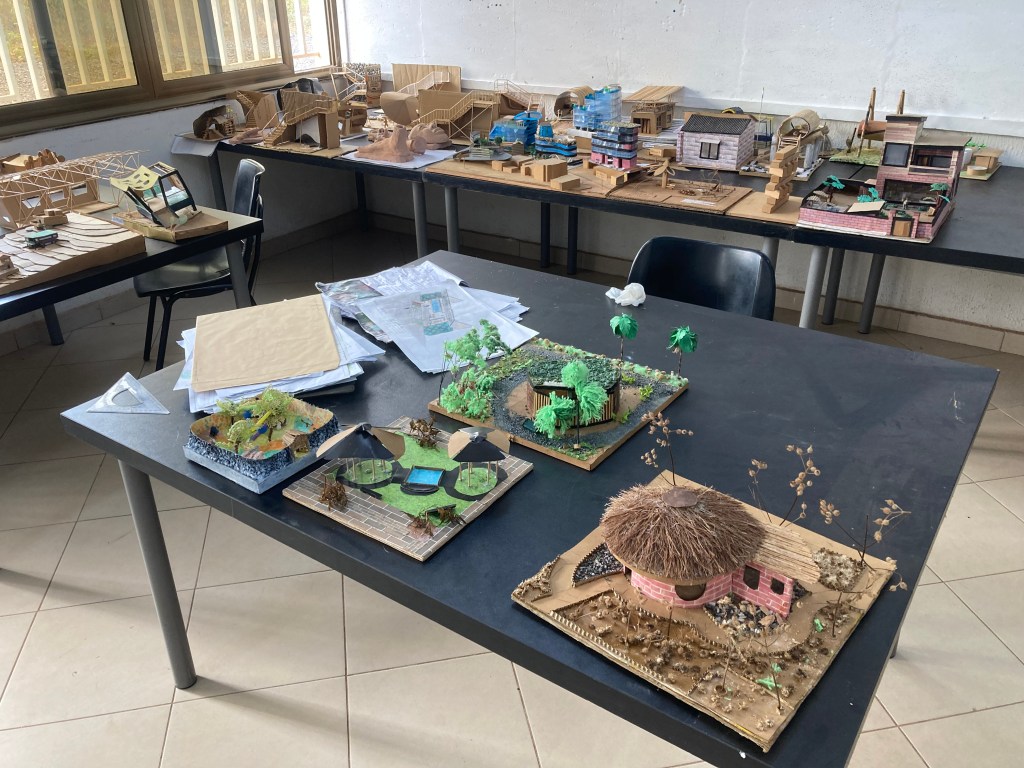
Student Models: Fourah Bay CollegeSchool of Architecture at Fourah Bay College
Yet progress is being made. Once the lecture was complete, we enjoyed light refreshments and conversation with local staff who had been trained far and wide in Cyprus, Morocco and England. They had returned ‘home’ to be involved with this exciting and growing project. The School is preparing for Commonwealth Association of Architects accreditation. It has a hands-on approach to teaching with many 1:1 scale building experiments and model-making, supplemented by history, environmental design, and building technology.
Student Representative: Rose Imah Paul giving a vote of thanks.Ken Ndomhina and Faculty with Paul Robinson, Ewan Harrison, and Iain JacksonStaff and Students in the Courtyard
Although change is slow the University of Sierra Leone architectural department vision is strong: to see men and women from Sierra Leone, trained as architects to positively impact the developing built environment of the nation. And to establish the role of architect within their communities. Knowing this, it made it a thrilling privilege to pose with this next generation for a celebratory photograph once the event ended.
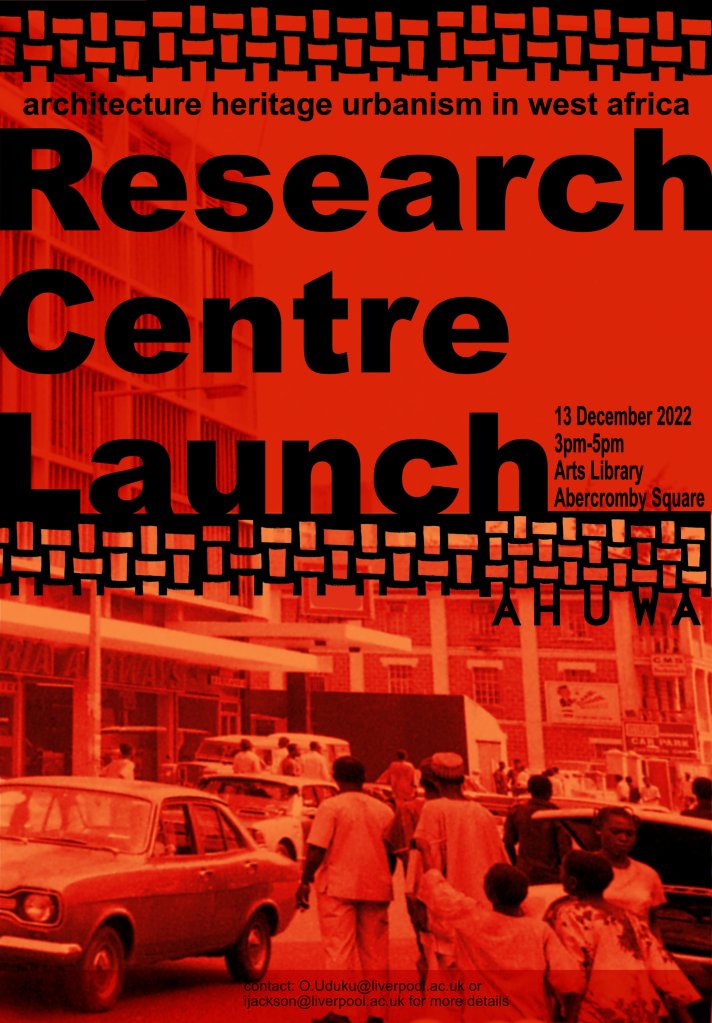
We have recently established a new research centre, based at the Liverpool School of Architecture called Architecture, Heritage, and Urbanism, in West Africa (AHUWA): https://ahuwa.org/ We’re hosting a launch event and would be honoured if you could join us on Tuesday 13th December, 3-5pm at the Arts Library, 19-23 Abercromby Square, Liverpool University for tea and cake.
Friends and colleagues from all of the North-West’s major collections, repositories, and archives with material on West Africa have been invited, and we’re excited to share ideas and build up new networks across the region and beyond.
If you could register here we’d appreciate it, and look forward to seeing you on the 13th. We’ll have an informal presentation at 3:30pm – please do come along and stay as long as you’re able. We’ll be on Zoom too from 3:30-4:00pm if you’d like to join us virtually for the presentation.
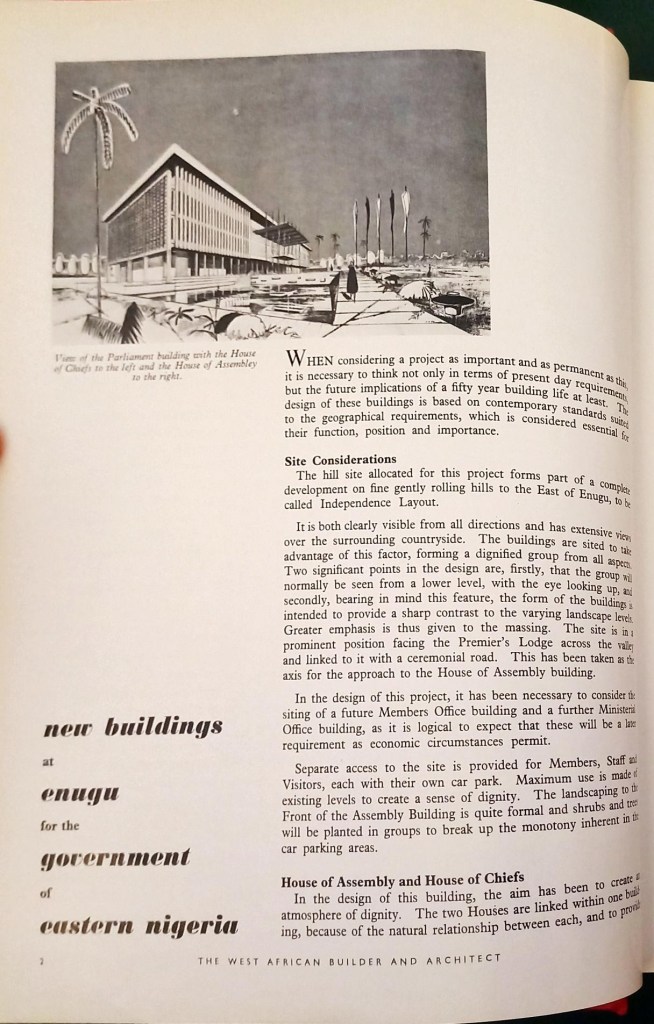
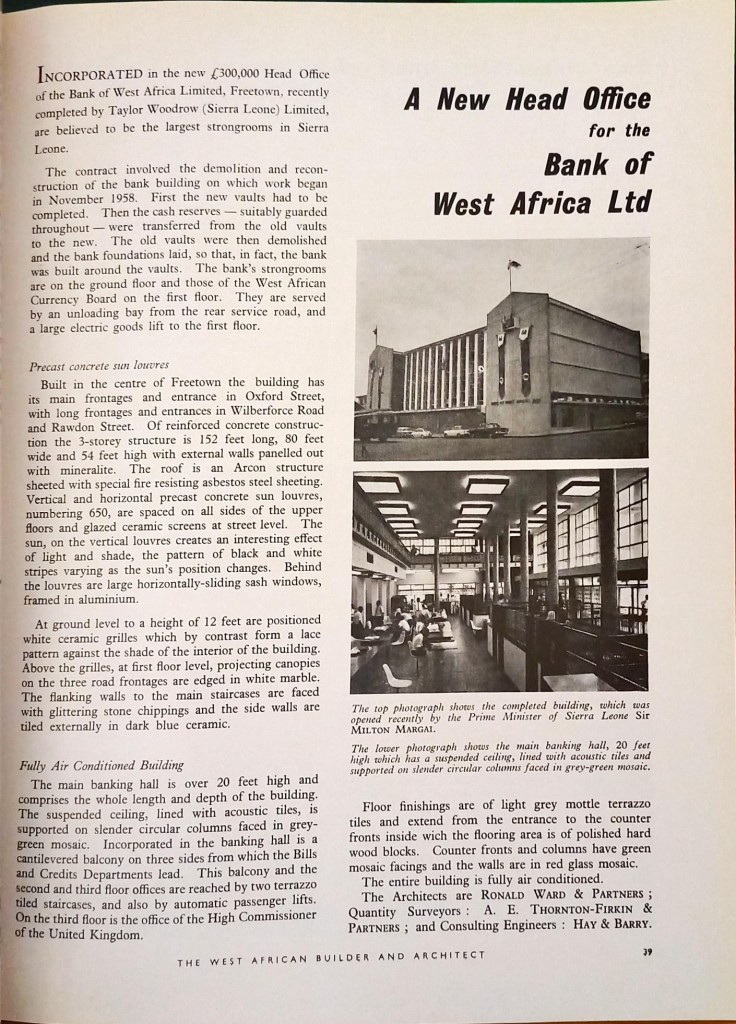
The first architectural journal in West Africa, The West African Builder and Architect (WABA) was published in 8 volumes between 1961 and 1968, and covered the field of architecture and building in the region. Nation-building programmes had started in newly independent West African nations by the early 1960s. These projects were centred on large-scale infrastructure projects for national development, which sparked a boom in design and construction. In contrast to earlier architecture journals on colonial Africa that were published for a metropolitan readership,i WABA was founded by and for professionals based in West African countries to share information on practice in the developing industry and encourage cooperation among practitioners. ii
The journal began with an editorial panel of British architects: Kennett Scott in Ghana, and Anthony Halliday and Robin Atkinson of Fry & Drew and Partners in Nigeria.iiiOluwole Olumuyiwa, one of the few Nigerian architects who studied abroad and established practices upon their return, was the only West African on the panel. Among the WABA’s target audience was the modest number of engineering and architecture students studying in West Africa. It aspired to equip them with valuable information regarding their future careers that were specific to their environment.
Published articles included news on new projects finished in Ghana, Nigeria, Liberia, and Sierra Leone as well as articles by skilled professionals discussing contemporary design and building methods in West Africa. Regular publication features included technical reviews of new products, updates on development work in the countries covered, and advertising placements.
At that time, British practices operating since the 1940s dominated the architecture field in the region. They completed late colonial buildings using tropical modernist designs. This group of foreign architectural firms, including James Cubitt & Partners, Kennett Scott Associates, Architects’ Co-Partnership, Fry, Drew & Partners, etc., produced a significant number of the new structures published in the WABA journal. The projects of the general contractor, Taylor Woodrow and the engineering consultant, Ove Arup & Partners were also listed. Buildings for government organisations, corporations, and residences, constituted the bulk of the reported projects. Facilities for telecommunications, transport and healthcare were also mentioned.
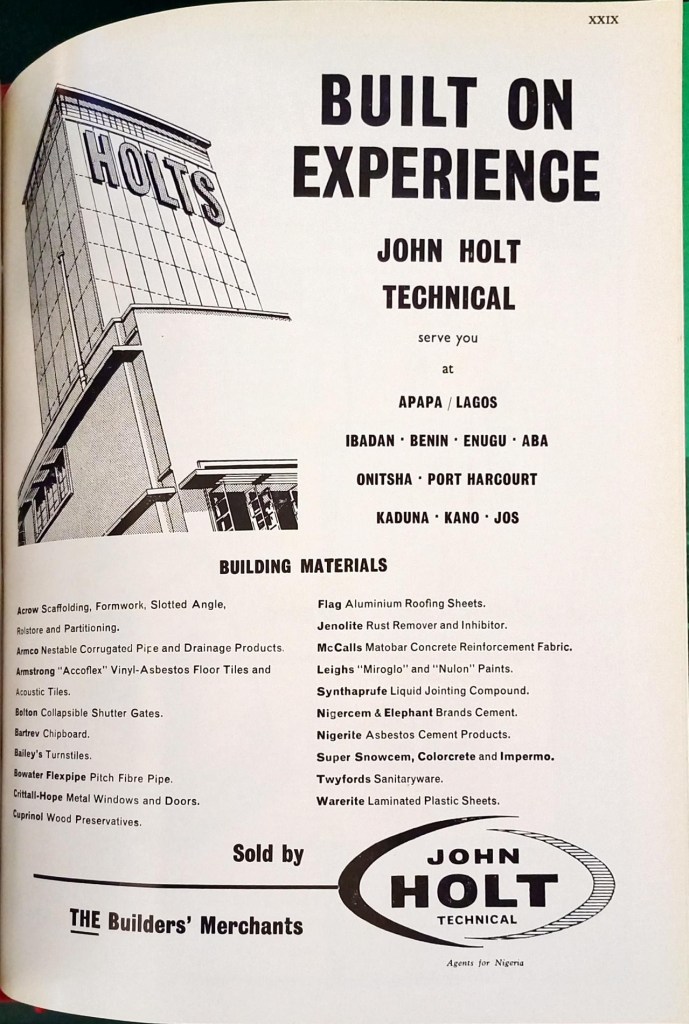
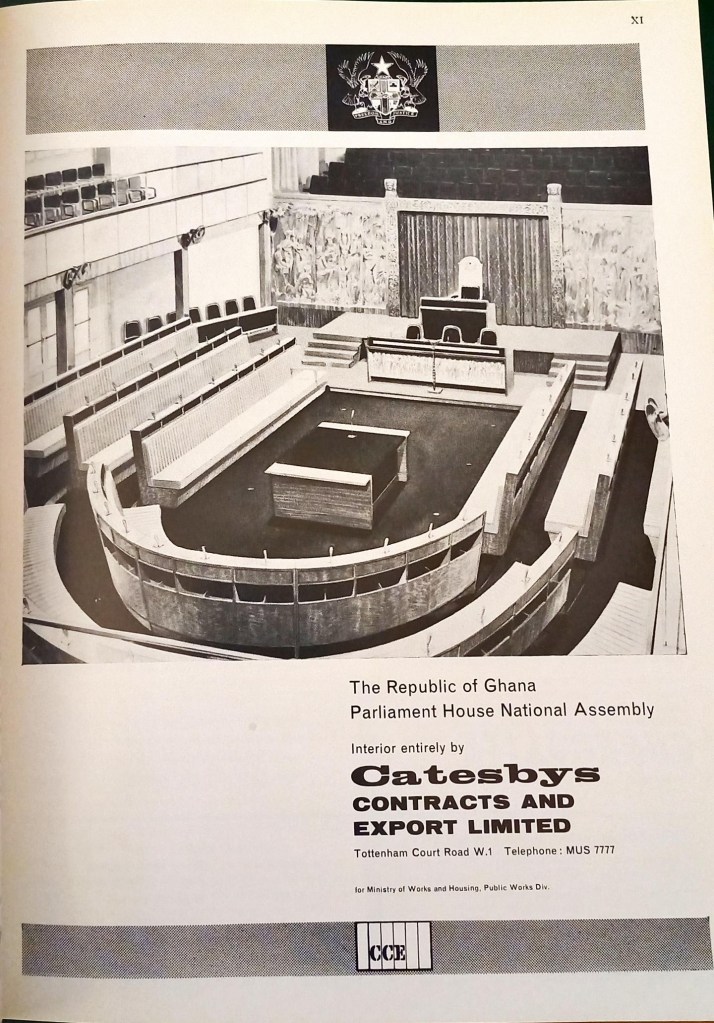
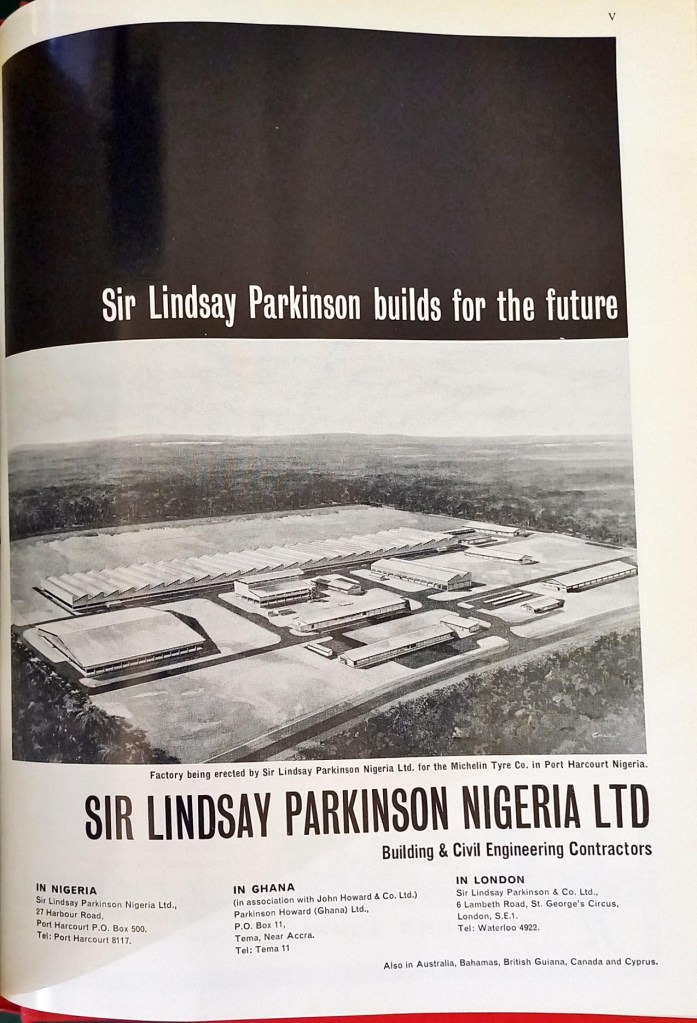
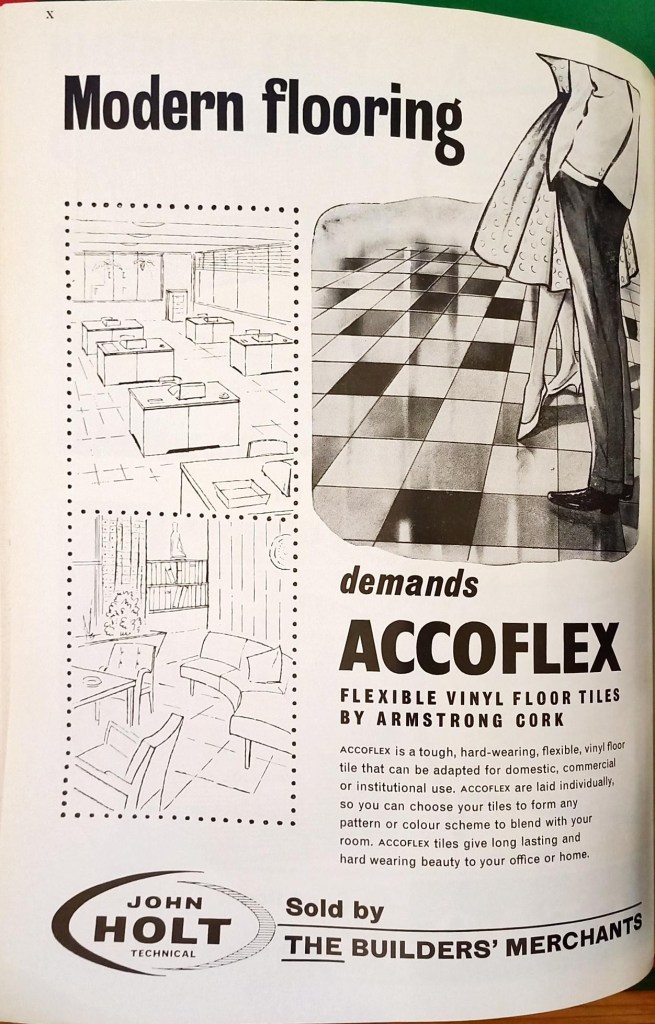
The WABA journal served as a reference for the purchase and sale of building supplies and services through advert placements, advertisers index and buyers’ guides. Advertisements in volumes 1 and 2 of the journal reflect the state of the construction industry in the early 1960s independent West Africa. As the region’s manufacturing industry was in its cradle, building supplies and equipment were primarily imported and distributed by West African-based agents. Most of the distributors’ advertisements in the journal were from multinational corporations that were at the forefront of trade in colonial West Africa such as United Africa Company, GBO (G.B. Ollivant) and CFAO (Compagnie Française de l’Afrique Occidentale). GBO Building Department for example was a former subsidiary of British merchant GB Ollivant and had been operating in Nigeria since the late 19th century. Vivian, Younger & Bond Ltd and John Holt Technical were among more well-known suppliers with numerous locations throughout West Africa.
By constructing new facilities and forming partnerships with public and private organisations, foreign manufacturers also expanded their presence in West Africa. In their various local factories, International Paints (West Africa) Ltd., Dorman Long (Ghana) Ltd., and Nigerite (in Nigeria) produced paint, steel, and asbestos sheets respectively. The headlines of these corporations’ advertisements in WABA highlighted the launch of new plants and their support of the local economy. Additionally, advertisements for locally produced goods included the clause “made in Ghana” or “made in Nigeria.”. There was a minimal presence of indigenous manufacturing companies. NIGERCEM-Nigeria’s first locally owned cement factory was the only producer to include this feat in its advertisement.
Some organizations used their advertisements to highlight their importance and reputation in the sector. Advertisements for general contractors and subcontractors were designed to appear as portfolios of completed and continuing projects. The advertisement pages for the metal component company Henry Hope & Sons Ltd always showed an image of a brand-new building fitted with their curtainwalls and/or sun breakers. This was displayed alongside a brief overview of the building including its location and architect’s name.
The journal adverts reflected companies’ recognition of their role in nation-building. Multinational corporations boasted of their delight and pride in partaking in the “progress” and “growth” of the economy and the future of new countries. Was this marketing approach merely chosen to appeal to the development-oriented nature of the new market, or was it implemented to emulate previous advertisements by foreign businesses (like UAC) in response to criticism of neo-colonialism? iv
Companies targeted their advertisements not only at professionals but also at citizens in West Africa. These advertisements directed at building occupants first appeared in the 1962 issues and frequently alluded to modernity. Adverts for flooring, sanitary fittings, and appliances included large texts with phrases like “gracefully modern” and “modern living.” This contrasted with building supplies adverts-directed at professionals-which hardly referenced modern living. The late colonial era’s ‘africanization’ programmes aided the growth of the middle class by giving priority to the education and employment of Africans by public and private sector organisations. Likewise, housing initiatives launched by government agencies like the Ghana Housing Corporation and the Nigerian LEDB (Lagos Executive Development Board) in the 1950s attracted this demographic. They were characterised by their higher economic and educational status, as well as a household lifestyle distinct from the traditional communal family structure.v Was the reference to a modern lifestyle a marketing strategy to attract the West African middle class who had adopted a western-oriented lifestyle?
The WABA journal provides an account of the building sector’s development in independent West Africa. The journal advertising demonstrated how companies promoted their products to appeal to both individual and national ideals of growth while navigating the shifting socio-political landscape.
i See Hannah le Roux and Ola Uduku, ‘The Media and the Modern Movement in Nigeria and the Gold Coast’, NKA (Brooklyn, N.Y.), 2004.19 (2004), 46–49.
ii ‘Introduction’, The West African Builder and Architect, 1:1 (1961), 1.
iii In 1961, the Nigerian office of Fry, Drew and Partners became Fry, Drew, Atkinson Architects Nigeria under the leadership of Robin Atkinson. ‘Nigeria Developments’, The West African Builder and Architect, 1.4 (1961), 108.
iv Bianca Murillo, ‘“The Devil We Know”: Gold Coast Consumers, Local Employees, and the United Africa Company, 1940–1960’, Enterprise & Society, 12.2 (2011), 317–55
v Daniel Immerwahr, ‘The Politics of Architecture and Urbanism in Postcolonial Lagos, 1960-1986’, Journal of African Cultural Studies, 19.2 (2007), 165–86 (p.175)
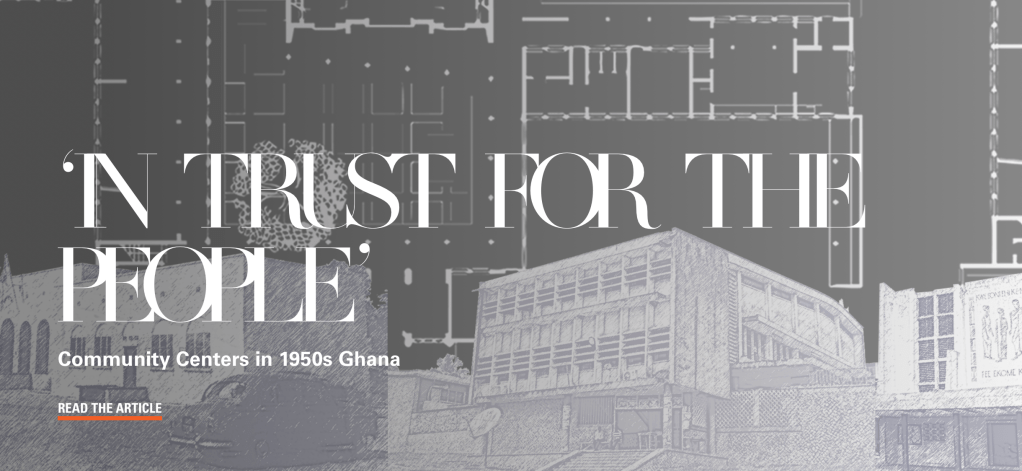
Have a look at the latest article from Design233 on Community Centers in Ghana, including the Accra Community Centre (paid for by the UAC) and Tarkwa Community Center (paid for by the Manganese Mining Company) – both designed by Fry and Drew. In addition to these modernist works the more formal and classically inspired centre at Kyebi is discussed – this centre is more of a mystery… We know it was funded by the Consolidated African Selection Trust (CAST)- but who designed it, and why did CAST commission such a lavish project?
Accra Community Center PlanTarkwa Community Center articleKyebi Community Center
The 1951 victory for Kwame Nkrumah’s Convention People’sParty resulted in some major shifts in the procurement of new infrastructure and housing. For the electorate, housing was one of the most important issues and Nkrumah’s government was quick to recognize this potency.
His plan, announced in 1952, was to build a new port city, complete with innovative and improved housing at the highest standards. Located only 18 miles from the centre of Accra, the new city of Tema would demonstrate Nkrumah’s commitment to industrial development and that Ghana was at the centre of a pan-African vision.
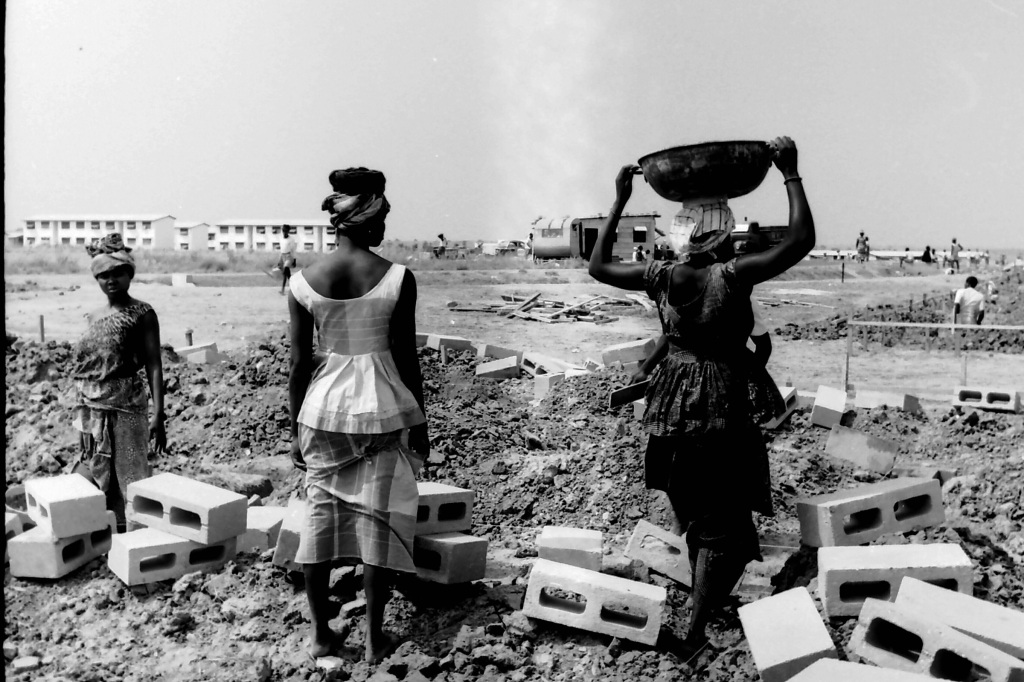
Tema under construction: female labour force transporting blocks and cement
Tema was part of a wider industrialization project that included a new aluminum smelting plant and hydroelectric power station on the Volta River. It was a major project involving international financial backing and set out the major ambition Nkrumah had for the nation during the advent of independence. For such a major project, very little is known about the first team of architects and planners responsible for the execution and delivery.



















 Transnational Architecture Group