Archive

Tag Archives: architecture

Civil Engineering Building, Liverpool University

This is the Civil Engineering Building (1955-60), designed by Maxwell Fry and photographed last week in a snowy Liverpool.

The tower is decorated with a cast concrete panel of lettering, which lists names of the great and good of the structural and civil engineering world from Archimedes to Brunel. Situated directly over the main entrance, the panel acts as a potent reminder to students of their place in the engineering tradition. Reflecting the function of the building, this is Fry’s Modernist equivalent of a Classical decorative frieze.

13.2.20 engbldg

The following drawing by staff at Fry, Drew and Partners – taken from the Liverpool University Special Collections and Archives – shows the tower-and-podium typology used by Fry. Classroom accommodation is provided to the T-shape tower and large, basement workshops are top-lit via the podium. From the vantage point of the reception area, it is possible to look down into the workshops and see the engineers at work – mirroring the industry portrayed by Peter Lanyon’s mural, which sits adjacent to the viewing screen.

13.2.20 engbldgdwg

For further discussion of the building and Fry’s other work for Liverpool University, see this online article.
Research Seminar Presentation

Wednesday 13th February was the PhD research seminar day at the Liverpool School of Architecture. I gave a 15 minute presentation on the recent progress of my research. My research had started out by examining the development of Nigeria’s architectural profession during the mid-twentieth century. Findings made in the course of the research, however, revealed an outstanding level of architectural output by the country’s colonial Public Works Department (PWD), yet to be the subject of any known research.

This translates into an apparent gap in the studies done on Nigeria’s architectural history as a whole, and its British colonial architectural history in particular. My research’s new line of investigation is therefore centred on British colonial public works architecture in Nigeria, with the aim of bridging this gap in literature. In a bid to provide a fuller understanding of the department’s output as well, the research’s focus of investigation now covers the period from 1900 to 1960.

As my presentation discussed, one issue raised from literature is that private sector architecture tended to blaze new trails and to produce more innovative designs than the PWD. I therefore employed these images from the West African Builder and the Architects’ Journal to analyse this argument.

13.2.18 Lagos

13.2.18 Lagos2

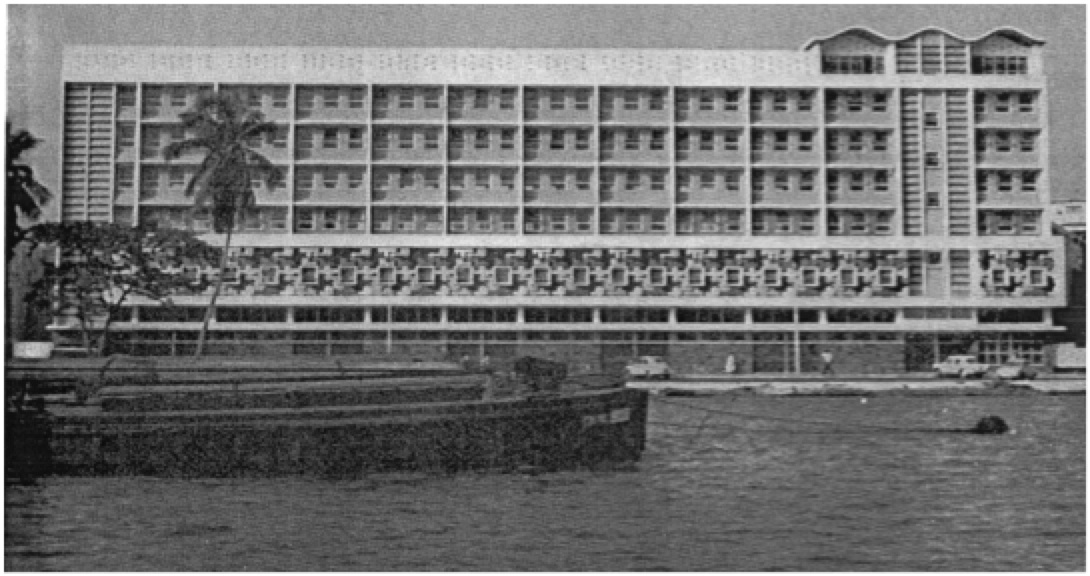
The first is the 1959 General Post Office, Lagos, designed under the supervision of Charles Stevenson, PWD Senior Architect.  The other image is the 1960 Nigerian Port Authority Headquarters, also in Lagos, designed by W.H. Watkins Gray & Partners. With both buildings featuring a similar modernist approach to their designs at that time, the ‘less innovative’ view to public works designs may need to be further questioned.

‘The Conflict of Man with the Tides and the Sands’, Peter Lanyon

Jane Drew and Maxwell Fry used artwork in their buildings wherever possible. At the University of Liverpool’s Civil Engineering Building (1960), Fry commissioned the Cornish artist Peter Lanyon (1918-64) to design a mural of enamelled tiles. Lanyon created a visualisation of the research into loose-boundary hydraulics, including the movement of rivers, the mechanism of waves and the behaviour of solids suspended in water. He spent months researching hydraulics before attempting to create the image, which is intended to represent the interaction of forces.

13.2.13 lanyon2

Maxwell Fry suggested the use of enamelled tiles as a method of creating a hard-wearing surface that might be applied to a wall of the reception area, immediately opposite the main entrance. The mural consists of 750 standard, 6-inch white tiles that Lanyon painted and then fired in a kiln. This process has ensured that the texture of each brushstroke is discernable on close inspection, giving added movement to the work. In some cases Lanyon adheres to the lines of each tile, while other sweeping strokes break up this rectilinear pattern:

13.2.13 lanyon detail

Much of this information was taken from a write-up on Lanyon’s work situated next to the mural. Visit it if you can – the pictures don’t do it justice!

Images © Jessica Holland.

BP Headquarters, Lagos, Nigeria

On 1st October 1960, Nigeria gained independence from Great Britain. Jane Drew was in Lagos during this historic period and she wrote home to Maxwell Fry of the carnival atmosphere in the capital: ‘Lagos is electric with excitement.’

Drew was in town to attend the opening of the headquarters for British Petroleum in Lagos, designed by Fry, Drew & Partners. The office block is one of several lucrative projects designed by Fry and Drew for British companies in West Africa – others include the Co-operative Bank, just a few streets away from the BP building, and the Leventis Store in Accra.

13.2.11 BP HQ

Now African Petroleum House, the roof terrace has since been filled in to provide an extra floor of office space and the louvres have been altered – no doubt following the introduction or upgrading of the air conditioning. For images of the building shortly after its opening, see the RIBA online photograph collection.

Mfantsipim School, Cape Coast, Ghana

In 1947, Maxwell Fry and Jane Drew were commissioned to build a series of schools and teacher training colleges, primarily in the former British colony of the Gold Coast. The architects used the project as an opportunity to apply European ideals of modernism to a new environment, and their pioneering architectural approach was promoted as the realisation of a new era of mutual interest for Britain and the Gold Coast. Representative of newly-released resources from the Colonial and Welfare Development Fund, Fry and Drew’s educational buildings embodied the move toward colonial devolution.

At Cape Coast, Fry and Drew worked on three projects (more on these soon), including a series of extensions for Mfantsipim School. The first secondary school in the Gold Coast, Mfantsipim School was established in 1876 as part of the Methodist mission. Phase one of building works comprised a series of staff houses and a water tower, followed by a second phase of dormitory blocks, shown below.

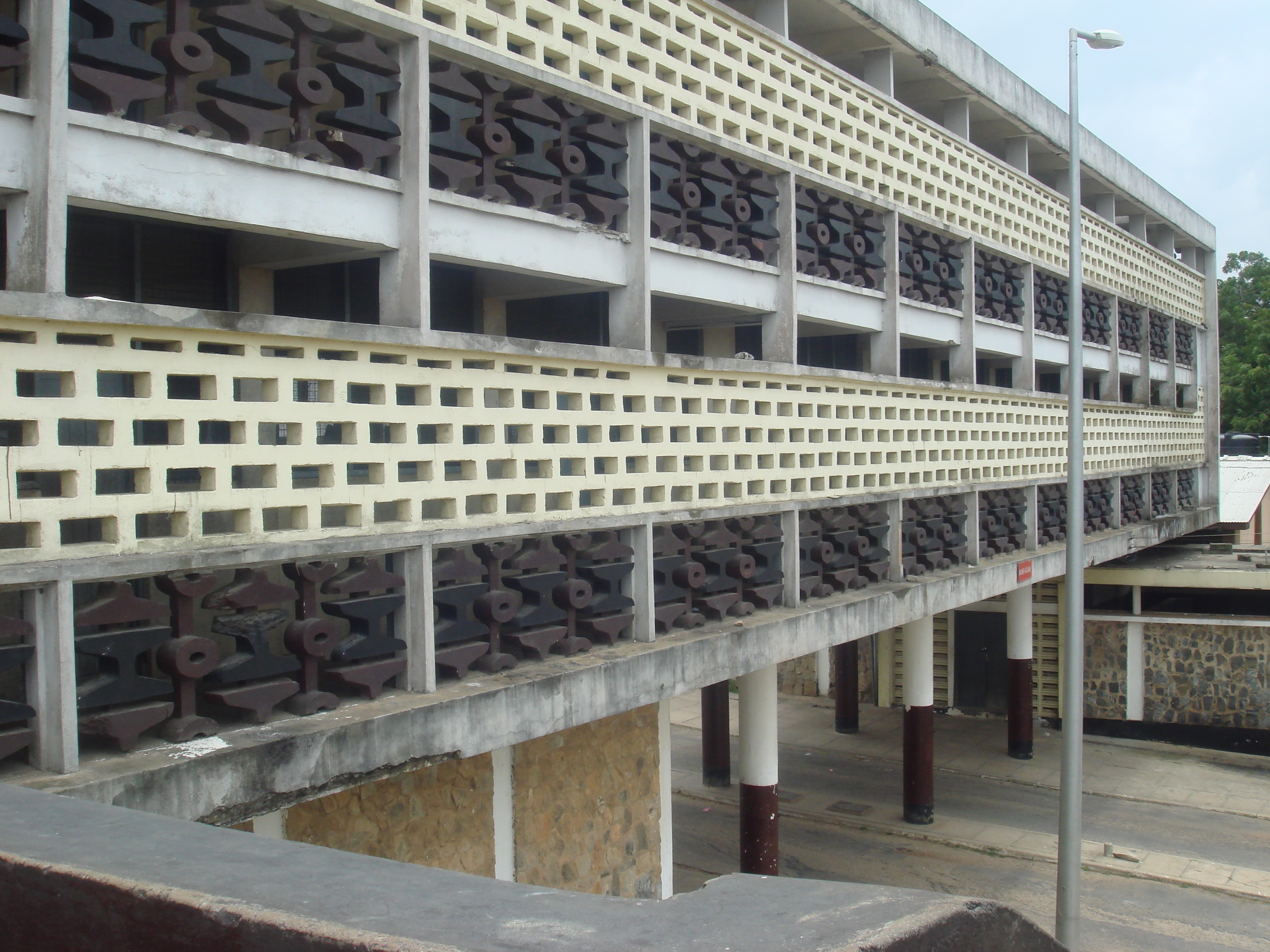
13.2.8 mfant dorm

This block forms a gateway to the site. The driveway passes under the building and up to the main, hill-top campus. The ground floor bathroom block sits at right-angles to the dormitories above. The perforated balustrade evidently provided scant shading to the south elevation as further brise-soleil have since been added:

13.2.8 mfantdorm

For further discussion of Fry and Drew’s work in West Africa see the excellent: Mark Crinson, Modern Architecture and the End of Empire (Ashgate, 2003).

A pictorial archive of Mfantsipim School, from which the first image is taken, is available here. The second image was taken during a TAG visit in September 2012, © Jessica Holland.

British Colonial Architecture in Nigeria, 1900-60.

Yemi Salami’s study explores British colonial architecture in pre-independent Nigeria. Beginning at the turn of the twentieth century and culminating in the year of independence, the investigation traces a significant period of transformation in the country’s history. Notably, it explores the rise of its colonial style buildings, which had come to cater for emerging uses in government, commerce, healthcare, transportation and other contemporary uses of the time.

Previous studies showcase a rich presence of these buildings in pre-independent Nigeria, particularly with reference to the climate responsive “tropical architecture” of the mid-twentieth century. The architectural careers of a few notable professionals are likewise widely explored. However, were these projects and professionals the only modern influences to Nigerian architecture at the time? Who were the other architects and what were they designing? Furthermore, what forms of colonial buildings existed before the mid-twentieth century climate responsive trend?

The aim of this PhD research, therefore, is to obtain a more accurate understanding of the events and circumstances which shaped colonial architectural forms and practice in pre-1960 Nigeria. It will employ a qualitative historical research strategy, by sourcing and investigating materials from previous literature, archival records and existing projects from the period.

‘Memories of African sculpture’

Maxwell Fry and Jane Drew developed the use of perforated screens in their West African ‘tropical architecture’. Designed to provide a sun-break whilst encouraging much-needed cross-ventilation in the hot and humid environment, the brise-soleil also provided an opportunity to add decorative forms to otherwise basic structures.

African influences – described in rather general terms by Fry and Drew as strong forms and colours – were used to bring regionalism to their imported modern ideas. Variants of sculptural ‘African’ forms are used in each of their school, university and hospital projects to provide an instantly recognizable Fry and Drew motif. Over the coming weeks images of these buildings will be posted.

13.2.4 ArchRev

Jane Drew said of their attempts to bring regional character to the modernist buildings:

‘The particular architectural character comes not only from the mono-pitch roof and long low blocks … but from the sunbreakers, grilles and other shading but breeze-permitting devices. … the sunshine and moisture and heavy overcast sky and feeling of oppressive lethargy seem to call forth moulded forms which are rhythmical and strong, not spiky and elegant, but bold and sculptural.’

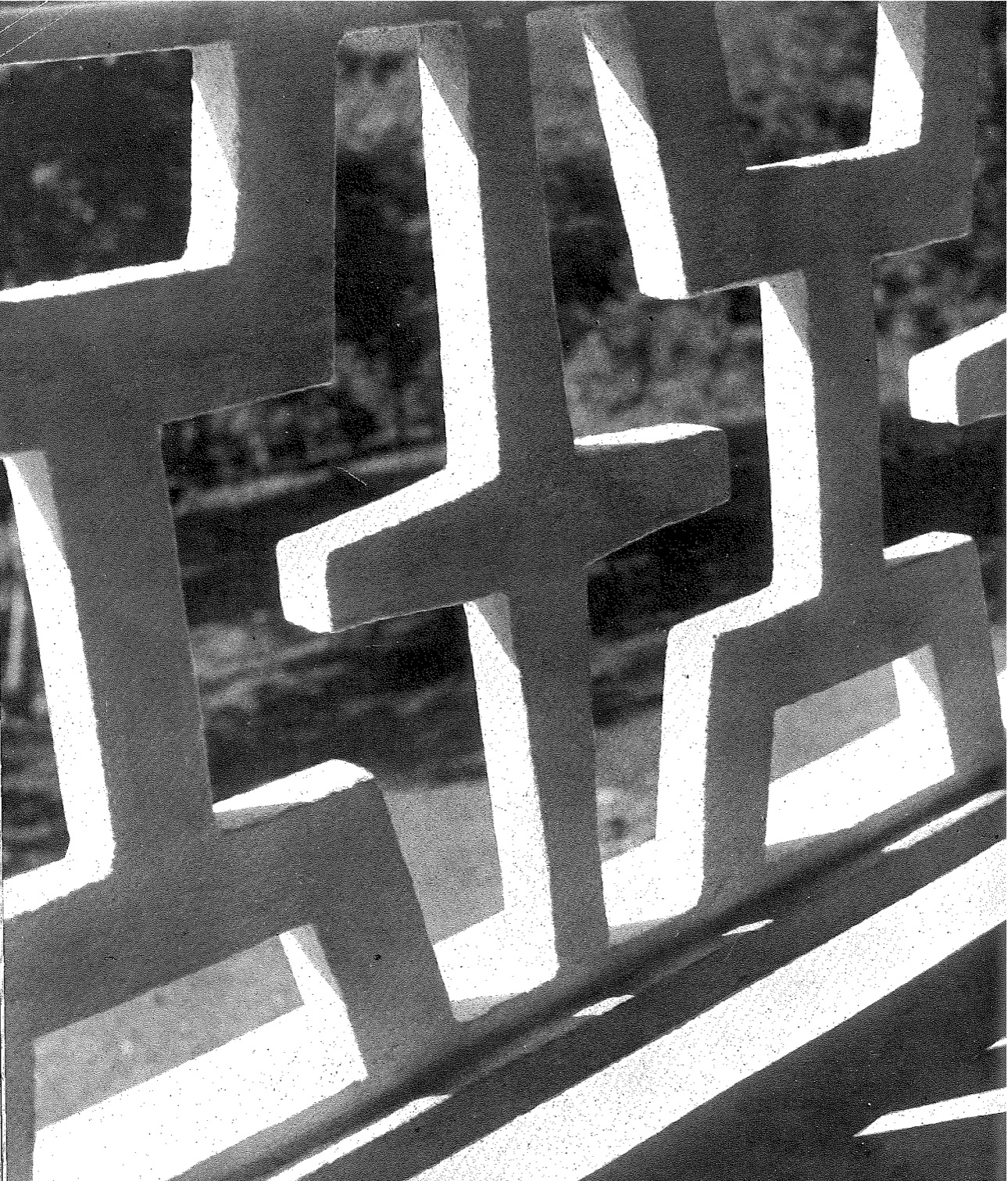
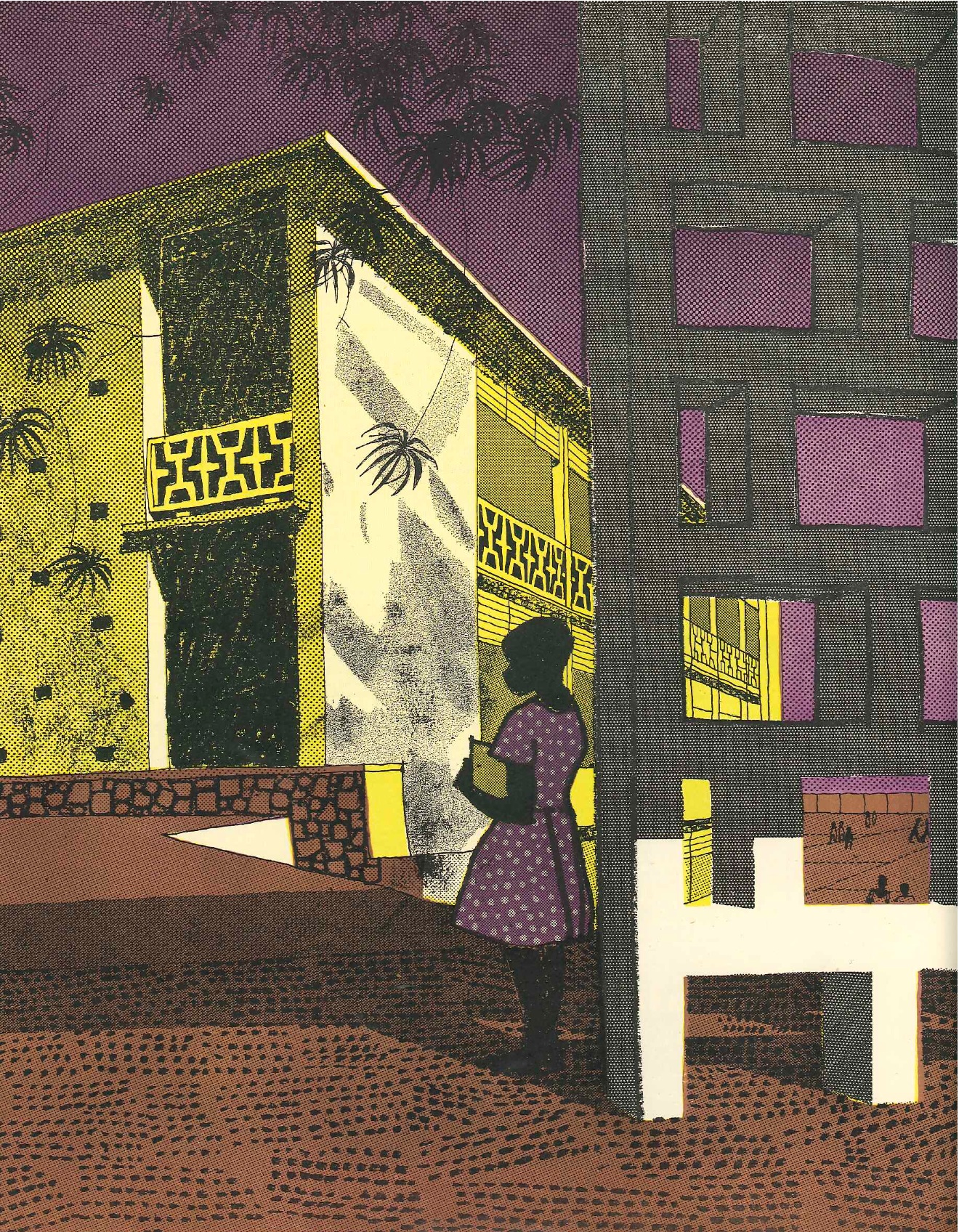
Below, Gordon Cullen’s sketch of bold forms and strong shadows emphasizes Drew’s words. These images are taken from an article on Fry and Drew’s ‘African Experiment’ published by Architectural Review in May 1953 and show the perforated balustrade designed for the Adisadel College extension at Cape Coast, Ghana.

13.2.4 Cullen

A Manual of Modernist Regionalism for Tropical Africa: The cultural environment shaped by Maxwell Fry & Jane Drew.

Edwin Maxwell Fry and his wife Jane Drew, with their West African designs in the 1940s, established a design system that had modernist theories as a starting point and developed ideas of climate responsiveness, development planning and adaptation to the new post-colonial social conditions. This system was promoted in the 1950s within the techno-scientific network of the new British Commonwealth, under the name of Tropical Architecture through publications, conferences and the institution of courses of studies in London and Kumasi.

Jacopo Galli’s PhD research will analyse Tropical Architecture from the factors that influenced its conception: the British medical-engineering tradition, the exportation of modernism and the highly experimental environment. Jacopo intends to analyse the numerous educational institutions built in West Africa by Fry & Drew and several other designers, for instance James Cubbitt & Partners, Godwin & Hopwood and the Architect’s Co-Partnership. These buildings were conceived as experiments to verify the functioning of climate devices and urban solutions. Finally, he will verify how this empire of good practice reached its highest point in the publication of Tropical Architecture in the Dry and Humid Zones in 1956: the textbook approach of the manual seen as the conclusion of the entire experience and its consequences in the history of bioclimatic architecture and planning for development.

Colonial Films Unit at Ibadan University

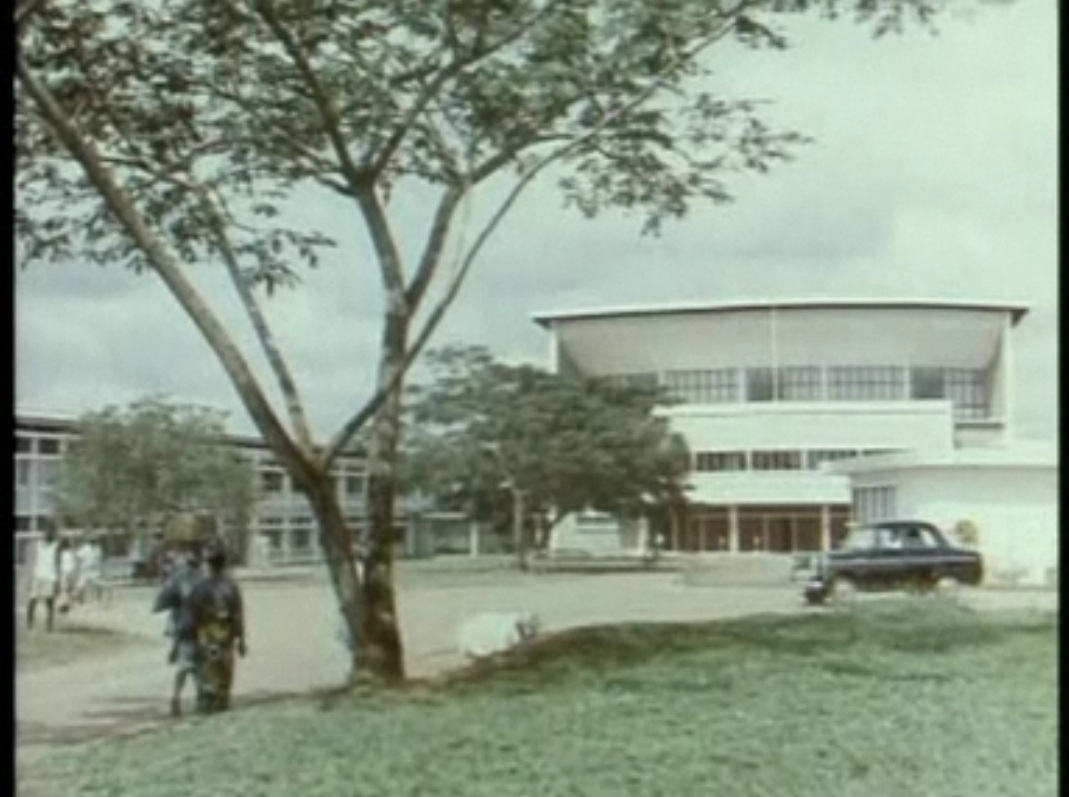
Following on from last week’s post on Ibadan University, here’s a still of Trenchard Hall taken from the 1958 film “Three Roads to Tomorrow”. It tells the story of three students from different parts of Nigeria making their way to university for the first time. Sponsored by BP, the film was made by Greenpark Productions to illustrate the way that ‘modern transport and oil power have changed the lives of all Nigeria’, says the narrator.

13.1.30 ui

The image shows the administrative block to the left of Trenchard Hall and the single-storey bookshop to the right, all designed by Fry and Drew as part of the first phase of development at the university.

The film is available to watch online at the excellent Colonial Film website, a research project intended to ‘allow both colonizers and colonized to understand better the truths of Empire’. The website brings together information on over 6000 films depicting life in Britain and its former colonies, including a fascinating collection of 150 films to view online – such as “Mr English at Home” (1940) and “Farmer Brown Learns Good Dairying” (1951).

A shining example of progress in colonial Nigeria, Ibadan University was the subject of several films, from the early stages of clearing, surveying and planning to the opening ceremony in 1954. Jane Drew featured in early footage; she wrote home to Maxwell Fry of being filmed on-site with the university’s first principal, Kenneth Mellanby:

‘This morning the colonial film unit took films of Mellanby, Jack Hoskins and I talking – a bit bogus but they want a full record’.

Indeed. Read about the Colonial Film Unit here.

Religious Buildings at the Lahore Model Town

13.1.28 collage

Left: Gurudwara (Sikh temple) B Block, Centre: Mandir (Hindu temple) D Block, Right: Mosque A Block. All photographs © Shama Anbrine.

The model town was not just an urban morphological experiment, but a unique social experiment as well. In a time when all the major sections of Indian population were thinking of freedom and possible independent states based on religious majorities in different areas, a small segment of people from all these sections were willing to live together in an ideal co-operative garden town. Therefore, during planning of the Model town, eight identical sites were reserved for religious buildings with one in each residential block. However only three of these were actually built: Sikh and Hindu temples and a Mosque.

The temples were abandoned in 1947 due to mass exodus of Sikhs and Hindus (who formed the majority of the population) after independence of Pakistan. The Sikh temple is now being used as a residence while the Hindu temple is now part of a girl’s primary school. The interior of the Sikh temple has been radically altered by the residents, and many portions of Hindu temple have been demolished or are in ruins. The Mosque, on the other hand, is quite well maintained and well preserved in its original condition, the only alteration being the introduction of modern electrical equipment.