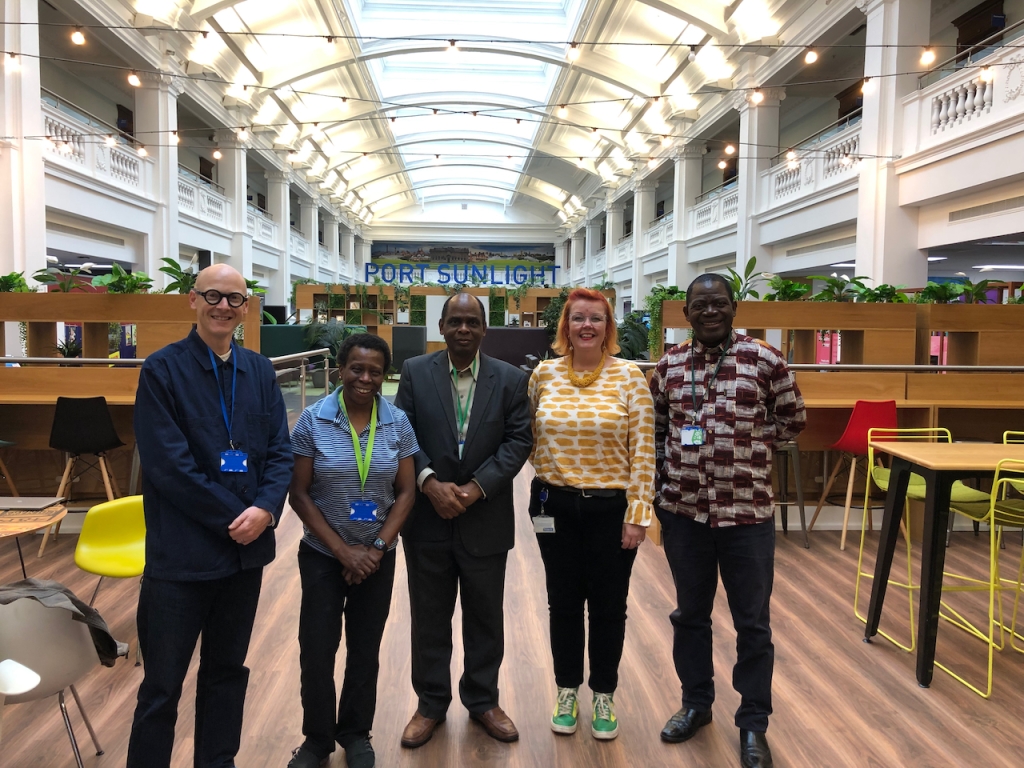
Iain Jackson, Ola Uduku, Ayo Olukoju, Claire Tunstall, Sam Ntewusu at Unilever, Port Sunlight
The objective of the visit was to visit and introduce Profs Olukoju and Ntewusu to the Unilever archive collection at Port Sunlight, particularly its subsidiary the United Africa Company’ (UAC)’s extensive holdings on Western Africa covering its various business interests in the region. The symposium which took place the next day involved presentations by Profs Olukoju and Ntewusu on the state of archives and archival research in West Africa, which was attended by Merseyside researchers and PhD students.
Professors Olukoju and Ntewusu at Unilever, Port Sunlight with bust of William Lever
The two-day visit also enabled discussions to be had about future collaborations at various levels, research, knowledge exchange capacity building at Masters degree level, and forms of impact for institutions in Western Africa and also the the UK and NW England in particular. Our thanks to all who contributed to the symposium. Particularly Claire Tunstall, and her team at the Unilever Archives, Dr Abraham Ng’an’ga of the Andrew Walls Centre, Liverpool Hope University, Alex Buchanan, Archival Studies, University of Liverpool History Department, Suzie Goligher, Afrograph Ltd, and all other individual and institutional contributors to the symposium.
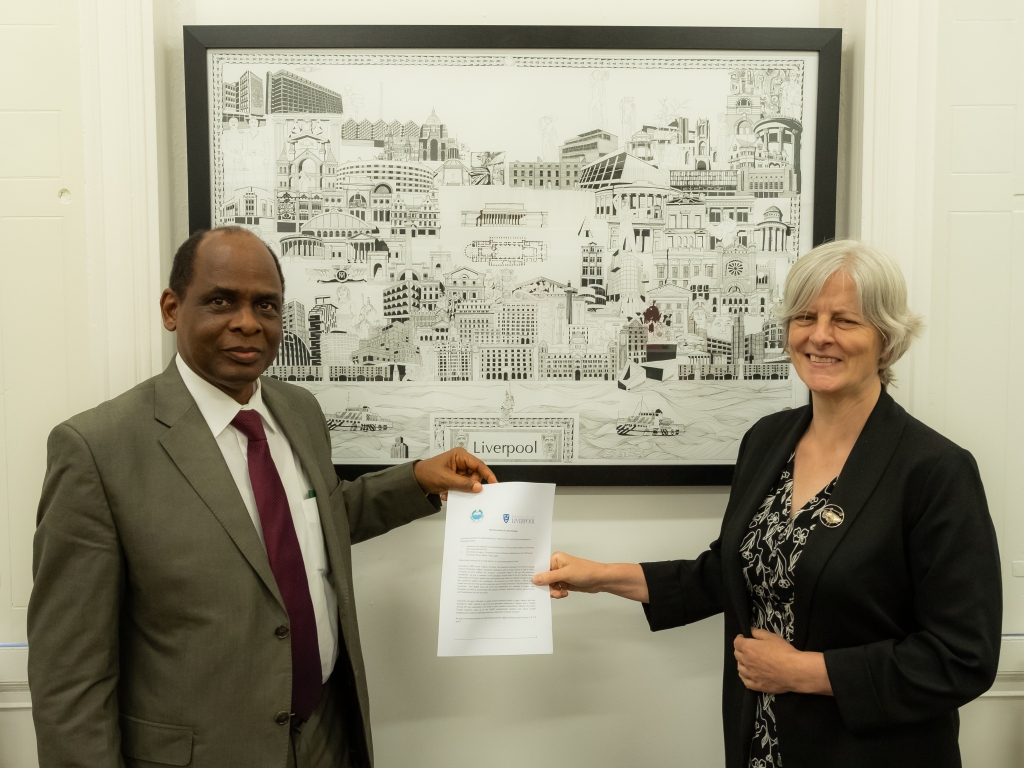
MoU signed by the University of Liverpool’s APVC for the Faculty of Humanities Professor Fiona Beveridge, and received by Professor Olukoju, on behalf of the University of Lagos
The visit also coincided with the finalised signing off of the Memorandum of Understanding which has now been established between the University of Liverpool and the University of Lagos. The formal MoU, was signed by the University of Liverpool’s APVC for the Faculty of Humanities Professor Fiona Beveridge, and received by Professor Olukoju, on behalf of the University of Lagos
‘Archival Urge’ is the second part of the symposium ‘Document Fever’ organised by the Architectural Association in collaboration with the Architecture Space & Society Centre, Birkbeck School of Arts on 25 February 2022. This time in partnership with KNUST, this panel aims to celebrate three projects that ‘collect’ histories of architecture in very different ways. We will think, amongst other questions, about the archival impulse/fever that made these projects coincide in time and space; the archival need to collect histories that are missing in architectural history; and the diverse formats of archive-making that these projects have taken or are taking.
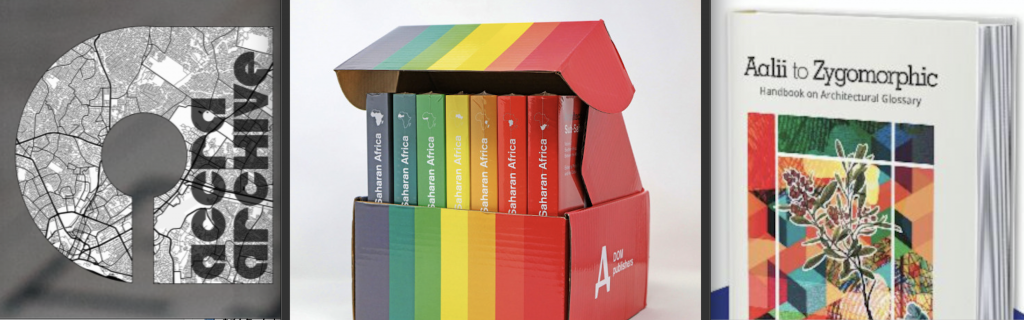
Adil Dalbai Adil graduated from Humboldt University of Berlin with a master’s degree in modern history and cultural theory, specializing in the architectural history of Eurasia and (post)colonial contexts. He worked as an editor and author for DOM publishers, focusing on architecture and urbanism. He went on to study architecture at the Technical University of Berlin and worked at Meuser Architekten on architecture projects in Western Africa. He researches and writes about architecture in Central Asia and Africa and its global interconnections. Additionally, he is a guest critic and lecturer, as well as (co)editor and author of several articles and books on architecture, including Theorising Architecture in Sub-Saharan Africa (DOM publishers, 2021). Since 2014, he has been managing editorial director of Architectural Guide Sub-Saharan Africa (DOM publishers, 2021, with Philipp Meuser and Livingstone Mukasa), a seven–volume documentation of the architecture of all 49 African countries south of the Sahara.
Kuukuwa Manful Kuukuwa is a Doctoral Researcher at the Department of Politics and International Studies at SOAS, University of London. Her research examines the sociopolitics of West African nation-building and citizenship through a study of the architecture of educational institutions. She has a Master of Architecture and a BSc Architecture degree from the Kwame Nkrumah University of Science and Technology (KNUST), and an MSc in African Studies from The University of Oxford. Her previous research has explored the positioning of Ghanaian architects in the modernist movement; Asante architectural identity; and social acceptance of earth building in urban areas. She has published in Al Jazeera, Burning House Press, Africa Is A Country, and The Metropole. Kuukuwa curates Adansisɛm— an architecture collective that documents Ghanaian architecture theory, research and practice, and runs accra archive— an architecture archives digitisation project. She also co-founded and runs sociarchi— a social architectural enterprise that advocates for, and provides architectural services to people who ordinarily cannot afford architects.
Philipp Meuser Born 1969, Managing director of Meuser Architekten GmbH and head of DOM publishers. From 1991 to 1995, studied architecture at the Berlin Technical University. From 1995 to 1996, editorial work for the Neue Zürcher Zeitung, Switzerland. Part-time postgraduate studies in the History and Theory of Architecture at the Swiss Federal Institute of Technology Zurich (ETH Zürich), graduating in 1997. PhD on the Soviet Mass Housing (Berlin Technical University, 2015). Federal Cross of Merit for cultural and scientific exchange with the states of the former Soviet Union (2018). From 1996 to 2001, policy advisor to the Senate Department for Urban Development as part of the Stadtforum Berlin. Visiting Professorship at the Kazakh National Technical University, Almaty (2015). Tutor at the Strelka Institute Moscow (2016/2017) and the Architectural Association London (Easter Island Visiting School 2017). Since 2018 Honorary Professorship at the O.M. Beketov National University of Urban Economy in Kharkiv, Ukraine. 2022 Visiting Professor for Public Humantities at Brown University in Providence/Rhode Island.
Livingstone Mukasa Livingstone Mukasa’s career has included architectural practice, urban design, master planning, real estate development, and sustainable development consulting. He founded and managed Archability, an online architectural crowdsourcing start-up, and Afritecture, an online platform on architecture in Africa. He is currently principal of Mahali, a collaborative design studio focused on cultural and contextual architectural engagement, and a frequent guest reviewer at Rensselaer Polytechnic Institute’s School of Architecture. Passionate about architecture in Africa, he is coauthor and associate editor of Theorising Architecture in Sub-Saharan Africa (DOM publishers, 2021), and Architectural Guide Sub-Saharan Africa (DOM publishers, 2021, with Philipp Meuser and Adil Dalbai), a seven–volume documentation of the architecture of all 49 countries south of the Sahara. Born in Kampala, Uganda, he holds a bachelor’s degree in Architecture from New York Institute of Technology, and graduate certificates from the Graduate School of Architecture, Harvard University in Urban Housing and Mixed–Use Developments.
Rexford Assassie Opong Rexford Assassie Opong (PhD) is currently a Full Professor of Architecture and Dean of International Programmes Office of Kwame Nkrumah University of Science and Technology (KNUST), Kumasi. He is a practicing architect of over twenty years’ experience. He obtained his Doctor of Philosophy in Architecture from the premier Liverpool School of Architecture — University of Liverpool; Masters in Urban Planning and Management from University of Rome-La Sapienza; Postgraduate Diploma in Architecture, KNUST; and Bachelor of Science in Design, UST, Kumasi. He researches and has widely published on the following topics: Architectural Identity, Metamorphosis and Disorderliness, Ecological Aesthetics and Architecture, Architecture and Fractals, The Built Environment and Climate Change,Urbanism and Architectural Modernism in Africa, Architecture and Health, Architectural Habitus, Architecture and land, Taste in Architecture, Architecture; Science and Arts Debate, and Kinship, Land, and Architecture in Urban Ghana.
Organiser and chair: Albert Brenchat-Aguilar Albert is a Lecturer (teaching) at the Bartlett School of Architecture, University College London. Previously, he co-curated the public programme and publications of the Institute of Advanced Studies, UCL, edited the digital platform Ceramic Architectures and worked as an architect in Bombas Gens Arts Centre. He is a CHASE-funded PhD student at Birkbeck and the Architectural Association with the project ‘Resource: Humans Matter and the Patterns of International Planning c. 1957-76’, whilst cataloguing the archive of educator, architect, and planner Otto Koenigsberger. His coedited volume ‘Wastiary: A bestiary of waste’ will be published soon he hopes. He has published in Architecture&Culture, Espacio Fronterizo, and The Scottish Left Review, curated shows at UCL and the Polytechnic University of Valencia, and exhibited his artworks at Museu Nogueira Da Silva. He is currently a visiting researcher at the Department of Architecture, KNUST.
Document Fever: Encounters with the architecture of the *colonial architecture archive: Organised by the Architectural Association in collaboration with the Architecture Space & Society Centre, Birkbeck School of Arts
Date: Friday 25 February 2022 Time:10:00 – 17:00
Fever: An intense enthusiasm for or interest in a person, pastime, event, etc., typically widespread but short-lived; an obsession, a craze / A state of intense nervous excitement or agitation / to elevate in intensity, temperature, etc., to heighten emotionally. OED
An architectural archive is expected to contain drawings, plans, maps, photographs, models, and sample materials. However, the archives of post-war architects working for the United Nations — Jacky Tyrwhitt, Charles Abrams, or Otto Koenigsberger, to name a few — contain letters, invoices, book drafts, repetitive lecture notes, photographs, press cuttings, and, mostly, reports, piles of them. Reports consist of from two to dozens of typed pages with advice on the development of the environment as a whole, spanning issues such as landscape, ecology, economy, housing, migration, labour, water management, and others. These reports are mostly addressed at regions in Africa, Latin America, and South and Southeast Asia that were colonised at the time or had recently gained independence.
It is common to find report-based archives in Western departments of architecture and architectural institutions. Both the architectural category and the Western homes of these archives could be questioned for their interdisciplinary content and their embodiment of neo/post/post-/re/trans/inter/—/*colonial relations. These probably get complicated by other questions: the exiled condition of some of its authors, the aspirations of the UN and of the recipients of these reports, or the political and economic international dynamics behind these reports. Maybe one first question is about what these archives represent: is it their authors, their ideas and practices, their network, the lands and peoples reported, or something other?
This symposium adds to the work on *colonial networks of planning consultants since the 2000s and specifically to the work from critical studies and the social sciences developed in the 2010s on *colonial exchanges between Argentina, Brazil, Mexico, US, UK, Nigeria, South Africa, Singapore, The Philippines, Indonesia, India, Pakistan, Kuwait, Iran, Iraq, Ghana, Germany, Poland, Romania, and Belgium. This work has until now scrutinised these archives through theses on climate and race, capitalism and extraction, green infrastructure, socialist worldmaking, and misogynist endurances, amongst others. None of these topics were explicit in the archives which are partial, unclassified, and under rigorous custodianship most of the times. This symposium focusses on the feverish encounter with the architecture of the archive that made possible these forms of research and asks how to make ‘privilegings, elisions, and silencing’ of the ‘work of the archive’ present, accessible, and suggestive, if at all appropriate, in the architectural *colonial archive?
The symposium will explore the following themes:
space, geoposition, and structure of the archive;
property, representation, and audience;
socio-cultural pressures;
fantasies of the writer of the document;
encounters with the document;
critical approaches to the architectural category of these papers;
intellectual frameworks to approach these archives;
evidence finding and the power of “critical fabulations”;
emotional fever in the archive;
connection to the material and personal qualities of the archive;
and the way one would have liked that the encounter with the archive could be framed for future researchers.
CONFIRMED PARTICIPANTS:
Keynote: Sabelo J. Ndlovu-Gatsheni (Professor and Chair of Epistemologies of the Global South with Emphasis on Africa at the University of Bayreuth in Germany)
Irene Appeaning Addo (Senior Research Fellow, Institute of African Studies, University of Ghana)
Ed Bottoms (Archivist, Architectural Association)
Albert Brenchat-Aguilar (PhD student Art History, Architectural Association and Birkbeck; curator, IAS, UCL)
Mark Crinson (Professor of Architectural History, Birkbeck)
Ayala Levin (Associate Professor of Architecture and Urban Design, UCLA)
On 20th June 2019 Unilever kindly hosted (with additional support from the University of Liverpool) a workshop showcasing the amazing material that can be found within business archives. It was a really great day to learn more about how different researchers are using the collections and the great work by archivist who make all of this accessible to the public.
Keynote by Valerie Johnson, Director of Research, The National Archives
Business archives – a bit of a passion killer?
Valerie Johnson opened her keynote by highlighting that business archives are often seen as dull and uninteresting – to the point she was once told by a conference organizers that he had not expected her research talk about business archives to be so interesting. Nothing could not be further from the truth. For almost any subject of interest to researchers, business archives have materials, as companies were often spearheading new developments (e.g. technology), were embedded in social and cultural trends of the day (e.g. the culture of imperialism), design history (e.g. in the Board of Trade archives) to name but a few.
In a whistle stop tour through a wide range of archives, Johnson illustrated the history of women at work through an architectural map in the ING Barings Archive, and the representations of empire in the textiles archive of John Lewis, and the United Africa Company trademarks at Unilever Historical Archives.
Johnson closed by reiterating that business records offer magnificent materials and insights into society, technology and attitudes of the past, not just the records of business operations in the narrow sense. So she closed with highlighting the importance of:
Putting the passion back into business archives!
Snippets from archival research
The day continued with wide-ranging research presentations. The morning opened with Jeanette Strickland introducing the audience to William Lever, the founder of Lever Brothers (one half of the original Unilever), a formidable businessmen and somewhat of a micro-manager.
This was followed by Frank Thorpe, University of Liverpool, talking about advertising and beyond. His presentation is based on his doctoral thesis that investigates the changing attitudes towards personal hygiene, or “BO”, and how
products like deodorant were gendered and stigmatized at times. At Unilever, he
has researched uncatalogued material, but also used a range of online newspaper
archives to understand the context within which these adverts appeared.
Ronnie Hughes offered a different view on Port Sunlight, the location of the Unilever factory and archives, where the workshop took place, by asking a key question:
What must it have been like to live in someone else’s utopia 100 years after they died?
Walking through Port Sunlight village in the morning before the workshop, this is not unlike the question we asked ourselves – would we actually like to live here,
as beautiful as it is? As a heritage site, it has a very distinct and unique
feel, which is unlike other neighbourhoods. Hughes highlights that he has asked
communities questions about what their perfect place would look like before
starting this research project. He blogs at A Sense of Place.
Prof Matt Reed finished the morning session by outlining his search for the ‘origin story’ of the collaboration between Unilever and the University of Liverpool, which dates back to 1906, which was “multi-faceted and sporadic.”
Lever donated money to a number of departments, including Civic Design and town planning. The Department of Industrial Chemistry was particularly well aligned with Lever’s business interests. Reed finished with a reflection of the value
of searching archives versus the self-taught googling that passes for research
outside of archives.
A fascinating tour of the archives at lunchtime that featured highlights such as Marmite pants.
The afternoon sessions kicked off with Dr Rory Miller’s exploration of why David Fieldhouse’s Unilever Overseas is missing a chapter on Latin America – apparently he fell out with his research assistant. 25 years ago, Miller first visited the Unilever archives to find out what was actually available on Unilever’s business in Argentina and beyond. Perusing the directors’ visiting reports, he outlined how Argentinians rarely bought Lifebuoy soap other than to wash their dogs.
In her talk about the design process, Dr Lee Wright highlighted the potential importance of archives for the design practice and the sourcing of design ideas. In her teaching, students reference the past through images they source from Pinterest, highlighting the significance of social media sites in mediating our visual understanding of the past.
The day closed with two fascinating talks, the first by Prof Iain Jackson about the development of urban architecture in Accra, Ghana in the mid-twentieth century. While the National Archives had more material on the European settlements of Accra, within other archives, such as the United Africa Company collection at Unilever, mercantile areas such as Jamestown are much better documented. Some of his collected images are available in an online book available via issuu.com (search “Accra”) here.
The workshop closed with Claire Tunstall describing their mission and how the archives has to serve many different stakeholders: internal divisions, brands and communications, outreach with schools, partnership with museums and universities and, of course, the Port Sunlight Village Trust, as well as researchers.
Hopefully, more such events, at Unilever or other major archives, will take place in the future. The workshop did not just have great presentations but also offered great opportunities to meet a wide variety of people interested in using and promoting archives.
Conference programme
10 am Registration Tea & coffee
10.20 Welcome, introductory remarks and housekeeping
– Claire Tunstall and Jeannette Strickland
10.30 Keynote Dr Valerie Johnson, Director of Research & Collections, The National Archives “What’s the use? Your research and business archives”
10.50 Q&A
11.00 Refreshments
11.15-12.30 Session 1 Chair: Prof Stephanie Decker, Aston University
11.15 Jeannette Strickland, Department of History, University of Liverpool, “Finding William Lever, the man behind the myth”
11.30 Frank Thorpe, Department of History, University of Liverpool, “Beyond the ad: filling gaps and finding new gaps”
11.45 Ronnie Hughes, Department of Sociology, Social Policy & Criminology, University of Liverpool, “Looking for Utopia”
12.00 Dr Matt Reed, Strategy Director, Materials Innovation Factory, University of Liverpool, “Turn every page”
12.15 Q&A
12.30-2.00 Lunch
Tours of Unilever Archives available at 12.45 and 1.10
2.00-3.00 Session 2 – Chair: Dr Valerie Johnson, The National Archives
2.10 Dr Rory Miller, formerly Reader in the Management School, University of Liverpool, “The Missing Chapter in David Fieldhouse’s Unilever Overseas: Unilever’s Expansion in Latin America in the Mid-Twentieth Century”
2.30 Dr Lee Wright, Senior Lecturer in the History and Theory of Design, Liverpool School of Art and Design, Liverpool John Moores University, “The value of archives and their potential to impact current design practice”
2.50 Q&A
3.05 Refreshments
3.20-4.20 Session 3 – Chair: Jeannette Strickland, University of Liverpool
3.20 Prof Iain Jackson, School of Architecture, University of Liverpool, “Traders, speculators, taste makers: the United Africa Company in Ghana”
3.40 Claire Tunstall, Head of Art, Archives & Records Management, Unilever plc, “The research potential of Unilever Archives”
4.00 Q&A
4.20 Summing up and closing remarks
4.30 Optional post-workshop drink at the Bridge Inn in Port Sunlight
We revisited the Manhyia Palace archives and made notes on the relevant documents to be consulted before dashing off to board the local propeller plane back to Accra. Gazing at the dusty spread of Kumasi – we wondered whether the current airport terminal was adjacent to the original Norman and Dawburn small airport project designed in the 1950s? Suggestions of an earlier architectural history seemed to be revealed in the present day profiles of the domestic airport buildings viewed as we taxied down the empty runway for takeoff.
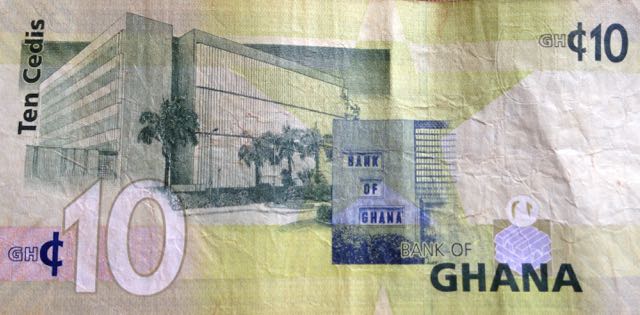
‘Tropical Modernism’ on the 10GHC note, The Bank of Ghana in Accra
Accra was in the grips of a major traffic jam, cooler and drier than Kumasi, it proved overbearingly hot to spend more than half an hour getting from the airport to Jamestown to see the exhibition of the Delft-Accra, urban transformation collaboration project we visited on our arrival in Ghana. We met a transformed space and were given a tour by curator and ArchiAfrika member Joe Addo. Joe also spoke of his further plans for the activation of various parts of the Jamestown neighbourhood. A further visit to the National Museum offices, and another slow trip on Accra’s congested highway to the international airport concluded the trip, with Ghana’s independence day holidays over the weekend we weren’t the only ones heading out of town.
Our project continues; the Ghanaian team (Prof. Rexford Assasie Oppong and Irene Appeaning Addo) will begin planning their research trip to the UK in the autumn, and we have considerable sources to continue consulting in the meantime.