I finally visited the Nubuke_foundation today – a contemporary arts centre in East Legon, Accra . A very exciting structure that was fun to explore . I got there early and had the entire place to my self. Exclusively en situ concrete with the main gallery on piloti the space is lit from the large windows at either end of the linear structure. The shaded outside space under the gallery creates an exterior garden gallery (and cinema), and a carefully cast cantilevered staircase leads up the main entrance. The doors have the Le Corbusier inspired eccentric pivot, found frequently in Chandigarh, and there are certainly other motifs redeployed from the Modernist 5 points. It’s not derivative or cliched though – far from it. The building responds very well to the site and the vast -louvred window facades at each end offer fine views whilst being shaded from the concrete that projects beyond.
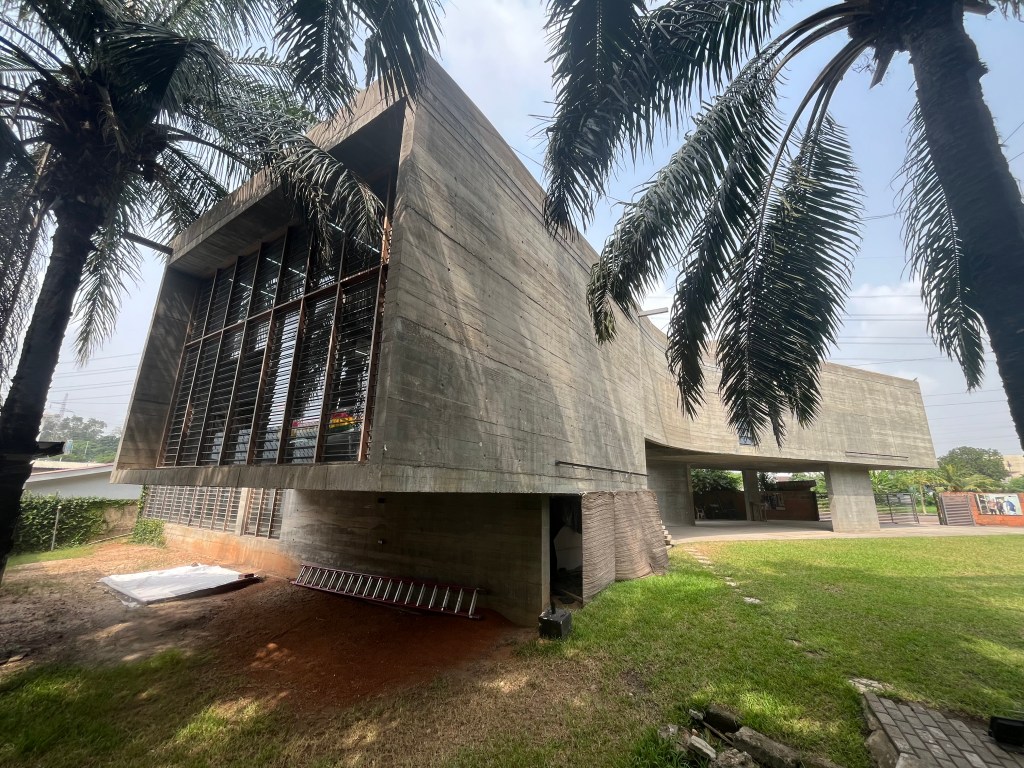
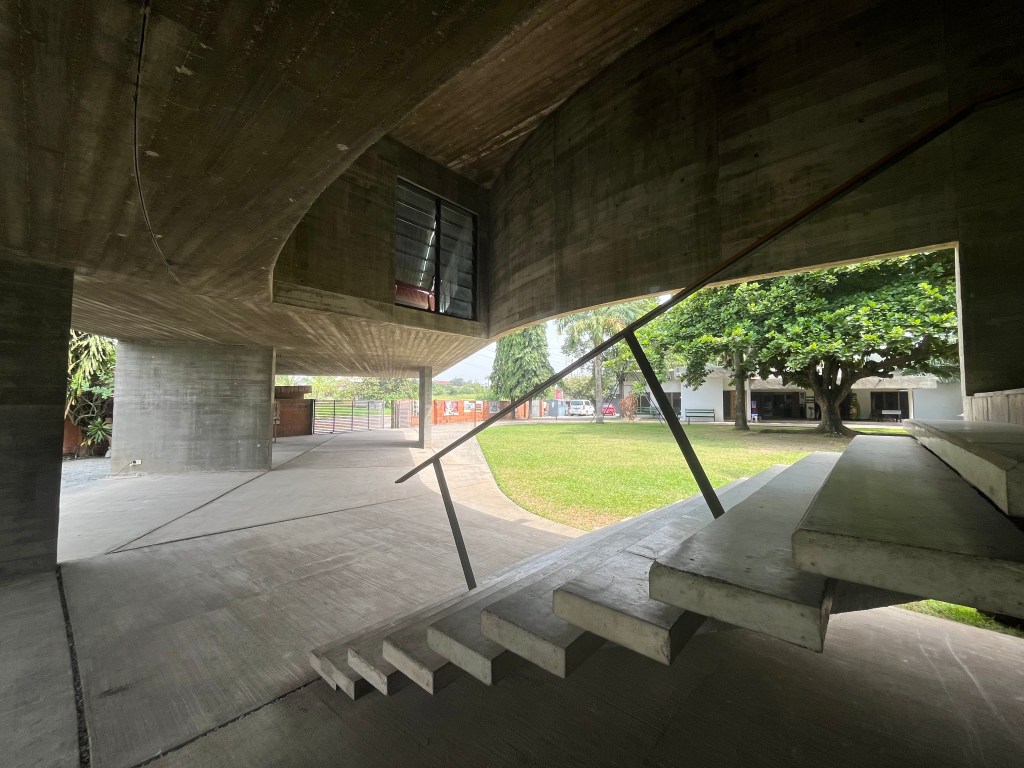
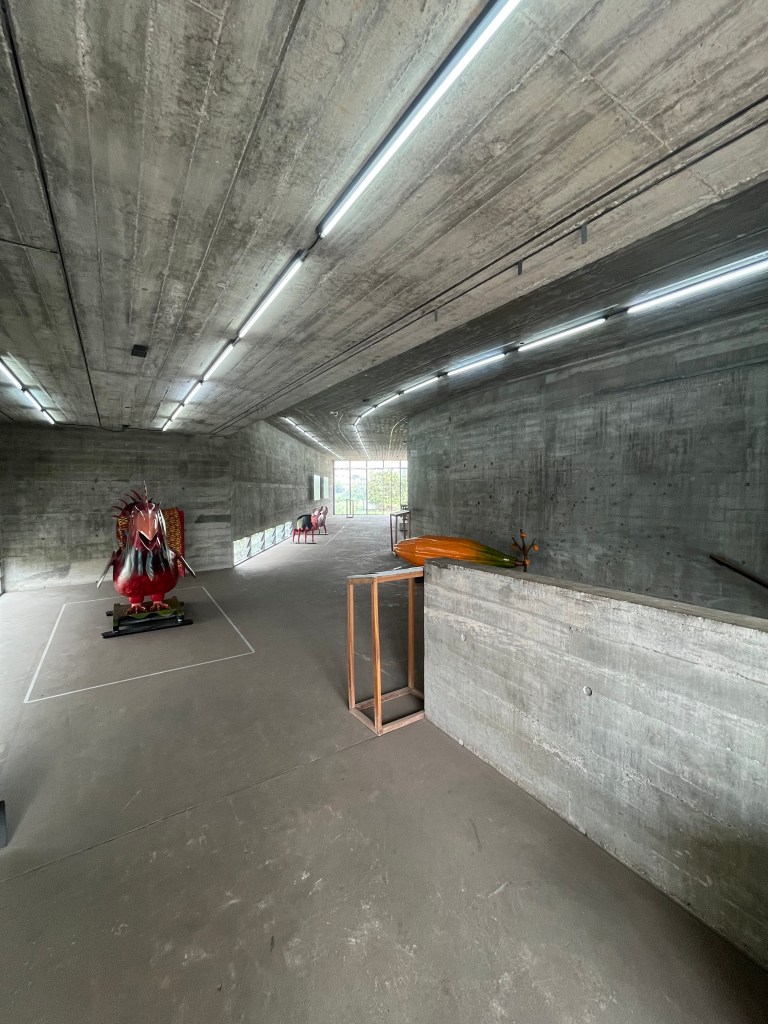
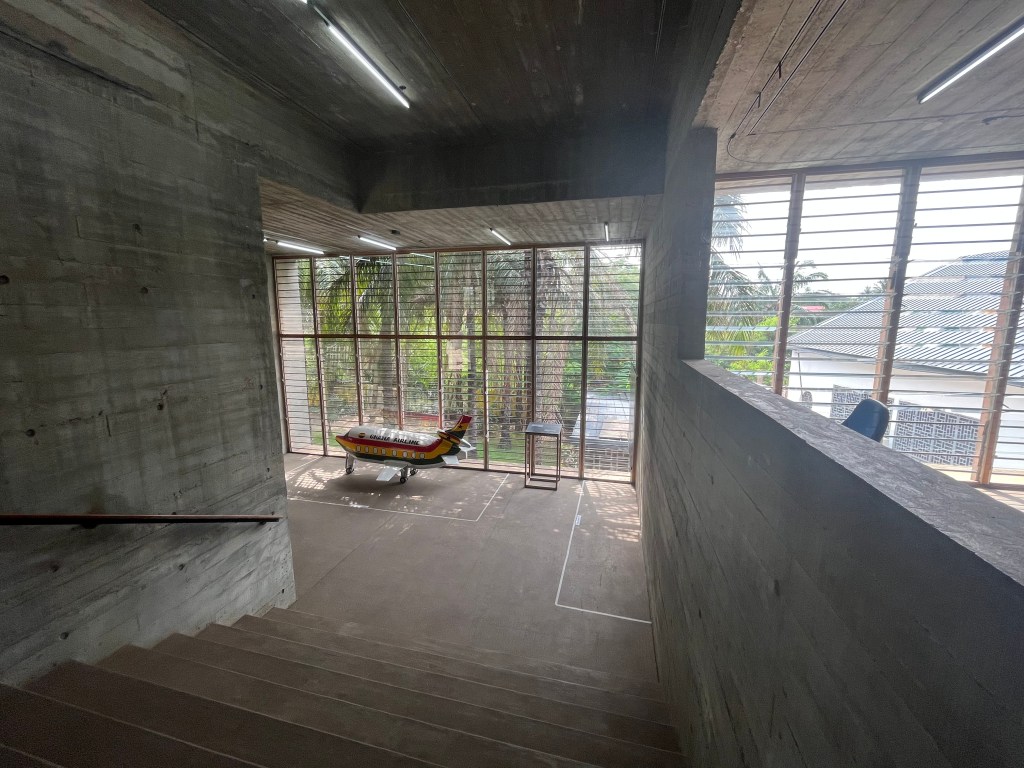
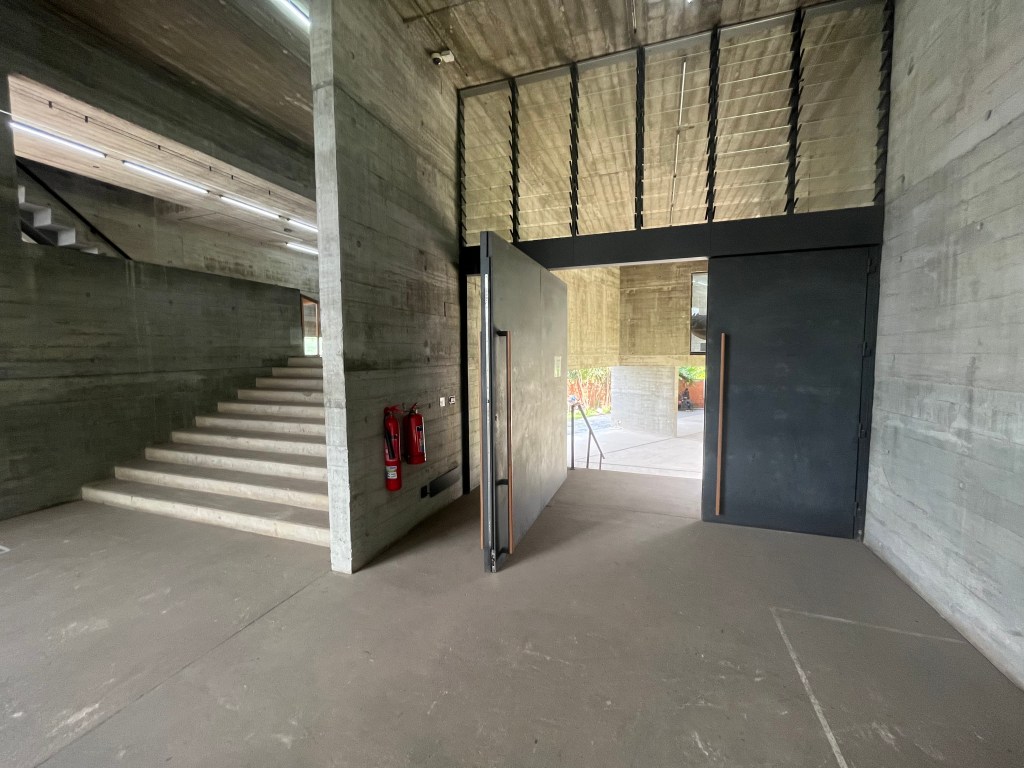
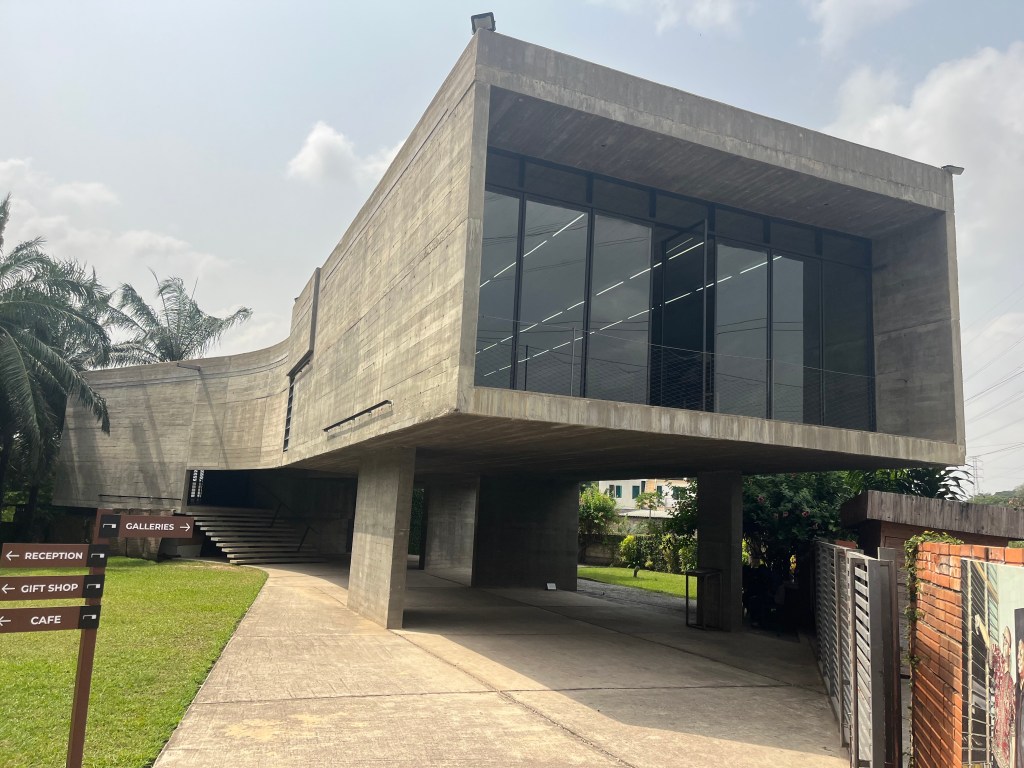
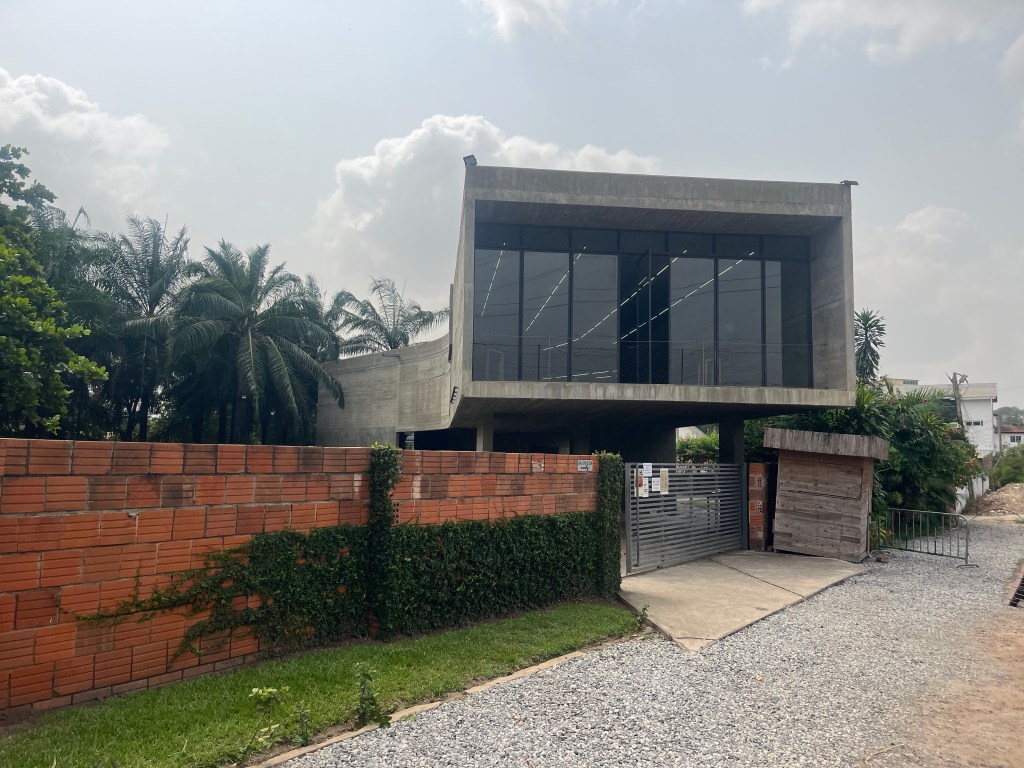
The campus was designed by Baerbel Mueller of http://www.nav-s.net/ and Foreign Affairs ([A]FA), Institute of Architecture, University of Applied Arts Vienna.
Elsewhere I had a less successful attempt to visit the Backyard Community Club – every time I visit it’s closed – but hopefully I’ll get full access soon. Designed by DeRoche Projects, it is the first project in Ghana using a precast rammed earth system. The modular precast elements provide shade whilst allowing cross ventilation. They also integrate cleverly into a bench for observers to watch the games. As well as tennis, there’s a kitchen garden and other gathering spaces for coaching and social events.
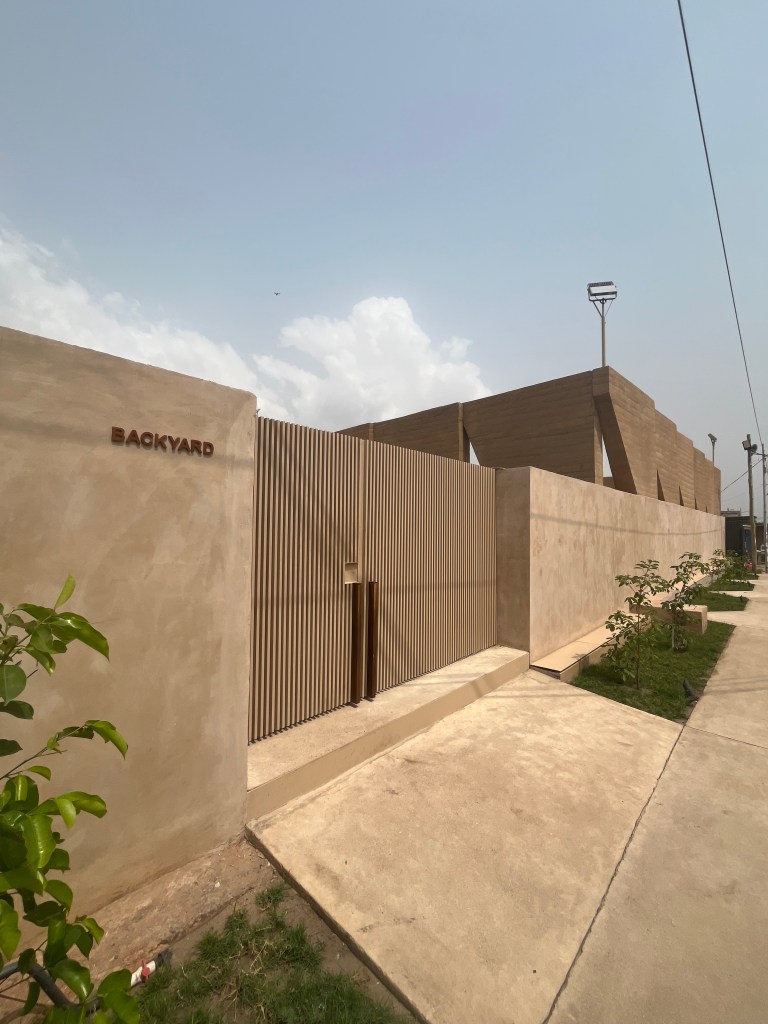
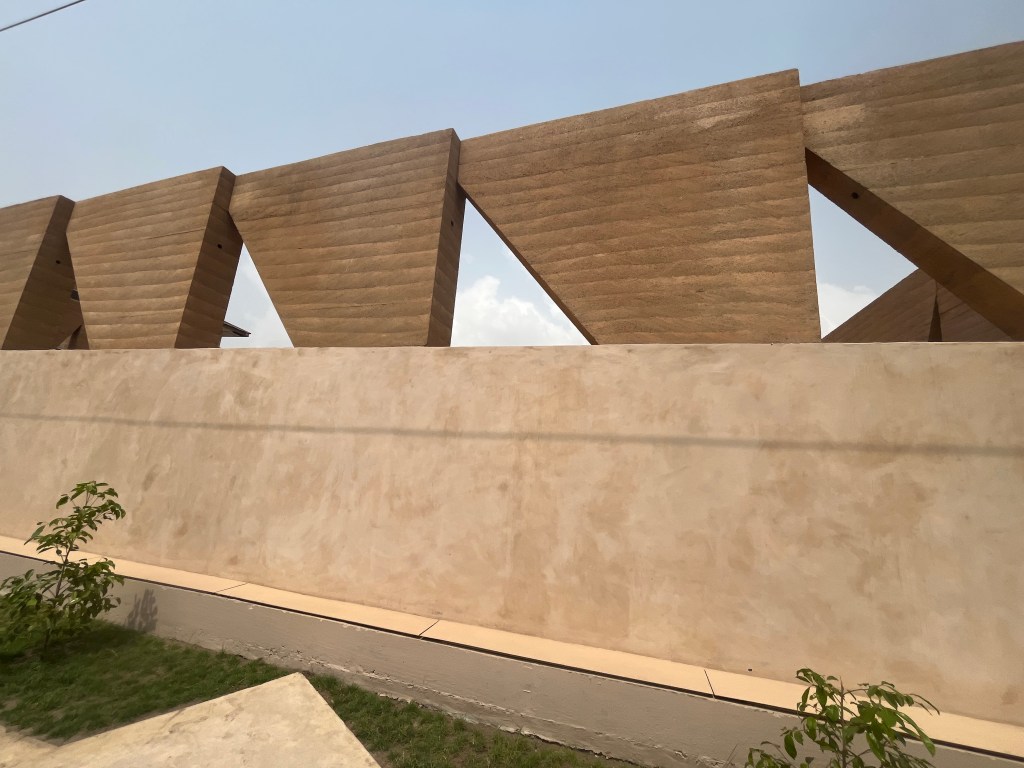
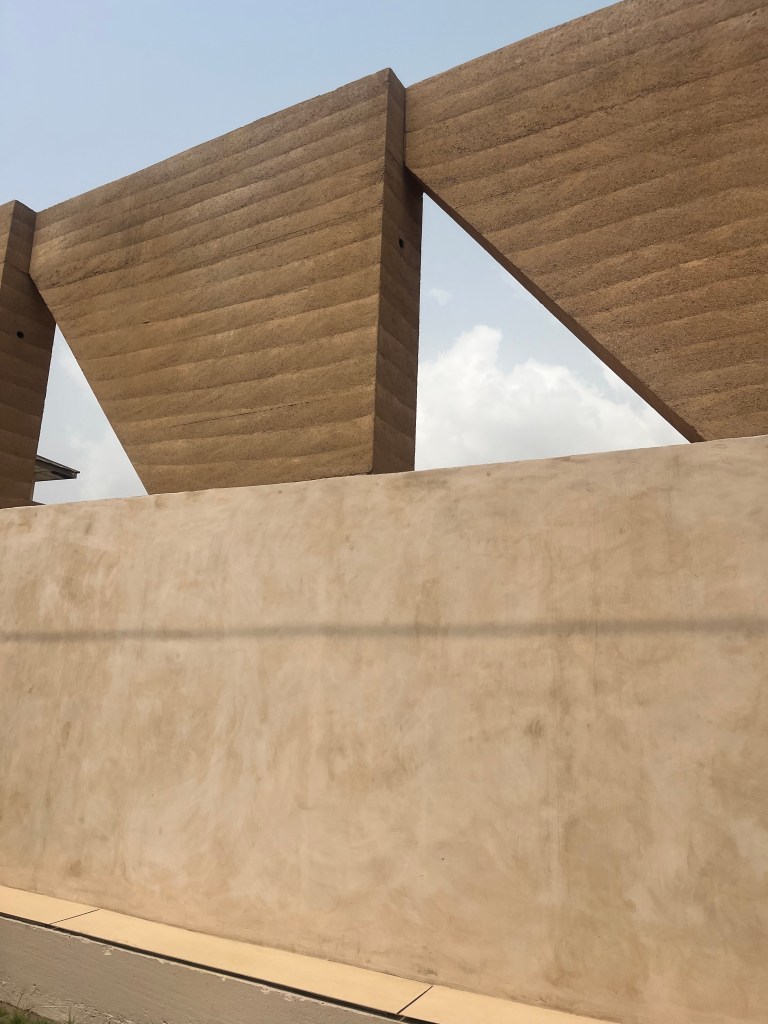
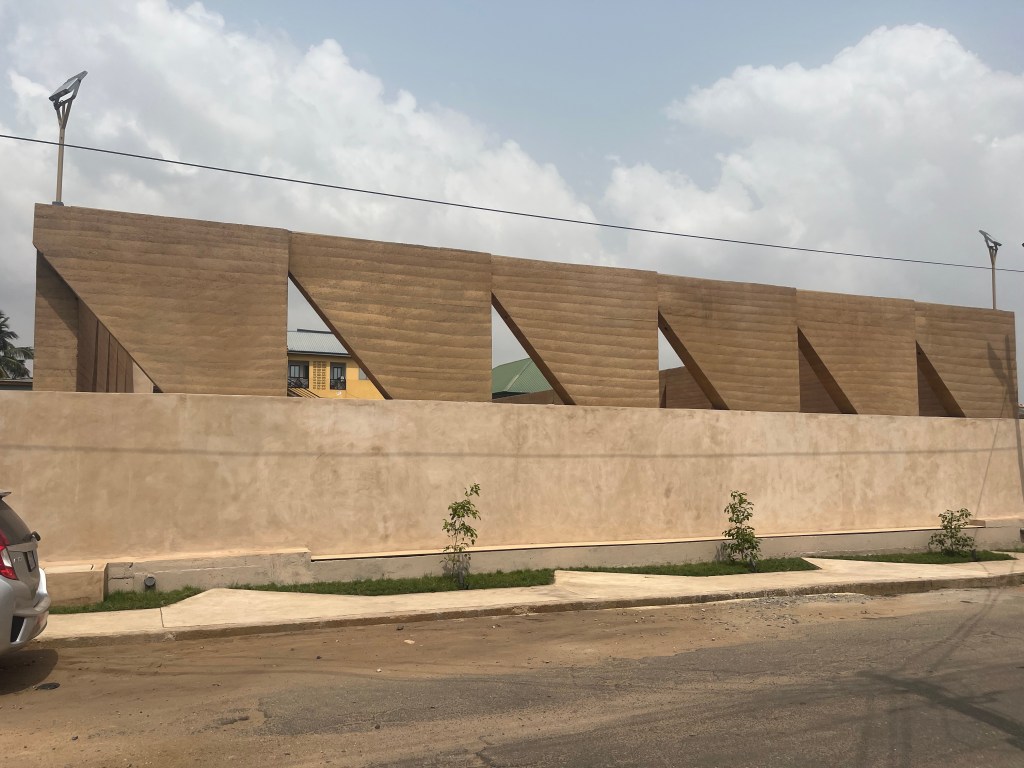
I’m intrigued by the precast panels and would like to learn more about the detailing. How was it possible to transport rammed earth – surely there’s a significant amount of cement in these panels to hold them together, and how is the top of the panels protected from the heavy rain? I’ll have to investigate further. Read more and see far better photos here: https://www.archdaily.com/1036713/backyard-community-club-deroche-projects. We saw at nearby Dot Atelier the flashing interventions being made around the windows to project the adobe ‘sandcrete’. I admire both buildings for experimenting and developing such uplifting and carefully designed spaces.

 Transnational Architecture Group