I’ve been spending some time working in and around Accra, and in particular at the Public Records and Archives Department. This archive has undergone major changes in the last five years and is a great place to undertake research with helpful staff and quick responses to queries. Located in a distinctive building with bold concrete brise soleil and a brave concertinaed roof over the entrance space, its interiors rely exclusively on passive ventilation. I was looking mainly at the late colonial records including those of the Public Works Department, sanitation, land, and town planning.

- Experimental Swishcrete blocks at Kibi from 1945
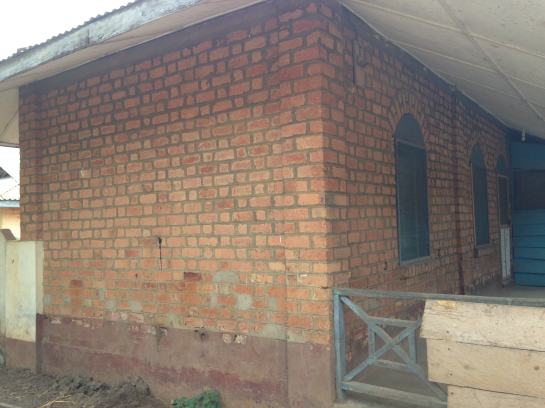
- Experimental Swishcrete housing at Kibi from 1945. Note the arches above the windows and doors
There were many discoveries and lots to celebrate (and eventually publish), but one particularly interesting find related to a folder called ‘Experimental housing at Kibi’. This gave lots of details on an attempt to build a couple of dwellings in swishcrete (i.e. laterite and concrete mix) blocks in the gold mining town of Kibi, with a view to saving on cement costs and also creating an aesthetic that was more in keeping with the vernacular. It was a particularly exciting find, as we had stumbled across these houses earlier this year, and were taken by their unique construction. The archives revealed that Jane Drew was involved in their design and that she visited the site in early April 1945. It must have formed part of her work on village housing. Although modified and extended the houses still stand and clearly demonstrate the strength of this construction method having survived over 70 years.
Outside of the archives, I managed to finally track down Denys Lasdun’s Paterson Simon’s Office in Accra, 1962 (thanks to the help of their current Managing Director John Traynor). It was formerly a supermarket and toyshop called Farisco.


I was hoping to see the Optimist Club in Sekondi, but as suspected, I was too late and the influential African club has been demolished and now replaced with a large youth centre. Fortunately, Nate Plageman did manage to visit the club before it was demolished and you can see his photos here. Despite this loss, it was good to use copies of the early plans of Sekondi from 1900-1920, housed in the UK National Archives, to further explore the town. I was particularly taken by the Venice Cinema located at the edge of the settlement by the lagoon (was this how the cinema got its name?) and the wonderful merchant villas and stores that can still be found in dilapidated abundance throughout the town.
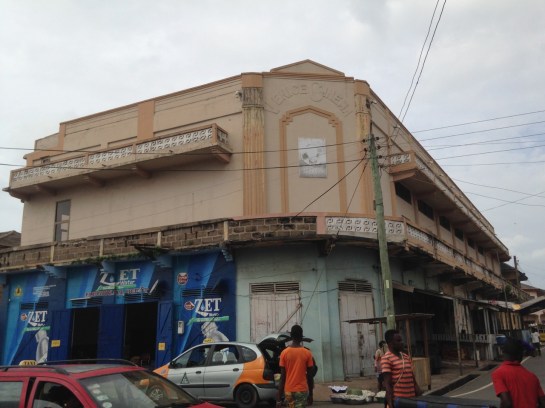
- Venice Cinema, Sekondi
Accra continues to seduce with its array of late colonial structures and modernist set pieces. At Korle Bu just west over the lagoon from Jamestown the hospital dominates the landscape. The hospital forms part of the trilogy of projects developed by Gordon Guggisberg in the 1920s (along with Achimota Schooland Takoradi town and docks). The old hospital structures remain, looking almost like they did when built (and similar to the harbour board buildings in Takoradi) – as captured on Africa Through a Lens. The later brutalist addition to the hospital was by Kenneth Scott, looking more restrained and orderly than the edgier and abrupt Effia Nkwanta hospital in Takoradi by Gerlach and Gillies-Reyburn. If you visit Korle Bu hospital continue to walk through the grounds and head out to the staff housing, tennis courts and garden sanctums that lie secretly beyond – it is a hidden, gentile world of privilege that still manages to exist just a couple of miles from the excitement and paucity of Jamestown.

- Korle Bu Hospital, Accra photographed shortly after completion, 1928


 Transnational Architecture Group