Archive

Tag Archives: Ghana

A.E.S. Alcock and the planning of Asawasi, Kumasi

As part of our research into the architecture and planning in West Africa we have uncovered some important work undertaken by Alfred Edward Savige (“Bunny”) Alcock. He worked as  Town Engineer in Kumasi, 1936-45, and then as Gold Coast Town Planning Advisor from 1945-56. Whilst working in Kumasi, Alcock was a pioneer in developing self-build villages. He set up small scale production lines where the villagers could produce ‘swishcrete’ blocks, prefabricated roof trusses and various sanitation devices such as latrines and communal laundries.

DSCF0073

This work was all carefully documented by Alcock and his hand-made photo album survives in the National Archives, London.  Maxwell Fry and Jane Drew worked with Alcock on this ‘experimental village’ (they were credited in Alcocks album) and went on to plan the larger second phase of the development, known as Asawasi. Fry described how the project grew, ‘from being a little experiment has become a big scheme spawning all over the hillside.’

Alawasi_plan

The plan above shows the complete development arranged into ten compounds (housing groups). The area coloured pink was the original village planned by Alcock with the remaining areas designed by Fry and Drew. Alcock proposed a terraced (row) housing approach to create ‘interior’ courtyards, or ‘open compounds’. Alcock described it as a ‘ a repetitive pattern of garden and service compounds alternating… this pattern is adapted to curving contours in the main estate.’ There was a low-tech thrifty approach to the development as Alcock describes,

‘door and window furniture was made from scrap iron by blacksmiths. It was stronger and cheaper than imported furniture.’ In the kitchen a hood and flue were provided by using ‘old tar drums covering all four fire places shared by eight tennants’
Fry and Drew’s Village Housing in the Tropics is indebted to this early development. Alcock proudly noted that his designs could exceed the current building regulations and reduce costs. The big idea was for the government to supply the materials (and technical knowledge) with the villagers providing the labour. It was a system that became very popular throughout West Africa, although it was not always a fair and equitable solution.

DSCF0075

Alcock took over from Fry as the Town Planning Advisor in Accra and was instrumental in the initial planning of Kwame Nkrumah’s Volta River project, new port and town Tema. He (along with Helga Richards) published his findings in a series of ‘How to’ building guides. Although less commercially successful than Fry and Drew’s acclaimed Village Housing in the Tropics manual, Alcock’s books were far more pragmatic and explanatory. There is also an element of humour in his books. How to Plan your Village for example is all about an educated villager returning to his old village and helping them to restore it – the character is named ‘Kwame’  – an overt reference to Nkrumah and a metaphor for the radical changes he was proposing.

howtovillage

Mfantsipim School, Cape Coast, Ghana

In 1947, Maxwell Fry and Jane Drew were commissioned to build a series of schools and teacher training colleges, primarily in the former British colony of the Gold Coast. The architects used the project as an opportunity to apply European ideals of modernism to a new environment, and their pioneering architectural approach was promoted as the realisation of a new era of mutual interest for Britain and the Gold Coast. Representative of newly-released resources from the Colonial and Welfare Development Fund, Fry and Drew’s educational buildings embodied the move toward colonial devolution.

At Cape Coast, Fry and Drew worked on three projects (more on these soon), including a series of extensions for Mfantsipim School. The first secondary school in the Gold Coast, Mfantsipim School was established in 1876 as part of the Methodist mission. Phase one of building works comprised a series of staff houses and a water tower, followed by a second phase of dormitory blocks, shown below.

13.2.8 mfant dorm

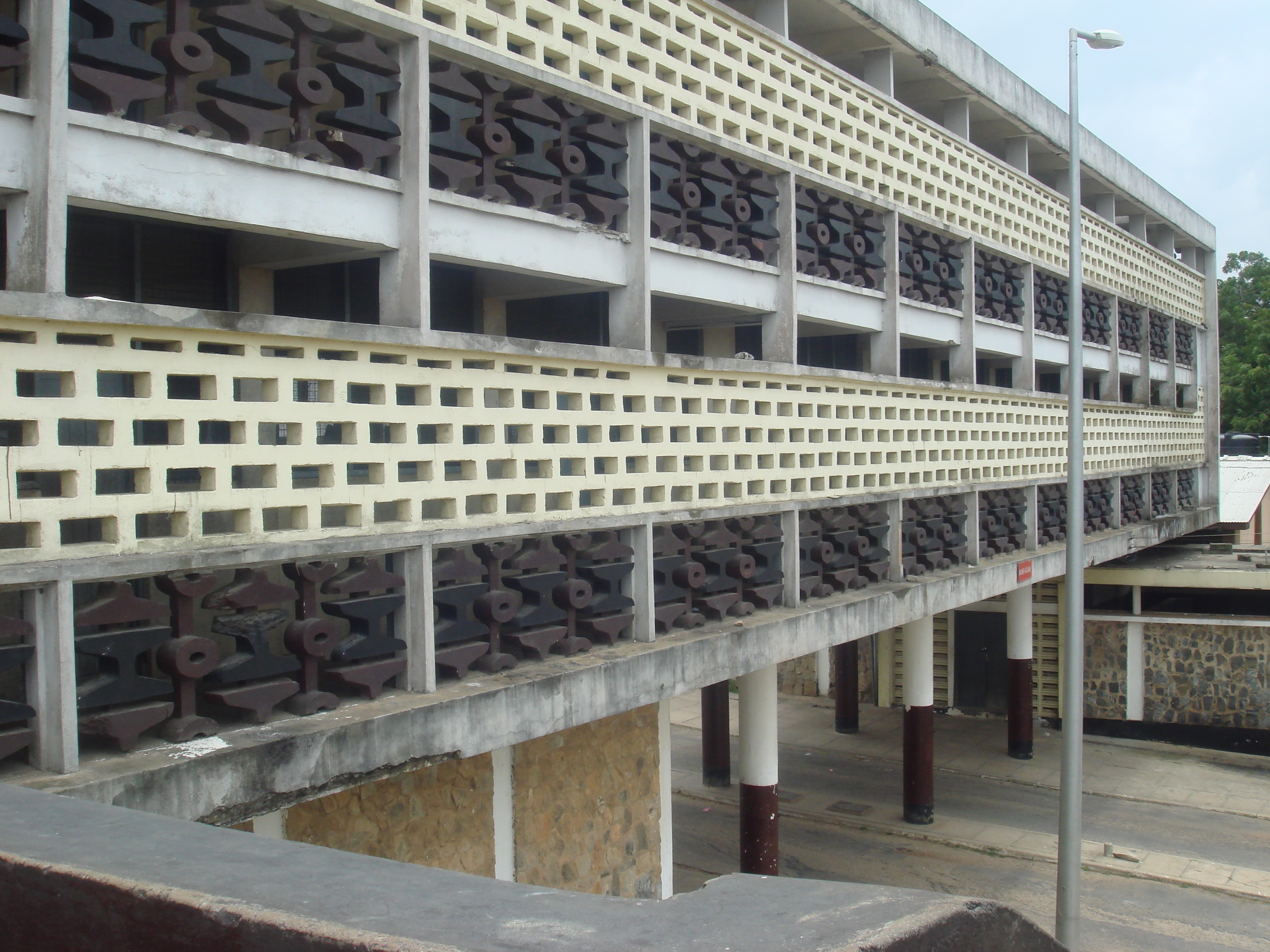
This block forms a gateway to the site. The driveway passes under the building and up to the main, hill-top campus. The ground floor bathroom block sits at right-angles to the dormitories above. The perforated balustrade evidently provided scant shading to the south elevation as further brise-soleil have since been added:

13.2.8 mfantdorm

For further discussion of Fry and Drew’s work in West Africa see the excellent: Mark Crinson, Modern Architecture and the End of Empire (Ashgate, 2003).

A pictorial archive of Mfantsipim School, from which the first image is taken, is available here. The second image was taken during a TAG visit in September 2012, © Jessica Holland.

‘Memories of African sculpture’

Maxwell Fry and Jane Drew developed the use of perforated screens in their West African ‘tropical architecture’. Designed to provide a sun-break whilst encouraging much-needed cross-ventilation in the hot and humid environment, the brise-soleil also provided an opportunity to add decorative forms to otherwise basic structures.

African influences – described in rather general terms by Fry and Drew as strong forms and colours – were used to bring regionalism to their imported modern ideas. Variants of sculptural ‘African’ forms are used in each of their school, university and hospital projects to provide an instantly recognizable Fry and Drew motif. Over the coming weeks images of these buildings will be posted.

13.2.4 ArchRev

Jane Drew said of their attempts to bring regional character to the modernist buildings:

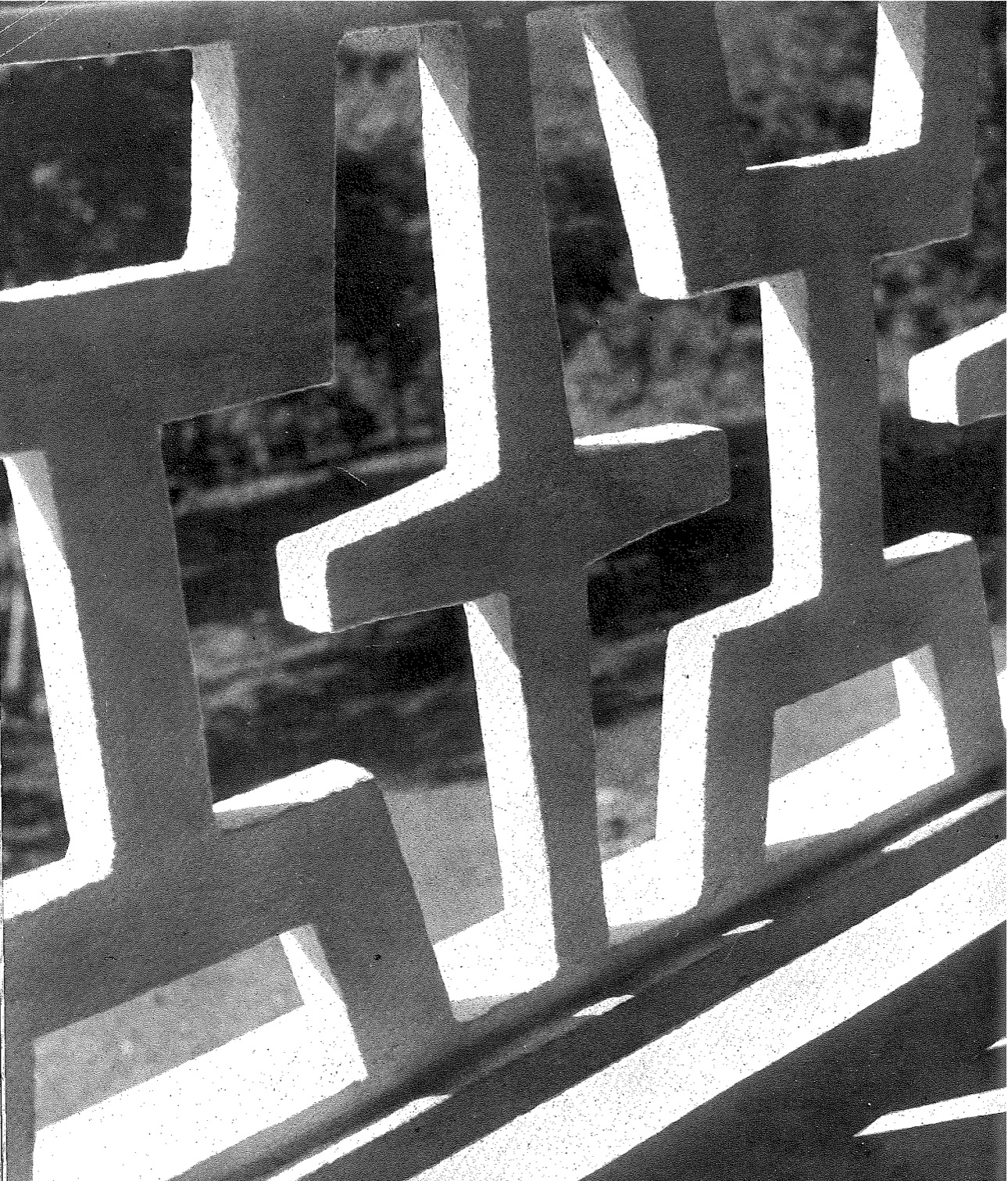
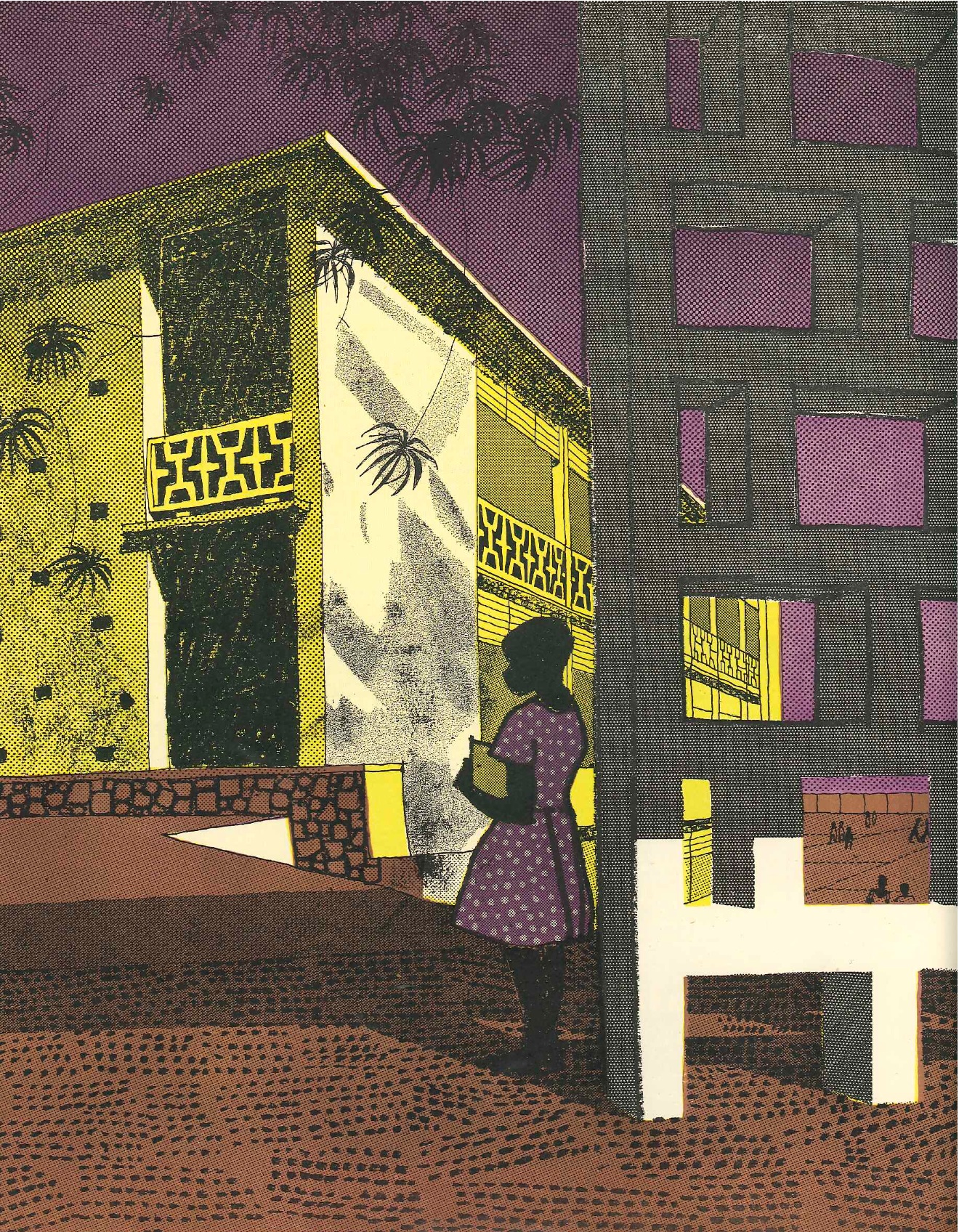
‘The particular architectural character comes not only from the mono-pitch roof and long low blocks … but from the sunbreakers, grilles and other shading but breeze-permitting devices. … the sunshine and moisture and heavy overcast sky and feeling of oppressive lethargy seem to call forth moulded forms which are rhythmical and strong, not spiky and elegant, but bold and sculptural.’

Below, Gordon Cullen’s sketch of bold forms and strong shadows emphasizes Drew’s words. These images are taken from an article on Fry and Drew’s ‘African Experiment’ published by Architectural Review in May 1953 and show the perforated balustrade designed for the Adisadel College extension at Cape Coast, Ghana.

13.2.4 Cullen