New research update : Ali, N., Idowu, G. Demolition-driven urbanism and the loss of coastal heritage in Makoko, Lagos. Nat Cities (2026). https://doi.org/10.1038/s44284-026-00411-5
“Makoko is a nineteenth-century fishing neighborhood and major small-scale business hub in Lagos, Nigeria. It is located on prime land in the Yaba local government area. An estimated 250,000 people live there, on top of stilted housing on water and concrete structures on land. Water-based residents are predominantly from the Egun minority group, and land-based residents are largely Yoruba. Following a demolition in 2012, the community’s baales (chiefs) and the Lagos state government signed a memorandum of understanding in 2014. The memorandum of understanding stipulated, among other provisions, the removal of structures within 100 m of the high-voltage power line that traverses Makoko. Although contested, the agreement functioned as a provisional settlement between customary governance and state authority.
Now, this memorandum of understanding has been broken. Since 23 December 2025, the Lagos state government has demolished an estimated 3,000 homesin Makoko’s waterfront areas, extending well beyond the agreed perimeter (based on conversations with residents and video and photographic evidence between 5 and 20 January 2026). The progressive expansion of the demolition zone — from an initially negotiated, legally proscribed 30 m to an arbitrary 522 m from the power line— highlights a governance approach characterized by shifting spatial criteria and insufficient procedural transparency. During the past three years, the stilted houses on the waterfront have steadily expanded towards Third Mainland Bridge, as seen on ArcGIS — which does not explain the transgression of the agreed perimeter. There are only speculations about why the government broke the memorandum of understanding, which held for almost 11 years.”
Author information
Nura Ali, Liverpool School of Architecture, University of Liverpool, Liverpool, UKNura Ali
Gowon Idowu, Traditional medicine practitioner, Lagos, Nigeria, Gowon Idowu
Navigating Archival Fieldwork in Mumbai: Challenges, Opportunities, and Positionality
Excy Hansda E.Hansda@liverpool.ac.uk
A few months ago, I finished my fieldwork for my PhD research in Architectural History. My research investigates the microhistories of the middle-class Indians who moved to the suburbs of Bombay in the early twentieth century and the kind of spaces they lived in. Looking at a postcolonial angle, I am interested in questioning the colonial suburban vision and by highlighting the Indian agency in shaping the suburban urban housing projects, neighbourhoods and their dwellings in late-colonial Bombay. This blog reflects on the challenges and opportunities I encountered while conducting fieldwork in Mumbai. As an Indian PhD scholar based in England, fluent in both English and Hindi, I found that my position brought unique advantages and complications to archival research in Mumbai.
I have prior experience working in archives in both the UK and India. I quickly realized that my background—an Indian architect affiliated with a British academic institution working on a historical subject—often piqued interest in my project. Despite the initial curiosity my profile evoked, I was one of hundreds of Non-Resident Indians (NRI) affiliated with overseas institutions, and this seldom translated into privilege. If anything, being a North Indian, I was seen as a foreigner in Mumbai. Accessing senior bureaucrats in archival institutions and getting information smoothly and efficiently remained particularly difficult.
Finding the Right Archives
I began “getting the data” early in my PhD (February 2023), in parallel with my literature review. I started with the India Office Records at the British Library in London and expanded my search to include collections at the Liverpool School of Hygiene and Tropical Medicine, the School of Oriental and African Studies, the London School of Hygiene and Tropical Medicine, the National Archives at Kew, and others. I investigated diverse sources—Annual Administrative Reports, maps, manuals, and published books. However, due to the hyper-specific focus of my study, initial results were limited.
This led me to change my methodological approach. I revisited the literature and drew on approaches from disciplines such as cultural studies, English literature, and sociology. This led me to explore unofficial sources such as online newspapers, Town Planning Review and the Journal of the Indian Institute of Architects at the Royal Institute of British Architects Archives in London. This helped me expand my knowledge of my subject.
My first fieldwork trip to Mumbai (January 2024) opened a new chapter. I visited the Maharashtra State Archives (MSA) at Elphinstone College, Mumbai, where I discovered files rich in minute detail—memos, petitions, letters, advertisements, maps, municipal debates, and more—everything useful for my research, unlike the colonial records in London, which largely included annual administrative reports and policy documents of the colonial bodies like the Bombay Improvement Trust and the Bombay Development Department, the Mumbai archives revealed the voices and subjectivities of local Indian residents who contested colonial policies and many cases of negotiations, contestations and even micro-scale conflicts which were often absent from official reports.
Missing Records and the State of Archives
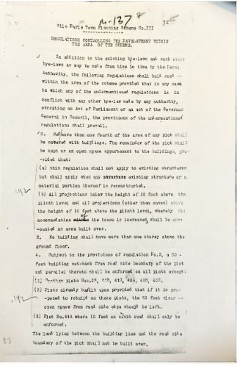
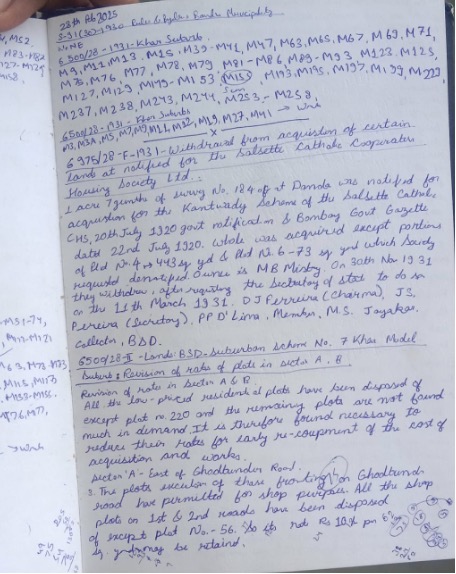
Accessing the archives was not easy. The MSA, one of India’s oldest surviving archives, is poorly maintained and has limited funds. Files are deteriorating, and storage conditions are far from ideal. The reading room is small and dusty, with limited hours—open only five days a week, six hours per day, with an hour-long lunch break. Visitors can request just five files a day. The retrieval process is slow (waiting over two hours is common). Photography is not allowed, and one must request Xerox (Fig 1) or scanned copies, which are payable only in cash. Getting Xeroxes can take 20 days or more; scans may take months. (I am still waiting for the scans that I requested in February) Therefore, I resorted to transcribing the files and making notes (Fig 3 and 4).
Many records are missing. Files before the 1920s are largely uncatalogued and are organized as volumes for entire years for each department of the archives (Revenue, Judicial, PWD, General). Finding specific content means reading through these thick volumes page by page. For post-1920s material, although some cataloguing exists, it’s often incomplete. These are specific files which are numbered, and the numbers correspond to the numbers present in the hefty indices. One has to go through the indices in order to find the files.
Once a file is located, an office peon brings it—after dusting it off (Fig 2). Some are missing completely, and the office peons cannot find them. Others are in fragmented conditions, so they cannot be accessed. While others have missing maps or pages which are crumbling into fragments.
Fig 1: Xerox of a page in a file located at the MSA
Fig 2: A File on Co-operative Housing Society at the MSA
Fig 3 and 4: Transcriptions and Notes I made based on information available in archival documents at the MSA
Finding Sources
A central database for archival material simply does not exist. I relied heavily on human networks: clerks, peons, research assistants, historians, archivists, and fellow researchers. Often, they directed me to smaller archives—usually cramped rooms within municipal offices—where old documents were kept in poor condition and disorganized bulk.
At the MSA in Elphinstone College, I was directed to the Old Customs House in Mumbai. There, I learned they only housed records from Bombay City, so I was redirected to the archives at the Municipal Corporation Office of Bombay Suburban District in Bandra, only to be told that my time period of interest was not covered. Eventually, I was pointed toward ward offices, municipal boards, and local talathi (village record) offices.
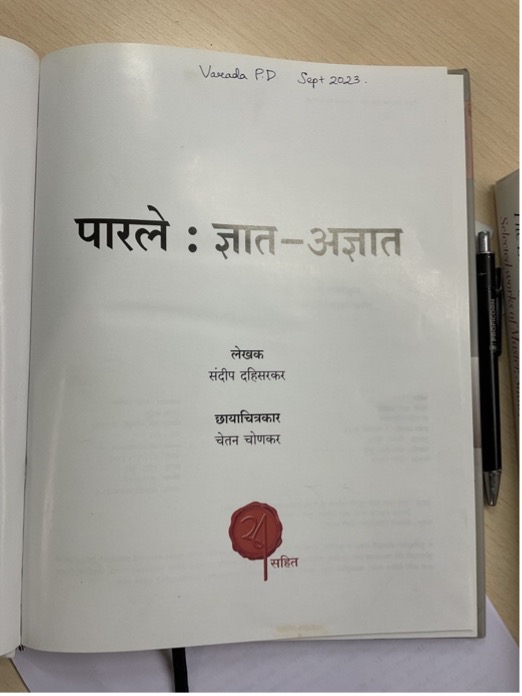
Due to reorganization across the colonial and post-independence eras and the separation of districts and provincial state, records have been scattered. The only way to find them is through local knowledge—gathered from seasoned researchers, administrators, or office staff. Sometimes, I stumbled upon data in unexpected places, such as the Dadar municipal archives or the Art Deco Mumbai Society, which provided helpful secondary sources in English and vernacular languages (Fig 5 and 6).
Fig 5 and 6: Books obtained at the Art Deco Mumbai Trust, Mumbai
The reception of these archives was also varied. Sometimes, the staff was friendly and gave me access to files, right after I showed him my ID card and university letters. In other cases, I was made to wait for half an hour before meeting the upper bureaucrat. Sometimes, I had to follow up several times before they granted me permission to visit their archives. This was the case of Municipal Corporation archives, Mumbai.
Navigating the Neighbourhoods
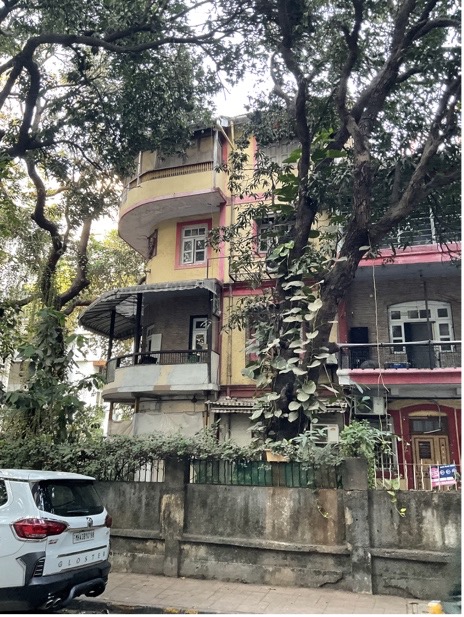
Beyond archives, the buildings themselves served as vital secondary sources. Many twentieth-century buildings had been demolished, redeveloped, or repurposed. Some stood vacant; others had been converted into commercial spaces, with original residents gone.
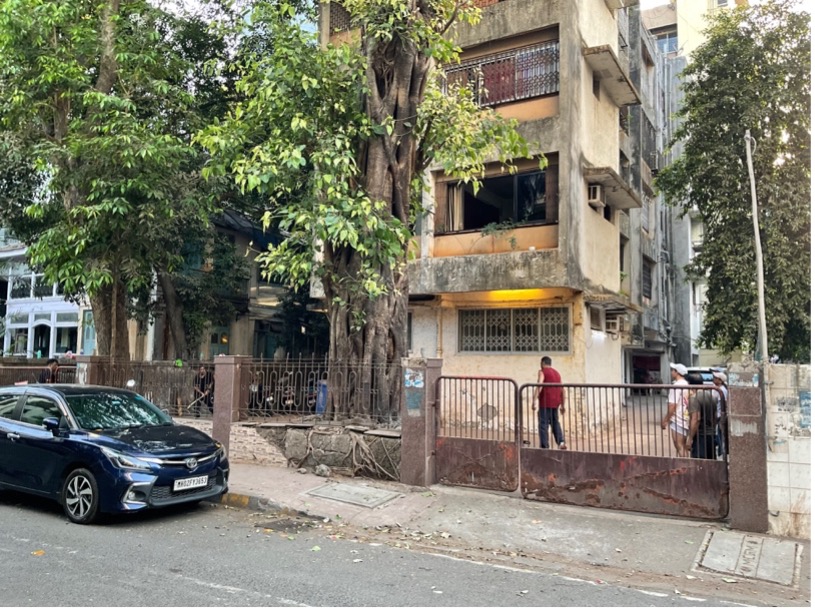
Identifying buildings from the 1930s–40s required searching for buildings with style, typology and aesthetics matching that of the 20th-century architecture of Bombay. I used secondary literature available on Mumbai, tips from fellow researchers and architects working in Mumbai, detailed reports from the Mumbai Metropolitan Region – Heritage Conservation Society (MMR-HCS), and a database created by Art Deco Mumbai Trust to search buildings. These contained valuable mapping and description of old historic surviving buildings with histories of ownership, years of construction, sketches, photographs, and drawings. I used these for site observations and photographing the exteriors of the building (Fig 7 and 8).
Fig 7 and 8: Walking in the suburban town of Khar, Mumbai as a Method to Collect Data
However, accessing the interior of the buildings was a different challenge. I was often accompanied by a local Marathi-speaking friend to help communicate. His surname “Patil”, which is common in Mumbai, could have helped me start a conversation with the local residents of Mumbai suburbs- so I thought. Residents were tight-lipped, asking questions like “Kahan rehte ho?” (Where do you live?), “Marathi nahi aati kya?” (Don’t you know Marathi?), and “Kya dharam/jaat/surname hai?” (What’s your religion/caste/surname?). These euphemistic inquiries exposed the enduring social divisions of caste, class, and religion—reminding me that while buildings and built fabric might have changed, social fabrics and the mindset of the people are just the same as in the 1930s-40s Bombay.
Language
In the scrutiny of archival works, language skills were sometimes difficult. Language agitation and violence in the name of protecting Marathi culture and identity are common in Mumbai and the provincial state of Maharashtra, where outsiders are forced to speak in Marathi. However, most of the time, people were helpful to me in finding the source materials. The historians in academic and non-academic institutions were proficient in English, Hindi, and Marathi, and they helped me with ideas for my projects. People, especially those working in lower bureaucracy, were able to speak Hindi and directed me to people and places where I could retrieve information.
Logistics of Living in Mumbai
One has to find the right months to work in Mumbai. Working in August was not ideal. The intense humidity and monsoons made things spectacularly difficult. Working in summer could be difficult as well, as the heat is intense and the humidity is dangerously high. Working during the winter is better, though it is mosquito season. I lived in Vasai, a northern suburban town outside Mumbai, and used to commute on a local train two hours away from the archives, which was at the final southern station of Bombay city. Just like what I wanted to study, I lived like a middle-class person who lived in the suburbs and commuted to the city to make ends meet.
Final Reflections
Someone who works at, for example, the British Library or the Biblioteque Nationale, would not expect this set of challenges. These challenges included obtaining sources of information from beyond the archives, pursuing people to find information, and collecting data in sometimes un-welcoming environments, for which one needs to have a different approach towards them. Being a people’s person and being street-smart helps. Networking and making connections with people make things easier and give you access to a substantial amount of information. Whilst there were complications, it was an enriching experience, making me skilled in finding sources of information, connecting dots, finding and sometimes creating a thread, and keeping backup plans ready. Here, adaptability and patience helped. Having relationships with people has helped me more than having any institutional affiliations,
Fig 9: The sign board at the local railway station from where I boarded the train to the archives, every morning
Fig 10: The family with their neighbours with whom I lived in Mumbai suburbs
Finally, although having friends-like family in Mumbai and its suburbs made me somewhat familiar with the city, however being a North Indian, miles away from Mumbai, I am sure I might not have noticed a lot of subtleties both inside and outside the archives and sites of inquiry. On the other hand, as a scholar based in England, I found certain information in files, ideas, or simply the way of living striking, which Mumbaikars would have taken for granted. I am indebted to the Patil family and my friends at IIT Powai, where I imposed myself for a significant time period. Also, my colleagues who I knew before and the ones whom I met at the archives helped me point out interesting details, showed me directions during this fieldwork, and accompanied me on several site visits. These certainly positioned me in how I was looking at the sources, the archives, the people, the suburbs and the city.
The latest edition of e-flux contains an interview with Joe Osae-Addo by Kwabena Appeaning Addo where they discuss Joe’s passively cooled house in Accra, Ghana.
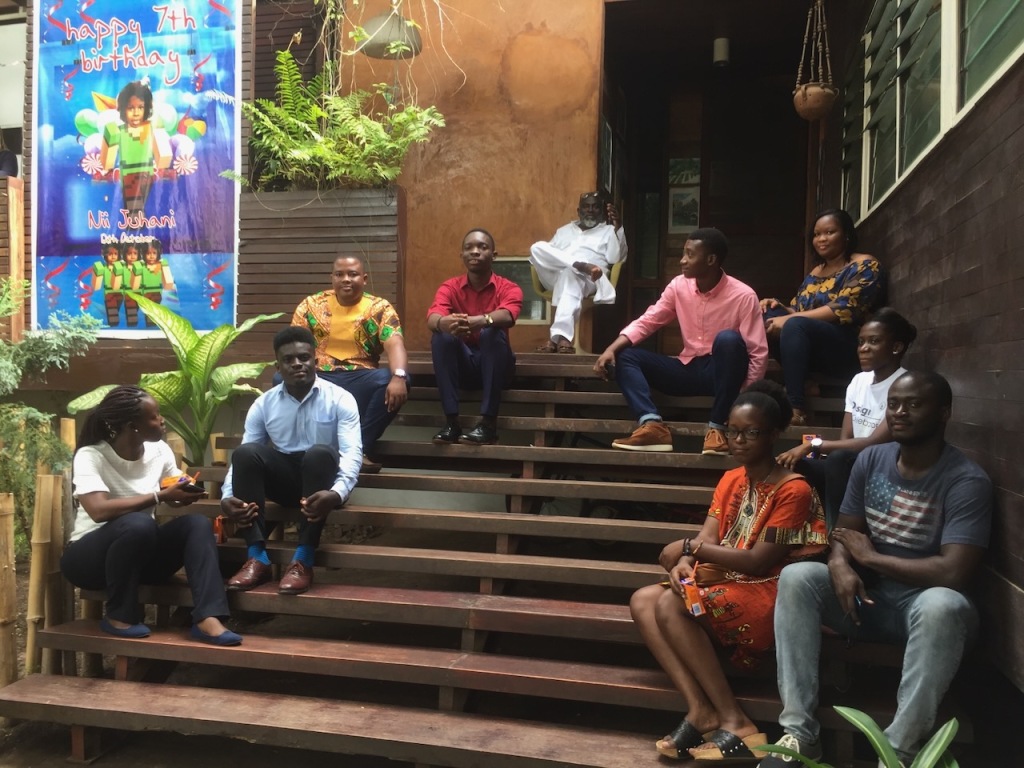
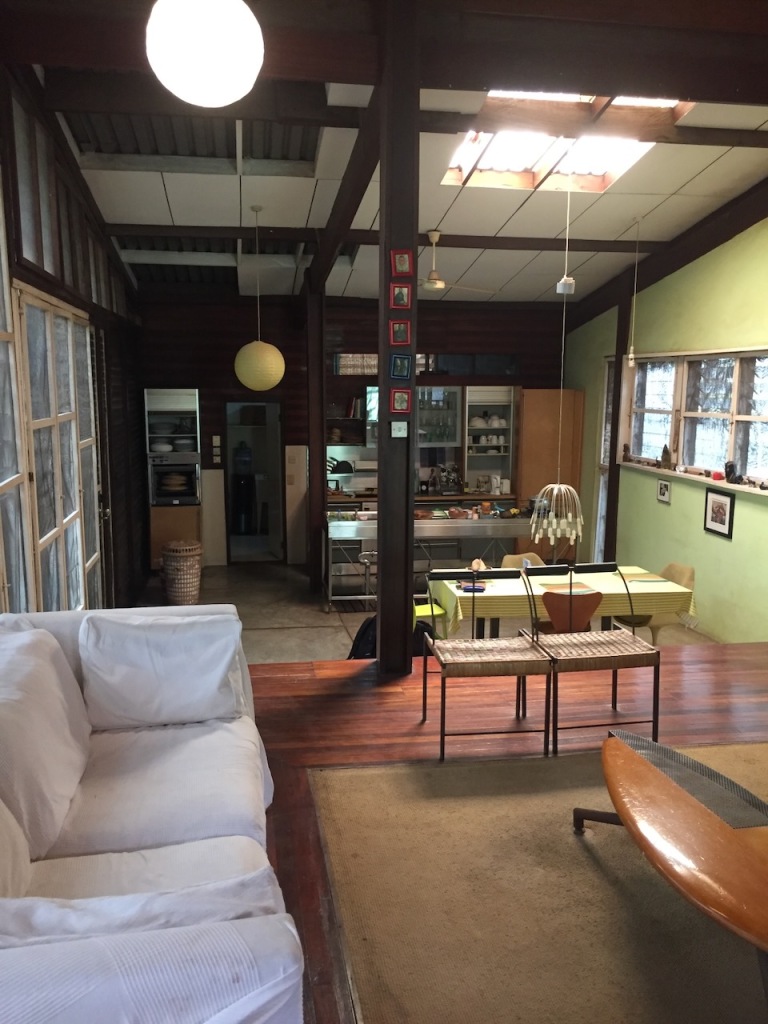
Joe Osae-Addo in 2018 with architecture studentsInterior of Joe Osae-Addo’s house, AccraVerandah Exterior of the house with tree canopy, 2020
Kwabena Appeaning Addo: What inspired your design for the Inno-native House in Accra, Ghana?
Joe Osae-Addo: My first thought was “How do I create a building that responds to the weather better than most,” so that I don’t have to use air conditioning? That was my primary focus. I then began thinking about the landscape, about how trees can be used as the first line of defense against heat, and also about how to position a building so that there is no direct solar gain. I was working in Los Angeles at the time, and I learned that the worst heat comes not from the sun, but through conduction from the earth, through the floor slab. So I thought to raise the building by about a meter, removing all direct contact between the floors and the earth, and insulating the building with a pocket of air. Those were my design parameters.
KAA: What happened when you took those principles onto the building site?
JOA: The site and the climate drove the initial layout of the building. After pouring the raised foundation, the first thing I did was to plant mature trees. I didn’t want to plant seedlings, because I wanted the trees to cover the roof by the time construction was done. So, I took a drive out of Accra to the area between Tema and Shai Hills, where there is a natural forest of trees. I went on a rainy day when the soil was wet, with a truck and laborers, and dug out mature—but not fully grown—trees, approximately three meters tall. We brought them back and planted them immediately. A year later, when the house was done, the trees had fully grown in. The ground also had a high water table, so I planted papyrus plants, knowing that they would suck up water. But even so, the site is very wet. On a rainy day, the concrete walkway in front of the house gets wet both from above and below. For the driveway, I used gravel, not concrete, to allow water to flow through and absorb into the ground when it rains. The landscape was integral to the design from the beginning. It is what allowed me to create a cool building.
KAA: What about in the design of the building itself?
JOA: Glass louvres are typically undervalued in contemporary Ghanaian architecture, but they are fantastic at creating cross-ventilation. Many of the exterior walls include glass louvers, at times from floor to ceiling. The rest are made either of laterite blocks or of timber frame walls joined with a tongue and groove system. The interiors of these wood walls are covered with stucco plaster, which makes it feels like a typical cement block wall, but on the outside it is clearly wood. This construction technique, known as Type V construction, is how most buildings in California are built: a 2×4 timber stud frame, 24 inches on center. In my case, however, since there is no air conditioning, there is no need for insulation. The third type of wall in the house, which I am very proud of, is made of wooden slats with a mosquito net attached. The wooden slats have a half-inch gap between them so that air can come through, but because of the net, insects can’t. The interiors are therefore always aerated.
KAA: So does it work?
JOA: Yes, it works! If we had air conditioning, the timber studs would let out so much cold. But because the diurnal temperature variation in Ghana is not significant, designing for cross ventilation works so much better.
KAA: Can you further explain how the walls were designed?
JOA: At the entrance, for example, there is a wall that looks like it is painted concrete block, but it’s actually just plastered. To do this, we placed half-inch plywood against the timber studs, and then placed chicken-wire mesh over the plywood as the support for the plaster.
KAA: So on the inside, it looks like a normal wall, but on the outside, it has a wooden finish. What is it like to maintain the house?
JOA: Well, I haven’t touched it in twenty years.
KAA: Really?
JOA: Well, there was some damage to the surface of the wood deck in the back, but that was because of poor detailing—I shouldn’t have used galvanized nails, which can rust and rot the wood. I haven’t had to repair any of the vertical surfaces.
KAA: That means that it must have been really well constructed.
JOA: Yes, it was. I built it myself, so I made sure everything was right.
KAA: It also means that the wood was treated very well.
JOA: At that time in Ghana, kiln-dried wood wasn’t available. All of the wood we used had to be air dried, so I picked the hardest wood available, which was called “Odanta,” or iron wood. It’s expensive, but I knew that maintenance would be a big issue if we did not use quality wood.
KAA: Does the fact that it doesn’t touch the ground also help?
JOA: Yes! Termites are often an issue if you use wood in Ghana, but this was solved by elevating the building off the ground.
KAA: At the Presbyterian Boys’ Secondary School I went to, some of the teachers’ bungalows were made of wood and they sat on the ground, so I can attest to this! Can you speak further about the laterite walls?
JOA: The laterite walls are composed of compressed earth blocks. I made the blocks myself with the standard cement block formwork. They are stacked and kept together using cement mortar joints, and then finished with stucco. To make the render, we filtered laterite through a sieve to get the finest particles, and added a bit of cement and water. After it dried, we applied clear masonry sealer to protect it from the rain. This generally works, but direct rain can still create damage. So I placed some vertical and horizontal wooden fins on the balcony, so that water does not hit the building directly.
KAA: Is there any benefit to using laterite blocks over sandcrete, which is more typical in Ghana?
JOA: I don’t know the physics of it, but sandcrete seems to conduct more heat than laterite.
KAA: In the middle of the living and dining space, the roof material changes to a translucent acrylic panel. Why is that?
JOA: I wanted to bring in some light. Most of the roof is made of long span corrugated metal, so it serves as a kind of skylight. I didn’t use Perspex because over time it would melt. This is about twenty-years old, and it’s still in perfect shape. Though it occasionally needs cleaning from above to make sure the light doesn’t get too blocked.
KAA: What about the floors?
JOA: The house has polished concrete floors. But the flooring is actually timber, because the house is raised. At the bottom is the timber frame, then, on top of that, plywood, then roofing felt, then chicken wire, and finally concrete, which is primarily made of quarry dust to get as smooth of a finish as possible.
KAA: I also noticed that the kitchen and dining room are lower than the rest of the spaces.
JOA: Yes, they are lower because I was following the topography of the site, which slopes downward. If they were kept at the same level, it would have been very inefficient. Besides, it makes for a nice transition from living room to dining area.
KAA: What about the spatial organization of the rooms?
JOA: Well, the house has no corridors. So you either move from room to room, or use the wraparound deck to avoid disturbing people in adjacent rooms. The reason for this is that when you have an interior corridor, it is difficult to maximize cross ventilation.
KAA: What were some of the challenges with the project?
JOA: Well, one challenge was finding the right carpenters. In Ghana, we don’t often use wood to construct buildings, so getting workers to understand the details and the drawings was difficult.
KAA: How did you address this?
JOA: I wanted to complete everything in twelve months. Since the laborers and artisans were getting paid a daily rate, the longer the process lasted, the more I would have to pay. But since I was the contractor, I could set up systems to speed construction. After we built two bays of columns, for instance, the carpenters I hired to build the timber frames started prefabricating columns, so that we could erect them whenever we needed them. After a certain point, the process of construction became one of assembly.
KAA: Based on your experience, what advice would you give someone who wanted to create a similar design?
JOA: Designers need to make sure that they’re not putting materials in places where they’re going to be compromised very quickly. And, in general, the use of metal should be avoided. Rust is a big issue, particularly in coastal zones. The marine air is corrosive. I used louvres with plastic frames because the metal would have rusted by now. And if you use wood, after it rains, it should be cleaned. No matter how high quality the wood you use is, keeping it dry is best.
The Transnational Architecture Group is 10 year’s old this year. Thank you for supporting the blog and to all of our excellent contributors over the years for enriching the content and generously sharing their work. We’d also like to thank the communities in the places in which we work, the archivists and librarians for making material available to us and sharing their expertise, our respective institutions for supporting our research, and to the research funders who make travel, time, and resources available to us.
The blog started as a means to share our work-in-progress ideas and to promote events – and that is still at the core of what we do. We continue to add updates from our ventures into the archives, travel reports, and to share interesting events and innovative papers. These small reports and updates have compounded into something of a large resource and repository, and we’re delighted so many people have been able to make good use of (and to correct and expand upon) our work and attempts at writing these histories.
To celebrate the 10 year anniversary we held a small gathering at the Liverpool School of Architecture on Wednesday 8th March, curated and organised by Dr Alistair Cartwright. Our speakers were all PhD students, post-doctoral researchers, and research associates at the school. You may watch the proceedings here:
The speakers and titles of the presentations are below, with timings if you’d like to skip to a particular talk:
Rixt Woudstra, “Sapele and Samreboi: Building Company Towns in British West Africa” 5:25
Excy Hansda, “Indigenous Modernities in the Twentieth Century Architecture of Bombay” 20:00
Adefola Toye, “Tropical Modernism in Nigeria’s First Universities: Accessing Sources Beyond the Archives.” 37:00
Ewan Harrison, “Planning for Post/Neo Coloniality: the Paramount Hotel in Freetown” 1:11
Iain Jackson, “Erhabor Emokae and the curious case of the UAC Mural: tropical modernism and decorative arts” 1:31
Daneel Starr, “How and why has the vernacular architecture and intangible cultural heritage of the Akha people changed in the face of globalization: Using the village of A Lu Lao Zhai, Xishuangbanna (sipsongpanna) China, as a case study.” 1:50
Paul Robinson, “Freetown, the UAC and urban design” 2:20
Alistair Cartwright, “Ecologies of Vulnerability: Post-Cyclone Reconstruction in Mauritius, c. 1945” 2:35
We also heard an excellent paper from Razan Simbawa, “The Effects of Demolish-based Urban Regeneration on Displaced Residents in Jeddah, Saudi Arabia” – which cannot be shared on the video recording at the moment.
Thank you again to all of the speakers for their wonderful talks, presentations, and work-in-progress. There was such variety and richness in the topics and methods, and at the same time numerous connections and cross-overs between the work.
Please do get in touch if you’d like to know more, or to share your work on the blog.
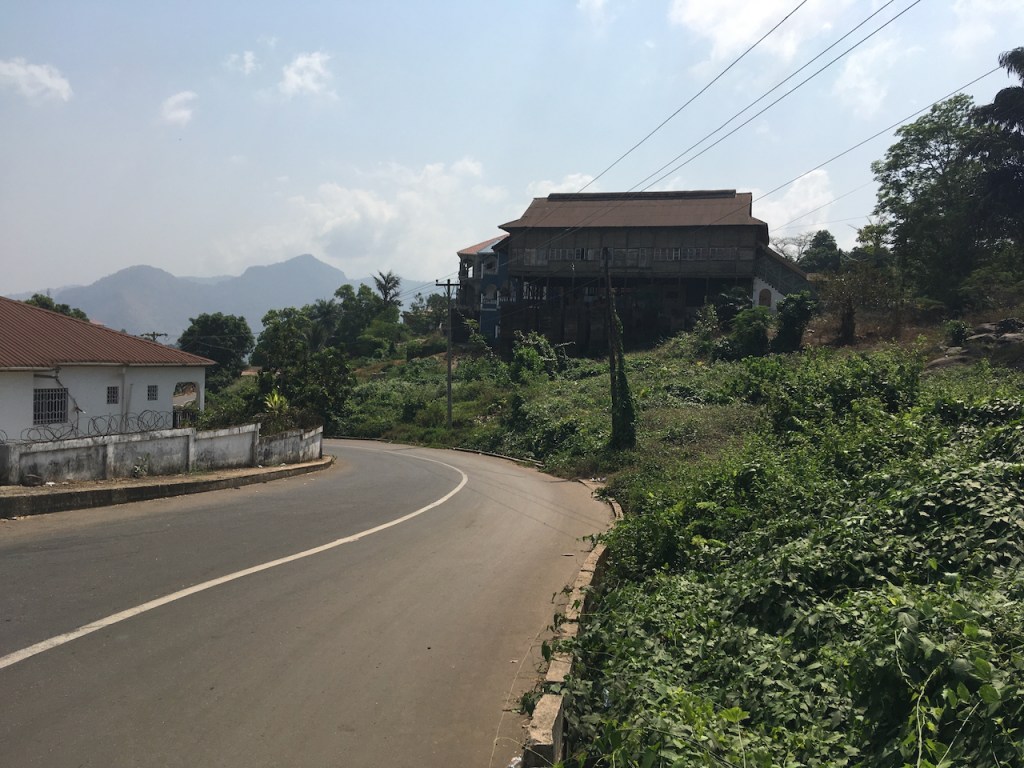
On an escarpment, 250m above the city of Freetown, is the small settlement of Hill Station. This was an exclusive resort built for the British colonial administrators and staff between 1902 and 1904. Modelled on the Indian hill stations (such as Simla) and the sanatorium at Aburi, Ghana, it aimed to provide cooler, more healthier abodes for the Colonists. Ronald Ross’s recent discoveries on mosquitoes and malaria also prompted the move away from the city, and the increasing desire for racially segregated housing and cordon sanitaires.
Bungalow at Hill Station
The houses were exported as kits from the UK ready to be assembled and clad on site. Hefty concrete bases are topped with steel frames that provide living accommodation at first floor level . Access is via a perpendicular staircase leading to a verandah. The raised bungalows catch the breeze and offer far reaching views over the forest, city, and ocean below. A club offered the only source of entertainment for the residents of this leafy, isolated, community.
Covered staircase entrance
How to access the Hill Station was solved by building a narrow gauge railway line from the city. It operated to suit the office hours of the government officials, and ran from 1904 until 1929 when it was replaced by road and bus service. Each day the officials would commute into town and return at the end of the day to their verandah’s and billiards at the Club House. It was an elaborate and hugely expensive experiment that benefited just a few dozen individuals. To build and maintain a railway through this challenging terrain was an immense task.
New build on left with origin Hill Station residence on rightView from Hill station over FreetownHill StationOne of the surviving 12 original Hill Station houses – with modifications to base
Today, just 12 of the original 24 two-storey houses survive, still occupied by civil servants and their families (and still without a piped water supply). Many of the houses are being modified and extended, and the large plots split-up and sold to facilitate new development.
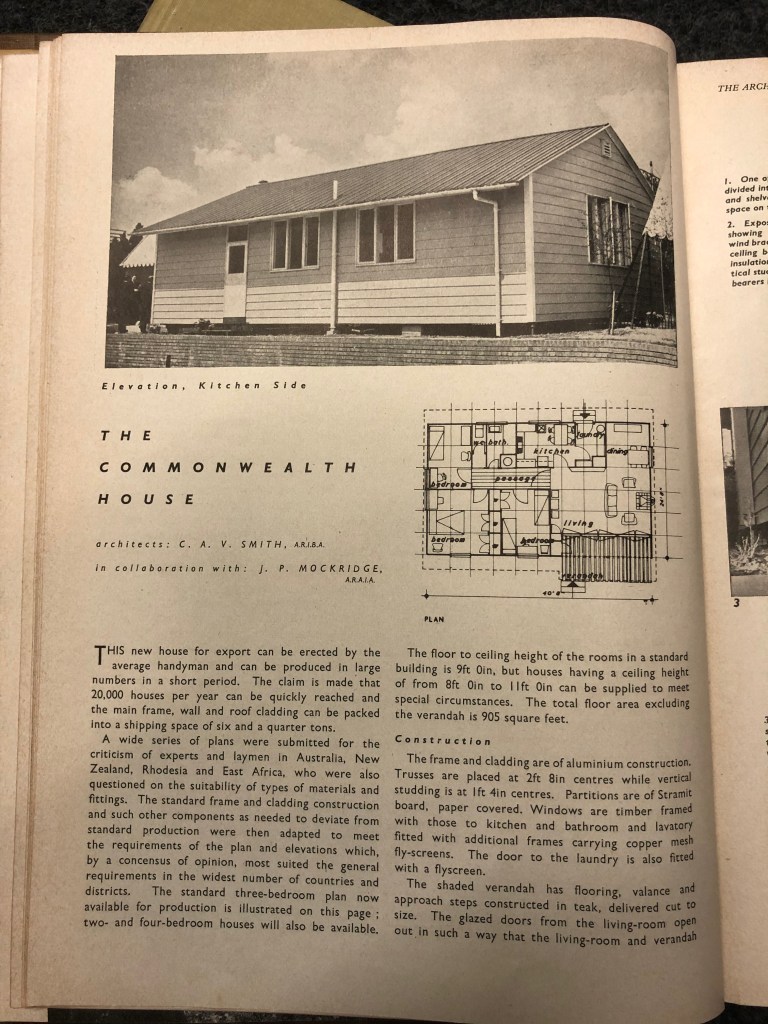
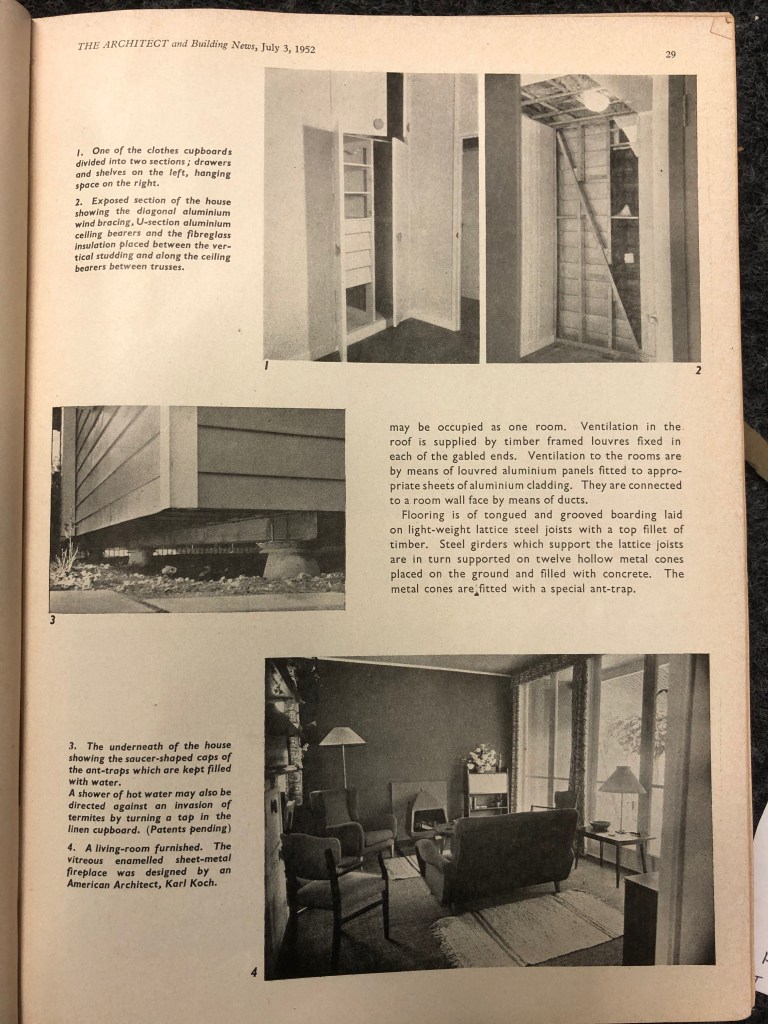
In the Architect and Building News from July 1952 there’s an intriguing article for a partially-prefabricated ‘Commonwealth House’.
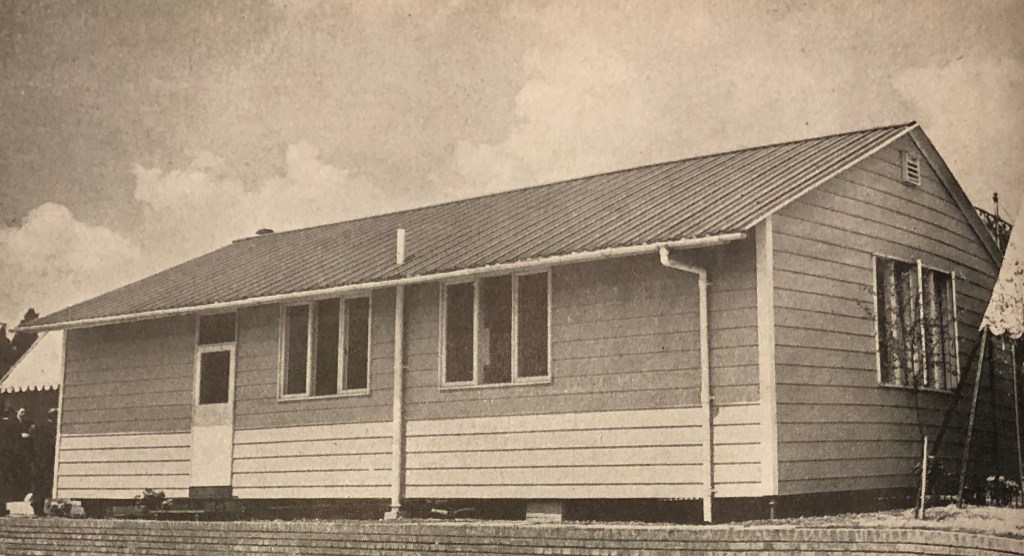
The Commonwealth House
The house could be easily shipped and ‘erected by the average handyman’, aided by a standardised kit of parts would make manufacturing simple and predictable.
The house was designed by Charles A. V. Smith with John Pearce Mockridge, following a consultation with potential makers and inhabitants. The architects adjusted their designs to suit a consensus – resulting in a house very much designed by committee with a predictable, if utilitarian and efficient, floor plan.
The brief was to develop a house that would be suitable across the geographical and climatic zones of Australia, New Zealand, Rhodesia (now Zimbabwe), and East Africa. Over 20,000 units were expected to be built per year to meet the demand for emigrating workers and their families eager to escape war-torn Britain for opportunities elsewhere.
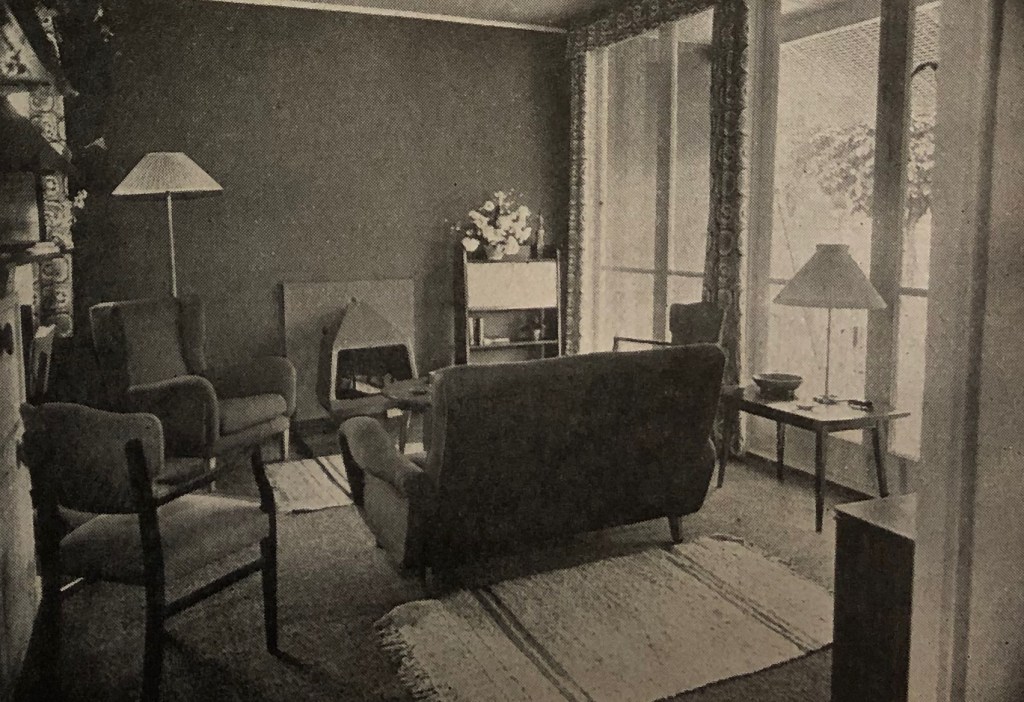
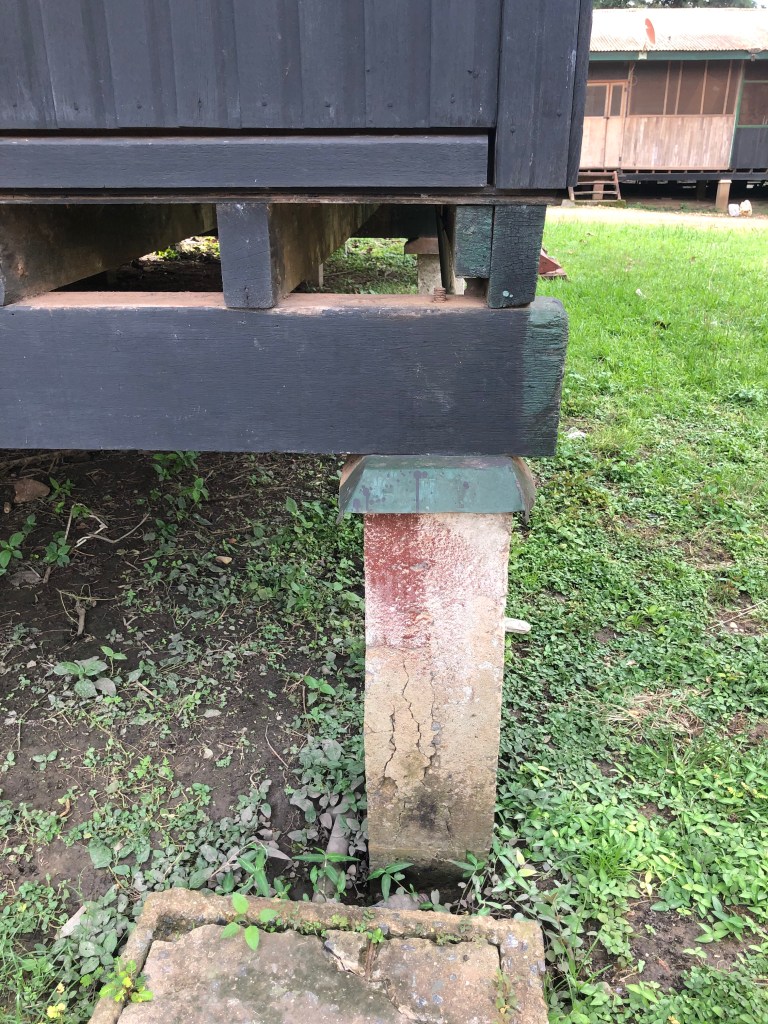
The house had an aluminium frame structure, and the cladding materials could vary depending on availability and final conditions. It was placed on concrete posts with an ant-trap to resist termite attack. The prototype erected on Great West Road in Hounslow was fitted out with furniture and a fireplace designed by American architect Carl Koch (1912-1998), who later pioneered several prefabricated house designs in the US.
The Commonwealth House design was very similar to houses we saw in the timber saw-mill town of Samreboi in Ghana – even down to the ant-trap detailing.
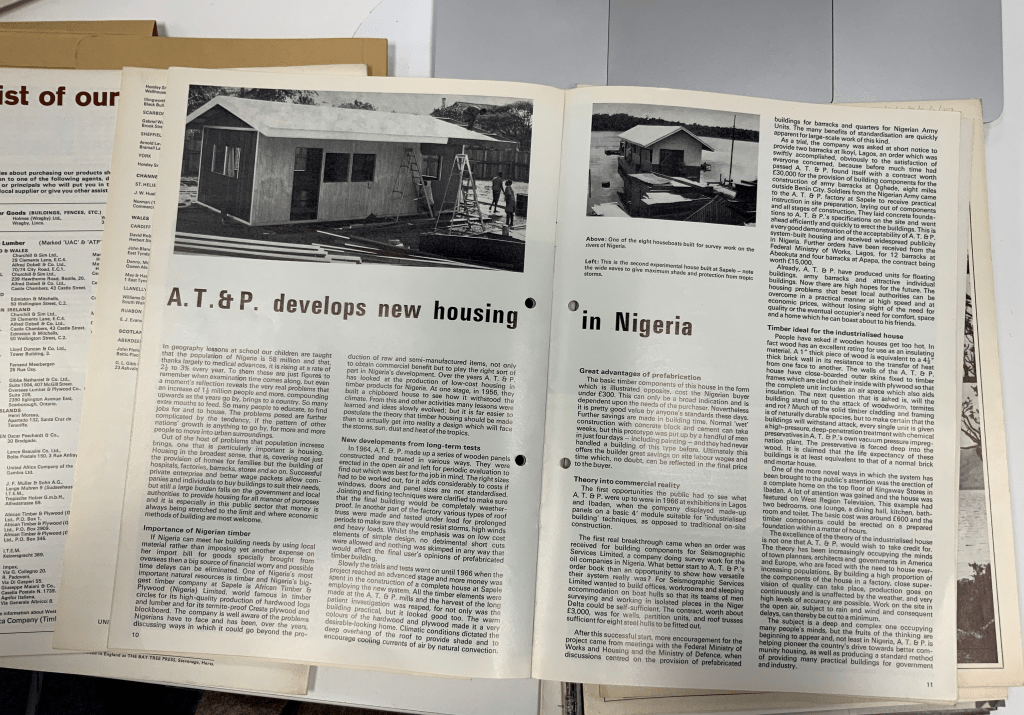
The African Timber and Plywood Company (AT&P), who owned the mill and were responsible for most of the housing, were also attempting to develop their own housing kits and to expand into new products and markets.
Timber framed housing in Samreboi, GhanaTimber framed housing in Samreboi, GhanaAnt trap detail
By 1954 AT&P had begun to discuss prefabrication techniques and processes at both Samreboi and their larger station at Sapele in Nigeria. The drive and urgency for this type of production was heightened by increased competition and political efforts to quickly improve housing standards in West Africa. The Dutch firm Schokbeton had been awarded a large order for prefabricated housing in Ghana, and contractors Taylor Woodrow were eager to expand their building products export wing.
Architect Edric Neel (1914-1952) developed a consortium of architectural consultants with Taylor Woodrow in 1944 to research new structures that could be quickly assembled and fabricated. The group was called Arcon and their first project was a temporary prefabricated house. The system developed into a set of lightweight tubular steel components that could be easily welded together. The façade, if required, could be made of local materials, metal sheets, or cement board cladding, as required. The system was intended for export and into ‘tropical conditions’ in particular. The units could be readily scaled and used to assemble large factories and sheds with large spans. Many of the factories and mills (including those at Samreboi) utilised this standardised and low-risk approach to construction.
Saw Mill at Samreboi, Ghana
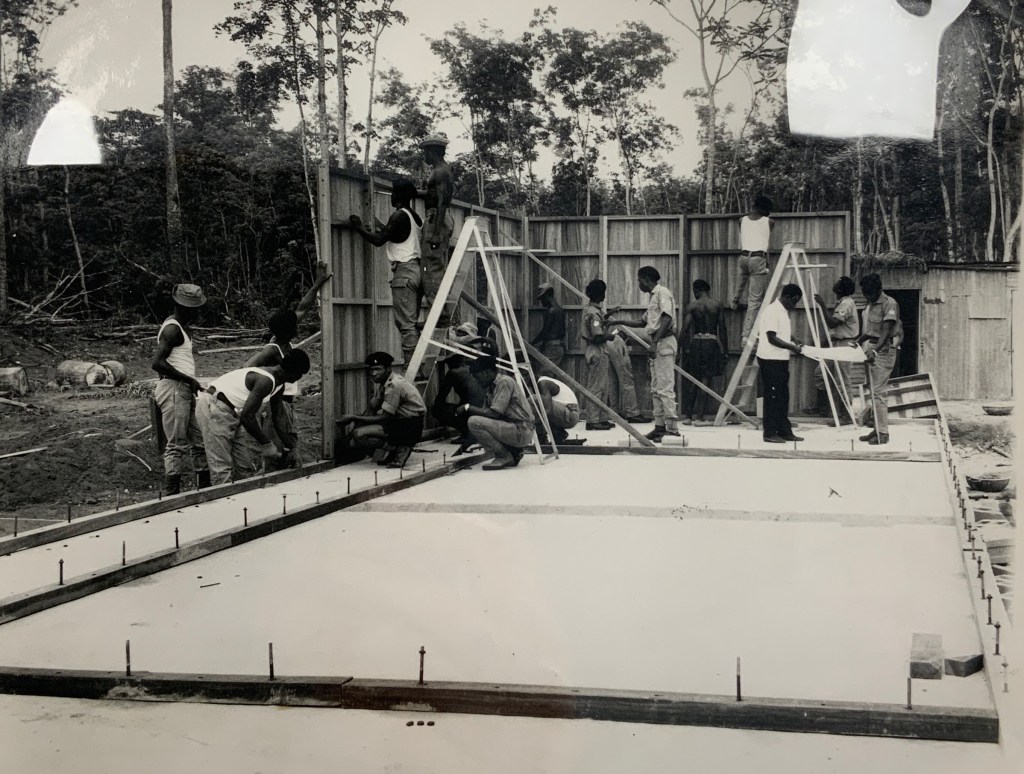
Over the next 15 years AT&P began developing a series of prefabricated houses, but rather than developing a frame and cladding approach they created integrated wall panels (like flat-pack furniture) with modular dimensions so that windows and doors could be added where required. They called it the AT&P System Building, and priced a small house at £500 – compared to the £1200 Schokbeton model.
The system was adopted for military projects and housing, and continued to be deployed into the 1970s with AT&P developing many different variations and types.
The 1951 victory for Kwame Nkrumah’s Convention People’sParty resulted in some major shifts in the procurement of new infrastructure and housing. For the electorate, housing was one of the most important issues and Nkrumah’s government was quick to recognize this potency.
His plan, announced in 1952, was to build a new port city, complete with innovative and improved housing at the highest standards. Located only 18 miles from the centre of Accra, the new city of Tema would demonstrate Nkrumah’s commitment to industrial development and that Ghana was at the centre of a pan-African vision.
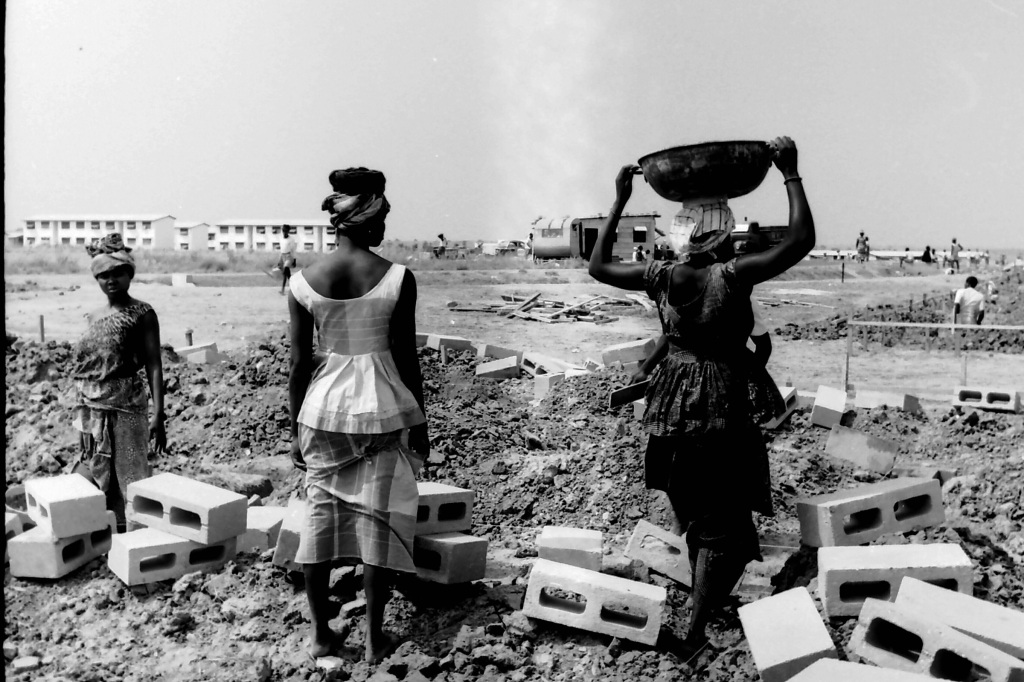
Tema under construction: female labour force transporting blocks and cement
Tema was part of a wider industrialization project that included a new aluminum smelting plant and hydroelectric power station on the Volta River. It was a major project involving international financial backing and set out the major ambition Nkrumah had for the nation during the advent of independence. For such a major project, very little is known about the first team of architects and planners responsible for the execution and delivery.
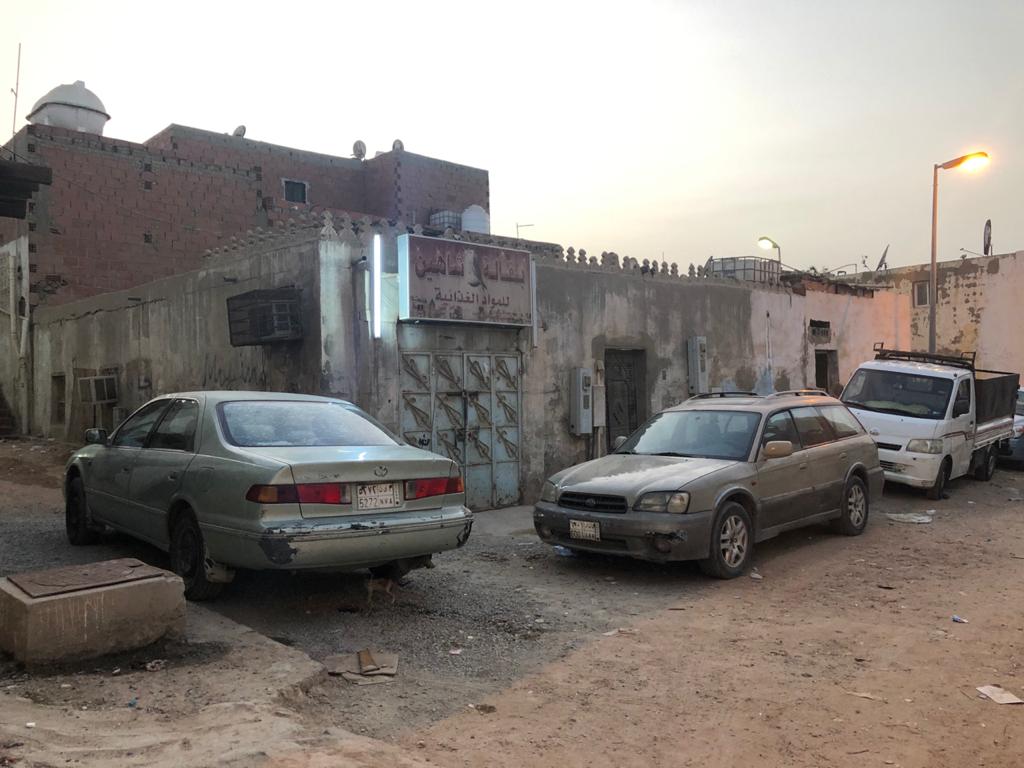
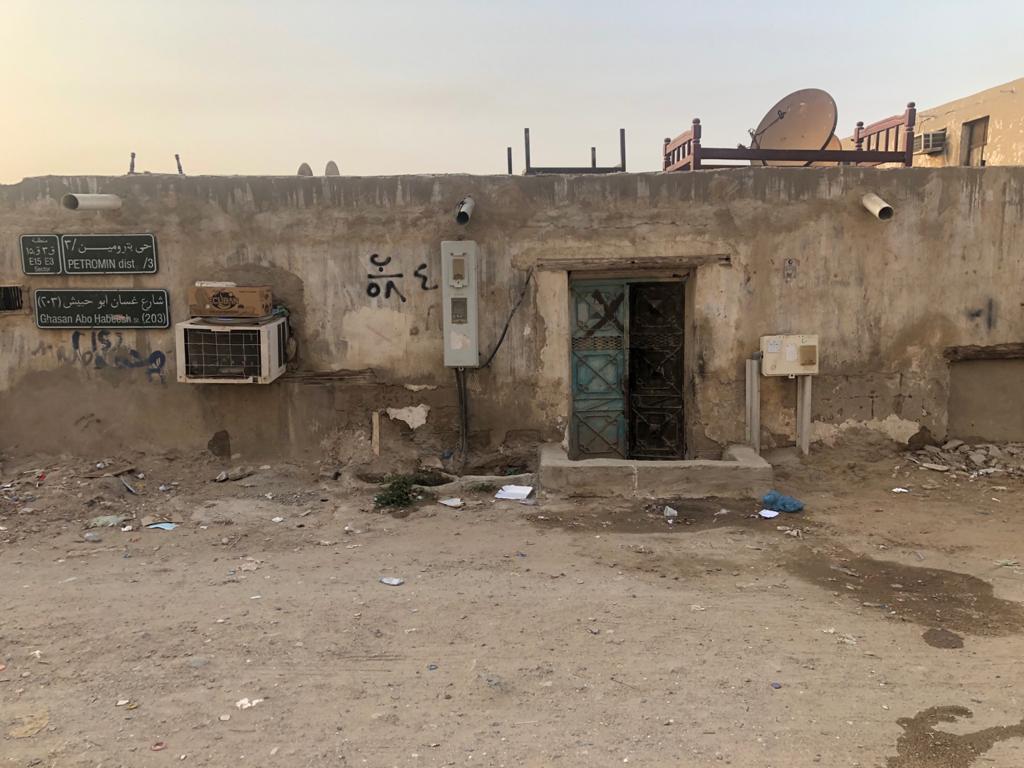
Research Title and Summary:From One Slum to Another : A Journey of Understanding and Redefining Informal Districts in Jeddah, Saudi Arabia
At a time where Saudi Arabia undergoes many mega development plans, Jeddah, located in the western region of Saudi Arabia, continuously aims to adjust the urban development strategies in an attempt to accommodate the future vision of the country. However, it suffers from the increasing numbers of informal districts where it currently adds up to sixty-six documented informal districts. This built environment has been vulnerable to socio-cultural implications and considerable complications. The community in these areas suffer from lack of proper housing, amenities, water supply, safety, and basic accessible healthcare. Living in closed clusters depending on and not limited to ethnicity and affordability. Saudi and non-Saudi people have inhabited informal districts for generations. For many years, policy makers along with governmental officials have put in action strategies to infiltrate these zones and prevent the spread of this architecture scar. Consequently, a bird eye view of the situation with no consideration to the communities needs and struggles have led to two types of people: landowners who refused to move and low-income communities who relocated to other informal low-income areas.
Previous research investigated the informal districts crises, the root cause, the history and possible solutions. However, this historical crisis still reoccurs today. The oil boom, the mega projects, the rise in population and cost of living all have aided in the process of replacing, reproducing these slums. This research will shed the light on previous reasons of the crisis, However, it aims to investigate the mechanism of the informal districts and characteristics influenced by the behavior of different sociocultural aspects and to identify the variables that define these areas in Jeddah.
Aims and Objectives:
This research aims to reveal the actual characteristics of Jeddah’s informal districts highlighting the different building and spatial dimensions. It aims to layer the social, economic and space relations to highlight the consistent power of such districts and the growth of this particular economy and space.
The architecture of these zones in Jeddah can be abstracted into many indicators that differ from one district to another despite the close distance they are from each other. Considerably, the urban fabric and socio-cultural characteristics also differ from one zone to another. This is an understanding on how housing conditions and living challenges implicate the socio-culture nature of inhabitants. The research is an empirical analysis of the factors influencing the social and cultural patterns affected by the built environment that aid in the occurrence and recurrence of informal districts.
Many descriptions have been mentioned in research and media talking about the problem of slums. The root cause, the history and possible solutions. However, a historical issue still reoccurs today. The oil boom, the mega projects, the rise in population and cost of living all have aided in the process of replacing and reproducing these slums. This research does aim to extensively explore previous reasons of the crisis. It aims to investigate the mechanism of the informal districts and characteristics. The aims are as following:
To research the history of the urban fabric and the development of the built environment of Jeddah.
To research the history of the existence and recurrence of informal districts in Jeddah.
To investigate the different types of informal districts in Jeddah.
To examine the current situation and analyze the relationship between the city and informal districts.
To examine the inhibitors socio-cultural background and economic status.
To define the characteristics of the informal districts’ built environment where they differ in terms of culture, architecture, and economy.
To set new indicators that categorizes the districts based on physical and social differences according to the previous definition.
To propose recommendations for new strategies to enhance the built environment to accommodate inhabitants needs
Why did you pursue a PhD, and what made you choose University of Liverpool?
Honestly, I have never thought I would. In 2013 I finished my master’s degree in Sustainable Architecture from the Catholic University of America. I was very eager to start working in the field. I went back to Jeddah, Saudi Arabia and worked at Dar Al-Hekma University as a lecturer, alongside I founded with my husband Vertix Design Studio where I worked as an Architect and Interior Designer. In 2017 I moved to teach at Jeddah University. I taught various subjects during my years at both universities such as design studios, sustainability, and computer aided design. Teaching was a very enriching experience and as a result I have been very enthusiastic about research and exploring new methods of developing the built environment. During COVID-19 lockdown, a worldwide crisis affecting humanity, I realized that the aftermath of this would lay within us for a very long periods of time. I started to research with my colleague Dr. Sherin Sameh, a former chair of the School of Architecture at Dar Al-Hekma University, about pandemic lockdowns and space layout in houses in Jeddah according to new resident’s needs. Research revealed how this pandemic affected the more vulnerable low-income society and how houses and neighborhoods were not equipped to deal with such events.
After exploring many prominent universities, I have chosen University of Liverpool because the School of Architecture is one of the excellent schools across the United Kingdom, and the areas of research I am interested in are compatible with the vision of the wonderful staff. Liverpool is one of the most beautiful cities I have visited in the UK, the very welcoming atmosphere and the beautiful architecture has made the decision much easier.
What have you found the most fun part of the PhD, and the most challenging?
Exploring my city and meeting people from different backgrounds has been the most rewarding part of the PhD so far. Although I have lived most of my life in Jeddah, I had the chance of visiting areas for the first time. Seeing the city from a different point of view has been an eye-opening experience.
The most challenging part has been starting my PhD online during the COVID-19 lockdown. Although e-learning has proved to be a revolutionary mechanism managing to bring people together in one room despite the physical distance, it has been challenging to build actual work/study relationships. As a new student, it takes time to be familiar with the new system and new instructors, nevertheless having to do it online made it challenging as there is limited time during online meetings and the importance of using that limited time effectively. However, I have been very fortunate that my supervisors have been very encouraging and supporting throughout time and I have been very motivated to work hard after each online meeting.
Post-Phd? Any ideas of what you’d like to do next?
Although teaching has been a huge part of my career, I look forward to research further solutions for the constant rise in informal settlements in Saudi Arabia. I would like to effectively implement strategies that deal with such zones with consideration of the society living there. Finding sustainable solutions to eliminate such occurrences in the future for a more resilient country. I aim to influence and implement polices that would help mitigate this situation.
Any advice for others interested in doing a PhD?
The dilemma I had in the past was constantly asking myself why do I want to do a PhD? Every time I thought about applying, I asked myself that, and only when I was able to answer I knew I was ready with a purpose. Don’t be afraid to be curious – the more you are – the better researcher you become. I have always seen myself since I started as more of an investigator researching for answers in the field. Choose a topic that you feel passionate about and do not be discouraged when you reach dead end, it just means there is an alternative road you need to take. Enjoy the journey.
Name: Heather Lynn McGrath Alcock PhD Research Title: Beyond the Village: The Global Value of Port Sunlight
Dissertation Supervisors: Professor Iain Jackson, Dr Ataa Alsalloum and Dr Cheryl Hudson
Research Question: Does Port Sunlight village express Outstanding Universal Value and if so, what material and intangible aspects of the site express its influential, unique, and exemplary character?
Aim: The aim of my research is to define the heritage values of Port Sunlight village in a comparative global context.
Figure 1: Mapping global planned worker villages. Sites are mapped by latitude and longitude and key characteristics are recorded for each site, including dates for development, designer, industry, and heritage site management indicators such as statutory protections.
Objectives:
Identify, map, and analyse the transmission of ideas and images for Port Sunlight village and two similar sites Bournville and New Earswick from 1889-1939.
Complete desk-based research to identify, map and briefly describe global planned worker settlements, garden suburbs, and Garden Cities.
Compare transmission of ideas and images research against the development of planned worker settlements, garden suburbs and Garden Cities research to identify and describe possible connections and influences.
Undertake case studies for more in-depth comparative analysis, including archival research, field work and interviews with stakeholders.
Analyse findings to determine if there is a correlation between the transmission of images and ideas and the development of planned worker villages. If so, would it be possible to identify the primary influence? Were direct or indirect forms of transmission most prevalent? What methods were most effective or enduring? Lastly, is it possible to directly trace Port Sunlight’s influence?
Define Port Sunlight’s heritage values within UNESCO’s framework for world heritage site inscription.
Figure 2: The model worker village at Port Sunlight was both a highly local and ‘tied’ manufacturing community and a global phenomenon. Foreign visitors toured the site regularly and Lever Brothers had a global business operation by 1900. This 1901 quote from the Crown Prince of Siam featured in the opening pages of the 1905 “Souvenir of Port Sunlight” by Lever Brothers Limited. (Held by Port Sunlight Museum, Collection Reference S13 1905)
Background to Port Sunlight
Port Sunlight is a planned worker village created by industrialist William Lever (1851-1925) for the workers in his soap manufacturing company Lever Brothers, which later became global manufacturing corporation Unilever, plc. Port Sunlight holds a unique place in the history of British town and country planning, where two significant traditions meet: picturesque town and country planning and improved housing and amenities for working class people”.1
Construction of the Lever Brothers’ works started in 1888 and the first houses were occupied by 1889. By 1891, Lever Brothers had built their first community facility, Gladstone Hall and they were publishing visitor ‘guidebooks’ to promote the works and village.
By the start of the first world war, the village had a wide range of facilities, including two schools, cottage hospital, an open-air swimming bath, 3000-seat auditorium, gymnasium, library, savings bank, social clubs, shops, church, tennis and bowling lawns, football pitch and pub. The houses and facilities were set in a generous landscape with passive green spaces, designed landscapes and allotments.
Figure 3: Plan of Port Sunlight as it was in 1938 by historian Michael Shippobottom in consultation with Edward Hubbard. The plan, reproduced in Hubbard and Shippobottom’s A Guide to Port Sunlight Village (3rd Edition, Page 34, Figure 32) illustrates the village at its first Jubilee.
Port Sunlight village became a conservation area in 1978 and includes over 900 Grade II-listed buildings within 130 acres of parkland and gardens.
Research Justification
Port Sunlight faces many challenges, articulated in a suite of evidence-based strategic documents developed from 2018-2021 by Port Sunlight Village Trust (PSVT), the independent charity charged with the care and promotion of the village.2 PSVT, working in partnership with key stakeholders, plans to undertake significant projects and to advance key business objectives to address these challenges and to ensure the long-term sustainability, accessibility and inclusivity of the site.3 The research will support PSVT, village stakeholders, academics and practitioners to better understand the global value and significance of the site and to make more informed decisions about its future.
Research Methodology
My work will be informed by extensive archival research, case studies and oral histories, and my professional experience and understanding of heritage values (including current dialogue challenging the processes for identification and management of heritage sites), but it will also engage with the theoretical, contextual and historiographic approaches of others who have studied the design, development, transformation and impact of planned worker villages from multiple disciplines.
Figure 4: Bridge Street and Park Road terraces houses in Port Sunlight by Douglas and Fordham, 1893. Digital version from the Drawn Together collection under Creative Commons CC-BY-NC-ND. Original drawing held by Unilever, plc.
What did I do before the PhD Research?
As a British-American citizen and a mature student, I enjoyed twenty years in built heritage practice in the USA and UK. My academic degrees in Cultural Anthropology and Historic Preservation from the University of Pennsylvania led to private heritage consultancy in New York City. There I worked for Building Conservation Associates, Inc. on many aspects of built heritage practice across the country. In New York, I developed a practical approach for the creative adaptation and conservation of listed buildings for tax credit projects, which resulted in the regeneration of at-risk heritage sites. Research underpinned my practice, including heritage policies for the United Nations Headquarters in New York and a serial listing for the New Canaan Moderns.
Before starting my PhD at Liverpool, I served as the Heritage Conservation Officer for PSVT, where I had the opportunity to draft one of England’s first Local Listed Building Consent Orders, to design and implement a conditions and integrity survey of the 923 listed houses in the village, co-authored the Conservation Management Plan (2018) and managed Drawn Together, a Lottery-funded partnership project to digitise original drawings for Port Sunlight. It was through my work for PSVT and direct engagement with village residents that I developed an appreciation for my research site and its stakeholders.
Why did you pursue a PhD and what made you choose the University of Liverpool?
Since immigrating to the UK in 2009, I had felt the pull towards further education, particularly in a British context. I found time during the disrupted life of the pandemic to apply for both a PhD and research funding. The Society of Architectural Historians of Great Britain (SAHGB) awarded me their Graham Child Scholarship, so the question of funding was very happily and gratefully resolved. My choice of university was straight forward. I was well-acquainted with the School of Architecture, the excellent reputation of its researchers, its facilities, and resources. Both the Architecture and Planning departments had ties to Port Sunlight and the archives hold significant collections for the transmission of ideas research. I had met both Ataa and Iain through my work at Port Sunlight and felt they would make an ideal team to supervise my cross-disciplinary dissertation. Everything fell into place!
What are your first impressions of life as a PhD researcher and what do you think you will do after you have finished?
I am perhaps one of the most grateful and fortunate people in Wirral as I am being paid to learn, think, and write about Port Sunlight. Working with Ataa and Iain has been incredibly rewarding as their global expertise and experiences in architecture, history and heritage connect and complement my own experiences and practice. Our differences make for lively and enjoyable discussions, and I always go away feeling a bit daunted but inspired.
However, there is no denying the dramatic change of pace and the different daily rhythms I experienced when I became a PhD researcher. In my professional life, there were meetings, colleagues, volunteers, emails, public engagement, and strategic considerations. In short, there were people. Now, my world is quiet and contemplative (when my children are at school). My ‘to do’ list is long and exciting, but undeniably solo. I rather like working with a team and know that once my dissertation is finished, I will welcome back the noisy collaborative world of heritage practice and possibly the even noisier world of teaching.
A number of new PhD researchers have joined us in the last 12 months, and we’d like to make some introductions.
Name: Noor J. Ragaban
Research Title and Summary: How the Home Works: The lived-in experience | A Case Study of Jeddah, Saudi Arabia The research aims to decentre the position of architects and convention that places architecturally designed elements as the primary components . It considers users as a major element in redefining architecture. The study focuses on the city of Jeddah in Saudi Arabia. There is a scarcity of studies in this region that examines the interior domain of the dwelling.
The project seeks to answer the following questions: how do families in Jeddah live? Does the architecture reflect their lifestyle, or is there a conflict or tussle between the built fabric and lifestyle? How do the homes ‘work’; which family members occupy which parts of the house, how are the houses decorated, embellished, and furnished? And why?
The interest in domestic architecture stems from the various tangible and intangible practices that the home enshrines. This is especially important in cities like Jeddah where a broad spectrum of genres de vie are found, and are only observed (and even visible) when one is socially immersed in the community. The existing cultural diversity of Saudis in this city is the result of two major migration phases that occurred due to the city’s strategic geographical location. The first phase took place before the creation of the Kingdom of Saudi Arabia, and was a result of pilgrims visiting the Islamic holy cities of Makkah and al-Madinah, as well as traders from all over the world exploiting the coastal position between Europe and the East. The second wave took place after the unification of the Kingdom (a prolonged process that was only resolved in 1932) and the discovery of oil, which attracted major migration and rapid expansion to the city. The study investigates two of the most common types of dwellings in Jeddah, namely flats and villas (based on the 2019 Saudi General Authority of Statistics survey). It targets a wide range of participants, 30-90 year old males and females who live with their families. Emphasizing the users’ experience, the research deploys a number of qualitative methods such as semi-structured interviews; observation; auto-photography and mapping, and architectural survey of the domestic properties. Through these methods a number of common and intertwined sociocultural values can be scrutinised to understand notions of family, privacy, and hospitality.
Aims and Objectives:
1- Explore and describe the various domestic lifestyles of Jeddawis. 2- Identify the architectural elements of Saudi houses in Jeddah. 3- Analyse the tangible and intangible effects of the architectural elements on the domestic life of Jeddawis, looking into three intertwined sociocultural aspects: family, hospitality and privacy. 4- Analyse the physical and non-physical effects of the sociocultural aspects on domestic architecture. 5- Develop customised qualitative data collection methods to suite the culture and the private researched domain. 6- Document the diverse users’ lived-in experience.
What did you do before the PhD Research? After completing my B.A. in Interior Design in 2008 at Dar al-Hekma University in Jeddah, Saudi Arabia, I have worked as an interior designer for 9 months at C1, a workplace specialized architecture firm. In 2009 I decided to go to the UK for further studies and was able to successfully complete an M.A. in Architectural and Urban Studies in 2011 at the University of Brighton, United Kingdom. From 2011–2018 I have been working as a lecturer in the Architecture department at Dar al-Hekma University, where I have taught several courses ranging from foundation courses to advanced studios, and theoretical courses. In 2015, I have also taught in the Interior Design department for two semesters. From 2018 –2019 I have taught in the Interior Design department at King Abdulaziz University, College of Art and Design in Jeddah, SA. During summer breaks, since 2011, I have yearly enrolled in architecture and urban studies courses that focuses on culture, all of which took place in Germany and Austria. As my interest grew stronger in culture, I started learning the German language while in Germany. During the summers of 2017-2019 I also took a number of art courses while in Turkey to explore new mediums and experience the culture in an artistic environment. In parallel with my academic career, and as part of community service that have always complemented my career and personal life, art education was on my agenda. From 2012–2017 I have taught drawing to autistic children in one to one sessions. Recently in 2019, I have volunteered to work at Verve Studio, SA, in hope to contribute the art scene in Jeddah. For six months, as an art director, I have curated their first exhibition; set up sculpting and drawing course plans; and taught drawing courses.
Why did you pursue a PhD, and what made you choose University of Liverpool? My graduate studies and the summer courses have exposed me to several culture-related topics that encouraged me to observe spaces and users simultaneously, to find out how they affect each other. My interest developed to observing family activities in different environments, often houses. There I noted a number of dissatisfactory remarks on both the architecture and lifestyle, that were sometimes merged with nostalgic comments. Considering how varied the dwellings types are today, I started reading about traditional dwellings to form a comparison between life in both architectures. That was when I realised that research on Jeddah traditional dwellings have studied the architecture only, excluding the users; also, there was no recent research that discusses inhabitants life within contemporary houses. Thus, I have decided to feed my curiosity and contribute to knowledge through pursuing my PhD, in hope that a close understanding of Jeddawis home use will eventually result in user-friendly homes, besides documenting the unique private environments experience.
Why I chose the University of Liverpool- After carrying out an extensive research into a number of prestigious and top ranking universities, I have selected the University of Liverpool for a number of reasons. Number one, the diversity of international students and the welcoming supportive environment the university provides for them. Its genuine care about academics and interpersonal skills progress and development of its students, as well as their wellbeing rendered a positive environment where I saw an opportunity to grow and succeed. Number two, the broad spectrum of conducted research subjects and interests, not only collectively across the School of Architecture, but also of each faculty member. Which for me is an important factor as it allows further exploration and investigation of new areas beyond expectations. Number three, I believe the University of Liverpool will help me achieve my long-term goal in Saudi as a young female. Due to its long history and record of achievement, the university is one of the most reputable universities amongst Saudis, and is acknowledged by the Saudi Ministry of Education, making it highly respected in the industry as well as academia.
What have you found the most fun part of the PhD, and the most challenging? What I have found truly fun about the PhD is involving participants and acquiring information from them, as opposed to relying solely on literature. The interviews, focused on the lifestyles within dwellings, allowed a significant number of questions to be asked. Questions that I could not ask in a normal conversation (or otherwise be called nosy and ill-mannered!) Similarly are the observations, where as a researcher I was welcome to scrutinise homes, viewing rooms I might have never seen under any other circumstances. Equally, that was also one of the most challenging aspects. Even though all participants fall under the umbrella of Saudis living in Jeddah, that did not mean they were all the same, especially in regard to their little private kingdoms. Thus, constantly considering how and when to inquire about an information, without giving the impression of prying, was quite challenging. Another challenge is acquiring data from government sources and architectural offices in Saudi. The lockdown, I must admit, was quite challenging at first, having lost the work dedicated space -campus office- and the idea of being forced to stay home. However, that soon became yet another part that I have found quite pleasant. It provided me unlimited reading and working dedicated time, especially that I am on my own. Such a joyful productive solitude.
Post-Phd? Any ideas of what you’d like to do next? I am fortunate enough to have a job to go to back home, teaching at King Abdulaziz University, where I plan to return in order to continue working on my proposal of improvements in the university. Alongside, as a Saudi university faculty member, I plan to become a member of the Saudi Building Code National Committee, in hope to take part in informing policies and decision making. I’d like to achieve this goal before going back home.
Any advice for others interested in doing a PhD? While the right time and perfect opportunity maybe motivating factors to pursue a PhD, I’d personally recommend to only start once having found the right subject. It needs to be a subject that you’re truly passionate about, and are willing to commit to for a long period of time (rather than only doing PhD for the sake of it). I would also add that the topic, or the interest indeed, should be initially broad. A broad interest will allow endless possibilities of focuses for the researcher to choose from, which certainly requires the student to be fixable and open to explore new spheres within their area of interest.















 Transnational Architecture Group