Archive

Tag Archives: Liverpool

‘The Influence of Fry and Drew’ Conference, Abstract 5

Jacopo Galli, ‘Edwin Maxwell Fry and Jane Drew – Architecture as a Climatic Device’.

With their numerous designs in West Africa from 1949 to 1960 Edwin Maxwell Fry and Jane Drew established an innovative design system that was later conceptualized in their book Tropical Architecture in the Dry and Humid Tropics in 1964. What is now known as Tropical Architecture consisted in a process of transculturalization of European modernism that was heavily influenced by climatic and social concerns. This design system can been seen as the sum and intersection of different climatic devices that were specifically thought in order to respond to one or more climatic inputs. Otto Koenisberger saw African vernacular architecture as a pedagogic model for the design of climatic devices: materials and technologies were used in order to achieve a balance with the environment.

Fry & Drew applied this concept and generated an impressive amount of architectural devices that were modified and overlapped in an anti-vernacular way. This can be considered an embryonic step towards a quantitative architecture not solely based on the designer’s genius but on a set of scientific data that influenced and transformed architecture.

This assumption does not affect the audacity and boldness of design: the research on innovative building materials or the regeneration of historical building techniques. Every design choice in Tropical Architecture was taken respecting the concepts of convenience and opportunity, shading devices or breathing walls took form based solely on climate and are a great example of anti-vernacular regional modernism.

Through a critical redrawing of the buildings it is possible to comprehend design mechanisms in order to verify how the different devices were used in response to the different climatic conditions. The research does not intend to verify the technological functionality of the devices but the architectural coherence displayed in their use. Understanding this design system allows us to retrace how architectural design could be shaped by climatic factors and scientific data, in order to comprehend an important step in the history of transnational modernism.

..

Jacopo Galli is a PhD candidate at IUAV University in Venice. He holds a bachelor degree in Architecture from the University of Parma and a masters degree in Sustainable Architecture from IUAV University in Venice. He is currently working on a dissertation that investigates British Tropical architecture in West Africa of the 1940s and ’50s as an innovative design system representing an embryonic stage of climate responsive design. The dissertation is particularly focused on the book Tropical Architecture in the Dry and Humid Tropics seen as the masterpiece of Edwin Maxwell Fry’s and Jane Drew’s entire career. The analysis of the book will be carried out through an understanding of the main influences on Fry and Drew’s African designs such as Tropical Medicine and Colonial Technologies and through a critical redrawing and analysis of the buildings used as examples in the manual.

­­

‘The Influence of Fry and Drew’ Conference, Abstract 3

Łukasz Stanek, ‘Tropical Architecture as Cold War Discourse in Post-Independence Ghana (1960–1966)’.

While scholars have convincingly linked the genealogy of tropical architecture to the colonial networks of the British Empire within the processes of decolonization, the role of Cold War dynamics in this genealogy has been much less recognized. This paper fills in this gap by discussing the cosmopolitan architectural practices in Ghana during the presidency of Kwame Nkrumah (1960–1966), with the specific focus on the Accra International Trade Fair. This ensemble was designed by architects and engineers from socialist Poland according to the principles of “tropical architecture” as advocated by Maxwell Fry and Jane Drew: the translation of modernist architecture according to local climate, technology, and society. The construction of the Fair was a part of broader debates on “building in the tropics” in the Soviet Union and Poland, in response to the engagements of professionals from socialist countries in Europe in Africa and Asia since the late 1950s. Yet in spite of being one of the most prominent ensembles in Nkrumah’s Accra, the Trade Fair was never included to publications about “tropical architecture” nor was it presented in the journal “Western African Architect and Builder” which promoted “tropical architecture” well into the 1970s. This absence needs to be seen as expressing the “intellectual division of labor” specific for the Cold War that allowed acknowledging the work of architects from socialist countries as technological objects, but not as architectural ones.

Based on archival research and fieldwork in Poland, Hungary, Croatia, and Ghana, this talk will show how the discourse on “tropical architecture” offered a way for expressing ideological and economic antagonisms among architectural practices in mid-1960s Accra. At the same time, this paper will signal points of connection among practitioners from both sides of the Iron Curtain in early post-independence Ghana, including the School of Architecture in Kumasi, where Fry and Drew would discuss the principles of tropical architecture with colleagues from Hungary and Yugoslavia.

..

Łukasz Stanek is the 2011–2013 Mellon Post-Doctoral Fellow at the Center for Advanced Studies in Visual Arts (CASVA), National Gallery in Washington and Lecturer at the Manchester Architecture Research Centre, University of Manchester. Stanek authored Henri Lefebvre on Space: Architecture, Urban Research, and the Production of Theory (University of Minnesota Press, 2011) and he is currently editing Lefebvre’s unpublished book about architecture, Vers une architecture de la jouissance (1973). Stanek’s second field of research is the transfer of architecture from socialist countries to Africa and the Middle East during the Cold War. On this topic, he published ‘Miastoprojekt Goes Abroad. Transfer of Architectural Labour from Socialist Poland to Iraq (1958–1989)’ in The Journal of Architecture (17:3, 2012) and the book Postmodernism Is Almost All Right. Polish Architecture After Socialist Globalization (Fundacja Bęc-Zmiana Warsaw, 2012). He has taught at the ETH Zurich and Harvard Graduate School of Design.

‘The Influence of Fry and Drew’ Conference, Abstract 1

Christina Papadimitriou, ‘Houses of Chandigarh’.

“Birth is an impingement by an environment which insists on being important… To be born or to relive birth is to experience the feeling of being in the grips of something external.” Donald Winnicott

This paper will narrate the story of the housing schemes of Chandigarh built in a period of anxiety shortly after India’s independence in 1947. Following Nihal Perera’s argument that Chandigarh is a hybrid of imaginations negotiated between multiple agencies rather than a single author’s creation, the narrative will try to give an account of the different voices expressed and the different visions of modernity moving between individuals – as diverse as Otto Koenigsberger, Albert Mayer, Matthew Nowicki, Maxwell Fry, Jane Drew, Le Corbusier and Pierre Jeanneret – and national and institutional platforms.

The main argument will be made in terms of international relationships, with major and minor players, as they manifest themselves in the building of the houses of Chandigarh and not in post-colonial terms since the latter frame of thought has the tendency to reduce the ex-colony to the role of a post-colony. Thus, by focusing on Maxwell Fry and Jane Drew, this paper will compare their housing projects in Chandigarh not only to their work in West Africa or in the Middle East, as is usually the case, but also with their projects in Britain such as the two schemes designed for Harlow, the Tany’s Dell and Chantry housing groups. Since Fry and Drew were also responsible for the bye-laws provisioned for Chandigarh, similarities and differences between them and those of the London County Council will also be drawn. The paper’s aim is to demonstrate a process of modernization that affects everyone but where “effects” on a specific subject depend on the latter’s position in the instance of modernization.

..

Christina Papadimitriou is a Ph.D. Candidate in the Department of Art and Archaeology at Princeton University where she received her M.A. in 2011. She also holds an M.A. (Dist.) in Histories and Theories from the Architectural Association in London, a Diploma (Dist.) in Architecture from the University of Patras and a Diploma in Art and Archaeology (Dist.) from the University of Athens. Her dissertation studies the MARS Group in Britain from 1933 until 1957. Starting as a marginal architectural group, MARS acquired a preeminent position both in England and abroad after the Second World War and played an important role in the way the modern movement was perceived and disseminated globally. The dissertation takes on specific themes of shared interest as indicated by the group’s organized committees and narrates the MARS story through exemplary but formally diverse solutions to the obstacles the group had identified in Britain’s way to modernism.

Contact: cpapadim@princeton.edu

CFP Deadline Extended

Jane and Max on beach in N Wales001

**ABSTRACT DEADLINE EXTENDED TO SUNDAY 9TH JUNE 2013**

Thanks for your great response to the call for papers.

We have received a few late entries this week, so if you’ve missed the 2nd June deadline but would like to submit a proposal, please send in your abstract by the 9th of June and we’ll add it to the pile… Thanks!

Notifications will be still sent out by mid-June, with details of speakers and a conference programme to follow.

Call for Papers Reminder

Jane and Max on beach in N Wales001

** DEADLINE FOR ABSTRACTS: SUNDAY 2ND JUNE 2013 **

‘THE INFLUENCE OF FRY AND DREW’

THURSDAY 10TH – FRIDAY 11TH OCTOBER 2013

SCHOOL OF ARCHITECTURE, LIVERPOOL UNIVERSITY, U.K.

For over fifty years, E. Maxwell Fry (1899–1987) and Jane B. Drew (1911–96) were integral members of the English architectural avant-garde. The Fry and Drew partnership – in its various incarnations – was a magnet for architects and architectural students from all over the world, giving the practice a distinctly international outlook. Their built works, from the 1920s to the 1980s, cross the globe from Europe to South-east Asia.

This conference seeks to investigate the themes and movements of twentieth century architecture and town planning that have been influenced by the work of Fry and Drew, and vice versa. What is the context of Fry and Drew’s architecture? Is it possible to identify a FryDrew strand of Modernism or a house style? What is their architectural legacy?

We welcome papers from scholars and practitioners, and encourage proposals from early career researchers and graduate students. Papers might address, but are not limited to:

  • Inter-war Modernism – early influences, the rise of Modernism in England, collaborators and creative networks (such as contractors, engineers, artist, patrons).
  • Post-war Modernism – the Festival of Britain style, the Brutalist movement and younger British modernists, questioning the modernist agenda, the work of Fry and Drew’s former employees.
  • Colonialism – comparisons of colonizers in architectural and theoretical terms, war-time postings, colonial frameworks (for example, the role of the Public Works Departments).
  • Post-colonialism – tradition and modernity, design and identity, cultural colonialism. For example, Fry and Drew’s work at Chandigarh, in West Africa, throughout the Middle East.
  • Tropical Architecture – the use of new technologies and design ideas, its network and legacy, reassessment of the tropical, tropical architecture pedagogies at the Architectural Association and beyond.
  • Town Planning – the Garden City model, the neighbourhood unit, modernist planning schemes, the New Towns and post-war rebuilding, the spread and implementation of CIAM guidelines.
  • Fry & Drew’s wider influence – their patronage of art, Drew’s significance for women (in architecture), influential personal or professional relationships, their published texts, their involvement in architectural design education.

We invite abstracts of up to 300 words for 20-minute papers. Please email Jessica Holland and Iain Jackson at fryanddrew@gmail.com by Sunday 2nd June 2013.

See the conference page for further details.

Indian Connections with the Liverpool School of Architecture

I’m hoping to uncover more connections, exchanges and networks between India and the Liverpool School of Architecture. Please feel free to get in touch if you know of any other Indian Architects and Planners who studied in Liverpool during the early-mid twentieth century, or were directly influenced by Reilly, Budden, Gardner-Medwin, Abercrombie, Holford.This post focuses on three architects who came from India to study at Liverpool; Srinivasarao Harti Lakshminarasappa (BArch in 1921), T. J. Manickham (BArch in 1940) and D. V. R. Rao (BArch in 1950). In all three cases their careers have adopted a tripartite approach of practice, teaching and writing.  In the cases of Manickam and Rao they also worked in the West Indies and Middle East, respectively, with the UN. Gardner-Medwin had taken a similar role in India during the early 1950s. The role of the UN in terms of development/welfare/self-build is an interesting and under-researched component of ‘Tropical Architecture’ in the post WW2 era. Furthermore as demonstrated in these two cases, non-European professionals were advising on planning and architecture matters in other parts of the world, illustrating a shift in power-knowledge relations and a more complex network of exchange than the polar colonizer-colonized model would suggest.

Srinivasarao Harti Lakshminarasappa. Born circa 1885.
Lalit_palace
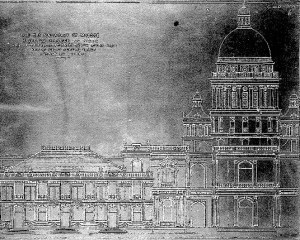
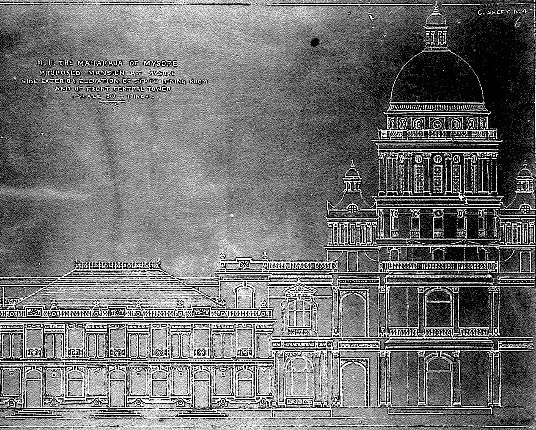
Lalit Mahal Palace, Mysore, circa 1930s

He was the chief architect to the Maharaja of Mysore and worked on the ostentatious Lalit Mahal Palace, completed around 1930, along with  E. W. Fritchley.He also worked on a number of other prestigious projects, including Mysore Town Hall and the Municipal offices, known as the BBMP building (built 1933-36) and was also involved in education as the Principle of the College of Engineering, Bangalore.

T. J. Manickam (1913-1974) Manickam studied at University of Mysore before studying at Liverpool where he completed the BArch degree in 1940 and the Post Graduate Diploma in Civic Design in 1946. He then returned to India, and took up office in the substantial Public Works Department (PWD) before establishing the School of Town & Country Planning in Delhi in 1955.

tjm

T. J. Manickam, circa 1970s.

In conjunction with the ITPI he established the Planning Campus in 1958 and merged with the Architecture department of Delhi polytechnic in 1959 to form the School of Planning and Architecture (SPA). This is a prestigious school and is ranked amongst India’s top architecture schools. Manickam designed a new campus in 1965.
Aware of the importance of disseminating his findings and the reputation of the school, Manickham also founded the journal, Urban and Rural Planning Thought in 1958 (based on the Town Planning Review). He also wrote several articles for Urban & Region al Planning, “Housing Crisis in the east” (1971) for example, and the books New Towns in India, (SPA, 1960), and Housing Crisis in the East, (SPA, 1970)

Furthermore he served as a UN co-ordinator in the West Indies (Trinidad and Tobago) and was a UN Advisor to the Government of Jamaica between 1963-66.

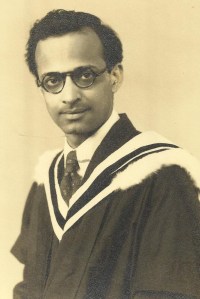
D. V. R. Rao: Prof. Rao has been kind enough to write some of his memories of Liverpool and career highlights and these are included below (email correspondence with Jackson, 2012)
DVR Rao Liverpool University

D.V.R. Rao graduation photograph, Liverpool, 1950

“I am pleased to have had the opportunity to reminisce on my Liverpool days and answer some of the questions posed by Dr Iain Jackson

Why I chose Liverpool– After graduating in civil Engineering from Bangalore University I decided to go to the UK for further studies under the Tata scholarship. Prof Manickam and Mr Lakshminarasappa were both graduates from Liverpool practising in Bangalore at that time. Both spoke highly of the quality of education at the Liverpool School of Architecture which is why I decided on Liverpool and travelled there after the war

Prof Budden –I studied under Prof Budden whom I remember as an excellent teacher and particularly proficient in classic architecture. I graduated from Liverpool university in 1950.There were no other Indian students at the time. Liverpool University was not particularly well known in India except to a small section of post graduate students teachers and academics

Subsequent career– I returned to India in 1950 did a few small assignments and was subsequently appointed to IIT Kharagpur as architect to the campus and assistant professor of the Department of Architecture and Regional Planning. I was fortunate enough to meet Prof Vishwanath Prasad who had earlier worked with Prof Abercrombie, planner of Greater London and Prof Matthews of Clyde valley Regional development. I was promoted to Professor and Head of department of Architecture

In 1963 I took over as officiating director of the SPA, Delhi during the absence of Prof Manickam who was away on a 3 year foreign assignment [Ed – on the UN mission to West Indies].  On Prof Manickam’s return I continued in the SPA as Professor and Head of Department of housing studies  as I had developed a keen interest in social housing which had become a serious issue.  I initiated research into the sociological and economic aspects of massive social housing programmes for disadvantaged people. This drew the attention of UN organizations who were conducting similar studies in other developing countries

Following the sad and untimely passing away of Professor Manickam I took over as director of the school.I developed a strong research centre on rural housing and construction of demonstration houses to help improve the quality of houses in rural areas. Meanwhile I had also worked towards getting the School elevated to the status of a deemed university

In 1977 I was invited by the United Nations to serve as technical advisor in Town and Regional planning in Saudi Arabia . I worked mainly in Riyadh and other Emirates for 9 years from 1977 to 1986 .During this time our team (comprised of a number of international architects and planning consultants) undertook planning and development of major cities alongside a national spatial strategy for equitable distribution of the population. This became the basis for all further and future development in Saudi Arabia.

I retired in 1986 and returned to India. Since then I have been associated with a few consultancy groups.In recent years I have withdrawn from any active participation on grounds of advancing age and deteriorating health”.

I would like to express my thanks to Prof. Rao and his family for helping with this research and for providing the photograph above.

The Influence of Fry and Drew

Jane and Max on beach in N Wales001

CONFERENCE CALL FOR PAPERS

THURSDAY 10TH – FRIDAY 11TH OCTOBER 2013

SCHOOL OF ARCHITECTURE, LIVERPOOL UNIVERSITY, U.K.

For over fifty years, E. Maxwell Fry (1899–1987) and Jane B. Drew (1911–96) were integral members of the English architectural avant-garde. The Fry and Drew partnership – in its various incarnations – was a magnet for architects and architectural students from all over the world, giving the practice a distinctly international outlook. Their built works, from the 1920s to the 1980s, cross the globe from Europe to South-east Asia.

This conference seeks to investigate the themes and movements of twentieth century architecture and town planning that have been influenced by the work of Fry and Drew, and vice versa. What is the context of Fry and Drew’s architecture? Is it possible to identify a FryDrew strand of Modernism or a house style? What is their architectural legacy?

We welcome papers from scholars and practitioners, and encourage proposals from early career researchers and graduate students. Papers might address, but are not limited to:

  • Inter-war Modernism – early influences, the rise of Modernism in England, collaborators and creative networks (such as contractors, engineers, artist, patrons).
  • Post-war Modernism – the Festival of Britain style, the Brutalist movement and younger British modernists, questioning the modernist agenda, the work of Fry and Drew’s former employees.
  • Colonialism – comparisons of colonizers in architectural and theoretical terms, war-time postings, colonial frameworks (for example, the role of the Public Works Departments).
  • Post-colonialism – tradition and modernity, design and identity, cultural colonialism. For example, Fry and Drew’s work at Chandigarh, in West Africa, throughout the Middle East.
  • Tropical Architecture – the use of new technologies and design ideas, its network and legacy, reassessment of the tropical, tropical architecture pedagogies at the Architectural Association and beyond.
  • Town Planning – the Garden City model, the neighbourhood unit, modernist planning schemes, the New Towns and post-war rebuilding, the spread and implementation of CIAM guidelines.
  • Fry & Drew’s wider influence – their patronage of art, Drew’s significance for women (in architecture), influential personal or professional relationships, their published texts, their involvement in architectural design education.

We invite abstracts of up to 300 words for 20-minute papers. Please email Jessica Holland and Iain Jackson at fryanddrew@gmail.com by Sunday 2nd June 2013.

Please check the conference page for regular updates.

Fry and Drew, 2013 Conference Announcement 

13.3.21Max and Jane

We are currently planning an international conference to highlight Maxwell Fry and Jane Drew’s significant contributions to architecture. The conference will be held at Fry’s almer mater, the Liverpool School of Architecture, in the autumn of this year.

The conference seeks to provide students, academics and practitioners with an opportunity to discuss all aspects of Fry and Drew’s work. It will cover their long careers from the 1920s through to the 1980s, and take in their work from North America to South-east Asia.

A call for papers will be published here shortly.

Civil Engineering Building, Liverpool University

This is the Civil Engineering Building (1955-60), designed by Maxwell Fry and photographed last week in a snowy Liverpool.

The tower is decorated with a cast concrete panel of lettering, which lists names of the great and good of the structural and civil engineering world from Archimedes to Brunel. Situated directly over the main entrance, the panel acts as a potent reminder to students of their place in the engineering tradition. Reflecting the function of the building, this is Fry’s Modernist equivalent of a Classical decorative frieze.

13.2.20 engbldg

The following drawing by staff at Fry, Drew and Partners – taken from the Liverpool University Special Collections and Archives – shows the tower-and-podium typology used by Fry. Classroom accommodation is provided to the T-shape tower and large, basement workshops are top-lit via the podium. From the vantage point of the reception area, it is possible to look down into the workshops and see the engineers at work – mirroring the industry portrayed by Peter Lanyon’s mural, which sits adjacent to the viewing screen.

13.2.20 engbldgdwg

For further discussion of the building and Fry’s other work for Liverpool University, see this online article.

‘The Conflict of Man with the Tides and the Sands’, Peter Lanyon

Jane Drew and Maxwell Fry used artwork in their buildings wherever possible. At the University of Liverpool’s Civil Engineering Building (1960), Fry commissioned the Cornish artist Peter Lanyon (1918-64) to design a mural of enamelled tiles. Lanyon created a visualisation of the research into loose-boundary hydraulics, including the movement of rivers, the mechanism of waves and the behaviour of solids suspended in water. He spent months researching hydraulics before attempting to create the image, which is intended to represent the interaction of forces.

13.2.13 lanyon2

Maxwell Fry suggested the use of enamelled tiles as a method of creating a hard-wearing surface that might be applied to a wall of the reception area, immediately opposite the main entrance. The mural consists of 750 standard, 6-inch white tiles that Lanyon painted and then fired in a kiln. This process has ensured that the texture of each brushstroke is discernable on close inspection, giving added movement to the work. In some cases Lanyon adheres to the lines of each tile, while other sweeping strokes break up this rectilinear pattern:

13.2.13 lanyon detail

Much of this information was taken from a write-up on Lanyon’s work situated next to the mural. Visit it if you can – the pictures don’t do it justice!

Images © Jessica Holland.