Adefola Toye writes:
Referentially: Towards a Decentred Future (https://mohoa.org/events/referentiality-towards-a-decentred-future/ ) was a one-day public event at the Bartlett School of Architecture organized by MoHoA (The Modern Heritage of Anthropocene- (https://mohoa.org/ ) and sponsored by the AHRC.
The event interrogated approaches that challenged the mainstream colonial, nationalist and social-cultural frameworks in architecture, art and heritage management scholarship and practice. It included discussions, talks and activities with a diverse range of speakers whose creative production explore approaches free from referential relationship with inequitable power structures.
A research conversation moderated by Edward Denison, Ievgenia Gubkina, Emily Mann and Shahid Vawda comprised speakers from multidisciplinary fields of research and practice with case studies from Africa, Asia and Europe. The speakers included Leverhulme Early Career Research Fellow, Dr. Alistair Cartwright and PhD researcher, Adefola Toye – both from Liverpool School of Architecture. Each speaker discussed the limitations they encounter when engaging mainstream sources for scholarship and research-in-practice which erases the agency of populations under study. Furthermore, they shared how they addressed this using participatory action research, public engagement, multidisciplinary methods and utilising crowdsourced open-access archives.
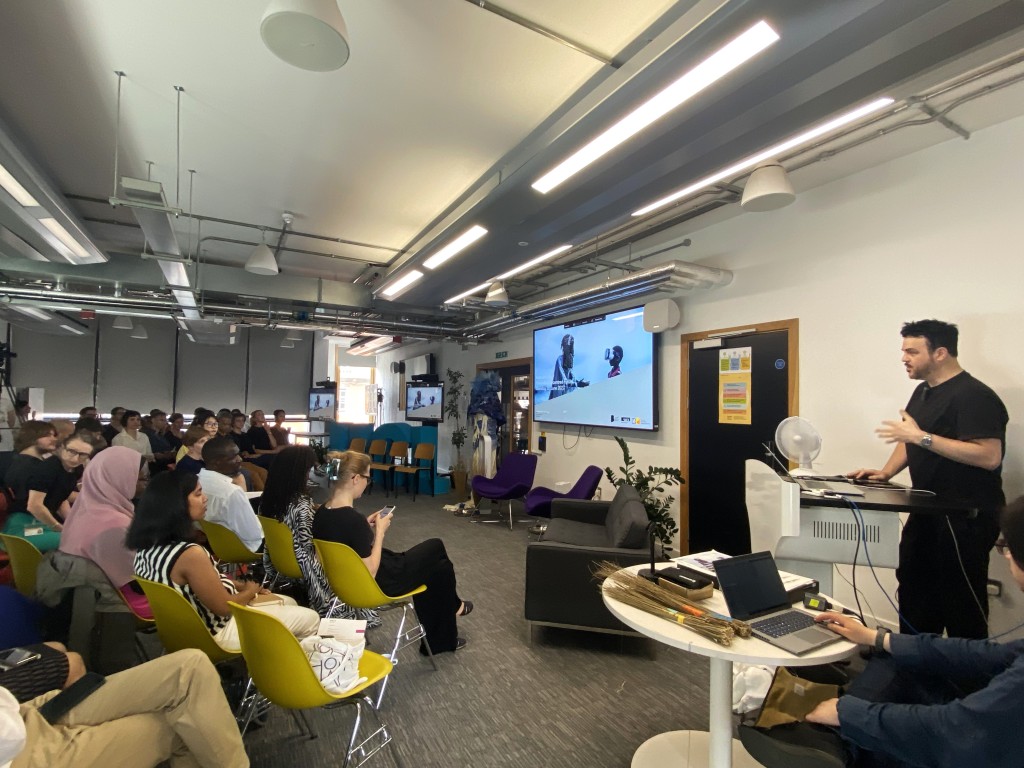
1. Image 1 by Edward Denison

2. Alistair Cartwright Presenting, by Edward Denison
The session concluded with talks from African heritage organizations, including the Direction du Patrimoine Culturel du Sénégal, Swahilipot Hub, and the University of Cape Town. They discussed existing and future initiatives for sustainable and inclusive heritage management on the continent. These included exhibitions, training workshops, public engagement tailored to different age groups and professions, and collaboration with local and global heritage partners.
Afterwards, a student-centered lunchtime activity with architect Sumayya Vally and BSA design tutor Jhono Bennett, explored referentiality in architectural research and practice through co-production and drawings based on the participants insights and experiences.

Image 3 by Adefola Toye
The remainder of the event was spent in conversations with notable speakers in the fields of architecture, art and curatorial practice.
Nana Ocran, founder and Editor of the People’s Stories Project, hosted discussions with multidisciplinary artists Christopher Samuel and Valerie Asiimwe Amani. They explained how their creative works use archives materials to create awareness about the underrepresentation of people with disabilities and colonial subjects.
Performers Peter Brathwaite and Kenneth Olumuyiwa Tharp examine ‘Rediscovering Black Portraiture’s use of domestic material culture to reimagine the historical image of black subjects as well as professional engagement with diverse art and culture foundations in the UK.
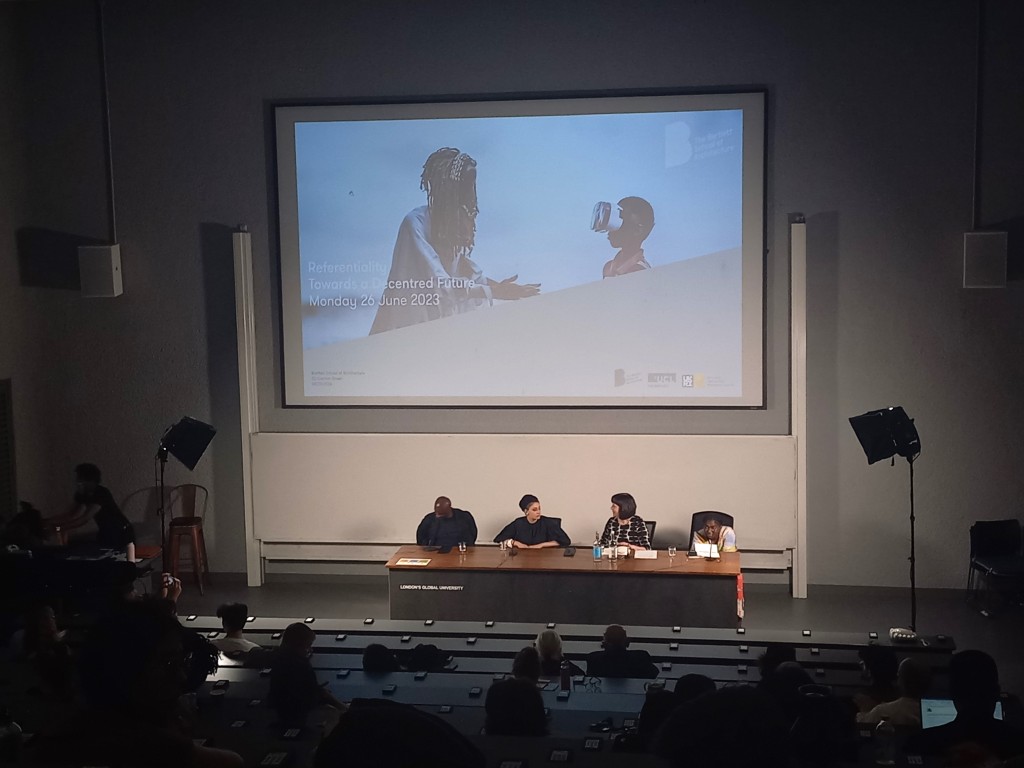
Image 4 by Adefola Toye
Architect, Sumayya Vally, and curator, Ekow Eshun also discussed the event’s theme in relation to their recent works: Asiat-Darse Project (Belgium) & the Islamic Arts Biennale (Saudi Arabia), and In the Black Fantastic (UK) & The Time is Always Now: Artists Reframe the Black Figure respectively.
Tofa Jaxx and guitarist Leon King closed the evening with a musical performance.
Adefolatomiwa.Toye@liverpool.ac.uk

 Transnational Architecture Group