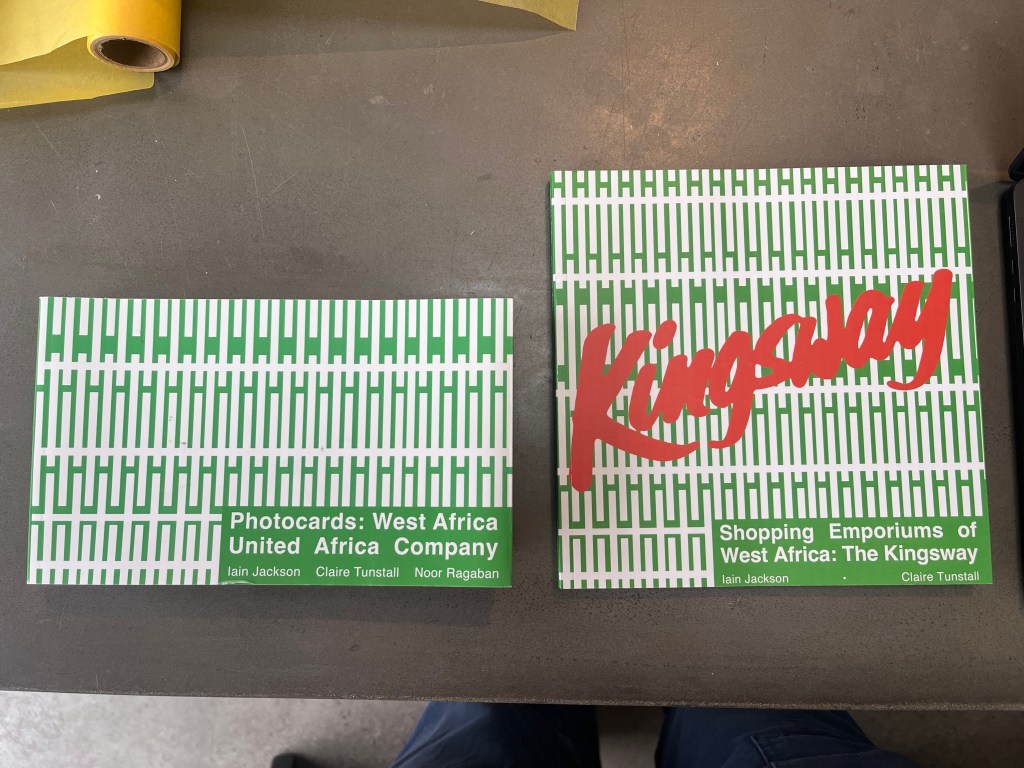
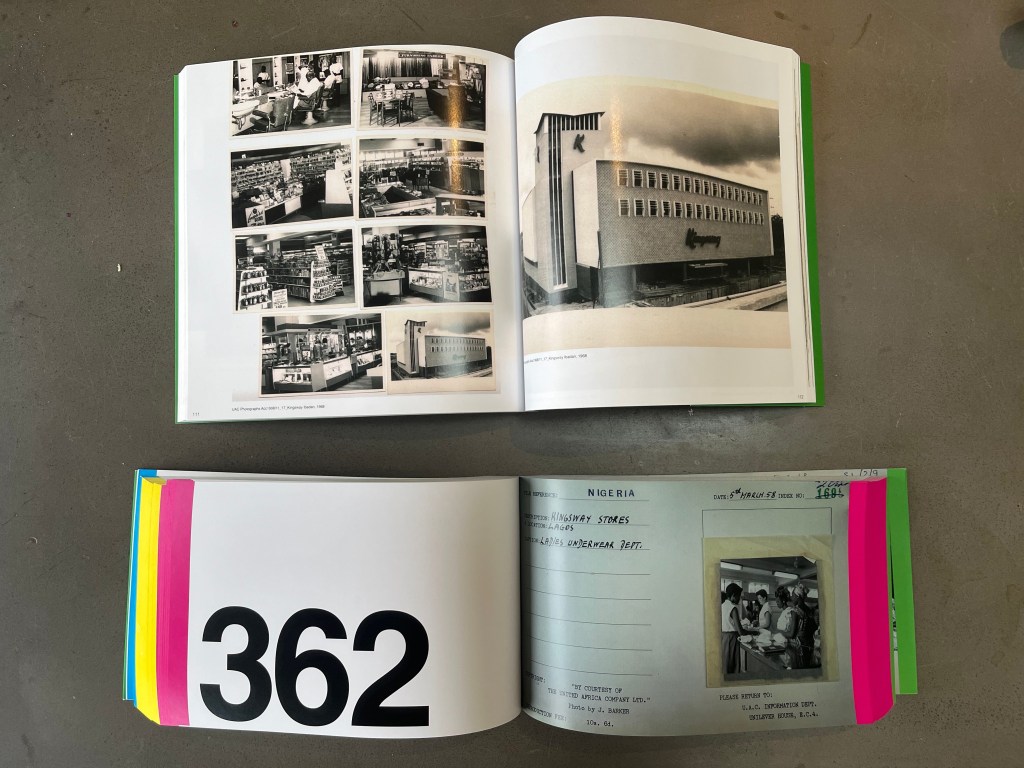
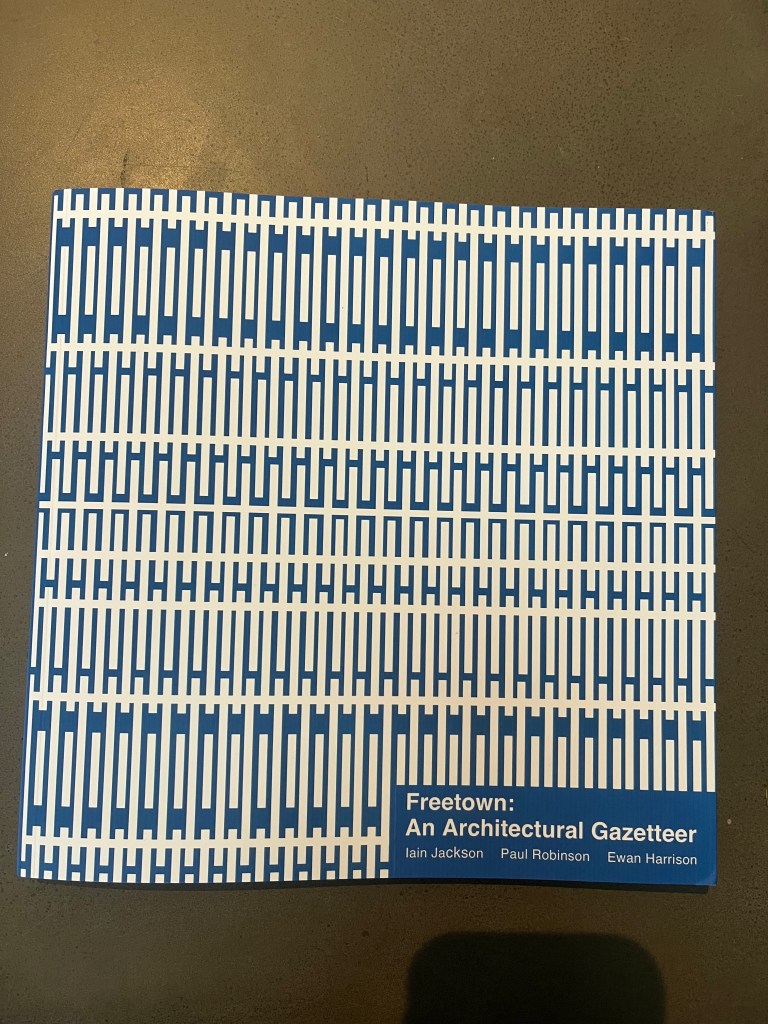
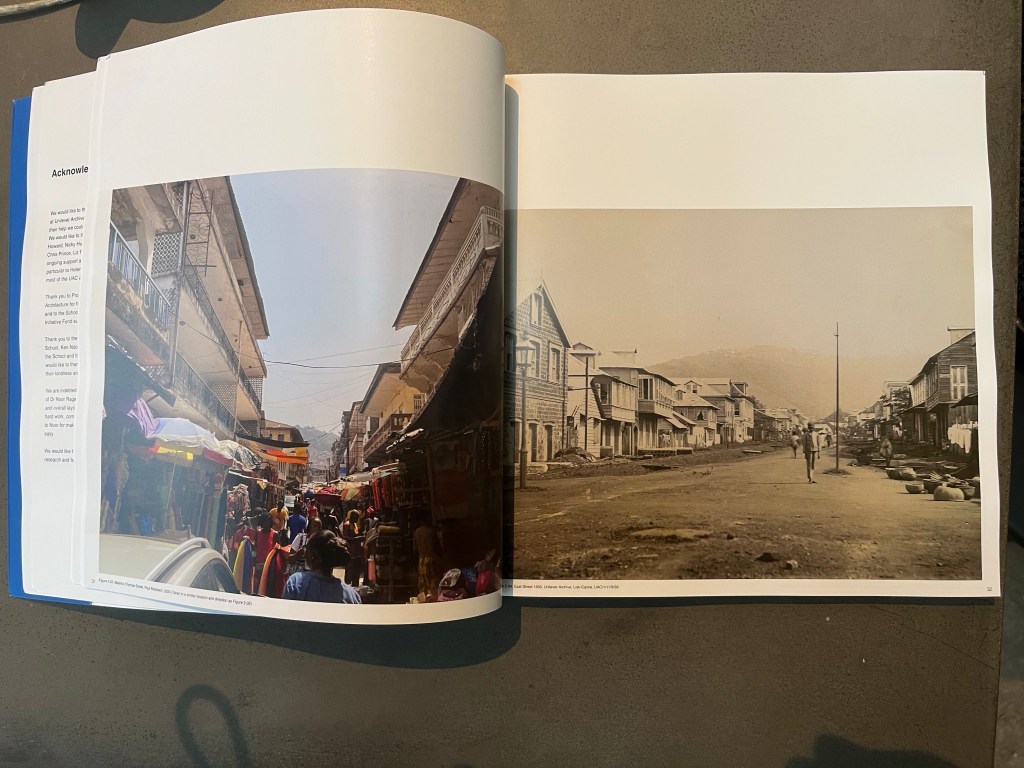
Our new monograph on the city of Freetown, Sierra Leone has (finally) been published – open access and you can download it here. It’s a major output stretching to 240 pages across a chunky 250x250mm format and is the third book in our series on sharing the archives of the United Africa Company. The other two books are on Kingsway Stores and The Photocard collection.
Photocard and Kingsway catalogue
Our approach in Freetown was to identify and write brief historical narratives on the city’s development using archival photographs mainly from the Unilever UAC collection, alongside recent photographs. Archival work took place at Unilever, Bodlean Library, UK National Archives, as well as at Fourah Bay in Freetown – and this informed our fieldwork and photography. The approach is a classic ‘before and after’ set of images with descriptions. There isn’t an architectural guide book or detailed study of Freetown and it’s architecture – which is quite shocking considering the quality of the work and the architects involved (including Nickson and Borys; Jame Cubitt; Ronald Ward and many others….)
Freetown An Architectural Gazetteer
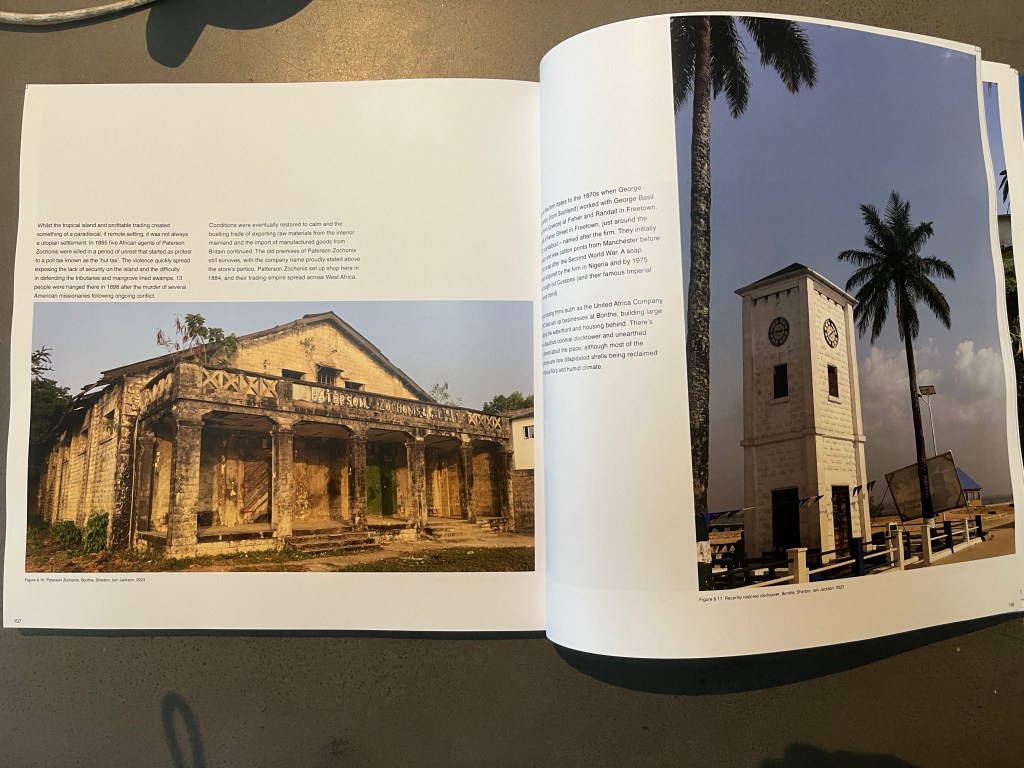
As well as covering the major buildings in the city we include an extended essay on Fourah Bay College, and a write up on Bonthe at Sherbro that we were fortunate to visit. We’re particularly proud of the Bonthe work – and there is certainly a lot more research to undertake into its history and architecture.
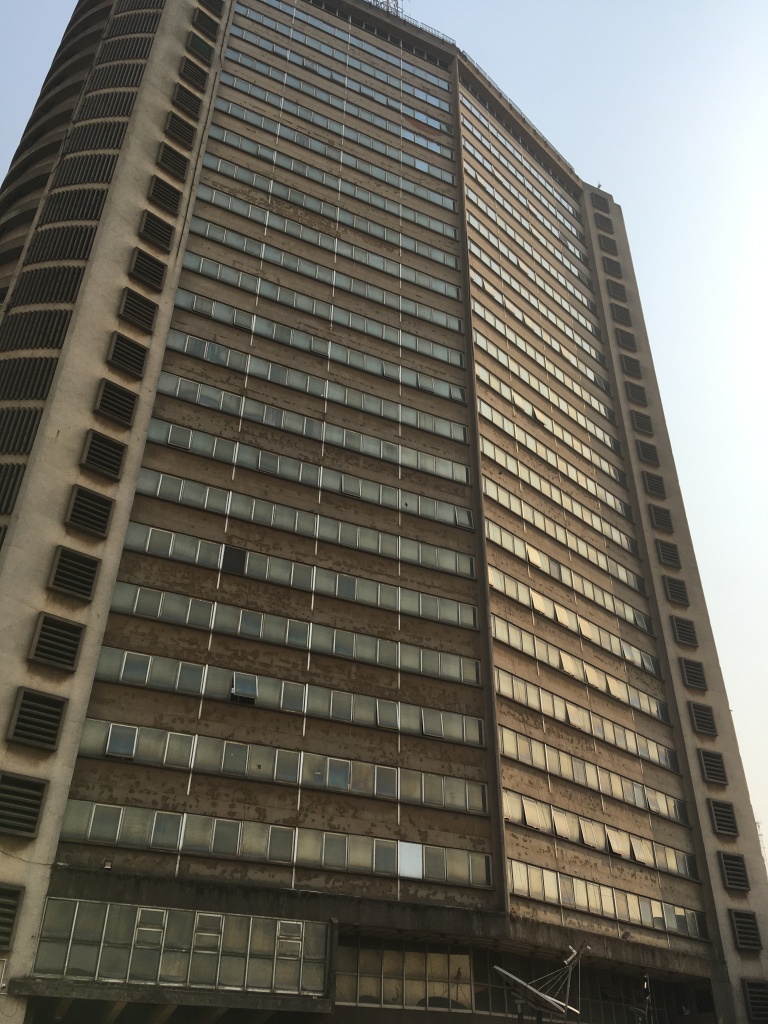
We searched various journals and articles from the time, and eventually came across a reference to a skyscraper shopping precinct project from 1960 in the journal Interbuild. Ola Uduku continued a different line of inquiry and traced the project down in West African Builder.…
The architects were listed as ‘The Plan Group (West Africa)’ – not a well-known practice or one that has featured heavily in existing literature and research, but it was a name that I’d certainly come across before.
I trawled through our old notes and archival references, and found a file on ‘The Plan Group’ from the archives in Fourah Bay, Sierra Leone (Box 661). It turns out that the Plan Group was a multidisciplinary practice/development agency established by Nickson and Borys. Their aim was to provide an integrated design service, with particularly attention given to cost control and engineering, as well as mitigating risk for the client on large complex design projects.
In a letter sent to the Sierra Leonian government from 1960, Borys set out his vision for the practice, including listing the projects they were already working on, such as a 20 storey block in Lagos, the Ibadan project mentioned above, and a township near Lagos for 35,000 people – were these other Nigerian projects completed? And if so, where/what are they?
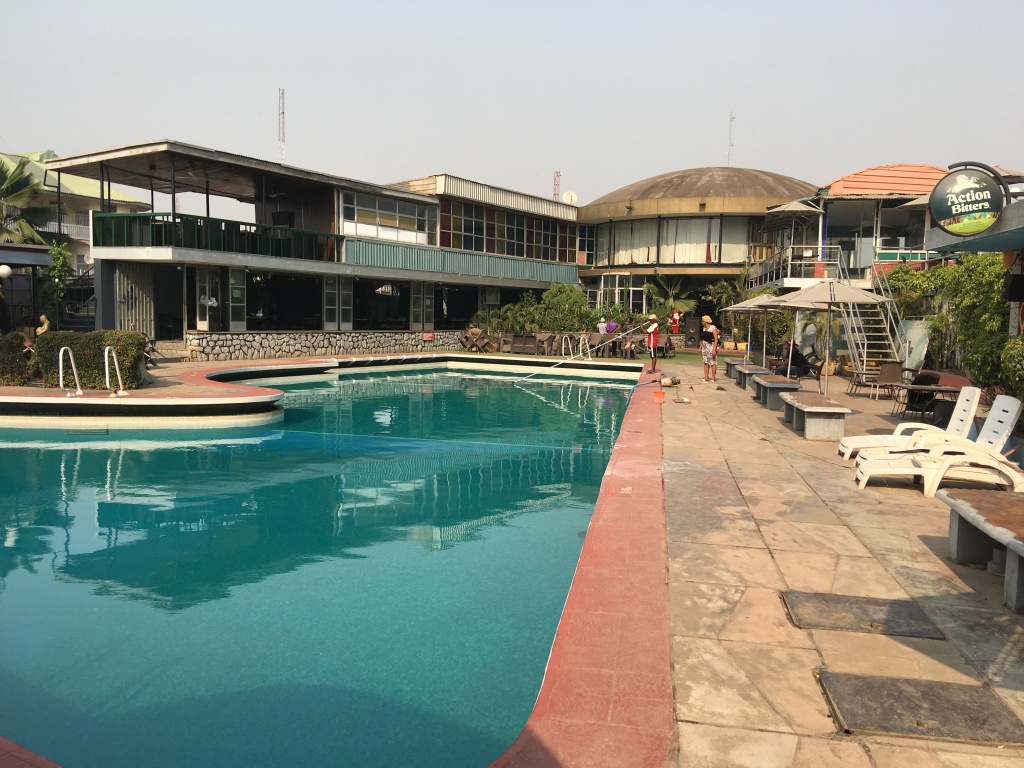
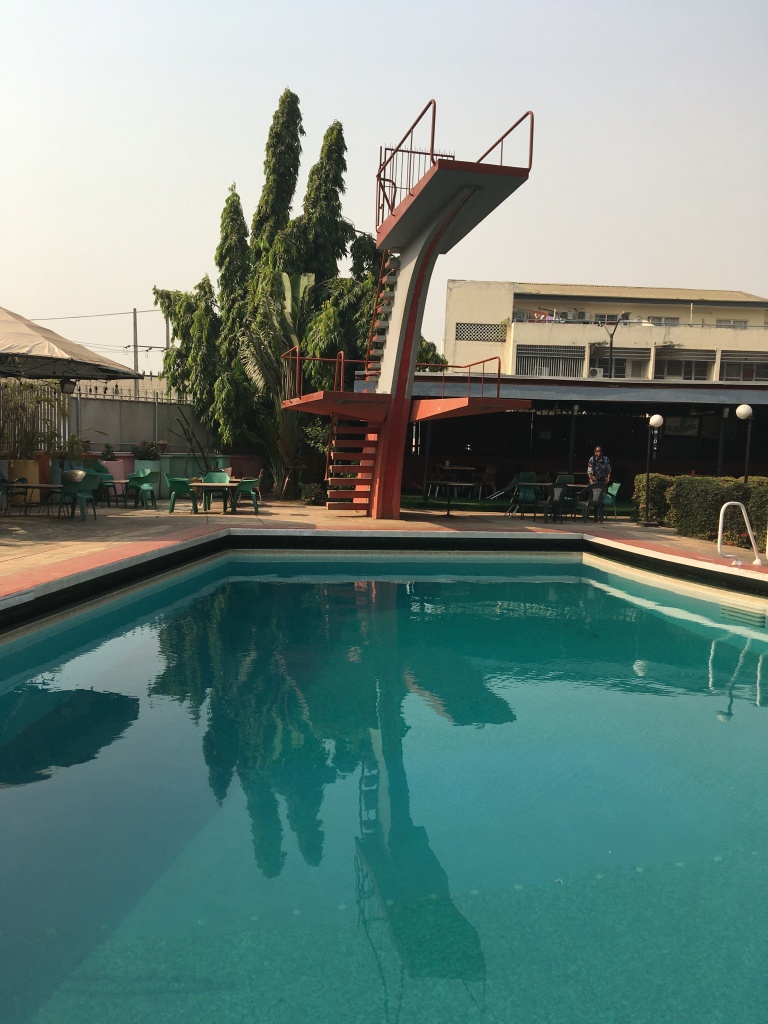
The Ibadan project was a multipurpose and speculative venture, aimed at providing office space as well as leisure facilities through the nightclub, swimming pool and cinema complex. There was also a large department store as part of the scheme. This wasn’t a Kingsway Store, so could it have been a competing UTC or A G Leventis?
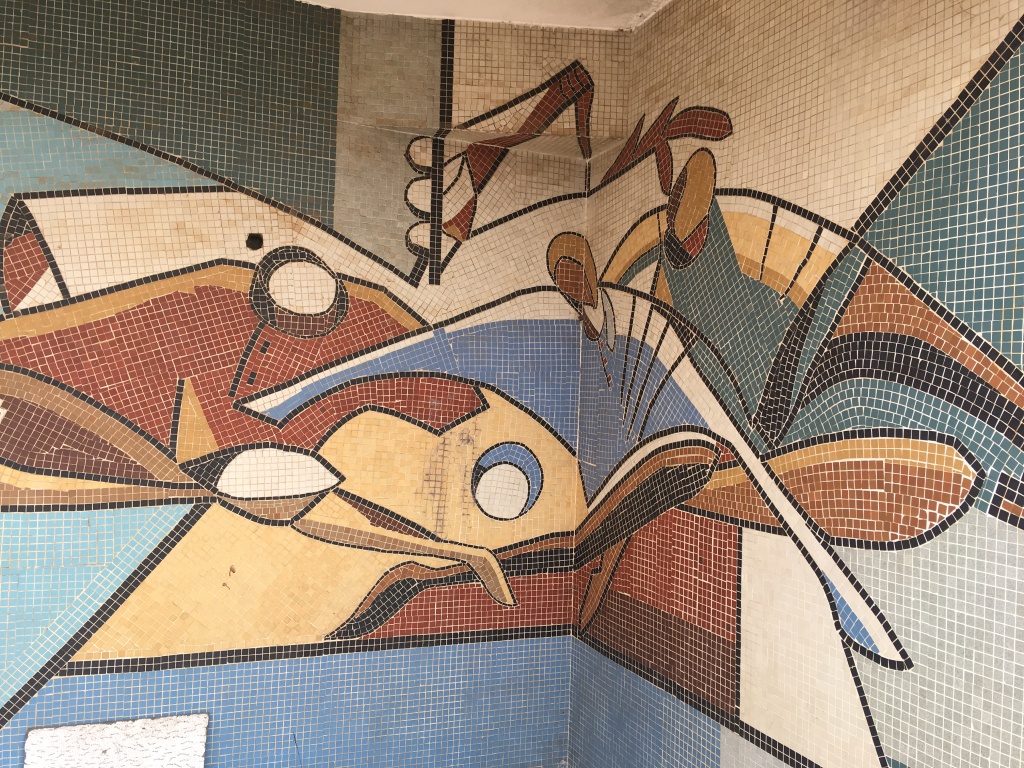
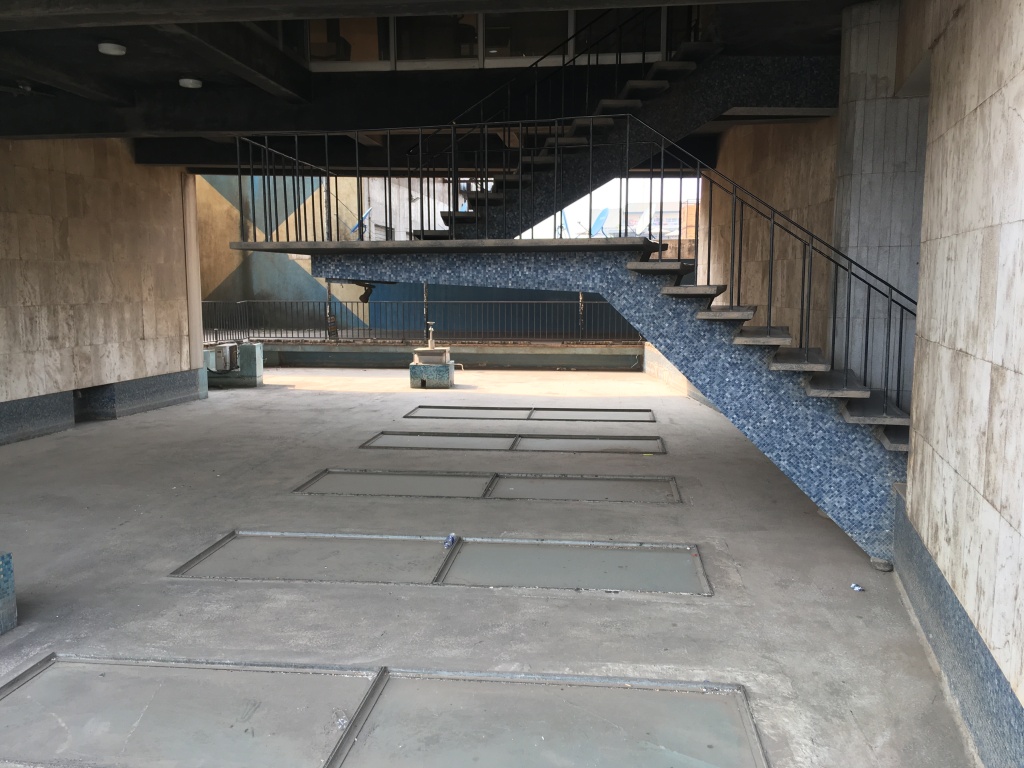
As well as the Cocoadome having mosaic decoration, Cocoa House roof garden also has some really special mosaic work clearly executed by a talented artist, but now hidden away from public view. If you visit the building be sure to venture to the top floor to spend an hour in the museum, and as to see the mosaic work and views out across the city.
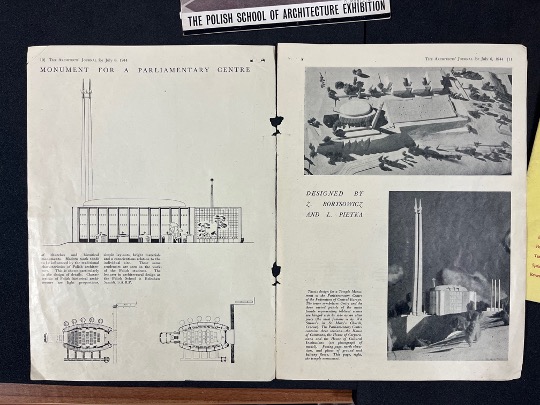
We’ve learned a lot about Nickson and Borys over the last 18 months – firstly finding out exactly who Borys is (Zdzisław Borysowicz), and that he studied at the Liverpool School of Architecture Polish School during WW2. We’d like to write a full biography on him and the practice. We’ve visited a number of his works in Sierra Leone, and now the Cocoa Project in Ibadan, and the intriguing references to Lagos too. Whilst the bulk of his practice was in the tropics he also worked in the Falkland Islands – so was clearly part of the colonial architectural infrastructure.
Here’s one of his student projects published in the The Architects’ Journal from 1944
Readers of the transnational architecture blog may already be familiar with the work of Nickson & Borys. The practice had a large presence in anglophone West Africa in the mid-20th century, especially in Accra, where it completed several high-profile public buildings, and in Lagos, where it designed numerous commercial buildings from the 1950s to the 1990s. Although much remains uncertain about the practice, their work in those two cities have received critical attention, with the practice’s central library complex in Accra, for example, justly celebrated in the Getty’s ‘Keeping it Modern‘ programme. Less well known is the practice’s work in Sierra Leone, despite the fact the practice operated an office in Freetown and designed numerous high-profile buildings there in the 1950s and 1960s.
Perspective Sketch of Lungi Airport, Freetown: by Nickson and Borys
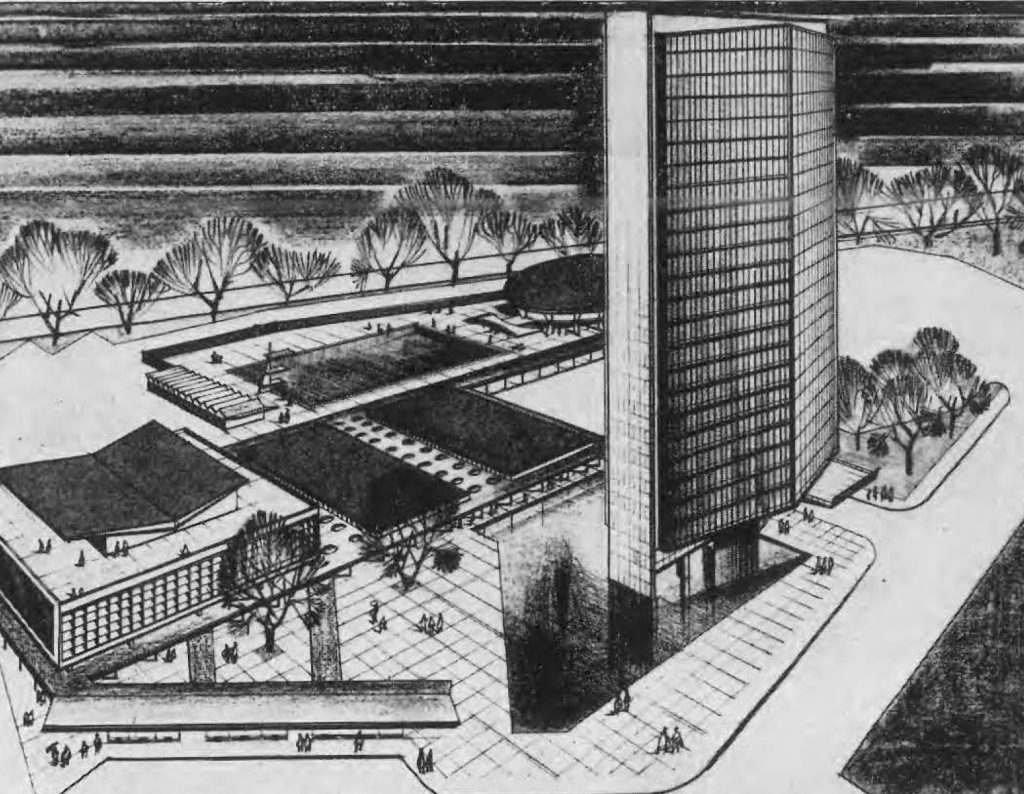
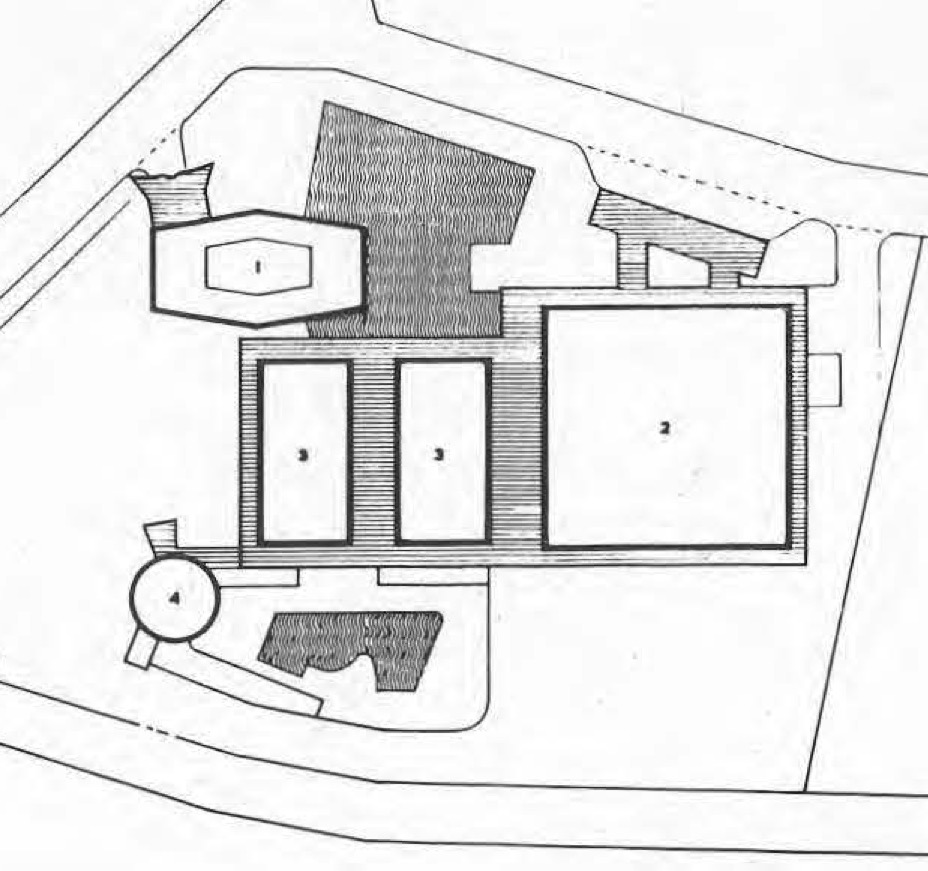
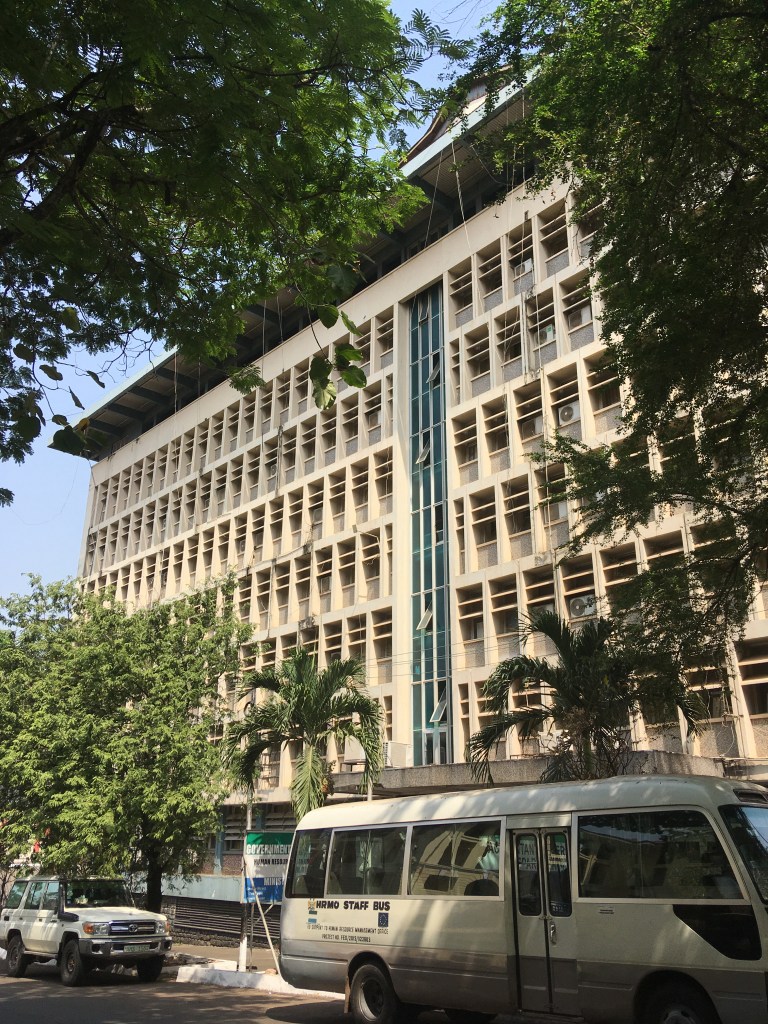
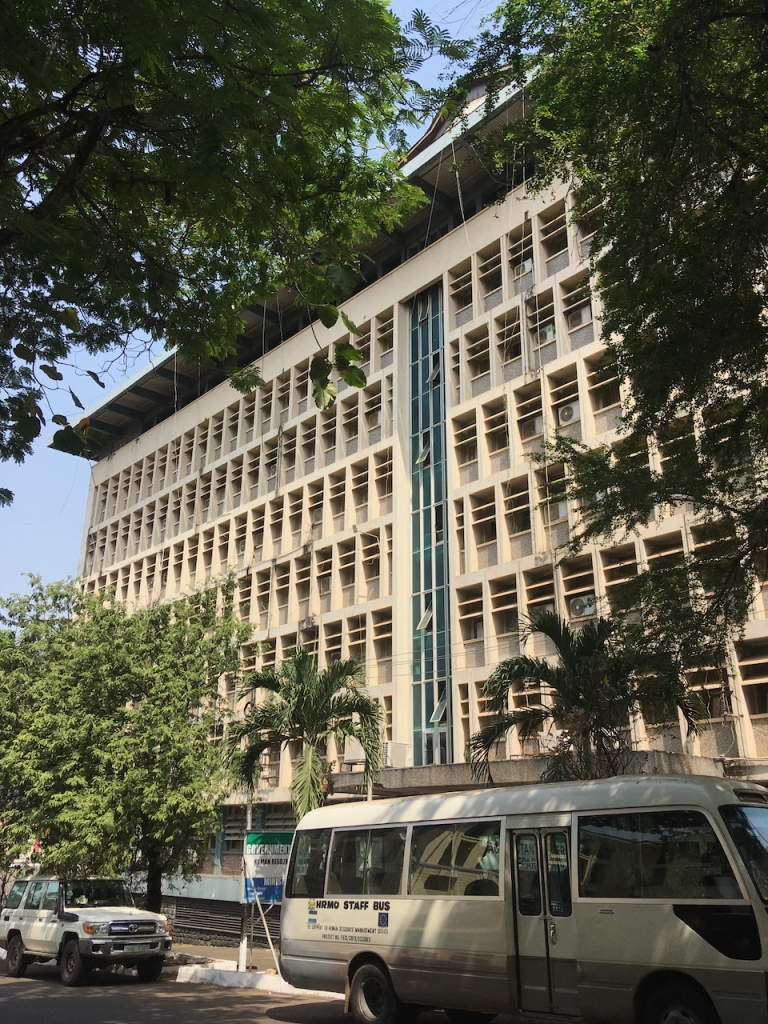
Our trip to Sierra Leone in fact began with a Nickson & Borys building – Lungi International Airport was completed to designs by the practice in c1960 and, although built to slightly different designs to those illustrated, is little altered today. Sadly, the same cannot be said for the practice’s largest commission in the city – the Townhall and Municipal Offices. Completed for Freetown City Council on a suitably prominent site in the centre of the city’s historic grid of streets that run parallel to one another down a steep slope to the sea wall. This was laid out in the 1790s and the timber and stone houses and chapels built by the City’s Krio elite in the early years of its development can still be found dotted amongst later commercial and public buildings. A perspective view of Nickson & Borys’ offices for the municipality published in 1962 show an elegant tower and podium arrangement of blocks: the main tower had a slightly kinked façade with windows protected by vertical brise-soleil, whilst the podium block is enlivened with patterned concrete screens – here Nickson & Borys applied the quintessential features of tropical modernism to the office tower typology. Not a trace of this survives in the new Freetown City Council offices built in 2018 on the same site – a 14 storey tower designed by the South Korean Overseas Development Fund, with facades clad in chlorine-blue glass.
West African Builder and Architect: Nickson and Borys perspective drawings for GPO and Municipal OfficesMunicipal Offices, FreetownGPO, Freetown
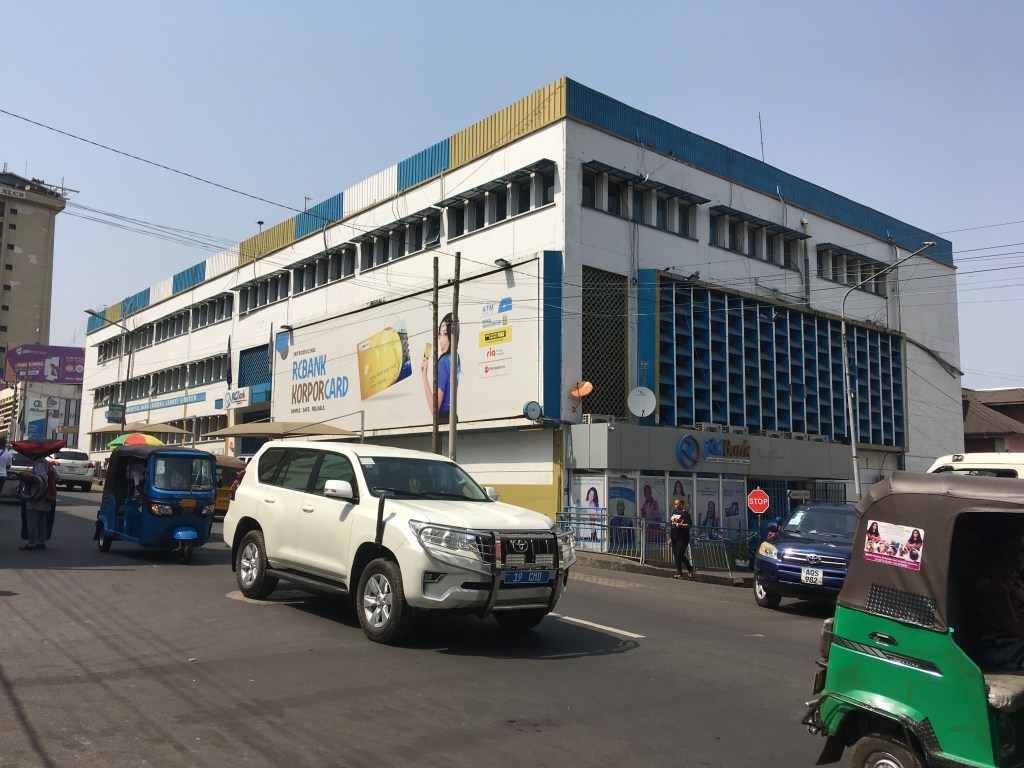
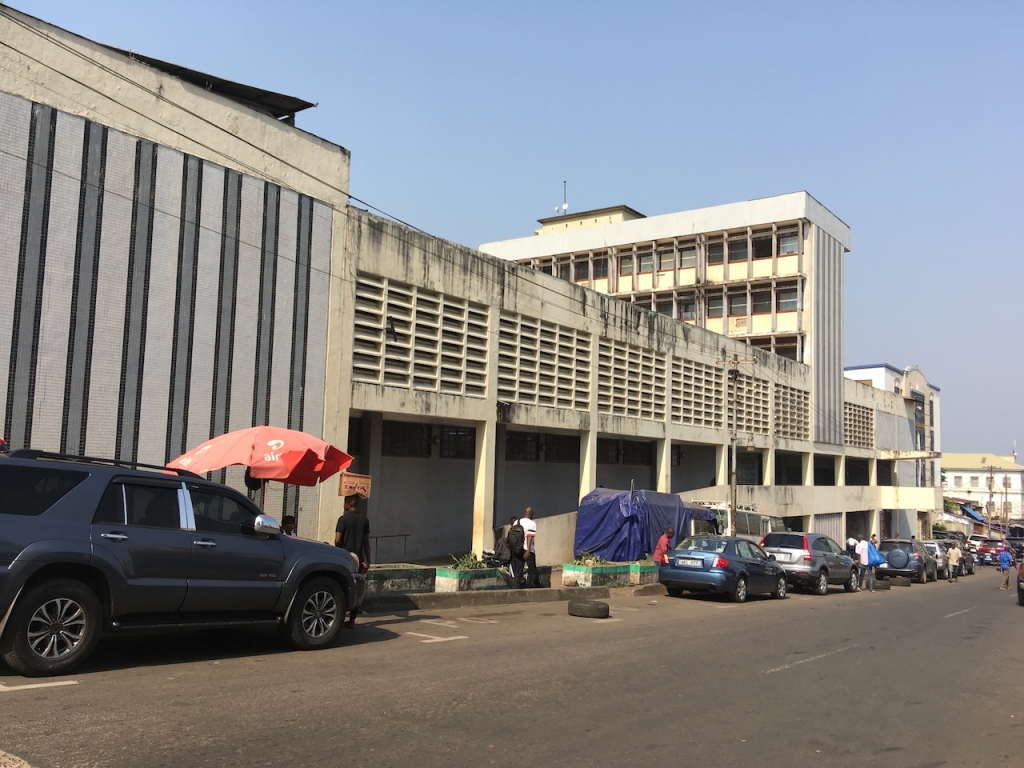
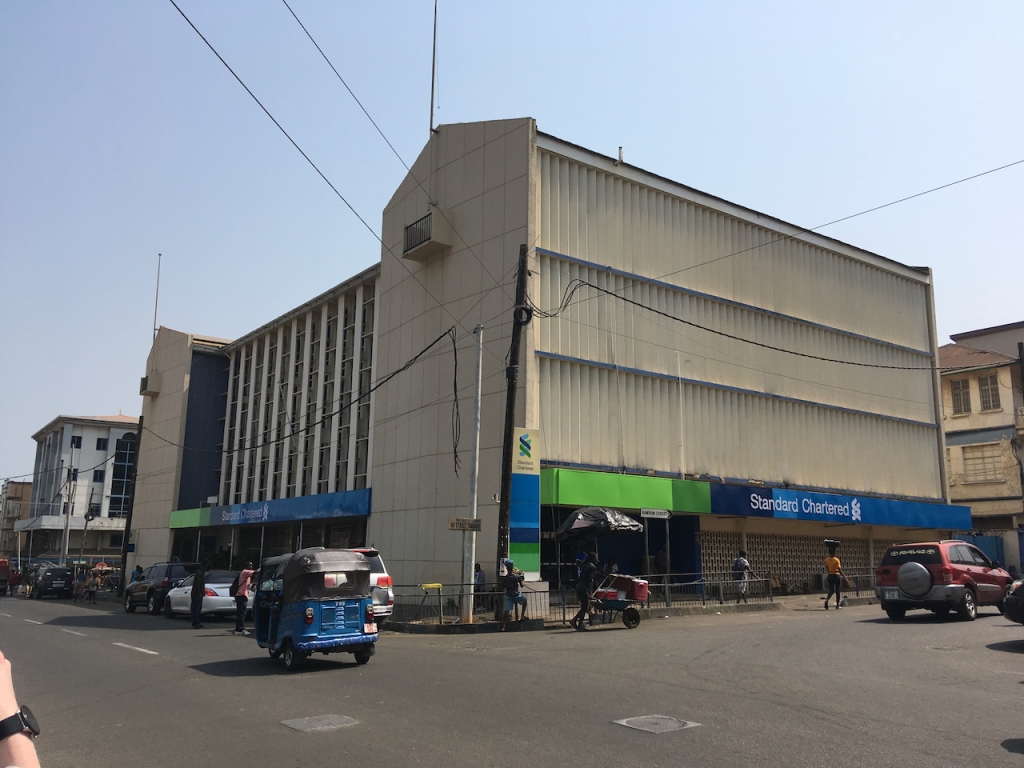
Better preserved, and also showing Nickson & Borys’ characteristic utilisation of brise-soliel and concrete screens, is the city’s former Barclays Branch. Barclays was the largest bank operating in British colonised Africa, its pillared and pedimented branches often stood in city centre sites adjacent to the government offices. Barclays greeted decolonisation by commissioning prominent new modernist branches, signalling its commitment to servicing (and profiting from) markets in newly independent countries. The Freetown Branch is perhaps the most architecturally accomplished of these. The building extends through the breadth of one city block on a central avenue in the historic grid, Siaka Stevens Street. Its long façade is broken by window embrasures protected by in-set concrete screens or applied lengths of brise-soleil, adding a geometric richness to an otherwise simple building. The practice’s lively approach to pattern-making, seen at the Accra Library Complex, is here shown to its fullest extent.
Former Barclays DCO Branch in Freetown, designed by Nickson and Borys
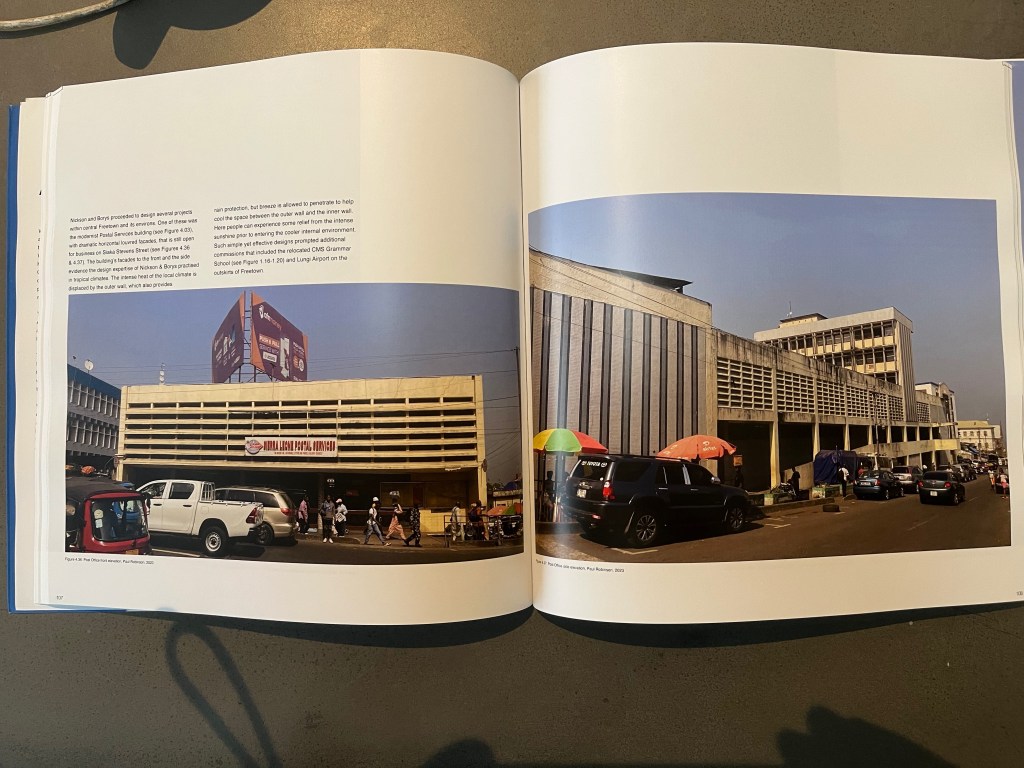
In 1965 Nickson & Borys unveiled plans to redevelop much of Freetown’s historic grid as a mega-structural development of new offices and hotel towers, rising from a podium of shopping facilities. Whilst this Plan Voisin for Freetown was destined to remain unexecuted, a flavour of what the practice proposed for the city is encapsulated in an executed large-scale development designed by the practice that stretches the length of steeply sloping Gloucester Street. Built for the Sierra Leone General Post Office, the complex included Freetown’s main public post office, the headquarters of the Post Office Savings Bank, a telephone exchange and a sorting office all of which are externally expressed. The slope in the site and the differing functions were utilised by the practice to form a highly sophisticated and very urban composition.
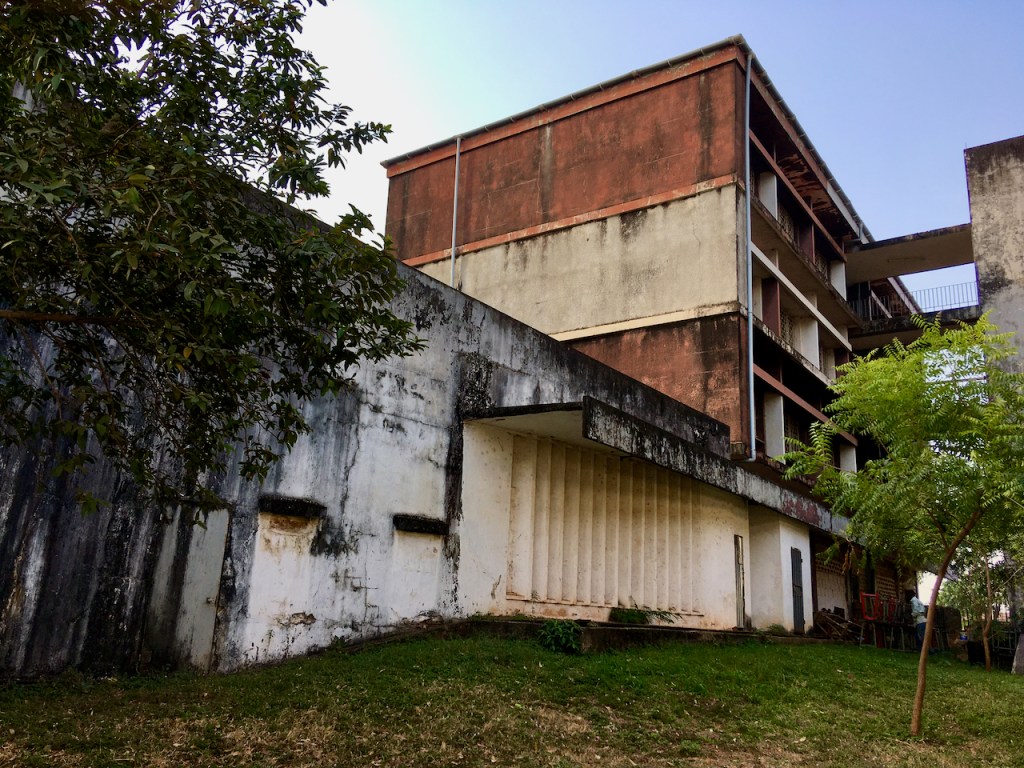
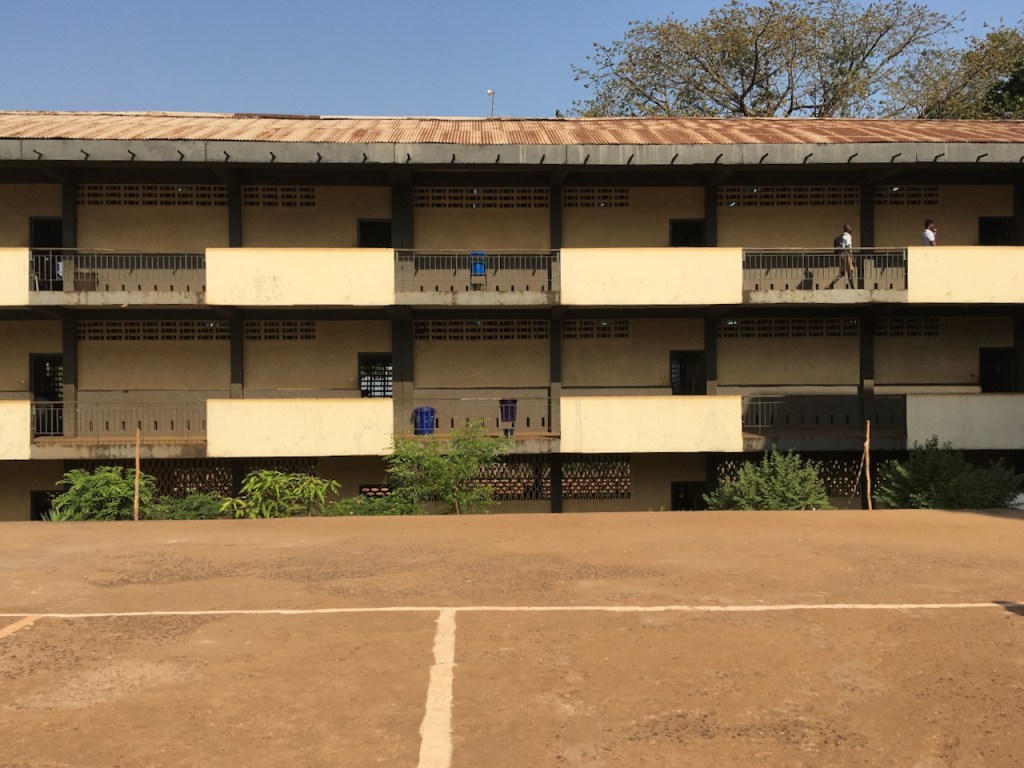
A similar impulse can be detected in the final Nickson & Borys commission we visited: the Sierra Leone Grammar School at Murray Town. Built as the new premises of a venerable Freetown institution – the first Grammar School was opened in the city by the Church Missionary Society in 1845 – the commission came to the practice through Borys’ role as the consultant architect to the Sierra Leone Ministry of Education in c1960 when the school had moved to a sloping greenfield site on the edge of the city. Here Nickson & Borys arranged the school accommodation in a dense composition of three staggered blocks linked to one another across the contour of the site’s ridgeline. Each of the blocks was given a differing façade treatment: the administration block was articulated with deeply set vertical brise-soleil; whilst the classroom blocks feature geometric pierced concrete screen walls. The three blocks were linked by external staircases and walkways, characteristically these are approached as another opportunity for rich pattern making with the staircase and balcony rails articulated into alternating blocks of solid and void. These open circulation spaces perhaps owe something to Fry and Drew’s famous schools in Ghana, but the compact – almost megastrucutral – arrangement of the blocks is far removed from Fry and Drew’s formal axial schemas. Similarly, the modelling of the concrete forms was rather heavier than was usual in Fry and Drew’s schools – perhaps testament to the care and skill of the school’s contractor, Taylor Woodrow Sierra Leone.
Sierra Leone Grammar School, by Nickson and Borys, circulation and science labsSierra Leone Grammar School, by Nickson and Borys: Assembly Hall with science labs Sierra Leone Grammar School, by Nickson and Borys: staircaseSierra Leone Grammar School, by Nickson and Borys
Towards the end of our visit to the Grammar School we were shown the assembly hall. A rather modest space internally, externally the assembly hall is vibrantly expressed through a fan-shaped extrusion that terminates in an expressively kinked end-wall, with heavily modelled vertical openings cast in concrete. Both the plan form and detailing was strongly reminiscent of the George Padmore Memorial Library in Accra – a fan-shaped block with kinked end walls that bore thickly moulded concrete rainwater goods. In my last post for the Transnational Architecture Blog I had thought Nickson & Borys were unlikely to be the George Padmore’s designers: now, having seen the practice’s treatment of the Sierra Leone Grammar School’s assembly hall, I am far less sure…
As part of our project to research the architecture of the United Africa Company (UAC) we’re visiting Freetown in Sierra Leone.
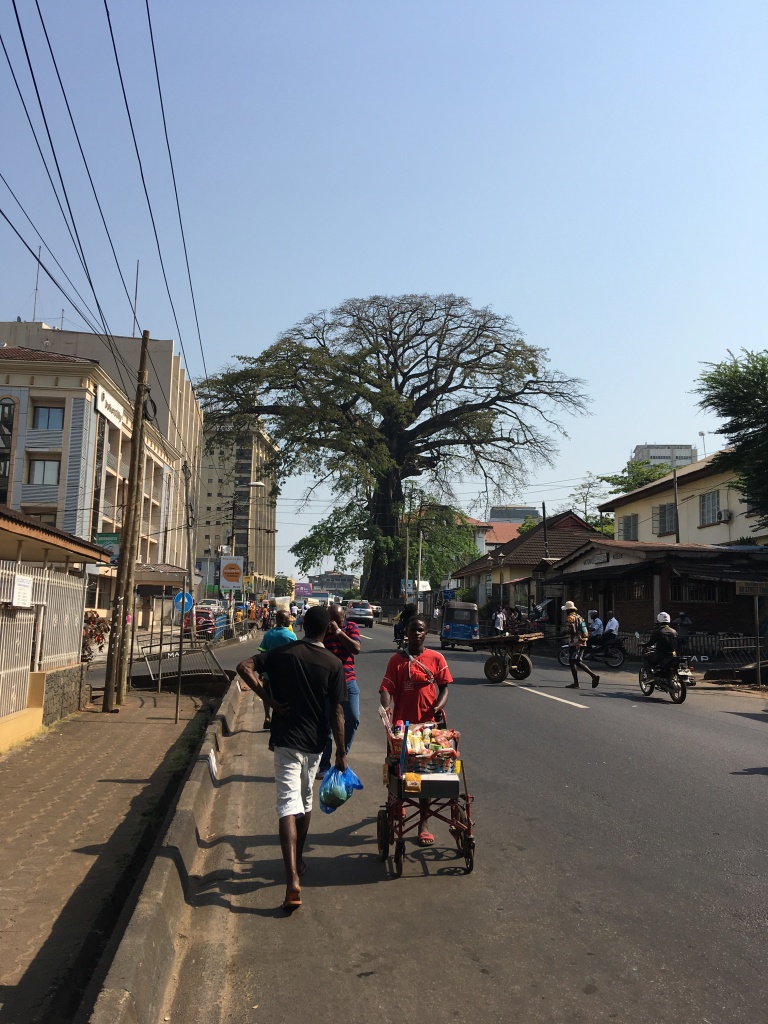
We spent the first day looking around the commercial business area wrapped around the giant cotton tree. The city grid was set out by the Sierra Leone Company surveyors in the 1790s and its wide streets and blocks are largely intact. Interspersed among the commercial properties are churches, houses, and schools, some dating back to the 19th Century.
The Cotton Tree, central Freetown
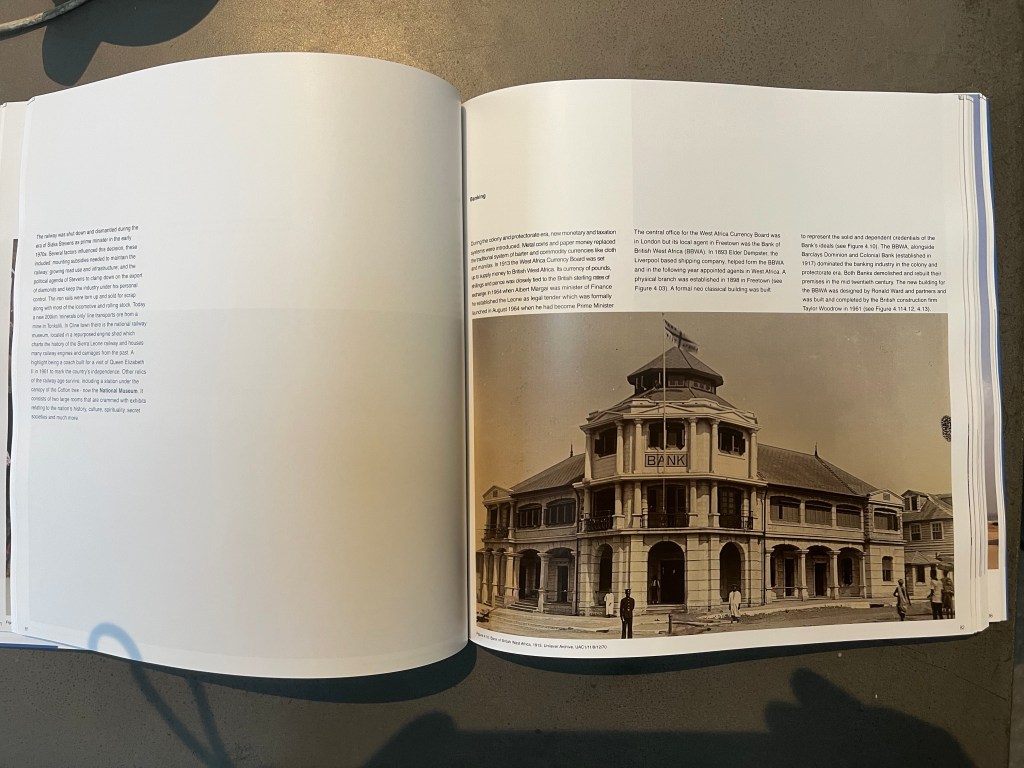
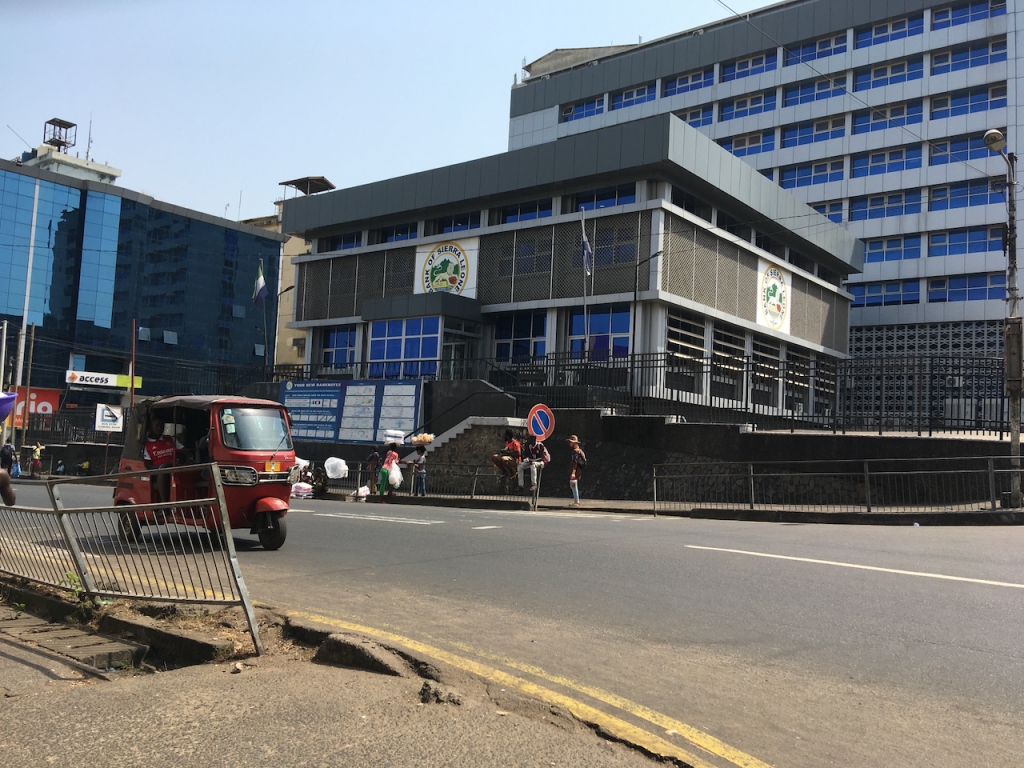
Adjacent to the Cotton Tree are the municipal offices, post office and former telephone exchange, and the major bank branches. Nickson and Borys designed a major branch for Barclays DCO and Ronald Ward for British Bank of West Africa (more on these by Ewan Harrison shortly). The Sierra Leone Central Bank is also located here – now refurbished and with its concrete mural sadly covered over with signage (designed by Ministry of Works in 1964).
GPO and Telephone Exchange, Nickson and BorysMunicipal Offices, Nickson and BorysBank of British West Africa, Ronald WardBank of Sierra Leone, Ministry of WorksBarclays DCO Bank, Nickson and Borys
Further downhill, towards the old railway station and harbour, are the major merchant stores and retailers.
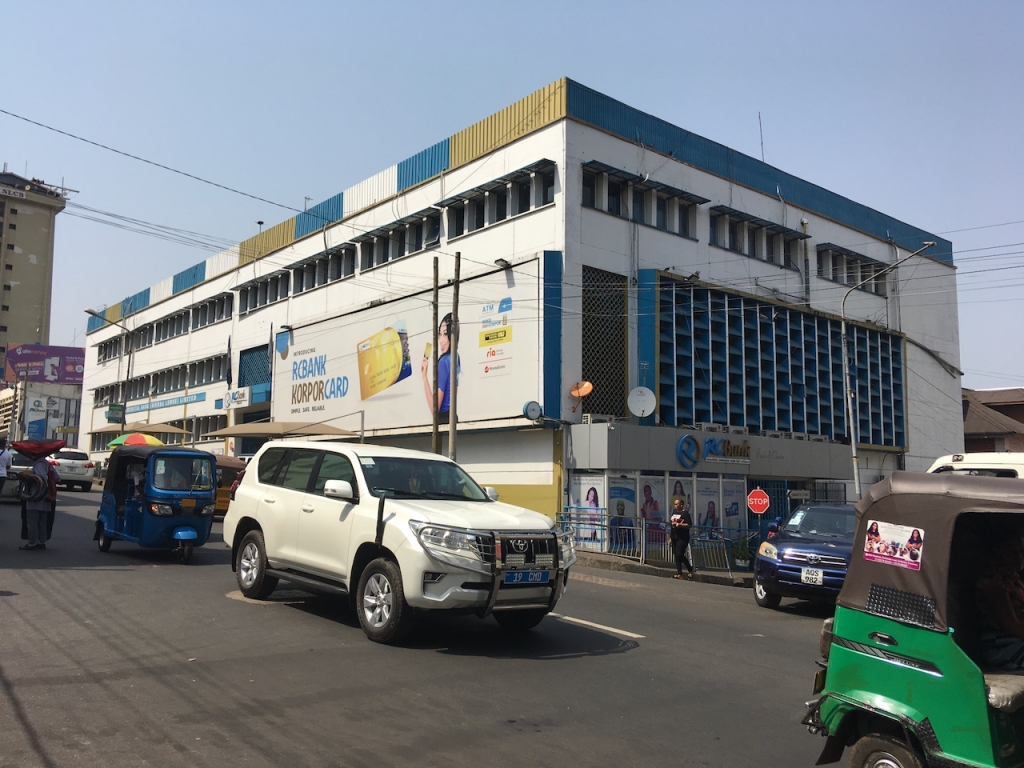
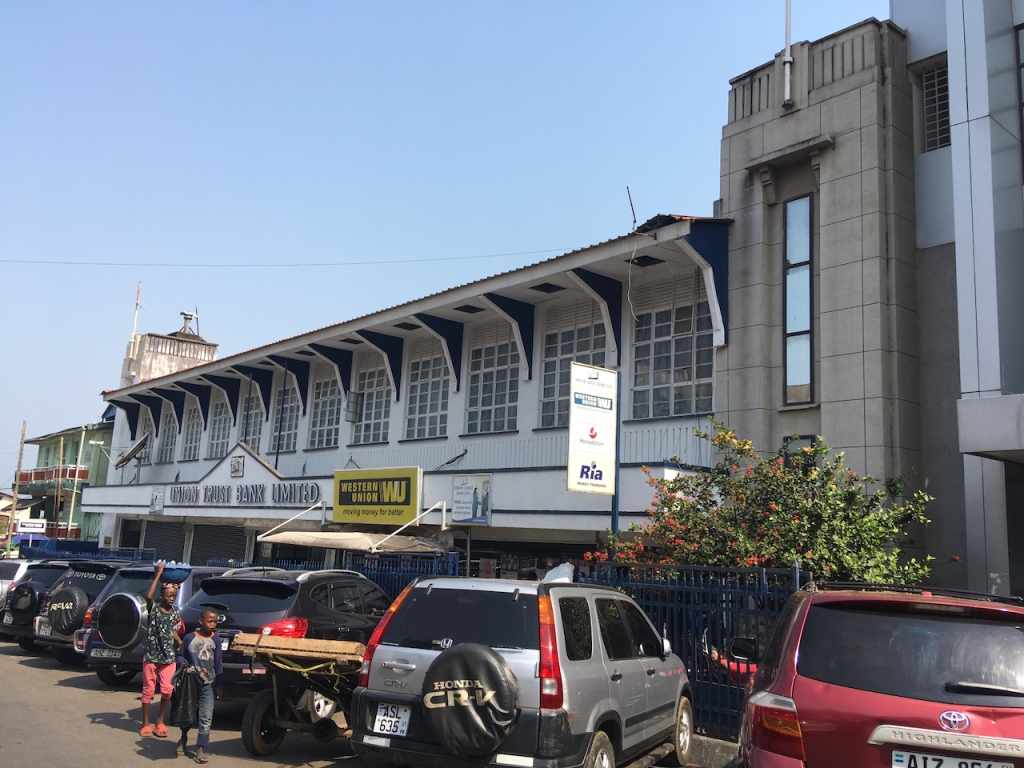
We visited the old Kingsway Stores – now a bank – but still with its deco-inspired flourishes at each end of the facade. The CFAO is still clearly recognisable, and several other stores display strong characteristics of GB Ollivant and Leventis properties we’ve seen elsewhere in Western Africa.
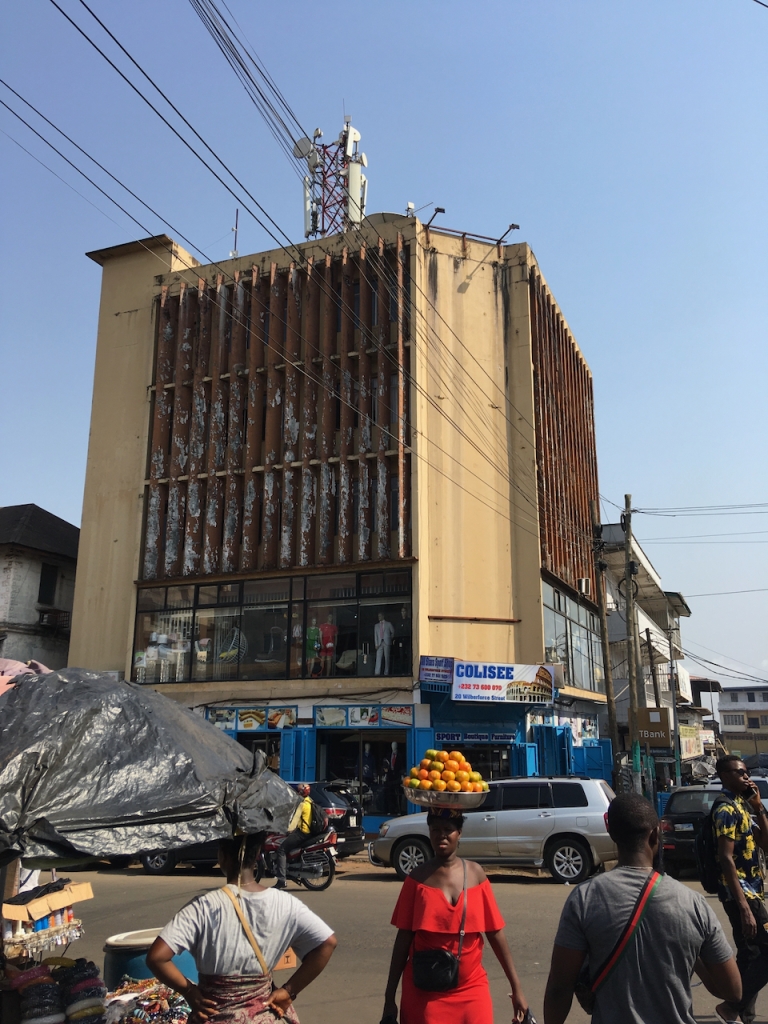
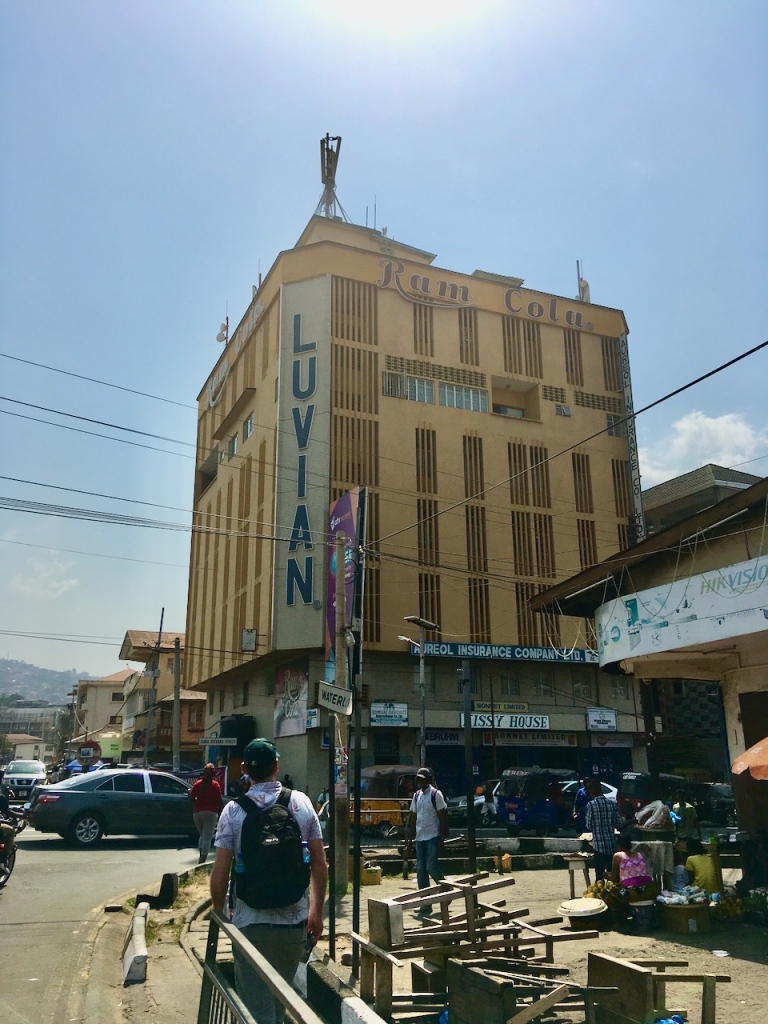
Former Kingsway Department StoreRetail: architect unknownLuvian Building, architect unknownFormer CFAO Building
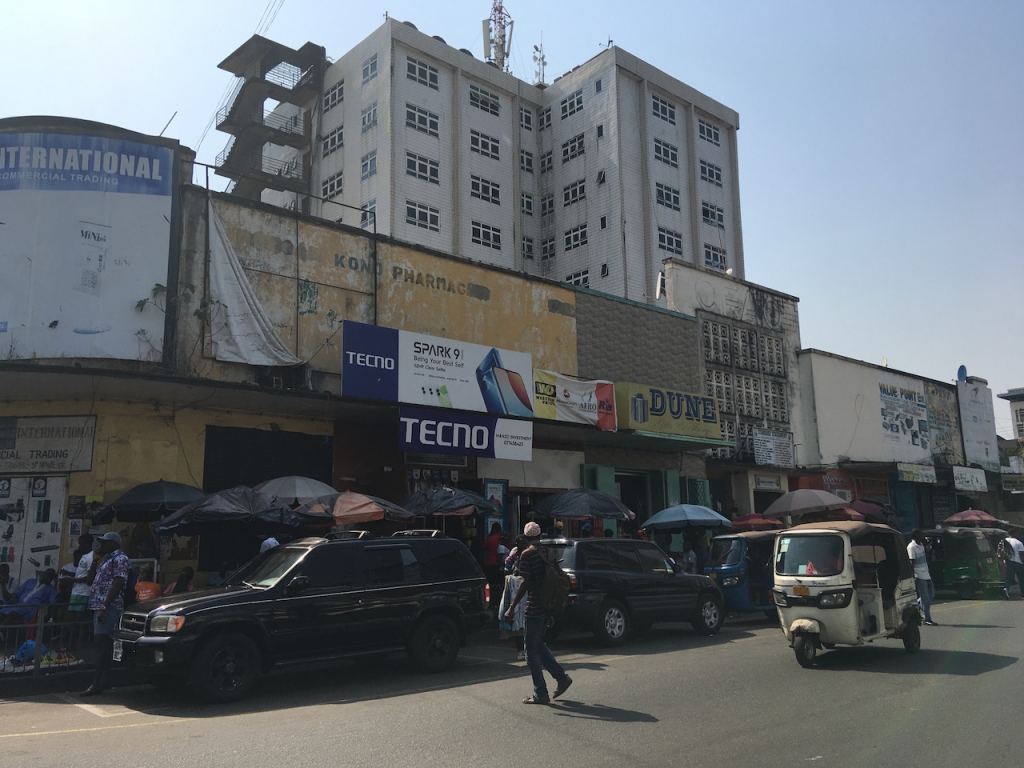
Heading further eastwards beyond the older city grid is ‘PZ Roundabout’ named after trading company Patterson Zochonis. Here the formality of the central business area gives way to more lively street markets and less formal city planning.
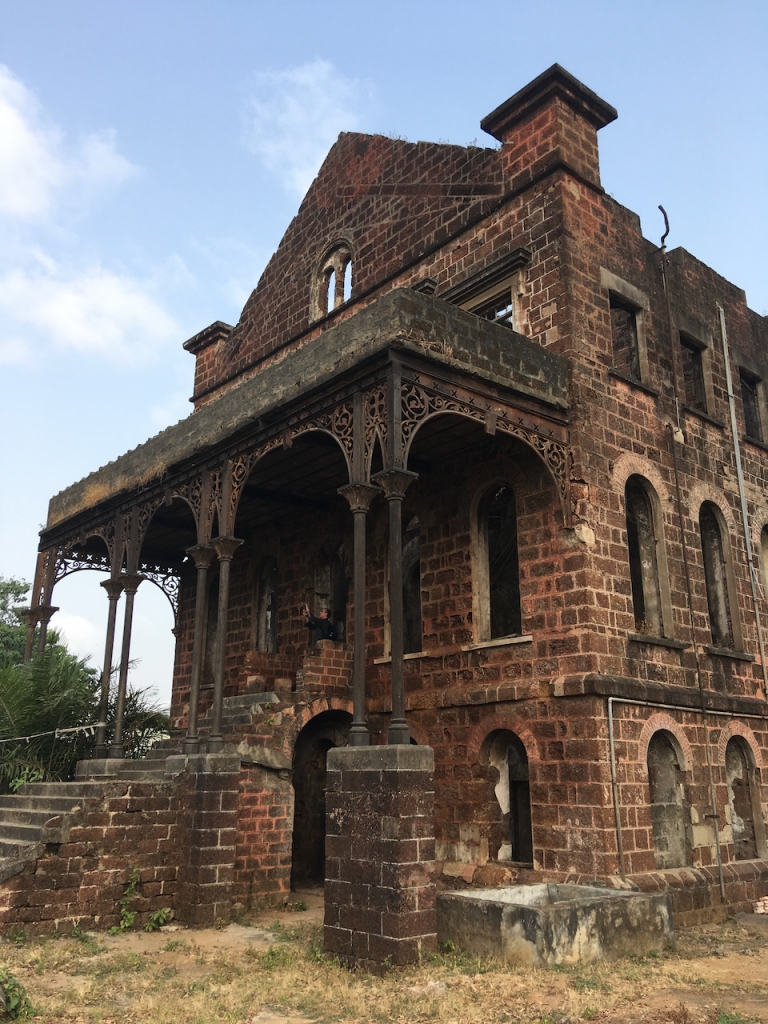
Further along Fourah Bay Road is the old Fourah Bay College building. The College was founded in 1827 in association with Durham University and was the first western style educational establishment in West Africa. It was mainly focused on missionary training. The delicate front verandah is formed with steel members bolted together and the ruinous state of the building has further exposed the steel structure inside. The beams were made by Glengarnock Iron and Steel Co in Ayrshire, Scotland and shipped out to Sierra Leone during the construction of the college building in the 1840s.
Old Fourah Bay College, founded in 1827, with construction starting in 1845, work supervised by Rev Edward Jones.
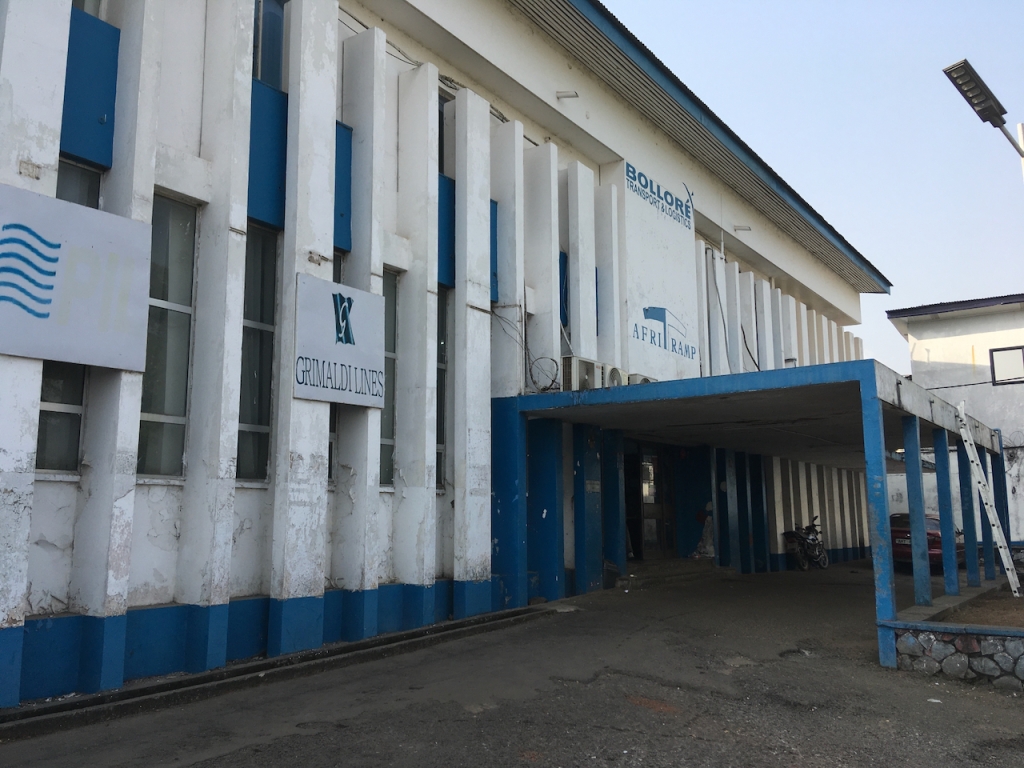
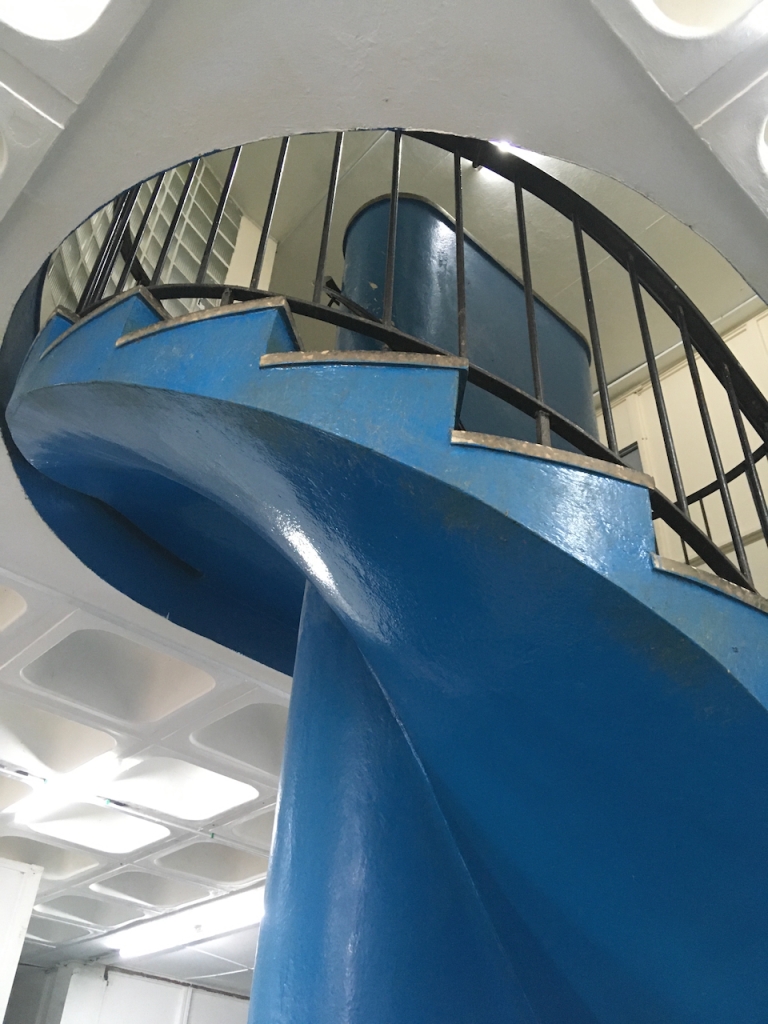
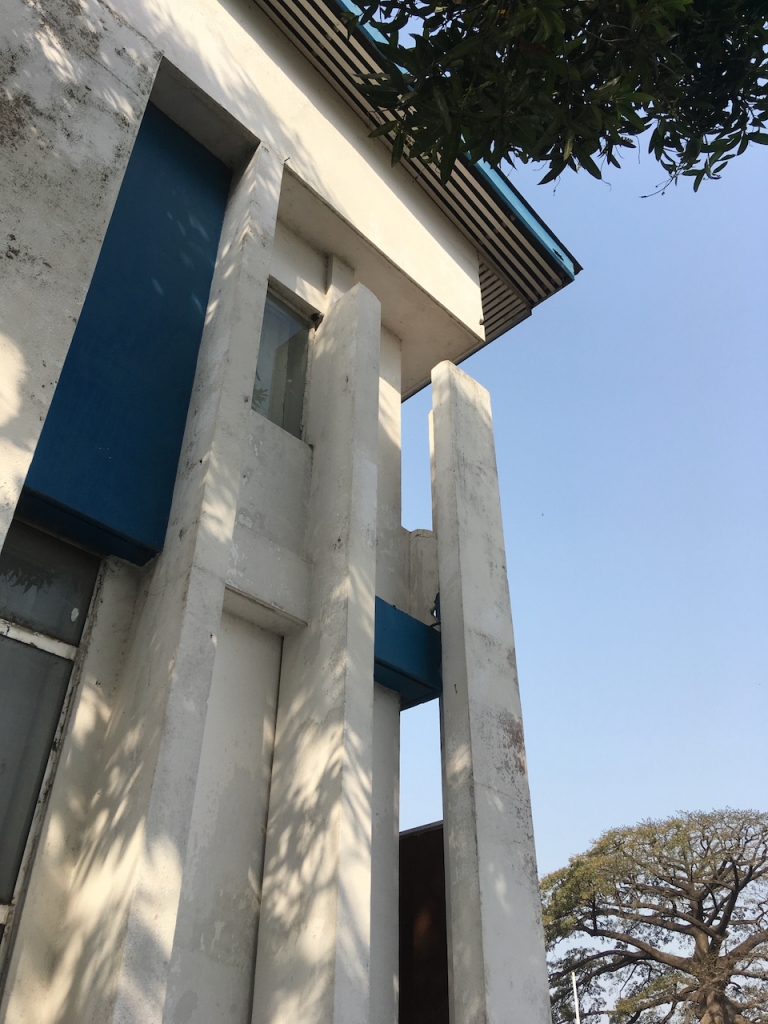
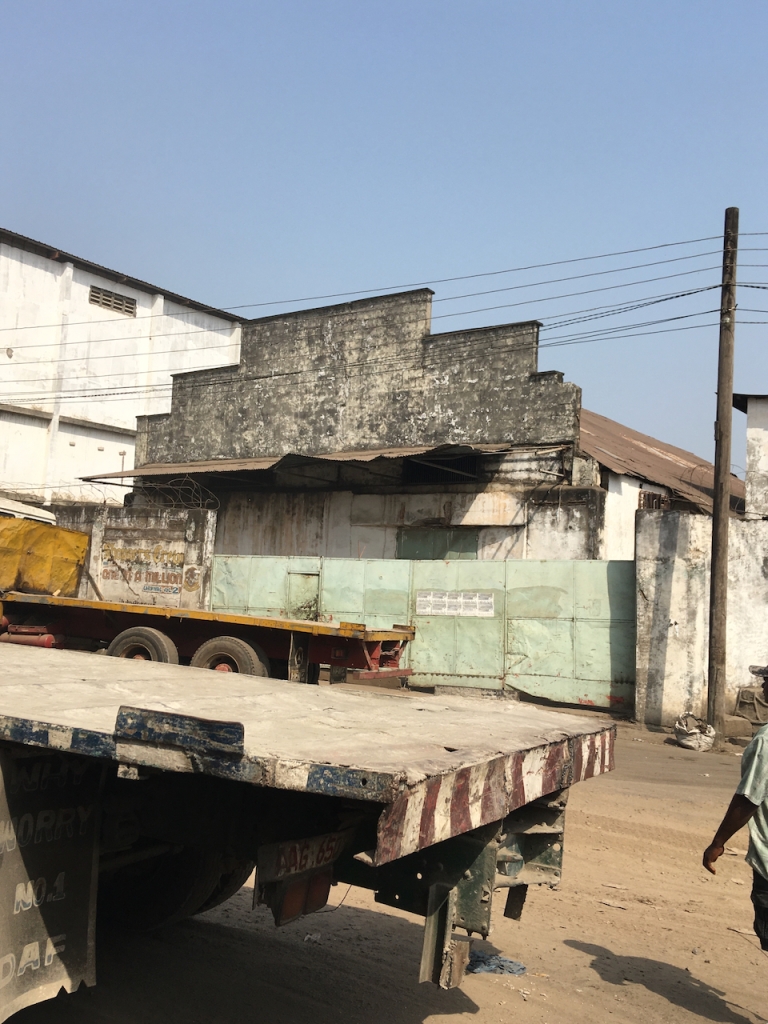
The college is located just a short distance from the sea, and what is now the busy port of Cline Town. Here the major shipping company Elder Dempster had their offices. They commissioned James Cubitt to design their premises in 1958. Cubitt also designed the Elder Dempster tower in Lagos, Nigeria, but rather than a dramatic tower overlooking the marina, here there is a more restrained horizontal solution with projecting concrete brise soleil and a porte-cochère. Inside the booking hall is a dramatic spiral staircase that wraps around what resembles a ship’s funnel. Warehouses and storage sheds dominate the area, including the former UAC stores opposite the National Railway Museum.
Former Elder Dempster Offices, James CubittInside Elder Dempster: waffle ceiling and spiral staircasedetail of the exteriorUAC warehouse Cline Town
There’s an impressive collection of architecture in this historic port city. In the UAC archive there are extensive photographic albums from 1915 through the 1960s documenting many of the streets and buildings we visited. Our task now is to identify more of these structures, and to research the history that resulted in their commissioning, design, and wider significance.
2016 Grantees for Conserving Modern Architecture Initiative Announced
TAG is delighted that the Getty Foundation has awarded a ‘Keeping it Modern’ heritage grant to the Children’s Library in Accra, Ghana – the first time this prestigious award has been made to a building in Africa. This will fund building research into the material fabric of the library, as well as programme of events to keep the space activated and enjoyed.
Interior Staircase
Ceramic brise soleil
First floor reception area
External facade
Main Entrance
Ceramic brise soleil viewed from exterior
The library was designed by Nickson and Borys (see Notes from Accra ) in late 1950s / early 1960s (the building appears in J. M. Richard’s New Buildings of the Commonwealth, 1961)and has already received some sympathetic restoration in more recent times, as well as some less fortunate interventions (such as the aluminium front door).














 Transnational Architecture Group