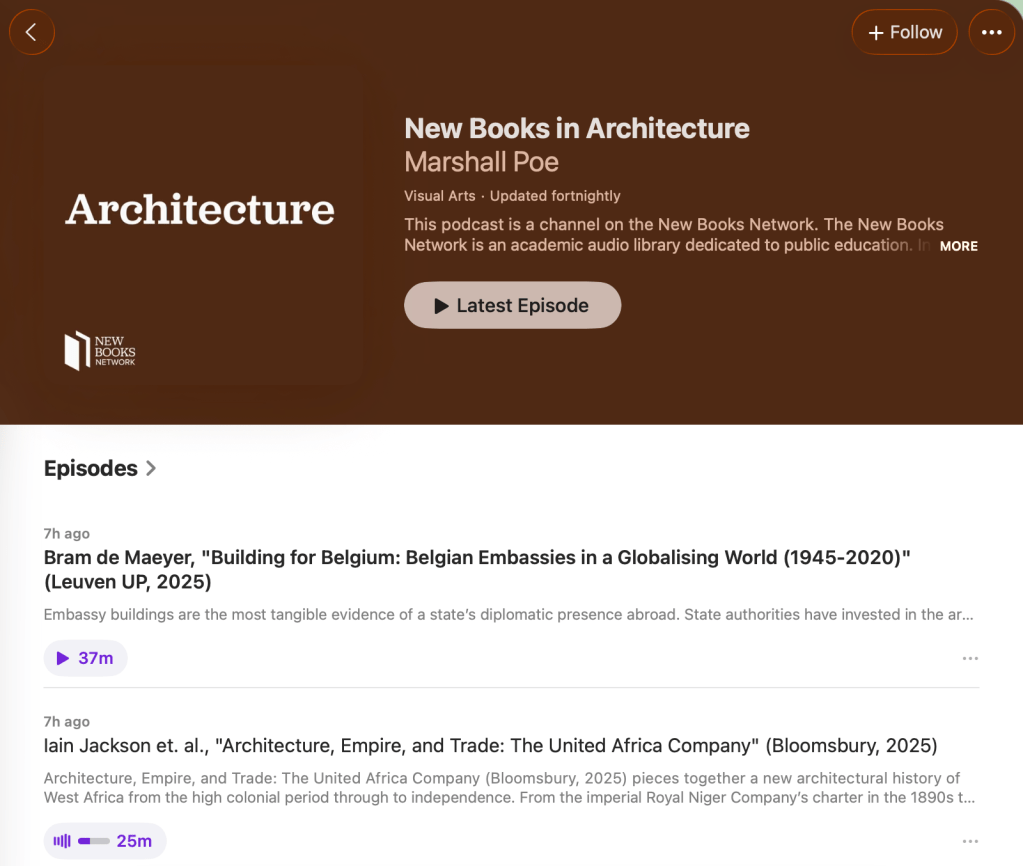
Have a listen to Rixt Woudstra and Ewan Harrison talking more about how we researched, made, and designed our latest book ‘Architecture, Empire and Trade‘ on the New Books in Architecture podcast series…. Thank you to Matthew Wells for hosting the podcast and for the super questions and comments.
Name: Heather Lynn McGrath Alcock PhD Research Title: Beyond the Village: The Global Value of Port Sunlight
Dissertation Supervisors: Professor Iain Jackson, Dr Ataa Alsalloum and Dr Cheryl Hudson
Research Question: Does Port Sunlight village express Outstanding Universal Value and if so, what material and intangible aspects of the site express its influential, unique, and exemplary character?
Aim: The aim of my research is to define the heritage values of Port Sunlight village in a comparative global context.
Figure 1: Mapping global planned worker villages. Sites are mapped by latitude and longitude and key characteristics are recorded for each site, including dates for development, designer, industry, and heritage site management indicators such as statutory protections.
Objectives:
Identify, map, and analyse the transmission of ideas and images for Port Sunlight village and two similar sites Bournville and New Earswick from 1889-1939.
Complete desk-based research to identify, map and briefly describe global planned worker settlements, garden suburbs, and Garden Cities.
Compare transmission of ideas and images research against the development of planned worker settlements, garden suburbs and Garden Cities research to identify and describe possible connections and influences.
Undertake case studies for more in-depth comparative analysis, including archival research, field work and interviews with stakeholders.
Analyse findings to determine if there is a correlation between the transmission of images and ideas and the development of planned worker villages. If so, would it be possible to identify the primary influence? Were direct or indirect forms of transmission most prevalent? What methods were most effective or enduring? Lastly, is it possible to directly trace Port Sunlight’s influence?
Define Port Sunlight’s heritage values within UNESCO’s framework for world heritage site inscription.
Figure 2: The model worker village at Port Sunlight was both a highly local and ‘tied’ manufacturing community and a global phenomenon. Foreign visitors toured the site regularly and Lever Brothers had a global business operation by 1900. This 1901 quote from the Crown Prince of Siam featured in the opening pages of the 1905 “Souvenir of Port Sunlight” by Lever Brothers Limited. (Held by Port Sunlight Museum, Collection Reference S13 1905)
Background to Port Sunlight
Port Sunlight is a planned worker village created by industrialist William Lever (1851-1925) for the workers in his soap manufacturing company Lever Brothers, which later became global manufacturing corporation Unilever, plc. Port Sunlight holds a unique place in the history of British town and country planning, where two significant traditions meet: picturesque town and country planning and improved housing and amenities for working class people”.1
Construction of the Lever Brothers’ works started in 1888 and the first houses were occupied by 1889. By 1891, Lever Brothers had built their first community facility, Gladstone Hall and they were publishing visitor ‘guidebooks’ to promote the works and village.
By the start of the first world war, the village had a wide range of facilities, including two schools, cottage hospital, an open-air swimming bath, 3000-seat auditorium, gymnasium, library, savings bank, social clubs, shops, church, tennis and bowling lawns, football pitch and pub. The houses and facilities were set in a generous landscape with passive green spaces, designed landscapes and allotments.
Figure 3: Plan of Port Sunlight as it was in 1938 by historian Michael Shippobottom in consultation with Edward Hubbard. The plan, reproduced in Hubbard and Shippobottom’s A Guide to Port Sunlight Village (3rd Edition, Page 34, Figure 32) illustrates the village at its first Jubilee.
Port Sunlight village became a conservation area in 1978 and includes over 900 Grade II-listed buildings within 130 acres of parkland and gardens.
Research Justification
Port Sunlight faces many challenges, articulated in a suite of evidence-based strategic documents developed from 2018-2021 by Port Sunlight Village Trust (PSVT), the independent charity charged with the care and promotion of the village.2 PSVT, working in partnership with key stakeholders, plans to undertake significant projects and to advance key business objectives to address these challenges and to ensure the long-term sustainability, accessibility and inclusivity of the site.3 The research will support PSVT, village stakeholders, academics and practitioners to better understand the global value and significance of the site and to make more informed decisions about its future.
Research Methodology
My work will be informed by extensive archival research, case studies and oral histories, and my professional experience and understanding of heritage values (including current dialogue challenging the processes for identification and management of heritage sites), but it will also engage with the theoretical, contextual and historiographic approaches of others who have studied the design, development, transformation and impact of planned worker villages from multiple disciplines.
Figure 4: Bridge Street and Park Road terraces houses in Port Sunlight by Douglas and Fordham, 1893. Digital version from the Drawn Together collection under Creative Commons CC-BY-NC-ND. Original drawing held by Unilever, plc.
What did I do before the PhD Research?
As a British-American citizen and a mature student, I enjoyed twenty years in built heritage practice in the USA and UK. My academic degrees in Cultural Anthropology and Historic Preservation from the University of Pennsylvania led to private heritage consultancy in New York City. There I worked for Building Conservation Associates, Inc. on many aspects of built heritage practice across the country. In New York, I developed a practical approach for the creative adaptation and conservation of listed buildings for tax credit projects, which resulted in the regeneration of at-risk heritage sites. Research underpinned my practice, including heritage policies for the United Nations Headquarters in New York and a serial listing for the New Canaan Moderns.
Before starting my PhD at Liverpool, I served as the Heritage Conservation Officer for PSVT, where I had the opportunity to draft one of England’s first Local Listed Building Consent Orders, to design and implement a conditions and integrity survey of the 923 listed houses in the village, co-authored the Conservation Management Plan (2018) and managed Drawn Together, a Lottery-funded partnership project to digitise original drawings for Port Sunlight. It was through my work for PSVT and direct engagement with village residents that I developed an appreciation for my research site and its stakeholders.
Why did you pursue a PhD and what made you choose the University of Liverpool?
Since immigrating to the UK in 2009, I had felt the pull towards further education, particularly in a British context. I found time during the disrupted life of the pandemic to apply for both a PhD and research funding. The Society of Architectural Historians of Great Britain (SAHGB) awarded me their Graham Child Scholarship, so the question of funding was very happily and gratefully resolved. My choice of university was straight forward. I was well-acquainted with the School of Architecture, the excellent reputation of its researchers, its facilities, and resources. Both the Architecture and Planning departments had ties to Port Sunlight and the archives hold significant collections for the transmission of ideas research. I had met both Ataa and Iain through my work at Port Sunlight and felt they would make an ideal team to supervise my cross-disciplinary dissertation. Everything fell into place!
What are your first impressions of life as a PhD researcher and what do you think you will do after you have finished?
I am perhaps one of the most grateful and fortunate people in Wirral as I am being paid to learn, think, and write about Port Sunlight. Working with Ataa and Iain has been incredibly rewarding as their global expertise and experiences in architecture, history and heritage connect and complement my own experiences and practice. Our differences make for lively and enjoyable discussions, and I always go away feeling a bit daunted but inspired.
However, there is no denying the dramatic change of pace and the different daily rhythms I experienced when I became a PhD researcher. In my professional life, there were meetings, colleagues, volunteers, emails, public engagement, and strategic considerations. In short, there were people. Now, my world is quiet and contemplative (when my children are at school). My ‘to do’ list is long and exciting, but undeniably solo. I rather like working with a team and know that once my dissertation is finished, I will welcome back the noisy collaborative world of heritage practice and possibly the even noisier world of teaching.
On 20th June 2019 Unilever kindly hosted (with additional support from the University of Liverpool) a workshop showcasing the amazing material that can be found within business archives. It was a really great day to learn more about how different researchers are using the collections and the great work by archivist who make all of this accessible to the public.
Keynote by Valerie Johnson, Director of Research, The National Archives
Business archives – a bit of a passion killer?
Valerie Johnson opened her keynote by highlighting that business archives are often seen as dull and uninteresting – to the point she was once told by a conference organizers that he had not expected her research talk about business archives to be so interesting. Nothing could not be further from the truth. For almost any subject of interest to researchers, business archives have materials, as companies were often spearheading new developments (e.g. technology), were embedded in social and cultural trends of the day (e.g. the culture of imperialism), design history (e.g. in the Board of Trade archives) to name but a few.
In a whistle stop tour through a wide range of archives, Johnson illustrated the history of women at work through an architectural map in the ING Barings Archive, and the representations of empire in the textiles archive of John Lewis, and the United Africa Company trademarks at Unilever Historical Archives.
Johnson closed by reiterating that business records offer magnificent materials and insights into society, technology and attitudes of the past, not just the records of business operations in the narrow sense. So she closed with highlighting the importance of:
Putting the passion back into business archives!
Snippets from archival research
The day continued with wide-ranging research presentations. The morning opened with Jeanette Strickland introducing the audience to William Lever, the founder of Lever Brothers (one half of the original Unilever), a formidable businessmen and somewhat of a micro-manager.
This was followed by Frank Thorpe, University of Liverpool, talking about advertising and beyond. His presentation is based on his doctoral thesis that investigates the changing attitudes towards personal hygiene, or “BO”, and how
products like deodorant were gendered and stigmatized at times. At Unilever, he
has researched uncatalogued material, but also used a range of online newspaper
archives to understand the context within which these adverts appeared.
Ronnie Hughes offered a different view on Port Sunlight, the location of the Unilever factory and archives, where the workshop took place, by asking a key question:
What must it have been like to live in someone else’s utopia 100 years after they died?
Walking through Port Sunlight village in the morning before the workshop, this is not unlike the question we asked ourselves – would we actually like to live here,
as beautiful as it is? As a heritage site, it has a very distinct and unique
feel, which is unlike other neighbourhoods. Hughes highlights that he has asked
communities questions about what their perfect place would look like before
starting this research project. He blogs at A Sense of Place.
Prof Matt Reed finished the morning session by outlining his search for the ‘origin story’ of the collaboration between Unilever and the University of Liverpool, which dates back to 1906, which was “multi-faceted and sporadic.”
Lever donated money to a number of departments, including Civic Design and town planning. The Department of Industrial Chemistry was particularly well aligned with Lever’s business interests. Reed finished with a reflection of the value
of searching archives versus the self-taught googling that passes for research
outside of archives.
A fascinating tour of the archives at lunchtime that featured highlights such as Marmite pants.
The afternoon sessions kicked off with Dr Rory Miller’s exploration of why David Fieldhouse’s Unilever Overseas is missing a chapter on Latin America – apparently he fell out with his research assistant. 25 years ago, Miller first visited the Unilever archives to find out what was actually available on Unilever’s business in Argentina and beyond. Perusing the directors’ visiting reports, he outlined how Argentinians rarely bought Lifebuoy soap other than to wash their dogs.
In her talk about the design process, Dr Lee Wright highlighted the potential importance of archives for the design practice and the sourcing of design ideas. In her teaching, students reference the past through images they source from Pinterest, highlighting the significance of social media sites in mediating our visual understanding of the past.
The day closed with two fascinating talks, the first by Prof Iain Jackson about the development of urban architecture in Accra, Ghana in the mid-twentieth century. While the National Archives had more material on the European settlements of Accra, within other archives, such as the United Africa Company collection at Unilever, mercantile areas such as Jamestown are much better documented. Some of his collected images are available in an online book available via issuu.com (search “Accra”) here.
The workshop closed with Claire Tunstall describing their mission and how the archives has to serve many different stakeholders: internal divisions, brands and communications, outreach with schools, partnership with museums and universities and, of course, the Port Sunlight Village Trust, as well as researchers.
Hopefully, more such events, at Unilever or other major archives, will take place in the future. The workshop did not just have great presentations but also offered great opportunities to meet a wide variety of people interested in using and promoting archives.
Conference programme
10 am Registration Tea & coffee
10.20 Welcome, introductory remarks and housekeeping
– Claire Tunstall and Jeannette Strickland
10.30 Keynote Dr Valerie Johnson, Director of Research & Collections, The National Archives “What’s the use? Your research and business archives”
10.50 Q&A
11.00 Refreshments
11.15-12.30 Session 1 Chair: Prof Stephanie Decker, Aston University
11.15 Jeannette Strickland, Department of History, University of Liverpool, “Finding William Lever, the man behind the myth”
11.30 Frank Thorpe, Department of History, University of Liverpool, “Beyond the ad: filling gaps and finding new gaps”
11.45 Ronnie Hughes, Department of Sociology, Social Policy & Criminology, University of Liverpool, “Looking for Utopia”
12.00 Dr Matt Reed, Strategy Director, Materials Innovation Factory, University of Liverpool, “Turn every page”
12.15 Q&A
12.30-2.00 Lunch
Tours of Unilever Archives available at 12.45 and 1.10
2.00-3.00 Session 2 – Chair: Dr Valerie Johnson, The National Archives
2.10 Dr Rory Miller, formerly Reader in the Management School, University of Liverpool, “The Missing Chapter in David Fieldhouse’s Unilever Overseas: Unilever’s Expansion in Latin America in the Mid-Twentieth Century”
2.30 Dr Lee Wright, Senior Lecturer in the History and Theory of Design, Liverpool School of Art and Design, Liverpool John Moores University, “The value of archives and their potential to impact current design practice”
2.50 Q&A
3.05 Refreshments
3.20-4.20 Session 3 – Chair: Jeannette Strickland, University of Liverpool
3.20 Prof Iain Jackson, School of Architecture, University of Liverpool, “Traders, speculators, taste makers: the United Africa Company in Ghana”
3.40 Claire Tunstall, Head of Art, Archives & Records Management, Unilever plc, “The research potential of Unilever Archives”
4.00 Q&A
4.20 Summing up and closing remarks
4.30 Optional post-workshop drink at the Bridge Inn in Port Sunlight


 Transnational Architecture Group