Ewan Harrison writes:
Readers of the transnational architecture blog may already be familiar with the work of Nickson & Borys. The practice had a large presence in anglophone West Africa in the mid-20th century, especially in Accra, where it completed several high-profile public buildings, and in Lagos, where it designed numerous commercial buildings from the 1950s to the 1990s. Although much remains uncertain about the practice, their work in those two cities have received critical attention, with the practice’s central library complex in Accra, for example, justly celebrated in the Getty’s ‘Keeping it Modern‘ programme. Less well known is the practice’s work in Sierra Leone, despite the fact the practice operated an office in Freetown and designed numerous high-profile buildings there in the 1950s and 1960s.

Our trip to Sierra Leone in fact began with a Nickson & Borys building – Lungi International Airport was completed to designs by the practice in c1960 and, although built to slightly different designs to those illustrated, is little altered today. Sadly, the same cannot be said for the practice’s largest commission in the city – the Townhall and Municipal Offices. Completed for Freetown City Council on a suitably prominent site in the centre of the city’s historic grid of streets that run parallel to one another down a steep slope to the sea wall. This was laid out in the 1790s and the timber and stone houses and chapels built by the City’s Krio elite in the early years of its development can still be found dotted amongst later commercial and public buildings. A perspective view of Nickson & Borys’ offices for the municipality published in 1962 show an elegant tower and podium arrangement of blocks: the main tower had a slightly kinked façade with windows protected by vertical brise-soleil, whilst the podium block is enlivened with patterned concrete screens – here Nickson & Borys applied the quintessential features of tropical modernism to the office tower typology. Not a trace of this survives in the new Freetown City Council offices built in 2018 on the same site – a 14 storey tower designed by the South Korean Overseas Development Fund, with facades clad in chlorine-blue glass.

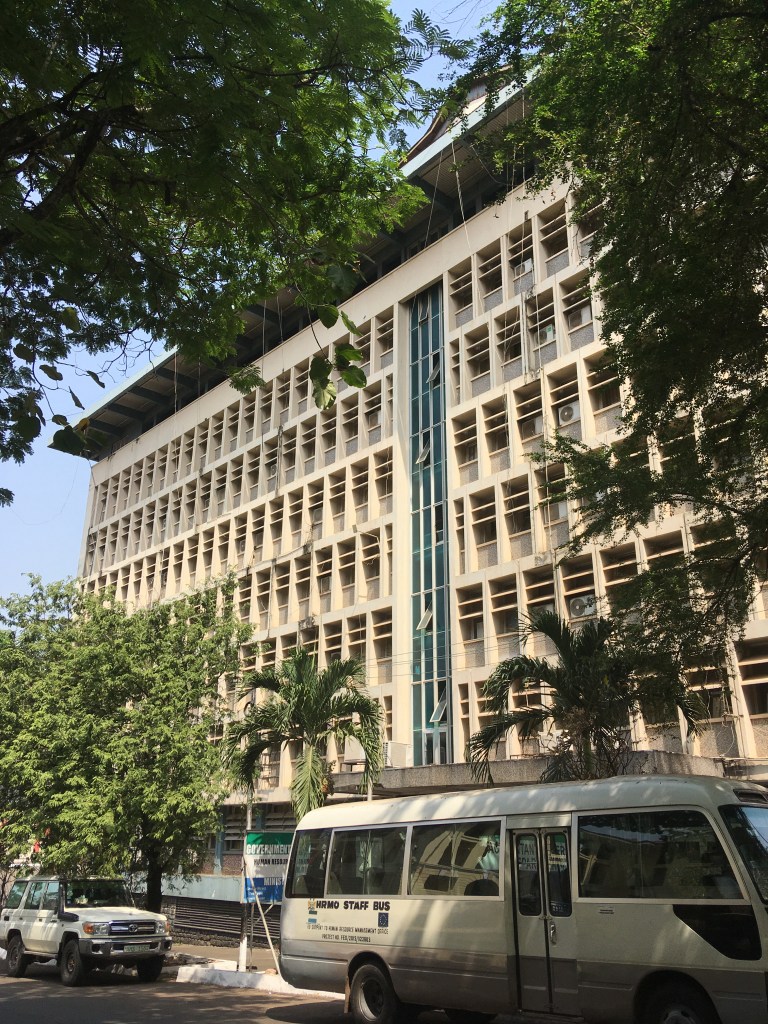

Better preserved, and also showing Nickson & Borys’ characteristic utilisation of brise-soliel and concrete screens, is the city’s former Barclays Branch. Barclays was the largest bank operating in British colonised Africa, its pillared and pedimented branches often stood in city centre sites adjacent to the government offices. Barclays greeted decolonisation by commissioning prominent new modernist branches, signalling its commitment to servicing (and profiting from) markets in newly independent countries. The Freetown Branch is perhaps the most architecturally accomplished of these. The building extends through the breadth of one city block on a central avenue in the historic grid, Siaka Stevens Street. Its long façade is broken by window embrasures protected by in-set concrete screens or applied lengths of brise-soleil, adding a geometric richness to an otherwise simple building. The practice’s lively approach to pattern-making, seen at the Accra Library Complex, is here shown to its fullest extent.
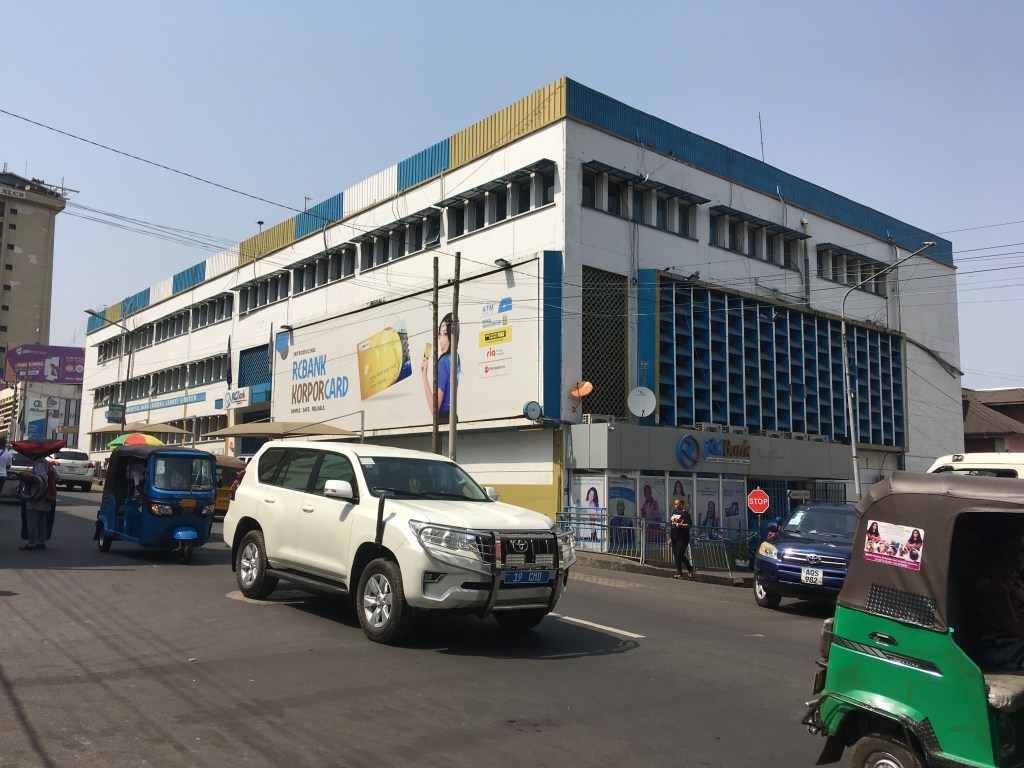
In 1965 Nickson & Borys unveiled plans to redevelop much of Freetown’s historic grid as a mega-structural development of new offices and hotel towers, rising from a podium of shopping facilities. Whilst this Plan Voisin for Freetown was destined to remain unexecuted, a flavour of what the practice proposed for the city is encapsulated in an executed large-scale development designed by the practice that stretches the length of steeply sloping Gloucester Street. Built for the Sierra Leone General Post Office, the complex included Freetown’s main public post office, the headquarters of the Post Office Savings Bank, a telephone exchange and a sorting office all of which are externally expressed. The slope in the site and the differing functions were utilised by the practice to form a highly sophisticated and very urban composition.
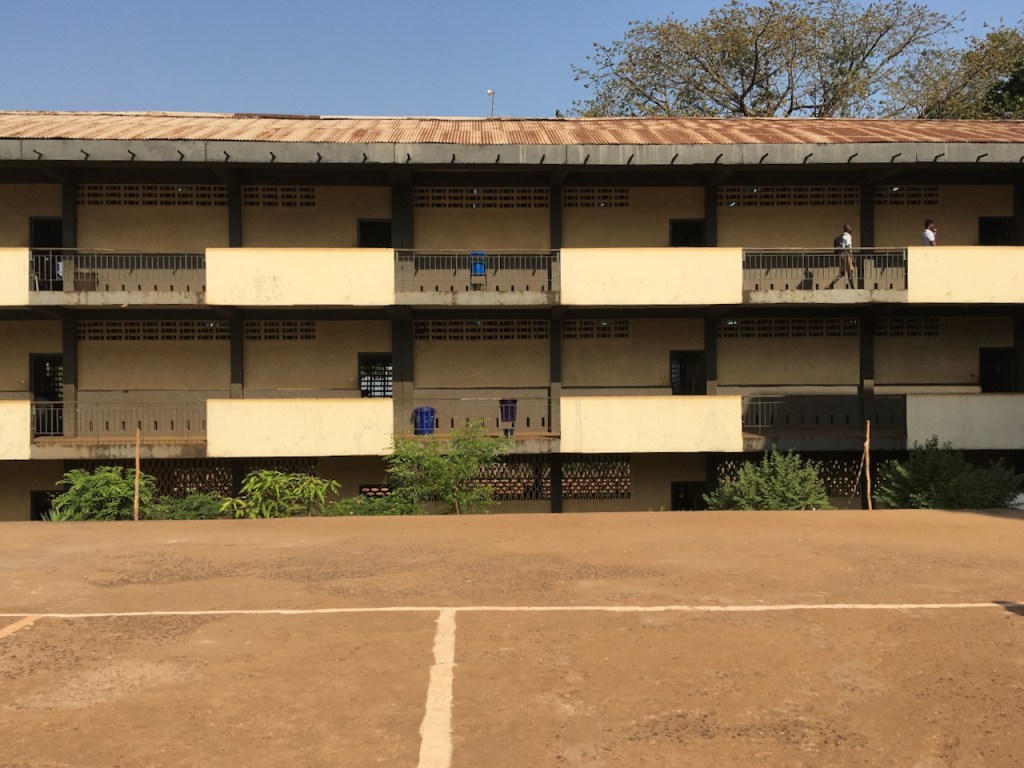
A similar impulse can be detected in the final Nickson & Borys commission we visited: the Sierra Leone Grammar School at Murray Town. Built as the new premises of a venerable Freetown institution – the first Grammar School was opened in the city by the Church Missionary Society in 1845 – the commission came to the practice through Borys’ role as the consultant architect to the Sierra Leone Ministry of Education in c1960 when the school had moved to a sloping greenfield site on the edge of the city. Here Nickson & Borys arranged the school accommodation in a dense composition of three staggered blocks linked to one another across the contour of the site’s ridgeline. Each of the blocks was given a differing façade treatment: the administration block was articulated with deeply set vertical brise-soleil; whilst the classroom blocks feature geometric pierced concrete screen walls. The three blocks were linked by external staircases and walkways, characteristically these are approached as another opportunity for rich pattern making with the staircase and balcony rails articulated into alternating blocks of solid and void. These open circulation spaces perhaps owe something to Fry and Drew’s famous schools in Ghana, but the compact – almost megastrucutral – arrangement of the blocks is far removed from Fry and Drew’s formal axial schemas. Similarly, the modelling of the concrete forms was rather heavier than was usual in Fry and Drew’s schools – perhaps testament to the care and skill of the school’s contractor, Taylor Woodrow Sierra Leone.

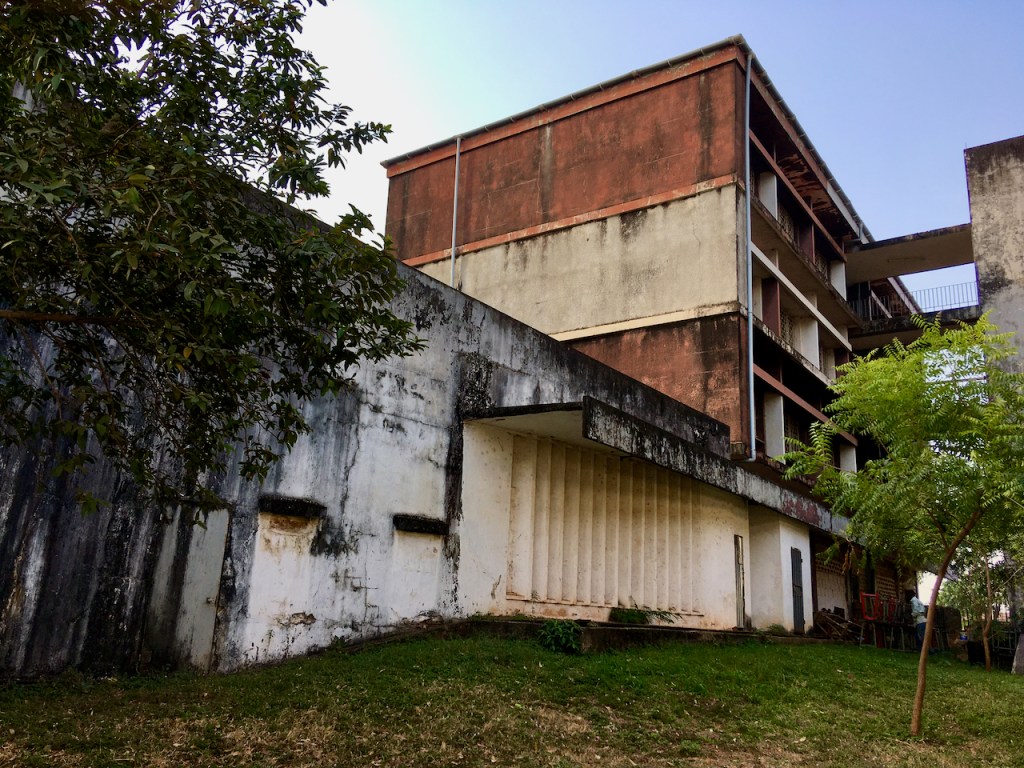

Towards the end of our visit to the Grammar School we were shown the assembly hall. A rather modest space internally, externally the assembly hall is vibrantly expressed through a fan-shaped extrusion that terminates in an expressively kinked end-wall, with heavily modelled vertical openings cast in concrete. Both the plan form and detailing was strongly reminiscent of the George Padmore Memorial Library in Accra – a fan-shaped block with kinked end walls that bore thickly moulded concrete rainwater goods. In my last post for the Transnational Architecture Blog I had thought Nickson & Borys were unlikely to be the George Padmore’s designers: now, having seen the practice’s treatment of the Sierra Leone Grammar School’s assembly hall, I am far less sure…


 Transnational Architecture Group