Archive

Tag Archives: Trade Fair

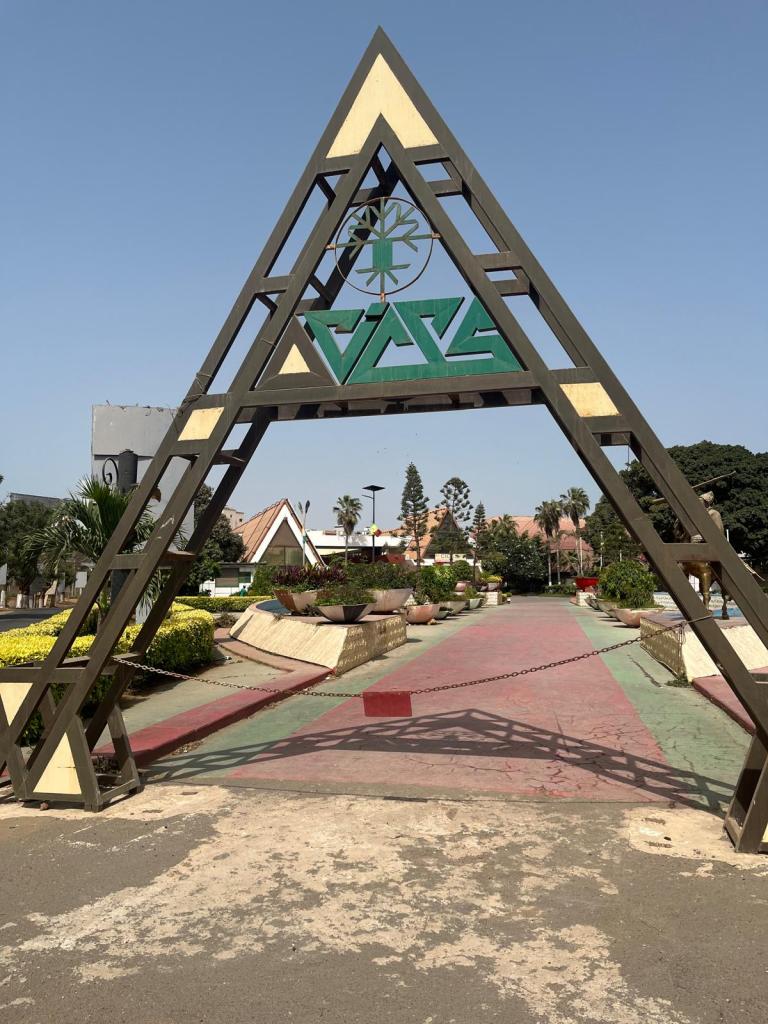
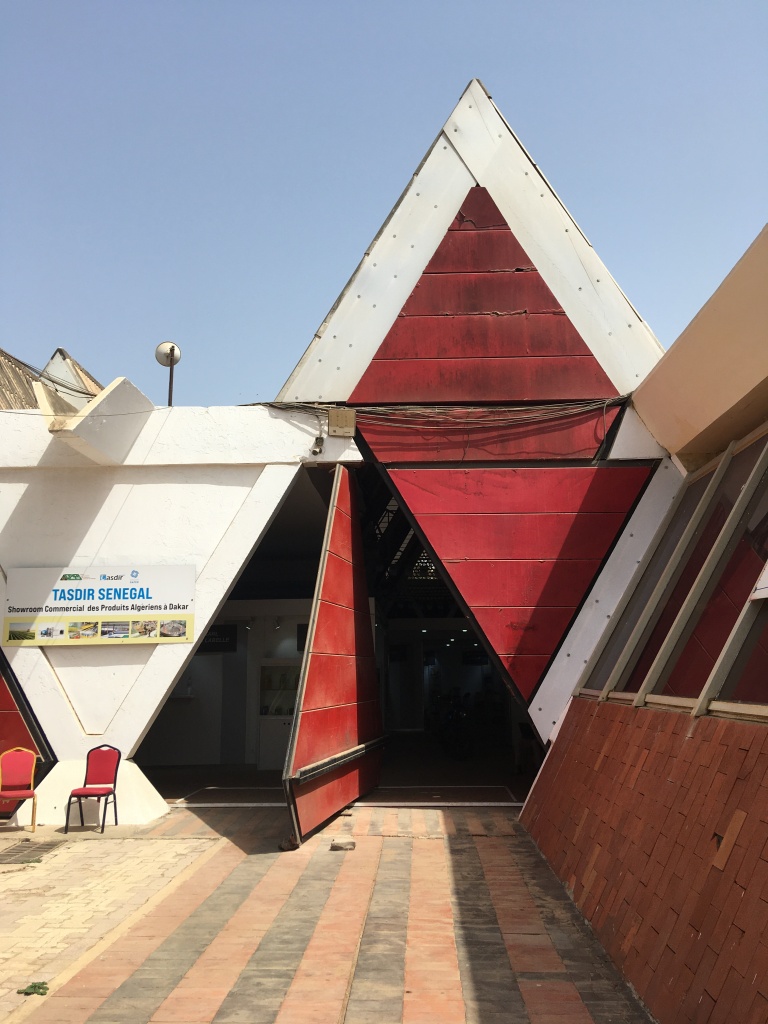
A visit to the international  conference centre in Dakar is a must for late ‘modern’ architecture aficionados. The approach sets the scene, as one passes through the triangular entrance gates.
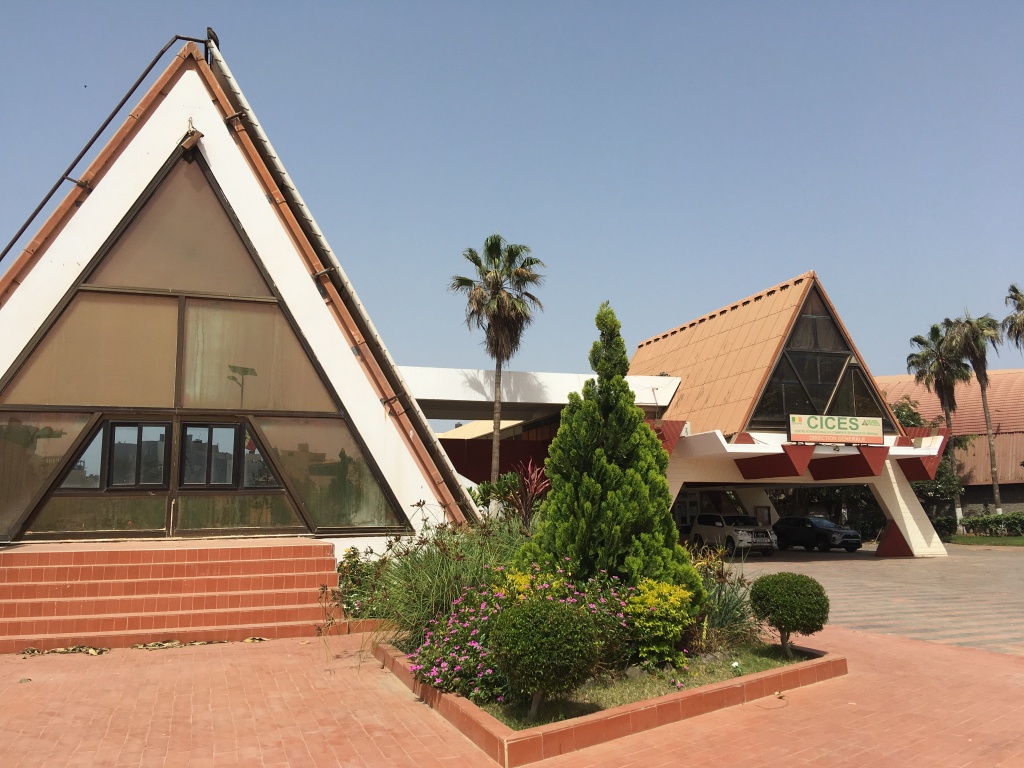
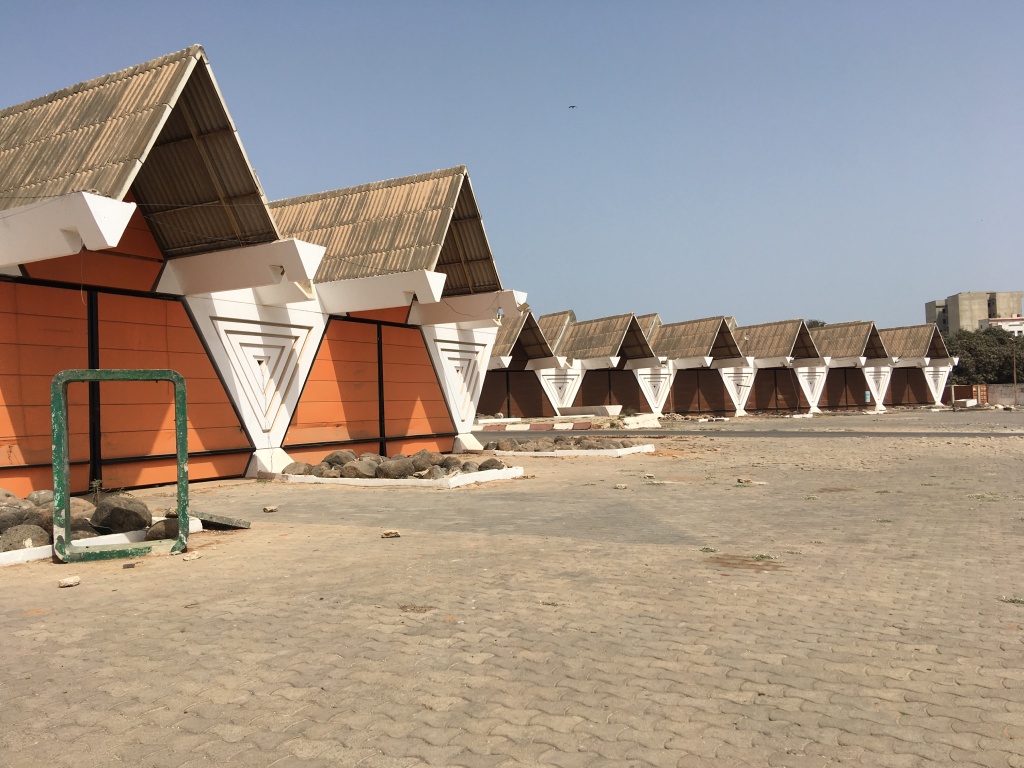
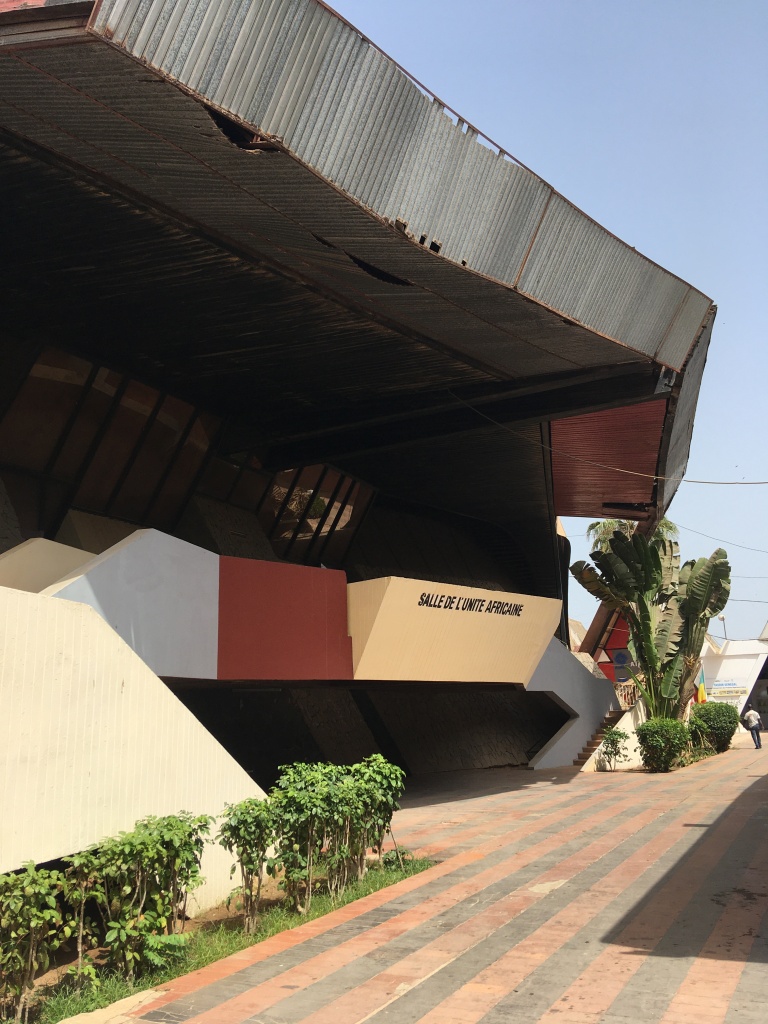
A creation of architect Fernand Bonamy designed and built following an architectural competition in 1974  its triangular programme is clear from the outset. This trade fair complex, which remains in working use, was designed to incorporate the triangle both in elevation and functional section. This has been a largely successful exercise in which the triangle is pre-eminent in all aspects of design. 
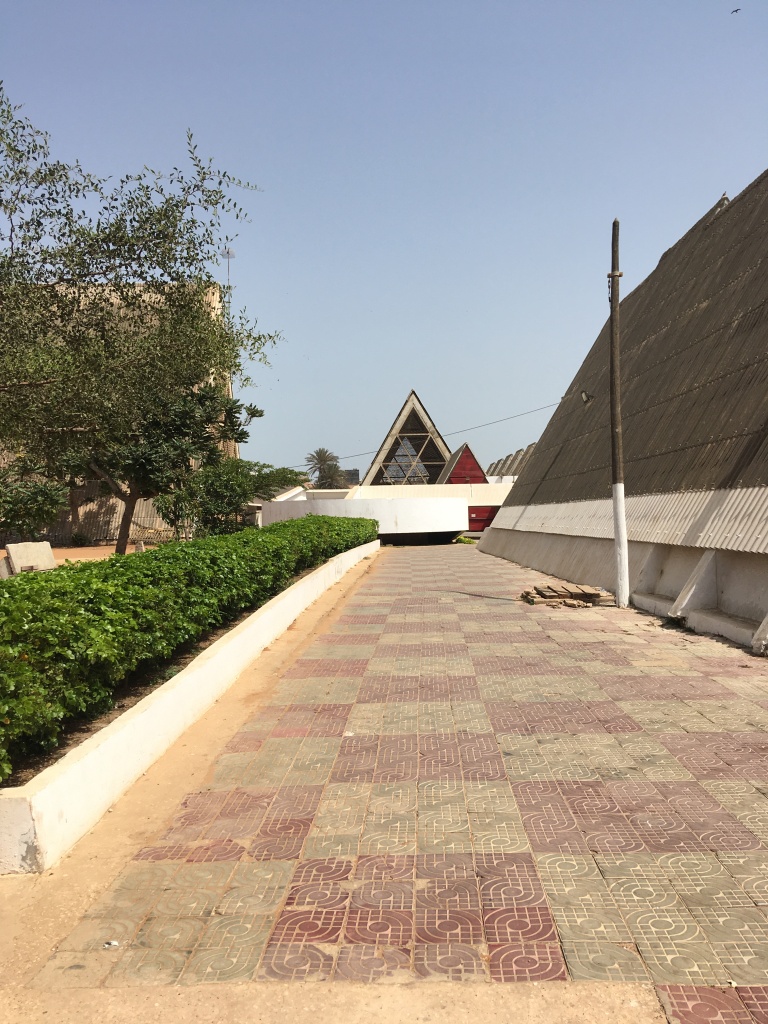
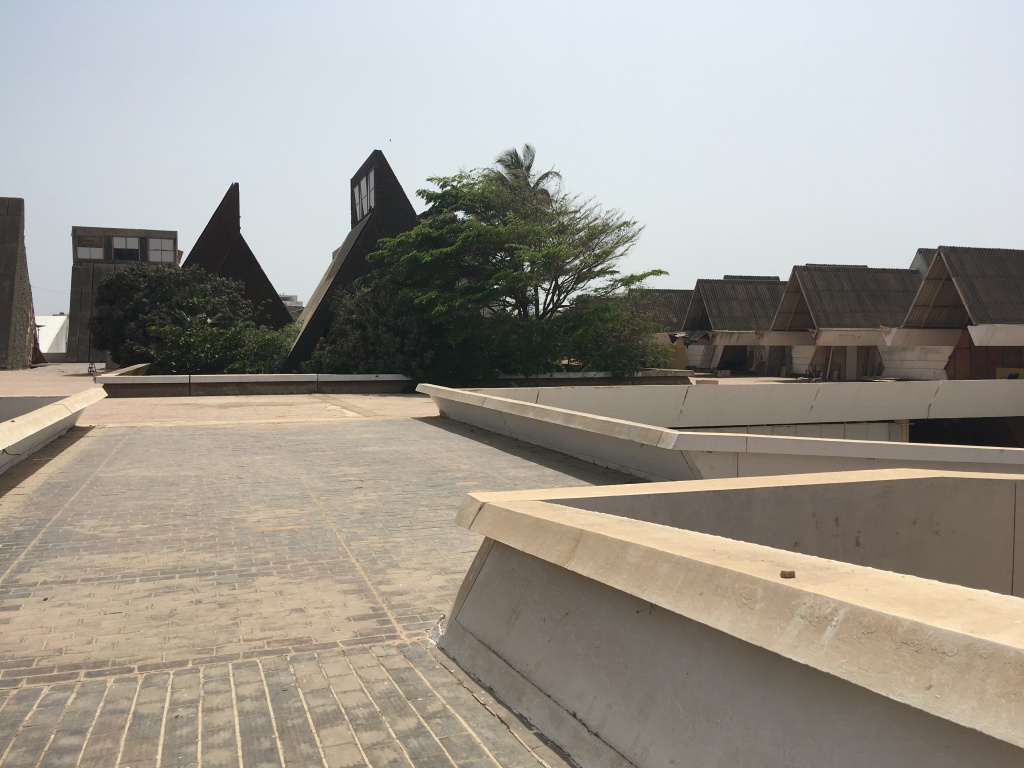
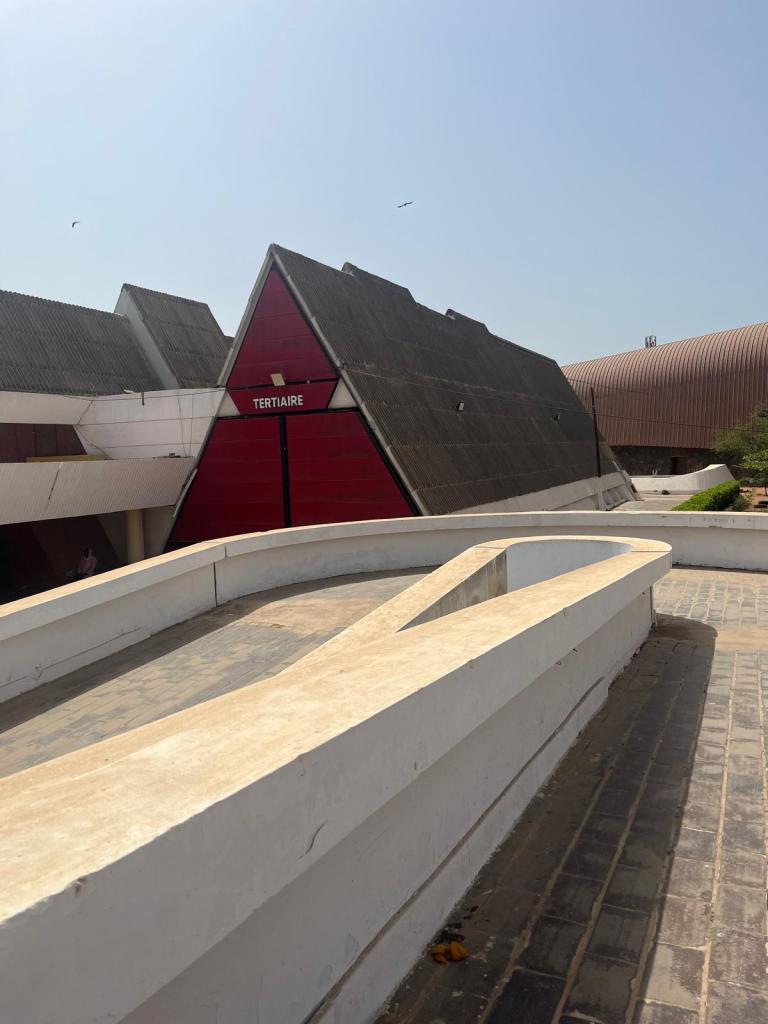
Walking around one feels the eerie nature of triangular space. Broken by long walkways with circular-cylindrical fulcrum points where the direction changes and the gradual slope continues upwards or downwards to the final traverse destination. 
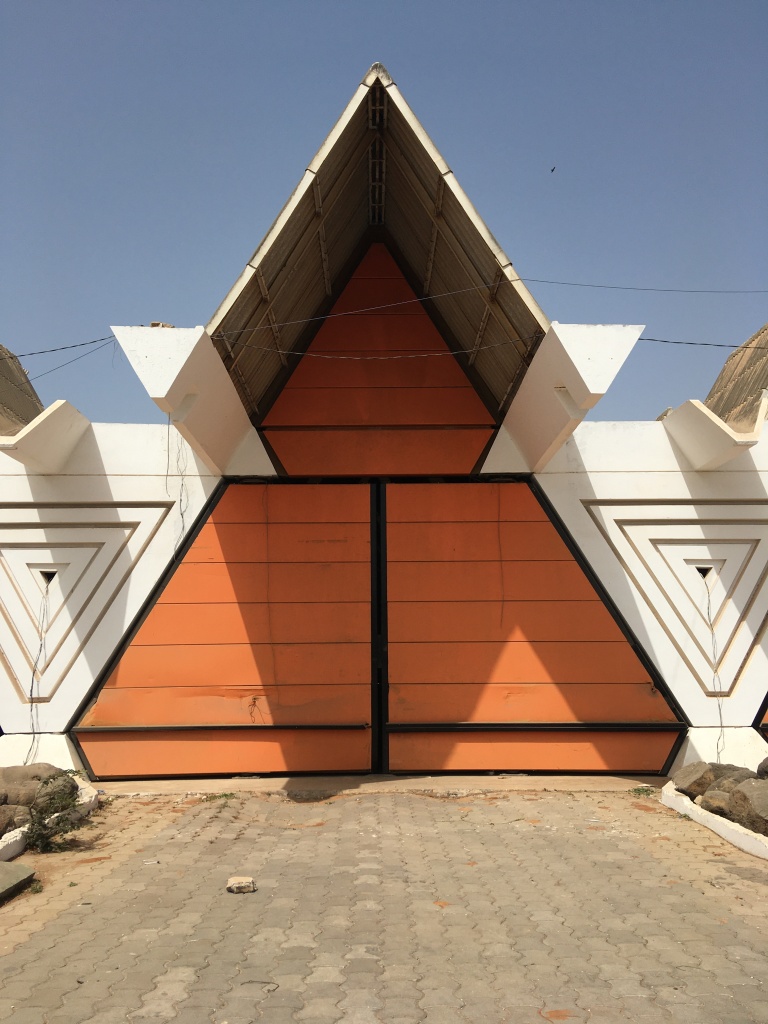
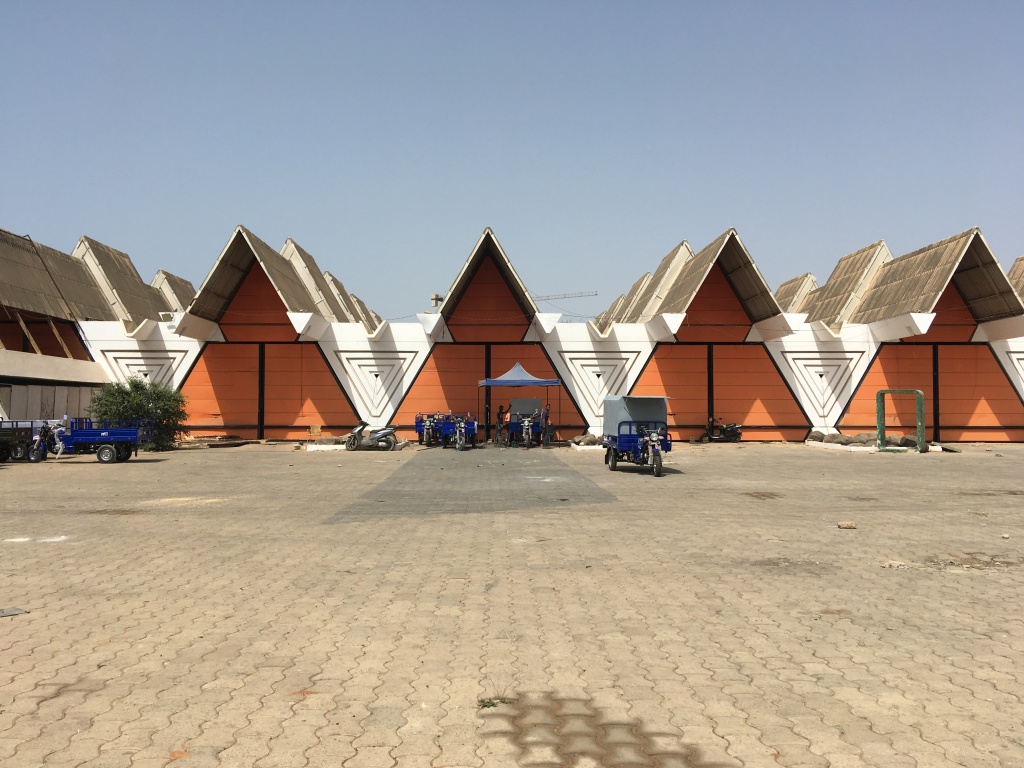
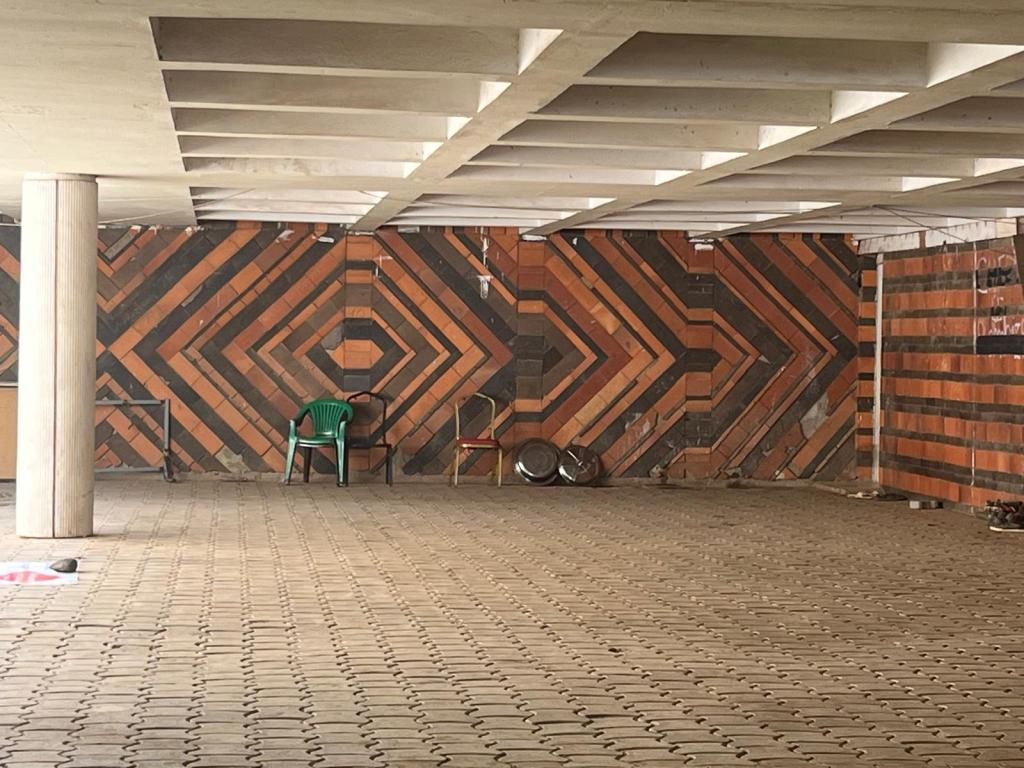
A series of exhibition pavilions are the centrepiece of this much recorded and photographed campus, whilst the main exhibition hall provides a glorious 70’s interior complete with psychedelic wall designs . The dogged following of the triangular programme does provide a coherent set of buildings – which also feel part of a giant Alice in Wonderland setting where the triangles are here there and everywhere. There are a few breaks as the HVAC external ductwork terminate in lozenge- and not triangular shaped flues . 
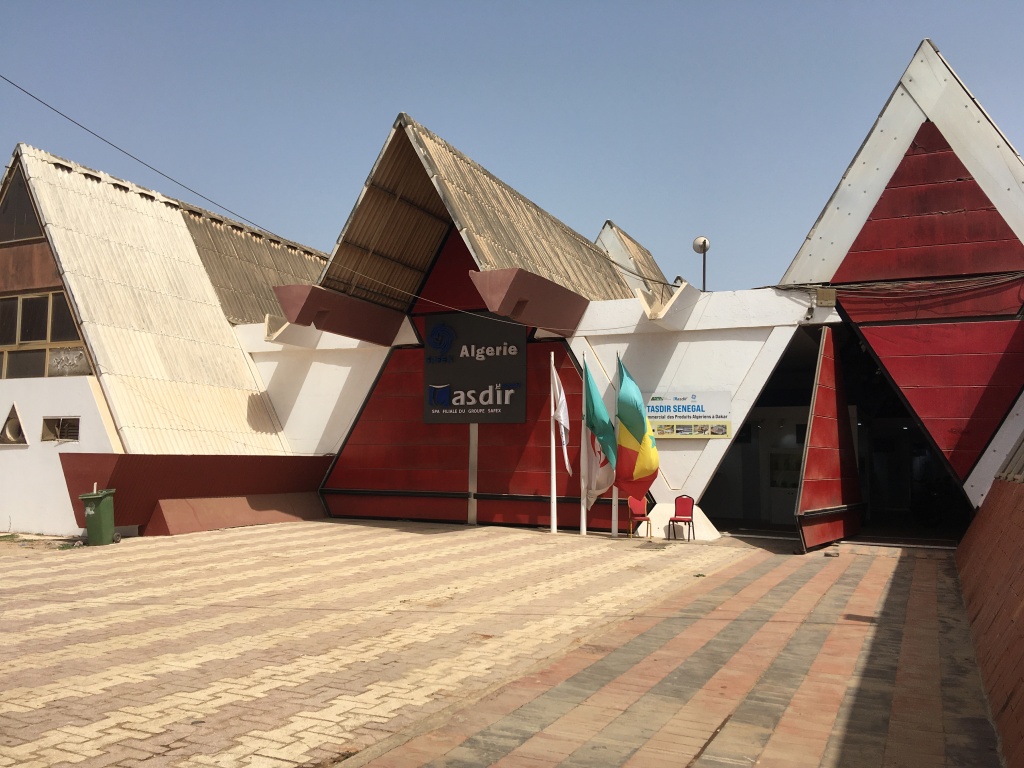
As we walked around, the campus was being prepared for yet another exhibition / expo. This helps highlight the ongoing use and  versatility of the exhibition space format, democratically giving each exhibitor the same space, shape and form to engage with, triangular in every way. 

As I walk away from triangular wonderland  I wonder what else this amazing set could support? A parkour and skate park for the suburban kids whose flats look down on the complex? A contained mini athletics course, it could certainly hold a 200m track circuit and many triangular spaces could provide storage for track and field equipment. Or could it indeed be a film set for the next James Bond Action or Hammer Horror movie – The return of the Triangles.
Building on our Ghana theme I’d like to share an excellent paper recently published by a good friend of the TAG blog, Dr. Lukasz Stanek from Manchester University.

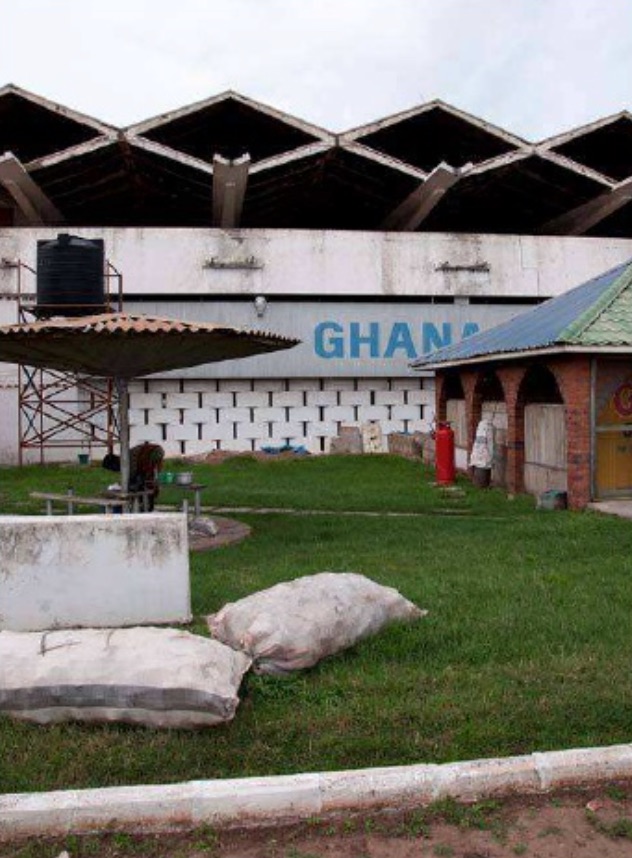
 “When seen from Labadi Road, the buildings of  Accra’s International Trade Fair (ITF) appear among abandoned billboards, scarce trees that offer shade to resting taxi drivers, and tables where coconuts, bottled water, sweets, and telephone cards are sold next to the road.

 The buildings neighbor the La settlement, where streets meander between houses, shops, bars, schools, and shrines,  while on the other sidof Labadi Road, at the seashore, luxurious housing estate is under construction next to upscale hotels that overlook Labadi Beach. Kwame Nkrumah, Ghana’s leader after the country achieved independence (1957), initiated the fair as a prestige project, but it was opened on 1 February 1967 by Joseph Arthur Ankrah the chairman of the National Liberation Council, who led the putsch that toppled Nkrumah in 1966. Once conveying a sense of radical moder-nity, the buildings have suffered from underinvestment and insufficient maintenance, but most of them are still in use, rented for exhibitions that take place every few months, for political rallies, and for religious services.
From 1962 to 1967, the Ghana National Construction Corporation (GNCC), the state office charged with design, construction, and maintenance of governmental buildings and infrastructure in Nkrumah’s Ghana, designed and con-structed the ITF. The designers of the fair were two young architects from socialist Poland, Jacek Chyrosz and Stanisław Rymaszewski, who worked with the Ghanaian Victor (Vic)  Adegbite, the chief architect. Chyrosz and Rymaszewski  were employed by the GNCC on a contract with Polservice, the so-called central agency of foreign trade, which mediated the export of labor from socialist Poland.

Ghana copy

“Made in Ghana Pavilion” 1967, International Trade Fair, designed by Jacek Chyrosz, Stanislaw Rymaszewski and Vic Adegbite


 At the GNCC, they worked together with Ghanaian architects and foreign professionals, many from socialist countries. This collaboration reflected the alliance of Nkrumah’s government with socialist countries, which was demonstrated at the fair by the exhibitions of Czechoslovakia, the German Democratic Republic (GDR), Hungary, and Poland (Figure 3). At the same time, the Ankrah administration used the fair to facilitate Ghana’s reopening toward the West. Hence, the Soviet Union and the People’s Republic of China (PRC), two major allies of Nkrumah, were absent.

 By contrast, the two pavilions not to be overlooked were those of Great Britain, Ghana’s former colonial ruler and its main trade partner, and the United States, which granted Ghana loans for its many infrastructural projects in the 1960s, in particular the Akosombo Dam, financed jointly with the United Kingdom and the World Bank. India was represented as a member of the Commonwealth rather than as a member of the Non-Aligned Movement, since Nkrumah’s attempt to position Ghana among Egypt, India, and Yugoslavia as one of the leading nations of the movement was abandoned after the change of the regime. Collaboration among African countries was particularly favored, not as a way of carrying on Nkrumah’s vision of pan-African union but with a more modest aim, that of the stimulation of trade among African countries. Displays representing African countries were gathered in the round Africa Pavilion at the end of the ramp through which visitors entered the fair, before they moved on to Pavilion A (the “Made in Ghana” pavilion) and the pavilions rented to other countries and Ghanaian state firms.”