Archive

Tag Archives: tropical

As Hardly Found: Art and Tropical Architecture centres artists and artworks that have so far been overlooked by histories of ‘tropical architecture’. In this collection of essays, historians, artists and archivists address works of art connected to epicentres of teaching and practice within the movement – focusing on the Department of Tropical Architecture at the Architectural Association and its collaborators such as Kwame Nkrumah University of Science and Technology – which emerged in the mid-20th century alongside anticolonial struggles that dismantled the British Empire.

Here, authors use creative, critical and speculative methods to inhabit the gaps in archives of tropical architecture, highlighting artworks in Nigeria, Ghana, India, Indonesia, Singapore, Costa Rica, Cuba and the UK. Their contributions trace connections within a network of relations between art and architecture; one which recentres the rich and diverse forms of environmental knowledge, social values and material cultures contributed by artists working in these contexts.

We are delighted to welcome the editor, Albert Brenchat-Aguilar, and the team from AA Publications, who will give a short introduction to the book. A small installation will accompany, food and refreshments will be provided.

More info here: https://www.aaschool.ac.uk/publicprogramme/whatson/as-hardly-found

Book contents:

  1. Foreword by Ingrid Schroder
  2. As Hardly Found by Albert Brenchat Aguilar
  1. Bea Gassman de Sousa, Pencils and Ink: Ben Enwonwu’s Boy Reading
  2. karî’kachä seid’ou, A Silent Witness: J C Okyere’s Lonely Woman
  3. Juliana Yat Shun KeiThe Unspeakable and the Unspoken: Theo Crosby’s Graphic Communication in Architectural Design
  4. Mark CrinsonThe Frontiers of Architecture: Eduardo Paolozzi’s Man with a Camera
  5. Kennii Ekundayo, Ecological Synthesis: Bruce Onobrakpeya’s Eketeke and Erhevbuye and Tree in a Landscape
  6. Ben Highmore, Flesh Feeling: Magda Cordell’s No 8
  7. Hannah Le Roux and Pedro Guedes, Zebra Attack: Pancho Guedes’s The ‘Buedes’ Mural 
  8. Pepe Menendez, Following (Foot)Prints: Tony Évora’s Poster for OSPAAAL
  9. Vandana BawejaCounter-Narratives of Tropicality: Asiru Olatunde’s Aluminium Repoussé Panels 
  10. Joleen Loh, Multi-Directionalities: The photographs of Kim Lim
  11. Adedoyin Teriba, Ever-Changing Nature-Cultures: Demas Nwoko’s Crafts Men at Work
  12. Albert Brenchat-Aguilar, Artemis Morgan, Çağla Kazanlı, Mina Gürsel Tabanlıoğlu, and Yiru Wang, Climate Anti-Determinism: Avinash Chandra’s Fire
  13. Rachel LeeWhere Are the Beautiful Moments? Homi J Bhabha’s Dove Sono i Belli Momenti?
  14. Lena Naumann, Forms of Significance: Susanne Wenger and the New Sacred Artists
  15. Antoni Malinowski, Hello, Shelagh: Shelagh Wakely’s KNUST Occasional Report cover
  16. Shirley Surya, Where Rivers Meet, a Dome: I Ketut Tagen’s Untitled (Bale, Bunder, Windhu, Anne, Bali, Ubud, Campuan)
  17. Courage Dzidula Kpodo, A Stranger Form: Kwaku bonsu’s Postcard of Prempeh II Sculpture
  18. Ikem OkoyeTesserae and Sovereignty at Risk: Yusuf Grillo’s Lagos City Hall Murals
  19. Zhijian Sun and Wei Weiting, Experts and Amateurs: Khoo Sui Hoe’s Children of the Sun
  20. Natalia Solano Meza, Experiments in Dissent: Felo García’s 20 Años de Pintura 
  21. Iain Jackson, Claire Tunstall, and Helen Unsworth, Something Unsettling and Subversive: Erhabor Emokpae’s Mural for the United Africa Company                               
  1. Epilogue by Bernard Akoi-Jackson (KNUST, Kumasi), A set of Artistic Speculations on Imperatives that are Structural and Systemic          
  2. Epilogues on Fiction: by Ella Adu, Mariana Castillo Deball, Ato Jackson, Debbie Meniru    
  3. Epilogue by Priya Basil, Archive Fever

We went to the Exhibition Preview at the V&A on Wednesday 20th February to see the opening of the Tropical Modernism exhibition – a full review is being prepared and we’ll share it shortly (currently under review elsewhere first…) – here’s just a few snaps from the evening…

It was an intriguing exhibition for TAG to visit – not least because most of the exhibits have already featured on this blog over the years. Perhaps the biggest privilege besides viewing all of the material was talking to Michael Hirst and discussing his work at Tema again. Some of Michael’s photographs are in the exhibition too. The first thing that stood out however, was the large queue to get in – it’s not often a private view has a long line outside…

Michael Hirst and his photographs of Tema from the late 1950s

Some of the other highlights include seeing the Buckminster Fuller geodesic dome restored and delicately hung from the ceiling. The last time we saw it was abandoned in the loft of a workshop at KNUST.

There’s also some delightful perspective drawings by John Owusu Addo in the exhibition and a model of KNUST campus too. It was such a relief to see that these drawings are now being cared for. We produced some digital copies in 2016 and 2018 and hoping the share the full set of the precious drawings here soon.

About TAGOur model of the Accra Community Centre was included alongside several other models, including Giani Rattan Singh’s timber model of Corbusier’s Assembly Building in Chandigarh, and an outstanding model of the Pragati Maidan in Delhi, by architect Raj Rewal (and foolishly demolished in 2017).

It was great to see some of Pierre Jeanneret‘s furniture on display alongside the unexpected inclusion of Nek Chand‘s sculptures. It’s a curious exhibition pulling together a range of projects around Ghana and India, with snippets from Nigeria and elsewhere.

Sick Hagemeyer shop assistant as a seventies icon posing in front of the United Trading Company headquarters, Accra, 1971 . © James Barnor. Courtesy of galerie Clémentine de la Féronnière

An exhibition that we’ve been very much looking forward to opens this week at the V&A Museum in London. We’ve got a few of our models on display at the exhibition, and have been involved behind the scenes. There’s a large contingent from the Transnational Architecture Group making their way to various opening events this week and you can expect a series of reviews and critiques here shortly.

There’s also an article out today by Oliver Wainwright in The Guardian that discusses the exhibition concept – and some of our favourite buildings.

Senior Staff Club House, KNUST, Kumasi by Miro Marasović, Nikso Ciko and John Owuso Addo, film still from ‘Tropical Modernism: Architecture and Independence’. © Victoria and Albert Museum, London

https://www.vam.ac.uk/exhibitions/tropical-modernism-architecture-and-independence

Opens: Saturday 2nd March – September 2024

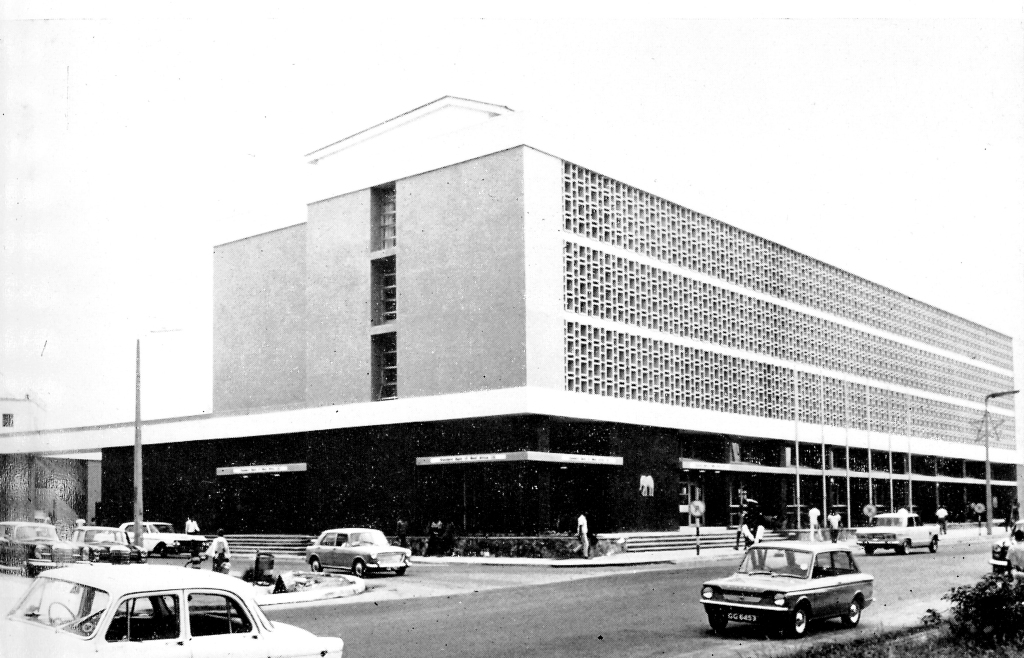
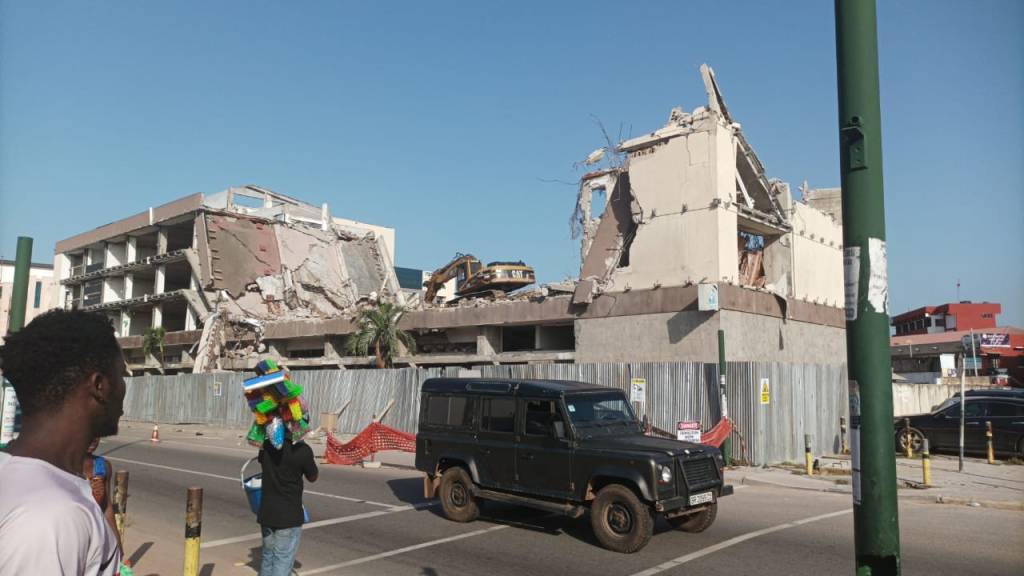
A few years ago we reported on our Keeping Cool project and included a photograph of the Standard Chartered Bank on Accra’s High Street. The bank had been refurbished, radically changing its passively cooled perforated facade to a sealed glass envelope relying on air-conditioning.

We’ve just received updates from Accra that the bank has now been demolished. No details have been released on what is to replace the bank.

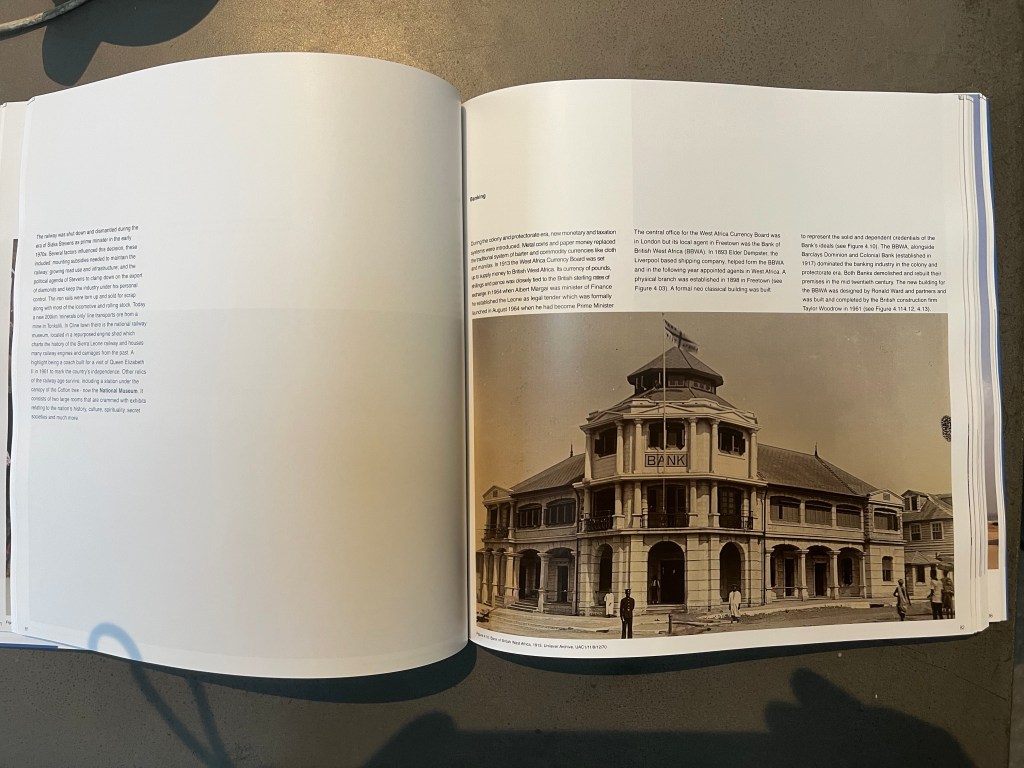
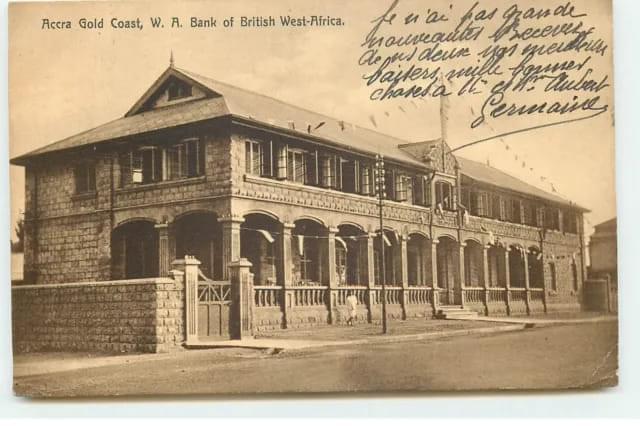
The same site has been used as a banking hall since the late 19th Century. Below are some of the photographs of the site revealing the continuity and change over the last century and the variety of architectural solutions deployed. Joe Addo kindly sent over some photographs of the shock demolition taking place earlier this month.

Accra High Street: Bank of British West Africa shown on the right hand side with the arched loggia
Postcard showing the Bank of British West Africa on the same site of Accra’s High Street, c1900
Standard Chartered Bank with passively cooled facade. Architect? unknown, c.late 1950s
Standard Chartered with new blue glass facade. Glimpse of Barclays bank on far left.
July 2023: Standard Chartered bank being demolished [Courtesy of Joe Addo]

We’ll post updates on what follows.

Dr Christopher Turner co-curator of the exhibition watching film featuring Ola Uduku

Press Cuttings:

“La Biennale di Venezia and the V&A present Tropical Modernism: Architecture and Power in West Africa. Organised in collaboration with the Architectural Association (AA), London, and Kwame Nkrumah University of Science and Technology (KNUST), Kumasi, this presentation at the Biennale Architettura 2023 critically reflects on the imperial history of Tropical Modernism through an analysis of the work of the Department of Tropical Architecture and a dozen key projects. It explores the ways in which this distinctive architectural style was initially developed and employed as a tool to support colonial rule before being adapted by West African architects to promote the excitement and possibilities of the period that followed Ghana becoming the first sub-Saharan African country to gain independence in 1957.

Curated by Dr Christopher Turner (V&A) with Nana Biamah-Ofosu and Bushra Mohamed (AA), the Venice presentation in the Applied Arts Pavilion is centred around a multi-channel film installation featuring interviews with surviving protagonists and footage of remaining buildings. Responding to the theme of the 18th International Architecture Exhibition conceived by Director Lesley Lokko, who writes ‘Africa is the laboratory of the future’ in her curatorial statement for the Biennale Architettura 2023, the presentation also lays the groundwork for a larger exhibition scheduled to take place at the V&A in London in 2024.”

https://www.labiennale.org/en/architecture/2023/applied-arts-pavilion

Professor Henry Wellington being interviewed for the exhibition

V&A Museum

https://www.vam.ac.uk/articles/la-biennale-di-venezia-2023

AA

https://www.aaschool.ac.uk/news/aa-dip2-tutors-nana-biamah-ofosu-and-bushra-mohamed-curate-tropical-modernism-exhibition-at-the-venice-architecture-biennale-2023

Dwell

https://www.dwell.com/article/2023-venice-architecture-biennale-african-housing-designs-d93d743b

“Venice exhibition restores African architects to the story of Tropical Modernism”, Financial Times:

https://www.ft.com/content/5b5c1d86-6a53-4c42-9d15-d602231c0b1e

“This year’s Venice Architecture Biennale is brave, baffling, stimulating and essential”, Financial Times, https://www.ft.com/content/07014793-4753-40c5-8369-29db16295d75

Architects’ Journal, https://www.architectsjournal.co.uk/news/pick-of-the-pavilions-at-2023s-venice-biennale

Wallpaper*

https://www.wallpaper.com/architectture/v-and-a-s-tropical-modernism-venice-architecture-biennale-2023-italy

Tropical Modernism Exhibition at 2023 Venice Biennale

The George Padmore Library: A Potential Attribution 

Text by Dr Ewan Harrison

George Padmore Library in Accra ,Ghana

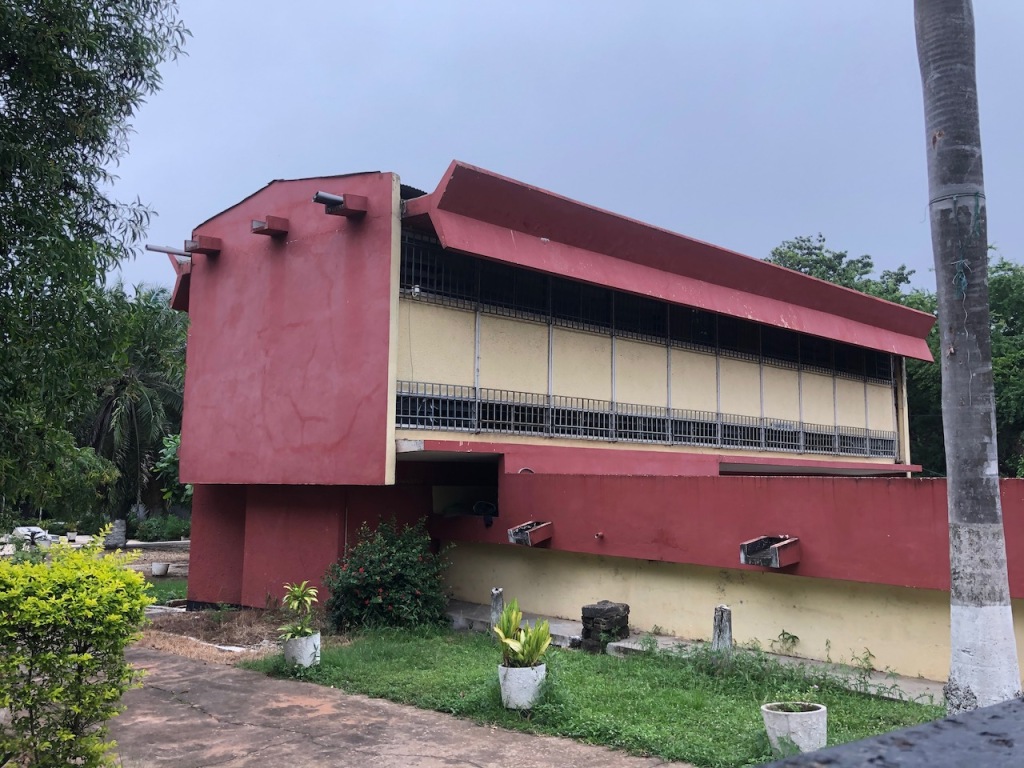
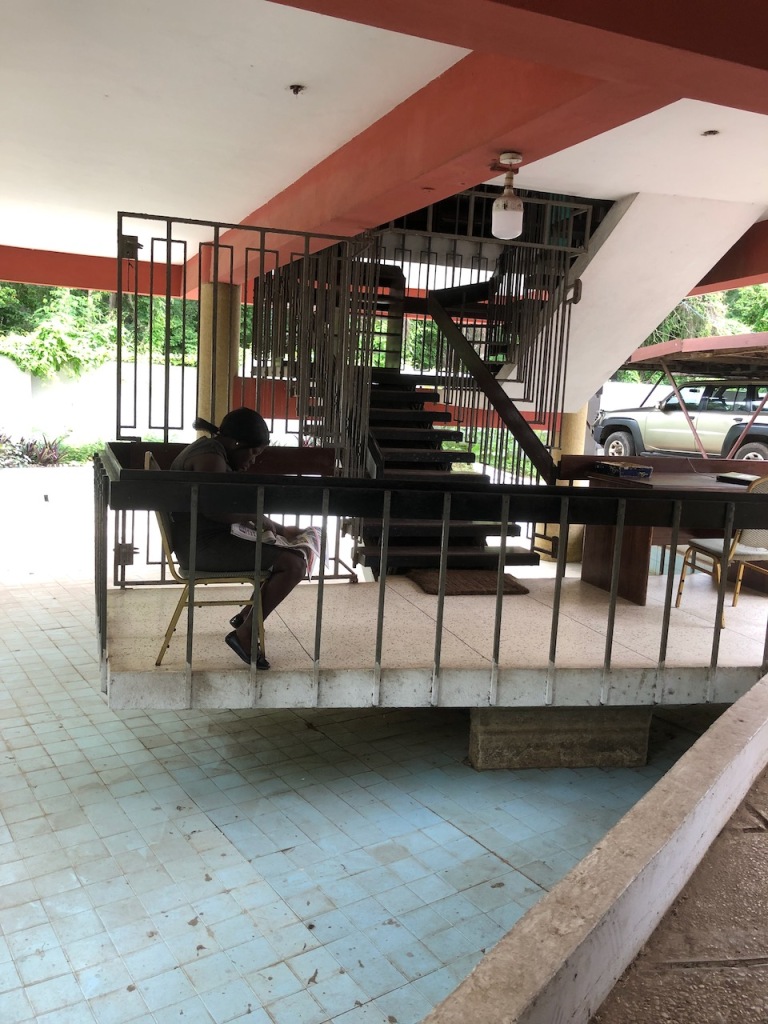
The George Padmore Library in Accra is a dynamic composition. Its principal block houses a fan-shaped reading room that extends from an apsidal end wall. This is raised up on pilotis, and is entered via a delicately wrought cantilevered staircase that itself springs from a fan-shaped expanse of terrazzo floating above a reflective pool. Externally, the facades are defined by horizontals of louvred glazing which allow for free air circulation, keeping the reading room at a comfortable temperature, and a strongly modelled canopy with sculpturally expressed rain water outflows. The building was established by the first president of the republic of Ghana, Kwame Nkrumah, in memory of the pan-Africanist writer, journalist and activist George Padmore. Padmore, who was born in Trinidiad, Nkrumah during the 5th Pan Africanist Conference, held in Manchester in 1945, and on Ghana’s independence, Padmore moved to Ghana to work for Nkrumah’s government as a diplomatic adviser. Sometime following Padmore’s death, Nkrumah’s government built the library in his memory, to house Padmore’s archive and a growing African studies library collection. The Library continues to function as Ghana’s primary deposit library to this day. 

Reflecting Pool and staircase of George Padmore Library

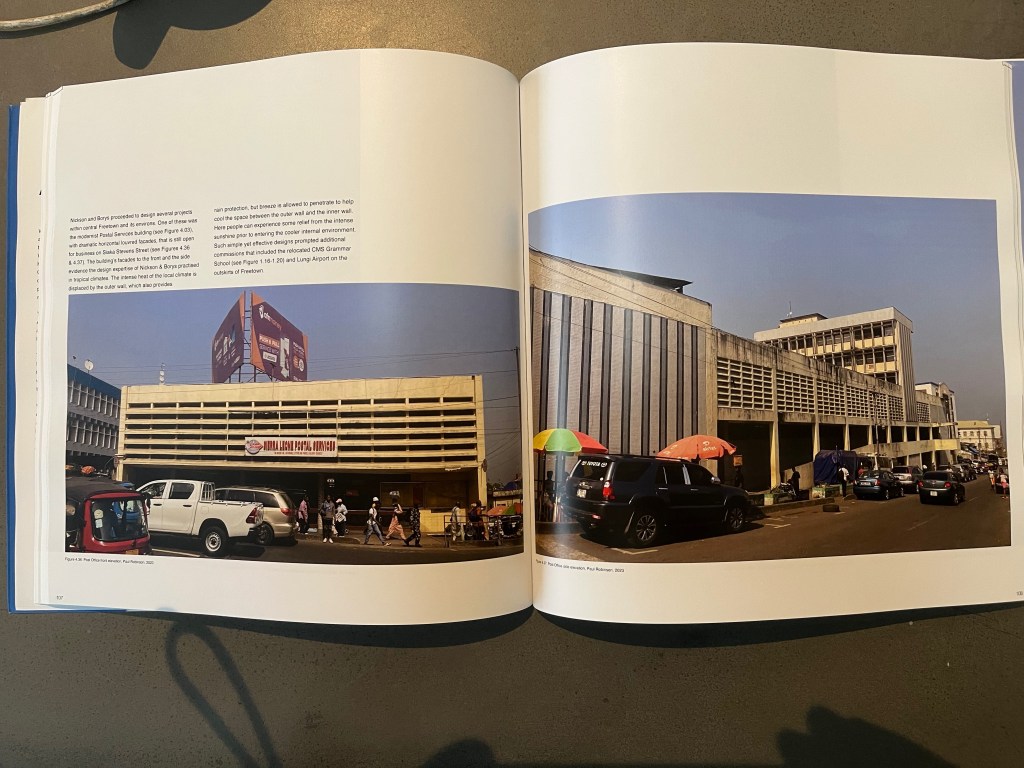
Before visiting, I had assumed that the building was likely designed by Nickson & Borys. Responsible for the design of both the Accra Central Library complex and the nearby Ghana National Archives building in the late 1950s, the practice might have seemed the natural fit for a commission to design a bespoke library in Accra at this date. However, on visiting the George Padmore Memorial Library, after having recently spent time in both of Nickson & Borys libraries in the city, the manifest differences in both spatial planning and design between those and the George Padmore Memorial Library became clear. Whilst both the Accra Central Library and the National Library are simple, cubic buildings, the architect of the George Padmore seems to have rejected the rectilinear in their handling of the main reading room. The Nickson & Borys buildings use brise-soliel and pierced concrete walls to dissolve the wall plane: creating lightweight buildings. In contrast, the George Padmore is a heavier, starker, more sculptural composition: much of its drama comes from strongly modelled canopies and sculptural concrete rainwater outflows, and its main facades feature long planes of unbroken concrete. 

Curved gable and reflecting pool of George Padmore Library

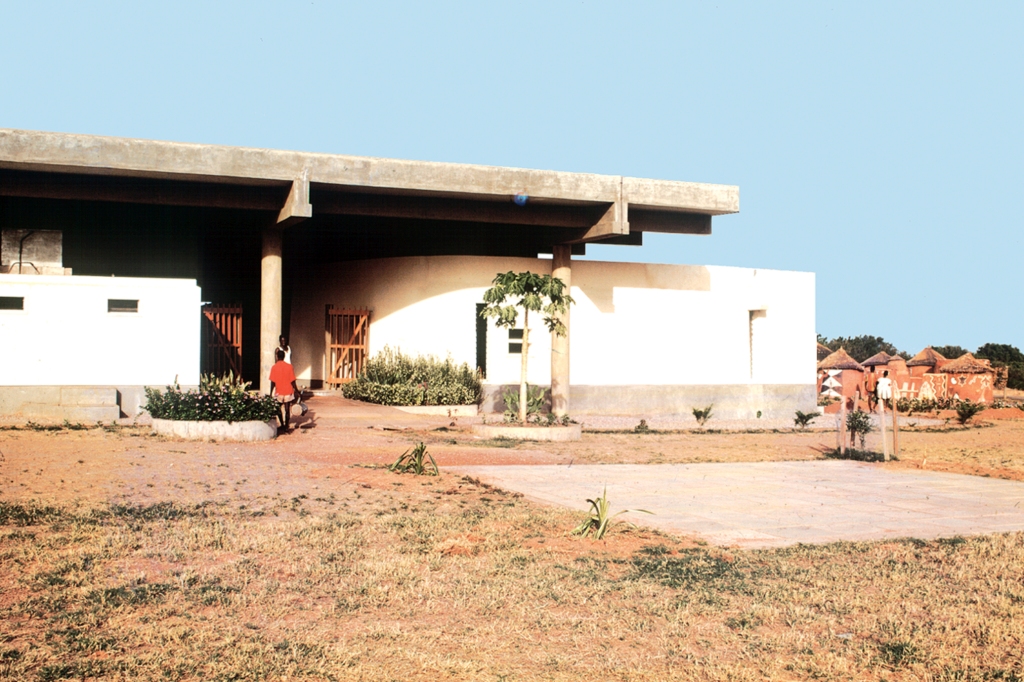
This points to another possible attribution, a design by Max Bond Jnr (1935-2009). The scion of a prominent African-American family, Bond studied architecture at the Harvard School of Design before working at Le Corbusier’s Paris atelier (1958-61) and the New York practice Pedersen and Tiley (1961-64). Bond believed that African-American culture should ‘hark back to Africa,’[1] and thus in 1963 wrote to Nkrumah asking for a job. By 1964 Bond was established in Accra as an employee of the Ghana National Contracting Corporation, the state’s contractor, working on designs for buildings at the government complex at Flagstaff House. Two of the precepts he outlined as central to his practice in Ghana were a ‘responsiveness to climate,’ and ‘modern buildings for new institutions.’[2] Bond’s most famous commission for the GNCC, the design of a public library at Bolgatanga, in the country’s arid northern region, strongly evidences these concerns. The Bolgatanga library project, which features four discrete volumes – two library reading rooms, a lecture hall and an administration block – under a free-standing roof designed to maximise cooling air circulation throughout the complex, is very different in its massing to the George Padmore Memorial Library. But there is something in Bond’s heavy roof at the Bolgatanga Library, in his handling of the oval wall of the Lecture Hall, and the sculptural treatment of the rainwater goods which show clear affinities with the George Padmore Memorial Library. And there are reasons beyond the stylistic to suggest Bond’s authorship of the building. Padmore’s intellectual project, and, it can be argued, much of Kwame Nkrumah’s political one, resolved around drawing attention to the shared heritage and struggles of Africans and the African diaspora throughout the Atlantic world. In this context, a design by an African-American architect, resident in Ghana, might have seemed especially suitable. 

Image of Bolgatanga Library: https://www.davisbrodybond.com/bolgatanga

Neither the Accra Town Planning archives, the papers of the Ghana Library Board or the archive of the Padmore Memorial Library itself shed much light on the building’s authorship, although a letter in the National Archives of Accra politely rebuffing an offer from Nickson & Borys to fund a memorial plaque to Padmore is certainly suggestive that the building’s patrons didn’t think a practice headed by European emigres a suitable one to design a memorial to a titan of Pan-Africanism (dated 1961, this letter makes no  mention of the project for the Library, suggesting that it predates the library’s construction). Questions remain, however. The Bolgatanga Library was extensively published, if the Padmore is by Bond, why wouldn’t he have seen that it too received attention in architectural publications? Why wouldn’t he accord it a central place in his Ghanian oeuvre? Was this perhaps a collaborative job, an awkward collaboration with one of the expatriate architectural practices that Nkrumah wished to side-line, practices like Nickson & Borys? Or with Eastern European or Yugoslavian architects employed by the GNCC? The last might be the most likely, given Ghana’s political culture in the early 1960s, and Padmore’s own long, if increasingly fractious, association with the Communist Party. Conclusive answer may well lie in the collections of the Avery Library at Columbia, which holds Max Bond Jnr’s archives, or in the private papers of Kwame Nkrumah. For now, a tentative attribution will have to suffice. 

George Padmore Library Interior: Photo Iain Jackson

[1] J, Max Bond Jnr and the Approproation of Modernism in a Library Design in Ghana 

[2] J, Max Bond Jnr and the Approproation of Modernism in a Library Design in Ghana

Have a look at https://www.design233.com/articles/from-buckman-to-turkson for my article on some lesser known Ghanaian architects, including John Buckman and Peter Nathaniel Kwegyir Turkson. I uncovered Turkson’s architecture thesis project in the University of Liverpool archives and discuss his plans for a new Parliament Assembly building in Accra.

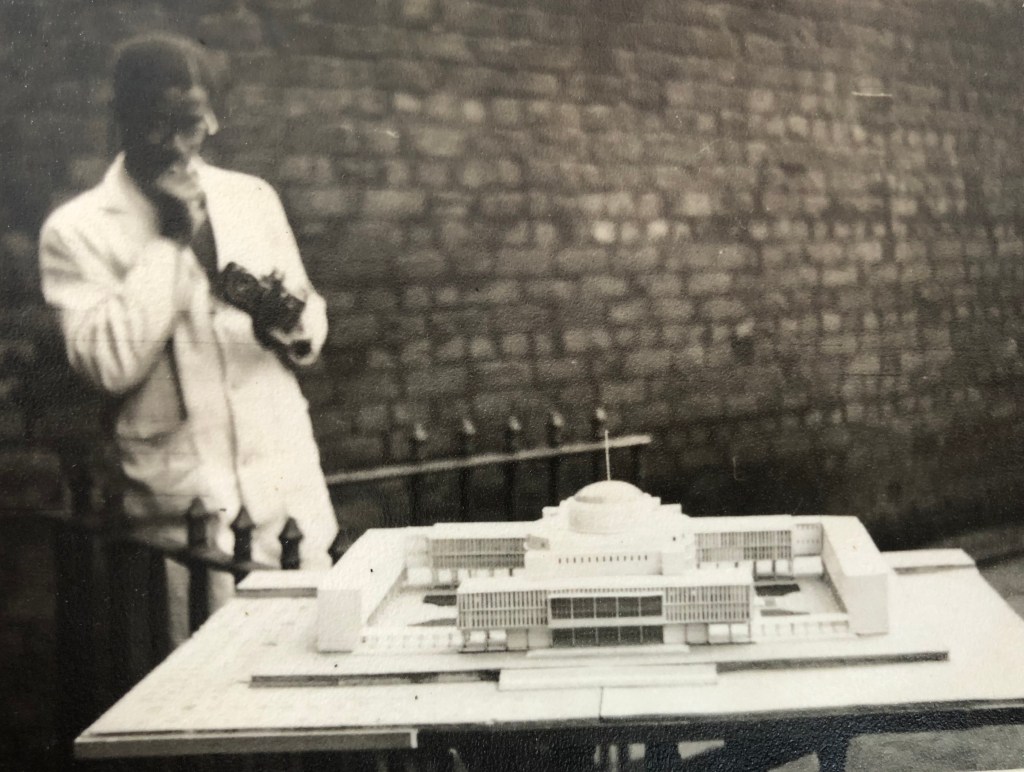
Peter Turkson in Liverpool with his architectural model for a new parliament building in Accra, 1954.

Turkson wanted a design that was ‘classic in character and at the same time distinctly modern in feeling and detail…[exhibiting] the spirit of modern times’. 

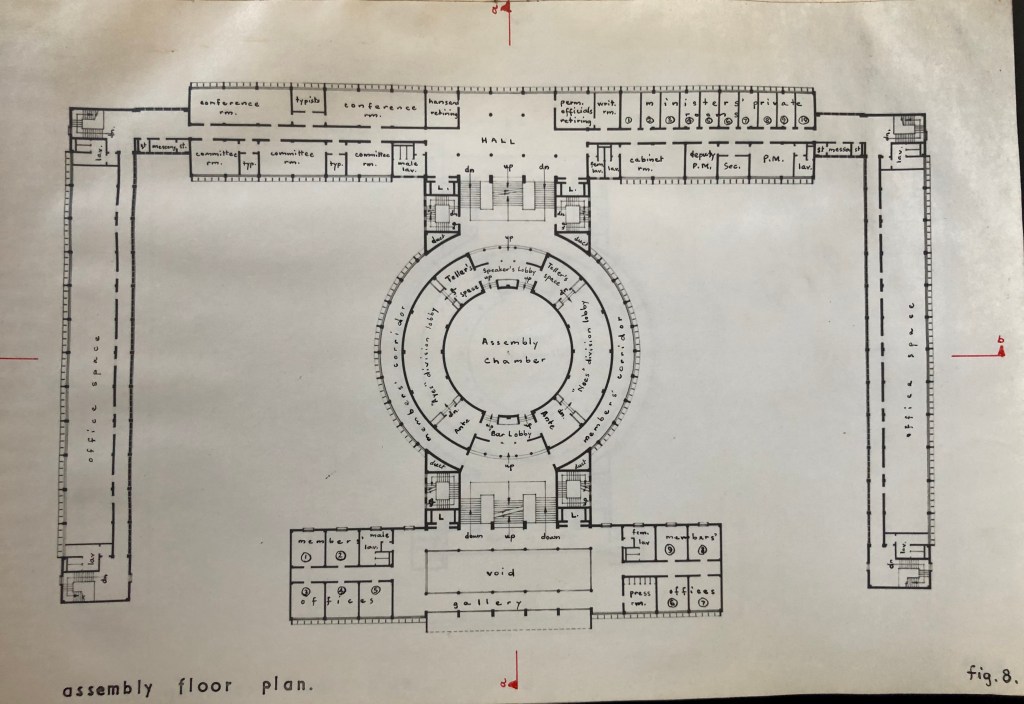
Proposal for the Accra Assembly building, by Peter Turkson, 1954

Turkson’s solution proposed using a ‘sandcrete’ (laterite soil mixed with cement) block wall along with a brise-soleil frame of fixed vertical and horizontal fins. Topping the structure and reflecting the chamber below was a reinforced concrete dome clad in copper, whilst some of the walls would be clad with faience finish. The plan was symmetrical forming two courtyards with a central drum for the debating chamber and library above. 

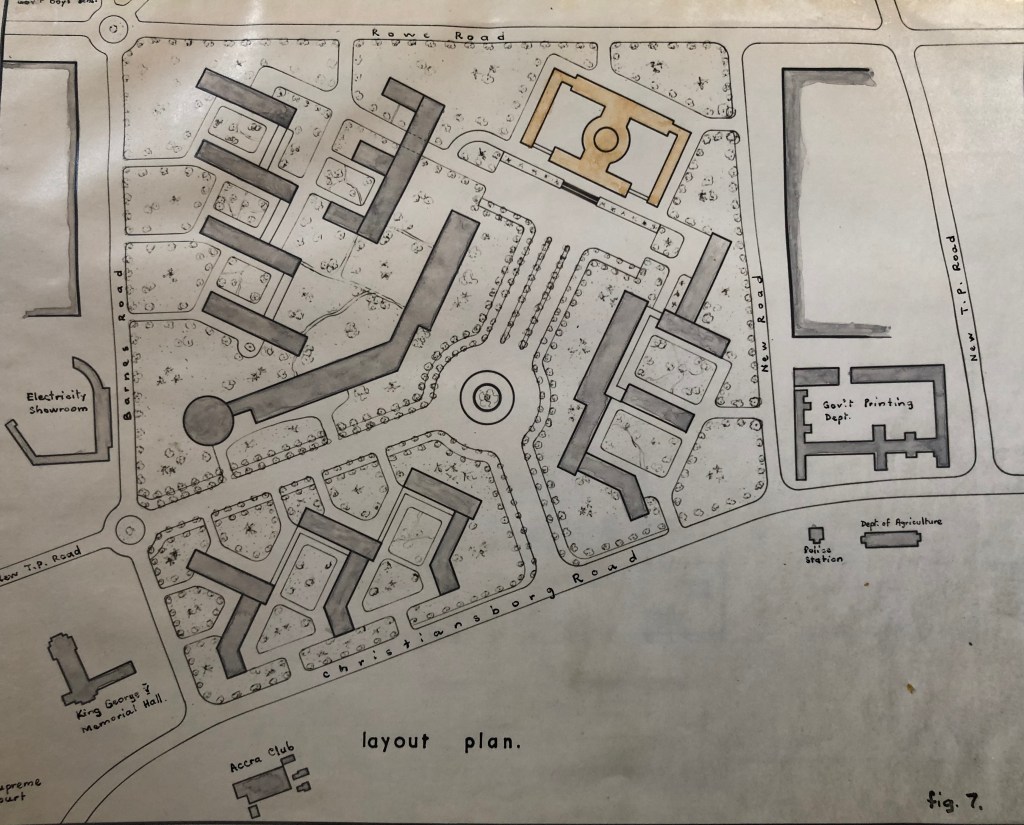
Site plan showing the proposed location of the new Assembly on Accra’s Barnes Road and Christianborg Road.

Crucibles, Vectors, Catalysts: Envisioning the Modern City

Hosted online across two days in March 2021, the Hyundai Tate Research Centre: Transnational and Liverpool School of Architecture’s “Crucibles, Vectors, Catalysts: Envisioning the Modern City” seminar investigated 20th century identities for postcolonial and post-independence cityscapes in Africa, South Asia and the Middle East.

Convened by Iain Jackson, Professor at the Liverpool School of Architecture, Clara Kim, the Daskalopoulos Senior Curator for International Art at Tate Modern and Nabila Abdel Nabi, Curator for International Art at Tate Modern; the seminar explored stories from these ‘highly charged moment[s] in the history of city making or shaping’.[1]

The seminar specifically positions cities as incubators for the generation of national identity and for ‘Modernity’. However, were individual cities sufficient for such grand objectives, or were they more isolated and fragmented sites for local, yet innovative gestures? Presenters demonstrated examples where both centralised urban contexts (including major urban planning initiatives and more piecemeal developments) and wider networks proved valuable in creating or indeed reasserting national and regional identities.

The destructive process of creating mid-century urban environments defined many global contexts. Whether in response to the need for new national identities in postcolonial contexts, reconstruction and housing following the devastating effects of war and a baby boom or strategies to address perceived ‘blight’ and urban flight, urban renewal, with its top-down, Bauhausian, car-focused, and federally funded backbone epitomised Modernity.

Some cities benefitted from a relatively early reconsideration of the blank slate approach to city planning. Lukasz Stanek described how Miastoprojekt, a Krakow-based state planning office of designers envisioned the future of post-revolutionary Baghdad through their experiences with reconstructing historic Warsaw after the Second World War.[2]

Using architectural and design services as a politically and financially motivated form of state aid during the Cold War, the Miastoprojekt plans rejected key aspects of Baghdad’s first modern city plan, including the demolition of the city’s Ottoman era historic and vernacular architecture, and tripling the size of the city at a local level without consideration for expansion through regional developments.[3]

Miastroprojekt’s legacy continued beyond the Baghdad planning commissions through design work and education with Polish and Czechoslovakian architects teaching Polish perspectives of Modernism in Iraqi universities. By the 1990s, with the fall of communism, Polish designers reversed Miastroprojekt’s strategy and were thinking Warsaw through Baghdad to revitalise their cities.

Big plans were not constrained to single urban environments. Fahran Karim’s ‘archaeology of the future’ presentation explored the role of a foreign designer in creating Pakistani nationalism; Greek architect and planner Constantinos Doxiaidis. Karim asks, “How do you represent a country without a past. Fractured geographically into East and West wings… 1000 miles of India between it?”[4]

Doxiaidis preferred stark Modernism, justified through statistical analysis and designed without classical Islamic aesthetic details. He utilised plan forms, practical details and building types that he believed (or presented) to be essentially Islamic.[5] Doxiaidis planned refugee settlements and Islamabad to include ’gossip squares’, souks, Dochala huts and central mosques.

Despite conducting ethnographic fieldwork and survey (aerial photography), Doxiaidis imported his understanding of Islamic community planning and architecture from his research in the middle east and projected the needs and traditions of widely dispersed refugees on narrow local contexts. Unsurprisingly, the communities adapted or removed many of Doxiaidis’ design features or simply did not use the spaces created for them, preferring to adapt their homes or build vernacular sites suited to their cultural preferences instead. While in practice, many of these adaptations and rejections were practical, Doxiadis’ technical expertise and foreign perspective failed to deliver built environments that suited and sustained the needs and preferences of Pakistan’s new citizens.[6]

Considering what was happening between East and West Pakistan, Ram Rahman shared a richly illustrated and personal view of the cultural and political context for his father Habib Rahman’s contributions to the ‘Nehruvian post-independence renaissance of Delhi.’

Habib Rahman, a young MIT-trained Bauhausian architect, was recruited by Nehru to work in Delhi, where he organised an international low-cost housing exhibition in 1954, including plans and a model for his own design for low-cost housing. Rahman’s house design was reproduced across India 100,000’s of times to address a critical housing shortage.

Rahman was a prolific designer and his work, including the World Health Organisation headquarters building of 1963 (demolished) and later designs for three monumental tombs epitomised Indian modernity.

Professional training and architectural education were key vectors for transnational exchange and development in postcolonial contexts. However, as Patrick Zamarian described in his presentation, the development of the Department of Tropical Architecture (DTA) at the Architectural Association (AA) in London was related as much to the independent administrative structure of the AA and its struggling economic position in the 1950’s as it was to meeting the challenges of Modern design in foreign contexts.

Zamarian recognised the problematic and homogenizing term ‘Tropical Architecture’ and then described the global networks of designers, patrons and educators who delivered training for a generation of British and international students, with a curriculum based on technological solutions for climatic design and a Modern design aesthetic that disregarded local aesthetic and cultural traditions.[7]

When the department visited Ghana, “these ideas for Tropical Architecture fell apart. [The curriculum] shifted from a generic science-based approach to a local and sensitive one, focused increasingly on housing, planning and eventually sustainable development.”[8]

Ola Uduku’s exploration of Modernist Lagos focused on the cumulative impacts of the DTA trained architects, engineers and Italian contractors who contributed to the rapid development of the marina district for independent Nigeria’s first capital city.[9] Although Lagos benefitted from major infrastructure improvements, the architecture described in Uduku’s presentation was piecemeal and demonstrated the evolution and intensification of development for the district from colonial centre to financial district.

Examples include Maxwell Fry and Jane Drew’s Co-operative Bank Lagos (1959) and the Architects Co-Partnership’s Bristol Hotel.[10] A Lagos building that encapsulated the international design collaborations for the time is the James Cubbitt and Partners’ Elder Dempster Lines building (1961), which introduced sleek modern lines, natural cross-ventilation, engineering innovations (pile foundations) contributed by Ove Arup and a distinctive funnel-shaped top structure alongside a notable collection of Nigerian artworks in the lobby. Nigerian designs for the time include Oluwole Olumuyiwa’s Crusader House (1955) and elegant villas outside Lagos by Obi Obembe Associates.

In other contexts, a national approach to recreating identity was accomplished through the redevelopment of pilgrimage networks and tourist destinations, including hotels and museums.

Talinn Grigor introduced the Society for National Heritage (SNH) and the role of the Shah’r in asserting the hegemony of the ruling class and Iranian elite (and recreating national identity) through the demolition and reconstruction of over 40 historic mausoleums to encourage secular and cultural tourism.[11] Examples include the mausoleums of Ferdawsi (1934) in Tus and Hafiz (1938) in Shiraz. Grigor argues that these new Modern mausoleums were integral to the creation of an aspirational middle-class culture in Iran, becoming a network for national tourism that remains today.

The Shah’r and the tremendous wealth generated by the Iranian oil industry funded the design and construction of avant-garde Modern environments and later more traditionally inspired art and architectural contexts, culminating in the uniquely Iranian expression of modernism inspired by traditional wind towers for the Tehran Museum of Contemporary Art (Kamran Diba, 1977).[12]

Lahbib el Moumni and Imad Dahmani’s presentation on post-independence Moroccan architecture included a second example of state-sponsored activities to promote tourism with Modern architecture. This was developed through hotels constructed outside urban centres in the country’s dramatic landscapes. Examples of exquisite and richly contextual forms from architects Abdeslem Faraoui and Patrice de Mazieres include the Hotel Les Gorges du Dadès (1974) and Hotel at Taliouine (1971-72) were shared, both to demonstrate the value of these sites and to explore the challenges of engaging communities with their recent past. [13]

The expressive and contextual Modernism of Morocco was certainly not isolated for post-colonial contexts. Amin Alsaden’s presentation demonstrates how urban renewal programmes in Baghdad in the 1950s created a sense of cultural and heritage loss, which predicated a culturally specific interpretation of Modern art and architecture for the city. He focused particularly on the work of architect Rifat Chadirji who merged globalism and regionalism in his designs.[14]

Alsaden described Rifat’s earliest buildings as somewhat derivative but noted that through the 1960’s his designs evolved to incorporate traditional shapes and plan forms, marrying social needs to social forms, and incorporating the narrow round arch form, in both elevation and plan.

Anna Tostoes’ presentation on the work of Amâncio (Pancho) Guedes in Mozambican cities clearly demonstrates how the architect’s designs coupled global technical, aesthetic, and cultural movements for the time with traditional and vernacular forms to create unique buildings for Maputo which continue to engage with local communities, including the Saipal Bakery (1954), Smiling Lion Building (1954-55) and the Abreu Santos and Rocha Building (1953-56).[15]

These Guedes landmarks remain relevant to 21st century contexts, but many other postcolonial buildings have been heavily altered or demolished. In my experience as a built heritage professional, architecture of the recent past, whether in postcolonial contexts, Europe, or the Americas is especially vulnerable to inappropriate alterations and loss.

Coupled with the experimental, academic, inefficient and sometimes foreign or dehumanising aspects of mid-century Modern architecture and urban renewal, it can be difficult ‘to love’ and costly to restore for sustainable 21st century purposes. Outside losses from the traumatic impact of military conflict or political maneuvering, it comes as no surprise that the architecture that has sustained and remains relevant to local communities is the architecture that originally engaged with its local context and traditions.

These landmark buildings need champions like Mémoire des Architectes Modernes Marocain’s (MAMMA) and DoCoMoMo to promote their value against ever greater development pressures. “Crucibles, Vectors and Catalysts” moved the discussion forward, but there are clearly collaborative opportunities for research and advocacy to be progressed.

Heather McGrath Alcock is PhD researcher at University of Liverpool’s School of Architecture studying the global development of planned company towns. Heather returned to academia after twenty years as a built heritage practitioner based in New York City and later London and the Wirral. Heather had the opportunity to work on landmarks of the Modern movement, including the United Nations Headquarters in Manhattan, a thematic survey of mid-century modern houses in New Canaan, Connecticut started by “the Harvard Five”, and the former Pan American Building at 200 Park Avenue, Manhattan.

References

Daechsel, Markus. 2011. ‘Seeing like an expert, failing like a state? Interpreting the fate of a satellite town in early post-colonial Pakistan.’ in Marcel Maussen, Veit Bader and Annelies Moors (eds.), Colonial and Post-Colonial Governance of Islam (Amsterdam University Press).

Talinn, Grigor. 2004. ‘Recultivating “Good Taste”: The Early Pahlavi Modernists and Their Society for National Heritage’, Iranian Studies, 37: 17-45.

Uduku, Ola. 2006. ‘Modernist architecture and ‘the tropical’ in West Africa: The tropical architecture movement in West Africa, 1948–1970’, Habitat International, 30: 396-411.


[1] Jackson, Ian. “Introductory remarks for Crucibles session” from “Crucibles, Vectors, Catalysts: Envisioning the Modern City”. Online. 2nd March 2021.

[2] In his presentation, “Rupture, Transition and Continuity in Baghdad’s Master Plans: From Minoprio to Miastoprojekt” on 2nd March 2021, Stanek noted that the Iraqi coup which toppled the monarchy in 1958 instigated a new era of collaboration with Eastern European architects and planners; networks established to “compete with and confront Western European and American hegemony to establish a new independent Iraq through its capital city Baghdad.”

[3] Baghdad’s first modern city plan was completed in 1956 by the British architect and town planner Sir Charles Anthony Minoprio, Hugh Spencley and Peter Macfarlane for the country’s Western aligned Hashemite monarchy.

[4] Karim, Fahran. “Archaeology of the Future: Constantinos Doxiaidis in East and West Pakistan”, from Crucibles, Vectors, Catalysts: Envisioning the Modern City seminar, Session 2, Vectors; 2nd March 2021.

[5] Ibid. According to Fahran Karim, Doxiaidis’ patron Ayub Khan “subscribed to a social theory of development but weakened democracy to validate his authoritarian rule because he felt that the poor, uneducated [masses] couldn’t participate in democracy.” 

[6] According to Markus Daechsel in his 2011 contribution ‘Seeing Like an Expert, Failing Like a State?

Interpreting the Fate of a Satellite Town in Early Post-Colonial Pakistan’, in Colonial and Post-Colonial Governance of Islam, ed. by Marcel Maussen, Veit Bader and Annelies Moors (Amsterdam University Press, 2011), p 159-160, there were many problems associated with the rapid and uneven development of the refugee settlements (lack of basic services (running water, electricity, sewers) and infrastructure (storm sewers), unfinished civil engineering works and the relatively poor refugee communities could not afford rents for the shop spaces, so were not used.

[7] Including Michael Pattrick, Director of the AA in the 1950’s who saw the new department as a way to improve the Association’s finances and academic standing, to Maxwell Fry who supervised the first few years of the department and then culminating in Otto H. Königsberger’s (1908 – 1999) leadership. From Zamarian, Patrick. “Global Perspectives and Private Concerns: The AA’s Department of Tropical Architecture”, from Crucibles, Vectors, Catalysts: Envisioning the Modern City. Online. 2nd March 2021. 

[8] Ibid. 

[9] Lagos was the original capital city for independent Nigeria. However, it is now the capital of Lagos State since the Nigerian capital city moved to Abuja in 1991.  

[10] Ola Uduku, ‘Modernist Architecture and ‘the Tropical’ in West Africa: The Tropical Architecture Movement in West Africa, 1948–1970’, Habitat International, 30 (2006), 399.

[11] In ‘Recultivating “Good Taste”: The Early Pahlavi Modernists and Their Society for National Heritage’, Iranian Studies (2004), Talinn Grigor noted that “For the modernists, therefore, the control over the physical and conceptual “heritage” enabled them to erase the immediate past to construct the “progressive” future. Destruction of building-as-representation [traditional sites of religious pilgrimage] proved central to the construction of the pending utopian future. Architecture was imperative to the success of the [Society for National Heritage] SNH’s modernizing agenda.”

[12] The Museum opened months before the revolution started which saw the monarchy overthrown and exiled from the country.

[13] While more ancient histories and built heritage are preserved and underpin 21st century cultural identity in Morocco, the architecture of the mid-twentieth century has been over-looked, inappropriately altered or destroyed. Mémoire des Architectes Modernes Marocain (MAMMA) was created in 2016 by young architects concerned with the loss of these sites. 

[14] Alsaden noted in his 9th March 2021 presentation “Syntheses Across Disciplines: Rifat Chadirji and Art-Architecture Liaisons in Modern Baghdad” for Crucibles, Vectors and Catalysts: Envisioning the Modern City, Chadirji was part of the elite bohemian culture of Baghdad, which included artists and architects who were educated in Europe and America. Against the backdrop of political turmoil, they created a vibrant, creative society that embraced Modernism ‘as an act of rebellion against the legacy of British architects who had used Neo-classical designs with orientalist tropes’. 

[15] Tostoes, Ana. “Correspondences, Transfers and Memory: Maputo’s ’Age of Concrete’”, from Crucible, Vectors, Catalysts: Envisioning the Modern City seminar, Session 2, Vectors; 2nd March 2021.
New Research:Suzanne Francis-Brown & Peter Francis Norman & Dawbarn, the UCWI, and Tropical Modernist Architecture in Jamaica” in Caribbean Quarterly, 65:1, 27-56, DOI: 10.1080/00086495.2019.1565219

The University College of the West Indies (UCWI) At Mona, Jamaica, established immediately following World War II, was one of the early greenfield university developments among British colonies in the Southern Hemisphere, as the British sought to ameliorate patently negative social conditions.

016

UCWI Designed by Norman and Dawbarn. Image courtesy of Special Collections and Archives at University of Liverpool

It was also one of the early tropical iterations of the modernist aesthetic that affected European landscapes from the early to middle decades of the twentieth century, sparked by the Bauhaus school of design and the work of iconic architects of the modern movement. British architectural firm Norman & Dawbarn received the contract to design the nascent West Indian university and its associated teaching hospital only weeks after the arrival of the first principal on site in Jamaica in 1946, and the overall scheme proposed in 1947, parts of which were built in stages between 1949 and the mid-1960s, remains recognisable today despite differences at the time and subsequent shifts in architectural approach.

Full Paper here: https://doi.org/10.1080/00086495.2019.1565219

 (sub) URBAN TROPICALITY: Urban challenges in the tropical zone

International Network of Tropical Architecture (iNTA) Conference at The University of Queensland, Brisbane, Australia,  5 – 8 December 2019

The cities and urban centres of the (sub) tropics are where the greatest challenges facing our collective future can be found. They are where the challenges of global warming, inequality and the migration of people fleeing political unrest or climate change are at their most extreme. The 2019 International Network of Tropical Architecture (iNTA) conference provides a forum to discuss architectural and design solutions for a resilient, smart and just future for urban centres in the tropics.

Founded in Singapore in 2004, the International Network for Tropical Architecture (iNTA) is a networking platform for international researchers and practitioners to collaborate and learn from each other about problems and solutions pertaining to architecture and urban design in the tropical (and sub-tropical) regions and brought together by the shared climatic imperatives and opportunities of these regions. The iNTA permanent secretariat is located at the Department of Architecture, School of Design and Environment at the National University Singapore.

The 2019 iNTA conference is hosted by the School of Architecture at The University of Queensland, located in Brisbane, capital city of the state of Queensland, Australia. Brisbane is proximate to both the fastest growing urban centres in Asia and many Small Island Developing States (SIDS) most at risk from climate change, including Kiribati, Marshall Islands, Federal States of Micronesia, Marshall Islands, Niue and Tuvalu amongst others. Queensland’s most northern extremity, Cape York, sits at the confluence of the Indian and Pacific Oceans, those very same oceans that generate the weather systems that circle the globe and affect the destiny of millions of people.

For those who live in the so-called “global south,” there is a sense of urgency about the challenges arising from rapidly changing climate conditions. Matters are not merely academic, but dynamic and concrete. Before the launch of iNTA, discourse around architecture and urbanism in the tropics was framed by centres of scholarship in Europe and North America. The malingering aftermath of devastating tropical storms such as Maria and Irma (2017) in the Caribbean and Typhoon Haima (2016) in the Philippines challenges such ascendancy. The 2019 iNTA conference in Brisbane brings discourse to a subtropical city at the crossroads of cultures, regions and climate zones. At a time when Australia’s role in the region continues to be questioned, it provides an opportunity to enhance north-south dialogue. 

Submission Information & Instructions

Submit abstracts of no more than 300 words in length by email as Word documents to:  https://easychair.org/conferences/?conf=inta2019.  Please name the email subject ABSTRACT-SURNAME and use this name for your submission file as well.

  • Abstract deadline: 26 April 2019
  • Submission of full papers for review: 26 July 2019
  • Submission of final papers for publication: 18 October 2019

 All abstracts will be considered by the conference academic committee; authors will be invited to prepare a full paper (no longer than 4,500 words); authors wishing their papers to be published in conference proceedings should submit their final papers for peer review on or before 26 July 2019. The date for submission of final papers is 18 October 2019. Authors may opt out of publication.

Conference Streams 

Tropical Architecture refers to constructed architectural and urban environments relating the climatic and natural conditions of the tropical (and sub- tropical) regions, and interacting with various local specifics of culture, urban fabric and technology. Contributions to the following conference streams are sought. 

1.            Tropical Urbanism  

Stream focussing on challenges to and solutions for enhanced liveability in urban centres of the tropics. Papers might address:

  • projects or propositions for reversing or healing the degradation and collapse of urban centres under rapid growth; 
  • urban infrastructures at risk: rising sea-levels, increasing storm intensity, expanding torridity and aridity.
  • urban adaptation responses : design planning policy, governance and codes
  • urban forms shaped by determinants other than climate alone, such as topography, nature, cultural life. 
  • vegetation in (sub) tropical cities: cultivation in gardens and the peri-urban or neglect in terrain vague

2.             Tropical Architecture :: Contemporary Tropical-isms

Stream focussing on individual designs/ architectural, infrastructure, adaptation projects.  What is it that makes the contemporary architectural project tropical? Or the tropical project contemporary? Papers might illuminate projects that demonstrate instances of : 

  • building technologies: tropical and subtropical applications including 
  • passive low energy and carbon neutral architecture
  • climate mitigation strategies
  • equity in the tropical city
  • the (sub)tropical tower
  • contemporary architecture (still) learning from vernacular traditions
  • reciprocities/dialogue between architecture and tropical environments: between the zeitgeist of a globalized culture and a project’s specific circumstance. 

3.            Narratives of Disease, Discomfort, Development and Disaster ::  Reconsidering Tropical Architecture and Urbanism  

The idea of tropical architecture and urbanism initially developed through a particular connection between discourses on disease, spatial practices and optimum architectural typologies, which were believed to circumvent the spread of tropical diseases and to maintain the comfort of the white settler. After the Second World War, the focus shifted from the European settlement of the colonial tropics to the self-development and governance of the world’s tropical regions; a phenomenon necessitated and propelled by post-war decolonization and global regimes of development aid. Accompanying this change was a shift away from the physiological comfort of the colonial settler to a new focus on indigenous cultures, vernacular building traditions, use of local materials, and increasing appreciation for the psychological value of cultural conventions, including superstition and taboo. The aim of this stream is to examine how “triumph” in the tropics was imagined across multiple geographies, by various subjects, through diverse discourses, and at different times and to critically investigate the roles architecture and urban planning played in this process. We particularly welcome papers that offer historical case studies of tropical and subtropical architecture and urbanism examined through one of four lenses: 

  • disease 
  • discomfort
  • development or disaster.

This stream will be convened by Dr Deborah van der Plaat (The Univerity of Queensland), Dr Vandana Baweja (University of Florida) and Professor Tom Avermaete (ETH Zurich).

4.             Historic Urban Landscapes and Tropicality 

The Historic Urban Landscape is a new approach recommended by UNESCO that recognises and positions the historic city and its core as a resource for the future and the centre for the urban development process. Papers might address:

  • operational principles for urban conservation models: respecting values, traditions and environments of different cultural contexts.
  • historic urban centres and tropical vulnerability 
  • mapping urban heritage values and attributes
  • planning, design and implementation of development projects in historic urban centres
  • adaptive use and re-use impacting authenticity and integrity of physical and social fabric in historic urban centres
  • Small Island Developing States (SIDS) of the Pacific and Caribbean: their vulnerability and resilience