Archive

Tag Archives: village

Junior Staff Quarters Plan View
Junior Staff Quarters, near Christianborg Castle, Accra


New Buildings in the Commonwealth edited by Jim M. Richards in 1961 pulled together many articles from earlier editions of the Architectural Review. It formed an important set of essays, photographs and illustrations with each geographically themed chapter written by an architect familiar with that part of the world. Maxwell Fry wrote the West Africa section and he selected some of the best buildings from the proceeding decade to feature in his piece, including some lesser known works from relatively unknown architects.

Junior Staff Quarters, Accra

The opening project for the Ghana section was a housing scheme from Accra designed by the Public Works Department Chief Architect, G. Halstead with architects-in-charge D. A. Barratt and W. J. Clarke. Very little is known about these architects, apart from Halstead worked with S. Bailey (townplanner) on the new layout of Tamale in 1953..[1]

The Accra housing project is a very carefully designed set of 24 apartments arranged across three blocks. Each dwelling faces into the courtyard space and are one room deep to maximise cross ventilation. Each house also has its own private balcony/court for sleeping outside and cooking.

The formal arrangement and sloping roofs are all carefully arranged and the quality of the build is exceptional. I’ve wanted to see these houses for some time now and it was a special moment to see them come into view as I made my way from the 17th Century Danish ‘Christianborg Castle’. The houses were constructed as ‘Junior Staff Quarters’ for people working at the Castle (which was then used as the Prime Minister’s Residence) during the early years of Ghana’s independence.

The houses remain largely unaltered from the original design, albeit lacking some basic maintenance. I spoke to a number of the current residents and they very much enjoy living here. The sense of community is strongly felt, and overlooked internal courtyard adds security. Parts of Community 1 at Tema have a similar feel but don’t quite achieve the ‘walled city in miniature’ qualities of this project.  It marks a significant shift from the compound and ‘village-housing’ projects built elsewhere at the time, and continues to offer many clues for how we might design inexpensive housing in Ghana today.
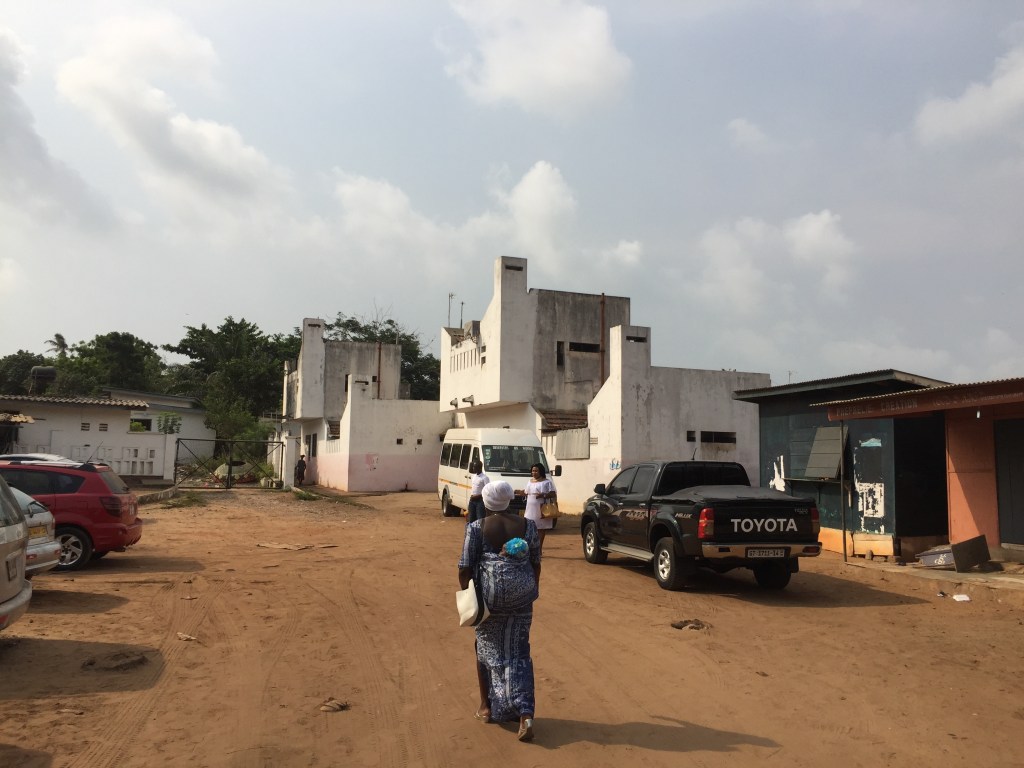
Junior Staff Quarters, 2019

[1]Tamale Town Planning [1948-54], British Library, EAP541/1/1/333, https://eap.bl.uk/archive-file/EAP541-1-1-333
Adjena Revisited

Ola Uduku writes;

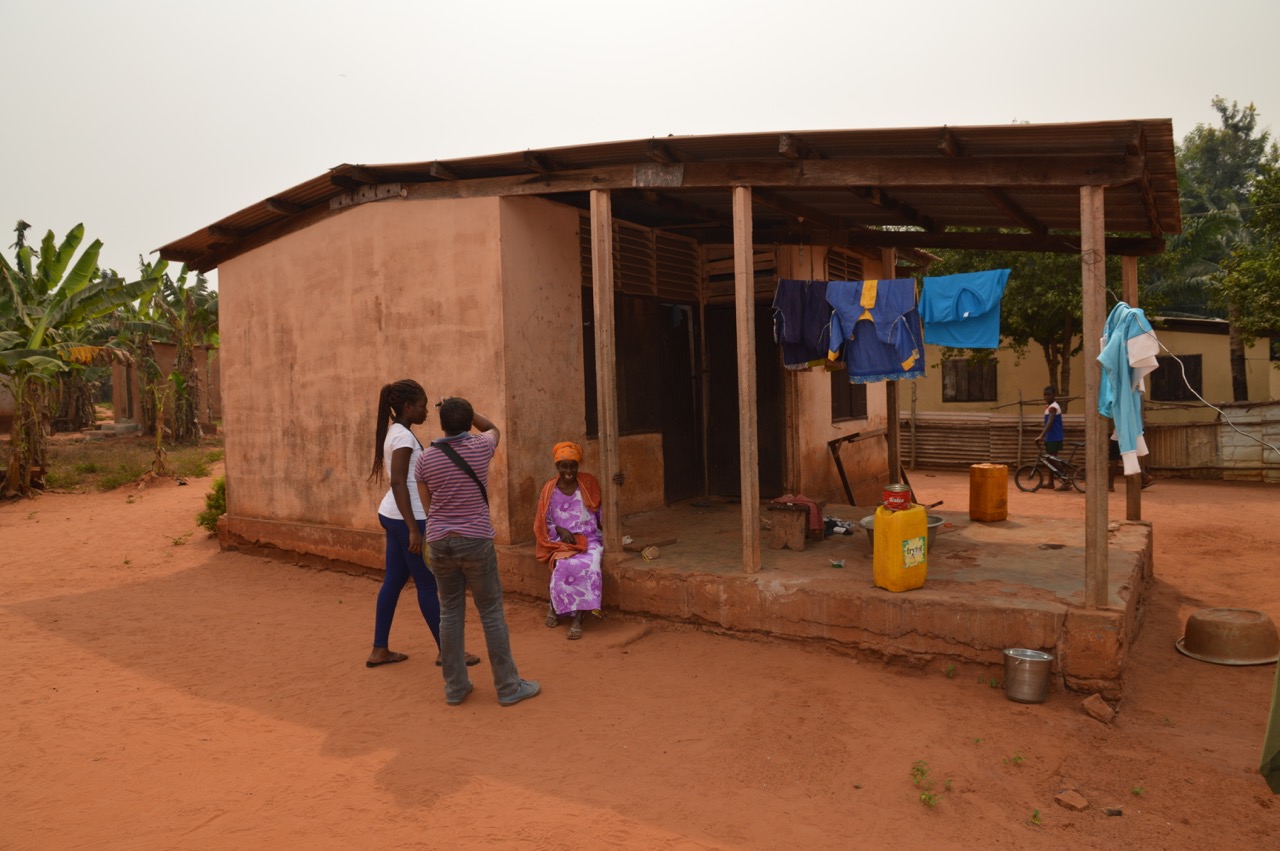
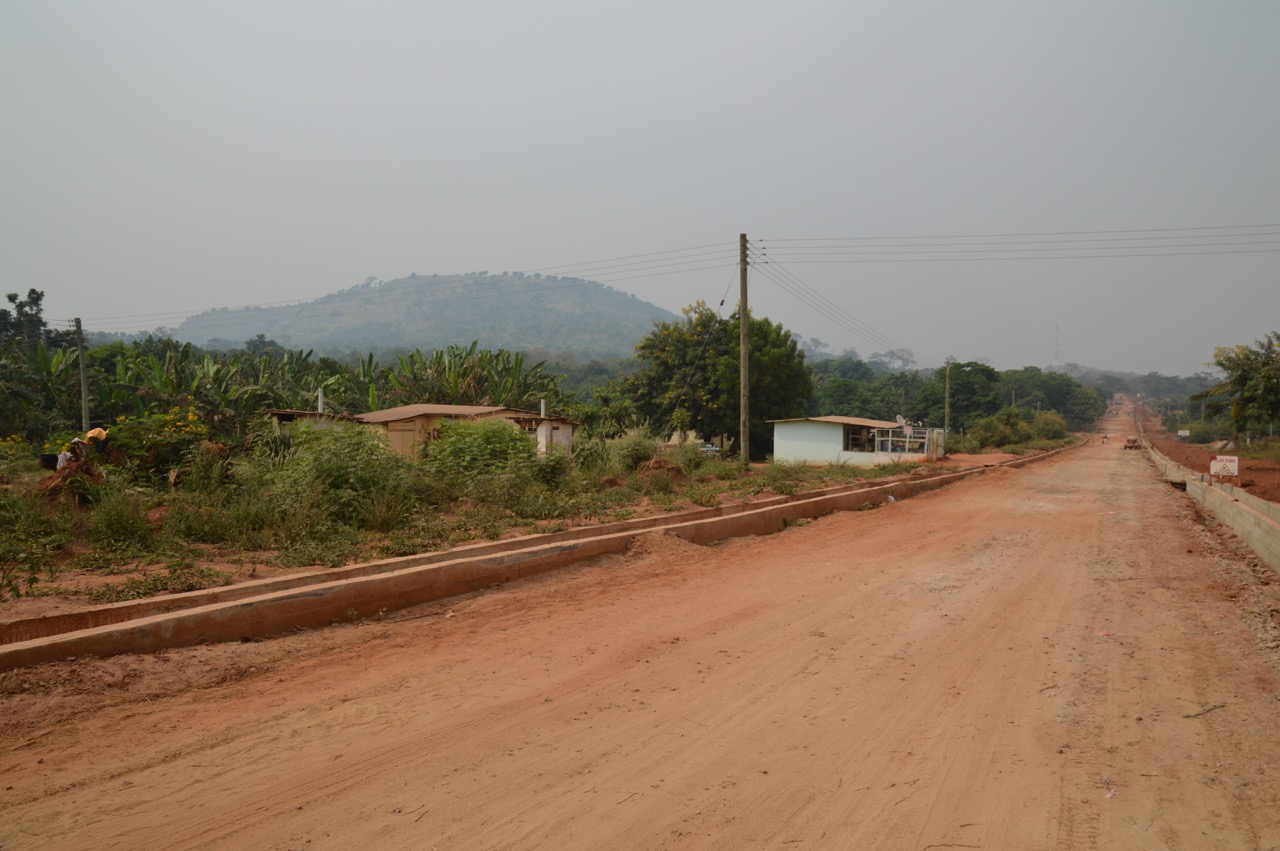
It was a long and dusty journey, we soon understood why the taxi wouldn’t haggle down from the amount he quoted. The road definitely existed, it was just in very poor condition and work was being done near the end of the journey to Adjena to re-grade the laterite. We finally pulled into a gathering of housing on each side and slowed down, I said this looks likes ‘tropical designed housing’.

dsc_0456

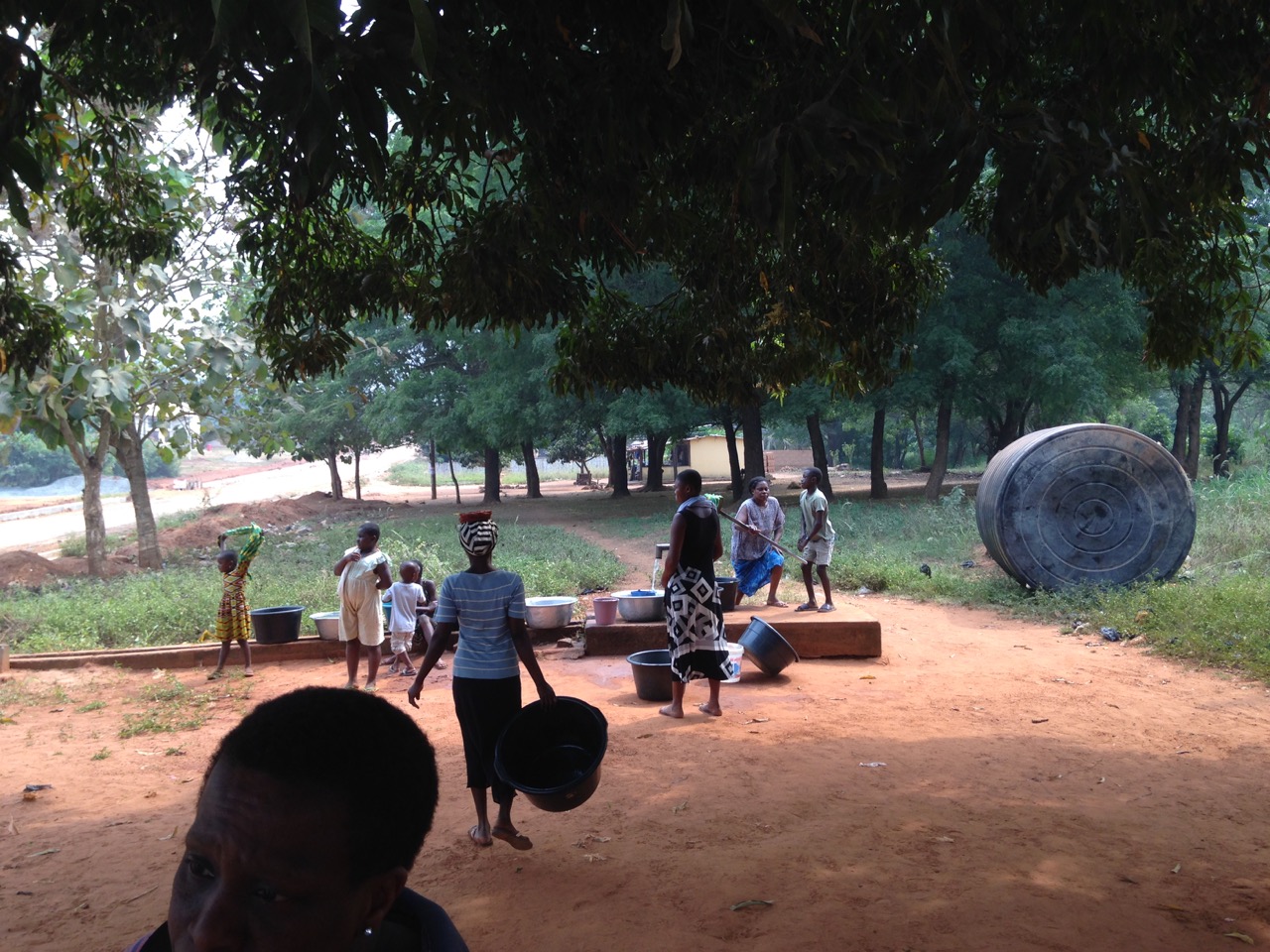
A hand-operated water pump caught our eyes and we watched a small gathering of  women and children pump up their water into buckets and containers and then take them away for use.  We walked to two elderly men dozing under a tree and asked the throng if we could wake one up.

img_0727

‘Is the Adjena resettlement area?’, we asked.

‘yes’ came the reply.

Our first informant was in his eighties and  had arrived when the first set of resettled villagers were moved to the site in 1957. He explained that there was a school further along and more housing.

We went further into the clearing and hit gold – a small school designed around a courtyard to specific tropical standards. Windows were deep and allowed light to penetrate through the classrooms, and the verandas were ample to enable their use in teaching.  The school was foregrounded by a number of trees which seem to have been planted to a specific format, unfortunately they seemed to be dying, but they still helped frame the school and looked as if they were very much part of the school grounds.

dsc_0439

Moving on from the school we came to a clearing with a designed kitchen–cooking area central to a number of small dwellings. We stopped and talked to Agnes, whom we asked about what she remembered about moving to Adjena. She immediately recounted that she had been 27 when the move had taken place and she was 87 now. A quick date check confirmed that these dates tallied with the move of the settlement in the Volta valley to Adjena. As we chatted with her on the step to the kitchen she explained that she preferred the new settlement to the old as the new buildings were  ‘Cortex’, the name given to the company who built the settlement made up a concrete frame with infill breeze block walls.

dsc_0443

We passed a number of small dwellings designed as part of the scheme. All dwellings now had electricity with television sets to prove it, however water was only available via the standpipes that we had seen when we walked into the settlement. The communal WCs did not seem to well used, one supposes that in this very remote rural area this option was unlikely to be popular.

For a resettlement scheme approaching its 6th decade Adjena was in good condition, it now had a junior secondary school and the road carried both the electricity lines and also the mobile phone masts. The road also ran through to the community council offices and there were other settlements which were now part of the greater extended Adjena community.

Developments were coming to Adjena, and we had been made welcome guests to this sleepy, yet thriving community. What would Leo De Syllas and the other designers of the then New Adjena think of their creation more than half a century on? An understated success we’d say as we made our dusty way back to the town.


A.E.S. Alcock and the planning of Asawasi, Kumasi

As part of our research into the architecture and planning in West Africa we have uncovered some important work undertaken by Alfred Edward Savige (“Bunny”) Alcock. He worked as  Town Engineer in Kumasi, 1936-45, and then as Gold Coast Town Planning Advisor from 1945-56. Whilst working in Kumasi, Alcock was a pioneer in developing self-build villages. He set up small scale production lines where the villagers could produce ‘swishcrete’ blocks, prefabricated roof trusses and various sanitation devices such as latrines and communal laundries.

DSCF0073

This work was all carefully documented by Alcock and his hand-made photo album survives in the National Archives, London.  Maxwell Fry and Jane Drew worked with Alcock on this ‘experimental village’ (they were credited in Alcocks album) and went on to plan the larger second phase of the development, known as Asawasi. Fry described how the project grew, ‘from being a little experiment has become a big scheme spawning all over the hillside.’

Alawasi_plan

The plan above shows the complete development arranged into ten compounds (housing groups). The area coloured pink was the original village planned by Alcock with the remaining areas designed by Fry and Drew. Alcock proposed a terraced (row) housing approach to create ‘interior’ courtyards, or ‘open compounds’. Alcock described it as a ‘ a repetitive pattern of garden and service compounds alternating… this pattern is adapted to curving contours in the main estate.’ There was a low-tech thrifty approach to the development as Alcock describes,

‘door and window furniture was made from scrap iron by blacksmiths. It was stronger and cheaper than imported furniture.’ In the kitchen a hood and flue were provided by using ‘old tar drums covering all four fire places shared by eight tennants’
Fry and Drew’s Village Housing in the Tropics is indebted to this early development. Alcock proudly noted that his designs could exceed the current building regulations and reduce costs. The big idea was for the government to supply the materials (and technical knowledge) with the villagers providing the labour. It was a system that became very popular throughout West Africa, although it was not always a fair and equitable solution.

DSCF0075

Alcock took over from Fry as the Town Planning Advisor in Accra and was instrumental in the initial planning of Kwame Nkrumah’s Volta River project, new port and town Tema. He (along with Helga Richards) published his findings in a series of ‘How to’ building guides. Although less commercially successful than Fry and Drew’s acclaimed Village Housing in the Tropics manual, Alcock’s books were far more pragmatic and explanatory. There is also an element of humour in his books. How to Plan your Village for example is all about an educated villager returning to his old village and helping them to restore it – the character is named ‘Kwame’  – an overt reference to Nkrumah and a metaphor for the radical changes he was proposing.

howtovillage