The July-August 2025 edition of the Architectural Review has published an extended 9-page feature article written by Lois Quartey and Julia Gallagher on the Accra Community Centre, Ghana. The building designed by Maxwell Fry and Jane Drew, with Theo Crosby as the lead assistant, opened in 1951 and quickly became an important educational, cultural, and social hub in the city. It was paid for by the United Africa Company in an attempt to foster local support after its ‘Swanmill’ HQ was looted and burned following the 1948 Accra riots. TAG provided some drawings and photographs that accompany the article.
The primary thrust of the piece is to raise awareness of this significant historic structure – especially how it was used in the independence campaigns and beyond – and to stress just how vulnerable this building is. Currently being used as a mere store and at risk from the Marine Drive development plan – the article expands on what we covered here https://transnationalarchitecture.group/2022/06/22/accras-renaissance-fishing-harbour-marine-drive-and-a-new-cathedral/ back in 2022.
It’s a deceptively simple and even ordinary building at first sight – but after spending time exploring it’s two interconnected courtyards and assembly hall it quickly begins to feel at home, climatically comfortable, and a nice place to be. It’s also a significant structure because of its design pedigree and especially because of its political significance – so many important speeches, gatherings, and events took place here in the advent to independence and beyond. It’s also home to one of the largest installations by leading artist Kofi Antubam – that alone should secure its future. Our model that replicates one made by Fry and Drew featured in the recent V&A Tropical Modernism exhibition too.
If foreign and leading agencies such as the V&A museum and Architectural Review are prepared to give this seemingly humble building exposure, critique, and cause for preservation – surely the case can be made to restore this heritage structure and to weave it into the wider Marine Drive masterplan. Champions of Ghanaian culture https://www.design233.com/articles/in-trust-for-the-people are behind saving these works and raising awareness, but much more needs to be done.
To deliberately allow a ‘managed decline’ and slow demolition is a tragic waste and short sighted view of the building’s rich political history.
Accra’s James Fort is an iconic monument for Ghana and modern Africa. This lecture explores the fort’s evolution -from its role as a trading post in the early European-African encounters, through its significance during the trans-Atlantic trade and enslavement, to its later use as a modern colonial prison in the post-independence era. It also explores its connection to Ghana’s liberation movement, particularly its role in imprisoning Dr. Kwame Nkrumah and other political leaders during their resistance to British rule. Today, this monument represents the resilience, talent and creative potential of a sustainable future for Ghana and its youthful population.
This report presents findings from a comprehensive survey of 48 archives, collections, and repositories across Northwest England that contain significant West African historical material (1880-1980). We should have an interactive map of the archive locations published here shortly….
Here is a list of the archives consulted and key information for each collection/location/repository:
The research reveals a substantial but under-explored archival landscape that offers exceptional opportunities for advancing historical research into West Africa and its relationship with Northwest England. The collections span diverse themes including colonial administration, trade networks, missionary activities, healthcare, urban development, and cultural exchange, providing rich source material for interdisciplinary research projects.
Research Scope and Methodology
Geographic and Temporal Parameters
The survey focused on historical West African material from former British colonies including Ghana, Gambia, Sierra Leone, and Nigeria, with additional consideration of materials from Congo, Cameroon, Senegal, Mali, and Niger. The temporal scope encompasses the period 1880-1980, capturing the late colonial period through to early post-independence developments.
Thematic Categories
Research materials were categorised across key themes:
History and heritage studies
Urban design and city planning
Public health and medical history
Architecture and built environment
Trade and commercial networks
Religious and missionary activities
Colonial administration
Collection Assessment Framework
Each archive was evaluated using a systematic approach that assessed:
Type and format of materials (books, photographs, manuscripts, ephemera, artifacts)
Primary thematic focus
Volume and extent of holdings
Accessibility and research potential
Relevance rating (1-5 star system that reflected how useful the archive would be to our research interests in the built environment and history)
Key Findings: Archive Landscape and Research Potential
Distribution and Scale
The survey identified 48 archives across Northwest England, primarily concentrated in the Merseyside region but extending to Manchester, Lancaster, and Chester. Seven archives achieved the highest relevance rating (5 stars), each containing over 20 linear metres of diverse West African materials spanning multiple themes and formats.
Material Types and Research Applications
The collections encompass diverse formats offering multiple research approaches:
Documentary Sources:
Colonial administrative records
Trade and shipping documentation
Medical and health records
Urban planning documents
Personal correspondence and diaries
Visual Materials:
Photographs documenting colonial life, urban development, and cultural practices
Architectural drawings and city plans
Maps and surveys
Artistic representations
Material Culture:
Artifacts and objects
Textiles and decorative arts
Ceramics and sculptures
Models and architectural elements
Corporate Archives: Exceptional Research Resources
Unilever and United Africa Company Archives: The Unilever archives, particularly the United Africa Company (UAC) collection, represent one of the most comprehensive corporate archives relating to West African economic history. UAC, established in 1929 through the merger of the Royal Niger Company and the African and Eastern Trade Corporation, became the largest trading company in West Africa. The archives contain:
Extensive Trading Records: Documentation of palm oil, cocoa, groundnut, and timber trades spanning decades
Infrastructure Development: Records of store construction, transport networks, and commercial facilities across West Africa
Labour and Employment: Personnel records, training programs, and workforce development initiatives
Technology Transfer: Documentation of agricultural techniques, processing methods, and industrial development
Local Partnerships: Records of relationships with African traders, suppliers, and business partners
Post-Independence Adaptation: Materials documenting corporate strategy during decolonization and nationalist movements
These materials offer unique insights into corporate colonialism, the mechanics of extractive economies, and the complex negotiations between European capital and African societies. The collection provides essential source material for understanding how global commodity chains operated at ground level and their impact on local communities.
Barclays Bank Archive: The Barclays collection contains extensive documentation of banking operations across West Africa, including:
Colonial Banking Development: Records of branch establishment, credit systems, and monetary policy
Financial Networks: Documentation of money transfers, currency exchange, and international finance
Agricultural Finance: Materials on crop financing, seasonal credit, and agricultural development programs
Commercial Lending: Records of business loans, trade financing, and commercial development
Post-Colonial Banking: Materials documenting the transition to independence and continued financial relationships
The banking records provide crucial insights into how financial systems shaped economic development, facilitated trade networks, and influenced social relations across West Africa. These materials are particularly valuable for understanding the mechanics of colonial extraction and the evolution of financial institutions in post-colonial Africa.
Thematic Strengths for Research Development
Urban Development and Planning: The Archives contain substantial materials on colonial urban development, infrastructure projects, and city planning initiatives. These sources offer opportunities to examine how European urban planning concepts were implemented in West African contexts and their lasting impact on contemporary cities.
Medical and Public Health History: Rich documentation of colonial health initiatives, medical practices, and public health campaigns provides foundation for research into the history of medicine in West Africa, disease management, and the development of healthcare infrastructure.
Commercial and Trade Networks: Extensive shipping, banking, and commercial records illuminate the economic relationships between Northwest England and West Africa, offering insights into trade networks, commodity flows, and economic development patterns. Of particular significance are the Unilever archives (including the United Africa Company records) and the Barclays Bank archive, which contain unparalleled documentation of corporate operations, trading networks, and financial systems that shaped West African economic development throughout the colonial and post-colonial periods.
Religious and Cultural Exchange: Missionary records, religious materials, and cultural documentation provide resources for examining religious transformation, cultural exchange, and the complex dynamics of colonial encounter.
Colonial Administration: Administrative records and governance documents enable research into colonial policy implementation, administrative structures, and the mechanics of imperial control.
Research Opportunities and Applications
Interdisciplinary Research Potential
The diversity of materials supports multiple disciplinary approaches:
Historical Research:
Comparative studies of colonial administration across West African territories
Economic history of trans-Atlantic trade networks
Social history of colonial encounters and cultural exchange
Urban Studies:
Evolution of colonial cities and urban planning
Infrastructure development and its contemporary implications
Architectural history and building practices
Medical History:
Development of tropical medicine
Public health initiatives and their outcomes
Medical knowledge transfer and adaptation
Cultural Studies:
Missionary activities and religious transformation
Cultural exchange and hybrid practices
Art, material culture, and aesthetic transformation
Collaborative Research Framework
The geographic concentration of archives creates opportunities for:
Multi-Archive Projects: Researchers can access complementary materials across institutions, enabling comprehensive studies that draw on diverse source types and perspectives.
Network Building: The established archive network provides foundation for collaborative research initiatives, shared resources, and coordinated access to materials. The University of Liverpool and AHUWA are particularly well-positioned to serve as coordinating institutions/centres for multi-archive research projects, leveraging their expertise in West African studies and established international partnerships.
Digital Humanities Applications: The variety of materials (textual, visual, material) offers opportunities for digital humanities projects, including digitization initiatives, database development, and online exhibitions. The University of Liverpool’s digital humanities infrastructure and AHUWA’s focus on accessibility make this an ideal location for developing innovative digital approaches to archival research.
Strategic Recommendations for Research Development
Institutional Research Capacity: University of Liverpool and AHUWA
University of Liverpool Research Infrastructure: The University of Liverpool is exceptionally well-positioned to capitalise on this rich archival landscape. As a leading institution in historical research with strong connections to West African studies, the university offers:
Established Research Expertise: Faculty with specialized knowledge in African history, colonial studies, and economic history
Interdisciplinary Capabilities: Departments spanning History, Geography, Politics, Development Studies, and Business that can support multifaceted research approaches
Digital Humanities Infrastructure: Technical resources for digitisation projects, database development, and online exhibitions
Graduate Research Programs: Capacity for training new researchers in archival methods and West African historical research
International Partnerships: Existing relationships with West African universities and research institutions
AHUWA Research Centre: The Architecture, Heritage, and Urbanism in Western Africa (AHUWA) research centre provides a specialized institutional framework for maximising the research potential of these archival collections. AHUWA’s mission and expertise make it ideally suited to:
Coordinate Multi-Archive Projects: Develop comprehensive research initiatives that draw on materials from multiple archives
Foster Collaborative Research: Facilitate partnerships between UK and West African researchers
Support Community Engagement: Connect archival research with contemporary West African communities
Promote Policy Relevance: Ensure research contributes to contemporary development and policy discussions
Develop Digital Platforms: Create online resources that make archival materials accessible to global researchers
The combination of Liverpool’s institutional resources and AHUWA’s specialised focus creates an unparalleled opportunity for developing the research potential of Northwest England’s West African archives.
Priority Research Areas
1. Comparative Colonial Studies The archives support comparative research across different West African territories, examining variations in colonial policy, administration, and outcomes.
2. Economic History Networks Trade and commercial records enable mapping of economic relationships, commodity flows, and the development of trans-Atlantic commercial networks. The Unilever/UAC and Barclays archives are particularly valuable for examining corporate colonialism, financial systems, and the evolution of global commodity chains. These collections support research into topics such as:
The role of European corporations in shaping West African economies
Banking and financial networks in colonial and post-colonial Africa
Labour relations and industrial development
Technology transfer and agricultural modernization
Corporate responses to decolonization and African nationalism
3. Urban Development Studies Planning documents and architectural materials provide foundation for examining colonial urban development and its contemporary implications.
4. Medical and Public Health History Healthcare records offer opportunities to examine the development of tropical medicine, public health initiatives, and medical knowledge transfer.
Methodological Approaches
Cross-Archive Analysis: Researchers should develop strategies for working across multiple archives to build comprehensive pictures of historical processes and relationships. The corporate archives (Unilever/UAC and Barclays) can be particularly productive when analysed in conjunction with government records, missionary materials, and local documentation.
Digital Integration: Consider developing digital platforms that integrate materials from multiple archives, enabling new forms of analysis and presentation. The University of Liverpool’s technical capabilities and AHUWA’s research focus provide ideal foundations for such initiatives.
Community Engagement: Explore opportunities for community-based research that connects archival materials with contemporary West African communities in Northwest England. AHUWA’s community engagement expertise and Liverpool’s diverse population create opportunities for participatory research approaches.
Future Research Directions
Emerging Themes
The archive survey suggests several promising research directions:
1. Infrastructure and Development: Examining colonial infrastructure projects and their long-term implications for contemporary development challenges.
2. Knowledge Transfer: Investigating how knowledge, practices, and technologies moved between West Africa and Northwest England.
3. Cultural Networks: Exploring the cultural connections and exchanges that developed through colonial relationships.
4. Corporate Colonialism and Business History: The Unilever/UAC and Barclays archives provide exceptional opportunities for examining the role of European corporations in shaping West African development, including studies of extractive economies, corporate-state relations, and business adaptation to decolonization.
5. Post-Colonial Continuities: Examining how colonial-era relationships evolved in the post-independence period, with particular attention to ongoing corporate and financial connections.
Methodological Innovation
The archives offer opportunities for methodological innovation in:
Digital humanities applications
Multi-sited archival research
Community-based research approaches
Interdisciplinary collaboration
Conclusion
The West African archival materials in Northwest England represent a significant and underutilised resource for historical research. The diversity of collections, spanning multiple themes and formats, provides foundation for innovative research projects that can advance understanding of West African history, colonial relationships, and their contemporary implications. The exceptional corporate archives, particularly the Unilever/UAC and Barclays collections, offer unique insights into the mechanics of colonial economies and corporate power in Africa.
The established network of 48 archives, combined with the research capacity of the University of Liverpool and the specialized expertise of AHUWA, offers exceptional opportunities for collaborative research, comparative studies, and interdisciplinary projects. With seven archives containing substantial holdings and many others providing specialized materials, researchers have access to comprehensive source bases for addressing complex historical questions about corporate colonialism, financial systems, and economic development.
The University of Liverpool’s institutional strengths and AHUWA’s focused mission create an ideal environment for developing the research potential of these collections. Their combined expertise in West African studies, digital humanities, and community engagement provides the foundation for innovative methodological approaches and collaborative research initiatives that can significantly advance historical understanding.
Moving forward, the research community should prioritize developing collaborative frameworks that maximise the potential of these collections, with particular attention to the corporate archives that offer unique insights into the mechanics of colonial extraction and economic development. The foundations established through this survey, combined with Liverpool’s institutional capacity and AHUWA’s specialised focus, provide the groundwork for a new generation of research that can significantly advance historical understanding of West Africa and its relationship with Northwest England.
Arquiteto e Doutorando no Departamento de Arquitetura da Universidade Autónoma de Lisboa (DA/UAL), Portugal. CEACT/UAL – Centro de Estudos de Arquitetura, Cidade e Território da Universidade Autónoma de Lisboa, Portugal
Para citação:
CALDAS, José Castro – Laboratório, Livro, Obra. Jane Drew e Maxwell Fry e o início de uma arquitetura moderna nos trópicos. Estudo Prévio 26. Lisboa: CEACT/UAL – Centro de Estudos de Arquitetura, Cidade e Território da Universidade Autónoma de Lisboa, junho 2025, p. 15-43. ISSN: 2182-4339 [Disponível em: http://www.estudoprevio.net]. DOI: https://doi.org/10.26619/2182-4339/26.2
Laboratório, Livro, Obra. Jane Drew e Maxwell Fry e o início de uma arquitetura moderna nos trópicos
Resumo
Este artigo visa explorar como a ida de Jane Drew e Maxwell Fry para a “British West Africa” e a publicação da obra Village Housing in the Tropics (1947) foram determinantes para a sua trajetória profissional e para a consolidação de um pensamento arquitetónico adaptado ao contexto tropical, no interior do movimento modernista do século XX. A investigação recorreu a entrevistas com Ola Uduku e Jacopo Galli, além de documentos e artigos, destacando-se a correspondência de Drew e Fry. O artigo propõe-se analisar o percurso de Fry e Drew na sequência de três fases: o laboratório (i), o livro (ii) e a obra (iii). A chegada ao Gana representou o início de um exercício de descoberta e experimentação, em que os arquitetos recorreram a visitas de campo e à observação direta para compreender as realidades locais, os desafios climáticos e as práticas construtivas (i). O resultado desse estudo disciplinar foi sistematizado no manual de 1947, concebido como um guia prático para não arquitetos (ii). Contudo, o processo não se esgotou no registo escrito: as suas ideias foram imediatamente testadas e desenvolvidas, primeiro em adaptações de duas escolas pré-existentes e, depois, num projeto de raiz, a Universidade de Ibadan, um dos seus projetos mais emblemáticos na região(iii). Ao traçar esta trajetória, este estudo propõe uma nova leitura da relevância do Village Housing in the Tropics (1947) como momento inaugural da transformação da prática de Fry e Drew, que os conduziu a uma posição de destaque no desenvolvimento do modernismo em contexto tropical.
Palavras-chave: Arquitetura tropical, Jane Drew, Maxwell Fry, modernismo tropical
INTRODUÇÃO
“A arquitetura tropical, utilizada para descrever a arquitetura modernista em África, teve origem na África Ocidental Britânica, que incluía a Gold Coast (atual Gana), Nigéria, Serra Leoa e Gâmbia, no final da Segunda Guerra Mundial. O seu desenvolvimento foi iniciado por um grupo de arquitetos que projetaram novos edifícios na região, principalmente a pedido do então governo colonial britânico.” (UDUKU, 2006: 2, trad. autor) [1]
“O Modernismo Tropical foi um estilo arquitectónico desenvolvido para as condições quentes e húmidas da África Ocidental na década de 1940. Após a independência, a Índia e o Gana adoptaram-no como um símbolo de modernidade e progresso, diferenciando-se da cultura colonial.” (in resumo da exposição Tropical Modernism: Architecture and Independence, trad. autor) [2]
O presente artigo resulta de um interesse recuperado em torno da vida e obra dos arquitetos britânicos Jane Drew (1911–96) e Maxwell Fry (1899–1987). Procura mostrar-se como a ida destes arquitetos para a “British West Africa” [3] e a publicação da obra Village Housing in the Tropics (1947) foram determinantes para a sua trajetória profissional e para a consolidação de um pensamento arquitetónico adaptado ao contexto tropical, no interior do movimento modernista do século XX. Divide-se em três vertentes principais: Laboratório, Livro, Obra. A investigação baseia-se, sobretudo, nos estudos de Iain Jackson (2014, 2016), Jacopo Galli (2019), Ola Uduku (2006) [4] e Inês Nunes (2023a, 2023b, 2024), que recentemente contribuíram para um novo olhar sobre a trajetória destes arquitetos. Embora a sua obra tenha sido referida desde os primeiros estudos sobre arquitetura em África, como os de Udo Kultermann (1963 e 1969), e tenha sido reconhecida e referência pelos seus contemporâneos, é hoje reavaliada pelo interesse do papel das mulheres na arquitetura e do impacto da arquitetura europeia nos territórios coloniais e pós-coloniais. Os estudos pós-coloniais são hoje uma área relevante da investigação em arquitetura. Autores como Mark Crinson (2003), Gwendolyn Wright (1991), Samia Henni (2017) ou Hannah Le Roux (2003) contribuem para uma leitura contemporânea do papel dos arquitetos no contexto colonial e para compreender a forma como essa arquitetura foi parte da discussão da construção dos países independentes, sobretudo no contexto do modernismo africano.
Este artigo centra-se no momento em que Jane Drew e Maxwell Fry contactam pela primeira vez com o contexto africano, ainda durante 2ª Guerra Mundial e, em 1947, produziram a obra Village Housing in the Tropics. Escrito no contexto de uma nova estratégia britânica de investimento nas colónias após a guerra, inicia e sistematiza um pensamento arquitetónico adaptado às condições tropicais. Esse pensamento viria a ser aplicado em projetos educativos, urbanos e institucionais em África e, mais tarde, na Índia. Partindo de uma leitura disciplinar e histórica do processo de elaboração do livro, pretende-se mostrar como este foi determinante na transformação no percurso dos autores, e resulta de uma pesquisa sistemática que terá, posteriormente repercussões na sua obra construída. A análise é apresentada em três momentos:
Laboratório, no sentido em que aborda a experiência de Fry e Drew ao serem destacados pelo governo britânico para coordenar o planeamento urbano na “África Ocidental” e como isso influenciou os seus métodos (desenho [5]) de trabalho, uma vez que tiveram a oportunidade de viver, investigar e trabalhar diretamente no território e envolvendo as comunidades locais nesse processo, transformando estas regiões em verdadeiros laboratórios de pesquisa e experimentação arquitetónica.
O livroVillage Housing in the Tropics é analisado como o elemento agregador e objetivo na organização, compilação e exposição deste conhecimento na forma disciplinar – arquitetónica. Fry e Drew reuniram e sistematizaram as suas descobertas, propondo soluções práticas e inovadoras para os desafios específicos dos climas tropicais. Drew, numa carta escrita ao pai (DREW; FRY, Correspondência), sublinhou a importância do livro, afirmando que o seu impacto poderia superar o de qualquer obra de arquitetura, dada a sua capacidade de divulgação e de influenciar um vasto público, desde arquitetos até decisores políticos.
Por fim, o artigo revela como a investigação e as práticas documentadas no livro transformaram a obra arquitetónica de Fry e Drew. Projetos subsequentes, como a ampliação das escolas Wesley Girls e Mfantsipim, e a Universidade de Ibadan, ilustram a aplicação prática dos princípios e inovações desenvolvidos durante a criação do livro. Essa sequência mostra que as experiências documentadas foram fundamentais para a adaptação do modernismo europeu ao contexto tropical. As três obras selecionadas — os acrescentos em infra-estruturas escolares na Mfamfampitse School e na Wesley Bridge School (ambas de 1945), e o campus da Universidade de Ibadan (1948) — permitem observar essa transição. As duas primeiras constituíram os primeiros ensaios de Fry e Drew em ambiente tropical: intervenções sobre estruturas já existentes que serviram de campo experimental para a sua atuação posterior. Ibadan, por sua vez, foi considerada pelo próprio Fry como a sua obra mais significativa no continente africano. Pretende-se mostrar que, mais relevante do que o livro em si, foi o processo da sua elaboração e como este se revelou determinante para orientar a prática arquitetónica da dupla no desenvolvimento do modernismo em contexto tropical.
Figura 1 – Contracapa de Village Housing in the Tropics (1947), com os territórios do Império Britânico assinalados numa entendida, então, faixa tropical — de uma suposta uniformidade climatérica que justificaria uma abordagem arquitectónica comum.
Contextualização histórica e relevância de Fry e Drew antes da ida para África
Maxwell Fry (1899-1987), formado na Liverpool School of Architecture, teve a sua formação influenciada por figuras como Abercrombie e Trystan Edwards, que moldaram a sua visão sobre a integração entre arquitetura e planeamento urbano. Antes da Segunda Guerra Mundial, Fry já era reconhecido como uma das figuras centrais do movimento modernista no Reino Unido.
Em 1933, Fry foi um dos fundadores do Modern Architectural Research Group (MARS), uma organização criada a pedido de Sigfried Giedion, então secretário-geral do Congrès International d’Architecture Moderne (CIAM). O MARS Group teve como missão inicial representar o Reino Unido nos eventos do CIAM e promover o modernismo britânico no cenário internacional. Fry desempenhou um papel central no grupo, mobilizando-o para promover debates sobre habitação social, planeamento urbano e produção padronizada de moradias. Sob sua liderança, o MARS Group elaborou, entre 1937 e 1942, propostas ambiciosas como o MARS Plan for London (GOLD, 1995), que visava reestruturar a cidade de Londres no pós-guerra, incluindo a separação funcional de áreas residenciais, industriais e comerciais, bem como a introdução de vastos espaços verdes. Apesar de nunca ter sido implementado, o plano refletiu os ideais do grupo e o desejo de transformar Londres numa cidade funcional e modern(ist)a. Além disso, Fry utilizou a experiência do grupo em projetos como o R.E. Sassoon House (1933–1934) e o Kensal House (1933–1937), onde aplicou conceitos de eficiência, racionalização e bem-estar social, traduzindo as ideias do grupo em edifícios, para a época, inovadores na resposta às necessidades das classes trabalhadoras. Essas iniciativas ajudaram a posicionar o modernismo britânico como uma força relevante no contexto arquitetónico europeu.
A parceria de Fry com Walter Gropius, de 1934 a 1937, foi fundamental no seu percurso. Essa colaboração não só influenciou o desenvolvimento do pensamento modernista de Fry, mas também introduziu uma abordagem pragmática que viria a ser crucial em contextos tropicais. O estudo de novos materiais e, por exemplo, a aplicação de princípios de ventilação natural testados durante esta parceria, foi incorporado mais tarde nos projetos de Fry em África, refletindo uma síntese entre as ideias de Gropius e as necessidades locais. Gropius, em fuga ao regime nazi, estabeleceu-se no Reino Unido antes da sua ida para os EUA. Juntos, partilharam um escritório e projetaram o Impington Village College (Figura 2) em 1939. Esta colaboração não apenas consolidou a posição de Fry no modernismo britânico, mas também lhe conferiu um estatuto de destaque na cena internacional da arquitetura. Contemporâneos seus, reconheceram-no como uma das figuras mais influentes da arquitetura moderna britânica, afirmando que “embora fosse quase impossível nomear um único líder na arquitetura moderna, Maxwell Fry deveria ser considerado em primeiro lugar” (YORK; PENN, 1939: 45, trad. autor) [6].
Jane Drew (1911-1996), doze anos mais nova, formou-se na prestigiada Architectural Association School of Architecture em Londres, em 1929. A trajetória de Drew revelou desde cedo uma capacidade de criar redes de colaboração e influenciar tanto a política como a prática arquitetónica. Estabeleceu o seu primeiro escritório com a intenção de empregar apenas mulheres arquitetas, um gesto pioneiro, embora limitado pelas barreiras culturais e financeiras da época. Drew via-se envolvida na forte dinâmica entre a elite cultural londrina. Tornou-se relações públicas do RIBA e, em 1943, assumiu a curadoria da exposição Rebuilding Britain, realizada na National Gallery em Londres. Esta exposição destacou a reconstrução como um esforço coletivo, introduzindo conceitos de habitação social que mais tarde seriam adaptados ao contexto tropical. Nesse mesmo ano, foi nomeada “Arquitecta Consultora da comissão de Serviços de Aquecimento Doméstico Comercial” pela British Commercial Gas Association, o que lhe permitiu investigar detalhadamente novos materiais ao planear cozinhas modernas para o pós-guerra. Apesar de perceber uma possível condescendência, em que estes projetos eram tipicamente atribuídos a mulheres, Drew viu aqui uma oportunidade para melhorar a vida das mulheres comuns, afirmando que “Eu sinto que toda a mulher concorda que o trabalho doméstico deve ser banido após a guerra, e é por isso que estou a concentrar-me nas cozinhas” (in JACKSON, 2015, trad. autor). Durante a Segunda Guerra Mundial, também desenhou “fábricas falsas” para confundir os bombardeamentos nazis e alega ter sido agente do MI6. No entanto, esta última alegação pode dever-se à fama de Drew como uma grande contadora de histórias (idem).
Figura 3 – Modelo de cozinha desenhado por Jane Drew, em “Kitchen planning exhibition”, 1945 (Fonte: JACKSON; HOLLAND, 2016: 118)
Maxwell Fry e Jane Drew casaram em 1942. Pouco depois, fundaram um escritório conjunto, que viria a ser o centro de desenvolvimento de projetos marcantes para a adaptação do modernismo europeu a contextos tropicais.
Laboratório
Contexto colonial: mudanças e oportunidades
Antes da Segunda Guerra Mundial, a política colonial britânica era amplamente centrada na exploração económica, com poucos investimentos em infraestruturas locais. Durante a guerra, a participação das colónias no esforço bélico e a crescente pressão pela independência levaram o Reino Unido a adotar uma abordagem diferente. Relatórios do Mass Education in African Society e o Commission on Higher Education in West Africa destacaram a necessidade de melhorar as infraestruturas e a educação nas colónias. Em 1942, por exemplo, existiam apenas 43 escolas secundárias reconhecidas para uma população de mais de 27 milhões na África Ocidental Britânica (JACKSON in FRY; DREW, 1947). Essa mudança resultou em programas como o First Gold Coast Schools Programm (1945–1950) [8], financiado pelo governo colonial. Esses investimentos, embora apresentados como vontade filantrópica, tinham como objetivo fortalecer os laços comerciais do Reino Unido e a economia britânica, por meio da exportação de materiais e serviços técnicos para as colónias. A memória de uma aparente benevolência britânica no pós-guerra com as colónias merece ser observada com alguma reserva [9]. Essa dualidade evidencia como o esforço colonial podia ser tanto uma oportunidade de desenvolvimento como um reflexo de desigualdades estruturais ainda não superadas.
“Considero o seu trabalho fascinante devido ao período de tempo em que foi produzido, durante um período de imensas mudanças políticas. É possível pensar em Drew and Fry como agentes involuntários do império, produzindo edifícios que reforçam e disseminam noções do imperialismo britânico, tudo isto revestido de fachadas modernistas aparentemente inocentes. De igual modo, trabalharam no período pós-colonial, ao longo daquele limite difuso em que as colónias estavam a conquistar a sua independência, onde talvez houvesse um lapso de tempo cultural que não foi imediatamente alcançado e… Talvez ainda não o seja” (in JACKSON, 2015, trad. autor) [10].
Fry e Drew trabalharam na África Ocidental exclusivamente ao serviço do governo, na fase de transição pós-guerra, em que o foco de investimento público foi concentrado sobretudo em dois sectores emergentes: Planeamento Urbano e Educação. Sustentados por significativos fundos governamentais e com uma liberdade que não conseguiam no continente europeu, Fry e Drew puderam desenvolver o que viria a ser um processo e a evolução formal de uma obra preponderante na definição de Arquitectura Tropical ou modernismo tropical.
Chegada e adaptação
Maxwell Fry viu a sua trajetória profissional interrompida pela Segunda Guerra Mundial. Em 1942, após o seu pedido de trabalho como arquiteto ter sido recusado pelo General Williams da Fortifications and Works, Fry aceitou o posto de Staff Captain no Corps of Royal Engineers. Poucos dias antes de embarcar num navio em Liverpool, sem destino conhecido, Fry casou-se com Jane Drew. Após 25 dias de viagem, chegou a Accra, no Gana. O período inicial foi descrito por Fry como “desesperadamente infeliz” [11], com projetos limitados a pequenas intervenções, como a extensão do European Club e a construção de uma sede de escuteiros. Drew, por outro lado, permaneceu bastante activa em Londres, cultural e socialmente, cultivava um novo círculo de amizades, que incluía figuras como Henry Moore [12], Peter Gregory [13], Elizabeth Denby [14] e Kenneth Clark [15], fazia parte das comissões do RIBA – para grande desgosto de Fry, que sentia falta da dinâmica urbana de Londres [16]. Apesar das condições iniciais adversas, a nomeação de Fry como Consultor de Planeamento Urbano para a África Ocidental em 1944, sob o patrocínio de Lord Swinton, Ministro Residente para a região, proporcionou-lhe um ponto de viragem significativo. Fry aceitou o cargo sob três condições: que Jane Drew fosse nomeada Chefe de Equipa, que tivesse três meses de licença antes de iniciar o trabalho e que pudesse visitar o Tennessee Valley Authority [17] nos Estados Unidos para estudar soluções de planeamento urbano. Drew, entusiasmada com a oportunidade, trouxe uma abordagem prática e inovadora para os desafios do novo contexto. Os primeiros projetos de Fry e Drew foram marcados por soluções pragmáticas de planeamento, muitas vezes em resposta às necessidades imediatas identificadas em cidades como Bathurst, na Gâmbia. Um dos objetivos principais era melhorar os sistemas de drenagem, frequentemente disfuncionais e sujeitos a inundações (UDUKU, 2015). Fry, embora afirmasse não haver uma arquitetura africana que servisse de referência para os seus projetos, reconhecia que aquele cenário o seduzia profundamente [18].
“Não havia nenhuma. Nem nos nossos próprios edifícios coloniais, que careciam de carácter ou de qualquer resposta às condições naturais que procurávamos; nem na construção africana, que nos ensinava o valor da sombra, mas era de uma ordem efémera, cuja beleza podíamos admirar enquanto se deteriorava e ruía…” (Fry’s Memories, p. 16 apud JACKSON; HOLLAND, 2014: 1569 [19]
Embora empregados pelo regime colonial, Fry e Drew frequentemente desafiavam decisões oficiais, posicionando-se a favor das populações locais. Um exemplo foi a recomendação para melhorar as condições das habitações africanas, incluindo a introdução de pisos de cimento, por questões de salubridade. Normalmente, as políticas coloniais do governo central, incidiam exclusivamente nas habitações dos colonos. A abordagem de Fry e Drew em contextos coloniais suscitou debates sobre a aparente neutralidade política da arquitetura moderna, caracterizada por formas geométricas brancas e modificações climáticas “científicas”. Embora Fry tenha descartado a arquitetura africana como referência, ambos se mostram fascinados pelo vernacular e o “primitivismo” das construções locais. Este fascínio, no entanto, foi acompanhado por uma tentativa de “melhorá-las” com materiais modernos, como betão e aço. O contraste entre o encanto pela paisagem cultural africana e a aplicação de soluções modernistas emergiu como uma característica central na sua atuação, que coincidiu com um momento em que a arquitetura moderna procurava afirmar-se como uma ferramenta “universal”, mas estava inevitavelmente marcada pelas dinâmicas de poder e contexto colonial. Foi neste ambiente que estabeleceram uma colaboração produtiva com Alfred Edward Savige (“Bunny”) Alcock [20], arquiteto e urbanista, que liderava um projeto habitacional experimental em Asawasi, no Gana.
Figura 6 – Habitação experimental de Alcock’s em Asawasi – 1945-6 em Jackson, (Fonte: JACKSON, HOLLAND, 2014: 157)
Alfred Edward Savige (“Bunny”) Alcock desenvolveu métodos inovadores, como produção de blocos de laterita e gabaritos para treliças de telhado [21] e instalações de saneamento comunitário. Fry e Drew colaboraram com Alcock e integraram, depois, algumas dessas ideias nos seus próprios projetos, como o plano de Agbani, na Nigéria. Na segunda fase de Asawasi, Fry e Drew propuseram habitações agrupadas em torno de espaços comunitários, antecipando conceitos urbanísticos que utilizariam mais tarde em Chandigarh, na India. Drew, percebeu a necessidade de soluções práticas, o foco era recorrer a uso de materiais locais e projetar soluções/mecanismos de proteger o interior das habitações de forma a não depender de ar condicionado. As suas consultas com as comunidades locais, nas quais utilizava conhecimentos básicos de línguas africanas, garantiram que as necessidades específicas e locais fossem refletidas nos projetos. Ela enfatizava a importância de processos participativos, de forma a entender e ajustar-se às práticas locais, costumes culturais e às condições climáticas, nesse sentido promoveu palestras e reuniões, organizou exposições para explicar propostas de planeamento urbano aos líderes locais, garantindo, assim, um entendimento mútuo que cumprisse com a vontade de impacto social, era-lhe fundamental envolver as populações para quem estes projetos (dev)iam servir.
Figura 7 – Rio Olta, Digressão de projeto, Exposição com Modelo, c. 1950s (Fonte: JACKSON, HOLLAND, 2014: 201).
No entanto, nem todas as iniciativas foram bem recebidas. O uso de materiais como construções em terra, por exemplo, foi rejeitado por algumas comunidades que os consideravam inferiores. Se o betão era o certo para os Europeus, então devia ser o certo para eles também. Drew via nisto mais uma questão política, do que necessariamente de projeto. O betão era entendido como símbolo de modernidade, e uma vontade de equivalência social/cultural. Episódios que reconhecemos de tantas destas abordagens participativas, indiferentes à localização geográfica, ou cronológica – Corresponde na verdade, a uma condição de classe – Aqui, ilustram os limites da abordagem colonial europeia a intervir num lugar de onde não se é. Por mais esforço que lhes reconhecemos, foram sempre europeus, ao serviço do poder colonial a propor e intervir nos modos de vida locais.
Londres como ponto de conexão
Entre 1944 e 1956, Fry e Drew estabeleceram a sua base principal de trabalho na África Ocidental, nos territórios coloniais da Gold Coast (atual Gana), Nigéria e Serra Leoa, onde não voltaram a trabalhar após a independência destes países. No entanto, durante este período, mantiveram o seu escritório principal em Londres, o que foi essencial para preservar a ligação com o Reino Unido e consolidar a sua reputação dentro do movimento moderno britânico e europeu. Fry tornou-se um orador regular na Architectural Association School of Architecture, fortalecendo os vínculos com o Building Research Institute e facilitando a troca de conhecimentos entre arquitetos britânicos a trabalhar nos trópicos e instituições de investigação sediadas em Londres. Esta rede de contactos não só proporcionou apoio técnico a arquitetos envolvidos em projetos na África Ocidental, ajudando na seleção de materiais e estratégias ambientais adequadas ao clima tropical, como também ajudou a divulgar oportunidades profissionais nos territórios coloniais a uma nova geração de arquitetos britânicos. Este posicionamento consolidou Fry e Drew como figuras centrais na disseminação do modernismo nos trópicos, reforçando a sua influência dentro de um movimento internacional mais amplo. A coautoria do livro Village Housing in the Tropics reflete essa dinâmica, reunindo observações e ideias sobre arquitetura tropical num manual que combina um olhar ocidental sobre o ambiente construído, uma visão pragmática do desenvolvimento e uma tentativa inicial de formular princípios de desenho ambiental adaptados às condições tropicais. Além disso, a sua publicação pela Humphries em Londres sublinha a continuidade das suas conexões com a metrópole e o papel que desempenharam na circulação de conhecimento entre o Reino Unido e as colónias (UDUKU, 2006: 3-4).
Village Housing in the Tropics (1947) como Laboratório
A ida para África, no primeiro momento, para Drew, foi de choque:
Eu simplesmente não estava preparado para as aldeias de barro. O estado chocante de degradação e as ruas da aldeia erodidas impressionaram-me profundamente. Não tive qualquer visão romantizada do ‘bom selvagem’; em vez disso, vi habitantes pobres a viver em condições piores do que eu alguma vez imaginara (in JACKSON, 2015, trad. autor) [22].
Mas este primeiro impacto não resultou em bloqueio ou inércia; pelo contrário, rapidamente encarou a grande responsabilidade que tinham nas mãos. Fry acabou em África por acaso, desejando melancolicamente estar noutro lugar, enquanto Drew transformou o episódio numa aventura quixotesca. Drew gostava de trabalhar diretamente com as comunidades locais, Fry preferia desenhar no estirador e resolver detalhes de construção (JACKSON, 2015). Numa carta para o pai em 1943, Jane Drew revela muito do que era o espírito com que vivia aquele momento:
“Visitou a Kitchen Exhibition em Dorland Hall Regent Street? Ouvi dizer que a Rainha visitou. Vou colocar no meu papel timbrado como patrocinado por Sua Majestade. Fico tanto contente quanto triste por ter perdido a festa da inauguração. Ficarei muito feliz em ir para a Gâmbia em breve. Começo a sentir uma espécie de desejo de viajar [wanderlust] depois de um tempo. É um apetite que cresce com a excitação. Estamos a fazer um livro sobre planeamento de aldeias… Gosto da sensação de trabalhar num livro. É curioso, mas de certa forma um livro parece mais permanente do que um edifício. Estamos a construir algumas casas aqui também.” (Drew, 1943, trad. autor) [23],
A criação do livro insere-se no contexto colonial britânico do século XX, em que manuais técnicos eram frequentemente produzidos pelo Departamento de Obras Públicas (PWD – Public Work Department). Contudo, estes materiais focavam-se quase exclusivamente em edifícios destinados a europeus, deixando de lado as necessidades e especificidades da população africana. Village Housing in the Tropics marca uma rutura com essa tradição, propondo-se como um manual acessível, concebido não apenas para técnicos especializados, mas também para “Comissários, Oficiais de Distrito, Chefes e Autoridades Nativas” e, significativamente, para o crescente número de africanos preocupados com o futuro das suas habitações. O manual baseou-se amplamente na observação direta e na experiência prática de Fry e Drew no terreno. Registaram dados empíricos, identificaram problemas locais e propuseram soluções simples e de baixo custo, muitas vezes enraizadas em materiais e técnicas disponíveis localmente. Este foco em soluções pragmáticas reflete uma abordagem experimental de tentar e ver, como sublinham Iain Jackson e Jessica Holland:
“Embora pouco mais do que um panfleto, este pequeno volume foi uma obra seminal, talvez a primeira escrita por arquitetos para um público mais amplo, em vez de um boletim tecnicamente orientado, baseado em pesquisa científica. Os resultados são inteiramente empíricos e têm uma abordagem encantadora de “experimentação pela prática”, repleta de soluções low-tech, mas sempre práticas.” (introdução de Iain Jackson, apud DREW; FRY, 2014, ed. original 1947) [24].
Este pequeno volume tornou-se, assim, uma síntese do que observaram, testaram e aprenderam no terreno — e uma preparação decisiva para os projetos que se seguiriam.
“Village Housing in the Tropics (Fry & Drew, 1947), apresenta um relato encantadoramente datado da visão de um ocidental sobre a arquitetura e a antropologia social da vida entre os “nativos” nos trópicos. Também pode ser lido como um desenvolvimento inicial das suas ideias de desenho com preocupação ambiental que aplicaram ao seu desenho arquitetónico nos trópicos.” (UDUKU, 2006: 3) [25].
Figura 8 – Capa da primeira edição do livro Village housing in the tropics, 1947.
Conteúdo e estrutura do livro
Figura 9 – Índice e prefácio da primeira edição do livro Village housing in the tropics, 1947.
Figura 10 – Esquema e texto no Capítulo 1 de Village Housing in the Tropics
O livro tem a evidente vontade de ser fácil de consultar. O equilíbrio entre clareza gráfica e as explicações diretas reforça a abordagem prática e acessível de Fry e Drew. Na Figura 10, por exemplo pretende abordar o tema “Protection from Wind Erosion”, em que destaca como o planeamento adequado na localização das habitações pode mitigar os efeitos do vento. Esquemas simples de good siting e bad siting mostram como fatores como disposição das construções e barreiras naturais, como árvores, influenciam a proteção contra a erosão.
Figura 11 – Ilustração no Capítulo 2 de Village Housing in the Tropics.
A ilustração da Figura 11 destaca a melhoria do abastecimento de água, saneamento e lavagem de roupa, elementos essenciais para a saúde pública em contextos tropicais. A representação gráfica, acompanhada por legendas claras, sublinha a importância de utilizar materiais e técnicas locais para criar soluções práticas e acessíveis. Este ângulo aborda um dos maiores desafios desses ambientes – a salubridade da água e a prevenção da disseminação de doenças. O exemplo reflete o compromisso do manual em transformar questões técnicas em orientações simples e aplicáveis, contribuindo diretamente para o bem-estar das comunidades.
Figura 12 – Esquemas sobre ventilação no Capítulo 4 de Village Housing in the Tropics.
Nos capítulos finais do livro, surgem esquemas (Figura 12) mais elaborados, relacionados a estratégias de ventilação e controle climático. Estas ilustrações mostram ferramentas para lidar com condições tropicais, integrando uma perspetiva mais técnica, mas ainda acessível. Esses elementos antecipam soluções que mais tarde seriam materializadas nos projetos de Fry e Drew, estabelecendo uma ligação direta entre o manual e as suas obras construídas. Além de consolidar um conjunto de ideias e experiências, o manual também serviu como um meio para Fry e Drew se elevarem como referências profissionais locais. Ao oferecer um conjunto de soluções pragmáticas, o livro reforçou a confiança de departamentos governamentais e potenciais clientes, ao mesmo tempo que ajudou a moldar o que viria a ser conhecido como “Modernismo Tropical” [26].
Village Housing in the Tropics assinalava uma mudança na forma como se pensava a habitação no contexto colonial britânico. Redigido com uma linguagem clara e uma intenção pedagógica, foi pensado para circular entre administradores, técnicos e populações locais. Um manual teórico em que se sistematizava uma série de experiências práticas que Fry e Drew tinham vindo a desenvolver no terreno, um registo que revela o princípio da sua atuação, depois em grande escala, no continente africano. O tom personalizado e informal conferiu-lhe um carácter inédito e, por isso, pioneiro, “longe da aridez dos boletins do PWD”, como o descrevem Iain Jackson e Jessica Holland (2016: 159). Essas características refletiam a intenção de Fry e Drew de criar um sistema arquitetónico acessível, mas enraizado nas especificidades climáticas e geográficas dos trópicos, ainda que inevitavelmente ligado à máquina do regime britânico.
Apesar do esforço em desenvolver soluções práticas e adaptadas aos materiais locais, o manual parte de uma matriz académica europeia, com pouca articulação com formas de conhecimento ou referenciais arquitetónicos africanos. A intenção pedagógica e o espírito experimental revelam um voluntarismo genuíno, mas que se inscreve na lógica colonial de “ajudar” os territórios dominados. Como mostrou Edward Said (1979: 94-95), o saber europeu sobre os territórios colonizados não é neutro: interpreta e redefine os saberes locais a partir de categorias externas, reforçando o papel do especialista europeu na legitimação das intervenções coloniais e estabelecendo uma posição de autoridade. Esse impulso, também analisado por William Easterly (2006), ajuda a compreender como Village Housing reforça, mesmo sem intenção direta, a autoridade do especialista britânico no contexto da transição do colonialismo para uma era de Desenvolvimento e Bem-Estar.
Além de consolidar um conjunto de ideias e experiências, o manual também serviu como um meio para Fry e Drew se elevarem como referências profissionais locais. Ao oferecer um conjunto de soluções pragmáticas, o livro reforçou a confiança de departamentos governamentais e potenciais clientes, ao mesmo tempo que ajudou a moldar o que viria a ser conhecido como “Modernismo Tropical”. Este conceito, embora longe de ser uniforme ou coerente, começou a ser discutido de forma mais estruturada após uma palestra proferida por Sir Frank Stockdale no RIBA, em 1948. Nesse evento, experiências de diferentes partes do Império foram comparadas, destacando como, mesmo num contexto colonial fragmentado, ideias semelhantes estavam a ser desenvolvidas globalmente.
Obra
Wesley girls school (1947), Mfantsipim school (1953) e Universidade em Ibadan (1948-1960) [27]
As escolas Wesley Girls’ School (1947) e Mfantsipim School (1953), originalmente construídas por missionários, representam as primeiras intervenções de Fry e Drew no contexto escolar africano. Apesar das limitações impostas pelas preexistências, os arquitetos conseguiram implementar soluções experimentais que respondiam às condições climáticas adversas da região. Tirando partido dos grandes planos longitudinais característicos das escolas, Fry e Drew introduziram galerias ao longo dos edifícios, destinadas a promover ventilação cruzada e refrescar os interiores das salas de aula. Estas galerias foram protegidas com brise-soleils, projetados para filtrar a intensa luz solar sem comprometer a ventilação. Essa combinação de estratégias simples e eficazes marcou o início de uma abordagem que seria refinada e amplamente aplicada em projetos futuros.
Ibadan, na Nigéria, foi escolhida como o local para a construção de uma nova universidade, parte de um projeto ambicioso do governo britânico para melhorar as infraestruturas educacionais nos seus territórios coloniais. Esta decisão, motivada pelo relatório Asquith, reconhecia a importância da educação superior na preparação das colónias para a autodeterminação, formando elites locais alinhadas com os valores britânicos que pudessem assumir papéis de liderança na futura governação independente. Além disso, Ibadan, uma “cidade africana” pré-colonial, representava uma escolha estratégica alinhada com as agendas nacionalistas locais e de construção de um novo Estado-nação.
“Os historiadores interpretaram este facto como a resposta do Governo Colonial à pressão para a autodeterminação de alguns grupos da África Ocidental na altura: o Governo esperava que, ao fornecer melhores serviços e infraestruturas às massas, pudesse impedir o crescimento dos movimentos independentistas. Isto tinha especial relevância na África Ocidental, onde os membros da Força de Fronteira da África Ocidental tinham assistido a combates no Norte de África e noutros locais como parte da contribuição das forças armadas da Commonwealth para o esforço de guerra.” (Citação de Ola Uduku em “Modernist architecture and ‘the tropical’ in West Africa: The tropical architecture movement in West Africa, 1948–1970 trad. Autor) [28].
A construção da universidade foi um projeto altamente cobiçado, com várias equipas de arquitetura a concorrerem. Perante a relutância da maioria em recrutar pessoal local, a lista reduziu-se a três empresas. Entre os finalistas (Edward Payne of Sir Aston Webb & Son, Hugh Casson e Fry & Drew), Maxwell Fry destacou-se devido à sua vasta experiência em África e à sua disposição em empregar pessoal local.
“O Sr. Payne [29] não era adequado e Casson [30] não tinha qualquer experiência ou organização que justificasse confiar-lhe um projeto tão imenso. Maxwell Fry tinha a grande vantagem de possuir uma vasta experiência local e de ter uma grande organização à sua disposição e parecia estar bastante confiante de que poderia, para além dos seus outros compromissos, levar a cabo o projeto de Ibadan.” (Carta de Walter Adams ao Dr. Trueman, do Conselho Universitário. Tradução do autor a partir de Jackson e Holland (2016) [31].
Fry enviou livros, desenhos e diretrizes sobre arquitetura tropical, defendendo que o projeto poderia ser amplamente supervisionado a partir de Londres e sugerindo a contratação de funcionários africanos para trabalharem no seu escritório, onde seriam expostos à disciplina do ambiente arquitetónico. Kenneth Mellanby (diretor), sem hesitações, decidiu em seu favor.
No entanto, este entusiasmo não se manteve e, desde o princípio, Fry e Drew enfrentaram dificuldades significativas no projeto da Universidade de Ibadan, incluindo mudanças frequentes no programa, falta de dados precisos e comunicação ineficiente com o cliente. Kenneth Mellanby, diretor e principal cliente, expressou fortes críticas aos planos apresentados, considerando-os inadequados para o clima e as condições locais. Mellanby defendia um campus mais compacto e funcional, argumentando que a dispersão dos edifícios aumentaria os custos operacionais e de manutenção, enquanto Fry e Drew insistiam num campus de baixa densidade que promovesse ventilação natural e espaços abertos: “Eles enviaram-nos planos completamente absurdos para edifícios que seriam quentes, abafados e nada práticos”. (Kenneth Mellanby apud JACKSON; HOLLAND, 2016: 185) [32].
A divergência de visões resultou na contratação de arquitetos regionais pelo cliente, como J.E. Evens, ligados ao PWD) que deram prioridade a soluções mais conservadoras alinhadas às práticas coloniais tradicionais. Este passo foi visto como uma tentativa de mitigar os atrasos no projeto e a crescente desconfiança em relação à abordagem da dupla/casal de arquitetos britânicos. A tensão aumentou à medida que o cliente considerava que Fry e Drew ignoravam as recomendações e introduziam métodos experimentais que, segundo Mellanby, “eram impraticáveis para a realidade da mão de obra e dos materiais disponíveis” (op. cit). O conflito atingiu tal ponto que Mellanby chegou a propor o uso de modelos padrão do PWD para substituir partes do projeto, especialmente em habitações para o staff.
Figura 14 – Planta Universidade de Ibadan (Fonte: JACKSON; HOLLAND, 2014: 188).
Apesar disso, conseguiram implementar elementos fundamentais da sua vontade modernista, e os sistemas que já tinha identificado como fundamentais naquele clima: o uso de ventilação cruzada, brises-soleil e pátios internos nos edifícios residenciais e educacionais. Embora a relação com o cliente fosse frequentemente conturbada o projeto de Fry e Drew para a Universidade de Ibadan é, em África, neste período, o exemplo mais representativo do que andavam a explorar naquele momento, o resultado da pesquisa e a oportunidade de experimentar o que vinham estudando, a materialização de uma abordagem modernista adaptada ao contexto tropical, integrando soluções climáticas e funcionais. Os edifícios principais foram orientados no eixo norte-sul para maximizar a ventilação cruzada e minimizar o ganho térmico, enquanto as fachadas este-oeste eram geralmente cegas para evitar a incidência direta de luz solar. Essa orientação garantiu que as condições ambientais fossem um fator central no projeto. A biblioteca Kenneth Dike, considerada o edifício mais emblemático do campus, destacou-se pela utilização de um sistema de “parede respirável”, que combinava brise-soleils horizontais e verticais. Este sistema inovador permitia a ventilação natural e a entrada de luz difusa, ao mesmo tempo que protegia os livros de tempestades, insetos e calor excessivo. No interior, corredores protegiam as áreas de leitura e os acervos, enquanto janelas com filtros de malha de cobre asseguravam um ambiente controlado.
Figura 15 – Biblioteca Kenneth Dike, na Universidade de Ibadan, Plantas e estutos de inceidência solar (Fonte: GALLI, 2019: 131).
Os blocos residenciais foram organizados em torno de pátios centrais, criando espaços sociais ao ar livre que equilibravam interação e privacidade. Embora esses pátios tivessem um papel funcional e social, a superlotação estudantil revelou os limites da conceção inicial, dado o crescimento inesperado do número de estudantes. Em termos de materiais, Fry e Drew optaram por soluções estratégicas como betão armado, grelhas de betão pré-fabricadas e blocos vazados, garantindo durabilidade e eficiência. Essas grelhas, além de funcionais, tornaram-se elementos decorativos que marcaram a identidade visual do campus. Entre os edifícios mais emblemáticos estavam o refeitório e a capela, ambos com coberturas tipo concha em betão. Essas estruturas, além de atenderem às necessidades funcionais, adicionavam uma dimensão escultórica à arquitetura do campus. Mesmo após cinquenta anos, esses espaços continuam a ser utilizados, demonstrando a resiliência das soluções arquitetónicas, apesar da mínima manutenção e do uso intenso. O campus como um todo foi concebido como uma “máquina climática”, em que cada edifício respondia às condições tropicais, enquanto promovia a integração social e fomentava um sentido de comunidade entre os estudantes.
O campus final manteve-se como uma referência da arquitetura tropical modernista. A Universidade de Ibadan, projetada por Fry e Drew, exemplifica a aplicação do modernismo tropical em grande escala, aliando ventilação natural, proteção solar e materiais locais a uma estrutura funcional e socialmente adaptada ao contexto africano.
Para Fry, o entusiasmo estava no início dos projetos – desenhar. Uma vez concluída essa etapa, ficava satisfeito em deixar que outros gerissem a construção enquanto se podia dedicar a novos projetos. Fry e Drew retornaram ao local de Ibadan várias vezes durante a construção e recebiam relatórios frequentes de progresso do escritório em Londres. – Num raro momento de entusiasmo, Fry declarou a conclusão do campus como “a coroa das nossas carreiras, pelo menos da minha” (Fry’s Memories p. 61 apud JACKSON; HOLLAND, 2016: 193, trad. autor) [33].
A sua abordagem é descrita por Jacopo Galli como um esforço para criar um sistema arquitetónico cosmopolita e modernista, profundamente enraizado nas condições climáticas e geográficas dos trópicos, mas que evitava estereótipos culturais ou reinterpretações vernaculares. Esta perspetiva foi consolidada no manual Tropical Architecture in the Dry and Humid Zones (1964) [34], que sintetizou décadas de experiência em África, transformando-a num conjunto de regras e ferramentas quantitativas para arquitetos futuros. Este trabalho não apenas sistematizou a prática, mas também posicionou a arquitetura tropical como uma referência de modernidade funcional e sustentável, conciliando ciência aplicada e preocupações humanistas. O impacto de Fry e Drew é particularmente notável pelo modo como traduziram as exigências práticas dos trópicos em soluções inovadoras, que não apenas respondiam aos desafios locais, mas também ofereciam um modelo universal de arquitetura enraizada no rigor científico e na adaptação às especificidades do contexto.
CONCLUSÃO
Drew e Fry, após a Segunda Guerra Mundial, mudaram-se para a África Ocidental, onde tiveram a oportunidade de trabalhar em diversos projetos, alguns de escala significativa, incluindo habitações, escolas, universidades e hospitais. Perante o desafio de construir num contexto que lhes era completamente desconhecido, aperceberam-se de que as ferramentas da arquitectura modernista eram inadequadas para os climas quentes e húmidos da região, não se ajustando às realidades locais.
“Depois da guerra, fomos para a África Ocidental, e o que é que levámos connosco? Certamente não foi a tradicional Arquitetura Inglesa. Tínhamos que lidar, não só com pessoas de um contexto diferente como também com o clima. Tens dois grandes problemas para resolver, em primeiro, o sol. Está-se muito próximo do Equador e o sol é feroz e o seguinte é a humidade. E este é muito mais difícil de com que lidar e um grande problema” (citação de Maxwell Fry sobre os desafios climáticos e culturais enfrentados ao trabalhar na África Ocidental, sublinhando a adaptação necessária para a prática arquitetónica na região em V&A – “Inside mid-century Tropical Modernist architecture”, tradução do autor).
A ida de Drew e Fry para a África Ocidental marcou uma viragem fundamental na sua prática arquitetónica. Embora já fossem arquitetos estabelecidos no Reino Unido, o novo território apresentou-lhes desafios inéditos, obrigando-os a reavaliar os princípios com que trabalhavam. Esta deslocação não foi apenas geográfica, mas também intelectual e metodológica: ao confrontarem-se com um contexto radicalmente distinto, reconheceram a necessidade de observar, investigar e aprender antes de intervir. Ao envolver as comunidades locais no processo de planeamento, introduziram um método participativo que não apenas melhorou a aceitação das propostas, mas também influenciou profundamente a forma como passaram a abordar o projeto em regiões tropicais.
“É difícil imaginar um programa arquitetónico mais romântico do que este, que nos levou em longas viagens a locais, alguns deles profundamente enfiados na floresta, outros no topo dos montes que se elevam acima do nível das árvores ou com vista para o oceano. Cada escola ou faculdade era diferente e cada uma representava uma nova aventura, uma experiência que impulsionava o nosso conhecimento e habilidade um passo adiante na nossa colaboração com a natureza. Nunca fui mais feliz em toda a minha vida.” (citação retirada de Maxwell Fry Full Autobiography, RIBA Archive, apud GALLI, 2016: 194, trad. autor). [35]
Este processo materializou-se no livro Village Housing in the Tropics (1947). O que começou como uma necessidade prática rapidamente se transformou em fascínio pelo novo e desconhecido e, daí, em vontade. O livro surge como ferramenta essencial para organizar e registar o que observavam e pensavam, permitindo-lhes compreender antes de propor – Viajar é uma passagem superficial pelos lugares que visitamos, é na permanência, no tempo das rotinas, que se possibilita a verdadeira decifração dos hábitos do quotidiano. Para depois, no privilégio de Arquiteto, a possibilidade de transformar a realidade existente na imaginada. O desenho, nesse contexto, não é apenas uma técnica de representação, mas um gesto de compreensão e criação. Como reflexo dessa prática, o livro torna-se o testemunho do início de uma verdadeira imersão num novo território e revela, ainda de forma quase ingénua – como são todos os princípios – os seus processos de aprendizagem e transformação disciplinar, antes de se tornarem referências no modernismo tropical. Ao longo das suas carreiras, continuaram a aprofundar e testar as ideias iniciadas nesse primeiro registo. Seja na obra construída, como a Universidade de Ibadan e as escolas na Gold Coast, seja na obra publicada, com a versão final Tropical Architecture in the Dry and Humid Zones (1964),
Apesar de não serem, habitualmente, celebrados na história do modernismo, a sua contribuição para a arquitetura tropical e para a adaptação do modernismo a novas geografias é inegável. O seu trabalho pode não ter a monumentalidade e até excelência formal de outros referências modernistas [36], mas carrega uma profunda relevância na forma como conciliou funcionalidade, adaptação climática e envolvimento social.
Se há um legado a retirar da experiência de Fry e Drew, é a forma como a arquitetura se constrói não apenas pelo objeto edificado, mas pelo processo de escuta, observação e experimentação que a antecede. Como afirmava Fry, a arquitetura nasce no desenho – e, antes da obra, foi o livro Village housing in the tropics que lhes permitiu desenhar um novo caminho.
Ah, quando um homem escapa ao novelo do arame farpado
Das suas próprias ideias e engenhos mecânicos
Há um mundo maravilhoso e rico de contacto e beleza para que flui,
e uma destemida visão, face a face, da vida finalmente nua
(Terra incógnita de D. H. Lawrence)
Figura 17 – Fry and Drew resting in North Wales” (Fonte: HOLLAND; JACKSON, 2013. Disponível em: Fry Drew Programme1 | PDF | Modernism [Consult. 14/05/2025)
Bibliografia
ATKINSON, A. D. – Colonial Architecture and Urbanism in Africa. Manchester: Manchester University Press, 1953.
CHANG, Jiat-Hwee – Building a Colonial Technoscientific Network: tropical architecture, building science and the politics of decolonization. In: LU, Duanfang (ed.) – Third World Modernism: Architecture, Development and Identity. London: Routledge, 2011, p. 211–235.
CRINSON, Mark – Modern Architecture and the End of Empire. Aldershot: Ashgate, 2003.
DREW, Jane; FRY, Maxwell – Correspondência. RIBA Archives: Fry & Drew Papers. Consultado e partilhado por Iain Jackson.
DREW, Jane; FRY, Maxwell – The Times of India. Mumbai, Índia, 4 de novembro de 1956, p. 6.
EASTERLY, William – The White Man’s Burden: Why the West’s Efforts to Aid the Rest Have Done So Much Ill and So Little Good. Oxford: Oxford University Press, 2006
FRY, Maxwell – Fine Building: The Story of the Public Works Department of Nigeria. London: Cambridge University Press, 1975.
FRY, Maxwell – The Architectural Review (Archive 1896–2005). The Architectural Review, vol. 128, no. 761, jul. 1960, p. 7–20.
FRY, Maxwell; DREW, Jane – Tropical Architecture. New York: Reinhold Publishing Corporation, 1964.
FRY, Maxwell; DREW, Jane – Tropical Architecture in the Dry and Humid Zones. London: B.T. Batsford, 1956.
FRY, Maxwell; DREW, Jane – Village Housing in the Tropics. 1.ª ed. London: Lund Humphries, 1947 (reeditado por Routledge, 2014, com introdução de Iain Jackson).
GALLI, Jacopo – Tropical Toolbox: Fry and Drew and the Search for African Modernity. Siracusa: Lettera Ventidue Edizioni, 2019.
GALLI, Jacopo – Cosmopolitan Manual in Decolonizing Africa – Fry & Drew’s Tropical Architecture in the Dry and Humid Zones. Planning Perspectives, vol. 31, no. 3, 2016, p. 441–459.
GOLD, John R. – The MARS Plans for London, 1933–1942: Plurality and Experimentation in the City Plans of the Early British Modern Movement. The Town Planning Review, vol. 66, no. 3, jul. 1995.
HENNI, Samia – Architecture of Counterrevolution: The French Army in Northern Algeria. Zurich: gta Verlag, 2017.
HOLLAND, Jessica; JACKSON, Iain – The influence of Fry and Drew conference. Held at the Liverpool School of Architecture convened by Holland and Jachson, 2013. Disponível em: Fry Drew Programme1 | PDF | Modernism [Consult. 14/05/2025].
JACKSON, Iain – Comentário em From Croydon to Chandigarh: Jane Drew and the Creation of Tropical Modernism. Conferência. AA School of Architecture, 28 de abril de 2015.
JACKSON, Iain – Jane Drew (1911–1996). The Architectural Review, 4 de julho de 2014. Disponível em: Jane Drew (1911-1996) – The Architectural Review [consult. 14/05/2025].
JACKSON, Iain; HOLLAND, Jessica – The Architecture of Edwin Maxwell Fry and Jane Drew: Twentieth Century Pioneer Modernism and the Tropics. London: Routledge, 2016.
JACKSON, Iain; HOLLAND, Jessica – Tropical Modernism: Fry and Drew’s African Experiment. The Architectural Review, 2014. Disponível em: Tropical Modernism: Fry and Drew’s African Experiment – The Architectural Review [consult. 14/05/2025].
KOENIGSBERGER, Otto; et al. – Manual of Tropical Housing and Building. London: Longman, 1952.
KULTERMANN, Udo – New Architecture in Africa. New York: Universe Books, 1963.
KULTERMANN, Udo – New Directions in African Architecture. New York: George Braziller, 1969.
LE ROUX, Hannah – Building on the Boundary – Modern Architecture in the Tropics. London: University of London, 2003. PhD Dissertation.
LE ROUX, Hannah – Building on the boundary — modern architecture in the tropics. Journal of Architecture, vol. 12, no. 4, 2007, p. 439–453.
LE ROUX, Hannah – The networks of tropical architecture. The Journal of Architecture, vol. 8, n.º 3, 2003, p. 337–354.
NUNES, Inês Leonor – Jane Drew and Minnette De Silva: Pioneering Participatory Architecture in Mid-Century India and Sri Lanka. Joelho – Journal of Architectural Culture, no. 15, 2024, p. 59-72.
NUNES, Inês Leonor – The Socially Engaged Work of Jane Drew and Minnette De Silva. Traditional Dwellings and Settlements Review, vol. 34, no. 2, spring 2023, p. 7-22.
NUNES, Inês Leonor – Towards La Charte de l’Habitat: Jane Drew Pioneering a ‘More Humane Architecture’ in Chandigarh. Cidades, Comunidades e Territórios, no. 47, 2023, p. 23-42.
SAID, Edward – Orientalism. New York: Vintage Books, 1979.
Special edition on the work of Fry, Drew, and Partners in West Africa. Architectural Design, vol. XXV, maio de 1955.
Societies and Institutions: AA – E. Maxwell Fry and Jane Drew. The Architects’ Journal. 14 November 1946, p. 106.
UDUKU, Ola – Modernist Architecture and ‘the Tropical’ in West Africa: The Tropical Architecture Movement in West Africa, 1948–1970. Journal of Architectural Education, vol. 59, no. 3, 2006, pp. 19–24.
V&A VICTORIA AND ALBERT MUSEUM – About Tropical Modernism Exhibition Review – Tropical Modernism: Architecture and Independence. V&A South Kensington, 2 de março a 22 de setembro de 2024. Disponível em: https://www.vam.ac.uk/articles/about-the-tropical-modernism-exhibition [Consult. 14/05/2025].
V&AVICTORIA AND ALBERT MUSEUM – What is Tropical Modernism? In Tropical Modernism: Architecture and Independence em V&A South Kensington. Disponível em: https://www.vam.ac.uk/articles/what-is-tropical-modernism [Consult. 14/05/2025].
WRIGHT, Gwendolyn – The Politics of Design in French Colonial Urbanism. Chicago: University of Chicago Press, 1991.
YORKE, F. R. S.; PENN, Colin – A Key to Modern Architecture. London: Blackie & Son, 1939.
Outros recursos
Correspondência de Jane Drew para ‘Dear Daddy’, 19 fevereiro 1943. Royal Institute of British Architects (RIBA) Archives.
Correspondência de Maxwell Fry para Jane Drew, 1943-1945. Royal Institute of British Architects (RIBA) Archives.
GALLI, Jacopo – Entrevista concedida ao autor via Zoom, 17 de julho de 2024.
JACKSON, Iain – From Croydon to Chandigarh: Jane Drew and the Creation of Tropical Modernism. AA School of Architecture, 28 de abril de 2015. Disponível em: https://www.youtube.com/watch?v=AKDAZIlS3G0 [Consult. 14/05/2025].
UDUKU, Ola – Entrevista concedida ao autor via Zoom, 26 de julho de 2024.
V&AVICTORIA AND ALBERT MUSEUM – Inside Mid-century Tropical Modernist Architecture. Londres: V&A, 2024. [Vídeo]. Disponível em: https://www.youtube.com/watch?v=vWgNplQZMAg [Consult. 14/05/2025].
Notas
[1] No original: “Tropical architecture, used as a description of modernist architecture in Africa, had its birth in British West Africa, comprising the Gold Coast (Ghana), Nigeria, Sierra Leone, and the Gambia at the end of the Second World War. This was initiated by a group of architects who designed new buildings in West Africa mainly at the behest of the then British Colonial government.”
[2] A exposição Tropical Modernism: Architecture and independence, teve a curadoria de Christopher Turner e esteve patente ao público no museu V&A South Kensington de 2 de março a 22 de setembro de 2024. Mais informação em: About the Tropical Modernism exhibition · V&A
[3] “British West Africa” referia-se a um agrupamento de colónias britânicas na África Ocidental durante o período colonial, incluindo a Gold Coast (actual Gana), Nigéria, Serra Leoa e Gâmbia. Embora administradas separadamente, estas colónias partilhavam estruturas institucionais e infraestruturas coloniais, funcionando como uma zona de experimentação de políticas de planeamento e arquitetura tropical. Adaptado de Britannica. Disponível em: www.britannica.com [consult. 14/04/2025].
[4] Diretora da escola de Arquitetura de Liverpool, Especialista em Modernismo na África subsaariana (particularmente na “África Ocidental”).
[5] No sentido de “cosa mentale” de Leonardo da Vinci, O desenho, como ferramenta no processo criativo, funcionando como meio de organização mental, materialização de ideias e exploração de possibilidades
[6] No original: “It is almost impossible to name any one man as the leader in modern architecture to-day, but it is perhaps Maxwell Fry who should be given first place by his colleagues. He has been responsible for a number of houses in which rational planning and delicacy of treatment are combined with a precise selection of materials to produce a fine finish.”
[7] No original: “I feel that every woman agrees that household drudgery must be banished after the war and that’s why I’m concentrating on kitchens”.
[8] Programa financiado pelo governo colonial britânico, demonstrando como o investimento em educação e infraestruturas também servia para fomentar o comércio e reforçar a economia do Reino Unido (UDUKU, 2015).
[9] Este processo não foi isento de ambiguidades. Como retratado no filme Blitz, de Steve McQueen (2024), a relação entre a Grã-Bretanha e os territórios coloniais eram frequentemente marcados por tensões sociais e uma rigidez hierárquica que limitava os espaços de liberdade e reconhecimento para “os outros”.
[10] No original: “I also find her work fascinating because of the time period in which it was produced, during a period of immense political change. It’s possible to think about Fry and Drew as unwitting agents of empire, producing buildings that reinforced and disseminated notions of British imperialism, albeit dressed up in seemingly innocent modernist facades. But equally, they worked in the post-colonial period, along that fuzzy edge when colonies were winning their independence, and perhaps there was a cultural or temporal lag that wasn’t immediately resolved — and perhaps still isn’t.”
[11] No original: “The ship docked at Accra in the Gold Coast (later Ghana) and although Fry had wanted to leave the UK, he again found himself ‘desperately unhappy. Jettisoned. Marooned in a tropical backwater” adaptado de Maxwell Fry, Full Autobiography, 1985, apud GALLI, 2016: 54.
[13] Peter Gregory (1887-1959), “Diretor e, posteriormente, Presidente da Lund Humphries, esteve no centro do mundo da arte vanguardista britânica durante quase trinta anos de grandes mudanças na sociedade, política e cultura. Um editor de arte pioneiro, responsável por publicar monografias acadêmicas e ricamente ilustradas sobre artistas vivos, Gregory foi também um patrono e colecionador perspicaz, fundador de novas organizações artísticas e um apoiador leal de jovens artistas.” Traduzido pelo autor de sinopse do livro ““Peter Gregory Publisher and Patron of Modern British Artists” de Valerie Holman Publication Data de edição: 1/10/2024.
[14] Elizabeth Denby (1894 – 3 November 1965), inglesa, consultora e especialista em habitação social
[15] Kenneth McKenzie Clark, The Lord Clark foi um escritor e diretor de museu do Reino Unido, e um dos mais conhecidos historiadores de arte de sua geração, Adaptado de Britannica. Disponível em: www.britannica.com [consult. 14/04/2025].
[16] “You seem so engaged with the RIBA and London, while I find myself marooned here. I envy the conversations and opportunities you have there, which are far removed from the isolation I feel in Accra.” In Correspondência de Maxwell Fry para Jane Drew, 1943-1945. Royal Institute of British Architects (RIBA) Archives.
[18] Maxwell Fry numa carta para Jane Drew, em 1943, descreve Bathurst: “Que encantadora que é. Paredes brancas a cercar jardins, ruas cobertas de relva, homens vestidos de branco e mulheres Jollof deslumbrantemente trajadas, todos a mover-se como se estivessem num sonho. E uma estrada à beira da água ladeada por antigos edifícios de pedra pintados em cores vivas com fachadas arcadas de um lado e, do outro, todo o tipo de encantadoras desordens na margem” (trad. autor). No original: “…how charming it is. White walls enclosing gardens, wide grass grown streets, white robed men and gorgeously dressed Jollof women, all moving as if were in a dream. And a waterside road lined with colour washed old stone buildings with arcaded fronts on the one side and all sorts of delightful foreshore messes on the other” in Correspondência de Maxwell Fry para Jane Drew, em 17 de Agosto (ano desconhecido). Royal Institute of British Architects (RIBA) Archives.
[19] No original: “there was none. Not in our own colonial buildings which were without character or the sort of response to natural conditions that we were seeking; nor in African building which taught us the value of shade but was of a passing order the beauty of which we could admire as it fell and decayed …”.
[20] Alfred Edward Savige (“Bunny”) Alcock trabalhou como Engenheiro Municipal em Kumasi entre 1936 e 1945 e, posteriormente, como Consultor de Planeamento Urbano da Costa do Ouro de 1945 a 1956. Durante o período em Kumasi, Alcock foi pioneiro no desenvolvimento de aldeias de autoconstrução. Ele implementou linhas de produção em pequena escala, onde os habitantes podiam fabricar blocos de “swishcrete”, estruturas de telhado pré-fabricadas e diversos dispositivos de saneamento, como latrinas e lavandarias comunitárias. Adaptado de https://transnationalarchitecture.group/tag/building-guide/ [consult. 14/04/2025].
[21] Tradução do autor de “laterite block production and roof truss jigs”.
[22] No original: “I was simply unprepared for the mud villages. The shocking state of disrepair and the eroded village streets overwhelmed me. I had no romantic notion of a ‘noble savage’; instead, I saw poor slum dwellers living in conditions worse than I had ever imagined”.
[23] No original: “‘Have you visited the Kitchen Exhibition? at Dorland Hall Regent Street. I hear the Queen visited it. I shall put on my headed notepaper as patronised by her majesty. I’m both glad and sorry to have missed the fun of the opening. I shall be very glad to go to the Gambia soon. I begin to get a kind of wanderlust after a little while. It is an appetite that grows with whetting. We are doing a village planning book. … I like the feel of a book going on. It is curious but in some ways a book feels more permanent than a building. We are doing some houses here too.” Em correspondência entre Jane Drew e ‘Dear Daddy’, 19.02.1943.
[24] No original: “Although little more than a pamphlet, this slender volume was a seminal piece of work, perhaps the first to be written by architects for a wider audience, rather than a technically focused bulletin based on scientific research. The results are wholeheartedly empirical, and it has a charming ‘suck it and see’, pioneer tinkering approach, full of ‘low-tech’, but always practical solutions.”
[25] No original: “Village Housing in the Tropics (Fry & Drew, 1947) which gives a charmingly dated account of both a Westerner’s view of the architecture, and social anthropology of life amongst the ‘natives’ in the tropics.5 It also can be read as an early development of their ideas in environmental design that they applied to their architectural design in the tropics”.
[26] Este conceito, embora longe de ser uniforme ou coerente, começou a ser discutido de forma mais estruturada após uma palestra proferida por Sir Frank Stockdale no RIBA, em 1948. Nesse evento, experiências de diferentes partes do Império foram comparadas, destacando como, mesmo num contexto colonial fragmentado, ideias semelhantes estavam a ser desenvolvidas globalmente.
[27] Imagens destas obras estão disponíveis para consulta online no arquivo RIBA, disponível em: https://www.ribapix.com/ [consult. 14/04/2025].
[28] No original: “This has also been interpreted by historians to be the Colonial Government’s response to the push for self-determination by some groups in West Africa at the time: the Government hoped that by providing better services and infrastructure to the masses it might ward off the growth of the independence movements. This had special relevance in West Africa, where members of the West African Frontier Force had seen combat in North Africa and elsewhere as part of the Commonwealth armed forces contribution to the War effort”.
[29] Edward Payne of Sir Aston Webb & Son.
[30] Hugh Casson.
[31] No original: “Mr. Payne was unsuitable and that Casson had not anything like the experience or organization to justify the entrusting to him of such an immense project. Maxwell Fry had the great advantage of wide local experience and he has a very big organization at his disposal and seemed quite confident that he could in addition to his other commitments undertake the Ibadan project”.
[32] No original: “They [the architects] have just sent us some perfectly absurd plans for buildings, which would be dark, hot stuffy, and not water-tight, and also it is very difficult for us to get them to realise the implications of the difficult things they do, when it comes to planning for African labour and material” citação de Kenneth Mellanby em The Architecture of Edwin Maxwell Fry and Jane Drew de Iain Jackson e Jessica Holland, 2016.
[33] No original: “In a rare upbeat moment Fry decreed the completion of the campus as ‘the crown of our careers, of mine at least”.
[34] O manual Tropical Architecture in the Dry and Humid Zones (1964), é a versão final em livro da experiência acumulada por Fry e Drew nos trópicos. Tudo começou com o manual Village Housing in the Tropics (1947) que representa o primeiro registo significactivo dessa trajetória. Concebido como um guia de bolso destinado a militares e técnicos nas colónias, apresentava instruções práticas e directas, caracteristicamente britânicas, para lidar com os desafios locais: “Não façam isto, façam aquilo”. Segundo Jacopo Galli, este ângulo reflecte um método claro e adaptado a pessoas sem formação especializada, mas que se viam encarregadas de tarefas ligadas à arquitectura e ao planeamento urbano. O manual, era de espírito militar e para um público de não arquitectos, procurava simplificar problemas complexos e traduzi-los em soluções práticas. Este formato não surgiu do nada: a tradição de produzir manuais técnicos para lidar com questões sanitárias e infraestruturais em contextos tropicais pode ser traçada até o início do século XIX. Inicialmente desenvolvidos por especialistas em saúde pública, engenheiros militares e membros do Corps of Royal Engineers, esses guias evoluíram para incluir contribuições de arquitectos como Fry e Drew. Village Housing in the Tropics, embora modesto em escopo, representou uma transição para um novo nível de especialização arquitecctónica. Embora de formato e escopo modestos, Village Housing in the Tropics funcionou como um laboratório conceptual, cujas ideias foram gradualmente ampliadas e refinadas ao longo das décadas. Este percurso culminaria no manual de 1964, que consolidou as práticas tropicais num conjunto abrangente de regras e ferramentas para arquitectos. Enquanto Tropical Architecture in the Dry and Humid Zones se destaca como o resultado final de um processo amadurecido, o pioneirismo do manual de 1947 deve ser compreendido como o embrião que lançou as bases desta abordagem inovadora.
[35] No original: “it is hard to imagine a more romantic architectural program that this that took us in long journeys to sites, some of them deep in the forest, other atop ridges rising atop the tree level or looking at the ocean. Each school or college was different and each was a new venture an experiment pushing our knowledge and skill a stage further in our collaboration with nature. I was never more happy in my entire life.”
[37] Na entrevista realizada a Jacopo Galli no dia 17 de julho de 2024, num tom coloquial, justifica o eventual papel secundário que a história reservou sobre o seu trabalho: “Não creio que sejam edifícios incrivelmente belos. São bons edifícios, boa arquitetura, mas não são Alvar Aalto, não são Álvaro Siza.”
CALDAS, José Castro – Laboratório, Livro, Obra. Jane Drew e Maxwell Fry e o início de uma arquitetura moderna nos trópicos. Estudo Prévio 26. Lisboa: CEACT/UAL – Centro de Estudos de Arquitetura, Cidade e Território da Universidade Autónoma de Lisboa, junho 2025, p. 15-43. ISSN: 2182-4339 [Disponível em: http://www.estudoprevio.net]. DOI: https://doi.org/10.26619/2182-4339/26.2
“Diplomatic Interiors: Spaces, Practices, and Infrastructures in Historical Perspective” explores historical relationships between interior spaces and diplomacy. We invite researchers from a variety of disciplines to examine how settings such as embassy buildings, permanent chancelleries, and temporary conference venues have been shaped over time by social, technological, and material infrastructures in support of diplomatic representation, negotiation, and collaboration.
The full call and submission guidelines for abstracts are outlined on the CfP page.
Palm leaves loosely thatched create a bushy screen wall. The screen is part of a large building designed to shelter the pieces of other plants and make them dry out quickly. They are tobacco leaves, hanging from the rafters in neat rows swaying in the breeze. Nearby, the dried ones are being plucked and gathered into sorting bags, where they find themselves stacked by quick fingers into piles of like-colored leaves and pressed into baskets woven from the fronds of the pandanus plant. Finally, they are stowed into ships built with trees far from home, hulls of oak and elm, decks of pine. Altogether, they will float back towards Europe. Dry, sort, stack, press, stow, sell.
The plantation system is a term used to describe forms of monocrop agricultural land use, of shaping land after the cultivation of single crops in climates suitable to them. Scholarly discourse in recent years has traced the historical genealogies of extraction and de-diversification of the natural world that the system, with its rapacious claims to territory over four centuries, has come to represent. Because of their low seasonal variation and consistent sunlight, tropical zones—also some of the most biodiverse places in the world—have historically been sites where the most intense forms of plantation agriculture took place. In a broader sense, from at least the seventeenth century on, the plantation system fundamentally altered how people perceived land, property, plants, people, and their environments. Artificial species flows combined with trade and commerce created a disembodied system with disastrous consequences for the ecological complexity of the world and its climate.
The recognition of this system has led to contemporary shifts in perspectives of the environment, that it is interconnected and needs diversity in order to thrive, revealing the extent to which a reimagining of existence outside of plantation logics is necessary. Conceptually, therefore, to understand the history of the plantation is also a method to understand its opposite: biological complexity and inter-species flourishing.
Architecture has had a troubled historical relationship to plantation environments. As an ordering system, dwelling device, and apparatus for synthetic plant growth, one can project a range of examples. In Europe these range from the stately residences in the British countryside of erstwhile plantation owners in the Caribbean to greenhouses for testing banana plant hybrids to tobacco auction houses in Amsterdam. Geographically removed, yet deeply intertwined are the examples in Europe’s elsewheres: coffee processing warehouses under a tropical sun, watchtowers framing their perimeter, rudimentary barracks for workers; and as counterpart, examples of living outside of or in spite of the plantation system, such as maroon communities and so-called slave gardens.
What can plants tell us about these stories, and in what ways do plant histories diversify our understanding of the plantation system and its architectures?
This two-chapter symposium is interested in the entangled histories that the plantation system produced, and each location is chosen for its historical role in specific plantation stories. Singapore Botanic Gardens was founded in 1859 under the auspices of an Agri-Horticultural society for research and experimentation and played host to a series of botanists and plant explorers as a place to grow, experiment, and distribute potentially useful plants (among others, one early success was the cultivation and propagation of Hevea brasiliensis, Para Rubber). Chapter 1, “Plant Histories” takes place in two former colonial bungalows designed by architect Alfred J. Bidwell at the turn of the century that are now part of Singapore Botanic Gardens’ recent Gallop Extension. Chapter 2, “Plantation Architectures” takes place in Villa Maraini, the former home of Emilio Maraini who made his fortune in sugar beet plantations and refineries centered in Terni, Italy. The villa was designed by Maraini’s brother, Otto Maraini in 1905, and stands on an artificial hill (a former dump) in the Ludovisi district of Rome where since 1948 it has played host to the activities of the Swiss Institute.
Plant Histories focuses on the stories that plants tell about the plantation system in monsoon Asia. This first chapter of the symposium invites contributions that explore how people use plants in/as architecture, plants that travel between places, ethnobotanical relationships on and around plantations, and the historical connections that shaped the environment, people, and architecture on plantations. We are also interested in contributions (papers, performances, artworks) that reflect on the methodological challenges and affordances of thinking-with plants and their histories.
Chapter 2: Plantation Architectures Swiss Institute (Rome), 25–27 March, 2026
Plantation Architectures re-centers the plantation as a system not only rooted in colonial geographies but also within Europe itself. In this second chapter of the symposium we welcome contributions that critically engage with the selective remembering of the past, and how Europe’s distance from sites of plantations obscured its role in the system even as it universalized itself globally. How have social, spatial, and architectural modalities informed this obfuscation? How have European claims to cosmopolitanism been grounded in histories of violence and extraction? In what ways do buildings, as architectural objects part of urban landscapes, reflect these underpinnings?
General Information
Interested participants decide which chapter they would like to attend and indicate this in their submission. A travel bursary will be available for a limited number of participants. Please indicate in your proposal if you do not have institutional funding and require travel support. The conference language will be English. All presentations are to be made in person unless urgent circumstances prevent attendance. If participants need childcare or any other accommodations, please let us know so that it can be arranged.
Submission
Please send your abstract (max. 350 words), a short CV (max. 1 page), and preferred location of participation to: voyaging.vapors@usi.ch by 31 August, 2025. Notifications will be sent out in September. The program for each chapter of the symposium will be announced in October.
Two fascinating articles and resources have been shared on the CCA website recently – Abigail Duke explores the architecture of Frank Mbanefo in ‘Weaving Modernity and Tradition’ and Asuru Lutherking Petercan examines the legacy and design philosophies of one of Nigeria’s first architects, Onafowokan Michael Olutusen
Duke writes, “In 1960, the same year that the nation gained Independence and after ten years of studying in the UK and working in the offices of Fry, Drew and Partners, Ronald Ward and Partners, and John Burnet, Tait and Partners in London, Mbanefo was invited by Godwin & Hopwood to join their office in Lagos.”
After working at Godwin and Hopwood for four years (the first Nigerian architect to do so) Mbanefo set up his own practice in 1964.
“…the Nigerian Government proposed establishing museums in four capitals—Sokoto, Maiduguri, Ibadan, and Enugu—to promote unity and establish reconciliation among the heterogeneous cultural groups across the country. While the museums in Sokoto and Maiduguri never went ahead, the National Museum in Ibadan, designed by Mbanefo, was completed in 1992. Today, it is a prominent institution and plays a vital role in promoting cultural awareness, education, and preservation for the region through showcasing the country’s rich cultural heritage. Similarly to the government’s development of architecture around the time of Independence, projects such as these museums were again tools for unification. Both the function of the museum and the style of the architecture were important.”
Petercan writes: “Onafowokan attended the Public Works Department Technical School in Lagos from 1933 to 1937—a time of questioning of the dominant colonial conventions—and went on to work as a junior technical staff member in many Nigerian and Cameroonian regions before moving to Scotland in 1946 to pursue his studies at the Royal Technical College and the University of Glasgow.
Returning to Nigeria in 1953, Onafowokan started working as a town planning officer in the Old Western Region. His knowledge and experience made a lasting impression as he moved through the departments of the Ministry of Transportation and the Ministry of Lands and Housing in Ibadan. After retiring as the Regional Chief Architect in 1968, he went into private practice under the name of Onafowokan Cityscape Group.”
Section Only for Ikorodu Lagos State Town HallBy Onafowokan Michael Olutusen – Find & Tell Elsewhere is an initiative of the Canadian Centre for Architecture (CCA) in Montreal that uses a post-custodial approach to make visible and available for research previously inaccessible architectural archives and to support local historians and researchers in sharing their work globally. The Nigeria project is a collaboration with Heritage Conservation Integration (Prof. Warebi Gabriel Brisibe, Dr EO Ola-Adisa, Arc. Yinka Williams, Abigail S. Duke, Asuru Lutherking Petercan) to curate and digitize the architectural drawings of first-generation Nigerian architects, celebrating their foundational contributions to the architectural landscape.Access to drawings of Chief Arc. Michael Olutusen Onafowokan was provided by Onafowokan Cityscape Limited, who are the custodians of his work.For more information: CCA Find and Tell Elsewhere, CC BY-SA 4.0, https://commons.wikimedia.org/w/index.php?curid=151642567
11-13 February 2026 Fundação Calouste Gulbenkian, Lisbon
After questioning Architecture, Cities and Infrastructure (2019) and Architecture, Colonialism and War (2023), the third edition of the Colonial and Post-colonial Landscapes Congress (2026) will intersect the topics of Architecture, Colonialism and Labour.: https://www.archlabour.com/cpcl-2026
Although a common topic in colonial historiography, the influence of large-scale labor on the creation of built environments—including the design, construction, and maintenance of infrastructure, buildings and landscapes—has not been fully explored in the context of colonial architecture. The topic has significant implications not only for the description of past societies, but especially for the comprehension and support of present-day communities with colonial pasts and their relationship to the production of space. Connecting architecture and labor in these contexts offers a promising avenue for addressing some of the challenges encountered by postcolonial societies. These include the relationship with “Western” construction technologies and materials, scarcity of traditional building systems and their undervalued insights on climate adaptation and sustainable solutions, and persistent racial and gender inequalities in public works labor environments.
This congress welcomes contributions from diverse geographical, disciplinary, and chronological backgrounds to promote a wide and tough-provoking debate, crossing the history of colonial architecture, labour and social history and construction technology.
Our monograph Architecture, Empire, and Trade: The United Africa Company has just been published with Bloomsbury. We’re delighted to finally share our findings with you on the architecture of Western and Central Africa. The work begins with an critique of the archive and the UAC collections, before examining the Royal Niger Company, the development of Burutu and Lagos; the Lever’s concessions in Congo, the timber townships of Samreboi and Sapele; real estate and construction, the Kingsway Stores, and much more.
In addition to the main chapters the monograph includes specially commissioned essays from ‘responders’ as well as a series of photographic essays using previously unpublished images from the superb Unilever archives.
Source: “Paramount Hotel, Freetown,” The West African Builder and Architect, vol. 2, no. 4, July/Augst 1962. Original copyright holder unknown
Abstract:This article examines the planning of the Paramount Hotel in Sierra Leone, completed to the designs of James Cubitt & Partners in 1961, during Sierra Leone’s transition from colonial rule to independence. This paper demonstrates that the hotel was conceived of as a neocolonial instrument planned and funded by the British government’s Colonial Development Corporation to support the continued operation of British capital in a post-imperial world. At the same time, tourist-based development was a central component of economic planning in the immediate post-independence years for Sierra Leone’s political class. This paper therefore reveals that the luxury hotel played a central, if unstable, role in planning for economic futures during the ends of empire in Sierra Leone.


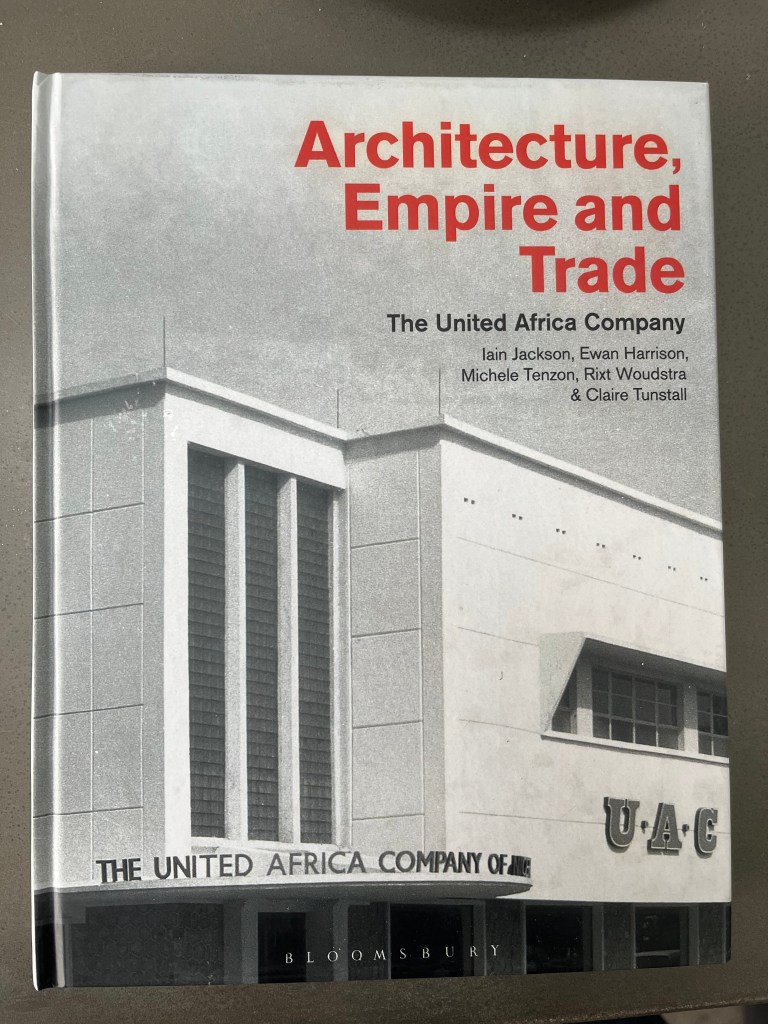
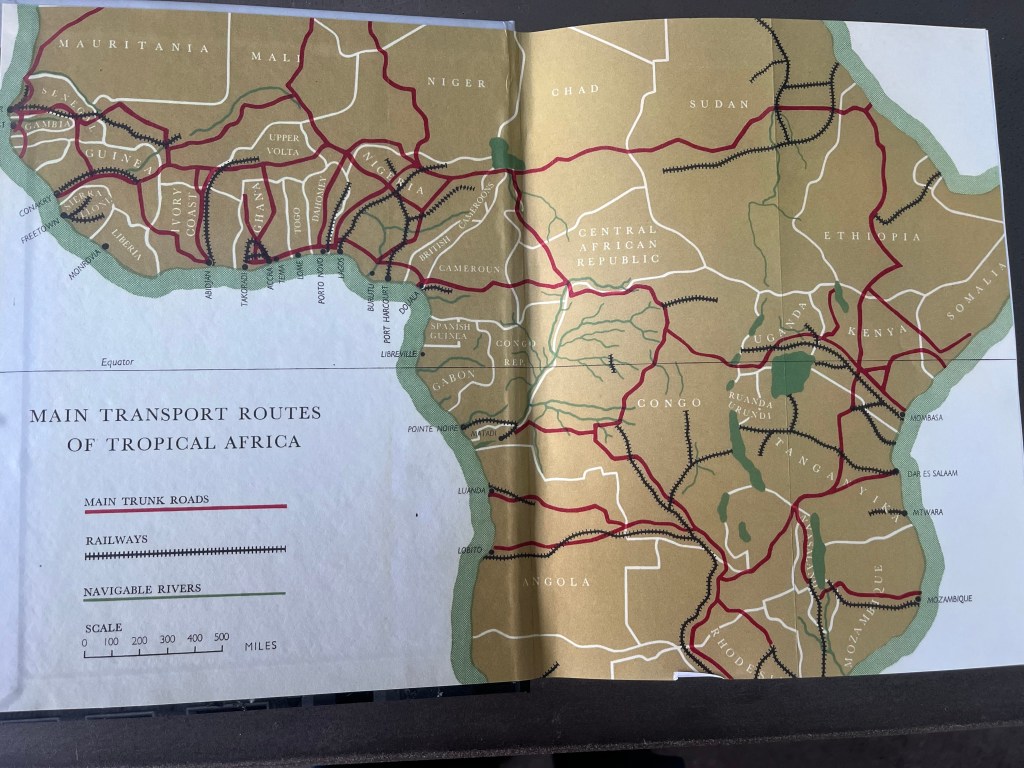

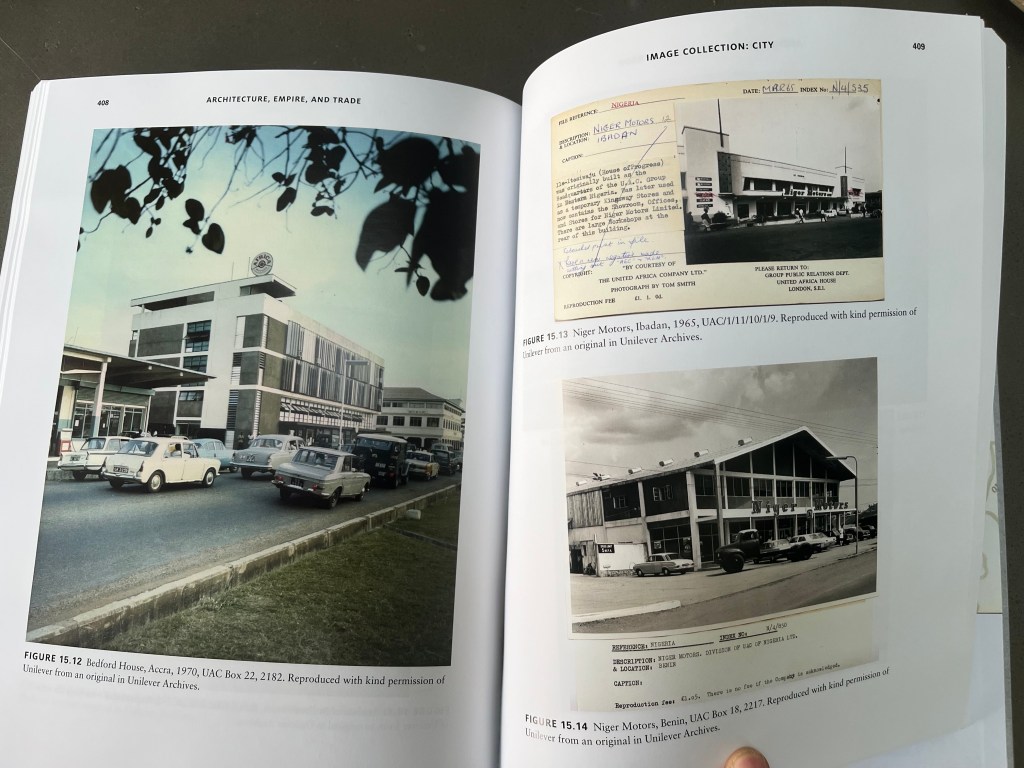
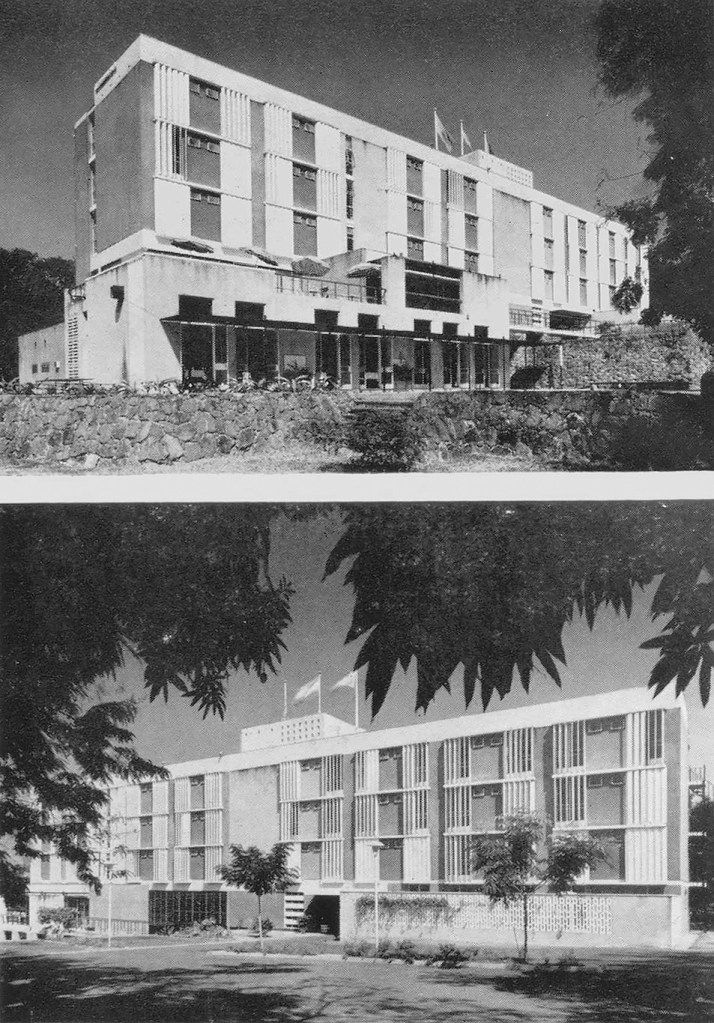
 Transnational Architecture Group