Archive

Author Archives: tagguest

Navigating Archival Fieldwork in Mumbai: Challenges, Opportunities, and Positionality

Excy Hansda E.Hansda@liverpool.ac.uk

A few months ago, I finished my fieldwork for my PhD research in Architectural History. My research investigates the microhistories of the middle-class Indians who moved to the suburbs of Bombay in the early twentieth century and the kind of spaces they lived in. Looking at a postcolonial angle, I am interested in questioning the colonial suburban vision and by highlighting the Indian agency in shaping the suburban urban housing projects, neighbourhoods and their dwellings in late-colonial Bombay. This blog reflects on the challenges and opportunities I encountered while conducting fieldwork in Mumbai. As an Indian PhD scholar based in England, fluent in both English and Hindi, I found that my position brought unique advantages and complications to archival research in Mumbai.

I have prior experience working in archives in both the UK and India. I quickly realized that my background—an Indian architect affiliated with a British academic institution working on a historical subject—often piqued interest in my project. Despite the initial curiosity my profile evoked, I was one of hundreds of Non-Resident Indians (NRI) affiliated with overseas institutions, and this seldom translated into privilege. If anything, being a North Indian, I was seen as a foreigner in Mumbai. Accessing senior bureaucrats in archival institutions and getting information smoothly and efficiently remained particularly difficult.

Finding the Right Archives

I began “getting the data” early in my PhD (February 2023), in parallel with my literature review. I started with the India Office Records at the British Library in London and expanded my search to include collections at the Liverpool School of Hygiene and Tropical Medicine, the School of Oriental and African Studies, the London School of Hygiene and Tropical Medicine, the National Archives at Kew, and others. I investigated diverse sources—Annual Administrative Reports, maps, manuals, and published books. However, due to the hyper-specific focus of my study, initial results were limited.

This led me to change my methodological approach. I revisited the literature and drew on approaches from disciplines such as cultural studies, English literature, and sociology. This led me to explore unofficial sources such as online newspapers, Town Planning Review and the Journal of the Indian Institute of Architects at the Royal Institute of British Architects Archives in London. This helped me expand my knowledge of my subject.

My first fieldwork trip to Mumbai (January 2024) opened a new chapter. I visited the Maharashtra State Archives (MSA) at Elphinstone College, Mumbai, where I discovered files rich in minute detail—memos, petitions, letters, advertisements, maps, municipal debates, and more—everything useful for my research, unlike the colonial records in London, which largely included annual administrative reports and policy documents of the colonial bodies like the Bombay Improvement Trust and the Bombay Development Department, the Mumbai archives revealed the voices and subjectivities of local Indian residents who contested colonial policies and many cases of negotiations, contestations and even micro-scale conflicts which were often absent from official reports.

Missing Records and the State of Archives

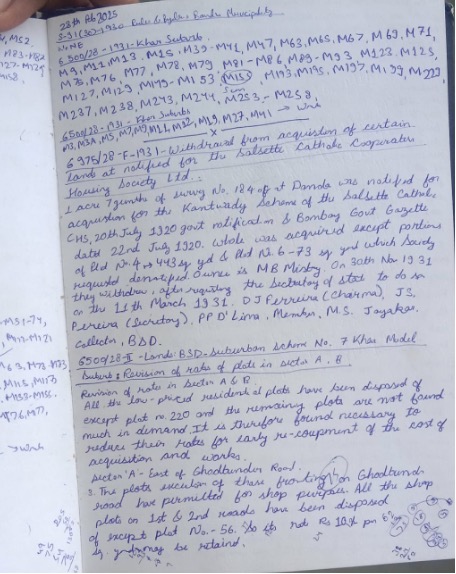
Accessing the archives was not easy. The MSA, one of India’s oldest surviving archives, is poorly maintained and has limited funds. Files are deteriorating, and storage conditions are far from ideal. The reading room is small and dusty, with limited hours—open only five days a week, six hours per day, with an hour-long lunch break. Visitors can request just five files a day. The retrieval process is slow (waiting over two hours is common). Photography is not allowed, and one must request Xerox (Fig 1) or scanned copies, which are payable only in cash. Getting Xeroxes can take 20 days or more; scans may take months. (I am still waiting for the scans that I requested in February) Therefore, I resorted to transcribing the files and making notes (Fig 3 and 4).

Many records are missing. Files before the 1920s are largely uncatalogued and are organized as volumes for entire years for each department of the archives (Revenue, Judicial, PWD, General). Finding specific content means reading through these thick volumes page by page. For post-1920s material, although some cataloguing exists, it’s often incomplete. These are specific files which are numbered, and the numbers correspond to the numbers present in the hefty indices. One has to go through the indices in order to find the files.

Once a file is located, an office peon brings it—after dusting it off (Fig 2). Some are missing completely, and the office peons cannot find them. Others are in fragmented conditions, so they cannot be accessed. While others have missing maps or pages which are crumbling into fragments.
Fig 1: Xerox of a page in a file located at the MSA

Fig 2: A File on Co-operative Housing Society at the MSA

Fig 3 and 4: Transcriptions and Notes I made based on information available in archival documents at the MSA

Finding Sources

A central database for archival material simply does not exist. I relied heavily on human networks: clerks, peons, research assistants, historians, archivists, and fellow researchers. Often, they directed me to smaller archives—usually cramped rooms within municipal offices—where old documents were kept in poor condition and disorganized bulk.

At the MSA in Elphinstone College, I was directed to the Old Customs House in Mumbai. There, I learned they only housed records from Bombay City, so I was redirected to the archives at the Municipal Corporation Office of Bombay Suburban District in Bandra, only to be told that my time period of interest was not covered. Eventually, I was pointed toward ward offices, municipal boards, and local talathi (village record) offices.

Due to reorganization across the colonial and post-independence eras and the separation of districts and provincial state, records have been scattered. The only way to find them is through local knowledge—gathered from seasoned researchers, administrators, or office staff. Sometimes, I stumbled upon data in unexpected places, such as the Dadar municipal archives or the Art Deco Mumbai Society, which provided helpful secondary sources in English and vernacular languages (Fig 5 and 6).

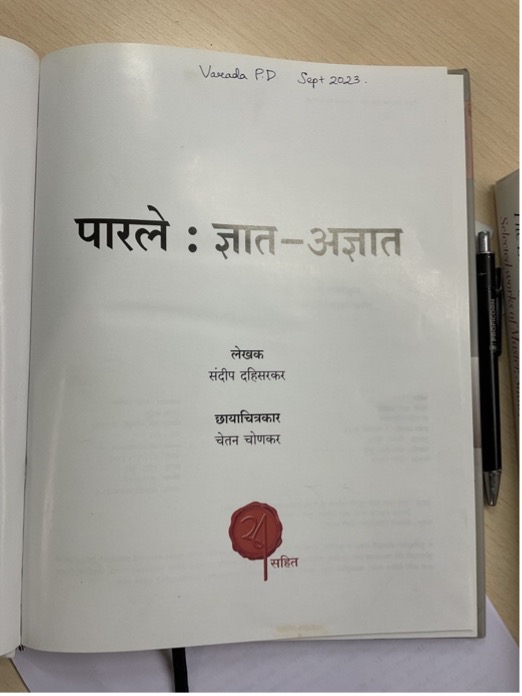
Fig 5 and 6: Books obtained at the Art Deco Mumbai Trust, Mumbai

The reception of these archives was also varied. Sometimes, the staff was friendly and gave me access to files, right after I showed him my ID card and university letters. In other cases, I was made to wait for half an hour before meeting the upper bureaucrat. Sometimes, I had to follow up several times before they granted me permission to visit their archives. This was the case of Municipal Corporation archives, Mumbai. 

Navigating the Neighbourhoods

Beyond archives, the buildings themselves served as vital secondary sources. Many twentieth-century buildings had been demolished, redeveloped, or repurposed. Some stood vacant; others had been converted into commercial spaces, with original residents gone.

Identifying buildings from the 1930s–40s required searching for buildings with style, typology and aesthetics matching that of the 20th-century architecture of Bombay. I used secondary literature available on Mumbai, tips from fellow researchers and architects working in Mumbai, detailed reports from the Mumbai Metropolitan Region – Heritage Conservation Society (MMR-HCS), and a database created by Art Deco Mumbai Trust to search buildings. These contained valuable mapping and description of old historic surviving buildings with histories of ownership, years of construction, sketches, photographs, and drawings. I used these for site observations and photographing the exteriors of the building (Fig 7 and 8).
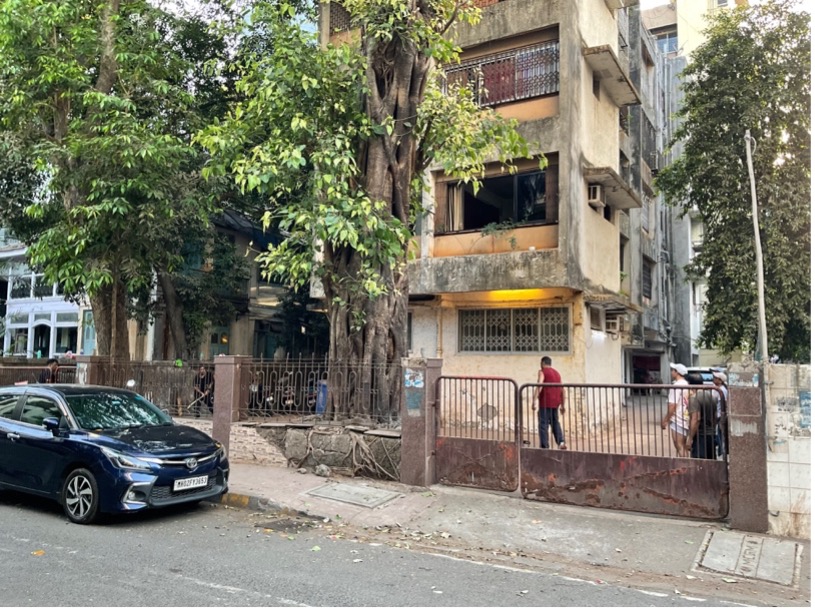
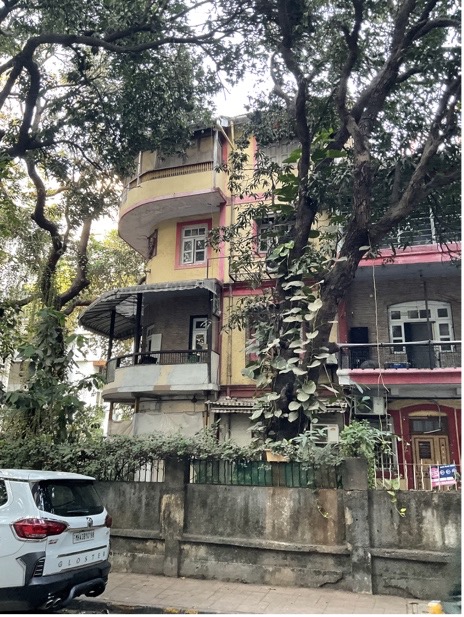
Fig 7 and 8: Walking in the suburban town of Khar, Mumbai as a Method to Collect Data

However, accessing the interior of the buildings was a different challenge. I was often accompanied by a local Marathi-speaking friend to help communicate. His surname “Patil”, which is common in Mumbai, could have helped me start a conversation with the local residents of Mumbai suburbs- so I thought. Residents were tight-lipped, asking questions like “Kahan rehte ho?” (Where do you live?), “Marathi nahi aati kya?” (Don’t you know Marathi?), and “Kya dharam/jaat/surname hai?” (What’s your religion/caste/surname?). These euphemistic inquiries exposed the enduring social divisions of caste, class, and religion—reminding me that while buildings and built fabric might have changed, social fabrics and the mindset of the people are just the same as in the 1930s-40s Bombay.

Language

In the scrutiny of archival works, language skills were sometimes difficult. Language agitation and violence in the name of protecting Marathi culture and identity are common in Mumbai and the provincial state of Maharashtra, where outsiders are forced to speak in Marathi. However, most of the time, people were helpful to me in finding the source materials. The historians in academic and non-academic institutions were proficient in English, Hindi, and Marathi, and they helped me with ideas for my projects. People, especially those working in lower bureaucracy, were able to speak Hindi and directed me to people and places where I could retrieve information.

Logistics of Living in Mumbai

Final Reflections

Someone who works at, for example, the British Library or the Biblioteque Nationale, would not expect this set of challenges. These challenges included obtaining sources of information from beyond the archives, pursuing people to find information, and collecting data in sometimes un-welcoming environments, for which one needs to have a different approach towards them. Being a people’s person and being street-smart helps. Networking and making connections with people make things easier and give you access to a substantial amount of information. Whilst there were complications, it was an enriching experience, making me skilled in finding sources of information, connecting dots, finding and sometimes creating a thread, and keeping backup plans ready. Here, adaptability and patience helped. Having relationships with people has helped me more than having any institutional affiliations, 

Fig 9: The sign board at the local railway station from where I boarded the train to the archives, every morning

Fig 10: The family with their neighbours with whom I lived in Mumbai suburbs

Finally, although having friends-like family in Mumbai and its suburbs made me somewhat familiar with the city, however being a North Indian, miles away from Mumbai, I am sure I might not have noticed a lot of subtleties both inside and outside the archives and sites of inquiry. On the other hand, as a scholar based in England, I found certain information in files, ideas, or simply the way of living striking, which Mumbaikars would have taken for granted. I am indebted to the Patil family and my friends at IIT Powai, where I imposed myself for a significant time period. Also, my colleagues who I knew before and the ones whom I met at the archives helped me point out interesting details, showed me directions during this fieldwork, and accompanied me on several site visits. These certainly positioned me in how I was looking at the sources, the archives, the people, the suburbs and the city.
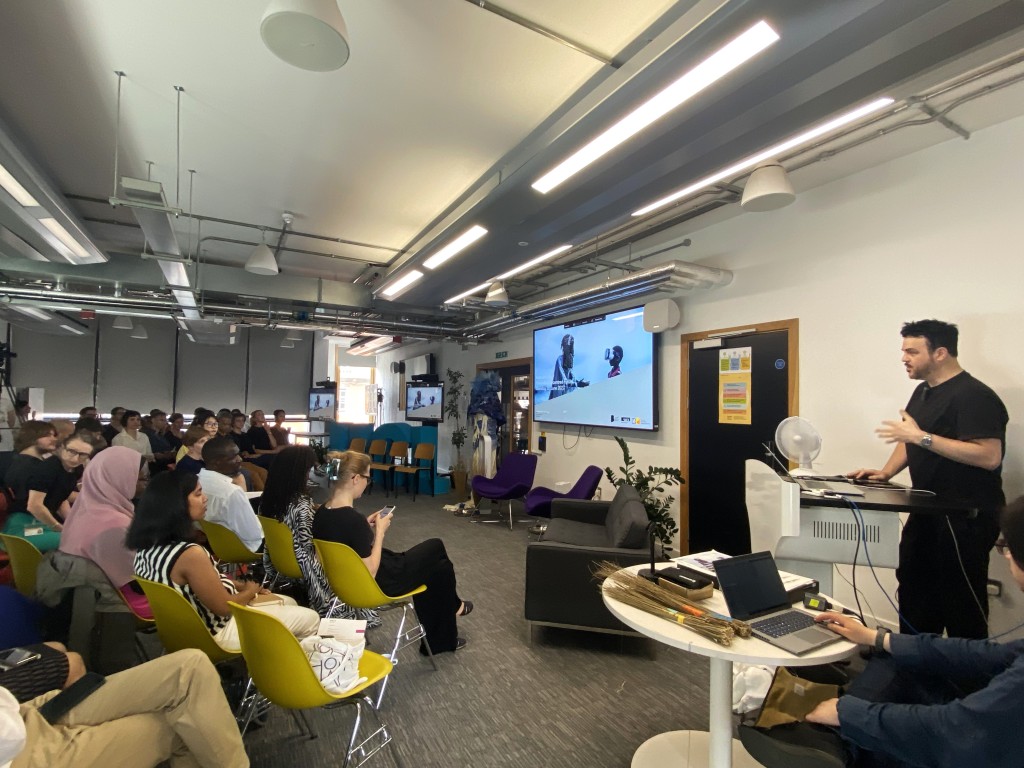
Adefola Toye writes:

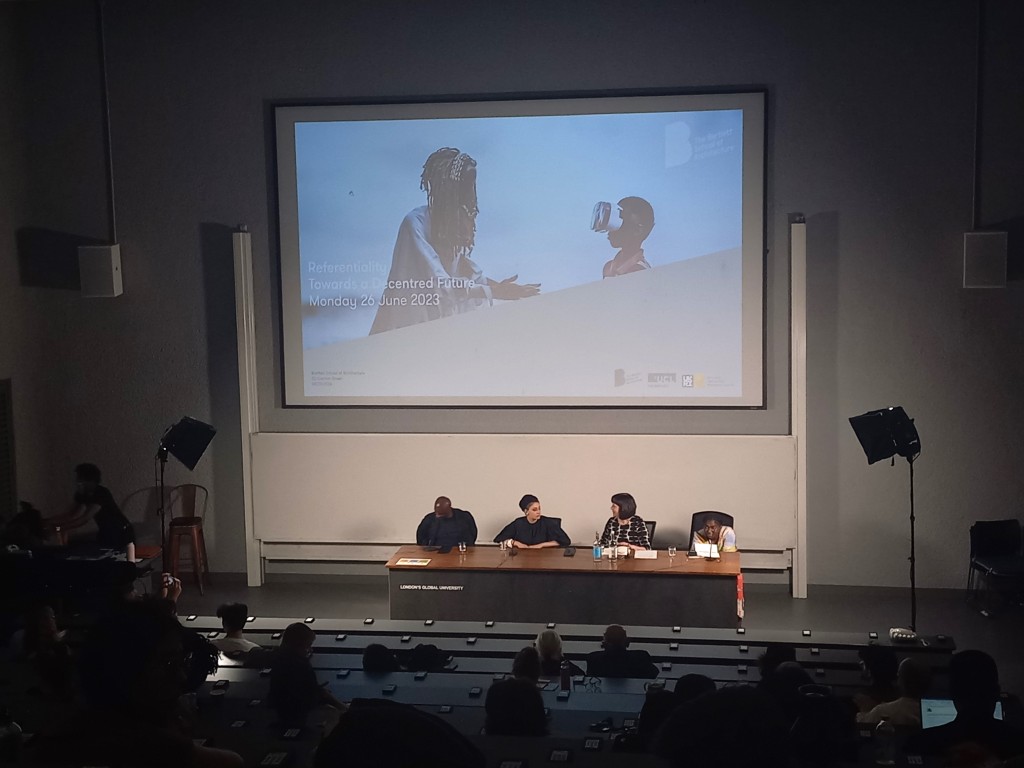
Referentially: Towards a Decentred Future (https://mohoa.org/events/referentiality-towards-a-decentred-future/ ) was a one-day public event at the Bartlett School of Architecture organized by MoHoA (The Modern Heritage of Anthropocene- (https://mohoa.org/ ) and sponsored by the AHRC.

The event interrogated approaches that challenged the mainstream colonial, nationalist and social-cultural frameworks in architecture, art and heritage management scholarship and practice. It included discussions, talks and activities with a diverse range of speakers whose creative production explore approaches free from referential relationship with inequitable power structures.

A research conversation moderated by Edward Denison, Ievgenia Gubkina, Emily Mann and Shahid Vawda comprised speakers from multidisciplinary fields of research and practice with case studies from Africa, Asia and Europe. The speakers included Leverhulme Early Career Research Fellow, Dr. Alistair Cartwright and PhD researcher, Adefola Toye – both from Liverpool School of Architecture. Each speaker discussed the limitations they encounter when engaging mainstream sources for scholarship and research-in-practice which erases the agency of populations under study. Furthermore, they shared how they addressed this using participatory action research, public engagement, multidisciplinary methods and utilising crowdsourced open-access archives.

1. Image 1 by Edward Denison

2. Alistair Cartwright Presenting, by Edward Denison

The session concluded with talks from African heritage organizations, including the Direction du Patrimoine Culturel du Sénégal, Swahilipot Hub, and the University of Cape Town. They discussed existing and future initiatives for sustainable and inclusive heritage management on the continent. These included exhibitions, training workshops, public engagement tailored to different age groups and professions, and collaboration with local and global heritage partners.

Afterwards, a student-centered lunchtime activity with architect Sumayya Vally and BSA design tutor Jhono Bennett, explored referentiality in architectural research and practice through co-production and drawings based on the participants insights and experiences.

Image 3 by Adefola Toye

The remainder of the event was spent in conversations with notable speakers in the fields of architecture, art and curatorial practice.

Nana Ocran, founder and Editor of the People’s Stories Project, hosted discussions with multidisciplinary artists Christopher Samuel and Valerie Asiimwe Amani. They explained how their creative works use archives materials to create awareness about the underrepresentation of people with disabilities and colonial subjects.

Performers Peter Brathwaite and Kenneth Olumuyiwa Tharp examine ‘Rediscovering Black Portraiture’s use of domestic material culture to reimagine the historical image of black subjects as well as professional engagement with diverse art and culture foundations in the UK.

Image 4 by Adefola Toye

Architect, Sumayya Vally, and curator, Ekow Eshun also discussed the event’s theme in relation to their recent works: Asiat-Darse Project (Belgium) & the Islamic Arts Biennale (Saudi Arabia), and In the Black Fantastic (UK) & The Time is Always Now: Artists Reframe the Black Figure respectively.

Tofa Jaxx and guitarist Leon King closed the evening with a musical performance.

Adefolatomiwa.Toye@liverpool.ac.uk

Lakshminarasappa, Koenigsberger, Jaisim and Udaya: Architects of Bangalore

Rachel Lee.

For several years I have been visiting Bangalore, South India, on a regular basis. Originally my only goal was to research Otto Koenigsberger’s work in the city for my doctoral thesis, but recently my interests have widened to include other figures involved in the building of Bangalore’s past and present. Among these is Srinivasarao Harti Lakshminarasappa (circa 1885 – ?), Government Architect of Mysore State from 1935-1940, and an early twentieth century graduate of the University of Liverpool who was the subject of a previous TAG post by Iain Jackson.

Lakshmi and Tulsi

Caption: Lakshminarasappa and his wife Tulsi, date unknown. Photograph provided by Krishnarao Jaisim

Lakshminarasappa was close to retirement when Otto Koenigsberger arrived in Mysore State in April 1939. And, although he was initially given a probationary one-year contract, Diwan Mirza Ismail, the then first minister of Mysore State, had actually engaged Koenigsberger as Lakshminarasappa’s potential future replacement. The transitional period, during which both architects worked at the Mysore PWD, was strained. It appears that Lakshminarasappa did his utmost to prevent Koenigsberger from taking over his job, which he would rather have handed over to an Indian architect – “nationalism like everywhere”, wrote Koenigsberger, a victim of anti-Semitic German nationalism, in frustration.[1]

In fact, Lakshminarasappa was so opposed to Koenigsberger becoming his successor that he instigated a campaign of bullying and dirty tricks against him. This included burdening Koenigsberger with a massive workload, withdrawing all his draughtsmen and assistants, and rumour mongering. The campaign was to no avail, however, as Koenigsberger was instated as Government Architect of Mysore State after Lakshminarasappa’s retirement. The following excerpt from a letter to his mother in October 1939, makes Koenigsberger’s relief at Lakshminarasappa’s departure palpable:

The old Architect who used to cause so much annoyance to me and compelled me to work so hard in the last two months before my internment[2] –he is gone for good. […] I have reached the position for which I fought all these six months.[3]

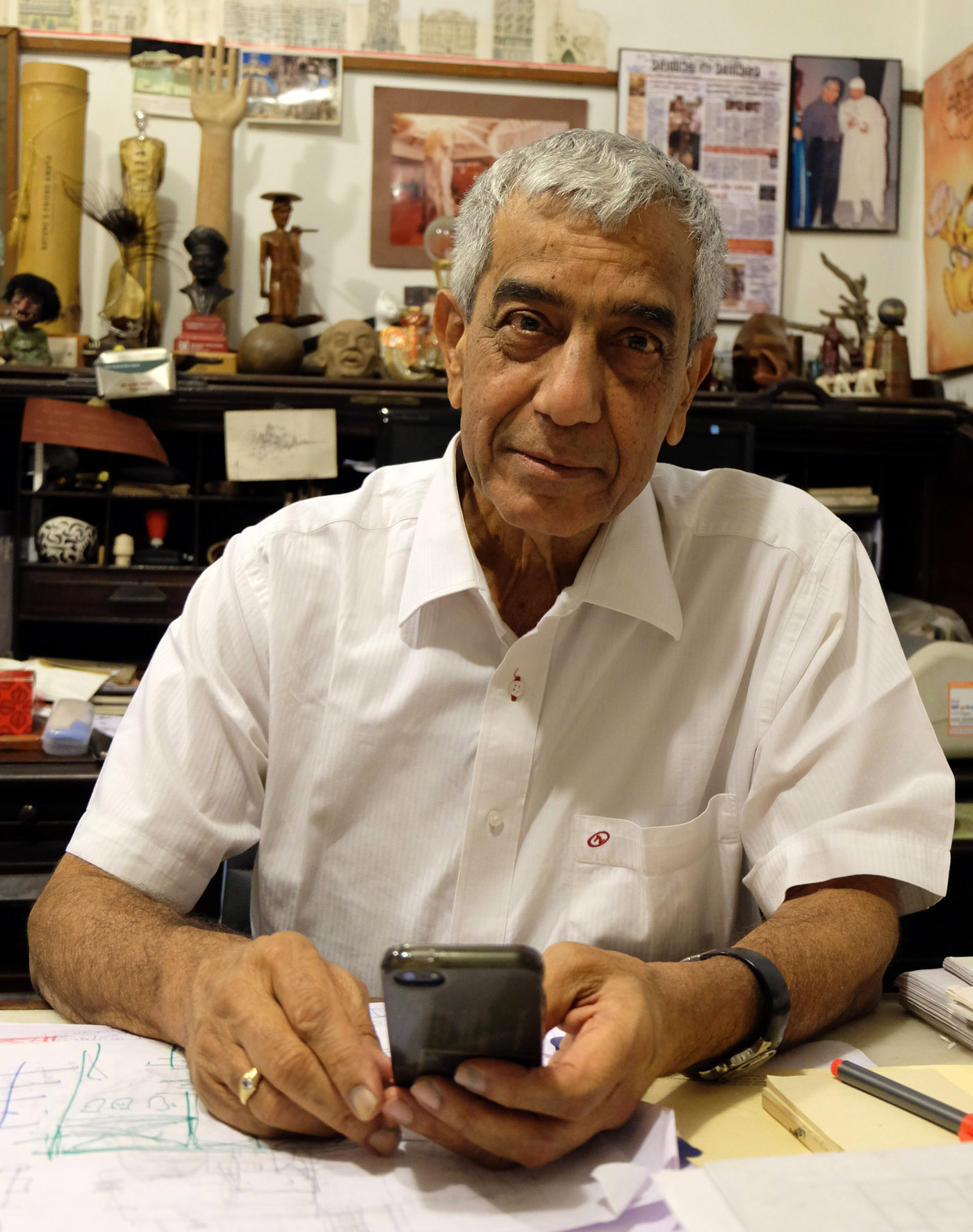
Aside from his conflict with Koenigsberger, until recently I did not know a great deal else about Lakshminarasappa. However, on my last trip to Bangalore I was delighted to meet Lakshminarasappa’s grandson, Krishnarao Jaisim. Following in his grandfather’s footsteps, Jaisim also became an architect and has received many awards throughout his long and distinguished career. He is the founder and director of Jaisim-Fountainhead, an architectural practice in Bangalore that lists its main influences as Buckminster Fuller, Otto Koenigsberger, Geoffrey Bawa and Ayn Rand. Indeed, every intern is given a copy of The Fountainhead on their first day at the office.

Jaisim

Caption: Jaisim at his desk in his Bangalore office.

According to Jaisim, Koenigsberger was not the only person to be unsettled by Lakshminarasappa. He was an intimidating figure, at least 6’4’’ tall and as strict and conservative in his personal life as he was professionally. Jaisim also informed me that Mysore PWD selected his grandfather to study architecture abroad because of his talent at drawing. Jaisim clearly inherited this skill, as this quick sketch of his grandfather made for me in lieu of a photograph shows.

Lakshmi by Jaisim

Caption: Lakshminarasappa as sketched by Jaisim, 2014

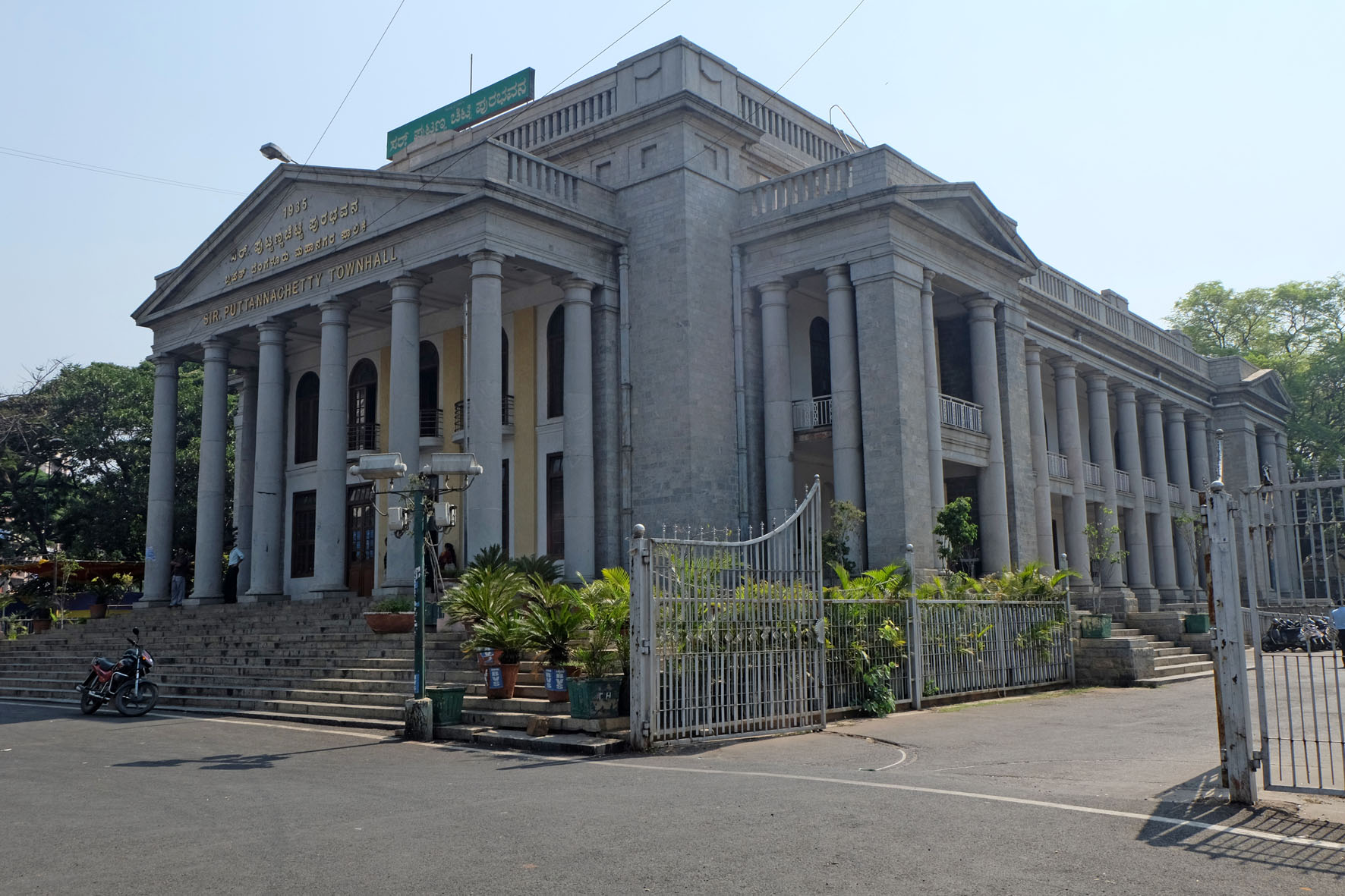
During the ocean crossing, and perhaps his stay in Liverpool too, Lakshminarasappa spent a lot of time performing pujas. He clearly did not feel comfortable away from home and was very glad to return to Mysore State after graduation in 1920, where he began working as an architect at the PWD. His architecture is characterised by precise classical detailing, as evidenced by the Puttanna Chetty Town Hall, built in 1935. Its austere classicism contrasts somewhat with the more relaxed eclecticism of the Greater Bangalore Municipal Corporation (BBMP) building, constructed from 1933-36.


Town Hall

Caption: Puttanna Chetty Town Hall, 2014


BBMP

Caption: Greater Bangalore Municipal Corporation, 2011
Photograph by Hari Prasad Nadig, available at
https://www.flickr.com/photos/hpnadig/5341902040/

Jaisim put me in touch with K. Udaya, current Government Architect of Karnataka, or Principal Chief Architect as the position is now called. In his office is a commemorative plaque listing in Kannada all the Government Architects of Mysore State, and later Karnataka State.


Plaque

Caption: The commemorative plaque in K. Udaya’s office listing the following architects: 1. Krumbigal [Krumbiegel], 2. Lakshminarasappa, 3. Kunis Burger [Koenigsberger], 4. Subba Rao, 5. B.R. Manickam, 6. V. Hanumantha Rao Naidu, 7. Chief engineer’s realm, 8. T.J. Das, 9. M. Venkataswamy, 10. Prof. Kiran Shankar, 11. K. Udaya, 12. K. Udaya.

Not only did Udaya generously spend time talking to me, he also invited me to give a lecture on Otto Koenigsberger’s work in Bangalore for his staff at the PWD, bringing the story full circle.


UdayaPWD

Caption: Rachel Lee with Principal Chief Architect K. Udaya and his team at the PWD Bangalore, 2014

[1] Koenigsberger Papers/Jewish Museum Berlin: letter from Otto Koenigsberger to Susanna Koenigsberger dated 12 August 1939. Translation from original German: You know that I have had great difficulties here during the last weeks and have had to and still have to fight with all my strength for my position. They want to prevent me from becoming permanently employed, and would rather put an Indian in my place (nationalism like everywhere) and have put a refined system of intrigues into action, which I, simpleton, only realised much too late. One of the tricks was to withdraw all the draughtsmen from me, so that I had to do all the work myself and thereby lost an immense amount of time. In order to not fall behind, everything else, even the letters to Mum and you, had to be left aside. The battle continues, but at least I now know what’s going on and can defend myself.

[2] As a German citizen and “enemy alien”, Koenigsberger was interned for 6 weeks after the outbreak of WWII

[3] Koenigsberger Papers/Jewish Museum Berlin: letter from Otto Koenigsberger to Käthe Koenigsberger dated 27 October 1939.

International Planning History Society Conference, St. Augustine, Florida

20-24 July 2014, Rachel Lee


DSCF2348_St Augustine

The Castillo de San Marcos – St. Augustine has a tradition of transnational encounters


Following the 2012 conference in Sao Paulo, Brazil, the 16th biennial International Planning History Society (IPHS) conference was held in tropical St. Augustine last week, with the splendid campus of Flagler College providing the setting for the 3-day event.


DSCF2362_Flager College

Flagler College was originally built as a luxury hotel by the railroad magnate Henry Flagler


In addition to an entire session devoted to “International Exchanges and the Development of Planning” chaired by Steven Ward (Oxford Brookes University) and including the following speakers and presentations: Jose Geraldo Simoes Junior (Mackenzie University) “International Exchanges in the Beginning of the Modern Urbanism: The ‘Relevance of the First Conferences and Expositions of Urbanism Held in Europe and the United States, 1910-1913’”, Nuray Ozaslan (Anadolu University)“The Idea of ‘International’ and Local Planning Actors for the Development of Istanbul in the 1950s”, Shira Wilkof (University of California, Berkeley)“From Europe to Palestine and Back: Transnational Planners and the Emergence of Israeli Planning Thought”, Noah Hysler Rubin (Bezalel Academy of Art and Design, Jerusalem) “Planning Palestine: British and Zionist Plans”, Haiyi Yu, Fang Xu and Hua Wen, (North China University of Technology) “Learning Foreign Experiences and Building Local Systems: Duality of Modern Chinese Urban Planning History”, many of the other sessions included papers with transnational themes.


Otto Koenigsberger

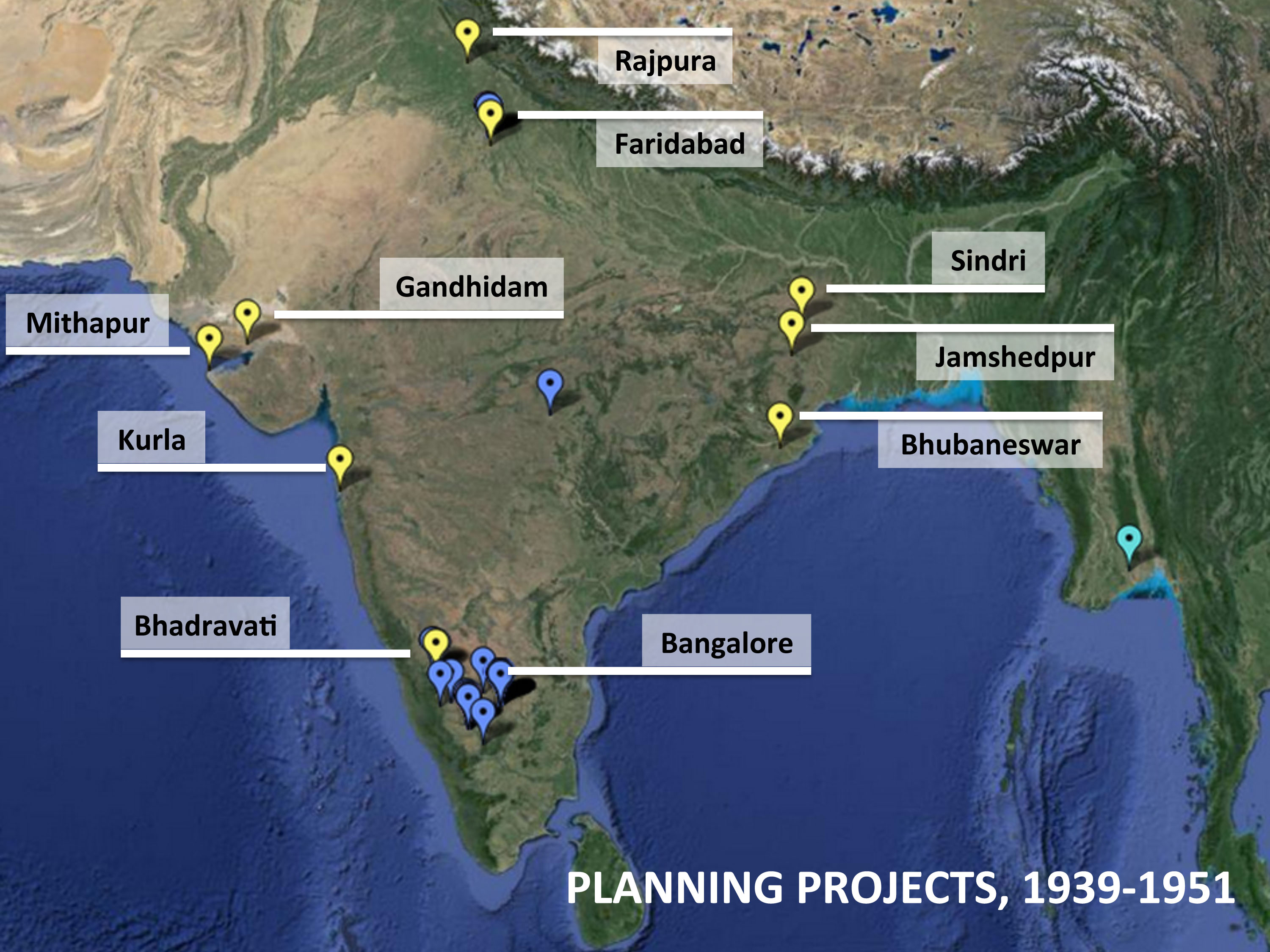
Map showing location of Otto Koenigsberger’s planning projects in India, 1939-1951


Amongst these papers, there was a focus on examples from India. Kristin Larsen and Laurel Harbin (University of Florida) studied Albert Mayer’s influence with their paper “American Regionalism in India: How Lessons from the New Deal Greenbelt Town Program Translated to Post-World War II India”, Rachel Lee (Technical University, Berlin) concentrated on Otto Koenigsberger in “From Static Master Plans to ‘Elastic Planning’ and Participation: Otto Koenigsberger’s Planning Work in India (1939-1951)” and Ray Bromley (University at Albany – SUNY) presented a paper on “Patrick Geddes’s Plan of Indore: The Inside Story”.


Abuja Presentation Slide

Part of the transnational team involved in the planning of Abuja, Nigeria


Another geographical zone of transnational planning interest was sub-Saharan Africa, with papers by Tiago Castela (University of Coimbra) “Peripheries in a History of Urban Futures: Planning for the Government of Informal Spaces in Late Colonial Mozambique” and Rachel Lee (Technical University, Berlin) “Beyond East-West: GDR Development Planning Transfer – from Oil Presses in Ghana to the Master Plan for Abuja”. Examples of transnational planning from China included a paper titled “Richard Paulick and the Import of Modernism in China” by Li Hou (Tongji University), and Benyan Jiang and Masaki Fujikawa (University of Tsukuba) investigated the German and Japanese influences on green spaces in Qingdao – “Conflicts and Continuity: The Development of Green Spaces in Qingdao, China (1898-1945)”.


After 3 intense days of papers and roundtables, the IPHS conference went out with a bang with an “after party”, with music provided by the conference organiser Christopher Silver’s (University of Florida) rock band In Crisis.


DSCF2356_Conference After Party

Planning historians rock St. Augustine


As well as the great papers and partying, thanks to Planning Perspectives editor Michael Hebbert (University College London), I was delighted to find a copy of the Appendix to the Volta River Project Report at Anastasia Books, St. Augustine. The Volta River Project provided the impetus for several transnational UN planning missions to Ghana (formerly Gold Coast) with team members including Albert Mayer and Otto Koenigsberger.


DSCF2360_Volta River Project

An unlikely find at a St. Augustine used bookstore


The abstracts of the abovementioned papers can be downloaded from the IPHS conference website http://iphs2014.dcp.ufl.edu/documents/Abstracts-IPHS2014.pdf and a revised version of the conference proceedings will be online soon.


Contemporary Architecture in East Africa: An Empire of Good Practice[i] or Shadows of Neocolonialism?

Killian Doherty

The expression of individual and collective black identity flourishes in various diverse cultural endeavors. Architecture seems to have been circumvented by this program of intense cultural expression; one wonders whether this is a result of a latent bias within the processes of architectural discourse or merely a time lag before an important and creative awakening.

Edward Ihejirika, “Identity as Intensive Continuity”[ii]

Throughout the mid to late twentieth century the former colonies in Africa were viewed as a fecund terrain, a creative test-bed for architects eager to “cut their teeth” on modernism. European architects practicing under the auspices of postcolonial religious and state powers, in a quasi-missionary capacity, built churches, schools, and cultural institutions. These have since become regarded as “powerful symbols and logical citadels” attesting to the “prestige of western knowledge.”[iii] A 2011 documentary entitled Build Something Modern captures this period in which architects working during the 1950s were inspired and eager to replicate the monumentality of Le Corbusier’s Chandigarh in India across East and West Africa. These architects referred to themselves as “card-carrying modernists” and regaled with frenzied zeal about the joys of being able to build nearly whatever one wanted at that time.

In 1946 the German architect Ernst May moved to East Africa, initially to work as a farmer, but then was drawn back into architectural practice in order to complete several large housing, educational, and master planning commissions across Kenya, Tanzania, and Uganda (notably a cultural master plan for Kampala), mainly for British clients and expatriates.[v] However, it was actually with the work of the British architectural duo Maxwell Fry and Jane Drew in West Africa, some ten years earlier, following World War II (Fry and Drew worked on Chandigarh with Le Corbusier), that European modern architecture was transposed to Nigeria, Ghana, and Togo. This delicately revised modernism fuelled desires of these decolonized states to become first world countries and alluded to a superiority of Western architectural methods, particularly evident within Maxwell Fry’s abrasive comments on the impossibility of anything else.

A Nigerian aesthetic? On what would it be based that is as solid as the plywood techniques, the old timber traditions of Finland?

Ola Uduku, “The Colonial Face of Educational Space”[vi]

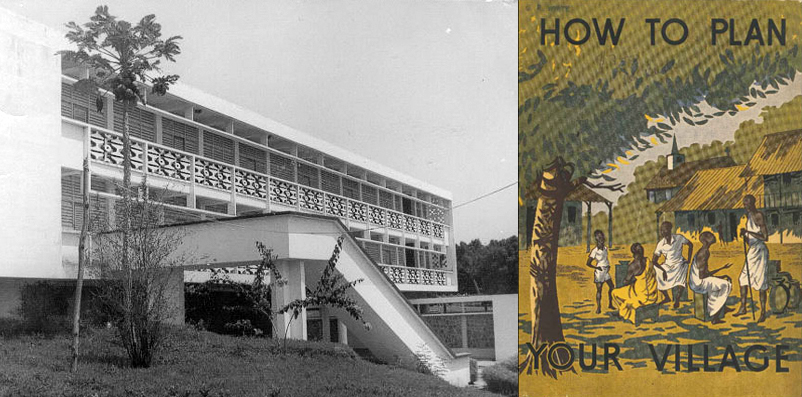
Dubbed “an Empire of good practice,”[vii] Fry and Drew’s work in West Africa forged the basis of teachings that became the Department of Tropical Architecture at the Architectural Association in London. This work of this period however, “fabricated a mythology”[viii] that architecture as a cultural artefact was somehow independent from political influences; the modern built environment across Africa was and since then has been irrevocably influenced by this period.

Image_2

Maxwell Fry and Jane Drew, Mfantsipim School, Cape Coast, Ghana, 1947 / Alfred Edward Savige Alcock, How to Plan Your Village (London and New York, 1953), front cover

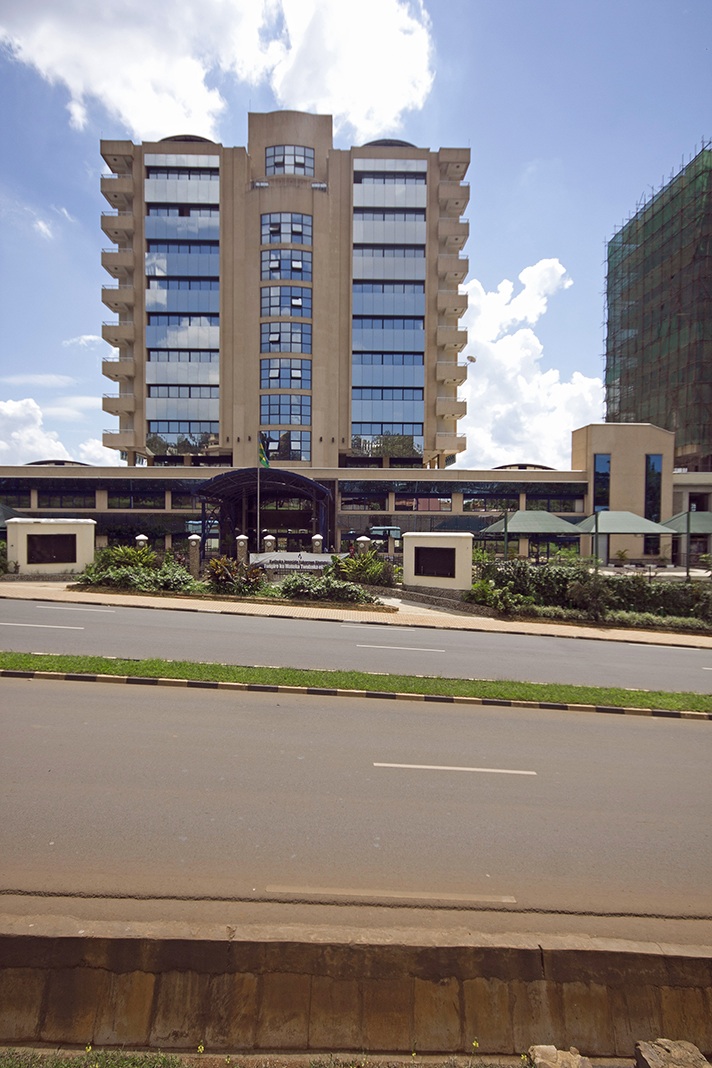
Today, rapid growth in East African cities has brought about intense urban redevelopment, with modernity still held aloft as the panacea. This has consequently bifurcated the agenda of those working in architecture and urban planning, resulting in built work based on lofty neoliberal urban visions replete with an imported, bland modernism (such as in Kigali[ix] and Nairobi[x]), as well as of those working in the field of humanitarian aid and development. It is within the latter field of development that a wave of contemporary architectural practice has emerged, which is also being acknowledged by the exhibitionAfritecture – Building Social Change.[xi] 

Image_3

New building in Kigali as part of the city master plan. Courtesy Killian Doherty

Given that Maxwell Fry’s “Empire” is readily acknowledged for its limited ability to legitimize African modern architecture[xii] and that the majority of architectural NGOs from the West are still very much disseminating modernism within Africa, one has to ask whether any lessons have been learned. How can Western practice outrun the ghosts of the postcolonial and come closer to a modern African architecture? As interests between local governments, international NGOs, and architectural projects are inextricably intertwined, is this contemporary mode of practice simply the newest facet of neocolonialism?

Quite simply it is the design in Western psychology to set Africa up as a foil to Europe, a place of negations at once remote and vaguely familiar in comparison with which Europe’s own state of spiritual grace will be manifest.

—Chinua Achebe, “An Image of Africa”[xiii]

As a Western architect in Africa, I feel perpetually tainted by the postcolonial legacy, the remnants of which obscure one’s ability to practice with clarity. Looking at recent projects, it is abundantly clear there is still relative freedom to experiment in (East) Africa. Considering that, in the past, Africans have “had little to say in response” to architecture, the question remains whether this wave of contemporary architecture has emerged from an engaged, local critical dialogue, or from one that remains entrenched in Western discourse.


Much in the way that the modern movement heralded the promise of social improvements, the same ideology is very much at the root of humanitarian design and evident within today’s developmental lexicon. This is a lexicon with which one is constantly bound by the reality that interests are never truly neutral. As such, we as architects might be accused of being fluent in NGO rhetoric, something that the urbanist Kai Vöckler calls “Donor Speak.”[xiv] Here, interventionist work does not emerge from a “neutral system of values,” but, in fact, “[its] goal is to align everything with the political aims of the donor” or stakeholders, who, more often than not, consist of a first-world audience.

“Architecture is business as well as culture,”[xv] Fredric Jameson has claimed, and as such, projects are permanently locked into conflict between the tangible and the intangible, between that of costs and programme versus the articulation of local identity and culture. This is an exasperating paradox whereby the programmatic factors within the process of architectural design are prioritised, obfuscating an understanding of particular cultural practices. A paradox which Christopher Cripps, a practitioner in Ghana, also acknowledges suggesting “a slice from the budget of any construction project be used to force attention on its cultural context.”[xvi]

Form and aesthetics tend to dictate conversations about architecture and local identity. The architect and theorist Neal Leach acknowledges the complexity of how cultural identity may, or may not, influence architectural form, stating that “cultural identity, therefore, emerges as a complex field of operations that engages with—but is not defined by—cultural artifacts such as architecture.” Also addressing this issue, Homi Bhabba, a cultural theorist who writes about postcolonial identities, suggests an approach of “hybridity,” whereby a combination of multiple identities, not a fusion of them, is considered as a method to acknowledge divergent practices and traditions; in the case of architecture, as a consideration of contextualizing built form.[xvii]

As culture becomes increasingly globalized, and African identity subsequently becomes more watered down, it is much harder to define the purpose and give clarity to one’s work within these muddied contexts. As such, the risks of running aground are greater as architecture, when done wrong, is incongruously invasive and culturally deleterious.

With these complexities and constraints in mind, it can be difficult to dispel fears of neocolonialism. To dispel the legacy of the so-called superiority of Western architectural practices one must make an effort to engage in a more meaningful manner. New architectural agendas, for instance, call for an attuned reflexivity toward the respective socioeconomic contexts in which they operate, yet still manage to deal with budgetary limitations and aesthetic, form-related inquiries into identity. Therefore, the approaches exhibited by new agendas of contemporary practice throughout Africa, in which the “application of universal principles to local conditions”[xviii] is no longer the dominant mode of thinking, are all the more critical.

It is this era’s underwriting of service to society within architecture as a profession that sets it apart from the former, postcolonial Empires of good practice. A forceful mode of practice that combats the legacies of colonialism impedes the threats of a globalized culture, but, most importantly, hopefully, stirs an elusive “creative awakening”[xix] in an emerging generation of African architects.

Image_5

Community centre under construction, Kimisagara. Courtesy Killian Doherty


[i] R. Windsor Liscombe, “Modernism in Late Imperial British West Africa: The Work of Maxwell Fry and Jane Drew, 1946–56,” Journal of the Society of Architectural Historians 65, no. 2 (June 2006), pp.188–215. Taken from Maxwell Fry’s biographer.

[iii] O. Uduku, “The Colonial Face of Educational Space,” in White Papers, Black Marks, ed. L. Lokko (London, 2000).

[iv] Nicky Gogan and Paul Rowley, Build Something Modern (Dublin, 2011), film, 70 min.

[v] K. Gutschow, “Das Neue Afrika: Ernst May’s 1947 Kampala Plan as Cultural Program,” in Colonial Architecture and Urbanism in Africa: Intertwined and Contested Histories, ed. F. Demissle (London, 2009).

[vi] Uduku, 2000.

[vii] Liscombe, 2006.

[viii] Ibid.

[ix] The Kigali Conceptual masterplan, Rwanda.

[x] Tatu City Masterplan, Kenya.

[xi] At the Munich Architecture Museum.

[xii] Liscombe, 2006.

[xiii] C. Achebe, “An Image of Africa,” Research in African Literatures 9, no. 1, Special Issue on Literary Criticism. (Spring 1978), pp. 1–15.

[xiv] K. Vöckler, Volume issue 4 (2010).

[xv] F. Jameson, “Is Space Political?,” in Rethinking Architecture, ed. N. Leach et al. (London, 1997).

[xvi] C. Cripps, (2003) “Architecture in Europe and the South: Some African Experiences,” paper delivered at the N-AERUS Annual Seminar, Beyond the Neo-Liberal Consensus on Urban Development: Other Voices from Europe and the South, Paris, 2003, Network-Association of European Researchers on Urbanization in the South (website), http://www.n-aerus.net/web/sat/workshops/2003/papers/docs/13.pdf (accessed on June 5, 2013)

[xvii] N. Leach, “Belonging: Towards a Theory of Identification with Place,” Prospecta 33 (2002), pp. 126–33; and “‘Belonging,’ London: Postcolonial City,” AA Files 49 (2003), pp. 76–82.

[xviii] Liscombe, 2006.

[xix] E. Ihejirika, “Identity as Intensive Continuity,” in White Papers, Black Marks, ed. L. Lokko (London, 2000).

..

This post appears in full in the catalogue accompanying the forthcoming exhibition ‘Afritecture – Building Social Change’ to be held at Munich Architecture Museum, 14 September 2013 to 12 January 2014.

Building a New Middle East – Israeli architect in Iran

Neta Feniger

bandar abbas and bushehr

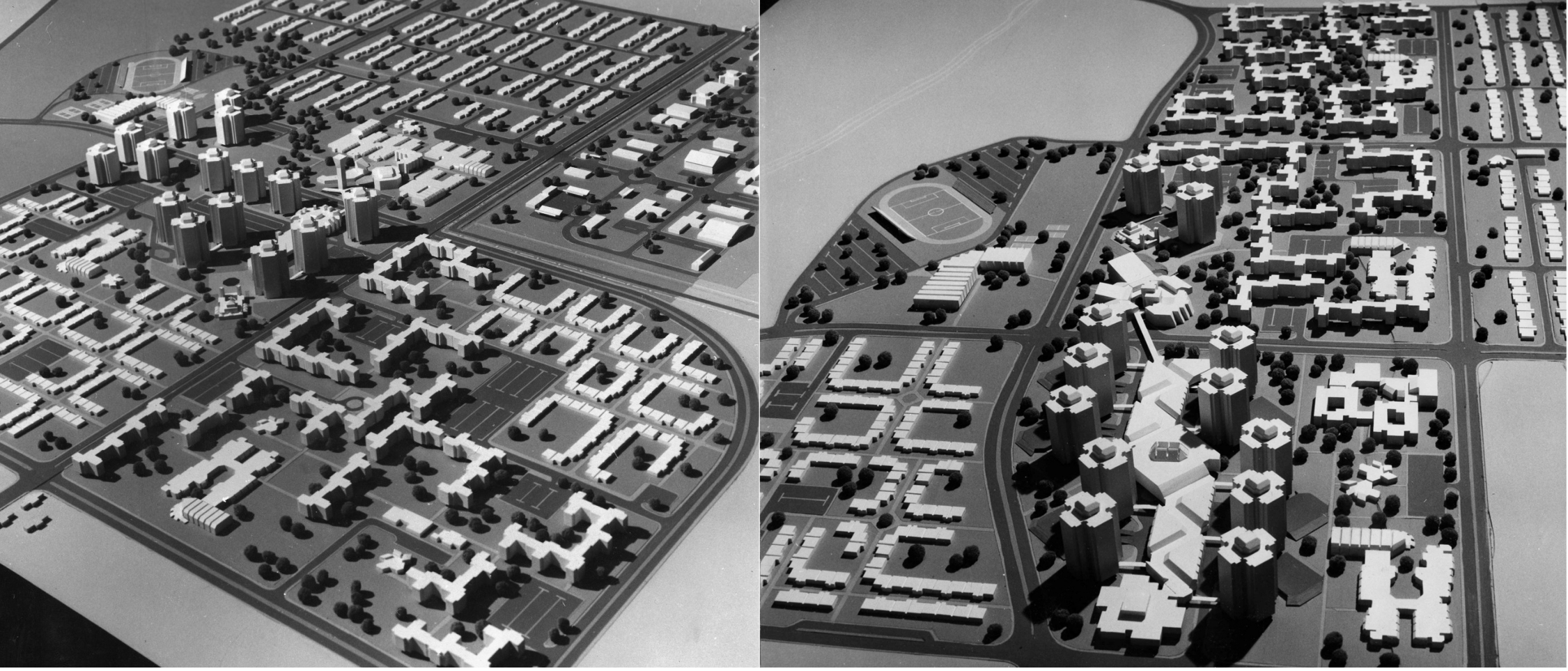
Models of the neighborhoods in Bushehr (left) and Bandar Abbas (right)

In the spring of 1972 representatives of the Iranian Navy arrived in Israel in search of an architect. The Navy was building bases on the shores of the Persian Gulf and when the facilities were almost completed, it was realized that no accommodation had been provided for the troops and their families. The Israeli construction firm assigned to the project suggested employing an Israeli architect known for speedy planning and implementation skills acquired during nation-building.

The Israeli-Iranian relations (1950-1979) opened up a new market for Israeli architects and construction companies for whom work in Iran was a chance to extend professional enterprise in the Middle East. Iran was in the midst of modernization, and was looking for foreign professionals with high levels of expertise. Israelis were looking for work as the Israeli market declined after the years of intense nation building. In the course of two decades (mainly the 1960s and 1970s) Israeli architects were involved in varied projects in Iran, demonstrating manifold approaches for adjusting their practice acquired back home.

The Navy project was one of the bigger projects by Israeli architects in Iran. The Israeli architect, Dan Eitan (1931-) was chosen especially by Navy representatives on account of his housing project in Israel. Nevertheless, Eitan saw this project as an opportunity to rectify modernism and make it more considerate of cultural and social needs and of local environmental conditions.

The project was planned in three locations, Bandar Abbas and Bushehr – then small fishing towns – and the island of Kahrg where a major oil port was already operating. At the latter site, Eitan’s project consisted of a few dwelling units. For Bandar Abbas and Bushehr it included a master plan, detailed town plans, designing three types of housing, infrastructures, and neighbourhood amenities. The Navy planning office provided a brief programme specifying different dwelling units for different ranks, including densities and unit sizes. The final plans for all three sites amounted to about 12,000 dwelling units and the required amenities. Some of the buildings, such as mosques and the admiral’s villa, were included in Eitan’s plans but they were designed by Iranian architects.

Hadish in Bandar Abbas

Google Earth image of Bandar Abbas, marked – the area built according to Eitan’s plan.

bushehr 2

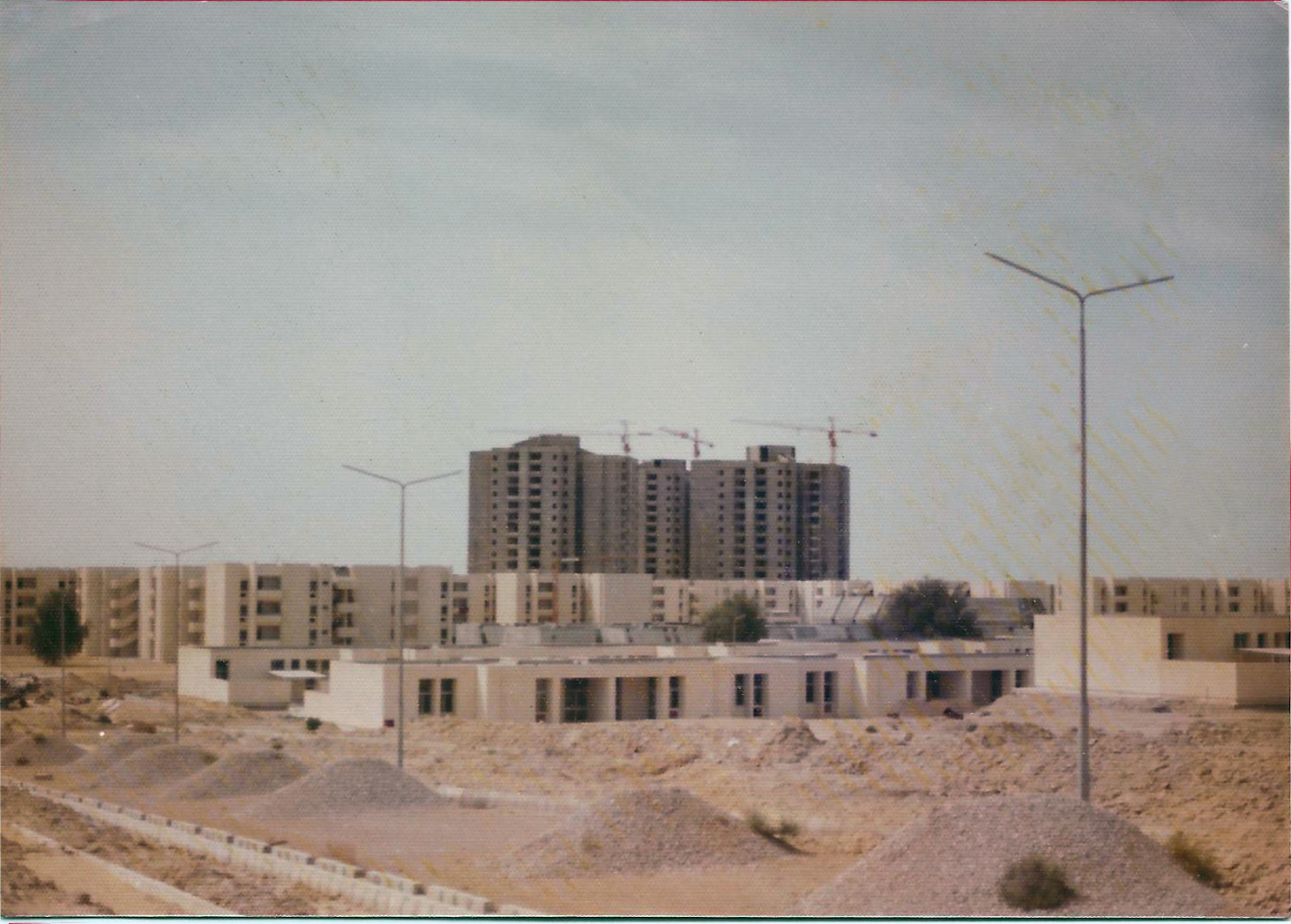
Bushehr during construction (1975): in front detached houses, in the middle 4 floor housing and 15 storey buildings in the background.

Eitan’s scheme followed Israeli town-planning models of the time, avoiding street grids and creating building clusters with public and semi-public areas. This was very different from the pattern of the surrounding built-up areas, which is still distinguishable in the overall developed areas. The housing design was modular, with different module units for each housing type. The 15-storey building comprised 100 split-level apartments. Each mezzanine floor included 4 apartments radiating out from the elevator shaft. The four-storey buildings were comprised of modular units linked to each other like dominoes on each side, resulting in the creation of semi-public enclosed courtyards. Single-family detached houses for senior officers varied in design, to allow flexibility of purpose, had fiberglass-covered pedestrian atria between them. The whole neighbourhood was connected by shaded pathways leading for the community amenities.

Attention to the harsh local climate was of main concern. Eitan, assisted by an Israeli climate planning expert, integrated new techniques for moderating heat and glare in homes and public areas. The local amenities were carefully planned with inner patios and shaded outdoor spaces. The cultural centre (which was never built) was to be surrounded by a moat, with a bridged entrance, and external concrete prisms shading the windows.

bandar abas officers

Fibreglass covered pedestrian walks in Bandar Abbas

tarbut perspective

Perspective of plan for Bandar Abbas cultural centre (never built)

Eitan, unlike many of his Israeli contemporaries, never adopted vernacular elements in his design, neither in Israel nor in Iran. For him, the quest for the locale was not a question of appearance, but of deep cultural understanding of the society in which he worked, and a desire to create architecture appropriate to local needs and conditions. Thus, his project in Iran was not about representing Iranian culture, but about understanding this culture and how its inhabitants lived. He even consulted a psychologist, trying to comprehend the experience of women left behind for long periods of time when their men are at sea, and created a community centre designed to accommodate their needs.

Sensitivity to local tradition was part of Eitan’s intention to make modern architecture less intrusive. He felt that his professional integrity, especially as a Haraji – a stranger, and a Jew – demanded sensitivity and respect for his clients and their Muslim tradition. The location of the bathrooms is an example of his attitude. According to Iranian Islamic law, all bathrooms should face away from Mecca, i.e. in accordance with the geographic position of Tehran, should be in the north-east corner of the house. However, since the Gulf lies further to the south, he pointed out that the south-eastern location was more correct and insisted on obtaining religious authorization for the bathrooms’ new location.

For Eitan, architectural modernism was a means of creating better living environments. In the Navy Project, however, his approach to modernism often became a point of friction with his employers. The navy’s officials explained that he had been hired as a foreign expert, based on his architectural achievements in Israel. Eitan, however, was striving for socio-cultural harmony in his projects, while the Iranians required a plan that would provide the necessary amenities, and be easily implemented in the fastest way possible. Eitan explains:

“At one point the Navy asked me why the project wasn’t moving faster. I told them that I needed to learn their culture. They said – ‘No. Bring your own culture. That’s why we hired you’. But I told them I only brought my profession. I merged my culture with theirs and then integrated it in the plan.”(Eitan in interview- August 2010)

In Israel, Eitan rarely had a chance to work with clients, since he was building housing for new immigrants who had not yet arrived. In Iran he received detailed information concerning prospective users, and was able to get acquainted with his clients, and plan for their needs.

Eitan’s approach was universal, but at the same time local and specific, though the project was also greatly influenced by Israeli architectural discourse of the time. It was not an Israeli-Iranian hybrid, mainly because Israeli architecture had no apparent tradition, and Eitan did not seem to be influenced by contemporary or traditional Iranian architecture.The Navy Project was specifically planned for a specific location and users, but was nonetheless modernist and universal.

..

This post is based on the article: Neta Feniger& Rachel Kallus (2013): “Building a ‘new Middle East’: Israeli architects in Iran in the 1970s”, The Journal of Architecture, 18:3, 381-401. Materials are with permission of architect Dan Eitan, who I would like to thank for his kindness and full access to his archive and memory.

Kashmir House, Prithviraj Road, Delhi (1927-29)

Richard Butler

Chetwode photo 1     Chetwode photo 2

Main entrance (left) and South façade, showing loggias (right), Kashmir House, Prithviraj Road, Delhi (1927-29). Photographed by Penelope Chetwode, c. 1931.

Designed by Walter Sykes George (1881-1962), with significant early input from Edwin Lutyens, Kashmir House is one of Delhi’s most engaging inter-war private residences. The house was designed for a wealthy Hindu banker, Sultan Sing, but his untimely death before the project was completed resulted in it being sold to the maharajah of Patiala, and later to the state of Kashmir.

Sing first asked Lutyens for a design in 1927, but relations between the two were strained and he soon approached George, who maintained a close friendship with Lutyens (his greatest influence). ‘I would like you to build a house for me’, he said, ‘to show what an Indian gentleman’s house should be’. Lutyens eventually backed out of the commission on the grounds that George, having lived continuously in India since 1915, would ‘understand better how an Indian gentleman liked to live’ (George’s words). ‘The banker’, he added, ‘wished to entertain in western fashion, and to have western guests to stay with him, while he, and his family, lived in orthodox Hindu fashion, and he gave dinners in that fashion.’

The building is a fascinating hybrid of Indian and western traditions. Almost all the important rooms are located on the ground floor – only bedrooms are upstairs. The space is laid out around an enclosed courtyard with open loggias to the south. A ground-floor corridor runs the entire length of the house, connecting the ‘western’ and ‘orthodox’ dining rooms, the smaller dining room, the drawing room, some of the bedrooms, and the main west entrance. In an effort to keep different kinds of foods separate – meat especially – the ‘Hindu’ and ‘English’ kitchens are in completely separate wings, though communication is possible between the two dining rooms, when required. There is also a Puja room for daily worship, and segregated entrances allow a more private entrance for the family and their servants, in contrast the more public porch or the trio of loggias, which open onto a garden.

Kashmir House plan first floor Kashmir House plan ground floor

Floor plans (with new labels superimposed), Kashmir House, Delhi. Originally published in Walter George, ‘The Architecture of Walter George’, Design (Bombay) (Sept., 1960)p. 21.

George used small windows and thick walls to counter the effects of the hot climate. The use of a courtyard and south-facing loggias meant that all the ground floor bedrooms, including the principal ones, are shaded and lit indirectly. Furthermore, the upstairs windows are sunken and mostly hidden from view from the garden and entrance driveway, which would have ensured privacy for Sing’s family, and the upstairs was likely reserved for family quarters. Curiously, George said he was aware of what Frank Lloyd Wright was doing at this time in America, but he could not copy them in India as both English and Hindu uses ‘require privacy, and there is little privacy in Wright’s houses.’

Kashmir House still exists, though much altered. With Sing’s death went the opportunity to use the building’s plan as originally intended.

..

More information on the architecture of Walter George can be found in Richard Butler, ‘The Anglo-Indian architect Walter Sykes George (1881-1962): a Modernist follower of Lutyens’, Architectural History, vol. 55 (2012), pp. 237-68.

All images reproduced courtesy of Professor Gavin Stamp (original Chetwode photographs now kept by RIBA, London).

Designing Buildings in 15 Minutes: A day in the life of Otto Koenigsberger, Government Architect to the Govt. of H.H. the Maharaja of Mysore

by Rachel Lee

The following extract is from a private letter written by the architect, planner and educator Otto Koenigsberger (1908-1999) to his family in 1940.  He probably typed it in his small room in the bungalow he shared with the Brinitzer family at 42 Infantry Road, Bangalore, India. Like the Brinitzers, Koenigsberger, a native Berliner with a Jewish background, was in exile.

  1948_Koenigsberger and colleagues at the PWD

Due to a fortuitous family connection, in 1939 Koenigsberger had been contracted to work as an architect in Princely Mysore, a South Indian state with a limited amount of independence from British colonial rule. Thus his boss was not a member of the British Raj, but the ambitious Dewan (Prime Minister) Mirza Ismail, whose favourite pastime was building. In November 1939 Koenigsberger was promoted to Government Architect, the highest position for an architect in the state. As the humorous extract reveals, although his job kept him very busy, it did not prevent Koenigsberger from trying to build up a private practice or enjoying himself in his new home . . .

“I shall give you a short review of one day in the life of the Government Architect to the Govt. of H.H. the Maharaja of Mysore.

My boy appears at 6:30 am in my room in order to wake me up. This has the result that I go on sleeping till quarter to or quarter past seven. Which of the two depends on the situation whether I must go and see the Dewan in his Bungalow or not. He belongs to those immorally hard working people whom I thoroughly dislike and has already one hour of hard work finished when I come to see him at 7:30. The next item is an enormous breakfast at 8 and instruction of my private draughtsman at 8:30 – Yes I have a private draughtsman and ‘secretary’. He is an Angloindian with the nice name Eric J. Crane, is rather shy, not too bright, and of course very unreliable. He comes for three hours in the morning and three in the afternoon and tries hard to learn how to do architectural drawings, so that I may be well armed and prepared when the great wave of private work comes of which I am daydreaming.

If there are no other inspections (on most days there are, my average is about 30 miles a day inside Bangalore only) I go to the office between 9 and 10 in order to have some quiet hours before my six men arrive at 11.

1940_Serum Institute

The morning post brings about 5 to 6 requests for designs per day, say one hospital, one bungalow for an officer, one railway station, one cinema, and a number of smaller tasks and alterations. In addition comes a tray full of files, for all building plans, small or big must go through my hands before they can be sanctioned by Govt. In Europe I would have worked about a week to design a hospital and about another week or fortnight to prepare the drawings. Here the main idea and the sketch must be ready in ten to fifteen minutes and then the assistant or draftsman must prepare the plans within two to four days. Of-course these designs cannot be so well worked out as mine were at home. To keep up at least a certain standard of exactness and efficiency I must permanently go round from one to the other to correct the plans and to tell them what they must do. In the intervals between my wanderings from one drawing board to another I try to attend to my files, to answer letters, and to make a number of sketches and small plans which I can finish myself in less time than it would need to explain to somebody else how to do them.

1940_Dispensary Bangalore

At 1:15pm I go home for lunch and for new instructions for my home-draftsman and back to the office at 2 or 2:15. The afternoon is usually filled with visitors who want all sorts of technical instructions or come discussing of new building schemes. Of-course only a very small percentage of our many designs will be built, and if they are it will take at least half a year or a year till they are started. That gives the Dewan who plays the role of ‘Bauherr’ [client] in this game ample time to ask for new schemes and accordingly revised designs.

Usually I am home at 6 in the afternoon. I sit down for a late but very big tea which usually takes about half an hour, not because I eat so much, but because I am just lazy and enjoy my rest. Every second day a Kanareese lesson follows from 6:45 to 8 or 8:15. If there is no lesson this time should be spent with learning what we had the day before, but so far I have always found an excuse not to learn so that the result of a fortnight of lessons with a very good teacher is very poor.          

1939_Municipal Swimming Pool

Dinner is celebrated from 8:30 to 9:30 when we hear the news from England. As it usually is a very good and rich dinner you can imagine that there is not much energy left for letterwriting in the evening.          

This description of my life is unadequate in two points: (1) it sounds boasting and at the same time complaining. But it is certainly not meant to do so. I thoroughly enjoy my work. I only tried to explain that a day of permanent designing is somewhat exhausting. (2) It gives the picture of rather a dull and narrow (English for ‘spiessig’) life. But actually I am meeting interesting new people nearly every day, studying a most interesting country, reading a few good books (for instance the latest Aldous Huxley ‘After many a Summer,’ which I enjoyed very much), seeing a film once in a while and hearing a good deal of Indian and European (gramophone) music.”[1]

Note: Although Koenigsberger’s native language was German, the outbreak of World War II forced him to communicate with his family, who were by then living in the USA and UK, in English – letters in German were censored or confiscated.

 The images are reproduced with the permission of the Koenigsberger family.

Email Contact: rachel.lee@gmx.net


[1] Koenigsberger Papers at the Jewish Museum Berlin: Extract from a letter from Otto Koenigsberger to Kaethe Koenigsberger dated 7 February 1940

The Alan Vaughan Richards Archive Project

Ola Uduku and Hannah Le Roux

13.4.30_AVR House Interior

Alan Vaughan-Richards House Main Living Room Interior, photo for Nigerian Interiors Magazine.

The Alan Vaughan Richards archive project seeks to preserve, record and archive the works of the late British-Nigerian Architect, Alan Vaughan-Richards (1925-89). Its ultimate aim is to make available a digital and physical archive of Vaughan-Richards work to the public. This archive, comprising drawings, artefacts, and texts will be made accessible to the public to view online, or by visiting the renovated Alan Vaughan-Richards house in Ikoyi, Lagos. The Vaughan-Richards House, built by the architect in the 1960’s, is acknowledged as a unique example of West Africa tropical modernist architecture.

The archiving project is being funded by the British Academy with a further University of Edinburgh research grant held by Ola Uduku, at the University of Edinburgh, with Hannah Le Roux, at the University of the Witwatersrand, along with financial and logistical support from the Goethe Institute in Lagos and Remi Vaughan-Richards, Alan’s daughter. In 2012 over 300 drawings and other artefacts were brought from Alan Vaughan Richards’ home office in Lagos to be digitized and preserved for archiving. In September 2012 a short exhibition showing the work completed in digitizing the first batch of artefacts, and documenting Alan Vaughan-Richards’ career and life in Lagos was presented at the Matthew Gallery at the University of Edinburgh. This digital archive is held in the name of the Vaughan-Richards family in Edinburgh. The Alan Vaughan Richards blog was created as part of this process.

At the same time as the exhibition, Candice Keeling from Katholieke Universiteit Leuven documented the condition of the existing house in-situ and created as-built drawings. It is hoped in the future to develop the house as an artists’ residence and the home to a physical archive, accessible by appointment to academics and West African architecture enthusiasts. There are ongoing plans for the renovation and redevelopment of the Vaughan-Richards house in Lagos to enable its transformation into the archive and art residency space planned.

The project throws a number of challenges. The harshness of the tropical climate has contributed to considerable decay of materials such as carpeting and textiles. The cost of restoring the structure and aesthetic of the house requires the transformation of use of part of the property in ways that will sustain the conservation of its elements and intentions. These challenges will be addressed by ongoing design and research. On a broader note this project is hoped to generate interest in conservation in West Africa, where many other modernist buildings are in need of maintenance, conservation and reappraisal of use.

The archival work, residency proposals and related information on the Vaughan-Richards family form the material for an exhibition proposed to coincide with the ArchiAfrika conference in Lagos in December 2013.

The project welcomes participation from with researchers and modernist conservation practioners in West Africa, as well as anyone who has further information on the architecture and other work of Alan Vaughan Richards, as a partner in the  Architects’ Co-Partnership and later as an architect in Lagos.

Contact email:  o.uduku@ed.ac.uk and hannah.leroux@wits.ac.za

..

Permission to publish all images on the blog for educational purposes, has been granted on behalf of the Vaughan-Richards Estate, by his daughter, Remi Vaughan-Richards, a film director, whose feature films and documentaries throw a sharp lens onto contemporary Africa.