Archive

Africa

Notes from Kumasi

Leaving Accra we departed for Kumasi– there was a change of pace in this dusty Ashanti city. Flying in, the low-rise collection of housing and settlements spreads across the horizon. The city has a hotter, inland climate, but the KNUST campus has this relieved somewhat by its lush mature vegetation. A visit to the recently restored KNUST Staff Club and walk around the campus to the ‘central area’, gave a good feel, and introduction to KNUST.

DSC_0939

KNUST Senior Staff Club House, designed by Cubitt

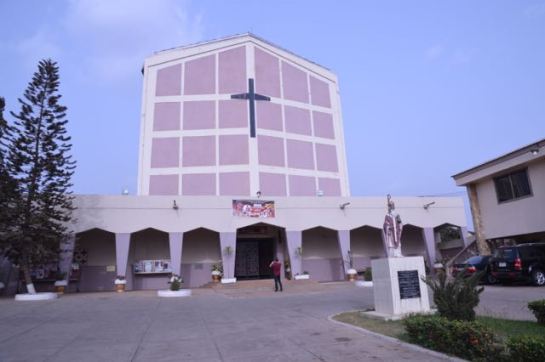
The following day united us with more visiting staff from University of Edinburgh and we set off on an extended excursion to various buildings in Kumasi city. Fry and Drew’s Prempeh College and Opoku Ware schools, are visited first and present us with a first hand view of this couples’ best exemplars of institutional tropical modernism. Visits followed to Nickson’s Anglican Cathedral, a towering structure, with less external architectural sophistication than F+D’s educational oeuvres, but provided interiors that successfully captured the spirit of high Anglicanism in its light-filled interior.

DSC_0997

Anglican Cathedral, Kumasi, designed by R. Nickson from 1950

A dusk-tinted view of the campus concluded the day’s visitations, its welcome calm was a good antidote to the ‘busy-ness’ of the town. The buildings at the ‘Tech’, as it is colloquially called, sat sedately in their lush tropical setting, showing off Scott and Cubitt’s earliest university campus in Africa.

The historic ‘central’ administrative area of Kumasi formed the focus of the next day. The post office and Ghana electricity building suggest they are examples of late ‘PWD’ post war architecture, whilst the historic memorial to the West Africa Frontier Force, soldiers who fell in WW1 in Abbysinia (Ethiopia) and Burma (Myamaar) give us pause for remembrance. Walking up towards the military museum we find that although it is closed, we can still pay officially for a visit and take the chance. More than an hour later, we are overwhelmed with the sheer military-related history this deceptively small former garrison fort contained. As a colleague commented, “this gave [me] the context” to this city.

DSC_0024

Kumasi GPO, designed by PWD?

Visits to the Asawasi and Fanti Town districts, the latter adjoining the Cathedral area, gave good examples of early housing layouts in Kumasi designs by known planners in some cases. At Fanti Town we inadvertently came across the’ coffin district’, and attempted a stop at the Bantana district of the town to photograph circular hut housing we had identified the day before. The military museum guide had confirmed that these historic huts still provided accommodation for the army. As the garrison was still camped at the site we could not investigate this much further.

Notes from Accra Part 2

Our journey continued with visits to Tessano ‘East’ which had a few remnants of the original site and service planned estate, best exemplified by the police station and a few administrative blocks, which often defined the colonial housing plan layout. A visit to the University of Ghana, at Legon followed. Designed in the late 1940s by Harrison Barnes and Hubbard, the leafy campus sits upon on a hill, high above Central Accra. The campus architecture has a curious oriental aesthetic which defines the its identity, with a number of significant buildings including the Balme Library and the Main Hall. In the African Studies department we joined our British Academy project associate, Dr Irene Appeaning Addo, for a very productive meeting.

DSC_0905

Tisano East Police Quarters


DSC_0917

The Grand Hall and Tower at Legon University, Accra

A trip to the Korle Gonno Housing Estate followed, using then new drained highway over the Korle Bu inlet and past the University of Ghana Hospital. The Korle Gonno Estate demonstrated a very early example of decant housing as from conversations with an older resident of the estate it was found out that many of the original residents had been moved from the Jamestown area of Accra to Korle Gonnu, a few miles down the coast. The estate was more intact than Tessano, with a number of the original buildings still evident.

DSC_0928

Korle Gono Housing Estate: regulated street patterns and services

Korle-gono

Korle-Gono Model, c.1920? Photograph held in the National Archives, Kew, UK.

A walk around the “Ringway” estate ,where we resided took us to the “Osu” layout and a road which had a pair of suspected James Cubitt-designed residences . A second visit just before departure from Accra confirmed this, although their external facades had been significantly altered. The pair of residences are now in use by the diplomatic corps.

Building on our Ghana theme I’d like to share an excellent paper recently published by a good friend of the TAG blog, Dr. Lukasz Stanek from Manchester University.

 “When seen from Labadi Road, the buildings of  Accra’s International Trade Fair (ITF) appear among abandoned billboards, scarce trees that offer shade to resting taxi drivers, and tables where coconuts, bottled water, sweets, and telephone cards are sold next to the road.

 The buildings neighbor the La settlement, where streets meander between houses, shops, bars, schools, and shrines,  while on the other sidof Labadi Road, at the seashore, luxurious housing estate is under construction next to upscale hotels that overlook Labadi Beach. Kwame Nkrumah, Ghana’s leader after the country achieved independence (1957), initiated the fair as a prestige project, but it was opened on 1 February 1967 by Joseph Arthur Ankrah the chairman of the National Liberation Council, who led the putsch that toppled Nkrumah in 1966. Once conveying a sense of radical moder-nity, the buildings have suffered from underinvestment and insufficient maintenance, but most of them are still in use, rented for exhibitions that take place every few months, for political rallies, and for religious services.
From 1962 to 1967, the Ghana National Construction Corporation (GNCC), the state office charged with design, construction, and maintenance of governmental buildings and infrastructure in Nkrumah’s Ghana, designed and con-structed the ITF. The designers of the fair were two young architects from socialist Poland, Jacek Chyrosz and Stanisław Rymaszewski, who worked with the Ghanaian Victor (Vic)  Adegbite, the chief architect. Chyrosz and Rymaszewski  were employed by the GNCC on a contract with Polservice, the so-called central agency of foreign trade, which mediated the export of labor from socialist Poland.
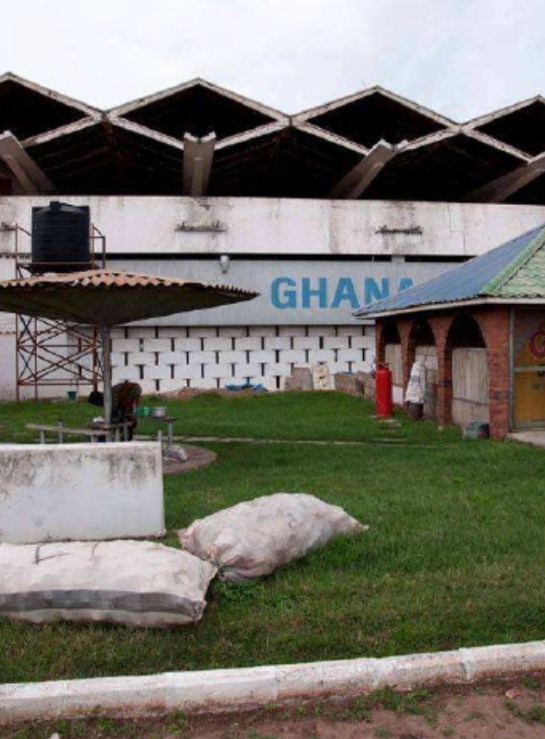
Ghana copy

“Made in Ghana Pavilion” 1967, International Trade Fair, designed by Jacek Chyrosz, Stanislaw Rymaszewski and Vic Adegbite


 At the GNCC, they worked together with Ghanaian architects and foreign professionals, many from socialist countries. This collaboration reflected the alliance of Nkrumah’s government with socialist countries, which was demonstrated at the fair by the exhibitions of Czechoslovakia, the German Democratic Republic (GDR), Hungary, and Poland (Figure 3). At the same time, the Ankrah administration used the fair to facilitate Ghana’s reopening toward the West. Hence, the Soviet Union and the People’s Republic of China (PRC), two major allies of Nkrumah, were absent.

 By contrast, the two pavilions not to be overlooked were those of Great Britain, Ghana’s former colonial ruler and its main trade partner, and the United States, which granted Ghana loans for its many infrastructural projects in the 1960s, in particular the Akosombo Dam, financed jointly with the United Kingdom and the World Bank. India was represented as a member of the Commonwealth rather than as a member of the Non-Aligned Movement, since Nkrumah’s attempt to position Ghana among Egypt, India, and Yugoslavia as one of the leading nations of the movement was abandoned after the change of the regime. Collaboration among African countries was particularly favored, not as a way of carrying on Nkrumah’s vision of pan-African union but with a more modest aim, that of the stimulation of trade among African countries. Displays representing African countries were gathered in the round Africa Pavilion at the end of the ramp through which visitors entered the fair, before they moved on to Pavilion A (the “Made in Ghana” pavilion) and the pavilions rented to other countries and Ghanaian state firms.”

Notes from Accra

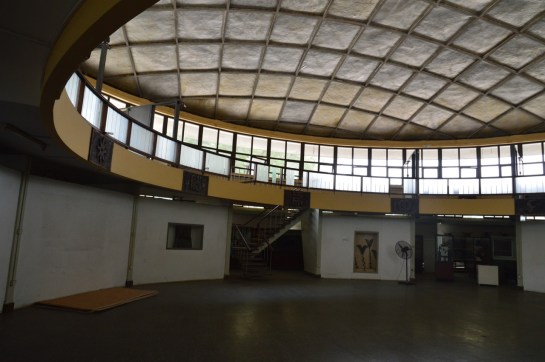
Iain Jackson and Ola Uduku have spent the last two days in Accra catching up with 20th century architecture, and meeting with contacts as part of the British Academy funded ‘From Colonial Gold Coast to Tropical Ghana’ architecture project. Tuesday 23rd February was spent visiting the Ghana National Museum complex, the gem in the crown being Denys Lasdun’s prefabricated dome shaped museum, currently closed for refurbishment. The imagination and vision of the building were still clearly there in our viewing of the stripped down structure ready for conservation.

DSC_0820.jpg

Our next stop took us to Nickson and Borys’ Children’s library building nearer to Central Accra. This had been sympathetically restored, and again was a great demonstration exemplar of ‘West African Modern’ and the developmental vision of the departing colonial government to establish libraries that were open to all citizens. The upper area remained devoid of activity but had potential to be a great multipurpose programme space.

DSC_0801.jpg

Children’s Library

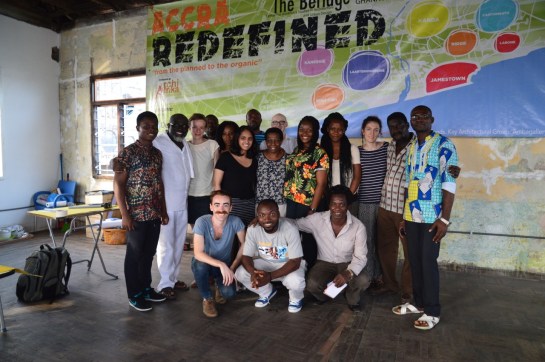
The final visit of the day was to Joe Osae-Addo’s Archi-Africa – TuDelft Berlage Architecture school studio, in Accra’s Jamestown neighbourhood, on the urban fabric of everyday life in Accra. The impromptu crit we were invited to take part in was an enjoyable experience and the schemes were full of promise.

DSC_0832.jpg

TU Delft and Archi-Africa in the newly converted Jamestown Studio

Day two involved visits to Jamestown – as a walking visit this time to take in early 20th century colonial PWD, and also warehouse architecture in the neighbourhood. A visit to Adabraka also yielded a few examples of early PWD worker housing, which was followed by an afternoon visit to Achimota School, which conveyed the height of the colonial education project with architectural symbolism and style. A few later additions to the campus by Nickson and Borys and other’s also fitted well into the College’s narrative of colonial imperialism and privilege. The final visit for the day was to Scott House, which lived up to its deified tropical modernism status, whilst the Western Tessano neighbourhood had transformed into an upper class gated area, that unexpectedly gave us a glimpse of an earlier [likely Cubitt?] designed semi detached housing unit, currently undergoing a further 21st century upgrade..

DSC_0863.jpg

One of the few surviving examples of its type in Adabraka

We will be moving onto Kumasi on Friday and will update from there early next week.

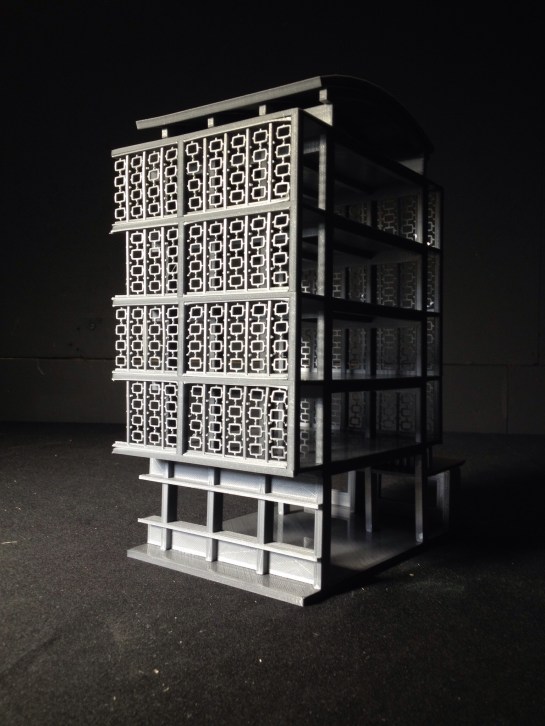
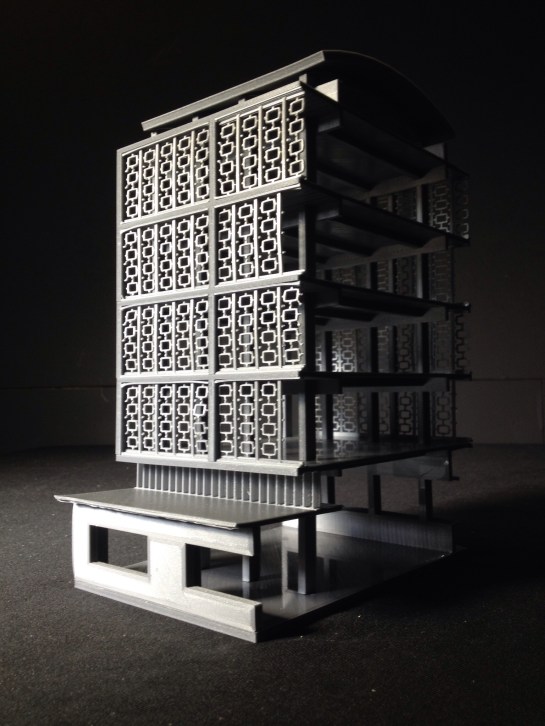
3D Printed Model of Kenneth Dike Library

We’ve been playing with a couple of 3D printers [Makerbot and Ultimaker] and testing how they might be used to create a small collection of models to supplement our History of Architecture lectures.

image

In the age of ‘Stream Capture’ and recorded lectures including a small exhibition of key case study models in the lecture theatre will hopefully entice the students to attend the live event and will also form an opportunity to further explore light, scale and the qualities of buildings that are not as easily expressed through photographs and orthographic drawings.

image

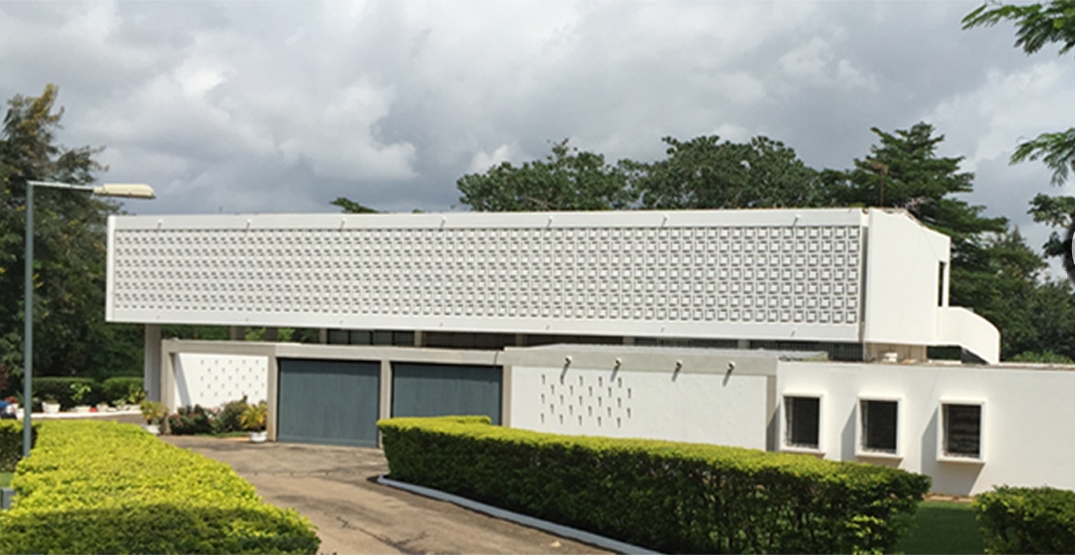
Our first test case used a computer model of the Kenneth Dike Library, Ibadan [designed by Fry and Drew] expertly produced by Jacopo Galli and generously shared with us. The model doesn’t show the entire buiding but a key section enabing the interior to be viewed. The ambition is a for an online library of models that can be downloaded and then printed as and when they are required by faculty and students.


image

New Research: Gyoji Banshoya (1930–1998): a Japanese planner devoted to historic cities in the Middle East and North Africa, published in Planning Perspectives by Kosuke Matsubara

Gyoji Banshoya (1930–1998) was a Japanese urban planner whose life-work was urban planning in the Middle East and North Africa. The purpose of this paper is to provide an overview of his work, which still remains unknown. His early masterpiece, the ‘Square House’, shows how he was influenced by Kiyoshi Seike to apply historic spatial composition to realize width and convertibility in low-cost housing.

Gyoji Banshoya
K. Shinohara, M. Yamada, K. Seike, G. Banshoya, and S. Miyasaka. Source: Hayashi, “Seike Kiyoshi to Gendai no Jukyo Design,” 6

Following this, Banshoya studied under the supervision of Gerald Hanning and George Candilis at Ateliers de Baˆtisseurs in Paris, and went to Algiers to engage in the study of ‘evolutionary habitat’. As a United Nations Development Programme (UNDP) expert, he began working with Michel Ecochard in 1962 in Beirut, Damascus, and Aleppo. They were responsible for the elaboration of master plans for these three cities, and that of Damascus still remains as a legally active master plan today. Coupled with the Syrian political struggle since the 1980s, there has been some reaction against their modernist policies. However, the case is made for a detailed examination of Banshoya’s work, and re-evaluation of its legacy for the urban planning history of the Middle East and North Africa.

You may read the full article here: http://www.tandfonline.com/doi/pdf/10.1080/02665433.2015.1073610


EAUH Helsinki 2016

European Association for Urban History 2016 Conference: 

Reinterpreting Cities

24-27 August 2016, Helsinki, Finland


CALL FOR PAPERS

Deadline: 31 October 2015

Session:

M19. Settler Cities: A Useful Concept to Reinterpret Transnational Urban History?

In the opening lines of his massive Replenishing the Earth: The Settler Revolution and the Rise of the Anglo World, 1783-1939, James Bellich presents a challenge to historians eager to reinterpret cities in a transnational framework: do cities like Chicago and Melbourne on opposite sides of the planet share characteristics by virtue of their foundation and political rule by white settlers intent on dwelling permanently upon lands forcibly taken from their indigenous inhabitants?
This panel will explore this question by calling upon scholars to reflect on the concept of “Settler Cities.” What defines such a city? Are their clear boundaries, or does the definition involve a subtle degrees of separation form the broader category of colonial city? Are there broad commonalities in the histories of these cities that merit singling them for scrutiny as a group? Are they best seen as a special subset of colonial cities or is there a way in which they expand or transcend that long-used concept? Are there webs of connections between these cities and between them and the imperial metropoles that make this concept especially useful as a subset of the new subfield of transnational urban history? What if we go beyond Bellich’s focus on the “Anglo World,” and consider Algiers, Elizabethvillle/Lubumbashi, Windhoek, Batavia, Jerusalem, and even Mexico City or Rio de Janeiro in the same universe as Cape Town, Chicago, Vancouver, San Francisco, Belfast, and Sydney? Are there non-western settler cities? Why did the settlers in some cities abandon their project of settlement while others stay, helping to cause some of the most intractable conflicts on earth?
Participants should not only bring their research on individual settler cities to the table, but also contemplate several themes underlying the concept of settler cities: especially dense connections and flows between these cities and between them and metropolitan hubs; the diversity of flows between these cities, including not only people, money, ideas, and urban practices, but also jurisprudential systems, organizational forms, urban economic structures, group identities, and political cultures; especially complex forms of urban politics that includes conflicts between settlers, between settlers and metropolitan governments as well as with indigenous people; real estate practices involving people who plan to invest in urban land for future generations unlike the more transient European populations of non-settler colonial cities; and interventions in urban spatial politics that include especially complex forms of segregation and law-of-conquest authoritarianism.

Keywords:
colonial cities, segregation, settler colonies, transnational urban history, urban politcs

Period:
Modern

Type:
Main session

Session organisers:
Carl Nightingale, University at Buffalo SUNY, United States of America
Vivian Bickford-Smith, University of Cape Town, South-Africa
Johan Lagae, University of Gent, Belgium

Call for Papers: Revisiting African Modernism at docomomo 14th International Conference 

6-9 Sep 2016,  Calouste Gulbenkian Foundation,  Lisboa,  Portugal

docomomo International is now accepting abstracts for the 14th International docomomo Conference that will take place in Calouste Gulbenkian Foundation, Lisbon, Portugal, September 6–9, 2016. Please submit abstracts no later than October 18, 2015 (12 pm GMT), for one of the 29 thematic sessions listed here.

One session that will be of specific interest to TAG followers is the ‘Revisiting African Modernism’ session…

“Africa’s history of architectural modernism and modernist landscapes is no longer unknown or obscure.  This session seeks to build on that established foundation by asking contributors to explore the potential contribution of the buildings and infrastructure of this era (c. 1945 – 1970s) to our understanding and engagement with Africa today. Does their original programme make them adaptable for 21st century contemporary urbanism? Are there specific case studies or examples of buildings and landscapes that demonstrate positively (or negatively) adaptive re-use possibilities or experience?

Past docomomo sessions on Africa have (arguably rightly) been occupied with debating Africa’s involvement in docomomo, as both a subject and a participatory region. This session recognizes the increasing inclusion of African nations; South Africa, Egypt, Ghana (proposed) into the docomomo “family”. It also acknowledges contributions from African and Africa-focused researchers in a number of past docomomo publications.

This panel session seeks to expand these contributions into a contemporary discourse, devoted to the investigation of the methods, and means, by which Africa’s modernist past can contribute more than just historical research to the Africans and Africa-focused researchers of the 21st century. We are particularly interested in contributions that consider built “ensembles” within urbanist contexts in African communities or cities, such as university campuses, housing masterplans, and industrial complexes/towns. “

Session Chairs: Ola Uduku, University of Edinburgh, Scotland; Miles Glendinning, University of Edinburgh, Scotland.

The 20th Century Urbanism and Landscape in Africa conference recently held at the Edinburgh School of Landscape Architecture (ESALA), University of Edinburgh. It took place from 7 to 8 October, and focused on the subtheme of ‘Research Challenges and opportunities’.

The first day of the conference was dedicated to presentations by the four Key Note speakers, who were Dr Rexford Oppong of KNUST Ghana, Prof Luc Verpoest of KU Leuven, Prof Johan Lagae of Ghent University and Dr Iain Jackson of University of Liverpool. Although their presentations all brought the conference’s key theme of ‘Research Challenges and Opportunities’ to the fore, their various approaches and contexts had provided more divergent and interesting perspectives to the discussion.

The areas of interest covered by the four speakers ranged from Dr Oppong’s  “Challenges and Opportunities of Conservation Research and Documentation on the Urbanist and landscape heritage of KNUST”, to Prof Verpoest “Mind the gap: from historiography to [urban] preservation. The African case” and Dr Jackson’s “Research Challenges and opportunities in West Africa”. Prof Johan Lagae also presented a talk on the challenges of his on-going research on urbanism in Congo.

Picture2

Cover picture for Dr Jackson’s “Research Challenges and Opportunities in West Africa”

In Dr Oppong’s talk, he presents the KNUST as a campus set, and much preserved in the Modernist architectural theme of the 1950s. However, the current state of its architectural drawings archives as highlighted in his presentation, need urgent conservation and documenting for posterity. He therefore gives insights into his current research in this regard, and the challenges of the project. One main challenge he sights is in getting the current University and secondary school students (who also played a part in the survey) to recognise the input of indigenous Ghanaian Architects in the building designs.

vc lodge

The Vice-Chancellor’s Lodge, KNUST Ghana

The challenges of conservation and documentation raised by Dr Oppong, was a theme which ran through the other presentations. However, in Prof Verpoest’s talk, he suggests that further strands of investigations are needed to be explored on the subject. Rather than being limited to buildings and famous architectural pieces he argues, researching conservation, preservation and documentation should look at the wider picture of processes, institutions, mechanisms and historical context. In essence, it should go beyond the built object as an individual subject of analysis. He therefore discusses this in the light of recent projects by Docomomo, where research is being done to go beyond individual building conservation to urban building conservation. He also explains how the organization is seeking to have regional linkages in selected African countries.
Picture2

An image of Africa’s changing society as illustrated in Prof Verpoest’s presentation

Prof Verpoest’s  suggestion of research into urban, rather then individual building conservation, preservation and documentation in Africa and globally, is also seen to form the crux of work done by the third key note speaker – Prof Johan Lagae. In his current research in Congo, Prof Lagae looks at various types of infrastructure – Missionary, Railroad and Hospitals, but all within the wider urban form context and everyday living. He also looked at the Post Belgian period in Congo around 1965, and raises the issue of building production and technology – but again questions “where were the Congolese in all these?” On the challenge faced in his research, he stated practical issues of language, electricity, relating with local chiefs etc. He also notes the fantastic data and drawings present in the archives, but which unfortunately lacks infrastructure.
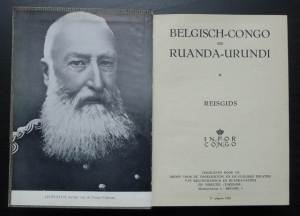
Picture5

Picture of King Leopold II of Belgium in an archival administrative document on the Congo

Prof Lagae’s question on the contribution of natives, and poor archival infrastructure are two issues which Dr Jackson’s also raises in his presentation on Research Challenges in West Africa. With regard to the native contribution, he suggest that urgent work is required on the works of native architects in particular. While supporting the need for improved archival infrastructure in West Africa, however, Dr Jackson also makes a case for more fieldwork participation – arguing that “We have to get our hands dirty and explore…to create new photographs and records of the buildings”. He also suggest that further to such fieldwork exercises, the adoption of new technologies, like Drones and GPS need be encouraged to produce astonishing results. As seen in Professors Verpoest and Lagae talk, Dr Jackson was also of the Opinion that Architectural history needs to move beyond the conservation and preservation of important buildings. He argues rather, that research in this area become more inclusive of the intangible and the ephemeral, and sample user experiences and opinions. His talk raises several other questions on research challenges in West- Africa, including the theoretical base, further studies into Village plans and the PWD, art works and murals, architectural teaching etc. A most significant point he however raises, is on the need for collaborative research, rather than the lone-wolf and fear of plagiarism approach.

photo (1)

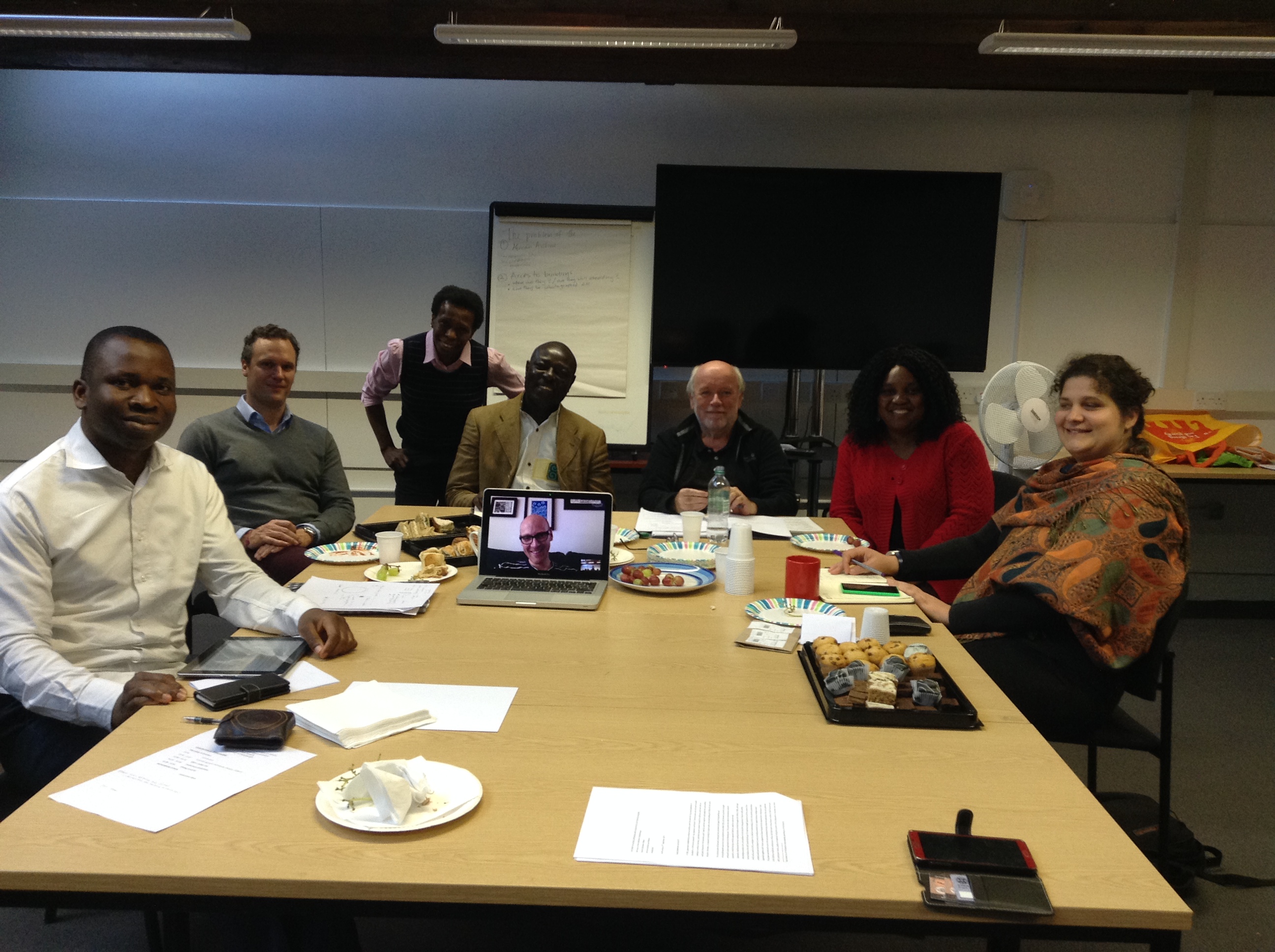
Delegates at the 20 Century Urbanism and Landscape in Africa Conference on 8 Oct 2015; Left to right are Meshack, Dr Alex Brymer, Dr Ola Uduku, Dr Rexford Oppong, Dr Iain Jackson (on Skype), Professor Verpoest, Yemi Salami, Dr Ruxandra

Scheduled for the second day of the conference were two presentations to be given by Yemi Salami and Anthony Folkers. Anthony Folkers was not in attendance at the conference but had his paper presented by Dr Uduku The paper was titled “The Spirit of George Lippsmeier and His Institute for tropical Building”. Yemi, had only recently submitted her PhD and is awaiting her viva to take place. She gave a talk on the challenges of undertaking a doctoral research in Nigeria, and her paper was titled: “Challenges of Conducting a Doctoral Research in Nigeria: Reflections from my PhD work on “the Architecture of the Public Works Department in Nigeria, c1900-1960”. Here she discussed challenges ranging from very slow bureaucratic processes, to ill equipped archives and security and insurgency issues, as some of the hindrances she faced during her research. The symposium then held at the end of Yemi’s presentation, with Dr Jackson joining the debate via Skype.



Bubonic plague, colonial ideologies, and urban planning policies: Dakar, Lagos, and Kumasi, by Liora Bigon, in Planning PerspectivesDOI:10.1080/02665433.2015.1064779

The Third Plague Pandemic originated in Southwest China in the mid-nineteenth century, reached Africa’s shores around 1900, and spread globally for about a century. This article examines three plague loci in colonial Senegal (Dakar, 1914), Nigeria (Lagos, 1924), and the Gold Coast (today’s Ghana; Kumasi, 1924). A tripartite comparative analysis is made of French and British doctrines of colonial rule, colonial urban planning policies, and anti-plague practices. While some common features are demonstrated in the policies and practices of the colonizing forces such as the implementation of rigorous measures and embracing segregationist solutions, divergent features can also be distinguished. These relate to the methods of implementation of planning and anti-plague policies, in accordance with colonial ideology (assimilation, direct and indirect rule); and to the very nature of autochthonous communities, responses, and levels of agitation. Our both comparative and more nuanced site-related view is also based on a large collection of archival and secondary materials from multilateral channels.

The full article may be viewed here: http://www.tandfonline.com/doi/abs/10.1080/02665433.2015.1064779