Archive

British Colonial Architecture

Call for Participants: Writing Group on Architecture and Empire
Society of Architectural Historians of Great Britain

https://www.sahgb.org.uk/news/architectureandempire

With a formal existence spanning early modern to contemporary history, the British Empire supported complex networks of trade, war and settlement. It intervened in land-based expansions as well as maritime worlds and prefigured a global architectural history. Yet research that seeks to critically address the empire and its legacy poses complex challenges for the architectural historian: the mental-mapping of bureaucratic systems across multiple continents, finding evidence of buildings and landscapes for which little documentation exists, sitting with a complex past and present of race, gender, religion, nationalism and capitalism.

This writing group is formed as an empathetic structure for scholars writing books and dissertations on imperial and colonial histories. We seek to create a space for researchers to share resources on chapter writing, structuring and revision. Writing is often an isolating activity, particularly for emerging scholars with non-Eurocentric specialisations that are underrepresented in the academy. To this end, we especially encourage applications from early-career researchers and those whose primary field sites are located outside of Great Britain. This project is among the first within the society’s new Race and Ethnicity network, a new effort to foster greater equality, diversity and inclusivity within the Society of Architectural Historians of Great Britain.

The group will meet for two hours every two months, with participants alternating between workshopping their own draft chapters and that of another in the writing group. Participants must commit to reviewing and presenting once every four months. To mitigate time zones and geographies, all events will be held over Zoom.

HOW TO JOIN

To join, please send a one-page cover letter and a brief project abstract to info@sahgb.org.uk with the subject line ‘Application: Writing Group on Architecture and Empire’ by 15 January 2021. The cover letter should state why you would like to be a part of the group and your general meeting availability, and the abstract should address the dissertation or book project you hope to work on as part of the writing group. All interested participants will be notified by 31 January 2021. The group will meet every other month beginning in February 2021. The meeting times, format and specific group expectations will be refined amongst participants during the first meeting and reviewed on a regular basis.

This writing group is convened by Sonali Dhanpal (Newcastle University), Sben Korsh (University of Michigan) and Y.L. Lucy Wang (Columbia University).

Call for Papers: British Architecture in the World

As part of its long-running series Twentieth Century Architecture, the Twentieth Century Society is planning a journal for publication on the relationship between British architecture and other countries of the world, particularly those beyond Europe.

Pansodan Street, Yangon, including Chartered Bank, Palmer & Turner, 1939–41.

Pansodan Street, Yangon, including Chartered Bank, Palmer & Turner, 1939–41.

The nature of the relationship may take a number of forms, such as British-based practices working overseas, British architects establishing offices in other countries, architects coming to Britain for training before returning home, or more general issues of how the profession in Britain set standards for education and validation elsewhere, in particular through the RIBA. We tend to favour actual buildings as subject matter in Twentieth Century Architecture, but on this occasion the field may be wider, including town planning, cultural responses, climatic adaptation, administrative histories, professional formations, and relationships to the later period of colonialism and its ending. Accounts of the scope of archival resources could be of interest, and we might also include reports on the current state of buildings, including threats and conservation projects.

Jane Drew, housing in Sector-22, Chandigarh, c. 1954.

Jane Drew, housing in Sector-22, Chandigarh, c. 1954.

The scope outlined above is larger than usual for what is a relatively small collection of published pieces – the journal usually contains about ten articles – but it seems preferable not to place limitations until we are aware of what might be available. Recently, research and publication in this area have grown rapidly, and our aim is to bring together articles that complement each other, but with a spread of periods (anything from 1914 to around 2000), styles and locations. The journal will be the sixteenth in the series, and will probably be published in 2023.

In the first instance, please send your ideas by 01 July 2020 in the form of an abstract of up to 300 words, along with a brief CV and list of publications to date, to elain.harwood@HistoricEngland.org.uk, who will also answer any queries. Abstracts will be reviewed by the editorial committee of the journal, drawn from members of the Twentieth Century Society Publications Committee, and selected for full submission. Completed texts will be peer-reviewed.

Following commissioning, delivery would be 1 March 2022, the length of articles should be between 2,000 and 5,000 words, with up to ten images per article. Contributors are expected to provide and pay for images of publishable quality.

Tania Sengupta, “Papered spaces: clerical practices, materialities, and spatial cultures of provincial governance in Bengal, Colonial India, 1820s–1860s”, Journal of Architecture, vol 25, issue 2, 2020

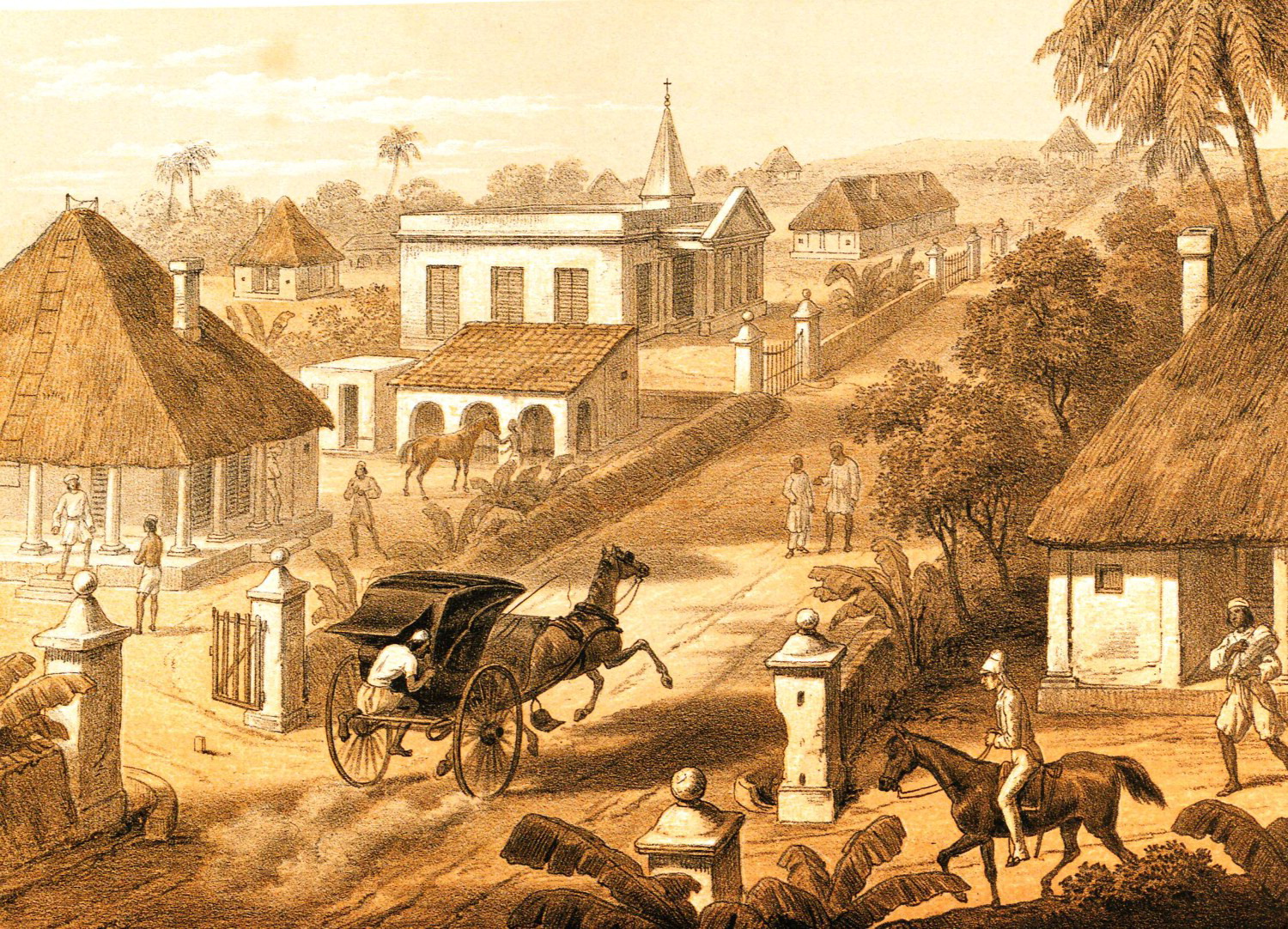
British colonial governance in India was built upon global technologies of writing produced through European mercantile colonialism; the extraction of the embodied Mughal administrative knowledge from a Persianette (or Tamil-proficient, as in Southern India) Indian clerical class, and its materialisation into official paper-based forms, as shown by Christopher Bayly; and a scribal-clerical ‘habitus’ as described by Bhavani Raman. This research focuses on the architecture, spaces and material culture associated with the paper-bureaucracy of the colonial government of Bengal that Jon Wilson calls one of the world’s earliest modern states.

A provincial administrative town in colonial Bengal. George Francklin Atkinson, Our Station, Plate 1, lithograph, from Atkinson, Curry and Rice (On Forty Plates) Or the Ingredients of Social Life at Our Station in India (London: Day & Son, 1859), © British Library Board, 1264.e.16

A provincial administrative town in colonial Bengal. George Francklin Atkinson, Our Station, Plate 1, lithograph, from Atkinson, Curry and Rice (On Forty Plates) Or the Ingredients of Social Life at Our Station in India (London: Day & Son, 1859), © British Library Board, 1264.e.16

It argues that this paper-/ writing-oriented habitus also mandated a chain of materialities and spatialities (paper-records, furniture, spaces, and architectures of colonial governance). Focusing on the colonial cutcherry(office), the nerve-centre of Bengal’s zilla sadar (provincial administrative) towns, I analyse such ‘papered spaces’ as record rooms and clerical offices. The work is conceptualised around paper as a key agent of colonial governance, including the expanding spheres of its logic, which profoundly permeated the cutcherry’s material-spatial culture and experiential ‘lifeworld’. I also reflect on how colonial paper-practices intersected with other more immaterial and mobile circuits of knowledge and information spread over the town and country, and how such paper-governance was fed, for example, by spatial geographies of paper supply and printing. For the research, I combined extensive on-ground documentations of the material fabric of the buildings with archival research (governmental papers, period literature and art) in India, Bangladesh and Britain.


https://www.tandfonline.com/doi/full/10.1080/13602365.2020.1733861 

Herbert Baker, New Delhi and the reception of the classical tradition

by Soumyen Bandyopadhyay, Sagar Chauhan, in The Routledge Handbook on the Reception of Classical Architecture: https://doi.org/10.4324/9781315171104 

This chapter assesses the work of the British architect Sir Herbert Baker (1862–1946) for the imperial capital of New Delhi, a role he shared with Sir Edwin Lutyens (1869–1944) very much as an equal partner over more than a decade. This assessment is undertaken in the context of the reception and rereading of the classical project and the wider classical tradition among not only the imperialists, but also the colonised in India.

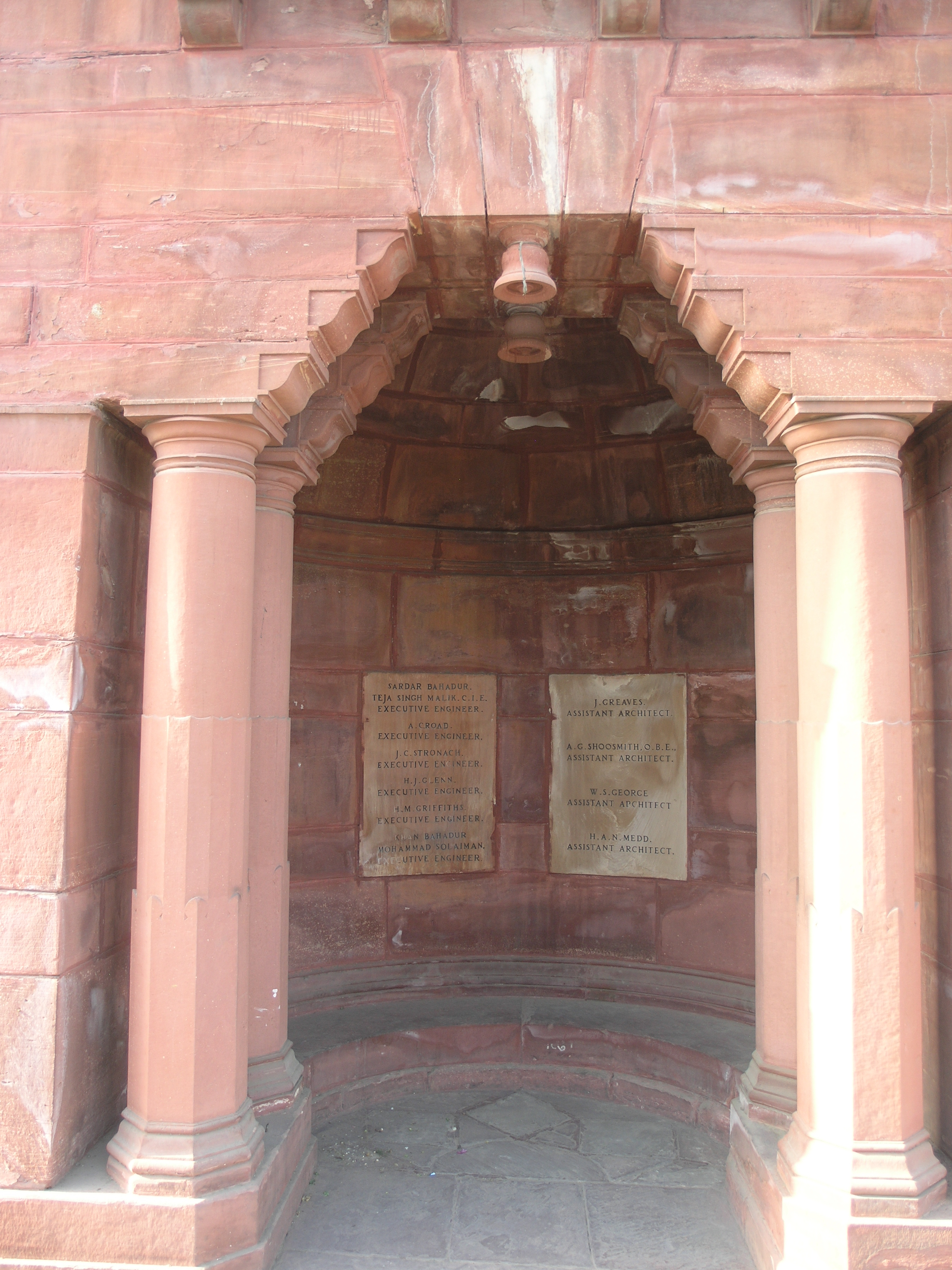
Herbert Baker: corbelled arch in New Delhi

corbelled arch in New Delhi

The reception of the classical tradition in India assumed a character distinct from other British colonies as a result of a long-standing history of interaction with the classical world, as well as the sheer immensity of its diverse historical, literary and material culture traditions. With the consolidation of the British Empire in India, European classical traditions assumed attributes and resonances they did not possess in Europe.

New Research:Suzanne Francis-Brown & Peter Francis Norman & Dawbarn, the UCWI, and Tropical Modernist Architecture in Jamaica” in Caribbean Quarterly, 65:1, 27-56, DOI: 10.1080/00086495.2019.1565219

The University College of the West Indies (UCWI) At Mona, Jamaica, established immediately following World War II, was one of the early greenfield university developments among British colonies in the Southern Hemisphere, as the British sought to ameliorate patently negative social conditions.

016

UCWI Designed by Norman and Dawbarn. Image courtesy of Special Collections and Archives at University of Liverpool

It was also one of the early tropical iterations of the modernist aesthetic that affected European landscapes from the early to middle decades of the twentieth century, sparked by the Bauhaus school of design and the work of iconic architects of the modern movement. British architectural firm Norman & Dawbarn received the contract to design the nascent West Indian university and its associated teaching hospital only weeks after the arrival of the first principal on site in Jamaica in 1946, and the overall scheme proposed in 1947, parts of which were built in stages between 1949 and the mid-1960s, remains recognisable today despite differences at the time and subsequent shifts in architectural approach.

Full Paper here: https://doi.org/10.1080/00086495.2019.1565219

New Research Paper: I. Jackson, O. Uduku, I. Appeaning Addo, R. Assasie Opong, “The Volta River Project: planning, housing and resettlement in Ghana, 1950–1965”, Journal of Architecture, vol 24 (4), 512-548.

This paper investigates the housing schemes proposed in connection with the Volta River Project, Ghana, in the mid-1950s to early 1960s. The Volta River Project formed part of Kwame Nkrumah’s vision for Ghana’s modernisation and industrialisation in the wake of political independence. Three associated worker housing schemes demonstrated somewhat contradictory design and construction methods, from high specification, extensive amenities, and comprehensive servicing, through to self-build ‘core’ houses amounting to little more than single-room dwellings.

Figure 16.jpg

Core House at New Ajena, Ghana. Built c.1961, photographed in 2017

The paper traces the complex and controversial history of these schemes, supplemented with findings of several field trips to the settlements in question, to unravel the value of the ‘Core Houses’ approach. The most successful project to incorporate indigenous agency and true collaboration was the semi-formal ‘Combined Area’ housing at Akosombo, a positive model for shared agency and collaboration in planning, housing, and facilities delivery. Sitting alongside the carefully manicured plan of Akosombo, with its regulated market, excellent health care and desire to set high standards of cleanliness, the Combined Area has not only provided homes for the lower-paid and labouring workers of the town, but has developed over time into a settlement where professionals and retired government workers are also now residing, not out of necessity but by choice. By actively developing their own homes, shared spaces and amenities there has developed a strong sense of ownership, community, and identity. The success and level of attachment to this settlement clearly extends beyond its material presence and through the shared experience of helping to cultivate a place of one’s own.

Full Article Available here: https://www.tandfonline.com/doi/full/10.1080/13602365.2019.1643389?scroll=top&needAccess=true


Ng’ambo Atlas. Historic Urban Landscape of Zanzibar Town’s ‘Other Side’

Ng’ambo is the lesser known ‘Other Side’ of Zanzibar Town. During the British Protectorate the area was designated as the ‘Native Quarters’, today it is set to become the new city centre of Zanzibar’s capital. Local and international perceptions of the cultural and historical importance of Ng’ambo have for a long time remained overshadowed by the social and cultural divisions created during colonial times. One thing is certain: despite its limited international fame and lack of recognition of its importance, Ng’ambo has played and continues to play a vital role in shaping the urban environment of Zanzibar Town.

image3

Ng’ambo Atlas. Historic Urban Landscape of Zanzibar Town’s ‘Other Side’ documents the material collected through the heritage-based urban planning project Ng’ambo Tuitakayo! carried out by the Government of Zanzibar in collaboration with African Architecture Matters and City of Amsterdam and under the auspices of UNESCO.

image5-1

The goal of the project was to prepare a local area plan (structure plan) for the new city centre of Zanzibar’s capital. The planning exercises were from the beginning grounded in the notions of urban culture and heritage, while the principles outlined in the UNESCO Recommendation on Historic Urban Landscape provided a framework for the subsequent stages of the work.

It quickly became clear that the cultural and historic richness of Stone Town’s ‘Other Side’ merited a wider recognition than a technical planning document would allow for. At the same time presenting the outcomes of the project to a wider public through an atlas was a way to promote the history and culture of the area and contribute to the argument that urban heritage should play a central role in sustainable development of cities.

IMG_8074 bis

The atlas brings together and presents Ng’ambo’s rich planning history and draws attention to the outcomes of the mapping of the material and immaterial cultural landscape.It presents over hundred years of Ng’ambo’s history and urban development through maps, plans, surveys and images, and provides insights into its present-day cultural landscape through subjects such as architecture, toponymy, cultural activities, public recreation, places for social interaction, handcrafts and urban heritage.

Post 14

Ng’ambo Atlas was produced by the Department of Urban and Rural Planning, Zanzibar and African Architecture Matters

Editors: Antoni Folkers and Iga Perzyna

Publication year: 2019

Available for free download from:

https://catalogue.leidenuniv.nl/primo-explore/fulldisplay?docid=UBL_ALMA51336909840002711&context=L&vid=UBL_V1&lang=en_US&search_scope=All_Content&adaptor=Local%20Search%20Engine&isFrbr=true&tab=all_content&query=any,contains,Ng%27ambo%20atlas&offset=0

Available for purchase at:

https://lmpublishers.nl/en/catalogus/ngambo-atlas-historic-urban-landscape-of-zanzibar-towns-other-side/

Thank you to Prof. Ola Uduku of Manchester School of Architecture for reviewing the ‘Sharing Stories from Jamestown’ exhibition. The exhibition has been extended to run until the end of June 2019. Below I’ve uploaded a 360 degree panoramic view – you can ‘click and drag’ the film to have a look around….

ouduku's avatarWARUH: West African Rapid Urbanisation and Heritage Conservation Research Network

Iain Jackson’s exhibition co-curated by Allotey Konuah-Bruce and Joe Addo opened to great acclaim on Saturday evening at the Jamestown Café, venue, near Ussher Fort. Curiously the café it was confirmed by local elders who attended the opening is accurately in Usshertown; the exhibition launch providing a great forum for these questions to be aired and for detailed discussions to be had.

Historic photographs and maps of ‘old’
Jamestown buildings have been placed next to those which show their age,
condition and use, in ‘contemporary’ Jamestown have been displayed in the lower
gallery of the Jamestown Café, which itself features in the exhibition as Tarquah
house, the dwelling and warehouse of one of Jamestown’s wealthy local
merchants, who had originally had it built. The exhibition represents a true
joint collaboration between Iain Jackson and Allotey Konuah-Bruce who have
formed a close and productive working relationship as they have spent the…

View original post 244 more words

You are invited to our Exhibition, ‘Sharing Stories from Jamestown’, opening on the evening of Friday 17th May 2019 at Jamestown Cafe, High Street, Accra. All very Welcome! The exhibition will run until 13th June.

We’ll be exhibiting vintage photographs, plans and drawings from over ten archives and private collections that have been gathered together here for the first time. To accompany the exhibition we’ve also produced a catalogue that attempts to explain and contextualise the images, and to tell the history of Accra’s development, planning and architecture. You can read the digital version below. We’re indebted to Allotey Bruce-Konuah for expertly setting out the catalogue.

Exhibition Catalogue available at issuu: https://issuu.com/transnationalarchitecture/docs/sharingstories_accra_2019_jackson

We will include more photographs and 360 degree footage of the exhibition as soon as it is installed.