Archive

Fry & Drew

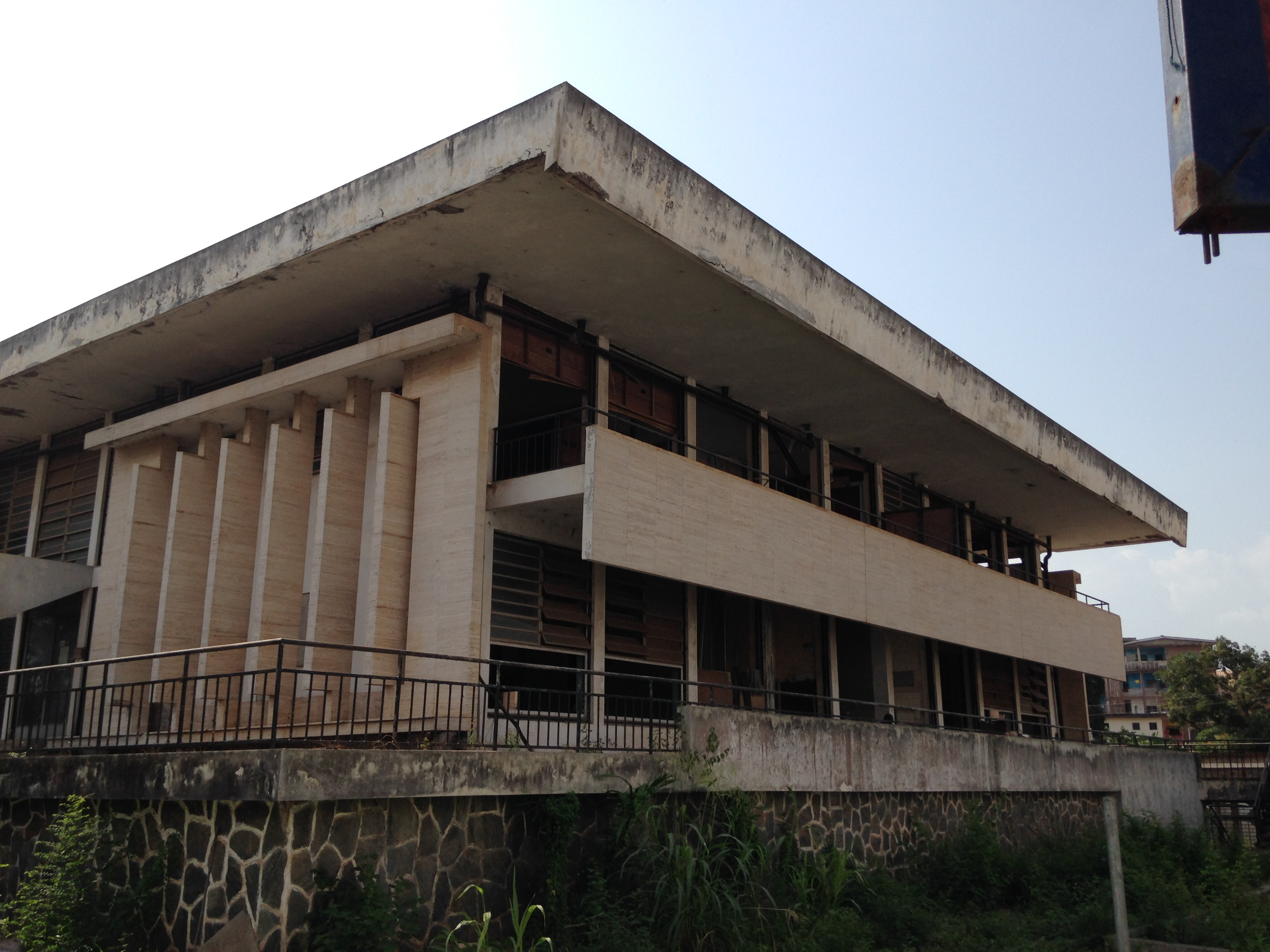
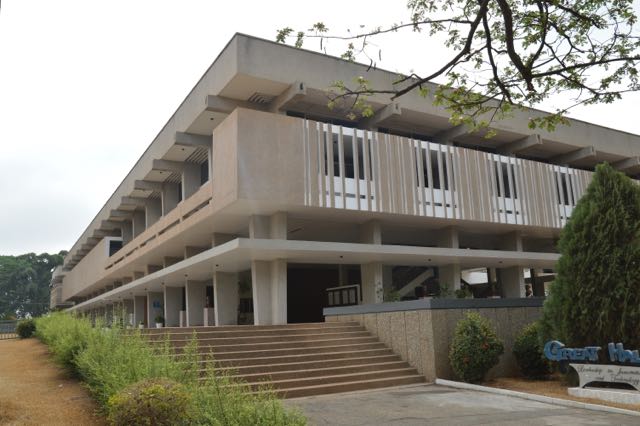
Maxwell Fry, the architect and planner of Ibadan University, considered the campus to be the highlight of his career, although he confessed that he found the Kenneth Dike library elevation too ‘lace-like’.

It is an extraordinary structure and we’ve covered it on the TAG blog previously, as well as printing a 3D sectional model of the structure. Taking a more retro step, I’ve now produced a hand-drawn (rotring, ink wash) front elevational drawing of the building (minus the small reading room on the RHS and smaller structure on the LHS, for clarity).

Kenneth Dike Library at Ibadan University, Nigeria

The drawing stretches over 2 x A1 sheets and has been scanned, pieced together, and the blue ‘sky’ added in Photoshop. I’m going to follow drawing with some additional studies into various libraries in Ghana – especially the Children’s Library in Accra (Nickson and Borys); Sekondi Regional Library (James Cubitt); Koforidua Library (also by Cubitt); KNUST Library (?) and the iconic Bolgatanga library by Max Bond.

Junior Staff Quarters Plan View
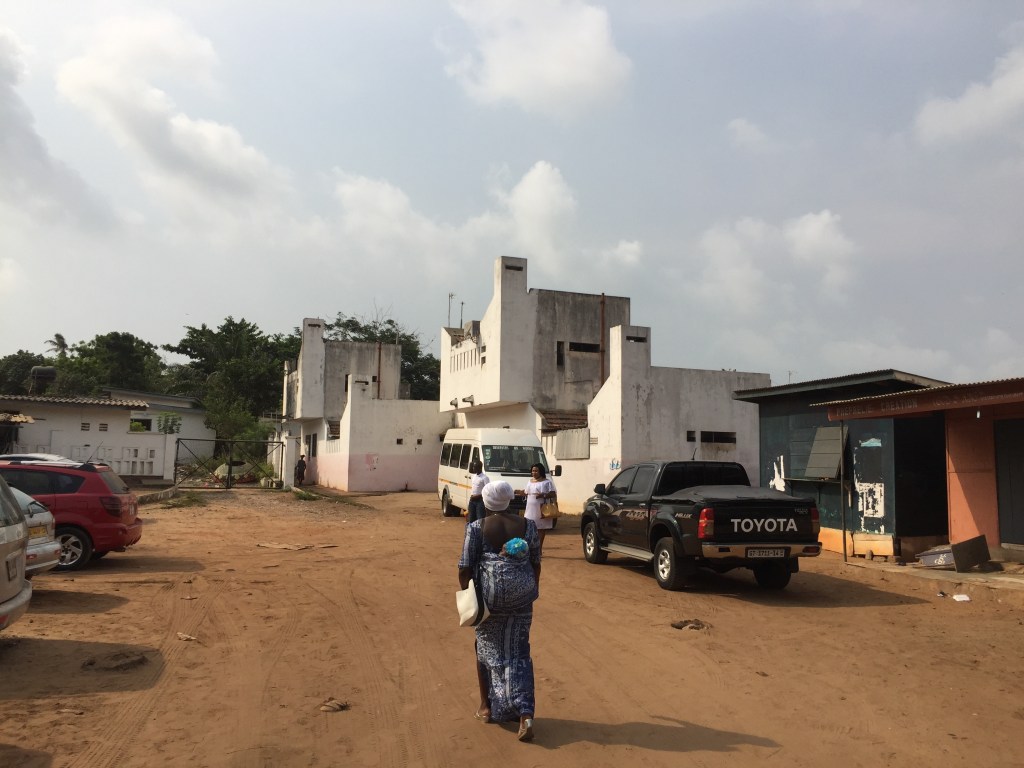
Junior Staff Quarters, near Christianborg Castle, Accra


New Buildings in the Commonwealth edited by Jim M. Richards in 1961 pulled together many articles from earlier editions of the Architectural Review. It formed an important set of essays, photographs and illustrations with each geographically themed chapter written by an architect familiar with that part of the world. Maxwell Fry wrote the West Africa section and he selected some of the best buildings from the proceeding decade to feature in his piece, including some lesser known works from relatively unknown architects.

Junior Staff Quarters, Accra

The opening project for the Ghana section was a housing scheme from Accra designed by the Public Works Department Chief Architect, G. Halstead with architects-in-charge D. A. Barratt and W. J. Clarke. Very little is known about these architects, apart from Halstead worked with S. Bailey (townplanner) on the new layout of Tamale in 1953..[1]

The Accra housing project is a very carefully designed set of 24 apartments arranged across three blocks. Each dwelling faces into the courtyard space and are one room deep to maximise cross ventilation. Each house also has its own private balcony/court for sleeping outside and cooking.

The formal arrangement and sloping roofs are all carefully arranged and the quality of the build is exceptional. I’ve wanted to see these houses for some time now and it was a special moment to see them come into view as I made my way from the 17th Century Danish ‘Christianborg Castle’. The houses were constructed as ‘Junior Staff Quarters’ for people working at the Castle (which was then used as the Prime Minister’s Residence) during the early years of Ghana’s independence.

The houses remain largely unaltered from the original design, albeit lacking some basic maintenance. I spoke to a number of the current residents and they very much enjoy living here. The sense of community is strongly felt, and overlooked internal courtyard adds security. Parts of Community 1 at Tema have a similar feel but don’t quite achieve the ‘walled city in miniature’ qualities of this project.  It marks a significant shift from the compound and ‘village-housing’ projects built elsewhere at the time, and continues to offer many clues for how we might design inexpensive housing in Ghana today.

Junior Staff Quarters, 2019

[1]Tamale Town Planning [1948-54], British Library, EAP541/1/1/333, https://eap.bl.uk/archive-file/EAP541-1-1-333

I’ve been spending some time working in and around Accra, and in particular at the Public Records and Archives Department. This archive has undergone major changes in the last five years and is a great place to undertake research with helpful staff and quick responses to queries. Located in a distinctive building with bold concrete brise soleil and a brave concertinaed roof over the entrance space, its interiors rely exclusively on passive ventilation. I was looking mainly at the late colonial records including those of the Public Works Department, sanitation, land, and town planning.

Experimental Swishcrete blocks at Kibi
Experimental Swishcrete blocks at Kibi from 1945
IMG_1003.jpg
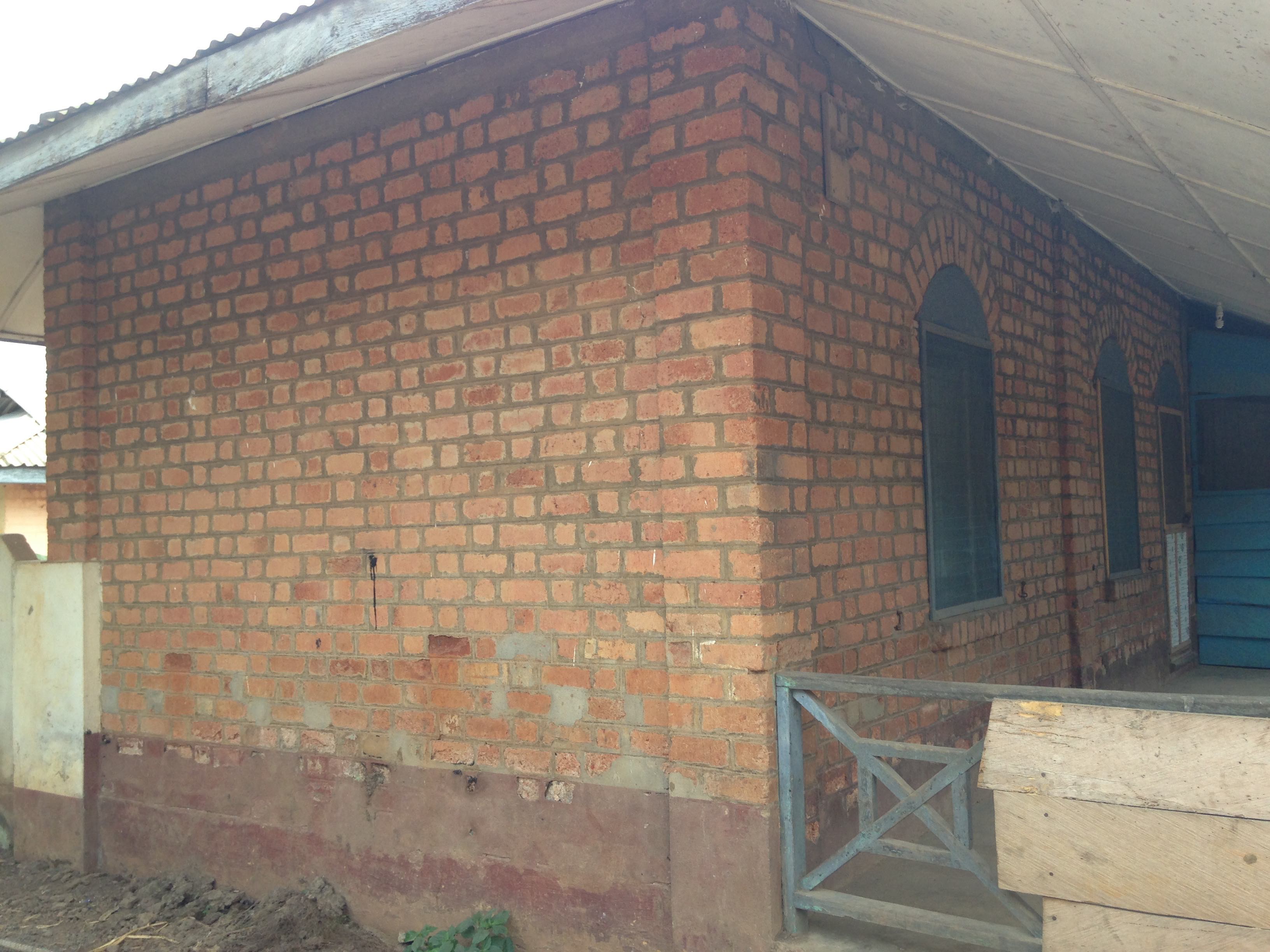
Experimental Swishcrete housing at Kibi from 1945. Note the arches above the windows and doors

There were many discoveries and lots to celebrate (and eventually publish), but one particularly interesting find related to a folder called ‘Experimental housing at Kibi’. This gave lots of details on an attempt to build a couple of dwellings in swishcrete (i.e. laterite and concrete mix) blocks in the gold mining town of Kibi, with a view to saving on cement costs and also creating an aesthetic that was more in keeping with the vernacular. It was a particularly exciting find, as we had stumbled across these houses earlier this year, and were taken by their unique construction. The archives revealed that Jane Drew was involved in their design and that she visited the site in early April 1945. It must have formed part of her work on village housing. Although modified and extended the houses still stand and clearly demonstrate the strength of this construction method having survived over 70 years.

Outside of the archives, I managed to finally track down Denys Lasdun’s Paterson Simon’s Office in Accra, 1962 (thanks to the help of their current Managing Director John Traynor). It was formerly a supermarket and toyshop called Farisco.

I was hoping to see the Optimist Club in Sekondi, but as suspected, I was too late and the influential African club has been demolished and now replaced with a large youth centre. Fortunately, Nate Plageman did manage to visit the club before it was demolished and you can see his photos here. Despite this loss, it was good to use copies of the early plans of Sekondi from 1900-1920, housed in the UK National Archives, to further explore the town. I was particularly taken by the Venice Cinema located at the edge of the settlement by the lagoon (was this how the cinema got its name?) and the wonderful merchant villas and stores that can still be found in dilapidated abundance throughout the town.

Venice Cinema, Sekondi

Accra continues to seduce with its array of late colonial structures and modernist set pieces. At Korle Bu just west over the lagoon from Jamestown the hospital dominates the landscape. The hospital forms part of the trilogy of projects developed by Gordon Guggisberg in the 1920s (along with Achimota Schooland Takoradi town and docks). The old hospital structures remain, looking almost like they did when built (and similar to the harbour board buildings in Takoradi) – as captured on Africa Through a Lens. The later brutalist addition to the hospital was by Kenneth Scott, looking more restrained and orderly than the edgier and abrupt Effia Nkwanta hospital in Takoradi by Gerlach and Gillies-Reyburn. If you visit Korle Bu hospital continue to walk through the grounds and head out to the staff housing, tennis courts and garden sanctums that lie secretly beyond – it is a hidden, gentile world of privilege that still manages to exist just a couple of miles from the excitement and paucity of Jamestown.


Korle Bu Hospital, Accra
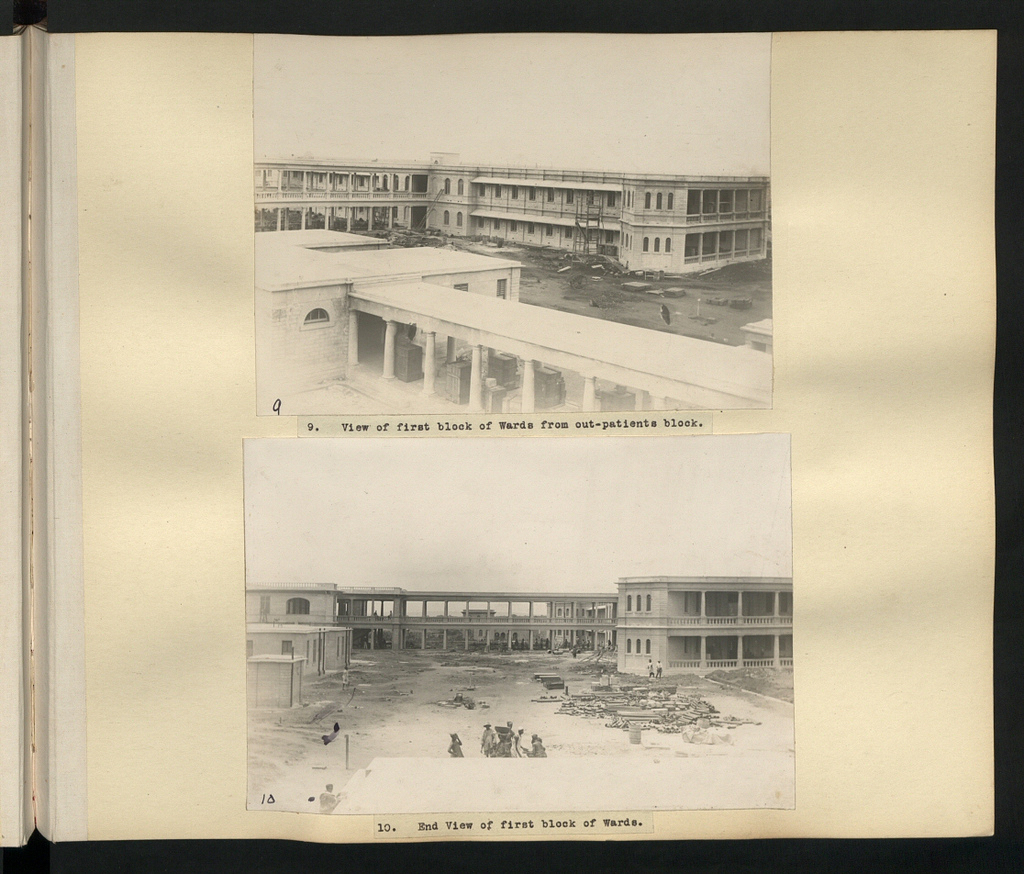
Korle Bu Hospital, Accra photographed shortly after completion, 1928


Notes from Tema, Ghana

We visited Tema, the new port and town built 10km east of Accra in the 1950s and early 1960s. Planned as part of a suite of infrastructure projects including, an aluminium smelter, docklands, and hydroelectric dam, the town was to provide model housing in a series of self-contained neighbourhoods, called ‘Communities’. Each has its own central market area and Community Building surrounded by a series of residential areas. The houses are set around schools and recreation areas, and grouped according to size and occupant income.

We began at Community 1 and explored the market area, complete with extended community centre, before finding some of the distinctive ‘Type iv’ housing. The housing has been extended and in-filled but the original basic form is just about discernable. Other housing had been supplemented by gardens and painted facades. The low-rise flats with central access staircase have been well-maintained and there is a strong sense of pride in the neighbourhood here.

Michael Hirst designed the Type iv housing. He studied at the Architectural Association in the Department of Tropical Architecture before moving out to Ghana (then known as Gold Coast) in the mid 1950s. He worked for the Tema Development Corporation, and lived in the Denys Lasdun designed flats in Tema. We had a good look for these flats and hoped to track them down – but alas, they eluded us….

Community 2 Housing

Community 2 Housing

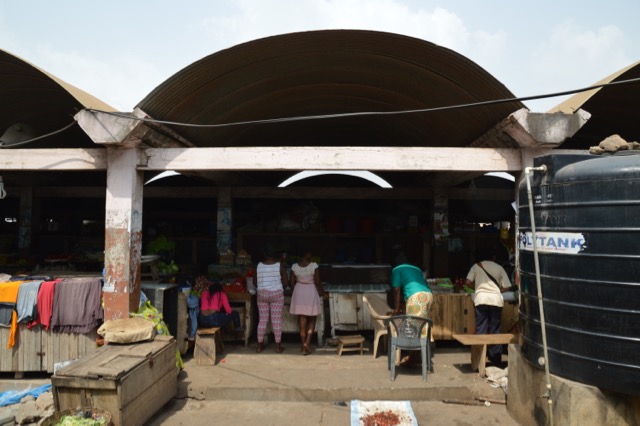
At Community 2 we saw some grander properties (surely inspired by Maxwell Fry’s work in Chandigarh), as well as a market with vaulted roof and carefully detailed concrete and guttering system. The structure is, however, badly corroded and in need of urgent repair. The traders informed us that the market is likely to be demolished and replaced shortly.

Community 2 Market

We moved on to Tema Manhean, the ‘replacement fishing village’ built to house the Ga People who were displaced with the building of Tema (see our paper for more detail). The settlement wraps around the light house and is made up of a series of compound houses designed by Maxwell Fry and Jane Drew. We found one compound that was built in 1961 (as noted by the date etched into the concrete during construction) and barely modified since. It was a perfect example of just how successful and adaptable the compound typology can be.


SaveSave

The Transnational Architecture Group Blog is 5 Today!

It’s five years since our first tentative blog post. Since that day we’ve posted over 200 articles, calls for papers, and general research updates on all things architecturally transnational.

One of our major research interests has of course been the work of Maxwell Fry and Jane Drew, with the publication of the monograph in 2014 and international conference. But that was just the start. Since then we’ve covered Shama Anbrine and Yemi Salami’s PhD work in Pakistan and Nigeria respectively, as well as Cleo Robert’s PhD work in India. Rachel Lee tested and developed our Timescape App in Bangalore and also published a wonderful monograph (with TAG Press) on Otto Koenigsberger. She was also responsible for a major heritage symposium in Dar es Salam. Ola Uduku has been our most prolific ‘commenter’ as well as providing many research updates on our findings in Ghana and organising numerous workshops on the Architecture of Africa. Our current research project has been sponsored by the British Academy and we’re delighted to be collaborating with Rexford Assasie Oppong (KNUST) and Irene Appeaning Addo (Legon University) on this work.  There is going to be a lot more research stemming from this initial project, not least the cataloguing and archiving of the major drawings collection at KNUST, with Łukasz Stanek from Manchester University.

Other forays have taken us to Thailand and the work of Nat Phothiprasat, as well as to Sri Lanka and the plans of Patrick Abercombie.  We’ve posted abstracts and links to many other papers and projects, not least Johan Lagaes and Kathleen James-Chakraborty’s papers. Killian Doherty and Edward Lawrenson’s film on Yekepa promises to be one of the highlights of 2018.

More recent posts have revealed the rich architecture of the Middle East, including Levin’s paper on Ashkelon, William A. Henderson‘s work at Little Aden,  Ben Tosland’s research into Kuwait, Alsalloum’s moving paper on Damascus and Jackson’s paper on the PWD in Iraq. There’s surely a lot more to investigate here.

It’s been great fun, and here’s to the next five years of exciting research, difficult questions, dusty roads and even dustier archives, and of course new discoveries that make everything worthwhile.

We’d like to thank all of the blog contributors (please do continue to send us your updates, research findings and short articles). Thanks also to our committed readers and for all of your kind comments and emails.

Iain Jackson.


An Update from Takoradi, Ghana Part 2

The docks and rail infrastructure of Takoradi was the impetus behind its rapid expansion from a small village to a major town. Construction commenced after WW1, but before this took place, it was neighbouring Sekondi that dominated the area with its grand houses, trading offices and the plush Metropole Hotel. The Dutch established Fort Orange there from 1670 and the natural harbour provided a suitable place for light vessels to shelter whilst the surf boats manned by the Kru people brought goods and people ashore.

evernote-snapshot-20160720-121210-copy

The Metropole Hotel, Sekondi

There is some rich architectural heritage in this town, and clear evidence of a once prospering settlement full of traders and merchants. Those days are clearly gone.

We started with two schools, the first called Fijai, captured here by the UK National Archives Africa through a lens. Then onto St. John’s, again the vintage photo below shows the clean lines of the school, when constructed c. 1955.


dsc_0383

St. John’s School, Sekondi

There have been further additions to the school including the striking church, donated by a Wisconsin family , with its large A-line structural frame,  finely detailed concrete casting, wooden ceiling and pre-cast screening. Next to St. John’s is Adiembra housing estate. There were revisions proposed for Adiembra in the 1944 Town Planning report made by Maxwell Fry and Jane Drew, but it is difficult to ascertain what impact this report made on the area, if any. However, we did spot some standpipes and washing stations that resemble those proposed by Fry and Drew in their manual, Village Housing in the Tropics, so perhaps this is evidence of their involvement.

dsc_0376

The Church at St. John’s School

We went onto the main street of Sekondi where the Post Office is located. We discussed this building in our chapter in Bremner’s Architecture and Urbanism in the British Empire, but were now shocked to see how the exquisite timber counter had been painted in bright blue gloss – destroying the previous display of tropical hardwoods. The rest of the street has only gotten worse since our last visit, with many of the former colonial buildings on the brink of collapse. Absent landlords coupled with a shrinking economy has left these structures vulnerable and economically unviable. Further sad news must be reported, as the modernist Sekondi Regional Library has recently been demolished and replaced with a new library.

Our final visit in Sekondi was to the coastal-road village of Ekuasie, laid out in 1912. This was an early attempt at providing worker housing and adopts the familiar grid iron street format, although far more loosely imposed than similar schemes elsewhere (such as Korle Gono). There are some later and grander additions to this village, including a set of houses from the mid 1950s.

img_0663

Ekuasie Housing Estate

We returned to Takoradi and explored the workers’ estate, mentioned in the PRAAD archives as the ‘labourers housing and school’ at the Zongo area. This is still a thriving area, Hausa was heard being spoken and the tiny streets eventually lead to a playground-cum-village square, overlooked by the Islamic school and Mosque.

cimg5294

Takoradi Zongo School

An Update from Takoradi, Ghana

We started at the Takoradi Train Station, completed by 1928 as part of the coastal rail and docklands development. The train lines were initially constructed to transport cash crops, minerals and metals from the northern agricultural and mining districts to the awaiting ships, sheltered in the newly constructed breakwater and deep water harbour. When we visited in 2012 the train station was completely derelict and not in use. Today we found it carefully restored and new tracks laid. The plan is to reuse it for a local transport network. We walked up the hill to the small commercial district made up of international banks and a post and telegrams office. The mishmash of styles reveals the incremental development, as well as the fierce competition between the banks eager to differentiate themselves from the competition.

The former European hospital clock tower up on the hill overlooks the banks and docklands, as well as benefiting from the cooling sea breeze.

We drove to the 1920s part of Takoradi, a major new town extension that was built to accompany the docks development of that time. This portion of the town was primarily for the African population, although it also contains the Lasdun designed Bank of Ghana [built 1957]. Lasdun was also the architect of the National Museum in Accra. The bank was vacant when we visited in 2012, but now it stands in a state of complete dereliction, its fine materials and fixings being stripped from the building. This is a real tragedy. It was once an outstanding building, recorded in the Architecture journals of the day and surely one of Lasdun’s greatest works from this period.

img_0633

Somewhat downbeat, we bid farewell to the bank, and made our way to the rond-point in the middle of the town. The map was deceiving, as this was built as a major market place – our driver told us it was one of the largest markets in West Africa. It had the feel of Kariakoo market  in Dar es Salaam, and also contains a delightful little PWD post office with its signage graphics still intact.

Adjacent to the market is Amanful Village. Laid out in 1922-3 it is a mixed use area of housing and commercial properties. The basic PWD-type houses and layout remained in place, but more wealthy owners had transformed much of the upper part of the estate to suburban housing.

We then went to the Takoradi Technical Institute, shown above (Left, b+w) in the Africa Through a Lens Collection at the UK National Archives. There is a forcefulness to this scheme that takes the familiar two storey gallery access format, and emboldens into more ‘clunky’ yet determined architectural-structural forms.

dsc_0363

Nearby is the Effiekuma housing and the Effia Nkwanta hospital. The hospital has evolved overtime from a European hospital-cum-sanatorium in the colonial period, to a major health provider today. The careful layering and response to the site contours offers delightful views as well as a most welcome breeze to all the small structures that each have a view of the docks. At the top of the hill is a large brutalist extension that dates from c. late 1960s early 1970s. But who designed it?

The Architecture of Edwin Maxwell Fry and Jane Drew:

We’re delighted to announce that our Fry and Drew book is to be published in paperback format in a few days time. This should make it a little more affordable and hopefully accessible to a broader audience in West Africa and India…

9781409451983

https://www.routledge.com/The-Architecture-of-Edwin-Maxwell-Fry-and-Jane-Drew-Twentieth-Century/Jackson-Holland/p/book/9781409451983


Notes from Kumasi Part 3

At the KNUST campus the library and Great Hall complex work very well within their elevated landscape setting. The Gerlach and Gillies-Reyburn’s muscular grey abstract ‘kente’ cloth brutalist hall and library extension is arranged in a ‘quad’. The complex overlooks the campus, facing a formal axis that leads to the administrative and teaching blocks. The composition is completed on its south flank by an architectural gem, which we discovered is the original KNUST library block. Is this James Cubitt’s riposte to Fry and Drew’s Ibadan Library?

DSC_0246

DSC_0276

The Old Library Block

The ‘old’ KNUST library presents an essay in tropical architectural design. Still sitting on its cast, fluted piloti this four storey structure employs screen walling, operable louver windows, and shading devices to both demonstrate and celebrate the possibilities of creating a successful architectural resolution to the needs of passive design. Its forlorn main entrance, clad in travertine, and superseded by the Gerlach and Gillies-Reyburn entrance to the East, shows the quality of materials employed in specific areas of its design.


DSC_0101

Administration Offices and Meeting Room

Inside, much of the Library building seems frozen in time. Reading carrels lie empty whilst the daylight filled reading spaces, with custom built, empty journal shelves have few readers, and ageing academic book collections. The e-resource room however has been kitted out with desktop computers and seems to be the most used student space in the building. A second “IT” floor was being planned, and the new desktop computers were just being commissioned, in spaces flooded with artificial light, closed to the exterior with floor to ceiling fabric curtains – only this space in the building needed fans for cooling. Meanwhile the offices at the top floor with their no longer used spiral staircase took one to another world of naturally cross ventilated office space, and custom designed insect screens – demonstrating that climate responsive design in the tropics still works. One hopes its on-going transformation doesn’t forget this idea.