Archive

Fry & Drew

Notes from Accra

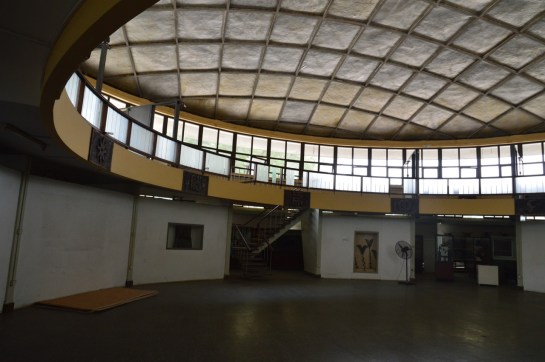
Iain Jackson and Ola Uduku have spent the last two days in Accra catching up with 20th century architecture, and meeting with contacts as part of the British Academy funded ‘From Colonial Gold Coast to Tropical Ghana’ architecture project. Tuesday 23rd February was spent visiting the Ghana National Museum complex, the gem in the crown being Denys Lasdun’s prefabricated dome shaped museum, currently closed for refurbishment. The imagination and vision of the building were still clearly there in our viewing of the stripped down structure ready for conservation.

DSC_0820.jpg

Our next stop took us to Nickson and Borys’ Children’s library building nearer to Central Accra. This had been sympathetically restored, and again was a great demonstration exemplar of ‘West African Modern’ and the developmental vision of the departing colonial government to establish libraries that were open to all citizens. The upper area remained devoid of activity but had potential to be a great multipurpose programme space.

DSC_0801.jpg

Children’s Library

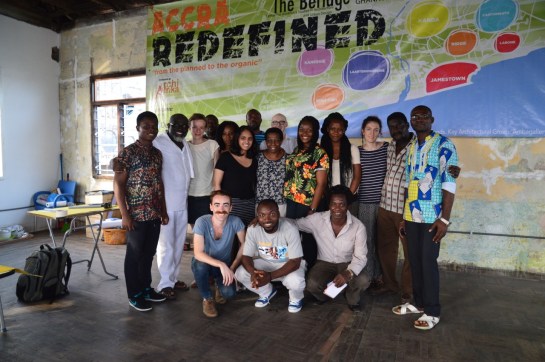
The final visit of the day was to Joe Osae-Addo’s Archi-Africa – TuDelft Berlage Architecture school studio, in Accra’s Jamestown neighbourhood, on the urban fabric of everyday life in Accra. The impromptu crit we were invited to take part in was an enjoyable experience and the schemes were full of promise.

DSC_0832.jpg

TU Delft and Archi-Africa in the newly converted Jamestown Studio

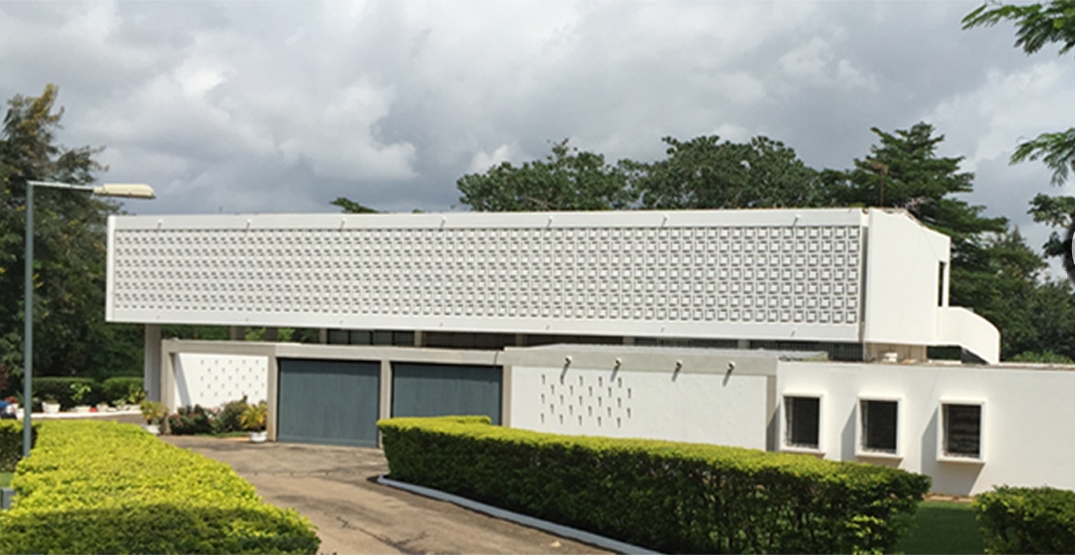
Day two involved visits to Jamestown – as a walking visit this time to take in early 20th century colonial PWD, and also warehouse architecture in the neighbourhood. A visit to Adabraka also yielded a few examples of early PWD worker housing, which was followed by an afternoon visit to Achimota School, which conveyed the height of the colonial education project with architectural symbolism and style. A few later additions to the campus by Nickson and Borys and other’s also fitted well into the College’s narrative of colonial imperialism and privilege. The final visit for the day was to Scott House, which lived up to its deified tropical modernism status, whilst the Western Tessano neighbourhood had transformed into an upper class gated area, that unexpectedly gave us a glimpse of an earlier [likely Cubitt?] designed semi detached housing unit, currently undergoing a further 21st century upgrade..

DSC_0863.jpg

One of the few surviving examples of its type in Adabraka

We will be moving onto Kumasi on Friday and will update from there early next week.

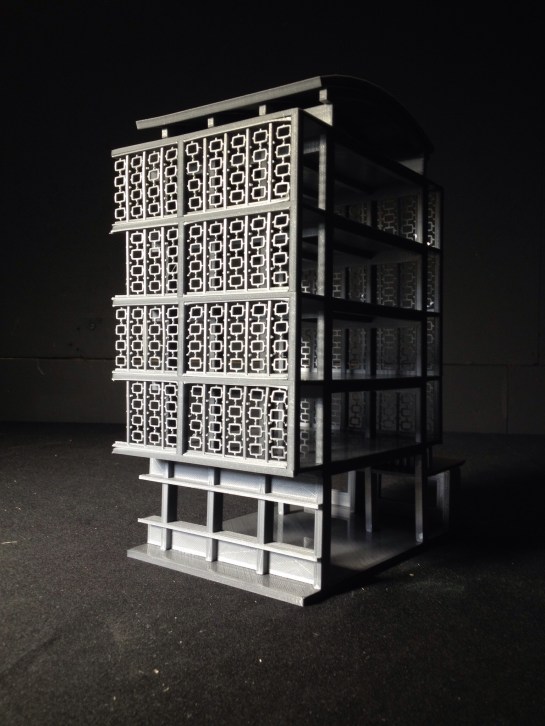
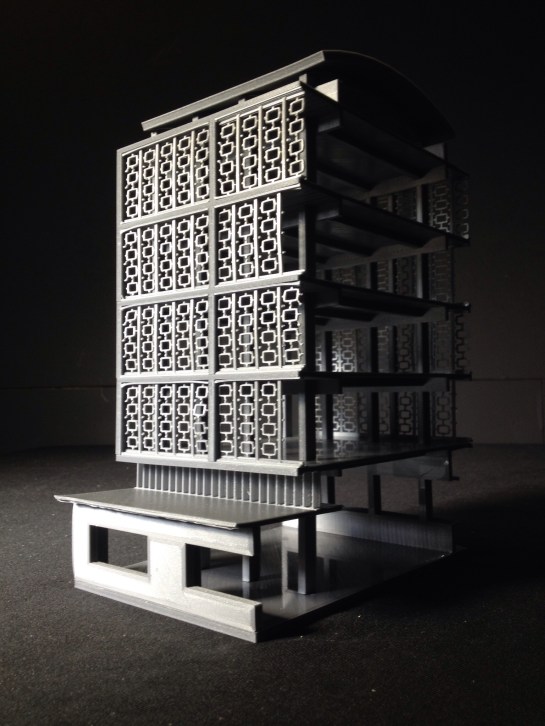
3D Printed Model of Kenneth Dike Library

We’ve been playing with a couple of 3D printers [Makerbot and Ultimaker] and testing how they might be used to create a small collection of models to supplement our History of Architecture lectures.

image

In the age of ‘Stream Capture’ and recorded lectures including a small exhibition of key case study models in the lecture theatre will hopefully entice the students to attend the live event and will also form an opportunity to further explore light, scale and the qualities of buildings that are not as easily expressed through photographs and orthographic drawings.

image

Our first test case used a computer model of the Kenneth Dike Library, Ibadan [designed by Fry and Drew] expertly produced by Jacopo Galli and generously shared with us. The model doesn’t show the entire buiding but a key section enabing the interior to be viewed. The ambition is a for an online library of models that can be downloaded and then printed as and when they are required by faculty and students.


image

Call for Papers: Revisiting African Modernism at docomomo 14th International Conference 

6-9 Sep 2016,  Calouste Gulbenkian Foundation,  Lisboa,  Portugal

docomomo International is now accepting abstracts for the 14th International docomomo Conference that will take place in Calouste Gulbenkian Foundation, Lisbon, Portugal, September 6–9, 2016. Please submit abstracts no later than October 18, 2015 (12 pm GMT), for one of the 29 thematic sessions listed here.

One session that will be of specific interest to TAG followers is the ‘Revisiting African Modernism’ session…

“Africa’s history of architectural modernism and modernist landscapes is no longer unknown or obscure.  This session seeks to build on that established foundation by asking contributors to explore the potential contribution of the buildings and infrastructure of this era (c. 1945 – 1970s) to our understanding and engagement with Africa today. Does their original programme make them adaptable for 21st century contemporary urbanism? Are there specific case studies or examples of buildings and landscapes that demonstrate positively (or negatively) adaptive re-use possibilities or experience?

Past docomomo sessions on Africa have (arguably rightly) been occupied with debating Africa’s involvement in docomomo, as both a subject and a participatory region. This session recognizes the increasing inclusion of African nations; South Africa, Egypt, Ghana (proposed) into the docomomo “family”. It also acknowledges contributions from African and Africa-focused researchers in a number of past docomomo publications.

This panel session seeks to expand these contributions into a contemporary discourse, devoted to the investigation of the methods, and means, by which Africa’s modernist past can contribute more than just historical research to the Africans and Africa-focused researchers of the 21st century. We are particularly interested in contributions that consider built “ensembles” within urbanist contexts in African communities or cities, such as university campuses, housing masterplans, and industrial complexes/towns. “

Session Chairs: Ola Uduku, University of Edinburgh, Scotland; Miles Glendinning, University of Edinburgh, Scotland.

The 20th Century Urbanism and Landscape in Africa conference recently held at the Edinburgh School of Landscape Architecture (ESALA), University of Edinburgh. It took place from 7 to 8 October, and focused on the subtheme of ‘Research Challenges and opportunities’.

The first day of the conference was dedicated to presentations by the four Key Note speakers, who were Dr Rexford Oppong of KNUST Ghana, Prof Luc Verpoest of KU Leuven, Prof Johan Lagae of Ghent University and Dr Iain Jackson of University of Liverpool. Although their presentations all brought the conference’s key theme of ‘Research Challenges and Opportunities’ to the fore, their various approaches and contexts had provided more divergent and interesting perspectives to the discussion.

The areas of interest covered by the four speakers ranged from Dr Oppong’s  “Challenges and Opportunities of Conservation Research and Documentation on the Urbanist and landscape heritage of KNUST”, to Prof Verpoest “Mind the gap: from historiography to [urban] preservation. The African case” and Dr Jackson’s “Research Challenges and opportunities in West Africa”. Prof Johan Lagae also presented a talk on the challenges of his on-going research on urbanism in Congo.

Picture2

Cover picture for Dr Jackson’s “Research Challenges and Opportunities in West Africa”

In Dr Oppong’s talk, he presents the KNUST as a campus set, and much preserved in the Modernist architectural theme of the 1950s. However, the current state of its architectural drawings archives as highlighted in his presentation, need urgent conservation and documenting for posterity. He therefore gives insights into his current research in this regard, and the challenges of the project. One main challenge he sights is in getting the current University and secondary school students (who also played a part in the survey) to recognise the input of indigenous Ghanaian Architects in the building designs.

vc lodge

The Vice-Chancellor’s Lodge, KNUST Ghana

The challenges of conservation and documentation raised by Dr Oppong, was a theme which ran through the other presentations. However, in Prof Verpoest’s talk, he suggests that further strands of investigations are needed to be explored on the subject. Rather than being limited to buildings and famous architectural pieces he argues, researching conservation, preservation and documentation should look at the wider picture of processes, institutions, mechanisms and historical context. In essence, it should go beyond the built object as an individual subject of analysis. He therefore discusses this in the light of recent projects by Docomomo, where research is being done to go beyond individual building conservation to urban building conservation. He also explains how the organization is seeking to have regional linkages in selected African countries.
Picture2

An image of Africa’s changing society as illustrated in Prof Verpoest’s presentation

Prof Verpoest’s  suggestion of research into urban, rather then individual building conservation, preservation and documentation in Africa and globally, is also seen to form the crux of work done by the third key note speaker – Prof Johan Lagae. In his current research in Congo, Prof Lagae looks at various types of infrastructure – Missionary, Railroad and Hospitals, but all within the wider urban form context and everyday living. He also looked at the Post Belgian period in Congo around 1965, and raises the issue of building production and technology – but again questions “where were the Congolese in all these?” On the challenge faced in his research, he stated practical issues of language, electricity, relating with local chiefs etc. He also notes the fantastic data and drawings present in the archives, but which unfortunately lacks infrastructure.
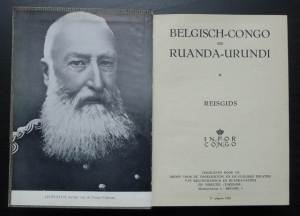
Picture5

Picture of King Leopold II of Belgium in an archival administrative document on the Congo

Prof Lagae’s question on the contribution of natives, and poor archival infrastructure are two issues which Dr Jackson’s also raises in his presentation on Research Challenges in West Africa. With regard to the native contribution, he suggest that urgent work is required on the works of native architects in particular. While supporting the need for improved archival infrastructure in West Africa, however, Dr Jackson also makes a case for more fieldwork participation – arguing that “We have to get our hands dirty and explore…to create new photographs and records of the buildings”. He also suggest that further to such fieldwork exercises, the adoption of new technologies, like Drones and GPS need be encouraged to produce astonishing results. As seen in Professors Verpoest and Lagae talk, Dr Jackson was also of the Opinion that Architectural history needs to move beyond the conservation and preservation of important buildings. He argues rather, that research in this area become more inclusive of the intangible and the ephemeral, and sample user experiences and opinions. His talk raises several other questions on research challenges in West- Africa, including the theoretical base, further studies into Village plans and the PWD, art works and murals, architectural teaching etc. A most significant point he however raises, is on the need for collaborative research, rather than the lone-wolf and fear of plagiarism approach.

photo (1)

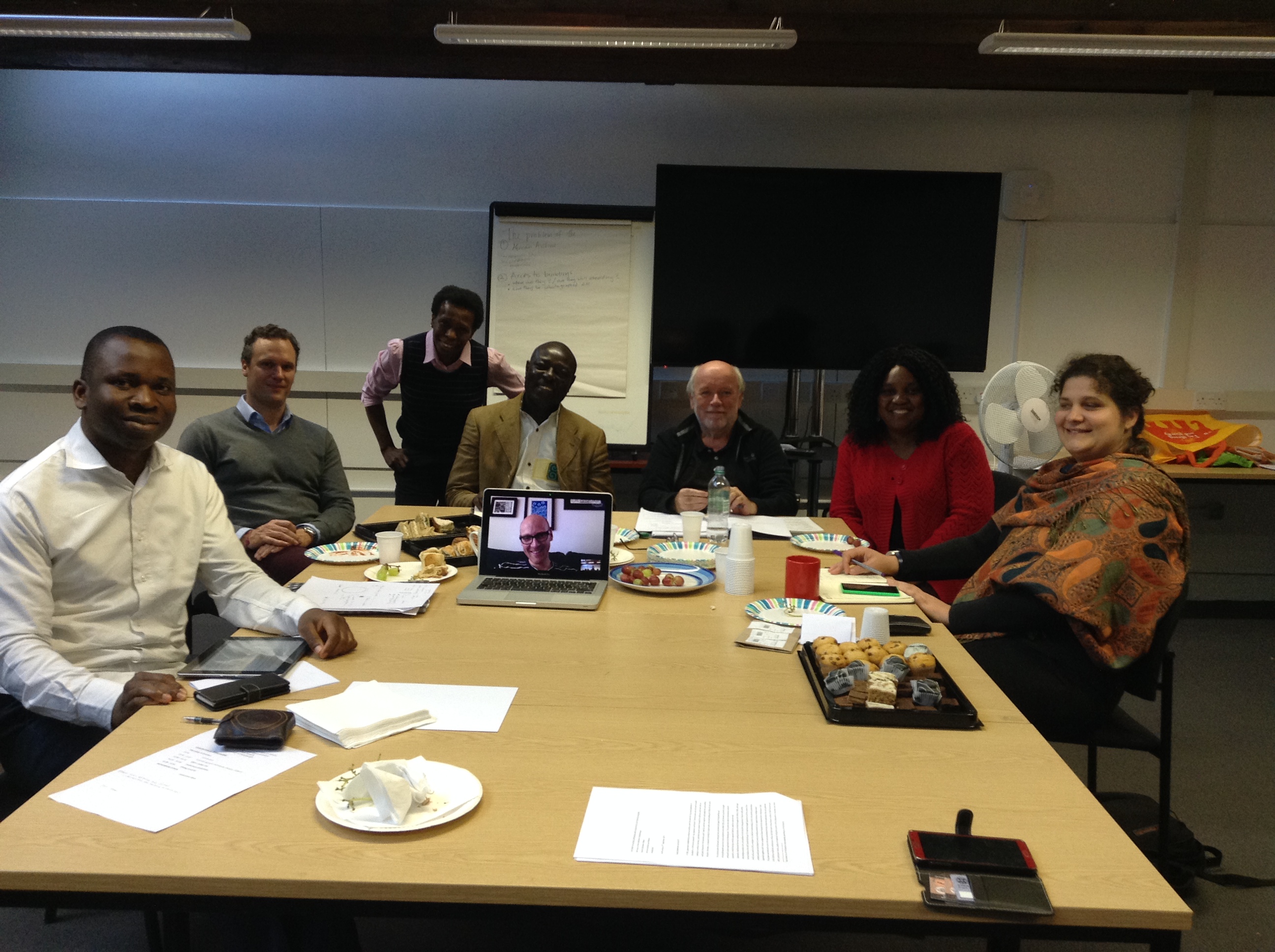
Delegates at the 20 Century Urbanism and Landscape in Africa Conference on 8 Oct 2015; Left to right are Meshack, Dr Alex Brymer, Dr Ola Uduku, Dr Rexford Oppong, Dr Iain Jackson (on Skype), Professor Verpoest, Yemi Salami, Dr Ruxandra

Scheduled for the second day of the conference were two presentations to be given by Yemi Salami and Anthony Folkers. Anthony Folkers was not in attendance at the conference but had his paper presented by Dr Uduku The paper was titled “The Spirit of George Lippsmeier and His Institute for tropical Building”. Yemi, had only recently submitted her PhD and is awaiting her viva to take place. She gave a talk on the challenges of undertaking a doctoral research in Nigeria, and her paper was titled: “Challenges of Conducting a Doctoral Research in Nigeria: Reflections from my PhD work on “the Architecture of the Public Works Department in Nigeria, c1900-1960”. Here she discussed challenges ranging from very slow bureaucratic processes, to ill equipped archives and security and insurgency issues, as some of the hindrances she faced during her research. The symposium then held at the end of Yemi’s presentation, with Dr Jackson joining the debate via Skype.


West African Modernism & Urbanism Research Conference and Workshop, 13-14 July 2015, KNUST, Kumasi, Ghana

You are invited to a workshop and conference which will focus on developing the conservation of modernist buildings and urban landscapes in West Africa.

This development strategy will be tackled at two levels. Firstly, at urban and edifice level, through the development of the KNUST Architecture Department as a Centre for public engagement with, and professional expertise in, contemporary urban conservation training and research; in West Africa, this discipline is currently not taught at institutional level, despite the existence of a network of architecture and planning schools, and architectural institutes for whom this would be beneficial.

Secondly, with support from DOCOMOMO International’s African group and Urbanism-landscape specialist committee, the workshop will develop a physical archive of modernist buildings in West Africa, using digital technology to scan and record building photographs and plans of the postwar modernist era. The data will be made available both to researchers linked to the proposed urban conservation training project, and, equally importantly, to the local public, as a visual resource of contemporary West African Modernist history.

The workshop will feature outreach presentations from junior secondary school pupils and talks from the eminent keynote speakers and research associates involved in the workshop and archive programme.

Keynote Speakers: Prof. Miles Glendinning [University of Edinburgh] and Prof. H. N. A. Wellington [Emeritus and Former Head of KNUST].

Kumasi_Conference_poster

We acknowledge the support of this event by the Universities of Edinburgh, and of Liverpool, and by the Royal Africa Society.

For more details on the event please contact Dr. Rexford Assasie Oppong [assasie2003@yahoo.co.uk] / Dr. Ola Uduku [o.uduku@ed.ac.uk] for more details.

TAG Press Launched

The Transnational Architecture Group has published its first book, on none other than Maxwell Fry and Jane Drew. The aim of TAG press is not to publish lengthy peer-reviewed and ‘academic’ books, but rather to serve as an outlet for photographic material, catalogues, surveys and short essays.
The Fry and Drew Tropical Source Book contains photographic material on Fry and Drew’s projects in India and West Africa; including some previously unpublished letters sent by Fry in the early 1950s whilst he was working in Chandigarh to his site architect, Tony Halliday based in Ibadan, Nigeria.

Tropical Source Book

Available as soft back on the Publications Page above.

Global Architectural History Teaching Collaborative at MIT

How do we teach the global history of architecture? What should we include in our classes and where can we gather the information, knowledge and sources that enable meaningful narratives to emerge? Is the global survey course even possible, or should we be utilising distinct and precise case studies to discuss the global condition instead?

These are just some of the questions that Global Architectural History Teaching Collaborative is attempting to answer as well as to create a community of scholars who will share and exchange knowledge to change the way we think about the history of architecture.. The GAHTC has been established by Mark Jarzombek and Vikramāditya Prakāsh with funding provided from Andrew W. Mellon Foundation, see http://gahtc.org for more information.

Grants are available for teaching teams to develop new teaching material and modes of teaching that deal with global history, from the beginning of time to the modern. This is a major challenge, but very exciting. In the current round of grants 9 teams have been accepted with the following ambitions:

Rachel_lee_MIT

Panorama of the participants (photo by Rachel Lee)
  • Architecture and Climate in a Global Perspective – Team Daniel Barber
  • Sites and Networks of Global Modernity – Team Bob Cowherd
  • Globalizing a Humanities Approach to Architectural History – Team Ann C Huppert
  • Scales of Modernity – Team Jonathan Massey
  • The Architecture of Global Modernity, 1000-2000 CE – Team Kenny Cupers
  • The Global Turn: Architecture and the Built Environment Since World War Two – Team Michelangelo Sabatino
  • Technologies of Movement and Communication – Team Shundana Yusaf
  • East Asian Architecture from A Global Perspective: Cultural Transactions and the Development of Traditions – Team Shuishan Yu
  • The Modern Metropolis – Team Eric Mumford

At the first workshop, held in MIT (9th and 10th October 2014), each group gave a presentation that outlined their position and ambition. Most also proposed a distinct module of lectures/seminars and a discussion/critique followed. Day two was composed of a number of workshops that discussed ‘Deliverables and Digitisation’, ‘Pedagogy’, ‘The problem of teaching architecture made before 1800’, and ‘future ambitions’. A digital resource has been developed that will contain some of the data: http://www.timescape.io/login

GAHTC_prakash

Vikram Prakash addressing conference.

Team Daniel Barber became known as the ‘Climate group’  – which is a perfectly accurate and succinct way of describing us, with the caveat that climate is not the only factor to determine the architecture we’re interested in.

We are proposing six themes/lectures, each to be lead by one team member:

“Architecture without Architects” and the Timeless Climatic Type [Albert Narath]

Colonial Architecture and Climate in Africa and Asia [Ola Uduku]

Sanitation, climate and statecraft in colonial societies [Iain Jackson]

Modernism, Climate, and Post-colonial development [Rachel Lee]

Universal Science and International Architecture after World War II [Daniel Barber]

Air Conditioning Takes Command [Jiat-Hwee Chang]

Rachel_lee_MIT2

Panorama of the Participants (photo by Rachel Lee)

TAG will continue to track the developments of GAHTC and to report on future developments…

In the laboratory and in the field: hybrid housing design for the African city in late-colonial and decolonising Ghana (1945–57)

Viviana d’Auria, The Journal of Architecture Volume 19, Issue 3, 2014

This paper considers the case of late-colonial and ‘transitional’ Ghana (1945–57) to qualify the way in which ‘native’ dwelling practices were harnessed for housing design. Theories about the ‘colonial modern’ have underpinned the ambivalence of residential schemes and urbanisation strategies developed during decolonisation by modernist architects. Most documented among these is work in North Africa, with projects from Casablanca and Algiers taken as the epitome of how modernism memorably embraced the vernacular to amend its tenets in the early 1950s; however, British involvement in the colonies has more commonly been documented in relation to the tropical architecture canon, with a focus on institutional buildings rather than housing projects, especially in West Africa. Housing design, on the other hand, makes manifest the significance of the social and cultural dimensions as a basis for housing and urbanism during decolonisation in Ghana, downplayed to date because of a focus on climatic and economic factors. Projects by Fry, Drew, Drake and Lasdun, and by Alfred Alcock and Helga Richards, are discussed to gauge the extent of transcultural exchange while socio-economic surveys, experiments in building science and anthropological studies increasingly inspired the design process.

Read the full article here: http://www.tandfonline.com/eprint/feTHdMSVJgz2GHV5Biux/full


Transnational Architecture Group in Sicily

The Transnational Architecture Group (TAG) were participants in the just concluded Cost Action conference, “Rethinking European Architecture Beyond Europe”, from 13 to 16 April 2014. Pictured are the founder of the Group, Dr Iain Jackson on the far right, along with three members; Dr Ola Uduku (2nd Right), Yemi Salami (middle), and Jacopo Galli (far left).

Dr Jackson is a Senior lecturer at the School of Architecture, University of Liverpool, and Yemi Salami is running her PhD in the same department under he’s supervision. Dr Uduku is a Reader at the Edinburgh School of Landscape Architecture (ESALA), and Jacopo Galli a PhD Student at University of Venice Italy, (IUAV) .

At the conference, Dr Jackson and Dr Uduku had co-chaired the session titled ‘Examining tropical architecture in different international contexts’, while Yemi and Jacopo had both presented papers within the same session. Yemi’s paper, titled “British Architects in the colonial PWD: Unravelling Nigeria’s early Government Architecture”, saw her examining Nigeria’s colonial administrative architecture, though a time-line of events that produced a network of architects and specialized building design mechanisms. Jacopo’s Paper is titled “From tropical Medicine to tropical architecture.” In it he examines the generic process by which tropical health parameters had determined climate influenced designs for the tropical regions.

By and Large however, the conference provided an opportunity to deliberate on research trajectories in a varying range of subjects within the conference theme, present current research findings, get useful feedback on on-going research, and of course to savour some Mediterranean cuisine and sunshine!


‘Suitable lodgings for students’: modern space, colonial development and decolonization in Nigeria

Tim Livsey has recently published his research into Ibadan University in Urban History Journal. The article argues that development and modernity have had spatial manifestations. It considers understandings of modern space in colonial and post-colonial Nigeria through the study of University College Ibadan, the country’s first university institution founded in 1948. It contends that the university was shaped by existing West African conceptions of modern space and university buildings took on new meanings with the shifting politics of decolonization. The article also suggests that colonial development involved a range of groups and forms of knowledge. It seeks to recognize the strength of colonial institutions and cultures but also the limits to and contingencies in late colonial power.

It also has some great archival images of Ibadan University from Cambridge University and SOAS Archives.

http://dx.doi.org/10.1017/S0963926813001065