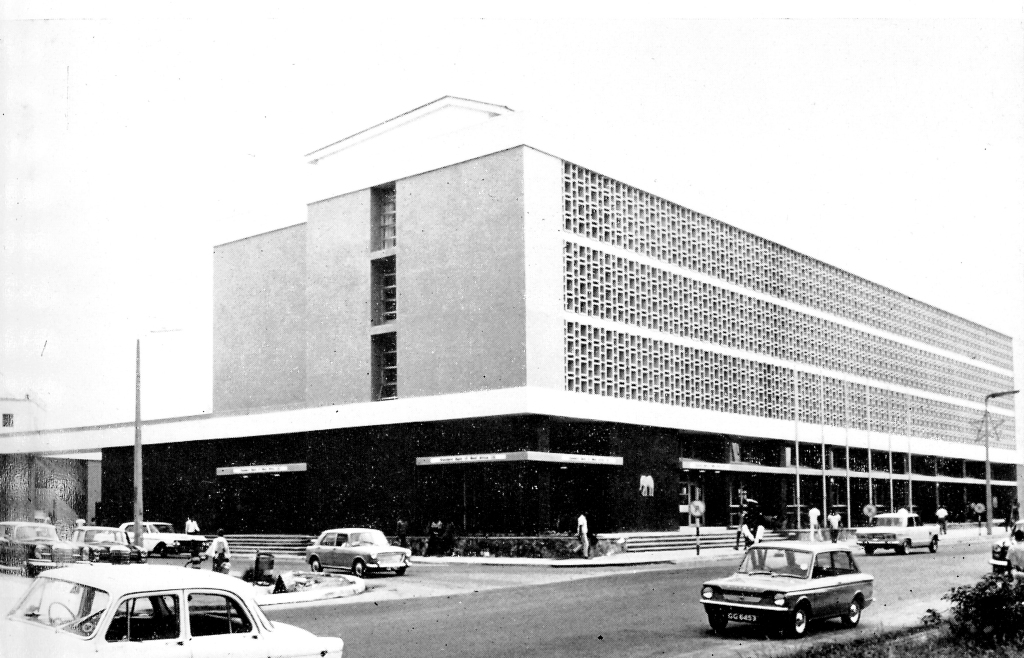
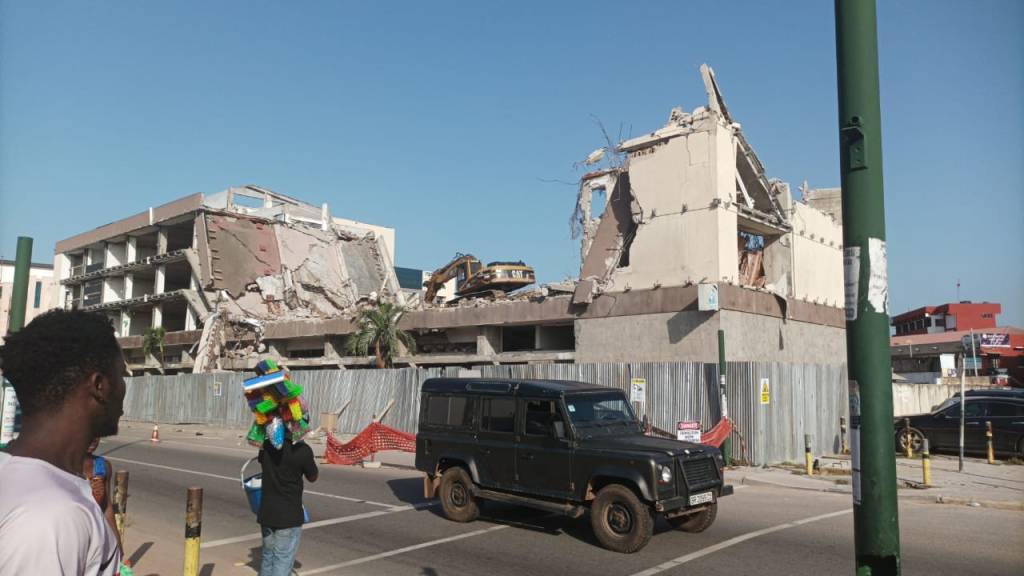
A few years ago we reported on our Keeping Cool project and included a photograph of the Standard Chartered Bank on Accra’s High Street. The bank had been refurbished, radically changing its passively cooled perforated facade to a sealed glass envelope relying on air-conditioning.
We’ve just received updates from Accra that the bank has now been demolished. No details have been released on what is to replace the bank.
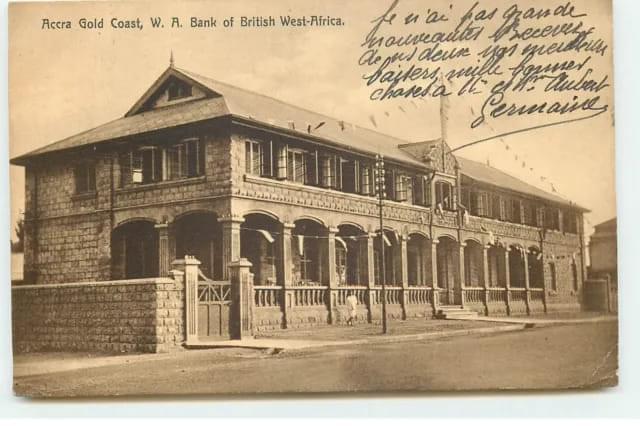
The same site has been used as a banking hall since the late 19th Century. Below are some of the photographs of the site revealing the continuity and change over the last century and the variety of architectural solutions deployed. Joe Addo kindly sent over some photographs of the shock demolition taking place earlier this month.
Accra High Street: Bank of British West Africa shown on the right hand side with the arched loggiaPostcard showing the Bank of British West Africa on the same site of Accra’s High Street, c1900Standard Chartered Bank with passively cooled facade. Architect? unknown, c.late 1950sStandard Chartered with new blue glass facade. Glimpse of Barclays bank on far left.July 2023: Standard Chartered bank being demolished [Courtesy of Joe Addo]
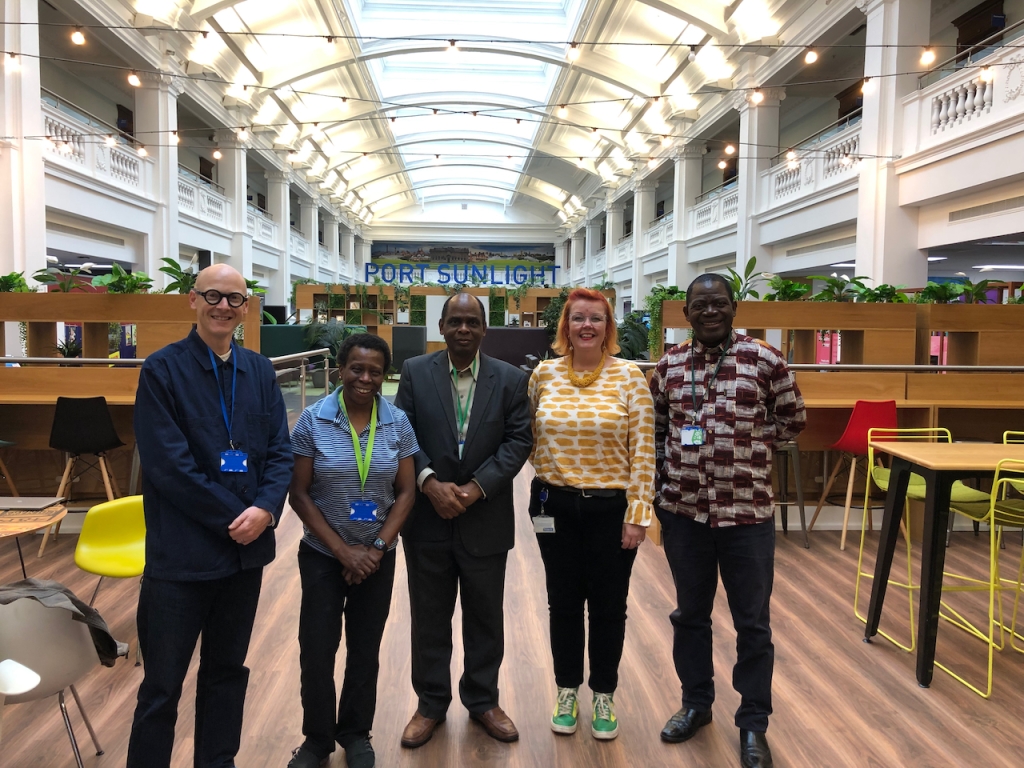
Iain Jackson, Ola Uduku, Ayo Olukoju, Claire Tunstall, Sam Ntewusu at Unilever, Port Sunlight
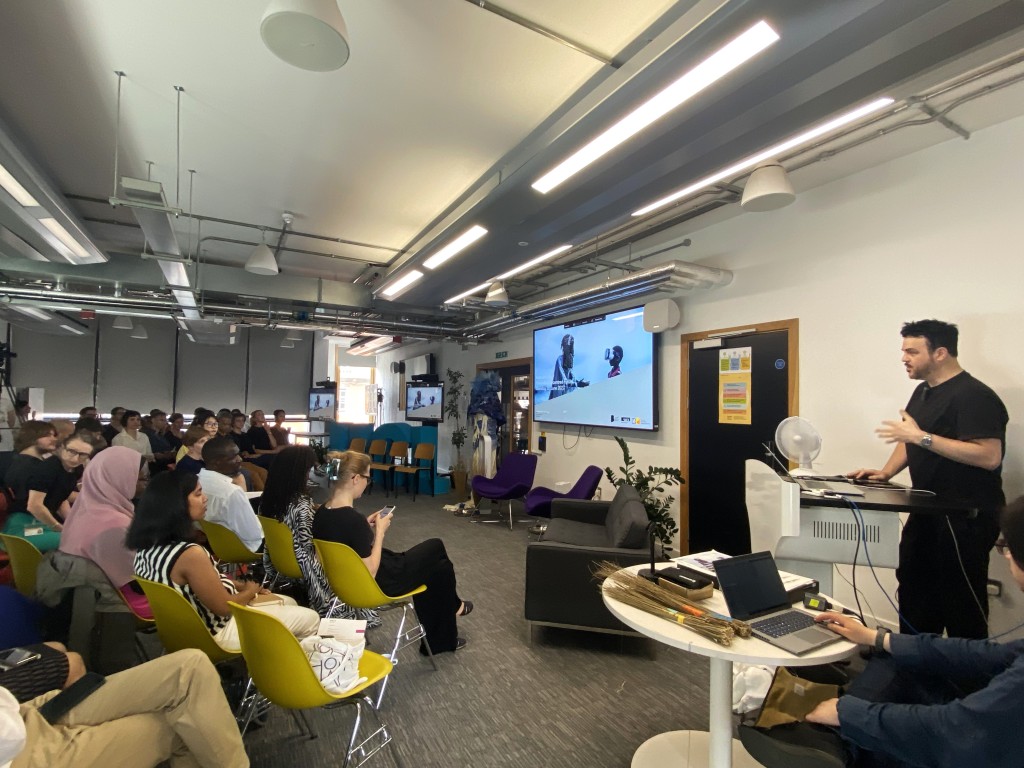
The objective of the visit was to visit and introduce Profs Olukoju and Ntewusu to the Unilever archive collection at Port Sunlight, particularly its subsidiary the United Africa Company’ (UAC)’s extensive holdings on Western Africa covering its various business interests in the region. The symposium which took place the next day involved presentations by Profs Olukoju and Ntewusu on the state of archives and archival research in West Africa, which was attended by Merseyside researchers and PhD students.
Professors Olukoju and Ntewusu at Unilever, Port Sunlight with bust of William Lever
The two-day visit also enabled discussions to be had about future collaborations at various levels, research, knowledge exchange capacity building at Masters degree level, and forms of impact for institutions in Western Africa and also the the UK and NW England in particular. Our thanks to all who contributed to the symposium. Particularly Claire Tunstall, and her team at the Unilever Archives, Dr Abraham Ng’an’ga of the Andrew Walls Centre, Liverpool Hope University, Alex Buchanan, Archival Studies, University of Liverpool History Department, Suzie Goligher, Afrograph Ltd, and all other individual and institutional contributors to the symposium.
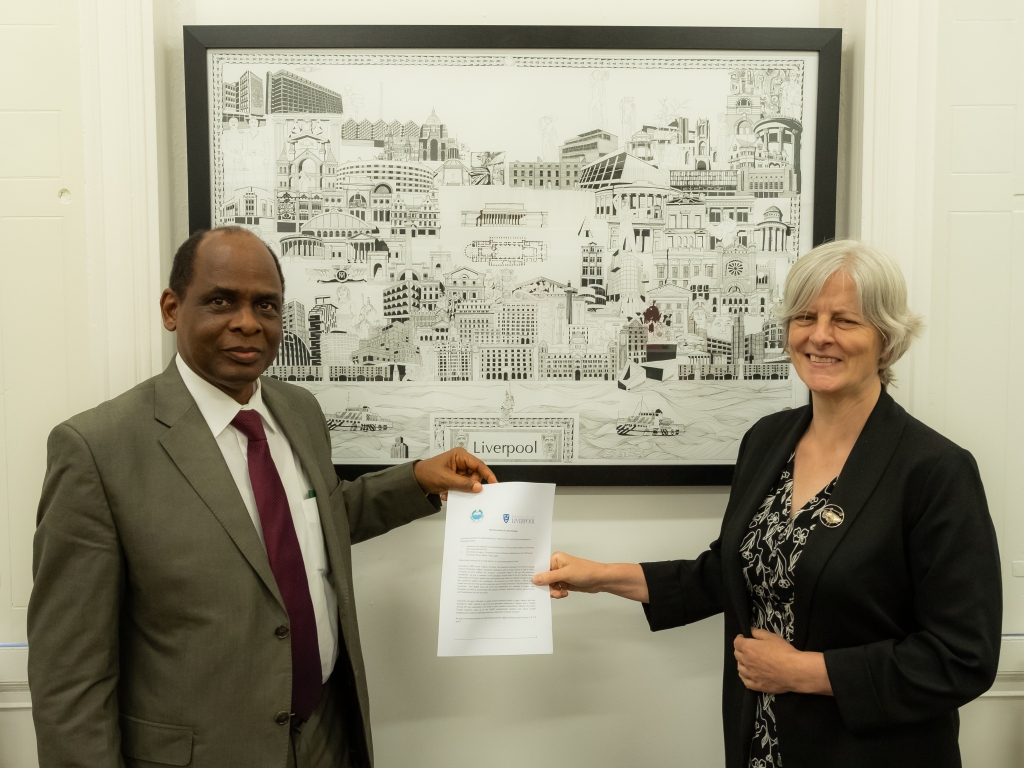
MoU signed by the University of Liverpool’s APVC for the Faculty of Humanities Professor Fiona Beveridge, and received by Professor Olukoju, on behalf of the University of Lagos
The visit also coincided with the finalised signing off of the Memorandum of Understanding which has now been established between the University of Liverpool and the University of Lagos. The formal MoU, was signed by the University of Liverpool’s APVC for the Faculty of Humanities Professor Fiona Beveridge, and received by Professor Olukoju, on behalf of the University of Lagos
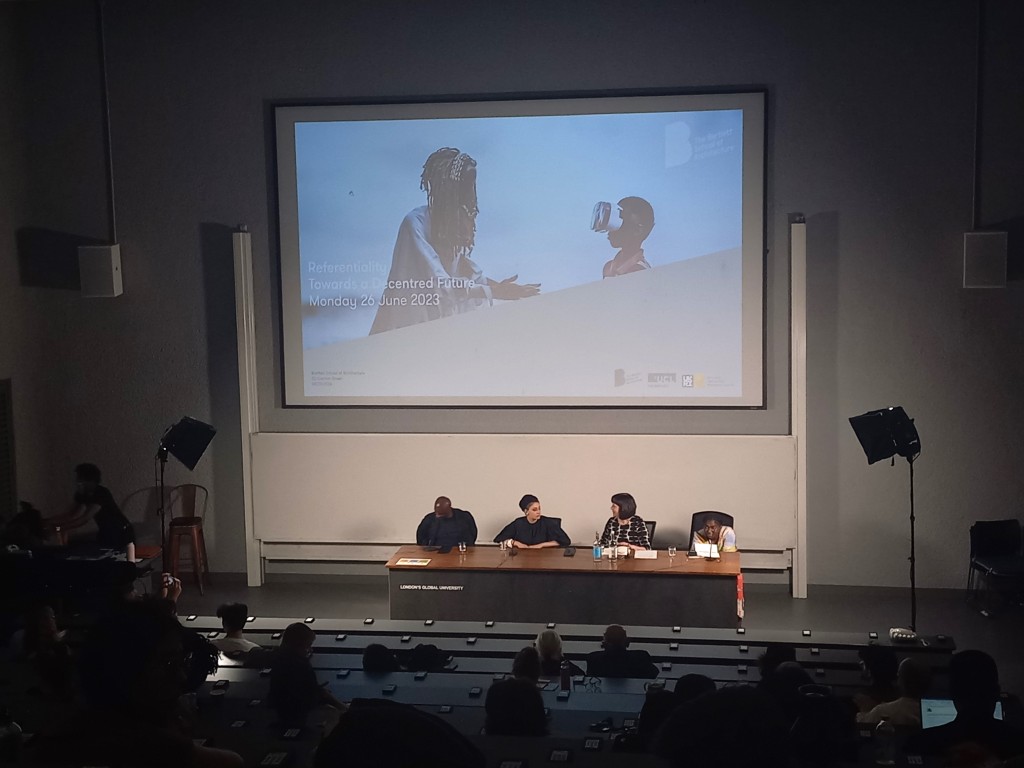
The event interrogated approaches that challenged the mainstream colonial, nationalist and social-cultural frameworks in architecture, art and heritage management scholarship and practice. It included discussions, talks and activities with a diverse range of speakers whose creative production explore approaches free from referential relationship with inequitable power structures.
A research conversation moderated by Edward Denison, Ievgenia Gubkina, Emily Mann and Shahid Vawda comprised speakers from multidisciplinary fields of research and practice with case studies from Africa, Asia and Europe. The speakers included Leverhulme Early Career Research Fellow, Dr. Alistair Cartwright and PhD researcher, Adefola Toye – both from Liverpool School of Architecture. Each speaker discussed the limitations they encounter when engaging mainstream sources for scholarship and research-in-practice which erases the agency of populations under study. Furthermore, they shared how they addressed this using participatory action research, public engagement, multidisciplinary methods and utilising crowdsourced open-access archives.
1. Image 1 by Edward Denison
2. Alistair Cartwright Presenting, by Edward Denison
The session concluded with talks from African heritage organizations, including the Direction du Patrimoine Culturel du Sénégal, Swahilipot Hub, and the University of Cape Town. They discussed existing and future initiatives for sustainable and inclusive heritage management on the continent. These included exhibitions, training workshops, public engagement tailored to different age groups and professions, and collaboration with local and global heritage partners.
Afterwards, a student-centered lunchtime activity with architect Sumayya Vally and BSA design tutor Jhono Bennett, explored referentiality in architectural research and practice through co-production and drawings based on the participants insights and experiences.
Image 3 by Adefola Toye
The remainder of the event was spent in conversations with notable speakers in the fields of architecture, art and curatorial practice.
Nana Ocran, founder and Editor of the People’s Stories Project, hosted discussions with multidisciplinary artists Christopher Samuel and Valerie Asiimwe Amani. They explained how their creative works use archives materials to create awareness about the underrepresentation of people with disabilities and colonial subjects.
Performers Peter Brathwaite and Kenneth Olumuyiwa Tharp examine ‘Rediscovering Black Portraiture’s use of domestic material culture to reimagine the historical image of black subjects as well as professional engagement with diverse art and culture foundations in the UK.
We are delighted to be able to host Professor Ayo Olukoju (Institute of African and Diaspora studies, University of Lagos) and Professor Sam Ntewusu (Institute of African Studies University of Ghana) who are visiting the University of Liverpool and also the Unilever Archives to explore the possibilities of future collaborative research and teaching activities across our institutions and others in NW England.
Both Professors are historians who have worked with archival sources in their research in West Africa. They have generously agreed to share, through this seminar, the challenges and issues with working with archival material and sources from a West African perspective and also some of the hopes they have for future collaborations.
Do join us to hear their views and also join the conversation – how do we make the most of archives in the 21st century in different locations and places? Importantly do we need to decolonise the archive, and if so how?
Hosted by the AHUWA Research centre in association with Unilever Archives, School of History and Institutes of African Studies and African Diaspora Studies at the University of Ghana, and the University of Lagos
Venice architecture biennale: how pioneering Ghanaian architects reckoned with tropical modernism by Kuukuwa Manful
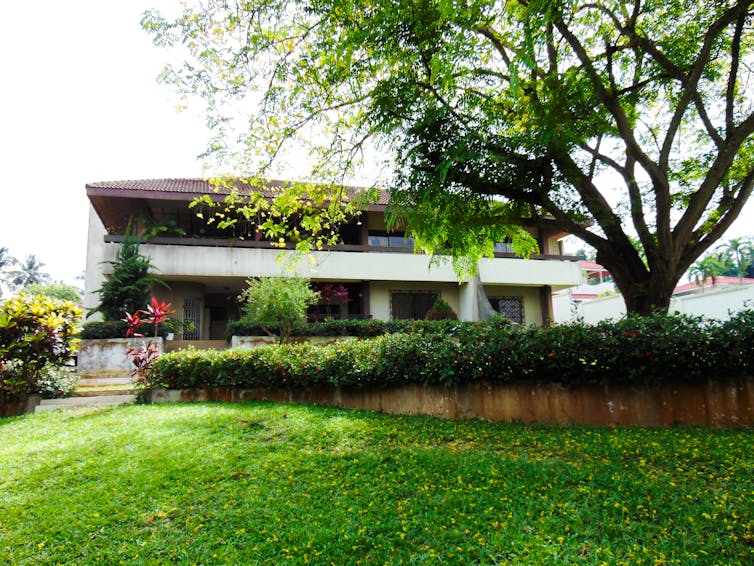
Owusu Addo Residence by John Owusu Addo.
Kuukuwa Manful, CC BY-NC-NDKuukuwa Manful, SOAS, University of London
But as well as looking at the future of architecture on the continent, visitors will also be able to explore its history, through an exhibition at the Arsenale, entitled Tropical Modernism: Architecture and Power in West Africa.
Early 20th-century modernism in Europe saw architects using large expanses of unshaded glass and flat roofs. Practitioners in warmer, humid climates, such as in Africa and Asia, meanwhile, had to adapt their designs to withstand heavier rainfall and warmer temperatures. In late colonial Africa and during the independence era, this style became known as “tropical modernism” or “tropical architecture”.
In the African context, this is possibly the best researched and well-documented architectural movement. When people discuss it further afield, however, it is mostly through a white lens. The focus is on what European architects practising in these regions were doing – African architects of the same era are largely overlooked.
Putting Europe at the centre of African stories is a choice that echoes the very colonial histories it seeks to elucidate, where European architects operated as though the continent were a blank slate, devoid of pre-existing architecture worthy of note.
My research shows how architects in Ghana in particular aligned with, adapted, or rejected Western colonial ideas. They created modernist buildings that reflected their visions for their nation, their experiences and their global outlook.
Ghanaian expertise
John Owusu Addo, the first black head of department of Ghana’s first architecture school, and Samuel Opare Larbi, another prominent educator and architect, embodied what I term the dominant Ghanaian tropical modernism. Their practice was most similar to, and aligned with, the practice of the white British tropical modernists.
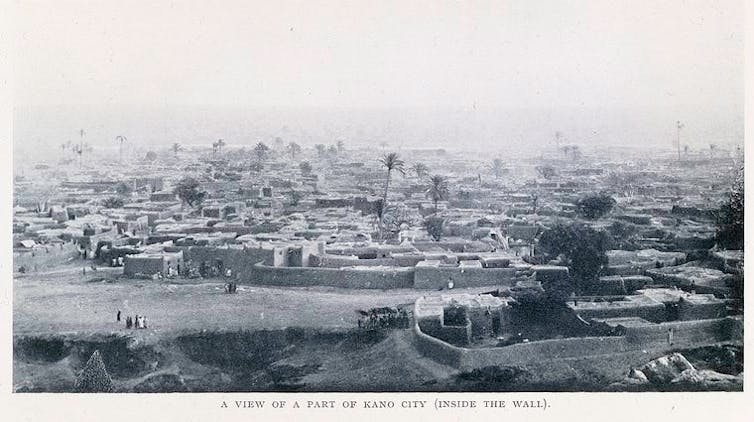
The former Department of Tropical Architecture was established at the Architectural Association (AA) in London in 1954 by the British wife and husband duo Jane Drew and Maxwell Fry, and James Cubbitt. Although Fry described the city of Kano, in present day Nigeria, as a “complete realisation of urban harmony”, he and Drew nonetheless declared having “invented” architecture in West Africa. Their work was coloured by the imperial, racist and sexist notions of the time.
Owusu Addo and Larbi both trained at the AA. They counted among their contemporaries the German architect Otto Koenisberger and the Australian-born British architect Kenneth Mackensie Scott. Although they faced racial discrimination in Europe and back home, their UK education put them in a position of relative privilege in Ghana.
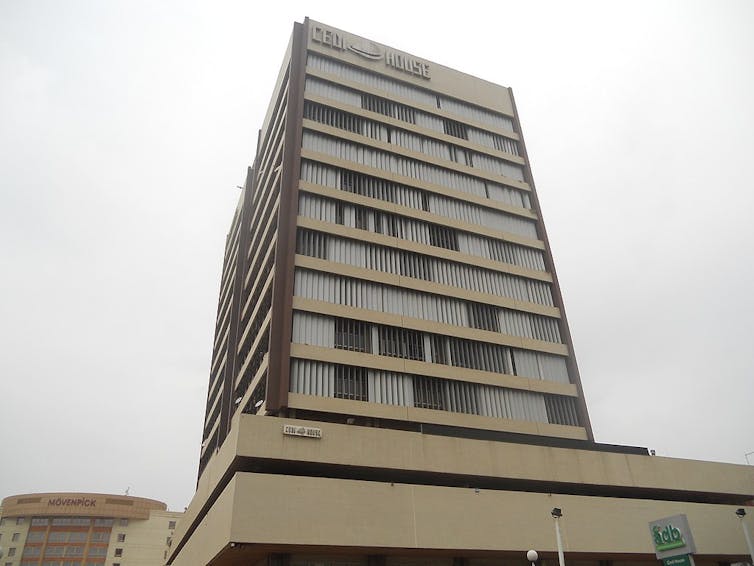
From the outside, many of the institutional and corporate buildings they designed, including Cedi House in Accra (a high-rise tower that now houses the Ghana Stock Exchange) featured elements of tropical modernism: solar shading devices, rhythmic facades, breeze blocks, cross ventilation and east-west orientation.
But it is in the interiors of their domestic architecture that their keen understanding of the people for whom they were designing becomes most apparent. When I interviewed Owusu Addo and Larbi in 2015, they recounted how they took Ghanaian societies into account. And they spoke of the pride they felt at being African architects.
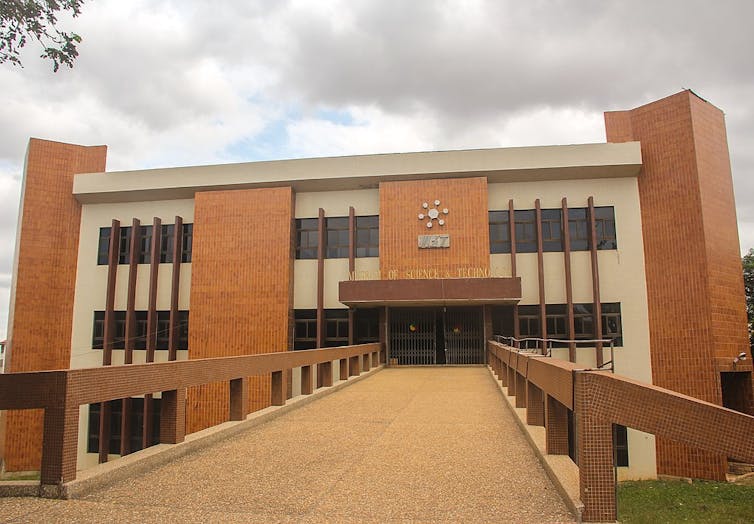
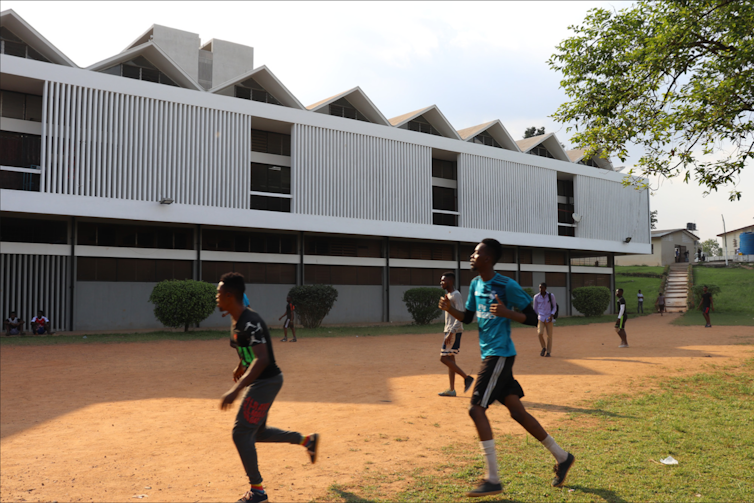
For the Unity Hall student accommodation at the Kwame Nkrumah University of Science and Technology, Owusu Addo created shaded outdoor space, with courtyards and verandas. As he put it: “Rarely do we stay in our rooms in the daytime. If in the daytime anyone was in the room, then he was sick.”
Unity Hall, Kwame Nkrumah University of Science and Technology, Kumasi.Łukasz Stanek, CC BY-NC-ND
Creative dissent
Other architects sought to establish an aesthetic that was visually distinct from European-driven tropical modernism. They accepted the climatic control and other technological and material aspects of the style. However, in the aesthetics they pursued, they were decidedly expressive.
Anyako-born architect Daniel Sydney Kpodo-Tay’s confidence was grounded in his centuries-long family history of building design and construction. Together with his anti-colonial politics and a desire for recognition, this informed an approach that the Ghana Institute of Architects termed “revolutionary”, upon his death in 2018.
Kpodo-Tay was fascinated by symbolism. His designs rejected ornamentation. Instead, he sought to make the buildings themselves sculptural. His projects that were built were often not as bold as his proposals – a compromise he put down to the limited finances and conservatism of clients in Ghana.
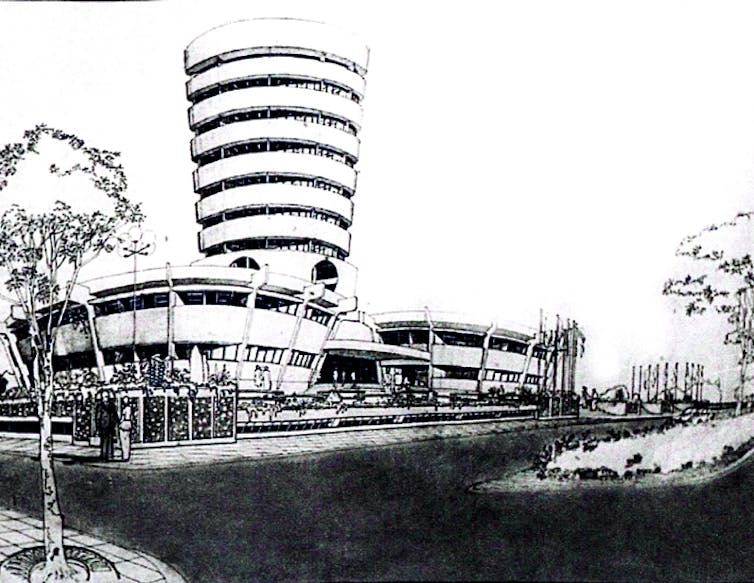
When a competition was held, in the late 1980s and early 1990s, to design the headquarters for the Economic Community of West African States organisation, Kpodo-Tay’s proposal drew on the form of a bowl as symbolic of communality and unity. His design for the complex, which was to house offices, a bank and a conference venue, featured bold inverted conical forms with internal spaces arrayed radially.
Daniel Sydney Kpodo-Tay’s proposal for the ECOWAS headquarters.Kuukuwa Manful, Author provided
Owusu Addo, Kpodo-Tay, and Larbi are not the only Ghanaian architects of their generations whose practice was informed by tropical modernism. Many stories are yet to be brought to light, especially those of the women.
Only a few women were trained at the Kwame Nkrumah University of Science’s architecture school. Sexism in the industry saw some leave. But others, including the late Alero Olympio who designed Accra’s Kokrobitey Institute, struck out in bold new ways. These visionaries challenged the Euro-centric assumptions of what tropical modernism was, in particular through their use of materials.
As scholars, practitioners and visitors from around the world turn to architecture on the African continent, they must be careful not to treat it as a blank slate in the way previous generations did. Africans have been creating, studying, teaching, and documenting architecture in Africa since time immemorial. Their work matters.
The Transnational Architecture Group is 10 year’s old this year. Thank you for supporting the blog and to all of our excellent contributors over the years for enriching the content and generously sharing their work. We’d also like to thank the communities in the places in which we work, the archivists and librarians for making material available to us and sharing their expertise, our respective institutions for supporting our research, and to the research funders who make travel, time, and resources available to us.
The blog started as a means to share our work-in-progress ideas and to promote events – and that is still at the core of what we do. We continue to add updates from our ventures into the archives, travel reports, and to share interesting events and innovative papers. These small reports and updates have compounded into something of a large resource and repository, and we’re delighted so many people have been able to make good use of (and to correct and expand upon) our work and attempts at writing these histories.
To celebrate the 10 year anniversary we held a small gathering at the Liverpool School of Architecture on Wednesday 8th March, curated and organised by Dr Alistair Cartwright. Our speakers were all PhD students, post-doctoral researchers, and research associates at the school. You may watch the proceedings here:
The speakers and titles of the presentations are below, with timings if you’d like to skip to a particular talk:
Rixt Woudstra, “Sapele and Samreboi: Building Company Towns in British West Africa” 5:25
Excy Hansda, “Indigenous Modernities in the Twentieth Century Architecture of Bombay” 20:00
Adefola Toye, “Tropical Modernism in Nigeria’s First Universities: Accessing Sources Beyond the Archives.” 37:00
Ewan Harrison, “Planning for Post/Neo Coloniality: the Paramount Hotel in Freetown” 1:11
Iain Jackson, “Erhabor Emokae and the curious case of the UAC Mural: tropical modernism and decorative arts” 1:31
Daneel Starr, “How and why has the vernacular architecture and intangible cultural heritage of the Akha people changed in the face of globalization: Using the village of A Lu Lao Zhai, Xishuangbanna (sipsongpanna) China, as a case study.” 1:50
Paul Robinson, “Freetown, the UAC and urban design” 2:20
Alistair Cartwright, “Ecologies of Vulnerability: Post-Cyclone Reconstruction in Mauritius, c. 1945” 2:35
We also heard an excellent paper from Razan Simbawa, “The Effects of Demolish-based Urban Regeneration on Displaced Residents in Jeddah, Saudi Arabia” – which cannot be shared on the video recording at the moment.
Thank you again to all of the speakers for their wonderful talks, presentations, and work-in-progress. There was such variety and richness in the topics and methods, and at the same time numerous connections and cross-overs between the work.
Please do get in touch if you’d like to know more, or to share your work on the blog.
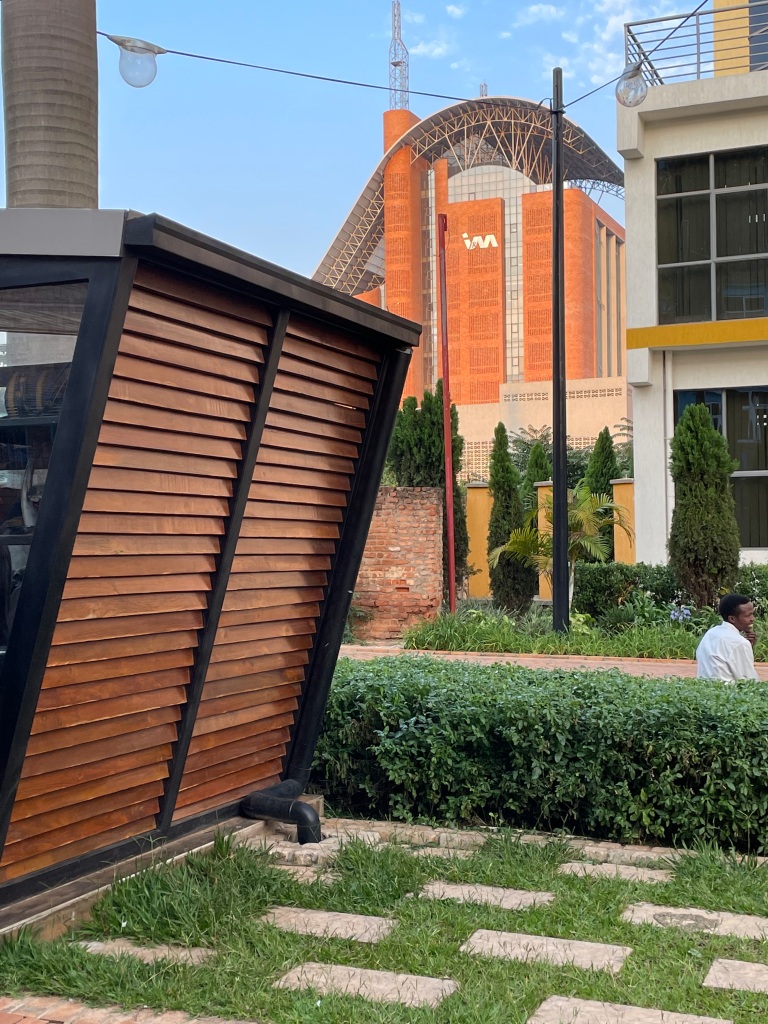
Indeed the city of a million hills, the views, wherever one looks show the hilly topography as 360 degree panorama all around. This is an efficient, exceptionally clean and organised African city, words that rarely roll off the tongue in relation to the continent.
For Kigali this however is happily true. Approaching this city of 3 million from its friendly and speedy immigration formalities at its small airport, one meets with Kigali’s symbolic moniker, the lit up Kigali Conference centre globe, set on one of the city’s highest hills, it acts as a waymarker into Kigali city.
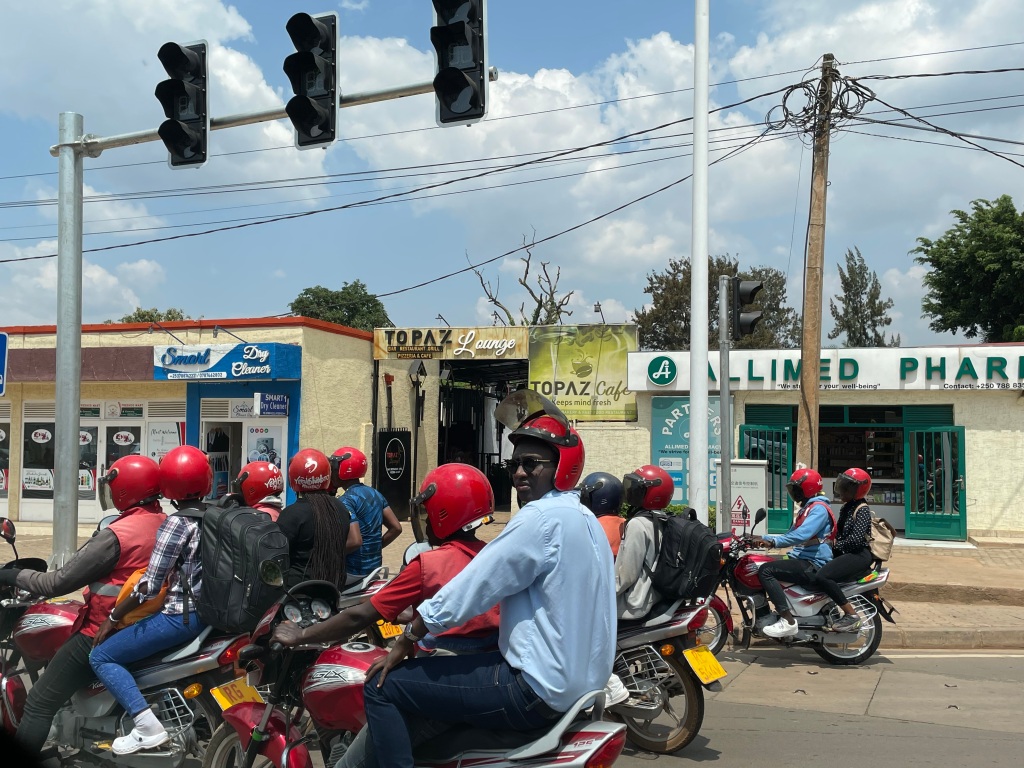
Unsurprising for a hilly city, poor drainage and standing water is not a problem, a usual feature in large urban areas of Africa. Kigali’s arteries are its well-designed and maintained, roads and its taxi and motorcycle public transport network. Yellow motorcycles, with red-helmeted drivers and their pillion passengers swarm the roads like bees, dodging in and out of traffic including the Yego taxicabs which are ubiquitous forms of transport for more well-off Kigalites.
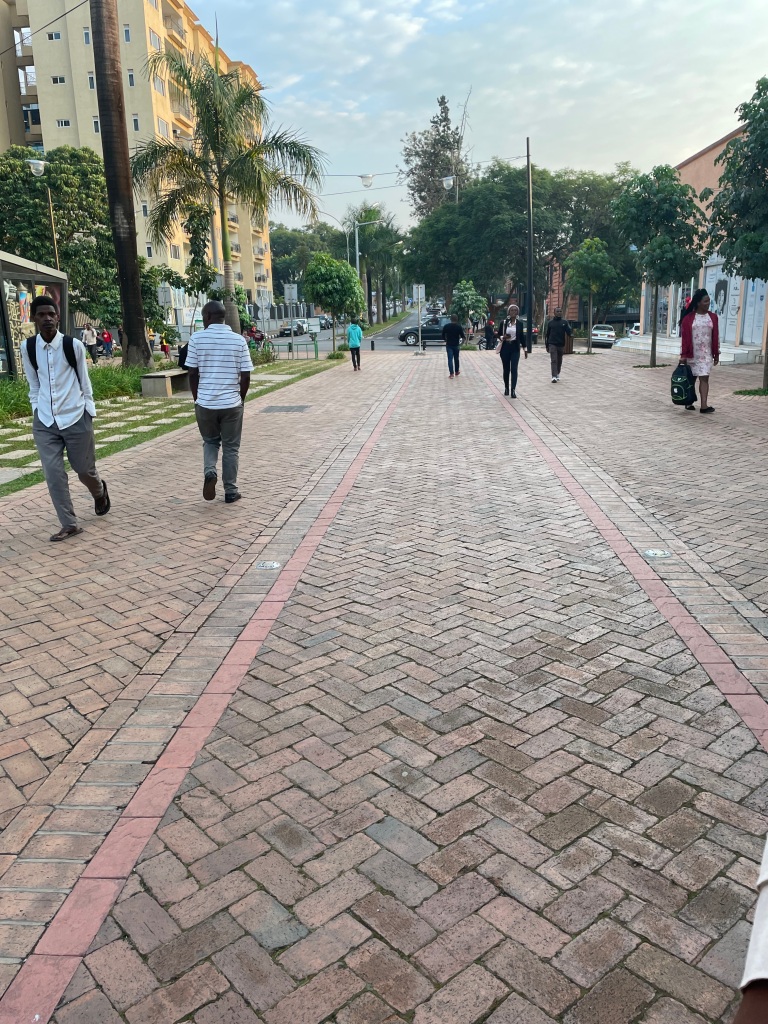
Meanwhile the roads are designed with both clearly marked out zebra crossings which drivers observe. This includes well-defined cycle lanes despite bicycles being rather rare, they have clearly been planned for. The central pedestrianised area also has had detailed attention to planting and urban infrastructure such as seating areas and shelters. This attention to city thoroughfares by Kigali’s planners gives the city its deserved moniker as Africa’s most well-planned city.
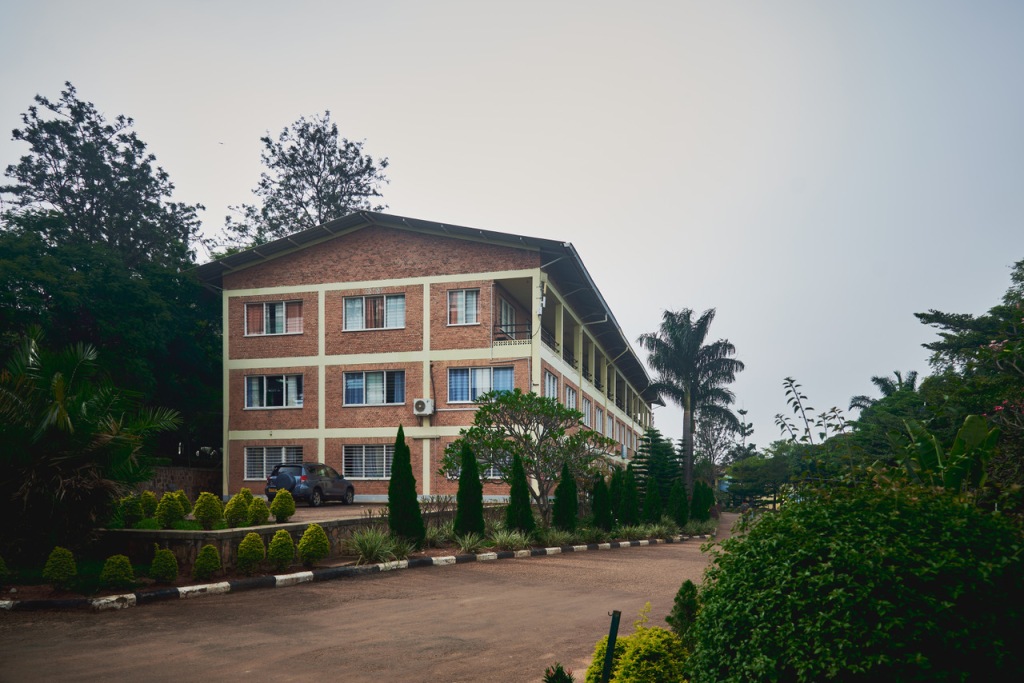
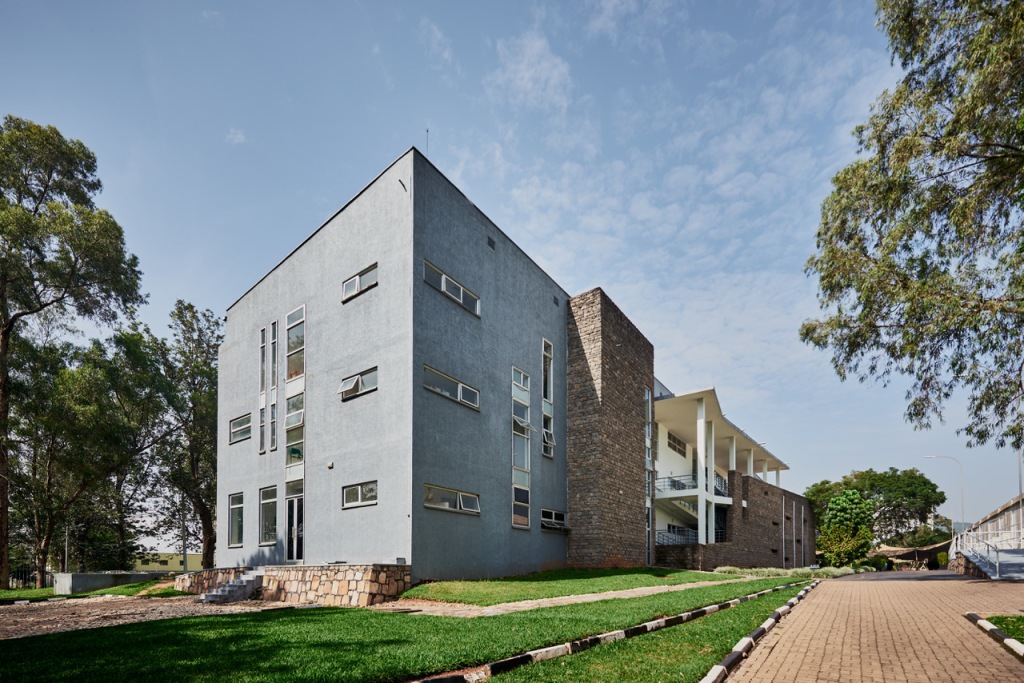
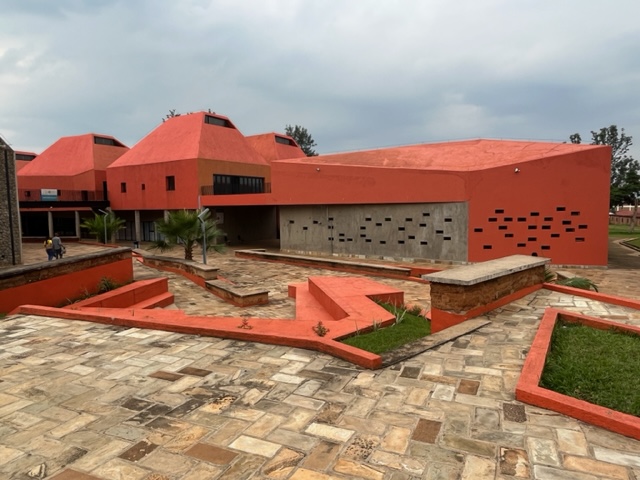
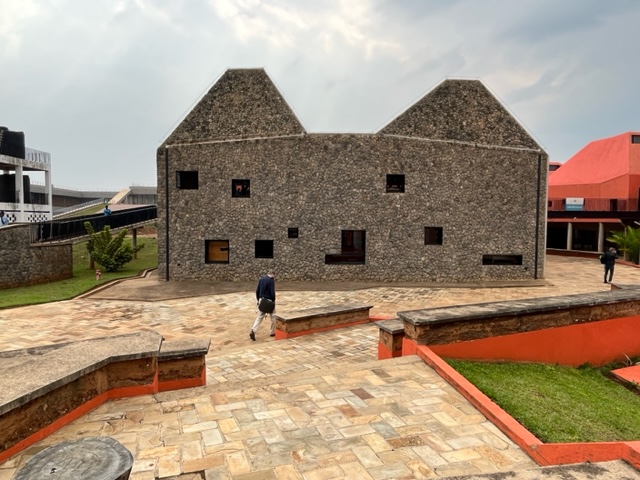
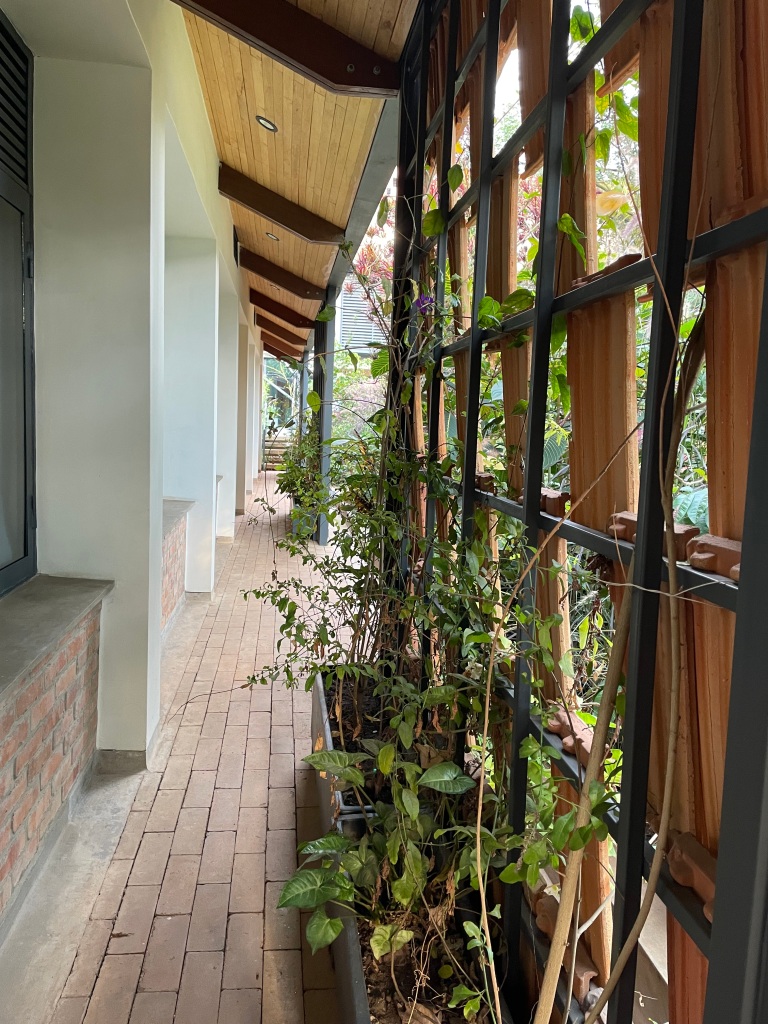
A visit to the University of Rwanda also gave an interesting view of the different architectural and design influences to be found in Rwanda. The striking Rwanda School of Architecture displayed its vibrant colours and materiality in its external form, whilst the volumetric flexibility of these spaces internally was demonstrated as we held successful if slightly challenged acoustically, talks and workshops, concluding with an informal review session in two of these spaces.
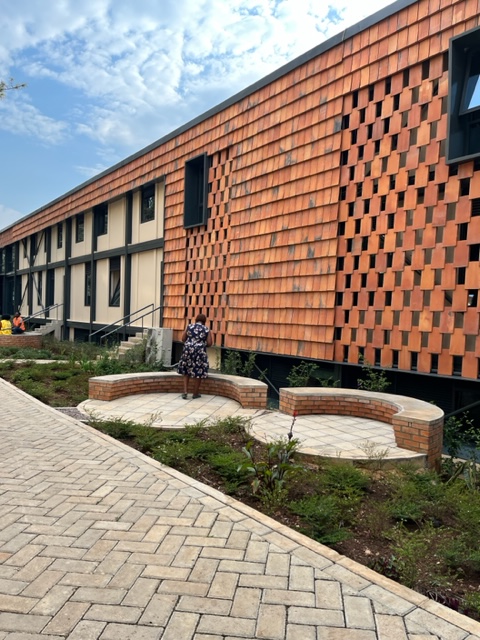
Central Kigali has a distinct historic colonial – mission informed central spine. A Catholic convent, a church, and a school complex delivering kindergarten and primary education feature on one axis. The characteristic use of locally made clay bricks and historical clay tiling give these buildings their historic identity. Whilst the 20th century designed embassies of Belgium and France, with their national flags flying, dominate nearby.
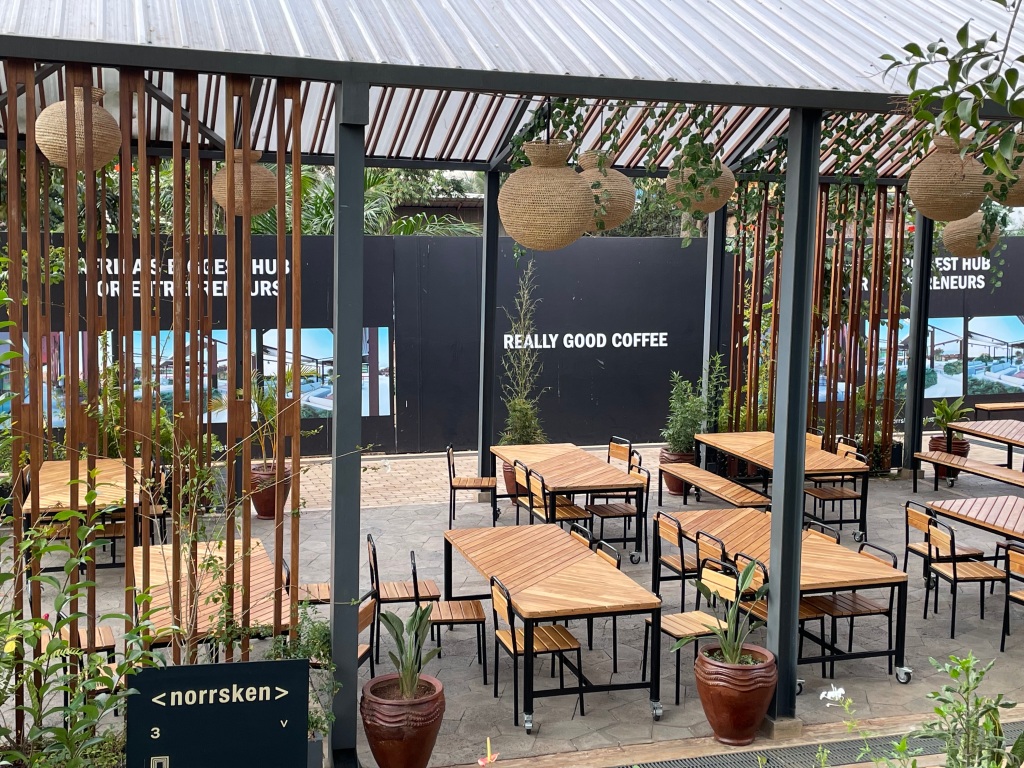
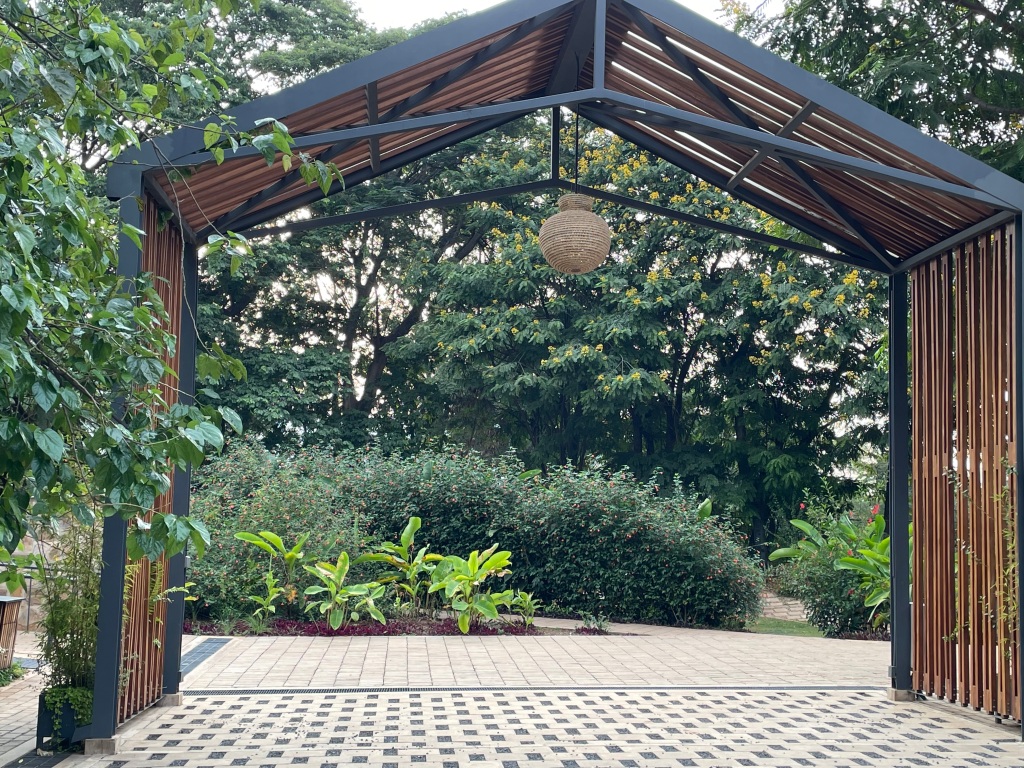
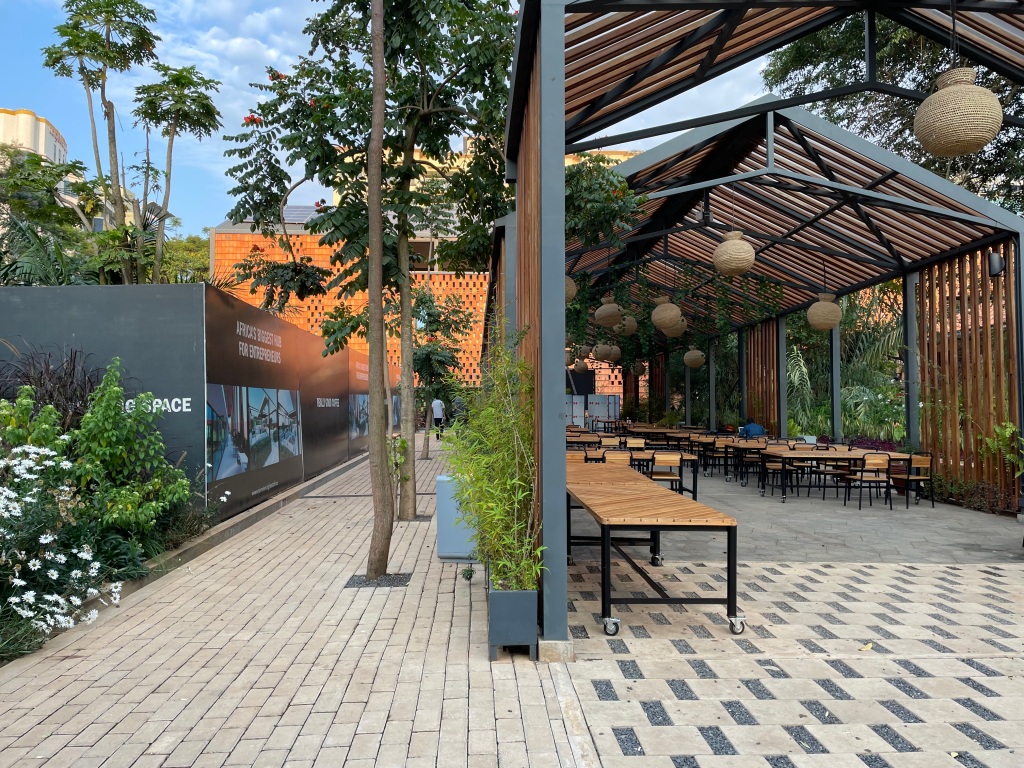
Colonial Kigali then blends into an interesting newly repurposed space, courtesy of MASS design. The old Belgian school in downtown Kigali has now become home for the first Norskka startup campus. Classrooms have been recreated as meetings spaces, and the brand new central entrance meeting space doubles as free to walk into café certainly serving the best coffee this side of Africa.
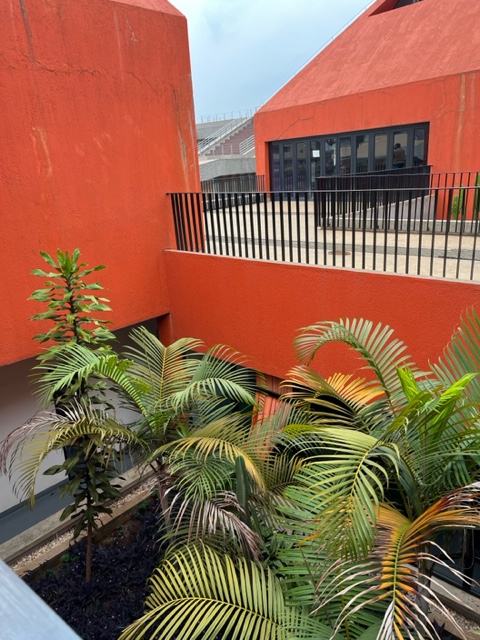
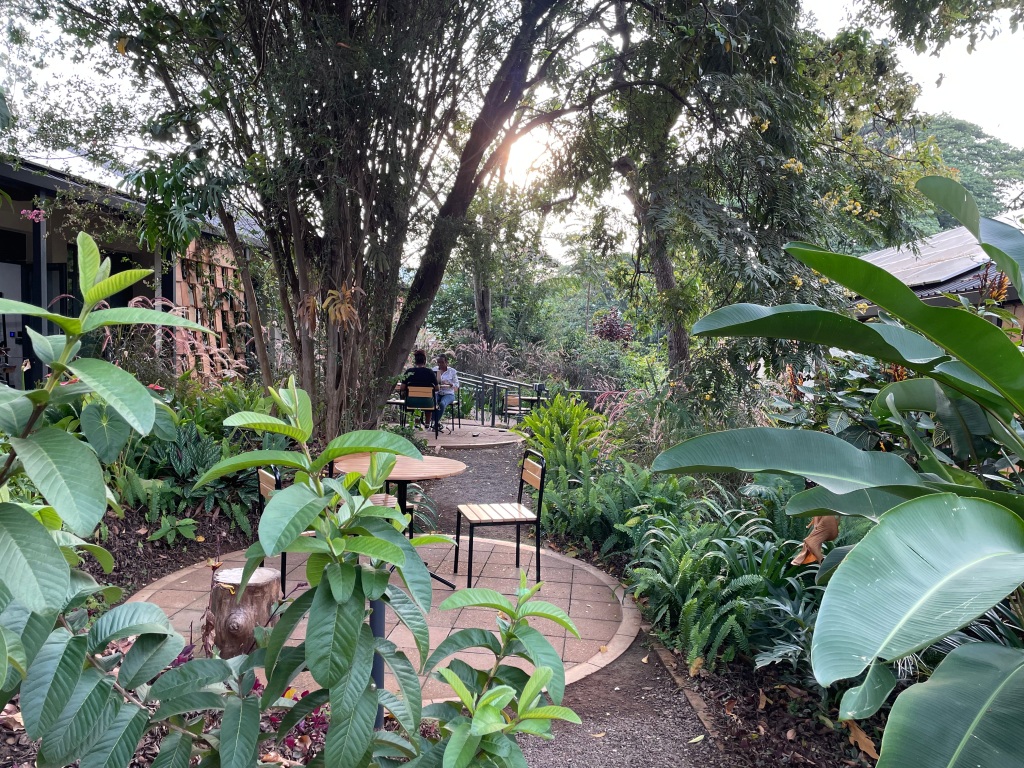
The MASS Design-landscape team collaboration in design has resulted in a totally new and climatologically excellent marriage of landscape with environment. A successful contemporary case study on how this can be achieved for all working in sub-tropical environments such as Kigali. The third and final phase of this development is just going on site involving a local Architecture practice this has got to be a project to watch.
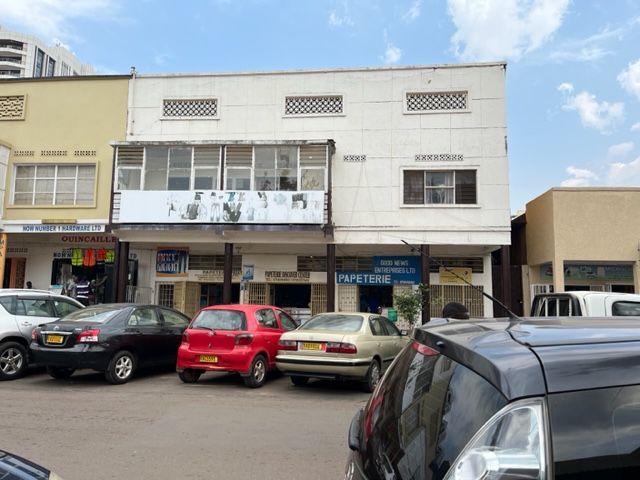
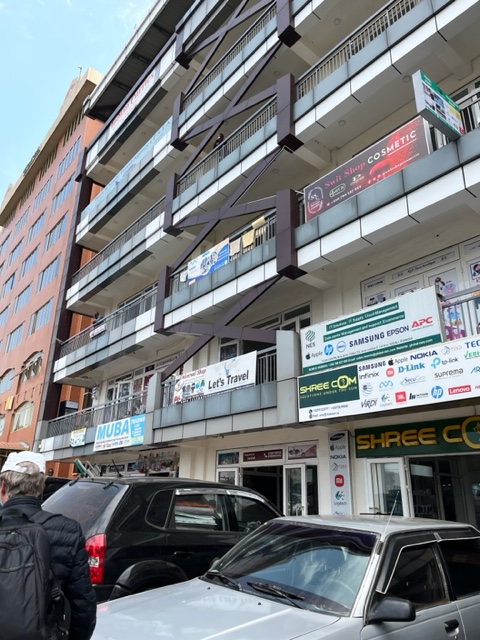
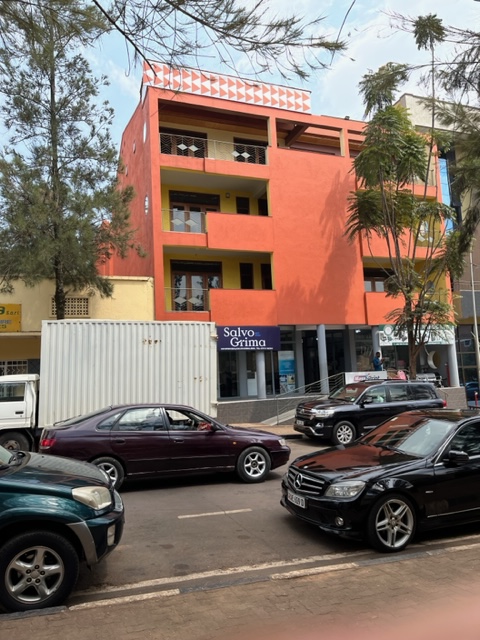
Downtown commercial Kigali, which formed the centre of the historic commercial town, comprises the usual mix of trading units, former mercantile company warehouses and post and telecommunications infrastructure. A pedestrian mall which features Kigali’s new post-modern banking office towers, connects to this downtown area.
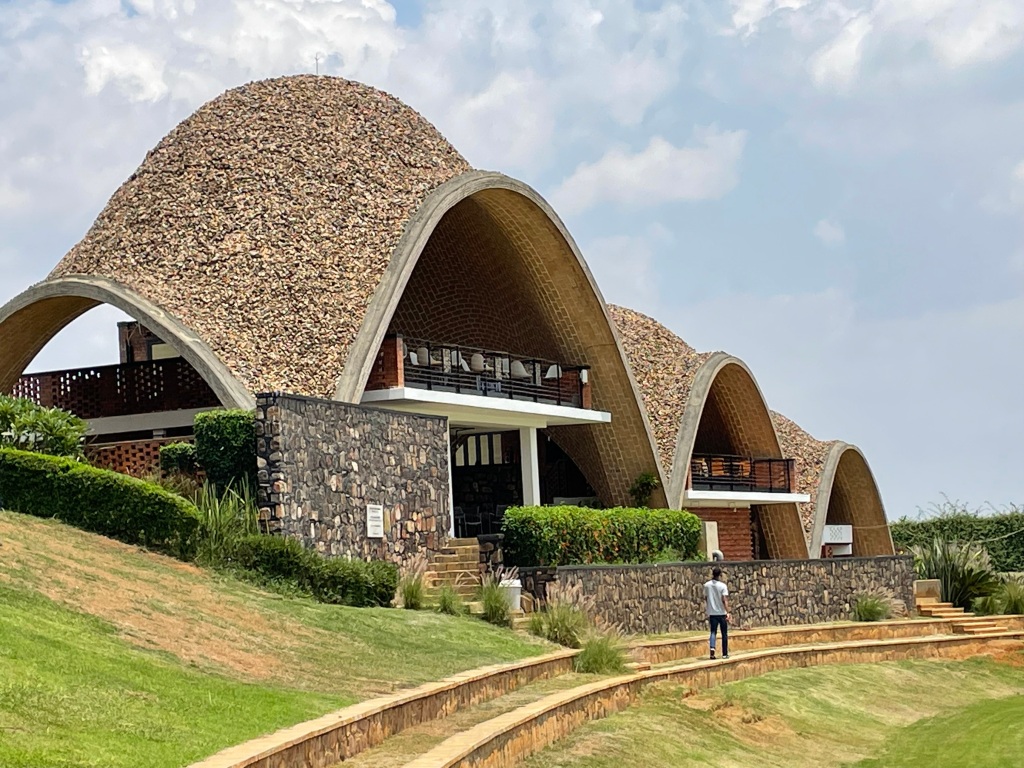
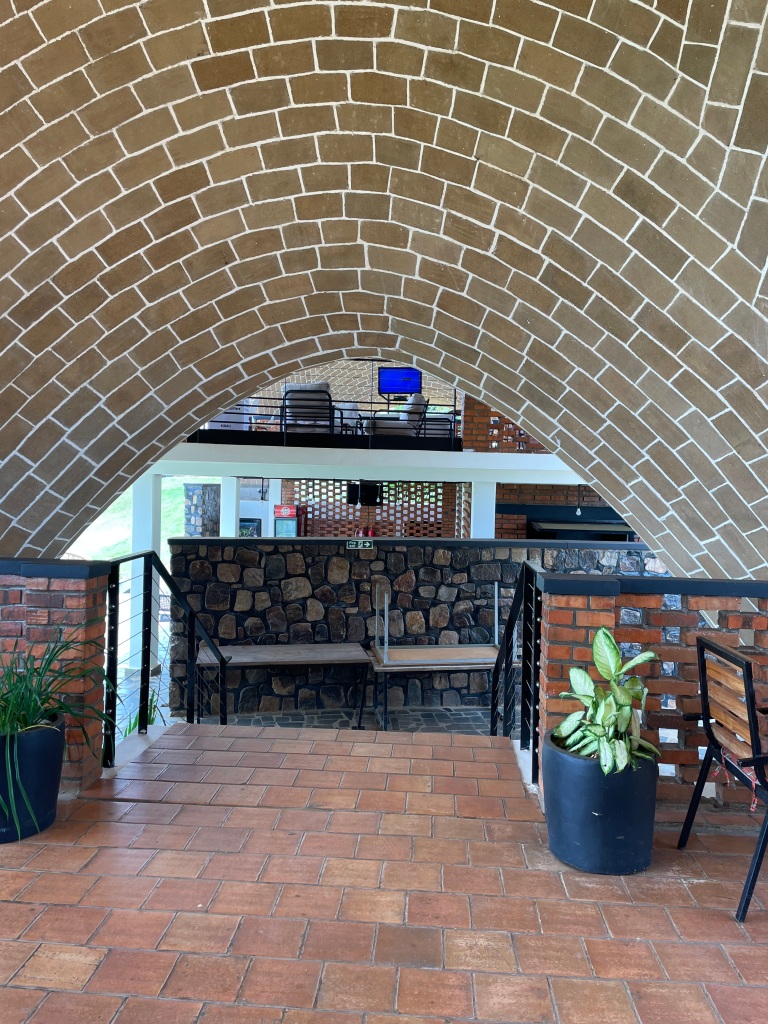
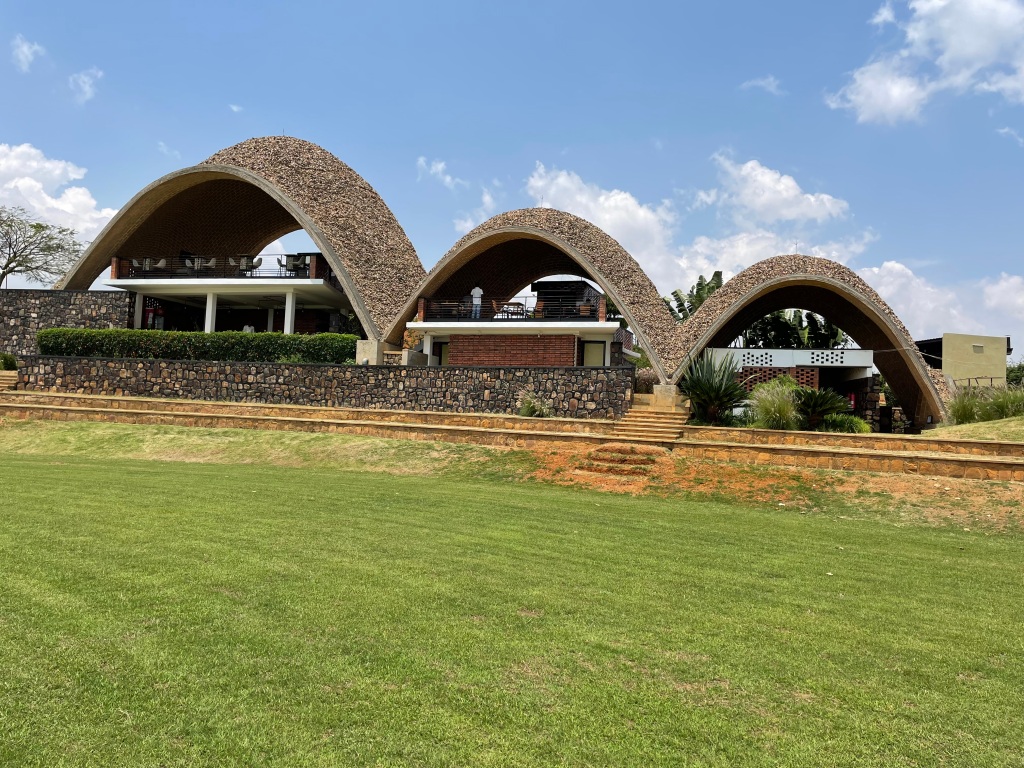
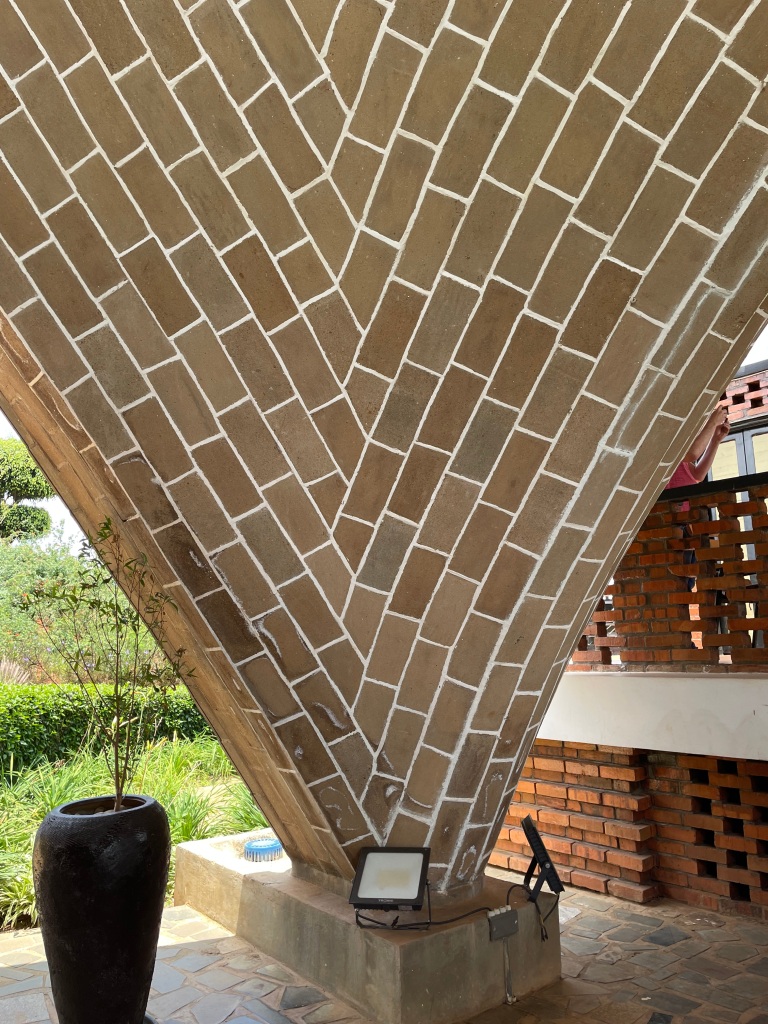
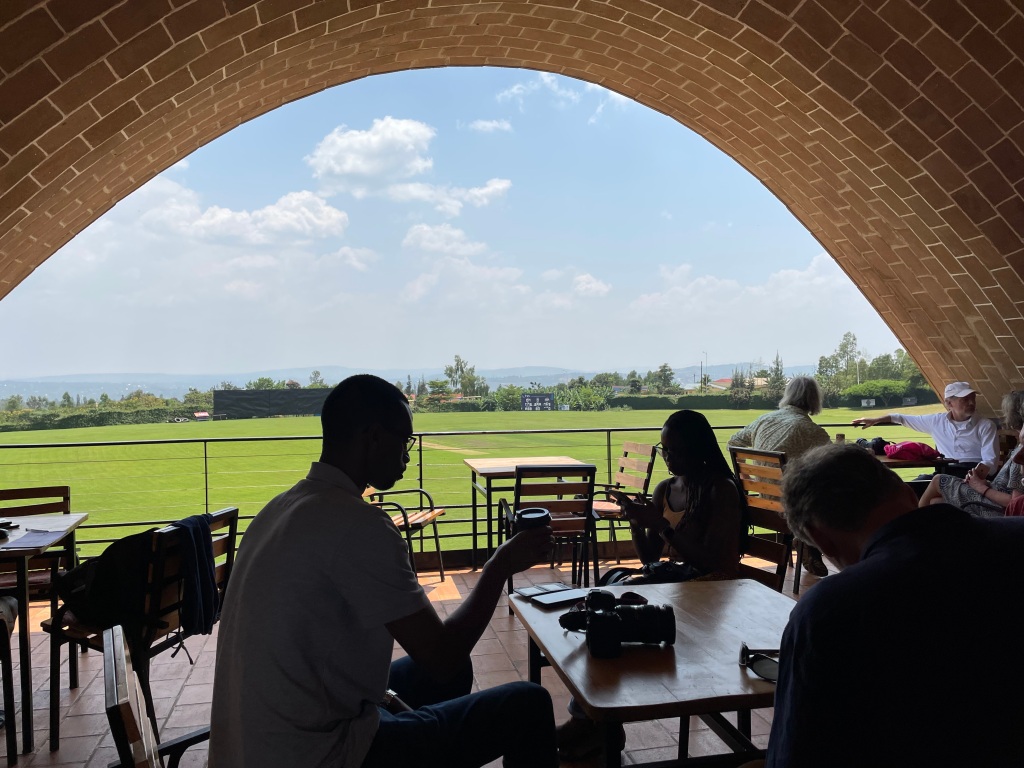
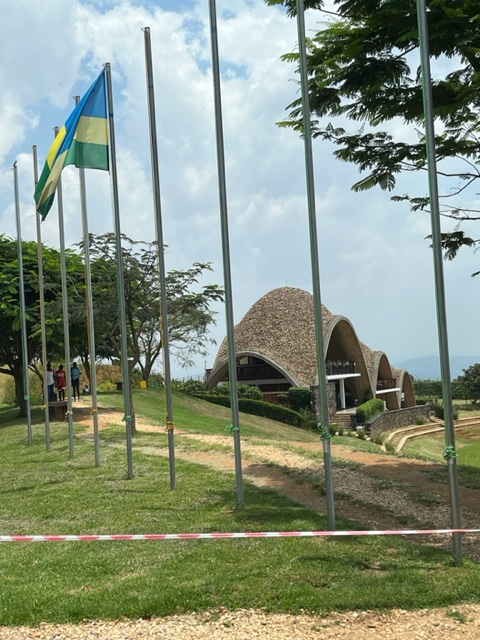
A visit to the Kigali Cricket Pavilion, the result of Peter Rich and Michael Ramage’s 2017 architecture-engineering collaboration, was pure visual joy to behold. The eight mile drive out of Kigali to find the pavilion was an adventure in itself as there were few signposts or digital map directions to follow. A well-judged turn off the main road, however resulted in an initial view of the structure. Built in 2017 it has weathered extremely well, with the quaternary arch form clearly expressed internally, and the local material cladding in superb condition. The three domes amply fulfil their basic programme of shelter and a viewing space for members of the Rwandan Cricket Association.
At our visit we were also able to drink great Ugandan coffee and access fast internet access as we sat down to admire the structure and the pavilion view. Unfortunately, no games were being played nor was there any cricket practice on our Saturday trip out to the pavilion, however the grounds were in perfect condition and we were informed that the Rwanda girls cricket team had recently beat their Ugandan counterparts in a regional match, having a home pavilion like Kigali’s must be a source of inspiration for Kigali’s youth cricketers.
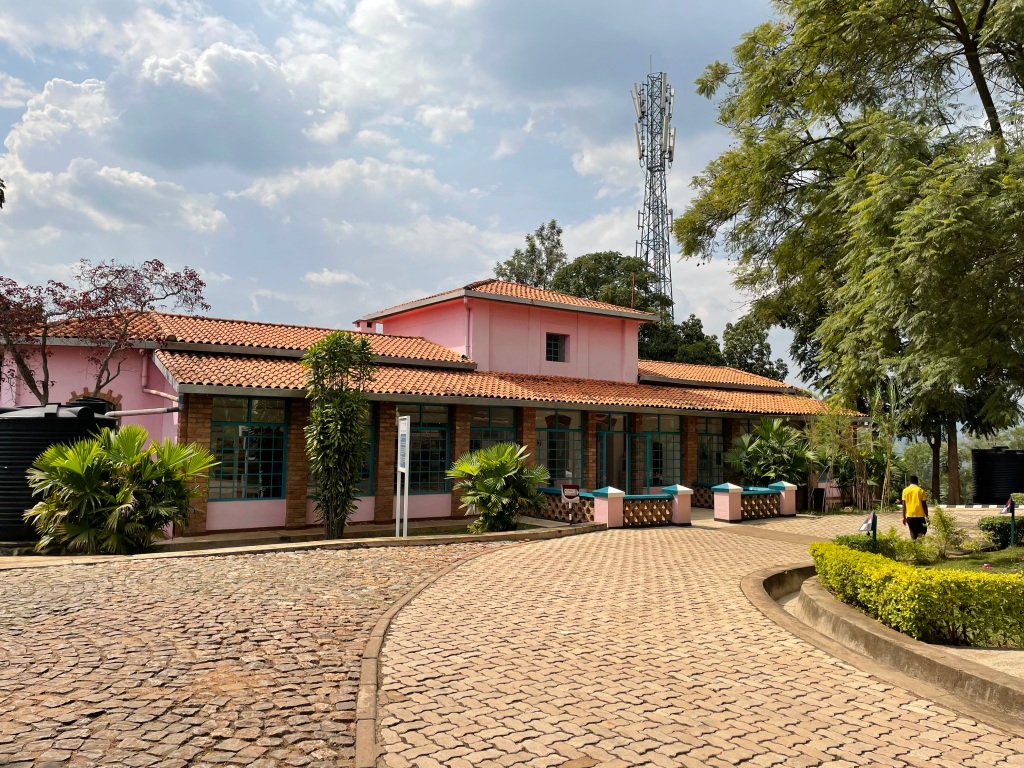
Back into the leafy former colonial government suburbs of Kigali, only one hill away from Kigali’s commercial hub a visit to the Kandt house took us straight back to colonial times,. This is the preserved home of Kigali’s first German governor now provides an extensive history of Kigali and Rwanda’s early mission and colonial history and heritage. A reptile zoo complete with crocodile was the bonus attraction to view.
No trip to Kigali, should omit a visit to the genocide museum, this is a deeply emotional and heart-breaking site, which comprises both burial grounds and a landscaped garden of remembrance and also the Genocide memorial now connected to a genocide archive which may be visited on week days. The landscaping of the memorial garden allows for quiet contemplation and reflection, whilst the museum, assisted by the Aegis Trust, to the people of Rwanda tells the story of the 1994 genocide to the world, in the hope that we may all strive for peace and reconciliation. It was masterplanned by John McAslan and partners, and completed in 2014. Kigali Genocide Memorial Amphitheatre in a circular void, by WALL Corporation / Selim Senin remains unbuilt, and is still work in progress.
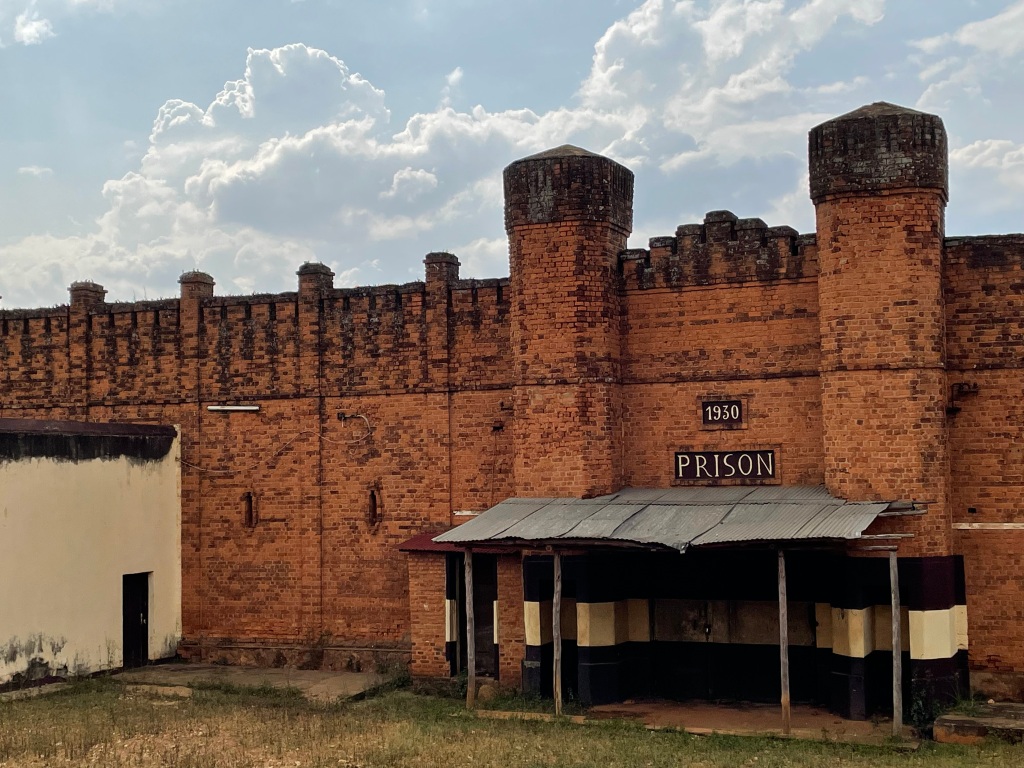
You might also catch a view of the remains of Rwanda’s central prison in Kigali, which is on another hill nearby. It is a large colonial jail which unfortunately is scheduled for erasure if future plans are put in place. Currently however with some persistence you can get in and view the structure which only closed in the early 2010s.
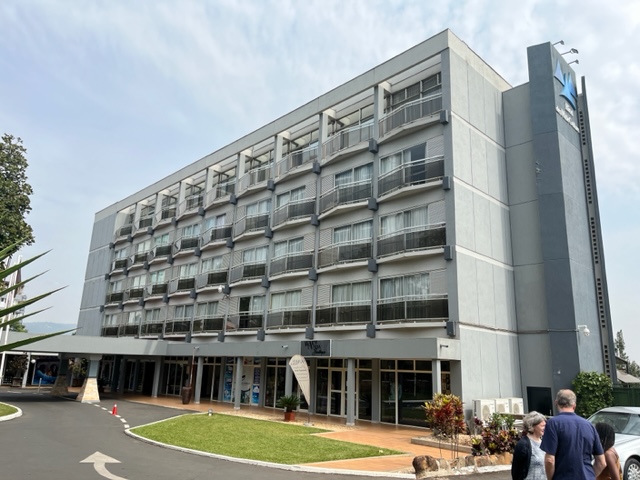
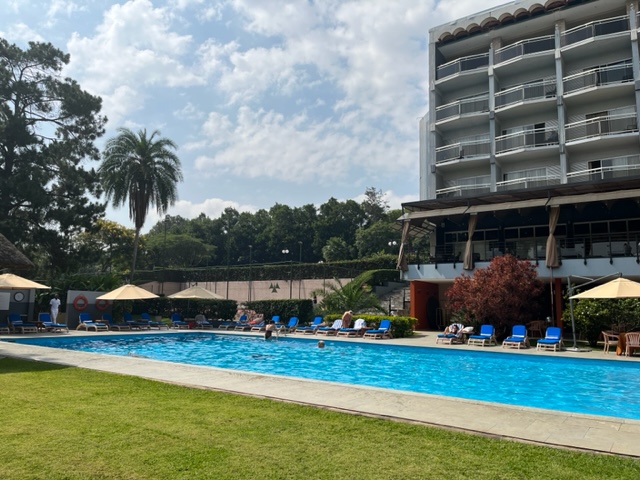
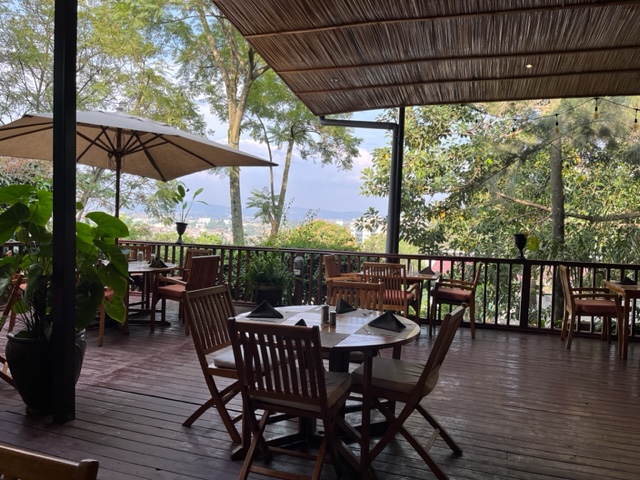
Finally, a visit to the now called ‘Hotel Milles Collines’, the true site of the Hotel Rwanda, takes one back to halcyon days of the modern intercontinental tropical hotel. Copies of this hotel style grace most of the globe’s tropical locations, with the swimming pool, bar area and tennis courts to view. This is a definite contrast to the boutique hotel we stayed in with its contemporary reinterpretation of space, complete with mosquito nets, and open-air dining.
A great way to end a trip would be to have dinner at Kigali’s latest dining venue, just opened in time for the Commonwealth Governors and Heads of state meeting (CHOGUM) that took place in Kigali last autumn. It’s fine dining, interior decoration, and panoramic view of this city of hills is a great way to conclude a trip.
As the posters across this city proclaim, “Visit Rwanda”!
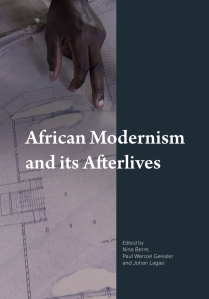
This edited collection of essays and image-driven pieces by anthropologists, archaeologists, architects, and historians examines the legacies of African architecture from around the time of independence through examples from different countries. Drawing on ethnography, archival research, and careful observation of buildings, remains, and people, the case studies seek to connect the colonial and postcolonial origins of modernist architecture, the historical processes they underwent, and their present use and habitation, adaptation, and decay.
Deriving from a workshop in connection with the 2015 exhibition “Forms of Freedom” at the National Museum in Oslo and the Venice Biennale, the volume combines recent developments in architectural history, the anthropology of modernism and of material culture, and contemporary archaeology to move beyond the admiration or preservation of prized architectural “heritage” and to complicate the contemplation—or critique—of “ruins” and “ruination.”
As part of our project to research the architecture of the United Africa Company (UAC) we’re visiting Freetown in Sierra Leone.
We spent the first day looking around the commercial business area wrapped around the giant cotton tree. The city grid was set out by the Sierra Leone Company surveyors in the 1790s and its wide streets and blocks are largely intact. Interspersed among the commercial properties are churches, houses, and schools, some dating back to the 19th Century.
The Cotton Tree, central Freetown
Adjacent to the Cotton Tree are the municipal offices, post office and former telephone exchange, and the major bank branches. Nickson and Borys designed a major branch for Barclays DCO and Ronald Ward for British Bank of West Africa (more on these by Ewan Harrison shortly). The Sierra Leone Central Bank is also located here – now refurbished and with its concrete mural sadly covered over with signage (designed by Ministry of Works in 1964).
GPO and Telephone Exchange, Nickson and BorysMunicipal Offices, Nickson and BorysBank of British West Africa, Ronald WardBank of Sierra Leone, Ministry of WorksBarclays DCO Bank, Nickson and Borys
Further downhill, towards the old railway station and harbour, are the major merchant stores and retailers.
We visited the old Kingsway Stores – now a bank – but still with its deco-inspired flourishes at each end of the facade. The CFAO is still clearly recognisable, and several other stores display strong characteristics of GB Ollivant and Leventis properties we’ve seen elsewhere in Western Africa.
Former Kingsway Department StoreRetail: architect unknownLuvian Building, architect unknownFormer CFAO Building
Heading further eastwards beyond the older city grid is ‘PZ Roundabout’ named after trading company Patterson Zochonis. Here the formality of the central business area gives way to more lively street markets and less formal city planning.
Further along Fourah Bay Road is the old Fourah Bay College building. The College was founded in 1827 in association with Durham University and was the first western style educational establishment in West Africa. It was mainly focused on missionary training. The delicate front verandah is formed with steel members bolted together and the ruinous state of the building has further exposed the steel structure inside. The beams were made by Glengarnock Iron and Steel Co in Ayrshire, Scotland and shipped out to Sierra Leone during the construction of the college building in the 1840s.
Old Fourah Bay College, founded in 1827, with construction starting in 1845, work supervised by Rev Edward Jones.
The college is located just a short distance from the sea, and what is now the busy port of Cline Town. Here the major shipping company Elder Dempster had their offices. They commissioned James Cubitt to design their premises in 1958. Cubitt also designed the Elder Dempster tower in Lagos, Nigeria, but rather than a dramatic tower overlooking the marina, here there is a more restrained horizontal solution with projecting concrete brise soleil and a porte-cochère. Inside the booking hall is a dramatic spiral staircase that wraps around what resembles a ship’s funnel. Warehouses and storage sheds dominate the area, including the former UAC stores opposite the National Railway Museum.
Former Elder Dempster Offices, James CubittInside Elder Dempster: waffle ceiling and spiral staircasedetail of the exteriorUAC warehouse Cline Town
There’s an impressive collection of architecture in this historic port city. In the UAC archive there are extensive photographic albums from 1915 through the 1960s documenting many of the streets and buildings we visited. Our task now is to identify more of these structures, and to research the history that resulted in their commissioning, design, and wider significance.