As part of our project to research the architecture of the United Africa Company (UAC) we’re visiting Freetown in Sierra Leone.
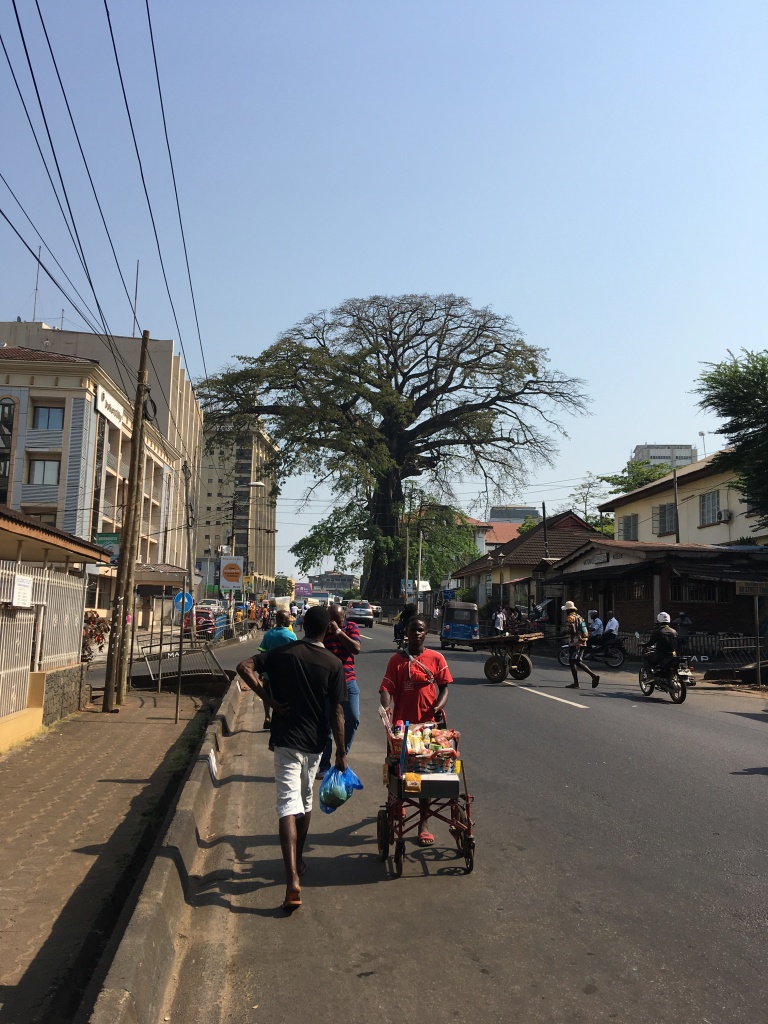
We spent the first day looking around the commercial business area wrapped around the giant cotton tree. The city grid was set out by the Sierra Leone Company surveyors in the 1790s and its wide streets and blocks are largely intact. Interspersed among the commercial properties are churches, houses, and schools, some dating back to the 19th Century.
The Cotton Tree, central Freetown
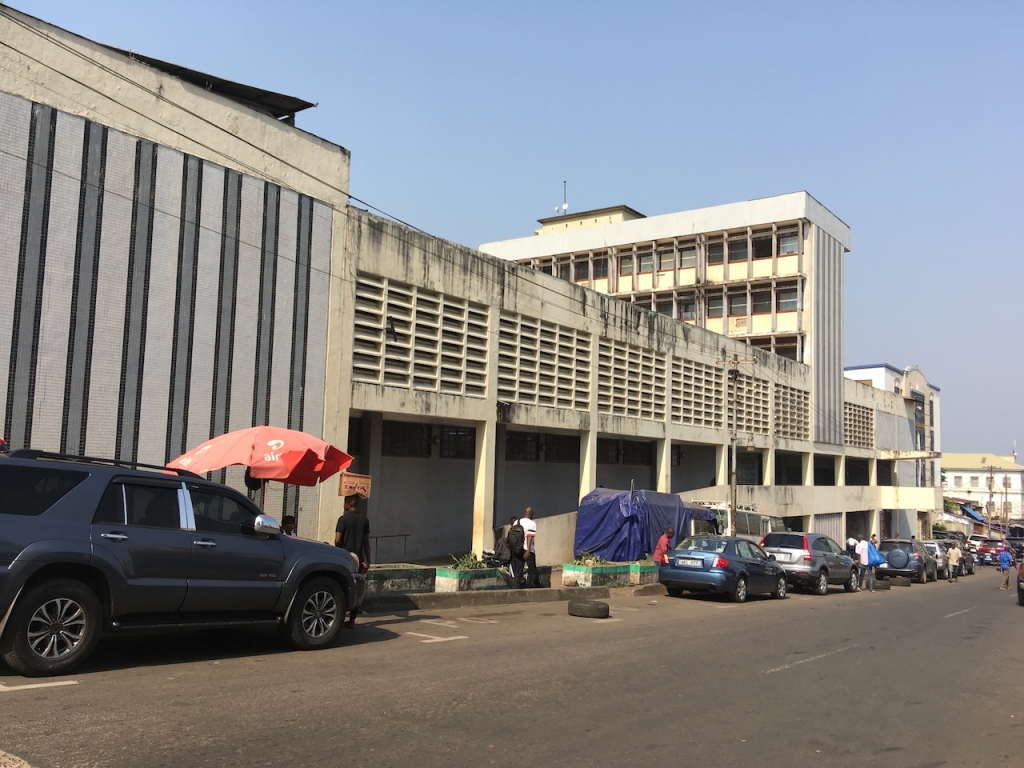
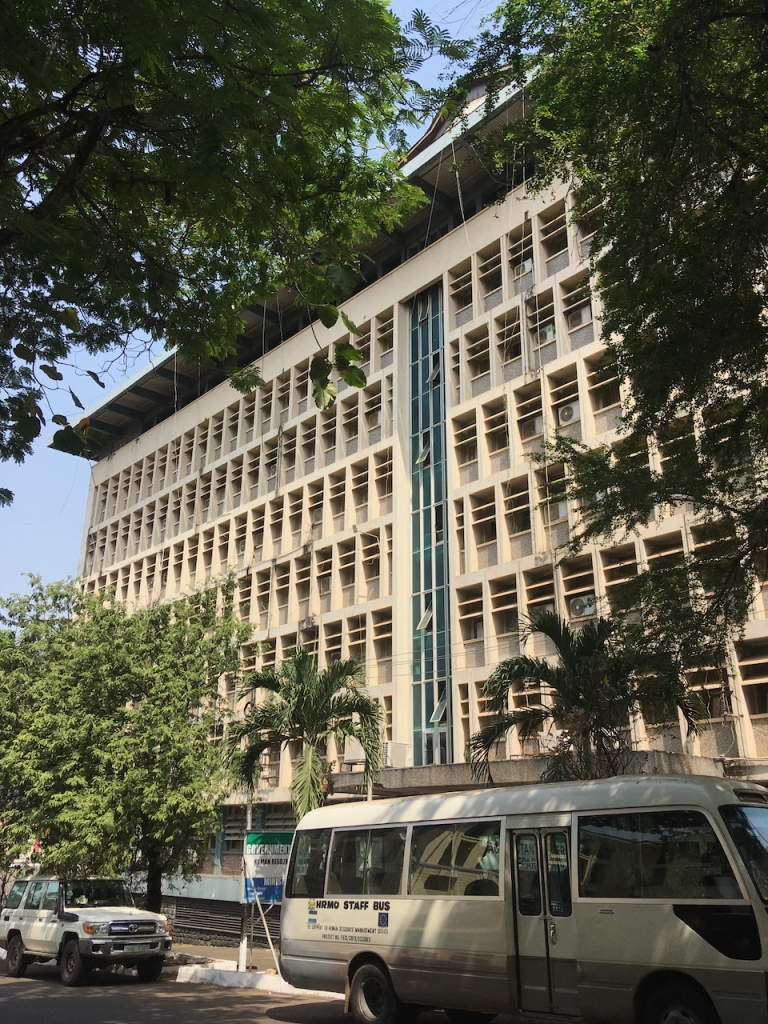
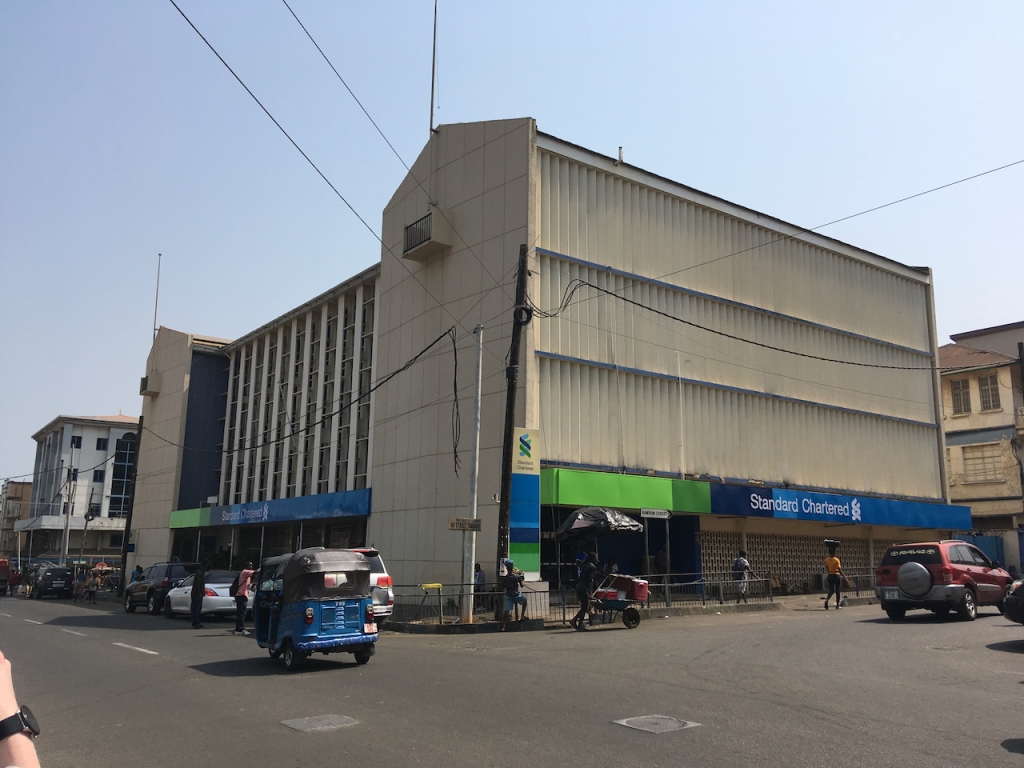
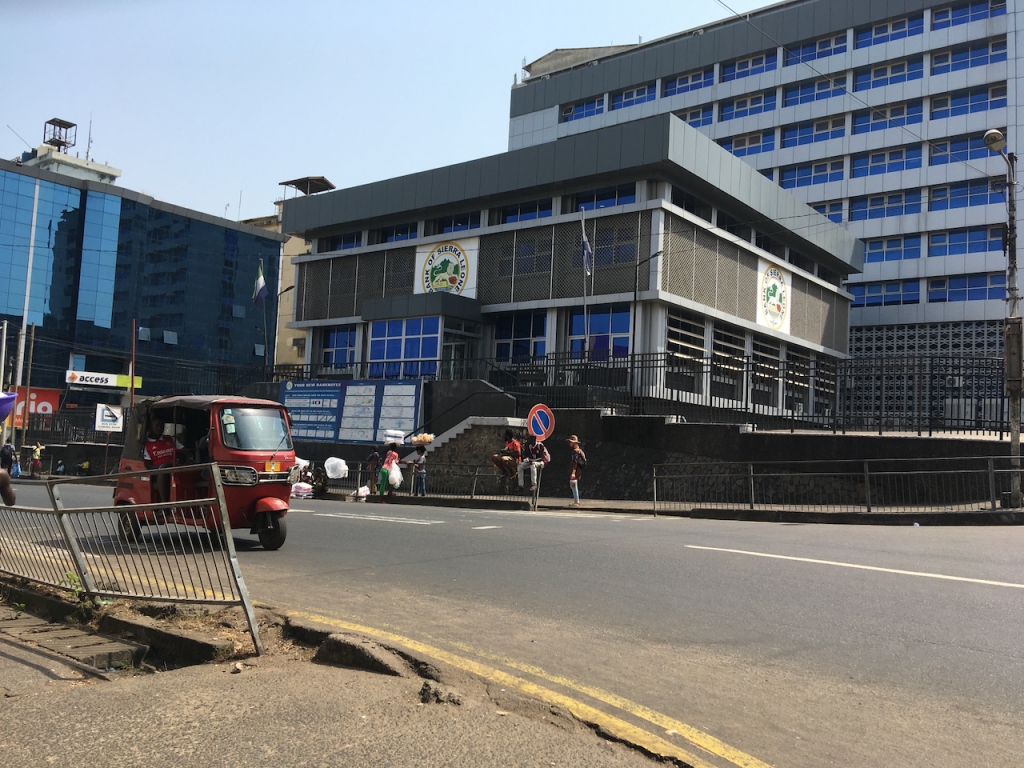
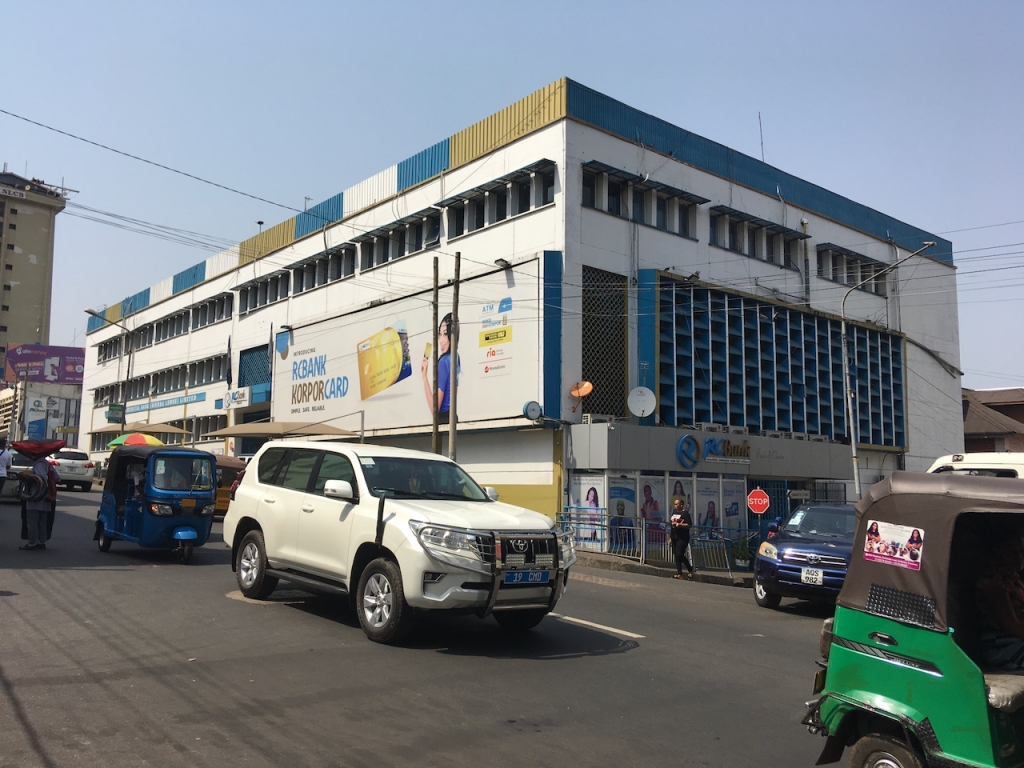
Adjacent to the Cotton Tree are the municipal offices, post office and former telephone exchange, and the major bank branches. Nickson and Borys designed a major branch for Barclays DCO and Ronald Ward for British Bank of West Africa (more on these by Ewan Harrison shortly). The Sierra Leone Central Bank is also located here – now refurbished and with its concrete mural sadly covered over with signage (designed by Ministry of Works in 1964).
GPO and Telephone Exchange, Nickson and BorysMunicipal Offices, Nickson and BorysBank of British West Africa, Ronald WardBank of Sierra Leone, Ministry of WorksBarclays DCO Bank, Nickson and Borys
Further downhill, towards the old railway station and harbour, are the major merchant stores and retailers.
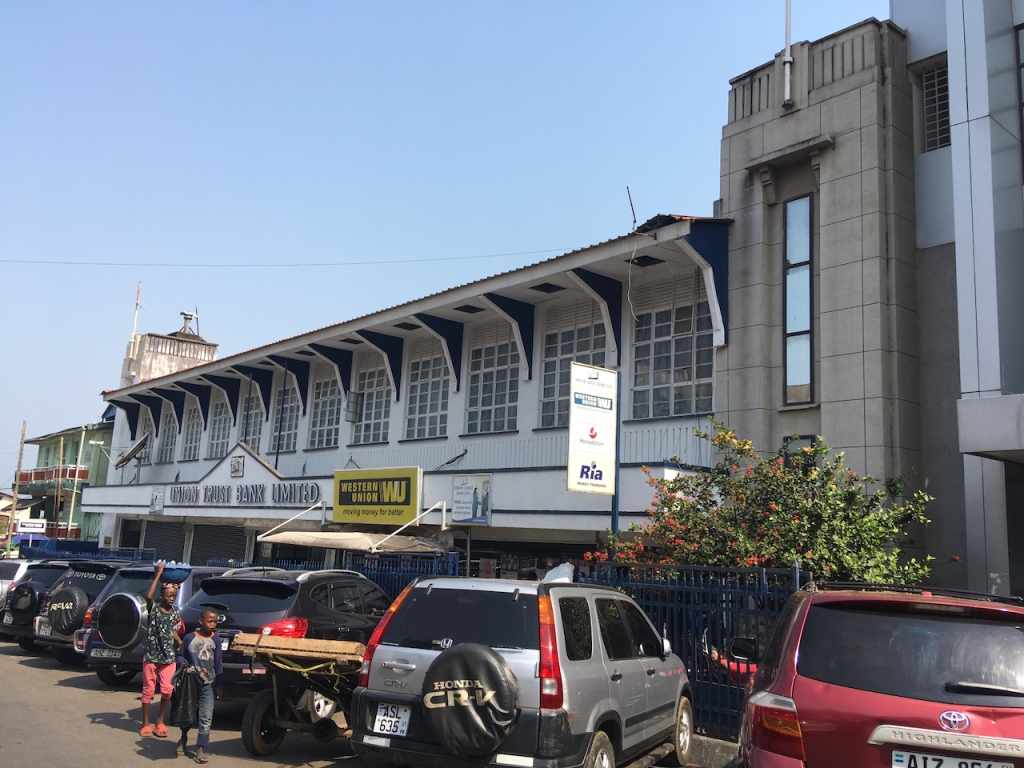
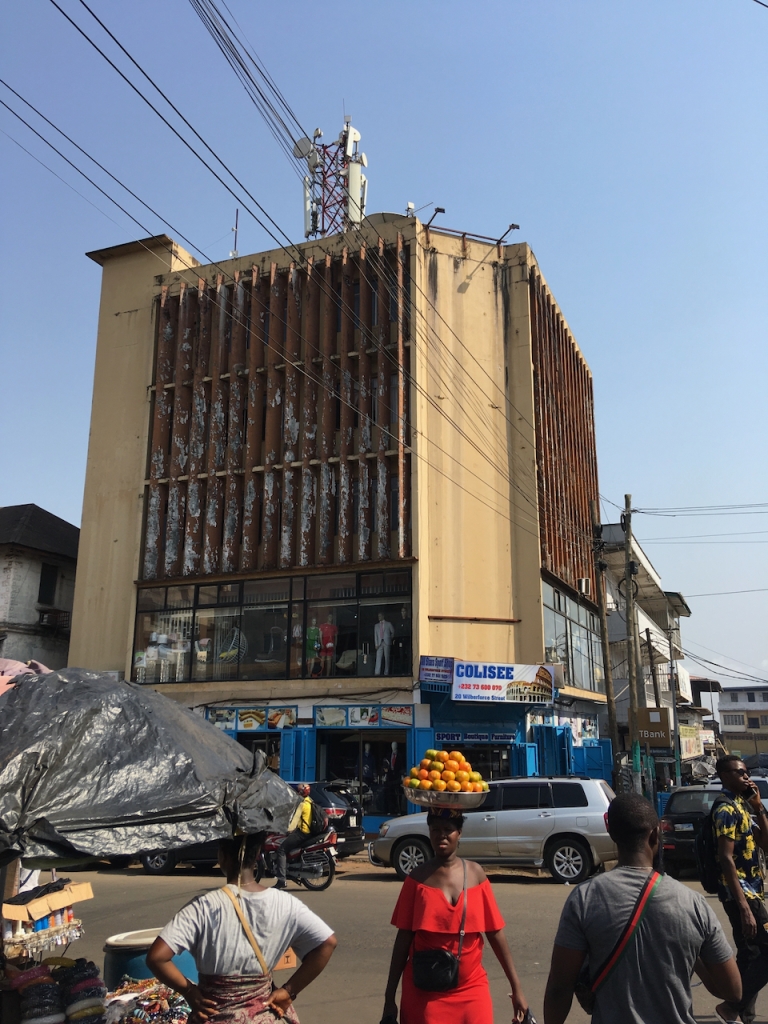
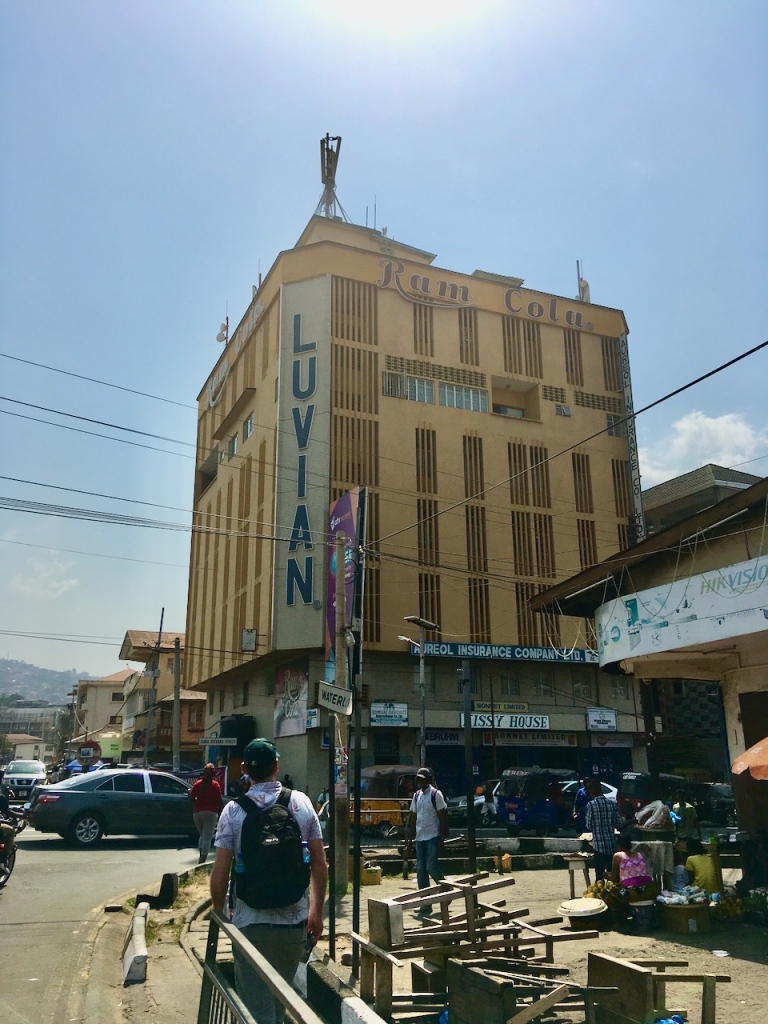
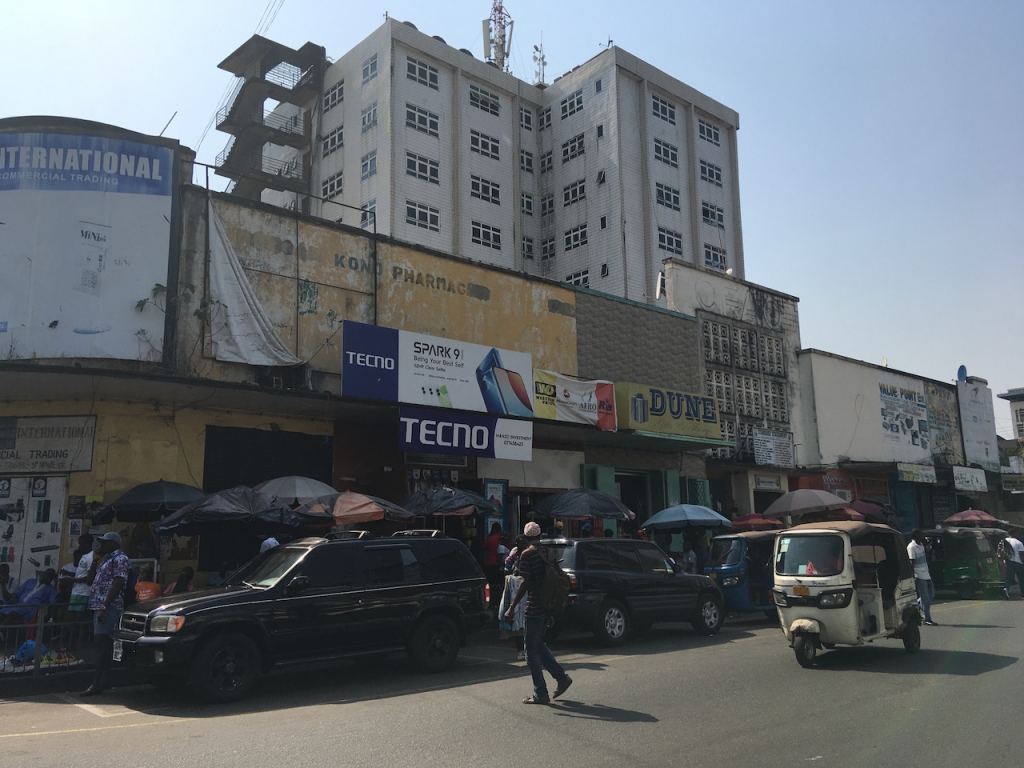
We visited the old Kingsway Stores – now a bank – but still with its deco-inspired flourishes at each end of the facade. The CFAO is still clearly recognisable, and several other stores display strong characteristics of GB Ollivant and Leventis properties we’ve seen elsewhere in Western Africa.
Former Kingsway Department StoreRetail: architect unknownLuvian Building, architect unknownFormer CFAO Building
Heading further eastwards beyond the older city grid is ‘PZ Roundabout’ named after trading company Patterson Zochonis. Here the formality of the central business area gives way to more lively street markets and less formal city planning.
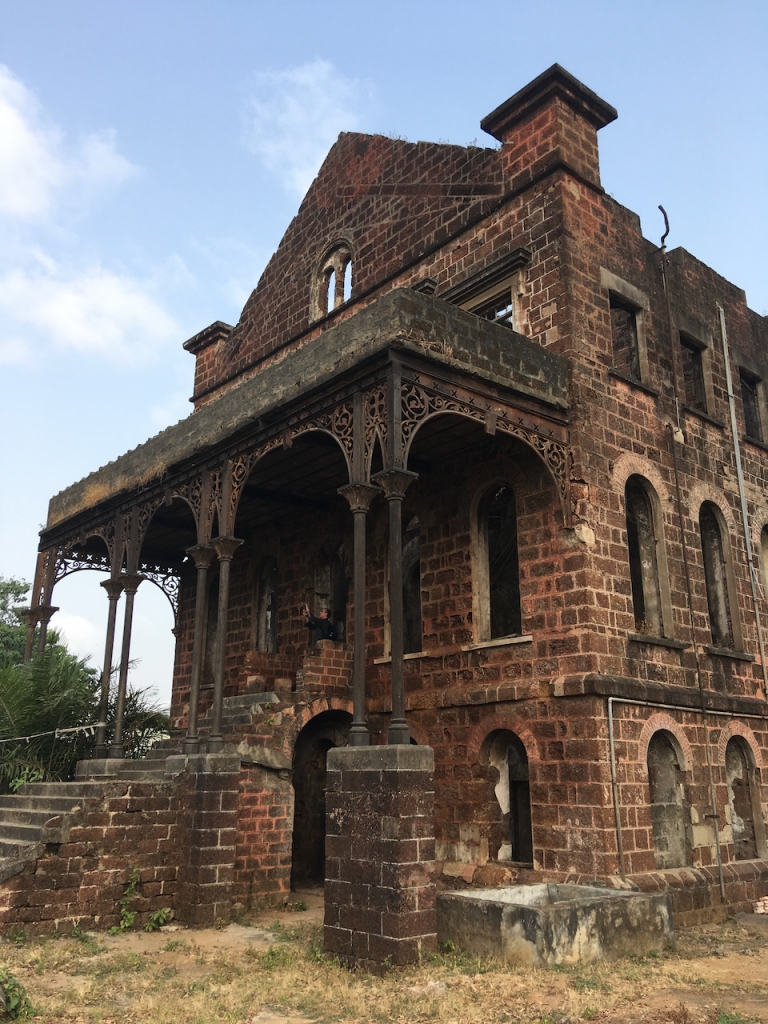
Further along Fourah Bay Road is the old Fourah Bay College building. The College was founded in 1827 in association with Durham University and was the first western style educational establishment in West Africa. It was mainly focused on missionary training. The delicate front verandah is formed with steel members bolted together and the ruinous state of the building has further exposed the steel structure inside. The beams were made by Glengarnock Iron and Steel Co in Ayrshire, Scotland and shipped out to Sierra Leone during the construction of the college building in the 1840s.
Old Fourah Bay College, founded in 1827, with construction starting in 1845, work supervised by Rev Edward Jones.
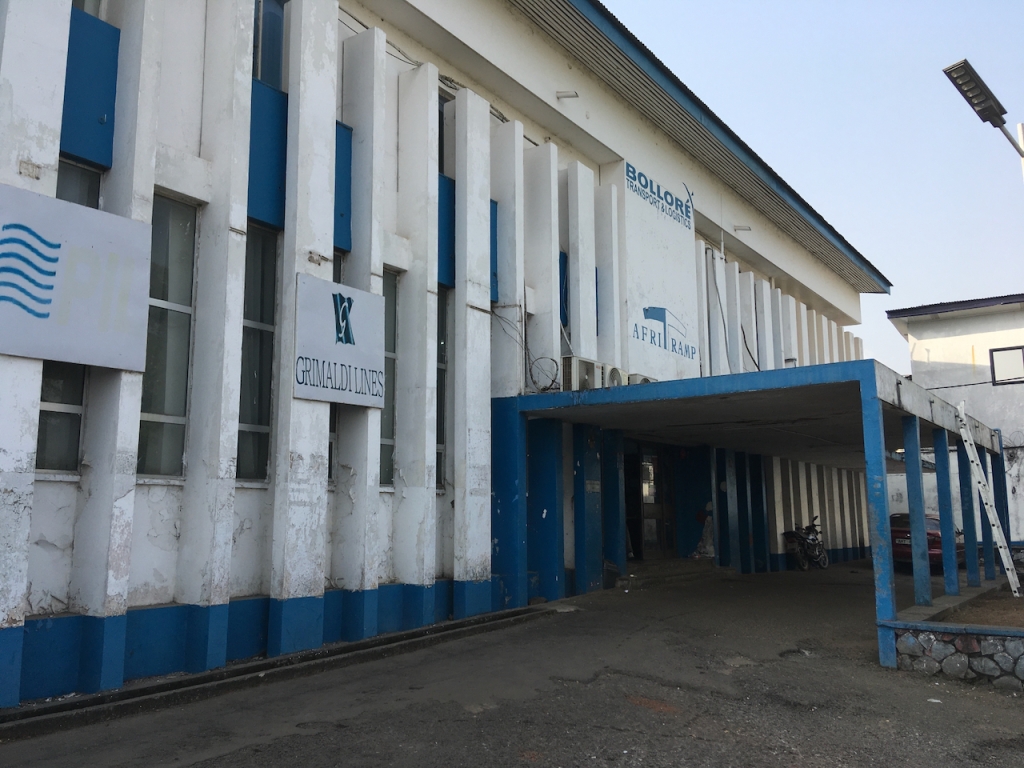
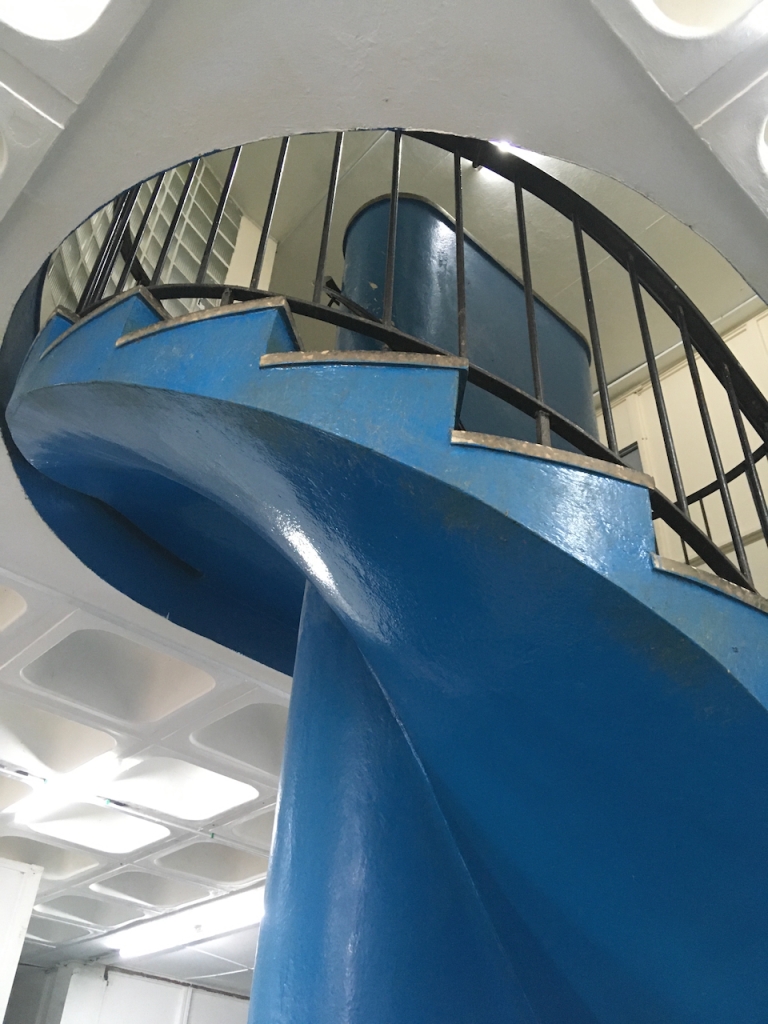
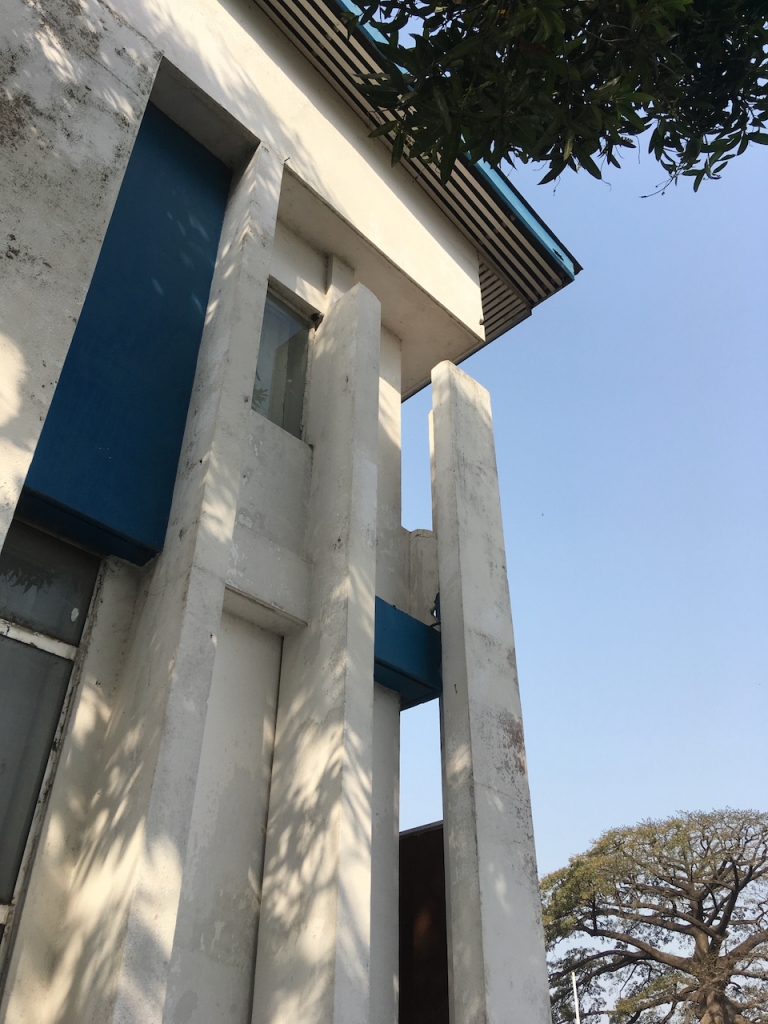
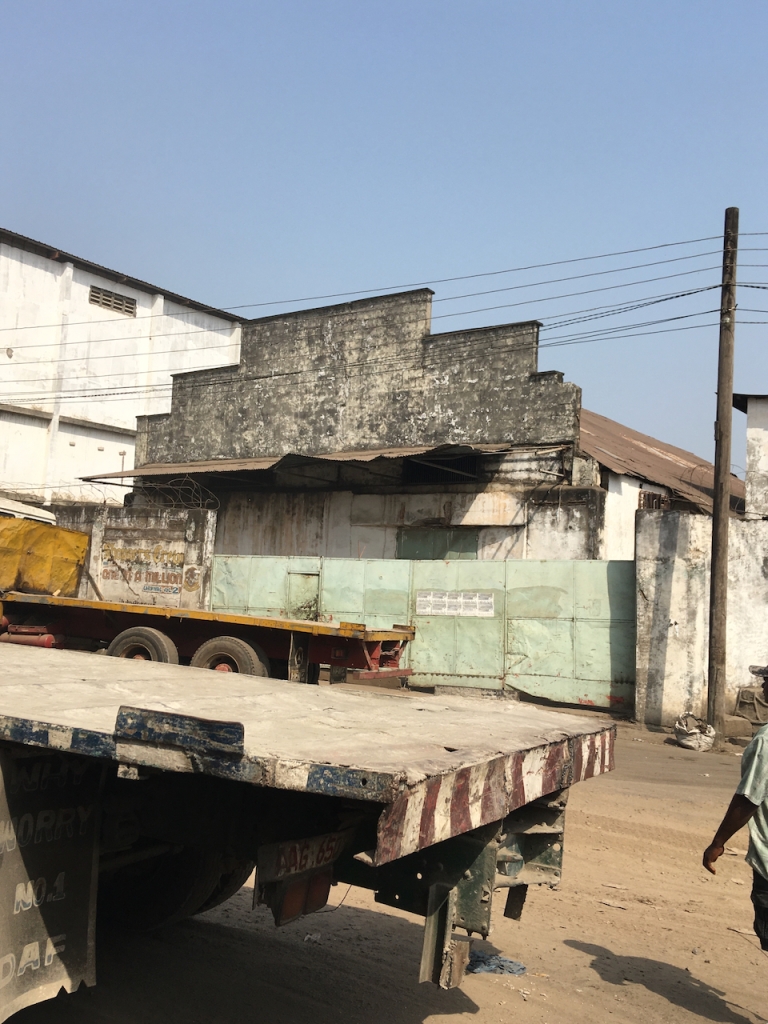
The college is located just a short distance from the sea, and what is now the busy port of Cline Town. Here the major shipping company Elder Dempster had their offices. They commissioned James Cubitt to design their premises in 1958. Cubitt also designed the Elder Dempster tower in Lagos, Nigeria, but rather than a dramatic tower overlooking the marina, here there is a more restrained horizontal solution with projecting concrete brise soleil and a porte-cochère. Inside the booking hall is a dramatic spiral staircase that wraps around what resembles a ship’s funnel. Warehouses and storage sheds dominate the area, including the former UAC stores opposite the National Railway Museum.
Former Elder Dempster Offices, James CubittInside Elder Dempster: waffle ceiling and spiral staircasedetail of the exteriorUAC warehouse Cline Town
There’s an impressive collection of architecture in this historic port city. In the UAC archive there are extensive photographic albums from 1915 through the 1960s documenting many of the streets and buildings we visited. Our task now is to identify more of these structures, and to research the history that resulted in their commissioning, design, and wider significance.
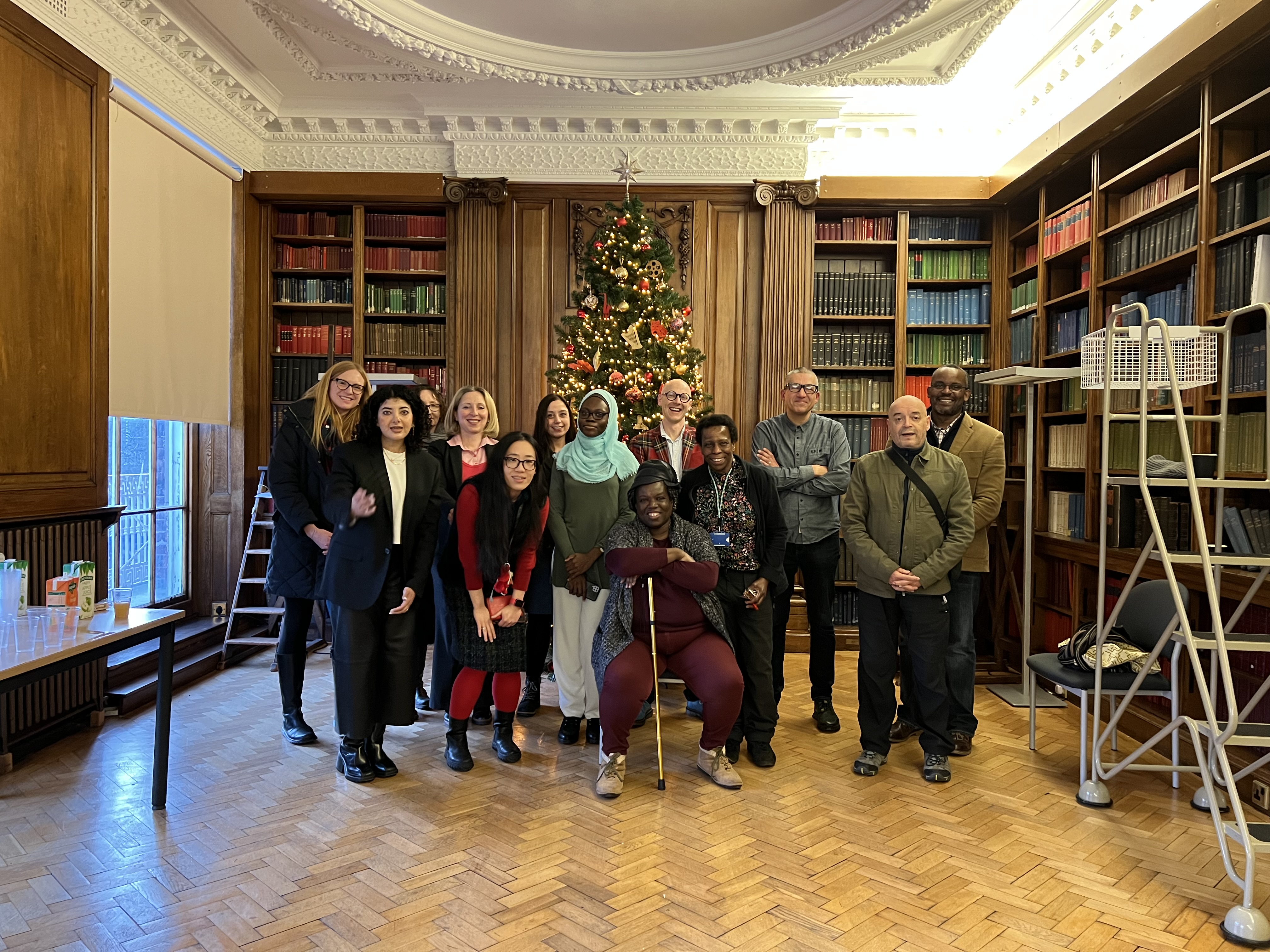
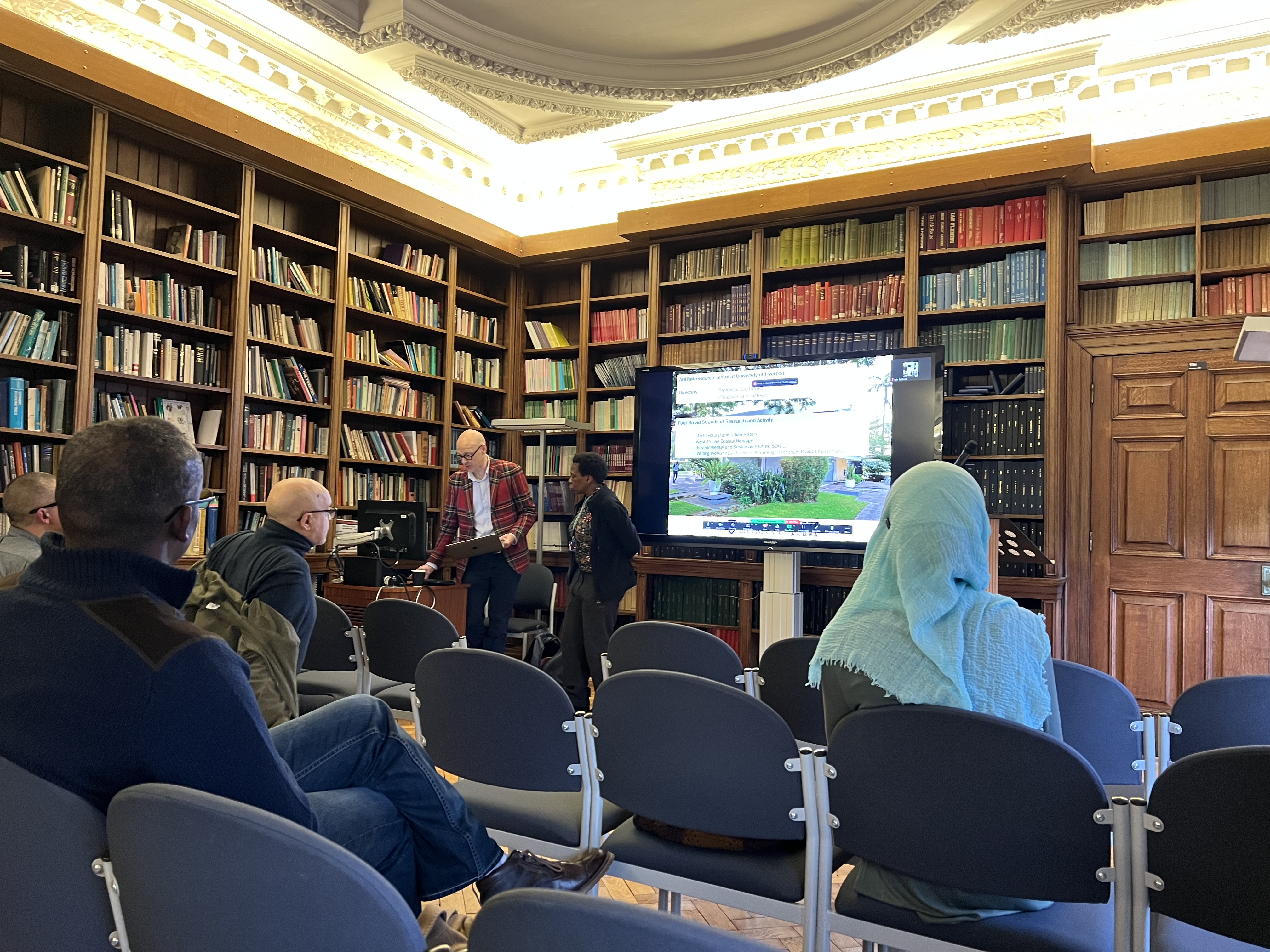
The Architectural History and Urbanism Research centre for Western Africa, AHUWA, was launched on Tuesday 13th December at the School of the Arts at the University of Liverpool. The launch involved a presentation of the research centre by the co-directors Professors Iain Jackson and Ola Uduku, about the key research themes, aims and ambitions of the AHUWA research centre followed by a short networking session over refreshments during the event. In attendance were invited members of the Liverpool university faculty and departments who had interests or links to West African Architecture and Urbanism history research, members of the local Liverpool community with African links, and a number of Architecture staff and post-graduate students. We were also pleased to welcome a representative from the Andrew Walls Centre from Liverpool Hope University and a host of academics who logged in online from the UK, West Africa, the USA and farther afield.
The key themes which AHUWA will focus on are:
Architectural and Urban History
West African Coastal Heritage
Sustainable and Healthy Cities [SDGs 11 and
Research outreach and collaboration via
Trans-national university collaborations
Writing workshops
Public outreach and engagement activities
Our aims and objectives are:
To be a repository and hub to consult for links to researchers and research collections pertaining to West Africa in North West England
To host and develop links with researchers in the North West of England and West Africa in order to promote future collaborative research links
Ultimately and importantly to strengthen research networks and institutions in West Africa through their collaboration with UK institutions from PG research and teaching opportunities to the collaboration and co-production of major research consultancy, and other potential outputs.
We are working in association with several collaborators including:
UCL and UCT (Modernist Heritage of Africa Project)
ACRC (University of Manchester) – the African Cities Research Consortium
DOCOMOMO International. (Shared Heritage Project)
ASAUK – Curating the proceedings and publication of the Online ASAUK Biennial conference 2022
UNILEVER – on the United Africa Company archive
We are in the process of undertaking the following:
Setting up MoU’s and working relations with colleagues at the IADS University of Lagos and IAAS University of Ghana, Legon.
Production of the first AHUWA newsletter in March/April 2023
Establishing links with the School of Architecture, Fourah Bay College, Sierra Leone
Undertaking scoping research in Freetown Sierra Leone
Working towards developing collaborative research grants within the scope of AHUWA’s research thematic areas.
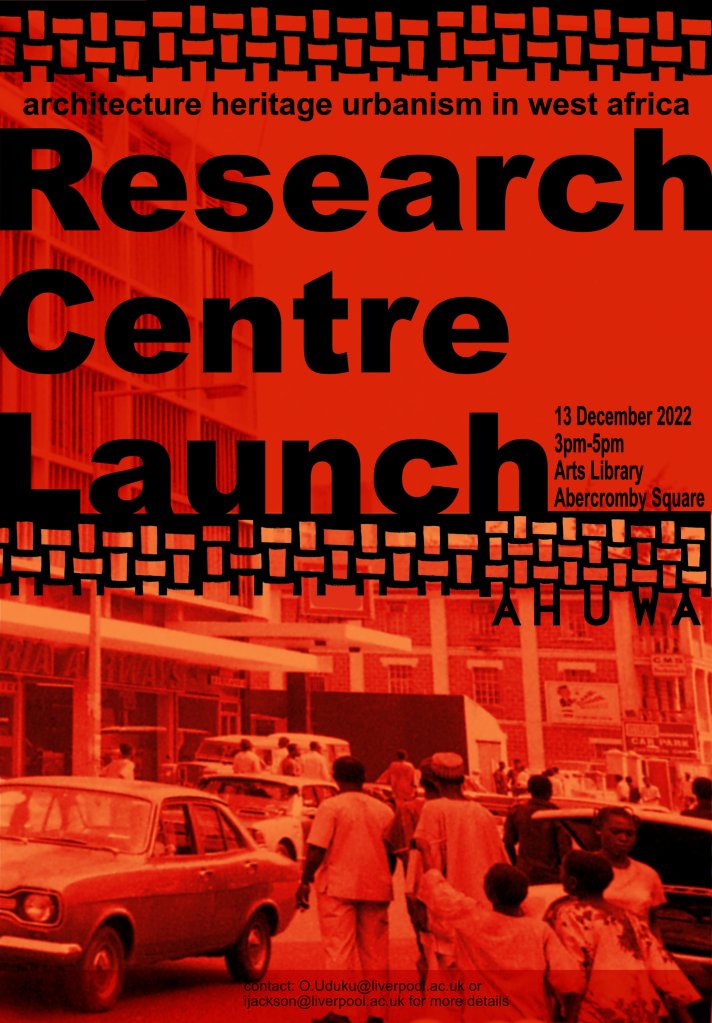
We have recently established a new research centre, based at the Liverpool School of Architecture called Architecture, Heritage, and Urbanism, in West Africa (AHUWA): https://ahuwa.org/ We’re hosting a launch event and would be honoured if you could join us on Tuesday 13th December, 3-5pm at the Arts Library, 19-23 Abercromby Square, Liverpool University for tea and cake.
Friends and colleagues from all of the North-West’s major collections, repositories, and archives with material on West Africa have been invited, and we’re excited to share ideas and build up new networks across the region and beyond.
If you could register here we’d appreciate it, and look forward to seeing you on the 13th. We’ll have an informal presentation at 3:30pm – please do come along and stay as long as you’re able. We’ll be on Zoom too from 3:30-4:00pm if you’d like to join us virtually for the presentation.
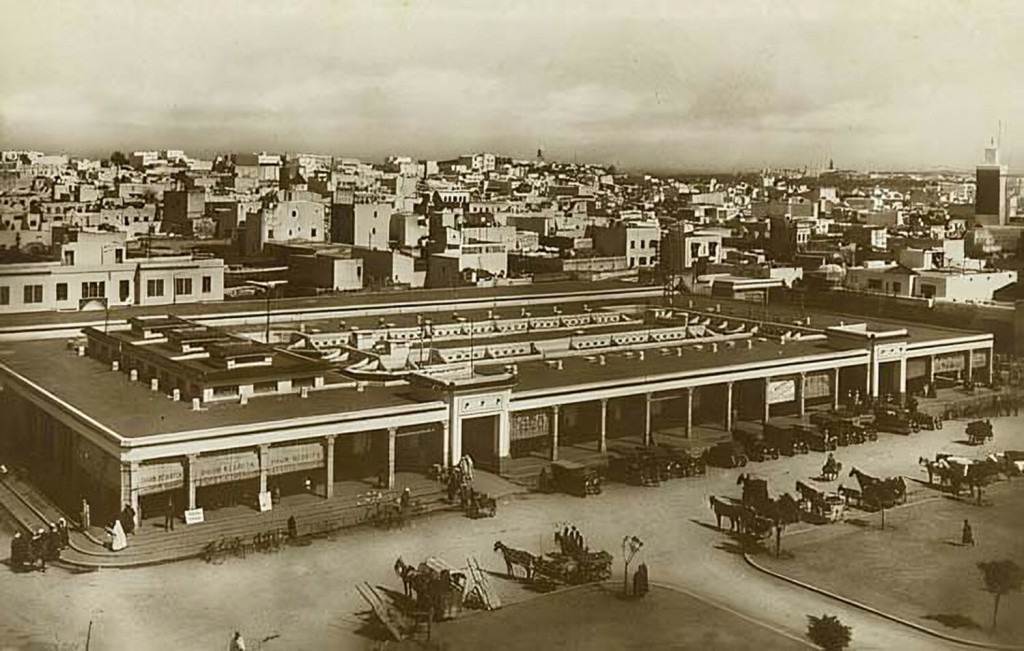
In 1925, the Central Market of Rabat was built at the outskirt of the medina (the old city) by French Colonial powers (1912-1956). Despite being the only element displayed in colonial maps of the medina, and one of Rabat’s current landmarks, the history of the market is still unknown. Drawing on the National Moroccan archives and on colonial postcards, the article explores the historical and urban significance of the Central Market for Rabat colonial and postcolonial history. It argues that the market constitutes a unique architectural and urban case for Rabat as it both challenged and reinforced the colonial agenda. Planning principles like the policy of association, the ‘image of the city’ and the ‘dual city’ were not only defied by the market, but also by the demolition of the part of the wall in front of it. This revealed the inconsistencies and lack of homogeneity of the colonial approach. Moreover, without the wall, the medina became penetrable by the ‘Ville Nouvelle‘ (New Town). Engaging with the Central Market is significant for the history of colonial planning, but also for today’s Rabat identity construction, inscribed in 2012 in the UNESCO World Heritage Sites and elected cultural capital in 2022.
An annotated diary of my visit to the Democratic Republic of Congo: a brief stop in Kinshasa before flying to Kisangani and then, following the Congo River, a preliminary exploration of one the regions where the Huileries du Congo Belge – HCB had established its oil palm plantations.
This trip would have not been possible without the help of >>Istituto per la Bioeconomia – CNR and Forets (Formation et Recherche dans le Tshopo) – >>Cifor (Centre for International Forestry Research).
May 2022
Kinshasa — Me and Ottaviano landed in Kinshasa on a Monday morning. I had never crossed the Equator before.
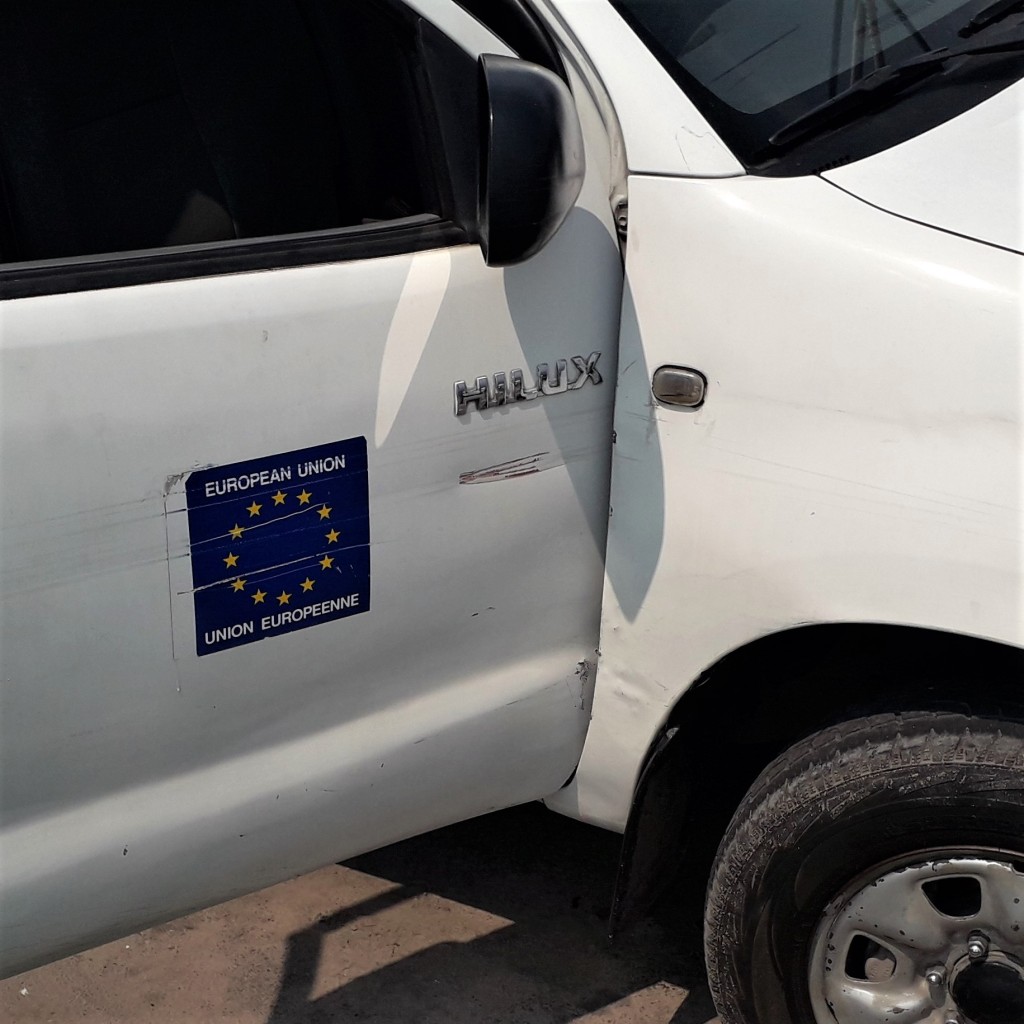
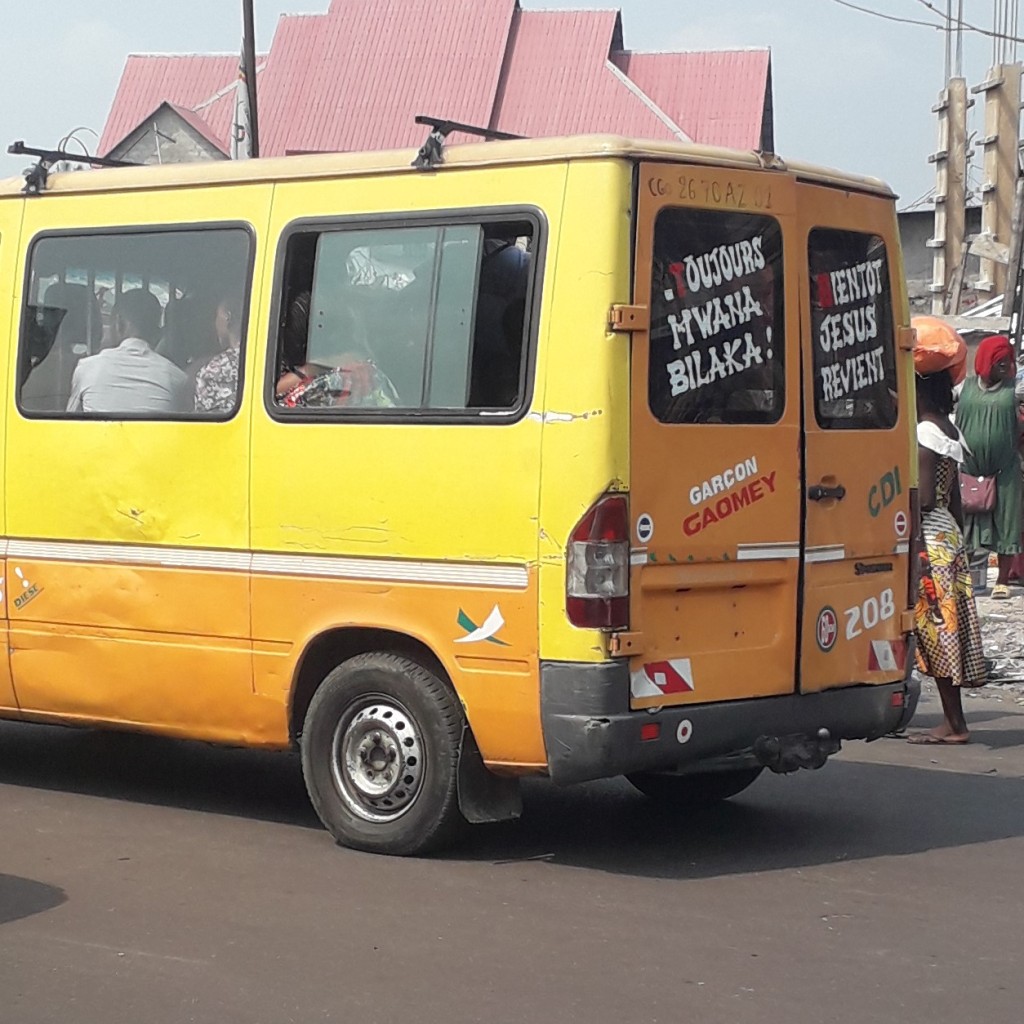
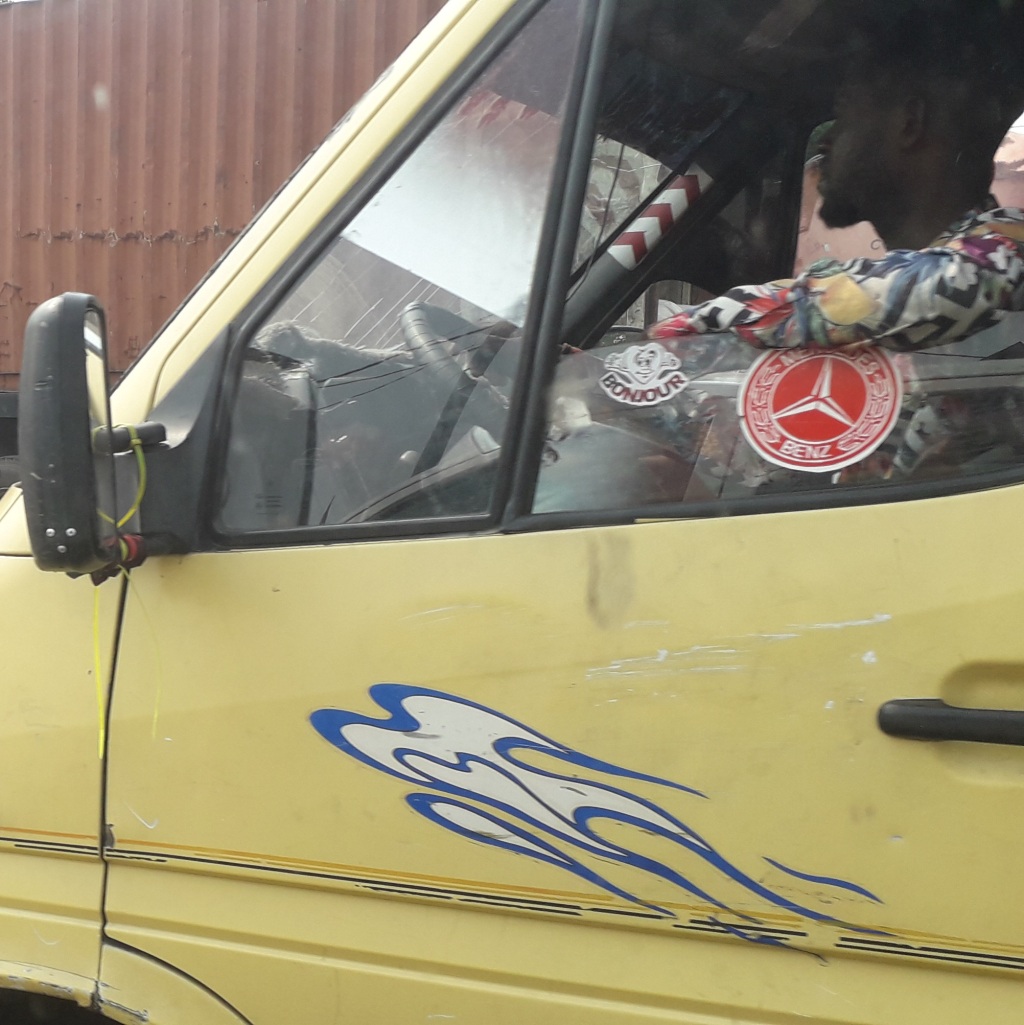
Papa Victor is waiting for us outside on a white Toyota jeep with a EU flag on the door and dents and scratches on all sides. A description that would fit most of the vehicles I travelled in during this trip and, as I came to discover, a stereotype for Westerners in this country. Victor is a tall, pleasant man who talk and laugh quietly even when we plunge into the suffocating traffic of Kinshasa. The 25 kilometers between the airport and my hotel in Gombe are an endless sequence of taxis, yellow Wokswagen vans running with the doors open to bring some air to the passengers squeezed inside, a multitude of weva moto-taxis, and trucks covered in sticky black dust.
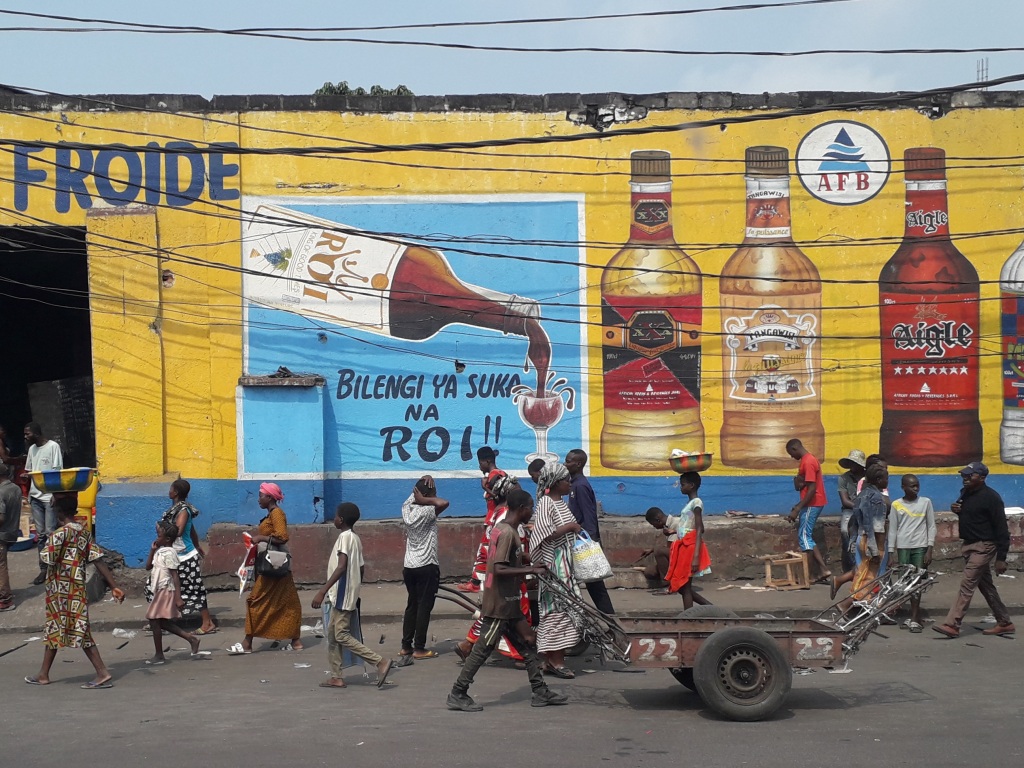
The two days in Kinshasa are chaotic. We meet with some people and don’t see much. I watch street scenes, buildings, and billboards passing by from the window of Victor’s car.
During the last night in the city, I meet my old friends and former colleagues Raphael, Paul, and Pietro – who became a real Kinois in the meanwhile. From the hall of my overpriced hotel Raphael, tells me with his usually sharp irony: “Il faut que tu sors de cette Leopoldville”. And so we drive away, leaving Gombe behind us. Paul, who has a thing for infrastructures, gives us a lecture from behind the wheel of his car while we cross the city. Boulevard du 30 Juin, which originally connected the two Stanley’s times settlements of Kintambo Ngaliema and Nshasha, and later became the first of the large avenues of the colonial capital [>>Kinshasa Then and Now]. Avenue des Huileries, pointing to the area formerly occupied by the Huileries du Congo Belge, now hosting its successor Marsavco.. And then, Matonge, the neighborhooud that everyone here calls the musical capital of the DRC. After having lived for years few hundred meters from Matonge (Brussels) – a product of Congolese diaspora in Belgium – I finally get to see its original counterpart.
It’s early in the morning when we leave again for the airport but the city is well awake.
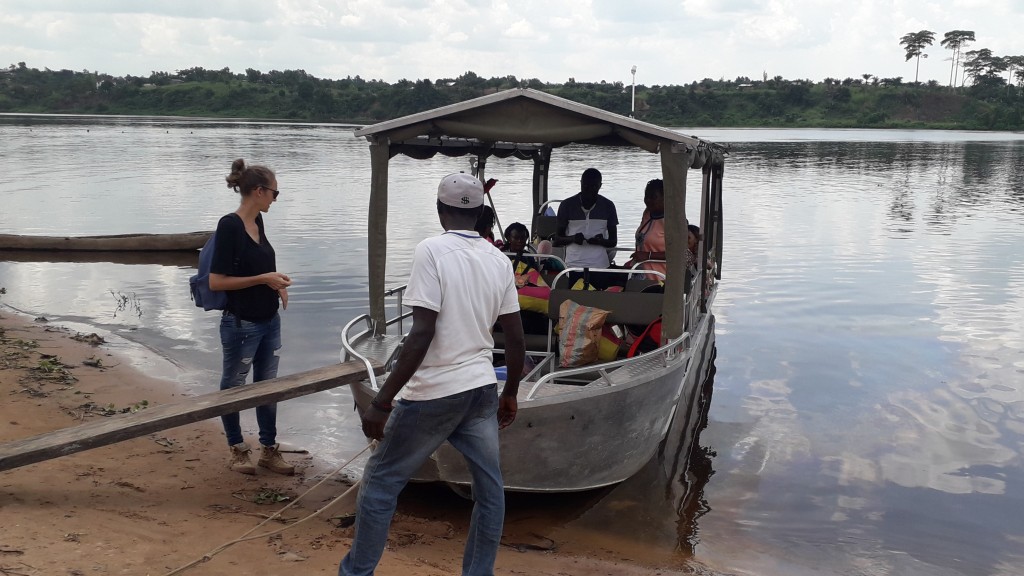
Congo River — After landing in Kisangani we are brought directly to the dock on the Tshopo river. The beach, as docks are locally called borrowing the word from English, is just a sandy stretch where dugout canoes and boats come ashore. We get on board of the canot rapide that Cifor made available for us and, following the Tshopo and Lindi rivers, we finally reach the Congo. Few kilometres upriver, the Wagenia/Boyoma falls, a one-hundred kilometres long sequence of cataracts, make the river impossible to navigate. After the falls, the Congo begins its ‘quiet’ descent of the 1,700 navigable kilometers dividing the place where we are navigating now from Kinshasa’s Pool Malebo before rushing again, through impressive rapids, up to Matadi and to the Ocean.
From this moment on, this broad, magnificient river, with its banks covered in thick vegetation, becomes the silent protagonist of the travel.
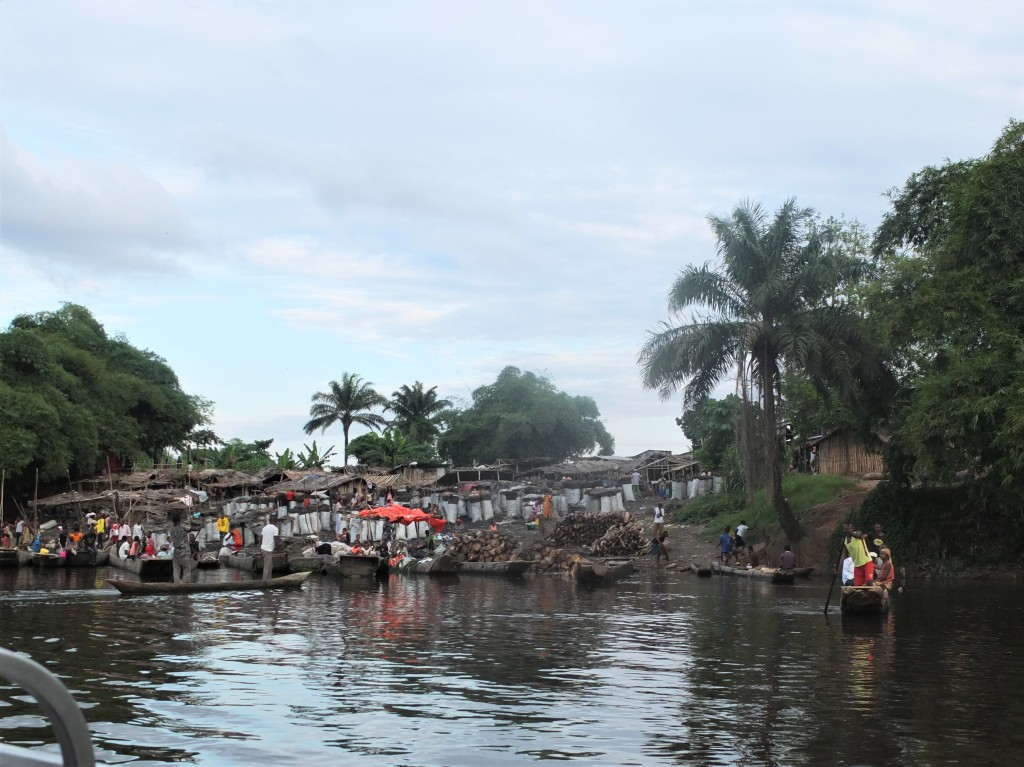
Moving along the river coast, the canot go past busy docks where pirogues – simple boats built by carving a single tree trunk and manouvred by one or two rowers – carry large, white sacks of coal to sell. Apart from our boat and the infrequent barges, the river is populated by these small crafts and by the noisy baleinières (‘whaler’), a wooden boat used for goods transport. Besides being painfully slow, the two half-sunken relics I could spot along the way, testify the scarce reliabilty of these bizarrely named boats.
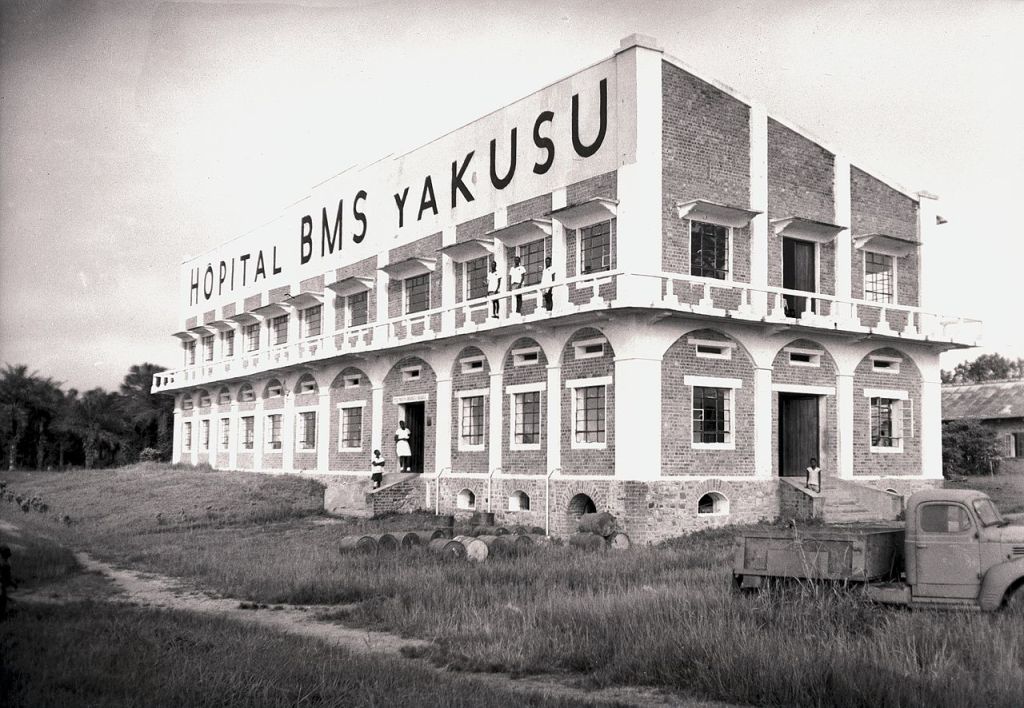
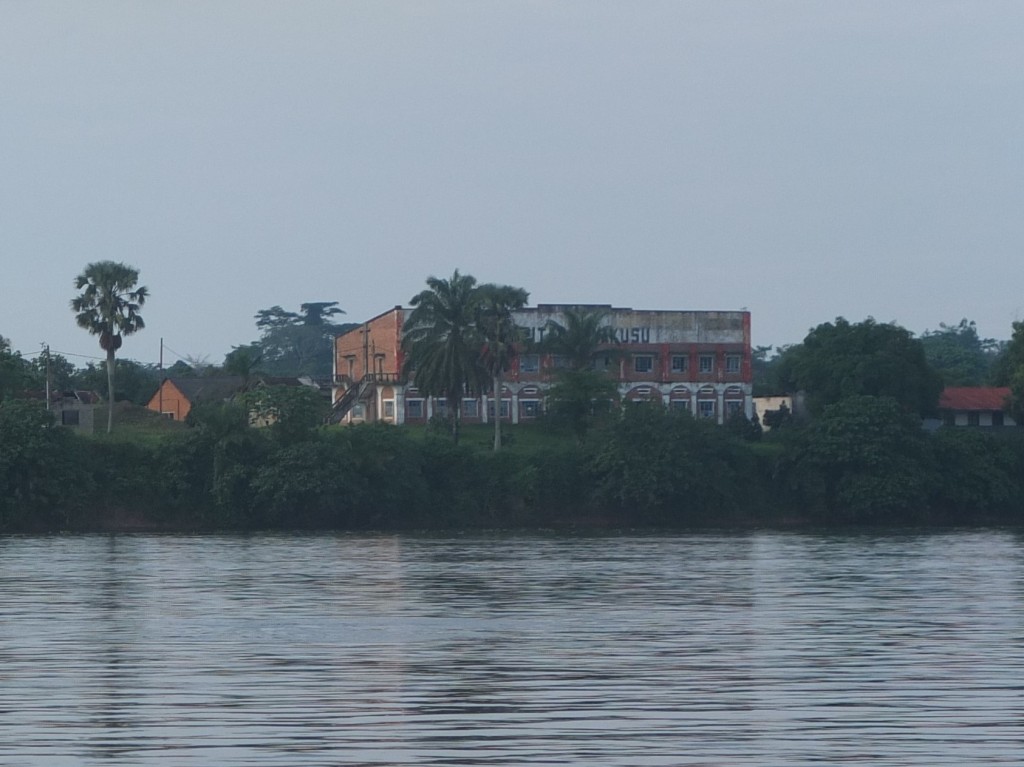
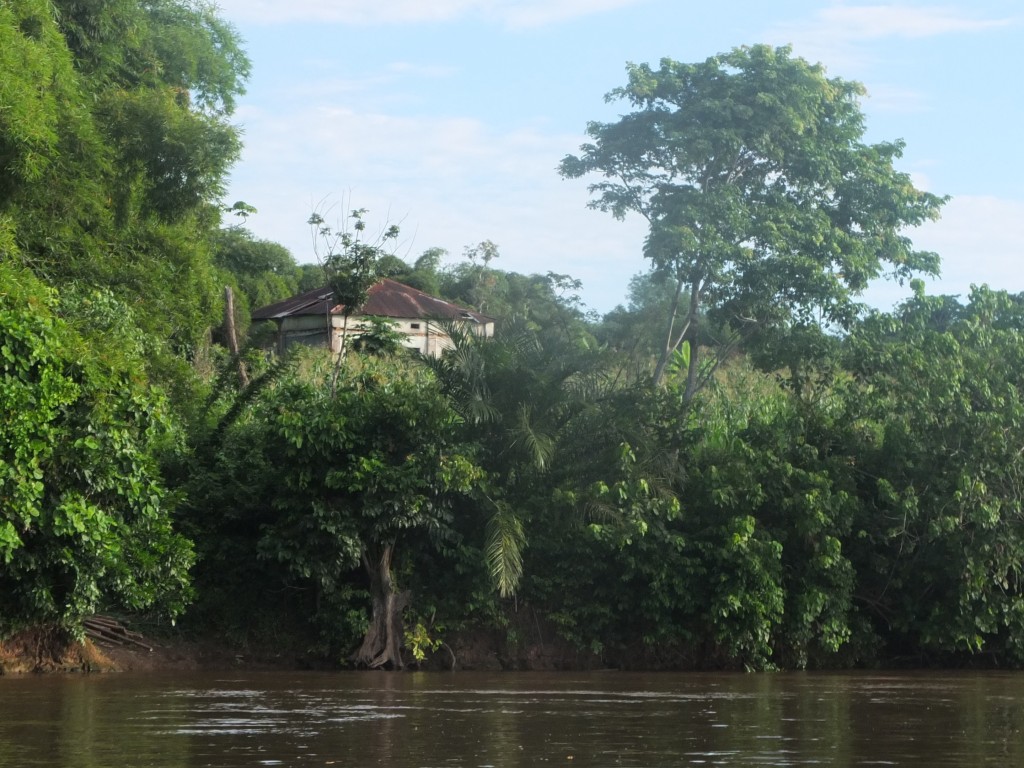
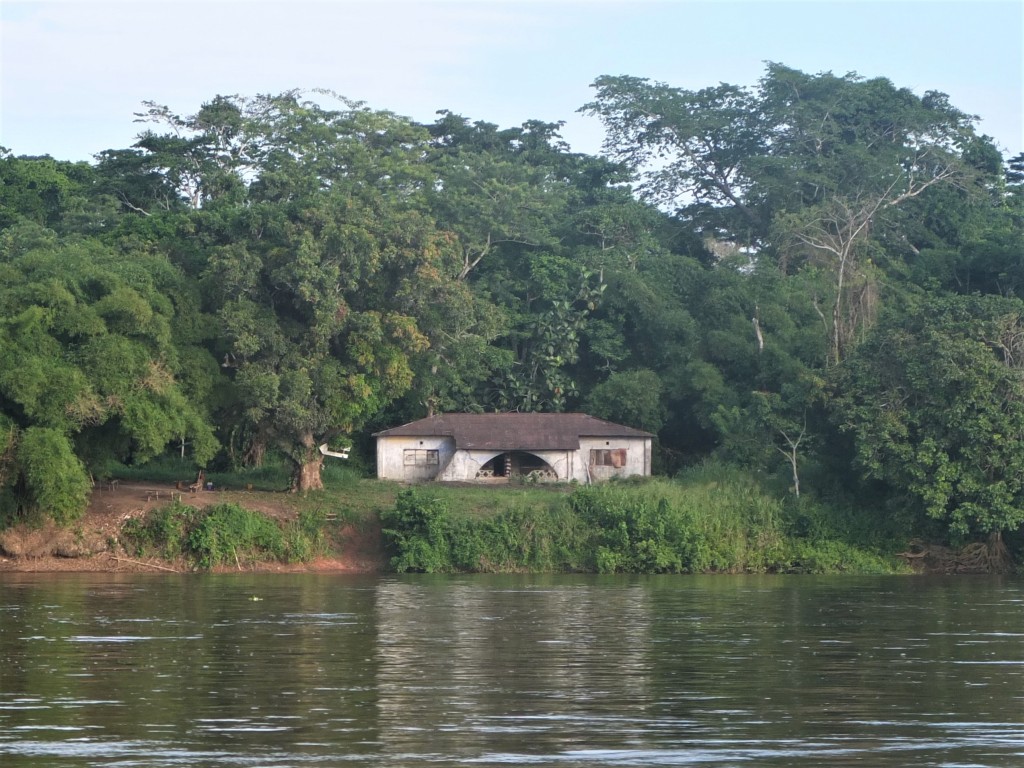
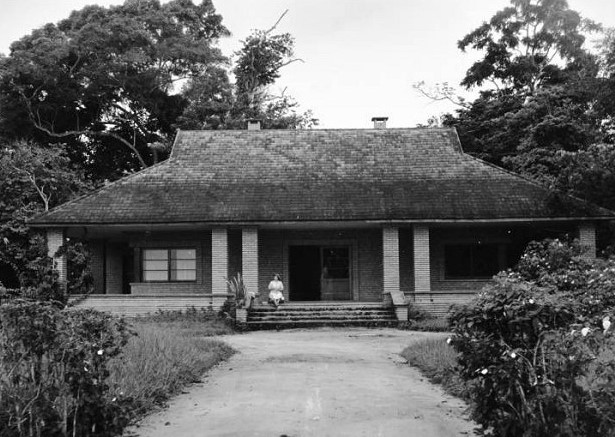
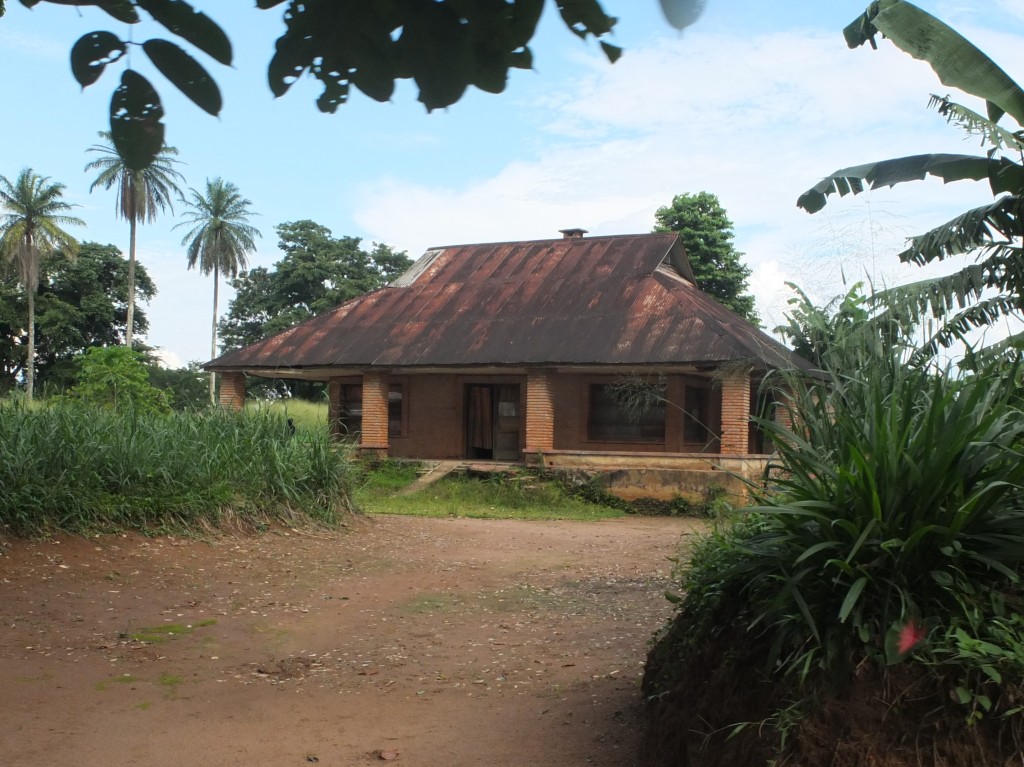
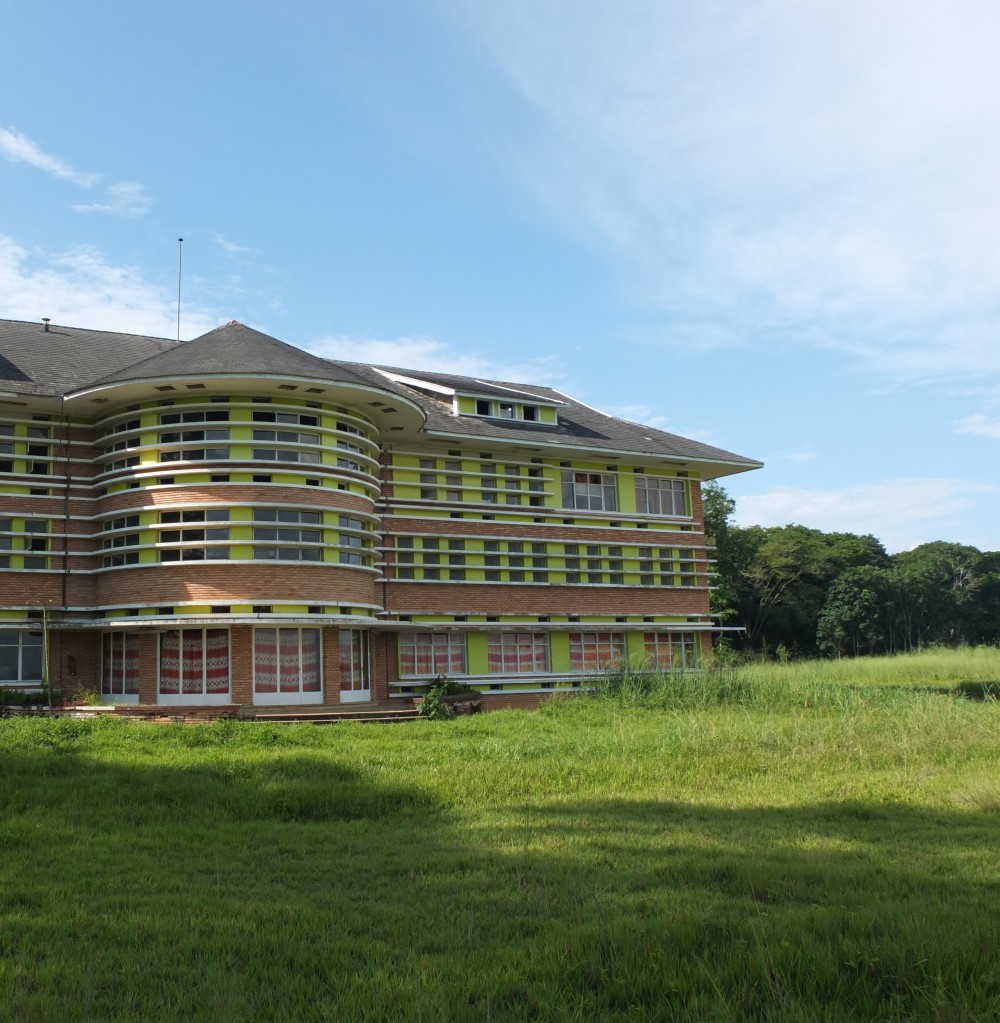
From the canot, on the right bank, flanked by colonial villas, I spot the prominent facade of the Yakusu hospital, a now run-down gem of the Baptist Missionary Society in the Belgian Congo and an important institution for the educational and medical history of the country [Nancy Rose Hunt,>>Colonial lexicon: of birth ritual, medicalization, and mobility in the Congo].
Further down the river, the Belgika, a private island owned by the heirs of a high-rank military chief under Mobutu dictatorship. Our boat speeds close to the coast; the waves agitate the fishermen’s pirogues moving under the branches of leaning trees. The shape of old buildings with porches facing the river vanishes rapidly behind the vegetation. >>During the colonial time, the island was a coffee and rubber plantation owned by the Comptoir Colonial Belgika. The company realised barracks for the workers and villas for the European technicians and now, half a century after it abrupty left the island, those buildings are occupied by the few hundred people still living on the island or are left in disrepair.
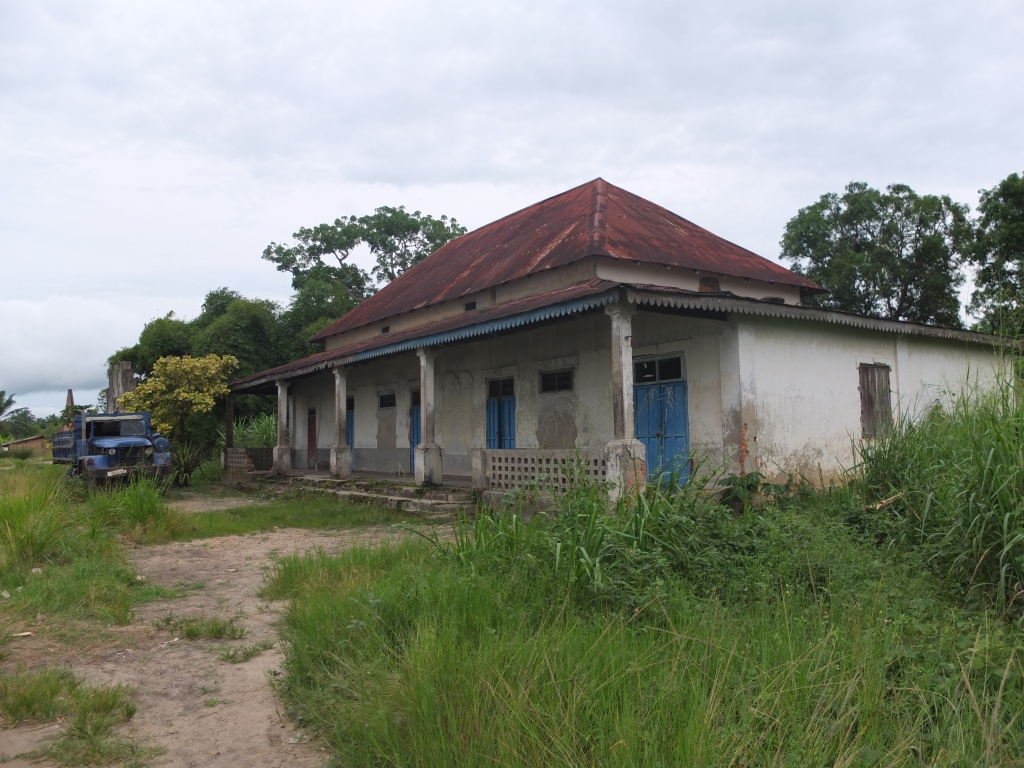
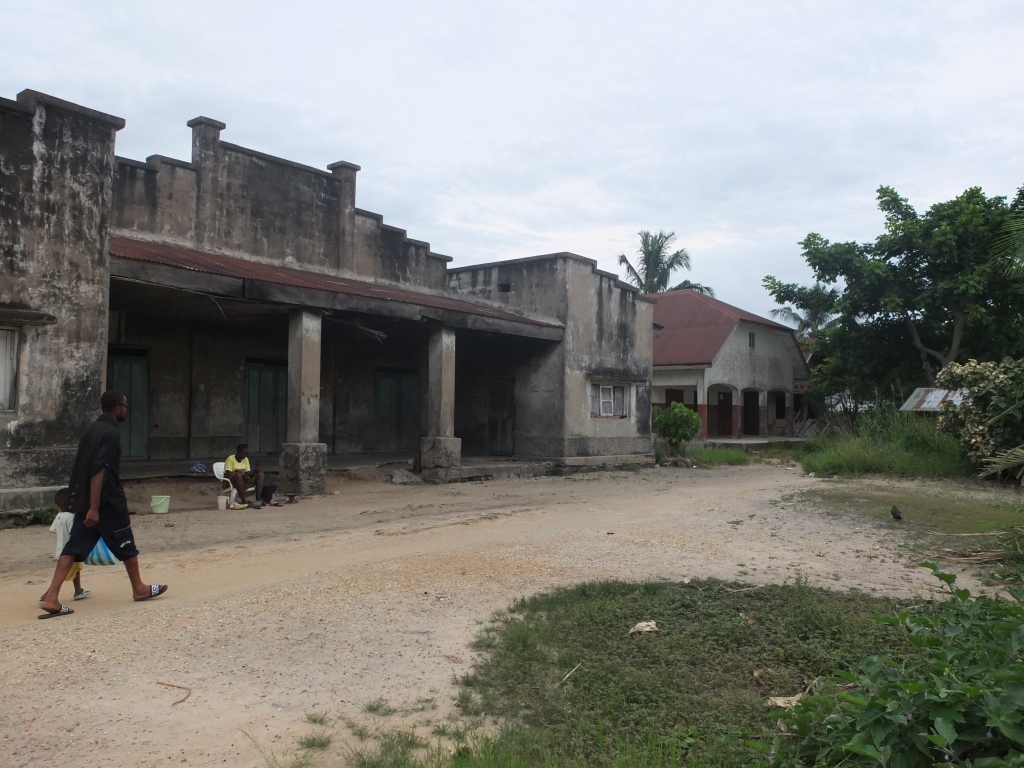
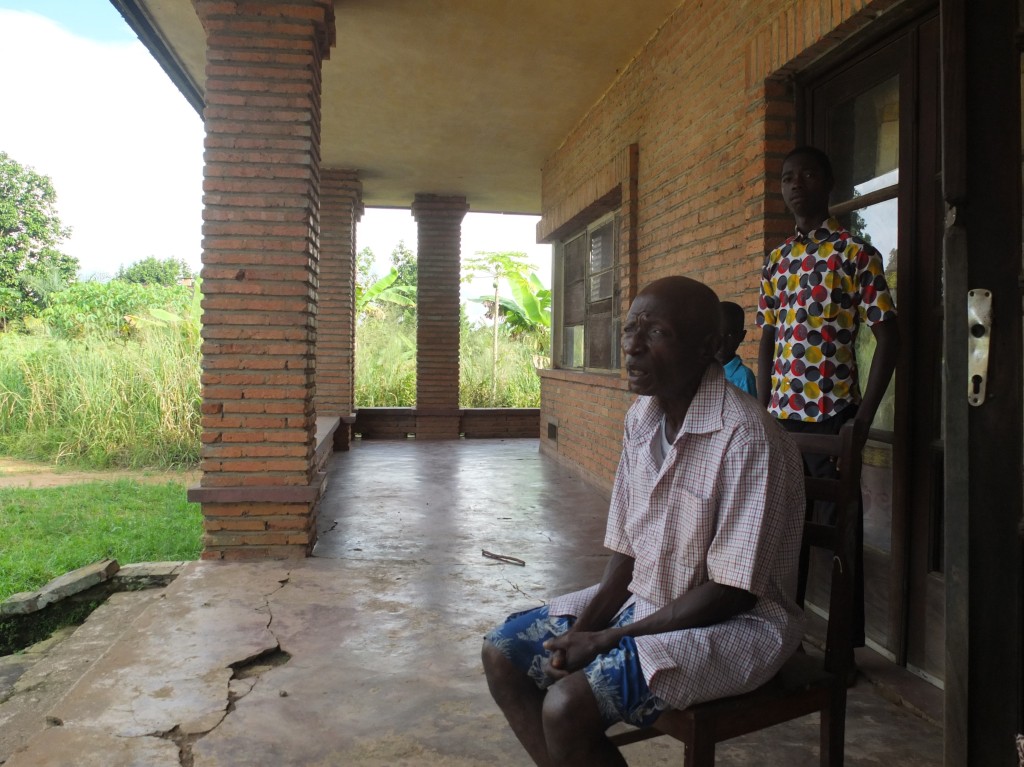
Yanonge — 50 kilometers downriver to Kisangani, we disembark in Yanonge, a small town built around a river dock and its market; a commercial gate to the river for the backland Opala territory and the Turumbu people. Up from the dock, over the steep river banks, I can read dates and names of European firms inscribed on the front of wharehouses now surrounded by the wooden stands of the weekly market. Along the riverfront, the traders’ villas and shops are almost untouched. Guélor, who shows me the place, lives in one of them with his family of five. The rest of the town is made of single-floor brick houses – the construction material coming from the local furnaces – and by simple clay, wood and straw houses. Outside the busy market area and the two main roads, people walk calmly in the shade of the many acacia and palm trees.
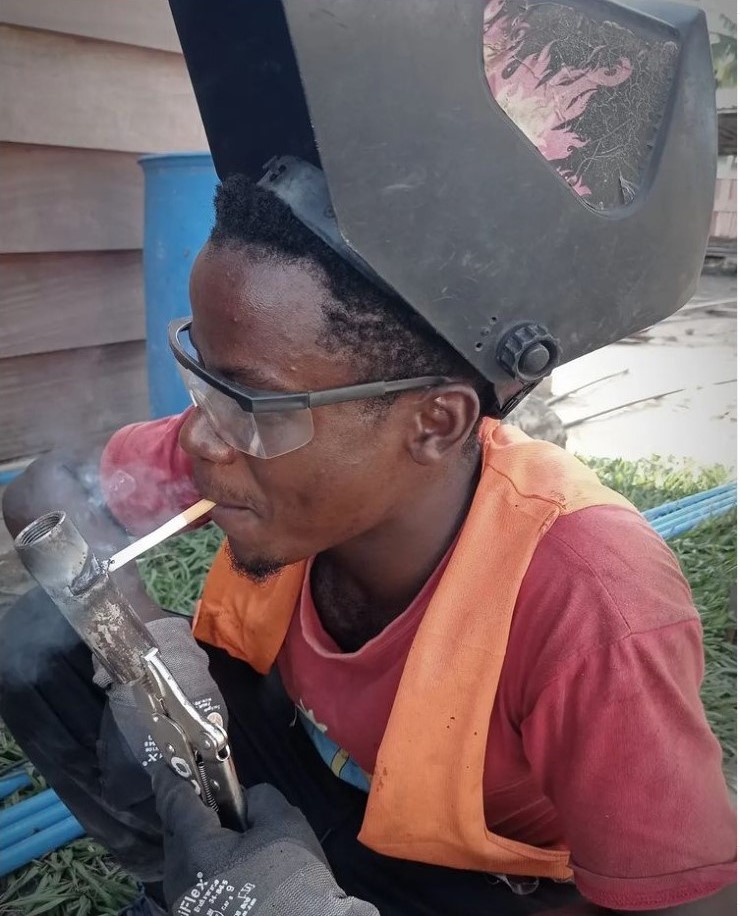
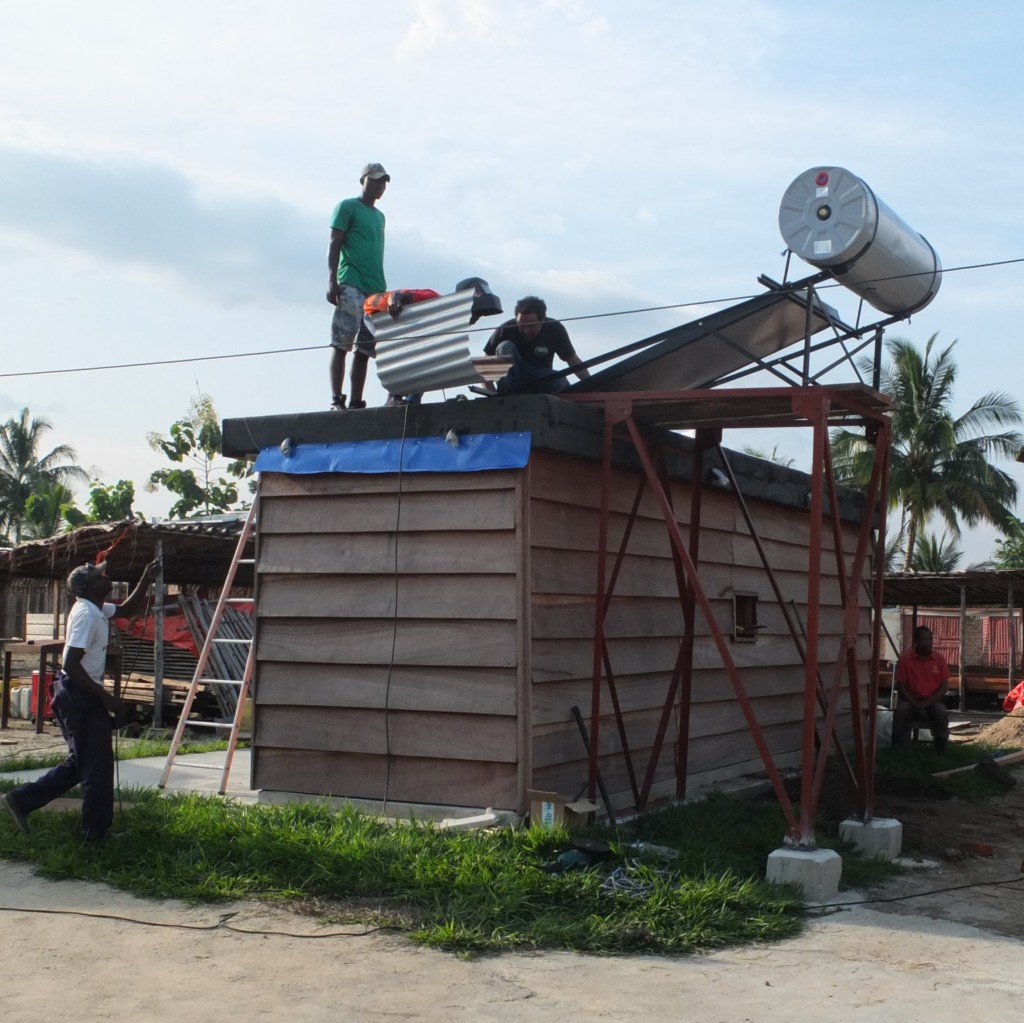
Since few years, Cifor established one of its bases in the town and carries our reforestation, agricultural and local development projects. Silvia, among the many other things, coordinates the construction of a small sawmill. A solar drying kiln is close to completion and an oddly sorted team of Congolese and Italians welds metal, cuts wood boards, make electrical and hydraulic connections, rushing to complete it before our departure. (My contribution to the works is barely symbolic). The aim is to prepare the way for a locally managed, and economically sustainable activity which, allowing to meet the quality standards required for exporting wood, would eventually offer a credible alternative to illegal logging [>>Forets]
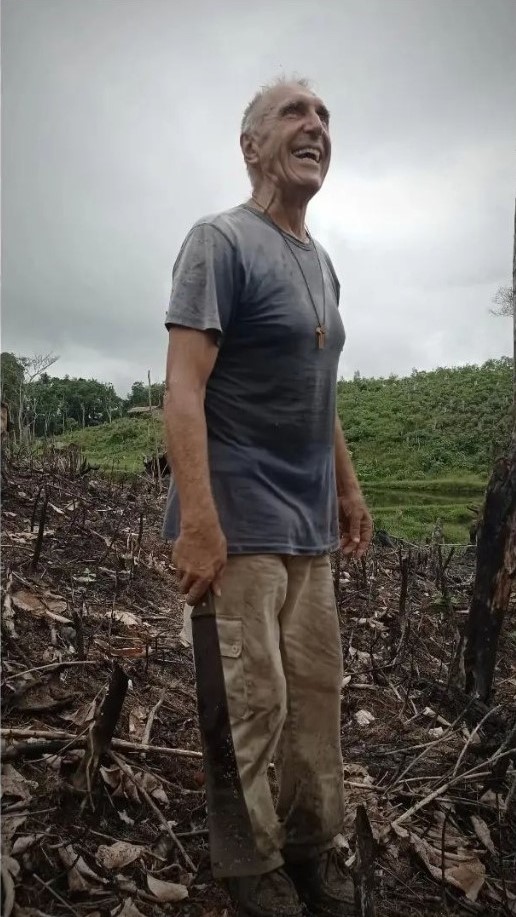
Fabrice lighting a cigarette with a welded piece / Vittorio at work: photos O.A.
During our days in Yanonge we stay at the local Catholic mission. Outside cities, missions often offers one of the few reasonably comfortable accommodations and in Yanonge, the Comboni community also gives the occasion for some peculiar encounters. Our early equatorial evenings are filled by the accounts of Father Vittorio, a truly remarkable character who spent 50 years in the Congolese rainforest, has unlimited energies, and a passion for >>improbable projects. When sitting in front of the usual plate of rice, pondu and tilapia, he starts talking and so I put my recorder on the table. I collect hours and hours of his improvised local history monologues in which he mixes personal memories with the accounts of the people among whom he have lived. “There weren’t many books in the places I have lived – he keeps saying, not without theatricality – but people love to talk to good listeners.”
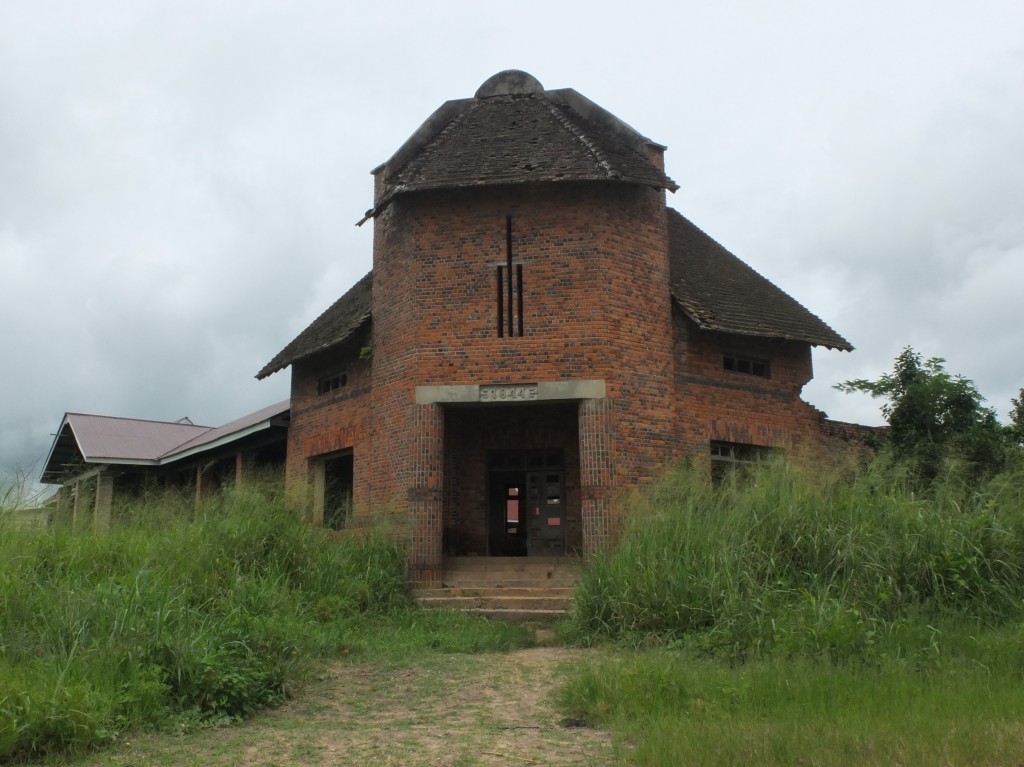
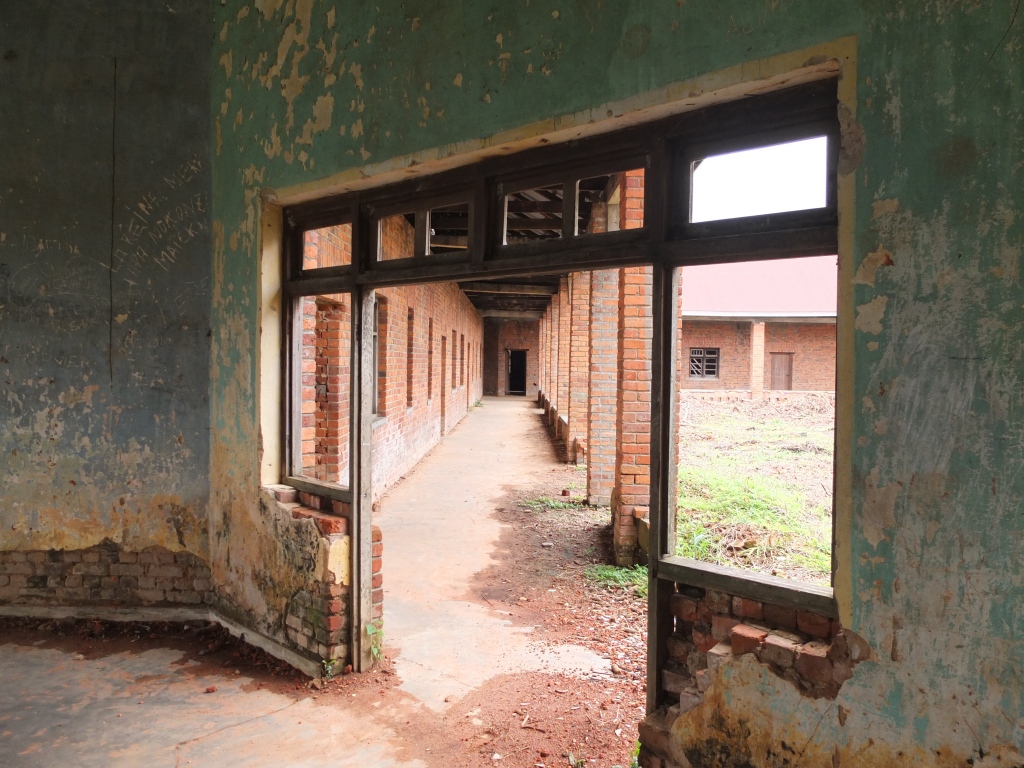
Here, the buildings have stories to tell too. The religious mission was established in the early days of the Belgian Congo and abandoned for decades after the brutal incursion in the convent by the Simba rebels in 1964. The concrete lintel mounted on rounded jambs – a motive that many times I saw in Brussels – at the entrance of what was the mission’s carpentry school is marked with the date ‘1944’. Behind the art-deco facade, a large room covered with an overly complex wooden trusses system. The three wings with porches on both sides form a courtyard and are in ruin. Part of the high-pitched roofs – a large ventilated chamber was originally left on top of classrooms to protect them from the heat – had been replaced; the rest had crumbled. Kids are everywhere, playing among the teetering walls. Our not so credible recommendations to stay away from the crumbling structures are (quite understandably) ignored. The mostly disappeared wood worshop is now a favourite spot for discreet nocturnal encounters and Paolo says that the large wood cutting machine built in Belgium in the 1940s was still bolted to the floor until not so long ago.
Private archive Vittorio Farronato
Next to this complex, the church and the old convent – now used as a school. The convent has a familiar shape that I had never had the chance to look closely before. A single-floor building – despite what the view from the outside may suggest – with a central corridor cutting longitudinally, facade-to-facade, through the building and rooms on both sides. Seen in cross-section, the corridor with openings placed at the ceiling level was meant to extract the hot air through natural ventilation. Next to this group of buildings and most probably coeval, a structure carrying a sign MATERNITE’ and two groups of identical brick houses which once hosted the school’s teachers.
The few days I planned on staying in this small town became more than a week as I’m stuck in bed, ill. “The full tropical experience” Iain writes me from Liverpool. I missed the boat for my next destination and I look for an alternative.
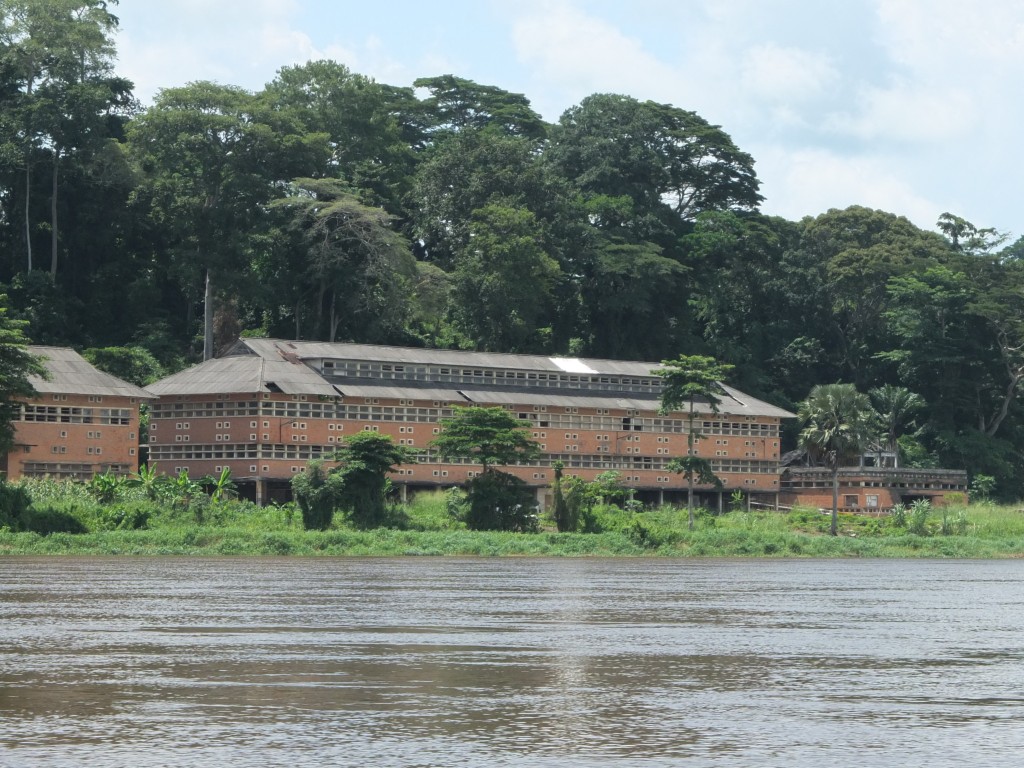
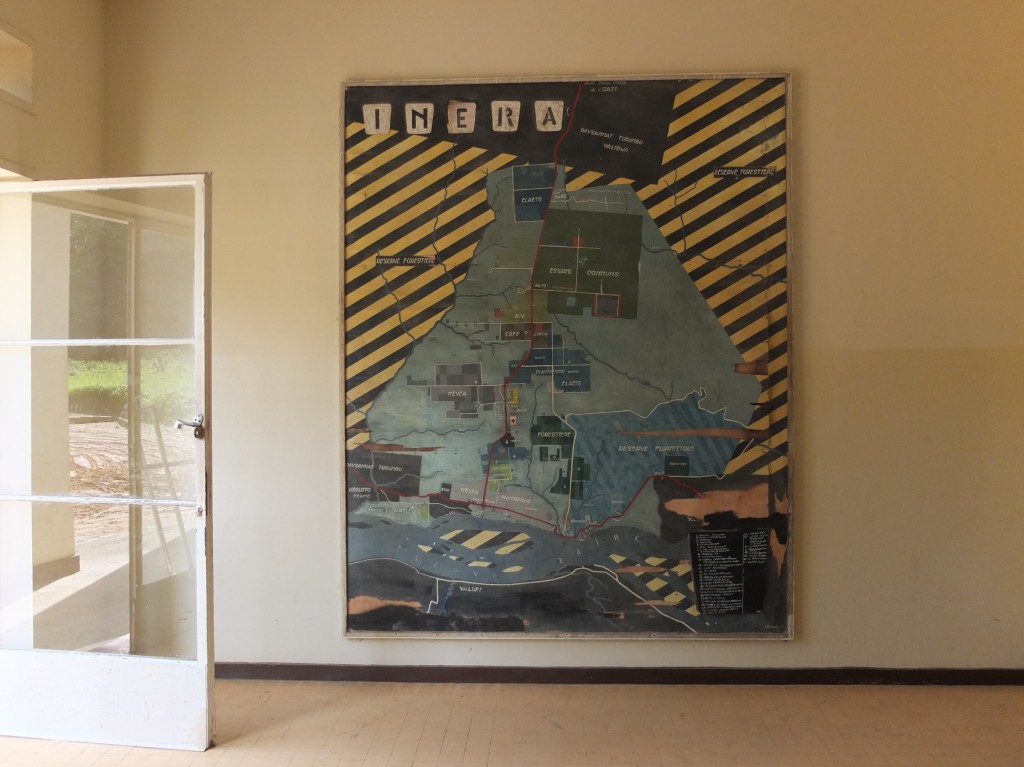
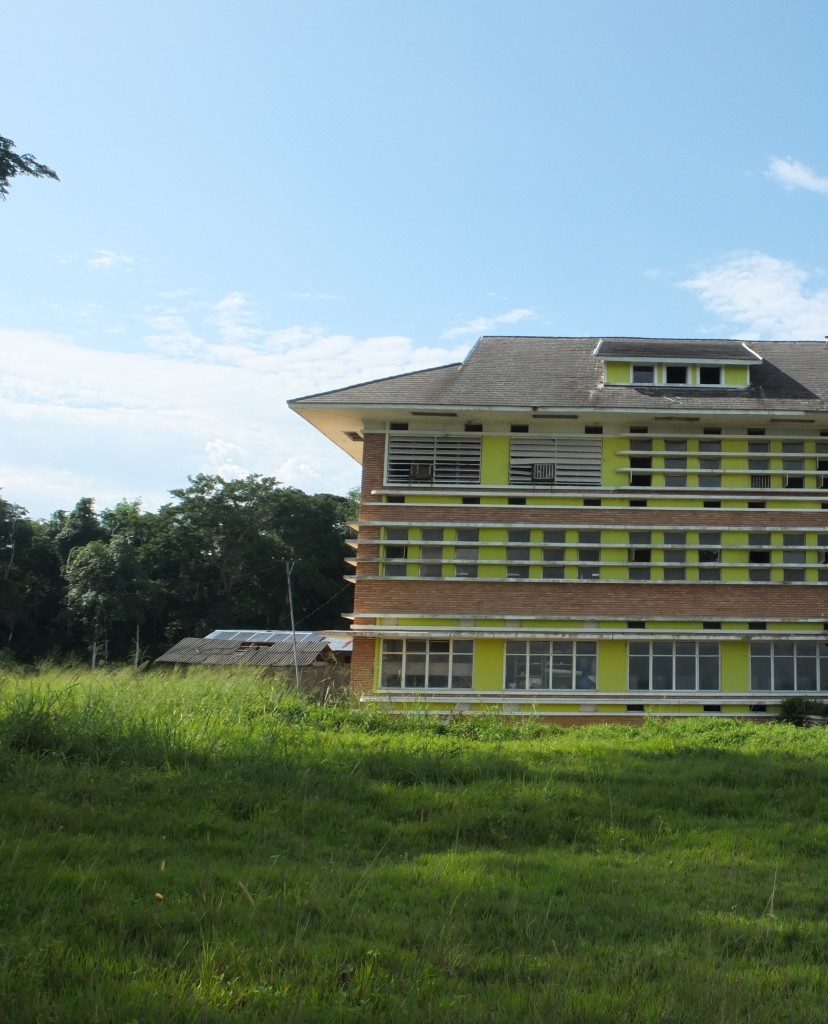
Yangambi — Sitting on the backseat of a motorbike running on a rutted dirt road, the lacking comfort is compensated by the view of riverine villages plunged in the luxuriant vegetation and by the glimpses of open horizon on the Congo river. When approaching the Yangambi reserve, the red brick walls of large villas appears on the side of the road, half concealed by the foliage of large ferns. The 250 villas built between 1933 and 1960 scattered across the reserve once housed the scientists and technicians of what was one of the largest ecological, biological, and agricultural research hubs in Africa, the >>Institut National pour les Etudes Agronomiques du Congo Belge – INEAC, later renamed INERA. The derelict storage tanks and the broken windows of the two large buildings facing the river port are the first visible signs of the now partly lost thriving life of this centre. But some sections of the research hub are >>still active.
During the few days I spend in Yangambi, Dorcas drive me from one section to the other of the reserve The library, inside the recently restored administrative building, has a large collection of magazines and publications dating back both to the colonial and Mobuto’s regimes as well as reports and correspondence documenting the exchanges that the institution had established with private companies such as the Huileries du Congo Belge and Lever Brothers. Even today, the centre carries out agronomic research and provide the germinated seeds of oil palm trees to smaller and larger >> Elaeis plantations in the country. The number of houses, communal facilites, and buildings dedicated to the different research sectors that I could brielfy see from the car or from the photographic albums stored in the library would definetely deserve to be explored with more attention but I’ve run out of time. The boat is waiting.
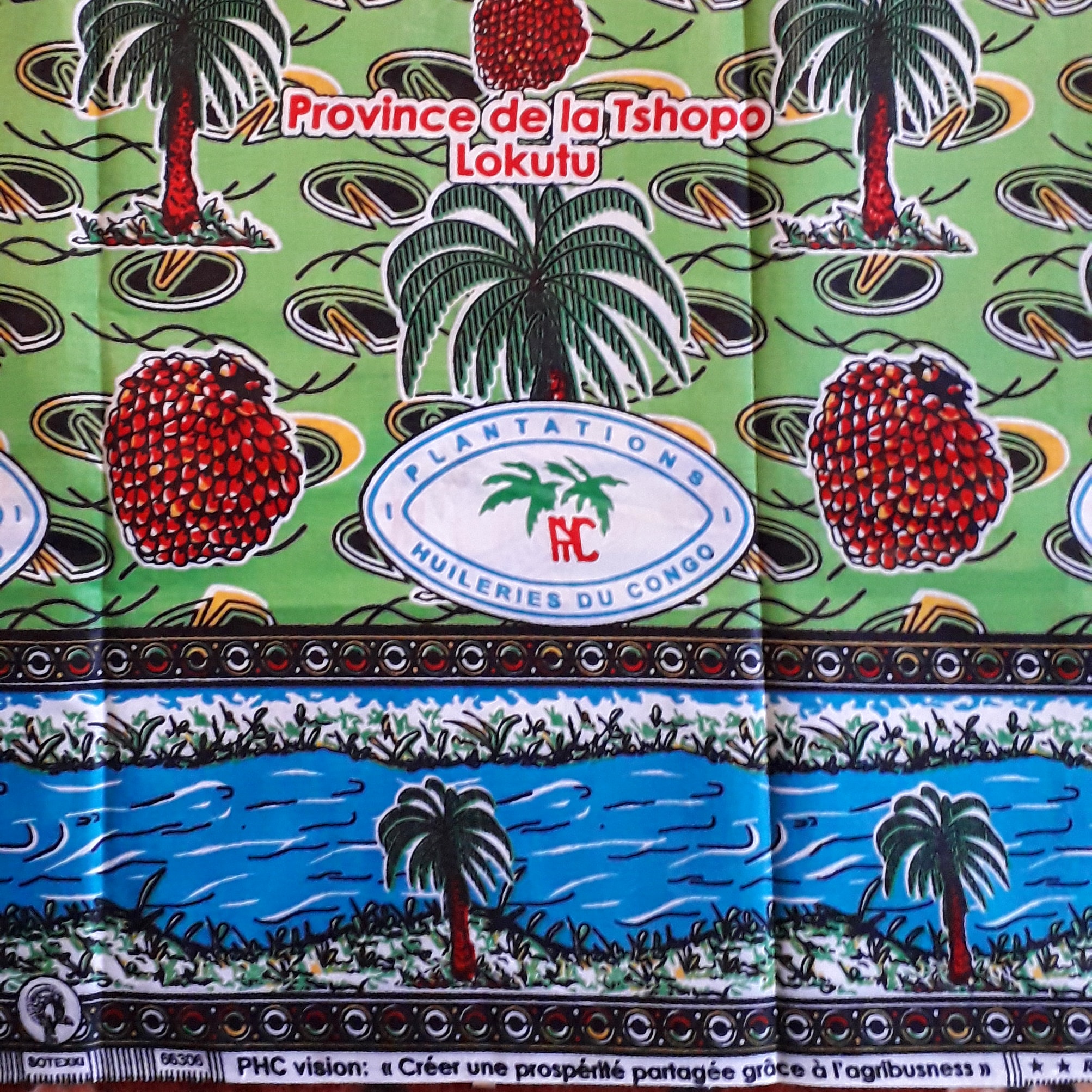
Kisangani — I’m already on the way back to Kinshasa when, during a two days stop in Kisangani that allows for a quick visit to the city, I find a piece of wax print fabric depicting the destination of my next trip to the DRC. In a small shop, one of the last selling locally produced Congolese wax fabric, among the most bizarelly decorated pieces of cloths, one is dedicated to the >>Plantation et Huileries du Congo, the company owning three of the former HCB plantation. Over a green background, the same palm tree and red oil palm bunch is repeated over and over. At the bottom, a sketched and colourful representation of the Congo River and its green banks along with some particularly >>optimistic mottoes of the company.
I greet the country carrying with me this small trace of the persisting signs of British-Belgian colonial capitalism in Congo. Lokutu (Elisabetha), Bumba (Alberta), and Lusanga (Leverville), three of the five company towns built by the Huileries du Congo Belge will be the subject of my next fieldwork in the coming months.
Jubilee House, Accra, Ghana. Source: Julia Gallagher, March 2019
This article examines recent attempts to create specifically African forms of modernist political architecture that draw on ‘traditional’ or ‘pre-colonial’ aesthetic forms and ideas. Taking examples of three prestigious structures – the presidential palace in Ghana, the parliament in Malawi and the Northern Cape regional parliament in South Africa – the article shows how vernacular ideas have been incorporated into state-of-the-art political architecture, producing new or explicitly ‘African’ forms of modernism. It explores how such buildings, which draw on ‘invented traditions’, are used alongside conventional, monolithic representations of the state to produce ‘invented modernisms’ that both uphold and question the African state as a project of modernity.
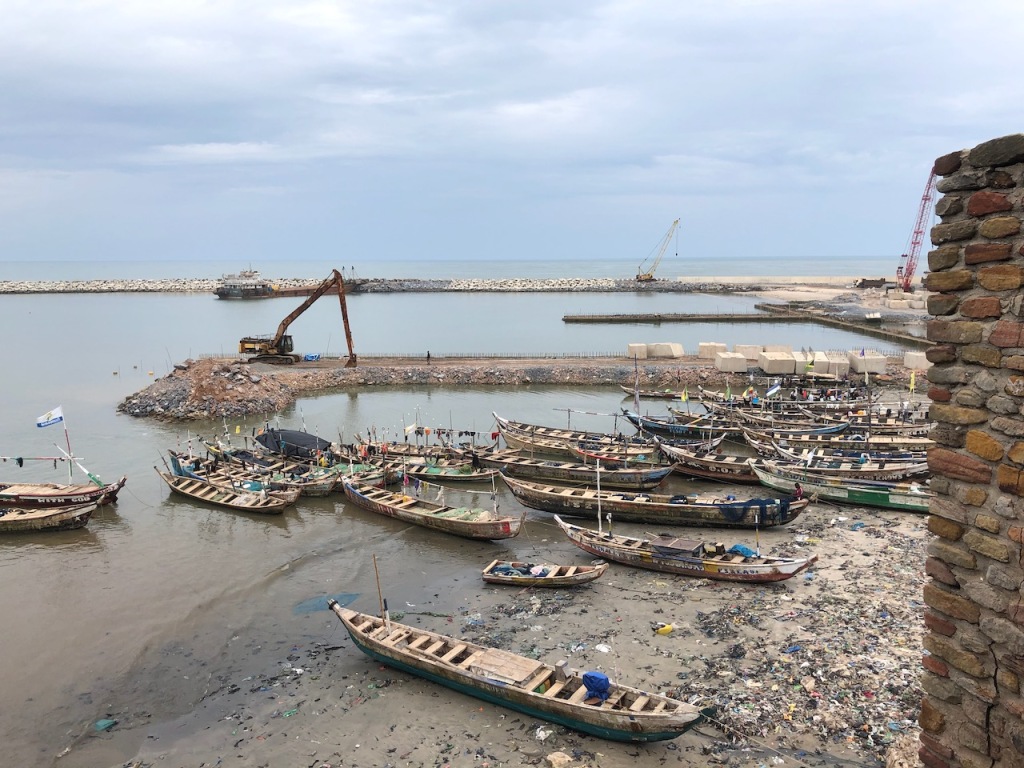
Returning to Accra after a 30 month break, I was expecting there to be changes, but not on the scale I witnessed. Three major projects have commenced – the new cathedral; the Marine Drive project; and the new fishing harbour. When completed they will have a drastic impact on the city and how it is experienced. Marine Drive, in particular, promises some spectacular changes to the much neglected and large sea front. For a port city Accra has never really utilised its enviable position overlooking the sea with its refreshing breeze, until now. The scale of the Marine Drive project is vast and incorporates the set design piece of Independence Square as its focal point.
The New HarbourMarine Drive SiteHoardings around the new Cathedral
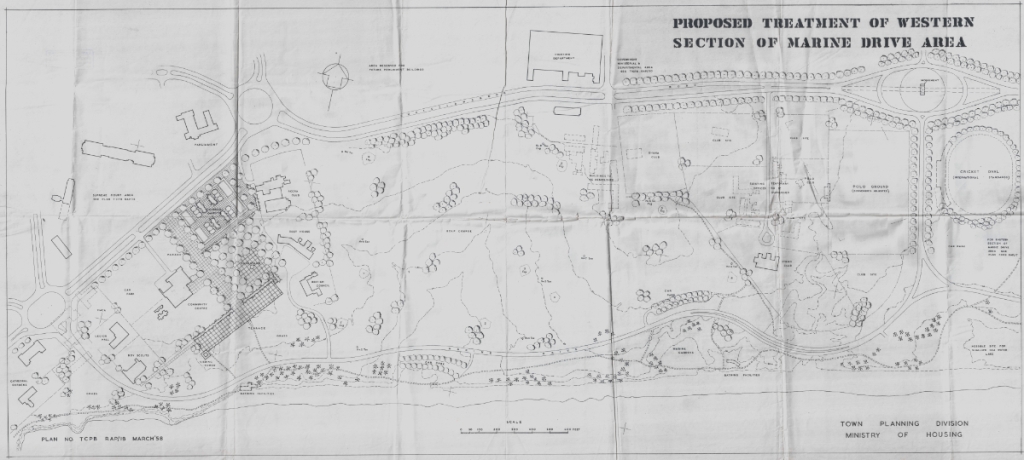
The project for Marine Drive initially commenced back in 1958 with Geoffrey Jellicoe as lead designer, and various other projects have been mooted since. Jellicoe’s proposal centred around the Community Centre, and also utilised the cricket stadium and polo pitch on the current site of Black Star Square, as well as a golf course and series of club houses.
1958 plan for Marine Drive: source PRAAD
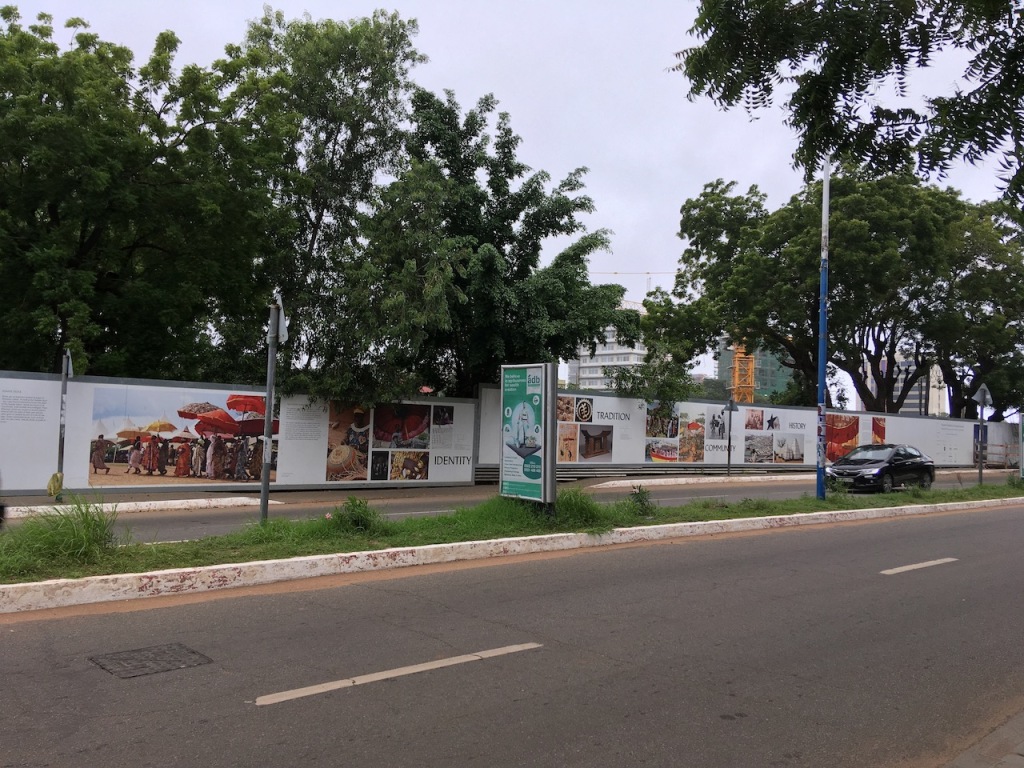
After so many other false starts it looks like Marine Drive is finally going to happen this time, with Sir David Adjaye as the lead architect. Whereas Jellicoe’s design was mainly concerned with providing sport facilities to the Colonial residents, the new proposal includes provision for other leisure facilities including beach bars, shopping, a promenade, and a series of residential and commercial towers. Sir David’s practice is also designing the new Accra cathedral and initial ground works have also commenced, with the site hoarded off and clad with architectural renderings explaining the project’s concept.
A rendering of the new Marine Drive project: towers around Black Star Square.Current view of Black Star Square
The fishing harbour project has resulted in an extension of the old breakwater wall along with some major engineering works linking the shore to the harbour, as shown above.
It’s impressive that the city is conducting works of this scale, ambition, and vision. We’ll continue to record the developments here and to document the changes.
We also revisited the classic modernist constellation of the law court, library, and community centre. Whilst the library is still in use the community centre is not, other than as a store. It’s looking particularly tired, and the building fabric is beginning to deteriorate. Its future is uncertain, and as it sits within the Marine Drive development area discussed above it isn’t clear what, if any, it’s role will be. Even the beautiful Ghana Club is potentially at risk from the new development. It’s been mooted that the club might have to be physically moved to a new site. It’s not an impossible solution as the upper level is a timber structure with louvred facades. It could be jacked up and rolled to a new location, but equally it’s also disappointing that these older structures were not incorporated and woven into the new plans.
Community Centre / Store?Abandoned Christmas decorations in the Community CentreThe Ghana Club – potentially at risk of demolition / being moved elsewhere?
ESALA Architectural History & Theory Seminar Series
INTERVIEWS ON METHOD encompasses a cycle of pre-recorded conversations with scholars of architecture and the built environment across the globe and at all career stages. The conversations span a diversity of methods, including environmental studies, economic history, filmmaking, heritage, the study of colonialism, history of the book, print history, oral history, and exhibition. The interviews were recorded during spring of 2021.
The discussions are centred on methods for the study of architecture and the built environment for a number of reasons. The Seminar Series has always showcased works-in-progress, but turning focus to methods presented an opportunity to scrutinise the mechanisms and techniques of that work. The result is a public and durable record of emergent and changing approaches to research and teaching on the history of architecture and the built environment during the current moment.
/Dr. Elizabeth Petcu & Dr. Moa Carlsson, 20/21 AH&T Seminar Series convenors
—
If you have a question about the ESALA Architectural History and Theory Seminar Series, or would like to join our mailing list, please contact Dr Moa Carlsson: Moa.Carlsson@ed.ac.uk
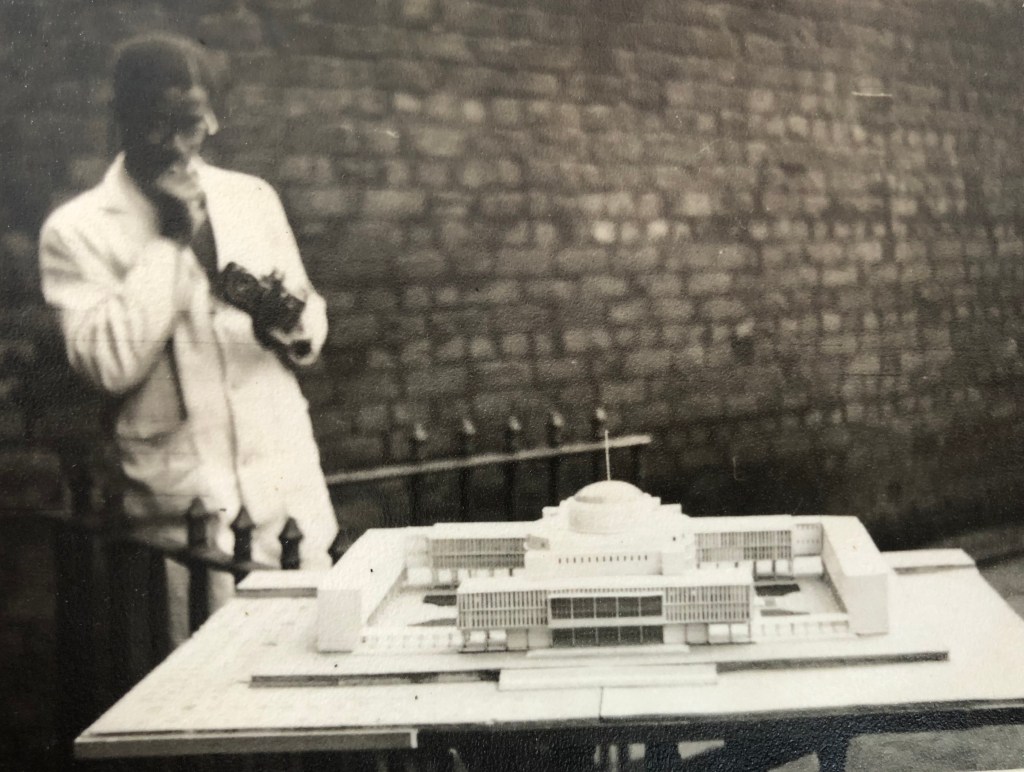
Have a look at https://www.design233.com/articles/from-buckman-to-turkson for my article on some lesser known Ghanaian architects, including John Buckman and Peter Nathaniel Kwegyir Turkson. I uncovered Turkson’s architecture thesis project in the University of Liverpool archives and discuss his plans for a new Parliament Assembly building in Accra.
Peter Turkson in Liverpool with his architectural model for a new parliament building in Accra, 1954.
Turkson wanted a design that was ‘classic in character and at the same time distinctly modern in feeling and detail…[exhibiting] the spirit of modern times’.
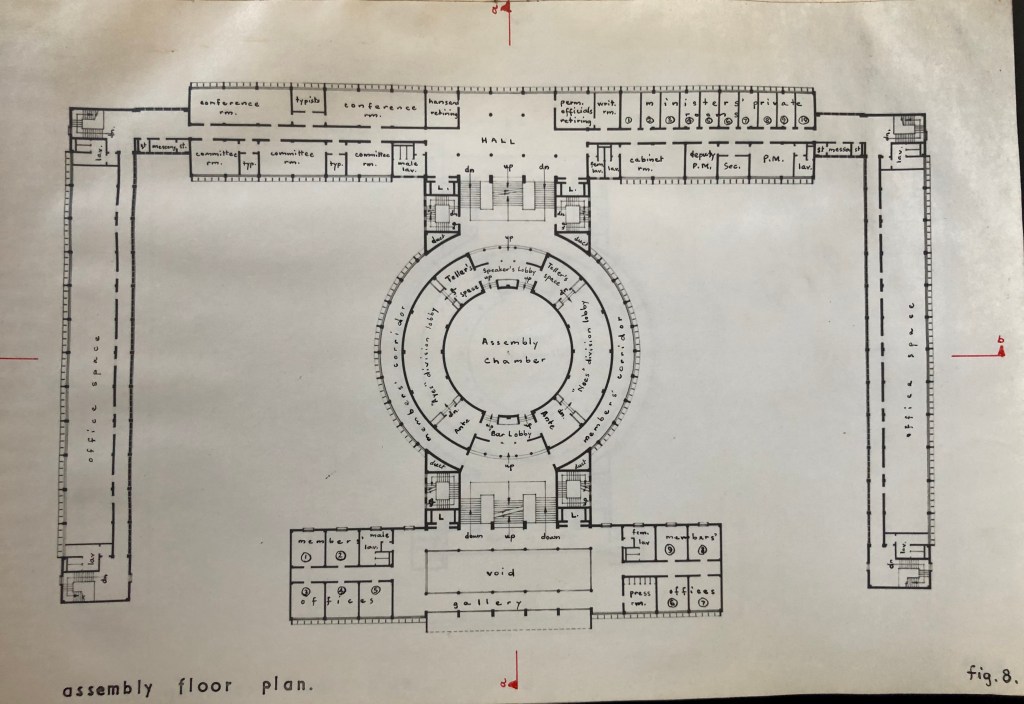
Proposal for the Accra Assembly building, by Peter Turkson, 1954
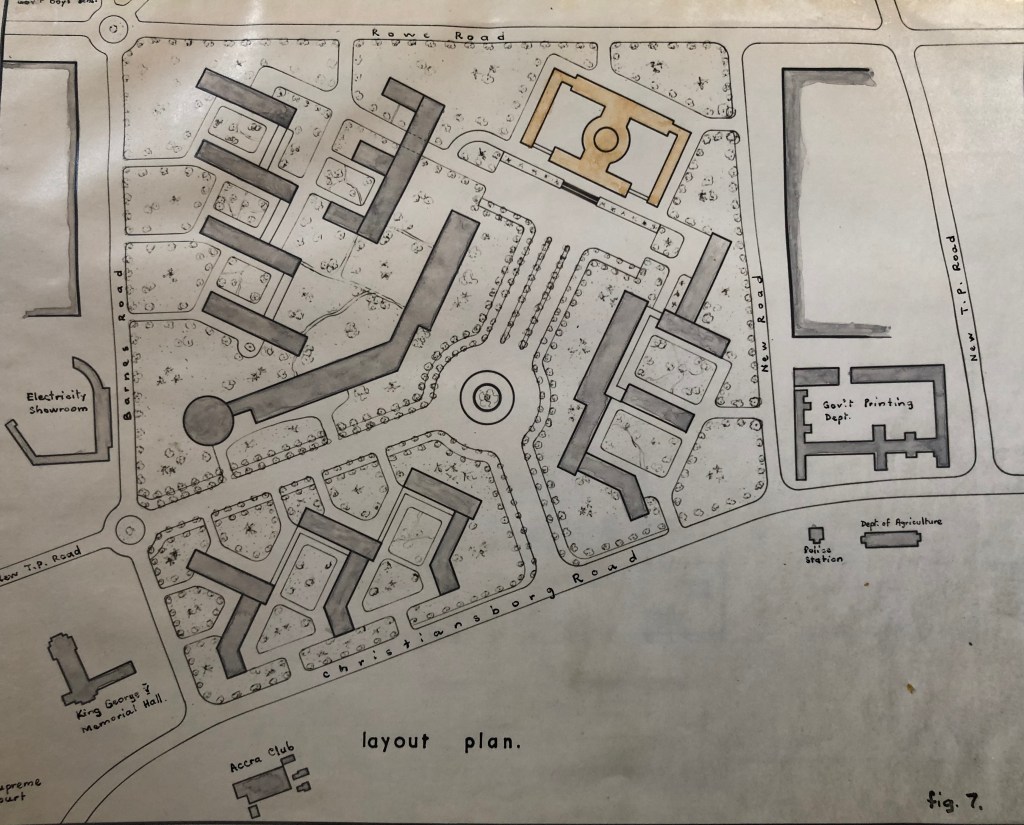
Turkson’s solution proposed using a ‘sandcrete’ (laterite soil mixed with cement) block wall along with a brise-soleil frame of fixed vertical and horizontal fins. Topping the structure and reflecting the chamber below was a reinforced concrete dome clad in copper, whilst some of the walls would be clad with faience finish. The plan was symmetrical forming two courtyards with a central drum for the debating chamber and library above.
Site plan showing the proposed location of the new Assembly on Accra’s Barnes Road and Christianborg Road.
Call for Papers for Modern Heritage in the Anthropocene Symposium
Modern Heritage in the Anthropocene is part of the MoHoA global collaborative and builds on the Modern Heritage of Africa symposium hosted by the University of Cape Town in September 2021. Coordinated by The Bartlett’s Professor Edward Denison and Head of the University of Liverpool’s School of Architecture, Professor Ola Uduku, along with partners at the University of Cape Town, the Africa World Heritage Fund and around the world, this upcoming hybrid symposium responds to an age of planetary crisis in which a precarious present reflects an inequitable past and a perilous future.
The international railway settlement of Fushun (northeast China), with its modern town planning and the Ryuho Colliery, built by Denang and Siemens, and home to one of the world’s largest open cast mines in the 1930s.
Modern heritage in all its forms and from around the world is the subject of this multidisciplinary symposium, presenting the paradox of being of modernity and yet threatened by its consequences. MoHoA was originally conceived within an African context to interrogate this paradox because the continent encapsulates the historical inequities that characterise the modern and its associated notions of development and progress while also facing the highest rates of urbanisation over the next 30 years, demanding new approaches to the past and present that achieve equitable and sustainable futures on a planetary scale. The outcomes of the two symposia will synthesise in the recognition of the Cape Town Document on Modern Heritage.
Call for papers
Submissions are invited from researchers, academics, and practitioners. The organisers are seeking papers or equivalent submissions that critically engage with reframing, re-evaluating, decentring, and decolonising recent, hidden or marginalised pasts in pursuit of achieving more equitable, just, and sustainable futures. Participants will contribute to the completion of the Cape Town Document on Modern Heritage, supporting policy change at a global level through our partner UNESCO.
Topics can include, but are not limited to:
Practices of coloniality, decentring and decolonising history and historiography
Considerations and conceptualisations of multiple modernities
Modern heritage and Sustainable Development Goals (SDGs)
Planetary futures and the Anthropocene
Infrastructure and (post)-industrial heritage
Combining culture and nature, and the role of natural heritage in society
Public space and memory: memorialisation, commemoration and remembering
Modern heritage and the World Heritage Convention
How to submit
Submissions should be in English or French and should be emailed to mohoa@ucl.ac.uk by 31 May 2022.
Notification of acceptance will be provided by 30 June. Abstracts should be a maximum of 300 words or equivalent format (e.g. film shorts, blog, or Instagram story) for other types of digital submissions.
Selected papers or presentations will be published as part of the MoHoA Book Series after the conference and selected extended papers will appear in a special edition of the journal ‘Curator’.





 Transnational Architecture Group