Archive

India

Have a look here too for another report on the AHRC/ICHR meeting in Delhi: http://news.liv.ac.uk/2015/03/16/world-view-cultural-heritage-rapid-urbanisation-india/

cleoroberts's avatarEnvisioning the Indian City

From 2 to 4 March 2015, ETIC members Ian Magedera and Iain Jackson were invited to take part in a workshop on Cultural Heritage and Rapid Urbanisation, co-organized in Delhi by the Research Councils UK India Office (RCUK-India), the AHRC and the Indian Council for Historical Research (ICHR).
The event brought together 30 UK and Indian academics and curators from the British Library, cultural practitioners and civil servants in order to develop research priorities that are to help shape collaboration between the two countries in this domain. The active management seminar format of short position papers, taken up by breakout groups who then reported back, allowed this relatively large number of participants to both work with and get to know each other’s research over two intense days based at the Maiden’s heritage hotel in Delhi’s Civil Lines district.

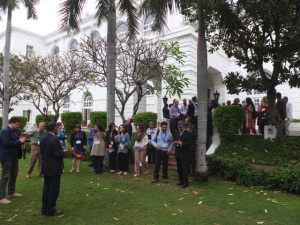
Delegates outside Maiden's Hotel, Civil Lines, Delhi Delegates outside Maiden’s Hotel, Civil Lines, Delhi

The paired topics…

View original post 165 more words

AHRC Workshop on Cultural Heritage and Rapid Urbanisation in India

The AHRC, with the Indian Council for Historical Research and the British Library, invites expressions of interest to attend a workshop on cultural heritage and rapid urbanisation in India. The event will bring together academic experts from both countries to address an issue of growing importance as India seeks to preserve and position its rich cultural history within the context of an emerging urban landscape.

It will draw on a range of disciplinary perspectives including urban history, heritage, languages, the digital humanities and archaeology. The development of longer-term collaborations and impacts, including possible links to other Newton programmes, wider inter-disciplinary UK-India research forums and subsequent funding bids, is one of the key objectives of the workshop.

There is lots more detail here: http://www.ahrc.ac.uk/Funding-Opportunities/Pages/Workshop-on-Cultural-Heritage-and-Rapid-Urbanisation-in-India.aspx

Global Architectural History Teaching Collaborative at MIT

How do we teach the global history of architecture? What should we include in our classes and where can we gather the information, knowledge and sources that enable meaningful narratives to emerge? Is the global survey course even possible, or should we be utilising distinct and precise case studies to discuss the global condition instead?

These are just some of the questions that Global Architectural History Teaching Collaborative is attempting to answer as well as to create a community of scholars who will share and exchange knowledge to change the way we think about the history of architecture.. The GAHTC has been established by Mark Jarzombek and Vikramāditya Prakāsh with funding provided from Andrew W. Mellon Foundation, see http://gahtc.org for more information.

Grants are available for teaching teams to develop new teaching material and modes of teaching that deal with global history, from the beginning of time to the modern. This is a major challenge, but very exciting. In the current round of grants 9 teams have been accepted with the following ambitions:

Rachel_lee_MIT

Panorama of the participants (photo by Rachel Lee)
  • Architecture and Climate in a Global Perspective – Team Daniel Barber
  • Sites and Networks of Global Modernity – Team Bob Cowherd
  • Globalizing a Humanities Approach to Architectural History – Team Ann C Huppert
  • Scales of Modernity – Team Jonathan Massey
  • The Architecture of Global Modernity, 1000-2000 CE – Team Kenny Cupers
  • The Global Turn: Architecture and the Built Environment Since World War Two – Team Michelangelo Sabatino
  • Technologies of Movement and Communication – Team Shundana Yusaf
  • East Asian Architecture from A Global Perspective: Cultural Transactions and the Development of Traditions – Team Shuishan Yu
  • The Modern Metropolis – Team Eric Mumford

At the first workshop, held in MIT (9th and 10th October 2014), each group gave a presentation that outlined their position and ambition. Most also proposed a distinct module of lectures/seminars and a discussion/critique followed. Day two was composed of a number of workshops that discussed ‘Deliverables and Digitisation’, ‘Pedagogy’, ‘The problem of teaching architecture made before 1800’, and ‘future ambitions’. A digital resource has been developed that will contain some of the data: http://www.timescape.io/login

GAHTC_prakash

Vikram Prakash addressing conference.

Team Daniel Barber became known as the ‘Climate group’  – which is a perfectly accurate and succinct way of describing us, with the caveat that climate is not the only factor to determine the architecture we’re interested in.

We are proposing six themes/lectures, each to be lead by one team member:

“Architecture without Architects” and the Timeless Climatic Type [Albert Narath]

Colonial Architecture and Climate in Africa and Asia [Ola Uduku]

Sanitation, climate and statecraft in colonial societies [Iain Jackson]

Modernism, Climate, and Post-colonial development [Rachel Lee]

Universal Science and International Architecture after World War II [Daniel Barber]

Air Conditioning Takes Command [Jiat-Hwee Chang]

Rachel_lee_MIT2

Panorama of the Participants (photo by Rachel Lee)

TAG will continue to track the developments of GAHTC and to report on future developments…

The South Park Street Cemetery in Calcutta and the French Cemetery in Chandernagore

 The Follies of Empire world make a good book title and topic for future study. Buildings, or rather monuments have frequently been deployed as tangible metaphors of political ideology. Throughout the territories of the British Empire we encounter structures that were certainly folly, sometimes extending to the scale of an entire city, as New Delhi designed by Edwin Lutyens and Herbert Baker from 1911 demonstrates. The Victoria Memorial in Calcutta designed by William Emerson from 1906 would also qualify; a palatial white marble pile built in a classical style and decorated with a blend of ornamentation dedicated to the late Queen. Calcutta grew into a major trading port and capital of British India after the East India Company set up a trading post off the Hooghly River in 1690. Throughout the 18th Century the port grew into ‘the second city of Empire’, suitably grandeur and packed with suave mansions and gardens that lined the river. Traders and merchants made vast fortunes and were able to fund lavish lifestyles in Palladian inspired mansions in the exclusive Garden Reach and Alipore districts of the city. Although trade bloomed, fortunes were made and honours bestowed, the city was renowned for its malaise and disease, and many afflicted British visitors spent the last days of their brief lives in India.

DSC_0765


Victoria Monument, Kolkata

A Scottish cemetery was created, as well as one for the English, which is the focus of this article. The cemetery opened in 1767, ten years after the Battle of Plassey, which cemented British control over Bengal. The dead were taken via raised causeway to what were then, the outskirts of the city, away from the River and into marshy land. Illuminated by torchlight, the ceremonies took place after dark and the coffin was carried out to the cemetery, sometimes accompanied by canon fire.

A brief time on earth did not limit the size of one’s mausoleum nor the tributes bestowed, and the demand for plots in the cemetery resulted in rather cramped conditions with ever-extravagant tombs, temples, obelisks, pyramids and rotundas competing for attention and space.

OLYMPUS DIGITAL CAMERA

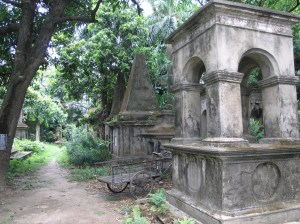
South Park Street Cemetery 

Today, the cemetery is surrounded by the mega-metropolis of Kolkata, its walls clad with advertisements and hoardings, an encroachment that reveals the prime real-estate value of fashionable Park Street.

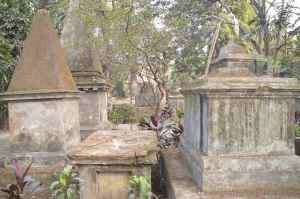
The entrance is a portal into another world, an overgrown necropolis of dilapidated and listing tombs held together in some cases by creepers and vines. The sunlight is diffused through the trees and their shade and cooling effect creates a calm and suitably peaceful setting for exploration, aided by a grave register and plan obtained at the entrance for 100 Rupees. The pleasure of reading about the cemetery’s occupants, the sometimes delightful (occasionally hyperbolic) descriptions of their personalities and feats is only matched by the staggering collection of mausoleums to discover. Elizabeth Jane Barwell is noted as being the ‘The Celebrated Miss Sanderson’, prior to her marrying a ‘Richard Barwell Esq.’ who died ‘aged about 23 years’ and was noted as being ‘The Friend of Warren Hastings’. Colonel Charles Russell Deare’s demise was to be ‘slain by cannon-ball at the storming of Tippoo Sultans Stronghold at Santinungulam’. Others are less dramatic but reveal something of the everyday activities, such as Gregory Jackson’s inscription from 1815,  ‘Many years Company agent for loading and unloading the Honorable Companys Ships at Kedgeree’.  Colesworthy Grant, died in 1880, is remembered for being the founder of the Calcutta Society for the Prevention of Cruelty to Animals. In some cases we no longer know who is interned in these exaggerated structures; a sad and slightly ironic situation­ as these monuments were intended to immortalise and suspend the transient.

OLYMPUS DIGITAL CAMERA


DSC_0927


South Park Street Cemetery 

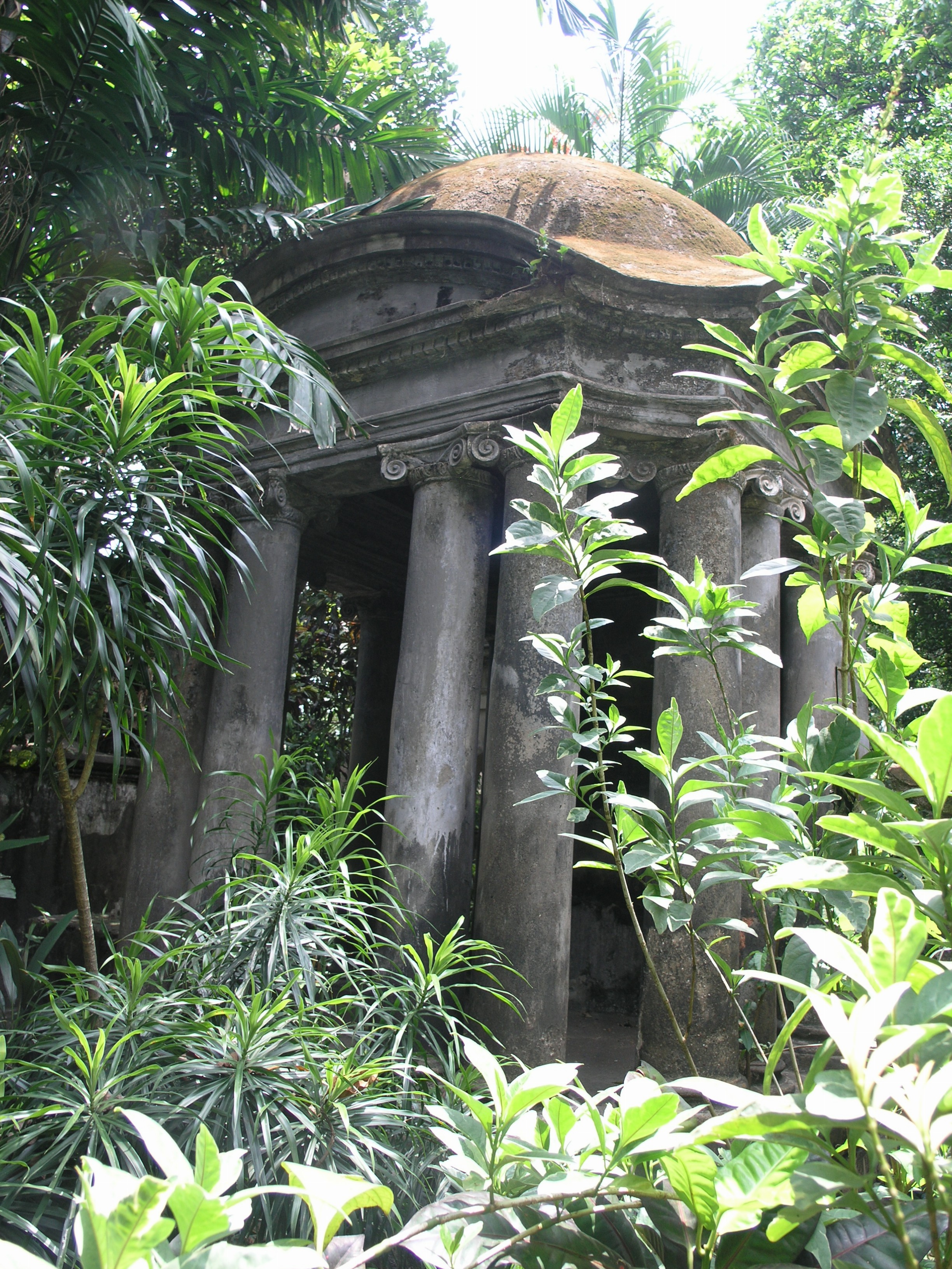
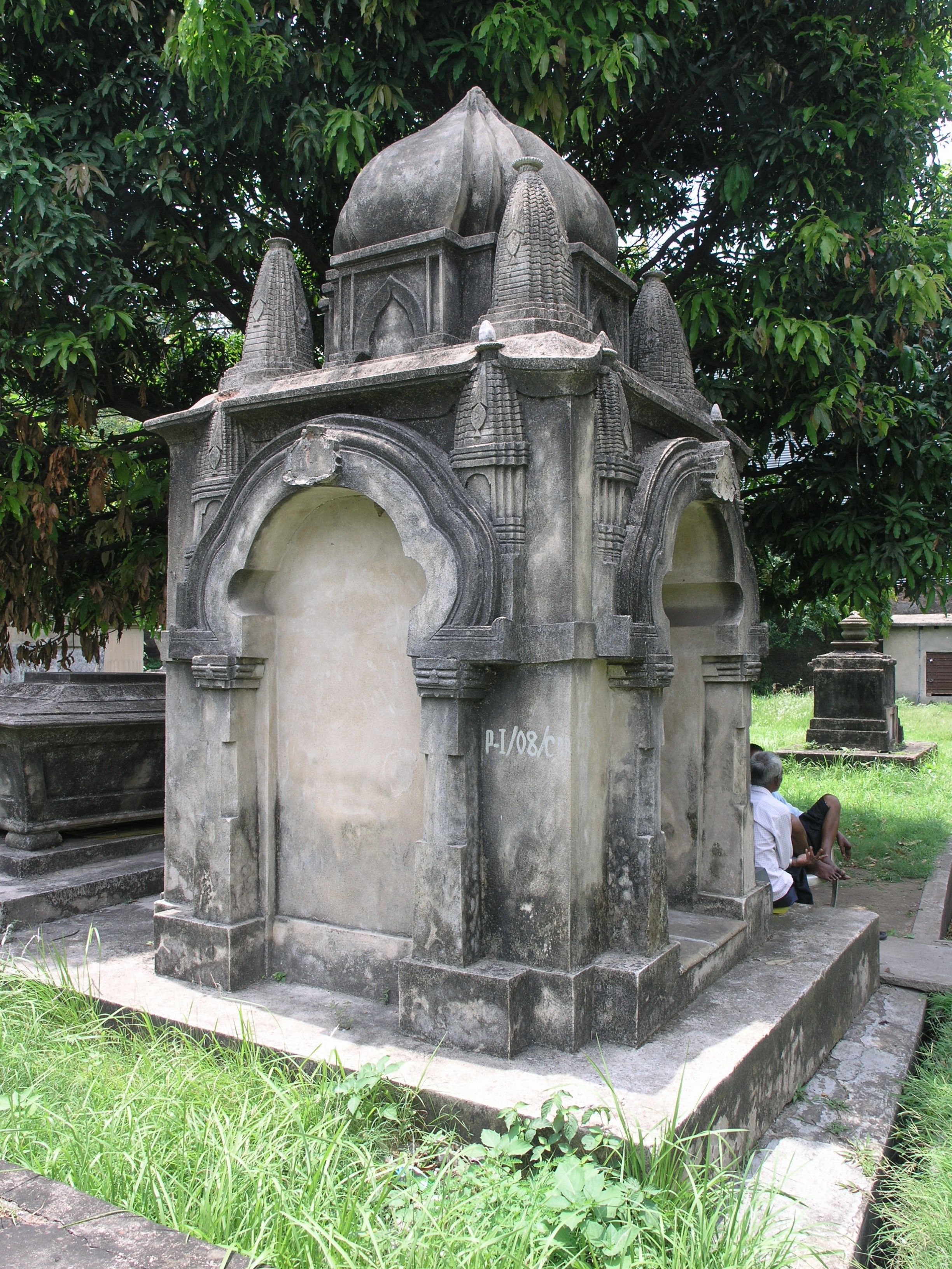
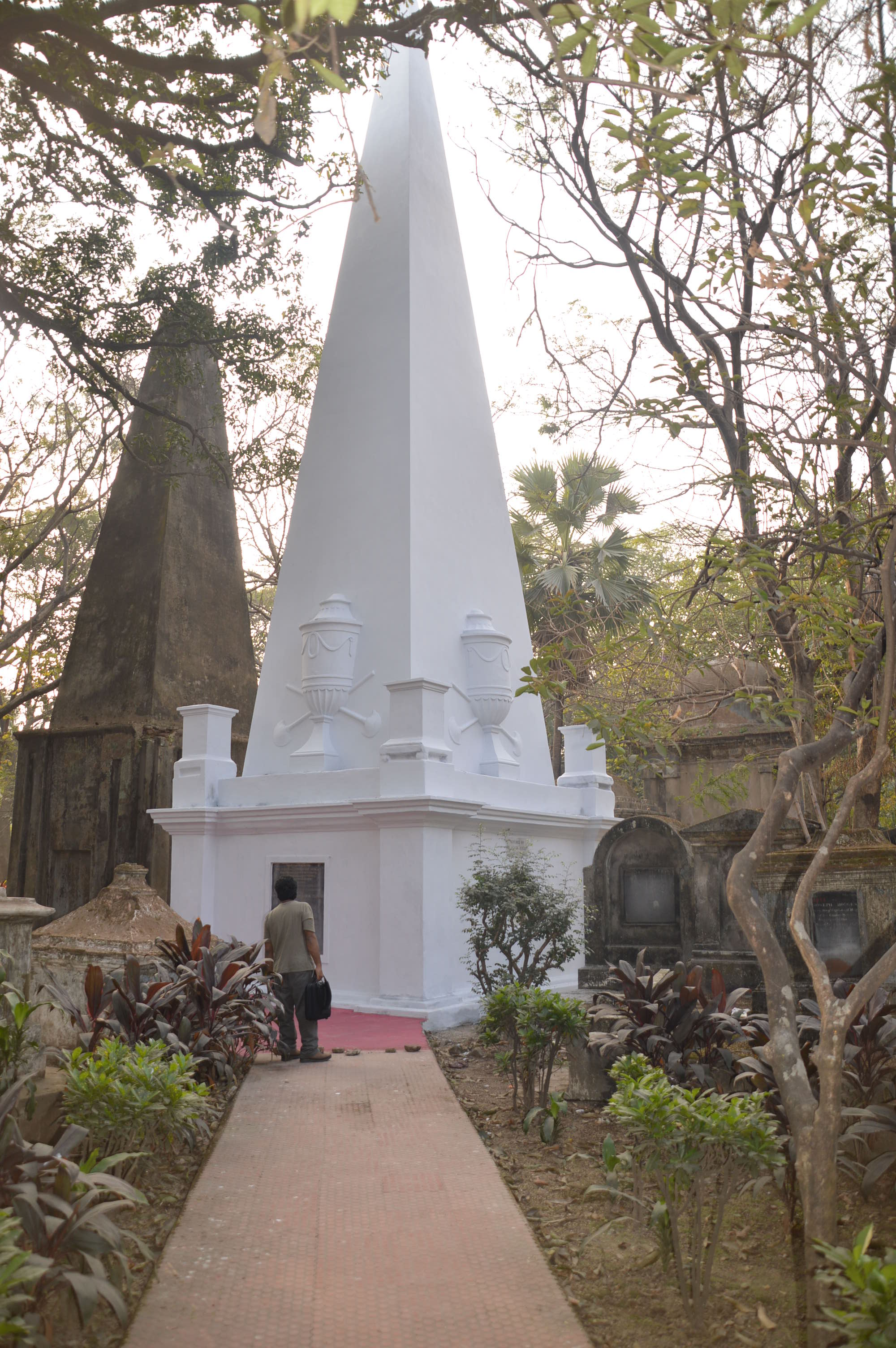
Two tombs stand out, both in terms of design and their occupants. The extremely large elongated white pyramid-cum-obelisk in the centre of the cemetery houses Sir William ‘Orientalist’ Jones, the founder of the Asiatic Society, Sanskrit scholar and judge. A far humbler tomb, but perhaps more interesting is that for eccentric Irishman, Major-General Charles Stuart. Known as ‘Hindoo Stuart’, because he adopted the local way of life, including bathing in the Ganges, wearing of Indian clothes and adopting the Hindu faith (yet is curiously buried in a Christian cemetery). He also wrote a tract encouraging European women to adopt the sari whilst in India. His tomb resembles a small Hindu temple, and contains some of the sculptures and idols he collected. It is a delightful and playful addition. The remaining sculptures from Stuart’s collection are now housed in the British Museum as part of the Bridge .

OLYMPUS DIGITAL CAMERA


‘Hindoo’ Stuart’s Tomb South Park Street Cemetery 

DSC_0923


Orientalist Jones’ Obelisk South Park Street Cemetery 

The cemetery was at one point completely neglected and overgrown with vegetation, wildlife and some of the tombs were even being used as shelters for the living. Thankfully the British Association for Cemeteries in South Asia and the Calcutta Historical Society are now actively involved in repairing and maintaining the cemetery. The main paths through the graveyard are clear, but the burial plots have a forgotten jungle settlement feel. Most of the tombs are constructed in brick and then rendered, which is no match for the monsoons and extreme temperature changes. The Bengal delta is alluvial mud and stoneless, so any stone used had to be expensively shipped from Madras, and marble was ransacked and recycled from the ancient ruined capital of Gaur. Some of the tombs have now collapsed and others are charming, but vulnerable, ruins. A programme of restoration is underway and recent renovations are showing real promise, although Jones’s sepultura has been rather enthusiastically restored, painted in a glaring white, complete with a red rubber floor finish around its perimeter.

In addition to the inscriptions and architecture, many of the tombs have carved decoration including the skull-and-crossbones, anchors, winged hourglass, and upturned torches, as well as the usual urns.

DSC_0947


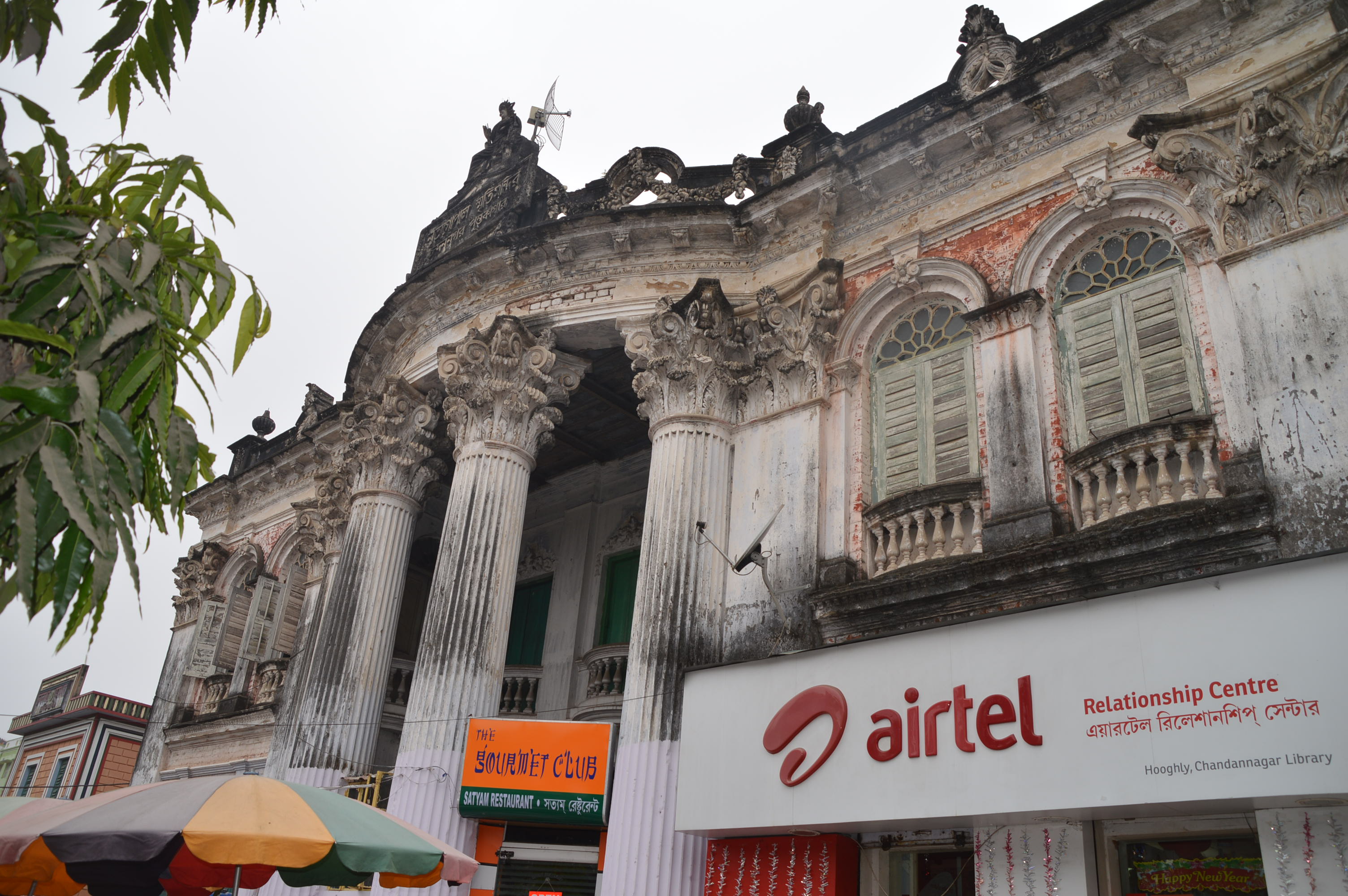
French Mansion, Chandernagore

The British presence in India is well known; less so is that of the French. Pondicherry was their major trading settlement in the south of India, but 20 miles north of Kolkata is another French outpost called Chandernagore. Although most of India was under British control various trading post concessions were granted to other nations. Chandernagore is a small town located on the banks of the river and contains an eleaborate landing stage as well as some exquisite baroque mansions.

DSC_0975


Landing Stage, Hooghly River, Chandernagore

It too has a cemetery. Although not as grandiose as Park Street and in a worse state of repair, it contains some notable mausolea, and a rather good temple (almost Doric but not quite), that is built in ashlar and has weathered more gracefully than its neighbours. The cemetery has recently been extensively catalogued but there seems to be little funding available for preservation and restoration.


DSC_0954


French Cemetery, Chandgernagore

A version of this article appeared in Follies Magazine, Autumn 2014, issue 89, p.4-5

http://www.follies.org.uk/

Lakshminarasappa, Koenigsberger, Jaisim and Udaya: Architects of Bangalore

Rachel Lee.

For several years I have been visiting Bangalore, South India, on a regular basis. Originally my only goal was to research Otto Koenigsberger’s work in the city for my doctoral thesis, but recently my interests have widened to include other figures involved in the building of Bangalore’s past and present. Among these is Srinivasarao Harti Lakshminarasappa (circa 1885 – ?), Government Architect of Mysore State from 1935-1940, and an early twentieth century graduate of the University of Liverpool who was the subject of a previous TAG post by Iain Jackson.

Lakshmi and Tulsi

Caption: Lakshminarasappa and his wife Tulsi, date unknown. Photograph provided by Krishnarao Jaisim

Lakshminarasappa was close to retirement when Otto Koenigsberger arrived in Mysore State in April 1939. And, although he was initially given a probationary one-year contract, Diwan Mirza Ismail, the then first minister of Mysore State, had actually engaged Koenigsberger as Lakshminarasappa’s potential future replacement. The transitional period, during which both architects worked at the Mysore PWD, was strained. It appears that Lakshminarasappa did his utmost to prevent Koenigsberger from taking over his job, which he would rather have handed over to an Indian architect – “nationalism like everywhere”, wrote Koenigsberger, a victim of anti-Semitic German nationalism, in frustration.[1]

In fact, Lakshminarasappa was so opposed to Koenigsberger becoming his successor that he instigated a campaign of bullying and dirty tricks against him. This included burdening Koenigsberger with a massive workload, withdrawing all his draughtsmen and assistants, and rumour mongering. The campaign was to no avail, however, as Koenigsberger was instated as Government Architect of Mysore State after Lakshminarasappa’s retirement. The following excerpt from a letter to his mother in October 1939, makes Koenigsberger’s relief at Lakshminarasappa’s departure palpable:

The old Architect who used to cause so much annoyance to me and compelled me to work so hard in the last two months before my internment[2] –he is gone for good. […] I have reached the position for which I fought all these six months.[3]

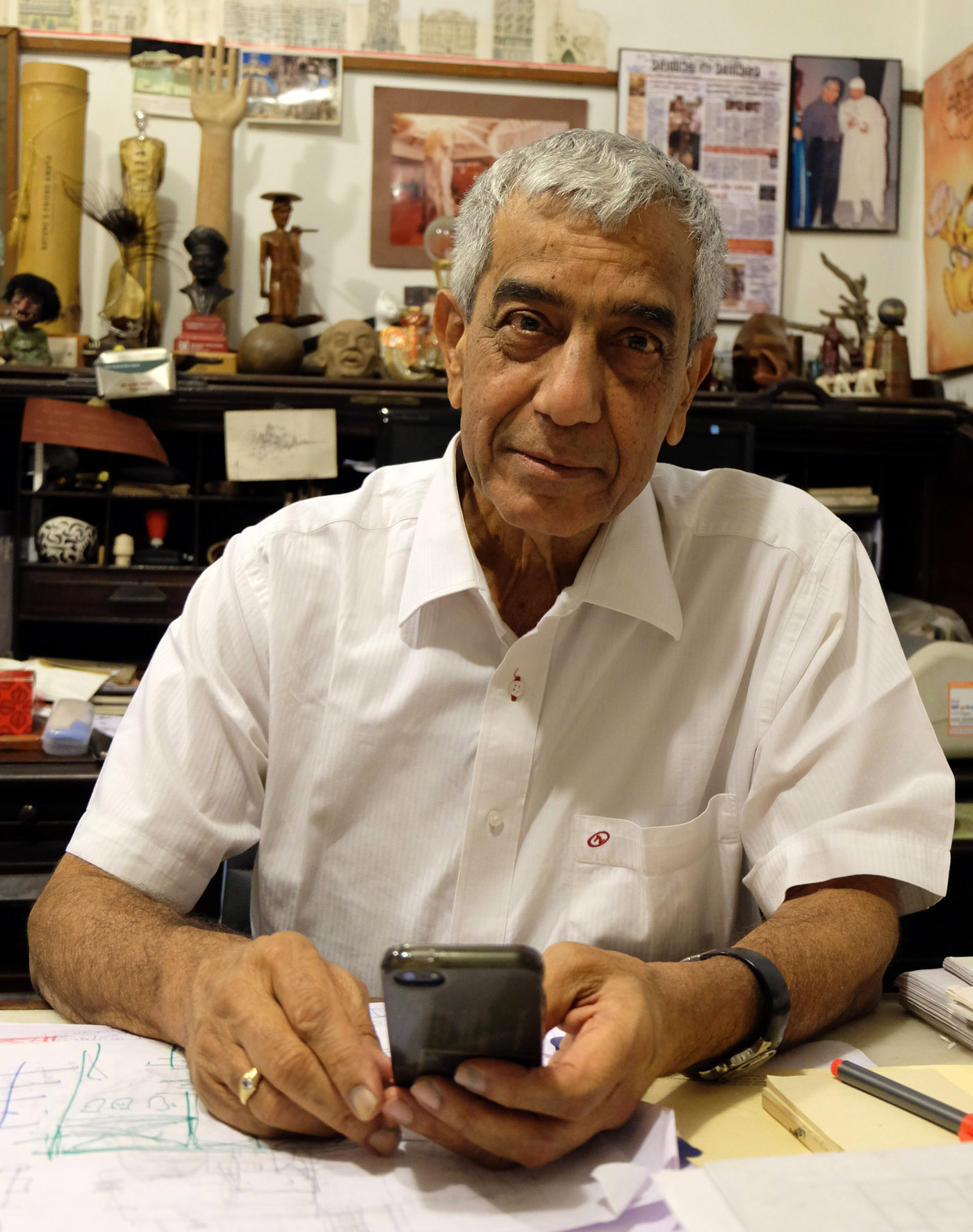
Aside from his conflict with Koenigsberger, until recently I did not know a great deal else about Lakshminarasappa. However, on my last trip to Bangalore I was delighted to meet Lakshminarasappa’s grandson, Krishnarao Jaisim. Following in his grandfather’s footsteps, Jaisim also became an architect and has received many awards throughout his long and distinguished career. He is the founder and director of Jaisim-Fountainhead, an architectural practice in Bangalore that lists its main influences as Buckminster Fuller, Otto Koenigsberger, Geoffrey Bawa and Ayn Rand. Indeed, every intern is given a copy of The Fountainhead on their first day at the office.

Jaisim

Caption: Jaisim at his desk in his Bangalore office.

According to Jaisim, Koenigsberger was not the only person to be unsettled by Lakshminarasappa. He was an intimidating figure, at least 6’4’’ tall and as strict and conservative in his personal life as he was professionally. Jaisim also informed me that Mysore PWD selected his grandfather to study architecture abroad because of his talent at drawing. Jaisim clearly inherited this skill, as this quick sketch of his grandfather made for me in lieu of a photograph shows.

Lakshmi by Jaisim

Caption: Lakshminarasappa as sketched by Jaisim, 2014

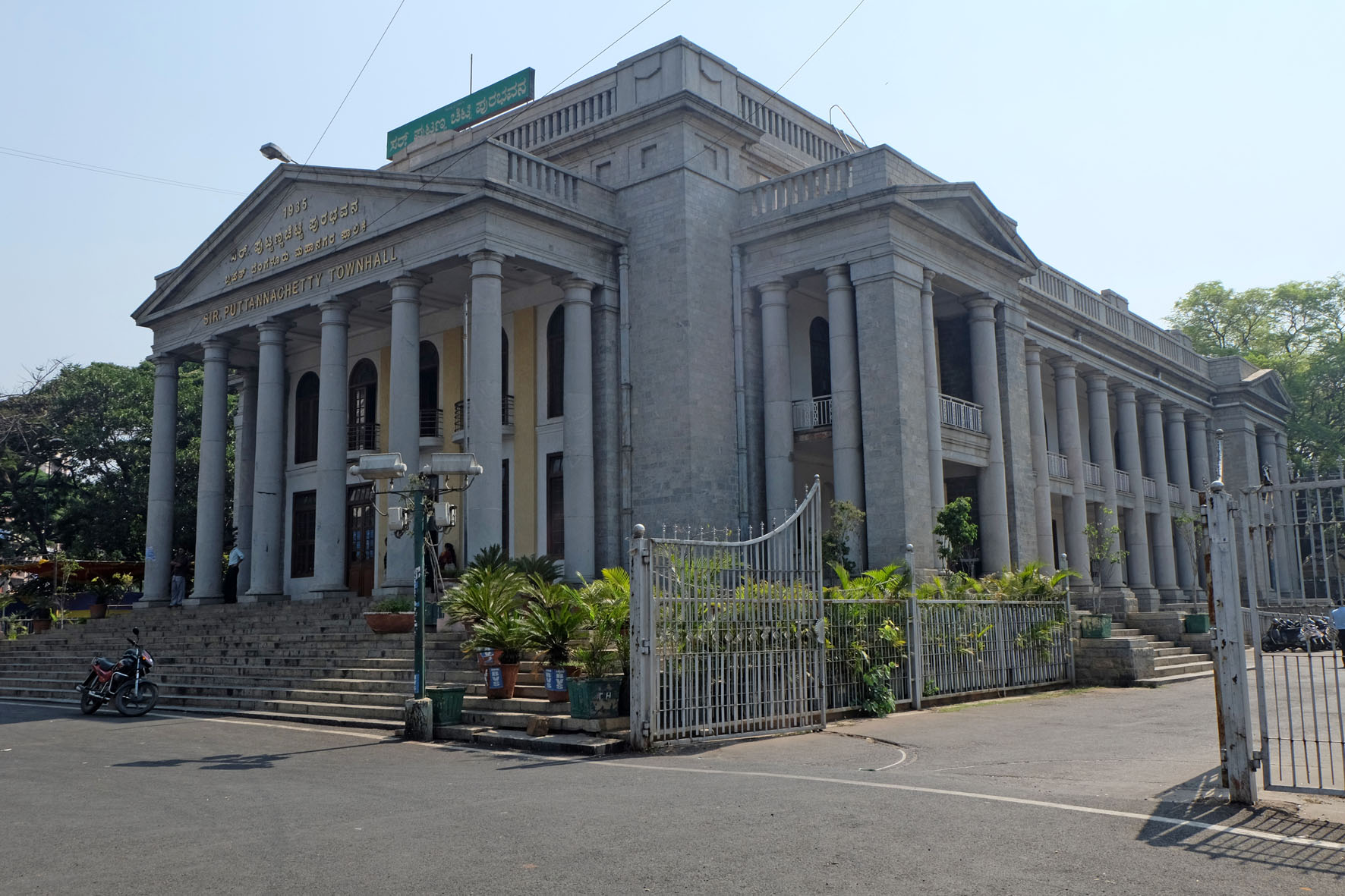
During the ocean crossing, and perhaps his stay in Liverpool too, Lakshminarasappa spent a lot of time performing pujas. He clearly did not feel comfortable away from home and was very glad to return to Mysore State after graduation in 1920, where he began working as an architect at the PWD. His architecture is characterised by precise classical detailing, as evidenced by the Puttanna Chetty Town Hall, built in 1935. Its austere classicism contrasts somewhat with the more relaxed eclecticism of the Greater Bangalore Municipal Corporation (BBMP) building, constructed from 1933-36.


Town Hall

Caption: Puttanna Chetty Town Hall, 2014


BBMP

Caption: Greater Bangalore Municipal Corporation, 2011
Photograph by Hari Prasad Nadig, available at
https://www.flickr.com/photos/hpnadig/5341902040/

Jaisim put me in touch with K. Udaya, current Government Architect of Karnataka, or Principal Chief Architect as the position is now called. In his office is a commemorative plaque listing in Kannada all the Government Architects of Mysore State, and later Karnataka State.


Plaque

Caption: The commemorative plaque in K. Udaya’s office listing the following architects: 1. Krumbigal [Krumbiegel], 2. Lakshminarasappa, 3. Kunis Burger [Koenigsberger], 4. Subba Rao, 5. B.R. Manickam, 6. V. Hanumantha Rao Naidu, 7. Chief engineer’s realm, 8. T.J. Das, 9. M. Venkataswamy, 10. Prof. Kiran Shankar, 11. K. Udaya, 12. K. Udaya.

Not only did Udaya generously spend time talking to me, he also invited me to give a lecture on Otto Koenigsberger’s work in Bangalore for his staff at the PWD, bringing the story full circle.


UdayaPWD

Caption: Rachel Lee with Principal Chief Architect K. Udaya and his team at the PWD Bangalore, 2014

[1] Koenigsberger Papers/Jewish Museum Berlin: letter from Otto Koenigsberger to Susanna Koenigsberger dated 12 August 1939. Translation from original German: You know that I have had great difficulties here during the last weeks and have had to and still have to fight with all my strength for my position. They want to prevent me from becoming permanently employed, and would rather put an Indian in my place (nationalism like everywhere) and have put a refined system of intrigues into action, which I, simpleton, only realised much too late. One of the tricks was to withdraw all the draughtsmen from me, so that I had to do all the work myself and thereby lost an immense amount of time. In order to not fall behind, everything else, even the letters to Mum and you, had to be left aside. The battle continues, but at least I now know what’s going on and can defend myself.

[2] As a German citizen and “enemy alien”, Koenigsberger was interned for 6 weeks after the outbreak of WWII

[3] Koenigsberger Papers/Jewish Museum Berlin: letter from Otto Koenigsberger to Käthe Koenigsberger dated 27 October 1939.

Herbert Rowse Research Project, funded by the RIBA.

Iain Jackson and Peter Richmond have been awarded a research grant from the RIBA to investigate the work of Herbert James Rowse (1887–1963). He was without doubt one of the most outstanding architects of his generation and through his work on a number of high-profile commissions he shaped the inter-war cityscape of Liverpool in a way that no other architect has done since. Whilst the trajectory of the evolution of his stylistic preferences can be clearly traced in the work he undertook in Liverpool, his output was not confined to the city and in the course of his career, he worked on major projects in Britain, Europe, Asia and North America. After local pupillage, in 1905 Rowse entered the school of architecture at Liverpool University, where Charles Reilly had just been appointed Roscoe professor.

DSCF0539

Mersey Tunnel Ventilation Shaft, Liverpool, 1931-

Gaining a first-class certificate in 1907, Rowse was also the joint winner of the Holt travelling scholarship, which took him to Italy and started a lifelong interest in Italian Romanesque and Renaissance architecture. A set of measured drawings arising out of his Italian studies won him an honourable mention in the silver medal competition of the RIBA in 1910. In the same year he became an associate of the RIBA whilst employed as an assistant to Frank Simon, who in 1912 had won the competition for the Manitoba parliament building. Rowse worked in Simon’s Winnipeg office in 1913. He also travelled extensively throughout North America and worked briefly in Chicago and New York. On his returned to Liverpool, Rowse opened his own practice in 1914 and during the First World War he worked for the Admiralty designing ‘purely functional buildings’.

DSCF0534

Woodside Tower for Mersey Tunnel, Birkenhead, 1931-

Following the War, he re-launched his practice with a commission for the Fairrie sugar refinery in Liverpool. Rowse’s competition-winning design for the Liverpool shipping office (the India Buildings) in 1924 was the first among a series of large-scale commercial commissions in the city, often carried out in partnership with other individuals or firms; these included Martins Bank (1927–32), Lloyds Bank (1928–32), and the Bibby Shipping Line offices (1930). The Lloyds Bank branch in Church Street was in Italian Romanesque, while for bigger buildings Rowse used a rich, eclectic classicism, often with a distinct American Beaux-Arts flavour – a style that was simultaneously being promoted by Reilly at the Liverpool School. In 1931 he was appointed consultant to the Mersey tunnel authority, and designed the tunnel approaches, arched entrances, and ventilation towers. The largest tower housed the tunnel authority offices, and was a distinguished addition to the group of tall buildings at Liverpool’s pierhead; whilst the Woodside tower on the Cheshire side of the Mersey won Rowse the 1937 RIBA bronze medal. His tunnel authority schemes featured low-relief sculpture and art deco work, leaning towards the stripped classical style favoured by both European totalitarian regimes and American New Deal designers. At this time Rowse was working closely with Tyson Smith, Liverpool’s leading modern sculptor.

The Philharmonic Concert Hall (1936–9), with its simplified brick massing and its restrained decoration, was much closer to mainstream European modernism, and is apparently inspired by W. M. Dudok. It was this approach which informed his designs for the British pavilion at the Empire Exhibition, Glasgow (1938), the Pharmaceutical Society headquarters in Brunswick Square, London (1937), and the Pilkington Glass Company offices in St Helens, Lancashire (1938–9) all of which displayed similar Dudokian influences combined with American Streamline Moderne styling. War again frustrated Rowse’s professional career just when he was beginning to win substantial commissions outside Liverpool. In 1947 he completed the Pharmaceutical Society building (now London University’s pharmacy school) and secured the Woodchurch cottage housing scheme, in Wirral, upstaging his mentor Charles Reilly with a scheme ‘traditionally English in character … modified to suit contemporary limitations and resources’. Woodchurch was one of the biggest regional projects in the era of post-war austerity, and won Rowse a bronze medal for housing from the Ministry of Health. However, the architect resigned before completion, following a dispute with the client. Rowse designed diplomatic buildings at Delhi and Karachi in 1951. He also advised the Belgians on post-war reconstruction, and was awarded the Order of Leopold II in 1950. However, he took no further recorded part in British practice until he won the competition for the renovation of the ‘Rows’ in Chester (with Thomas Harker) just before his death in 1963.

http://www.architecture.com/RIBA/Becomeanarchitect/Fundingyoureducation/Researchfunding/ResearchTrustAwards/2014Recipients/IainJacksonandPeterRichmond.aspx

International Planning History Society Conference, St. Augustine, Florida

20-24 July 2014, Rachel Lee


DSCF2348_St Augustine

The Castillo de San Marcos – St. Augustine has a tradition of transnational encounters


Following the 2012 conference in Sao Paulo, Brazil, the 16th biennial International Planning History Society (IPHS) conference was held in tropical St. Augustine last week, with the splendid campus of Flagler College providing the setting for the 3-day event.


DSCF2362_Flager College

Flagler College was originally built as a luxury hotel by the railroad magnate Henry Flagler


In addition to an entire session devoted to “International Exchanges and the Development of Planning” chaired by Steven Ward (Oxford Brookes University) and including the following speakers and presentations: Jose Geraldo Simoes Junior (Mackenzie University) “International Exchanges in the Beginning of the Modern Urbanism: The ‘Relevance of the First Conferences and Expositions of Urbanism Held in Europe and the United States, 1910-1913’”, Nuray Ozaslan (Anadolu University)“The Idea of ‘International’ and Local Planning Actors for the Development of Istanbul in the 1950s”, Shira Wilkof (University of California, Berkeley)“From Europe to Palestine and Back: Transnational Planners and the Emergence of Israeli Planning Thought”, Noah Hysler Rubin (Bezalel Academy of Art and Design, Jerusalem) “Planning Palestine: British and Zionist Plans”, Haiyi Yu, Fang Xu and Hua Wen, (North China University of Technology) “Learning Foreign Experiences and Building Local Systems: Duality of Modern Chinese Urban Planning History”, many of the other sessions included papers with transnational themes.


Otto Koenigsberger

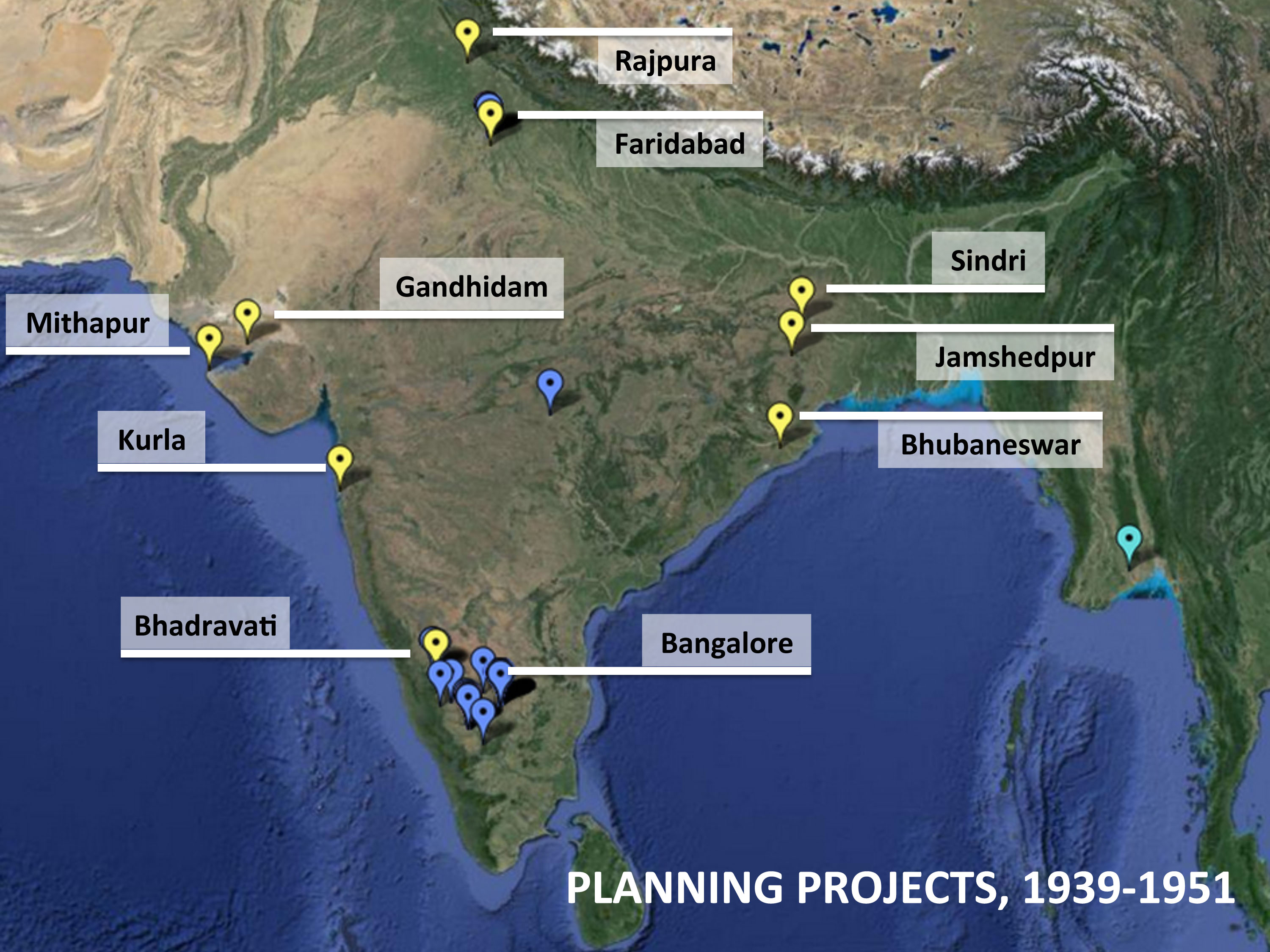
Map showing location of Otto Koenigsberger’s planning projects in India, 1939-1951


Amongst these papers, there was a focus on examples from India. Kristin Larsen and Laurel Harbin (University of Florida) studied Albert Mayer’s influence with their paper “American Regionalism in India: How Lessons from the New Deal Greenbelt Town Program Translated to Post-World War II India”, Rachel Lee (Technical University, Berlin) concentrated on Otto Koenigsberger in “From Static Master Plans to ‘Elastic Planning’ and Participation: Otto Koenigsberger’s Planning Work in India (1939-1951)” and Ray Bromley (University at Albany – SUNY) presented a paper on “Patrick Geddes’s Plan of Indore: The Inside Story”.


Abuja Presentation Slide

Part of the transnational team involved in the planning of Abuja, Nigeria


Another geographical zone of transnational planning interest was sub-Saharan Africa, with papers by Tiago Castela (University of Coimbra) “Peripheries in a History of Urban Futures: Planning for the Government of Informal Spaces in Late Colonial Mozambique” and Rachel Lee (Technical University, Berlin) “Beyond East-West: GDR Development Planning Transfer – from Oil Presses in Ghana to the Master Plan for Abuja”. Examples of transnational planning from China included a paper titled “Richard Paulick and the Import of Modernism in China” by Li Hou (Tongji University), and Benyan Jiang and Masaki Fujikawa (University of Tsukuba) investigated the German and Japanese influences on green spaces in Qingdao – “Conflicts and Continuity: The Development of Green Spaces in Qingdao, China (1898-1945)”.


After 3 intense days of papers and roundtables, the IPHS conference went out with a bang with an “after party”, with music provided by the conference organiser Christopher Silver’s (University of Florida) rock band In Crisis.


DSCF2356_Conference After Party

Planning historians rock St. Augustine


As well as the great papers and partying, thanks to Planning Perspectives editor Michael Hebbert (University College London), I was delighted to find a copy of the Appendix to the Volta River Project Report at Anastasia Books, St. Augustine. The Volta River Project provided the impetus for several transnational UN planning missions to Ghana (formerly Gold Coast) with team members including Albert Mayer and Otto Koenigsberger.


DSCF2360_Volta River Project

An unlikely find at a St. Augustine used bookstore


The abstracts of the abovementioned papers can be downloaded from the IPHS conference website http://iphs2014.dcp.ufl.edu/documents/Abstracts-IPHS2014.pdf and a revised version of the conference proceedings will be online soon.


European Architectural History Network Conference in Turin

The European Architectural History Network (EAHN) held their third international conference in Turin from 19th-22nd April. The conference included several papers with a transnational theme and thanks to the generosity of the presenters/authors we’ve included some of their abstracts below:

S3.1 Concrete Conduits in Gandhi’s Ashram. Tangled Environmental Aesthetics in Post-Independence Indian Modernism

Ateya Khorakiwala Harvard University, USA

Post-independence India’s conception of nature as risk-resource system fuelled its project of modernization. Dams were construed as techno-scientific operations in systems designed to circumvent disaster. The corresponding cultural project of architectural modernism borrowed anti-colonial politics’ essentialist strategy, foregrounding a search for identity and taking its cue from climate and vernacular technology. Although driven by resourcedearth, Indian modernists wrought scarcity into an aesthetic language: louvers, chajjas, verandahs, and lattices came to dominate Indian modernism’s vocabulary. For Charles Correa, climate provided raw material for a new, yet ancient, aesthetic language. His early conceptual project – the Tube House (1962) – a unit designed to be low cost and easily multiplied, used deep louvers, a courtyard, and shaded windows to regulate the internal climate. The prototype has been called “ahead of its time”, as if it were a proleptic part of sustainability; however, the project was rooted in a different set of political and aesthetic lineages that came into play in a parallel project, a museum commission that he won right out of MIT. The Sabarmati Ashram, built on the site of Mahatma Gandhi’s home in Gujarat, in homage to the leader, sat at the intersection of three distinct intellectual lineages – Gandhi’s politics, Tagore’s aesthetics, and Nehru’s techno-science. This paper uses Correa’s Sabarmati Ashram project to interrogate the threads of environmental consciousness nested within the decolonization paradigm to argue that although these threads look like sustainability, they belong to a different history, and although they seemed to be a counter-narrative to big science and big dams, they were wrought of the same anti-colonial political origins. Although the Gandhi/Nehru/Tagore lineage was politically contradictory and certainly never resolved, this paper will look for architectural and aesthetic references to limn the alternate possibilities for what environmental consciousness may have been before the 1970s.


S3.4 Experiments on Thermal Comfort and Modern Architecture: the Contributions of André Missenard and Le Corbusier

Ignacio Requena Ruiz Ecole Nationale Superieure d’Architecture Nantes, France

Daniel Siret Ecole Nationale Superieure d’Architecture Nantes, France

The early scientific researches into the thermo-regulative response of the human body during the 1920s and the 1930s normalized thermal conditions in working and educational environments to improve user’s performance. The European and American contexts of housing promotion and industrial development during post-war extended this approach to different environments. Geographers, physiologists and engineers encouraged manufactured indoor atmospheres that could overcome human shortcomings resulting from environmental and biological conditions. Climate, indoor atmospheres and human body were interlinked to develop the ideal environment for modern society. Paradoxically, these original notions and researches have been used to promote both bioclimatic and weatherized architectures along the second half of the twentieth century. The French engineer, researcher and industrialist Andre Missenard was a prominent contributor to the study on the thermo-physiology of comfort as well as its experimental application to engineering and architecture. As a collaborator of the architect Le Corbusier, his influence not only attempted technical fields, but to the whole notion of the ideal environment for modern society. Consequently, Le Corbusier’s works during the post-war became a collective laboratory on hygro-thermal control, where passive and active systems were constructs of what Missenard called “artificial climates”. Based on an original research at the Foundation Le Corbusier archives and the French National Library, this communication presents the design method of the Grille Climatique and the buildings for the Millowners Association (Ahmadabad, India) and the House of Brazil (Paris, France) as study cases. As a result, the paper discusses the influence of physiology and environmental technology in the early approaches to thermal environments in architecture, what afterwards supported both bioclimatic and mechanical viewpoints.


S3.5 The United Nations Headquarters and the Global Environment

Alexandra Quantrill Columbia University, USA

The realization of the United Nations Headquarters between 1946 and 1952 marked the onset of a complex relationship between environmental management and global development in the postwar period. Designed by an international committee of architects, the headquarters were a vexed monument to world peace. At the same time the work of the fledgling institution reflected its incipient stance on environmental and economic concerns of a global order. The 1949 United Nations Conference on the Conservation and Utilization of Resources promoted international cooperation in allocating scientific research to resource disparity as a means of keeping the peace. Scientists, engineers, and technical experts offered strategies for prosperous member states to address resource deficiencies within developing tropical and arctic regions, which were presented as the last frontiers of cultivation. Lewis Mumford remained highly circumspect regarding the UN Headquarters’ representation of a new global order, questioning its unconscious symbolism of the “managerial revolution” and monopoly capitalism. Indeed, Mumford pitted the degradations of mechanization against his theory of organic synthesis, in which science and the machine support life processes rather than diminishing them. By contrast, in his presentation of the UN headquarters Le Corbusier presented the organic in terms of an exact biology facilitated by new technology. Purportedly to address the diverse climactic origins of the UN delegates, the envelope of the UN Secretariat was designed to function as a manipulable environmental control system accommodating the global population housed within, thereby fostering harmonious relations. Internationally published and widely imitated, the details of this thin, flat, smooth surface of modernism embodied enmeshed aesthetic and technical ambitions. Drawing from contemporary discourses on technology and the organic, this paper will scrutinize the ways in which the UN invoked science to address environmental management at a global and a highly proximate level.


PhDRT2.1 Ahmedabad. Workshop of Modern Architecture: The National Institute of Design

Elisa Alessandrini Universite degli Studi di Bologna, Italy

The subject of this research is the National Institute of Design (known as NID) designed by Gautam Sarabhai and his sister Gira in the city of Ahmedabad, India. This project has been selected because it highlights the two faces of post-colonial India; a nation that sought to amalgamate modern institutions with traditions from the past. Designed in 1961-1964 and built in 1966-1968, NID is one of the most convincing examples of this synthesis. The decades 1940-1960 are the time frame of this study, corresponding to a period of great intellectual upheaval in India following independence from British rule. In these years, the first generation of Indian postcolonial architects created buildings of considerable importance and had close contact with Western modern masters. NID is part of this chronological framework. The wider survey is restricted to educational buildings constructed by Indian architects in Ahmedabad, and highlights the influence of masters such as Le Corbusier, Louis Kahn, and other Western professionals who participated in this climate of cultural exchange. While Frank Lloyd Wright and Walter Gropius welcomed talented young Indian architects into their schools or studios, they themselves never went to the sub-continent. Their American and European colleagues, however, such as Richard Neutra, Charles and Ray Eames, Buckminster Fuller, Enrico Peressutti, Harry Weese, and Frei Otto, had a direct dialogue with the emerging generation of Indian architects through their presence on site in India. The architecture designed by Achyut Kanvinde, Gautam and Gira Sarabhai, Balkrishna Doshi and Charles Correa, just to name a few Indian architects of that new generation, are a clear evidence of these contacts. The National Institute of Design found its seat in Ahmedabad, a city favoured by young Indian architects and a centre of decolonization. The thesis examines some aspects of post-colonial Indian architecture and its outcomes, in particular in Ahmedabad, which must be considered a real laboratory of Indian modernity. NID is a national institution of great importance which, like its designers Gautam Sarabhai (1917- 1995) and Gira Sarabhai (1923), has never been the subject of research and rarely mentioned in history books of post-colonial India. With this study, the author aims to restore NID’s value and reputation and give voice to its designers, investigating the central role of the Sarabhais in the modernization of Ahmedabad and more generally of the country. Thanks to their wide national and international network, Gautam and Gira Sarabhai were key figures in the cultural development of Ahmedabad, and the creation of NID is one of the most significant examples of intellectual exchange between East and West. The study illustrates how the fertile friendships between Indian and Western architects, but also traditions from the past, are reflected in the NID project. This thesis is based on archival research in a number of archives in India, Europe and North America.


S23.5 “Housing Before Street”: Geddes’ 1925 Plan for Tel Aviv and its Anarchist Disruption of the Dichotomy between Top- Down Planners-Ideologues and Bottom-Up Urban Citizens

Yael Allweil, Technion, Israel

A founding member of the city planning movement, Sir Patrick Geddes was largely marginal to the movement for his anarchistic challenge of the very idea that new cities form “of thin air” due to the powerful actions of statesmen, capitalists and planners (Hall, 2002; Rubin, 2009). Geddes self-distinguished from conceptions of modern planning, insisting that “urban planning cannot be made from above using general principles […] studied in one place and imitated elsewhere. City planning is the development of a local way of life, regional character, civic spirit, unique personality […] based on its own foundations” (Geddes, 1915). Geddes’ urban vision was affected by issues of housing in the industrial city, yet compared with other theories of urban planning, Geddes’ “city of sweat equity” approach to urban housing “contributed to planning theory the idea that men and women could make their own cities” (Hall, 2002). A perfect match with Tel Aviv founders’ ideas of the city as accumulation of future-citizens as a vehicle for self-government (Weiss, 1956), Geddes’ 1925 plan for Tel Aviv, based on detailed survey of the town as housing estate, accepted Tel Aviv’s use of housing as building block to produce a “Housing before Street” urban planning. Geddes’ Tel Aviv plan poses alternative to accepted models of modern planning: technocratic-capitalist Haussmanism, aesthetic City Beautiful, Corbusian “radiant cities”, or utopian Garden City. At the same time, contrary to the phenomenon of makeshift housing predating formal settlement and creating the city de-facto, as in the auto-constructed peripheries of Cairo, Brasilia or Calcutta (Holston, 2008), Tel Aviv’s formation via housing was the result of a conscious, anarchist, planning process where Geddes fully realized his ideas: not merely challenging top-down mechanisms, but disrupting the very dichotomous perspective of modern urbanism as a clash between topdown planners-ideologues and bottom- up urban citizens.


S13.1 The Afro-Brazilian Portuguese Style in Lagos

Ola Uduku, The University of Edinburgh, UK

This paper seeks to re-evaluate the categorisation of “Brazilian” style architecture on Lagos Island. For long the notion of the Brazilian style, Aguda houses on the island has allowed for an exotic reading of the built form, allegedly transmitted to Lagos through the labour and construction skills of mainly Yoruba repatriated African slaves from Brazil and elsewhere in South America. Whilst the original owners of these buildings would have had contact with Brazil, the essential styling can be traced back to Portugal, and indeed is seen in earlier traditional architecture in locations such as Benin (Nigeria) and parts of coastal West Africa, which had centuries earlier had contact with Portuguese traders. The paper seeks to question the labelling of the Afro Brazilian style on these buildings in Lagos, with no reference to earlier Portuguese-European influences on their styling. What does this tell us about the embodied identity of the built form and its presentation within a richer African mediated cultural discourse related to past remembered and forgotten histories? I will be relying on the use of textual histories of Lagos, as well as existing records of buildings in areas such as Campos Square in Central Lagos, the epicentre of what was considered to be Lagos’s Brazilian Quarter.


S13.3 Architecture of Sun and Soil. European Architecture in Tropical Australia

Deborah van der Plaat University of Queensland, Australia

Substituting climatic theories of difference, a conception that was common to the eighteenth century, with biological propositions – an approach advanced in the nineteenth century by Victorian theorists of race – aided Britain’s territorial interests in tropical India (Harrison 1999). Breaking the association between racial distinctiveness and climate and identifying difference and superiority with biological attributes effectively negated questions relating to the viability of white settlement within the world’s tropical regions. Parallel strategies, as Evans (2007) and Anderson (2002) have argued, were also evident within early twentieth-century Australia. Here a “series of influential scientific and medical writers boosted a vision of virile whites defeating the sickness and neurasthenia in the tropics”. Previously positioned as a “hot bed of disease”, tropical Australia now became the “staging ground” for a “higher type” of white Australian – a distinctive “tropical type […] a new race, bred of sun and soil” (Evans 2007: 173-175). The aim of this paper is to consider the strategies developed in the first half of the twentieth century that permitted the acclimatisation of the white man and his architecture to tropical Australia. A particular focus will be the correlation between an emerging discourse on a tropical architecture in northern Australia and the writings of Anton Breinl, Rapheal Cilento and Jack Elkington, directors of the Australian Institute of Tropical Medicine. Demonstrating the Institute’s interest in theories of racial segregation and eugenics in addition to preventative medicine and hygiene (Anderson 2002), the paper suggests these writings offer an alternative “Rationale” for the tropical architecture of twentieth-century Australia revealing a logic which extends beyond the instrumental concerns of comfort and amelioration to consider more broadly theories of race, culture, politics and place.


S13.4 Health, Hygiene and Sanitation in Colonial India

Iain Jackson Liverpool University, UK

Using guidebooks, pamphlets and government reports this paper will investigate British notions of health, sanitation and hygiene in India with respect to city infrastructure and housing, focusing on the late nineteenth and early twentieth centuries. Nearly all colonial planning, housing and large infrastructure projects were concerned, if not obsessed, with providing “clean” and “healthy” solutions for their European residents. Of course, notions of cleanliness are far from fixed or absolute. Whilst scientists and the medical profession looked for cures to the many diseases and ailments that afflicted the European populations in the Tropics, running in parallel was a belief that the built fabric and wider city planning also had a significant impact on the health of its visitors and occupants. It is this kinship that tropical architecture and tropical medicine share that I want to investigate. Moving beyond the mere separation of local and European dwellings, what other tangible attempts were made to improve sanitation, hygiene and health? The annual public health and sanitation reports for all the major cities and provinces of India provide an acute picture of the correlation between disease, sanitation and city infrastructure. Is there any connection with the outbreak of disease, perceptions of filth and attempts to prevent such an occurrence? In addition to the citywide governmental approach what of the domestic arrangement and smallscale adjustments to residences? What practical tips and advice were dispensed to those about to embark to India from Britain and how were British notions of domesticity tempered to suit the Indian conditions? Again, within publications devoted to health a chapter is frequently included on “the house”. It is through these two extremes of scale that this paper hopes to contribute to the historicizing of the tropical architecture canon and to explore the connection between health and architecture in the tropics.


S13.5 Climate, Disaster, Shelter: Architecture, Humanitarianism, and the Problem of the Tropics

Anooradha Iyer Siddiqi New York University, USA

This paper presents a little-studied history of exchange between architectural practice and humanitarian intervention, predicated upon a technology and rhetoric around climate formulated between actors in Europe and the tropical zones in the second half of the twentieth century. Materially, humanitarian activity during and after the Cold War left a vast global footprint, with planned spaces and designed artifacts responding to tropical environments at local levels. Rhetorically, an abstracted notion of climate masked international development agendas inherent in this activity, embedding them within an architectural discourse around environmental disaster in the tropics that contributed to broad anxieties of the period. Culturally, congregations from the early 1950s to the present in the legacy of “tropical architecture” consistently directed a professional architectural gaze upon issues of hygiene and biopolitics in the global South, providing urgent claims for a discipline flirting with postmodernism. These constructions will be examined in three episodes, beginning in the 1990s with an international workshop convened by the United Nations High Commissioner for Refugees to study cold climate architecture, moving to research endeavors by academic, private sector, and United Nations actors in the 1970s in tropical sites, and finally, studying delays, perversions, and other descendant practices and discourses in twenty-first- century camps for “climate refugees”. Drawing evidence from archival and oral history research in Geneva, Nairobi, Oxford, and along the border of Somalia, this paper traces events, genealogies and a wide network of figures through hard and soft architectural exchange. It examines the configuration of a space around the empirical and conceptual problem of tropical climate as translated through the European problem of humanitarian intervention.


Tectonics of Paranoia: The Matshed System Within the First Fabrication of Hong Kong

Christopher Cowell, GSAPP, Columbia University, USA

The matshed was the earliest building system used in the construction of colonial Hong Kong from 1841. Seeming to arise from indigenous southern Chinese construction, this bamboo-framed, palm-leaf-roofed, and woven-cane-walled entity had started life as an endlessly adaptable construction kit suited to the pragmatic needs of both the Anglo-Indian military and Anglo-Chinese commerce. Rapidly deployable, it transformed into almost every building typology conceivable: from the storage of troops (the barracks), to the storage of cotton (the godown); and from the place of mammon (the market bazaar), to the place of worship (the colonial ‘mat church’). However, following the ‘Hongkong Fever’ of 1843, more solidly constructed buildings were demanded as being both safer and more morally respectable. The matshed, therefore, began to acquire a dubious character. It turned into an object of paranoia: as if a progenitor of disease, criminality and conflagration. Subsequently, the matshed became an anachronism, the dated component of a founding mythology. The physical state that urban Hong Kong had been a mere three years before was now viewed through the collective memory lens of European residents with some incredulity. And yet, the matshed stubbornly endured.

This paper will trace the environmental politics of this early set of transformations and how they fed into a founding narrative used by a split community unsure of the island’s permanent viability as a British possession. Sitting chronologically between two significant architectural theoretical models of neoclassical rationalism and tectonic romanticism: respectively Marc-Antoine Laugier’s primitive hut (Essai sur l’Architecture, 1753) and Gottfried Semper’s Caribbean hut (Der Stil, 1860-63), the subtropical Hong Kong matshed was a significant device of European colonial encounter that both absorbed and contributed to the shift between these models, from origin myth to degenerate present.