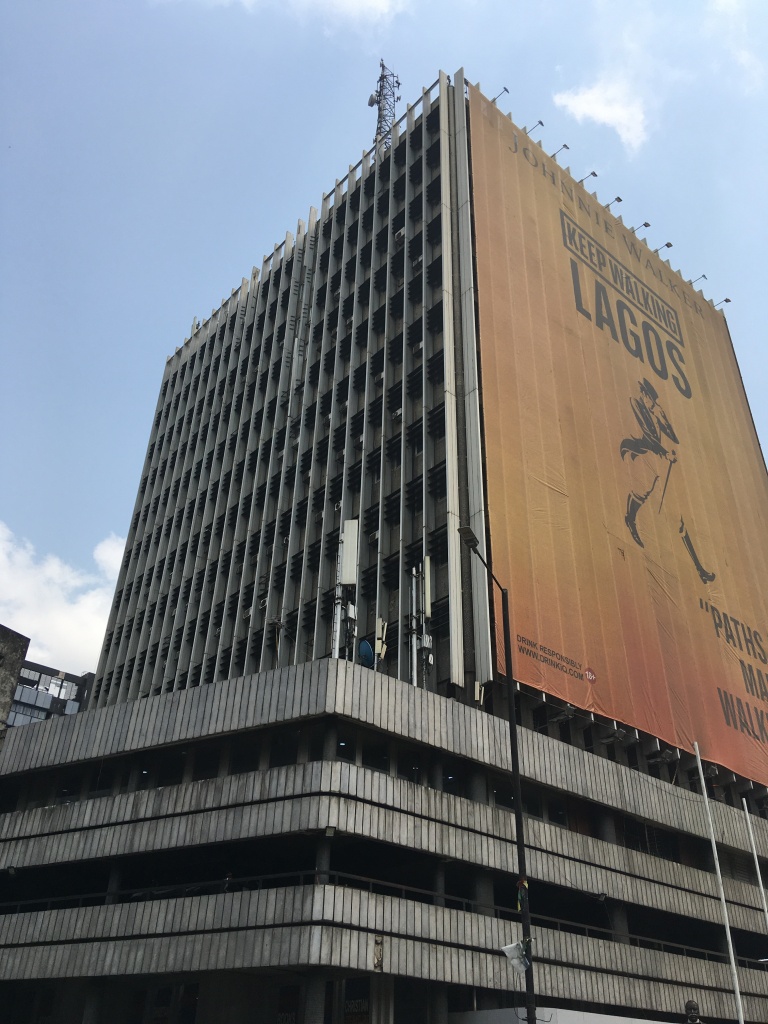
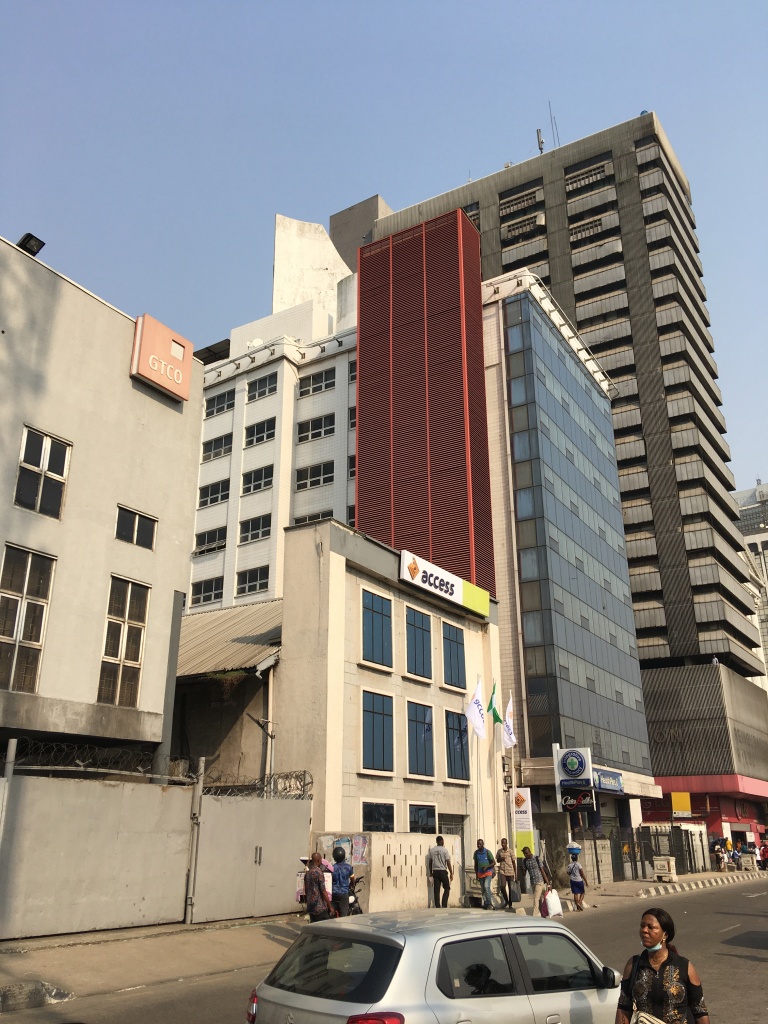
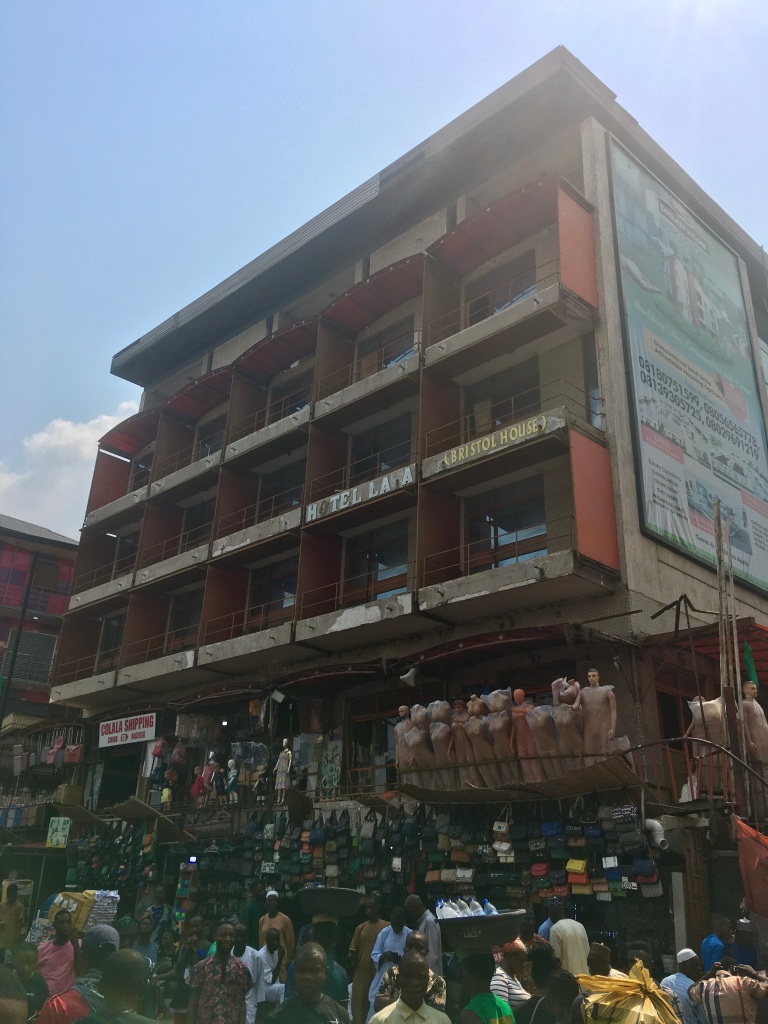
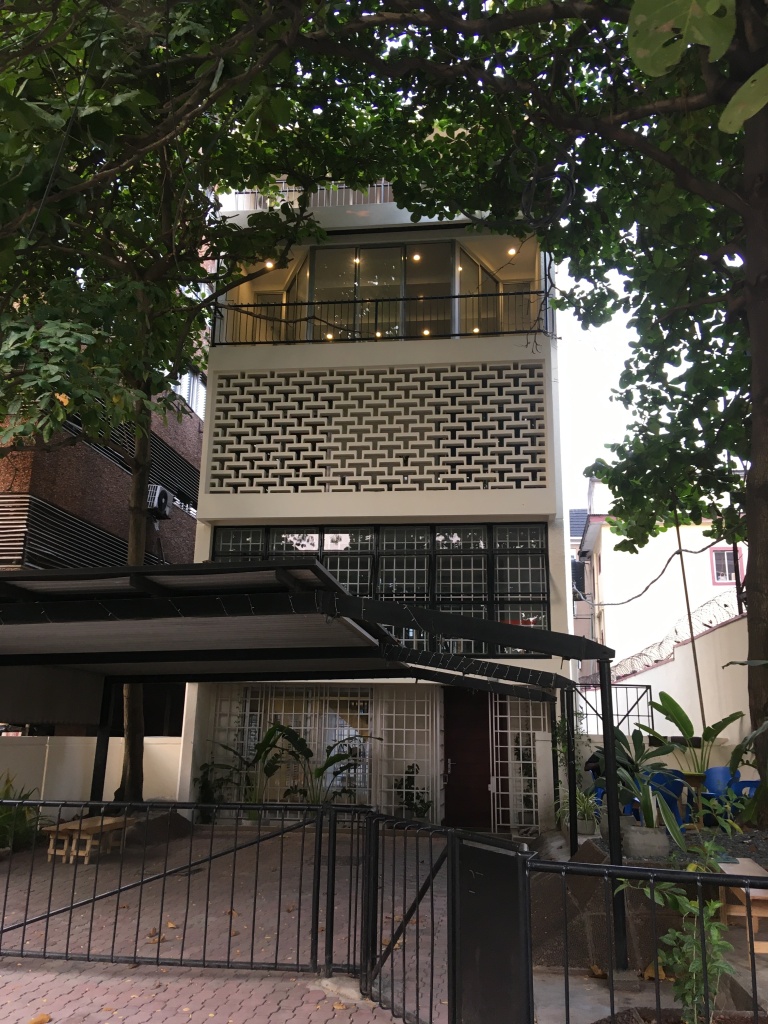
An exhibition that we’ve been very much looking forward to opens this week at the V&A Museum in London. We’ve got a few of our models on display at the exhibition, and have been involved behind the scenes. There’s a large contingent from the Transnational Architecture Group making their way to various opening events this week and you can expect a series of reviews and critiques here shortly.
There’s also an article out today by Oliver Wainwright in The Guardian that discusses the exhibition concept – and some of our favourite buildings.
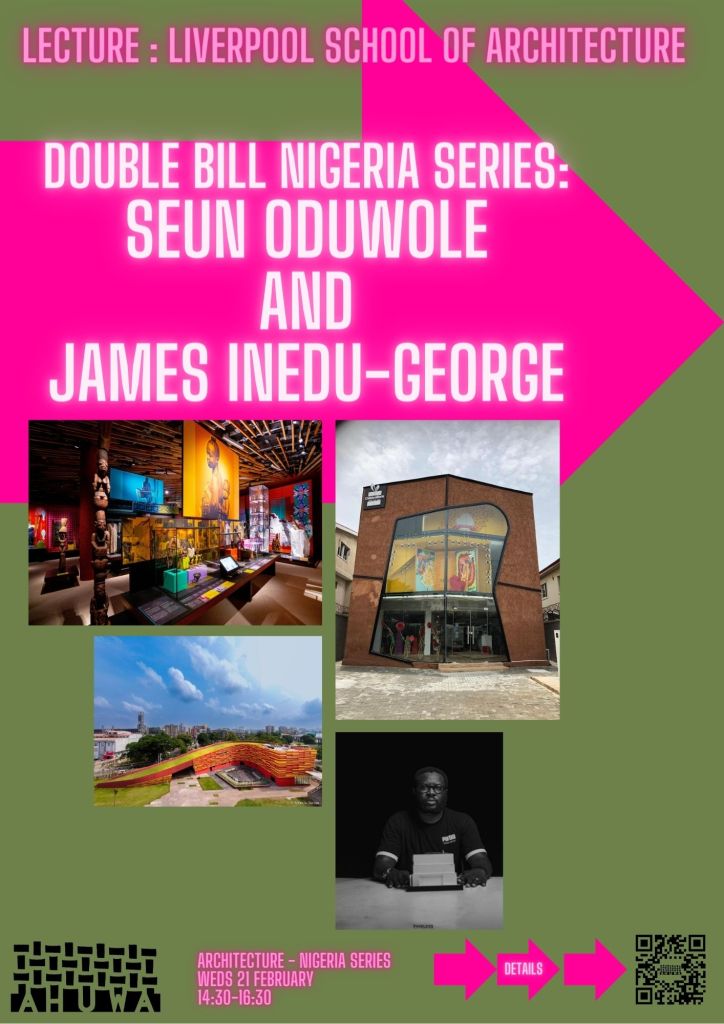
We inaugurated AHUWA’s Architecture in Nigeria Series this week with two talks from architects Seun Odowole and James Inedu George .
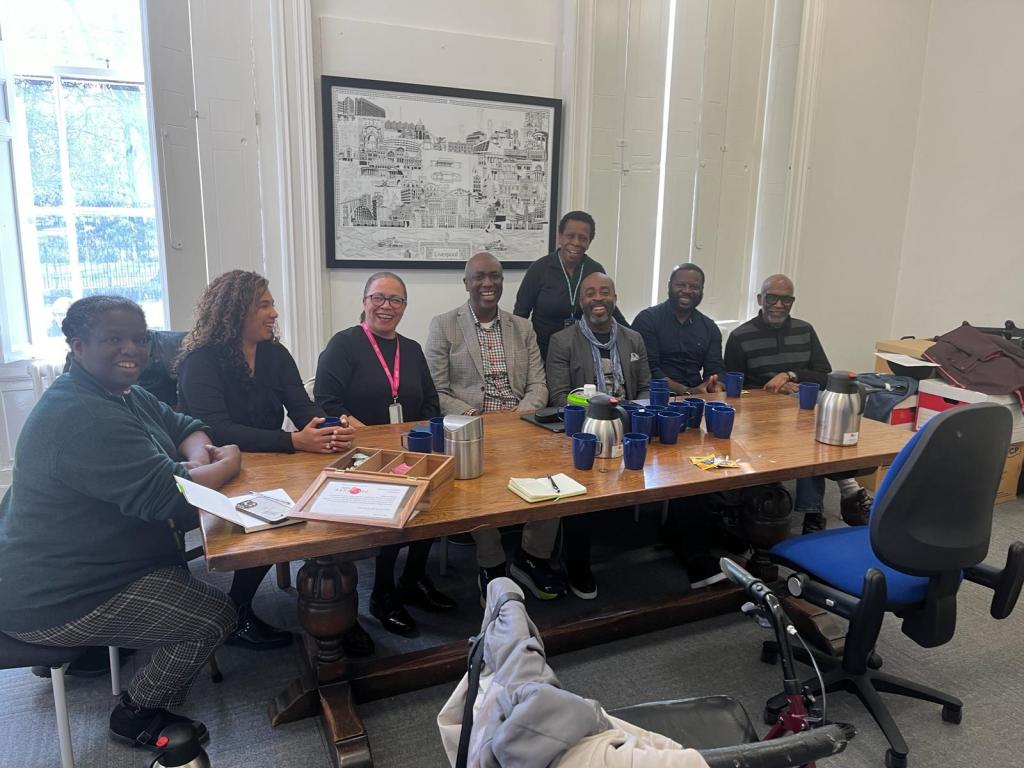
Pre-lecture tea with Susan Golligher; Maleka Egeonu-Roby, Michelle Charters, Obuks Ejohwomu; Ola Uduku, Seun Oduwole, James Inedu George, and Prof emeritus Tunde Zack Williams
After gathering at the Liverpool School of Architecture for pre-lecture tea, we talked across the Square to the new Yoko Ono Lennon Centre for the talks to begin. Both Seun and James are involved in designing new museums in Nigeria and Ghana, and we were joined by colleagues from the Liverpool International Slavery Museum who are collaborating with LSA and Feilden Clegg Bradley Studios on the refurbishment and reimagining of that space.
Join us at Liverpool School of Architecture this Wednesday 21st Feb 2024 at 14:30 for a lecture double bill discussing and showcasing contemporary Nigerian architecture, design practice and thinking.
We have two key players who are part of the the new contemporary West African Architecture scene. First we have Seun Oduwole, who graduated in Architecture from Nottingham University and after working in practice in the UK returned to Nigeria to set up his own practice Studio Imagine.Simply Architecture [SI.SA].
He will be speaking about his recently completed John Randle Centre in Lagos discussing the design history matters of heritage, and also the challenges of building on prime real estate in the Lagos central business district. As he has practiced both in the UK and now works as a diaspora returnee architect, we will hear his views on the contemporary West African Architecture scene.
We also have James Inedu George, a graduate of Ahmadu Bello University. He runs the architectural practice HTL Africa, whose main laboratory is in Lagos Nigeria. Currently, he and his firm, HTL Africa, are working towards creating canonical typologies for our cities from an intense research on (Hausa) Traditional Architecture.
James lectures internationally on a regular basis and has featured in several publications globally. HTL Africa’s interests range from cultural to cutting edge technological exploration through architecture. Creating what might be read as experimental architecture, this research and implementation firm has an output that is at once fresh, modern and forward thinking. HTL also has tentacles in Dubai.
Do come to join what is likely to be a really illuminating afternoon discussing contemporary Architecture and heritage issues in West Africa.
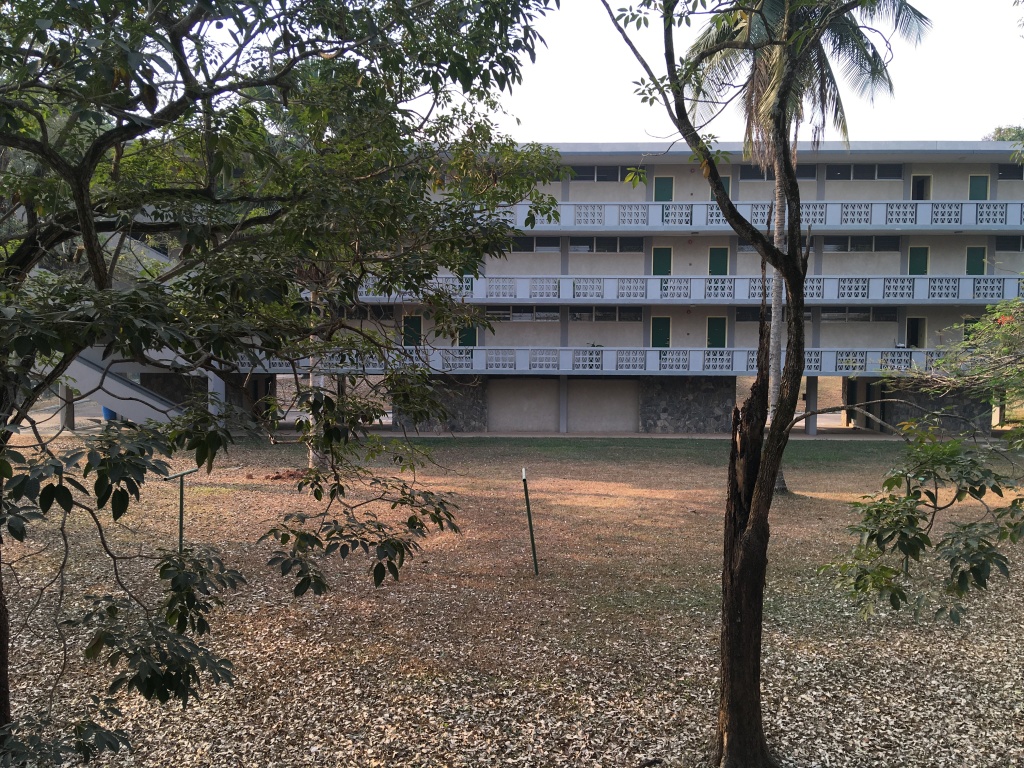
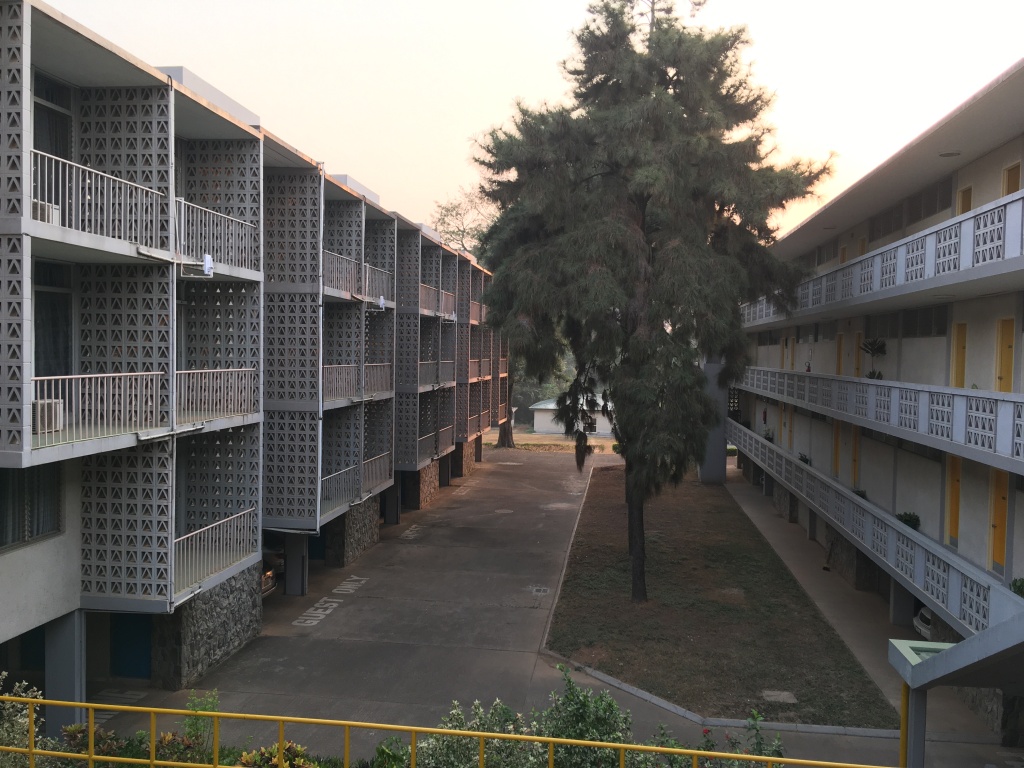
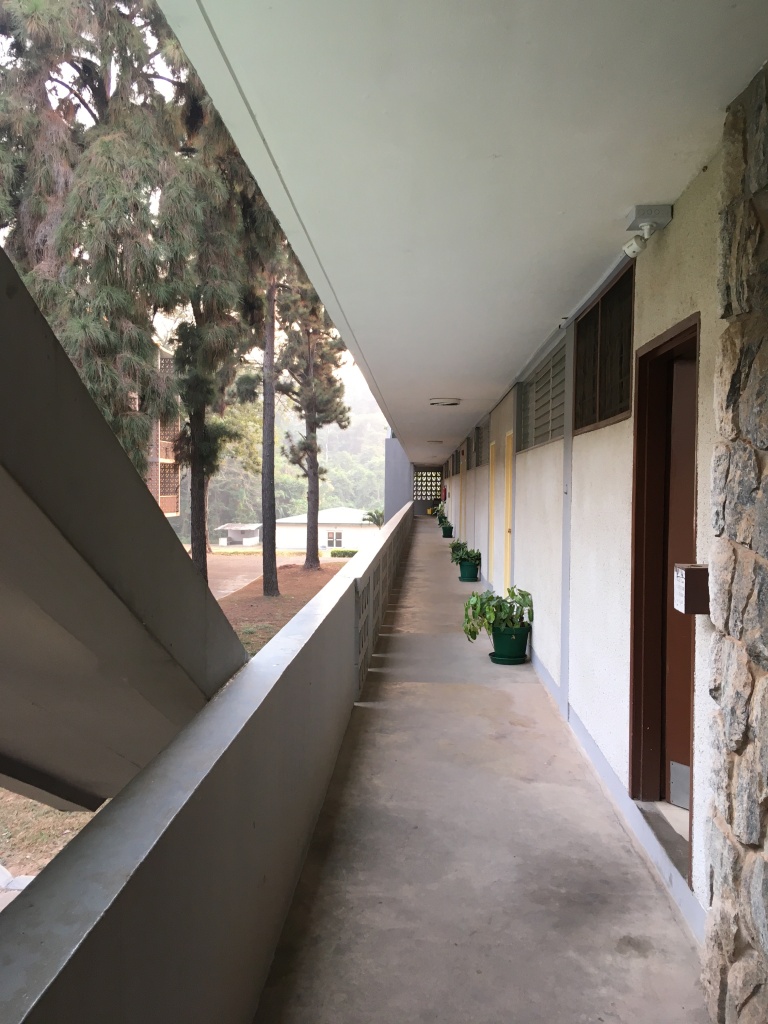
North of Ibadan is a 3000 acre site devoted to investigating farming, agriculture, and produce production in the tropical regions called the International Institute of Tropical Agriculture, or IITA. It’s a vast campus-laboratory established in 1967 and designed by Haines, Lundberg & Waehler – a US based architectural practice founded in 1888, and with various offices around the middle east and Africa. Whilst the main purpose of the campus is to conduct research (funded by various countries and conglomerates, and originally by the Ford and Rockefeller foundations) it also operates a hotel and contains all the usual facilities.
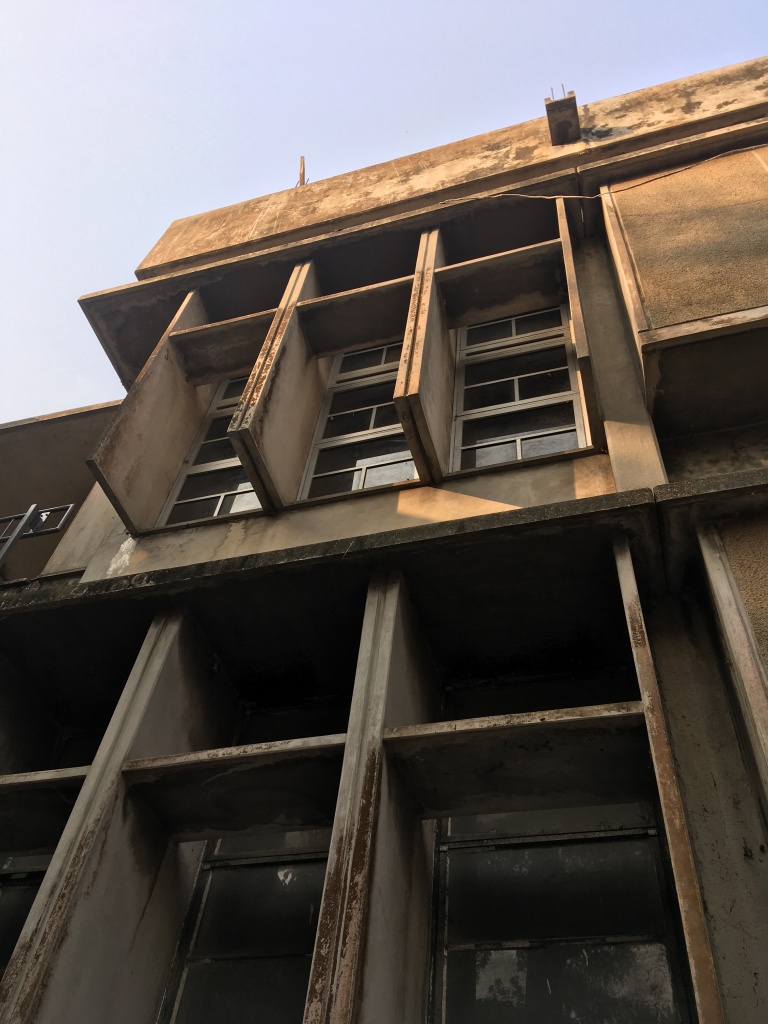
The bedrooms are arranged in large linear blocks with gallery access that utilises the dramatic level changes. The bedrooms all have cross-ventilation and louvred facades – although AC has been retro-installed at some point. It’s a pristine campus and a carefully manicured landscape.
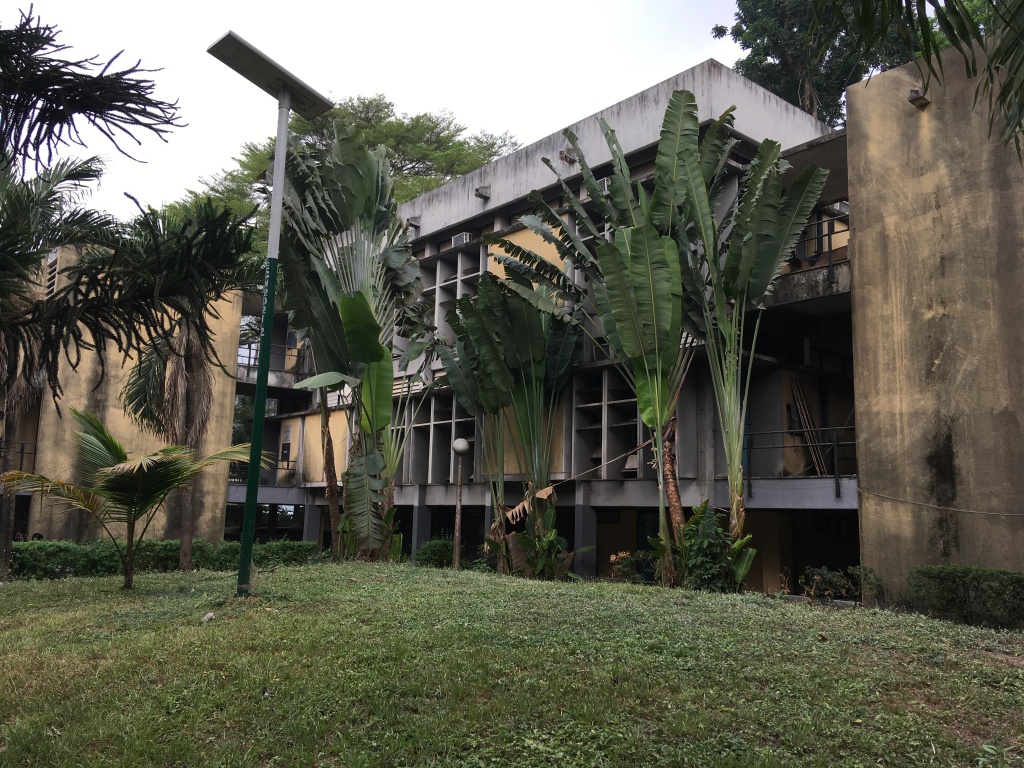
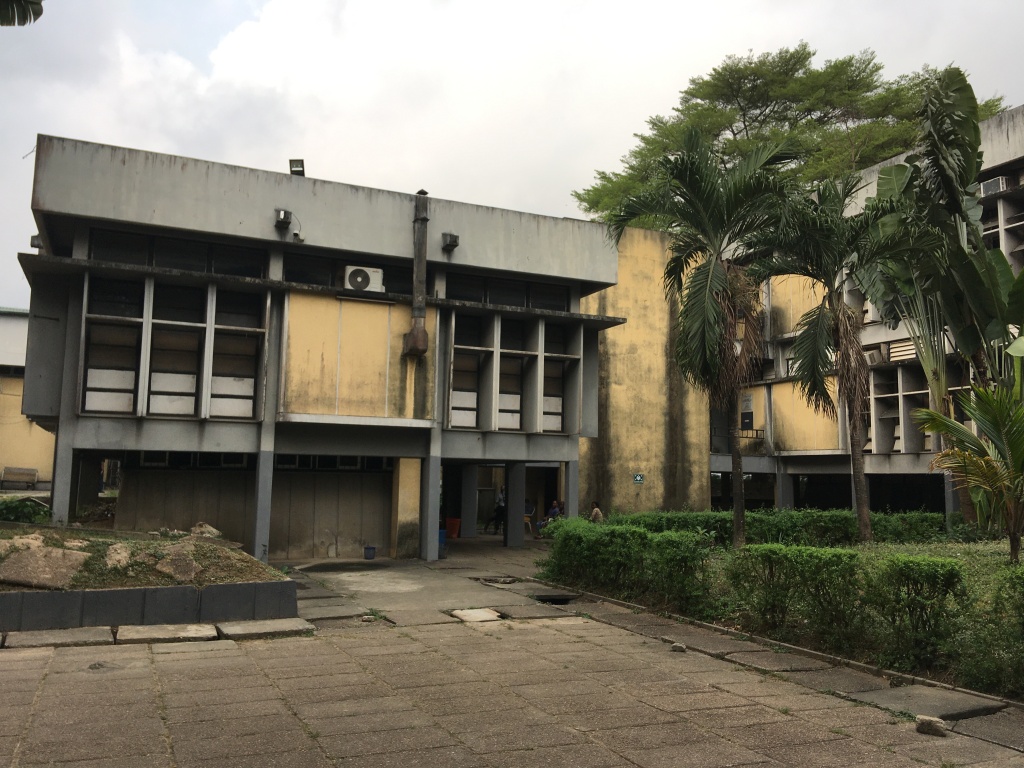
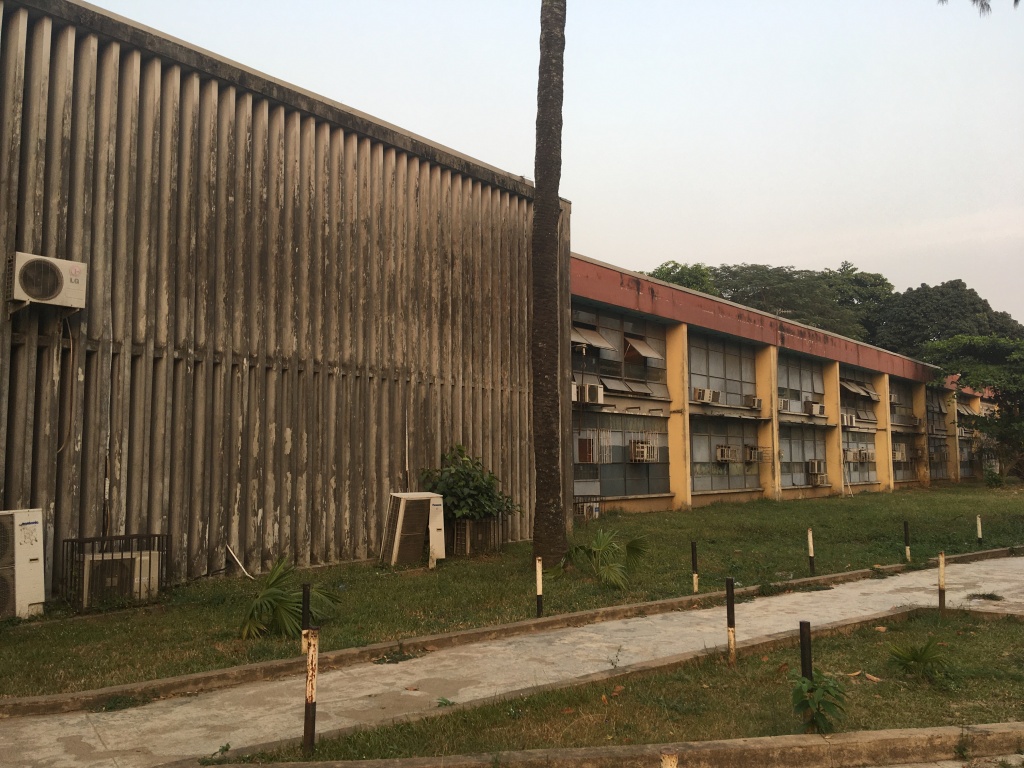
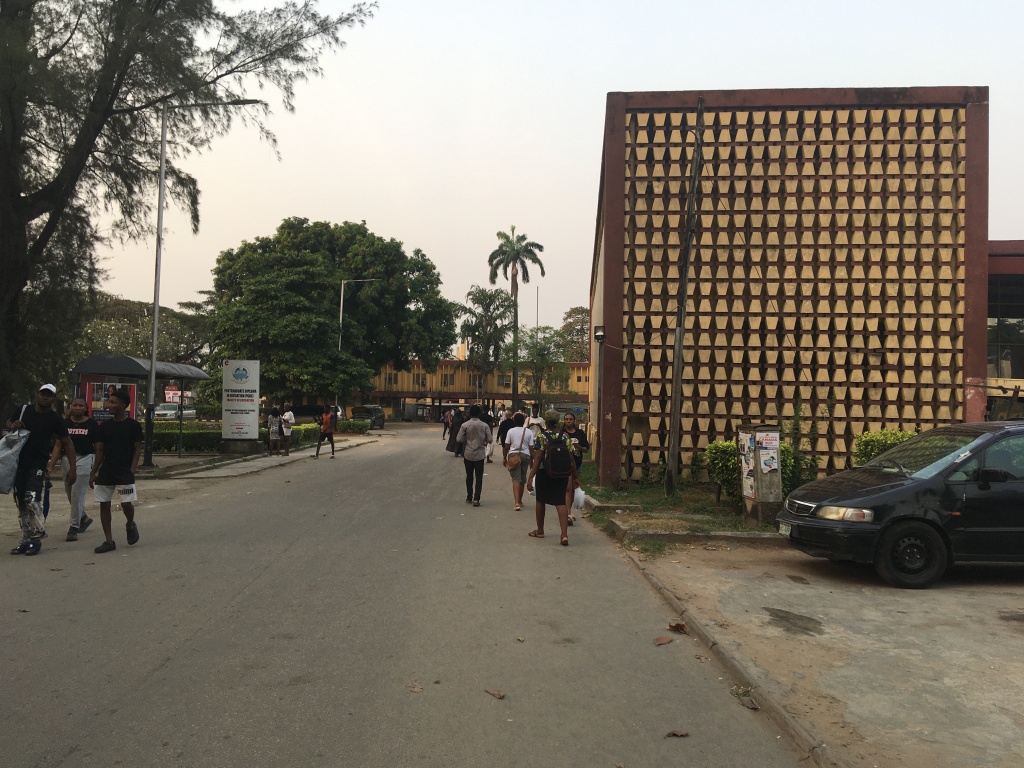
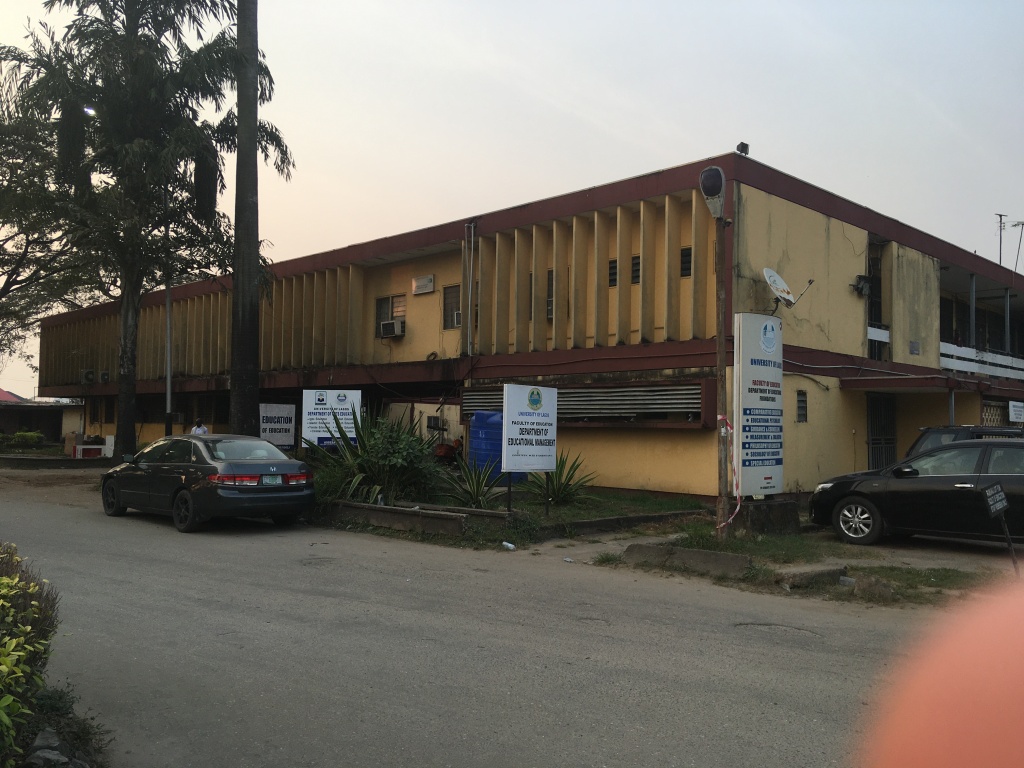
Here’s a few more structures from Unilag beyond the well-known examples from the centre of campus.
Architecture School and surrounding buildings.
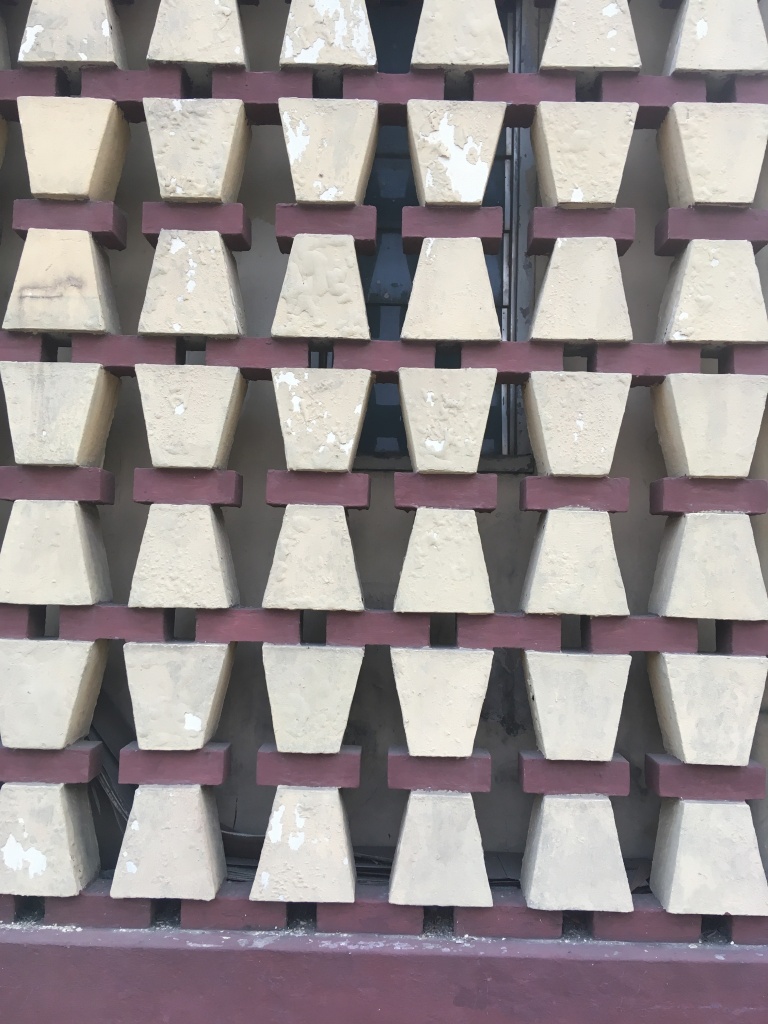
Queen Amina Hall – could this be a Design Group project? The concrete screens, elevational treatment and form suggest it might be [or an overlooked Alan Vaughan-Richards design perhaps?]. Opposite the Hall is another structure with a similar concrete screen motif, and adjacent is the Education building. These are carefully designed structures and expertly detailed and constructed – but we don’t know anything more on the design team and architect.
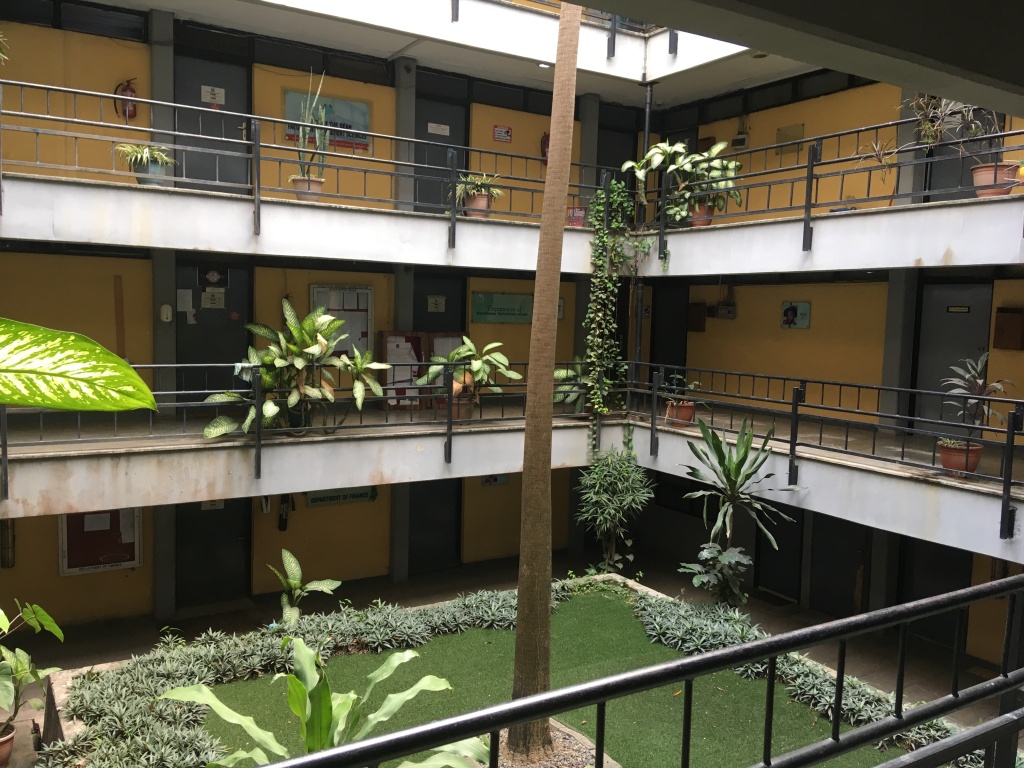
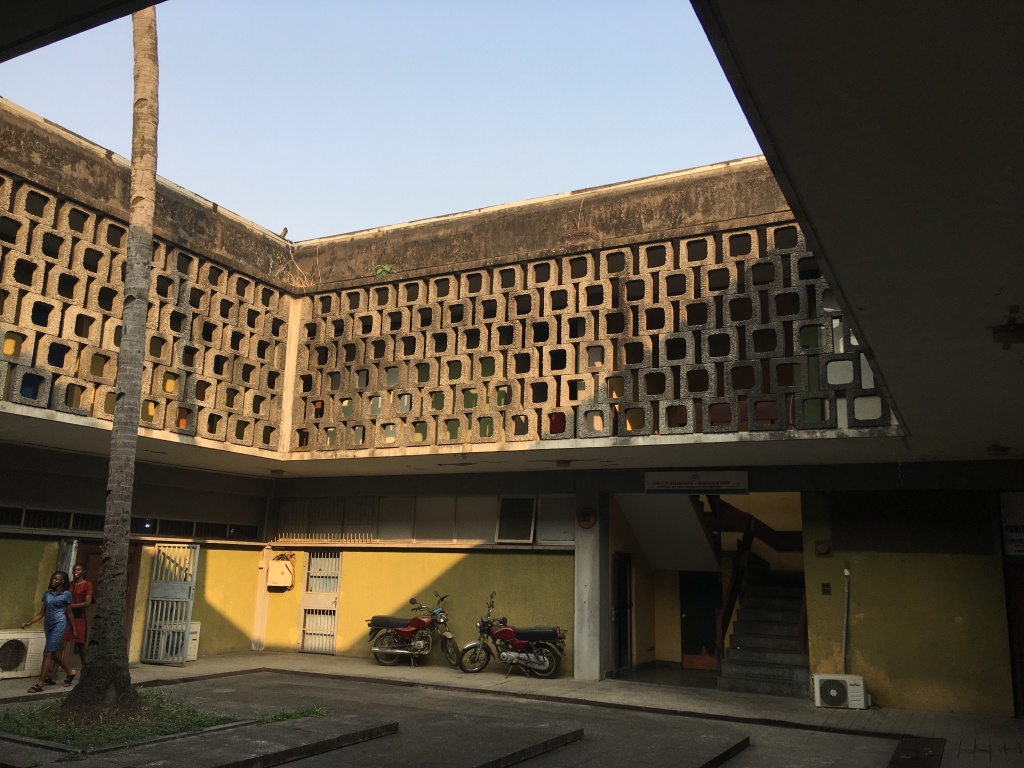
The Management building has an excellent (and overlooked) courtyard. It really enhances the space, creates a hidden garden, and turns the utilitarian corridor/circulation space into a place worth spending time in (just ignore the new extension/entrance lobby and plastic grass).
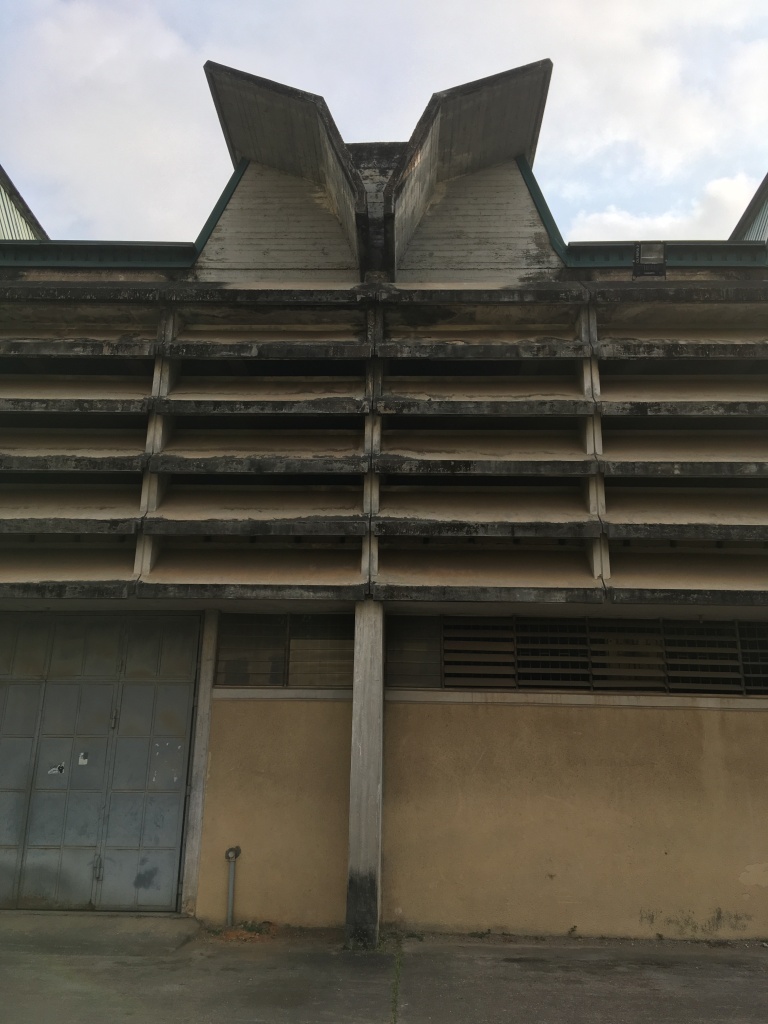
Engineering Labs: Heavy interlocking concrete louvres at first floor level with Y beams projecting beyond the building line at roof level supporting clerestory lights and roof structure. It’s a brutalist reimagining of the James Cubitt Engineering block at Kumasi – but twice the size….
Unilag is an important campus with a highly valuable and important set of late modernist post-colonial architecture. There’s a lot more work required here to identify the architects and to produce a campus map, gazetteer, and environmental analysis of these significant buildings.
One day in January at Trocadero Square, Lekki, Lagos...
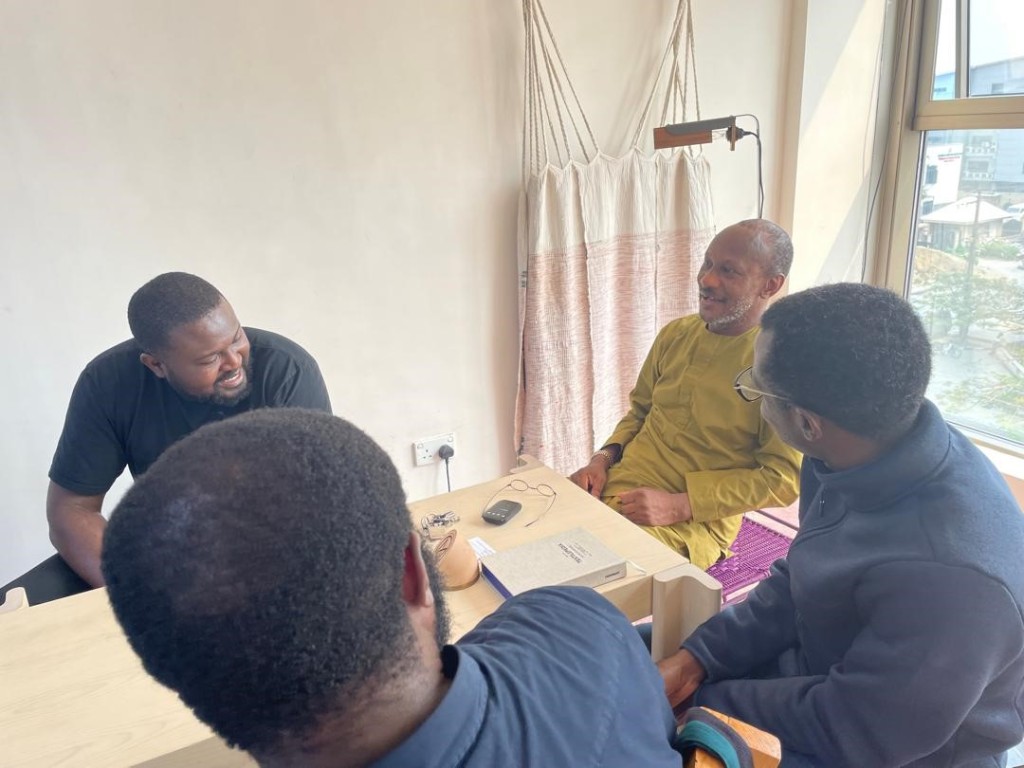
On our last day in Nigeria we planned to meet Nifemi Marcus Bello, a remarkable Nigerian product designer who has had his work shown to great acclaim at the Sharjah Triennale. Joining us was Associate Prof Seyi Akerele who had just completed a Virtual Fellowship at the University of Liverpool with Ola Uduku.
Seyi Akerele and Ade Shokunbi (photo O.Uduku)
It also seemed an ideal chance to meet up with some other creatives too, and we invited Adeyemo Shokunbi to join us. Shokunbi is a fascinatingly creative architect, whose Abijo Mosque received the Abdullatif Al Fozan Award for Mosque Architecture for the fourth cycle 2020 – 2023. Most recently Shokunbi has also made waves with his shipping container formed MAD (Make A Difference) Project at the University of Lagos and he will shortly be a taking up a Teaching Fellowship offered by the Obel Foundation in Denmark. James Inedu George also made time to join the party. George was one of Joe Owuso-Addo’s ‘New Blood’ from the 2021 Venice Biennale. A phone call from Shokunbi summoned Chuka Ihonor – writer art curator, impresario and activator extraordinaire.
Iain Jackson and Nifemi Marcus-Bello (photo O.Uduku)
The discussion which followed we felt lucky to have been allowed to listen in and occasionally contribute to. The key theme unsurprisingly was the dearth of the linking of academic teaching with the realities of practice. We heard tales of the assembled team, unsuccessful attempts at reaching out to the academy who either were disinterested or actively ignored these linkages. James Inedu-George was more direct in his criticism of relationships and links between practice and gown.
L – R Nifemi Marcus-Bello, Ola Uduku and Ade Shokunbi (photo I. Jackson)
The pre-eminence of the expatriate architect from South Africa, and in particular SAOTA was expressed. It was felt that Nigerian’s found it difficult to feel pride in local architecture and creative practice. Wealthy clients garnered a sense of prestige by hiring architects from overseas. It was a throwback to Demas Nwoko’s struggle for acceptance by the Nigerian architectural profession despite his clear brilliance as a creative designer whose roots were in his initial ABU architecture training. Collaborative practice and design also needed a wakeup call as the discussion critiqued the ‘lone architect-creator’ syndrome where collaboration was actively discouraged and firms struggled to scale their enterprise to deliver large projects.
Ade Shokunbi and James Inedu-George(photo O.Uduku)
With Chuka we’d like to ‘bring’ highlights of Sharjah Triennale to Nigeria. Nigerian creatives featured so strongly in this exhibition, and it seems appropriate to share this work with a Nigerian audience.
Back clockwise, Nifemi Marcus-George, Chuka Ihonor, Seyi Akerele and James Inedu-George (Photo O.Uduku)
Something special happened at this informal and chance encounter. From this gathering of creatives, educators, authors, makers, and architects a refreshing and encouraging discussion flowed. We shouldn’t stop here. We would be honoured to host the next platform for what might be termed an African Creative Awakening, and present below what we might call the Trocadero Call to Action (TCA) in deference to this auspicious meeting at the Trocadero Square in Lekki – the place to have been on Thursday 18th January inLekki, Lagos.
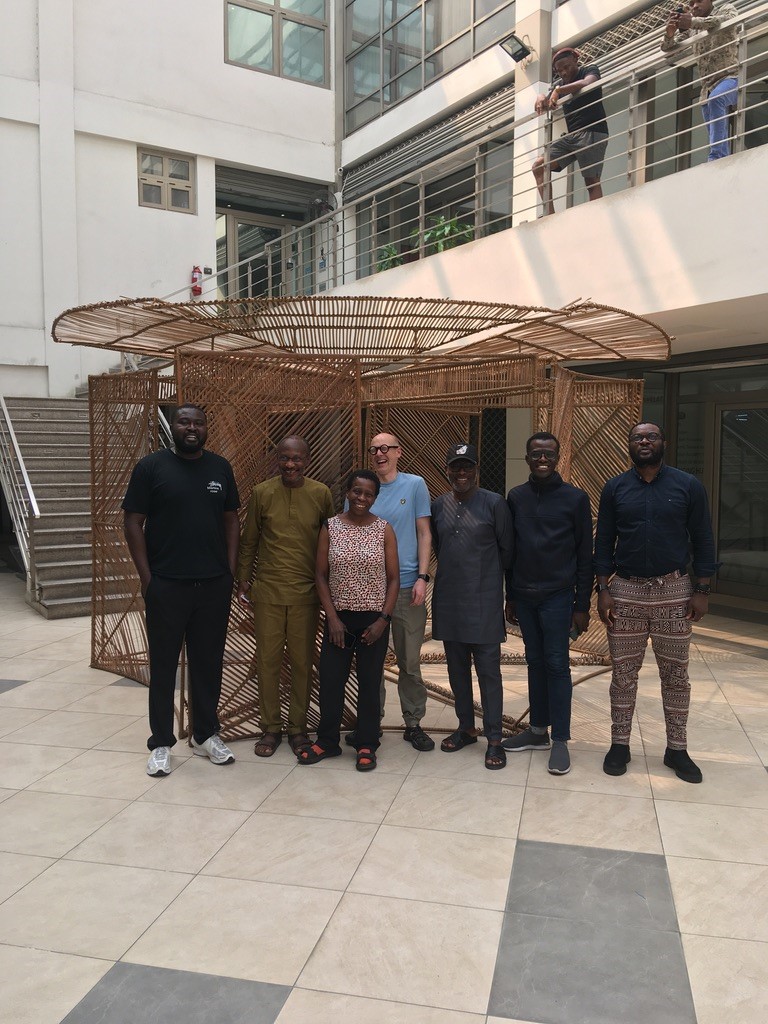
The TCA Participants and Observers:
L – R. Nifemi Marcus-Bello, Chuka Ihonor, Ola Uduku, Iain Jackson, Ade Shokunbi, Seyi Akerele and James Inedu-George (Photo Nifemi Marcus Bello Studios)
The future of Architectural Education in and around Western Africa
Practice Building and the process of commissioning, designing, and making architecture.
The purpose, shape, and expression of architecture within the Western African context, and how this is communicated and shared.
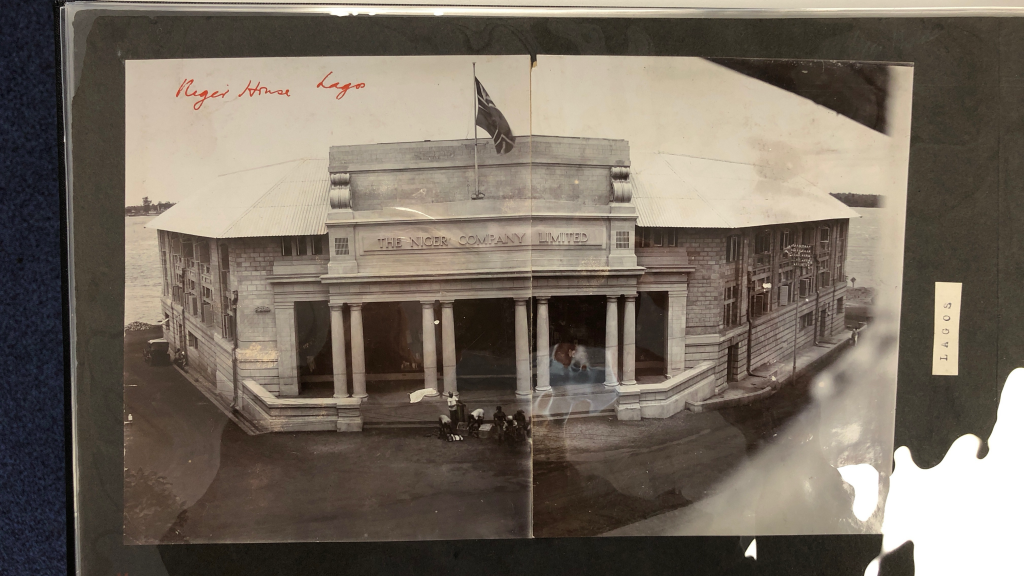
Niger House by James Lomax-Simpson. Designed for the Niger Company after they were bought out in 1920 by Lever Brothers. Lever wanted to consolidate their various offices and retail units in Lagos into a central location overlooking the Marina. The only good site available was owned by Trading Association of Nigeria. To obtain the site Lever purchased the entire company and Lomax-Simpson designed the new building there. It had a retail space on the ground floor with staff lounges and accommodation above. It wasn’t to Lever’s taste and he complained about it having a ‘town hall’ feel.
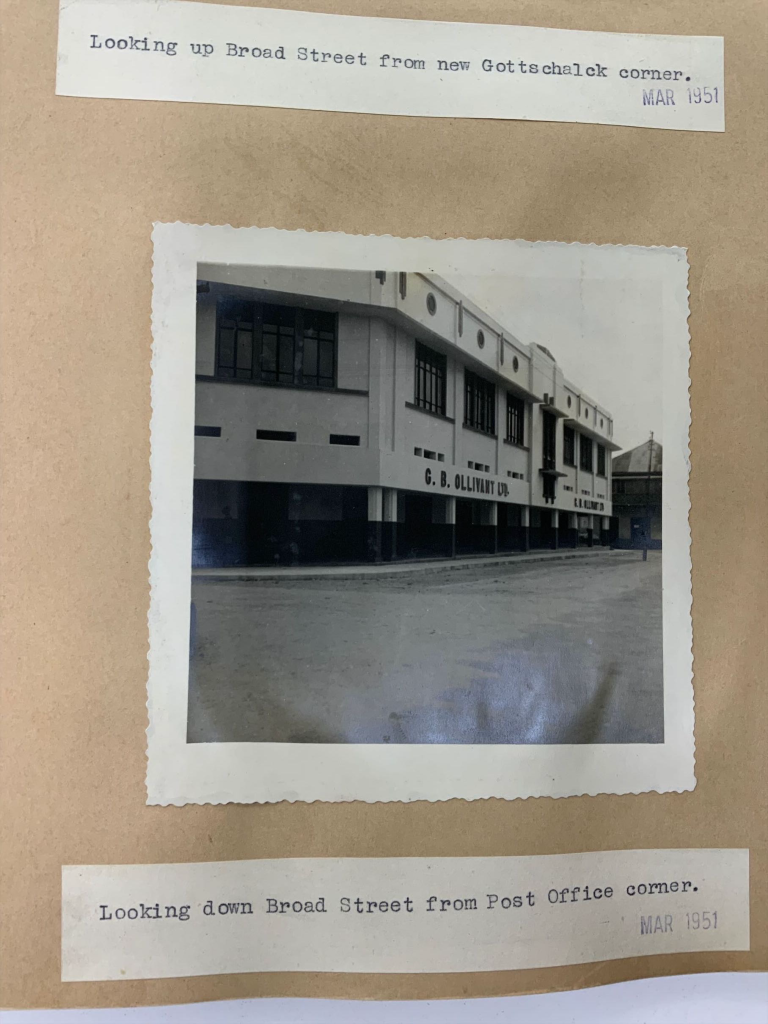
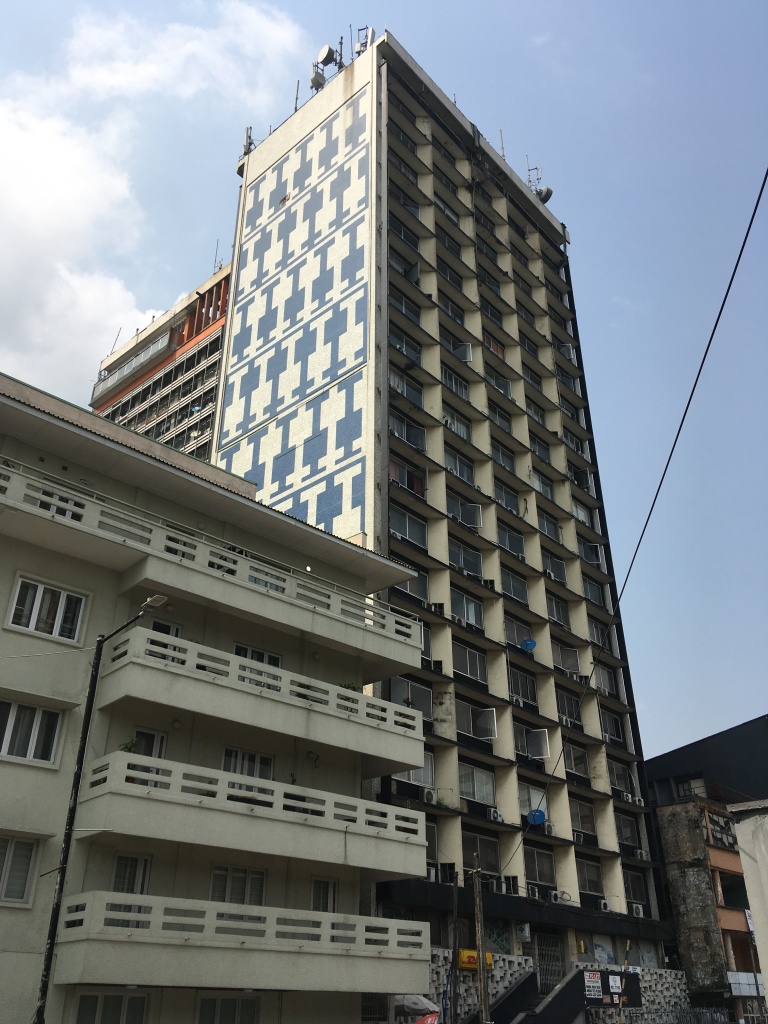
New windows have been punched through the portico and an additional storey added. In the same district of Lagos is Wilberforce House, built for Manchester cotton traders G B Ollivant. The United Africa Company was formed by the merger of Niger Company and African and Eastern, and they went on to purchase G B Ollivant in 1933.
Wilberforce House was constructed by Taylor Woodrow West Africa (and the UAC had a 50% stake in this business too).
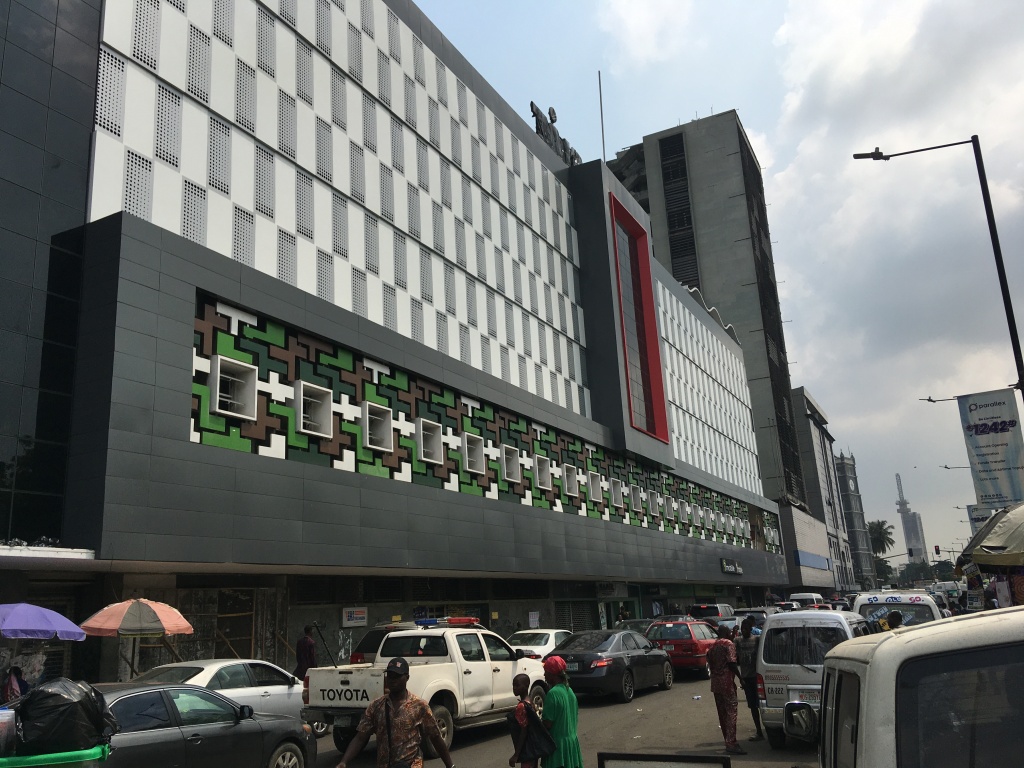
Perhaps the most well-known UAC owned business was Kingsway Stores. They had branches across West Africa. The Lagos branch filled an entire city block and was originally designed as a store and office for the African and Eastern Trading Corporation. The Deco style portico was added later.
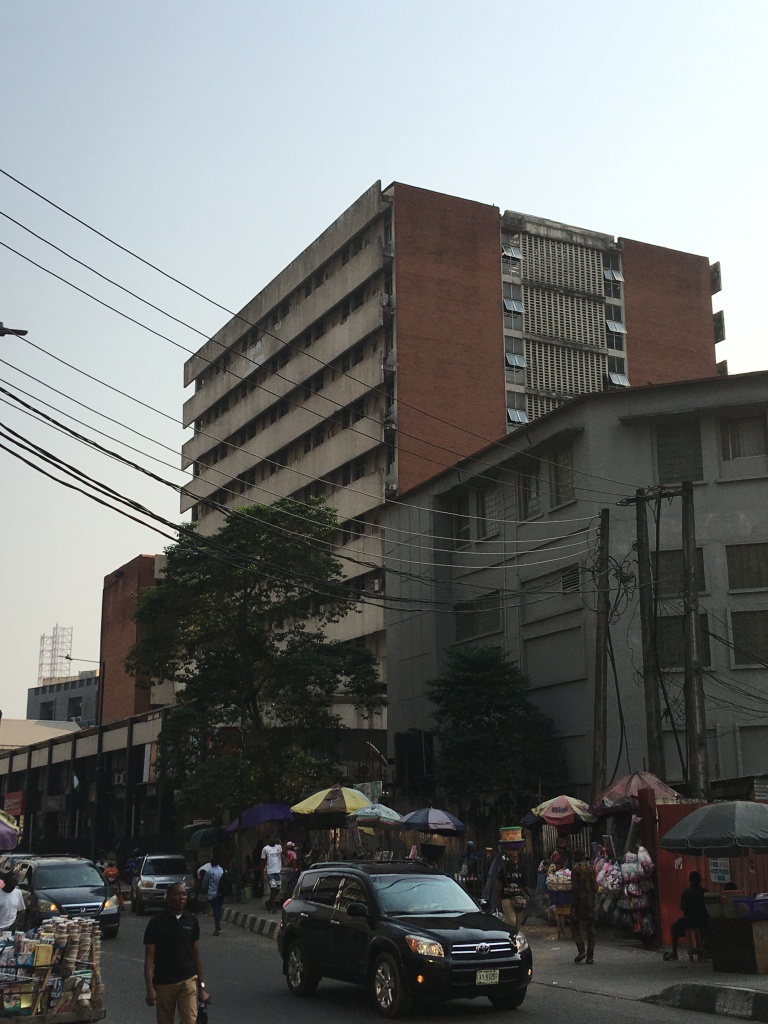
Elder Dempster by James Cubitt – heavily modified with the new glazed facade.
Bristol Hotel by Godwin and Hopwood
Godwin and Hopwood Residence, Godwin and Hopwood
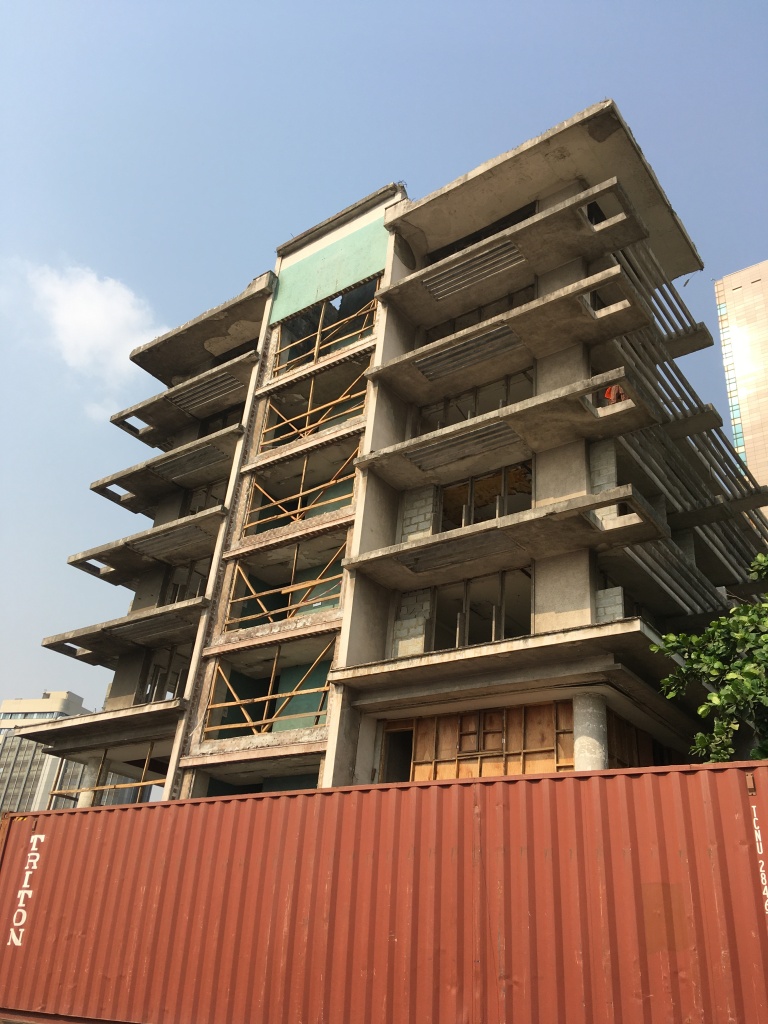
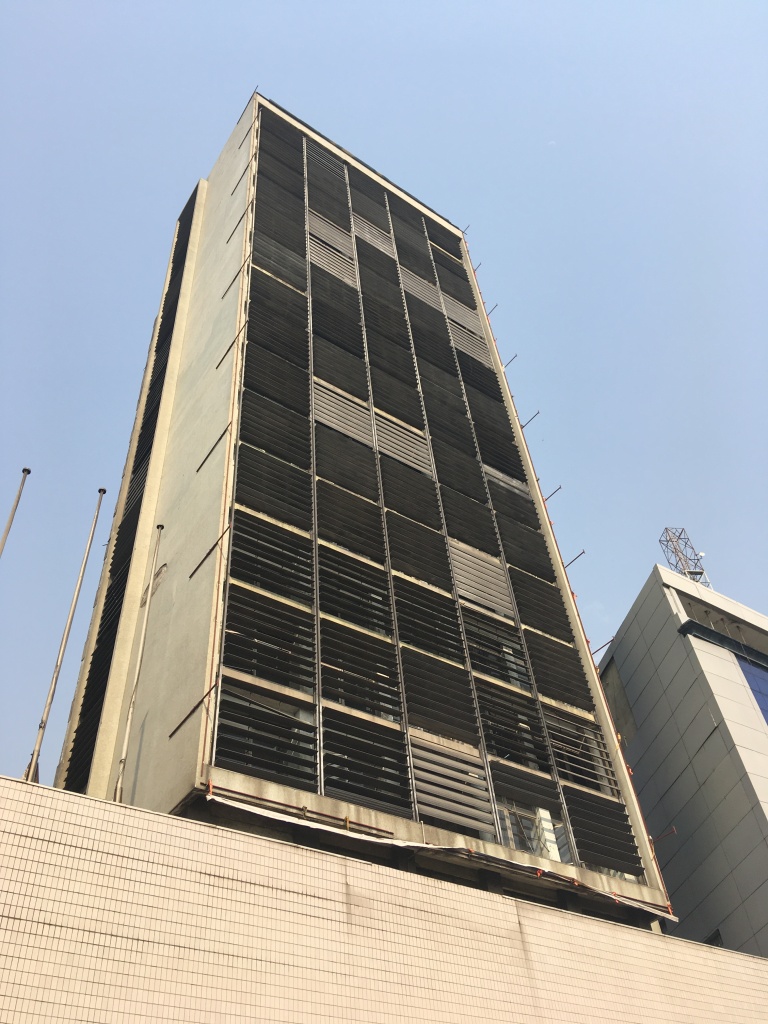
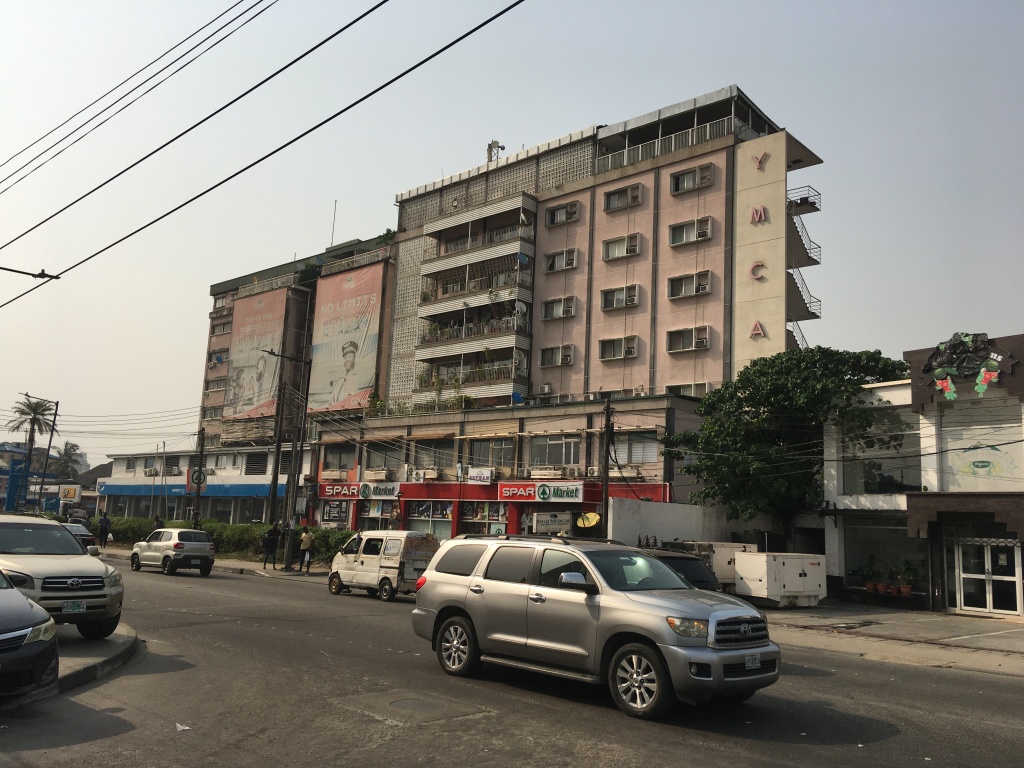
YMCA – slender single room deep plan, exposed staircase at the gable with concrete wrapping around. Commercial retail units at the base, pavilion and garden at the roof. Cracking scheme – but who is the architect?
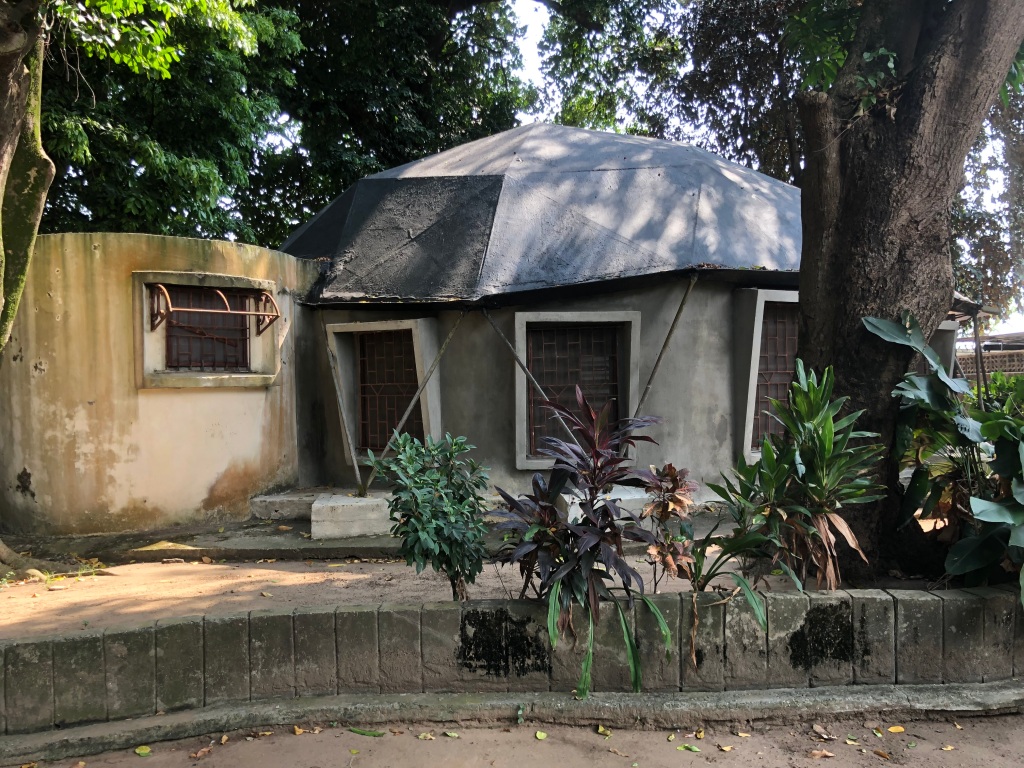
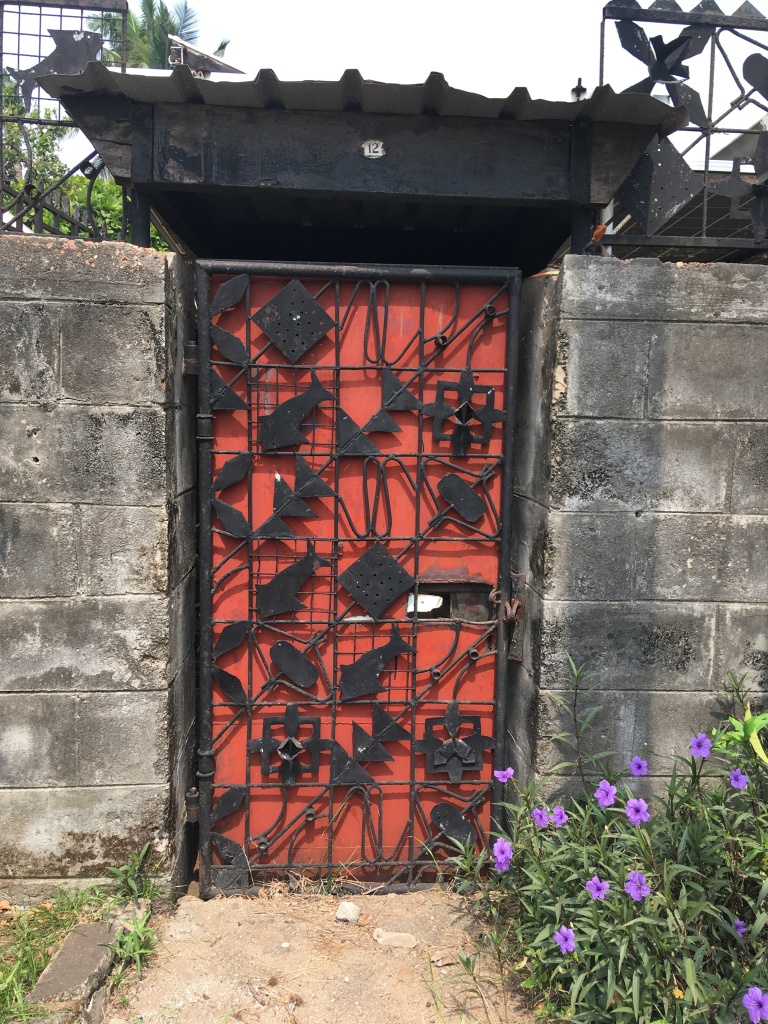
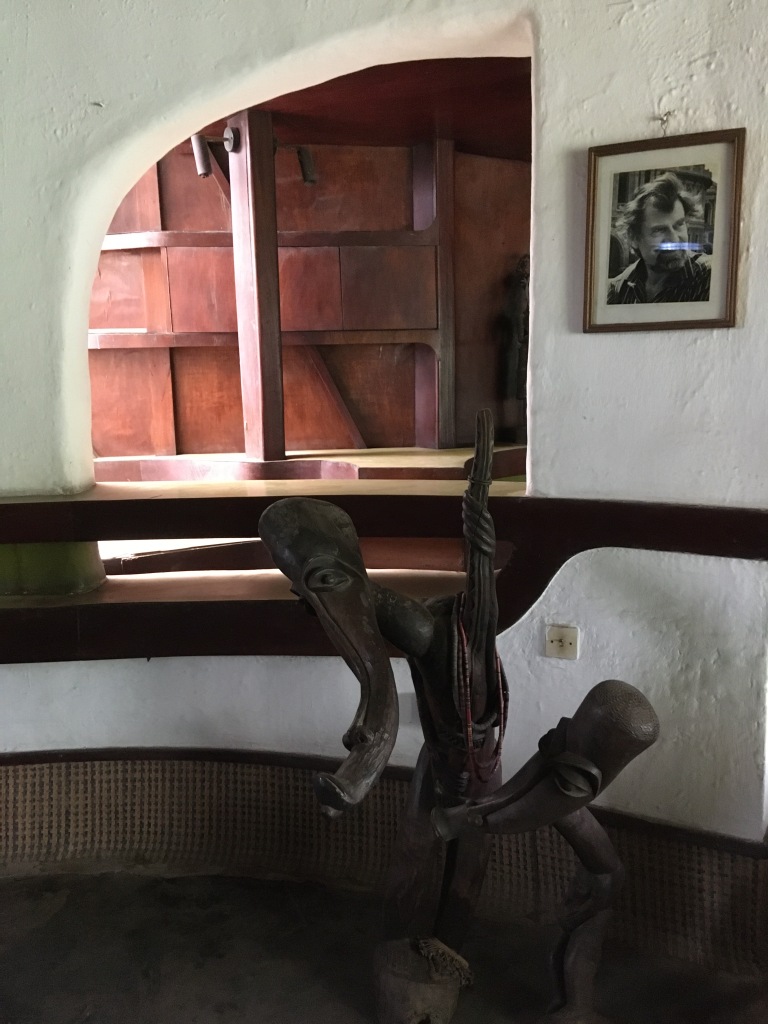
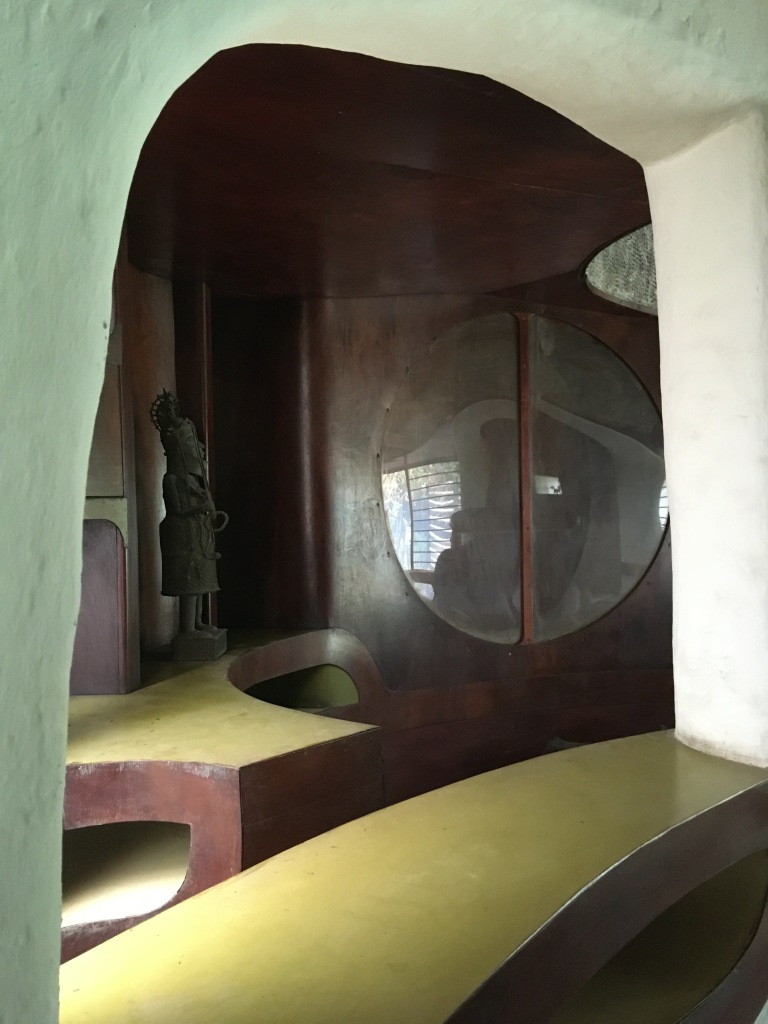
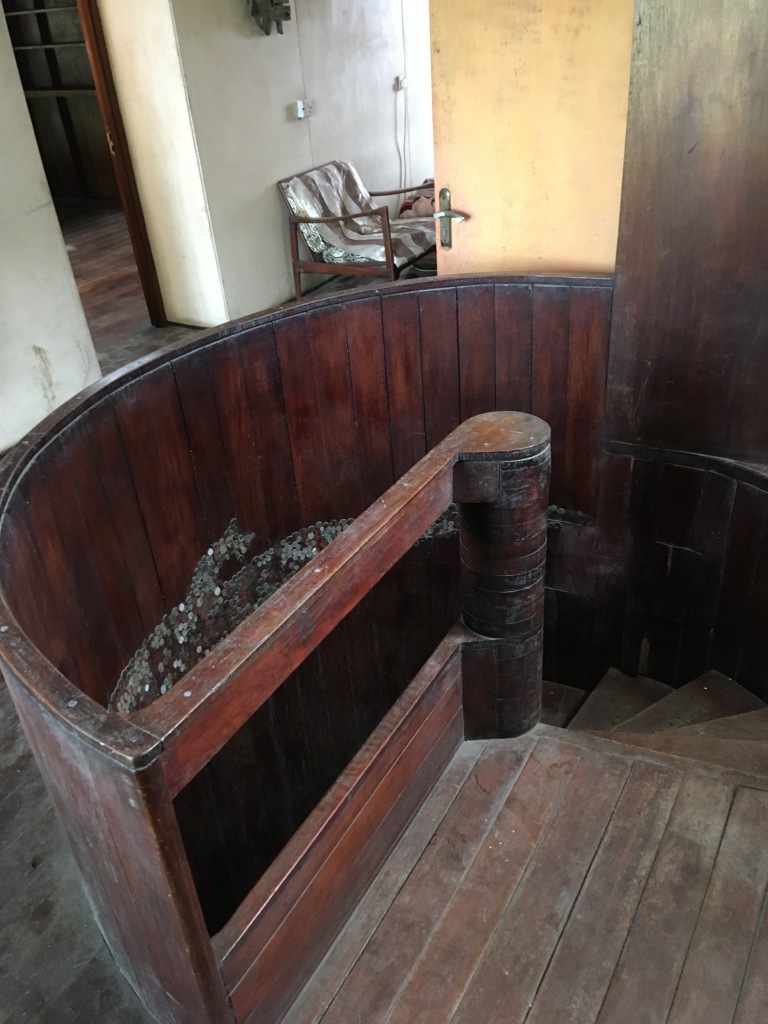
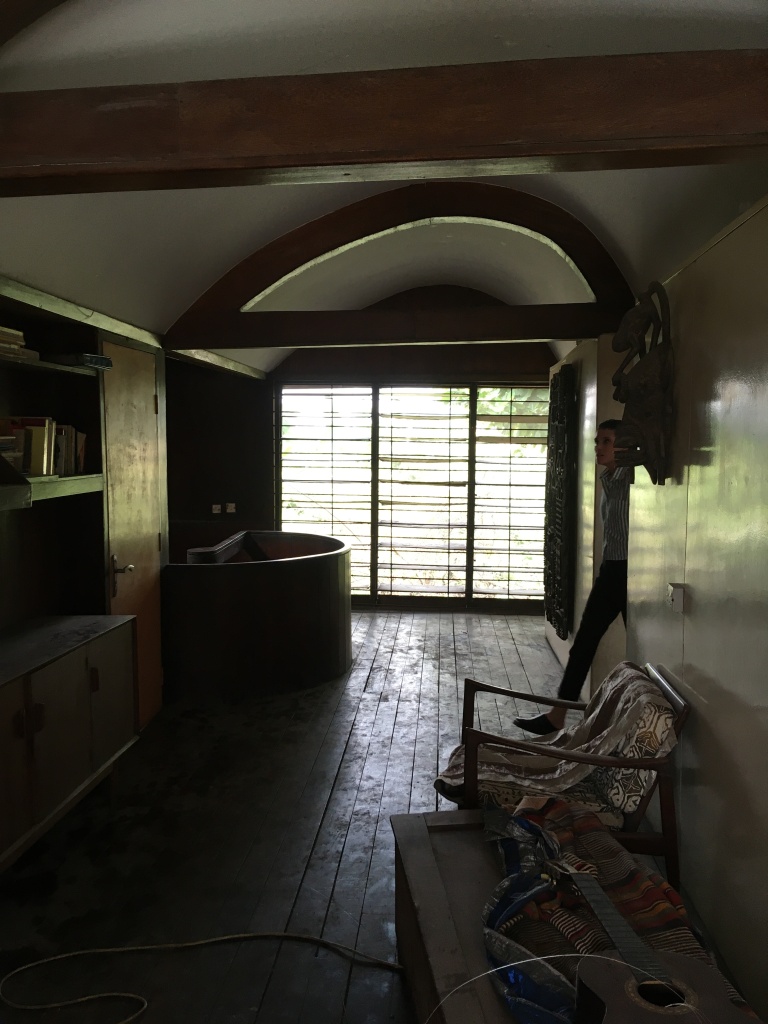
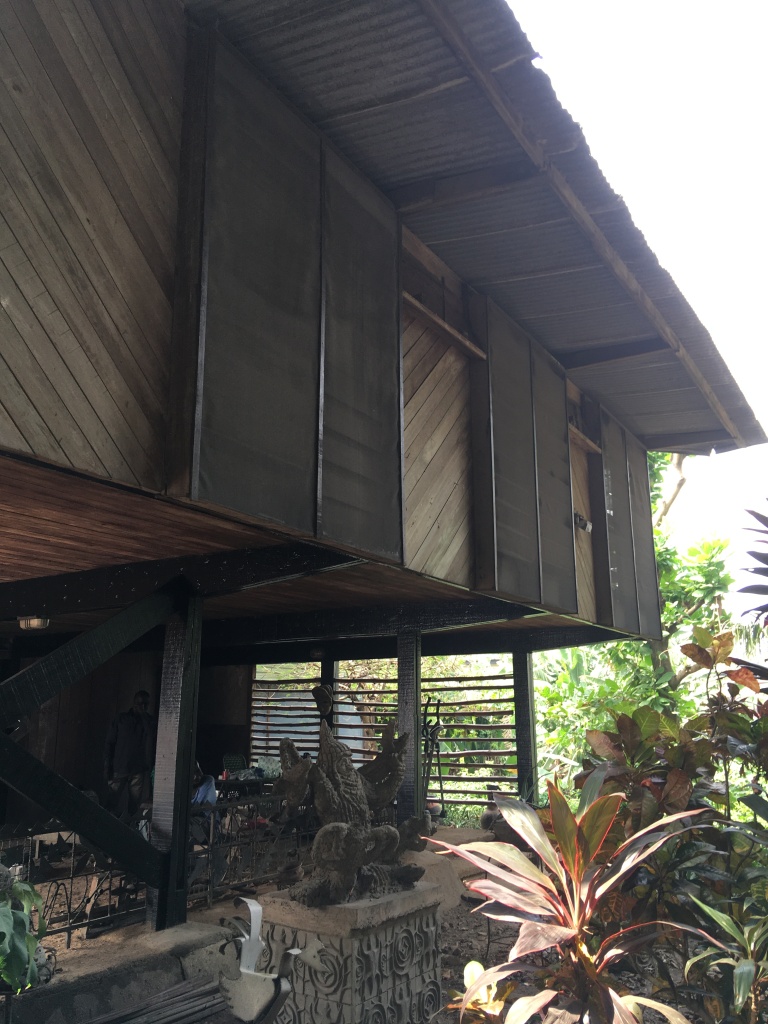
The house was originally planned as five interlocking circular rooms – responding to Yoruba housing forms. It contained a water feature, disco-lights, and a hardwood bar too. Set within the sweeping walls are built-in furniture, seating, storage and carefully curated spaces for art and sculpture. In section the light flows in from the roofscape, whilst also ventilating the passively cooled space. Vaughan-Richards collaborated with various artists and sculptors to produce door screens (one includes a carving of the house), furniture, and panels that feature in almost every space. A seating area cantilevers over the garden and once offered views over the lagoon beyond (now reclaimed land and gradually being built upon). The materials, natural ventilation, and careful positioning of the windows create delightful interiors with views out over the landscape and the giant trees that are home to African Greys. The house is a compact and modest scale with a refreshing lack of pretensions. It was gradually extended by Vaughan-Richards to accommodate his growing family and a new floor was added above.
Outside the main property is a geodesic domed room providing additional visitor space and also used for exhibitions and events.
Vaughan-Richards designed many buildings across Nigeria. He really deserves a monograph dedicated to his important work. We also visited King JaJa hall at Unilag that was designed by Vaughan-Richards.
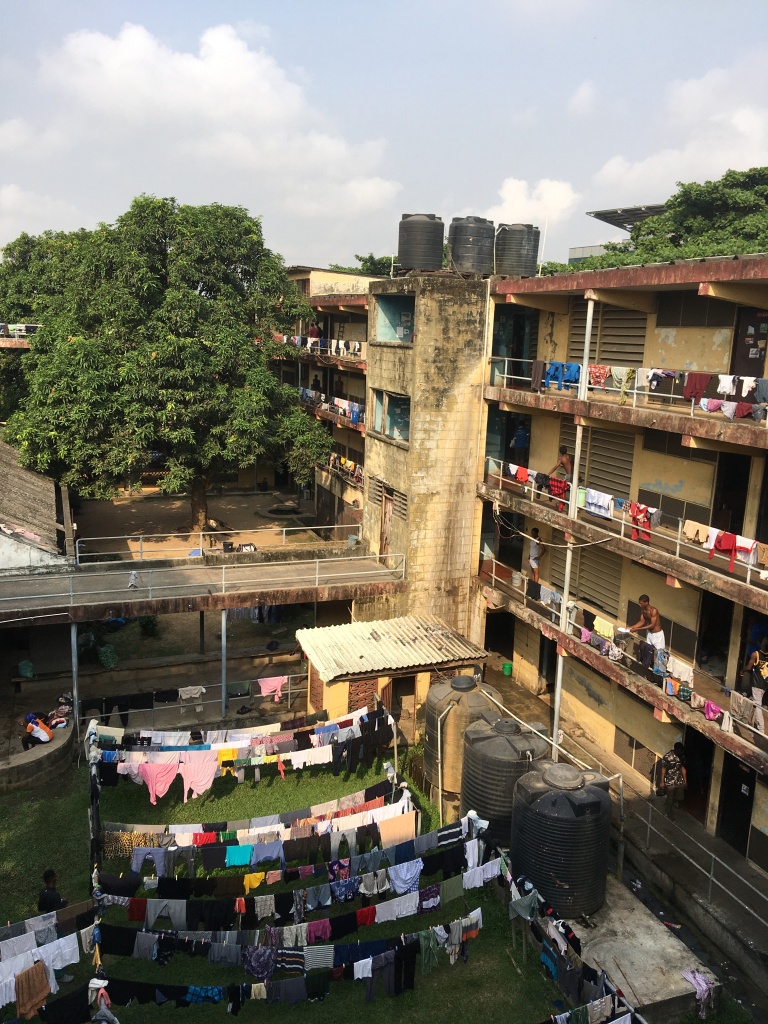
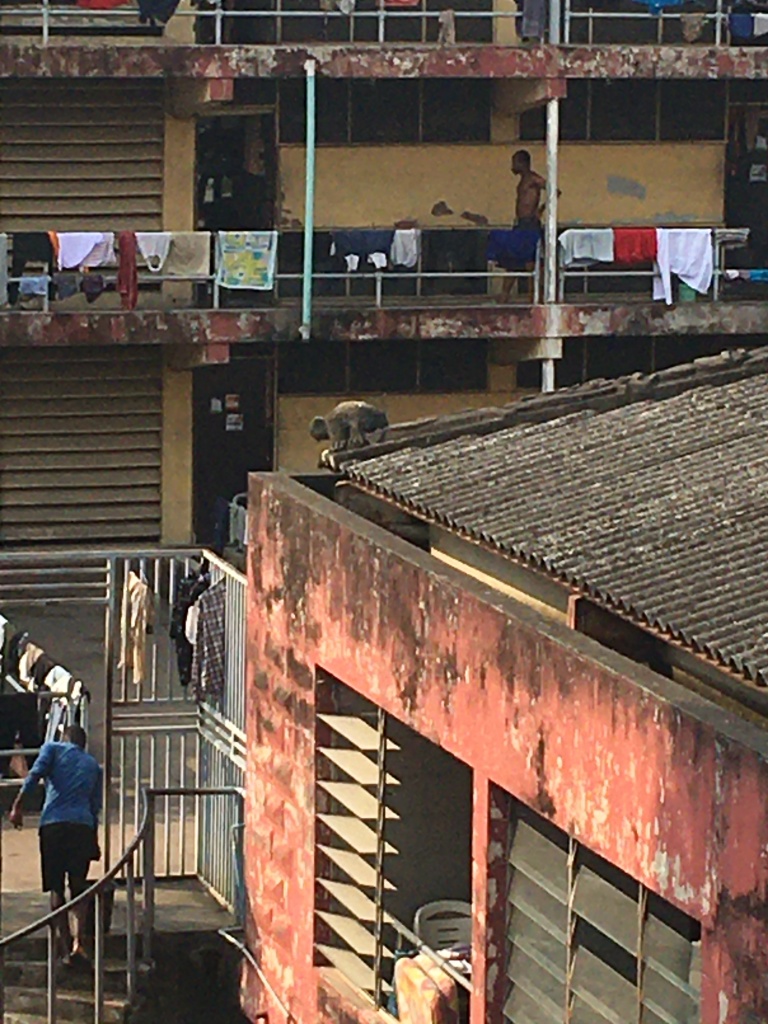
The University of Lagos, located in Akoka district of the city, was established in the early 1960s to provide a new centre of learning for the city. The campus and its significance is currently being researched by Adefola Toye as part of her PhD investigation, and she’s recently published an introductory article in the latest Docomomo special edition too).
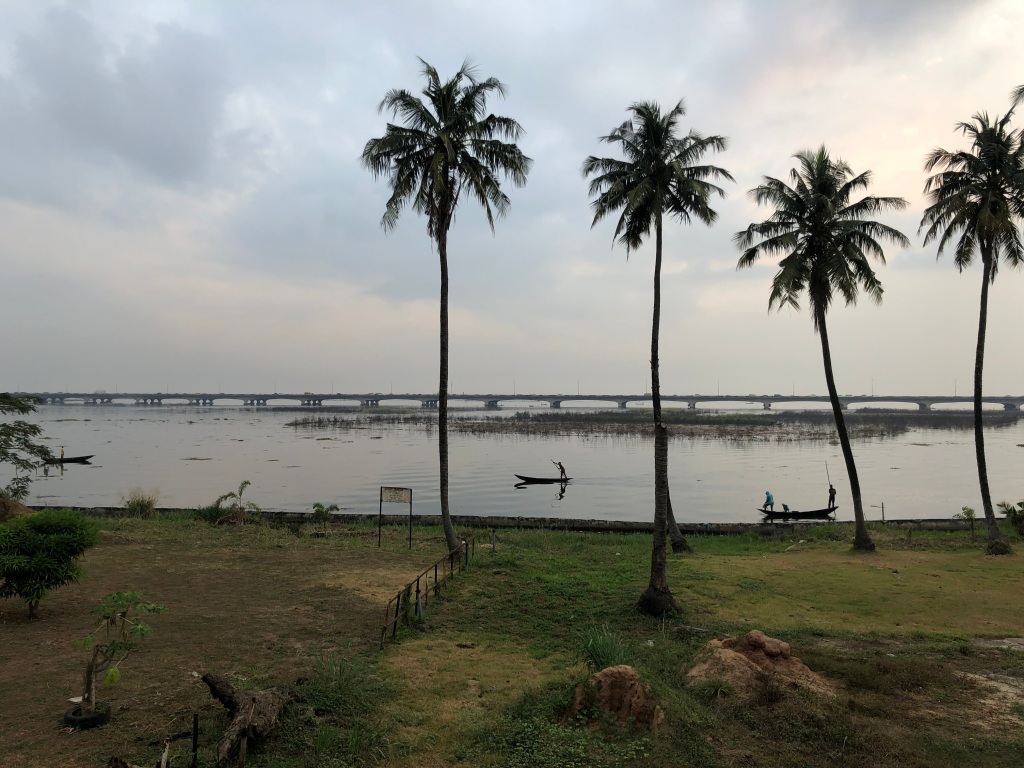
We spent the morning walking around the campus, and this was the first quality that resonated – it is walkable. It’s also more integrated into its urban context – rather than isolated on a remote hilltop like so many other universities in the region. Equally, there are tranquil elements and solitude, especially along the waterfront overlooking the lagoon.
The LagoonSenate ChamberSenate Building, 1984, James Cubitt ArchitectsOla Uduku admiring the Courtyard of the Administration buildingAuditorium
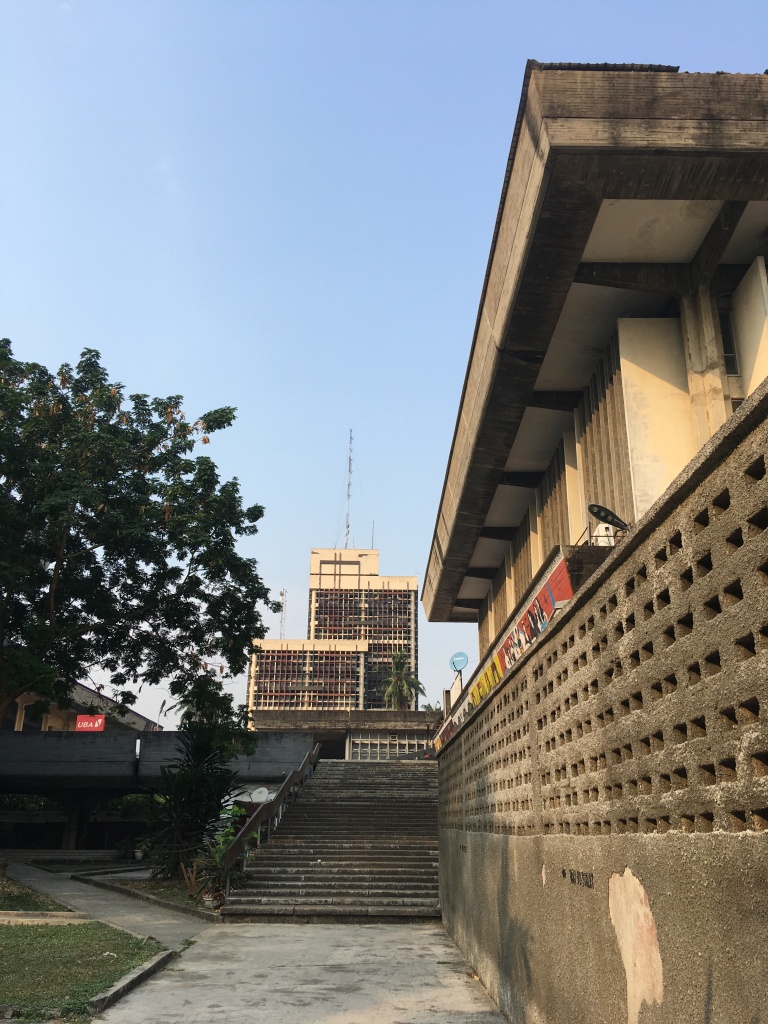
The central core is overlooked by Senate House tower and podiums designed by James Cubitt architects in the 1980s – all of the familiar brise soleil and double-skin façade motifs but extruded, layered, and clad in mosaic tiles. The brise soleil are actually hollow forms with a thin layer of cement and mosaic. There’s the classic Cubitt curved concrete motif (as seen on the Elder Dempster buildings in Lagos and Freetown).
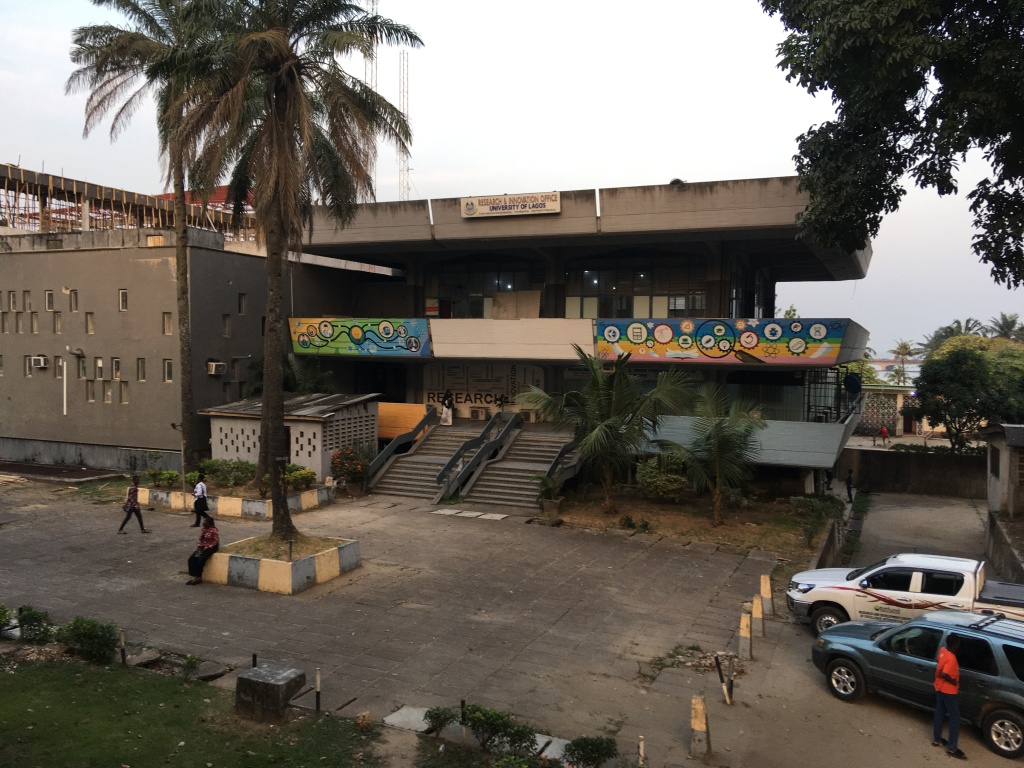
Senate House faces into the plaza-precinct of the university, and here the campus responds to the landscape – both reacting the gradient that leads to the lagoon beyond, and as a man-made series of platforms, routes, and under crofts. It’s a space that has been crafted to catch the lagoon breeze and designed for gatherings, ceremonies, performances, and spending time with friends. The core campus buildings, designed by American practice Robert S. McMillan Associates in the early 1960s, overlook and enclose the space, including the university library and council chamber drum. They’re not forming a street but more of a town square. The administrative buildings are also here, located within a protective shaded courtyard and solitary palm tree. The scale shifts from the large public space into a much more intimate enclosure. The concrete former is expressed on all these buildings to reveal the timber grain, expertly cast into projecting scooped forms, parapets, and balustrades. There’s a heavy, confident, solidity to the composition of the facades. The horizontal soffits of the roofscape frames the visas, respond to the multi-level precinct feel, and are adequately matched with the vertical window bays and concrete fins. The sombre materiality of the ubiquitous concrete is relieved with unexpected blasts of colour, such as the gold mosaic on the J F Ade Ajayi Auditorium.
Library staircaseResearch and Innovation OfficeThe Library