Online Modernist University Campus Architecture Writing Workshop: A Ghana-Nigeria-UK collaboration
The third iteration of the African Architecture Writing Workshop has involved multi-disciplinary teams of young students and Early Career Researchers (ECRs) from Universities in both Ghana and Nigeria in developing a series short written articles focused on personal views of university campus buildings in Ghana and Nigeria. The ECRs worked directly with the young students as mentors to encourage and develop their writing style.
The ECRs have also been tasked with compiling and editing student work to create a series of gazette entries for the Modernist University Campus Buildings in West Africa project. Aside from the written component the ECRs and students have also taken a set of photographs which will form the basis for a future planned photography workshop to be run in association with the International Documentation of Modern Buildings and Landscapes, (Docomomo) team Germany.
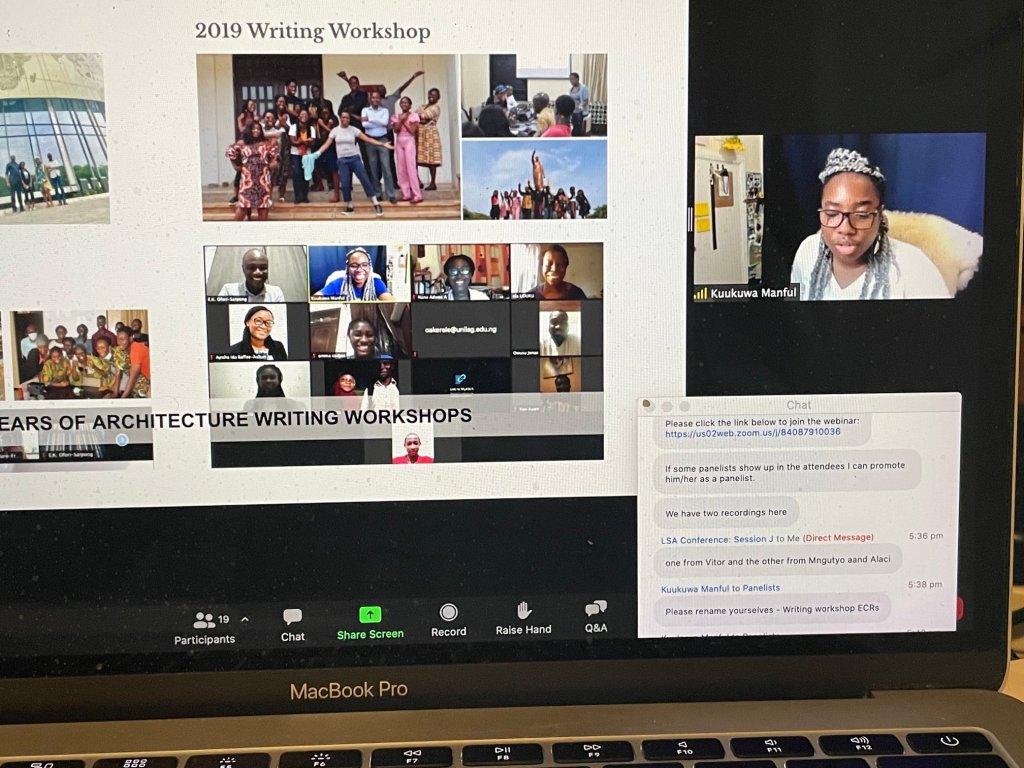
The British Academy-funded workshop took place over two weeks starting at the University of Ghana, Legon led by Co-I Dr Irene Appeaning Addo, with support from ECRs Kuukuwa Manful, Emmanuel Ofori-Sarpong, Dr Ayisha Baffoe-Eshun, and Yaw Asare; as well as guest mentor Dr Joseph Oduro-Frimpong. There was a guest lecture from Professor Lesley Lokko. Students from Kwame Nkrumah University of Science and Technology, University of Ghana, and Central University College took part in the workshop. Arc Ruth Anne Richardson, Arc Tony Asare, Dr Edem Adotey, and Professor Iain Jackson reviewed the students’ final written pieces that were focused on three buildings on the University of Ghana Campus; Commonwealth, Volta and Legon Halls.
After a hand over day the Nigeria team’s workshop was led by Co-I Dr Nnezi Uduma-Olugu, and involved three institutions, the University of Lagos, University of Jos and the University of Nigeria, Enugu Campus. Each institution had a number of ECRs who worked at mentoring the interdisciplinary group of students who had enrolled at each of the workshops. As with the Ghana workshop a number of guest speakers including Prof Bogdana Prucnal-Ogunsote, (University of Jos) Kofo Adeleke (Legacy-92 organisation Lagos) and Dr Onyekiekwe Ijeoma, Nigeria commission for Museums. For the Nigerian final critical reviews attended by Prof Lukasz Stanek (University of Manchester) and Dr Joseph Oduro-Frimpong (Asheshi University Ghana) the ECRs presented their edited summaries of the student-written work and views on campus buildings in the three cities.
ECRs then presented their workshop experience at the Lagos Studies Association International Online Conference at a roundtable panel on conservation challenges in Africa chaired by Profs Uduku and Lawanson, Manchester School of Architecture, Manchester Metropolitan University, and University of Lagos respectively.
Whilst students and ECRs met in covid secure ways at their respective campuses all lectures and reviews took place entirely online, with students and ECRs able to work from ethernet-wifi equipped room spaces at the University of Ghana, and all three Nigerian collaborating Universities.
Currently ECRs are working on the editing and production of the initial phase of the Modernist African University Campus Buildings Gazette, this will be critically reviewed by Prof Miles Glendinning, Docomomo Scotland and Director SCCS University of Edinburgh. Watch this space…
The University of Liverpool and The National Archives are pleased to announce the availability of a fully funded collaborative doctoral studentship, under the Arts and Humanities Research Council (AHRC) Collaborative Doctoral Partnership (CDP) scheme.
Using The National Archives extensive collections the project will investigate how the West African ‘built environment’ has been shaped to respond to various political, economic, and welfare demands and ambitions. The particular timeframe will cover the transition from colonial rule into independence period. After tracking these broader notions across ‘British West Africa’, the project will pursue a narrower focus on one of the four former British colonies.
How were ideas of ‘self’, identity, freedom, and so on, expressed through new construction and town planning? How did former colonisers, and other foreign groups attempt to shape and influence these developments in the ‘post-colonial’ period. How were notions of identity, nation, and ‘new beginnings’ expressed by the postcolonial nations?
The aim of the project is to investigate how political ideas, and notions surrounding identity, nationhood, and statecraft are expressed or manifest through the built environment.
Infrastructure, prestige projects, and grand architectural schemes are often used to infer power, or suggest modernity, development, and progress. Equally, more (seemingly) mundane developments, such as housing, can be as revealing in terms of power structures and wider ambition. In a problematic and contested political situation these types of projects become highly charged and significant expressions of a nation’s collective (and often contested) identity. This is even more meaningful in a colonial context, and architecture, town planning and infrastructure, in part, become symbolic expressions of the colonial power.
The objective of this project is to examine these notions within the West African context over a period of time that spans the late colonial era and early post-colonial period. This was a particularly volatile moment, charged with excitement and optimism, and a desire to somehow ‘start again’ and rebuild a new nation with a new vision. Architecture and planning would shift from being expressions of colonial dominance and subjugation to being expressions of nationalism, hope, and modernisation.
It is sometimes tempting to see the event of Independence as an abrupt and sudden moment. The clock strikes twelve and everything suddenly changes – and whilst this is true, it is also oversimplifying a complex event that is, to some degree, still being played-out today. There is also a sense of inertia in the built environment and existing city plans, methods of development, and networks of expertise stubbornly persist and outlast political dynasties.
The desire for the newly independent nations to express their hard-fought freedom through physical, often large-scale triumphant (sometimes infrastructure) projects was met with the former colonial power’s aspiration to continue offering technical assistance, expertise, and trade. It resulted in a complex blend of nationalism, reimagining/reinventing identity and Pan-African ambition, further mixed with the additional influences of ‘non-aligned’ socialist assistance and US, World Bank, and UN concerns.
The independence of these nations was not an abrupt severance from the former colonial power, but a feathered, gradual transition coupled with intense global interest eager to retain or cultivate influence and trade advantage.
It makes for a fascinating narrative that reveals the shift from overt imperialism, to one of post-WW2 ‘technical assistance’, ‘development’, and fiscal packages from an array of competing agencies and organisations, met with a desire to express African modernisation, liberation, and success.
Start date 1st October 2021
Applications due 25th May 2021
Interviews planned for 22nd June 2021
For any enquiries please contact: Professor Iain Jackson on: ijackson@liv.ac.uk
How to Apply: To apply for this studentship, please send the following documents to artsrecruit@liverpool.ac.uk:
Full Curriculum Vitae (CV)
Cover Letter expressing motivation for applying and pursuing a PhD on this topic.
Project Plan: This is your chance to set out how you would like to design and plan the research project and should not exceed 1000 words. Please produce a Project Plan that includes the following headings:
Proposed project outline and suggested research questions
Proposed Methodology
The National Archives / other archival sources to be consulted
Selected Bibliography.
The project can be undertaken on a full-time or part-time basis.
CDP doctoral training grants fund full-time studentships for 45 months (3.75 years) or part-time equivalent. The studentship has the possibility of being extended for an additional 3 months to provide professional development opportunities, or up to 3 months of funding may be used to pay for the costs the student might incur in taking up professional development opportunities.
The student is eligible to claim additional travel and research related expenses (worth up to £1000 per year for four years) during the course of the project, courtesy of The National Archives.
· We want to encourage the widest range of potential students to study for a CDP studentship and are committed to welcoming students from different backgrounds to apply. We particularly welcome applications from Black, Asian, Minority Ethnic backgrounds as they are currently underrepresented at this level in this area.
· Applicants should have an undergraduate degree in subjects allied to the Built Environment/Architecture/History/Cultural Geography.
· A Masters level qualification is desirable but not essential. Applicants may be able to demonstrate equivalent experience in a professional setting (e.g. producing and researching written reports, public outreach and liason, working with collections and archives).
· Experience of working in West Africa is desirable but not essential.
· Applicants must be able to demonstrate an interest in the archives sector and potential and enthusiasm for developing skills more widely in related areas.
· As a collaborative award, students will be expected to spend time at both the University and The National Archives.
This is a joint project with AHRC Collaborative Doctoral Partnership programme. The external partner is the National Archive, Kew. See View Website The award pays full maintenance for all students, both home and international students. The National Minimum Doctoral Stipend for 2021/22 is £15,609, plus an allowance of £1000 per year and a CDP maintenance payment of £550 per year.
Here are the recordings from the Crucibles, Vectors, Catalysts: Envisioning The Modern City, event from 2nd and 9th March 2021. Thank you to all of our excellent speakers, and for the interesting questions and discussions.
PROGRAMME: Session 1: Crucibles, 15:00-16:30 (UTC) Building the Modern City: Expressions of Identity, Change and Power, Moderated by Iain Jackson
This panel will explore state-sponsored programmes, planned cities and masterplans in cities such as Lagos, Tehran and Baghdad. It will examine architecture as expressions of nationalism and nationalist political agendas as well as its relationship to big business, corporations and mercantile ventures.
Rupture, Transition and Continuity in Baghdad’s Master Plans: From Minoprio to Miastoprojekt
Session 2: Vectors, 17:00-18:30 (UTC) Connecting the Modern City: Networks, Alliances and Knowledge Production; Moderated by Clara Kim
This panel will explore the practice of modern architecture through colonial-postcolonial networks and geopolitical alliances. It will explore cities in Mozambique within the context of other Lusophone countries, post-Partition East & West Pakistan, as well as the dissemination of knowledge and technical expertise through pedagogy.
Correspondences, Transfers and Memory: Maputo’s “Age of Concrete”
Farhan Karim (University of Kansas)
Archaeology of the Future: Constantinos Doxiaidis in East and West Pakistan
Patrick Zamarian (University of Liverpool)
Global Perspectives and Private Concerns: The AA’s Department of Tropical Architecture
TUESDAY 9 MARCH Session 3: Catalysts, 15:00-16:30
Fragments of the Modern City: Memories, Echoes and Whispers Moderated by Osei Bonsu
This panel will explore the collaborations, connections and entanglements that developed between art and architecture during a dynamic period of building in Morocco, India and Iraq. It will examine the legacy and afterlives of these projects through the investigation of under-recognised figures and narratives in art and architecture.
Speakers:
Lahbib el Moumni & Imad Dahmani (founders of MAMMA, Mémoire des Architectes Modernes Marocain)
Initiatives toward saving modern heritage of Morocco
Ram Rahman (Photographer/Curator)
Building Modern Delhi, The Nehruvian Post-Independence Renaissance
Amin Alsaden (Independent Scholar)
Syntheses Across Disciplines: Rifat Chadirji and Art-Architecture Liaisons in Modern Baghdad
Explore modern cities and architectural production in the blurred era of the independence and postcolonial period
Join us for three sessions which will bring together scholars, researchers and curators to explore architectural production in the blurred era of independence to the post-colonial period of the mid-20th century, focussing on cities in Africa, Middle East and South Asia.
Whether driven by socialist agendas (Nehruvian in India and Nkrumah in Ghana), monarchies (Pahlavis in Iran and Hashemite in Iraq), quasi colonial protectorates, or pan-continental aspirations, architecture (and especially Modernism) was a key apparatus for nation-building, for re-imagining identities and a means to project and invent a new image of the future. The seminar seeks to explore the use of architecture as both physical infrastructure and symbolic expression, as well as its vulnerability to the vicissitudes of changing politics and policies of the times.
The role of cities as crucibles, vectors and catalysts for developing new expressions of identity, change and power is key. Cities in this period saw the emergence of schools of thought, dynasties and collaborations were formed, networks and ideas were shared and publications were disseminated. While the desire of a newly independent nation was often to consolidate a single national collective identity, it was through the urban centres that strands of coherent, yet often multiple identities were formed. The role of figures such as Rifat Chadirji, Mohamed Makiya, Jane Drew and Maxwell Fry were important as they often operated within multiple cities and cross-cultural contexts that spanned the colonial to postcolonial divide.
These urban centres were either newly built, or they were remade and reimagined through city infrastructure, government buildings, universities, cultural institutions and national monuments. Architecture schools, state sponsored projects and external agencies feed into the discussion and warrant further exploration. The seminar explores the transnational connections, diverse political agendas and complex allegiances which informed architectural development in this period.
Seminar convenors:
Iain Jackson, Professor of Architecture and Research Director, Liverpool School of Architecture
Clara Kim, The Daskalopoulos Senior Curator, International Art, Tate Modern
Nabila Abdel Nabi, Curator, International Art, Tate Modern
PROGRAMME TUESDAY 2 MARCH
Session 1: Crucibles, 15:00-16:30 (UTC)
Building the Modern City: Expressions of Identity, Change and Power
Moderated by Iain Jackson
This panel will explore state-sponsored programmes, planned cities and masterplans in cities such as Lagos, Tehran and Baghdad. It will examine architecture as expressions of nationalism and nationalist political agendas as well as its relationship to big business, corporations and mercantile ventures.
Rupture, Transition and Continuity in Baghdad’s Master Plans: From Minoprio to Miastoprojekt
Session 2: Vectors, 17:00-18:30 (UTC)
Connecting the Modern City: Networks, Alliances and Knowledge Production
Moderated by Clara Kim
This panel will explore the practice of modern architecture through colonial-postcolonial networks and geopolitical alliances. It will explore cities in Mozambique within the context of other Lusophone countries, post-Partition East & West Pakistan, as well as the dissemination of knowledge and technical expertise through pedagogy.
Correspondences, Transfers and Memory: Maputo’s “Age of Concrete”
Fahran Karim (University of Kansas)
Archaeology of the Future: Constantinos Doxiaidis in East and West Pakistan
Patrick Zamarian (University of Liverpool)
Global Perspectives and Private Concerns: The AA’s Department of Tropical Architecture
TUESDAY 9 MARCH
Session 3: Catalysts, 15:00-16:30 (UTC)
Fragments of the Modern City: Memories, Echoes and Whispers
Moderated by Nabila Abdel Nabi
This panel will explore the collaborations, connections and entanglements that developed between art and architecture during a dynamic period of building in Morocco, India and Iraq. It will examine the legacy and afterlives of these projects through the investigation of under-recognised figures and narratives in art and architecture.
Speakers:
Lahbib el Moumni & Imad Dahmani (founders of MAMMA, Mémoire des Architectes Modernes Marocain)
Initiatives toward saving modern heritage of Morocco
Ram Rahman (Photographer/Curator)
Building Modern Delhi, The Nehruvian Post-Independence Renaissance
Amin Alsaden (Independent Scholar)
Syntheses Across Disciplines: Rifat Chadirji and Art-Architecture Liaisons in Modern Baghdad
Call for Papers: British Architecture in the World
As part of its long-running series Twentieth Century Architecture, the Twentieth Century Society is planning a journal for publication on the relationship between British architecture and other countries of the world, particularly those beyond Europe.
Pansodan Street, Yangon, including Chartered Bank, Palmer & Turner, 1939–41.
The nature of the relationship may take a number of forms, such as British-based practices working overseas, British architects establishing offices in other countries, architects coming to Britain for training before returning home, or more general issues of how the profession in Britain set standards for education and validation elsewhere, in particular through the RIBA. We tend to favour actual buildings as subject matter in Twentieth Century Architecture, but on this occasion the field may be wider, including town planning, cultural responses, climatic adaptation, administrative histories, professional formations, and relationships to the later period of colonialism and its ending. Accounts of the scope of archival resources could be of interest, and we might also include reports on the current state of buildings, including threats and conservation projects.
Jane Drew, housing in Sector-22, Chandigarh, c. 1954.
The scope outlined above is larger than usual for what is a relatively small collection of published pieces – the journal usually contains about ten articles – but it seems preferable not to place limitations until we are aware of what might be available. Recently, research and publication in this area have grown rapidly, and our aim is to bring together articles that complement each other, but with a spread of periods (anything from 1914 to around 2000), styles and locations. The journal will be the sixteenth in the series, and will probably be published in 2023.
In the first instance, please send your ideas by 01 July 2020 in the form of an abstract of up to 300 words, along with a brief CV and list of publications to date, to elain.harwood@HistoricEngland.org.uk, who will also answer any queries. Abstracts will be reviewed by the editorial committee of the journal, drawn from members of the Twentieth Century Society Publications Committee, and selected for full submission. Completed texts will be peer-reviewed.
Following commissioning, delivery would be 1 March 2022, the length of articles should be between 2,000 and 5,000 words, with up to ten images per article. Contributors are expected to provide and pay for images of publishable quality.
Infrastructure between Statehood and Selfhood: The Trans-African Highway
Kenny Cupers, Prita Meier
Journal of the Society of Architectural Historians, Vol. 79 No. 1, March 2020; (pp. 61-81) DOI: 10.1525/jsah.2020.79.1.61
Focusing on the 1960s–70s project to build a trans-African highway network, Infrastructure between Statehood and Selfhood: The Trans-African Highway argues for the need to develop a more dialectical understanding of the relationship between people and infrastructure than current architectural and urban scholarship affords. As Kenny Cupers and Prita Meier describe, African leaders imagined infrastructure as a vehicle of Pan-African freedom, unity, and development, but the construction of the Trans-African Highway relied on expertise and funding from former colonial overlords. Based on archival research, visual analysis, and ethnographic fieldwork in Kenya, this article examines the highway’s imaginaries of decolonization to show how infrastructure was both the business of statehood and a means of selfhood.
Map of the Trans-African Highway project, late 1970s (Rolf Hofmeier, “Die Transafrikastraßen: Stand der Planung und Realisierung,” Africa Spectrum 14, no. 1 [1979], 35).
From the automobile and the tarmac road to the aesthetics and practices of mobility these fostered, infrastructure was a vehicle for the production of subjectivity in postindependence Kenya. This new selfhood, future oriented and on the move, was both victim and agent of commodification.
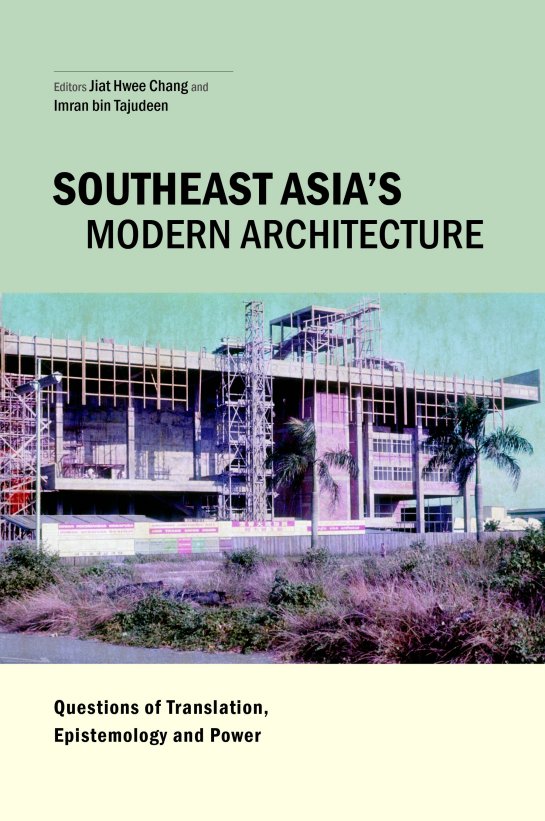
Book Review by Robin Hartanto Honggare: “Southeast Asia’s modern architecture: questions of translation, epistemology and power” by Jiat-Hwee Chang and Imran bin Tajudeen, Planning Perspectives.
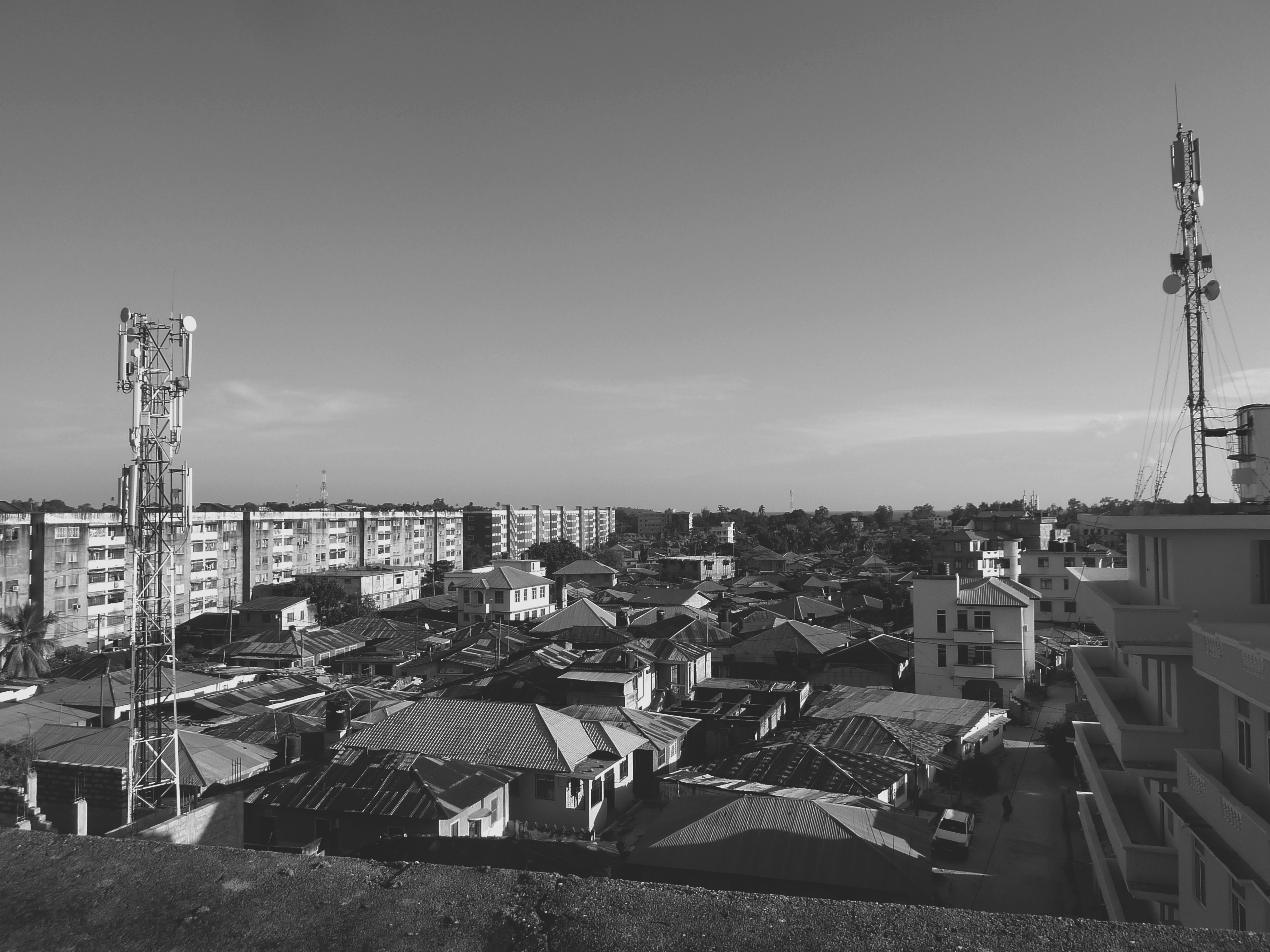
Ng’ambo Atlas. Historic Urban Landscape of Zanzibar Town’s ‘Other Side’
Ng’ambo is the lesser known ‘Other Side’ of Zanzibar Town. During the British Protectorate the area was designated as the ‘Native Quarters’, today it is set to become the new city centre of Zanzibar’s capital. Local and international perceptions of the cultural and historical importance of Ng’ambo have for a long time remained overshadowed by the social and cultural divisions created during colonial times. One thing is certain: despite its limited international fame and lack of recognition of its importance, Ng’ambo has played and continues to play a vital role in shaping the urban environment of Zanzibar Town.
Ng’ambo Atlas. Historic Urban Landscape of Zanzibar Town’s ‘Other Side’ documents the material collected through the heritage-based urban planning project Ng’ambo Tuitakayo! carried out by the Government of Zanzibar in collaboration with African Architecture Matters and City of Amsterdam and under the auspices of UNESCO.
The goal of the project was to prepare a local area plan (structure plan) for the new city centre of Zanzibar’s capital. The planning exercises were from the beginning grounded in the notions of urban culture and heritage, while the principles outlined in the UNESCO Recommendation on Historic Urban Landscape provided a framework for the subsequent stages of the work.
It quickly became clear that the cultural and historic richness of Stone Town’s ‘Other Side’ merited a wider recognition than a technical planning document would allow for. At the same time presenting the outcomes of the project to a wider public through an atlas was a way to promote the history and culture of the area and contribute to the argument that urban heritage should play a central role in sustainable development of cities.
The atlas brings together and presents Ng’ambo’s rich planning history and draws attention to the outcomes of the mapping of the material and immaterial cultural landscape.It presents over hundred years of Ng’ambo’s history and urban development through maps, plans, surveys and images, and provides insights into its present-day cultural landscape through subjects such as architecture, toponymy, cultural activities, public recreation, places for social interaction, handcrafts and urban heritage.
Ng’ambo Atlas was produced by the Department of Urban and Rural Planning, Zanzibar and African Architecture Matters
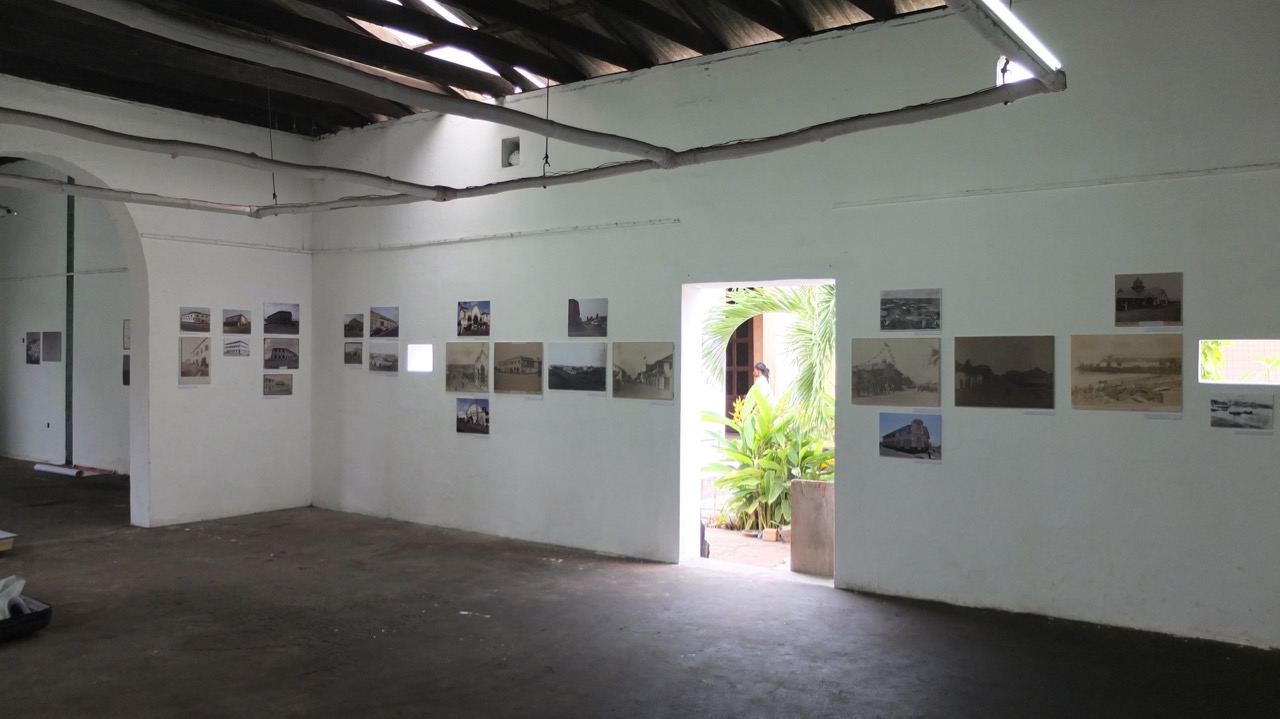
Thank you to Prof. Ola Uduku of Manchester School of Architecture for reviewing the ‘Sharing Stories from Jamestown’ exhibition. The exhibition has been extended to run until the end of June 2019. Below I’ve uploaded a 360 degree panoramic view – you can ‘click and drag’ the film to have a look around….
Iain Jackson’s exhibition co-curated by Allotey Konuah-Bruce and Joe Addo opened to great acclaim on Saturday evening at the Jamestown Café, venue, near Ussher Fort. Curiously the café it was confirmed by local elders who attended the opening is accurately in Usshertown; the exhibition launch providing a great forum for these questions to be aired and for detailed discussions to be had.
Historic photographs and maps of ‘old’
Jamestown buildings have been placed next to those which show their age,
condition and use, in ‘contemporary’ Jamestown have been displayed in the lower
gallery of the Jamestown Café, which itself features in the exhibition as Tarquah
house, the dwelling and warehouse of one of Jamestown’s wealthy local
merchants, who had originally had it built. The exhibition represents a true
joint collaboration between Iain Jackson and Allotey Konuah-Bruce who have formed a close and productive working relationship as they have spent the…
This is an excellent opportunity for emerging writers and students. Last year’s gathering produced some excellent work, and this year we will have the exhibition at James Town Cafe as a provocation and stimulus for debate….
We are pleased to announce that we are now accepting applications for the 2019 British Academy – ASAUK funded 2019 African Architecture Writing Workshops. These workshops are offered for postgraduate students looking to develop their academic writing skills in the areas of architecture, urbanism and related disciplines.
This year there are two workshops. The first to be offered will take place in May 2019
FIRST WORKSHOP DETAILS
“Sharing
Stories from Jamestown and the Creation of Mercantile Accra” Writing Workshop
Monday, May 12 – Sunday, May 18, 2019
This workshop explores the colonial
and mercantile architecture of Jamestown, the British settlement area of
colonial Accra and located in Ga Mashie. This writing workshop is linked to the
May 17 exhibition organized by Professor Iain Jackson (University of Liverpool) and Joe Osae-Addo and Allotey Bruce-Konuah (Jamestown Cafe), which will showcase archival and historical images and maps of Accra’s…



![Map of the Trans-African Highway project, late 1970s (Rolf Hofmeier, “Die Transafrikastraßen: Stand der Planung und Realisierung,” Africa Spectrum 14, no. 1 [1979], 35).](https://transnationalarchitecture.group/wp-content/uploads/2020/03/f2.large_.jpg)




 Transnational Architecture Group