Archive

Tropical Architecture

Three Buildings by the Architects’ Co-Partnership

Iain’s last post mentioned Leo De Syllas, one of the founders of the Architects’ Co-Operative Partnership (ACP) created in London in 1939. The practice originally consisted of 11 members recently graduated from the Architectural Association who wished to work without office hierarchies and on projects of a predominantly social character. They were strongly influenced in their methods by Berthold Lubetkin’s Tecton. The original members other then De Syllas were: Kenneth Capon, Peter Cocke, Michael Cooke-Yarborough, Anthony Cox, Michael Grice, A. W. Nicol, Anthony Pott, Michael Powers, Greville Rhodes and John Wheeler.

De Syllas was the African mastermind of the firm that set up a studio in Lagos in the early 50’s. Their contribution to Tropical Architecture has never been fully studied and is greatly underestimated. De Syllas was one of the most important figures of the second generation of tropical modernists alongside other designers such as James Cubbitt, John Godwin and Gillian Hopwood. Works from Architects Co-Partnership are largely displayed in Fry and Drew’s masterpiece, Tropical Architecture in the Dry and Humid Tropics in 1964. This shows how Tropical Architecture was intended as an innovative design system used by a small group of designers willing to disseminate their design ideas, in an article on Architectural Design in 1959 De Syllas stated: the work shown on the following pages is a record of the adaptation of the principle of tropical architecture to various requirements and some of the lessons learned in the process may be universally useful. 

Architects CoP - Ansarur Deen School - Lagos - Nigeria

I would like to present three buildings by the Architects Co-Partnership that show their highly experimental attitude. I believe that the appliance of scientific principles and climatic design tools such as solar diagrams and wind charts is highly sophisticated and a perfect example of the tropical design approach. The first building (above) is the Ansar-Ud-Deen School in Lagos, it is a simple design with a concrete structure common to many of the school buildings built in those years. The interesting part of the design is the usage of a single device, simple but yet highly effective. It consist of an horizontally pivoted timber framed shutter that can change position in the different time of the day and become a shading device while assuring cross-ventilation.

Architects CoP - House - Kano - Nigeria

The second building is a private house in Kano, in northern Nigeria. I see this building as the direct architectural result of the appliance a periodic heat flow diagram. The materials used, the type of openings and the general concept are all chosen in order to control the diurnal variation of temperature inside the building. The first floor, where the daily life takes place, has 60cm thick stone walls and small openings while the first floor with the bedrooms is a light timber structure with floor-to-ceiling openings. This structure, alongside the use of the double height internal patio, allows to reduce the time lag period in the diagram assuring a longer comfort period. In this case we can assume the whole building as a single climatic device acting towards a specific purpose.

Architects CoP - Department of Marketing exports - Ibadan - Nigeria

The last building is the Department of Marketing Exports in Ibadan, a t-shaped building with facades facing all four of the cardinal points. A different device was used in each facade: in the east and west facades we find vertical pivoted shades, in the south facade fixed overhead shades and a system of openings assuring cross-ventilation and in the north pivoting storm shutters. The facades reach highly sophisticated solution dealing at the same time with sun-protection, air flow and protection from occasional rainstorms. In the north and south facade in particular we can see the usage of mixed devices: shutters, shades, venetian blinds both movable or steady. The highly experimental will of this building is demonstrated by the fact that it was first built on two floors and then after experiments were made on the function of the different devices increased to three floors.

I’m currently conducting a deeper investigation and a re-drawing of many other Architect Co-Partnership buildings and I would love to be able to get in contact with someone who works or worked in the firm. Have you worked in the office? Have you got any information on this African designs? I’d love to hear from you, feel free to contact me!

Tropical Architecture and the West Indies

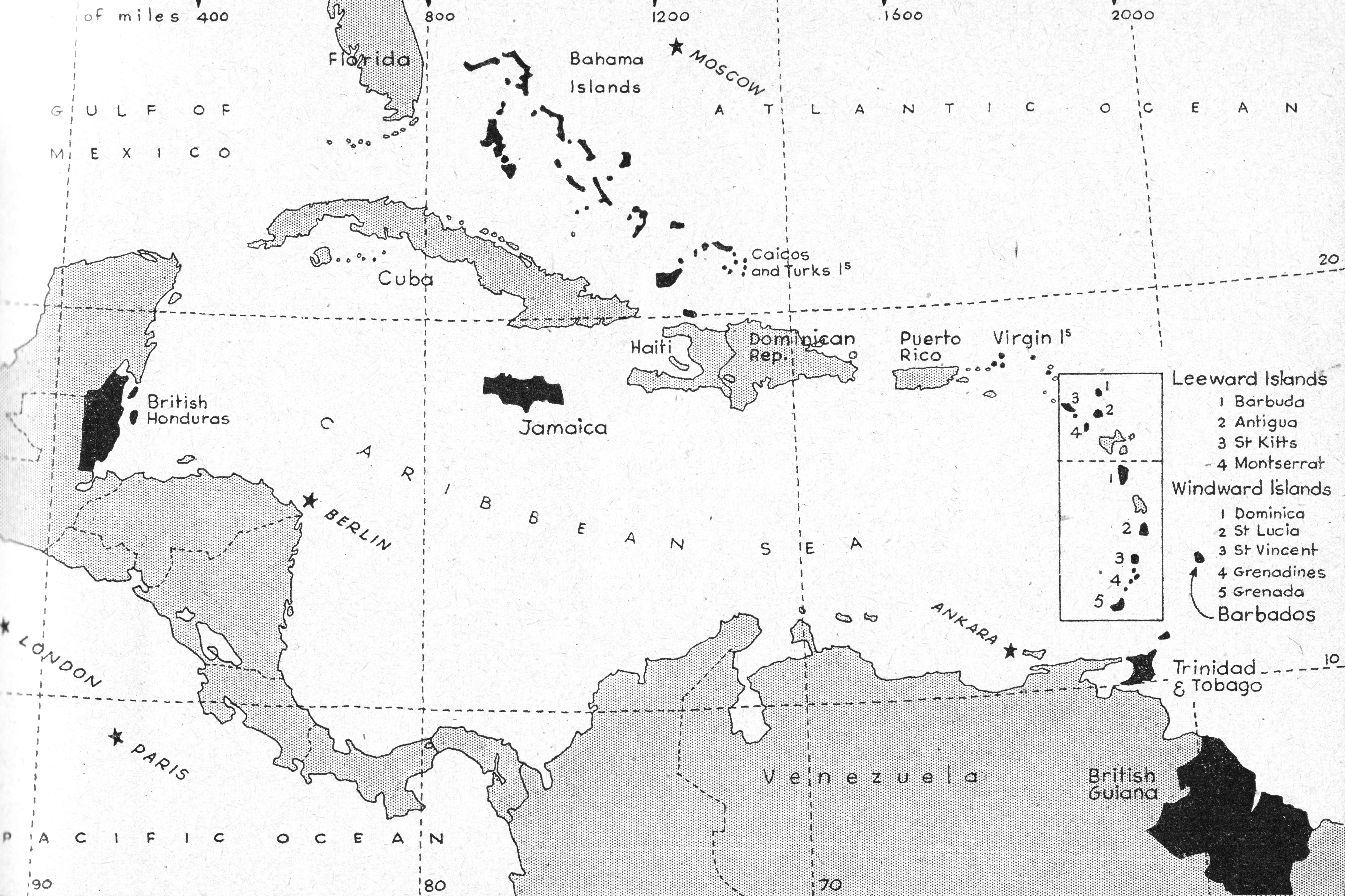
The work undertaken in the West Indies during WW2 was to have a significant impact on the later works that followed in West Africa. Robert Gardner-Medwin was posted to the West Indies during WW2 whilst serving in the Corps of Royal Engineers. His mission, working with funding from the Colonial Development and Welfare legislation, was to undertake ‘research’ into building techniques, materials, indigenous housing and new educational buildings. The funding was triggered by riots and general unrest during the 1930s. The British West Indies was the name given to a disparate collection of islands, as well as two mainland territories, Honduras in Central America, and Guyana in South America. Gardner-Medwin plotted this on a map which he overlayed with European capital cities to emphasize the scale of the region he was responsible for.

002_plan_WI

A small team who accompanied him, including two of his former students from the Architectural Association, London, Leo De Syllas and Gordon Cullen.

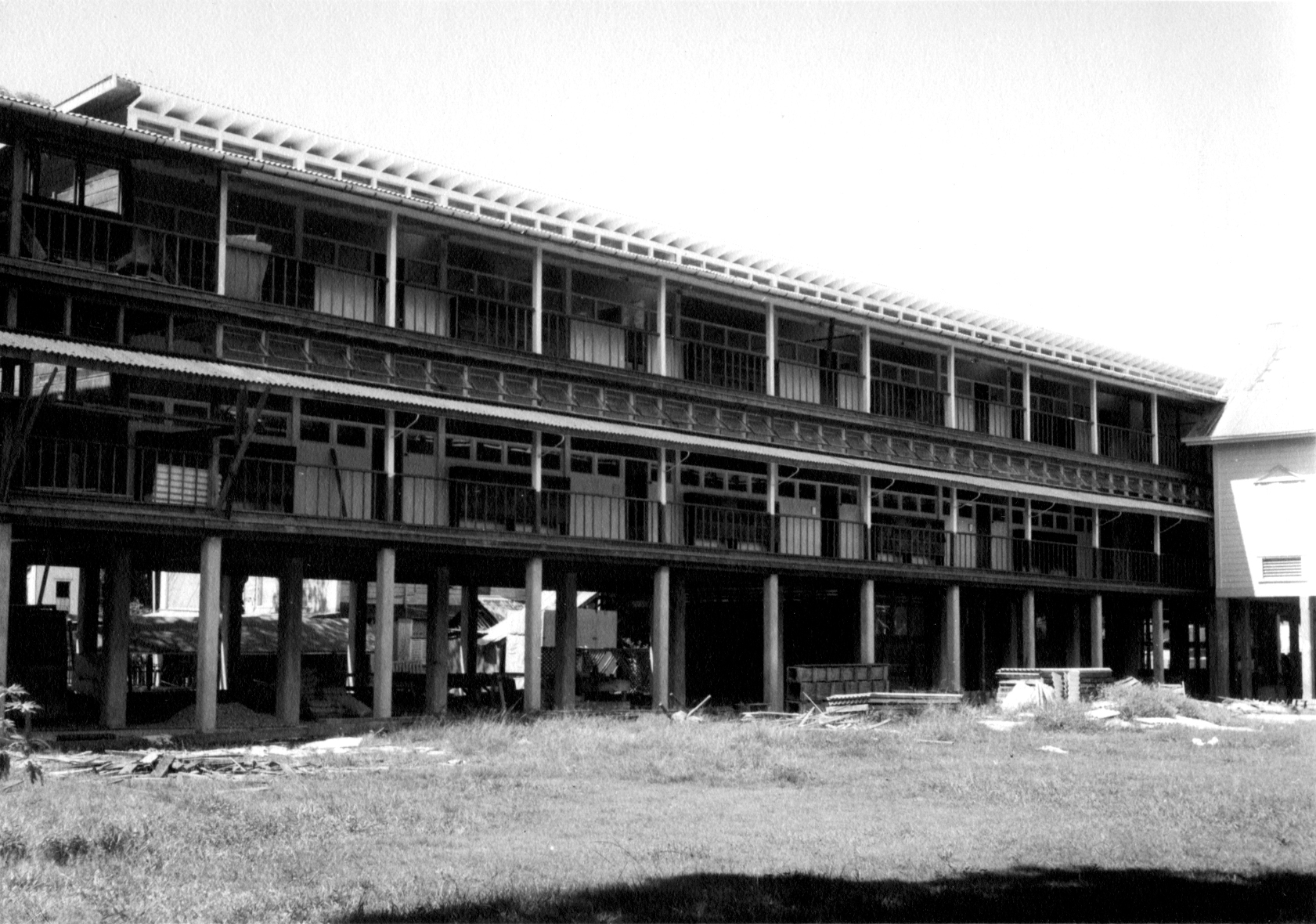
Leo De Syllas is of particular interest as he was commissioned to design several schools in the West Indies, including Bishops High School, Georgetown. Here we see the use of local materials, simple but expressive detailing, the use of verandahs, covered walkways and courtyards – all deployed in an attempt to control the interior temperatures of the spaces and all indebted to the colonial architecture that preceded it. De Syllas would go one to work in Africa with the Architects Co-Partnership.

Bishops High School, Georgetown

They also proposed schemes that moved the existing dwellings from one place to another in an attempt to reduce density, which they believed correlated with better health.

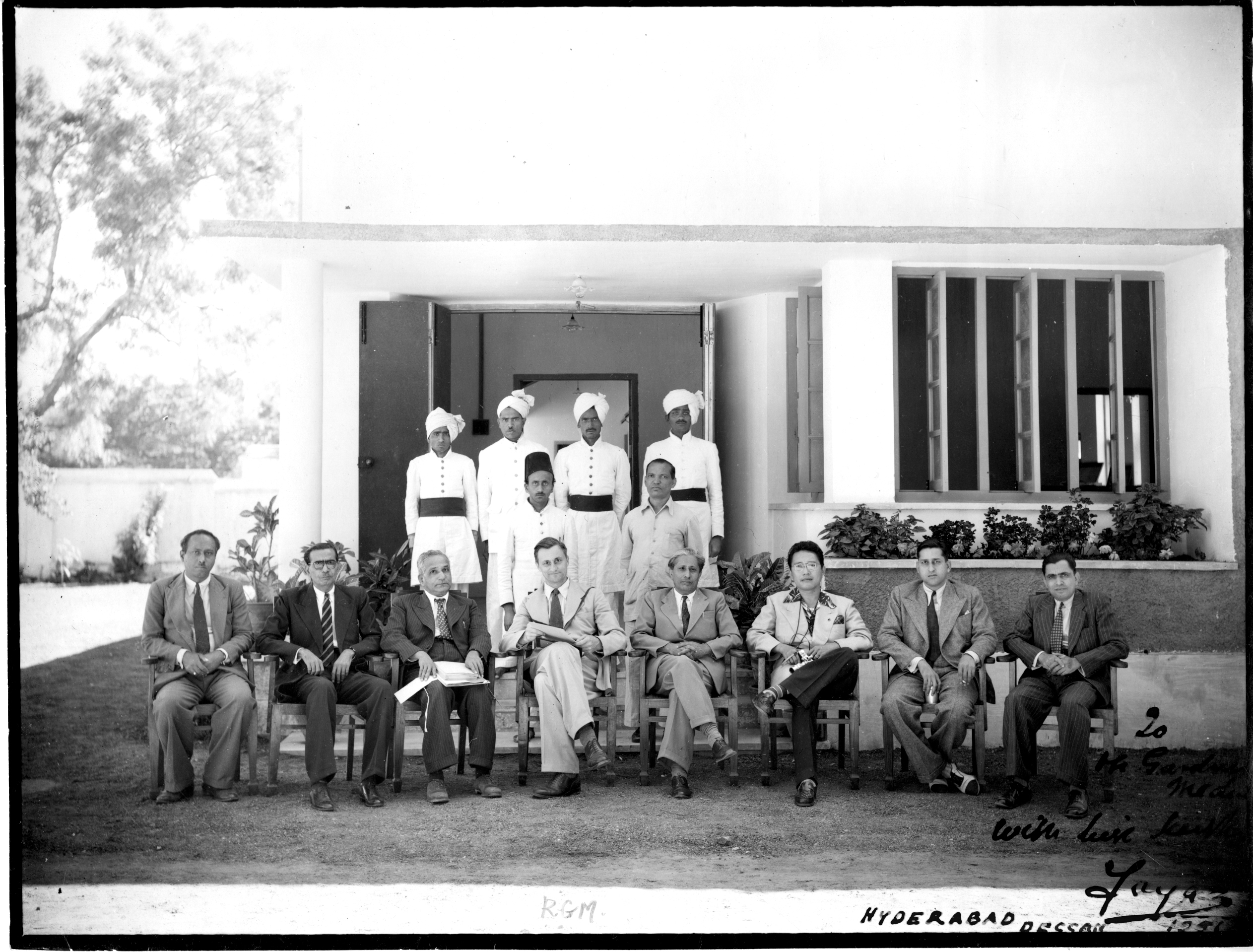
When a fire broke out in Georgetown destroying the town centre, Gardner-Medwin was on hand to replan it, and noted how the local hardwoods were more fire-resistant than steel framed buildings. After the war he returned to the UK, working in Scotland and designing health centres before taking over from Lionel Budden as head of the Liverpool School of Architecture. His work in the tropics was not over however, and he joined a UN sponsored team investigating low cost housing in India in 1951. On this tour he met with and was shown Otto Koenigsberger’s work in Delhi as well as many other schemes throughout the country. India was a hotbed of planning activity at this time, with Chandigarh being constructed and the low cost housing exhibition being staged in New Delhi (organized by Jacqueline Tyrwhitt).

017
Jackson has recently published a paper that discusses this topic in greater detail; it can be downloaded here.

Mad dogs and Englishmen

Following up Yemi’s post on the RWAFF, I noticed the uniforms of the African soldiers and reflected on how this apparently insignificant peculiarity has been a sign of the different methods with which Europeans confronted with Africa. The uniforms of colonial military force in Africa are a clear sign of the development of climate-adaptive sensibility, they played a major role in the history of Tropical Medicine that I see as the cultural base of Tropical Architecture. Noël Coward in 1931, while travelling from Hanoi to Saigon, wrote the famous lyrics “Only mad dogs and Englishmen go out in the midday sun“. It’s amazing to see how the idea that tropical climate was unhealthy and dangerous was so deeply rooted in the European culture to even generate popular folk songs.

The solar topee (shown below) that “the simple creatures hope he will impale on a tree” was the most famous symbol of how scientific knowledge could help the Western man cope with the dangerous tropical climate. Yet we must avoid tracing the history of Tropical Medicine as the simple linear progression of reason over superstition. Even if significant progress were made, they did not sweep away the suspicion that climate itself was a biological harm for Europeans. In 1930s Nigeria one cadet refused to wear the hat until he got a letter from the government saying that if he become ill from not wearing the hat he would have to go back home and end is career. It is easy to imagine how the whole life of colonialists in early decades of XXth century were influenced by the concerns on tropical climate. The idea that black and whites needed different treatments opened up to the idea that they were biologically different which easily ended up in racial theories.

Towards a genealogy of tropical architecture: Historical fragmen

However the systemic approach to climate that many studies of Tropical Medicine show, one for all the monumental work by Aldo Castellani and Albert Chalmers, posed the basis for the development of studies on climate that were strongly influential on Maxwell Fry and Jane Drew’s work. It is perhaps possible to trace a history of the relation with climate that links together solar topees, military barracks and bungalows all the way to the tropical modernism. A history that will be able to recognize the debt that Fry and Drew had with previous experiences in Africa even in disciplines not immediately linked to architecture.

A Manual of Modernist Regionalism for Tropical Africa: The cultural environment shaped by Maxwell Fry & Jane Drew.

Edwin Maxwell Fry and his wife Jane Drew, with their West African designs in the 1940s, established a design system that had modernist theories as a starting point and developed ideas of climate responsiveness, development planning and adaptation to the new post-colonial social conditions. This system was promoted in the 1950s within the techno-scientific network of the new British Commonwealth, under the name of Tropical Architecture through publications, conferences and the institution of courses of studies in London and Kumasi.

Jacopo Galli’s PhD research will analyse Tropical Architecture from the factors that influenced its conception: the British medical-engineering tradition, the exportation of modernism and the highly experimental environment. Jacopo intends to analyse the numerous educational institutions built in West Africa by Fry & Drew and several other designers, for instance James Cubbitt & Partners, Godwin & Hopwood and the Architect’s Co-Partnership. These buildings were conceived as experiments to verify the functioning of climate devices and urban solutions. Finally, he will verify how this empire of good practice reached its highest point in the publication of Tropical Architecture in the Dry and Humid Zones in 1956: the textbook approach of the manual seen as the conclusion of the entire experience and its consequences in the history of bioclimatic architecture and planning for development.