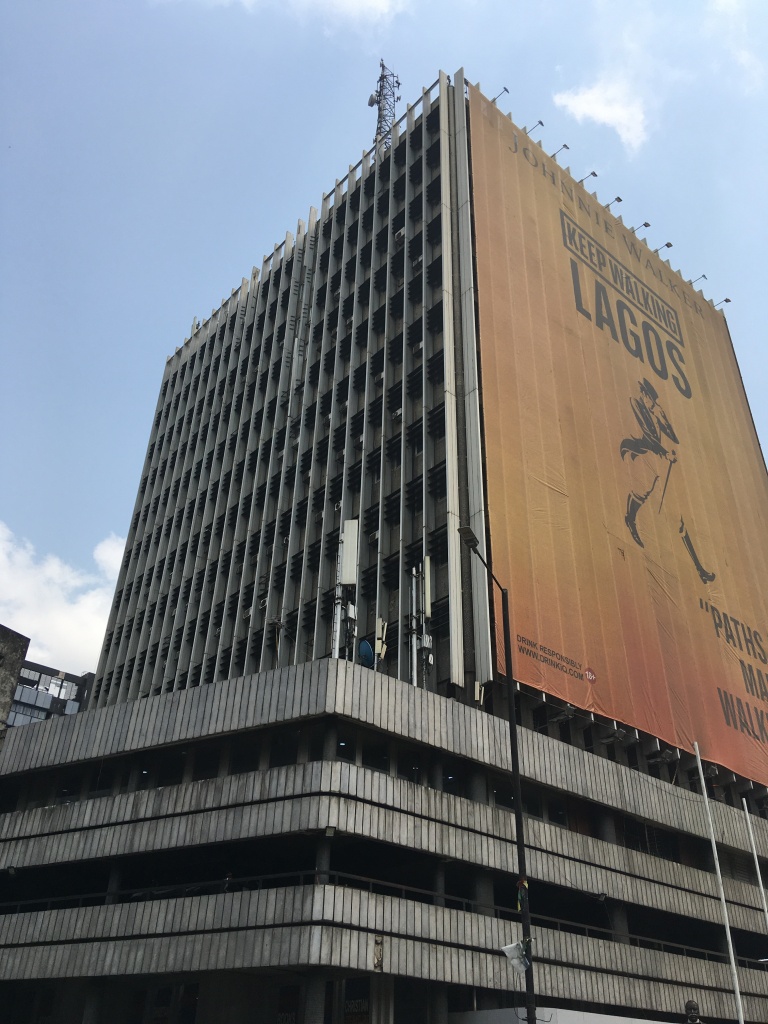
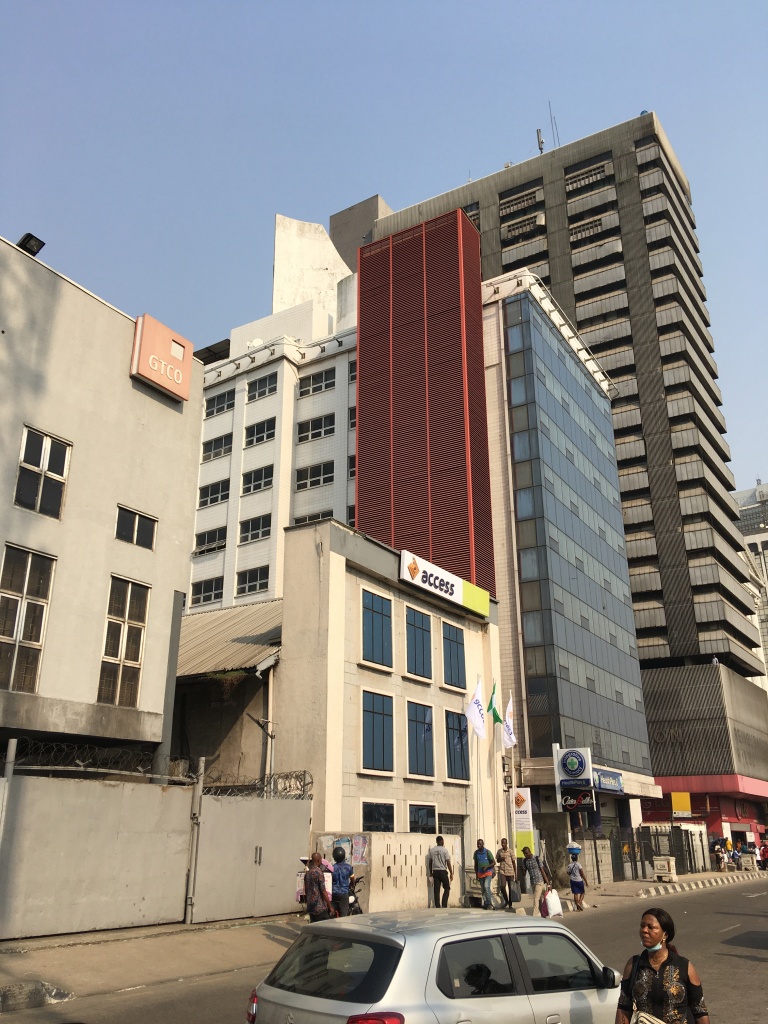
Elder Dempster by James Cubitt – heavily modified with the new glazed facade.
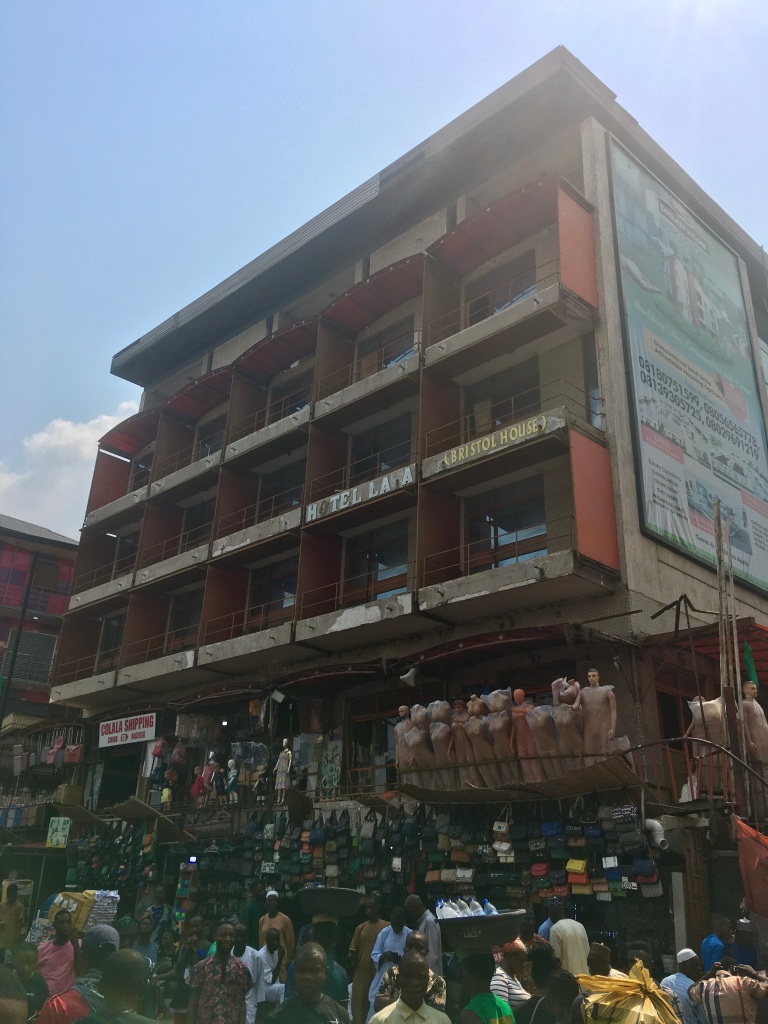
Bristol Hotel by Godwin and Hopwood
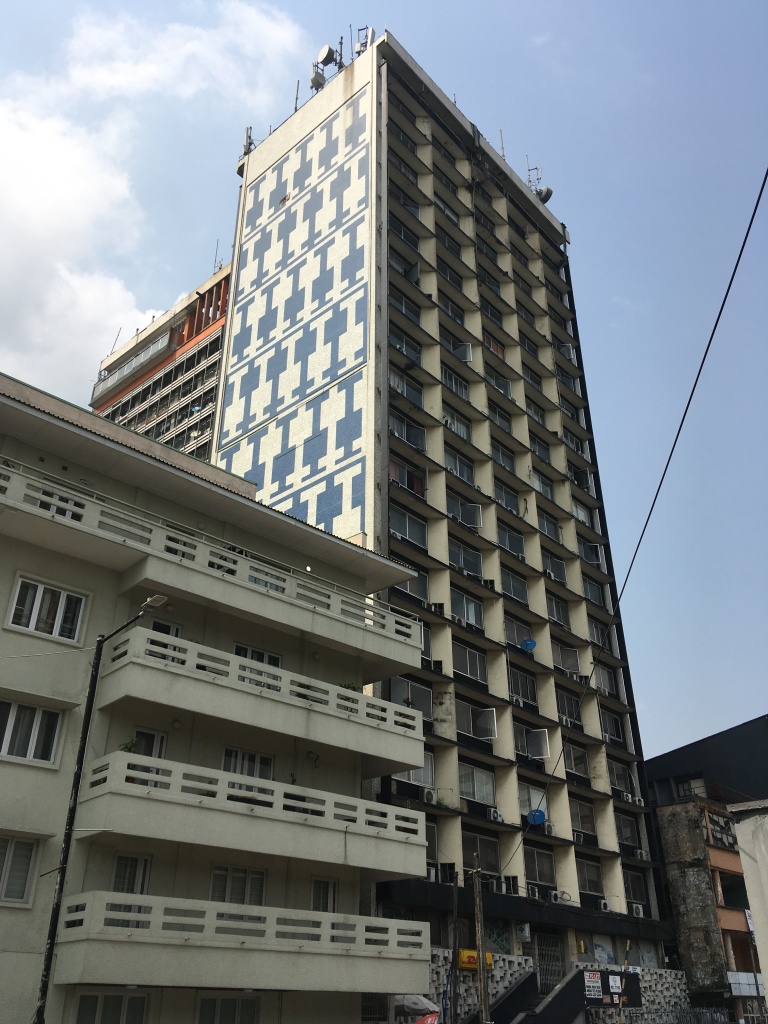
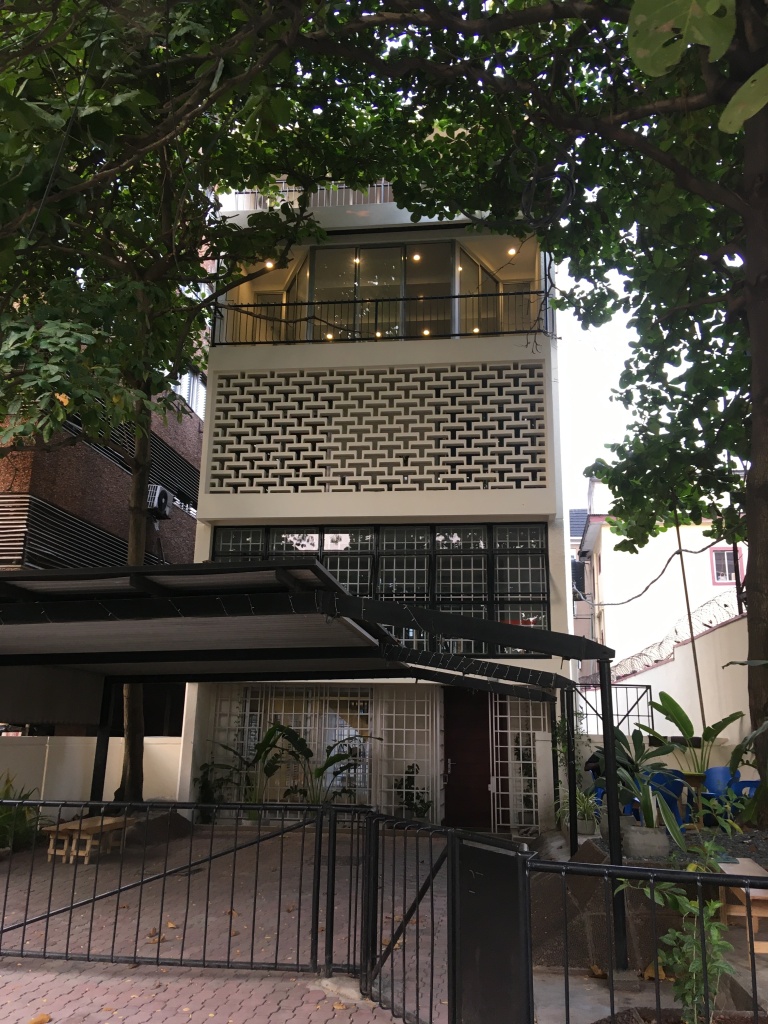
Godwin and Hopwood Residence, Godwin and Hopwood
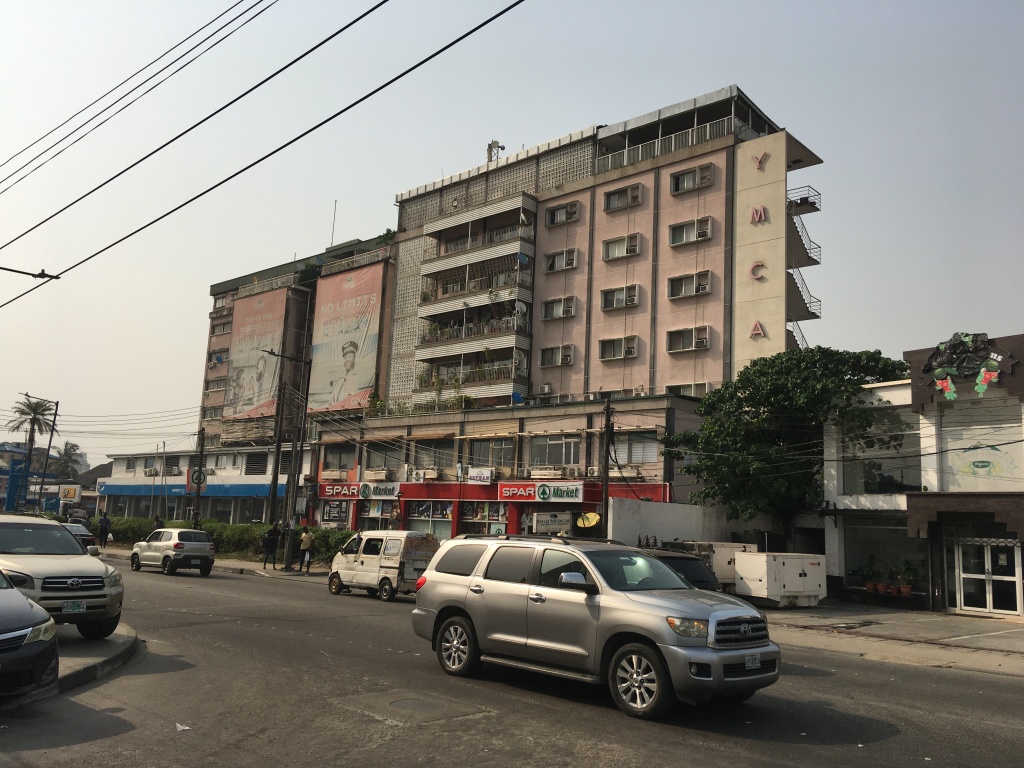
YMCA – slender single room deep plan, exposed staircase at the gable with concrete wrapping around. Commercial retail units at the base, pavilion and garden at the roof. Cracking scheme – but who is the architect?
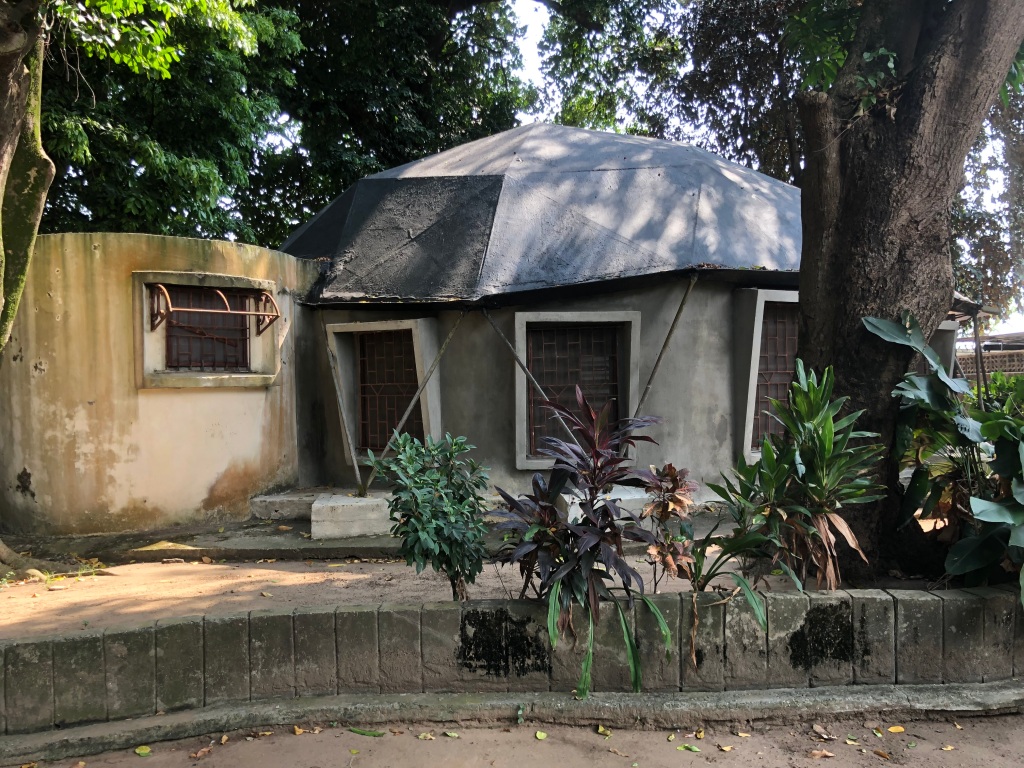
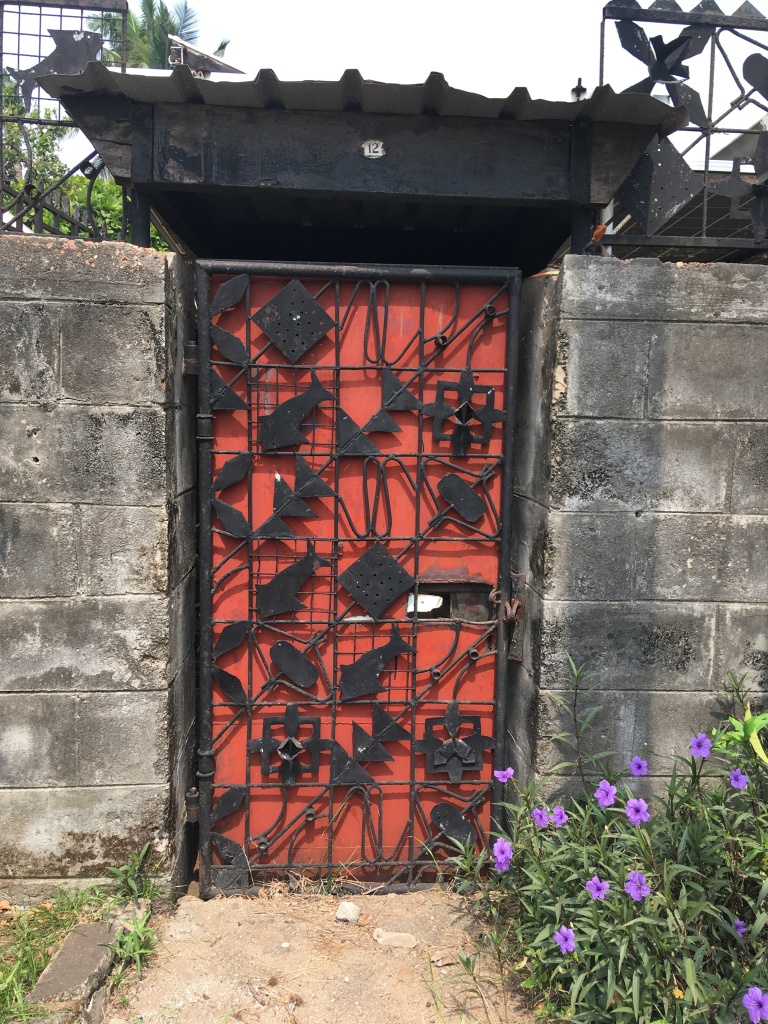
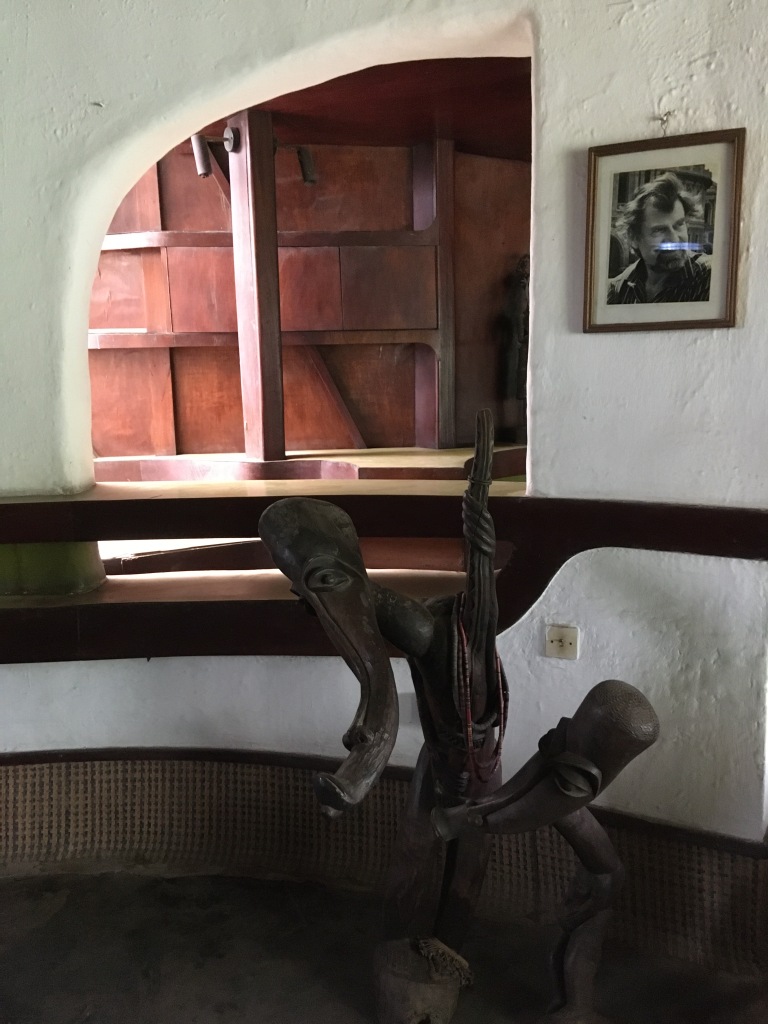
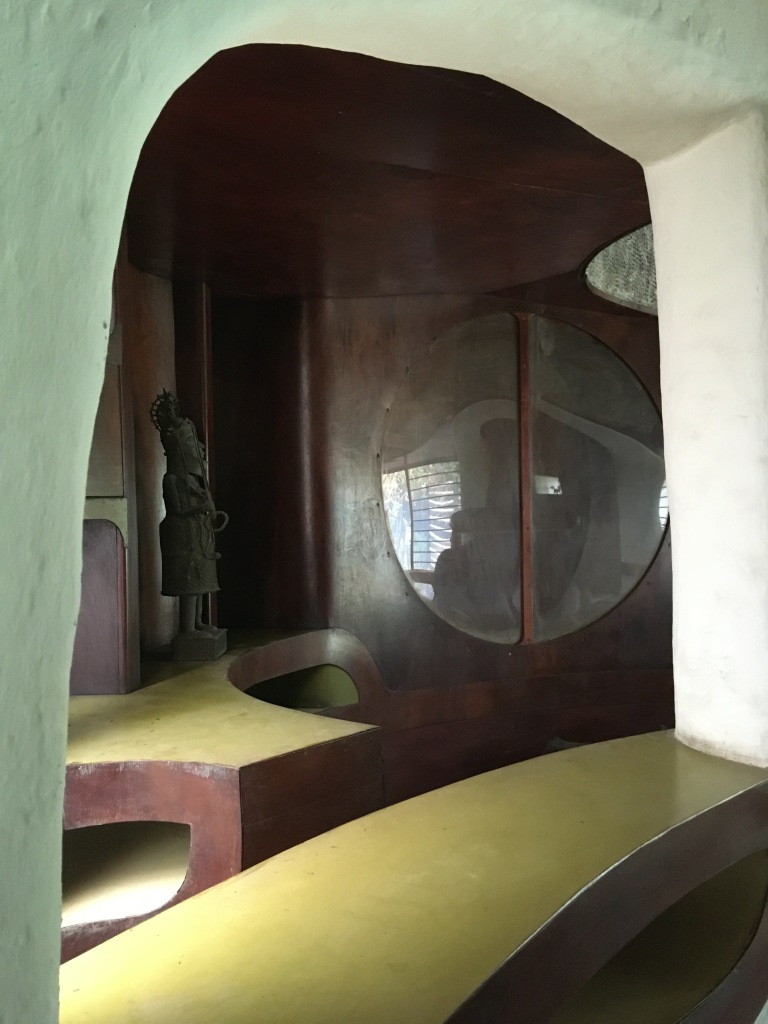
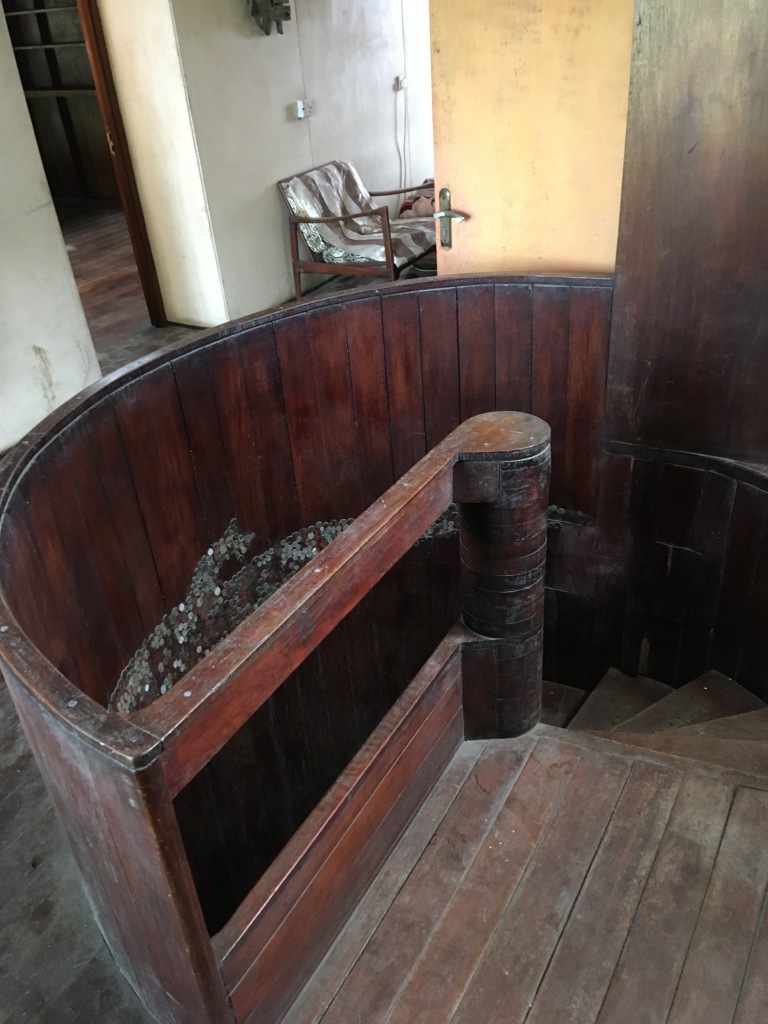
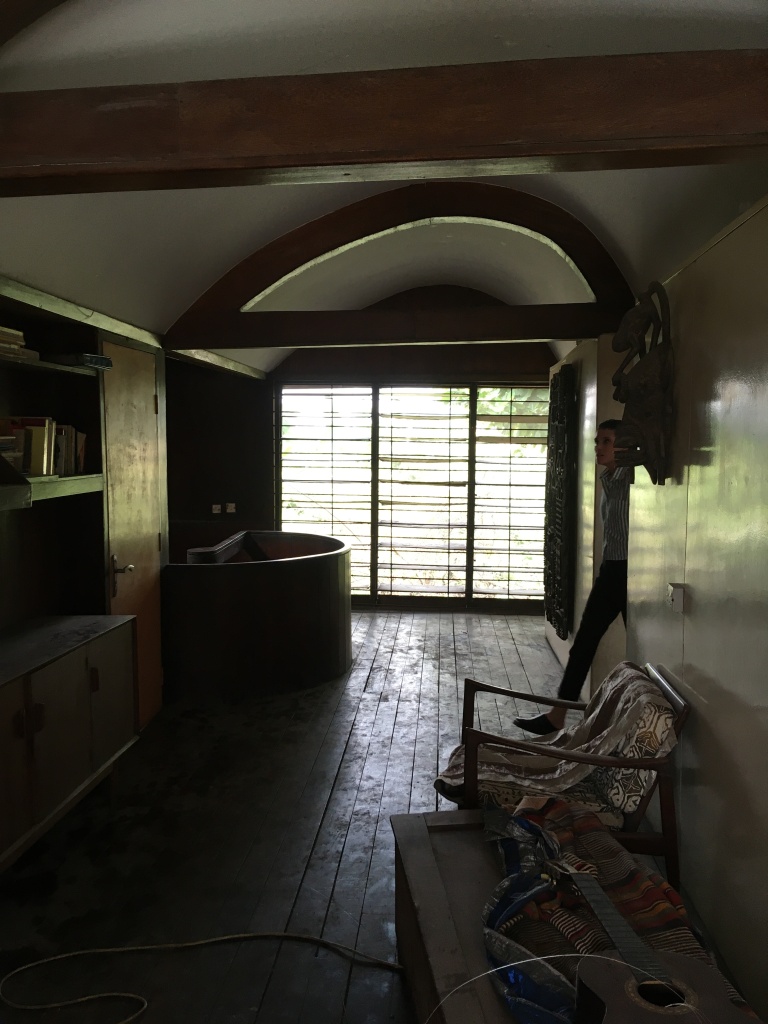
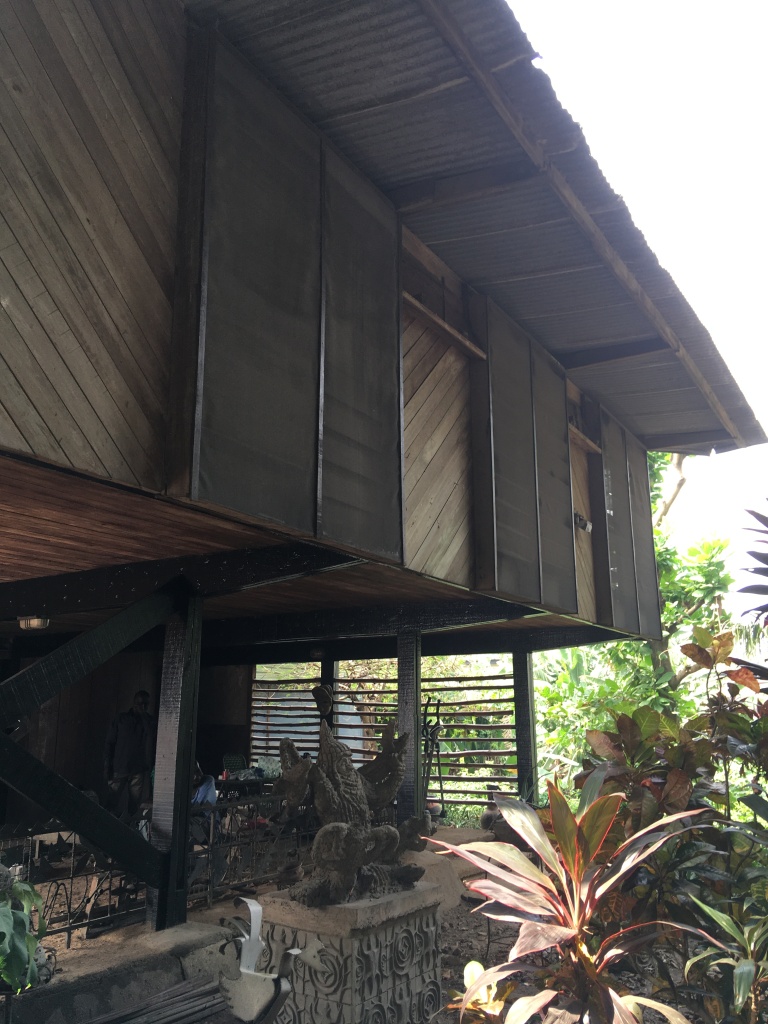
The house was originally planned as five interlocking circular rooms – responding to Yoruba housing forms. It contained a water feature, disco-lights, and a hardwood bar too. Set within the sweeping walls are built-in furniture, seating, storage and carefully curated spaces for art and sculpture. In section the light flows in from the roofscape, whilst also ventilating the passively cooled space. Vaughan-Richards collaborated with various artists and sculptors to produce door screens (one includes a carving of the house), furniture, and panels that feature in almost every space. A seating area cantilevers over the garden and once offered views over the lagoon beyond (now reclaimed land and gradually being built upon). The materials, natural ventilation, and careful positioning of the windows create delightful interiors with views out over the landscape and the giant trees that are home to African Greys. The house is a compact and modest scale with a refreshing lack of pretensions. It was gradually extended by Vaughan-Richards to accommodate his growing family and a new floor was added above.
Outside the main property is a geodesic domed room providing additional visitor space and also used for exhibitions and events.
Vaughan-Richards designed many buildings across Nigeria. He really deserves a monograph dedicated to his important work. We also visited King JaJa hall at Unilag that was designed by Vaughan-Richards.
The University of Lagos, located in Akoka district of the city, was established in the early 1960s to provide a new centre of learning for the city. The campus and its significance is currently being researched by Adefola Toye as part of her PhD investigation, and she’s recently published an introductory article in the latest Docomomo special edition too).
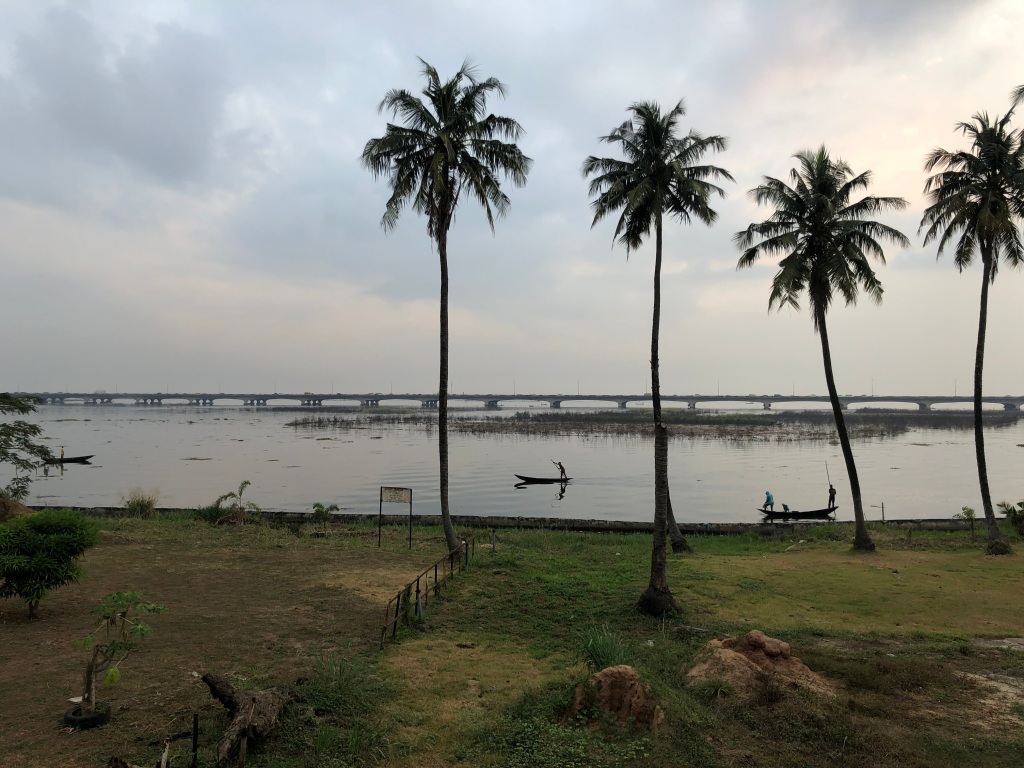
We spent the morning walking around the campus, and this was the first quality that resonated – it is walkable. It’s also more integrated into its urban context – rather than isolated on a remote hilltop like so many other universities in the region. Equally, there are tranquil elements and solitude, especially along the waterfront overlooking the lagoon.
The LagoonSenate ChamberSenate Building, 1984, James Cubitt ArchitectsOla Uduku admiring the Courtyard of the Administration buildingAuditorium
The central core is overlooked by Senate House tower and podiums designed by James Cubitt architects in the 1980s – all of the familiar brise soleil and double-skin façade motifs but extruded, layered, and clad in mosaic tiles. The brise soleil are actually hollow forms with a thin layer of cement and mosaic. There’s the classic Cubitt curved concrete motif (as seen on the Elder Dempster buildings in Lagos and Freetown).
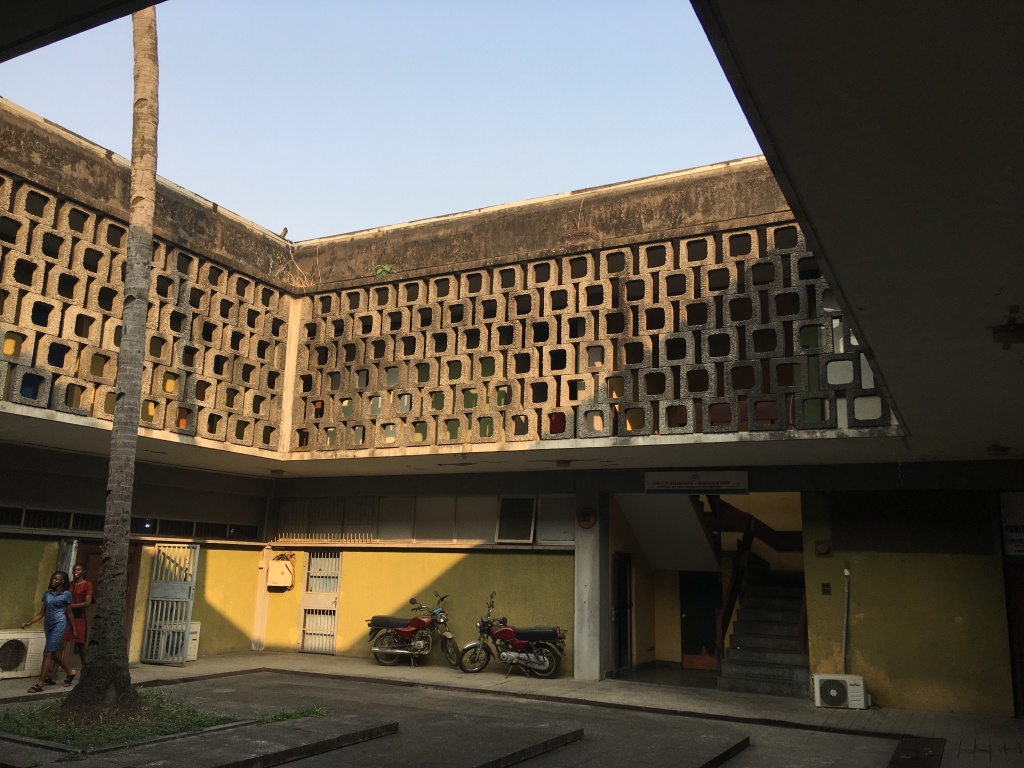
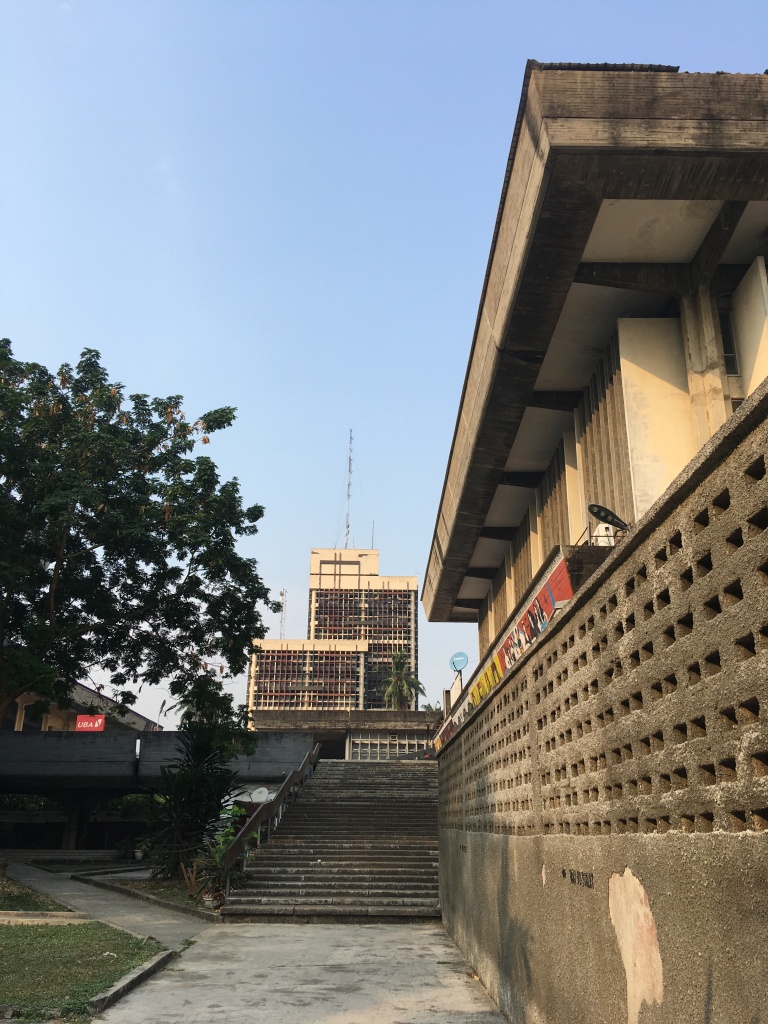
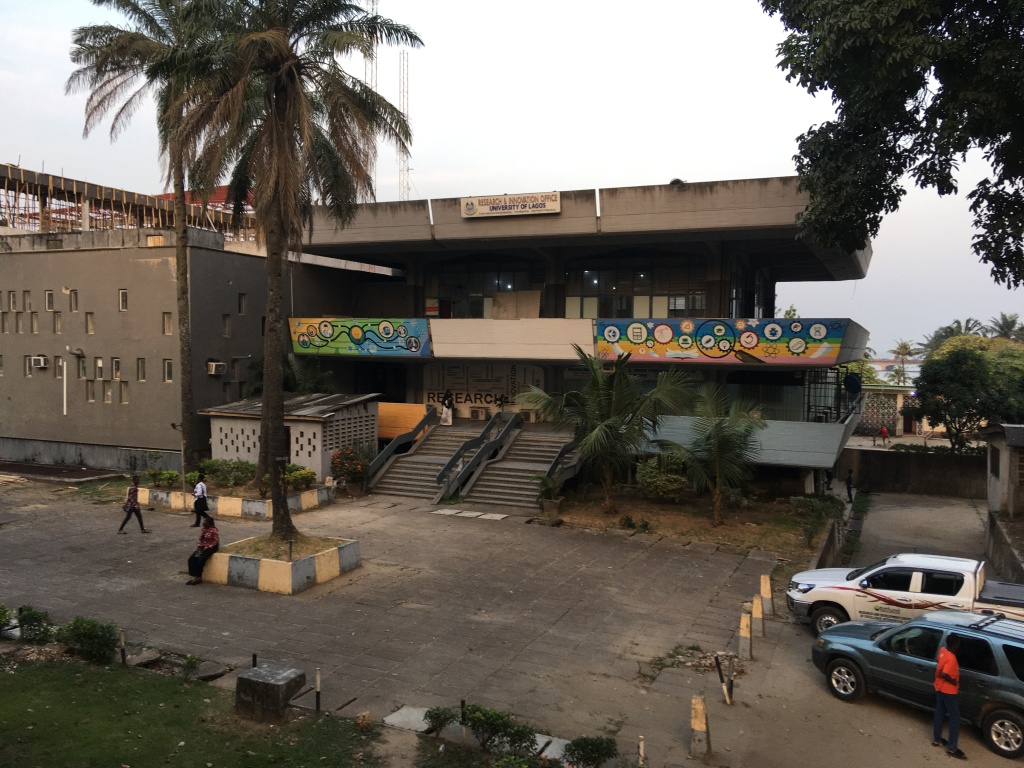
Senate House faces into the plaza-precinct of the university, and here the campus responds to the landscape – both reacting the gradient that leads to the lagoon beyond, and as a man-made series of platforms, routes, and under crofts. It’s a space that has been crafted to catch the lagoon breeze and designed for gatherings, ceremonies, performances, and spending time with friends. The core campus buildings, designed by American practice Robert S. McMillan Associates in the early 1960s, overlook and enclose the space, including the university library and council chamber drum. They’re not forming a street but more of a town square. The administrative buildings are also here, located within a protective shaded courtyard and solitary palm tree. The scale shifts from the large public space into a much more intimate enclosure. The concrete former is expressed on all these buildings to reveal the timber grain, expertly cast into projecting scooped forms, parapets, and balustrades. There’s a heavy, confident, solidity to the composition of the facades. The horizontal soffits of the roofscape frames the visas, respond to the multi-level precinct feel, and are adequately matched with the vertical window bays and concrete fins. The sombre materiality of the ubiquitous concrete is relieved with unexpected blasts of colour, such as the gold mosaic on the J F Ade Ajayi Auditorium.
Library staircaseResearch and Innovation OfficeThe Library
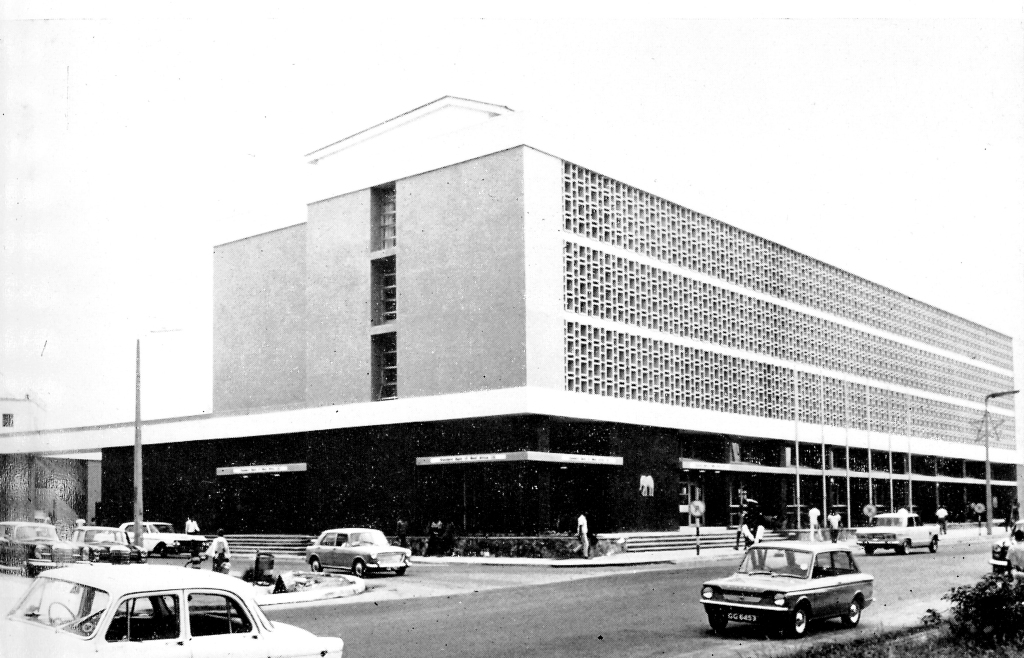
A few years ago we reported on our Keeping Cool project and included a photograph of the Standard Chartered Bank on Accra’s High Street. The bank had been refurbished, radically changing its passively cooled perforated facade to a sealed glass envelope relying on air-conditioning.
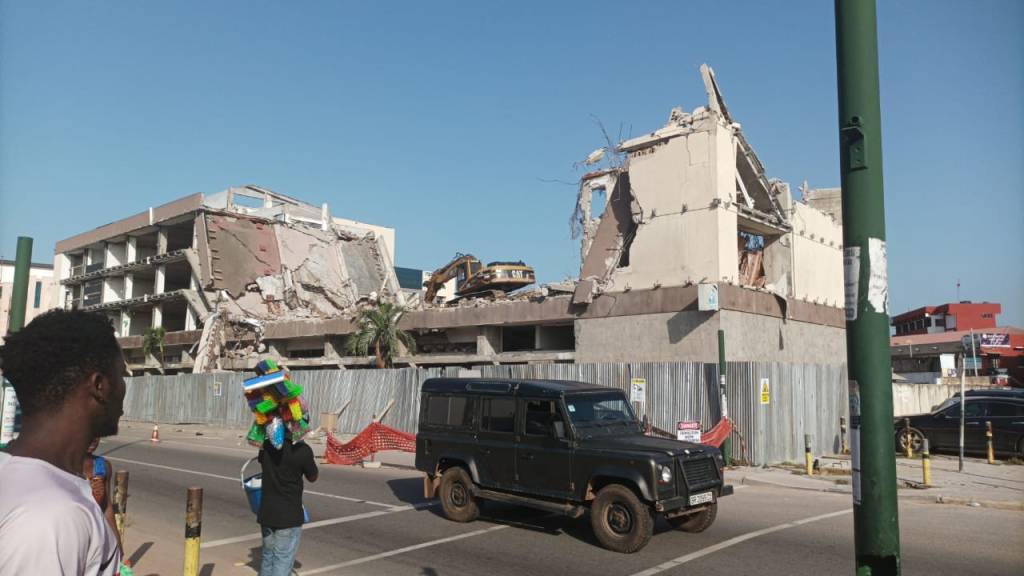
We’ve just received updates from Accra that the bank has now been demolished. No details have been released on what is to replace the bank.
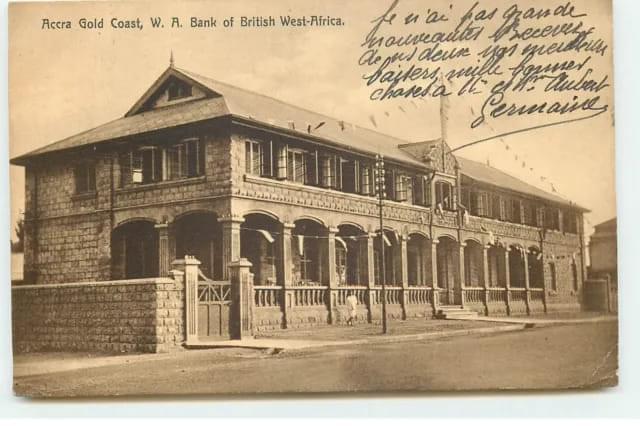
The same site has been used as a banking hall since the late 19th Century. Below are some of the photographs of the site revealing the continuity and change over the last century and the variety of architectural solutions deployed. Joe Addo kindly sent over some photographs of the shock demolition taking place earlier this month.
Accra High Street: Bank of British West Africa shown on the right hand side with the arched loggiaPostcard showing the Bank of British West Africa on the same site of Accra’s High Street, c1900Standard Chartered Bank with passively cooled facade. Architect? unknown, c.late 1950sStandard Chartered with new blue glass facade. Glimpse of Barclays bank on far left.July 2023: Standard Chartered bank being demolished [Courtesy of Joe Addo]
We are delighted to be able to host Professor Ayo Olukoju (Institute of African and Diaspora studies, University of Lagos) and Professor Sam Ntewusu (Institute of African Studies University of Ghana) who are visiting the University of Liverpool and also the Unilever Archives to explore the possibilities of future collaborative research and teaching activities across our institutions and others in NW England.
Both Professors are historians who have worked with archival sources in their research in West Africa. They have generously agreed to share, through this seminar, the challenges and issues with working with archival material and sources from a West African perspective and also some of the hopes they have for future collaborations.
Do join us to hear their views and also join the conversation – how do we make the most of archives in the 21st century in different locations and places? Importantly do we need to decolonise the archive, and if so how?
Hosted by the AHUWA Research centre in association with Unilever Archives, School of History and Institutes of African Studies and African Diaspora Studies at the University of Ghana, and the University of Lagos
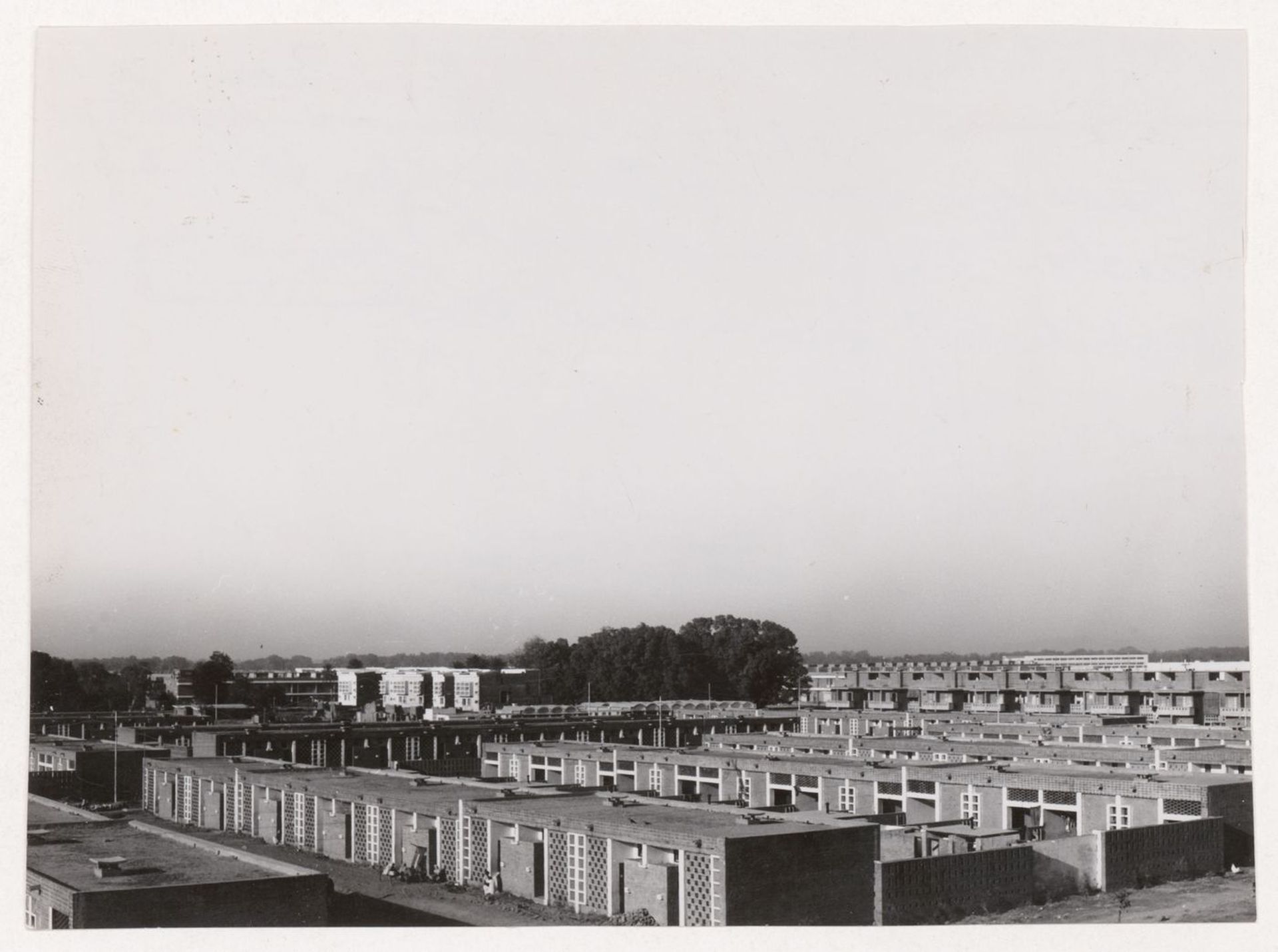
This is the first article in a series that considers reflections on the value of interpretation in combination with the technical practice of cataloguing, authored by CCA staff and invited scholars and introduced by Martien de Vletter. Here, we examine changing terminology. CCA cataloguer Jennifer Préfontaine considers context and the use of the term “peon” in cataloguing the Pierre Jeanneret fonds, and Michele Tenzon, Ewan Harrison, Iain Jackson, Claire Tunstall, and Rixt Woudstra sift through reworkings that were made in the development of the United Africa Company archives.
The Importance of Context
Jennifer Préfontaine weighs meaning and intent when cataloguing archival materials
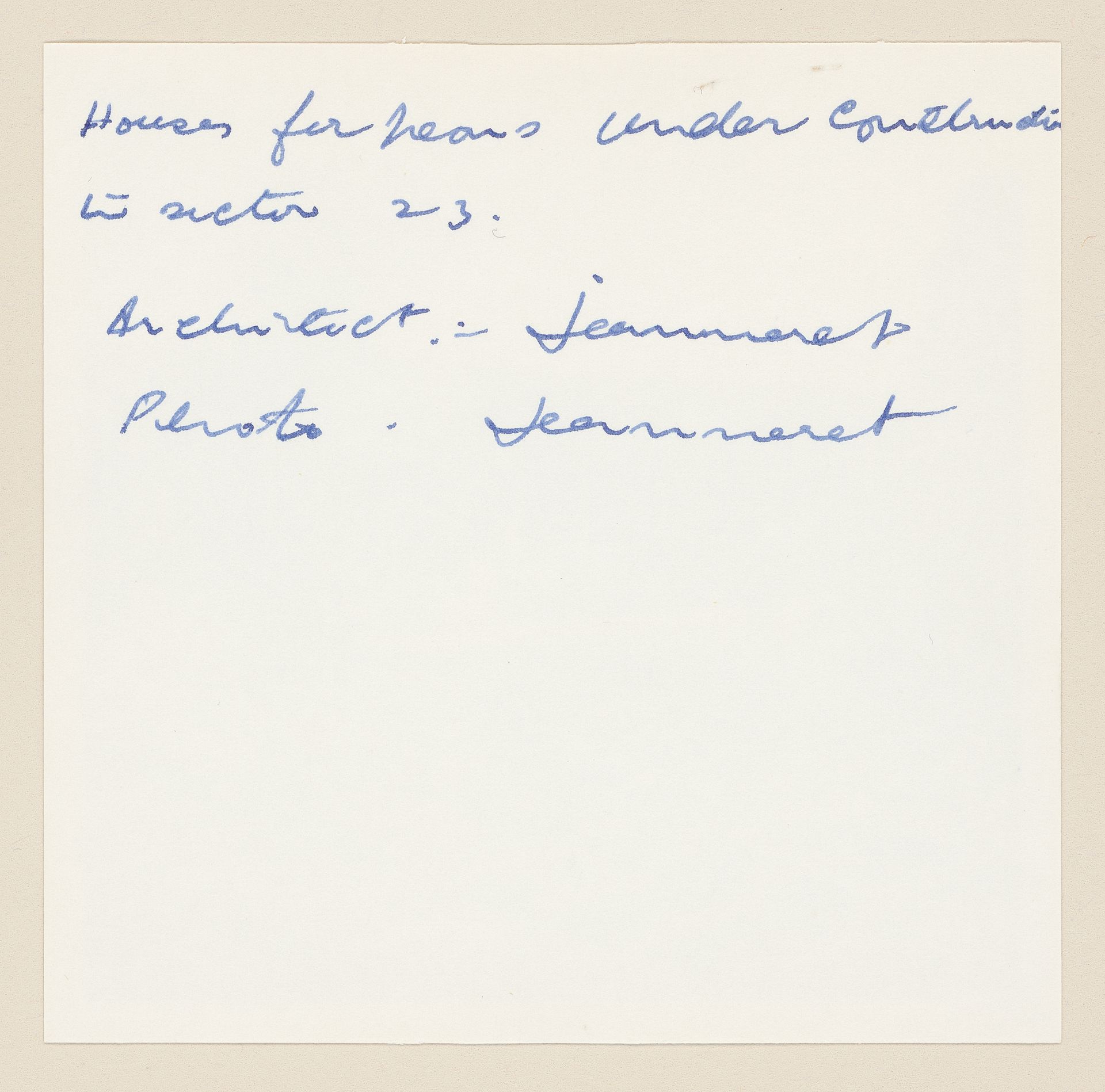
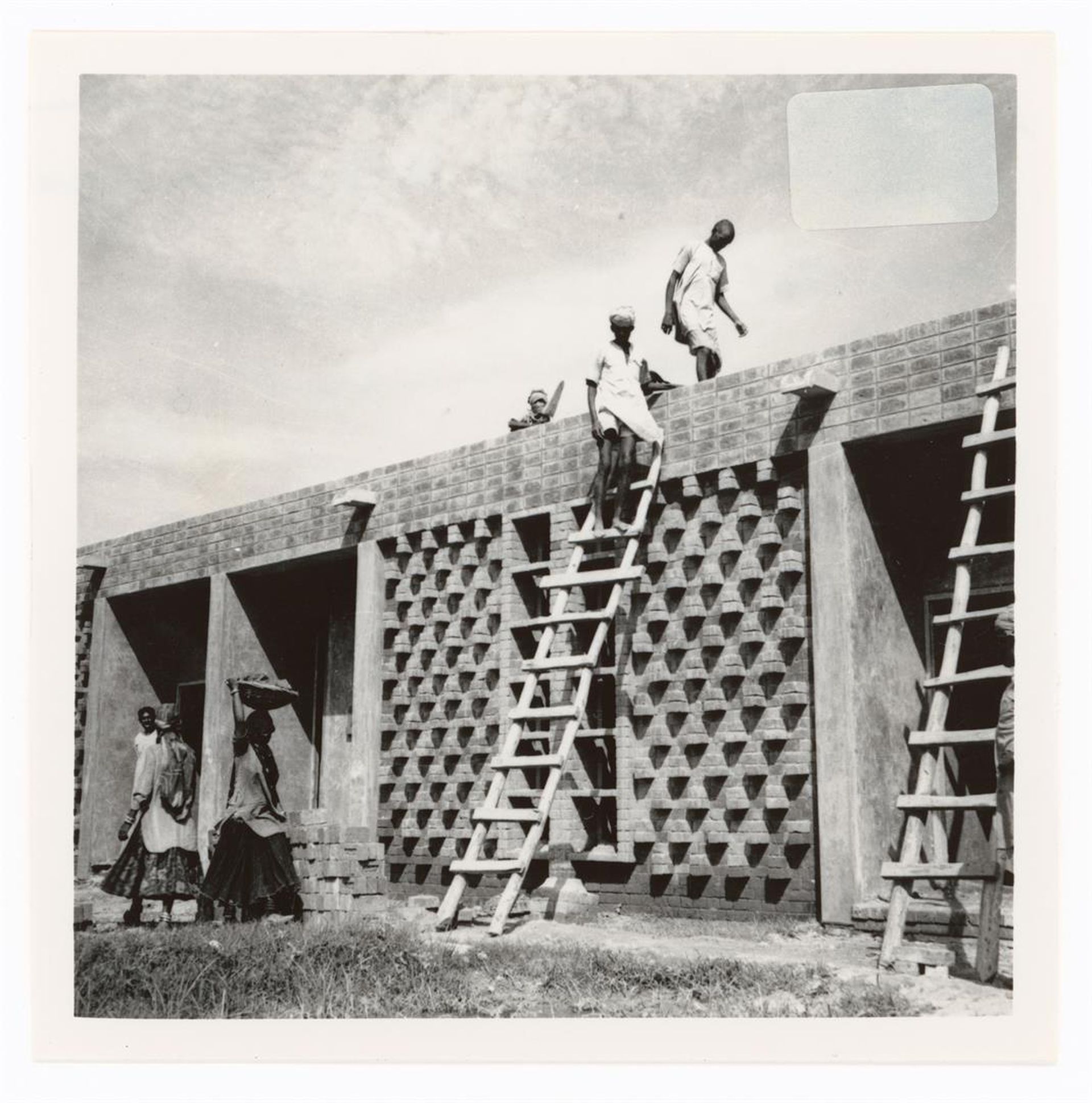
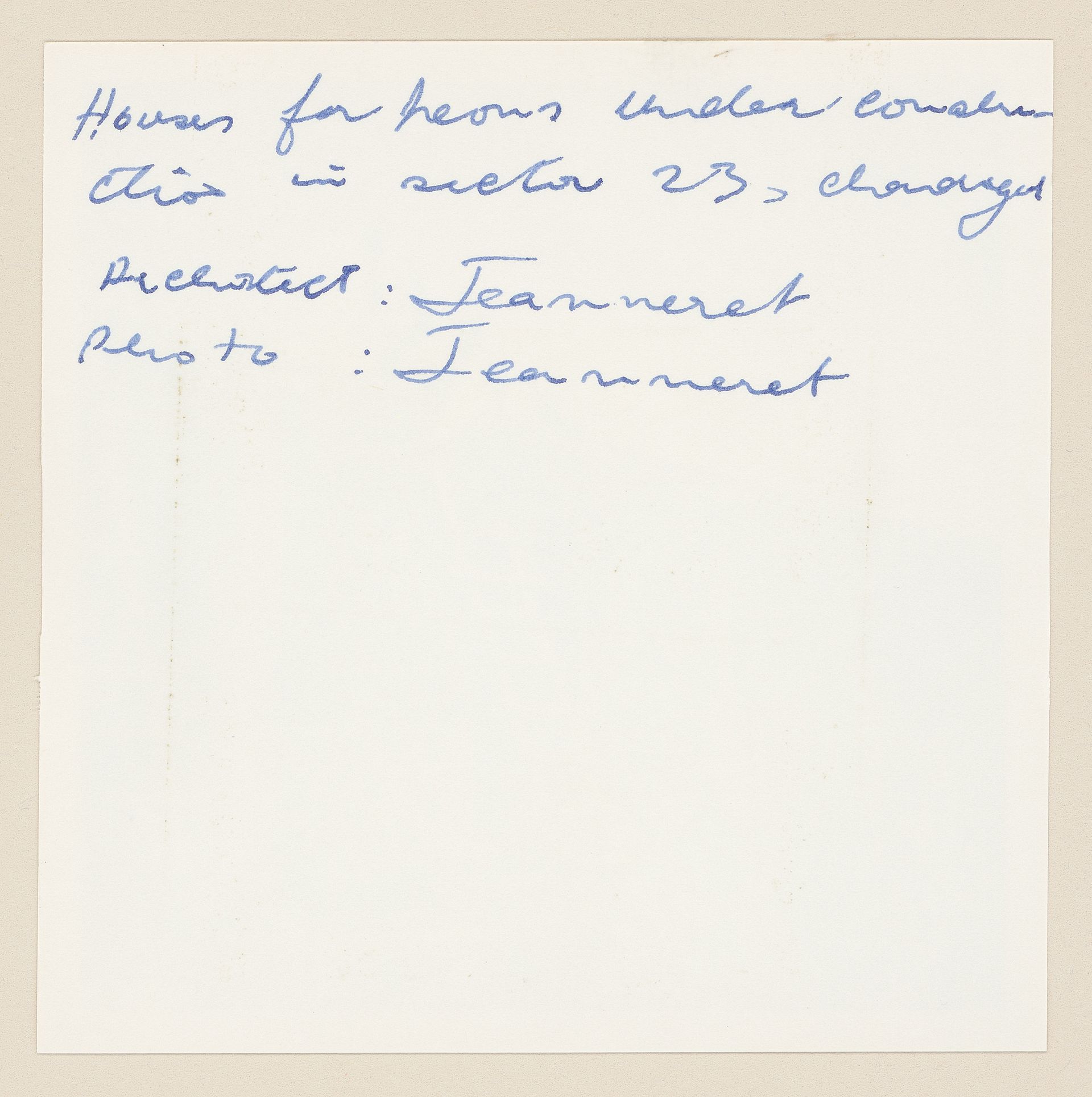
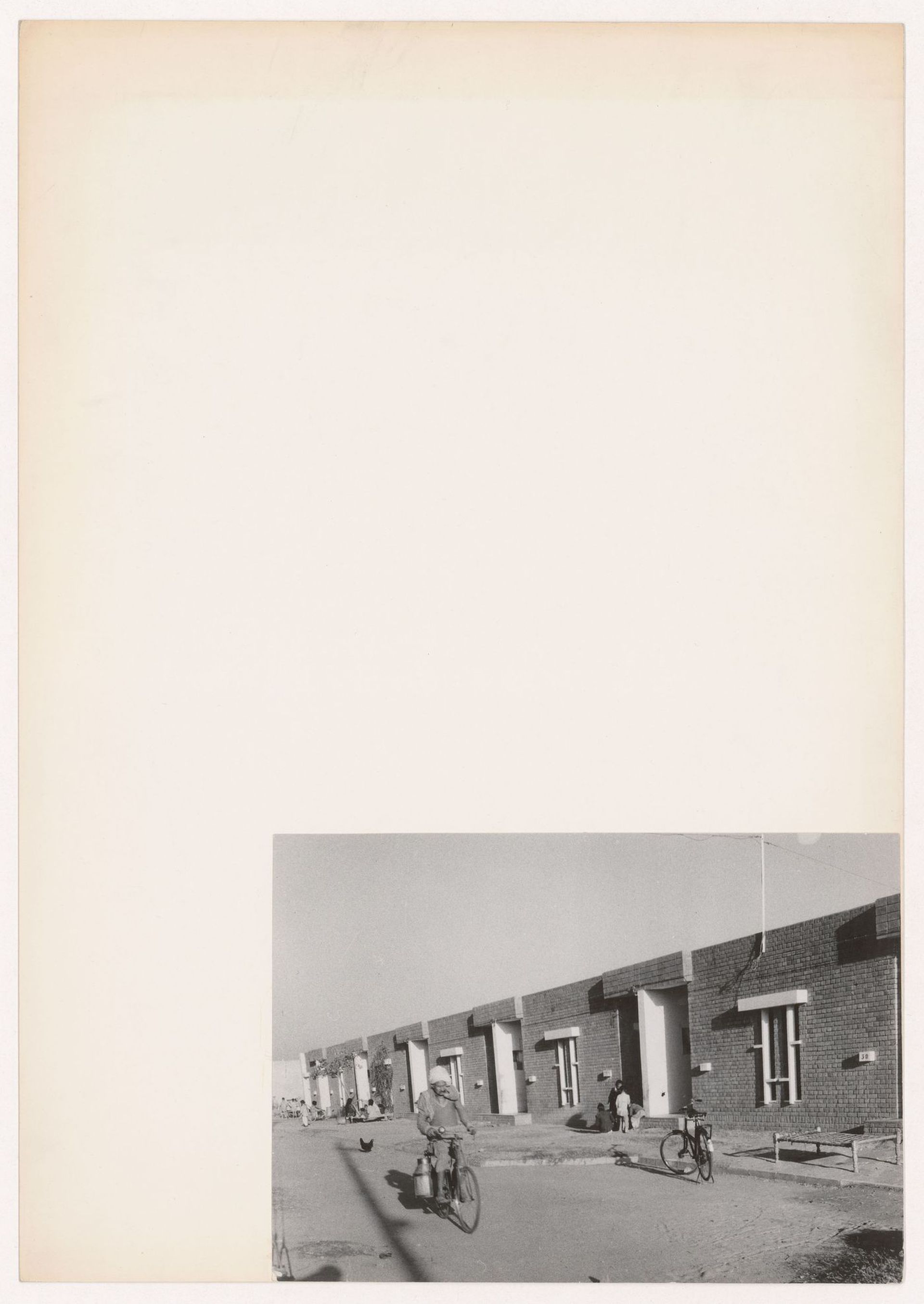
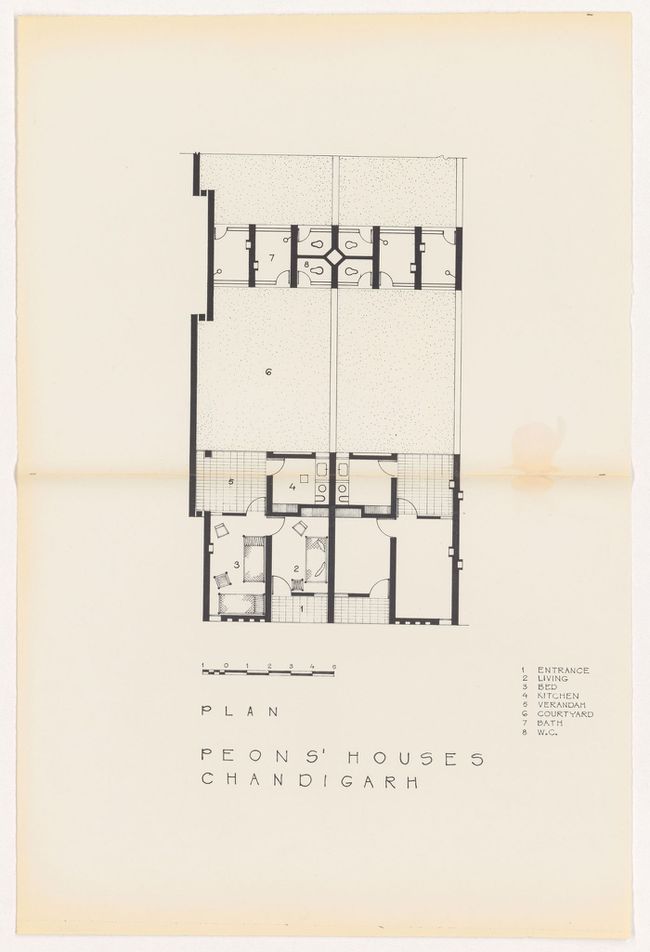
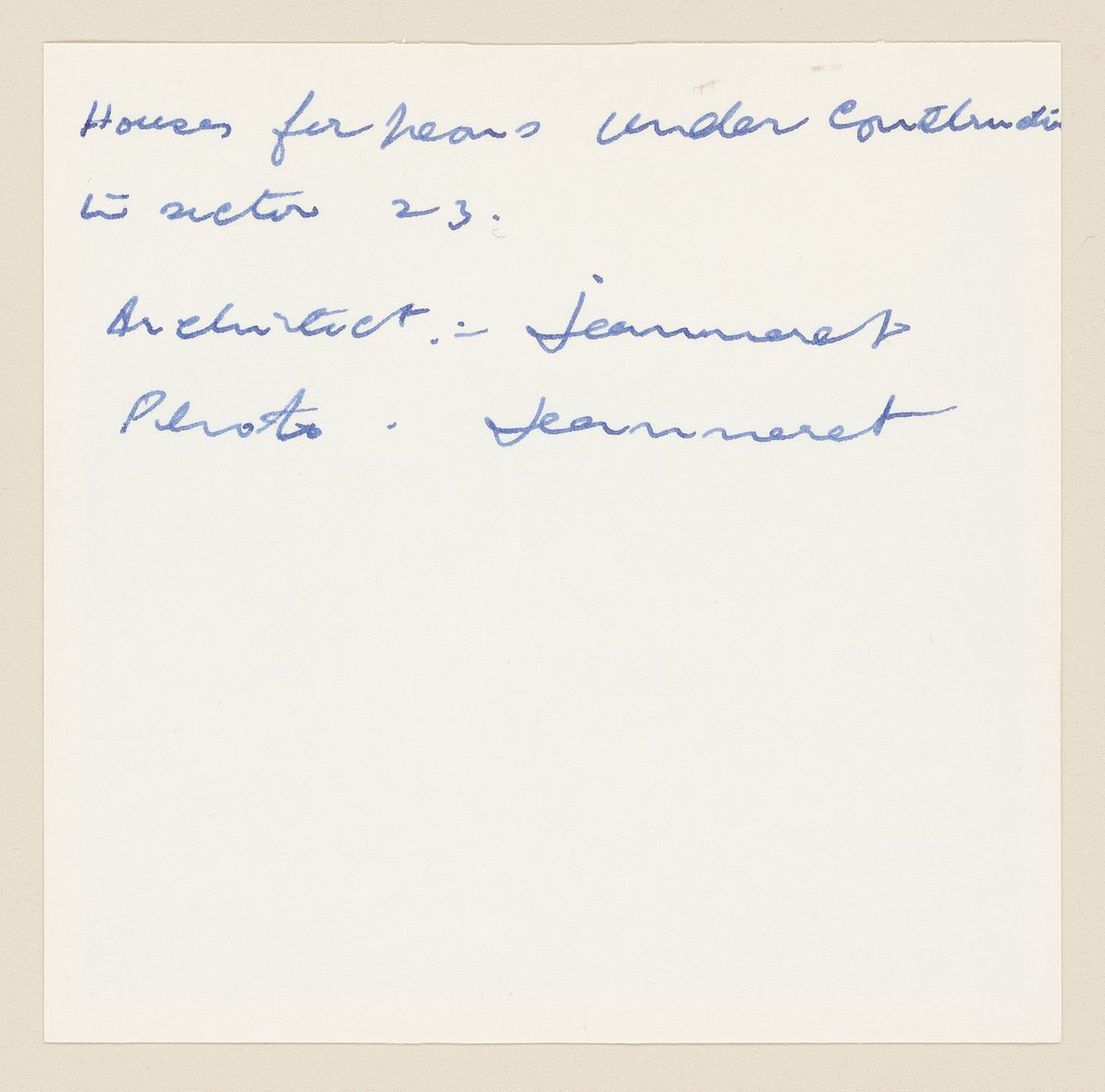
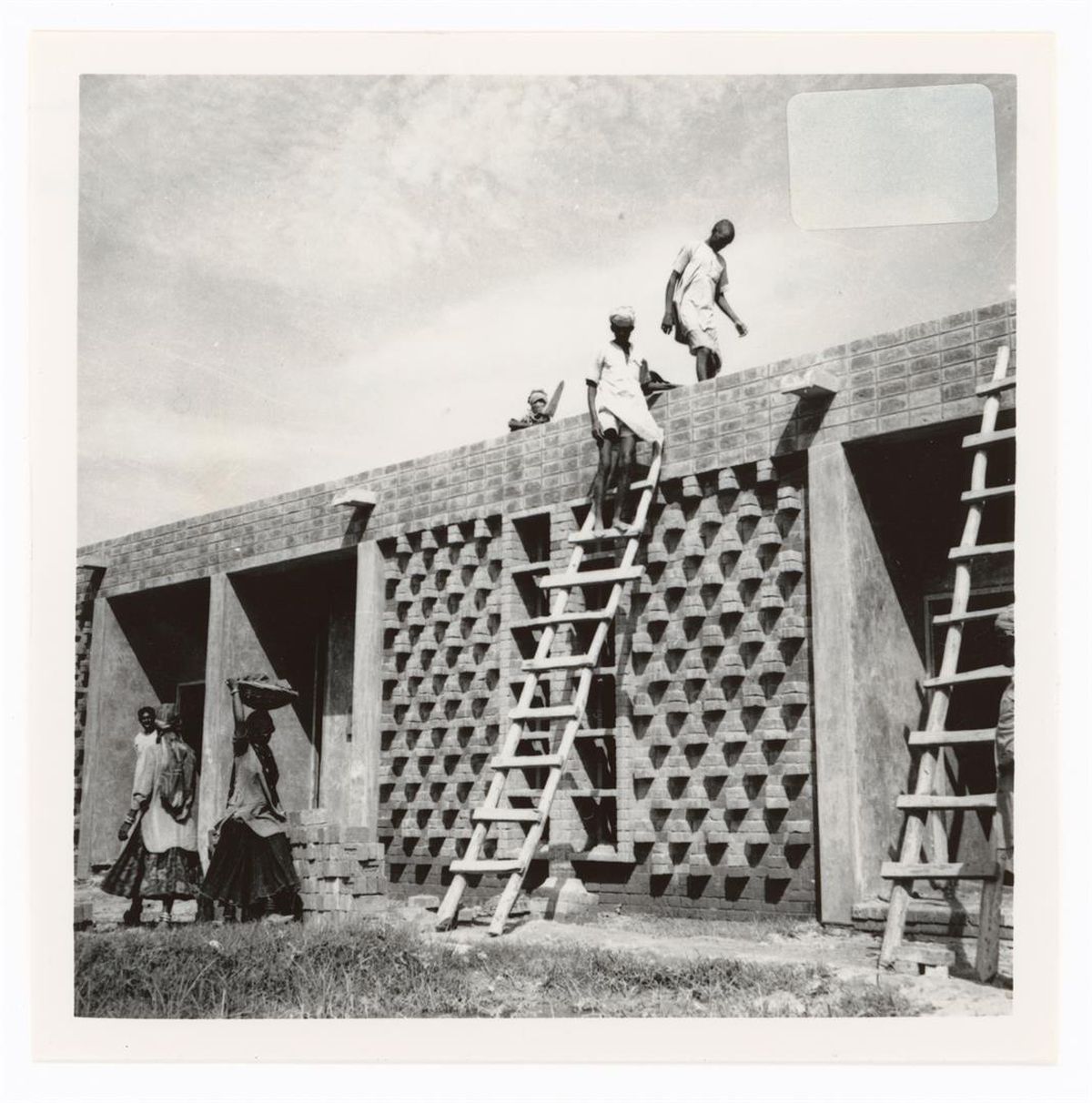
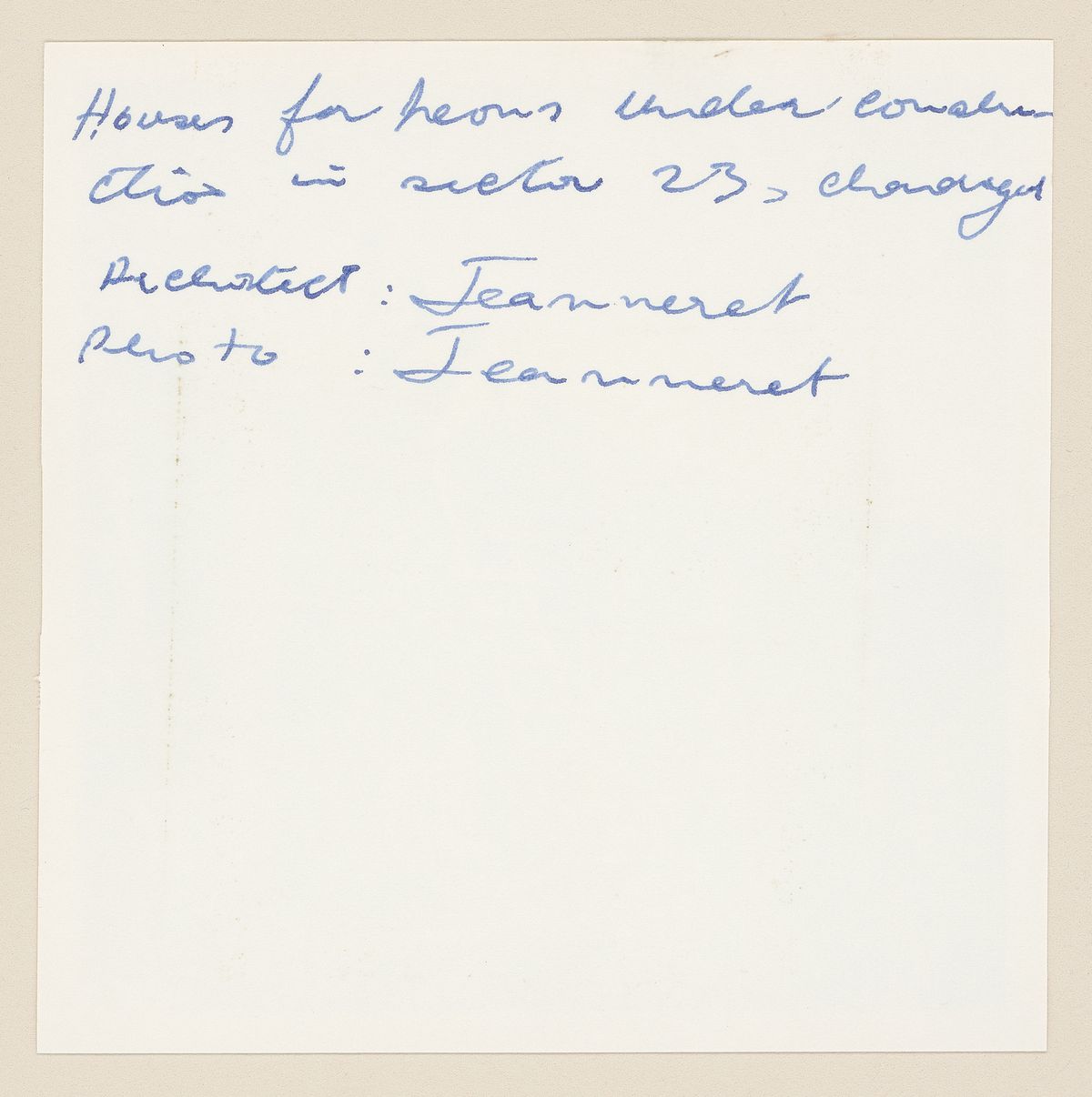
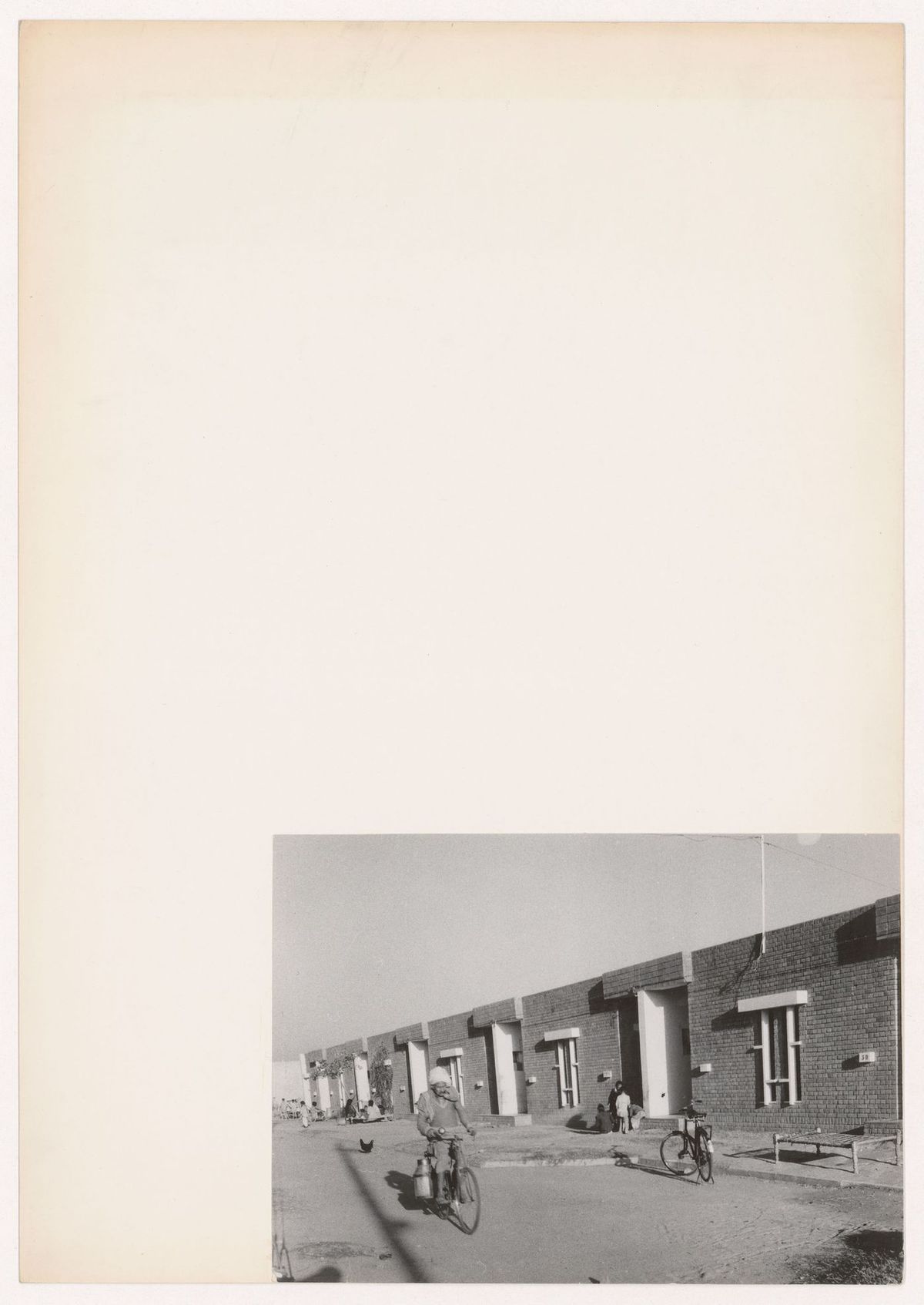
During Sangeeta Bagga’s Find and Tell residency in June 2019, we—the cataloguers at the CCA—came across material using a word with which we were uncertain. A plan drawing, held in the Pierre Jeanneret fonds that Bagga was studying, labels “Peons’ Houses” as the title of a project in Chandigarh, from 1952.1 From definitions found in print and online dictionaries, we felt that “peon” could be understood as harmful in some contexts but neutral in others. A word can have different meanings, different geographies, and even different histories, in particular colonial histories. In cataloguing work, the choice of vocabulary has important implications in how researchers access and understand information. We needed to consider, is there a problem with the use of the word “peon” when identifying people?
We learned that the word “peon” has different meanings and origins depending on where and when the term is used. Among other definitions, it means a labourer or a non-specialized worker.2 In Latin America, especially in Mexico, a “peon” has additionally come to denote a labourer that has an obligation to work for their employer until their debt was paid off.3 This type of “labor practice”4 has served as the basis of what would become known as “peonage” in the period after the abolition of enslavement in the United States, where many African American freedmen and freedwomen with limited options were forced and bound into this system that maintained an involuntary servitude.56 It seems within this American context that the use of this word in cataloguing should be reassessed. However, comparatively, in South Asian countries, particularly in India and Sri Lanka, the word “peon,” brought by the Portuguese, historically meant a foot soldier or a police officer.7 These days, it refers, in an Indian context, to a messenger or attendant, especially in an office,8 designating the entry-level position in governmental and non-governmental organizations.910
Considering that the materials from the Pierre Jeanneret fonds that include the word “peon” in their descriptions are related to Chandigarh, would it be acceptable to use the term despite the negative connotation it bears in another context, especially the American one? Shall we use a different term, or keep this “contentious” word with the possible addition of a contextual note?
As the CCA is an international institution located in North America, we wonder if it is preferable to remove a word that is potentially harmful from our descriptions, even if it remains in use and seemingly appropriate in other cultural contexts. What about the research behaviour of our users? Experts on Chandigarh, particularly on Le Corbusier and Pierre Jeanneret’s works, might be expecting the word “peon” and search for it in our catalogue. In order to understand the use of this term within the framework of the study of Indian architecture and society, we decided to reach out to experts of this field of research.
For Dr. Sangeeta Bagga,11 Principal at Chandigarh College of Architecture, Vikram Bhatt,12 author of Blueprint for a hack, Resorts of the Raj, and After the masters, and Dr. Vikramāditya Prakāsh,13 author of Chandigarh’s Le Corbusier and One Continuous Line, and editor of Rethinking Global Modernism, the word “peon” is an appropriate term used to designate an entry-level position at government levels in India. However, they point out that private corporations do not generally use the term anymore. Bhatt mentions that an equivalent word is “chaprasi,” and there might be other equivalent terms in other regions of India. Bagga argues that, although “office boy” is the term currently used in the private sector, “peon” still describes a position that allows people to work in dignity in a non-technical job, and people in India do not necessarily associate the word with a colonial background. It was institutionalized under the British period, but it still is in use today, without any negative connotations. Both Bhatt and Prakāsh acknowledge that while the term is still in use, it is not a word used in everyday conversation. To them, it could carry derogatory implications, depending on how it is used.
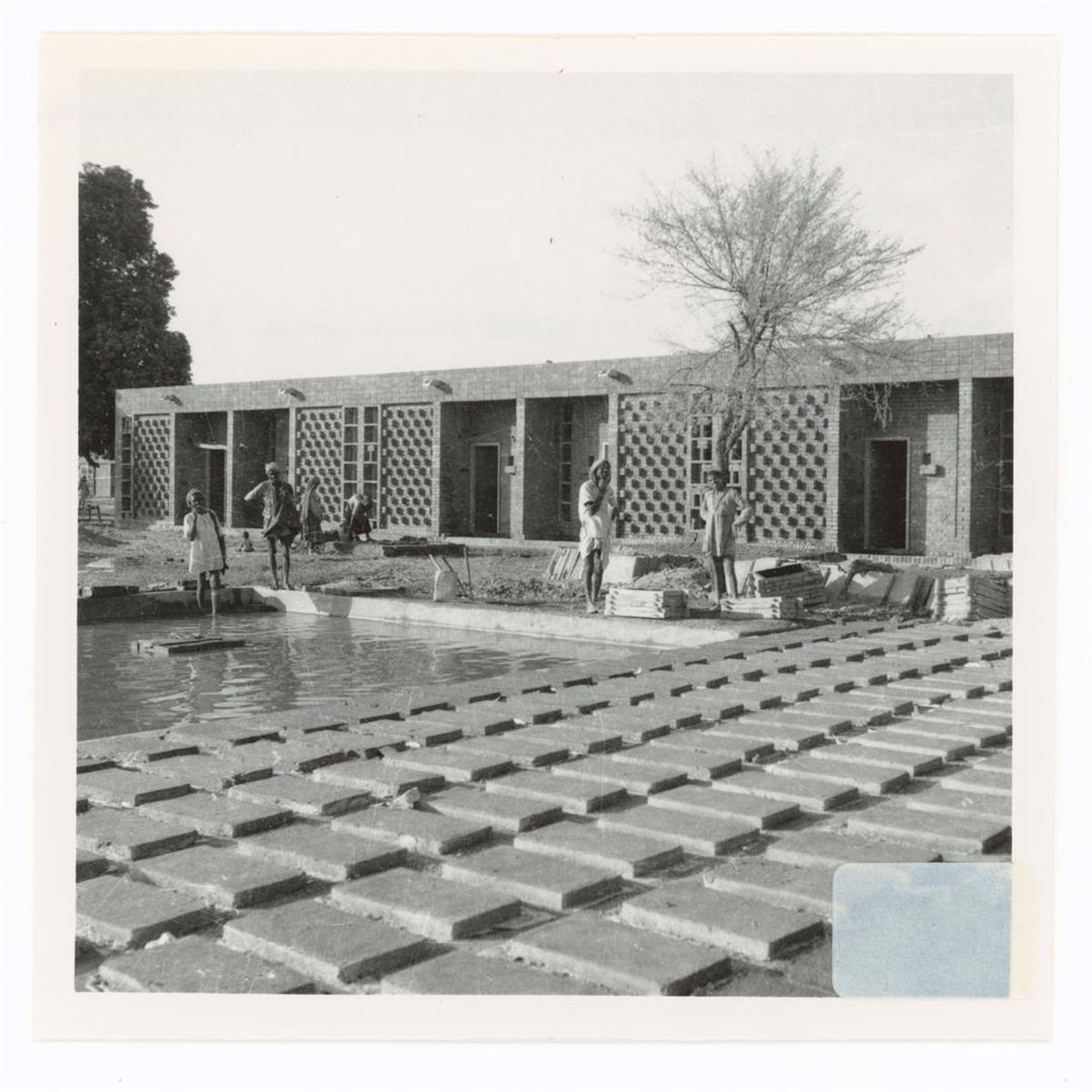
Bagga and Bhatt also mention that Chandigarh is a city that was laid down to a precise hierarchy initially with thirteen types of government housing in which the “peons” were at the lowest end.14 Bagga adds that with Jane Drew and Pierre Jeanneret’s work, it was the first time that the “peons” had planned housing accommodations.15 She underlines that the architectural drawings and other materials attest to this nomenclature; this type of housing was specifically called “peons’ houses,” as is depicted in the plan’s title. If the word is absent from the description, how would a researcher find it?
We might not be able to dissociate the use of the word from the context in which it appears. Prakāsh recommends keeping the term with respect to the Pierre Jeanneret fonds, noting that there is not a “right” interpretation of a word, certainly not based on an “original” meaning. For Bhatt, for as long as there have been contacts between the Western and Eastern worlds, languages have mutually influenced each other. With this in mind, Bhatt said that he would not be hesitant to use this word, but cataloguers should certainly recognize the different contexts in which it is used.
From these discussions, it seems apparent that the word “peon” carries different weights and meanings based on its context. All three experts recommend that we continue to use “peon” in our descriptions as part of the title field, and that we should add, if relevant, a contextual note explaining the word. As we recognize the importance of examining the changing meaning of words over time and context, especially when they are used in relation to how you refer to people directly, processes like this one, will help us set guidelines for more mindful descriptive work.
We would like to thank Sangeeta Bagga, Vikram Bhatt, and Vikramāditya Prakāsh for sharing their thoughts on this topic.
Reworking, Recaptioning, Moving Beyond
Michele Tenzon, Ewan Harrison, Iain Jackson, Claire Tunstall and Rixt Woudstra examine the Archives of the United Africa Company.
The Unilever Archives in Port Sunlight, United Kingdom, host a vast collection of items documenting the United Africa Company (UAC). A wholly owned subsidiary of Unilever, the UAC was a vast trading and manufacturing empire that itself in turn owned and managed numerous subsidiaries ranging from retail, textiles, timber, and raw material extraction mainly, but not exclusively in the British West African colonies. The scale of the UAC venture throughout the late nineteenth and twentieth century, the company’s role in colonial exploitation, as well as its economic and political manoeuvring into the post-Independence period, render its archive both a problematic and rich repository to catalogue and analyse. Archives have been the subject of a body of theoretical writing from post-colonial perspectives. This has framed the archive as both a locus of power and a technology of domination in and of itself. As the archive of the largest British business in West Africa, and one deeply implicated in the colonial patterns of resource and capital extraction in the region, the UAC archive can equally be theorised in this way. Yet, the UAC archive is also punctuated by moments of hesitancy, contestation, and challenges to the UAC’s attempted hegemony.
The UAC produced an archive as a by-product of the everyday transactions of business in the African colonies: its reports, board minutes, marketing plans, press releases, and ledgers have subsequently been ordered, catalogued, and cared for by a team of curators and archivists. But the UAC also pursued archival impulses of its own: UAC staff collected maps, African artworks and ephemera, personal correspondence and memoirs, as well as taking, collating and cataloguing thousands of photographs between 1880 and 1980. This impulse to collect and catalogue the African world around it shows the UAC’s attempts to impose an archival logic on the diverse, even unwieldy, business empire that it controlled, or attempted to control.
For architectural historians, the photographic collection is of particular interest with its bias towards recording buildings, places, people, and special events. The vast amount of visual material was produced by employees working for different subsidiary companies, each with their own objectives, vantage points, and outlooks. The contributors and content are also diverse in their geographical reach and emphasis, with records spanning vast tracts of the African continent, as well as smaller forays into the Middle East, India, and the Americas. Overall, and in coherence with the nature of a corporation which was indeed multiple, internally diverse, and geographically spread out, the collection appears as a corpus of interrelated but distinct archives each with their own provenance, consistency, detail, and granularity of data.
Considerable effort and expense were devoted to producing and presenting this photographic material. Each subsidiary produced its own documentary evidence by developing a visual record or compendium of their businesses that sat alongside the accounting records and lists. In providing sound evidence that business activity was taking place, the photographic medium was particularly useful to the parent company. Taken with a specific agenda and focus, the photographs were processed and printed before being selected to feature in specially produced albums and often accompanied by printed captions or handwritten comments. In many cases, the photographs became a surrogate for travel as many of the directors and business managers had never visited Africa and had no first-hand conception of what their business interests and assets looked like.
The images demonstrated that stores had been built, that goods were properly stocked on the shelfs and that everything was ‘as promised’. It provided reassurance for owners and shareholders, but also became a form of advertisement as is reflected by the careful organisation of these documents in the archive’s Public Relations folders. Through the photographs, distance and geographical separation seemed less important as the visual evidence which they offered ultimately delivered a sense of proximity by bringing a particular version of Africa back to the European shareholders. Photographs were meant to create a familiarity which could justify the company’s overseas presence and show that a colonial territory was ripe for development, therefore reassuring investors as well as European staff.
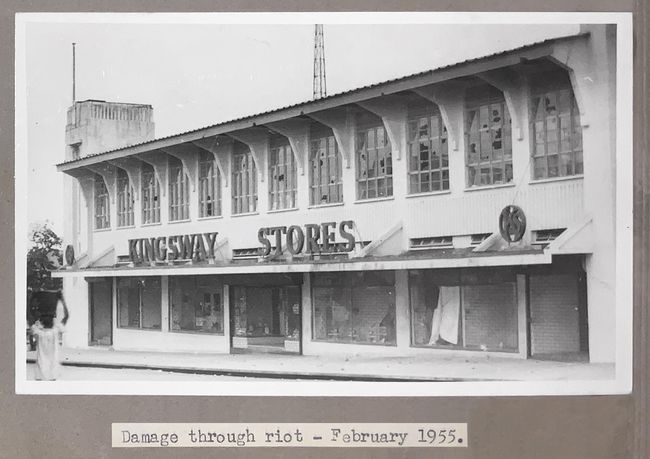
Because of the peculiar role of the photographic documentation for UAC’s activities, the forms of their collecting, defining, and claiming, offers a vantage point from which we can see how the company viewed, perceived, and chose to record the African social and physical environment. The image library was not fixed – it was added over time, revisited and modified. Titles were remade, notes were added, reflecting not only the transformation of the built environment, such as the extension or refurbishment of the company’s premises, or the acquisition or selling of properties, but also the shifting political situation after elections, riots, or strikes and the resulting legitimacy challenges that the company faced.
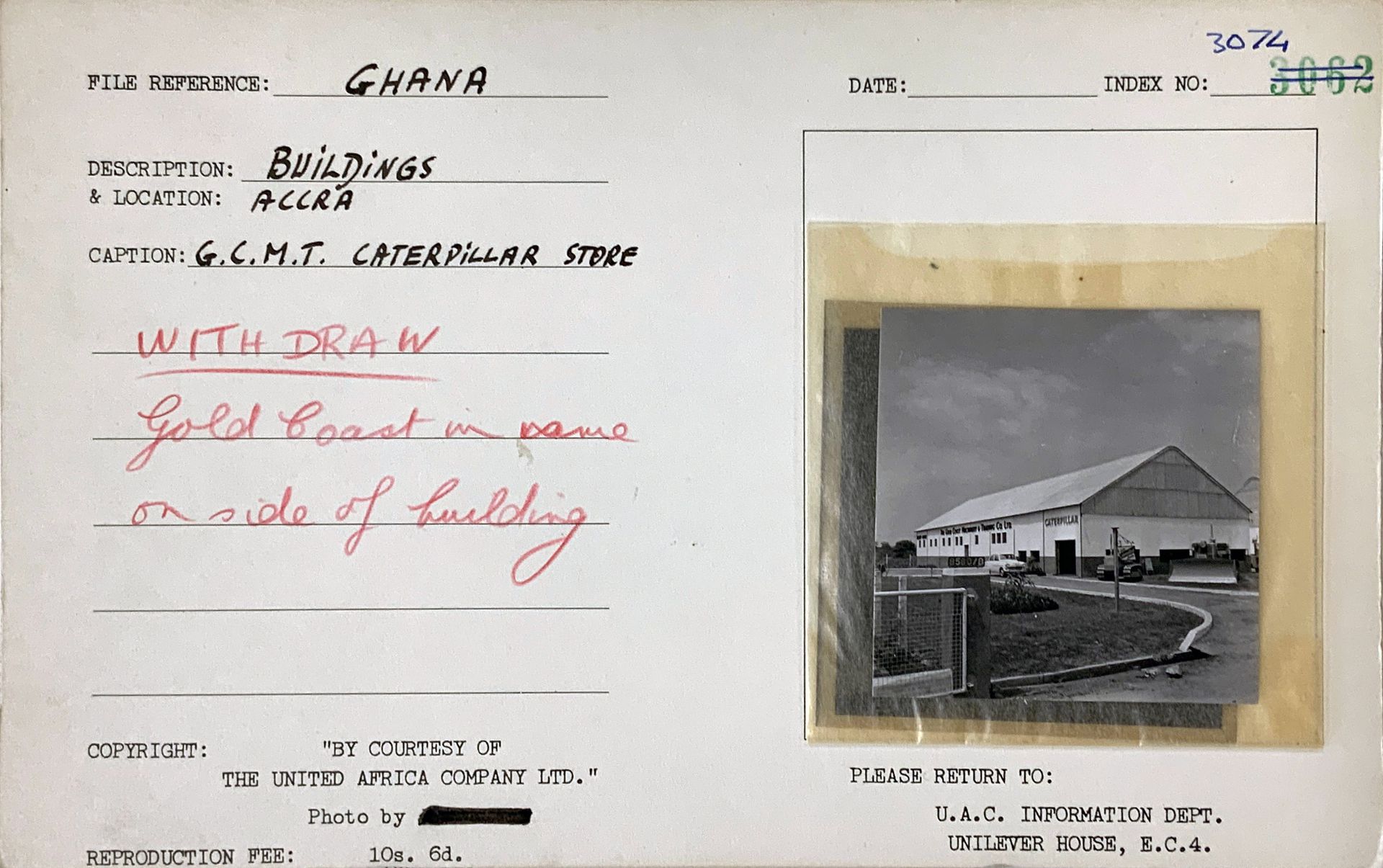
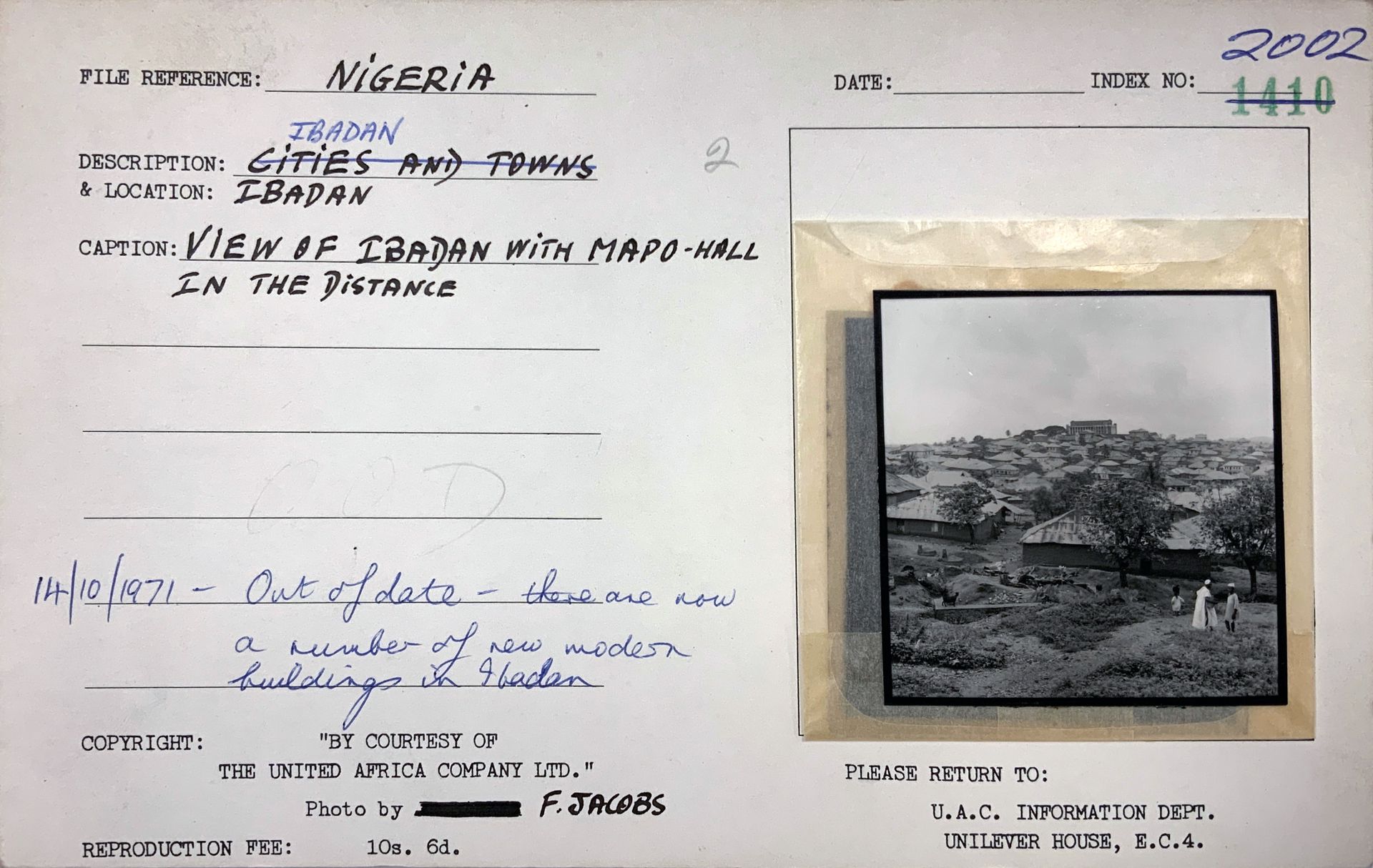
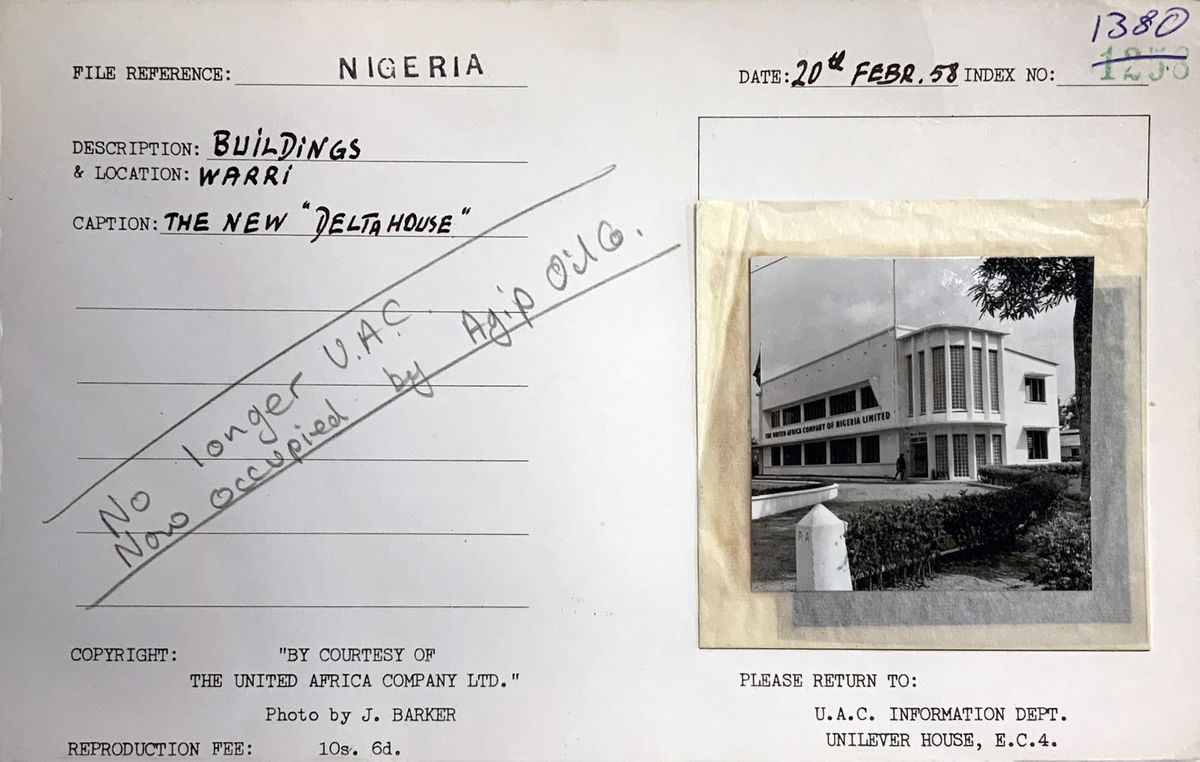
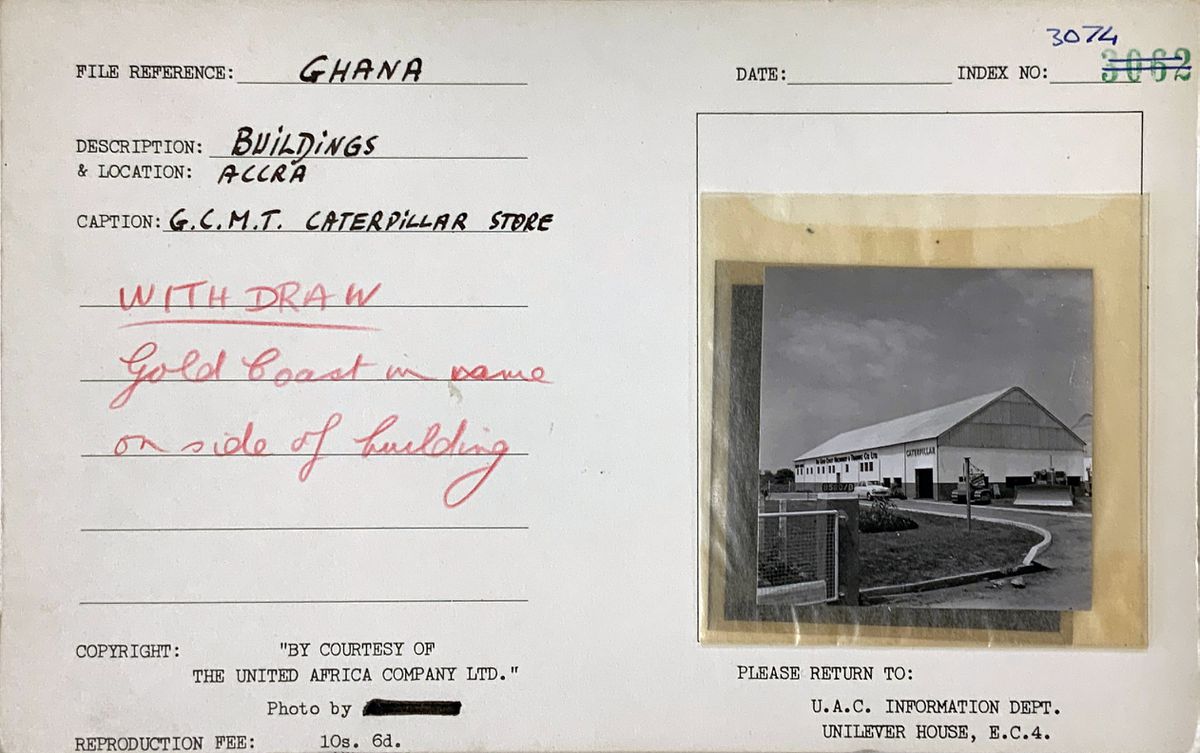
Such reworking of the archive is especially evident in those sections of the archive in which photographs have been selected and mounted onto cards, as a compiled photography library arranged first by country, then by themes. This collection was compiled to assist the production of marketing reports, company magazines, newsletters, press releases, and advertisements. The production of these publications and public relations material required the finest images and a cataloguing system allowing them to be quickly located. The notes written on the cards indicate that the UAC staff exercised a control towards what was deemed appropriate and suitable for the company’s image.
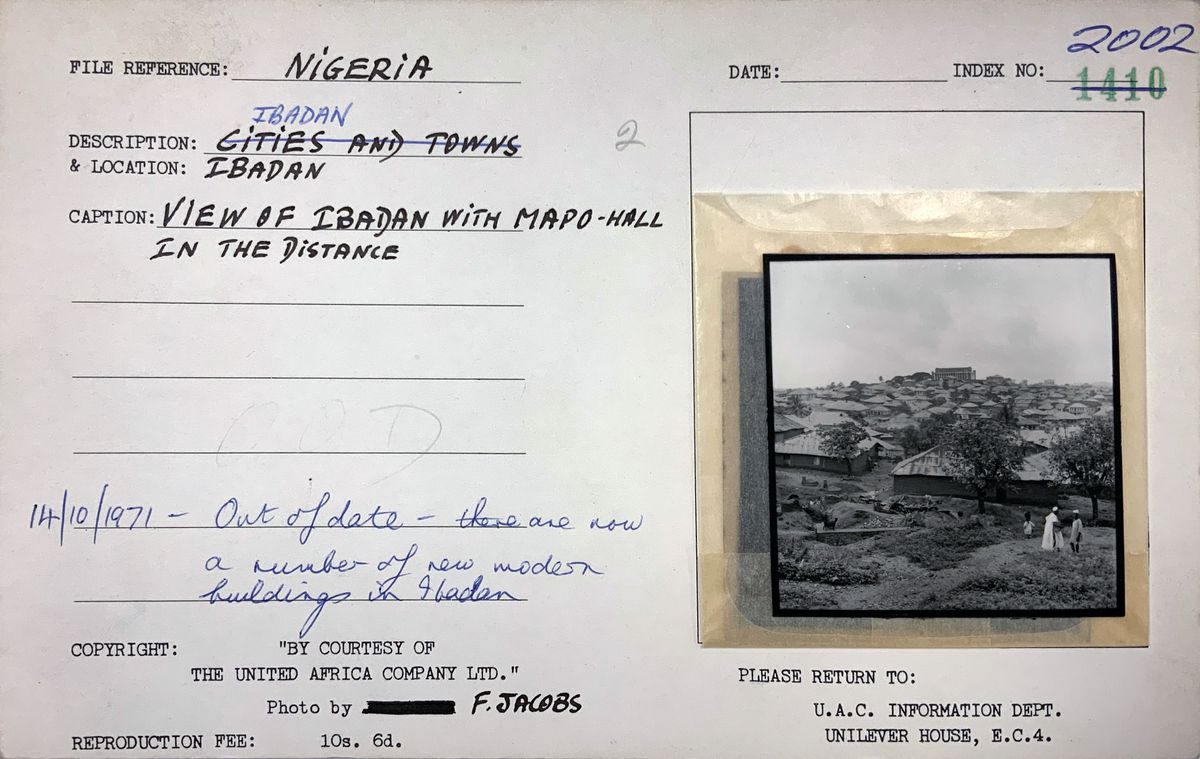
On some of these cards the captions were edited replacing terms which were perceived as outdated or inappropriate. Hence, an image described as “Native workers” was subsequently crossed out and replaced with “African workers”, before being relabelled again as “Employees”. In other instances, “African huts” was replaced by “African homes”, and “European Housing” was renamed “Management Housing” to reflect the Africanisation process of the 1950s – the recruitment and promotion of African staff within the company – which the UAC had embraced as a strategy to repair its legitimacy during the decolonisation phase. Some other images, instead, were marked as ‘to-be-withdrawn’ because the signage of shops of factories employed colonial toponyms which, after independence and for obvious reasons, had become offensive for African audiences. Whereas an image of Ibadan showing a district of low-rise houses built with adobe bricks was deemed no longer usable as it probably conveyed an unwanted sense of precariousness to the public and especially to potential investors.
We don’t know who exactly was making these decisions and how frequently the images were reassessed and relabelled. Unlike the archiving process where archivists generate titles, here they formed part of an image library. However, the fact that the photographs, rather than being re-mounted onto new cards were instead amended by striking through older labels, suggests that perhaps this context was considered valuable, if outdated. Nonetheless, letting this meta-analysis of the archive and its shifting cataloguing and labelling strategy to emerge, required challenging the traditional way in which archives are experienced.
Moving beyond the catalogue
We rarely get to see the archive in the way that one can peruse the books of a library. Instead, we experience it with no direct access to the stores and therefore no opportunity to examine the collection in person. In most cases, files are brought to the researcher after consulting a catalogue, making requests and completing slips and are examined one file at a time. While there are obvious reasons for such restrictions which aim at ensuring the integrity and safety of the material, the necessity of surveillance imposes an examination of the material in extremely compartmentalised or limited ways.
In our research project ‘The Architecture of the United Africa Company: Building Mercantile West Africa’ we have questioned this approach and attempted a different procedure that granted the research team access to the archival storage spaces. ‘Open access’ to the collection has been granted to the research team which has enabled browsing and the ability to quickly sample a box or file without even removing it from its location in the storeroom. The research team has been given extensive training in basic archive procedures, manual handling and health and safety. Retrieval slips were still completed and utilised, but the physical act of obtaining the files and accessing the store rooms was granted to the research team enabling the archive team to focus on their day to day work. The ability to compare boxes, view multiple files, or simply randomly ‘dip’ into boxes has enabled a far greater appreciation of the entire UAC collection, has accelerated our ability to ‘get through the material’, and also reduced the labour for the archives team. Viewing all the photograph albums on the shelves and to see how one album compares in size and scale to the others as well as the ability to visualise the files and their arrangement has helped us to understand the business structure in ways that would not have been possible otherwise.
This procedure, which was made possible by the prolonged collaboration between the academic team and the archive’s management team, has enabled a different working method to emerge. If the re-captioning of UAC’s photographic collection testifies how European capitalism coped with political change and pragmatically adapted itself to the shifting paradigms in the decolonisation phase, acknowledging such additional layers require ‘moving beyond’ the catalogue. The stratification of meanings and orientations which took the form of an almost curatorial approach to the cataloguing of the photographs reveals the biases and the shifting sensitivities of the actors involved in the production and management of the archive. However, such a critical interpretation of descriptive practices requires questioning the traditional interface between archivist and researchers, ultimately allowing engagement with the archive as a complete and stratified entity.
Notes
1 The term “peon” is also found on other material from the Pierre Jeanneret fonds.
2 The word has several meanings across times, languages, and cultures. Not all of them will be covered in this text. It also refers to the pawn in a chess game and to a low unit in some strategy computer games, for example.
3 William Wirt Howe, “The Peonage Cases,” Columbia Law Review 4, No. 4 (April 1904): 279.
4 Pete Daniel, “The Metamorphosis of Slavery, 1865-1900,” The Journal of American History 66, No. 1 (June 1979): 89.
5 Daniel, “The Metamorphosis of Slavery,” 1979.
6 Peonage is not exclusive to the United States. Various forms of “peonage” have existed or still exist across the world.
7 Collins English Dictionary, s.v. “peon,” accessed November 15, 2021, https://www.collinsdictionary.com/dictionary/english. Webster’s Third New International Dictionary of the English Language, Unabridged (1981), s.v. “peon.”
11 Dr. Sangeeta Bagga, Zoom meeting, November 19, 2021.
12 Vikram Bhatt, Zoom meeting, November 25, 2021.
13 Dr. Vikramāditya Prakāsh, Email exchanges, November 2021.
14 At the request of Jane Beverly Drew, one of the three architects with Pierre Jeanneret and Edwin Maxwell Fry responsible for the design of most of the government housing, an additional fourteenth type, known as “cheap houses,” was designed by Drew for, the previously unaccounted for, government employees who were earning the lowest-wage. Kiran Joshi, Documenting Chandigarh: The Indian Architecture of Pierre Jeanneret, Edwin Maxwell Fry, Jane Beverly Drew (Ahmedabad, India: Mapin Publishing Pvt Ltd.; Chandigarh, India: Chandigarh College of Architecture, 1999), Volume 1, 43. Sarbjit Bahga and Surinder Bahga, Le Corbusier and Pierre Jeanneret: Footprints on the Sands of Indian Architecture (New Delhi, India: Galgotia Publishing Company, 2000), 131.
15 Bagga also adds that this new housing typology for the “peons” continues to this day, with the same purpose, function, and responsibility of roles.
Dr Christopher Turner co-curator of the exhibition watching film featuring Ola Uduku
Press Cuttings:
“La Biennale di Venezia and the V&A present Tropical Modernism: Architecture and Power in West Africa. Organised in collaboration with the Architectural Association (AA), London, and Kwame Nkrumah University of Science and Technology (KNUST), Kumasi, this presentation at the Biennale Architettura 2023 critically reflects on the imperial history of Tropical Modernism through an analysis of the work of the Department of Tropical Architecture and a dozen key projects. It explores the ways in which this distinctive architectural style was initially developed and employed as a tool to support colonial rule before being adapted by West African architects to promote the excitement and possibilities of the period that followed Ghana becoming the first sub-Saharan African country to gain independence in 1957.
Curated by Dr Christopher Turner (V&A) with Nana Biamah-Ofosu and Bushra Mohamed (AA), the Venice presentation in the Applied Arts Pavilion is centred around a multi-channel film installation featuring interviews with surviving protagonists and footage of remaining buildings. Responding to the theme of the 18th International Architecture Exhibition conceived by Director Lesley Lokko, who writes ‘Africa is the laboratory of the future’ in her curatorial statement for the Biennale Architettura 2023, the presentation also lays the groundwork for a larger exhibition scheduled to take place at the V&A in London in 2024.”
Venice architecture biennale: how pioneering Ghanaian architects reckoned with tropical modernism by Kuukuwa Manful
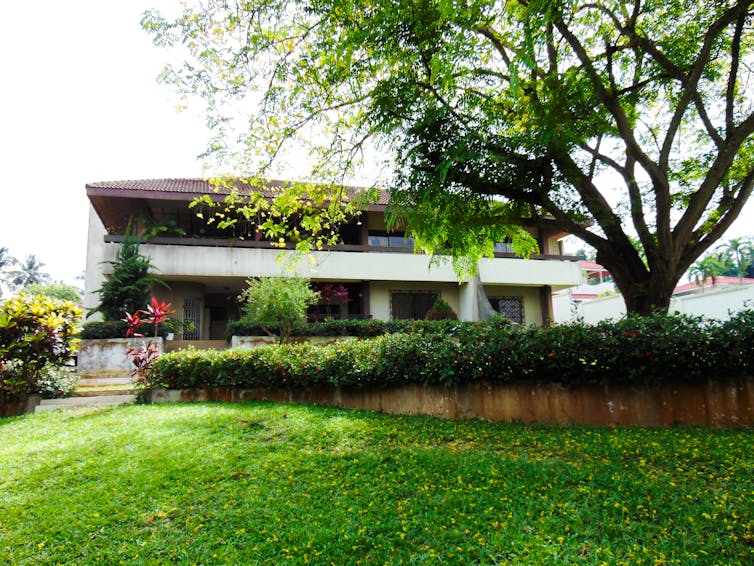
Owusu Addo Residence by John Owusu Addo.
Kuukuwa Manful, CC BY-NC-NDKuukuwa Manful, SOAS, University of London
But as well as looking at the future of architecture on the continent, visitors will also be able to explore its history, through an exhibition at the Arsenale, entitled Tropical Modernism: Architecture and Power in West Africa.
Early 20th-century modernism in Europe saw architects using large expanses of unshaded glass and flat roofs. Practitioners in warmer, humid climates, such as in Africa and Asia, meanwhile, had to adapt their designs to withstand heavier rainfall and warmer temperatures. In late colonial Africa and during the independence era, this style became known as “tropical modernism” or “tropical architecture”.
In the African context, this is possibly the best researched and well-documented architectural movement. When people discuss it further afield, however, it is mostly through a white lens. The focus is on what European architects practising in these regions were doing – African architects of the same era are largely overlooked.
Putting Europe at the centre of African stories is a choice that echoes the very colonial histories it seeks to elucidate, where European architects operated as though the continent were a blank slate, devoid of pre-existing architecture worthy of note.
My research shows how architects in Ghana in particular aligned with, adapted, or rejected Western colonial ideas. They created modernist buildings that reflected their visions for their nation, their experiences and their global outlook.
Ghanaian expertise
John Owusu Addo, the first black head of department of Ghana’s first architecture school, and Samuel Opare Larbi, another prominent educator and architect, embodied what I term the dominant Ghanaian tropical modernism. Their practice was most similar to, and aligned with, the practice of the white British tropical modernists.
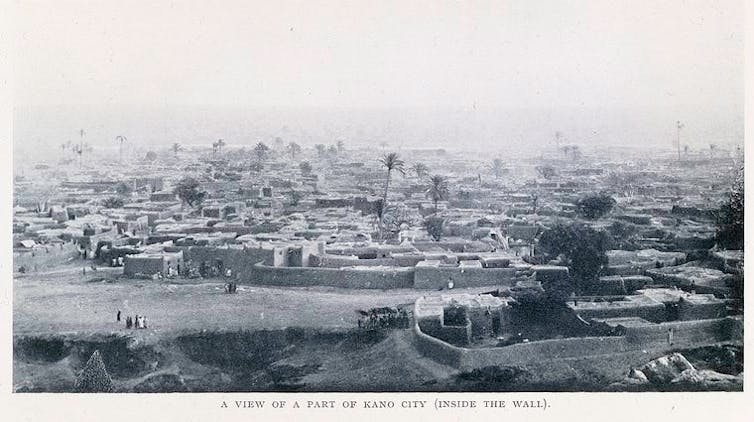
The former Department of Tropical Architecture was established at the Architectural Association (AA) in London in 1954 by the British wife and husband duo Jane Drew and Maxwell Fry, and James Cubbitt. Although Fry described the city of Kano, in present day Nigeria, as a “complete realisation of urban harmony”, he and Drew nonetheless declared having “invented” architecture in West Africa. Their work was coloured by the imperial, racist and sexist notions of the time.
Owusu Addo and Larbi both trained at the AA. They counted among their contemporaries the German architect Otto Koenisberger and the Australian-born British architect Kenneth Mackensie Scott. Although they faced racial discrimination in Europe and back home, their UK education put them in a position of relative privilege in Ghana.
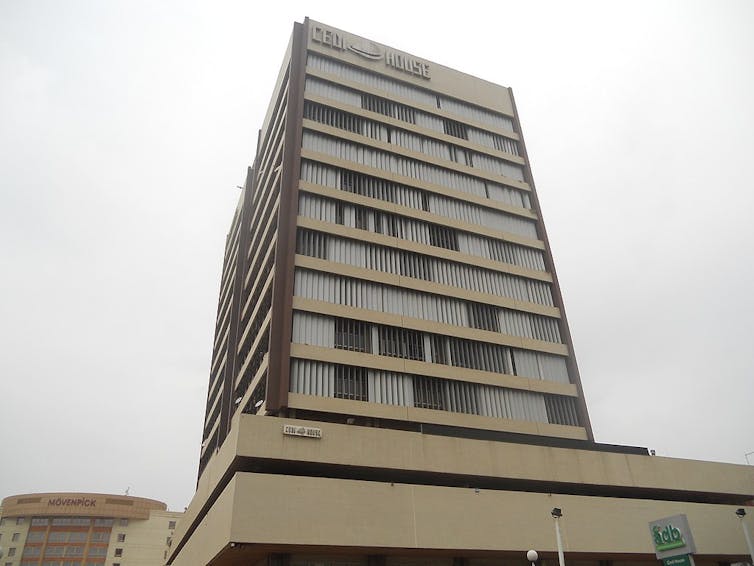
From the outside, many of the institutional and corporate buildings they designed, including Cedi House in Accra (a high-rise tower that now houses the Ghana Stock Exchange) featured elements of tropical modernism: solar shading devices, rhythmic facades, breeze blocks, cross ventilation and east-west orientation.
But it is in the interiors of their domestic architecture that their keen understanding of the people for whom they were designing becomes most apparent. When I interviewed Owusu Addo and Larbi in 2015, they recounted how they took Ghanaian societies into account. And they spoke of the pride they felt at being African architects.
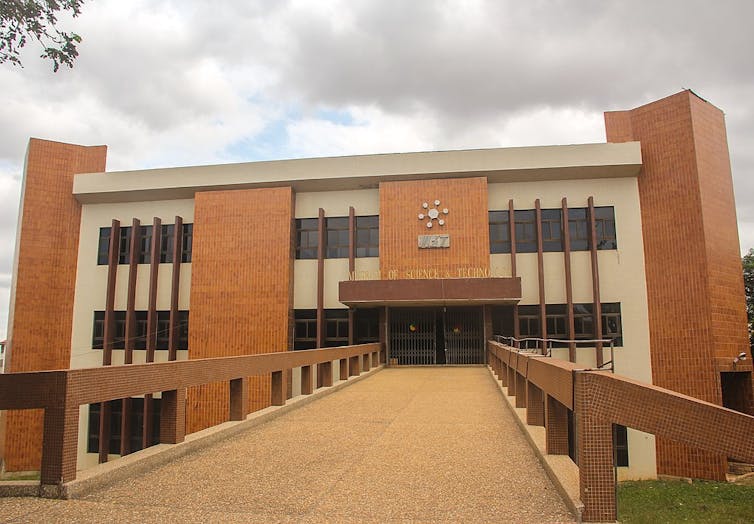
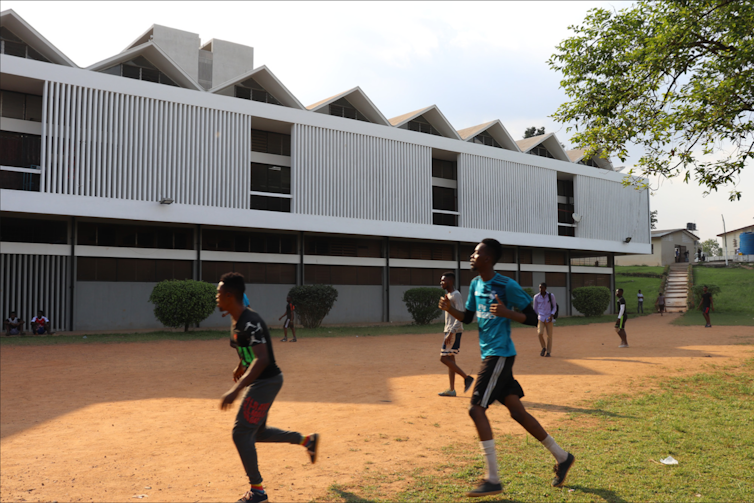
For the Unity Hall student accommodation at the Kwame Nkrumah University of Science and Technology, Owusu Addo created shaded outdoor space, with courtyards and verandas. As he put it: “Rarely do we stay in our rooms in the daytime. If in the daytime anyone was in the room, then he was sick.”
Unity Hall, Kwame Nkrumah University of Science and Technology, Kumasi.Łukasz Stanek, CC BY-NC-ND
Creative dissent
Other architects sought to establish an aesthetic that was visually distinct from European-driven tropical modernism. They accepted the climatic control and other technological and material aspects of the style. However, in the aesthetics they pursued, they were decidedly expressive.
Anyako-born architect Daniel Sydney Kpodo-Tay’s confidence was grounded in his centuries-long family history of building design and construction. Together with his anti-colonial politics and a desire for recognition, this informed an approach that the Ghana Institute of Architects termed “revolutionary”, upon his death in 2018.
Kpodo-Tay was fascinated by symbolism. His designs rejected ornamentation. Instead, he sought to make the buildings themselves sculptural. His projects that were built were often not as bold as his proposals – a compromise he put down to the limited finances and conservatism of clients in Ghana.
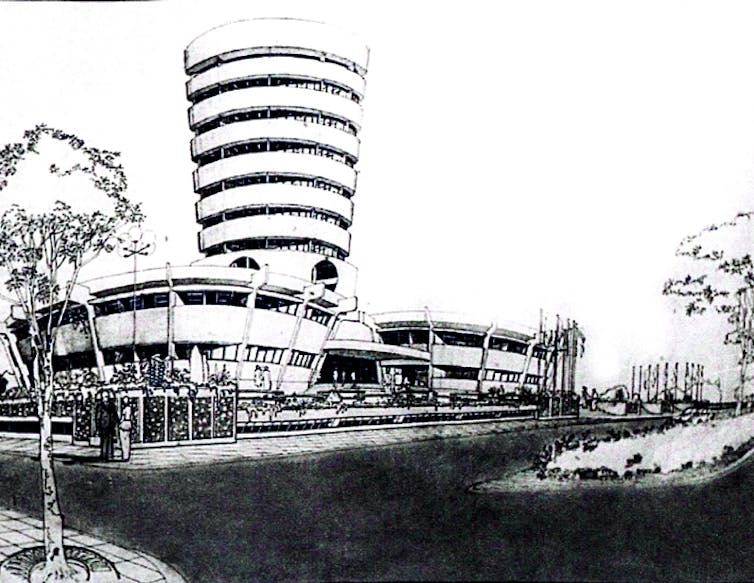
When a competition was held, in the late 1980s and early 1990s, to design the headquarters for the Economic Community of West African States organisation, Kpodo-Tay’s proposal drew on the form of a bowl as symbolic of communality and unity. His design for the complex, which was to house offices, a bank and a conference venue, featured bold inverted conical forms with internal spaces arrayed radially.
Daniel Sydney Kpodo-Tay’s proposal for the ECOWAS headquarters.Kuukuwa Manful, Author provided
Owusu Addo, Kpodo-Tay, and Larbi are not the only Ghanaian architects of their generations whose practice was informed by tropical modernism. Many stories are yet to be brought to light, especially those of the women.
Only a few women were trained at the Kwame Nkrumah University of Science’s architecture school. Sexism in the industry saw some leave. But others, including the late Alero Olympio who designed Accra’s Kokrobitey Institute, struck out in bold new ways. These visionaries challenged the Euro-centric assumptions of what tropical modernism was, in particular through their use of materials.
As scholars, practitioners and visitors from around the world turn to architecture on the African continent, they must be careful not to treat it as a blank slate in the way previous generations did. Africans have been creating, studying, teaching, and documenting architecture in Africa since time immemorial. Their work matters.
The Transnational Architecture Group is 10 year’s old this year. Thank you for supporting the blog and to all of our excellent contributors over the years for enriching the content and generously sharing their work. We’d also like to thank the communities in the places in which we work, the archivists and librarians for making material available to us and sharing their expertise, our respective institutions for supporting our research, and to the research funders who make travel, time, and resources available to us.
The blog started as a means to share our work-in-progress ideas and to promote events – and that is still at the core of what we do. We continue to add updates from our ventures into the archives, travel reports, and to share interesting events and innovative papers. These small reports and updates have compounded into something of a large resource and repository, and we’re delighted so many people have been able to make good use of (and to correct and expand upon) our work and attempts at writing these histories.
To celebrate the 10 year anniversary we held a small gathering at the Liverpool School of Architecture on Wednesday 8th March, curated and organised by Dr Alistair Cartwright. Our speakers were all PhD students, post-doctoral researchers, and research associates at the school. You may watch the proceedings here:
The speakers and titles of the presentations are below, with timings if you’d like to skip to a particular talk:
Rixt Woudstra, “Sapele and Samreboi: Building Company Towns in British West Africa” 5:25
Excy Hansda, “Indigenous Modernities in the Twentieth Century Architecture of Bombay” 20:00
Adefola Toye, “Tropical Modernism in Nigeria’s First Universities: Accessing Sources Beyond the Archives.” 37:00
Ewan Harrison, “Planning for Post/Neo Coloniality: the Paramount Hotel in Freetown” 1:11
Iain Jackson, “Erhabor Emokae and the curious case of the UAC Mural: tropical modernism and decorative arts” 1:31
Daneel Starr, “How and why has the vernacular architecture and intangible cultural heritage of the Akha people changed in the face of globalization: Using the village of A Lu Lao Zhai, Xishuangbanna (sipsongpanna) China, as a case study.” 1:50
Paul Robinson, “Freetown, the UAC and urban design” 2:20
Alistair Cartwright, “Ecologies of Vulnerability: Post-Cyclone Reconstruction in Mauritius, c. 1945” 2:35
We also heard an excellent paper from Razan Simbawa, “The Effects of Demolish-based Urban Regeneration on Displaced Residents in Jeddah, Saudi Arabia” – which cannot be shared on the video recording at the moment.
Thank you again to all of the speakers for their wonderful talks, presentations, and work-in-progress. There was such variety and richness in the topics and methods, and at the same time numerous connections and cross-overs between the work.
Please do get in touch if you’d like to know more, or to share your work on the blog.
Amongst the palms and mango trees is a K6 telephone box and the ruins of former trading stores and warehouses overlooking the quayside. This is Bonthe, a small town on the island of Sherbro located just off the West African Guinea coast. The remote tropical location is six hours drive from Sierra Leone’s Freetown and 45 minutes speedboat through a maze of mangrove lined coastline.
Bonthe was once a major trading post rivalling the port of Freetown. Conveniently located at the mouth of the Sherbro River it was perfectly positioned for trade. Along with the many other islands in the estuary it was initially a slaving post, occupied by Portuguese, French, and British slavers. After emancipation in 1807 the island was used to supress the now illicit trade, and also became a place for returning Krio – former slaves from the Caribbean, Canada and UK.
The Island stretches about 30 miles long with Bonthe its largest settlement. Set out on a grid plan like Freetown, but on a much smaller scale, the town rapidly became a place for trade, especially after a treaty was formed with the British in 1861, and around 4500 people lived there by the 1890s.
The linear harbour overlooking the river was once lined with trading houses, merchant stores, and warehouses, offering the latest goods and merchandise from Europe. Cast-iron standpipes imported from Liverpool tapped into the fresh water supply and by the early 20thC street lighting and power was available.
Behind the trading stores grew a community of Krio houses – many adopting features from the Americas blended with European style bungalows. The active missionary population competed for converts and a vast array of churches catered for nearly every flavour of Christian denomination.
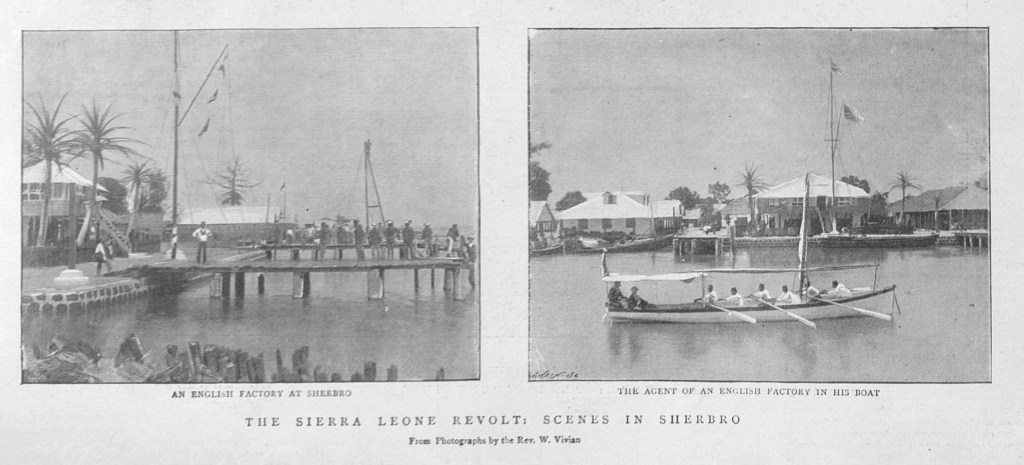
Whilst the tropical island and profitable trading created something of a paradisical, if remote setting, it wasn’t always a utopian settlement. In 1895 five African agents of Paterson Zochonis were killed in a period of unrest that started as protest to a poll tax known as the ‘hut tax’. The violence quickly spread exposing the lack of security on the island and the difficulty in defending the tributaries and mangrove lined swamps. 13 people were hanged there in 1898 after the murder of several American missionaries following ongoing conflict.
Sherbro in 1895: The Graphic Newspaper
Conditions were eventually restored to calm and the bustling trade of exporting raw materials from the interior mainland and the import of manufactured goods from Britain continued. The old premises of Paterson Zochonis still survives, with the company name proudly stated above the store’s portico. Patterson Zochonis set up shop here in 1884, and their trading empire spread across West Africa.
The origin of the firm dates to the 1870s when George Henry Paterson (from Scotland) worked with George Basil Zochonis (from Greece) at Fisher and Randall in Freetown. There’s still a Fisher Street in Freetown, just around the corner PZ roundabout – named after the firm. They initially traded calico and wax cotton prints from Manchester before moving into soap after the Second World War. A soap factory was acquired by the firm in Nigeria and by 1975 they’d bought out Cussons (and their famous Imperial Leather soap brand).
Other rival trading firms such as the United Africa Company and CFAO also set up businesses at Bonthe, building large stores along the waterfront and housing behind. There’s also the ubiquitous colonial clocktower and unearthed canons littered about the place, although most of the trading stores are now dilapidated shells being reclaimed by the tropical flora and humid climate.
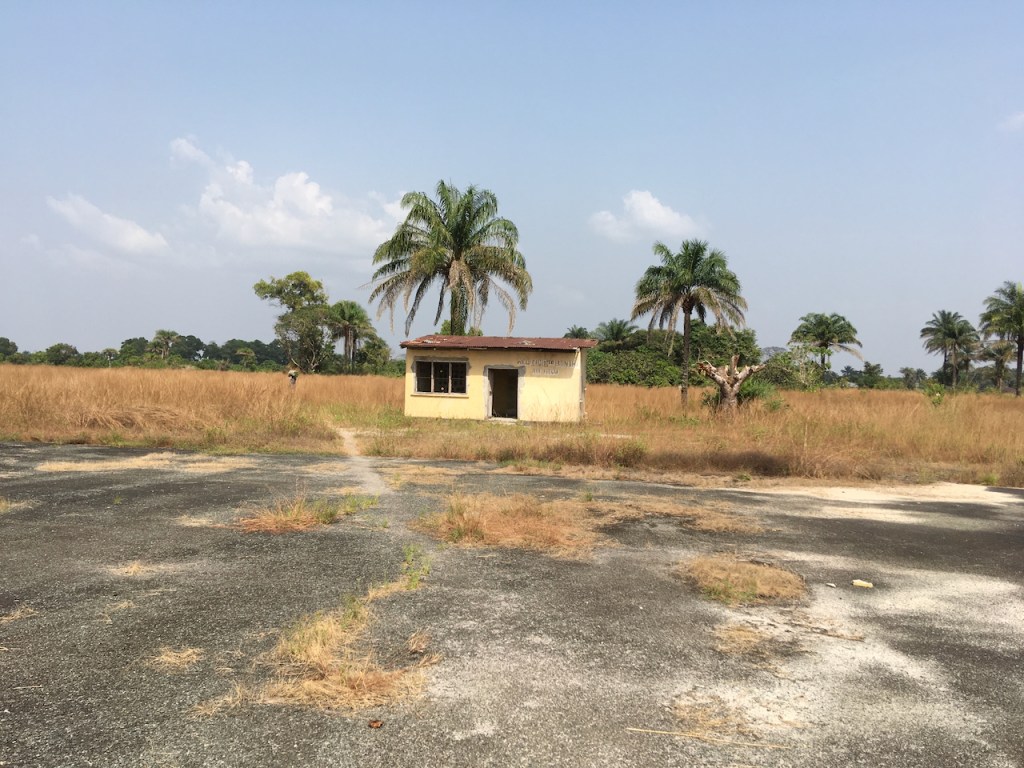
A landing strip was built here by the Allies during Second World War – complete with its own miniature terminal building – but the silting up of the river and the construction of new harbour facilities at the Queen Elizabeth II Dock in Freetown had a severe impact on the future prospects at Sherbro Island. There was a period of high-end holiday resorts catering for international visitors with a focus on nature lovers, birdwatchers, and fishing fanatics. A helicopter service even conveyed tourists to the Island from Freetown until about 2008.
Now it’s very much an overlooked backwater, but there are attempts to reverse its fortunes.
A new power plant is being built to restore mains power to the island and a few guest houses continue to give a warm welcome to all visitors. It’s a fascinating and beautiful place with such a rich history.
We’ve photographed most of the major structures that survive in Bonthe and will continue to investigate the archival material to uncover more of its past.

































 Transnational Architecture Group