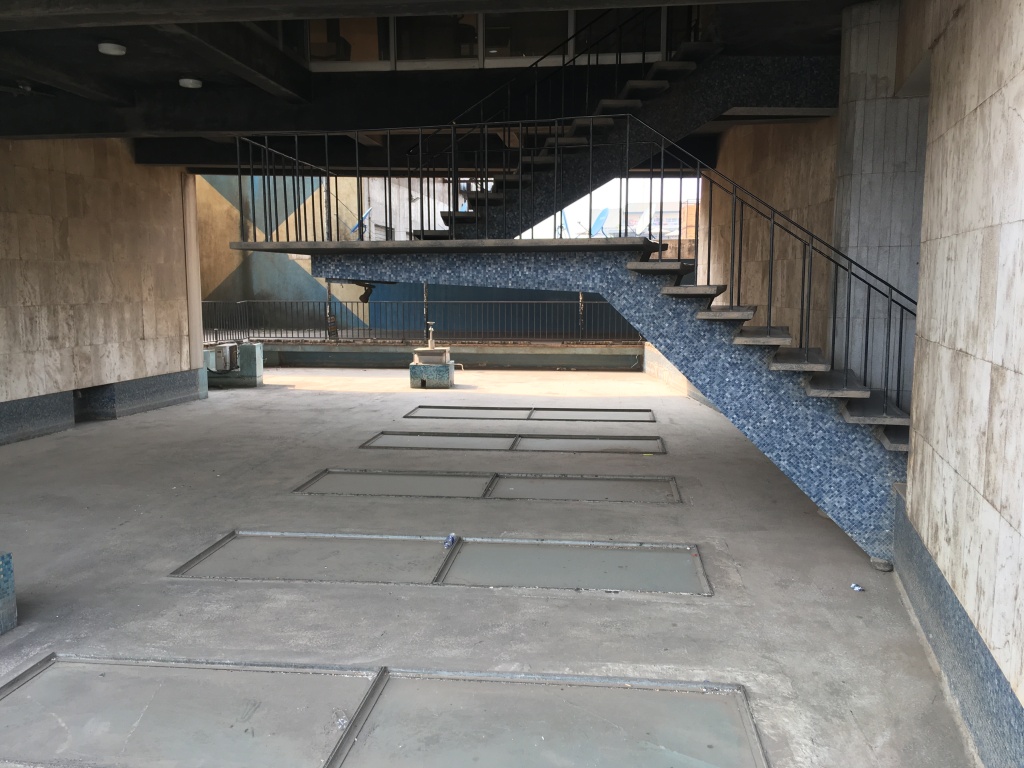
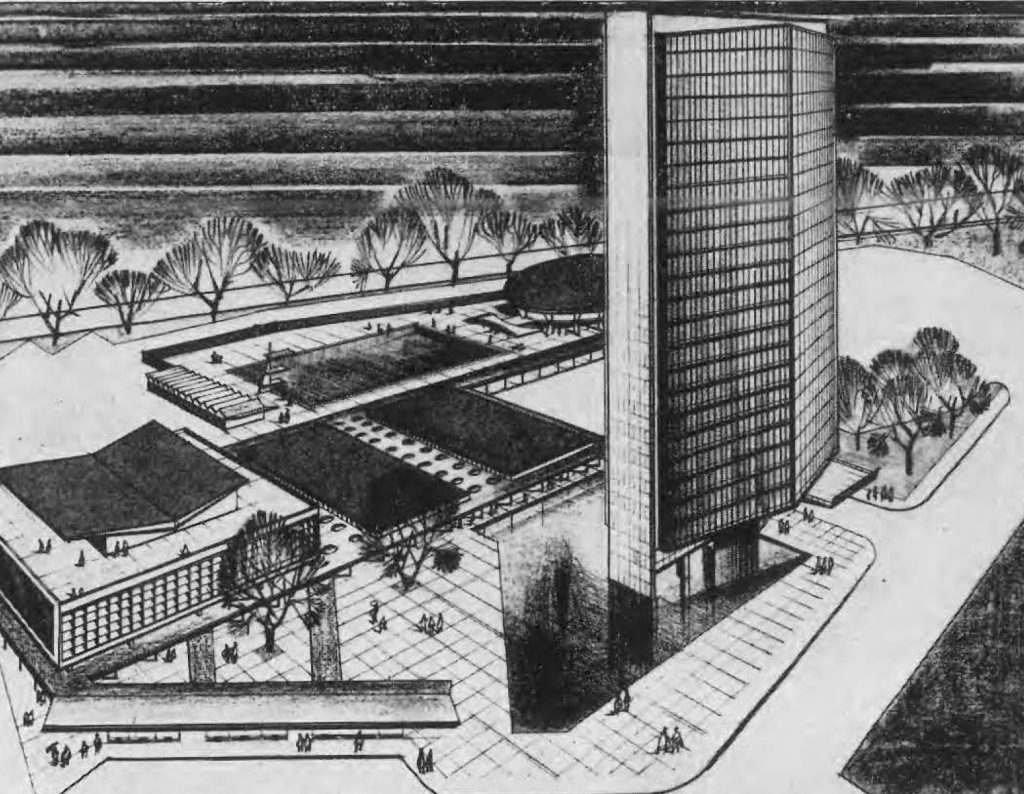
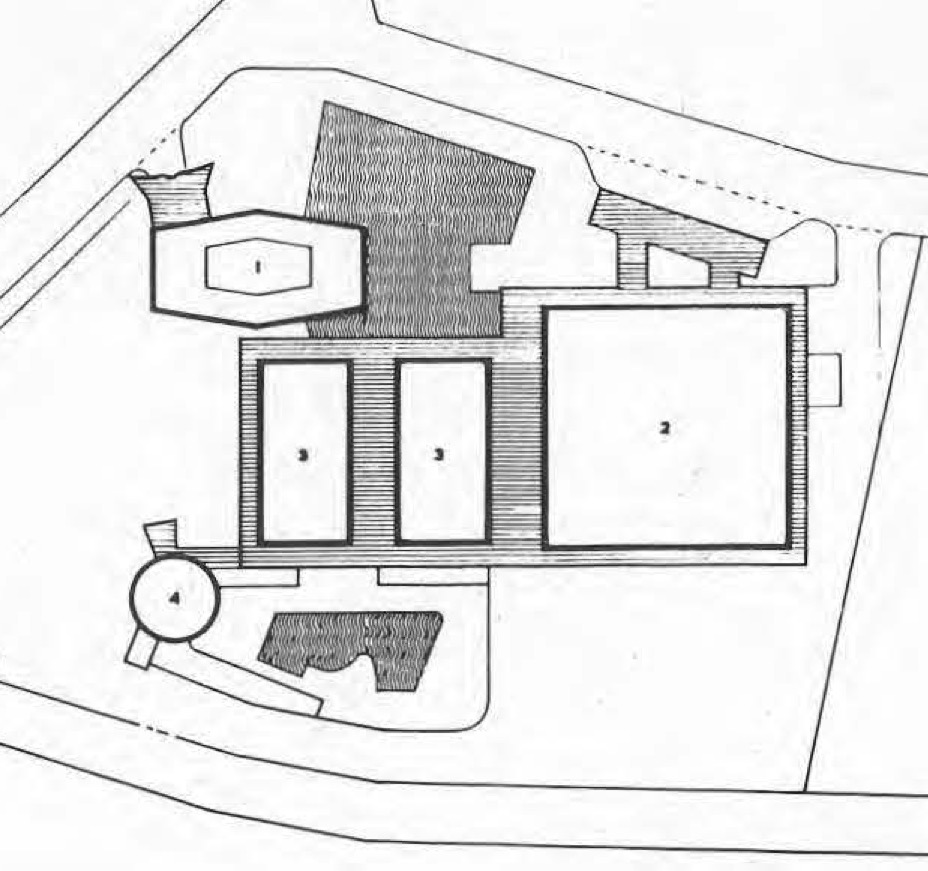
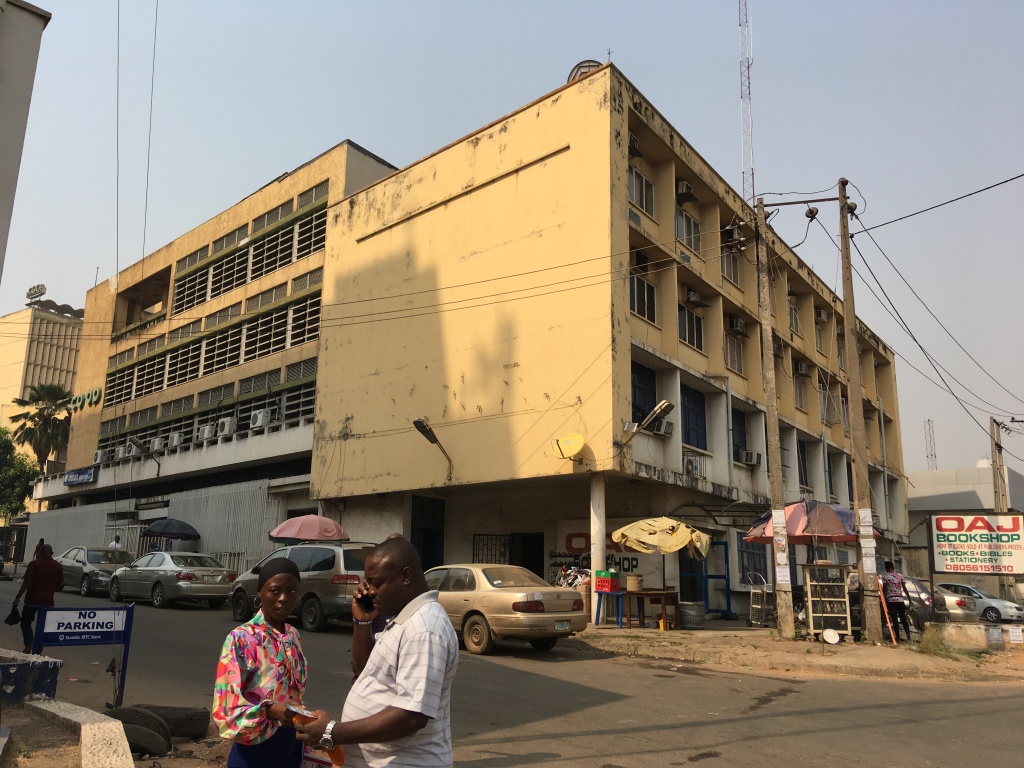
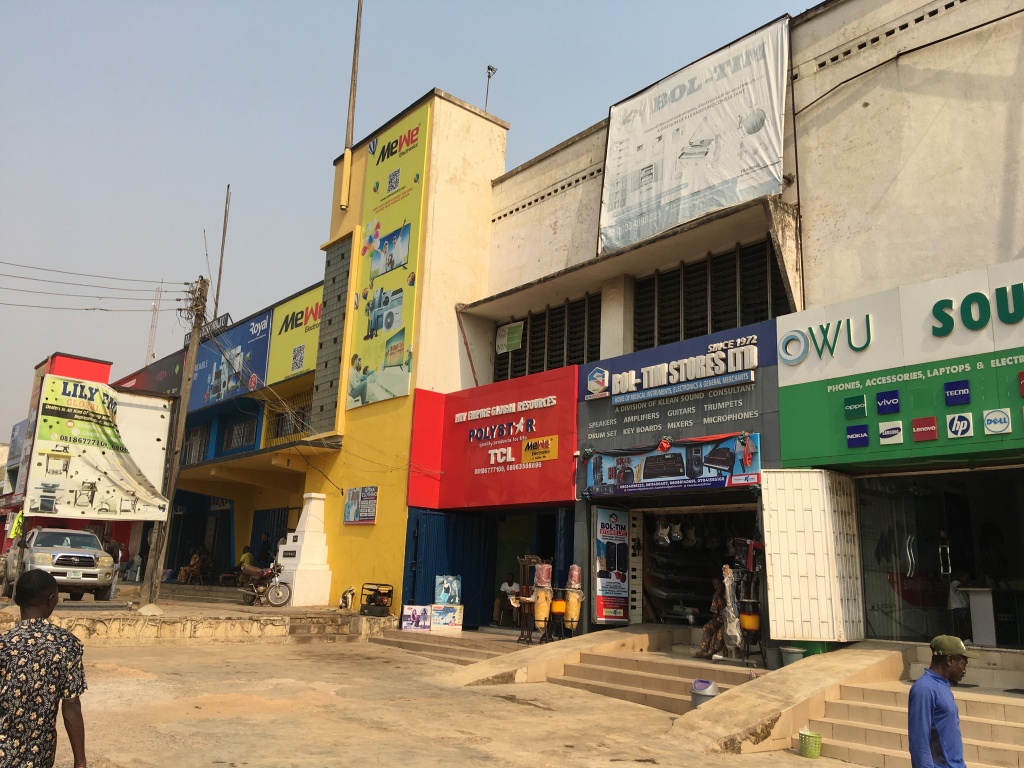
We searched various journals and articles from the time, and eventually came across a reference to a skyscraper shopping precinct project from 1960 in the journal Interbuild. Ola Uduku continued a different line of inquiry and traced the project down in West African Builder.…
The architects were listed as ‘The Plan Group (West Africa)’ – not a well-known practice or one that has featured heavily in existing literature and research, but it was a name that I’d certainly come across before.
I trawled through our old notes and archival references, and found a file on ‘The Plan Group’ from the archives in Fourah Bay, Sierra Leone (Box 661). It turns out that the Plan Group was a multidisciplinary practice/development agency established by Nickson and Borys. Their aim was to provide an integrated design service, with particularly attention given to cost control and engineering, as well as mitigating risk for the client on large complex design projects.
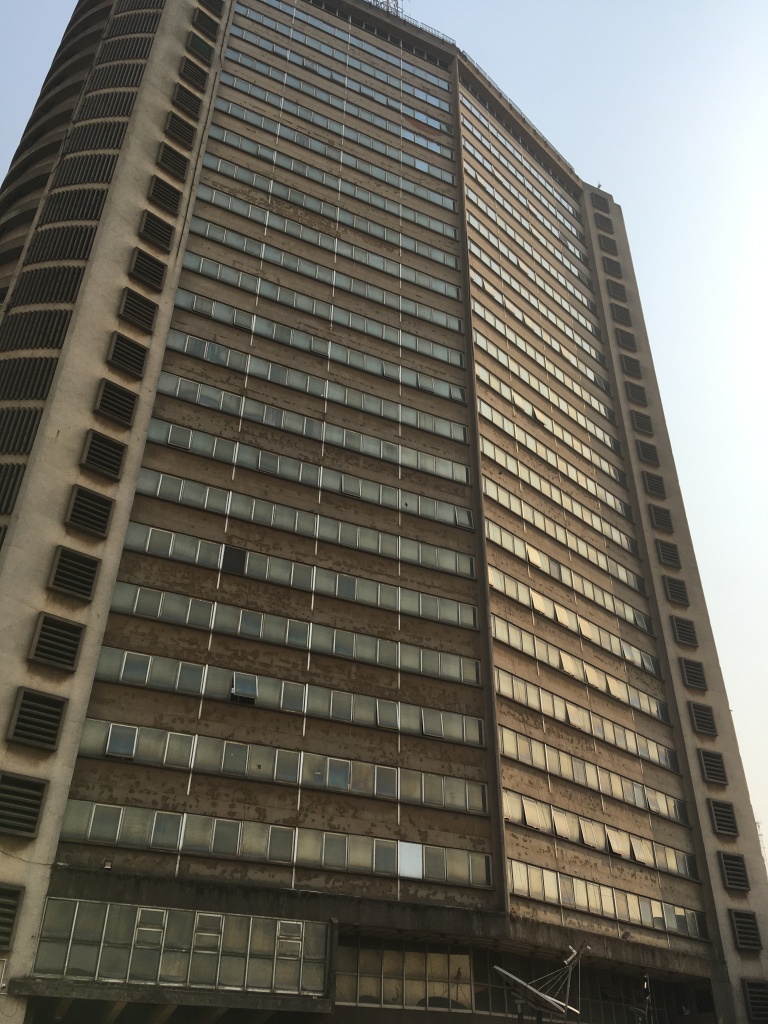
In a letter sent to the Sierra Leonian government from 1960, Borys set out his vision for the practice, including listing the projects they were already working on, such as a 20 storey block in Lagos, the Ibadan project mentioned above, and a township near Lagos for 35,000 people – were these other Nigerian projects completed? And if so, where/what are they?
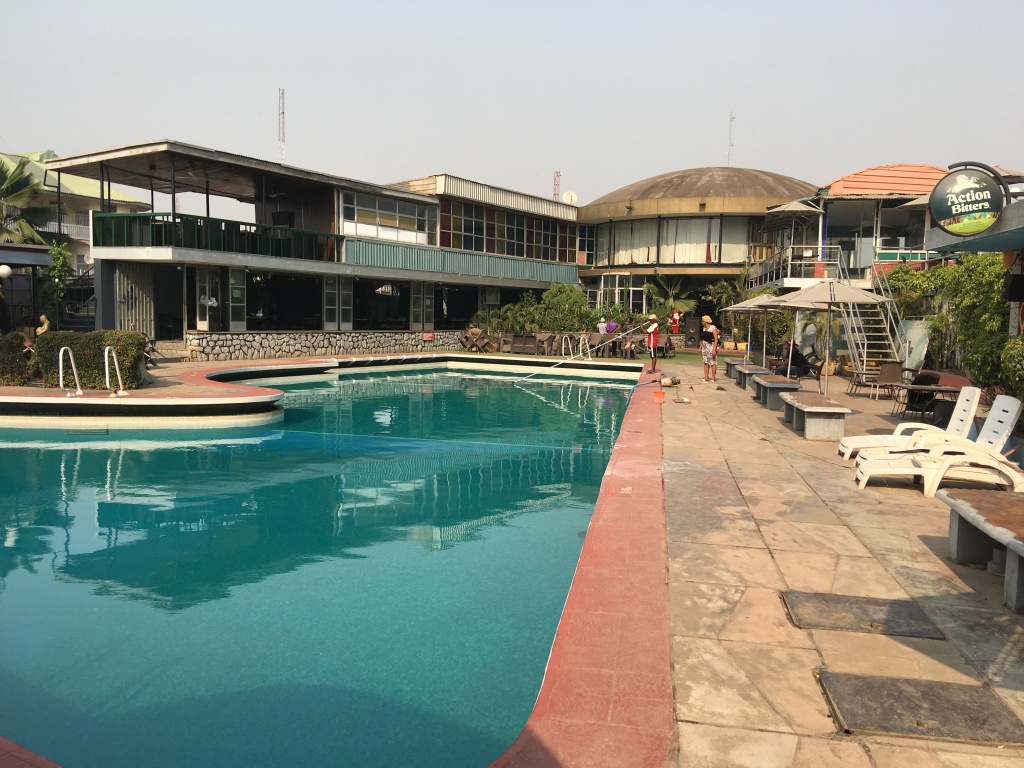
The Ibadan project was a multipurpose and speculative venture, aimed at providing office space as well as leisure facilities through the nightclub, swimming pool and cinema complex. There was also a large department store as part of the scheme. This wasn’t a Kingsway Store, so could it have been a competing UTC or A G Leventis?
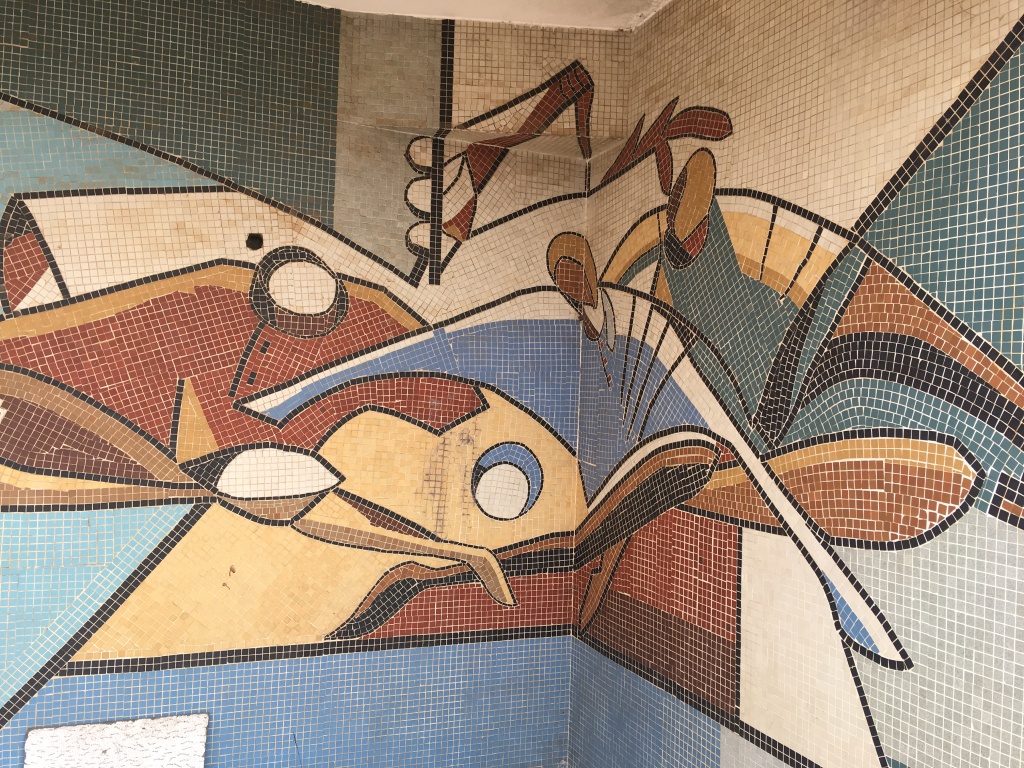
As well as the Cocoadome having mosaic decoration, Cocoa House roof garden also has some really special mosaic work clearly executed by a talented artist, but now hidden away from public view. If you visit the building be sure to venture to the top floor to spend an hour in the museum, and as to see the mosaic work and views out across the city.
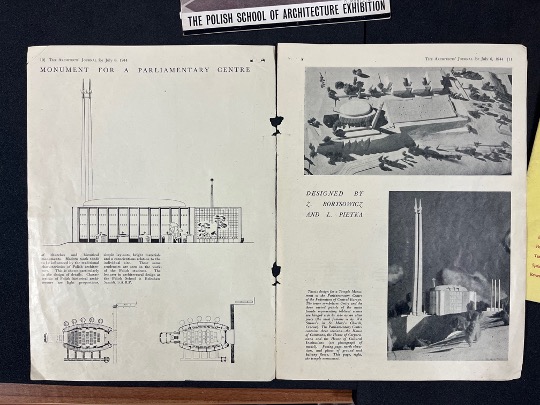
We’ve learned a lot about Nickson and Borys over the last 18 months – firstly finding out exactly who Borys is (Zdzisław Borysowicz), and that he studied at the Liverpool School of Architecture Polish School during WW2. We’d like to write a full biography on him and the practice. We’ve visited a number of his works in Sierra Leone, and now the Cocoa Project in Ibadan, and the intriguing references to Lagos too. Whilst the bulk of his practice was in the tropics he also worked in the Falkland Islands – so was clearly part of the colonial architectural infrastructure.
Here’s one of his student projects published in the The Architects’ Journal from 1944
We’re making a visit into Dakar in Senegal this week. It’s mainly an exploratory trip as we’ve not ventured into Francophone Africa before and are eager to meet up with some architects here and friends from MOHOA .
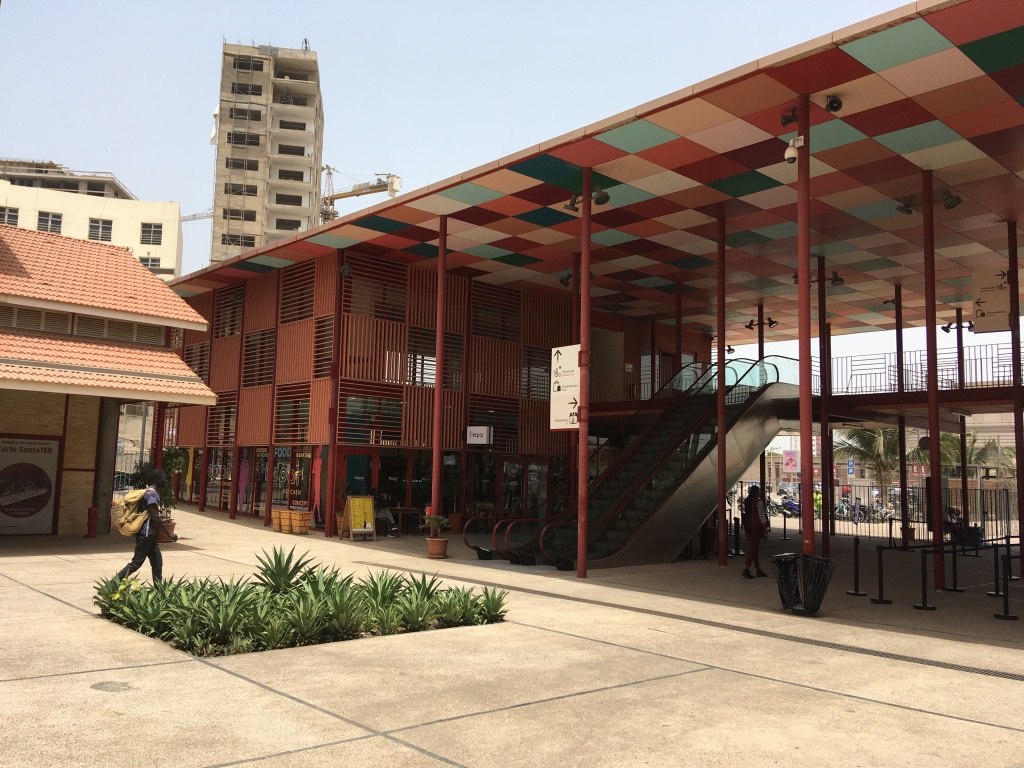
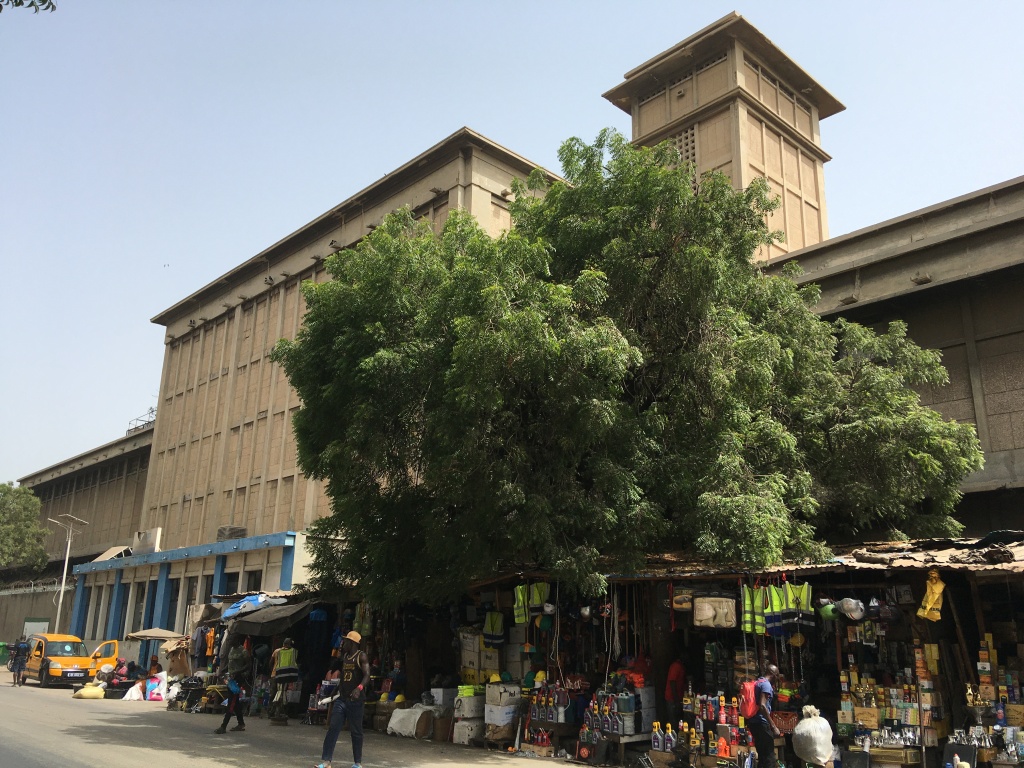
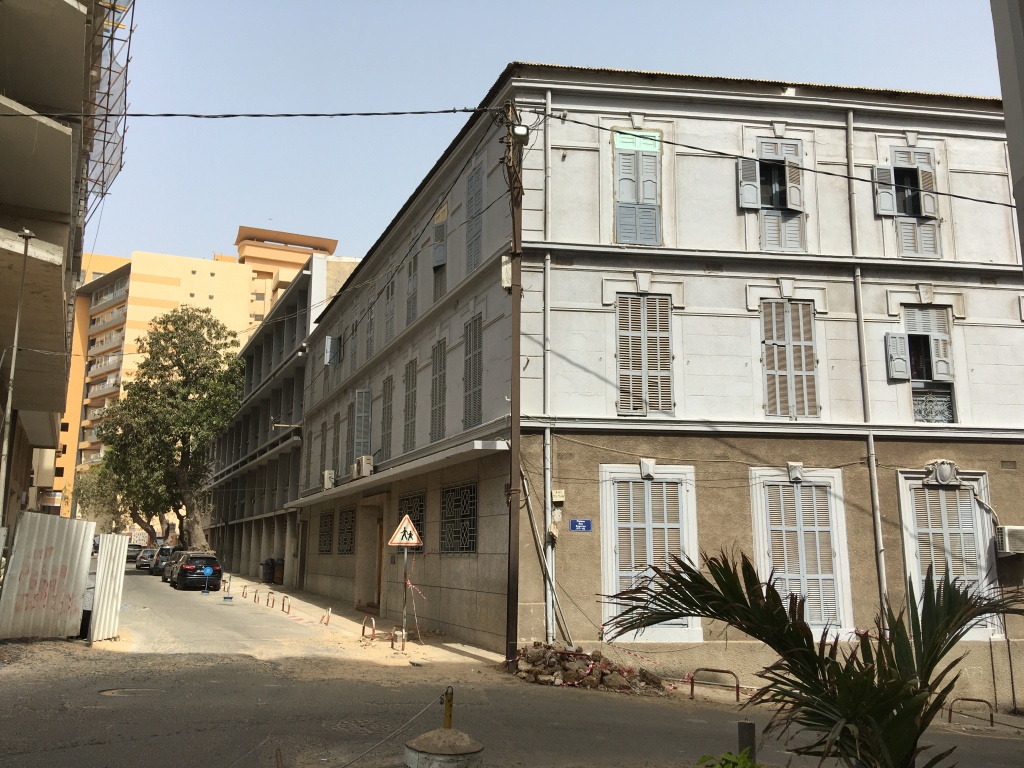
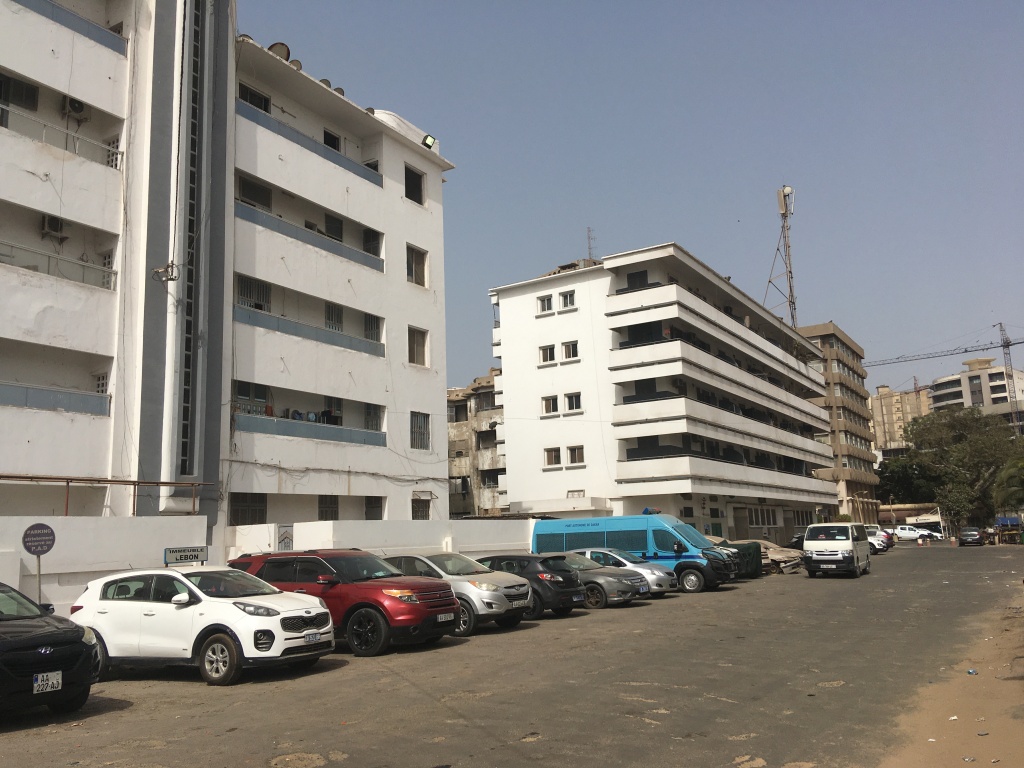
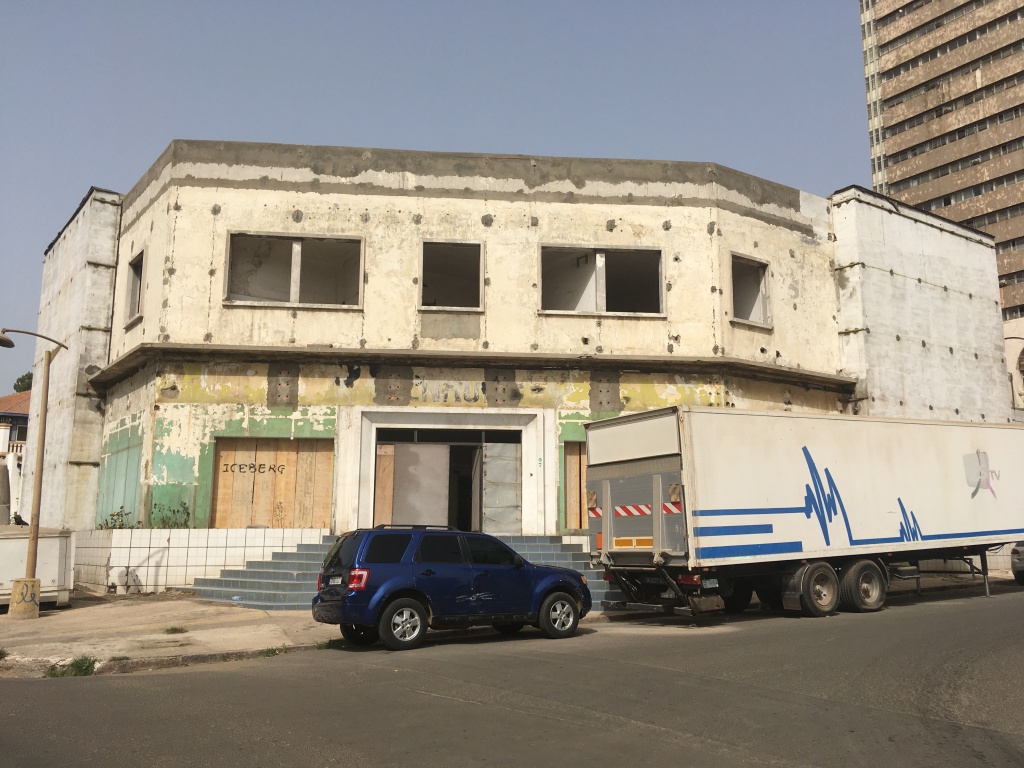
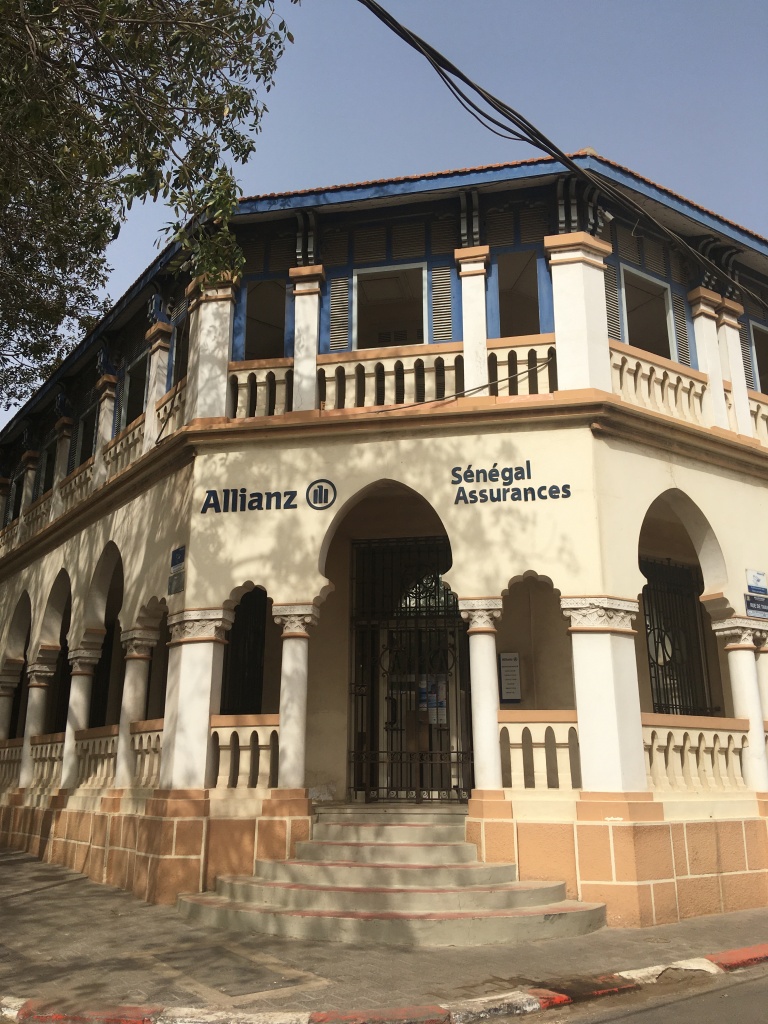
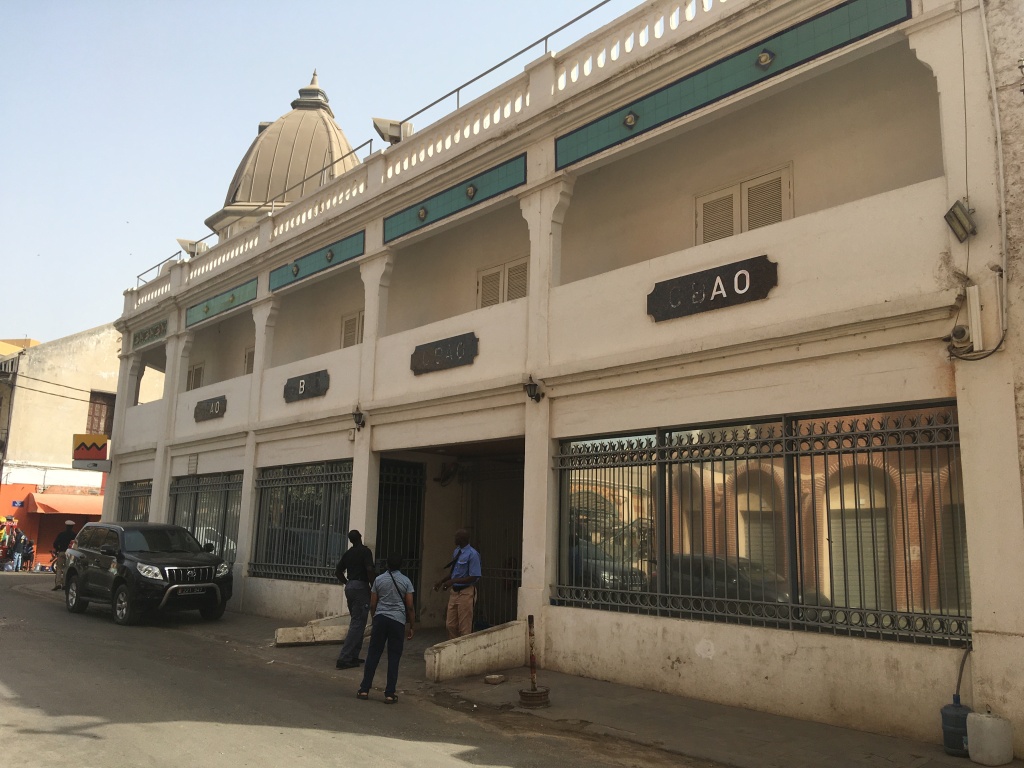
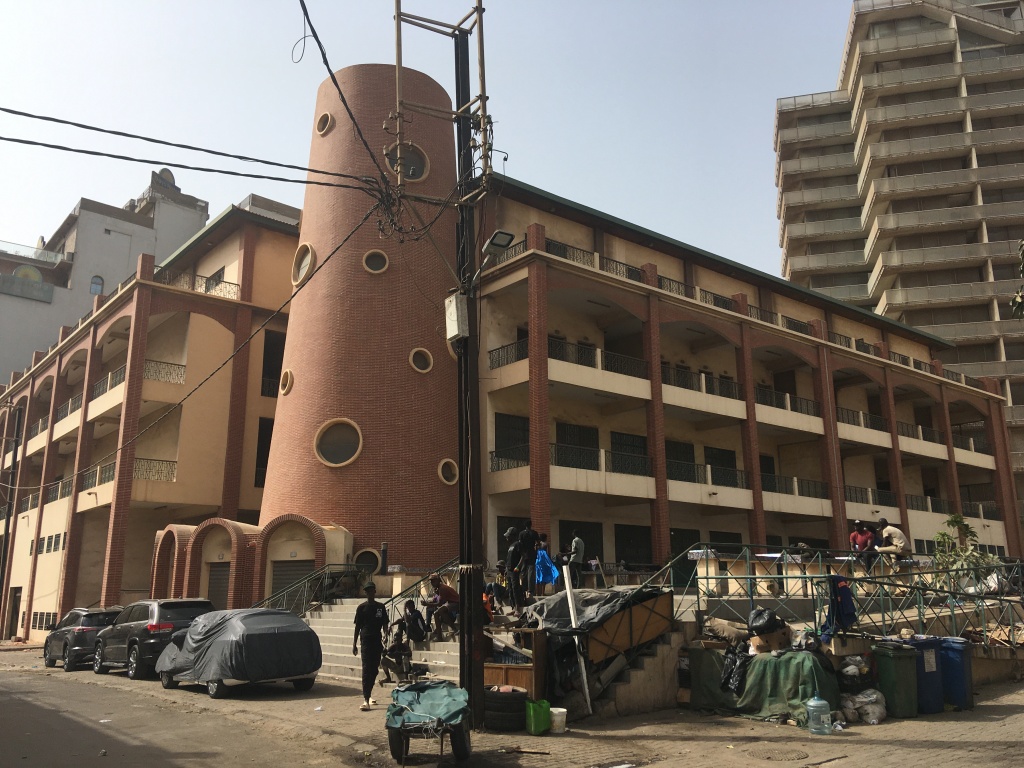
Today was all about pounding the streets and exploring some of the everyday commercial architecture, public buildings, docklands, religious buildings, museums, and streetscapes of downtown Dakar. It didn’t disappoint and using our trusty Vol2 of the Sub-Saharan Africa guide we were quickly able to track down some of the classics (and many more that don’t feature in the impressive guide).
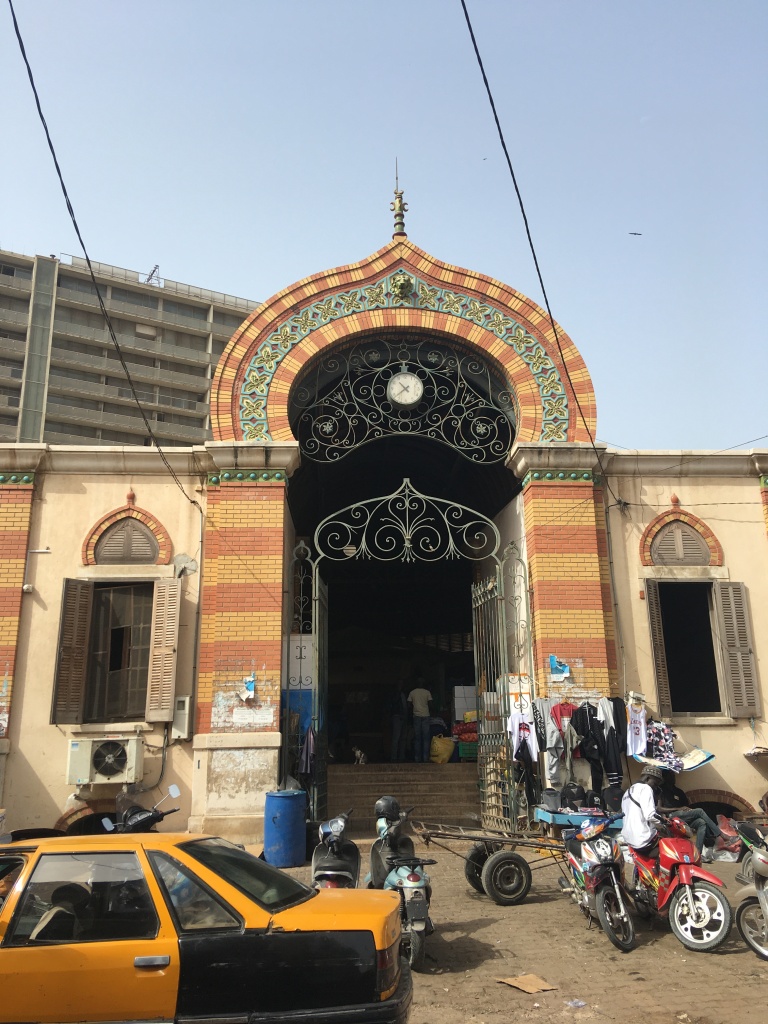
Chamber of Commerce, 1926.Kermel Market, 1910, Charles Pleyber
The Kermel market sits amongst an array of colonial era structures. It was destroyed by fire 1993, but rebuilt in 1997 to match the original design.
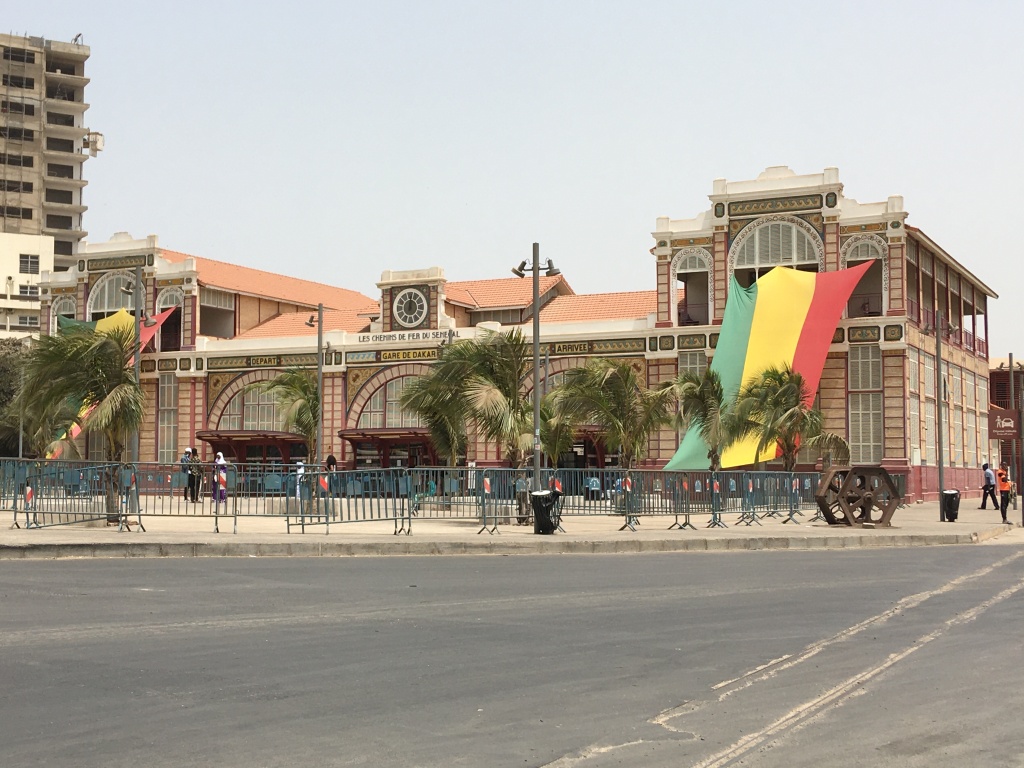
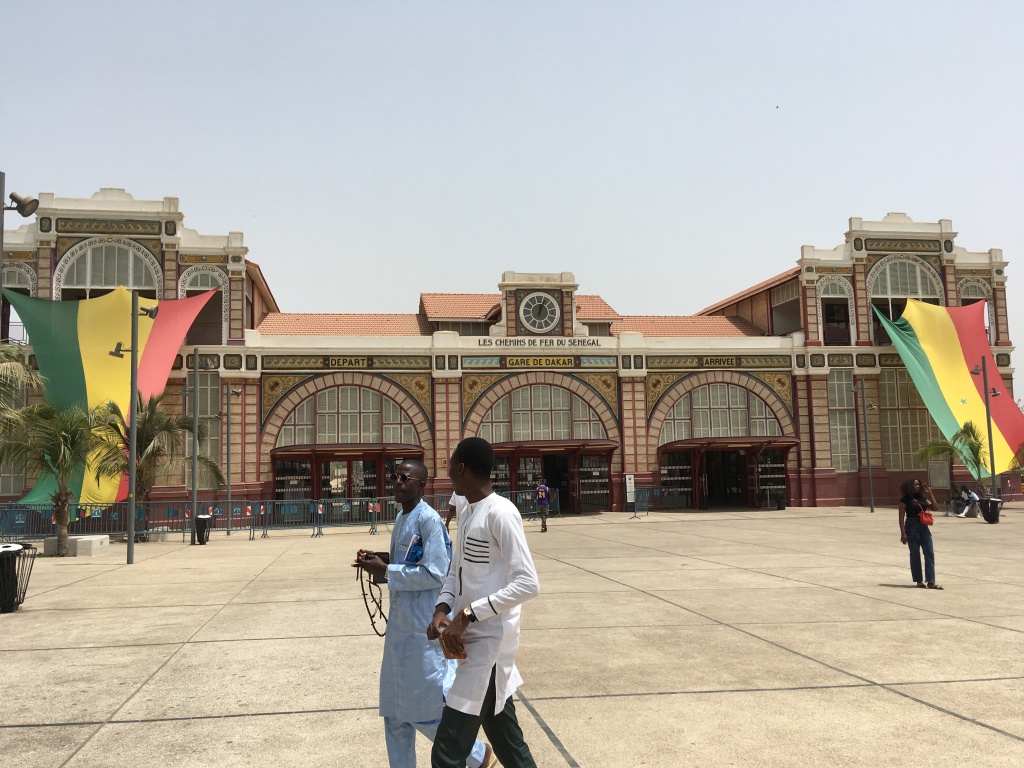
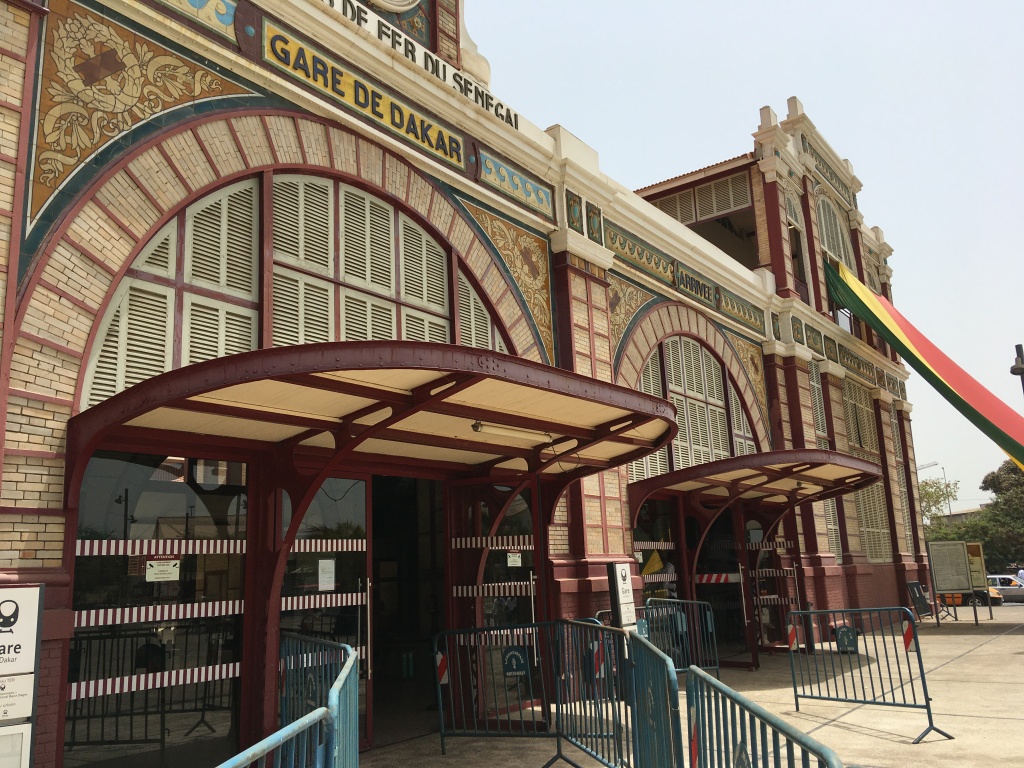
Dakar railway station with faience ceramic facade detailing. The newer interior structure provides control to the tracks and adds further commercial space.
Commercial structures, residences, markets, and banks by the docklands of Dakar. I thought the images top left and top middle were the Sandaga Market – but not sure now. There’s going to be a lot of further research and investigation required after this trip….
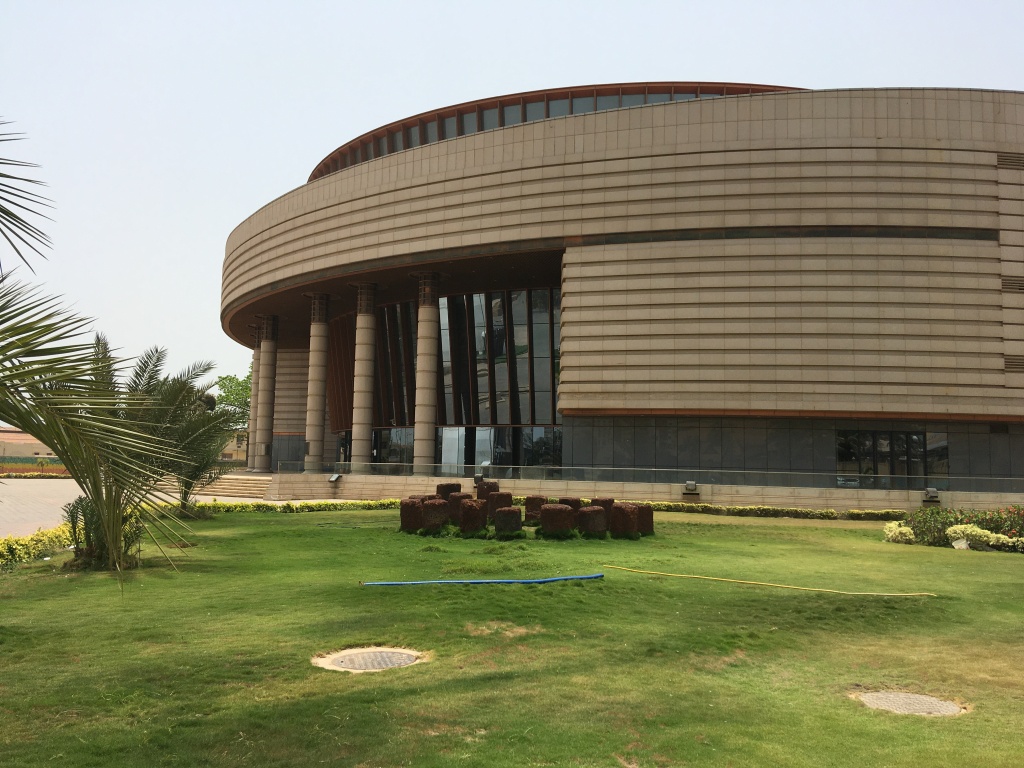
Museum of Black CivilisationGrand National Theatre, 2011, Pierre Goudiaby Atepa
Just beyond the Train Station are two vast civic structures – the National Theatre [the largest in Africa] and the Museum of Black Civilisation, built by the Shanghai Construction Group in 2018.
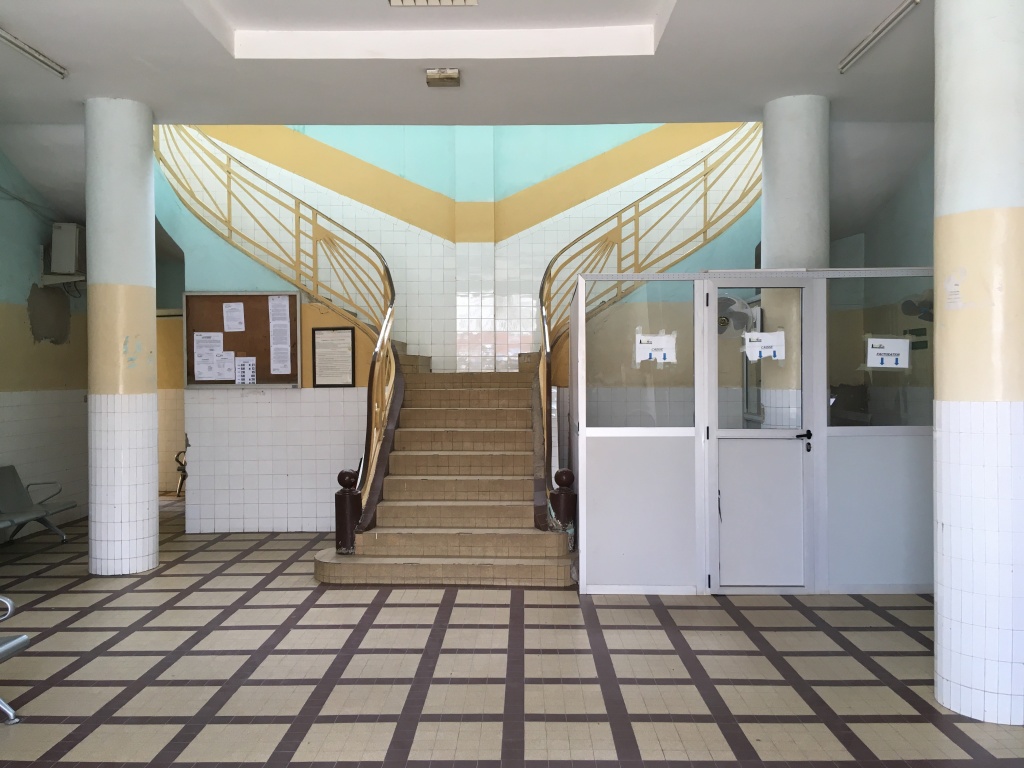
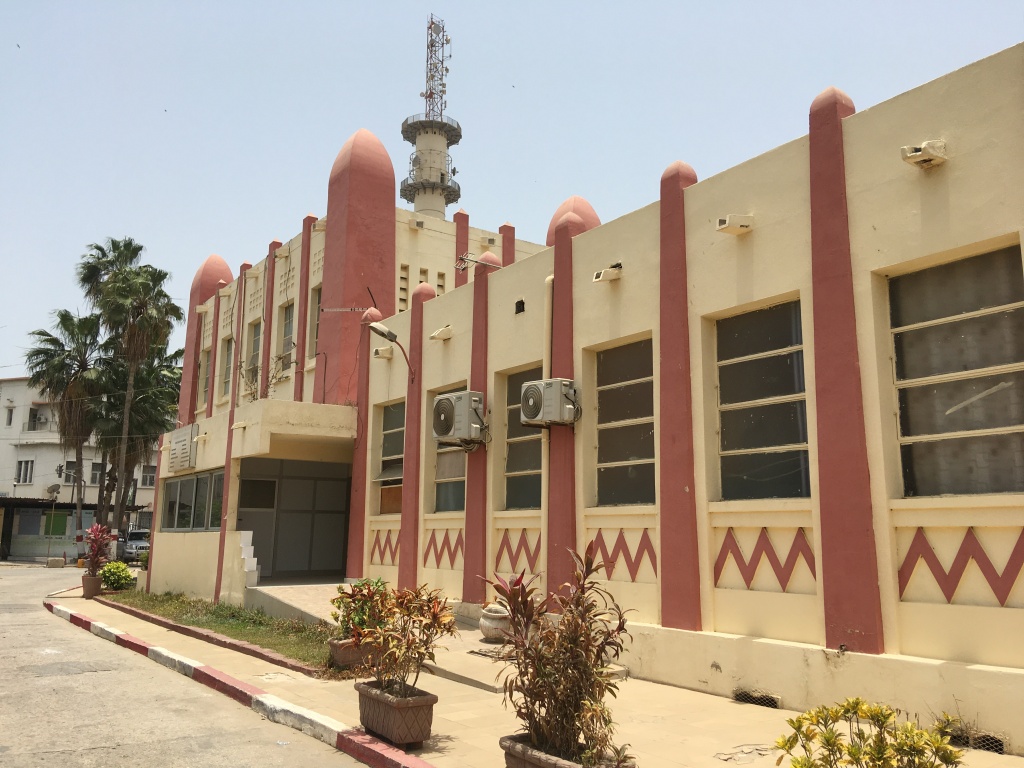
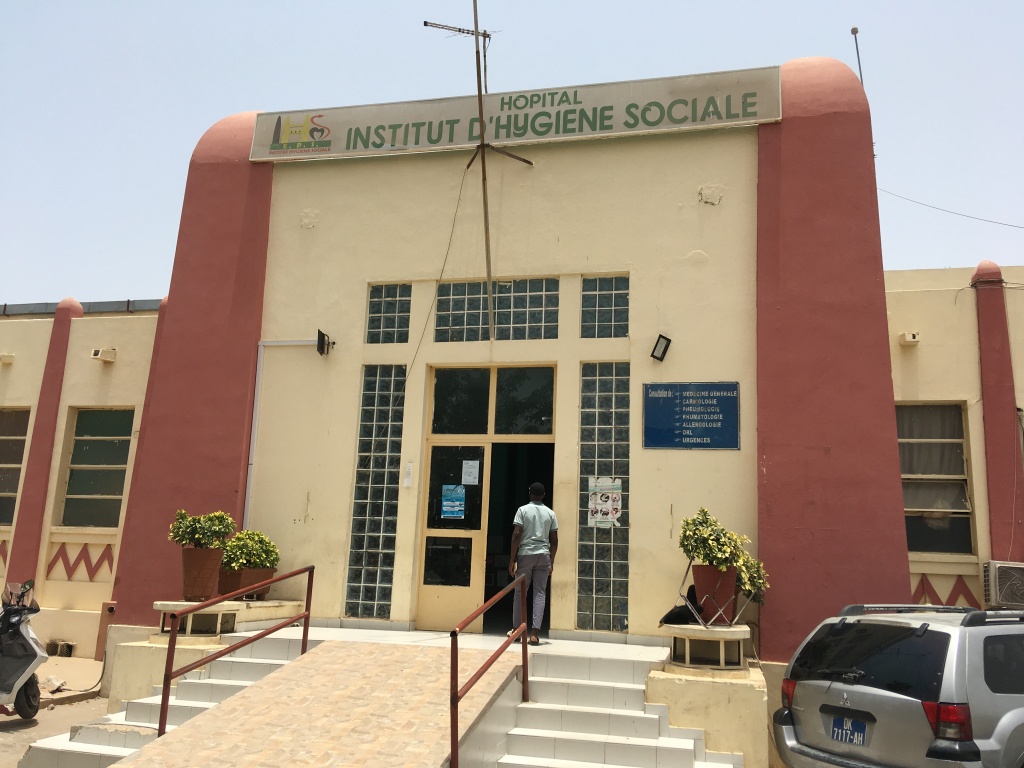
Institut d’Hygiène Sociale was a highlight today – designed by Henry Adenot around 1932 attempted to introduce more regional or local interpretations to the colonial architecture canon. This building has been described as Sudano-Sahelian but it borrows liberally from across Western African architecture, as well as introducing zig-zag motifs, sunbursts, and playful interiors.
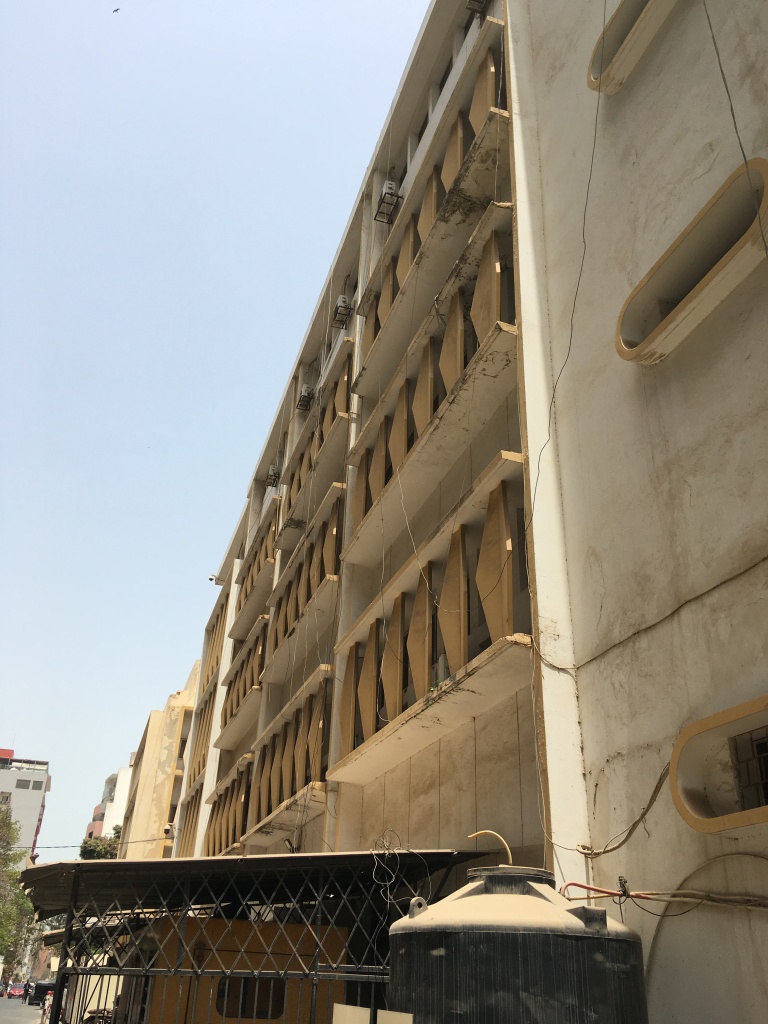
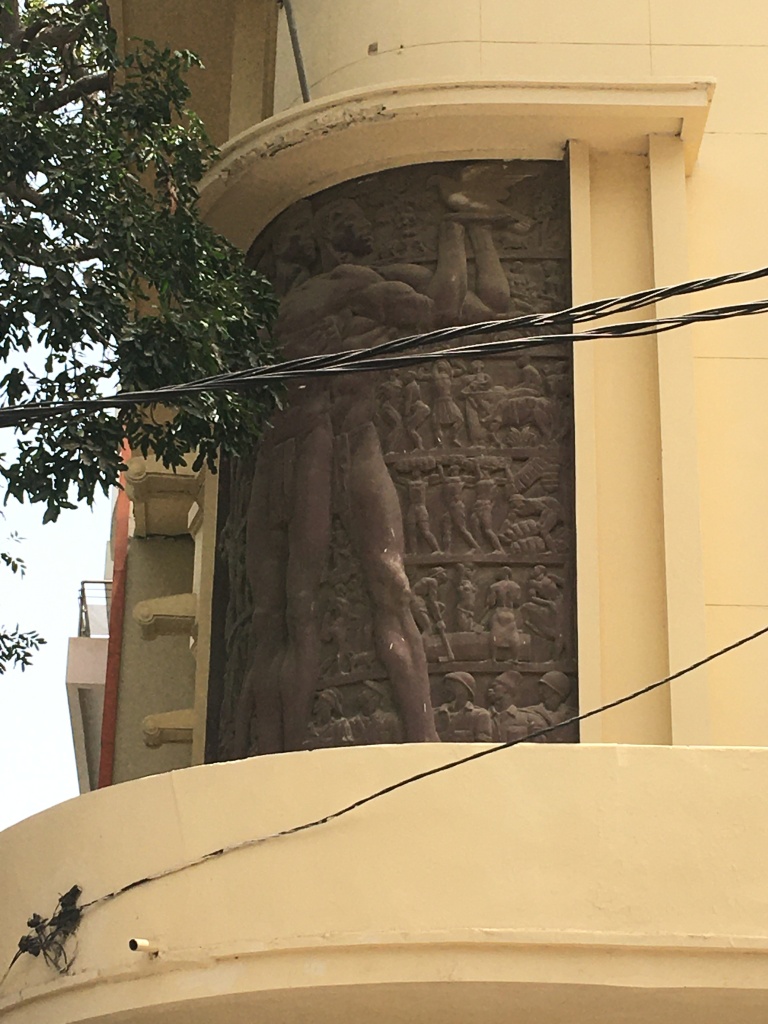
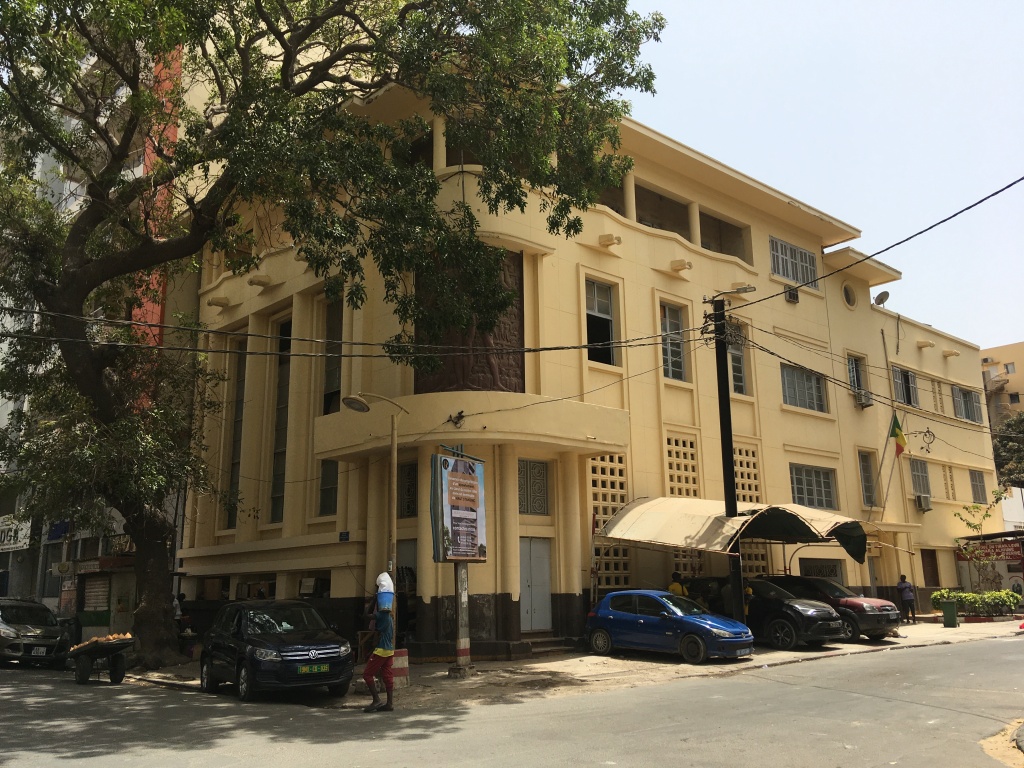
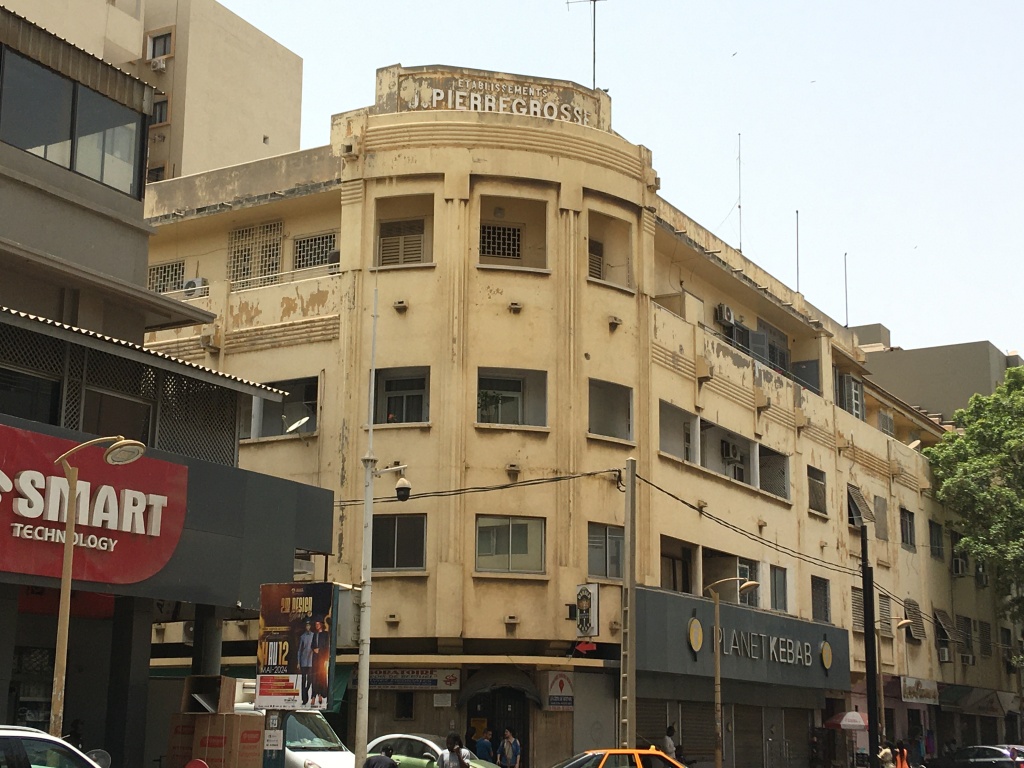
Most of the downtown area it set out according to a grid plan, with buildings reaching 4 or 5 stories in height. There’s a variety of commercial structures some bearing the name of the old trading companies and families, others depicting bas relief decorative panels or double-skin solar breakers.
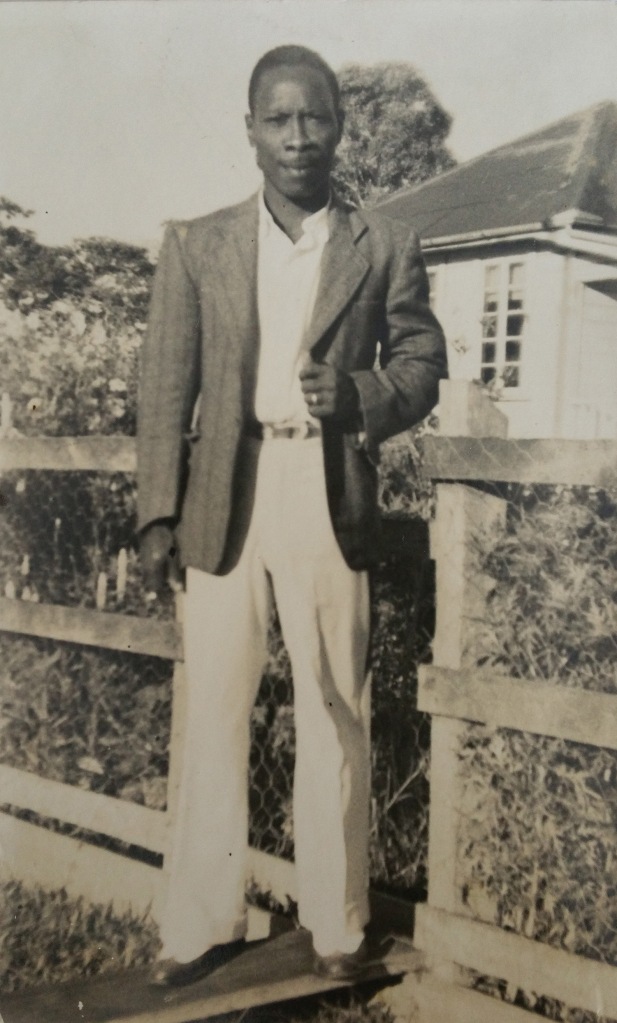
Charles Eric Wilkinson, late 1940s in British Guiana. Source: Michelle Joan Wilkinson.
My grandfather, Charles Eric Wilkinson, was a black architect-builder involved in major government-sponsored building and infrastructure projects in British Guiana from the 1930s to the 1970s. I place Wilkinson’s built work and its surviving archive of bookkeeping ledgers, letters, photographs, and architectural drawings in conversation with material from national archives in Guyana and England, adding oral histories from family members. White architects stationed in British Guiana and the Caribbean reported back to England about the “skilled craftsmen” (carpenters and building contractors) that they observed. Based on family lore and archives, I question the interactions between the supposed foreign “expert” architects and the local builders, seeking to document this period more accurately through architectural work that has remained in the shadows.
Wilkinson’s concrete house in the late 1950s, before he added a concrete fence and bridge from the front yard. Source: Michelle Joan Wilkinson.
The backdrop to my research is the rise of foreign-aided, self-help building schemes in British Guiana in 1954, the same year that Wilkinson endeavored to build a concrete house for his family. British and US architects were involved in British Guiana’s planning and housing development work. Howard Mackey, a Black American professor at Howard University, was on a team contributing to the self-help project. This period of Britain transitioning its so-called dependencies to self-sufficiencies provides an important context for understanding the role that black builders would play in shaping the built environment of the (independent) nation to come.
The architectural style was developed specifically for tropical climates, so its key design consideration was optimal ventilation and minimal solar heat gain. Elaborate building forms and abstract ornamentation later became characteristic of the style.
Although the movement began with colonial architects after the second world war, it was redefined by newly independent nations of the 20th century, who wanted to create an identity detached from their colonial past. The V&A exhibition spotlights India and Ghana’s nation-building projects following their independence from Britain in 1947 and 1957 respectively.
It begins with the early work of British architects Maxwell Fry and Jane Drew in Ghana. Until a few decades ago, European and colonial architects’ designs dominated the historical narrative of tropical modernism. This narrow viewpoint is currently contested and extensive research on post-independence architecture and non-European architects is being conducted.
The V&A exhibition attempts to redress this Euro-centric story. It centres around the lesser known architects whose input has been historically overlooked or erased. It celebrates their contributions to tropical modernism and the impact of independence projects on local architectural education.
The architecture of a new nation
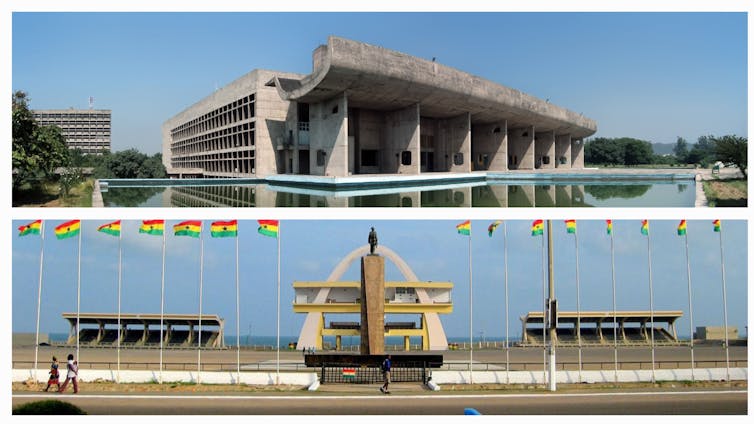
Chandigarh, a planning project for Punjab’s new capital after India’s partition, is one of the architectural works featured in the exhibition. The city is a famous example of 20th-century modern architecture and urban planning. It was led by European architects Le Corbusier, Pierre Jeanneret, Maxwell Fry and Jane Drew.
Works by these Indian architects are on display in the V&A show. There’s Eulie Chowdhury’s Chandigarh chair which was co-designed with Pierre Jenneret, Jeet Malhotra’s photographs of the city under construction and Giani Rattan Singh’s wooden model of the Legislative Assembly.
These architects were on the design team for the Capitol Complex, which comprised grand administrative buildings and monuments. The buildings were exposed concrete structures with sculpture-like forms and deep concrete louvres (slats that control sunlight entering a building).
Once dominated by British colonial architects, Ghana’s building industry expanded post-independence to include architects from Africa, the African diaspora, and Eastern Europe. Victor Adegbite, a Ghanaian architect, oversaw several public works as head of the country’s housing and construction corporations. He led the team for the building, popularly called Job 600, which was constructed to host the Organisation of African Unity Conference in 1965.
Ghana’s Africanisation policies (intended to increase the population of Africans in corporate and government positions) influenced the founding of the architecture department at Kwame Nkrumah University of Science and Technology (KNUST).
The department began by recruiting educators from Britain and around the world. On display is a student-made geodesic dome (lightweight shell structure with load-bearing properties), which was constructed during a teaching programme with American designer Buckminster Fuller.
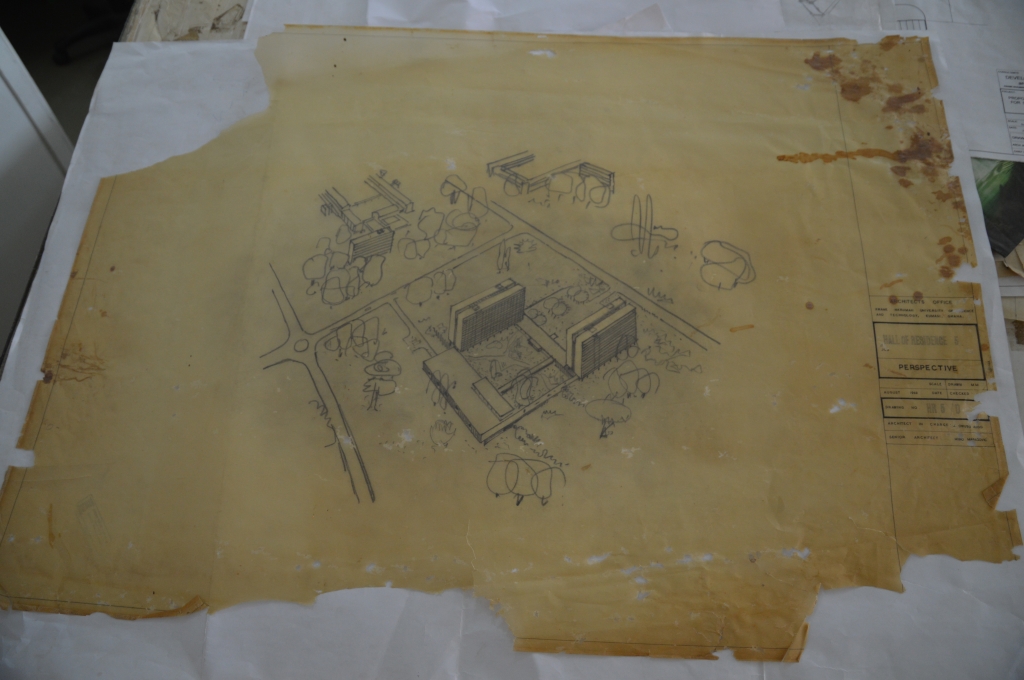
Among the staff were Ghanaian architects like John Owusu Addo – the first African head of department. He designed new buildings for the university most notably the Senior Staff Club and Unity student hall included in the exhibition. The hall’s nine-storey blocks combine exterior and interior corridors to improve indoor ventilation.
The many dimensions of tropical modernism
Exhibitions like this are important because they educate the public on the strides made by academic institutions and cultural organisations in rewriting the history of tropical modernism.
V&A’s collaboration with the Kwame Nkrumah University of Science and Technology and Chandigarh College of Architecture was integral to the exhibition. However, the show only briefly addresses the contemporary issues of conservation, sustainability and the alternative histories of the style.
Institutions and organisations are now pushing for the conservation of tropical modernism in Asia and Africa. Although monuments like Chandigarh Capitol Complex, have attained heritage status, many are in decline, repurposed or at risk of demolition.
In India for example, the Hall of Nations, a group of pyramidal exhibition halls, was demolished in 2017. Social media platforms like Postbox Ghana and international collaborations like Docomomo International and Shared Heritage Africa project centre the African experience in documenting and reviving public interest in tropical modernism.
Unlike the architects and the experts celebrated in this exhibition, construction labourers are not as visible in historical sources because they were often unrecorded. Oral history’s ability to fill this gap diminishes with time, but we have a duty to avoid repeating the same erasure and omissions of the past. The legacy of tropical modernism is incomplete without addressing the contributions made by both professionals and labourers alike.
What kind of art is left behind by totalitarian regimes? A new free-to-readbook called Congo Style: From Belgian Art Nouveau to African Independence explores the visual culture, architecture and heritage sites of the country today known as the Democratic Republic of Congo (DRC). It does so by exploring two now-notorious regimes: King Leopold II of Belgium’s Congo Colony (1908-1960) and Mobutu Sese Seko’s totalitarian Zaire, established when he seized power in a military coup in 1965 after five years of political upheaval. We asked artist and visual culture scholar Ruth Sacks five questions about her book.
What did you set out to achieve?
Years ago, while I was in Belgium on an art residency, I became interested in the early modernist art nouveau movement (1890-1914). In architecture and art, this period is part of 20th century modernism, known for a minimal, clean aesthetic that’s influenced by new technologies and the advent of machines. Art nouveau is distinctive because it’s highly decorative, while still using the new building materials of iron and glass.
What interested me was the colonial nature of art nouveau. Art nouveau came with a very strong sense of defining newly formed (or unified) nation states in western Europe. It was the style used at world fairs. These were grand exhibitions showing off western countries’ scientific and cultural achievements, including the acquisition of colonies.
A colonial pavilion in the art nouveau style at the 1897 Brussels world fair in Belgium helped establish one of the names for Belgian art nouveau: “Style Congo”.
The style is distinctive for its curling, plant-like shapes and is a major tourist feature today. The years in which it was implanted in Brussels (about 1890-1905) directly coincided with the brutal Congo regime of Belgium’s King Leopold II.
Travelling to the DRC, I located actual art nouveau buildings from the early colonial period. But it was the state sites of the early Mobutu Sese Seko regime (1965 to 1975) that captured my attention. Like art nouveau, they are steeped in a sense of nationalism and aimed at impressing. For example, the Limete Tower (in use from 1974) on Boulevard Lumumba is a massive monument intended to be a museum celebrating national culture. A tower made up of a huge raw cement tube is topped by an organic floret shaped crown, with a curving walkway leading off from its rounded lower sections.
My experience of the capital city, Kinshasa, made me rethink what cities were and could be. Buildings like Limete Tower that were designed for very different infrastructures (far more ordered, European and US systems) have weathered in fascinating ways that are often related to extremely violent historic events.
I didn’t want to present a conventional study that only analyses the design of the architecture and its functionality. The book attempts to read sites like this within the particularities of their city, its streets, plants and histories.
What did you conclude about the Leopold period?
In Leopold II’s time, the king himself was cast as the villain of the “red rubber regime” in the Congo. The Belgian colonial regime under Leopold II committed atrocities connected to the rubber industry. (The 1897 Congo Pavilion was a pavilion within the Brussels World’s Fair dedicated to displaying how the Congo provided a lucrative and exotic resource to Belgium.)
Movements like the Congo Reform Association (mainly US and British) protested against horrific conditions, including torture and mutilation, that left at least a million Congolese people dead. A great deal of the focus was on Leopold II himself and his greed, which distracted attention away from the greater system of capitalist colonial expansion that was fully endorsed by Euro-American powers.
Famously, Leopold II never set foot in the Congo and neither did the art nouveau designers who fashioned buildings and exhibition pavilions relating to the Congo. I believe this distance from the realities of life in the Congo itself allowed for the fantastical forms that were created in Belgium.
What did you conclude about the Mobutu period?
Mobutu Sese Seko was widely maligned by the Euro-American press. What’s often ignored, to this day, is that he was put in place by Belgium and the US. He was painted as the villain of the African story, fulfilling the ultimate caricature of the African kleptocrat, yet he wouldn’t have come to power without the nature of the colonialism that came before him.
Belgian colonialism followed a logic of extractivism (removing natural resources to export them) that forced the Congolese economy to supply raw materials to the west (especially Belgium), which continues today.
Mobutu is considered corrupt in the Congo today and his military dictatorship was indeed brutal and controlled the Congolese people with fear. However, his commandeering of a cultural blooming in Kinshasa in the late 1960s and early 1970s was important. Instead of dismissing what he built as only the work of a dictator, my book draws out some of the complexity of this time and what it meant to celebrate African craft, art forms and traditional culture.
The process of appropriating Euro-American artistic ideas and architectural styles in order to celebrate Africanness, as an anti-colonial statement, still holds weight today. Many of Mobutu’s towering monuments are considered objects of pride in the city.
How does this live on today?
There is something to be gained from looking at what is left in the wake of tragically violent regimes and how their structures are treated within both their societies and their immediate surroundings. How material culture is made is as important as what is made. Reckoning with monuments and memorials, and considering how these are maintained in the city, can shed often unexpected insights into the ways histories are told.
My hope is that the book remains relevant as a sign there is value in picking apart material remains of regimes that aimed for total control, but never fully achieved it. The associations that build up around public spaces and exhibitions are not necessarily only to do with the circumstances of their making, but how these stories have been filtered over time. They can alienate people but they can also engender pride.
The extractivist attitudes I describe throughout the book, which see the Congo as a resource with bountiful raw natural materials, are still very much present in our day-to-day life. The cobalt in our smartphones, computers and electric cars is mined by labourers working in near slave conditions to feed our need for the latest technology. While Congo Style stays with historical examples in Kinshasa, the built material that follows colonial ecocide is the main topic.
We went to the Exhibition Preview at the V&A on Wednesday 20th February to see the opening of the Tropical Modernism exhibition – a full review is being prepared and we’ll share it shortly (currently under review elsewhere first…) – here’s just a few snaps from the evening…
It was an intriguing exhibition for TAG to visit – not least because most of the exhibits have already featured on this blog over the years. Perhaps the biggest privilege besides viewing all of the material was talking to Michael Hirst and discussing his work at Tema again. Some of Michael’s photographs are in the exhibition too. The first thing that stood out however, was the large queue to get in – it’s not often a private view has a long line outside…
Michael Hirst and his photographs of Tema from the late 1950s
Some of the other highlights include seeing the Buckminster Fuller geodesic dome restored and delicately hung from the ceiling. The last time we saw it was abandoned in the loft of a workshop at KNUST.
Buckminster Fuller Dome: in storage, KumasiDome restored and suspended from ceiling
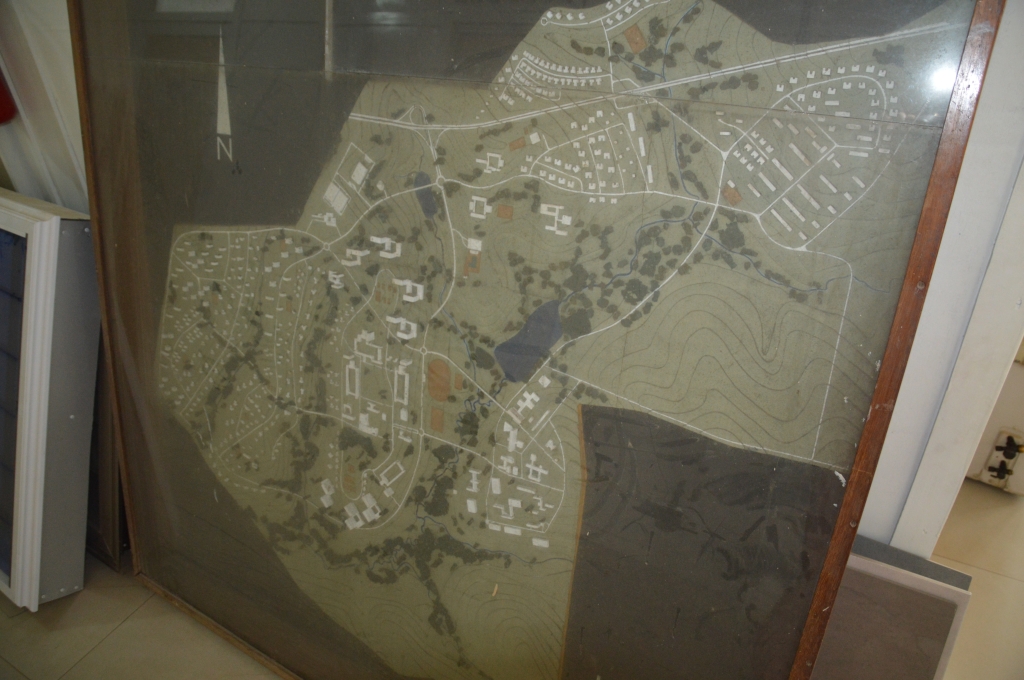
There’s also some delightful perspective drawings by John Owusu Addo in the exhibition and a model of KNUST campus too. It was such a relief to see that these drawings are now being cared for. We produced some digital copies in 2016 and 2018 and hoping the share the full set of the precious drawings here soon.
drawings in the archive at KNUSTModel of the KNUST campusJohn Owusu Addo drawing at the exhibitionRestored model exhibited at the V&A
About TAGOur model of the Accra Community Centre was included alongside several other models, including Giani Rattan Singh’s timber model of Corbusier’s Assembly Building in Chandigarh, and an outstanding model of the Pragati Maidan in Delhi, by architect Raj Rewal (and foolishly demolished in 2017).
Accra Community Centre model, by David Grant and Iain JacksonRattan Singh’s timber model of Corbusier’s Assembly Buildingmodel of the Pragati Maidan in Delhi
It was great to see some of Pierre Jeanneret‘s furniture on display alongside the unexpected inclusion of Nek Chand‘s sculptures. It’s a curious exhibition pulling together a range of projects around Ghana and India, with snippets from Nigeria and elsewhere.
Jeanneret Furniture and Chandigarh sectionSculptures from Nek Chand’s Rock Garden, Chandigarh
An exhibition that we’ve been very much looking forward to opens this week at the V&A Museum in London. We’ve got a few of our models on display at the exhibition, and have been involved behind the scenes. There’s a large contingent from the Transnational Architecture Group making their way to various opening events this week and you can expect a series of reviews and critiques here shortly.
There’s also an article out today by Oliver Wainwright in The Guardian that discusses the exhibition concept – and some of our favourite buildings.
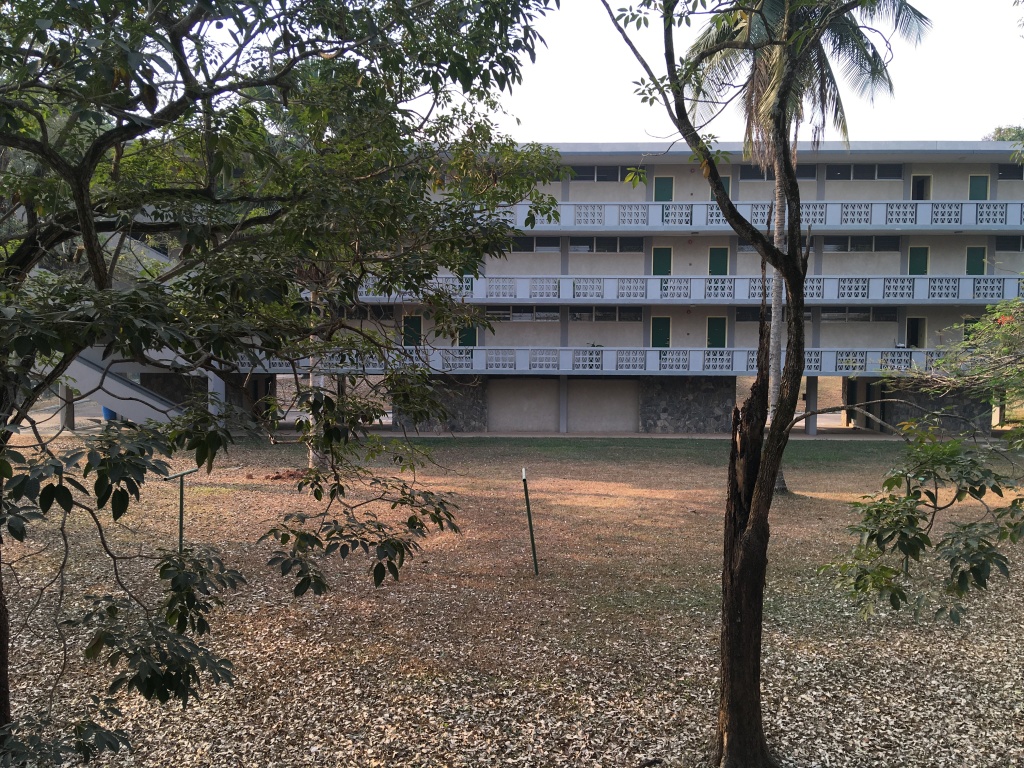
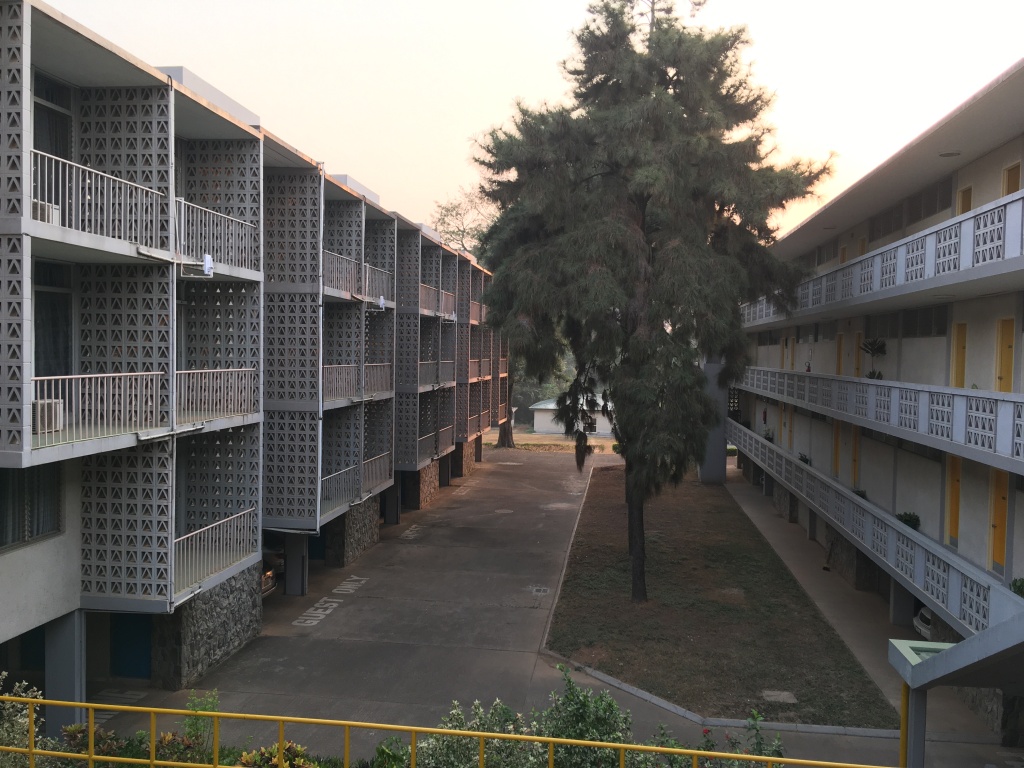
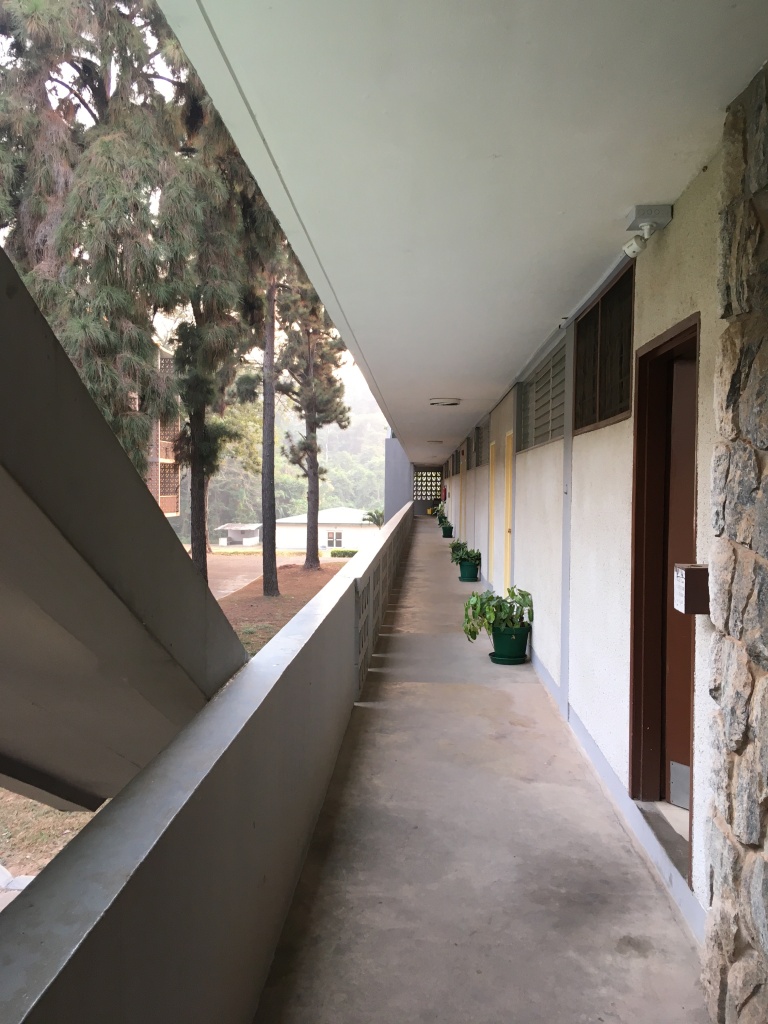
North of Ibadan is a 3000 acre site devoted to investigating farming, agriculture, and produce production in the tropical regions called the International Institute of Tropical Agriculture, or IITA. It’s a vast campus-laboratory established in 1967 and designed by Haines, Lundberg & Waehler – a US based architectural practice founded in 1888, and with various offices around the middle east and Africa. Whilst the main purpose of the campus is to conduct research (funded by various countries and conglomerates, and originally by the Ford and Rockefeller foundations) it also operates a hotel and contains all the usual facilities.
The bedrooms are arranged in large linear blocks with gallery access that utilises the dramatic level changes. The bedrooms all have cross-ventilation and louvred facades – although AC has been retro-installed at some point. It’s a pristine campus and a carefully manicured landscape.
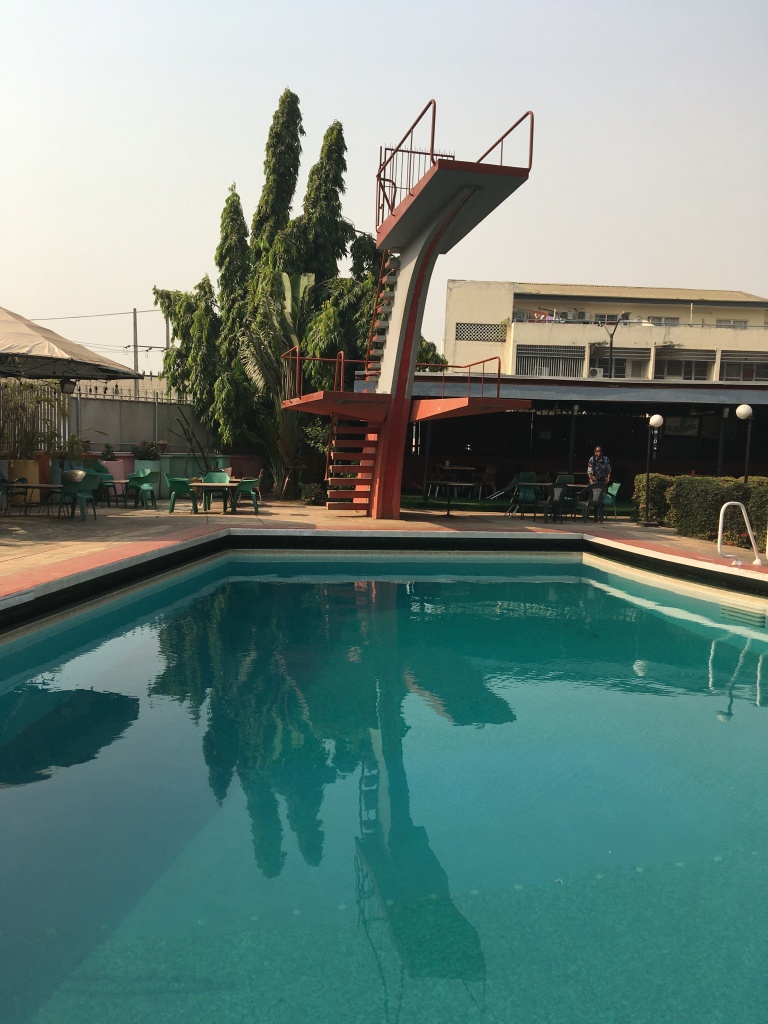
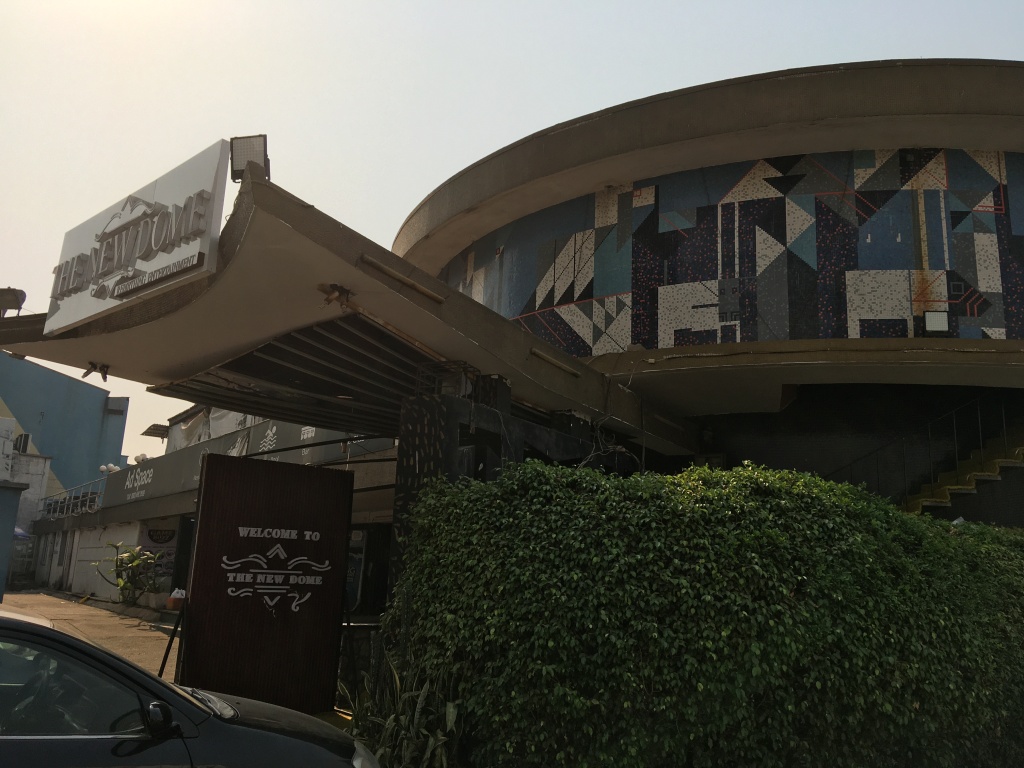
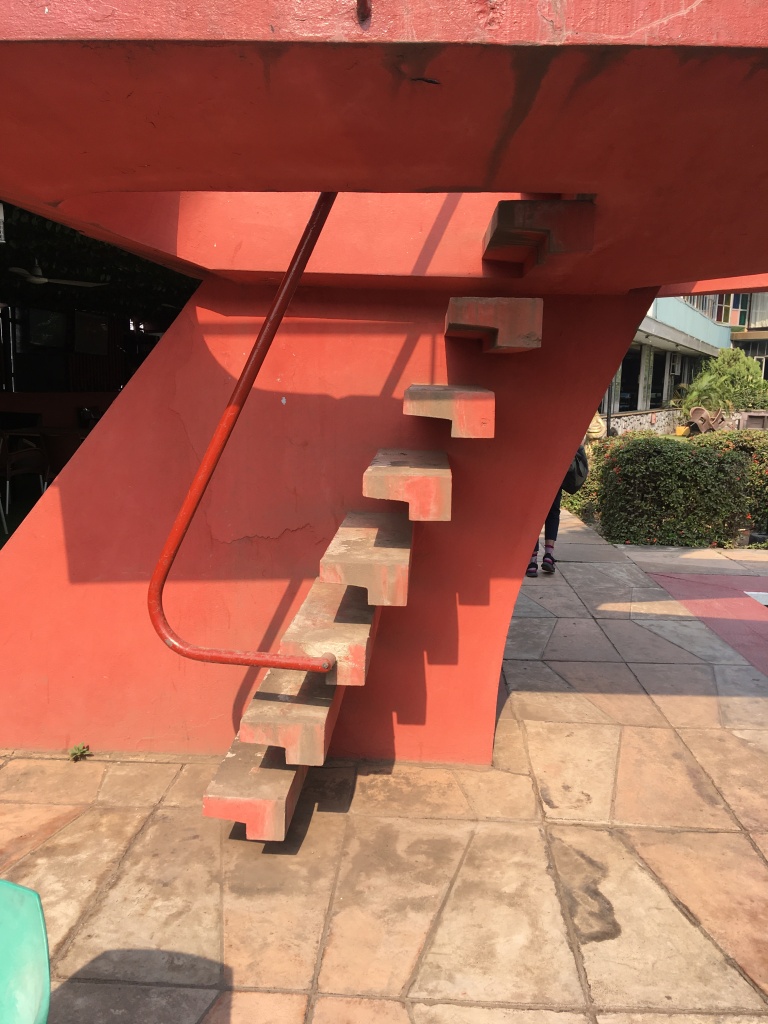
In the shadow of the 26 storey Cocoa House (Africa’s tallest structure at one point – 1964-65 , architect?, contractor Cappa and D’Alberto) is a small, much more interesting, circular building clad in mosaic and topped with a dome. The splayed cantilevered entrance leads to a swimming pool with beautiful concrete diving boards and viewing gallery. The circular building is now a night-club.
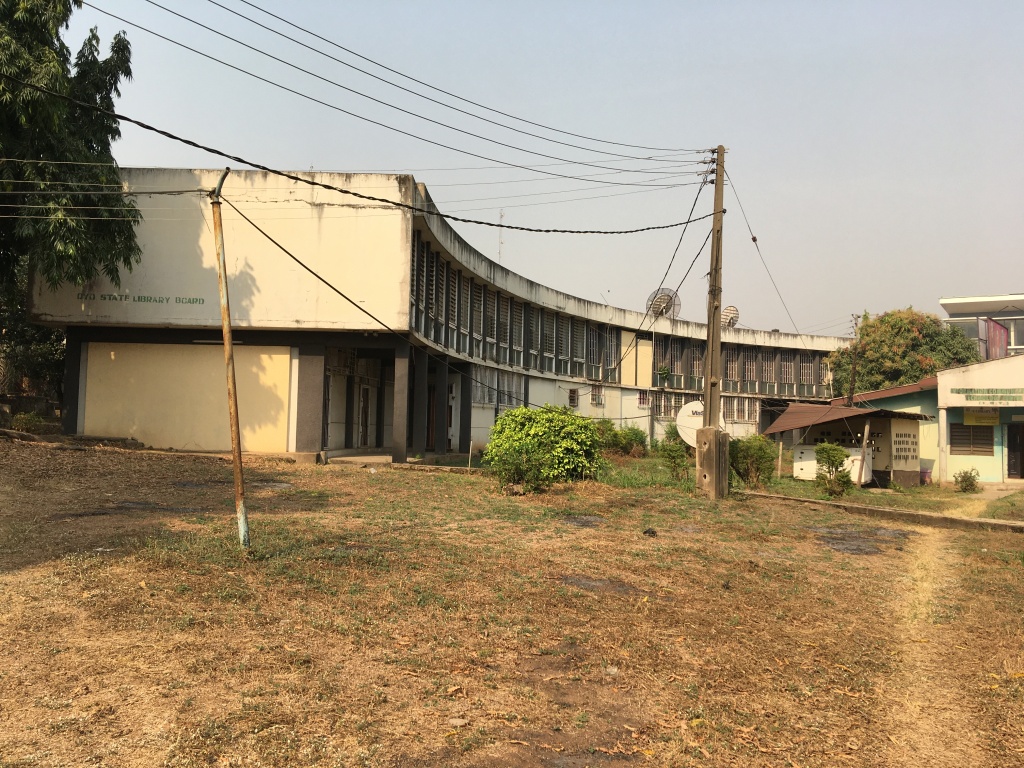
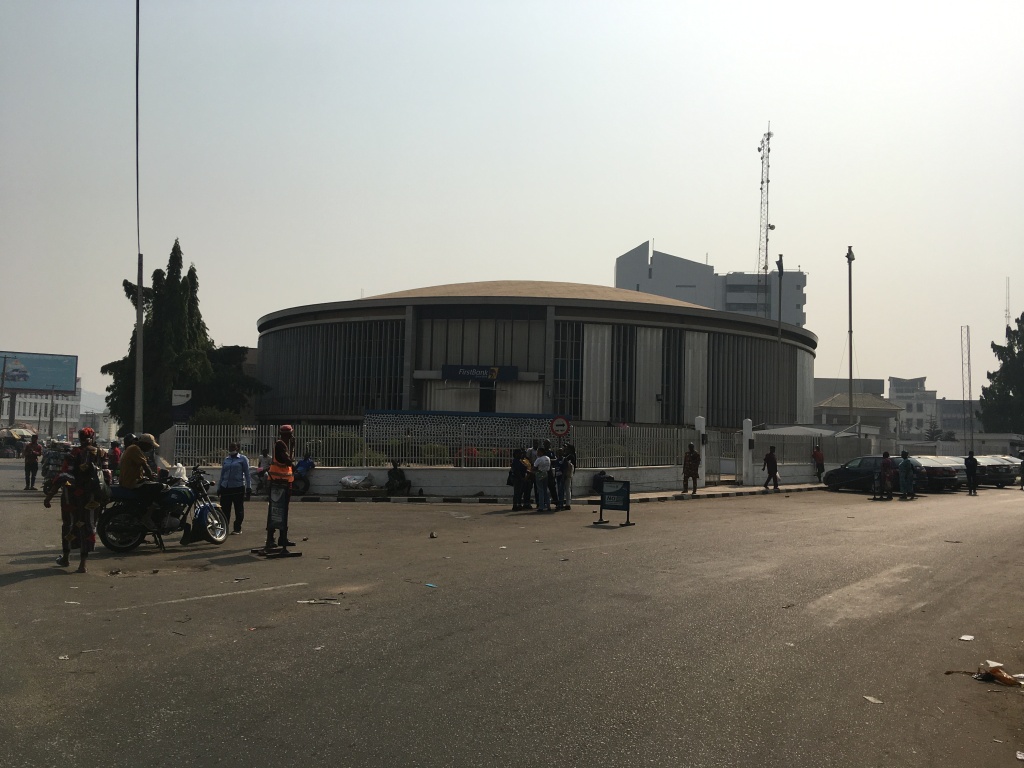
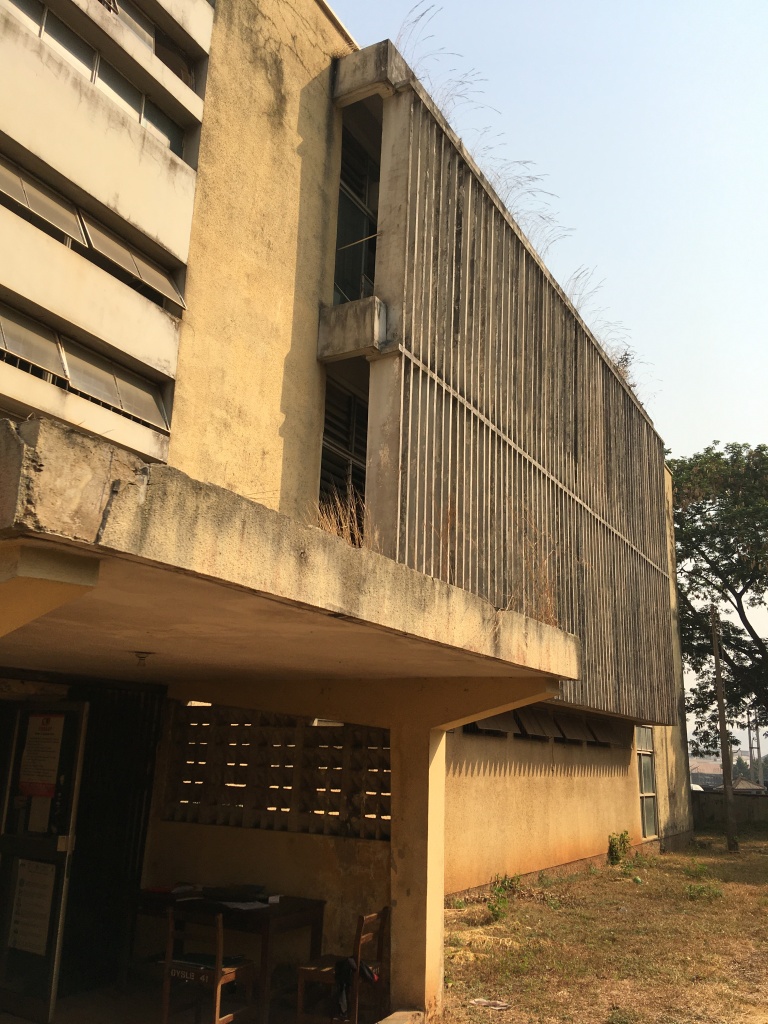
From here we visited the library complex and another domed building with vertical brise-soleil used by FirstBank. We continued to Fry and Drew’s Co-operative bank tower with its associated set of structures set behind, including the Obisesan Hall (similar to Trenchard Hall in its outline but lacking the expensive materials and finish) and a series of shops and flats. It’s an interesting grouping of projects covering a city block and bringing together office, assembly, retail, and residential spaces into a mixed use constellation.
Archival / Library buildingBanking hallLibraryCo-op Banking Tower, Fry and DrewObisesan Hall, Fry and DrewFlats and shops, Fry and Drew
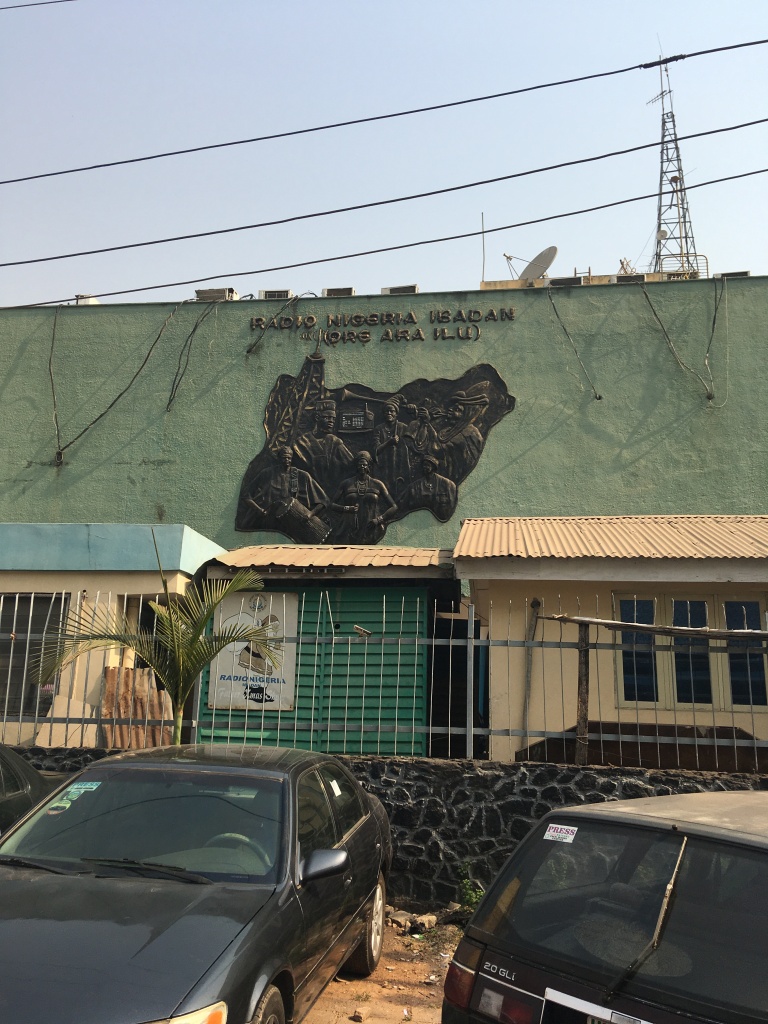
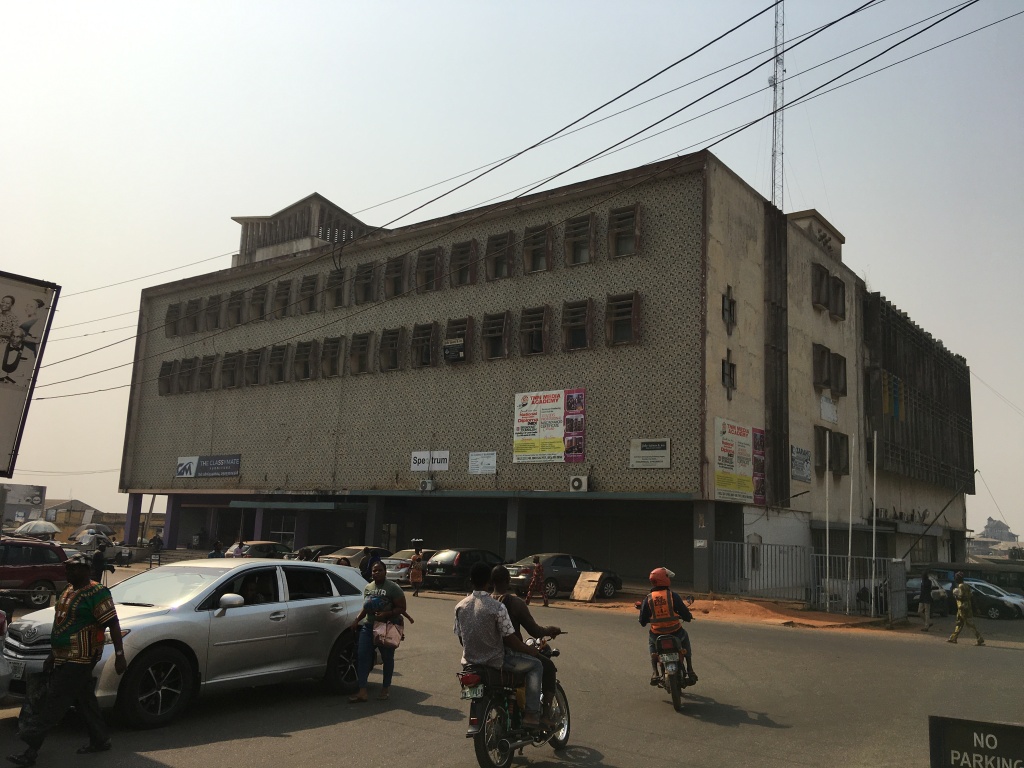
Opposite is Design Group’s Finance House (now Aje House) with the concave mosaic above the entrance. The Nigerian Broadcasting house is also here, again clad in the distinctive blue tessellating tiles that are a key feature of Ibadan’s modernist structures. The Kingsway store (by T P Bennett, 1960) has a distinctive tower competing for attention as Ibadan’s architecture increased its scale and storey heights during the post-independence boom. Each façade of the store is given a different treatment – the tricolour mosaic façade responds to the Broadcasting House opposite and whilst the east and west facing facades are treated with vast brise soleil built on rubble walling. It’s a major project, and once the largest store in the city fitted out with fine materials. Part of the building is still occupied, but it’s dilapidated and suffering from years of neglect.
Aje House (formerly Finance House); Design GroupMosaic art work by entrance of Aje HouseBroadcasting HouseMural on Broadcasting HouseIbadan KingswayIbadan KingswayIbadan KingswayFacade detail on Ibadan Kingsway
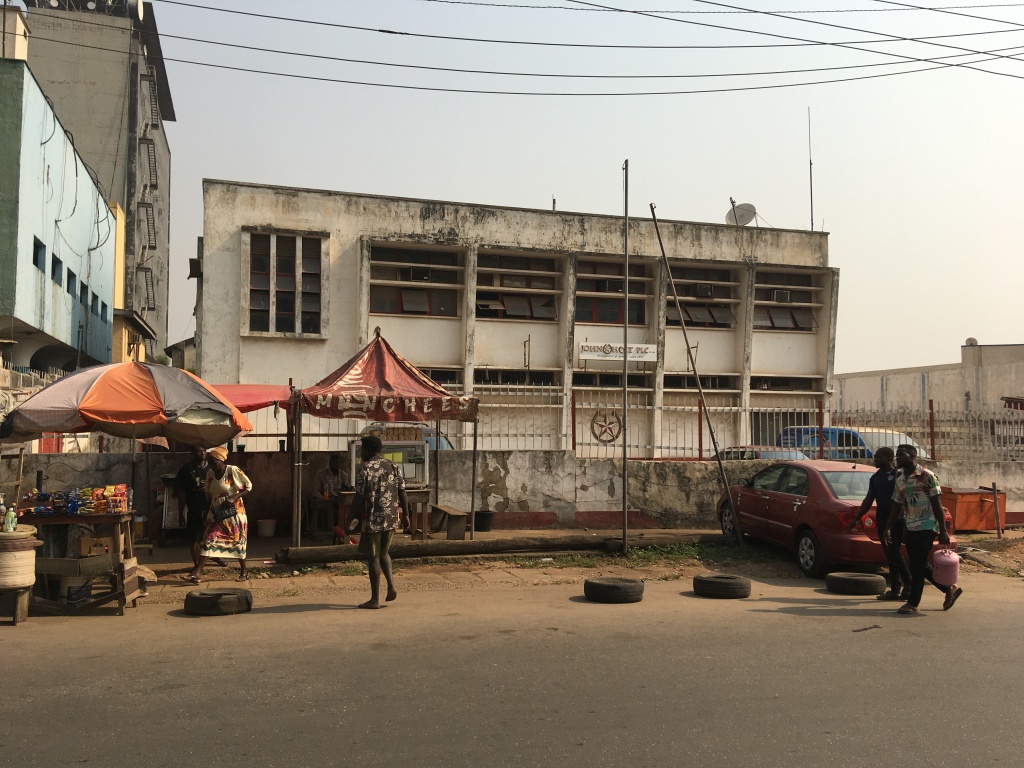
John Holts offices sits opposite and the United Africa Company offices is also amongst this mercantile cluster, with its distinctive symmetrical ‘deco’ façade and projecting canopies could be a late James Lomax-Simpson project?
John HoltsUnited Africa Company
We couldn’t visit Ibadan without calling at the modernist campus at University of Ibadan. We visited Trenchard Hall and the administrative block, as well as Kenneth Dike Library. As well as these Fry and Drew classics we revisited the small Chapel of the Resurrection designed by ecclesiastical architect George Pace (1915–75).
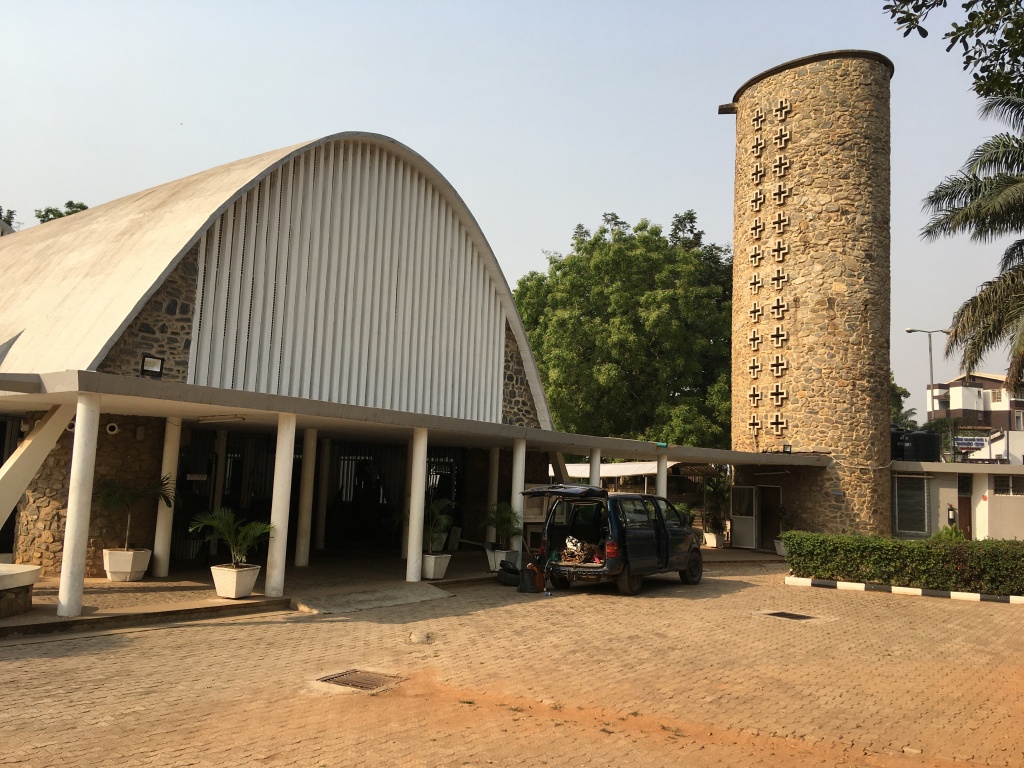
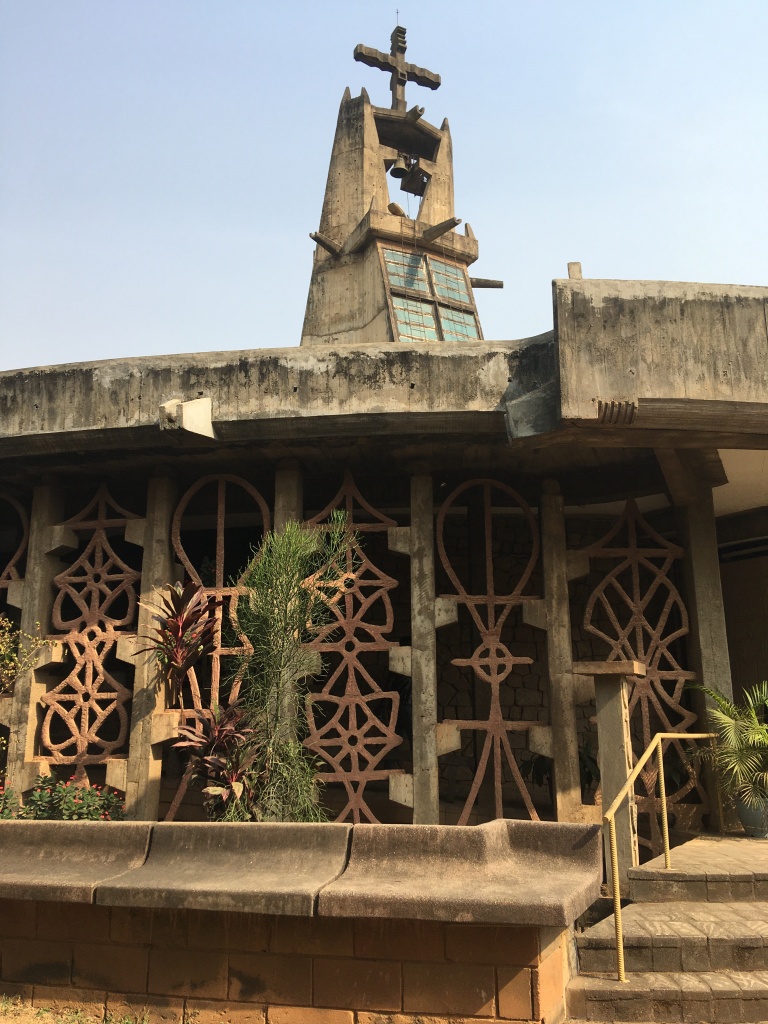
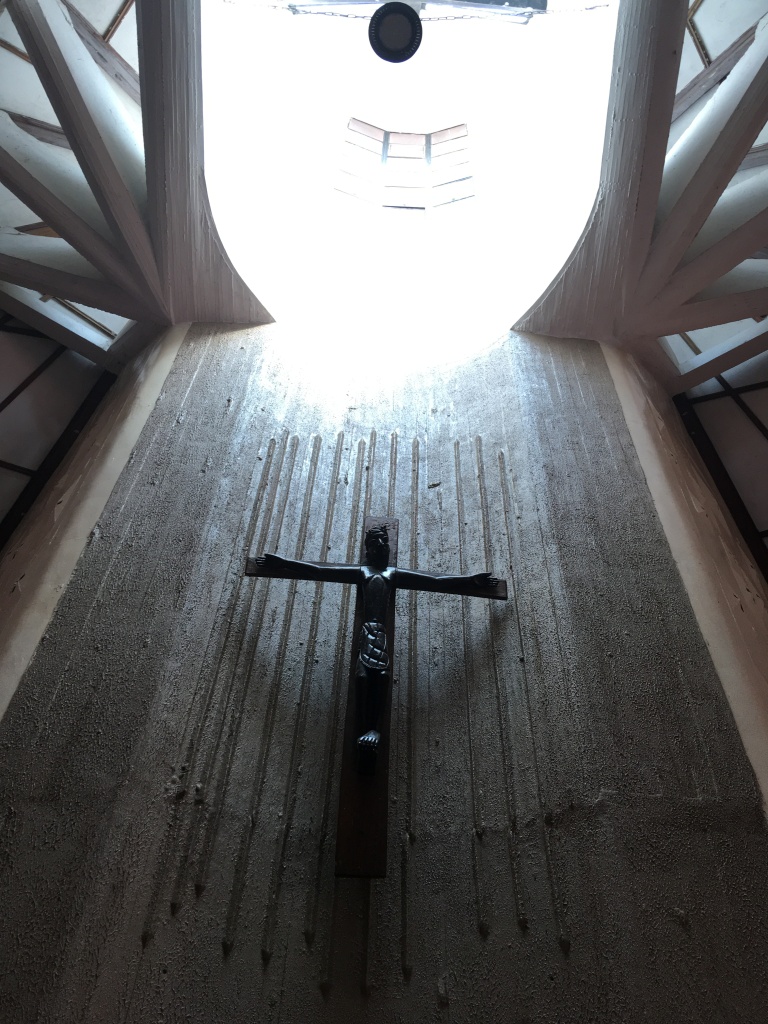
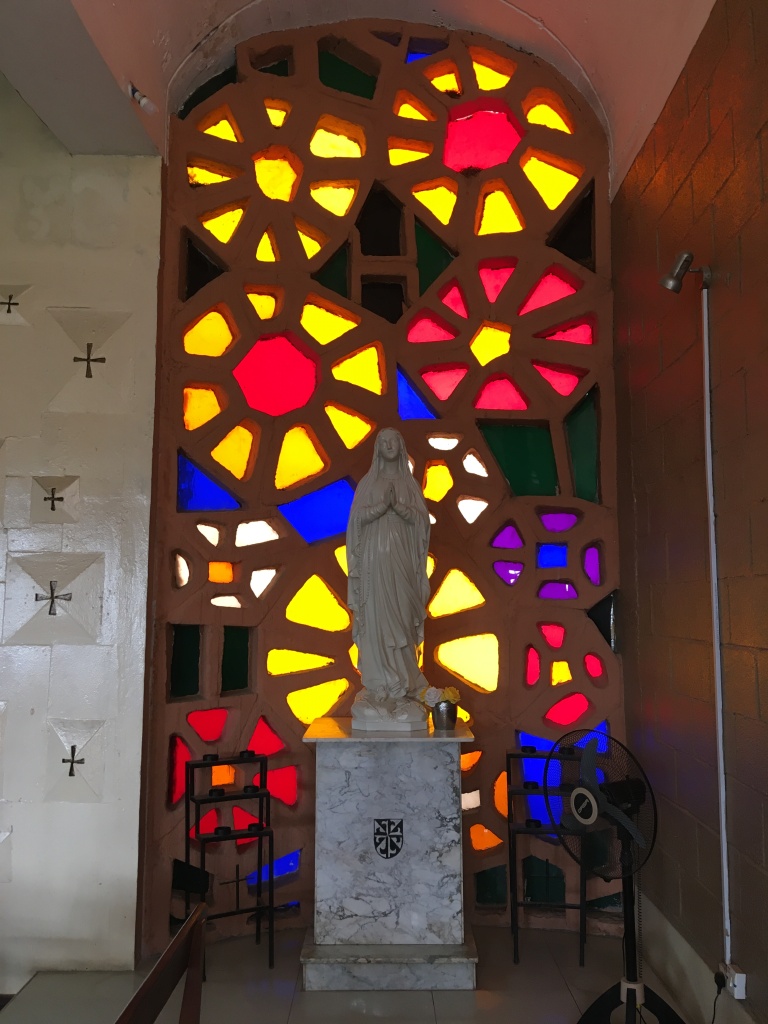
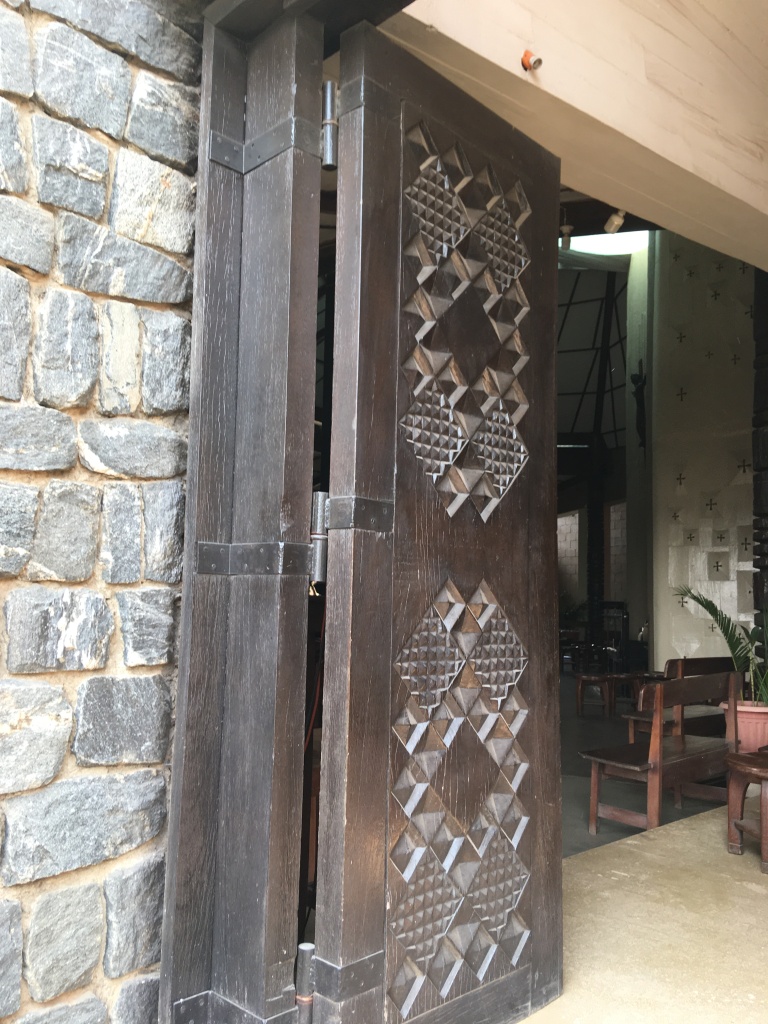
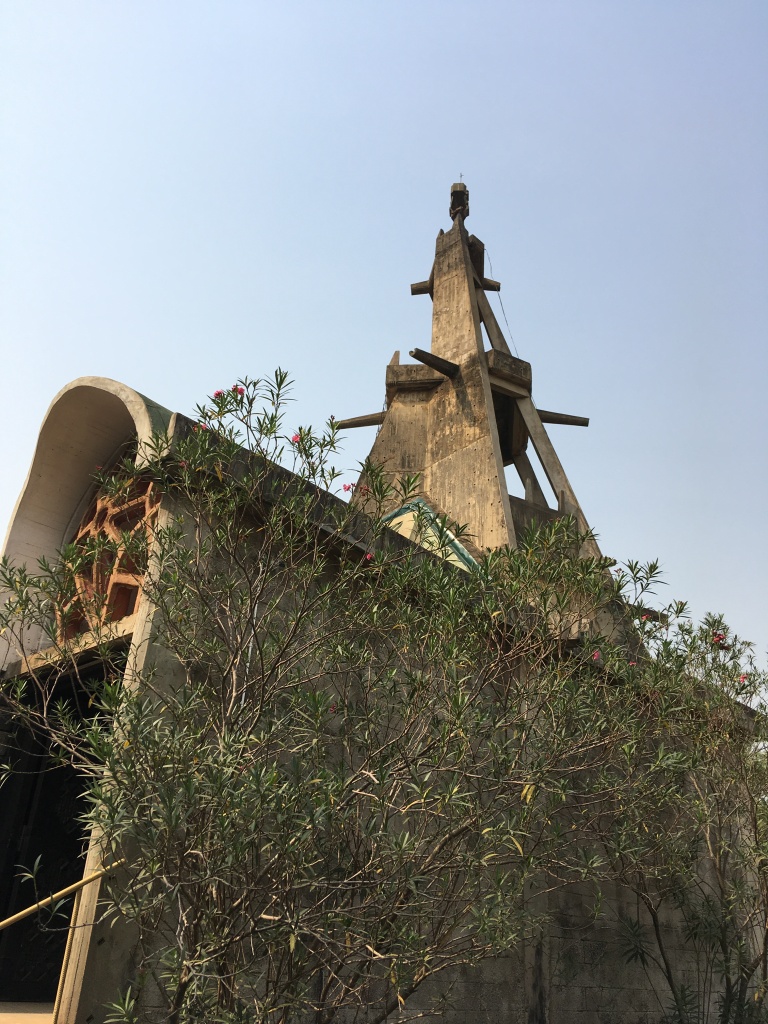
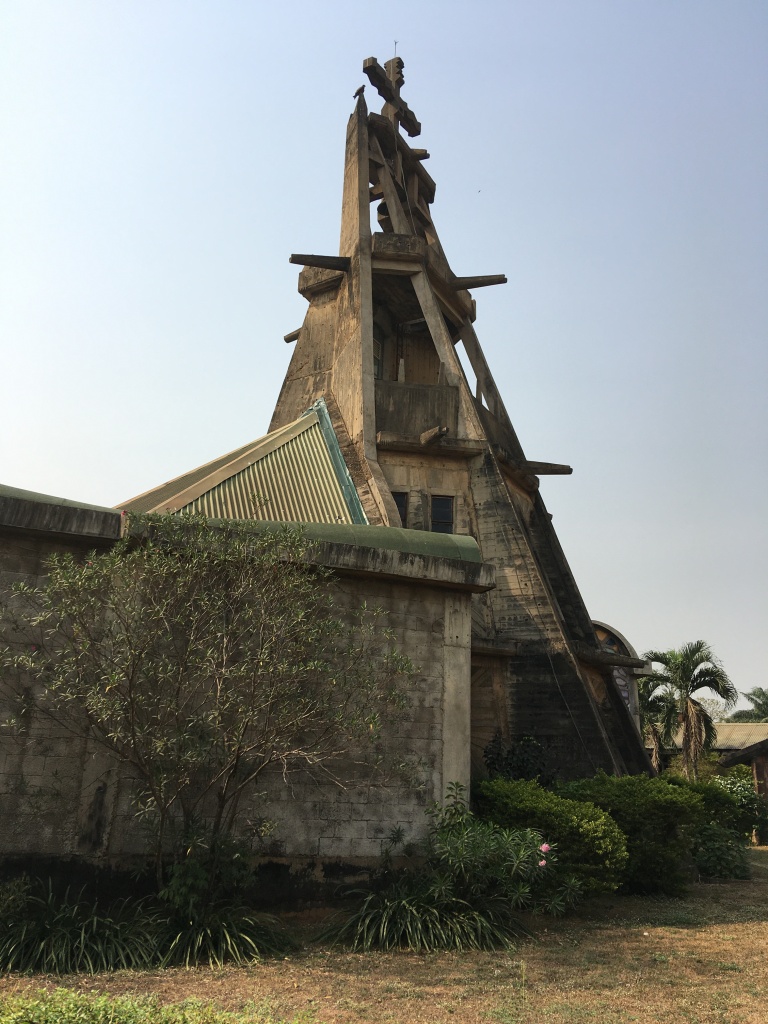
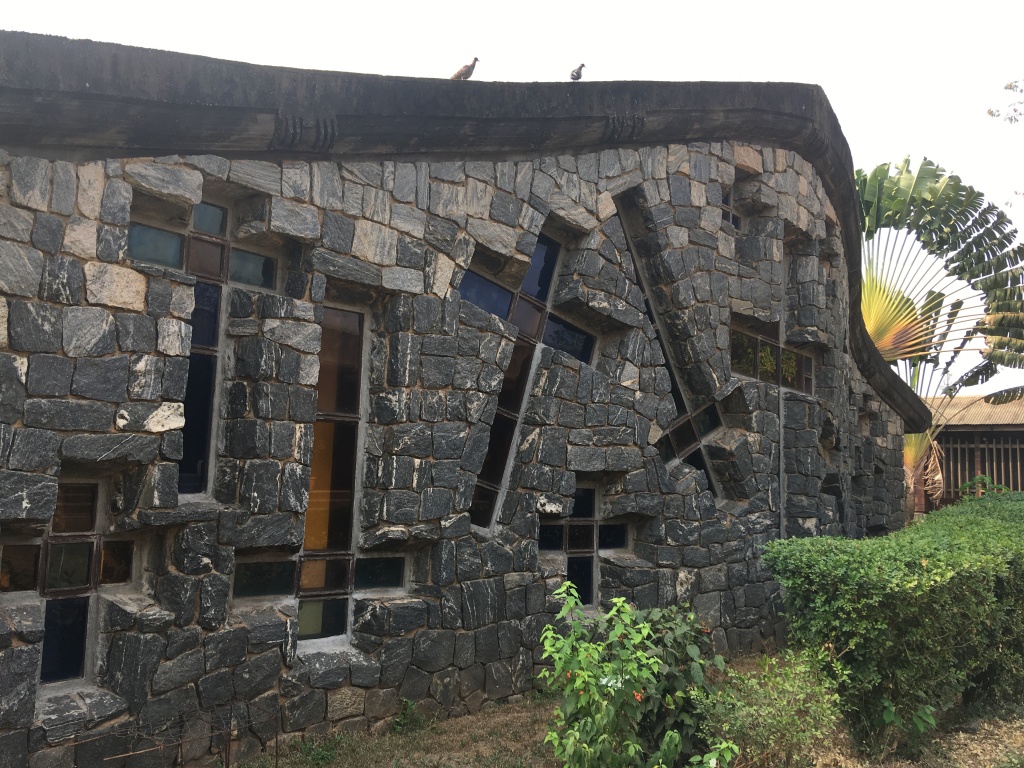
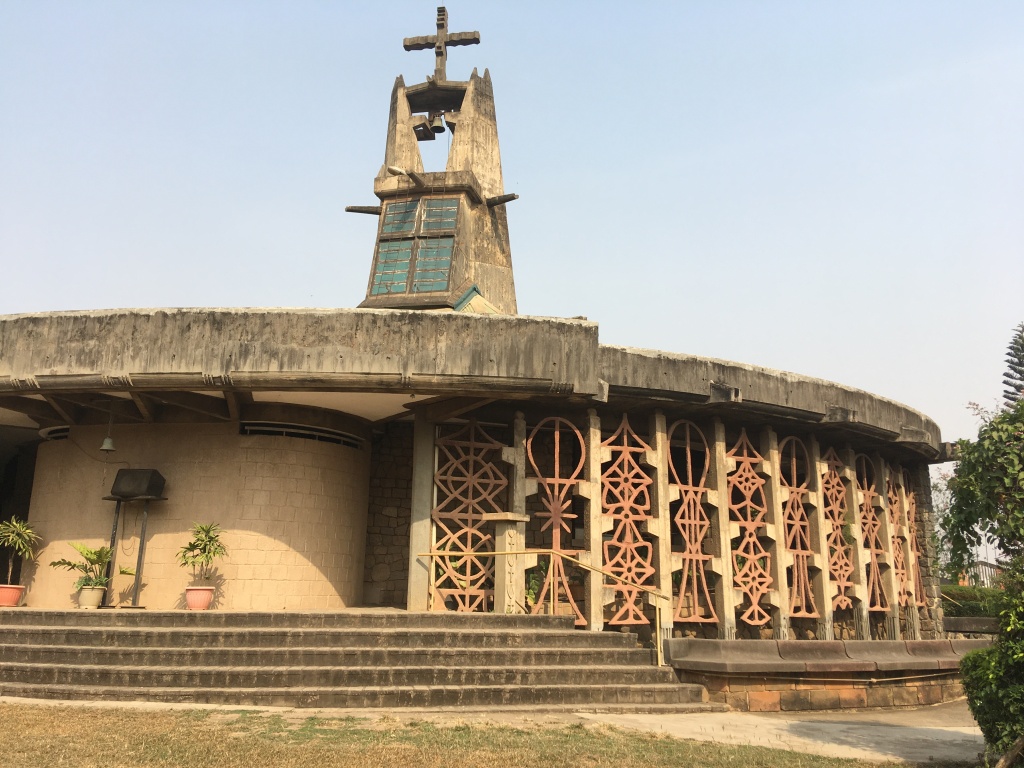
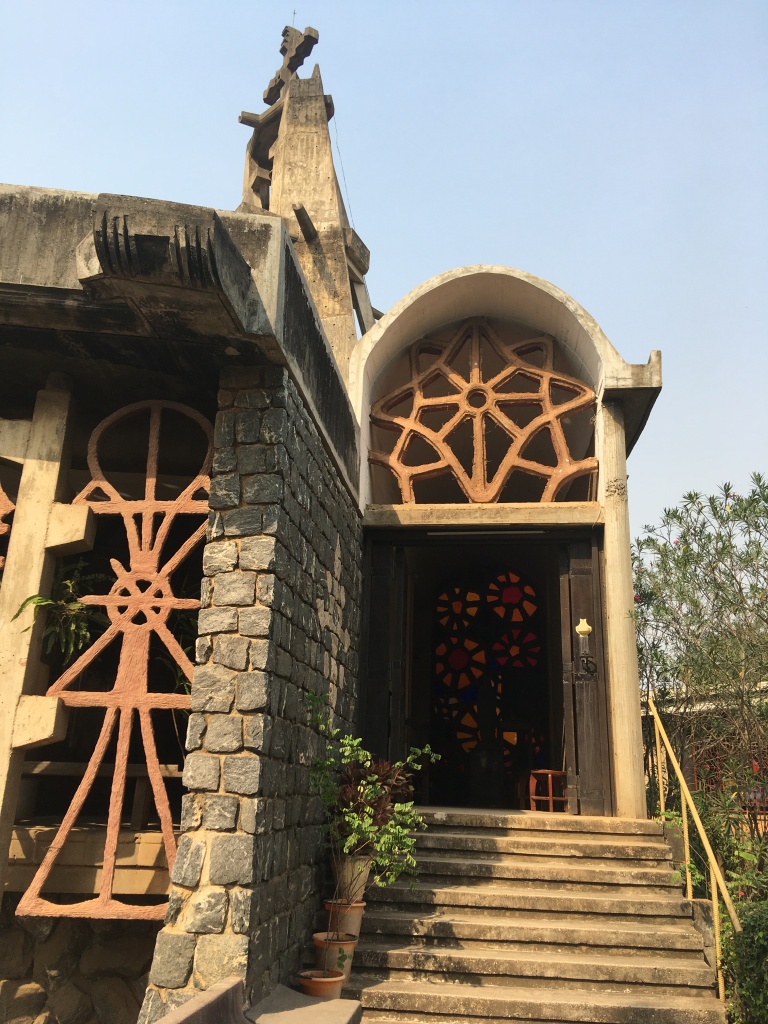
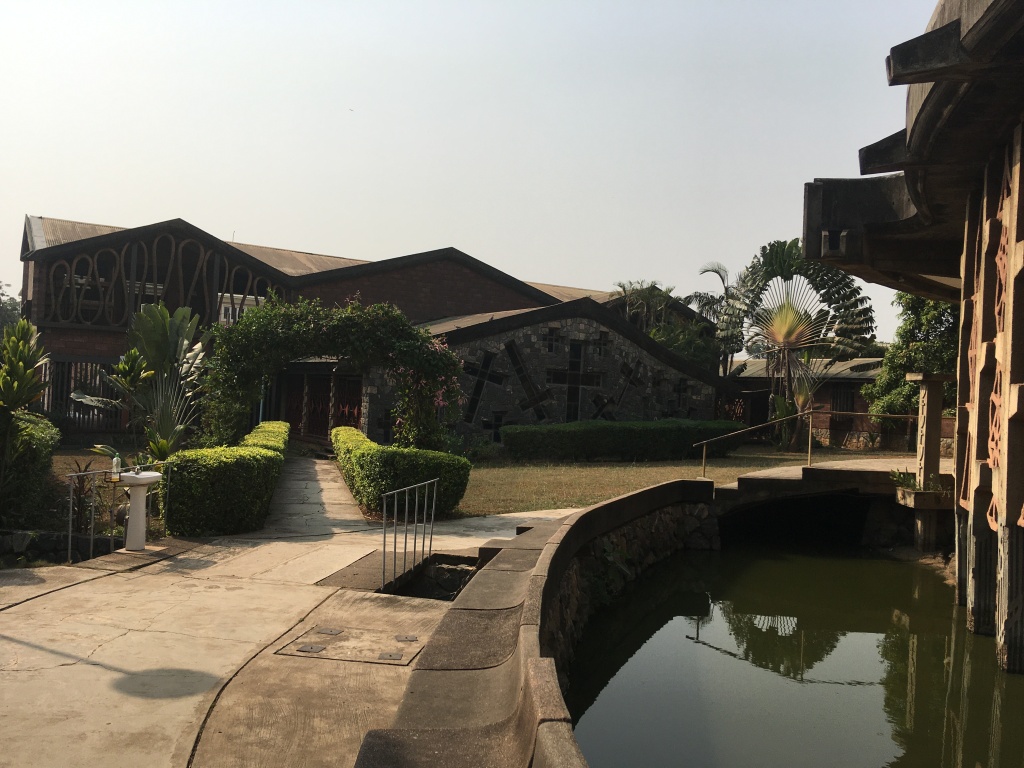
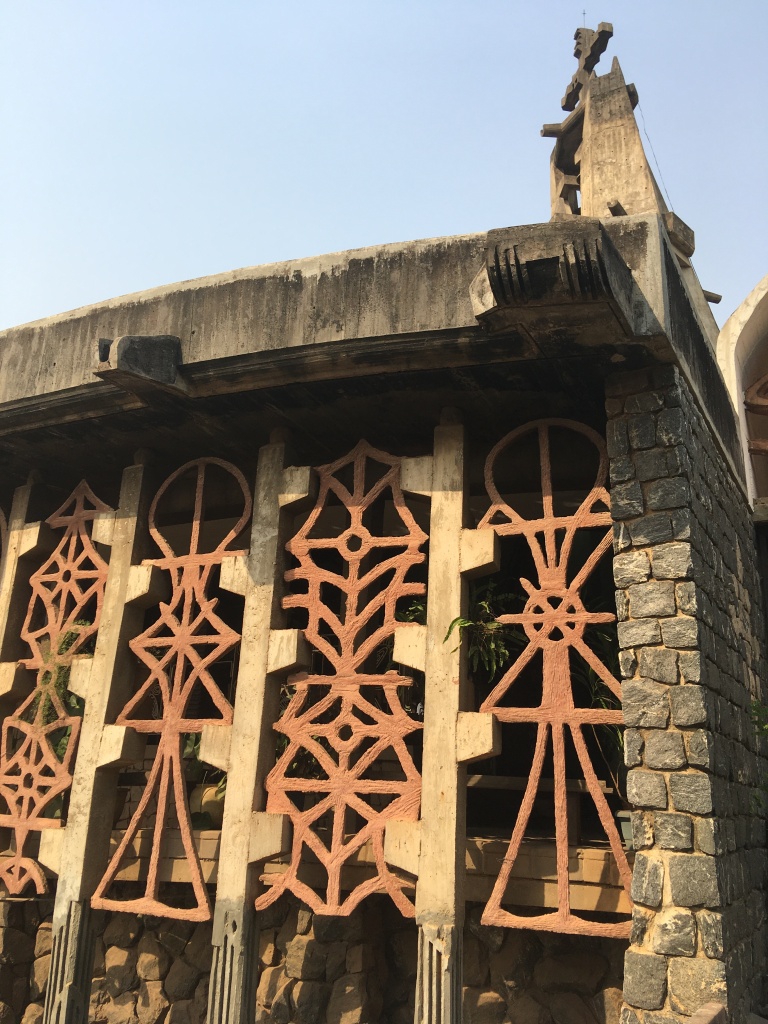
Off campus it was a real privilege to finally visit the Dominican Chapel by Demas Nwoko (b1935)- winner of the Venice Bienalle Golden Lion Award 2023. This tribute was long overdue for this visionary polymath artist. His work is difficult to describe, but easy to understand and enjoy. Architecture is Nwoko’s medium. He uses architecture (i.e. space, light, volume, materials, procession) as others sculpt clay or apply paint.
The chapel has various layers – each element works as a distinct component whilst adding to the whole. I particularly enjoyed the loggia at the back of the chapel, as well as the flow of light down from the steeple onto the alter below. It’s quirky and full of whimsey, but there are no gimmicks or affected gestures – it’s a beautiful chapel and a joyful place.
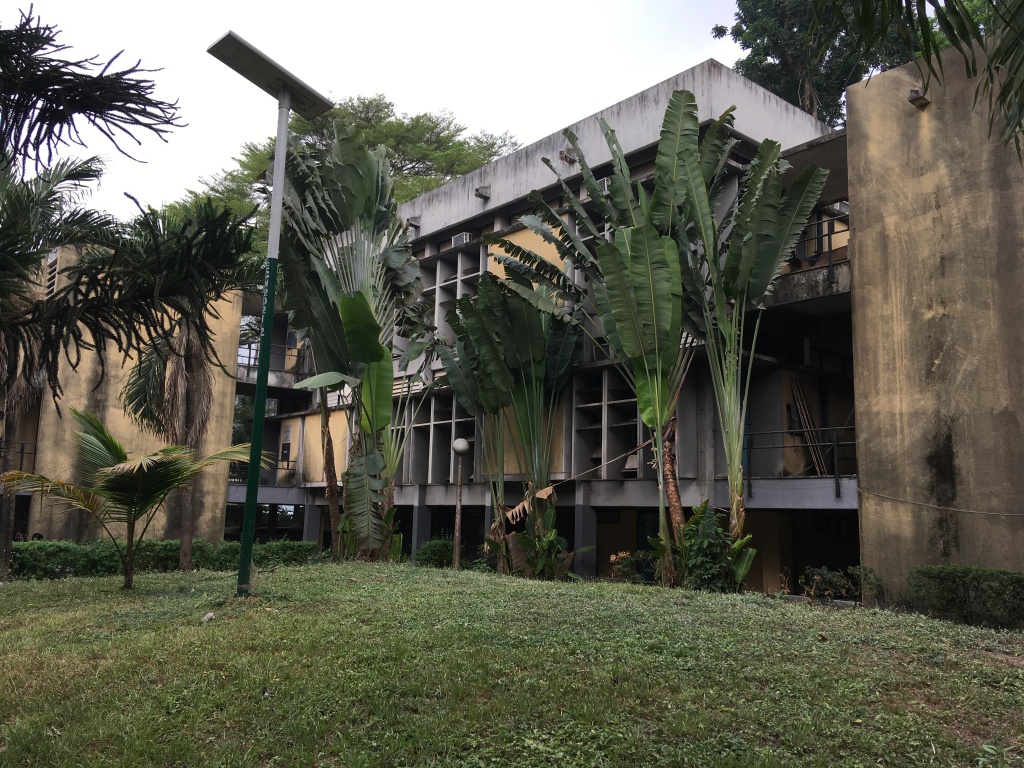
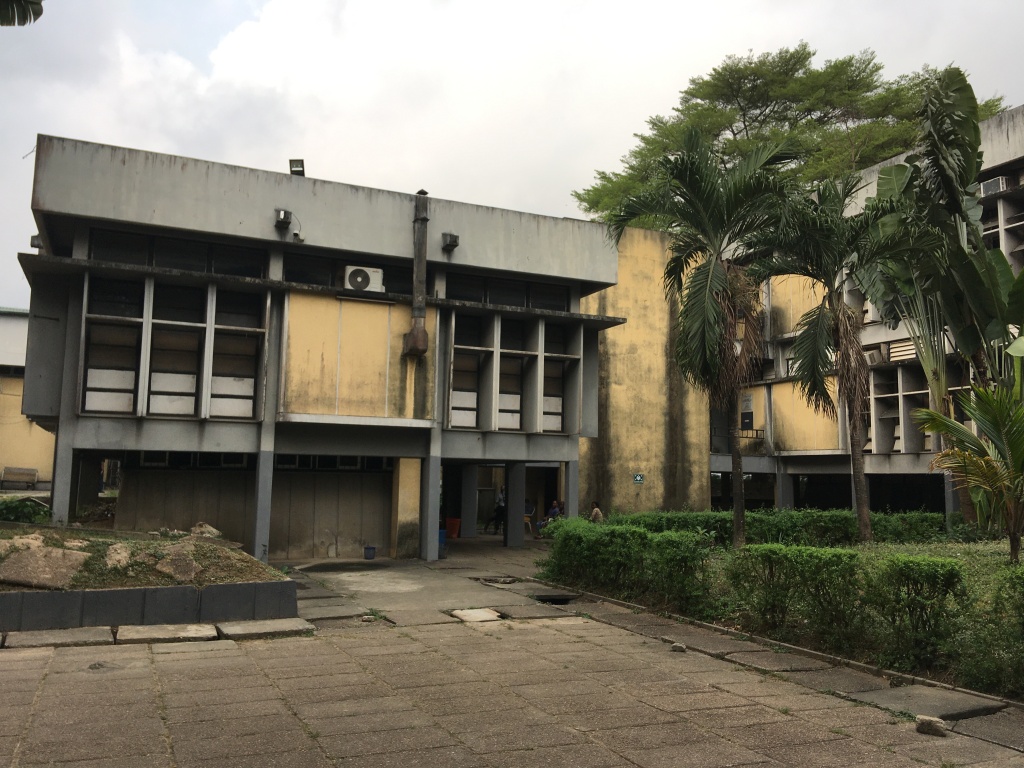
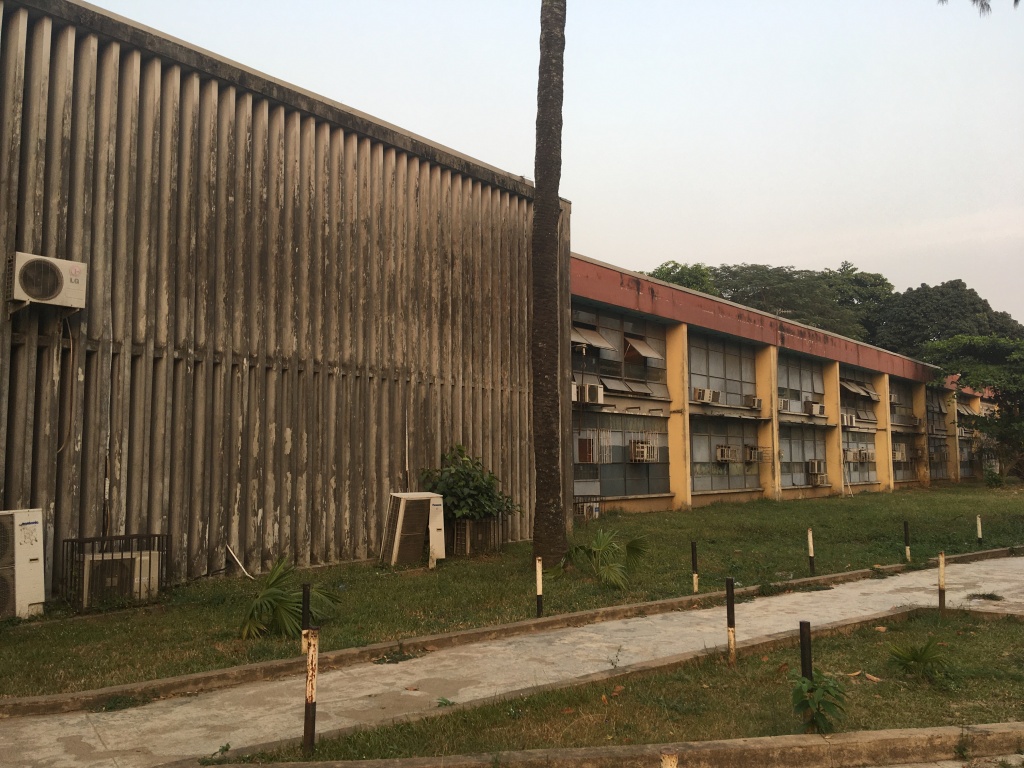
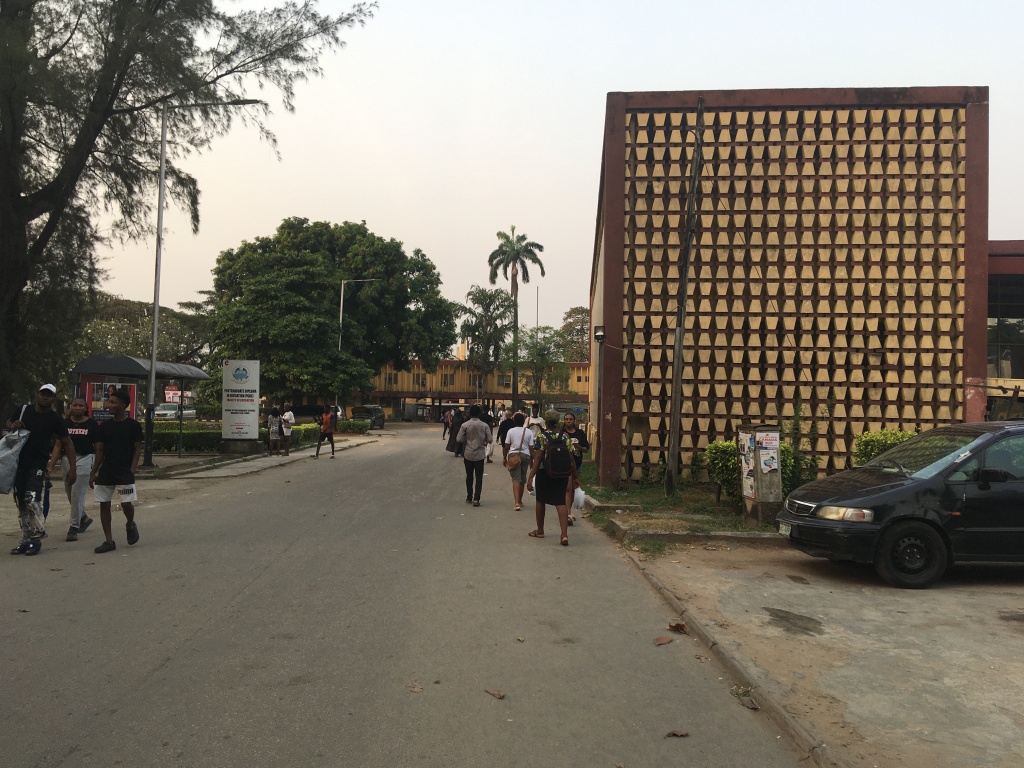
Here’s a few more structures from Unilag beyond the well-known examples from the centre of campus.
Architecture School and surrounding buildings.
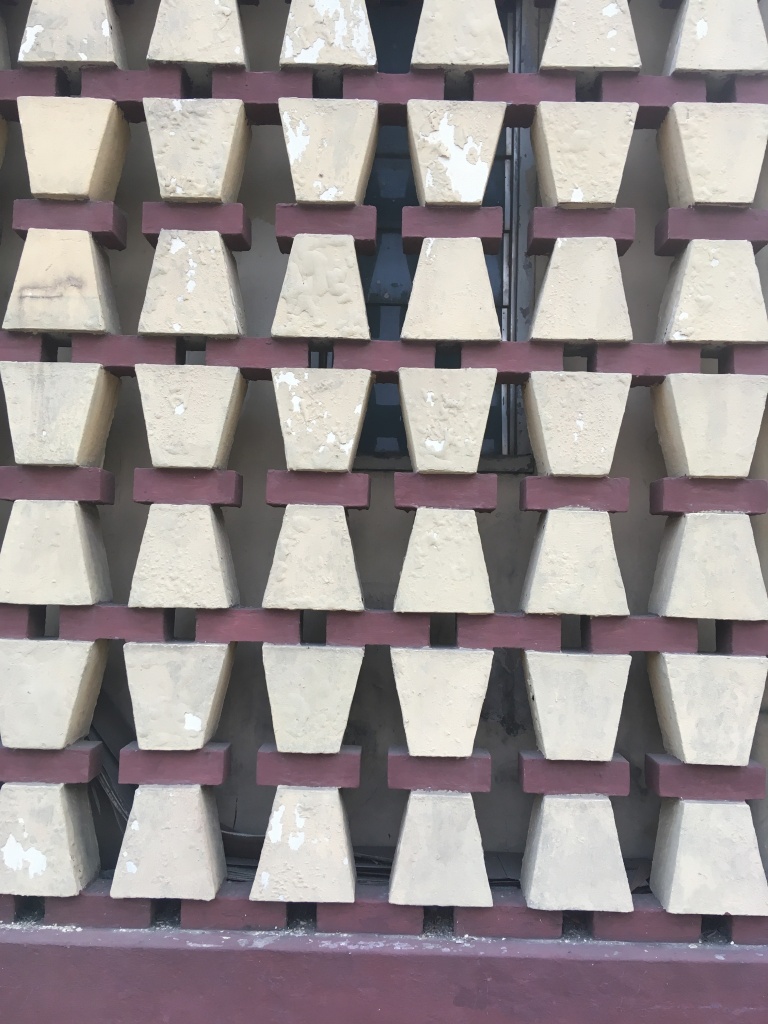
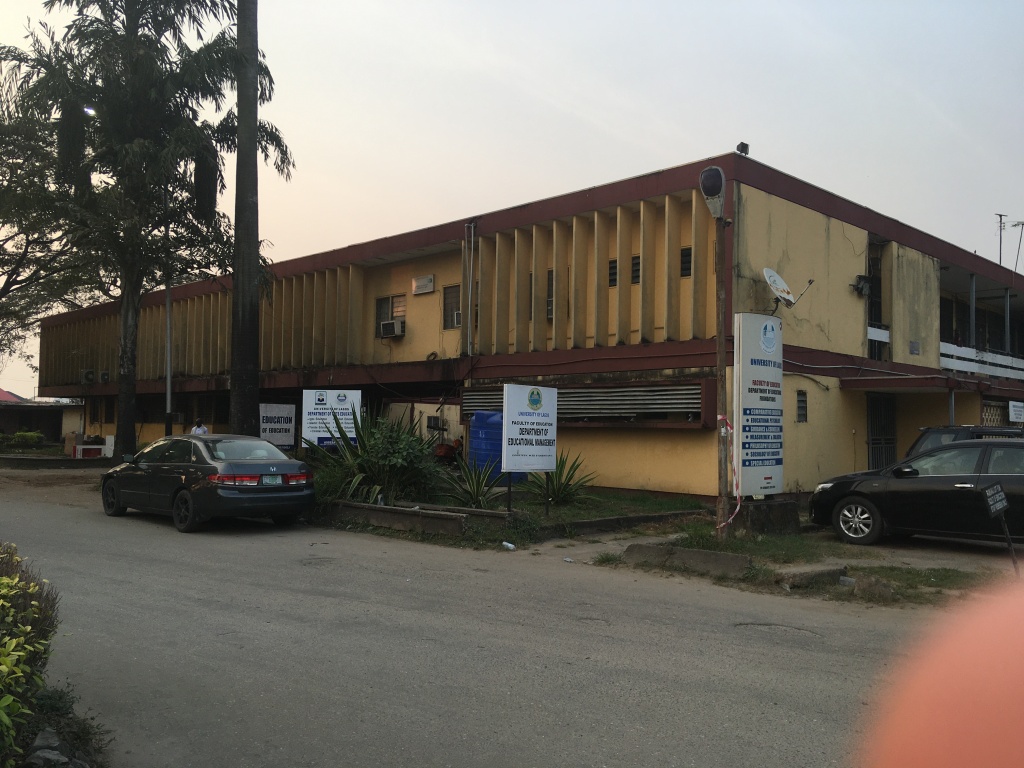
Queen Amina Hall – could this be a Design Group project? The concrete screens, elevational treatment and form suggest it might be [or an overlooked Alan Vaughan-Richards design perhaps?]. Opposite the Hall is another structure with a similar concrete screen motif, and adjacent is the Education building. These are carefully designed structures and expertly detailed and constructed – but we don’t know anything more on the design team and architect.
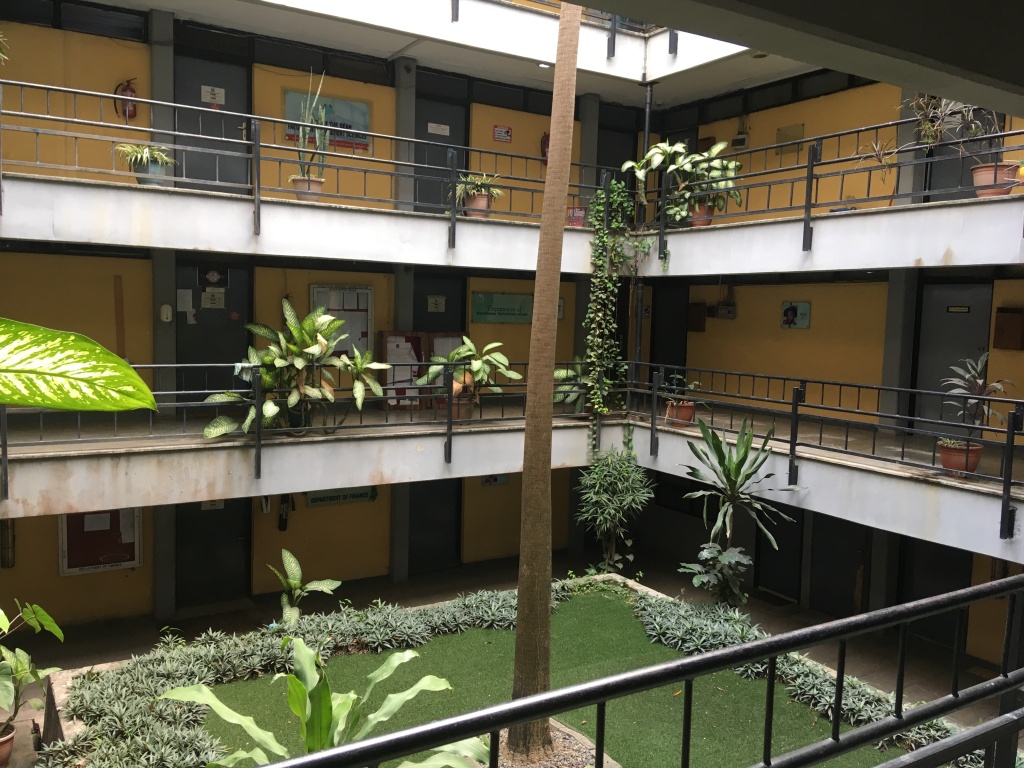
The Management building has an excellent (and overlooked) courtyard. It really enhances the space, creates a hidden garden, and turns the utilitarian corridor/circulation space into a place worth spending time in (just ignore the new extension/entrance lobby and plastic grass).
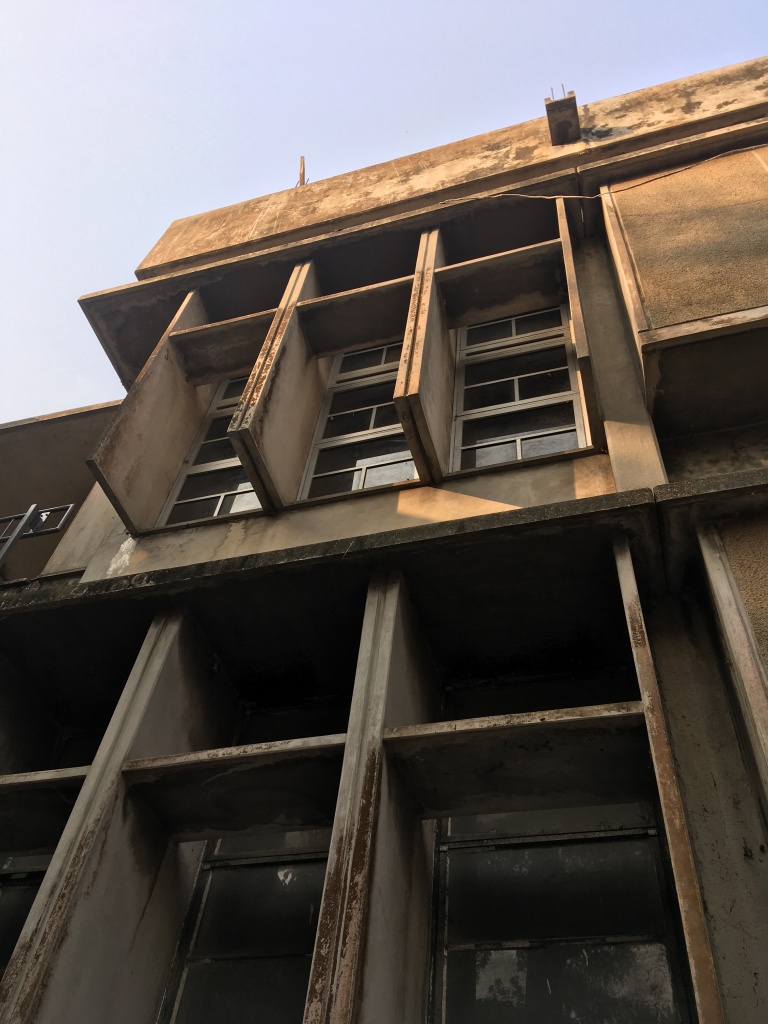
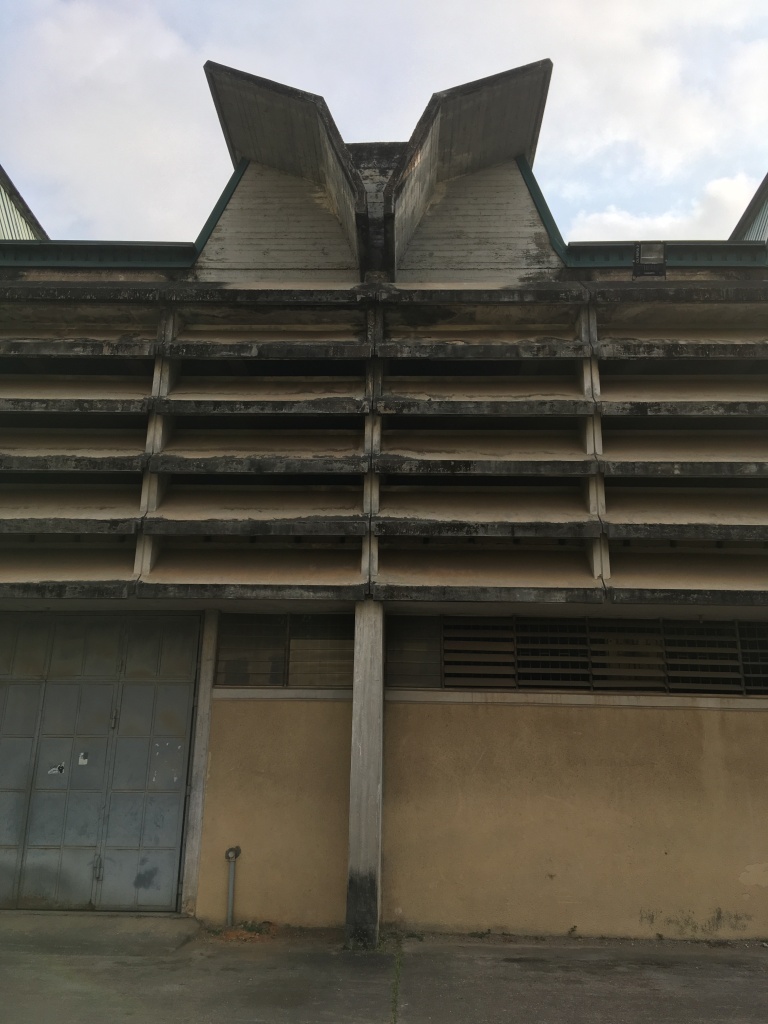
Engineering Labs: Heavy interlocking concrete louvres at first floor level with Y beams projecting beyond the building line at roof level supporting clerestory lights and roof structure. It’s a brutalist reimagining of the James Cubitt Engineering block at Kumasi – but twice the size….
Unilag is an important campus with a highly valuable and important set of late modernist post-colonial architecture. There’s a lot more work required here to identify the architects and to produce a campus map, gazetteer, and environmental analysis of these significant buildings.