Exploring UNESCO and UIA – Histories of Architecture and Bureaucracy in Development Contexts
Organised by Frederike Lausch and Andreas Kalpakci
International organisations had a profound impact on the global architectural culture of the Cold War period. Two of them stood out: UNESCO (the United Nations Educational, Scientific and Cultural Organisation, an intergovernmental organisation) and UIA (the International Union of Architects, an international association of architectural societies). Their respective roles in the institutionalisation of heritage conservation and in the promotion of the architectural profession are well documented. Rather, this workshop places particular emphasis on the relationship between UNESCO and UIA. This relationship began in the formative years of both bodies in the immediate post-war era and continues to this day in areas such as architectural education and international architectural competitions.
As a discipline and discourse, architecture participated in the development regime that sought to restructure societies in the pursuit of socio-economic “progress”, thereby perpetuating colonial power dynamics. Exploring the relationship between UNESCO and UIA builds on recent scholarship that links bureaucracy to architecture’s involvement in development contexts, defining practices, directing information flows, and mediating legitimacy. Both organisations have been engaged in development contexts, from the 1963 UIA congress on “Architecture in Countries in the Process of Development” to the work of UNESCO’s Division for Human Settlements and the Socio-Cultural Environment, established in 1976. How did these organisations interact in terms of cooperation, competition, and interdependence? How did they provide training, knowledge transfer, and technical assistance to so-called “developing countries”? How did they mediate architecture in these contexts, contributing to nation-building and international exchange?
This workshop aims to explore critical histories of the multifaceted relationship between UNESCO and UIA in development contexts. It will address various aspects of their partnership, including environmental initiatives, housing programmes, school buildings, professionalisation efforts, heritage campaigns, international networking, and media strategies. The workshop will also serve as a platform for exchanging research methodologies, archival sources, and historiographical perspectives.
We invite papers that explore the relationship between UNESCO and UIA as development actors during the Cold War in a wide range of geographical contexts. Papers are free to focus either on the relationship between the two organisations or on each organisation individually. Topics may include the situated histories of specific projects (e.g. buildings, publications, exhibitions, and conferences), the agency of lesser-known voices (e.g. international experts, civil servants, and local stakeholders), and the interactions between Paris (the headquarters of both organisations), national professional societies of architects, and the often abstract “target audience”. Contributions are welcome from a variety of disciplines, including architectural history and theory, art history, cultural studies, international relations, cultural sociology, and the history and philosophy of science.
The workshop will take place from 21 November 2024 (half day) to 22 November 2024 (full day) in Zurich, Switzerland and will be available via live streaming. We aim to cover travel and accommodation costs, although the format (in person or hybrid) will depend on the availability of funding. Please submit an abstract of no more than 300 words and a short bio of no more than 100 words to Frederike Lausch (lausch@arch.ethz.ch) and Andreas Kalpakci (andreas.kalpakci@gta.arch.ethz.ch) by 31 July 2024.
Visit of Head of School, Sierra Leone School of Architecture and Academic Colleague Dr Joe Ben Davies Engineering Alumna University of Liverpool
Joe Ben Davies, Ola Uduku, Ken Ndomahina at LSA
Professor Ola Uduku was delighted to welcome Ken Ndomahina, Head of the recently established Sierra Leone School of Architecture who was visiting Liverpool with his academic colleague Dr. Joe Ben Davies, an alumna of the University of Liverpool, School of Engineering. A good discussion about what future Architecture teaching and research collaborations took place. Key curriculum pillars, sustainable materials, approaches to mass housing, architectural history research were discussed.
We agreed to the following; the sharing of the GAHTC digital lecture notes on the History of Tropical Architecture, LSA staff engaging in discussing and working with the Sierra Leone Architecture school to identify their future curriculum priorities and. Future possibilities of support and collaboration at Masters and other PG degree levels, including possibilities for future joint research projects.
We plan to stay in touch and consider possible future workshop possibilities, links to a possible future Masters in African urban heritage and planning, and Business School workshops on the economics and efficiencies of international teaching development .
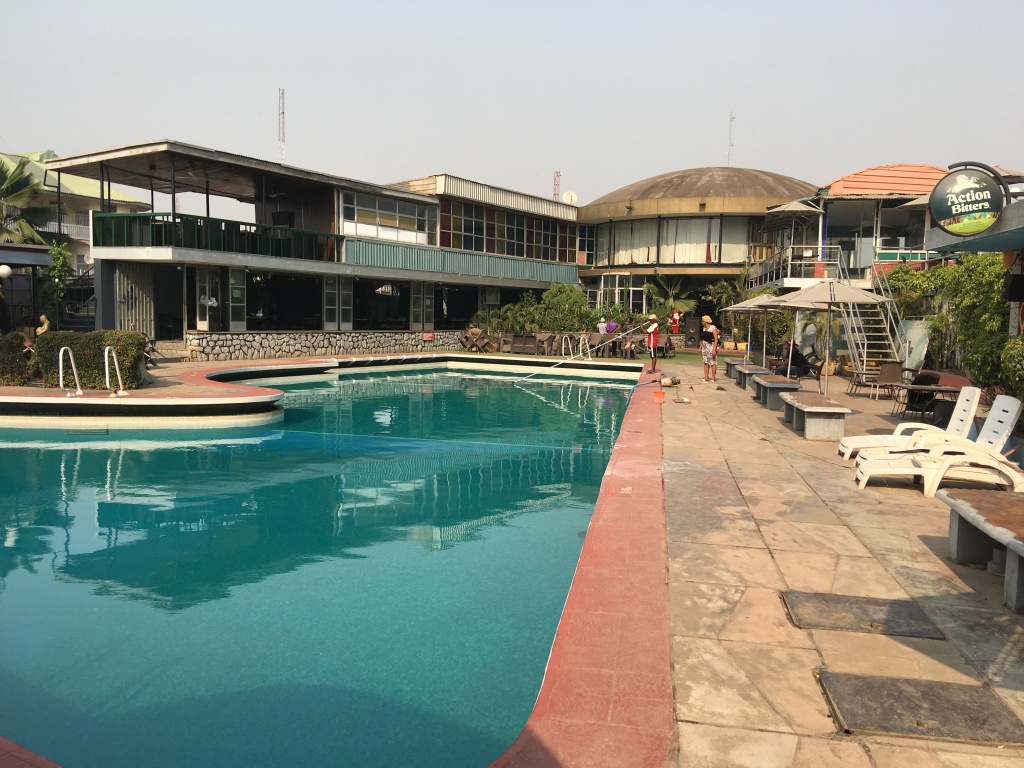
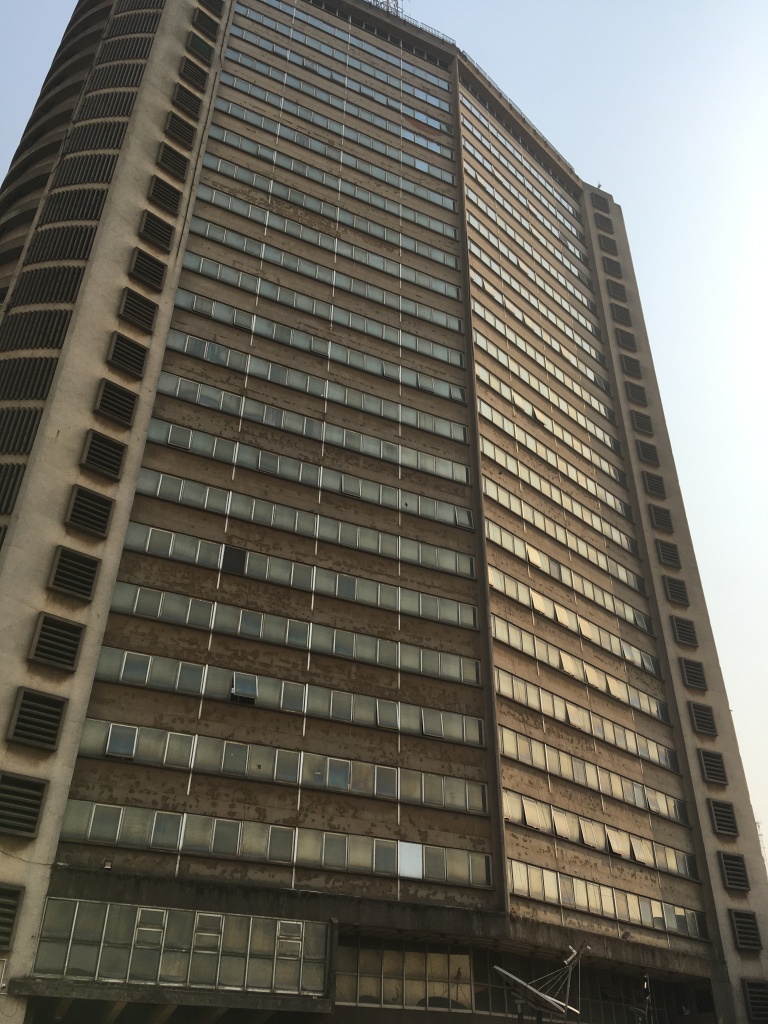
We searched various journals and articles from the time, and eventually came across a reference to a skyscraper shopping precinct project from 1960 in the journal Interbuild. Ola Uduku continued a different line of inquiry and traced the project down in West African Builder.…
The architects were listed as ‘The Plan Group (West Africa)’ – not a well-known practice or one that has featured heavily in existing literature and research, but it was a name that I’d certainly come across before.
I trawled through our old notes and archival references, and found a file on ‘The Plan Group’ from the archives in Fourah Bay, Sierra Leone (Box 661). It turns out that the Plan Group was a multidisciplinary practice/development agency established by Nickson and Borys. Their aim was to provide an integrated design service, with particularly attention given to cost control and engineering, as well as mitigating risk for the client on large complex design projects.
In a letter sent to the Sierra Leonian government from 1960, Borys set out his vision for the practice, including listing the projects they were already working on, such as a 20 storey block in Lagos, the Ibadan project mentioned above, and a township near Lagos for 35,000 people – were these other Nigerian projects completed? And if so, where/what are they?
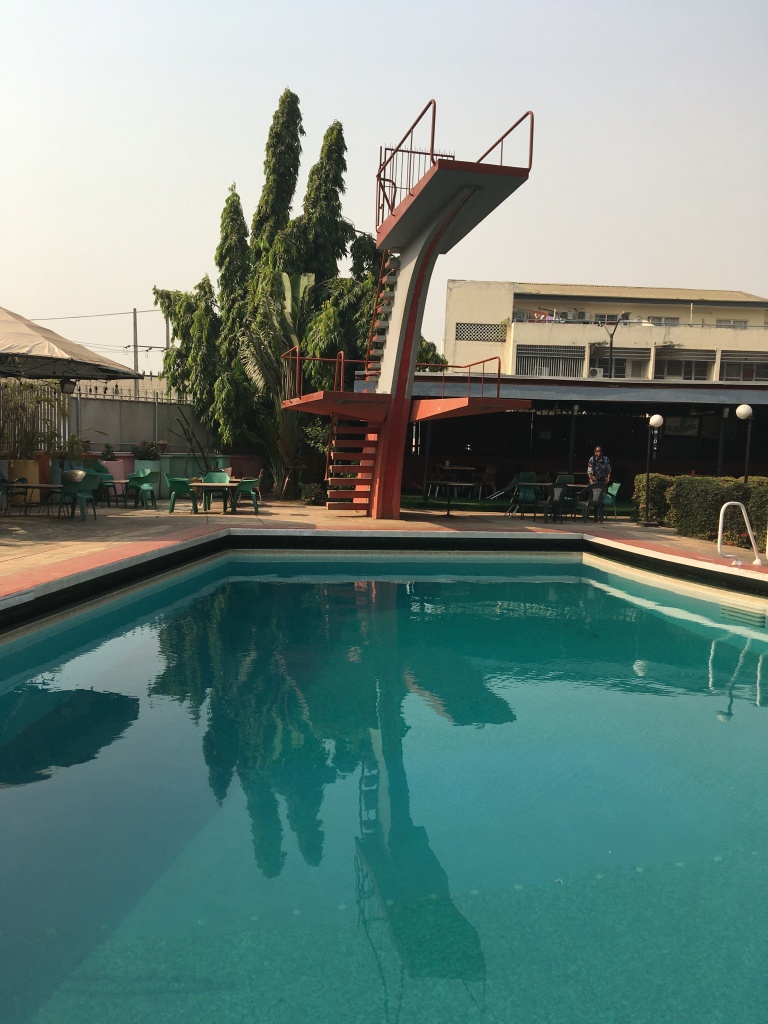
The Ibadan project was a multipurpose and speculative venture, aimed at providing office space as well as leisure facilities through the nightclub, swimming pool and cinema complex. There was also a large department store as part of the scheme. This wasn’t a Kingsway Store, so could it have been a competing UTC or A G Leventis?
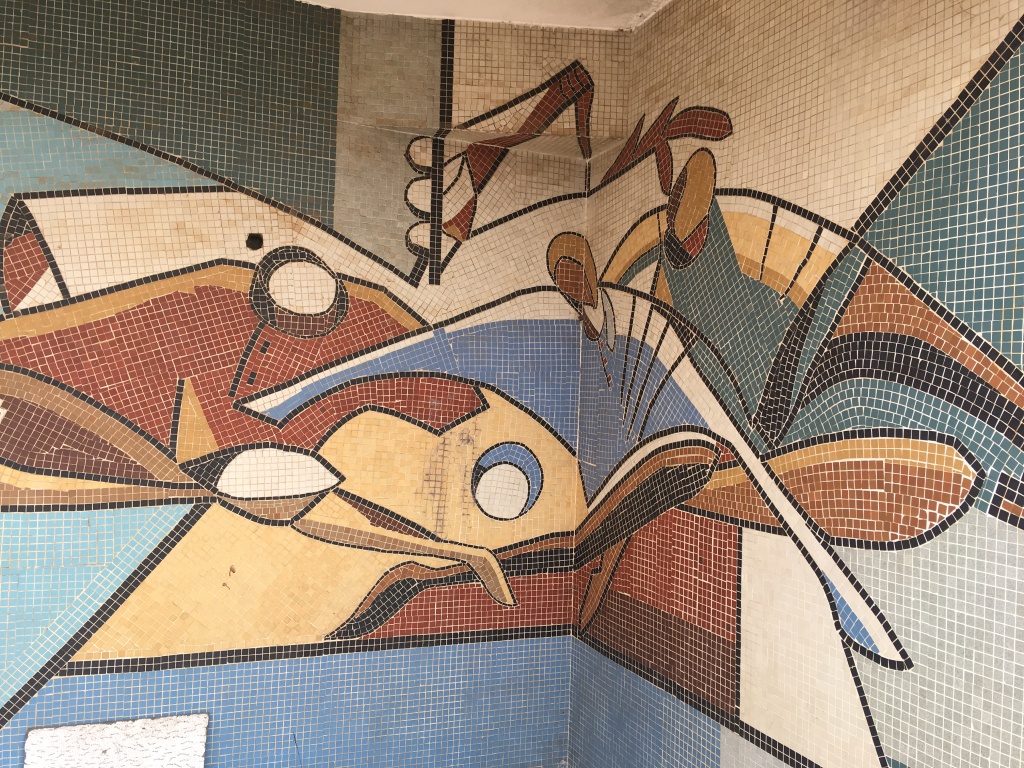
As well as the Cocoadome having mosaic decoration, Cocoa House roof garden also has some really special mosaic work clearly executed by a talented artist, but now hidden away from public view. If you visit the building be sure to venture to the top floor to spend an hour in the museum, and as to see the mosaic work and views out across the city.
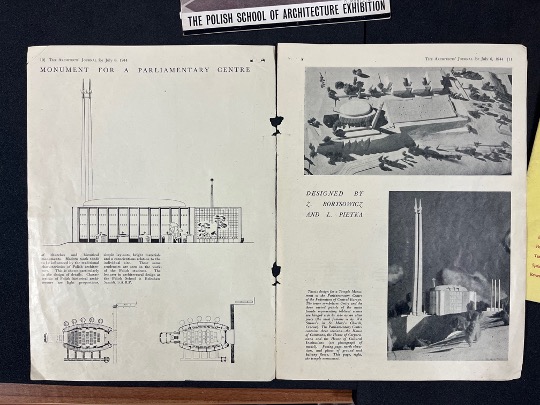
We’ve learned a lot about Nickson and Borys over the last 18 months – firstly finding out exactly who Borys is (Zdzisław Borysowicz), and that he studied at the Liverpool School of Architecture Polish School during WW2. We’d like to write a full biography on him and the practice. We’ve visited a number of his works in Sierra Leone, and now the Cocoa Project in Ibadan, and the intriguing references to Lagos too. Whilst the bulk of his practice was in the tropics he also worked in the Falkland Islands – so was clearly part of the colonial architectural infrastructure.
Here’s one of his student projects published in the The Architects’ Journal from 1944
As part of the Architecture of the United Africa Project I wanted to visit Banjul to investigate if there was any surviving buildings remaining from the UAC era. There was surprisingly little material in the UAC archive relating to the town and wider country – and we knew that the business focused its efforts elsewhere in West Africa. Despite this – there was a Kingsway Store, Palm Line Offices, and possibly several other European trading companies operating merchant stores, warehousing, wholesaling, and produce export businesses.
Kingsway StoresUAC warehousingPossibly African and Eastern Trading Corporation?
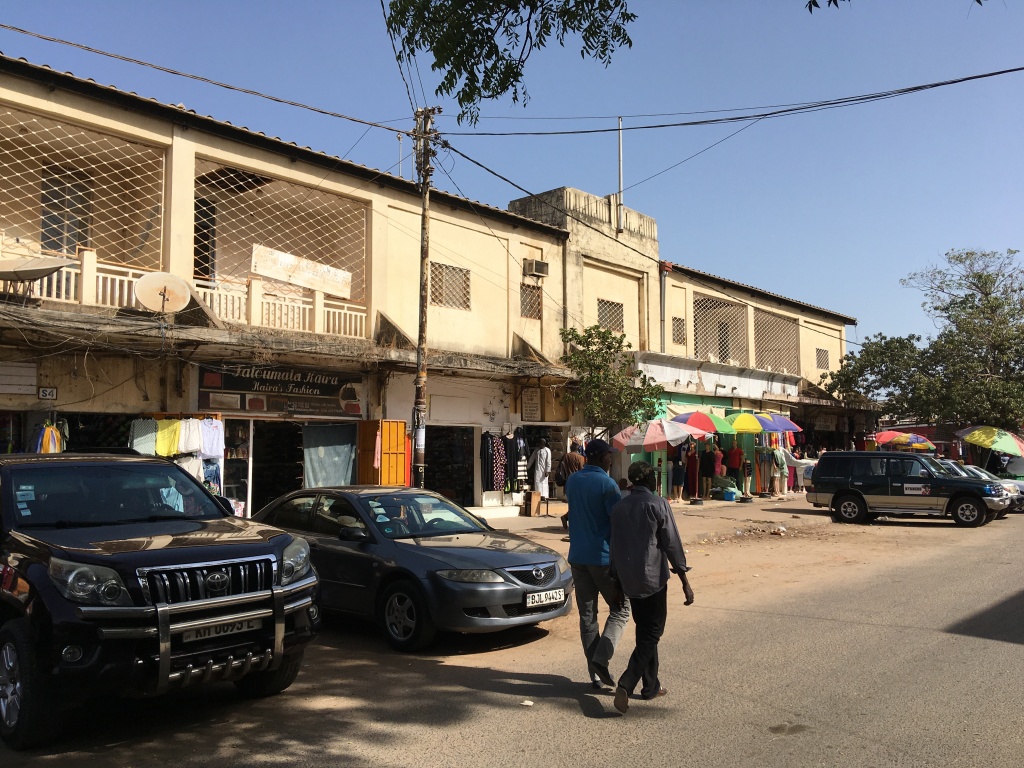
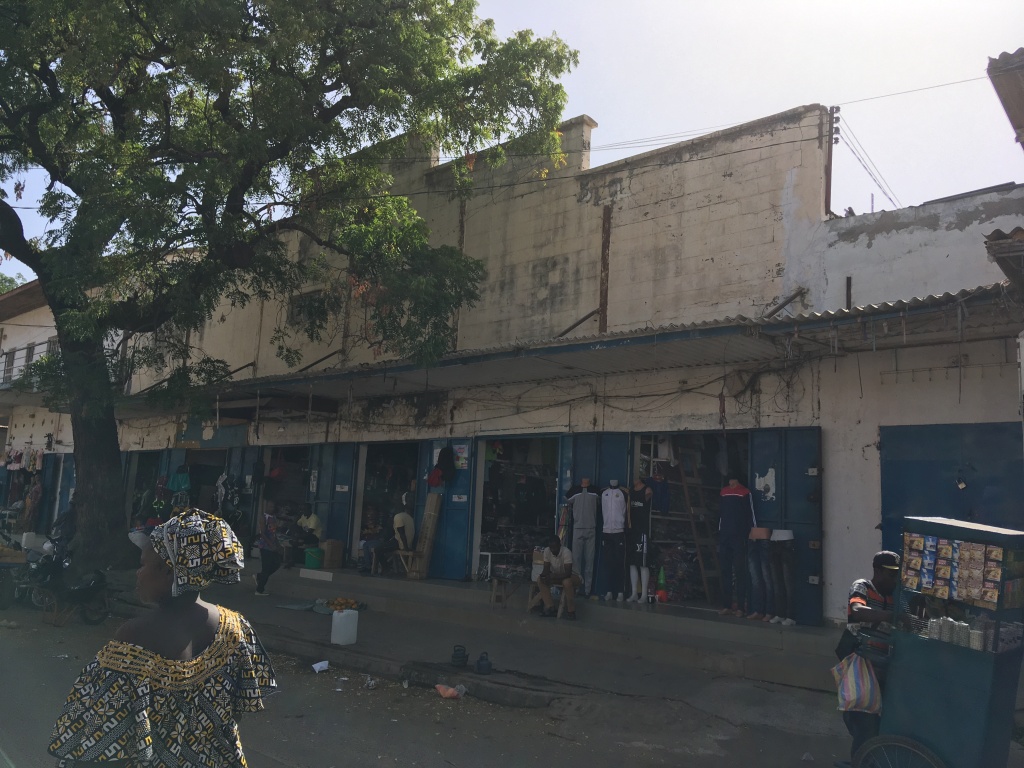
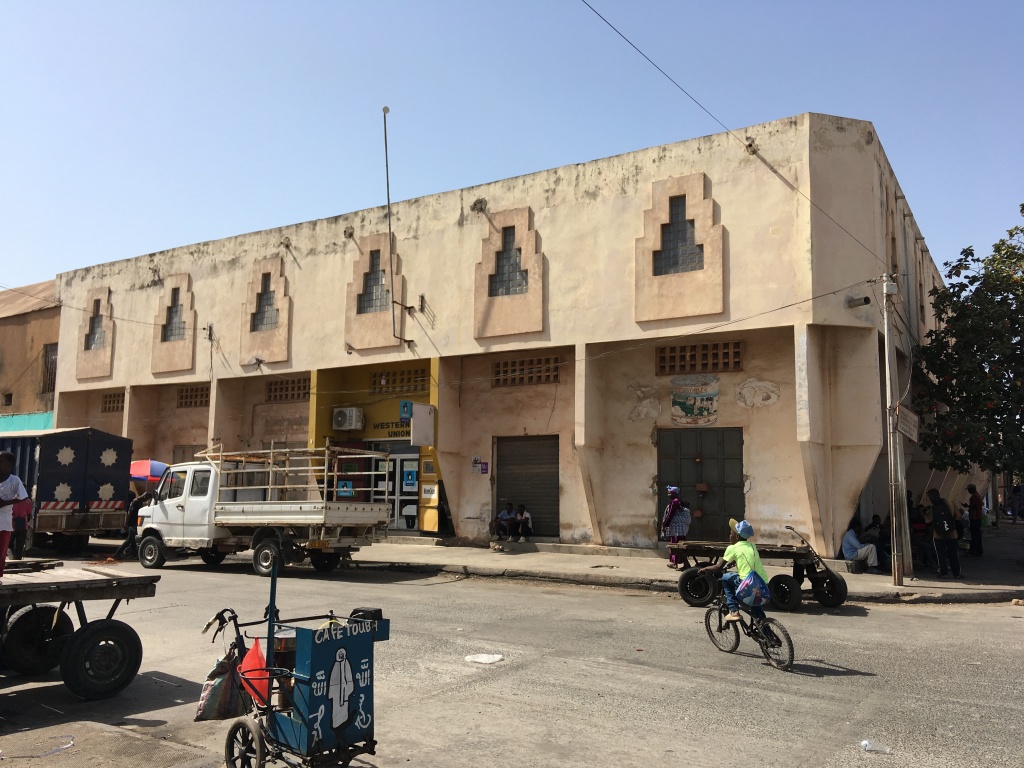
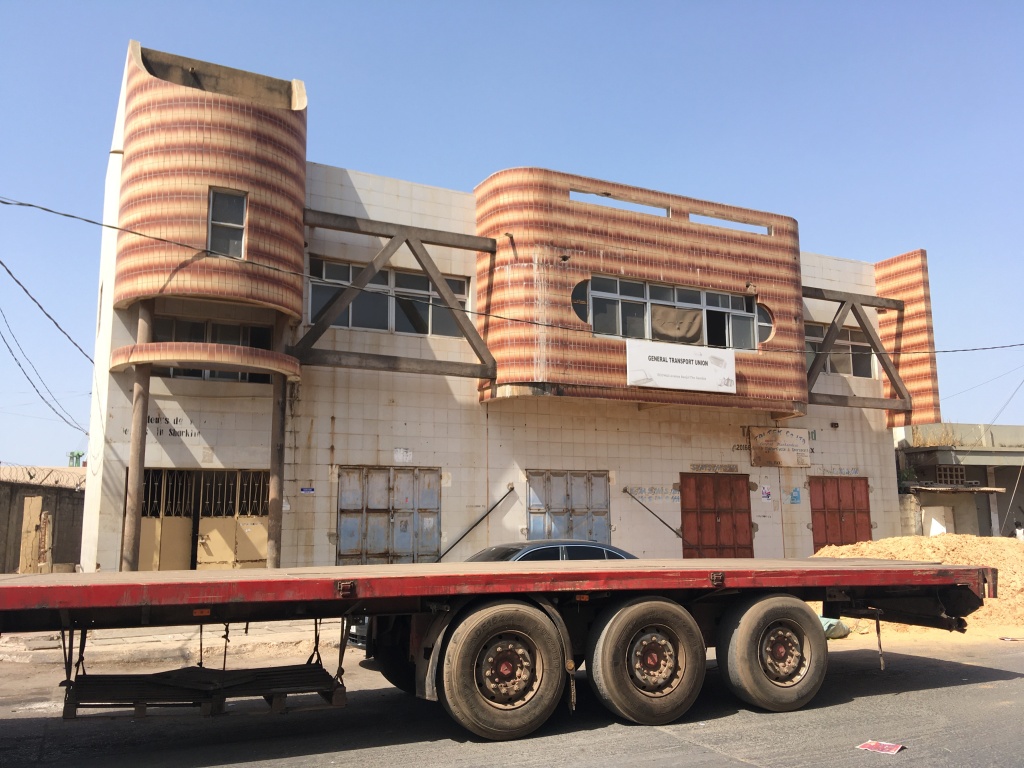
Banjul is a compact capital and we were able to quickly locate the old trading spots located around the Albert Market area. Here there are many traders importing fabric and textiles from China and India and it remains a thriving port. The Kingsway Stores and associated wholesaling lockups are still there, along with a series of other colonial period structures. Some of the older trading villas are now complete ruins and urgent documentation is required if rehabilitation isn’t possible.
Old Trading Store now ruined and overgrown
There are a number of Modern structures that we couldn’t identify, and some experimental architecture amongst the more restrained trading stores. There’s clearly a need for a mapping and documentation project to list and identify the history of these structures.
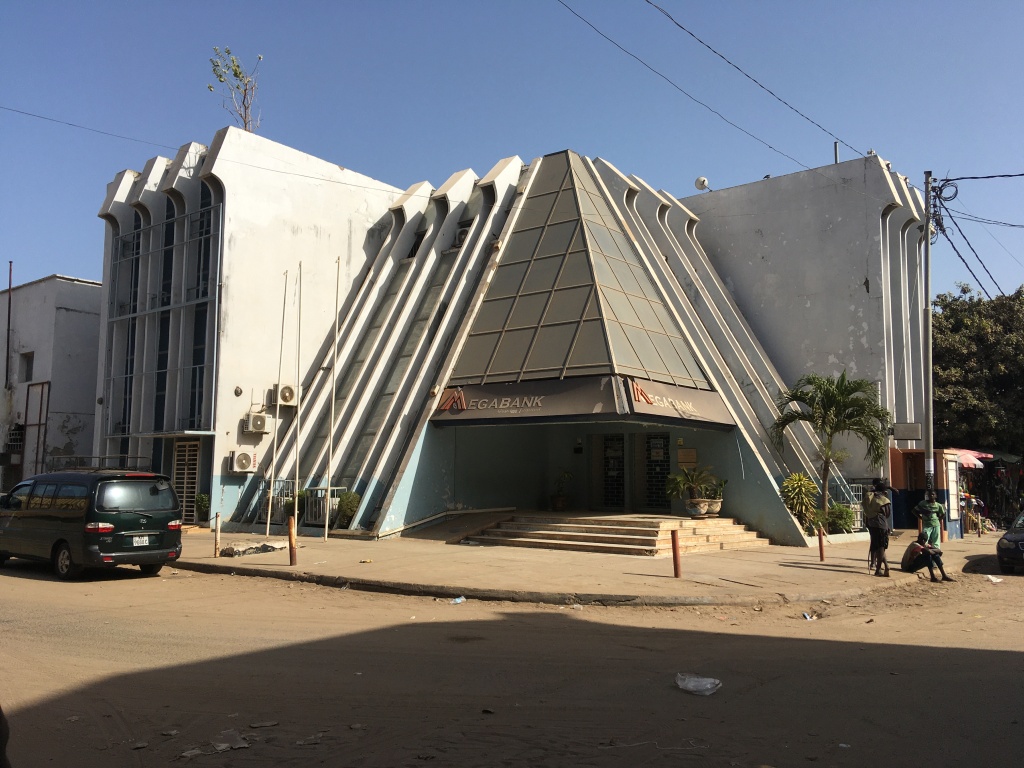
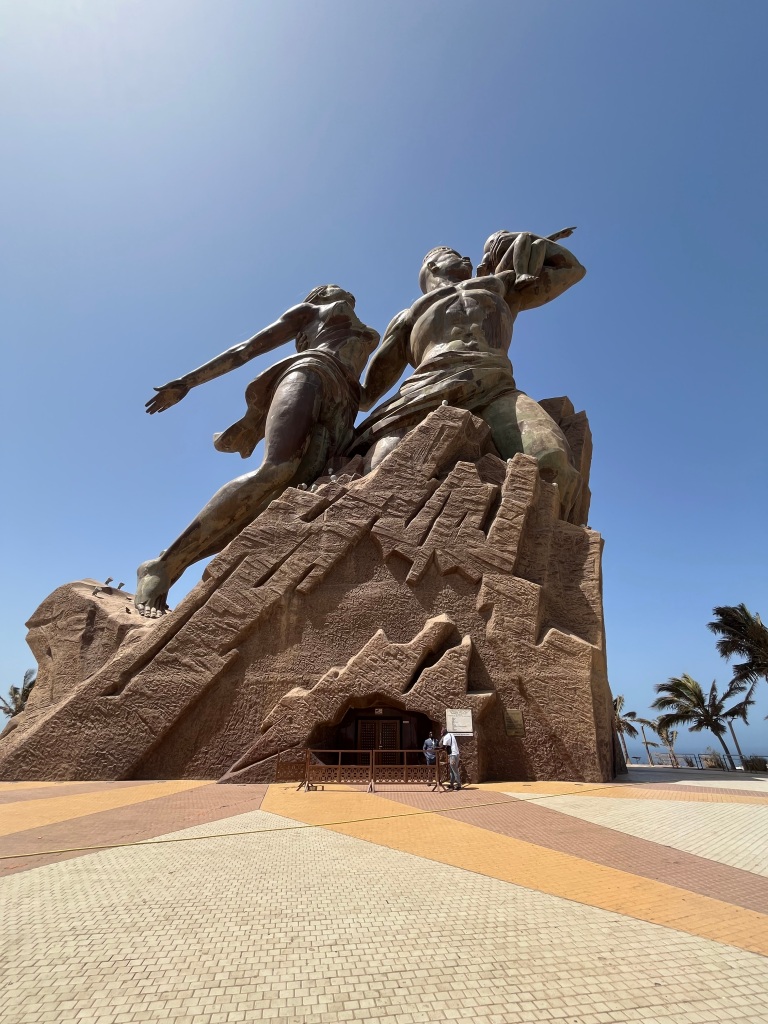
One of the highlights was the number of banking offices, including a design by Pierre Goudiaby (b 1947), the Senegalise architect responsible for Gambia’s airport, the National Theatre in Dakar, and the gigantic 49m tall African Renaissance Monument, also in Dakar.
Bank in Banjul by Pierre Goudiaby, 1985Banjul Airport, Pierre Goudiaby, 1997African Renaissance Monument, Pierre Goudiaby, 2008
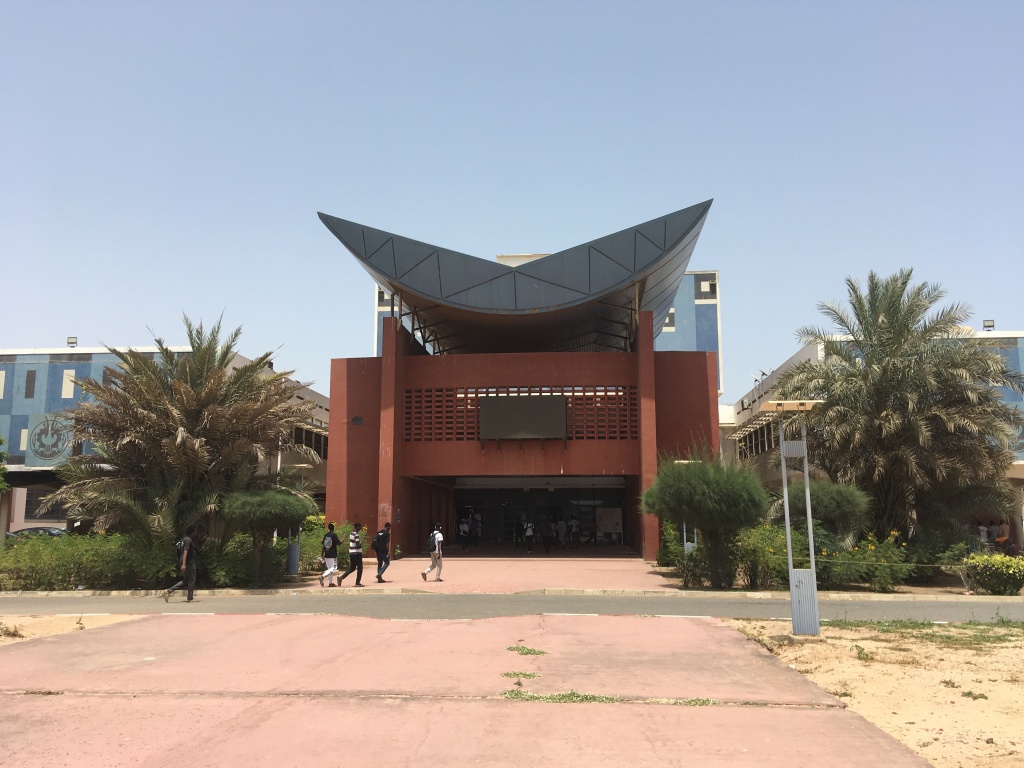
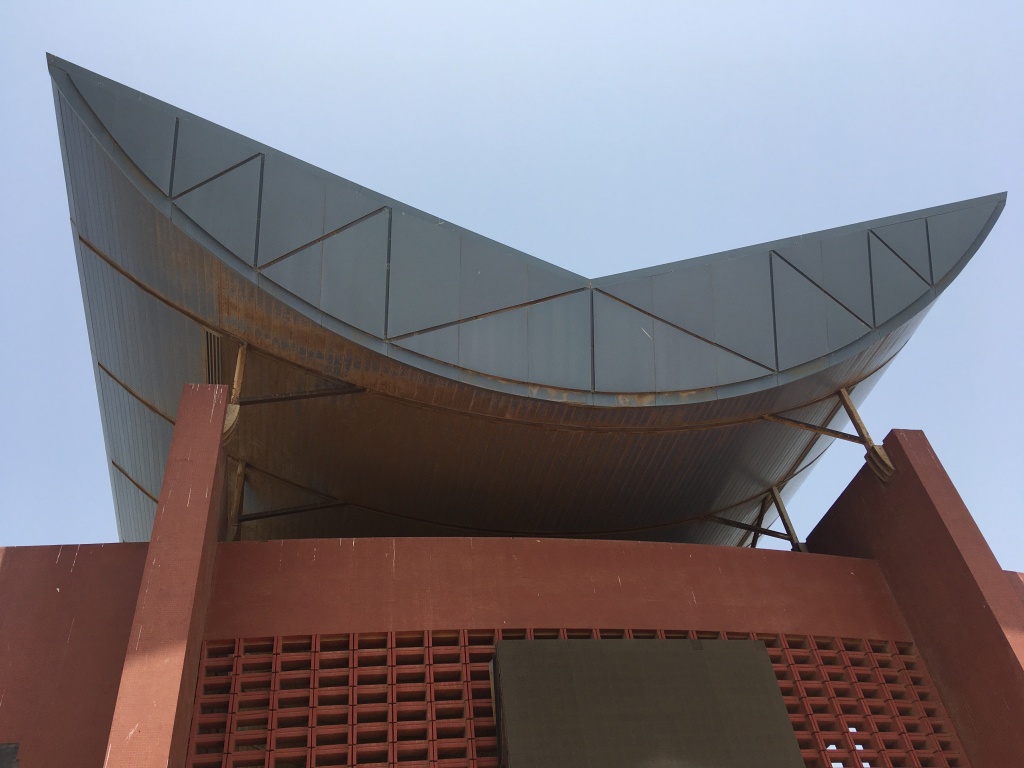
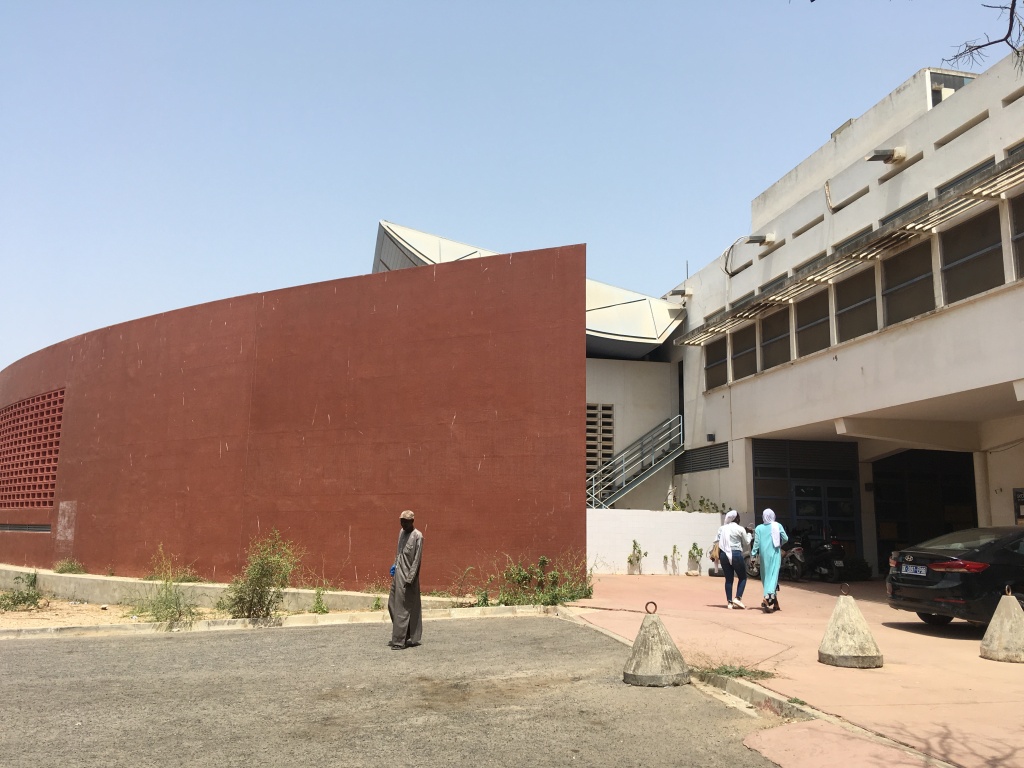
The old university library was completed shortly after Independence and located at the terminus of a long ceremonial avenue that cuts through the campus. By the late 1990s further space was required for study and new book acquisitions, but rather than build an extension or separate block, the solution was to partially wrap the old library with new segments and entrance portico to create additional room and atriums. The older structure is still clearly visible (see the rectilinear mosaic elements) but these forms are now joined by more playful additions whilst observing the strict symmetry. The inverted scoop of the entrance portico references Corbusier’s Assembly at Chandigarh (and is similar to Wilford’s Lowry Centre in Salford), but here it runs perpendicular to the main building with a zig-zag motif on the exposed gable. The addition was designed by Tétreault Parent Languedoc and Oscar Afrique in 2001.
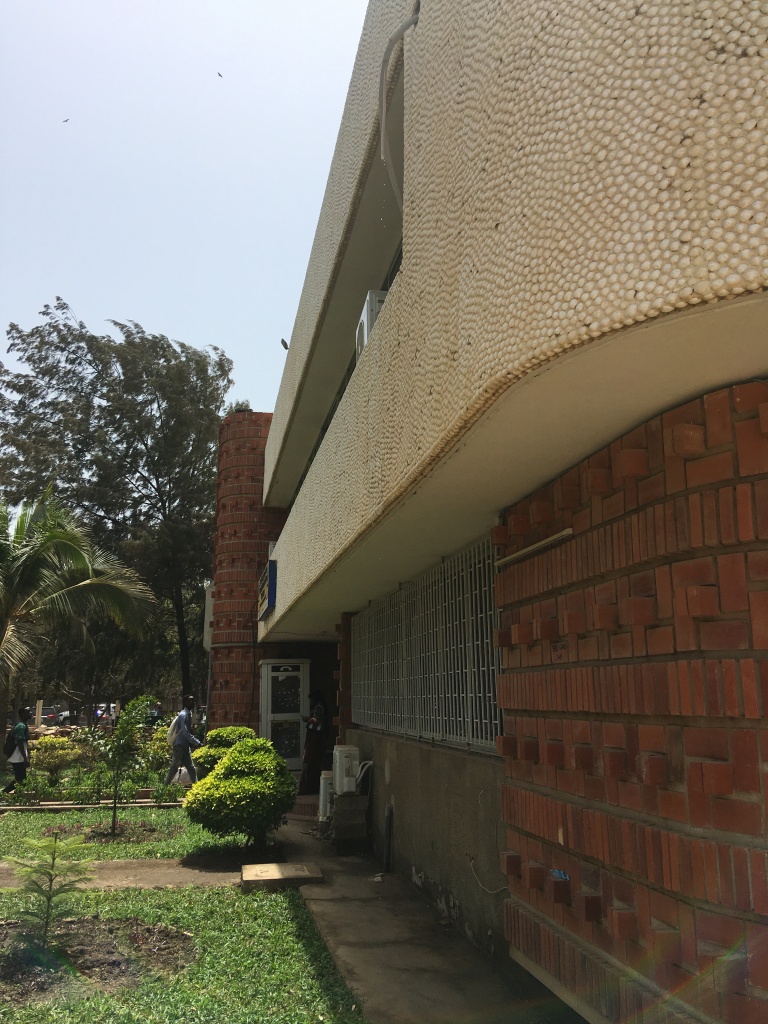
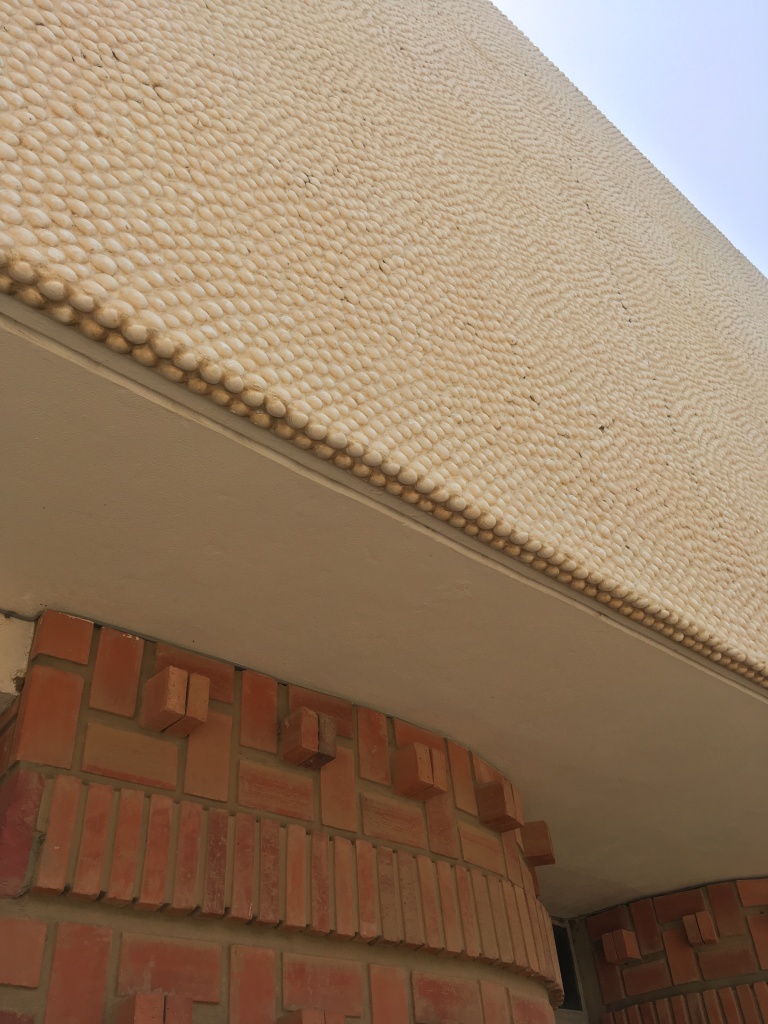
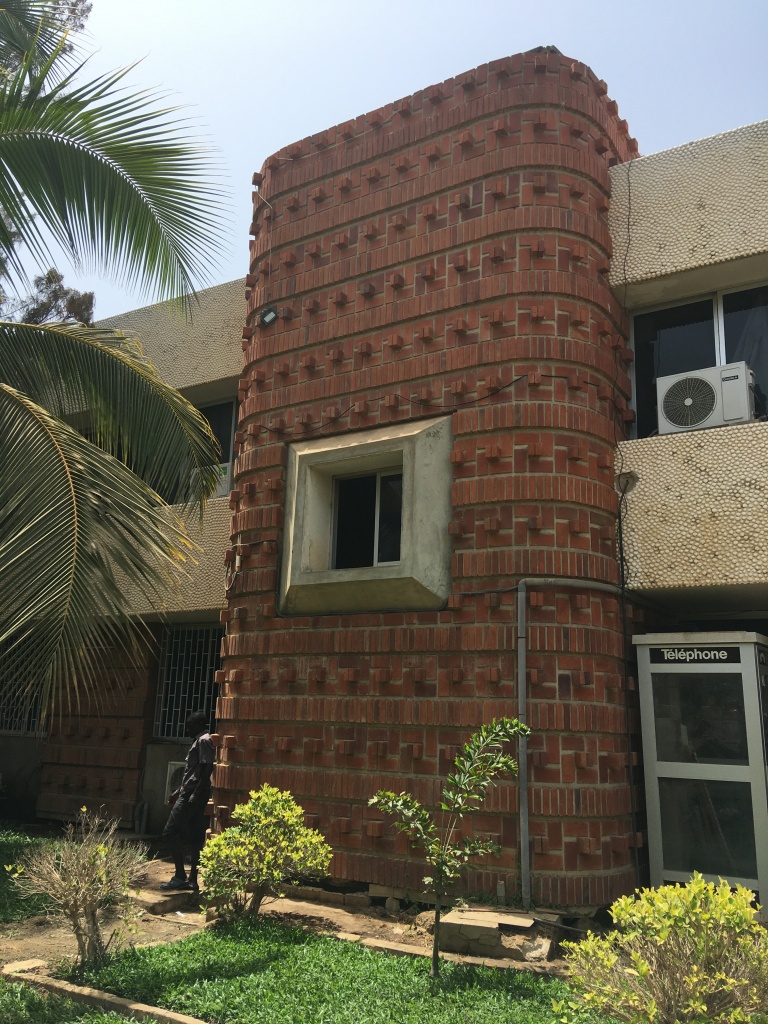
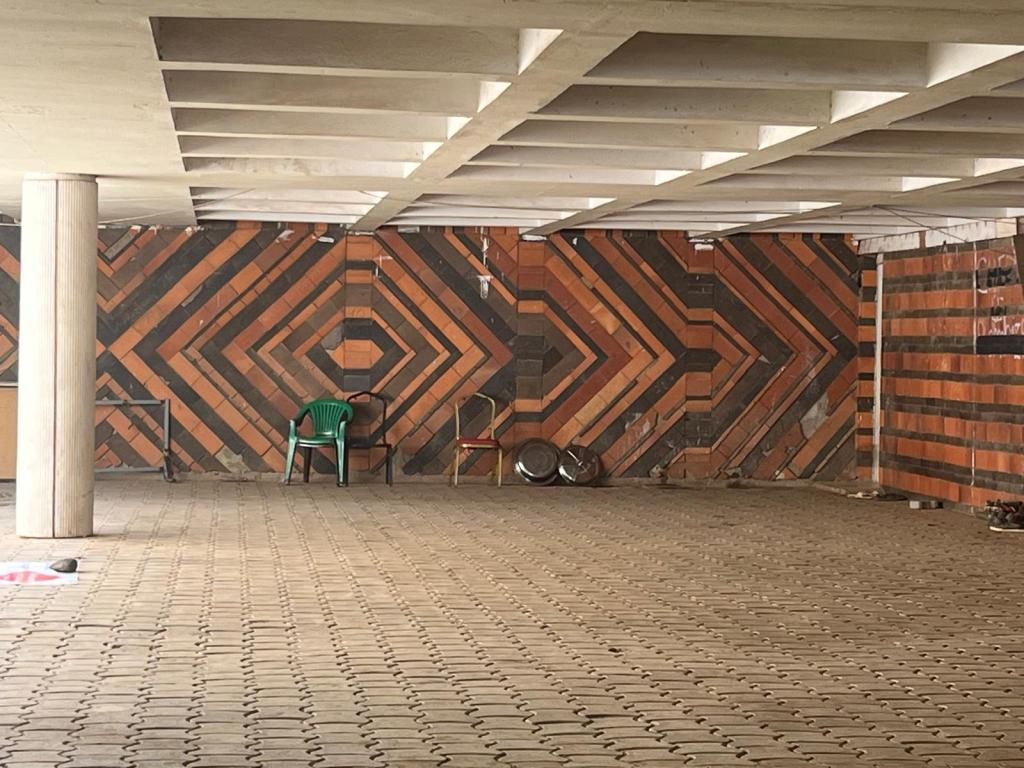
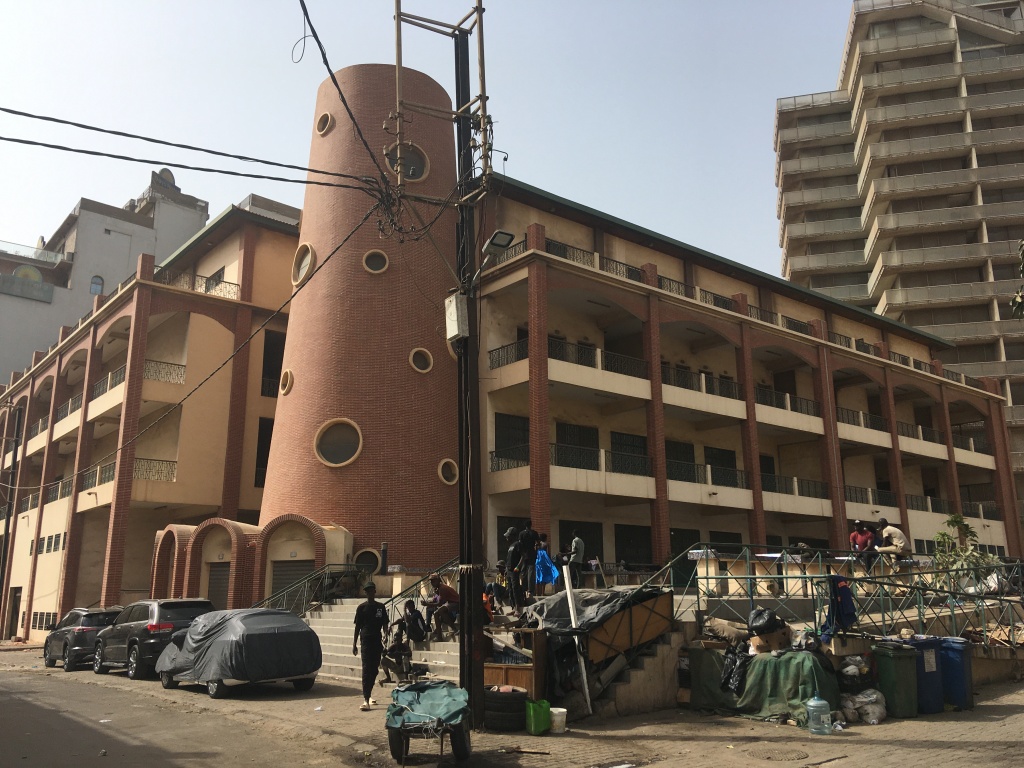
The flanks of the avenue include the University Conference centre buildings and the Archivist Department. On top of ornate red brick podiums, where the bricks are laid in soldier bond and proud of the building line, sit curved forms clad in sea shells that add subtle texture and shadow. The buildings were designed by Henri Chomette and Roland Depret in 1976.
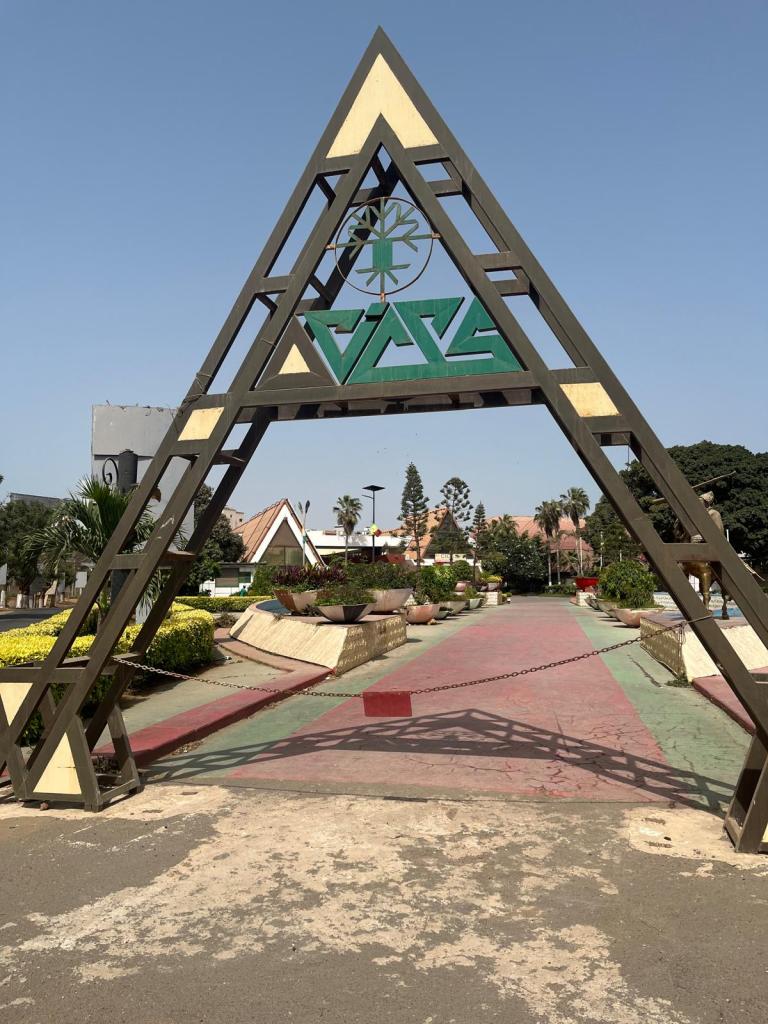
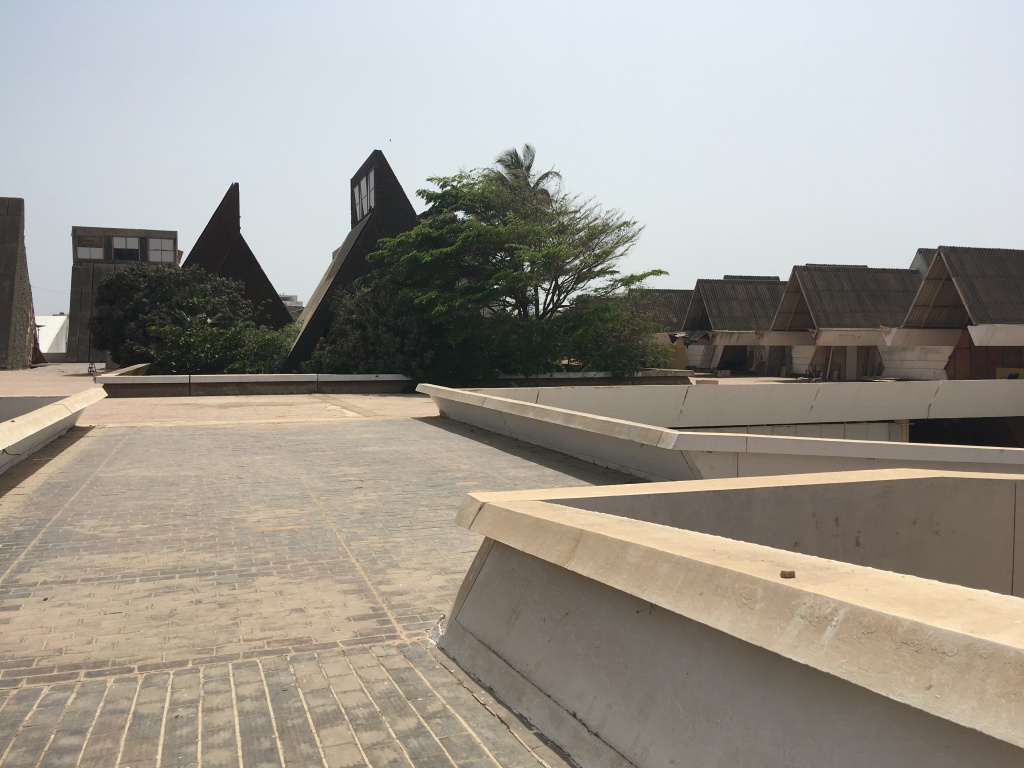
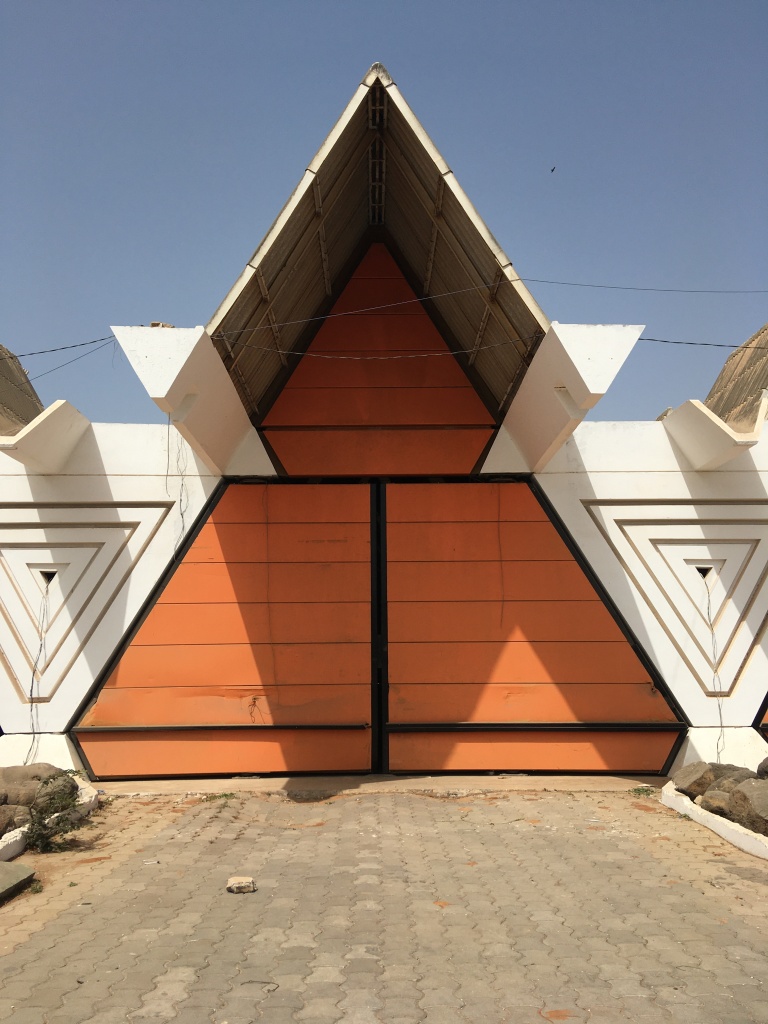
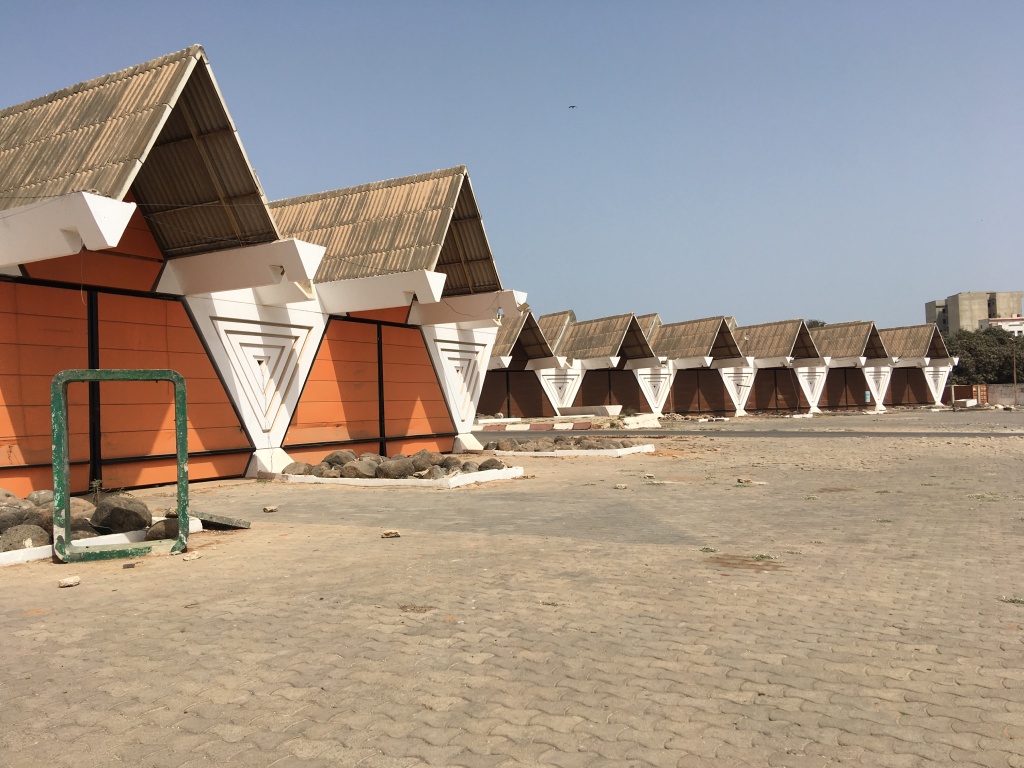
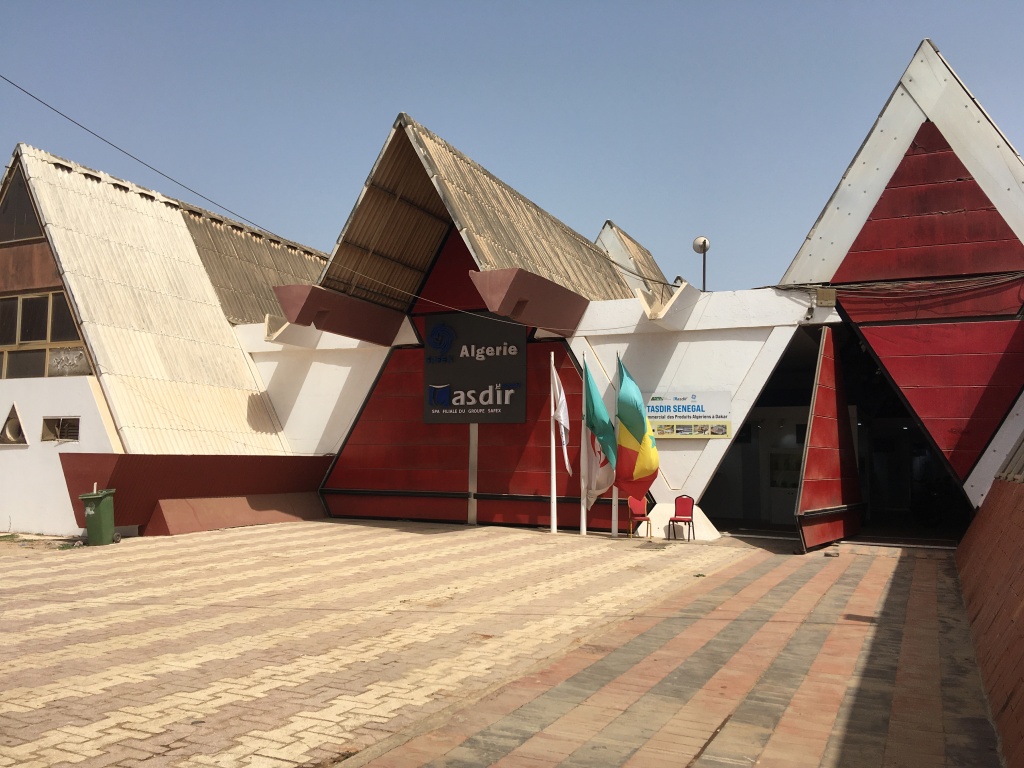
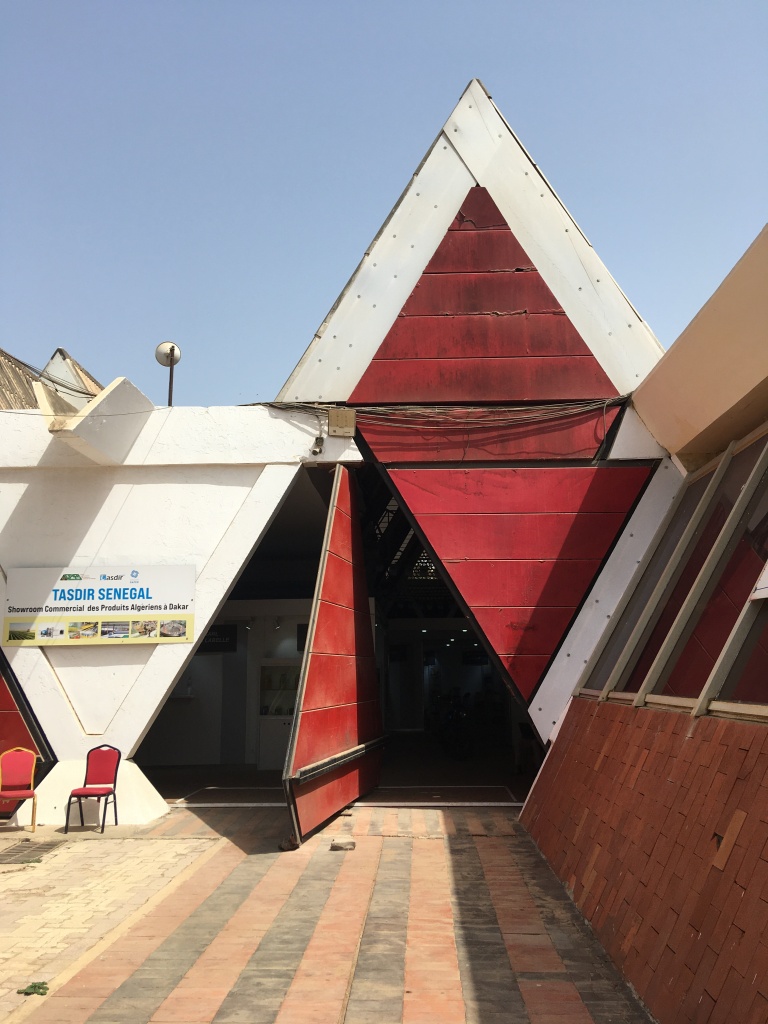
A visit to the international conference centre in Dakar is a must for late ‘modern’ architecture aficionados. The approach sets the scene, as one passes through the triangular entrance gates.
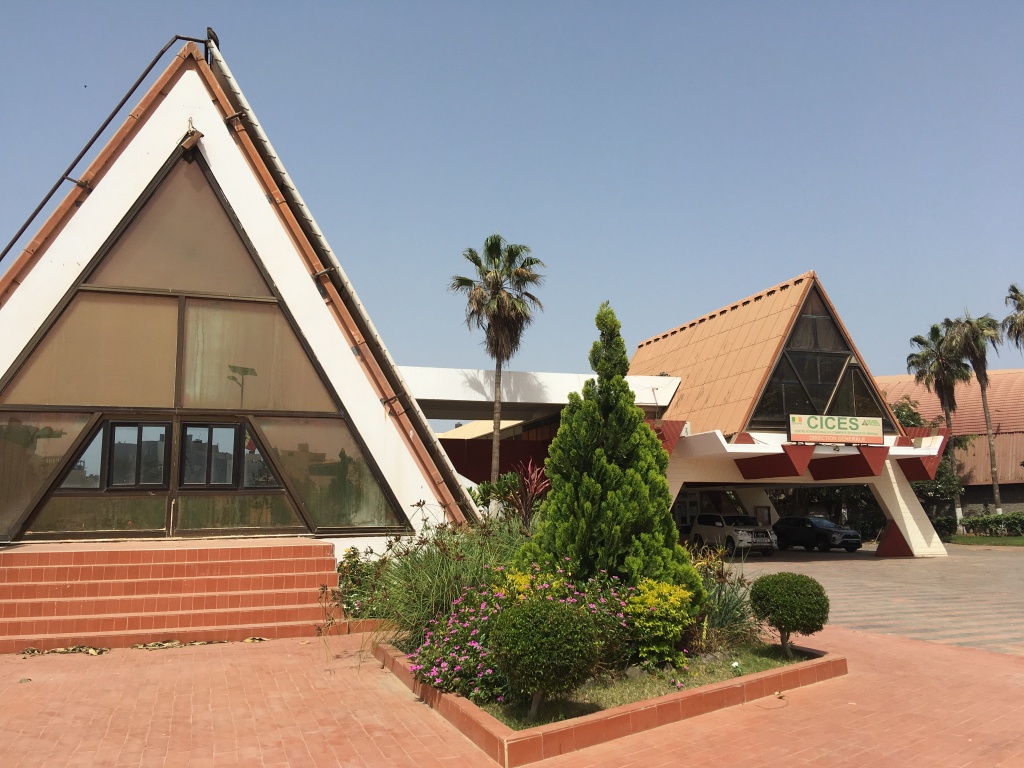
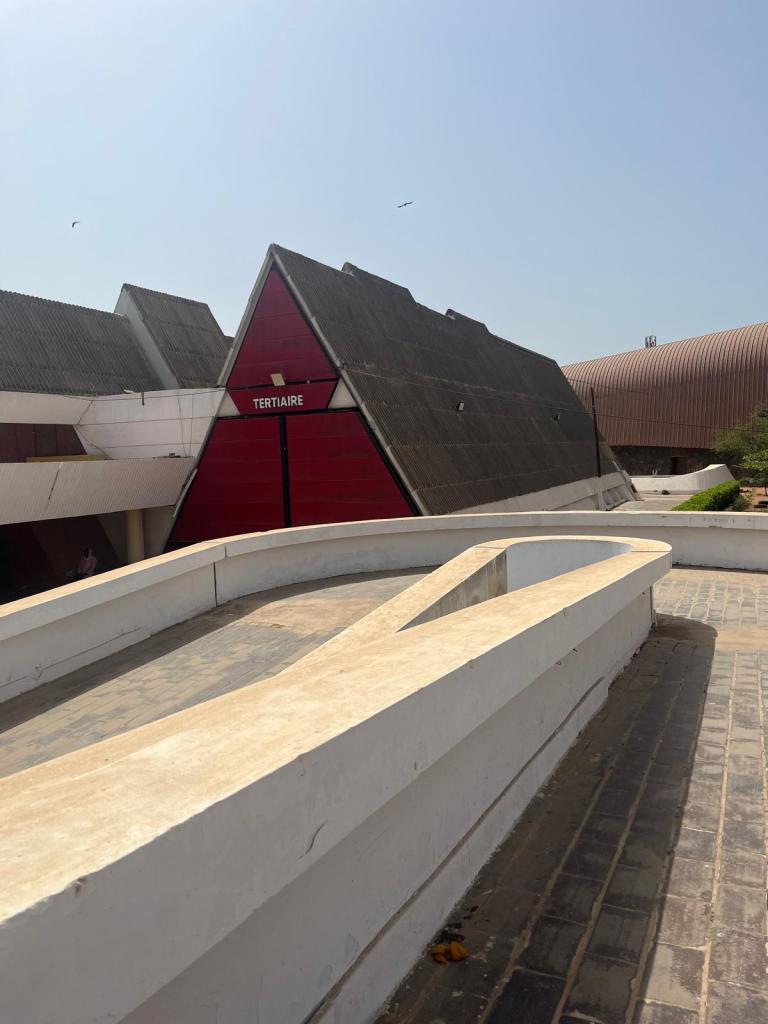
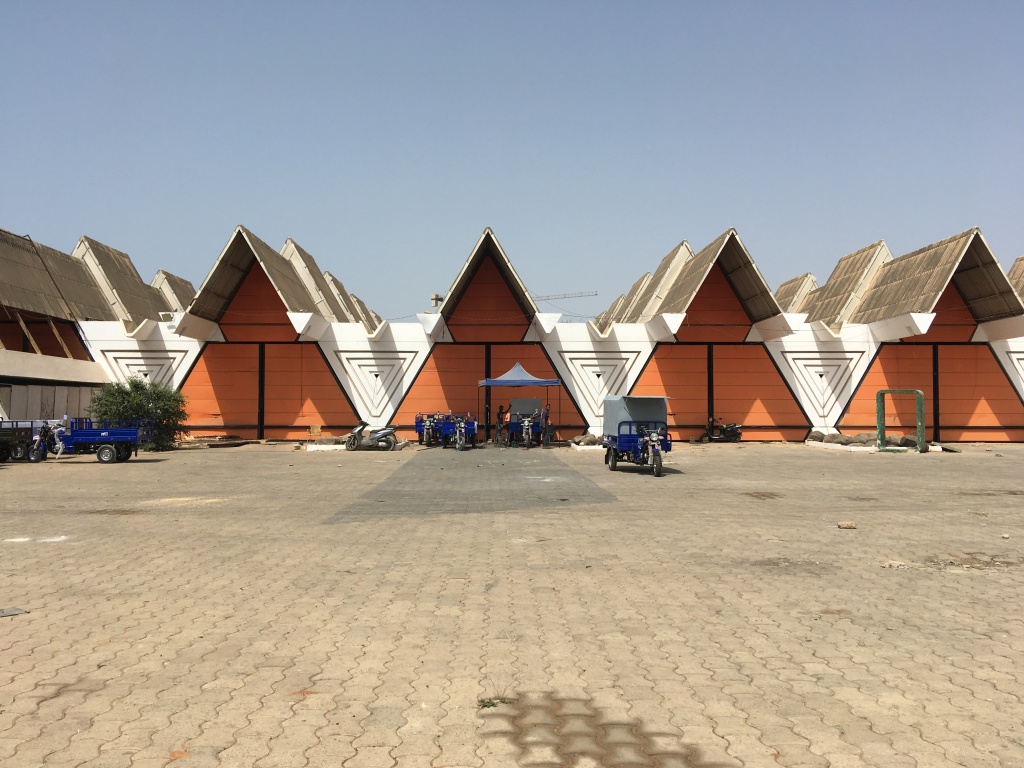
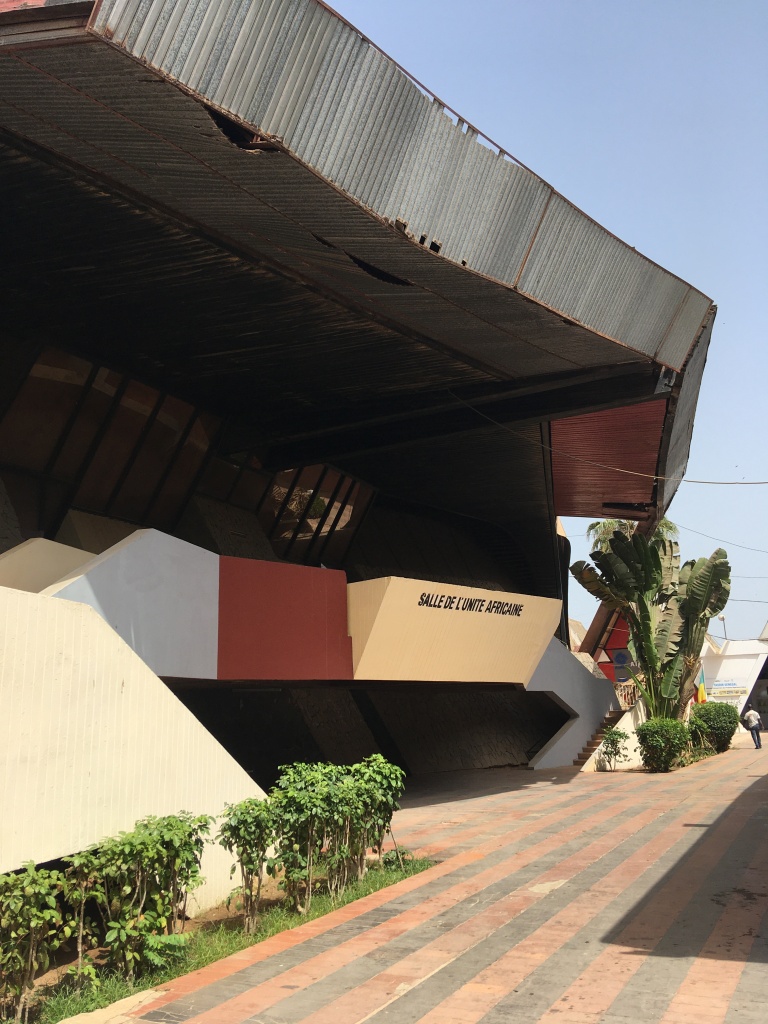
A creation of architect Fernand Bonamy designed and built following an architectural competition in 1974 its triangular programme is clear from the outset. This trade fair complex, which remains in working use, was designed to incorporate the triangle both in elevation and functional section. This has been a largely successful exercise in which the triangle is pre-eminent in all aspects of design.
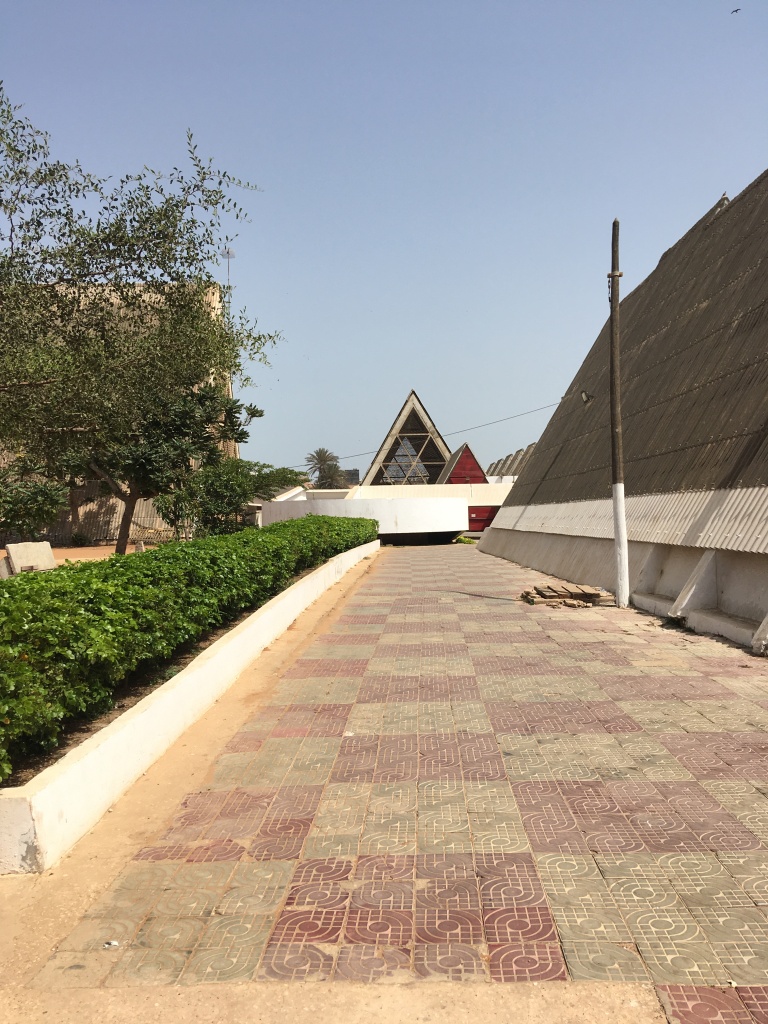
Walking around one feels the eerie nature of triangular space. Broken by long walkways with circular-cylindrical fulcrum points where the direction changes and the gradual slope continues upwards or downwards to the final traverse destination.
A series of exhibition pavilions are the centrepiece of this much recorded and photographed campus, whilst the main exhibition hall provides a glorious 70’s interior complete with psychedelic wall designs . The dogged following of the triangular programme does provide a coherent set of buildings – which also feel part of a giant Alice in Wonderland setting where the triangles are here there and everywhere. There are a few breaks as the HVAC external ductwork terminate in lozenge- and not triangular shaped flues .
As we walked around, the campus was being prepared for yet another exhibition / expo. This helps highlight the ongoing use and versatility of the exhibition space format, democratically giving each exhibitor the same space, shape and form to engage with, triangular in every way.
As I walk away from triangular wonderland I wonder what else this amazing set could support? A parkour and skate park for the suburban kids whose flats look down on the complex? A contained mini athletics course, it could certainly hold a 200m track circuit and many triangular spaces could provide storage for track and field equipment. Or could it indeed be a film set for the next James Bond Action or Hammer Horror movie – The return of the Triangles.
We’re making a visit into Dakar in Senegal this week. It’s mainly an exploratory trip as we’ve not ventured into Francophone Africa before and are eager to meet up with some architects here and friends from MOHOA .
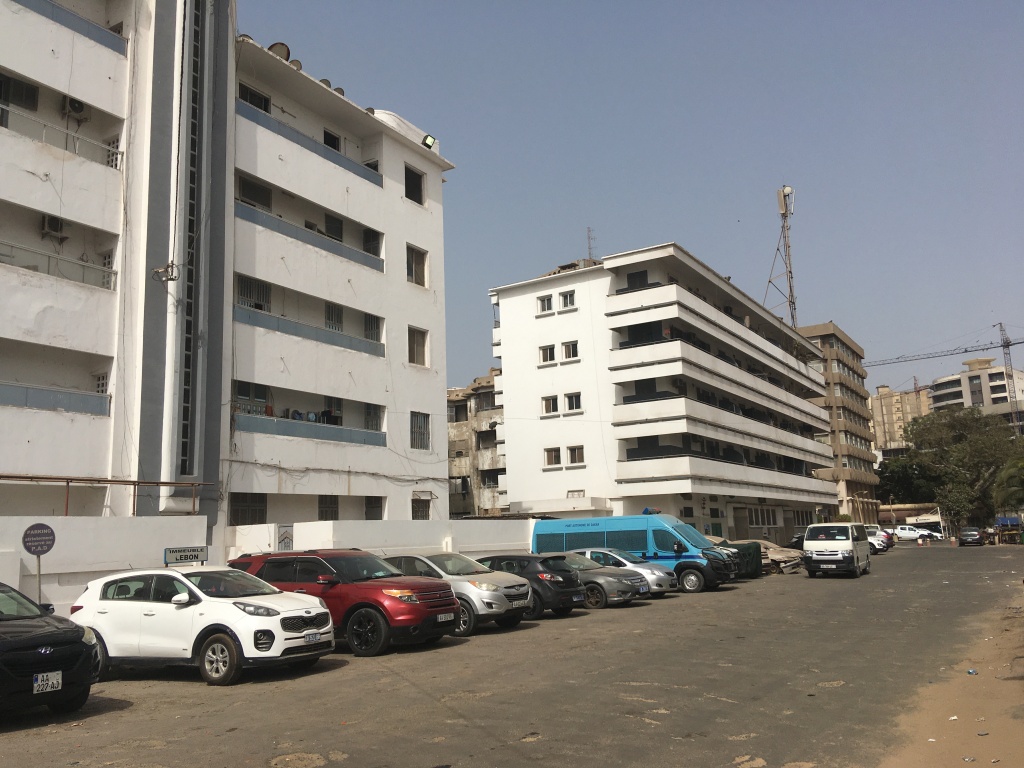
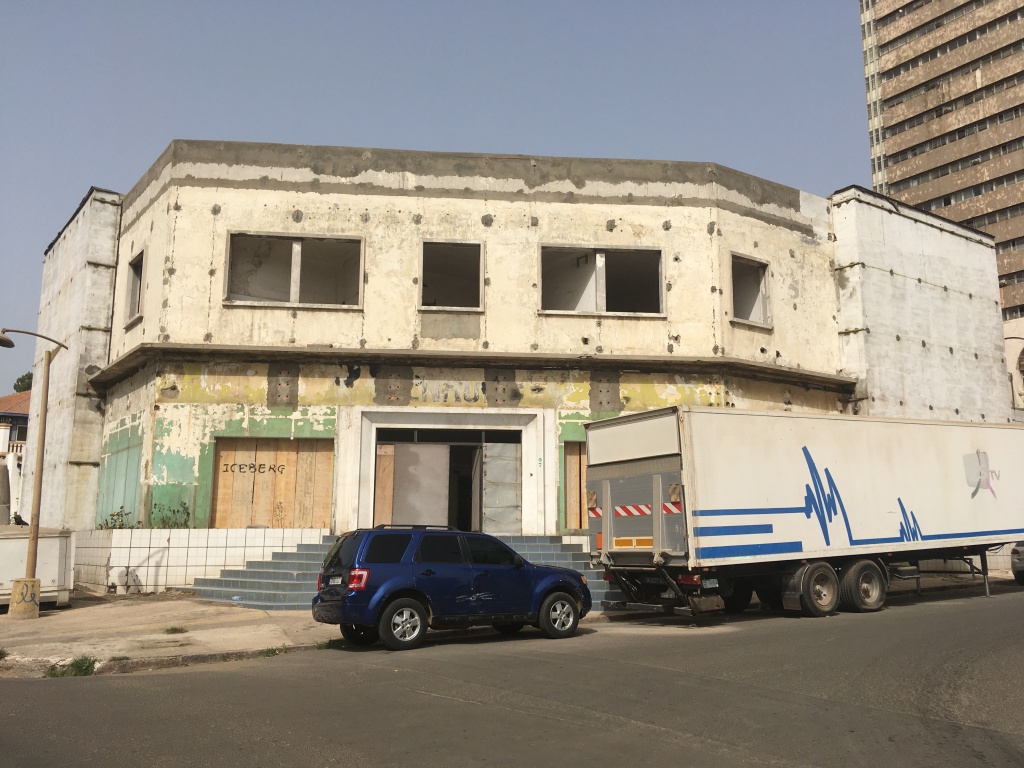
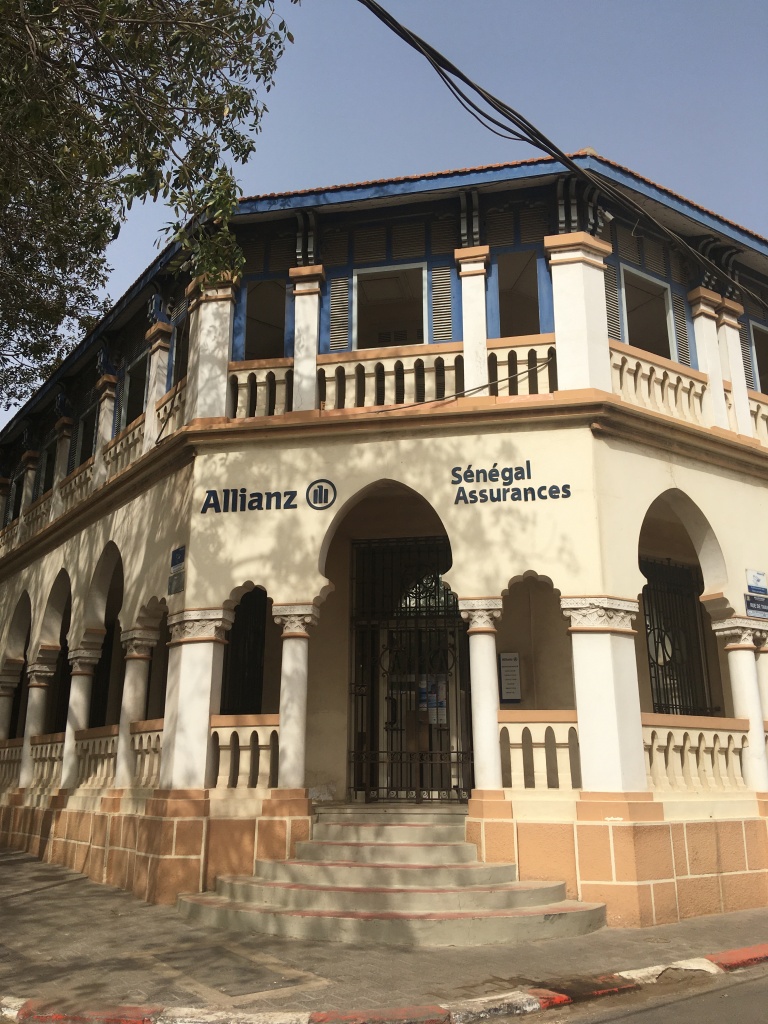
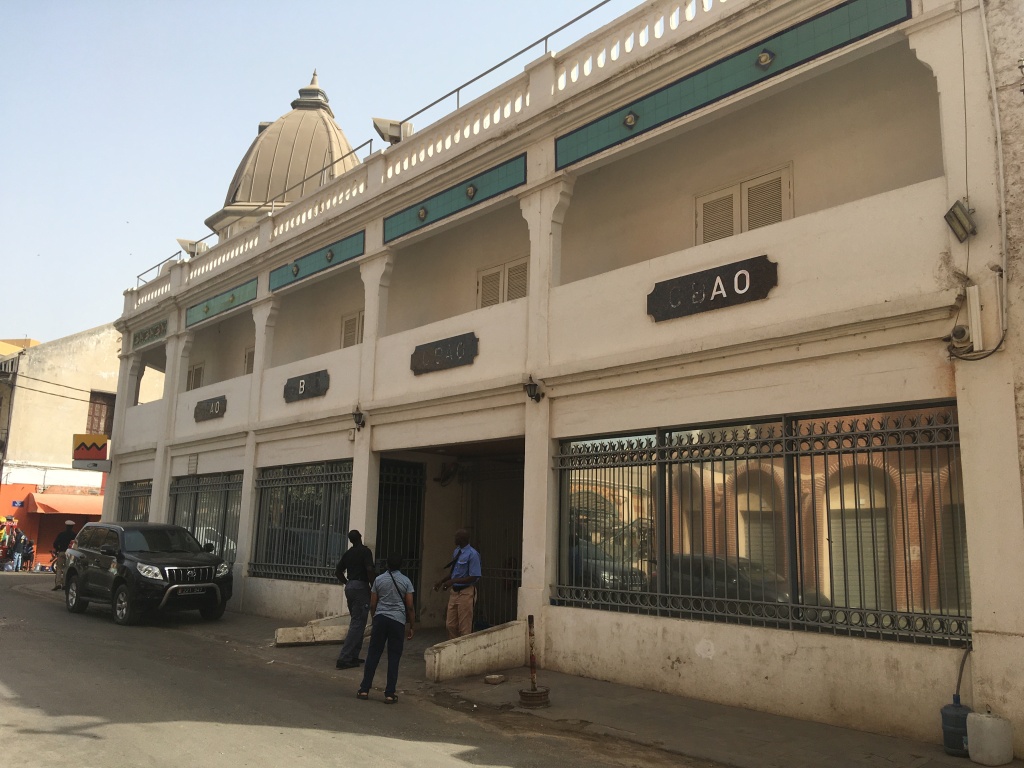
Today was all about pounding the streets and exploring some of the everyday commercial architecture, public buildings, docklands, religious buildings, museums, and streetscapes of downtown Dakar. It didn’t disappoint and using our trusty Vol2 of the Sub-Saharan Africa guide we were quickly able to track down some of the classics (and many more that don’t feature in the impressive guide).
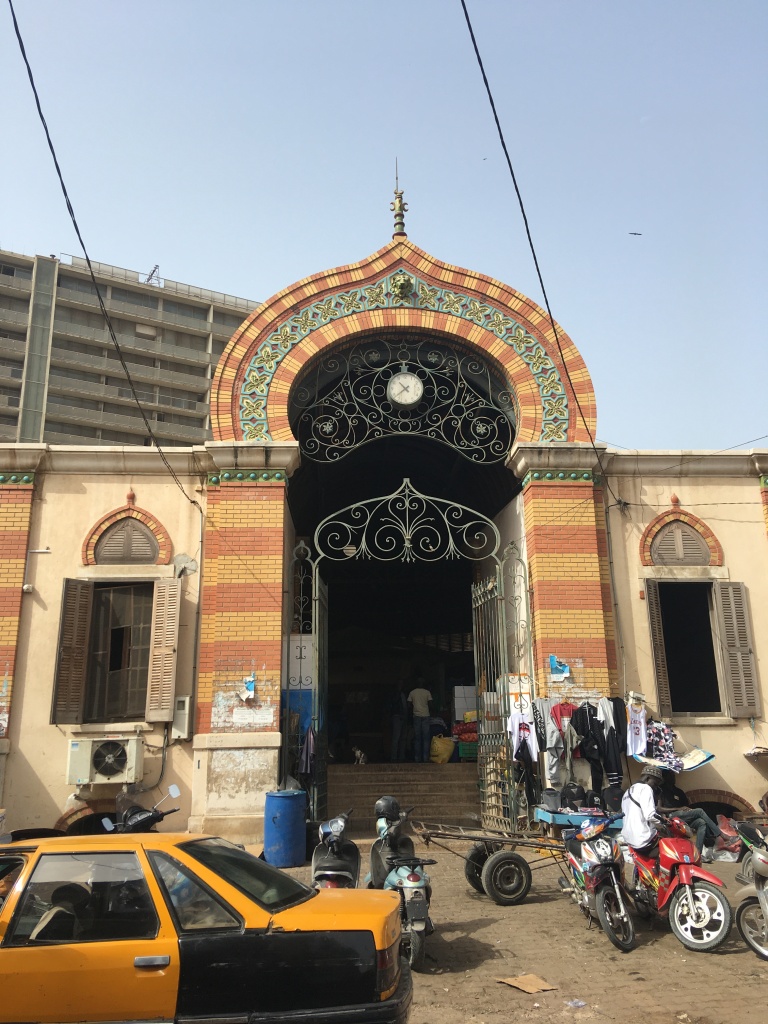
Chamber of Commerce, 1926.Kermel Market, 1910, Charles Pleyber
The Kermel market sits amongst an array of colonial era structures. It was destroyed by fire 1993, but rebuilt in 1997 to match the original design.
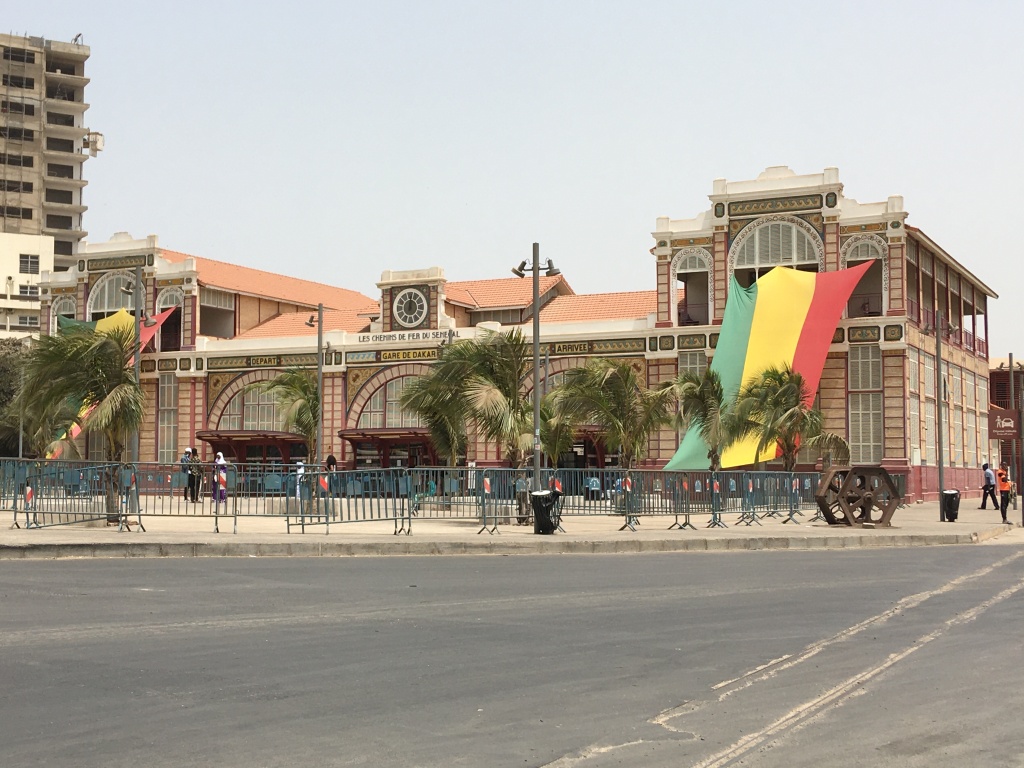
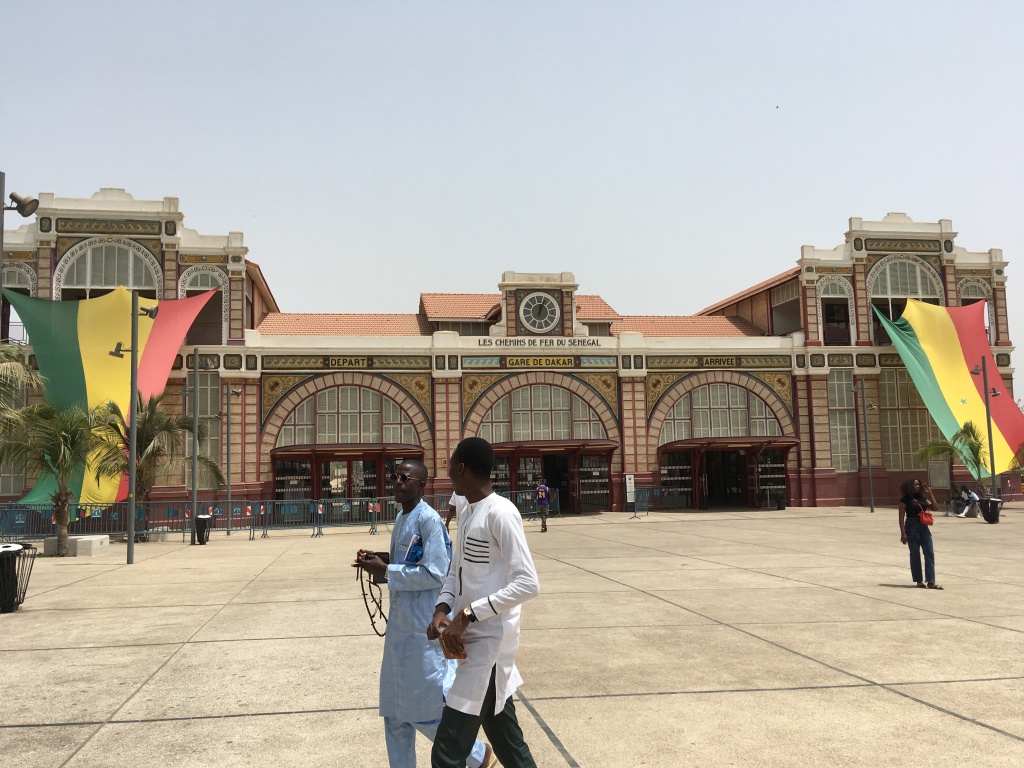
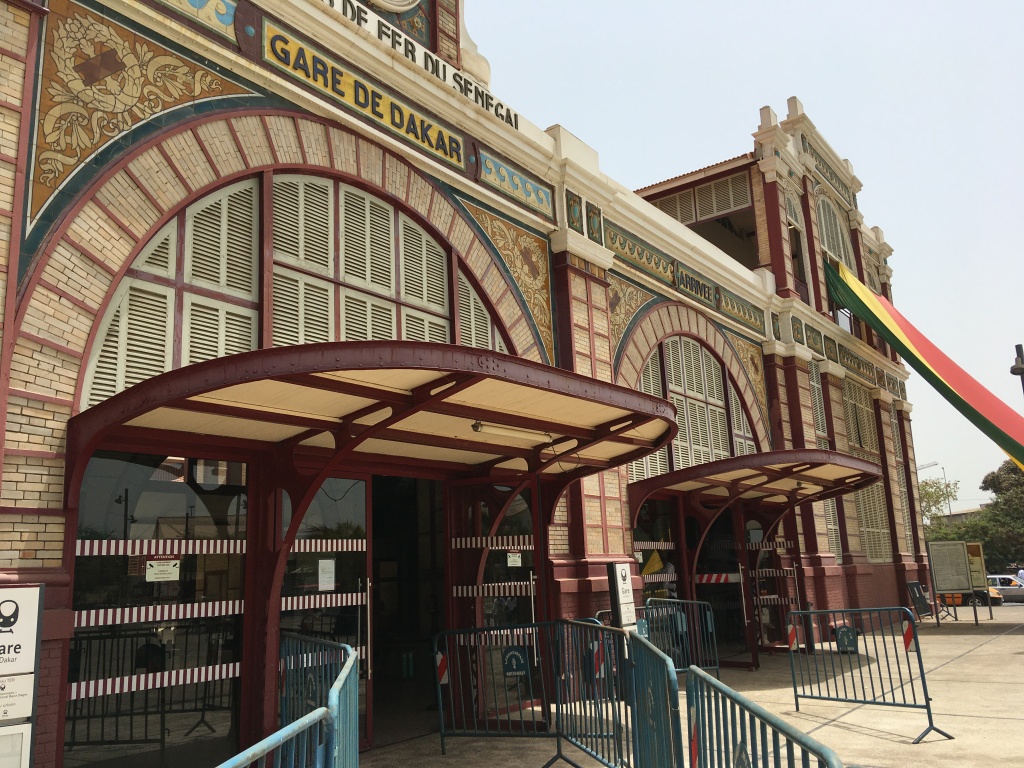
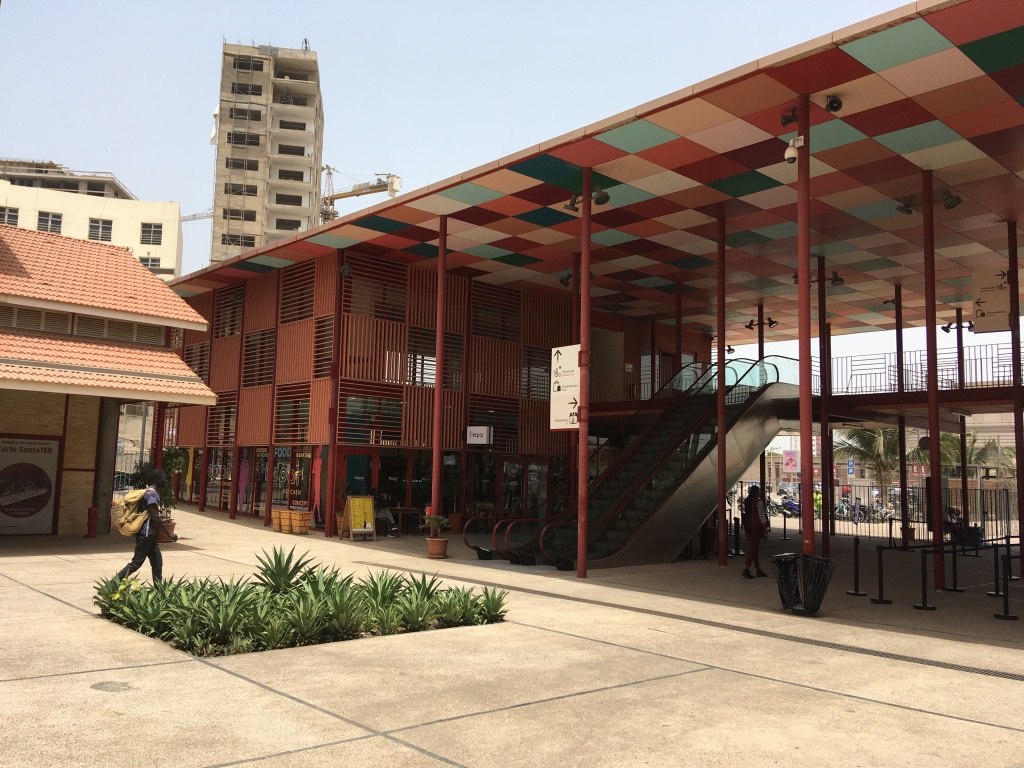
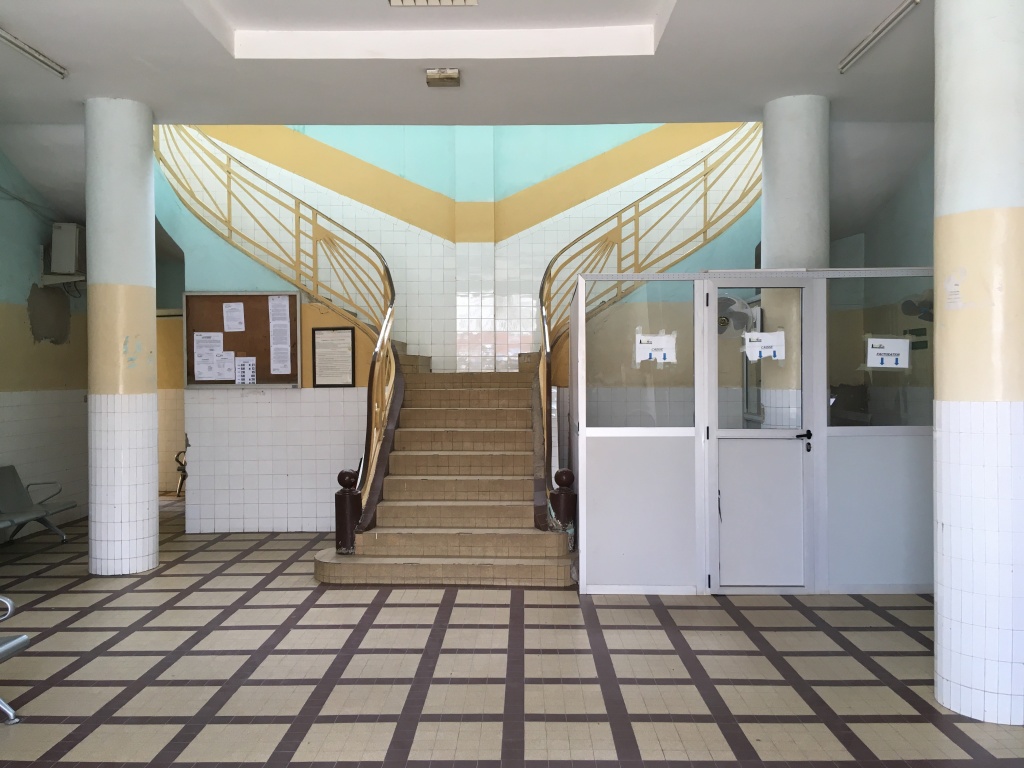
Dakar railway station with faience ceramic facade detailing. The newer interior structure provides control to the tracks and adds further commercial space.
Commercial structures, residences, markets, and banks by the docklands of Dakar. I thought the images top left and top middle were the Sandaga Market – but not sure now. There’s going to be a lot of further research and investigation required after this trip….
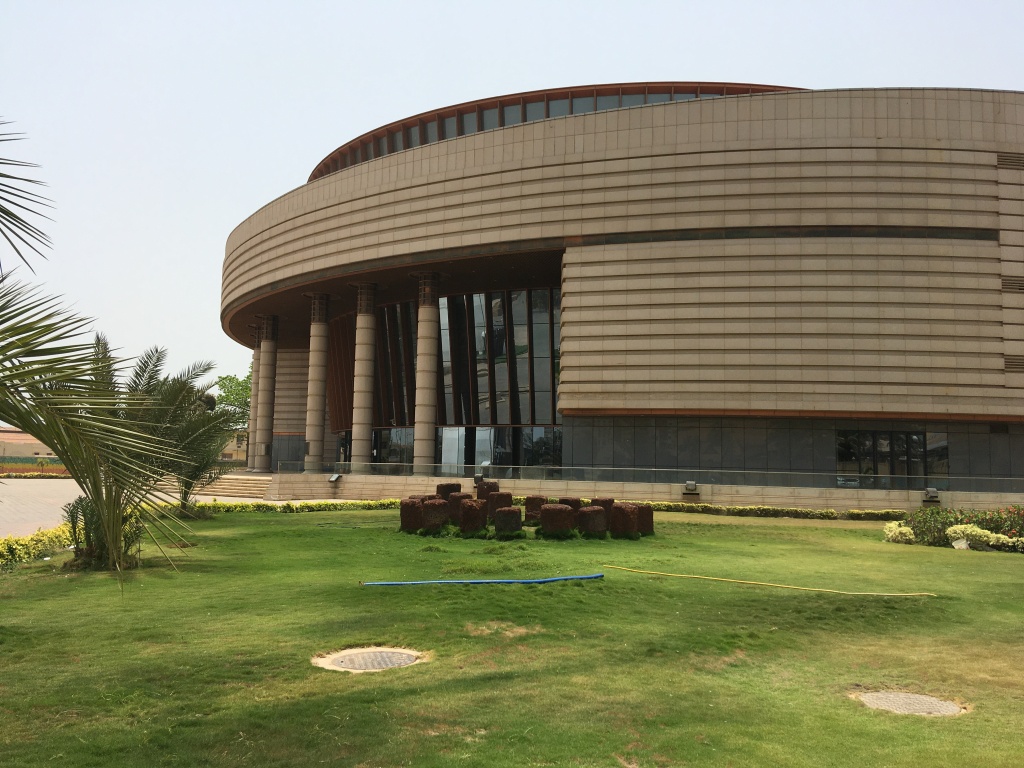
Museum of Black CivilisationGrand National Theatre, 2011, Pierre Goudiaby Atepa
Just beyond the Train Station are two vast civic structures – the National Theatre [the largest in Africa] and the Museum of Black Civilisation, built by the Shanghai Construction Group in 2018.
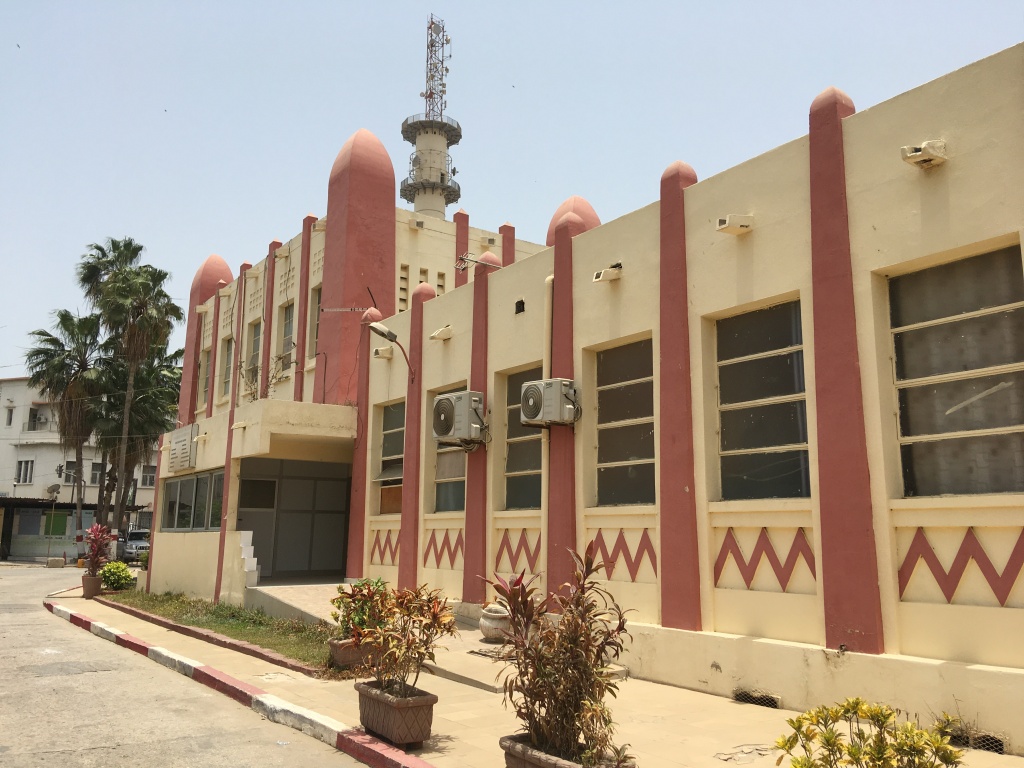
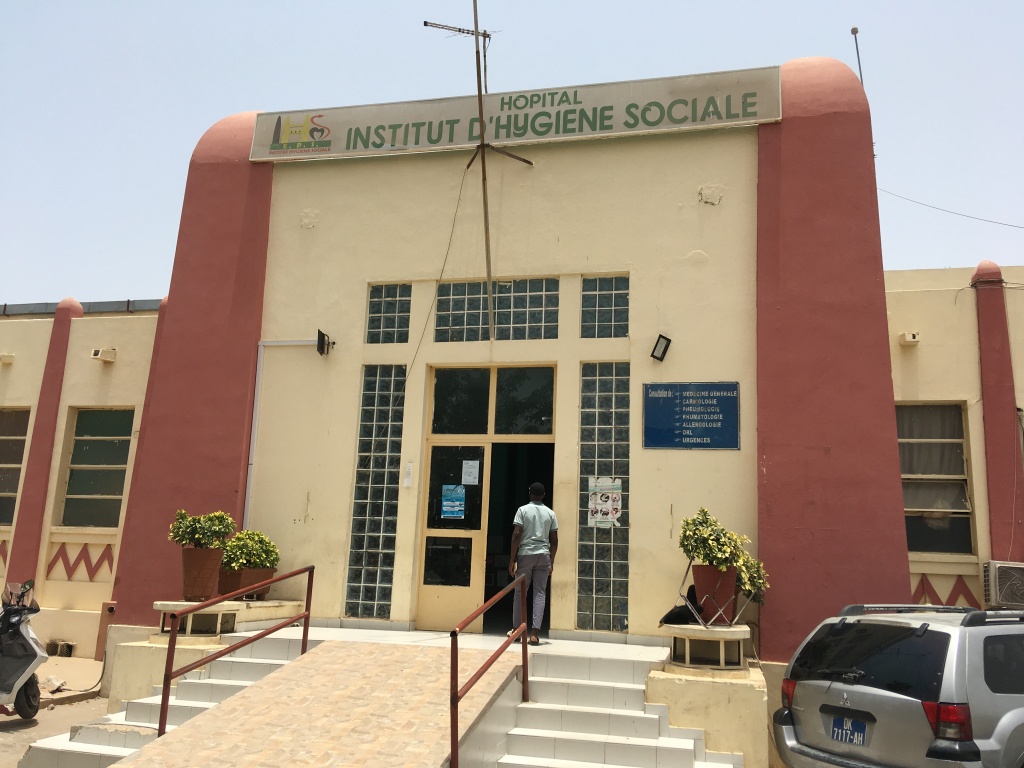
Institut d’Hygiène Sociale was a highlight today – designed by Henry Adenot around 1932 attempted to introduce more regional or local interpretations to the colonial architecture canon. This building has been described as Sudano-Sahelian but it borrows liberally from across Western African architecture, as well as introducing zig-zag motifs, sunbursts, and playful interiors.
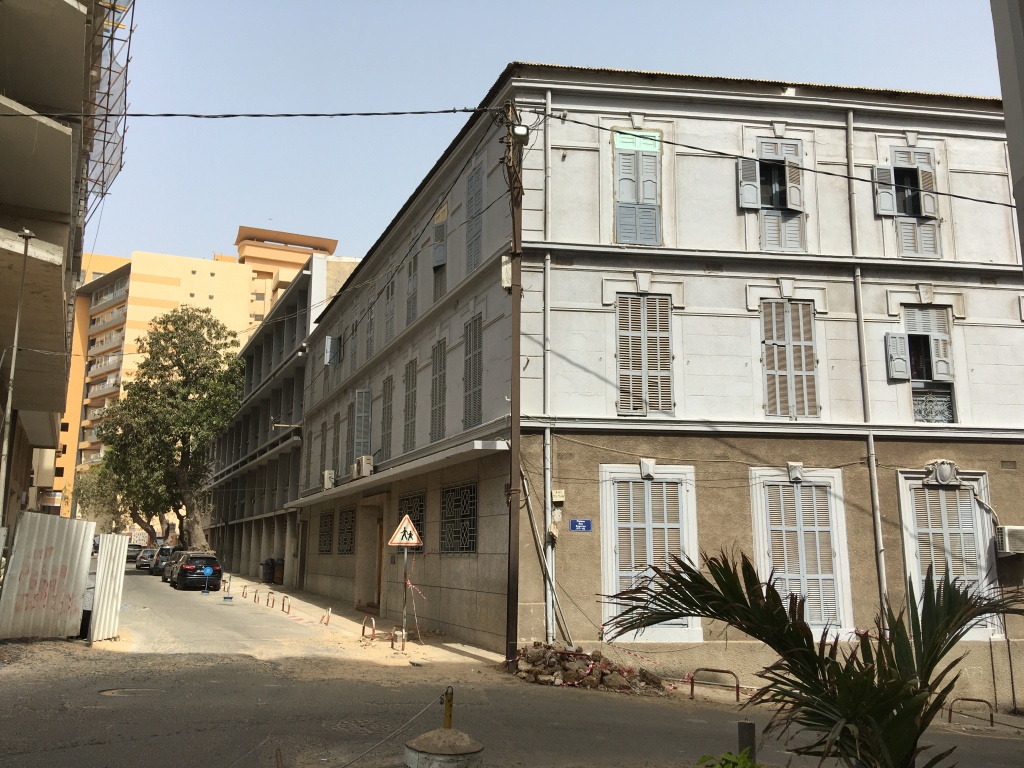
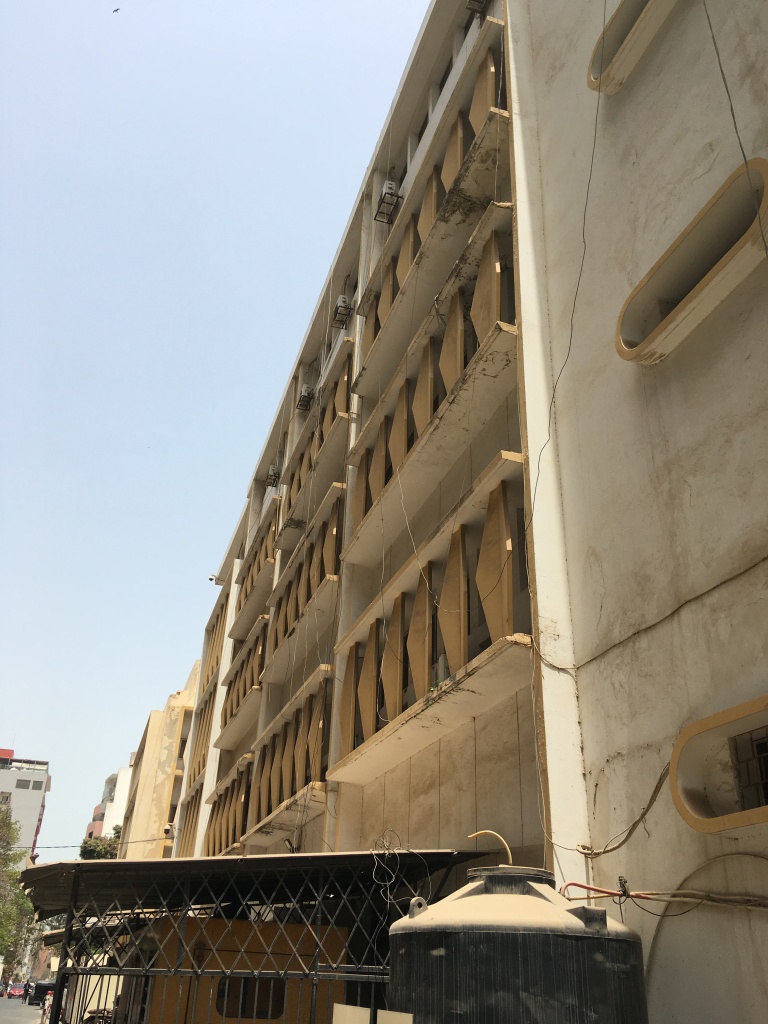
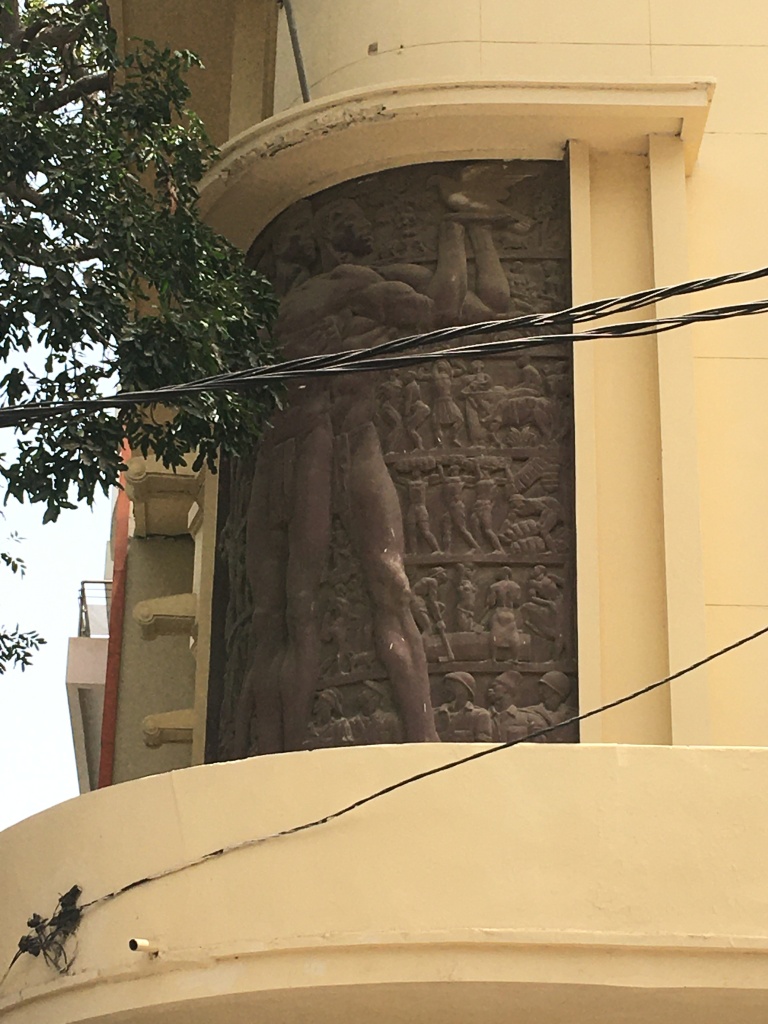
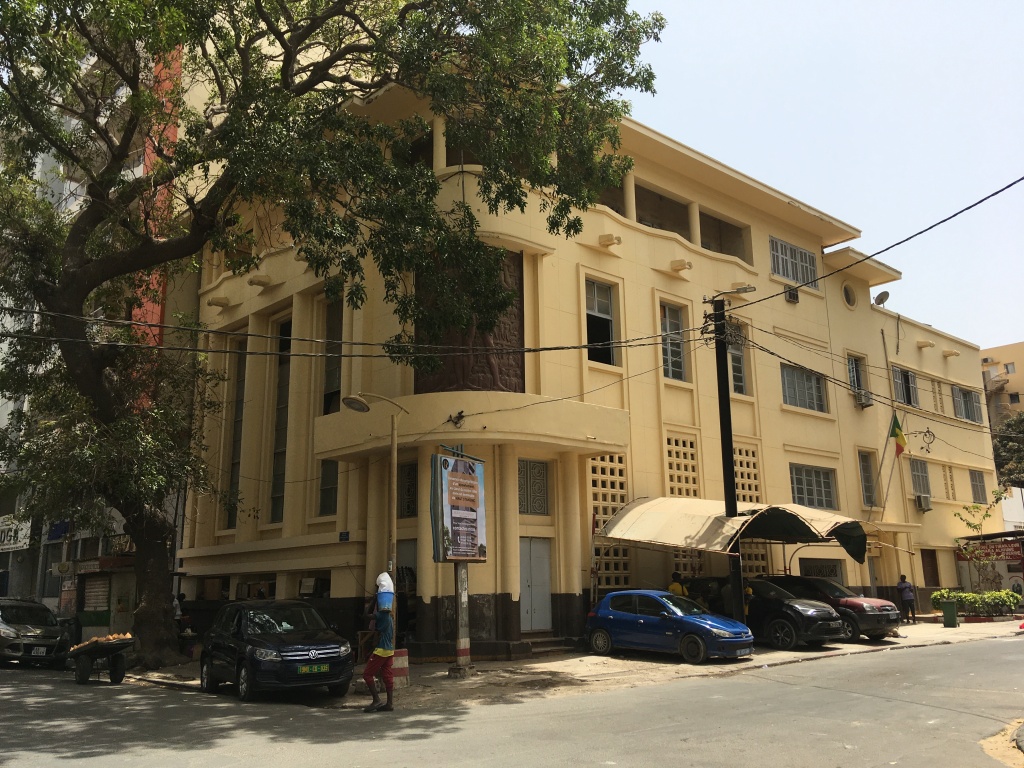
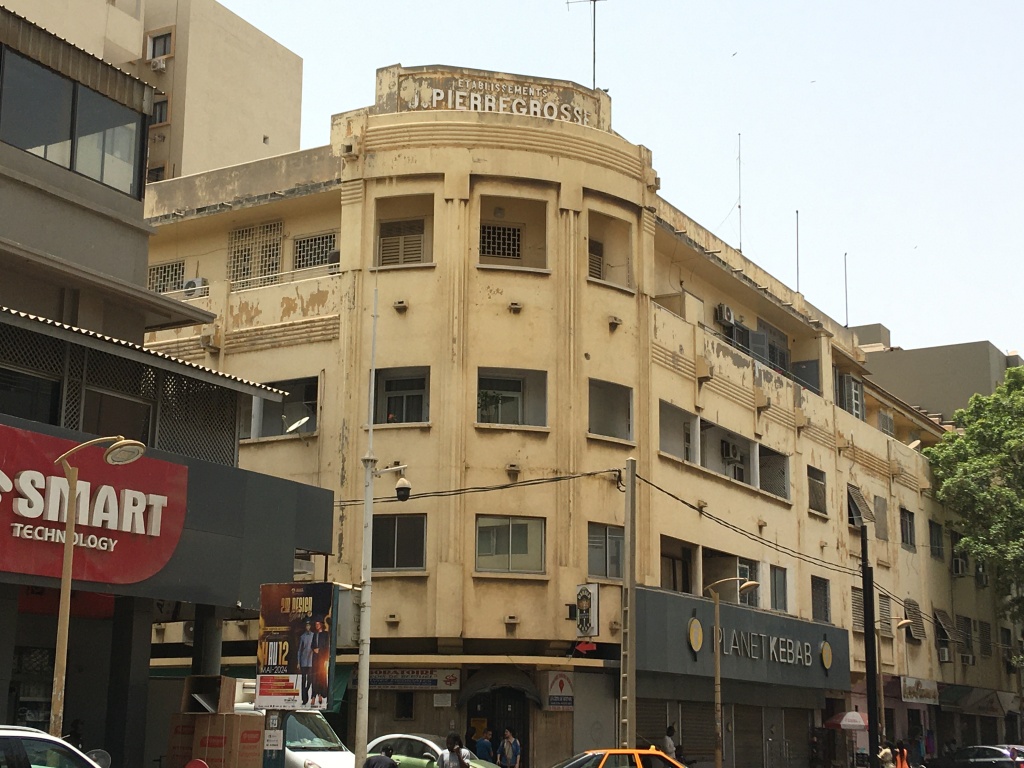
Most of the downtown area it set out according to a grid plan, with buildings reaching 4 or 5 stories in height. There’s a variety of commercial structures some bearing the name of the old trading companies and families, others depicting bas relief decorative panels or double-skin solar breakers.
The latest edition of e-flux contains an interview with Joe Osae-Addo by Kwabena Appeaning Addo where they discuss Joe’s passively cooled house in Accra, Ghana.
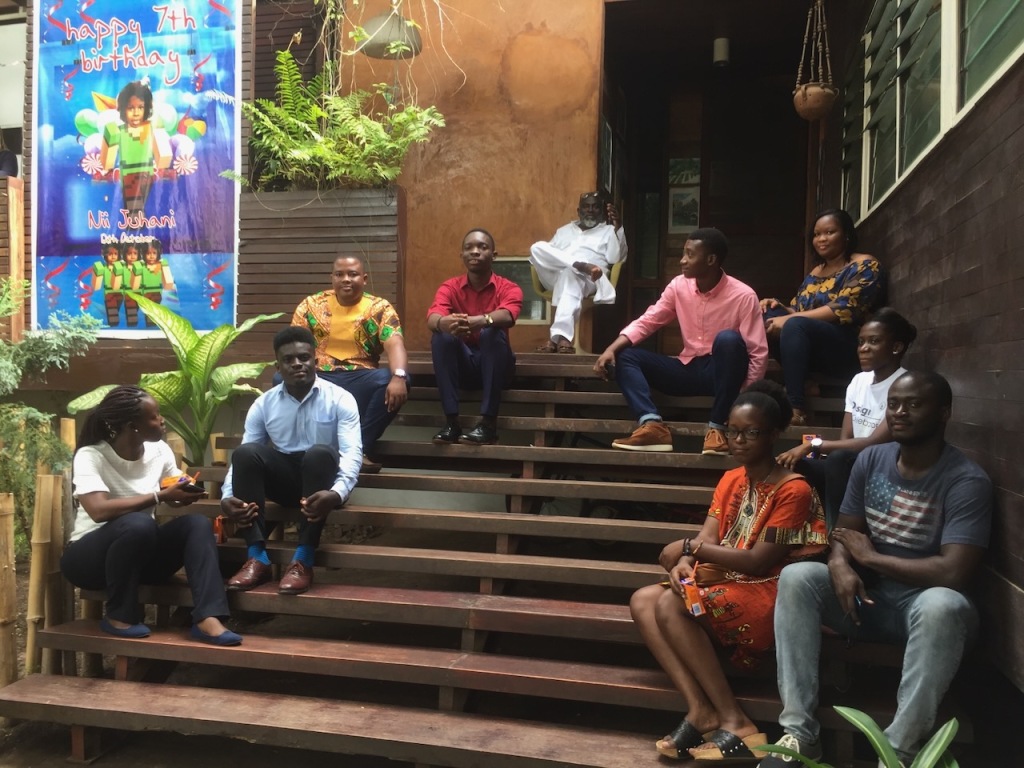
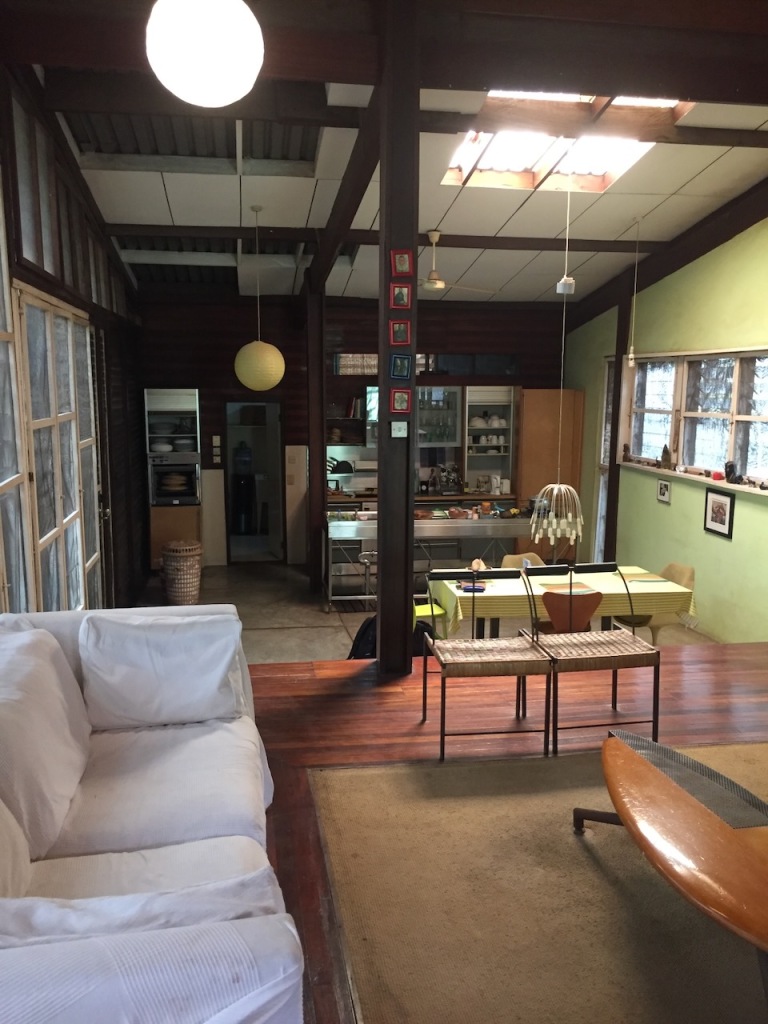
Joe Osae-Addo in 2018 with architecture studentsInterior of Joe Osae-Addo’s house, AccraVerandah Exterior of the house with tree canopy, 2020
Kwabena Appeaning Addo: What inspired your design for the Inno-native House in Accra, Ghana?
Joe Osae-Addo: My first thought was “How do I create a building that responds to the weather better than most,” so that I don’t have to use air conditioning? That was my primary focus. I then began thinking about the landscape, about how trees can be used as the first line of defense against heat, and also about how to position a building so that there is no direct solar gain. I was working in Los Angeles at the time, and I learned that the worst heat comes not from the sun, but through conduction from the earth, through the floor slab. So I thought to raise the building by about a meter, removing all direct contact between the floors and the earth, and insulating the building with a pocket of air. Those were my design parameters.
KAA: What happened when you took those principles onto the building site?
JOA: The site and the climate drove the initial layout of the building. After pouring the raised foundation, the first thing I did was to plant mature trees. I didn’t want to plant seedlings, because I wanted the trees to cover the roof by the time construction was done. So, I took a drive out of Accra to the area between Tema and Shai Hills, where there is a natural forest of trees. I went on a rainy day when the soil was wet, with a truck and laborers, and dug out mature—but not fully grown—trees, approximately three meters tall. We brought them back and planted them immediately. A year later, when the house was done, the trees had fully grown in. The ground also had a high water table, so I planted papyrus plants, knowing that they would suck up water. But even so, the site is very wet. On a rainy day, the concrete walkway in front of the house gets wet both from above and below. For the driveway, I used gravel, not concrete, to allow water to flow through and absorb into the ground when it rains. The landscape was integral to the design from the beginning. It is what allowed me to create a cool building.
KAA: What about in the design of the building itself?
JOA: Glass louvres are typically undervalued in contemporary Ghanaian architecture, but they are fantastic at creating cross-ventilation. Many of the exterior walls include glass louvers, at times from floor to ceiling. The rest are made either of laterite blocks or of timber frame walls joined with a tongue and groove system. The interiors of these wood walls are covered with stucco plaster, which makes it feels like a typical cement block wall, but on the outside it is clearly wood. This construction technique, known as Type V construction, is how most buildings in California are built: a 2×4 timber stud frame, 24 inches on center. In my case, however, since there is no air conditioning, there is no need for insulation. The third type of wall in the house, which I am very proud of, is made of wooden slats with a mosquito net attached. The wooden slats have a half-inch gap between them so that air can come through, but because of the net, insects can’t. The interiors are therefore always aerated.
KAA: So does it work?
JOA: Yes, it works! If we had air conditioning, the timber studs would let out so much cold. But because the diurnal temperature variation in Ghana is not significant, designing for cross ventilation works so much better.
KAA: Can you further explain how the walls were designed?
JOA: At the entrance, for example, there is a wall that looks like it is painted concrete block, but it’s actually just plastered. To do this, we placed half-inch plywood against the timber studs, and then placed chicken-wire mesh over the plywood as the support for the plaster.
KAA: So on the inside, it looks like a normal wall, but on the outside, it has a wooden finish. What is it like to maintain the house?
JOA: Well, I haven’t touched it in twenty years.
KAA: Really?
JOA: Well, there was some damage to the surface of the wood deck in the back, but that was because of poor detailing—I shouldn’t have used galvanized nails, which can rust and rot the wood. I haven’t had to repair any of the vertical surfaces.
KAA: That means that it must have been really well constructed.
JOA: Yes, it was. I built it myself, so I made sure everything was right.
KAA: It also means that the wood was treated very well.
JOA: At that time in Ghana, kiln-dried wood wasn’t available. All of the wood we used had to be air dried, so I picked the hardest wood available, which was called “Odanta,” or iron wood. It’s expensive, but I knew that maintenance would be a big issue if we did not use quality wood.
KAA: Does the fact that it doesn’t touch the ground also help?
JOA: Yes! Termites are often an issue if you use wood in Ghana, but this was solved by elevating the building off the ground.
KAA: At the Presbyterian Boys’ Secondary School I went to, some of the teachers’ bungalows were made of wood and they sat on the ground, so I can attest to this! Can you speak further about the laterite walls?
JOA: The laterite walls are composed of compressed earth blocks. I made the blocks myself with the standard cement block formwork. They are stacked and kept together using cement mortar joints, and then finished with stucco. To make the render, we filtered laterite through a sieve to get the finest particles, and added a bit of cement and water. After it dried, we applied clear masonry sealer to protect it from the rain. This generally works, but direct rain can still create damage. So I placed some vertical and horizontal wooden fins on the balcony, so that water does not hit the building directly.
KAA: Is there any benefit to using laterite blocks over sandcrete, which is more typical in Ghana?
JOA: I don’t know the physics of it, but sandcrete seems to conduct more heat than laterite.
KAA: In the middle of the living and dining space, the roof material changes to a translucent acrylic panel. Why is that?
JOA: I wanted to bring in some light. Most of the roof is made of long span corrugated metal, so it serves as a kind of skylight. I didn’t use Perspex because over time it would melt. This is about twenty-years old, and it’s still in perfect shape. Though it occasionally needs cleaning from above to make sure the light doesn’t get too blocked.
KAA: What about the floors?
JOA: The house has polished concrete floors. But the flooring is actually timber, because the house is raised. At the bottom is the timber frame, then, on top of that, plywood, then roofing felt, then chicken wire, and finally concrete, which is primarily made of quarry dust to get as smooth of a finish as possible.
KAA: I also noticed that the kitchen and dining room are lower than the rest of the spaces.
JOA: Yes, they are lower because I was following the topography of the site, which slopes downward. If they were kept at the same level, it would have been very inefficient. Besides, it makes for a nice transition from living room to dining area.
KAA: What about the spatial organization of the rooms?
JOA: Well, the house has no corridors. So you either move from room to room, or use the wraparound deck to avoid disturbing people in adjacent rooms. The reason for this is that when you have an interior corridor, it is difficult to maximize cross ventilation.
KAA: What were some of the challenges with the project?
JOA: Well, one challenge was finding the right carpenters. In Ghana, we don’t often use wood to construct buildings, so getting workers to understand the details and the drawings was difficult.
KAA: How did you address this?
JOA: I wanted to complete everything in twelve months. Since the laborers and artisans were getting paid a daily rate, the longer the process lasted, the more I would have to pay. But since I was the contractor, I could set up systems to speed construction. After we built two bays of columns, for instance, the carpenters I hired to build the timber frames started prefabricating columns, so that we could erect them whenever we needed them. After a certain point, the process of construction became one of assembly.
KAA: Based on your experience, what advice would you give someone who wanted to create a similar design?
JOA: Designers need to make sure that they’re not putting materials in places where they’re going to be compromised very quickly. And, in general, the use of metal should be avoided. Rust is a big issue, particularly in coastal zones. The marine air is corrosive. I used louvres with plastic frames because the metal would have rusted by now. And if you use wood, after it rains, it should be cleaned. No matter how high quality the wood you use is, keeping it dry is best.
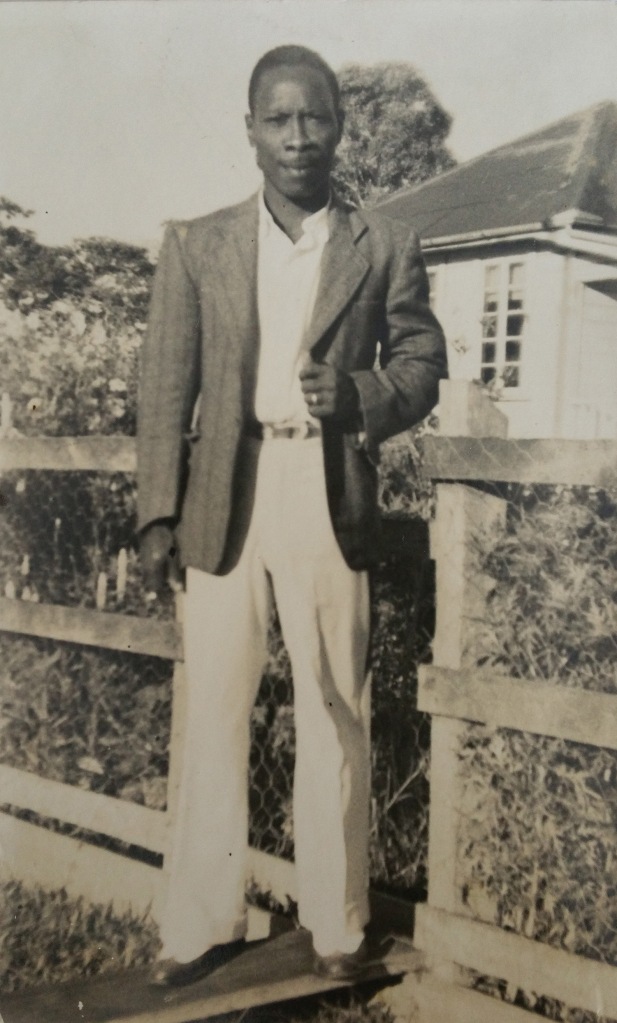
Charles Eric Wilkinson, late 1940s in British Guiana. Source: Michelle Joan Wilkinson.
My grandfather, Charles Eric Wilkinson, was a black architect-builder involved in major government-sponsored building and infrastructure projects in British Guiana from the 1930s to the 1970s. I place Wilkinson’s built work and its surviving archive of bookkeeping ledgers, letters, photographs, and architectural drawings in conversation with material from national archives in Guyana and England, adding oral histories from family members. White architects stationed in British Guiana and the Caribbean reported back to England about the “skilled craftsmen” (carpenters and building contractors) that they observed. Based on family lore and archives, I question the interactions between the supposed foreign “expert” architects and the local builders, seeking to document this period more accurately through architectural work that has remained in the shadows.
Wilkinson’s concrete house in the late 1950s, before he added a concrete fence and bridge from the front yard. Source: Michelle Joan Wilkinson.
The backdrop to my research is the rise of foreign-aided, self-help building schemes in British Guiana in 1954, the same year that Wilkinson endeavored to build a concrete house for his family. British and US architects were involved in British Guiana’s planning and housing development work. Howard Mackey, a Black American professor at Howard University, was on a team contributing to the self-help project. This period of Britain transitioning its so-called dependencies to self-sufficiencies provides an important context for understanding the role that black builders would play in shaping the built environment of the (independent) nation to come.
Gifted buildings are potent mechanisms of geopolitical reshuffling, premised on an uneven power relation between giver and receiver. How do such exchanges shape cities in transition?
Frances Richard: You have been working for several years on ideas of the architectural gift, and have realized this research in a number of projects. To cite a few: an exhibition you’ve co-organized with Damjan Kokalevski called “The Gift: Stories of Generosity and Violence in Architecture” recently opened at the Architectural Museum in Munich. In 2022, you were convener for a conference at the British Academy titled “The Gift of Architecture: Spaces of Global Socialism and Their Afterlives.” And your 2020 monograph Architecture in Global Socialism: Eastern Europe, West Africa, and the Middle East in the Cold War explores issues of international largesse and exchange — what you call “socialist worldmaking.”
Housing project for Libya, designed by Romproiect (Romania), 1980s. The design and construction of buildings such as this were typically subject to barter agreements. [Arhivele Naţionale ale României, f. Romproiect, 7288]
A focus on architectural gift-giving affords new ways of thinking about the worldwide processes triggered by capitalist industrialization and colonial exploitation.
Would you talk about the parameters and findings of this research? What is the architectural gift, as exemplified in what kinds of sites? Why has the inquiry followed the trajectories it has?
Łukasz Stanek: Architectural gift-giving is embedded in a long tradition of imperial and religious donations of buildings. But my collaborators and I have been interested in its relationship to modern urbanism; in how a focus on architectural gift-giving affords new ways of thinking about the worldwide processes triggered by capitalist industrialization and colonial exploitation since the 18th century. In my book, the temporal frame is more restricted: I studied Cold War collaborations — often unequal — between architects, planners, and construction companies from socialist countries in Eastern Europe, and their counterparts in West Africa and the Middle East. The movement of labor, blueprints, and construction materials and technologies across these geographies shaped cities such as Accra, Lagos, Baghdad, Abu Dhabi, Kuwait City, and many others, from the 1950s to the 1980s. Gifted buildings were among the most visible interventions by means of which the Soviet Union, China, and other socialist countries both supported the newly independent countries, and hoped to achieve political leverage and economic gains. To cite a few examples: the National Assembly Building in Conakry, a Chinese gift to Guinea; the Kikwajuni housing district in Zanzibar, an East German gift; or the House of Culture and Youth Theatre Complex in Darkhan, a Soviet gift to Mongolia.