New research update : Ali, N., Idowu, G. Demolition-driven urbanism and the loss of coastal heritage in Makoko, Lagos. Nat Cities (2026). https://doi.org/10.1038/s44284-026-00411-5
“Makoko is a nineteenth-century fishing neighborhood and major small-scale business hub in Lagos, Nigeria. It is located on prime land in the Yaba local government area. An estimated 250,000 people live there, on top of stilted housing on water and concrete structures on land. Water-based residents are predominantly from the Egun minority group, and land-based residents are largely Yoruba. Following a demolition in 2012, the community’s baales (chiefs) and the Lagos state government signed a memorandum of understanding in 2014. The memorandum of understanding stipulated, among other provisions, the removal of structures within 100 m of the high-voltage power line that traverses Makoko. Although contested, the agreement functioned as a provisional settlement between customary governance and state authority.
Now, this memorandum of understanding has been broken. Since 23 December 2025, the Lagos state government has demolished an estimated 3,000 homesin Makoko’s waterfront areas, extending well beyond the agreed perimeter (based on conversations with residents and video and photographic evidence between 5 and 20 January 2026). The progressive expansion of the demolition zone — from an initially negotiated, legally proscribed 30 m to an arbitrary 522 m from the power line— highlights a governance approach characterized by shifting spatial criteria and insufficient procedural transparency. During the past three years, the stilted houses on the waterfront have steadily expanded towards Third Mainland Bridge, as seen on ArcGIS — which does not explain the transgression of the agreed perimeter. There are only speculations about why the government broke the memorandum of understanding, which held for almost 11 years.”
Author information
Nura Ali, Liverpool School of Architecture, University of Liverpool, Liverpool, UKNura Ali
Gowon Idowu, Traditional medicine practitioner, Lagos, Nigeria, Gowon Idowu
Liverpool School of Architecture, at the University of Liverpool and the Program in the History of Science, Medicine, and Technology of the Johns Hopkins University invite proposals for a hybrid symposium to be held in Liverpool from the 17-18 April 2025.
Pathology Labs, Korle Bu Hospital, Accra, c1958
We welcome presentations that explore various settings for health and healing, such as shrines, sacred healing huts, and herbal ‘apothecaries’ and other spaces for indigenous medicine and healing practices; ‘basic’ health care infrastructure incorporating dispensaries, clinics, and hospitals developed for early missionary and colonial medicine; post-independence medical centres. We are also interested in papers examining the use of healthcare ‘vectors’ such as barefoot doctors, travelling midwives and paramedics and their spread of health care practices such as vaccinations, and childhood nutrition programmes in urban and rural areas.
We are interested in the settings for full range of medical specialisms from paediatrics to psychiatry and also more contemporary physical design responses to contemporary pandemics such as Ebola and Covid. Evidence and records of mixtures of indigenous and western healthcare practices in some community settings and the emergence and involvement of teaching hospitals in healthcare planning is also of interest.
Other possible topics include the role of military hospitals, colonial and modern, and contemporary healthcare infrastructure and provisions for displaced persons and refugees. We encourage interdisciplinary approaches–history of medicine, medical anthropology and sociology, oral history, among others.
Our area of interest is the African continent, from the ‘MEANA’ countries of the maghreb, north of the Sahara, to all countries South of the Kalahari and East and West of the Sahara. Health and healing facilities on islands in proximity to main continental mass such as Zanzibar, Mauritius, Fernando Po and Cape Verde are also of unique interest.
We are seeking to publish selected outputs from the symposium in a volume currently under negotiation with the publisher. We welcome abstracts (500 words max) and short CVs (1page) Please also indicate whether you intend to deliver your paper in person or online. For more information please contact Ola Uduku o.uduku@liverpool.ac.uk or Bill Leslie, swleslie@jhu.edu
Ewan Harrison, Rixt Woudstra and Iain Jackson, “Accelerating Development: Taylor Woodrow and Arcon’s Prefabricated Steel Structures in Decolonizing West Africa”, ABE Journal [Online], 23 | 2024, Online since 01 October 2024, connection on 01 October 2024. URL: http://journals.openedition.org/abe/16130
Construction of the Sapele Sawmill, Nigeria, 1946. UAC 2/13/b/7/1, reproduced with permission from an original in the Unilever Archives, UAC 2/13/B/7/1.
In 1943, in the middle of World War II, the British architects Edric Neel (1914-1952), Raglan Squire (1912-2004), and Rodney Thomas (1902-1996) created Arcon (short for Architectural Consultants). Focused on applying factory mass production systems to the building industry, Arcon engaged in an unusual, yet close, partnership with the civil engineering contracting company Taylor Woodrow. While their first project became one of Britain’s most popular post-war “prefabs,” it is little known that in the years thereafter a similar structural steel system was widely marketed in Britain’s West African colonies, where it became one of the most frequently used prefabricated building designs. Through the support of Taylor Woodrow, which acted as the agent for Arcon’s worldwide implementation, the prefabrication system was utilized in a range of contexts: to build houses for British companies, to build schools and market halls for colonial governments, and, of most interest here, to build factories and warehouses for the United Africa Company (UAC), as part of the industrialization drive that accompanied decolonization in the 1950s. The UAC was part of Unilever, and one of the largest conglomerates of trading and manufacturing interests active across “British” West Africa. It entered a partnership with Taylor Woodrow to jointly market the Arcon system, thereby profiting from the erection of its own buildings, and the sale of the Arcon system of construction to colonial and subsequently, post-colonial governments across the region. Today, Arcon structures, often sizeable sheds clad with imported metal sheets or locally available timber, can still be found across Ghana, Nigeria, and Sierra Leone.
What kind of art is left behind by totalitarian regimes? A new free-to-readbook called Congo Style: From Belgian Art Nouveau to African Independence explores the visual culture, architecture and heritage sites of the country today known as the Democratic Republic of Congo (DRC). It does so by exploring two now-notorious regimes: King Leopold II of Belgium’s Congo Colony (1908-1960) and Mobutu Sese Seko’s totalitarian Zaire, established when he seized power in a military coup in 1965 after five years of political upheaval. We asked artist and visual culture scholar Ruth Sacks five questions about her book.
What did you set out to achieve?
Years ago, while I was in Belgium on an art residency, I became interested in the early modernist art nouveau movement (1890-1914). In architecture and art, this period is part of 20th century modernism, known for a minimal, clean aesthetic that’s influenced by new technologies and the advent of machines. Art nouveau is distinctive because it’s highly decorative, while still using the new building materials of iron and glass.
What interested me was the colonial nature of art nouveau. Art nouveau came with a very strong sense of defining newly formed (or unified) nation states in western Europe. It was the style used at world fairs. These were grand exhibitions showing off western countries’ scientific and cultural achievements, including the acquisition of colonies.
A colonial pavilion in the art nouveau style at the 1897 Brussels world fair in Belgium helped establish one of the names for Belgian art nouveau: “Style Congo”.
The style is distinctive for its curling, plant-like shapes and is a major tourist feature today. The years in which it was implanted in Brussels (about 1890-1905) directly coincided with the brutal Congo regime of Belgium’s King Leopold II.
Travelling to the DRC, I located actual art nouveau buildings from the early colonial period. But it was the state sites of the early Mobutu Sese Seko regime (1965 to 1975) that captured my attention. Like art nouveau, they are steeped in a sense of nationalism and aimed at impressing. For example, the Limete Tower (in use from 1974) on Boulevard Lumumba is a massive monument intended to be a museum celebrating national culture. A tower made up of a huge raw cement tube is topped by an organic floret shaped crown, with a curving walkway leading off from its rounded lower sections.
My experience of the capital city, Kinshasa, made me rethink what cities were and could be. Buildings like Limete Tower that were designed for very different infrastructures (far more ordered, European and US systems) have weathered in fascinating ways that are often related to extremely violent historic events.
I didn’t want to present a conventional study that only analyses the design of the architecture and its functionality. The book attempts to read sites like this within the particularities of their city, its streets, plants and histories.
What did you conclude about the Leopold period?
In Leopold II’s time, the king himself was cast as the villain of the “red rubber regime” in the Congo. The Belgian colonial regime under Leopold II committed atrocities connected to the rubber industry. (The 1897 Congo Pavilion was a pavilion within the Brussels World’s Fair dedicated to displaying how the Congo provided a lucrative and exotic resource to Belgium.)
Movements like the Congo Reform Association (mainly US and British) protested against horrific conditions, including torture and mutilation, that left at least a million Congolese people dead. A great deal of the focus was on Leopold II himself and his greed, which distracted attention away from the greater system of capitalist colonial expansion that was fully endorsed by Euro-American powers.
Famously, Leopold II never set foot in the Congo and neither did the art nouveau designers who fashioned buildings and exhibition pavilions relating to the Congo. I believe this distance from the realities of life in the Congo itself allowed for the fantastical forms that were created in Belgium.
What did you conclude about the Mobutu period?
Mobutu Sese Seko was widely maligned by the Euro-American press. What’s often ignored, to this day, is that he was put in place by Belgium and the US. He was painted as the villain of the African story, fulfilling the ultimate caricature of the African kleptocrat, yet he wouldn’t have come to power without the nature of the colonialism that came before him.
Belgian colonialism followed a logic of extractivism (removing natural resources to export them) that forced the Congolese economy to supply raw materials to the west (especially Belgium), which continues today.
Mobutu is considered corrupt in the Congo today and his military dictatorship was indeed brutal and controlled the Congolese people with fear. However, his commandeering of a cultural blooming in Kinshasa in the late 1960s and early 1970s was important. Instead of dismissing what he built as only the work of a dictator, my book draws out some of the complexity of this time and what it meant to celebrate African craft, art forms and traditional culture.
The process of appropriating Euro-American artistic ideas and architectural styles in order to celebrate Africanness, as an anti-colonial statement, still holds weight today. Many of Mobutu’s towering monuments are considered objects of pride in the city.
How does this live on today?
There is something to be gained from looking at what is left in the wake of tragically violent regimes and how their structures are treated within both their societies and their immediate surroundings. How material culture is made is as important as what is made. Reckoning with monuments and memorials, and considering how these are maintained in the city, can shed often unexpected insights into the ways histories are told.
My hope is that the book remains relevant as a sign there is value in picking apart material remains of regimes that aimed for total control, but never fully achieved it. The associations that build up around public spaces and exhibitions are not necessarily only to do with the circumstances of their making, but how these stories have been filtered over time. They can alienate people but they can also engender pride.
The extractivist attitudes I describe throughout the book, which see the Congo as a resource with bountiful raw natural materials, are still very much present in our day-to-day life. The cobalt in our smartphones, computers and electric cars is mined by labourers working in near slave conditions to feed our need for the latest technology. While Congo Style stays with historical examples in Kinshasa, the built material that follows colonial ecocide is the main topic.
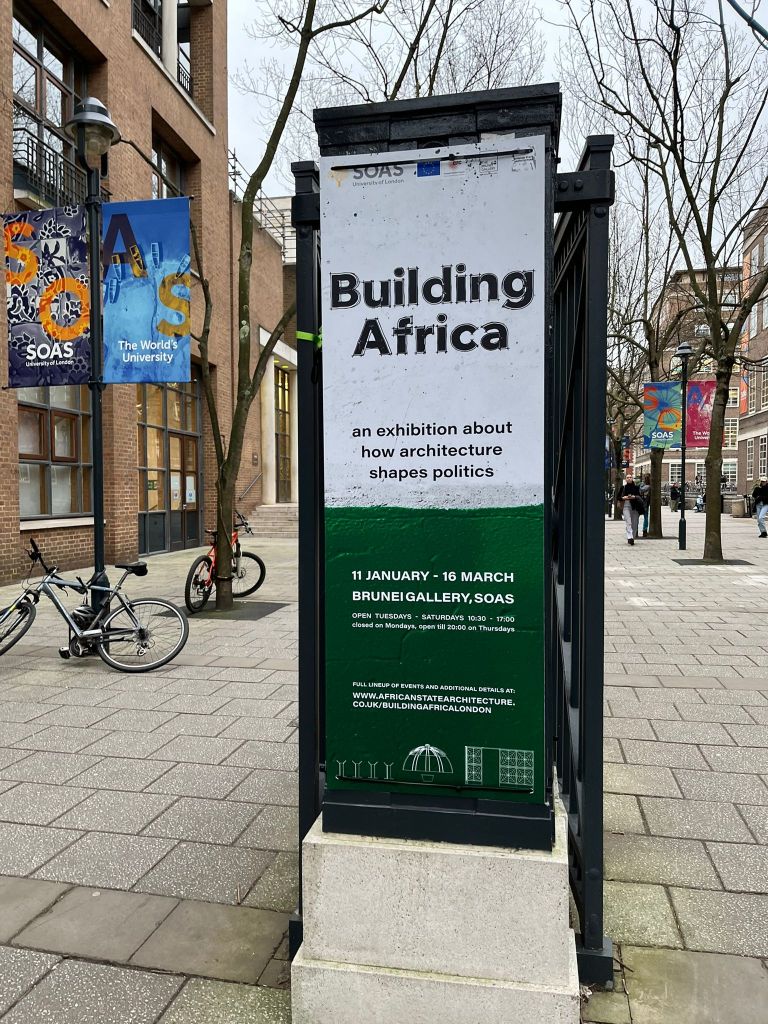
The Building Africa Exhibition curated by Julia Gallagher and Kuukuwa Manful is currently showing at the Brunei Gallery SOAS until 16 March 2024. This is a smaller version of the exhibition which was first shown in Ethiopia as part of the State Architecture Research project at SOAS with Prof Gallagher as its director.
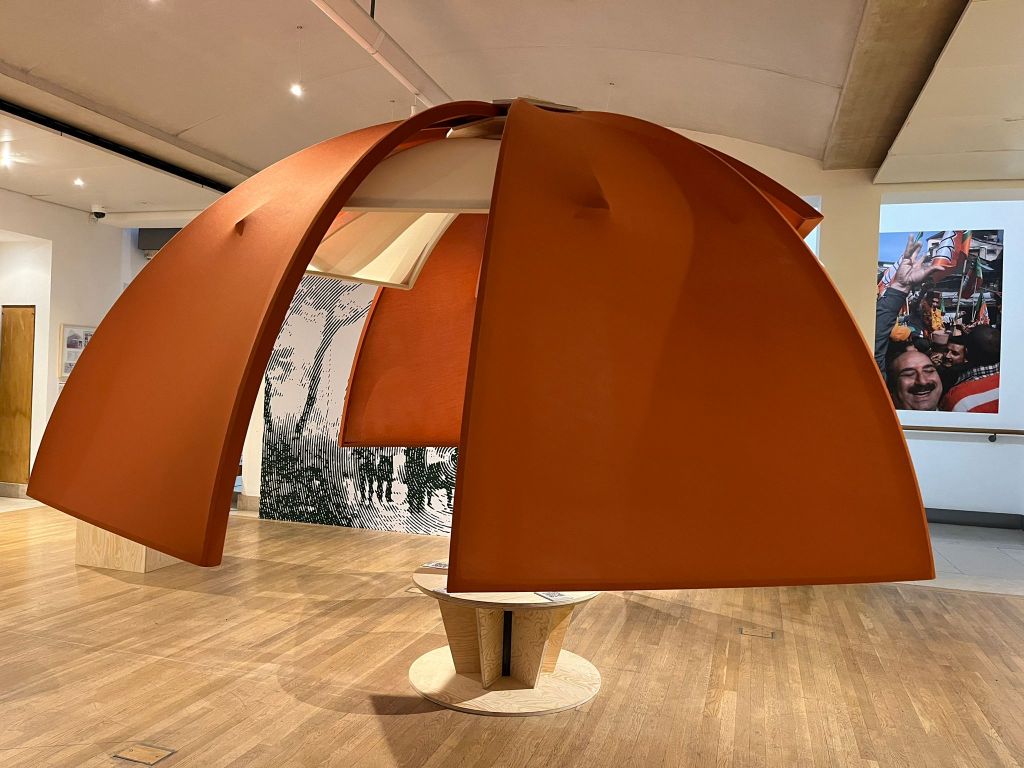
The SOAS exhibition is full of colour featuring, film, photography, a large-scale physical model-installation, publications and school uniforms and memorabilia. Located in the main gallery space, sections deal with the school history of Ghana, ‘state-built architecture in several African countries, highlighted in the exhibition by images of Ghana’s alternating seats of power, (Osu Castle and State House), and the African Unity building constructed in Addis Ababa. A conceptual installation structure evoking African unity has also been produced by the work of a young Ethiopian architect , Nahom Teklu whose umbrella structure enables exhibition visitors view in VR the ‘state’ architecture of different parts of Africa, it also harks back to the idea of pan-African unity where the umbrella unites all states on the continent.
The exhibition’s thesis that buildings shape us, is made clear to viewer and particularly how the state’s involvement is central to this process of power, positioning, and identity, particularly in Africa, from its colonial past to the now post-colonial contemporary situated-ness in Africa’s modern cities to secondary schools in Ghana in which the schools shaped would be future leaders. This was both by the design of the schools within a colonial frame but also school uniforms, motos and other paraphernalia of educational engagement.
State built institutions such as seats of government (state house in the case of Ghana) or stadia (exemplified in the exhibition by the main stadium in Kinshasa) have a more mixed relationship where they both are sites of power, and international events (the Muhammed Ali – Frazier rumble in the jungle, Kinshasa stadium film footage is on show) or symbols of African Unity (shown through AU building in Addis Abeba, which often results in tensions of perceptions and strategic plans for future use as regimes and state actors change.
The exhibition also connects the viewer to the research which has underpinned it. This includes the 2023 book Building African Futures edited by Gallagher and Emmanuel Ofori-Sarpong, and Manful; and Manful’s thesis – and a number of papers members of the State Architecture project have published as reports and in peer reviewed journals.
Building Africa packs a dense amount of African state-built architectural history into a a viewable gallery which audiences are invited to view, engage with and critique, helpful post-it notes are provided for this process. The curators explain that this is an adjusted version of the larger 7 panel exhibition and of the conceptual architectural installation has had to be cut short to fit the gallery space. This does not detract from this well-planned and already publicly pleasing and well- received exhibition.
One day in January at Trocadero Square, Lekki, Lagos...
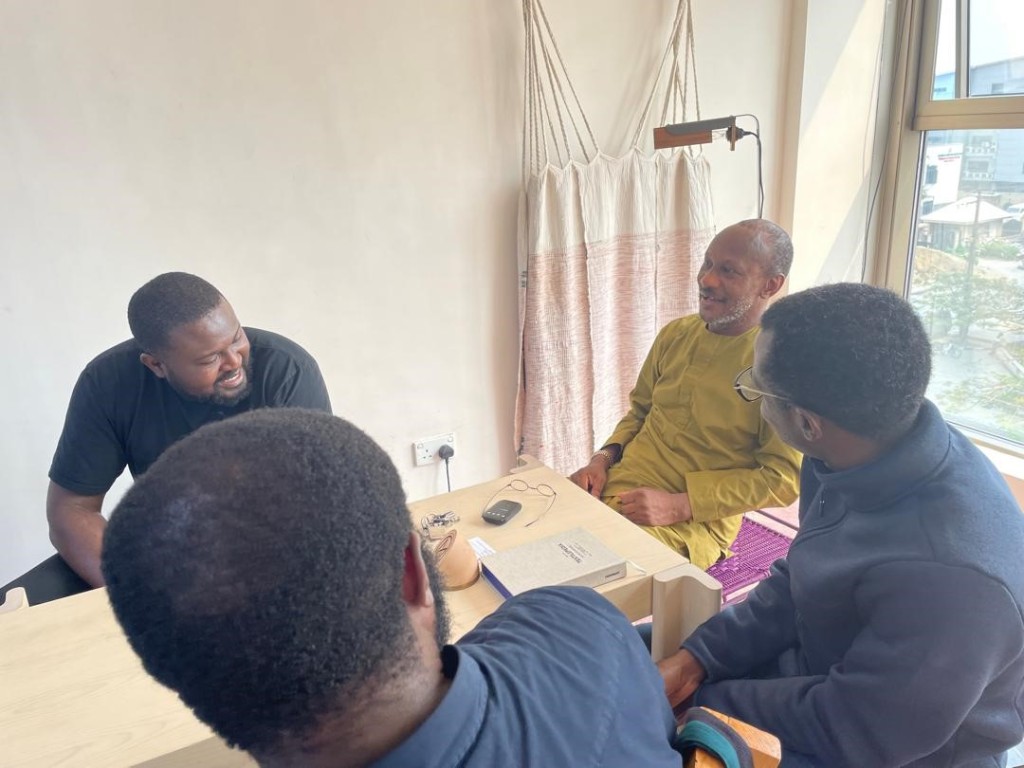
On our last day in Nigeria we planned to meet Nifemi Marcus Bello, a remarkable Nigerian product designer who has had his work shown to great acclaim at the Sharjah Triennale. Joining us was Associate Prof Seyi Akerele who had just completed a Virtual Fellowship at the University of Liverpool with Ola Uduku.
Seyi Akerele and Ade Shokunbi (photo O.Uduku)
It also seemed an ideal chance to meet up with some other creatives too, and we invited Adeyemo Shokunbi to join us. Shokunbi is a fascinatingly creative architect, whose Abijo Mosque received the Abdullatif Al Fozan Award for Mosque Architecture for the fourth cycle 2020 – 2023. Most recently Shokunbi has also made waves with his shipping container formed MAD (Make A Difference) Project at the University of Lagos and he will shortly be a taking up a Teaching Fellowship offered by the Obel Foundation in Denmark. James Inedu George also made time to join the party. George was one of Joe Owuso-Addo’s ‘New Blood’ from the 2021 Venice Biennale. A phone call from Shokunbi summoned Chuka Ihonor – writer art curator, impresario and activator extraordinaire.
Iain Jackson and Nifemi Marcus-Bello (photo O.Uduku)
The discussion which followed we felt lucky to have been allowed to listen in and occasionally contribute to. The key theme unsurprisingly was the dearth of the linking of academic teaching with the realities of practice. We heard tales of the assembled team, unsuccessful attempts at reaching out to the academy who either were disinterested or actively ignored these linkages. James Inedu-George was more direct in his criticism of relationships and links between practice and gown.
L – R Nifemi Marcus-Bello, Ola Uduku and Ade Shokunbi (photo I. Jackson)
The pre-eminence of the expatriate architect from South Africa, and in particular SAOTA was expressed. It was felt that Nigerian’s found it difficult to feel pride in local architecture and creative practice. Wealthy clients garnered a sense of prestige by hiring architects from overseas. It was a throwback to Demas Nwoko’s struggle for acceptance by the Nigerian architectural profession despite his clear brilliance as a creative designer whose roots were in his initial ABU architecture training. Collaborative practice and design also needed a wakeup call as the discussion critiqued the ‘lone architect-creator’ syndrome where collaboration was actively discouraged and firms struggled to scale their enterprise to deliver large projects.
Ade Shokunbi and James Inedu-George(photo O.Uduku)
With Chuka we’d like to ‘bring’ highlights of Sharjah Triennale to Nigeria. Nigerian creatives featured so strongly in this exhibition, and it seems appropriate to share this work with a Nigerian audience.
Back clockwise, Nifemi Marcus-George, Chuka Ihonor, Seyi Akerele and James Inedu-George (Photo O.Uduku)
Something special happened at this informal and chance encounter. From this gathering of creatives, educators, authors, makers, and architects a refreshing and encouraging discussion flowed. We shouldn’t stop here. We would be honoured to host the next platform for what might be termed an African Creative Awakening, and present below what we might call the Trocadero Call to Action (TCA) in deference to this auspicious meeting at the Trocadero Square in Lekki – the place to have been on Thursday 18th January inLekki, Lagos.
The TCA Participants and Observers:
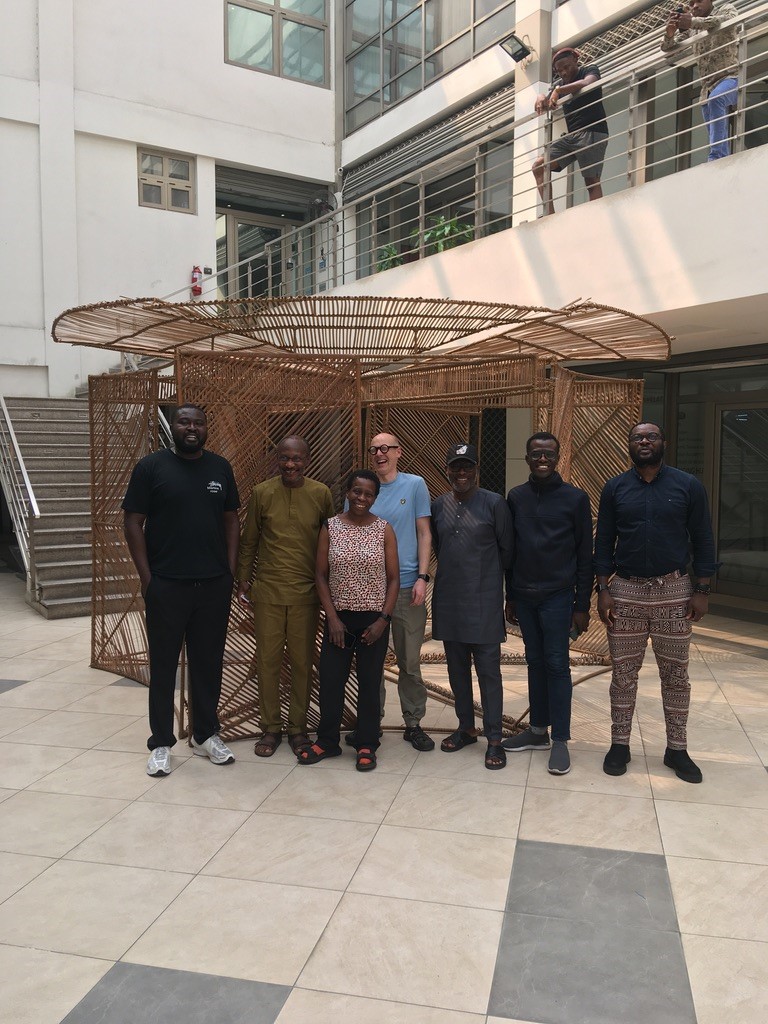
L – R. Nifemi Marcus-Bello, Chuka Ihonor, Ola Uduku, Iain Jackson, Ade Shokunbi, Seyi Akerele and James Inedu-George (Photo Nifemi Marcus Bello Studios)
The future of Architectural Education in and around Western Africa
Practice Building and the process of commissioning, designing, and making architecture.
The purpose, shape, and expression of architecture within the Western African context, and how this is communicated and shared.
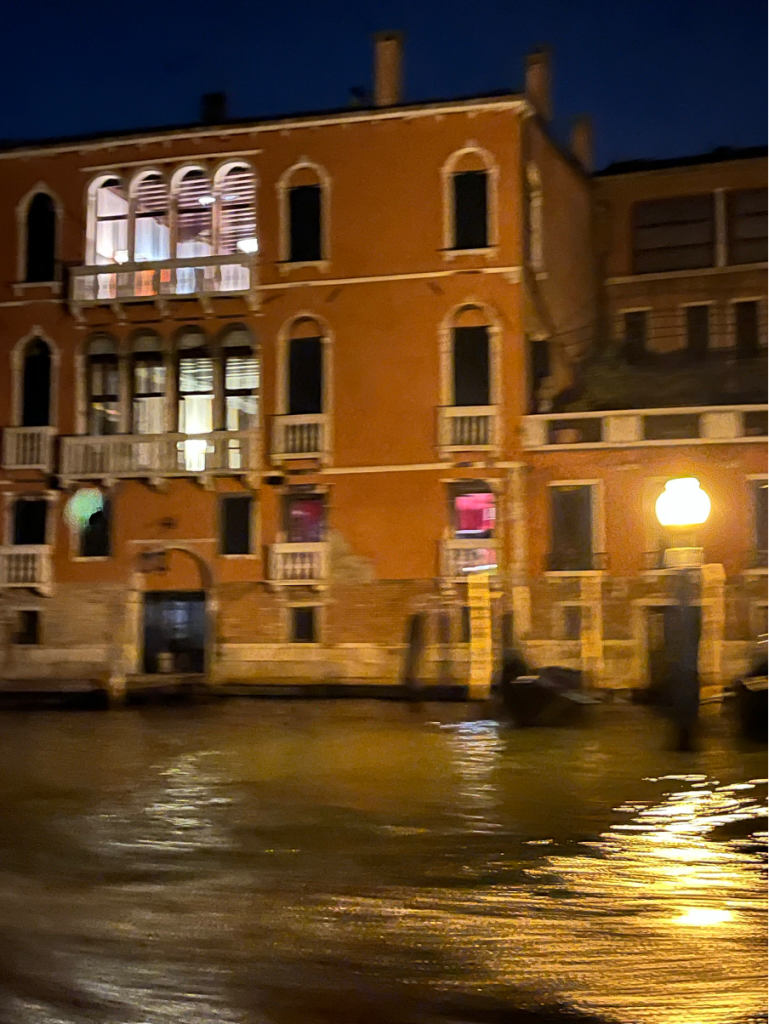
A visit to Venice to attend the inaugural AFRAHUAN session at the Teatro Piccolo at the Arsenale as part of the Carnivale Proceedings of the Venice Biennale proved an apt occasion to visit and view Venice in full exhibition and tourist mode.
Venice is indeed a city like no other. No cars, no bicycles, lots of passageways, canals, and tourists. One adjusts to this city of walkers, traders and tourists all jostling for space in alleyways that are literally not wide enough to swing a cat. The green canal water both enticing and goading the unwary walker to come to its banks.
Arsenale Arriving in Venice at night
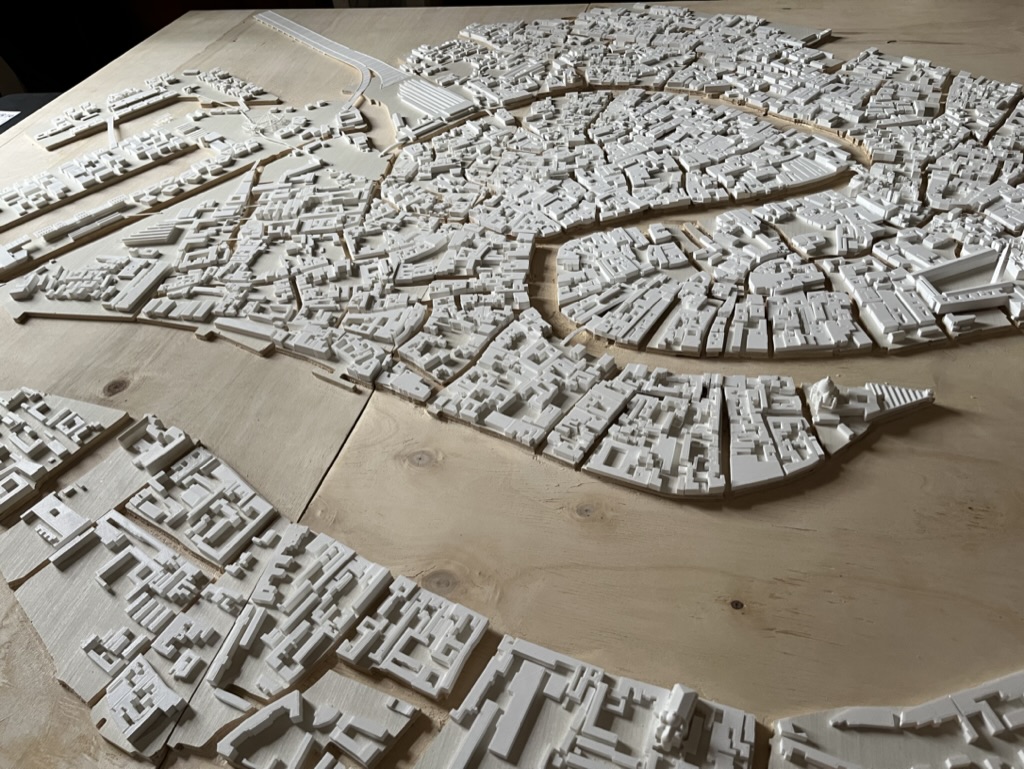
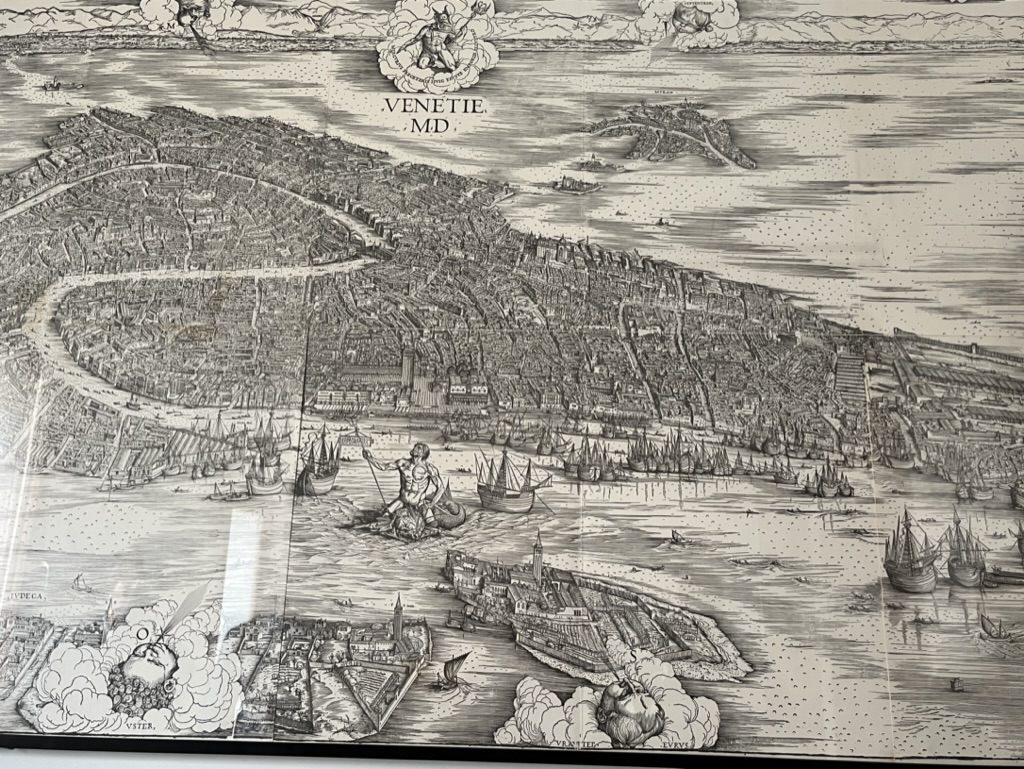
A walk to the Arsenale gave a better viewpoint of the wide vista of Venice as a series of islands with canals as fingers out to the grand canal. The adaptive reuse of various parts of this still living city is clear. The Arsenale itself remains the home of the Italian navy and a museum dedicated to the armed force still exists with the occasional boat dropping by.
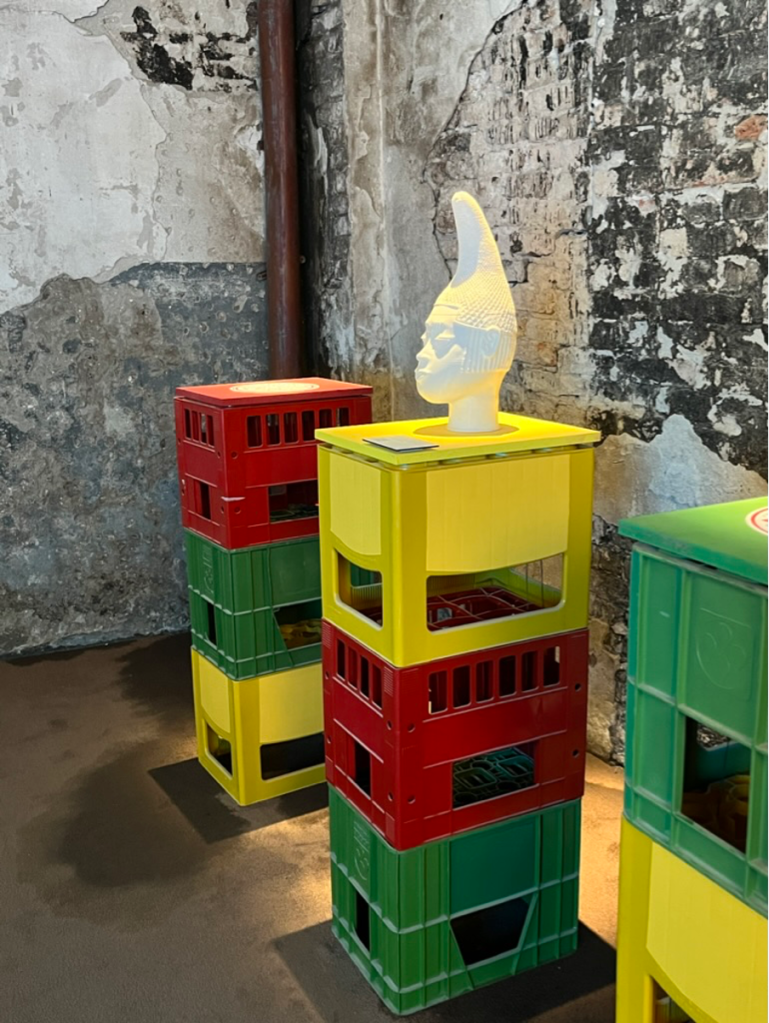
The main part of the old Arsenale building however now has been occupied by the architecture biennale, this year curated by Lesley Lokko and involving your writer and a wide set of architects, writers and artistes with Africa focused research. The ‘carnivale’ exhibition is no mean feat, a work of immense dedication, creativity and focus. The curation is superb and content more than can be taken in at one go. One easily gets immersed in what it offers up with names one knows and has heard of contributing to this rich tapestry of art. Fortunately the accompanying catalogue means one can refer back to installations and events missed or glossed over in the viewing of the exhibition.
AFRAUHN AT THE CARNIVALE…
The African Architectural and Urban History Network (AFRAUHN) had its debut at a session at the Carnivale at the Biennale. Curator Lesley Lokko introduced our session which had two parts, the first involved speakers Ikem Okoye (Delaware, USA), Kuukuwa Manful (Michigan University, USA) and Neal Shasore (London School of Architecture), with Ola Uduku (Liverpool University) chairing, where the session focused on a discussion on the remit of AFRAUHN which is to help encourage and advocate for Architectural Research in Africa, and support new generations of indigenous historians and researchers in Architectural History and urbanism. After Ikem Okoye’s introduction both Kuukuwa and Neal were able to discuss their different approaches to, and hopes for Africa-related Architectural Research.
AFRAUHN Session [Courtesy of Venice Biennale]Lesley Lokko Introducing the AFRAUHN Session [Courtesy of Venice Biennale]
The second session chaired by Huda Tayob (Unversity of Manchester) involved all speakers from the earlier session and also Murray Fraser (University College London). This session was a roundtable where the speakers responded to Huda Tayob’s questions which considered specific issues and challenges to scholarship in African Architectural History and its situatedness within the wider context of global research and challenging normative notions of historical research and scholarship.
AFRAUHN 2nd Session [Courtesy of Venice Bienale]AFRAUHN 2nd Session [Courtesy of Venice Bienale]
The entire session was recorded and will be published by the Venice Architecture Biennale before the end of September 2023. Due to the events related to air traffic control problems in the UK unfortunately several of the invited AFRAUHN team were unable to attend the session, and others arrived late due to flight delays. It is hoped we will be able to include their recorded contributions to the final video output from the session.
IUAV (University of Venice)
On Wednesday, the day after the Carnivale discussion we were fortunate to reconvene at a meeting room at the IUAV (University of Venice), thanks to Dr Jacopo Galli, who has researched into African modernism and was involved in the curation of the exhibition Africa Big Change, in Milan and has worked with Manchester School of Architecture on the analysis of schools in West Africa. IUAV has sites across Venice, and we met at the C’a Tron campus, a Venetian villa owned by the wealthy Tron Family before being gifted to the State. Post meeting tours took us to the Carlo Scarpa-influenced main campus of the IUAV, a repurposed convent which still has parts which are owned by the church. The campus also has a significant architectural library including book volumes and periodicals accessible and in regular use by its students.
IUAV
Unlike the exclusive arrival to the watery city a few days earlier, the trip back to the airport was by airport water taxi, which proved to be a bus trip stopping at many of the archipelago of islands which constitute Venice, including Murano, famous for its glass works and San Michael. Approaching Marco Polo Airport Venice by water seemed a very apt way to leave the city.
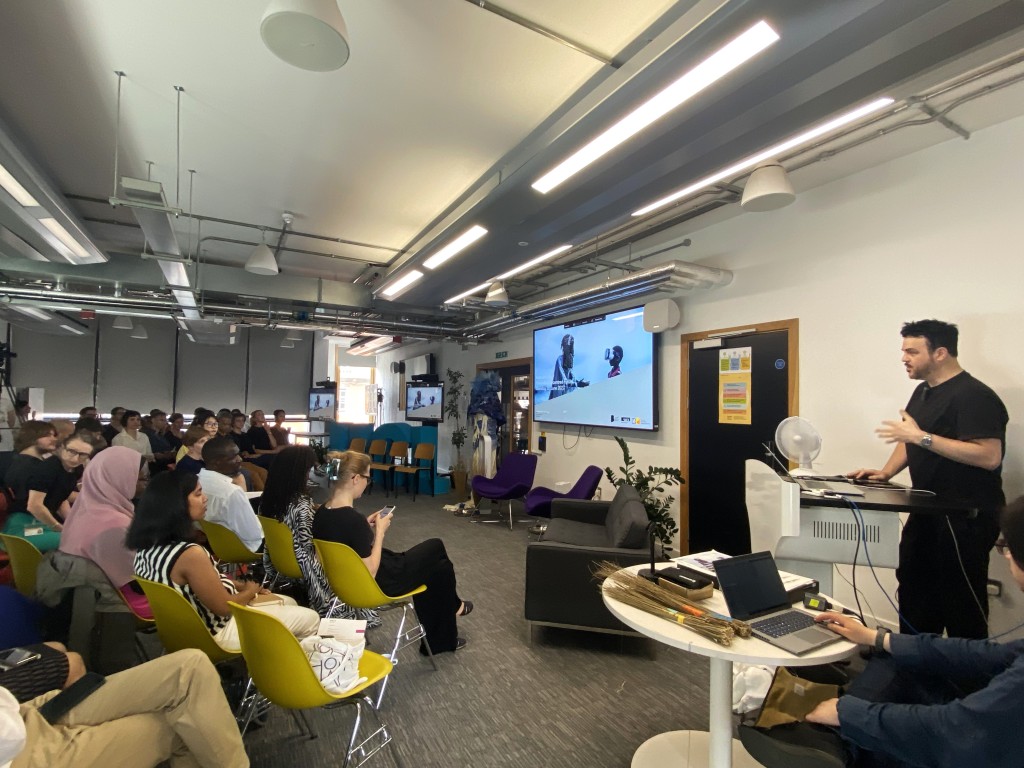
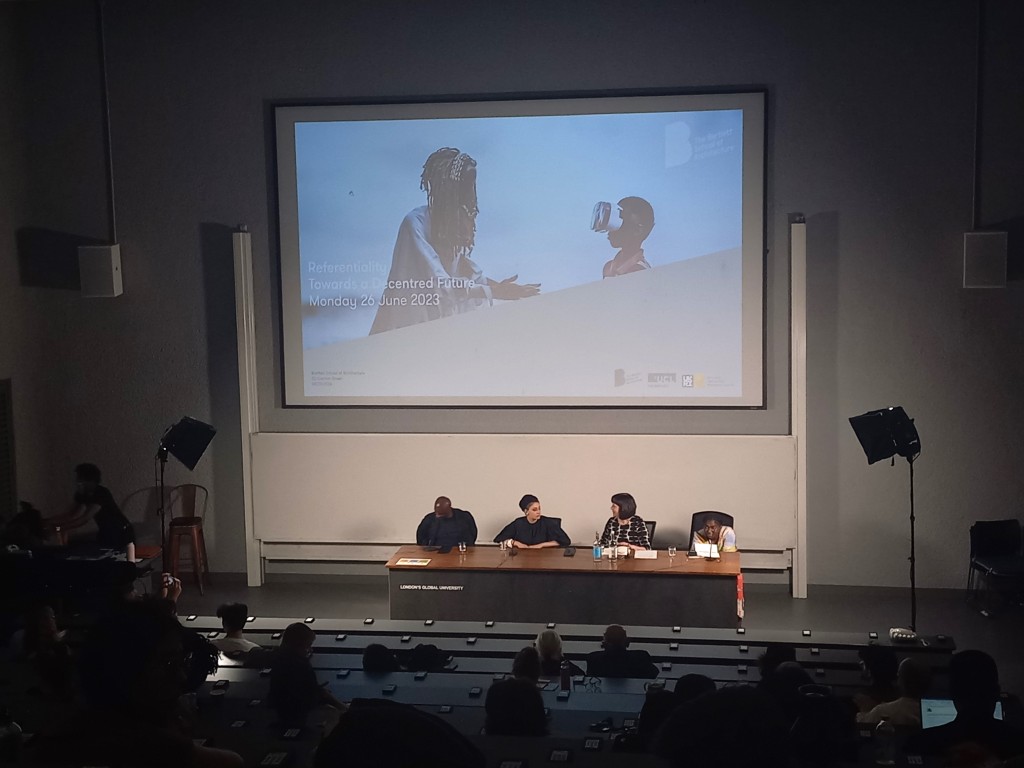
The event interrogated approaches that challenged the mainstream colonial, nationalist and social-cultural frameworks in architecture, art and heritage management scholarship and practice. It included discussions, talks and activities with a diverse range of speakers whose creative production explore approaches free from referential relationship with inequitable power structures.
A research conversation moderated by Edward Denison, Ievgenia Gubkina, Emily Mann and Shahid Vawda comprised speakers from multidisciplinary fields of research and practice with case studies from Africa, Asia and Europe. The speakers included Leverhulme Early Career Research Fellow, Dr. Alistair Cartwright and PhD researcher, Adefola Toye – both from Liverpool School of Architecture. Each speaker discussed the limitations they encounter when engaging mainstream sources for scholarship and research-in-practice which erases the agency of populations under study. Furthermore, they shared how they addressed this using participatory action research, public engagement, multidisciplinary methods and utilising crowdsourced open-access archives.
1. Image 1 by Edward Denison
2. Alistair Cartwright Presenting, by Edward Denison
The session concluded with talks from African heritage organizations, including the Direction du Patrimoine Culturel du Sénégal, Swahilipot Hub, and the University of Cape Town. They discussed existing and future initiatives for sustainable and inclusive heritage management on the continent. These included exhibitions, training workshops, public engagement tailored to different age groups and professions, and collaboration with local and global heritage partners.
Afterwards, a student-centered lunchtime activity with architect Sumayya Vally and BSA design tutor Jhono Bennett, explored referentiality in architectural research and practice through co-production and drawings based on the participants insights and experiences.
Image 3 by Adefola Toye
The remainder of the event was spent in conversations with notable speakers in the fields of architecture, art and curatorial practice.
Nana Ocran, founder and Editor of the People’s Stories Project, hosted discussions with multidisciplinary artists Christopher Samuel and Valerie Asiimwe Amani. They explained how their creative works use archives materials to create awareness about the underrepresentation of people with disabilities and colonial subjects.
Performers Peter Brathwaite and Kenneth Olumuyiwa Tharp examine ‘Rediscovering Black Portraiture’s use of domestic material culture to reimagine the historical image of black subjects as well as professional engagement with diverse art and culture foundations in the UK.
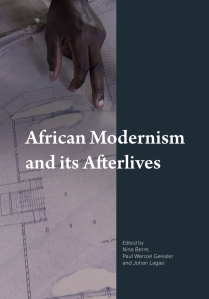
This edited collection of essays and image-driven pieces by anthropologists, archaeologists, architects, and historians examines the legacies of African architecture from around the time of independence through examples from different countries. Drawing on ethnography, archival research, and careful observation of buildings, remains, and people, the case studies seek to connect the colonial and postcolonial origins of modernist architecture, the historical processes they underwent, and their present use and habitation, adaptation, and decay.
Deriving from a workshop in connection with the 2015 exhibition “Forms of Freedom” at the National Museum in Oslo and the Venice Biennale, the volume combines recent developments in architectural history, the anthropology of modernism and of material culture, and contemporary archaeology to move beyond the admiration or preservation of prized architectural “heritage” and to complicate the contemplation—or critique—of “ruins” and “ruination.”
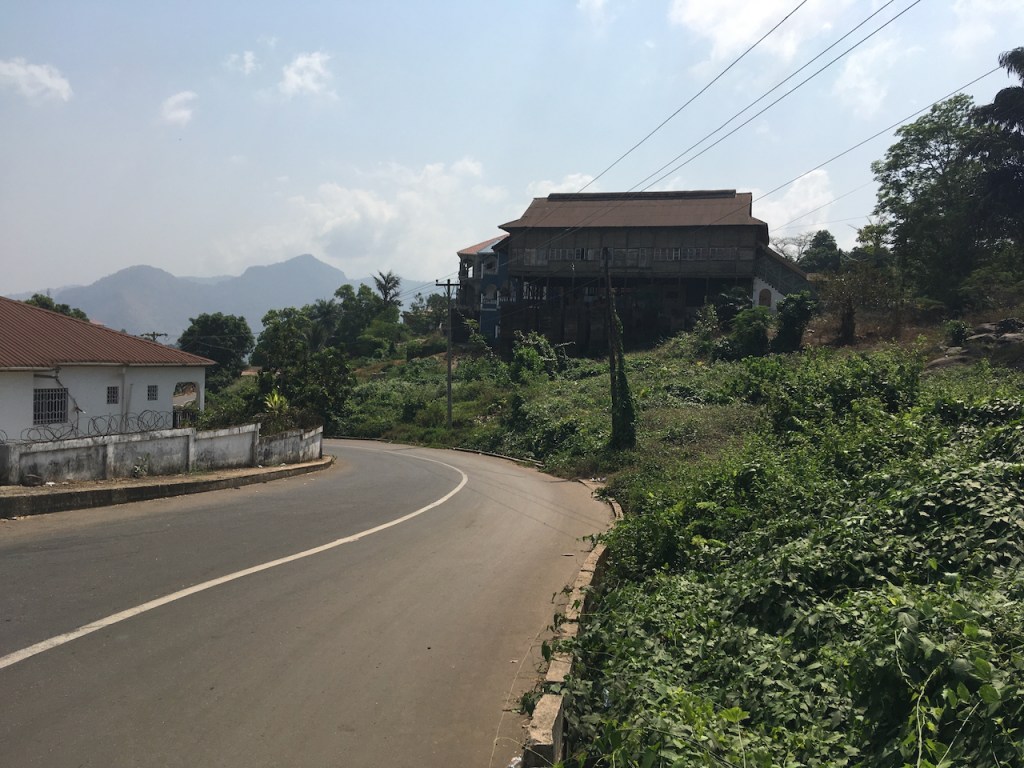
On an escarpment, 250m above the city of Freetown, is the small settlement of Hill Station. This was an exclusive resort built for the British colonial administrators and staff between 1902 and 1904. Modelled on the Indian hill stations (such as Simla) and the sanatorium at Aburi, Ghana, it aimed to provide cooler, more healthier abodes for the Colonists. Ronald Ross’s recent discoveries on mosquitoes and malaria also prompted the move away from the city, and the increasing desire for racially segregated housing and cordon sanitaires.
Bungalow at Hill Station
The houses were exported as kits from the UK ready to be assembled and clad on site. Hefty concrete bases are topped with steel frames that provide living accommodation at first floor level . Access is via a perpendicular staircase leading to a verandah. The raised bungalows catch the breeze and offer far reaching views over the forest, city, and ocean below. A club offered the only source of entertainment for the residents of this leafy, isolated, community.
Covered staircase entrance
How to access the Hill Station was solved by building a narrow gauge railway line from the city. It operated to suit the office hours of the government officials, and ran from 1904 until 1929 when it was replaced by road and bus service. Each day the officials would commute into town and return at the end of the day to their verandah’s and billiards at the Club House. It was an elaborate and hugely expensive experiment that benefited just a few dozen individuals. To build and maintain a railway through this challenging terrain was an immense task.
New build on left with origin Hill Station residence on rightView from Hill station over FreetownHill StationOne of the surviving 12 original Hill Station houses – with modifications to base
Today, just 12 of the original 24 two-storey houses survive, still occupied by civil servants and their families (and still without a piped water supply). Many of the houses are being modified and extended, and the large plots split-up and sold to facilitate new development.
















 Transnational Architecture Group