Archive

Tag Archives: architecture

CFP Deadline Extended

Jane and Max on beach in N Wales001

**ABSTRACT DEADLINE EXTENDED TO SUNDAY 9TH JUNE 2013**

Thanks for your great response to the call for papers.

We have received a few late entries this week, so if you’ve missed the 2nd June deadline but would like to submit a proposal, please send in your abstract by the 9th of June and we’ll add it to the pile… Thanks!

Notifications will be still sent out by mid-June, with details of speakers and a conference programme to follow.

‘changing my situation’

Here’s another excerpt from an interview with Jean-Philippe Vassal, carried out in 2006 as part of a research project funded by the Franco-British Union of Architects. Vassal talks more about the references to ‘far-away’ places within their architecture and the influence of Africa…

13.5.14 LV Bordeaux

Management Sciences University Building, Bordeaux. Lacaton & Vassal, completed 2006.             Roses climb up and across a grid of wires to create a facade of flowers.

JH            Because the Union encourages relations between the French and British in terms of architecture it is perhaps pertinent to ask whether you consider your work to be typically French in any way?

JPV         Perhaps there is a part, yes, but I don’t know… What I do know is that I have travelled quite a lot, I have lived in Africa and I am very curious of different things. I like changing my situation, to see new things and sometimes I am frightened by the fact that architecture could fix you somewhere. Each time I have the possibility of creating a new project somewhere else or the possibility in my work to take something from a different place – like flowers, like Turkish tiles [at the Architekturzentrum cafe in Vienna] – to make this connection with another country, to escape. Very often, with flowers.

JH           Like your University building in Grenoble, for example?

JPV         Yes, where we use tropical flowers. We have also just finished a big building in Bordeaux with roses as a background. We have 700 climbing rose trees with beautiful flowers and yes, to find something that creates distance from the architecture, from materiality.

JH           Do you think this comes from [your] living in Morocco? I’ve read that Casablanca is a city where French [culture] and the West meets with Islamic culture…

JPV         Yes, this confrontation occurs. In Casablanca you have a lot of incredible, modern architecture of the 1950s, the ’70s – really beautiful buildings and at the same time you have the medina, you have this mix. It is very interesting and there is a sort of… old and new things touch, there are different styles very close to each other.

In the 2G book [Lacaton and Vassal by Ilka and Andreas Ruby] there is an image of a nomadic school in the Sahara. There is nothing around the school, it is just a hut and we don’t know where the parents of the children are, but we imagine the children travelling long distances to arrive at the school. It is, I don’t know, a structure of 80 metres square, about 1.5 or 1.6 metres high – not very tall – and made of branches in the sand. So when it is really hot and bright outside, inside the hut it is dark and cool. The plants allow strips of light in and you enter this place to go to school. There are twenty school children, 6 or 7 years old, sitting in the sand all looking in one direction at a TV screen with a programme on – no teacher, you don’t need a teacher, just a TV. There are batteries and the TV which are linked to a solar panel on the roof and it is in the middle of the desert! And for me, it’s really the embodiment of modernity: architecture and modernity are precisely this. This mix of situation, place and these elements create – very efficiently, but also with a lot of poetry – this story.

JH           Does this place exist now?

JPV         Yes, it exists. Maybe for three years and then the wind blows it down and they just build another… And the children, you can go in and they don’t care, they just focus on the TV screen and the programme they are watching.

JH         And so they learn maths and science through TV.

JPV       Yes. For me, this is precisely architecture because here in Europe you could not imagine this happening. I like to imagine this cross fertilisation of things. Here you say no, I cannot employ straw as a roofing material, I cannot have a TV if there is no window… You can adapt very traditional things with more modern things; it is very easy.

Call for Papers Reminder

Jane and Max on beach in N Wales001

** DEADLINE FOR ABSTRACTS: SUNDAY 2ND JUNE 2013 **

‘THE INFLUENCE OF FRY AND DREW’

THURSDAY 10TH – FRIDAY 11TH OCTOBER 2013

SCHOOL OF ARCHITECTURE, LIVERPOOL UNIVERSITY, U.K.

For over fifty years, E. Maxwell Fry (1899–1987) and Jane B. Drew (1911–96) were integral members of the English architectural avant-garde. The Fry and Drew partnership – in its various incarnations – was a magnet for architects and architectural students from all over the world, giving the practice a distinctly international outlook. Their built works, from the 1920s to the 1980s, cross the globe from Europe to South-east Asia.

This conference seeks to investigate the themes and movements of twentieth century architecture and town planning that have been influenced by the work of Fry and Drew, and vice versa. What is the context of Fry and Drew’s architecture? Is it possible to identify a FryDrew strand of Modernism or a house style? What is their architectural legacy?

We welcome papers from scholars and practitioners, and encourage proposals from early career researchers and graduate students. Papers might address, but are not limited to:

  • Inter-war Modernism – early influences, the rise of Modernism in England, collaborators and creative networks (such as contractors, engineers, artist, patrons).
  • Post-war Modernism – the Festival of Britain style, the Brutalist movement and younger British modernists, questioning the modernist agenda, the work of Fry and Drew’s former employees.
  • Colonialism – comparisons of colonizers in architectural and theoretical terms, war-time postings, colonial frameworks (for example, the role of the Public Works Departments).
  • Post-colonialism – tradition and modernity, design and identity, cultural colonialism. For example, Fry and Drew’s work at Chandigarh, in West Africa, throughout the Middle East.
  • Tropical Architecture – the use of new technologies and design ideas, its network and legacy, reassessment of the tropical, tropical architecture pedagogies at the Architectural Association and beyond.
  • Town Planning – the Garden City model, the neighbourhood unit, modernist planning schemes, the New Towns and post-war rebuilding, the spread and implementation of CIAM guidelines.
  • Fry & Drew’s wider influence – their patronage of art, Drew’s significance for women (in architecture), influential personal or professional relationships, their published texts, their involvement in architectural design education.

We invite abstracts of up to 300 words for 20-minute papers. Please email Jessica Holland and Iain Jackson at fryanddrew@gmail.com by Sunday 2nd June 2013.

See the conference page for further details.

Tropical Architecture in … Massachusetts

Jane Drew

From February to June 1961, Jane Drew took up a visiting professorship at MIT in Boston. Ostensibly this was to allow an uninterrupted period of work on the manuscript for Tropical Architecture in the Dry and Humid Zones (1964), yet it also allowed Drew to undertake lucrative television and radio interviews, and she toured Canada giving lectures in Montreal, Toronto, Winnipeg and Vancouver. Perhaps most significantly, the post enabled Drew to participate in the lively modernist architectural community in New England. She wrote to Maxwell Fry back in London:

‘I have seen everyone lunched with Gropius dined with Serge [Chermayeff], drinks with Sert breakfast with Gidion [sic]. Have started my class taken part in a jury with Kahn its all very stimulating and interesting and I am learning at quite a rate.’

She also worked with Eduardo Catalano (1917-2010), the Argentinian-born architect and a professor at MIT. Drew was perhaps already acquainted with him through his six-year post at the Architectural Association (AA) in London, which began in 1945. Their collaboration was an important one: Drew and Catalano established a MIT Tropical Architecture course using the AA’s Tropical Architecture programme as a model. Established by Fry and Drew in 1955, the AA course was the first of its kind  and the couple evidently saw it as a blueprint for other institutions to use and develop. At MIT Drew and Catalano did just that as Drew later wrote to Fry:

‘Catelanno [sic] and I have worked hard and produced a course on tropical architecture for M.I.T. very different from that at the A.A. and I think better but life has to evolve slowly.’

Indian Connections with the Liverpool School of Architecture

I’m hoping to uncover more connections, exchanges and networks between India and the Liverpool School of Architecture. Please feel free to get in touch if you know of any other Indian Architects and Planners who studied in Liverpool during the early-mid twentieth century, or were directly influenced by Reilly, Budden, Gardner-Medwin, Abercrombie, Holford.This post focuses on three architects who came from India to study at Liverpool; Srinivasarao Harti Lakshminarasappa (BArch in 1921), T. J. Manickham (BArch in 1940) and D. V. R. Rao (BArch in 1950). In all three cases their careers have adopted a tripartite approach of practice, teaching and writing.  In the cases of Manickam and Rao they also worked in the West Indies and Middle East, respectively, with the UN. Gardner-Medwin had taken a similar role in India during the early 1950s. The role of the UN in terms of development/welfare/self-build is an interesting and under-researched component of ‘Tropical Architecture’ in the post WW2 era. Furthermore as demonstrated in these two cases, non-European professionals were advising on planning and architecture matters in other parts of the world, illustrating a shift in power-knowledge relations and a more complex network of exchange than the polar colonizer-colonized model would suggest.

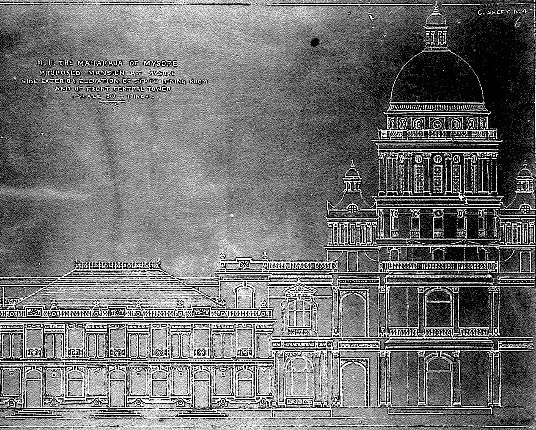
Srinivasarao Harti Lakshminarasappa. Born circa 1885.
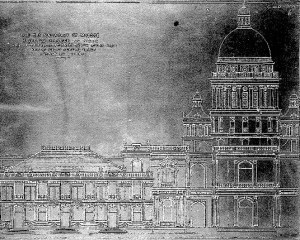
Lalit_palace
Lalit Mahal Palace, Mysore, circa 1930s

He was the chief architect to the Maharaja of Mysore and worked on the ostentatious Lalit Mahal Palace, completed around 1930, along with  E. W. Fritchley.He also worked on a number of other prestigious projects, including Mysore Town Hall and the Municipal offices, known as the BBMP building (built 1933-36) and was also involved in education as the Principle of the College of Engineering, Bangalore.

T. J. Manickam (1913-1974) Manickam studied at University of Mysore before studying at Liverpool where he completed the BArch degree in 1940 and the Post Graduate Diploma in Civic Design in 1946. He then returned to India, and took up office in the substantial Public Works Department (PWD) before establishing the School of Town & Country Planning in Delhi in 1955.

tjm

T. J. Manickam, circa 1970s.

In conjunction with the ITPI he established the Planning Campus in 1958 and merged with the Architecture department of Delhi polytechnic in 1959 to form the School of Planning and Architecture (SPA). This is a prestigious school and is ranked amongst India’s top architecture schools. Manickam designed a new campus in 1965.
Aware of the importance of disseminating his findings and the reputation of the school, Manickham also founded the journal, Urban and Rural Planning Thought in 1958 (based on the Town Planning Review). He also wrote several articles for Urban & Region al Planning, “Housing Crisis in the east” (1971) for example, and the books New Towns in India, (SPA, 1960), and Housing Crisis in the East, (SPA, 1970)

Furthermore he served as a UN co-ordinator in the West Indies (Trinidad and Tobago) and was a UN Advisor to the Government of Jamaica between 1963-66.

D. V. R. Rao: Prof. Rao has been kind enough to write some of his memories of Liverpool and career highlights and these are included below (email correspondence with Jackson, 2012)
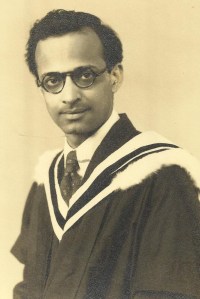
DVR Rao Liverpool University

D.V.R. Rao graduation photograph, Liverpool, 1950

“I am pleased to have had the opportunity to reminisce on my Liverpool days and answer some of the questions posed by Dr Iain Jackson

Why I chose Liverpool– After graduating in civil Engineering from Bangalore University I decided to go to the UK for further studies under the Tata scholarship. Prof Manickam and Mr Lakshminarasappa were both graduates from Liverpool practising in Bangalore at that time. Both spoke highly of the quality of education at the Liverpool School of Architecture which is why I decided on Liverpool and travelled there after the war

Prof Budden –I studied under Prof Budden whom I remember as an excellent teacher and particularly proficient in classic architecture. I graduated from Liverpool university in 1950.There were no other Indian students at the time. Liverpool University was not particularly well known in India except to a small section of post graduate students teachers and academics

Subsequent career– I returned to India in 1950 did a few small assignments and was subsequently appointed to IIT Kharagpur as architect to the campus and assistant professor of the Department of Architecture and Regional Planning. I was fortunate enough to meet Prof Vishwanath Prasad who had earlier worked with Prof Abercrombie, planner of Greater London and Prof Matthews of Clyde valley Regional development. I was promoted to Professor and Head of department of Architecture

In 1963 I took over as officiating director of the SPA, Delhi during the absence of Prof Manickam who was away on a 3 year foreign assignment [Ed – on the UN mission to West Indies].  On Prof Manickam’s return I continued in the SPA as Professor and Head of Department of housing studies  as I had developed a keen interest in social housing which had become a serious issue.  I initiated research into the sociological and economic aspects of massive social housing programmes for disadvantaged people. This drew the attention of UN organizations who were conducting similar studies in other developing countries

Following the sad and untimely passing away of Professor Manickam I took over as director of the school.I developed a strong research centre on rural housing and construction of demonstration houses to help improve the quality of houses in rural areas. Meanwhile I had also worked towards getting the School elevated to the status of a deemed university

In 1977 I was invited by the United Nations to serve as technical advisor in Town and Regional planning in Saudi Arabia . I worked mainly in Riyadh and other Emirates for 9 years from 1977 to 1986 .During this time our team (comprised of a number of international architects and planning consultants) undertook planning and development of major cities alongside a national spatial strategy for equitable distribution of the population. This became the basis for all further and future development in Saudi Arabia.

I retired in 1986 and returned to India. Since then I have been associated with a few consultancy groups.In recent years I have withdrawn from any active participation on grounds of advancing age and deteriorating health”.

I would like to express my thanks to Prof. Rao and his family for helping with this research and for providing the photograph above.
Keynote Speakers Announcement

13.3.21Max and Jane

We are delighted to confirm the following invited speakers for the forthcoming conference on ‘The influence of Fry and Drew’, to be held at Liverpool School of Architecture, 10th – 11th October 2013:

  • Hilde Heynen, Head of Architecture, Urbanism and Planning at KU Leuven, Belgium
  • Elizabeth Darling, Senior Lecturer in Art History at Oxford Brookes University, UK
  • Jiat-Hwee Chang, Assistant Professor at the Department of Architecture, University of Singapore

See the conference page for the call for papers.

The Influence of Fry and Drew

Jane and Max on beach in N Wales001

CONFERENCE CALL FOR PAPERS

THURSDAY 10TH – FRIDAY 11TH OCTOBER 2013

SCHOOL OF ARCHITECTURE, LIVERPOOL UNIVERSITY, U.K.

For over fifty years, E. Maxwell Fry (1899–1987) and Jane B. Drew (1911–96) were integral members of the English architectural avant-garde. The Fry and Drew partnership – in its various incarnations – was a magnet for architects and architectural students from all over the world, giving the practice a distinctly international outlook. Their built works, from the 1920s to the 1980s, cross the globe from Europe to South-east Asia.

This conference seeks to investigate the themes and movements of twentieth century architecture and town planning that have been influenced by the work of Fry and Drew, and vice versa. What is the context of Fry and Drew’s architecture? Is it possible to identify a FryDrew strand of Modernism or a house style? What is their architectural legacy?

We welcome papers from scholars and practitioners, and encourage proposals from early career researchers and graduate students. Papers might address, but are not limited to:

  • Inter-war Modernism – early influences, the rise of Modernism in England, collaborators and creative networks (such as contractors, engineers, artist, patrons).
  • Post-war Modernism – the Festival of Britain style, the Brutalist movement and younger British modernists, questioning the modernist agenda, the work of Fry and Drew’s former employees.
  • Colonialism – comparisons of colonizers in architectural and theoretical terms, war-time postings, colonial frameworks (for example, the role of the Public Works Departments).
  • Post-colonialism – tradition and modernity, design and identity, cultural colonialism. For example, Fry and Drew’s work at Chandigarh, in West Africa, throughout the Middle East.
  • Tropical Architecture – the use of new technologies and design ideas, its network and legacy, reassessment of the tropical, tropical architecture pedagogies at the Architectural Association and beyond.
  • Town Planning – the Garden City model, the neighbourhood unit, modernist planning schemes, the New Towns and post-war rebuilding, the spread and implementation of CIAM guidelines.
  • Fry & Drew’s wider influence – their patronage of art, Drew’s significance for women (in architecture), influential personal or professional relationships, their published texts, their involvement in architectural design education.

We invite abstracts of up to 300 words for 20-minute papers. Please email Jessica Holland and Iain Jackson at fryanddrew@gmail.com by Sunday 2nd June 2013.

Please check the conference page for regular updates.

Three Buildings by the Architects’ Co-Partnership

Iain’s last post mentioned Leo De Syllas, one of the founders of the Architects’ Co-Operative Partnership (ACP) created in London in 1939. The practice originally consisted of 11 members recently graduated from the Architectural Association who wished to work without office hierarchies and on projects of a predominantly social character. They were strongly influenced in their methods by Berthold Lubetkin’s Tecton. The original members other then De Syllas were: Kenneth Capon, Peter Cocke, Michael Cooke-Yarborough, Anthony Cox, Michael Grice, A. W. Nicol, Anthony Pott, Michael Powers, Greville Rhodes and John Wheeler.

De Syllas was the African mastermind of the firm that set up a studio in Lagos in the early 50’s. Their contribution to Tropical Architecture has never been fully studied and is greatly underestimated. De Syllas was one of the most important figures of the second generation of tropical modernists alongside other designers such as James Cubbitt, John Godwin and Gillian Hopwood. Works from Architects Co-Partnership are largely displayed in Fry and Drew’s masterpiece, Tropical Architecture in the Dry and Humid Tropics in 1964. This shows how Tropical Architecture was intended as an innovative design system used by a small group of designers willing to disseminate their design ideas, in an article on Architectural Design in 1959 De Syllas stated: the work shown on the following pages is a record of the adaptation of the principle of tropical architecture to various requirements and some of the lessons learned in the process may be universally useful. 

Architects CoP - Ansarur Deen School - Lagos - Nigeria

I would like to present three buildings by the Architects Co-Partnership that show their highly experimental attitude. I believe that the appliance of scientific principles and climatic design tools such as solar diagrams and wind charts is highly sophisticated and a perfect example of the tropical design approach. The first building (above) is the Ansar-Ud-Deen School in Lagos, it is a simple design with a concrete structure common to many of the school buildings built in those years. The interesting part of the design is the usage of a single device, simple but yet highly effective. It consist of an horizontally pivoted timber framed shutter that can change position in the different time of the day and become a shading device while assuring cross-ventilation.

Architects CoP - House - Kano - Nigeria

The second building is a private house in Kano, in northern Nigeria. I see this building as the direct architectural result of the appliance a periodic heat flow diagram. The materials used, the type of openings and the general concept are all chosen in order to control the diurnal variation of temperature inside the building. The first floor, where the daily life takes place, has 60cm thick stone walls and small openings while the first floor with the bedrooms is a light timber structure with floor-to-ceiling openings. This structure, alongside the use of the double height internal patio, allows to reduce the time lag period in the diagram assuring a longer comfort period. In this case we can assume the whole building as a single climatic device acting towards a specific purpose.

Architects CoP - Department of Marketing exports - Ibadan - Nigeria

The last building is the Department of Marketing Exports in Ibadan, a t-shaped building with facades facing all four of the cardinal points. A different device was used in each facade: in the east and west facades we find vertical pivoted shades, in the south facade fixed overhead shades and a system of openings assuring cross-ventilation and in the north pivoting storm shutters. The facades reach highly sophisticated solution dealing at the same time with sun-protection, air flow and protection from occasional rainstorms. In the north and south facade in particular we can see the usage of mixed devices: shutters, shades, venetian blinds both movable or steady. The highly experimental will of this building is demonstrated by the fact that it was first built on two floors and then after experiments were made on the function of the different devices increased to three floors.

I’m currently conducting a deeper investigation and a re-drawing of many other Architect Co-Partnership buildings and I would love to be able to get in contact with someone who works or worked in the firm. Have you worked in the office? Have you got any information on this African designs? I’d love to hear from you, feel free to contact me!

Exports Only?

Export Architecture. To the casual reader, this phrase may come across as almost self-explanatory, devoid of any further need for clarification. Export, most will reason, literarily connotes the transfer of a product from its source of production to a foreign or external recipient, usually in exchange for a fee, charge or emolument. As for Architecture, the reader might almost think, well, we all know what architecture is! Caution is however advised, as such perceived ‘knowledge’ on architecture could often be very superficial.

In spite of the lack of complexity to the reasoning described above, it does provide a basic insight to export as a means of product transfer. The ‘Product’ here, is however largely limited to a perception of manufactured (or material) goods, but which exportation clearly transcends. Culture, lifestyle, language, and fashion among other things, are immaterial endeavours also exported across borders. Architecture, possibly rated material in terms of the physical building components it employs, and immaterial with regards to construction methods, building forms and functional requirements – has been exported all through history by explorers, adventurers, and new settlers.

Lagos European Quarters

The architecture established in Nigeria during the British colonial era could well be assumed a classic example of export architecture, with features that reflected architectural traits from the heart of empire and were alien to the prevailing indigenous buildings of the time. It may however constitute a very hasty and almost erroneous judgement to assume that all British colonial buildings were export products. Could there perhaps, have been instances where indigenous architectural style and features were adapted, or even wholly copied in colonial building?

Writing on the building works carried out by European builders in Nigeria, Arthur M. Foyle in a 1951 The Builder Journal, had noted the character of early houses for government staff in Nigeria. He observed that while they were built of timber in the south, in the north and in the more inaccessible areas, staff housing were usually constructed of local materials and often by local labour using traditional methods of construction.

Image

Hausa Built form, Northern Nigeria

This ‘Type Mud brick European quarters’ designed by Nigeria’s colonial Public Works Department presented here, was sourced from a 1933 technical paper of the department, and rightly corroborates Foyle’s observation. The European quarters’ adapted features may perhaps, be better understood if analyzed on surviving Hausa built form models of Northern Nigeria. Although its plan retains a European model with a garage, hall, pantry, store and dressing room on the ground floor, and features a bedroom and bathroom upstairs, the quarters design largely adapts local form and materials to accommodate the colonial lifestyle.

Image

1933 Drawing of European Quarters at Katsina

Something from nothing

In 2006 the Franco-British Union of Architects awarded me a bursary to investigate the work of the French architects Jean-Philippe Vassal and Anne Lacaton. Since then the report has been languishing on my bookshelf, so I thought I would present some of the research here. For me, Lacaton and Vassal’s architecture is a great example of transnationalism. Their inventive use of materials and references to ‘far-away’ places is not a literal transference of architectural style, but it borrows from different cultures to create evocative, poetic buildings.

Their successful adaptation of the Palais de Tokyo in Paris has highlighted their imaginative responses to a tight budget, yet cost-effectiveness is not the driving force behind their work. As Vassal explains: ‘At the start there are always very ambitious intentions and choices, and cost-effectiveness is simply what permits us to realise them, whatever the budget we may be given.’

13.3.29 Palais de Tokyo

Photomontage showing the bookshop enclosed by Heras fencing, Palais de Tokyo interior, 2006.

Here is an excerpt of my interview with Jean Philippe Vassal, held on 5th September 2006, in which he describes the project to transform the neo-classical Palais de Tokyo (built for the 1937 Paris Exposition) into a contemporary art gallery and museum:

Jessica Holland         The Palais de Tokyo is not a museum in the traditional sense. I was discussing with a colleague whether your work there can be considered as “architecture” or not, because the intervention is very minimal…

Jean Philippe Vassal         [Our work at the Palais de Tokyo] is to give possibilities. Precisely if it’s artists that will go there after, you can do even less… because they want to have space to do things on the floors, on the wall, so you have to give them the possibility to do that. I like the idea that architecture could give freedom to do things and this for me, is probably most important: to adapt spaces, climates, ambiences where things can happen. Always, this freedom is essential.

There was always a reason. For the Palais de Tokyo the budget was very low, but it is not a problem. All the time you can do what you need to – this is one of the things I learnt in Africa. I was in Morocco then after my studies I went to Niger for five years. Niger is one of the poorest countries south of the Sahara desert. It was incredible what people there could do and make from absolutely nothing. It’s strange because when you are in the desert and there is almost nothing, it’s only in your mind that you can find something. The work of architects is not about materials and things like that, it is just invention – to find a solution to a situation. So this question about is it still architecture or is it not architecture, I don’t know… A great architect said: “Less is more”, and that was fifty years ago!

… In architecture I feel you have a sort of invisible direction; more and more the architectural fact will become less and less visible. If you look from Roman architecture to Gothic to Modernism, always there is a search for higher, for lighter, for more. You arrive at the Farnsworth House, which is just a box, so for me; we are still on this journey. Architecture can be just a gesture, even nothing sometimes.

We have done a project in Bordeaux for a little plaza where the outcome was to say: “There is nothing to do, it’s okay.” The client asked us to make this plaza beautiful but it is beautiful. So the way to look at things is important: are you sure she is not beautiful; it is not beautiful? Then you convince them it is beautiful and what is this question of beauty? So, in Africa it was really this challenge: with the minimum of things, what can you do?

JH            And what did you do there? Why did you decide to go back to Africa?

JPV          I went after my Diploma to work for the Ministry of Construction for one year as an architect. In fact, when I arrived they said they did not need an architect, they just needed somebody to work on urban planning. So for three years I worked on the development of a little village in the desert. What happens when they find water, when wells are dug, what happens to the society and structure of the village? I worked on these questions. I also worked on the master plan for Niger’s capital, Niamey.

JH          Going back to the Palais de Tokyo – have you been there recently?

JPV        Yeah, two weeks ago.

JH          Does it keep changing?

JPV        Yes, I see new things, new partitions… So, about museums: I think it is probably too serious or perhaps it is too complex, the way you enter and buy your ticket and then you go into a specific room and see some paintings. Sometimes I like the fact when you are in the city, you walk around the city and for example, you go inside a church – you don’t know why, but you see this door, which is nearly open and you go in, and it is completely dark and it is fresh. You walk inside, you sit for a while and then you leave, back into the city.

I would like the possibility to be in a museum like that, where there is no limit between public space and space inside the museum. I like the idea of a museum as a promenade, a walk – something very delicate.

JH         And why do you talk specifically of a church – because you enter into one large volume of space?

JPV       Yes, perhaps. I give the example of a church because it’s a monument you can go inside but in a library you also have this feeling of a very public space. It’s a sort of inclusion of the outside, with seats, chairs, tables and books.

For me, the question of architecture is how to live. When we designed the Palais de Tokyo we had several ideas, such as the Place Djemma-el-Fnaa, but also this idea of living – how we can inhabit spaces. We are not only inhabitants of our homes, but of the city, on a bank by the side of a river and also in churches, museums, and libraries. I like the idea of architecture being determined by this idea of living, so it’s not something tangible shown in a sketch or a model, it is something you are always a part of. It is your own space and you are able to travel freely through those public spaces; there is a continuity that is important.

I have a lot of difficulty with the question of scale in my work. As an architect you are always making models or little drawings. At the moment when you make a drawing it is not real dimensions, but immediately when you produce a model, it is two hundred times smaller than the real space, you cannot go inside! Always I have to feel the space and it’s real dimensions, to move inside it. It’s a real problem in architecture. I teach at the School of Architecture in Versailles and students, they are very instinctive and inventive. When you ask them to design, for example, architectural clothing around themselves, elements of wood, elements of tissue, but at the moment you ask them to think a bit larger for a little house and begin to make models, forms, shapes, this same spirit is lost. So architecture: you can do it, design it, and use it as something you have on your shoulders.

..

Thanks very much to Jean-Philippe for taking the time to explain these ideas to me.