Archive

Tag Archives: architecture

Three Buildings by the Architects’ Co-Partnership

Iain’s last post mentioned Leo De Syllas, one of the founders of the Architects’ Co-Operative Partnership (ACP) created in London in 1939. The practice originally consisted of 11 members recently graduated from the Architectural Association who wished to work without office hierarchies and on projects of a predominantly social character. They were strongly influenced in their methods by Berthold Lubetkin’s Tecton. The original members other then De Syllas were: Kenneth Capon, Peter Cocke, Michael Cooke-Yarborough, Anthony Cox, Michael Grice, A. W. Nicol, Anthony Pott, Michael Powers, Greville Rhodes and John Wheeler.

De Syllas was the African mastermind of the firm that set up a studio in Lagos in the early 50’s. Their contribution to Tropical Architecture has never been fully studied and is greatly underestimated. De Syllas was one of the most important figures of the second generation of tropical modernists alongside other designers such as James Cubbitt, John Godwin and Gillian Hopwood. Works from Architects Co-Partnership are largely displayed in Fry and Drew’s masterpiece, Tropical Architecture in the Dry and Humid Tropics in 1964. This shows how Tropical Architecture was intended as an innovative design system used by a small group of designers willing to disseminate their design ideas, in an article on Architectural Design in 1959 De Syllas stated: the work shown on the following pages is a record of the adaptation of the principle of tropical architecture to various requirements and some of the lessons learned in the process may be universally useful. 

Architects CoP - Ansarur Deen School - Lagos - Nigeria

I would like to present three buildings by the Architects Co-Partnership that show their highly experimental attitude. I believe that the appliance of scientific principles and climatic design tools such as solar diagrams and wind charts is highly sophisticated and a perfect example of the tropical design approach. The first building (above) is the Ansar-Ud-Deen School in Lagos, it is a simple design with a concrete structure common to many of the school buildings built in those years. The interesting part of the design is the usage of a single device, simple but yet highly effective. It consist of an horizontally pivoted timber framed shutter that can change position in the different time of the day and become a shading device while assuring cross-ventilation.

Architects CoP - House - Kano - Nigeria

The second building is a private house in Kano, in northern Nigeria. I see this building as the direct architectural result of the appliance a periodic heat flow diagram. The materials used, the type of openings and the general concept are all chosen in order to control the diurnal variation of temperature inside the building. The first floor, where the daily life takes place, has 60cm thick stone walls and small openings while the first floor with the bedrooms is a light timber structure with floor-to-ceiling openings. This structure, alongside the use of the double height internal patio, allows to reduce the time lag period in the diagram assuring a longer comfort period. In this case we can assume the whole building as a single climatic device acting towards a specific purpose.

Architects CoP - Department of Marketing exports - Ibadan - Nigeria

The last building is the Department of Marketing Exports in Ibadan, a t-shaped building with facades facing all four of the cardinal points. A different device was used in each facade: in the east and west facades we find vertical pivoted shades, in the south facade fixed overhead shades and a system of openings assuring cross-ventilation and in the north pivoting storm shutters. The facades reach highly sophisticated solution dealing at the same time with sun-protection, air flow and protection from occasional rainstorms. In the north and south facade in particular we can see the usage of mixed devices: shutters, shades, venetian blinds both movable or steady. The highly experimental will of this building is demonstrated by the fact that it was first built on two floors and then after experiments were made on the function of the different devices increased to three floors.

I’m currently conducting a deeper investigation and a re-drawing of many other Architect Co-Partnership buildings and I would love to be able to get in contact with someone who works or worked in the firm. Have you worked in the office? Have you got any information on this African designs? I’d love to hear from you, feel free to contact me!

Exports Only?

Export Architecture. To the casual reader, this phrase may come across as almost self-explanatory, devoid of any further need for clarification. Export, most will reason, literarily connotes the transfer of a product from its source of production to a foreign or external recipient, usually in exchange for a fee, charge or emolument. As for Architecture, the reader might almost think, well, we all know what architecture is! Caution is however advised, as such perceived ‘knowledge’ on architecture could often be very superficial.

In spite of the lack of complexity to the reasoning described above, it does provide a basic insight to export as a means of product transfer. The ‘Product’ here, is however largely limited to a perception of manufactured (or material) goods, but which exportation clearly transcends. Culture, lifestyle, language, and fashion among other things, are immaterial endeavours also exported across borders. Architecture, possibly rated material in terms of the physical building components it employs, and immaterial with regards to construction methods, building forms and functional requirements – has been exported all through history by explorers, adventurers, and new settlers.

Lagos European Quarters

The architecture established in Nigeria during the British colonial era could well be assumed a classic example of export architecture, with features that reflected architectural traits from the heart of empire and were alien to the prevailing indigenous buildings of the time. It may however constitute a very hasty and almost erroneous judgement to assume that all British colonial buildings were export products. Could there perhaps, have been instances where indigenous architectural style and features were adapted, or even wholly copied in colonial building?

Writing on the building works carried out by European builders in Nigeria, Arthur M. Foyle in a 1951 The Builder Journal, had noted the character of early houses for government staff in Nigeria. He observed that while they were built of timber in the south, in the north and in the more inaccessible areas, staff housing were usually constructed of local materials and often by local labour using traditional methods of construction.

Image

Hausa Built form, Northern Nigeria

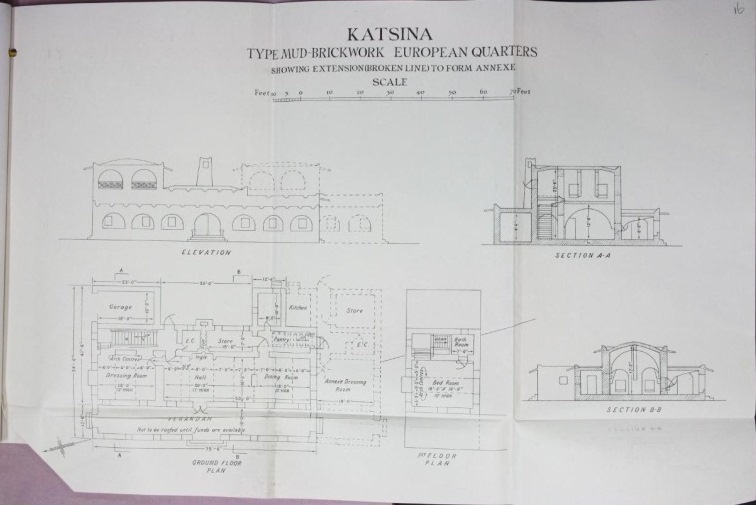
This ‘Type Mud brick European quarters’ designed by Nigeria’s colonial Public Works Department presented here, was sourced from a 1933 technical paper of the department, and rightly corroborates Foyle’s observation. The European quarters’ adapted features may perhaps, be better understood if analyzed on surviving Hausa built form models of Northern Nigeria. Although its plan retains a European model with a garage, hall, pantry, store and dressing room on the ground floor, and features a bedroom and bathroom upstairs, the quarters design largely adapts local form and materials to accommodate the colonial lifestyle.

Image

1933 Drawing of European Quarters at Katsina

Something from nothing

In 2006 the Franco-British Union of Architects awarded me a bursary to investigate the work of the French architects Jean-Philippe Vassal and Anne Lacaton. Since then the report has been languishing on my bookshelf, so I thought I would present some of the research here. For me, Lacaton and Vassal’s architecture is a great example of transnationalism. Their inventive use of materials and references to ‘far-away’ places is not a literal transference of architectural style, but it borrows from different cultures to create evocative, poetic buildings.

Their successful adaptation of the Palais de Tokyo in Paris has highlighted their imaginative responses to a tight budget, yet cost-effectiveness is not the driving force behind their work. As Vassal explains: ‘At the start there are always very ambitious intentions and choices, and cost-effectiveness is simply what permits us to realise them, whatever the budget we may be given.’

13.3.29 Palais de Tokyo

Photomontage showing the bookshop enclosed by Heras fencing, Palais de Tokyo interior, 2006.

Here is an excerpt of my interview with Jean Philippe Vassal, held on 5th September 2006, in which he describes the project to transform the neo-classical Palais de Tokyo (built for the 1937 Paris Exposition) into a contemporary art gallery and museum:

Jessica Holland         The Palais de Tokyo is not a museum in the traditional sense. I was discussing with a colleague whether your work there can be considered as “architecture” or not, because the intervention is very minimal…

Jean Philippe Vassal         [Our work at the Palais de Tokyo] is to give possibilities. Precisely if it’s artists that will go there after, you can do even less… because they want to have space to do things on the floors, on the wall, so you have to give them the possibility to do that. I like the idea that architecture could give freedom to do things and this for me, is probably most important: to adapt spaces, climates, ambiences where things can happen. Always, this freedom is essential.

There was always a reason. For the Palais de Tokyo the budget was very low, but it is not a problem. All the time you can do what you need to – this is one of the things I learnt in Africa. I was in Morocco then after my studies I went to Niger for five years. Niger is one of the poorest countries south of the Sahara desert. It was incredible what people there could do and make from absolutely nothing. It’s strange because when you are in the desert and there is almost nothing, it’s only in your mind that you can find something. The work of architects is not about materials and things like that, it is just invention – to find a solution to a situation. So this question about is it still architecture or is it not architecture, I don’t know… A great architect said: “Less is more”, and that was fifty years ago!

… In architecture I feel you have a sort of invisible direction; more and more the architectural fact will become less and less visible. If you look from Roman architecture to Gothic to Modernism, always there is a search for higher, for lighter, for more. You arrive at the Farnsworth House, which is just a box, so for me; we are still on this journey. Architecture can be just a gesture, even nothing sometimes.

We have done a project in Bordeaux for a little plaza where the outcome was to say: “There is nothing to do, it’s okay.” The client asked us to make this plaza beautiful but it is beautiful. So the way to look at things is important: are you sure she is not beautiful; it is not beautiful? Then you convince them it is beautiful and what is this question of beauty? So, in Africa it was really this challenge: with the minimum of things, what can you do?

JH            And what did you do there? Why did you decide to go back to Africa?

JPV          I went after my Diploma to work for the Ministry of Construction for one year as an architect. In fact, when I arrived they said they did not need an architect, they just needed somebody to work on urban planning. So for three years I worked on the development of a little village in the desert. What happens when they find water, when wells are dug, what happens to the society and structure of the village? I worked on these questions. I also worked on the master plan for Niger’s capital, Niamey.

JH          Going back to the Palais de Tokyo – have you been there recently?

JPV        Yeah, two weeks ago.

JH          Does it keep changing?

JPV        Yes, I see new things, new partitions… So, about museums: I think it is probably too serious or perhaps it is too complex, the way you enter and buy your ticket and then you go into a specific room and see some paintings. Sometimes I like the fact when you are in the city, you walk around the city and for example, you go inside a church – you don’t know why, but you see this door, which is nearly open and you go in, and it is completely dark and it is fresh. You walk inside, you sit for a while and then you leave, back into the city.

I would like the possibility to be in a museum like that, where there is no limit between public space and space inside the museum. I like the idea of a museum as a promenade, a walk – something very delicate.

JH         And why do you talk specifically of a church – because you enter into one large volume of space?

JPV       Yes, perhaps. I give the example of a church because it’s a monument you can go inside but in a library you also have this feeling of a very public space. It’s a sort of inclusion of the outside, with seats, chairs, tables and books.

For me, the question of architecture is how to live. When we designed the Palais de Tokyo we had several ideas, such as the Place Djemma-el-Fnaa, but also this idea of living – how we can inhabit spaces. We are not only inhabitants of our homes, but of the city, on a bank by the side of a river and also in churches, museums, and libraries. I like the idea of architecture being determined by this idea of living, so it’s not something tangible shown in a sketch or a model, it is something you are always a part of. It is your own space and you are able to travel freely through those public spaces; there is a continuity that is important.

I have a lot of difficulty with the question of scale in my work. As an architect you are always making models or little drawings. At the moment when you make a drawing it is not real dimensions, but immediately when you produce a model, it is two hundred times smaller than the real space, you cannot go inside! Always I have to feel the space and it’s real dimensions, to move inside it. It’s a real problem in architecture. I teach at the School of Architecture in Versailles and students, they are very instinctive and inventive. When you ask them to design, for example, architectural clothing around themselves, elements of wood, elements of tissue, but at the moment you ask them to think a bit larger for a little house and begin to make models, forms, shapes, this same spirit is lost. So architecture: you can do it, design it, and use it as something you have on your shoulders.

..

Thanks very much to Jean-Philippe for taking the time to explain these ideas to me.

The Central Garden at Model Town

The most ambitious idea in the plan of Model Town was the Central Garden, which as proposed was nothing short of the reminiscence of a hill station resort. The focus of this garden was a central hill 50 feet high on top of which a reservoir for the supply of drinking water to the town was to be located assuming that by doing so the reservoir would remain comparatively cool. The hill was to be covered with evergreen plants and flowers. Winding paths would lead to the top of the hill where a promenade was proposed round the reservoir, with four pavilions providing for shade and shelter and thus be a delightful place in hot summer evenings where it would be possible to get breath of cool fresh air. A few springs from the hill would water the plants and as well as provide water for a ‘couple of’ gold fish pools.

The proposition did not end here, as a cave restaurant was also proposed inside the hill by providing ‘a few rooms’ which were to be well-lit and well-ventilated and constructed of reinforced concrete construction. Round the hill, a 100 feet wide and 4 to 5 feet deep lake was proposed for fishing and boating but ‘not enough for a man to drown in’. Surrounding the lake were proposed lawn flanked by a flower garden. The lawns and gardens were to be watered from the Bambawali-Ravi-Bedian Canal through a lake by means of syphon tubes which were to help in keeping the water in the fishing and boating lake in motion.

from Civil and Military Gazette Lahore

Fry and Drew, 2013 Conference Announcement 

13.3.21Max and Jane

We are currently planning an international conference to highlight Maxwell Fry and Jane Drew’s significant contributions to architecture. The conference will be held at Fry’s almer mater, the Liverpool School of Architecture, in the autumn of this year.

The conference seeks to provide students, academics and practitioners with an opportunity to discuss all aspects of Fry and Drew’s work. It will cover their long careers from the 1920s through to the 1980s, and take in their work from North America to South-east Asia.

A call for papers will be published here shortly.

Pilkington Brothers’ Headquarters, St. Helens (1955-65)

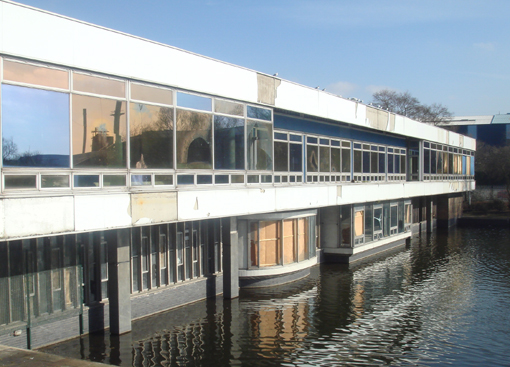
Despite a series of important commissions on home soil, Fry and Drew’s post-war work in Britain is often sidelined due to a historical narrative focused on the second generation of MARS (Modern Architectural Research) Group modernists. A forthcoming article examining Maxwell Fry’s scheme for the glass manufacturers Pilkington Brothers’ new headquarters in St. Helens, seeks to shed light on Fry and Drew’s post-war projects.

The Pilkington commission was Fry and Drew’s first ‘prestige’ building for corporate clients in Britain (although they had built several overseas for BP, Shell and the Co-operative Bank). In the wake of the Pilkington project, offices for Gulf Oil Company, Dow Agro Chemicals and Rolls Royce quickly followed, thus enabling Fry, Drew & Partners to establish itself as an expert in modern, corporate architecture.

13.2.27 PB HQ

The project’s sizeable budget and enlightened clients – who saw themselves as patrons to the British art and design scene – allowed Fry to assemble a sixteen-strong collective of artists to design twenty-four artworks. Including work by Victor Pasmore, Edward Bawden, John Hutton, Robert Goodden, Humphrey Spender, and Avinash Chandra, the headquarters house an outstanding collection of post-war applied art – a secular counterpart to Basil Spence’s Coventry Cathedral.

The new headquarters opened for business on 31st  August 1965, providing 1,500 employees with the latest in modern working conditions. Extensive social and welfare facilities for staff included a canteen, a medical centre (including a dentist, an optician and a chiropodist), a hairdresser, a library, and a museum, telling the history of glassmaking. The landscaped grounds with the ‘works water’ reservoir – complete with a pair of swans – was intended for use by both the Pilkington staff and St. Helens community.

13.2.27 PB canteen

The complex was sold off around ten years ago, although some 200 Pilkington staff remain with independent companies leasing the remaining office space. The canteen building (above and shown in this previous post), is currently unoccupied and in a bad state, but is apparently now being stripped of its asbestos linings for future re-use.

Did you work for Pilkington Brothers at the new offices on Prescot Road? Do you remember when the building opened? Did you help build the new headquarters? We’d love to hear from anyone with connections to the company and learn more about its significance for the people of St. Helens.

The article ‘A Monument to Humanism: Pilkington Brothers’ Headquarters (1955-65) by Fry, Drew & Partners’, by Jessica Holland and Iain Jackson, will be published in this year’s Architectural History journal.

Mad dogs and Englishmen

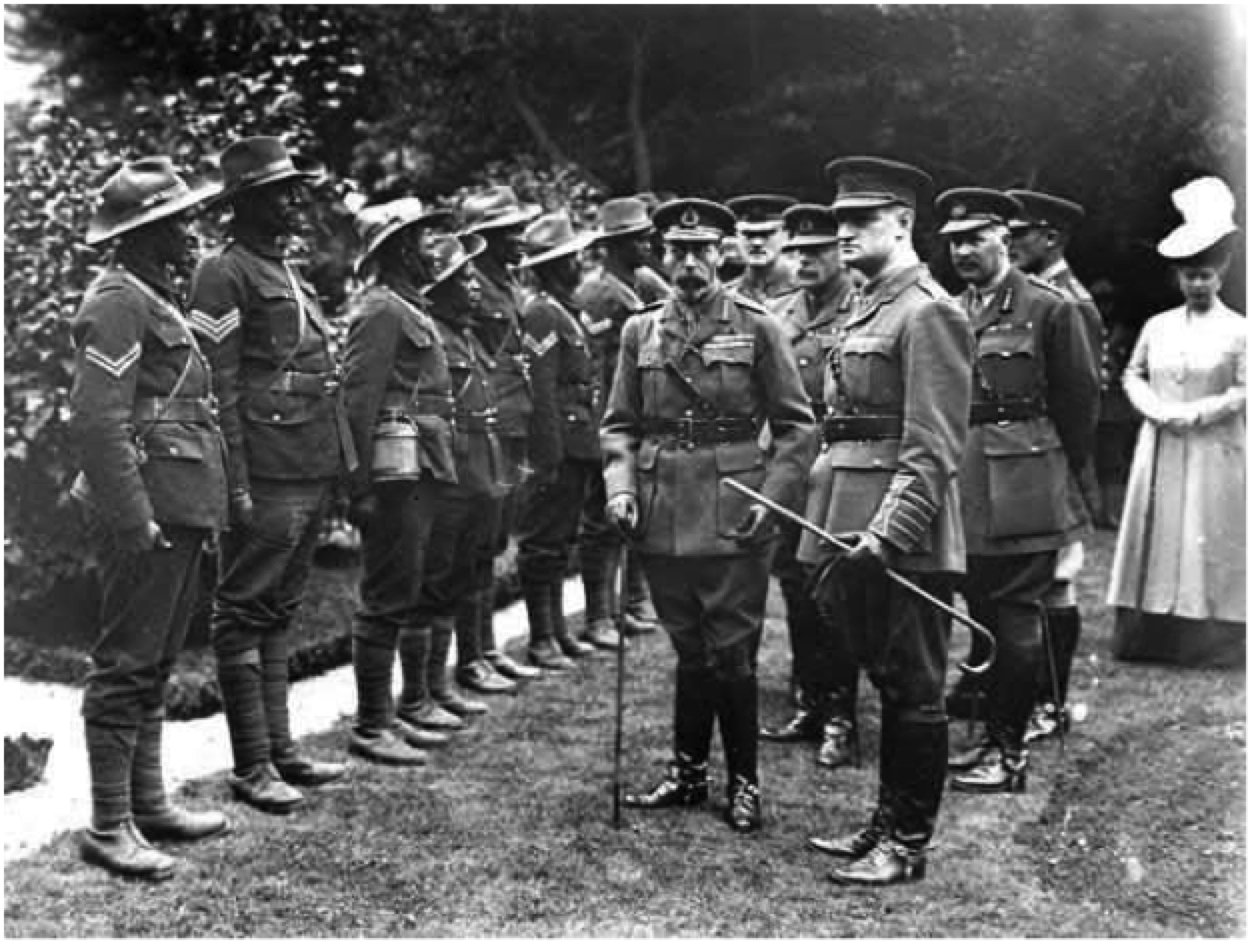
Following up Yemi’s post on the RWAFF, I noticed the uniforms of the African soldiers and reflected on how this apparently insignificant peculiarity has been a sign of the different methods with which Europeans confronted with Africa. The uniforms of colonial military force in Africa are a clear sign of the development of climate-adaptive sensibility, they played a major role in the history of Tropical Medicine that I see as the cultural base of Tropical Architecture. Noël Coward in 1931, while travelling from Hanoi to Saigon, wrote the famous lyrics “Only mad dogs and Englishmen go out in the midday sun“. It’s amazing to see how the idea that tropical climate was unhealthy and dangerous was so deeply rooted in the European culture to even generate popular folk songs.

The solar topee (shown below) that “the simple creatures hope he will impale on a tree” was the most famous symbol of how scientific knowledge could help the Western man cope with the dangerous tropical climate. Yet we must avoid tracing the history of Tropical Medicine as the simple linear progression of reason over superstition. Even if significant progress were made, they did not sweep away the suspicion that climate itself was a biological harm for Europeans. In 1930s Nigeria one cadet refused to wear the hat until he got a letter from the government saying that if he become ill from not wearing the hat he would have to go back home and end is career. It is easy to imagine how the whole life of colonialists in early decades of XXth century were influenced by the concerns on tropical climate. The idea that black and whites needed different treatments opened up to the idea that they were biologically different which easily ended up in racial theories.

Towards a genealogy of tropical architecture: Historical fragmen

However the systemic approach to climate that many studies of Tropical Medicine show, one for all the monumental work by Aldo Castellani and Albert Chalmers, posed the basis for the development of studies on climate that were strongly influential on Maxwell Fry and Jane Drew’s work. It is perhaps possible to trace a history of the relation with climate that links together solar topees, military barracks and bungalows all the way to the tropical modernism. A history that will be able to recognize the debt that Fry and Drew had with previous experiences in Africa even in disciplines not immediately linked to architecture.

Nigerian Public Works Department Troop Quarters, designed for the Royal West African Frontier Force

While recently going through archival materials on Nigeria’s colonial Public Works Department, I came across a troop quarters design for the RWAFF. The abbreviation sounded familiar, but I could not readily remember what it stood for and had to do a google search for further insight.  Results returned from the search brought it all flooding back to my memory; RWAFF is the abbreviation for Royal West African Frontier Force. To gain an initial casual understanding about the force, I took a quick look at Wikipedia and was able to obtain this excerpt – “The West African Frontier Force (WAFF) was a multi-battalion field force, formed by the British Colonial Office in 1900 to garrison the West African colonies of Nigeria, Gold Coast, Sierra Leone and Gambia. In 1928 it received royal patronage, becoming the Royal West African Frontier Force (RWAFF).”

13.3.6 GeorgeV

Soldiers on Parade for Visit by King George V and Queen Mary.

In a 1952 paper entitled “The story of the Royal West African Frontier Force”, published by the Royal United Service Institution journal, Brigadier F.A.S Clarke (DSO) however attempts to give a more scholarly account of the origins, services and numerical composition of the Force. In telling the RWAFF story, he sums up his account of its activities with this assertion: “though the force habitually wore a scarlet suave jacket, fez, and cummerbund on ceremonial parades, it has never been merely a ‘picturesque constabulary’ as some would now have us believe”. He gives instances of laborious and painstaking operations,expeditions and invasions conducted by RWAFF units in their bid to capture enemy territory. More importantly, he provides the organizational structure of the force, as well as its numerical composition. According to him, the force consisted of a Headquarters Company, a Raffle Company, platoons and battalions.  He equally notes that the total strength of a 1938 WAFF battalion, apart from British personnel, was 591 African troops and 219 carriers (those who bore the WAFF’s heavy loads of ammunition and supplies), with Nigeria providing the major quota.

13.3.6 Troops

RWAFF troops boarding a military plane.

The availability of such data might suggest a basis on which P.W.D architects developed accommodation schedules for RWAFF troop quarters designs. One of these designs was what I had sourced from my archival search, and is presented below:

13.3.6 Quarters

Drawing of RWAFF Quarters by the Nigeria PWD.

The troop quarters consisted of a ten-room block with an external measurement of 108’3”. It was fronted by an open veranda, and surrounded by an open drain which conveyed waste water to a surface disposal system. Each room had an internal measurement of 18’6” by 10’0”, and was accessed through a doorway from the open veranda. Although each room had a rear window, the space between the top of the door and the wall plate was also fitted with an expanded metal ventilator. This enabled cross ventilation and adequate air flow within each room. The roofing favoured a deep gable design to facilitate rain water run-off during the frequent tropical rain storms.

‘Fire’, Avinash Chandra

At the Pilkington Brothers’ Headquarters in St. Helens (1955-65), designed by Maxwell Fry, sixteen contemporary artists were commissioned to create artwork that demonstrated the range of traditional and innovative techniques used in glass manufacture.

The Indian artist Avinash Chandra (1931-91) created a representation of fire, ‘which lies at the heart of glassmaking’. Measuring thirty-seven feet by nine feet (11.2m x 2.7m) the mural comprises laminates of coloured, clear and wired glass, and plastic, in fluid circular forms. It is back-lit with over one hundred light-bulbs. ‘Fire’ is surprisingly three-dimensional – you don’t really get a good sense of it in the image here – the crackled spheres burst out of their setting, giving a suggestion of the extreme heat and light of a glass furnace.

13.2.27 Chandra detail

The piece is amongst a series of large-scale, coloured glass murals undertaken by Chandra for corporate clients during the 1960s; he also created a mural for the Indian High Commission in Lagos (1962) and a Fibreglass mural for the Indian Tea Centre, Oxford Street, London (1964).

‘Fire’ still hangs in its original setting, over the main entrance to the Pilkington tower block (more on this later). For an image of a dapper Chandra in front of his work, see the excellent VADS collection.

Chandigarh, India

The city of Chandigarh in India has received considerable interest since its design and construction in the early 1950s, mainly due to the appointment of the French-Swiss architect Le Corbusier as a member of the design team. As one of the Modern Movement’s founding fathers Le Corbusier became the figurehead of the project, despite the involvement of other leading architects – Maxwell Fry, Jane Drew and Pierre Jeanneret – to undertake the bulk of the design work and oversee the city’s construction. Emphasis is traditionally placed on Le Corbusier’s three monumental capitol buildings, rather than the more everyday (yet no less significant) work of the remaining neighbourhood blocks (or ‘sectors’).

DSC07036

The Legislative Assembly, Sector 1 Capitol Complex, Chandigarh. Le Corbusier.

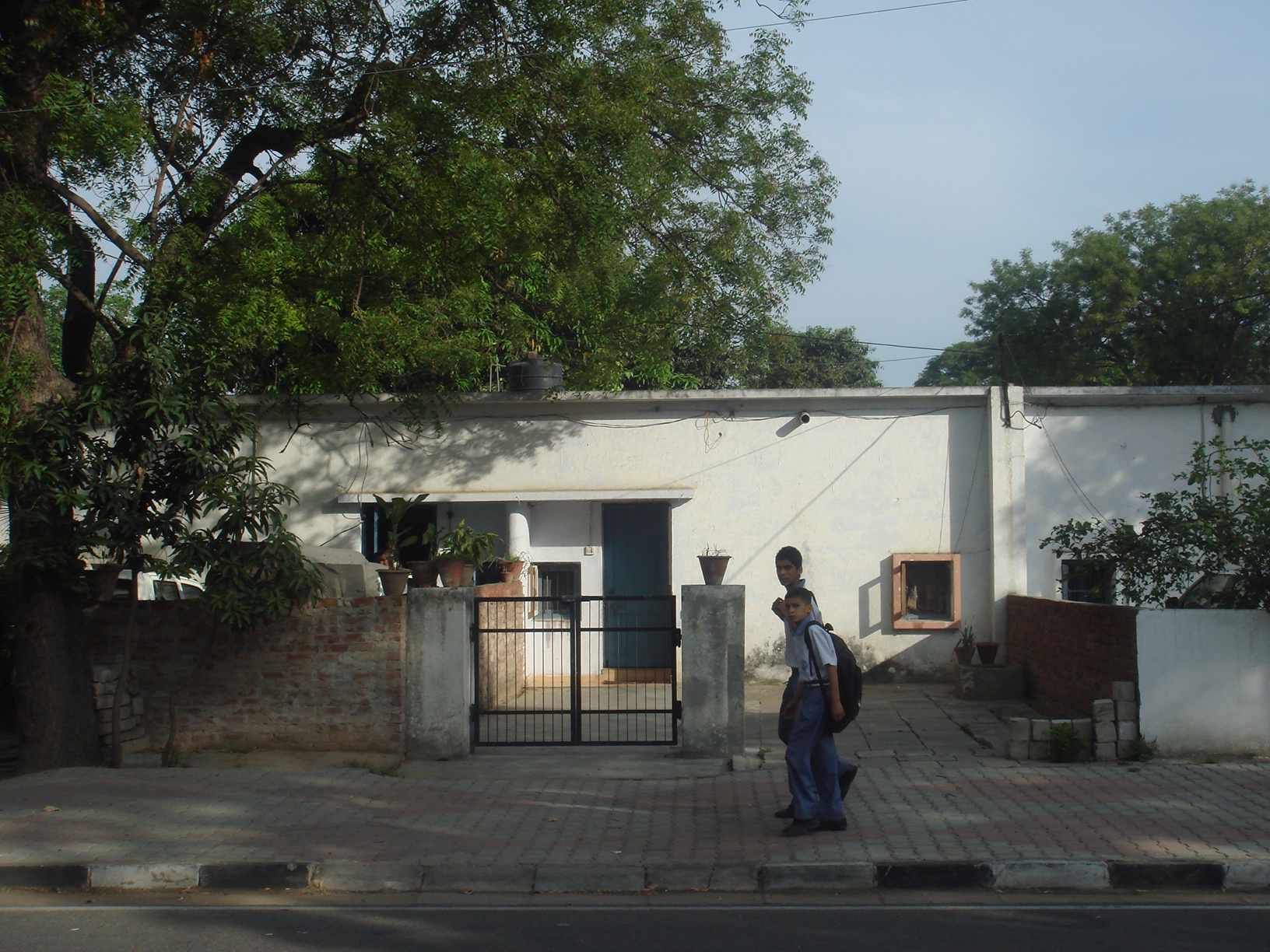
Recent scholarship has begun to critically examine the planning of the city and to introduce the other members of the design team. Iain Jackson has written a paper that attempts to assess the first housing in Chandigarh designed by Fry and Drew for Sector-22.

DSC06938

Sector 22 Housing, Chandigarh. Jane Drew.

The paper considers the influences behind their planning method and housing typologies, with particular focus on the notions of ‘neighbourhood planning’. The paper argues that Fry’s work with Thomas Adams from the 1920s is of particular importance to Sector-22’s layout, which was further informed by Drew’s studies published immediately after the Second World War. Finally, their housing plans are considered, along with the contributions of their Indian colleagues – an important group who have largely been ignored in previous academic studies of the city. The full article is available to view here.

Images taken during a TAG visit, April 2012 © Jessica Holland.