Archive

Tag Archives: Biennale

Venice Biennale and the IUAV August 2023

Venice 2023…

A visit to Venice to attend the inaugural AFRAHUAN session at the Teatro Piccolo at the Arsenale as part of the Carnivale Proceedings of the Venice Biennale proved an apt occasion to visit and view Venice in full exhibition and tourist mode.

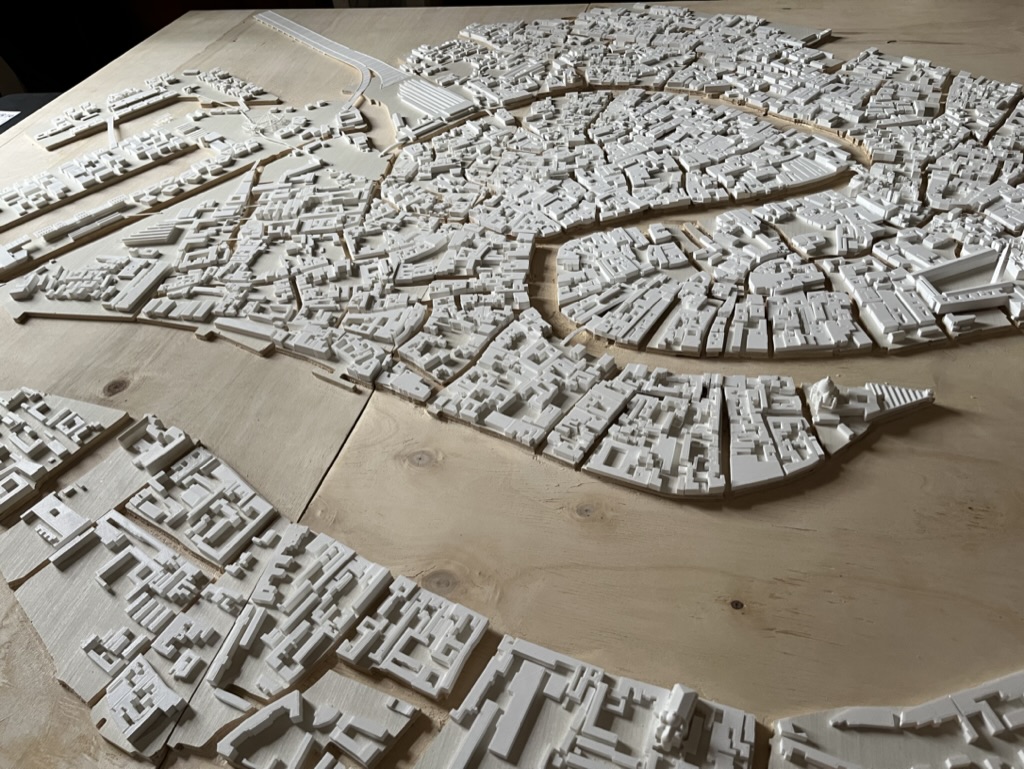
Venice is indeed a city like no other. No cars, no bicycles, lots of passageways, canals, and tourists. One adjusts to this city of walkers, traders and tourists all jostling for space in alleyways that are literally not wide enough to swing a cat. The green canal water both enticing and goading the unwary walker to come to its banks.

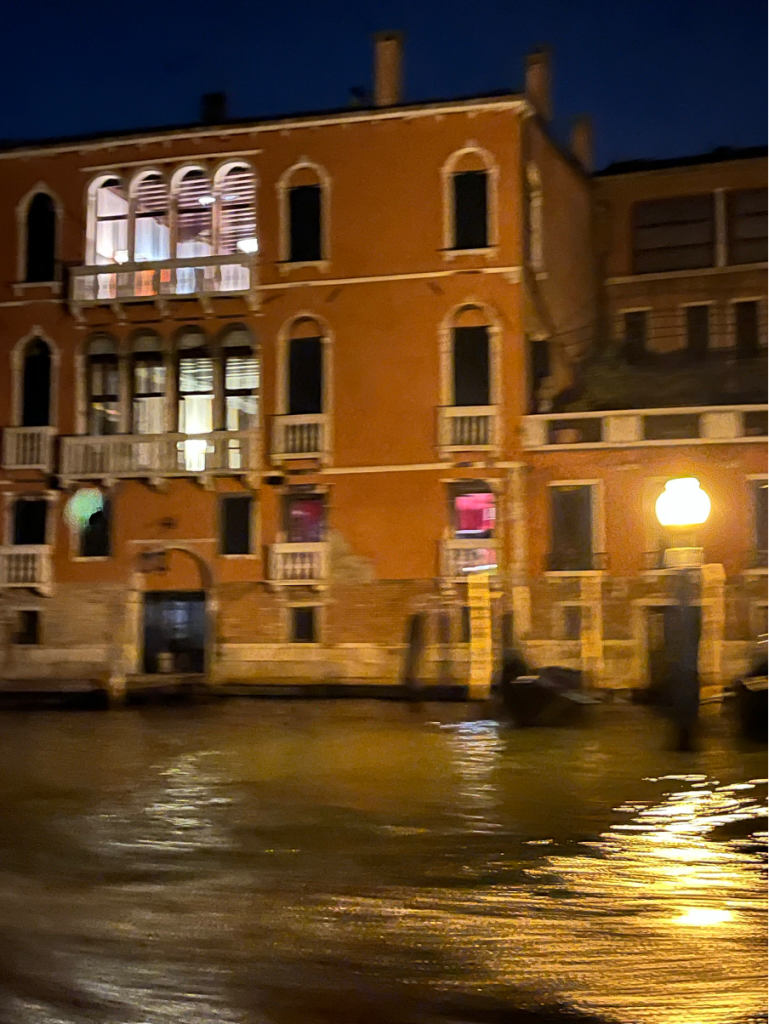
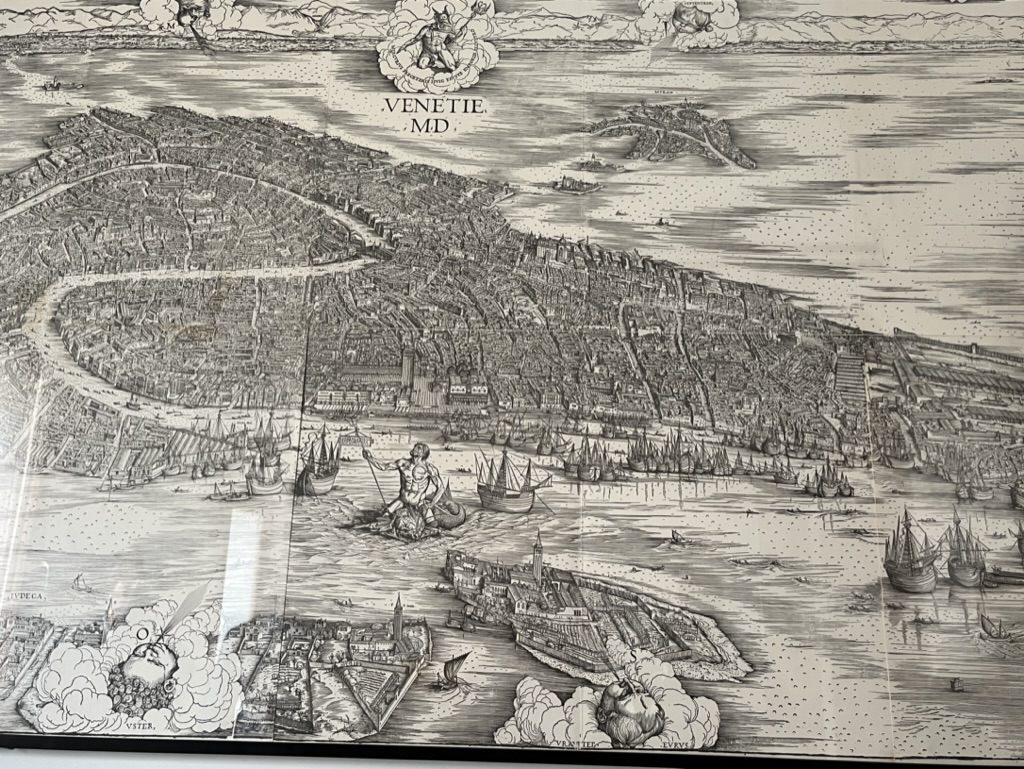
A walk to the Arsenale gave a better viewpoint of the wide vista of Venice as a series of islands with canals as fingers out to the grand canal. The adaptive reuse of various parts of this still living city is clear. The Arsenale itself remains the home of the Italian navy and a museum dedicated to the armed force still exists with the occasional boat dropping by.

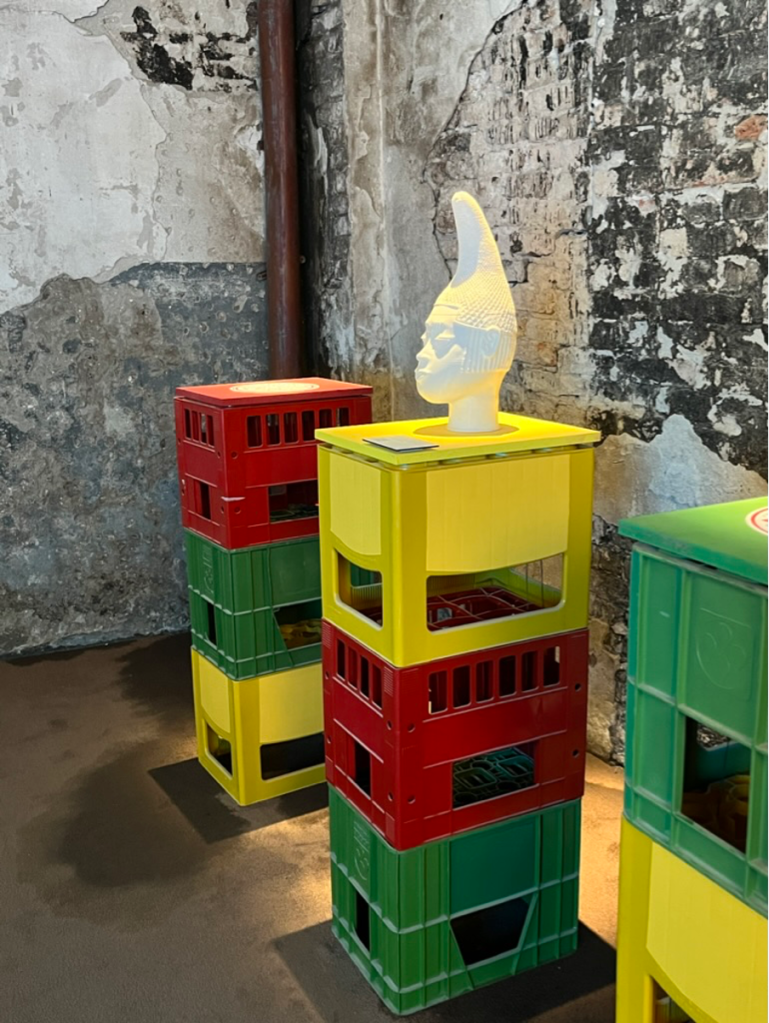
The main part of the old Arsenale building however now has been occupied by the architecture biennale, this year curated by Lesley Lokko and involving your writer and a wide set of architects, writers and artistes with Africa focused research. The ‘carnivale’ exhibition is no mean feat, a work of immense dedication, creativity and focus. The curation is superb and content more than can be taken in at one go. One easily gets immersed in what it offers up with names one knows and has heard of contributing to this rich tapestry of art. Fortunately the accompanying catalogue means one can refer back to installations and events missed or glossed over in the viewing of the exhibition.

AFRAUHN AT THE CARNIVALE…

The African Architectural and Urban History Network (AFRAUHN) had its debut at a session at the Carnivale at the Biennale. Curator Lesley Lokko introduced our session which had two parts, the first involved speakers Ikem Okoye (Delaware, USA),  Kuukuwa Manful (Michigan University, USA) and Neal Shasore (London School of Architecture), with Ola Uduku (Liverpool University) chairing, where the session focused on a discussion on the remit of AFRAUHN which is to help encourage and advocate for Architectural Research in Africa, and support new generations of indigenous historians and researchers in Architectural History and urbanism. After Ikem Okoye’s introduction both Kuukuwa and Neal were able to discuss their different approaches to, and hopes for Africa-related Architectural Research.

The second session chaired by Huda Tayob (Unversity of Manchester) involved all speakers from the earlier session and also Murray Fraser (University College London). This session was a roundtable where the speakers responded to Huda Tayob’s questions which considered specific issues and challenges to scholarship in African Architectural History and its situatedness within the wider context of global research and challenging normative notions of historical research and scholarship.

The entire session was recorded and will be published by the Venice Architecture Biennale before the end of September 2023. Due to the events related to air traffic control problems in the UK unfortunately several of the invited AFRAUHN team were unable to attend the session, and others arrived late due to flight delays. It is hoped we will be able to include their recorded contributions to the final video output from the session.

IUAV (University of Venice)

On Wednesday, the day after the Carnivale discussion we were fortunate to reconvene at a meeting room at the IUAV (University of Venice), thanks to Dr Jacopo Galli, who has researched into African modernism and was involved in the curation of the exhibition Africa Big Change, in Milan and has worked with Manchester School of Architecture on the analysis of schools in West Africa. IUAV has sites across Venice, and we met at the C’a Tron campus, a Venetian villa owned by the wealthy Tron Family before being gifted to the State.  Post meeting tours took us to the Carlo Scarpa-influenced main campus of the IUAV, a repurposed convent which still has parts which are owned by the church. The campus also has a significant architectural library including book volumes and periodicals accessible and in regular use by its students.  

Unlike the exclusive arrival to the watery city a few days earlier, the trip back to the airport was by airport water taxi, which proved to be a bus trip stopping at many of the archipelago of islands which constitute Venice, including Murano, famous for its glass works and San Michael. Approaching Marco Polo Airport Venice by water seemed a very apt way to leave the city.

Dr Christopher Turner co-curator of the exhibition watching film featuring Ola Uduku

Press Cuttings:

“La Biennale di Venezia and the V&A present Tropical Modernism: Architecture and Power in West Africa. Organised in collaboration with the Architectural Association (AA), London, and Kwame Nkrumah University of Science and Technology (KNUST), Kumasi, this presentation at the Biennale Architettura 2023 critically reflects on the imperial history of Tropical Modernism through an analysis of the work of the Department of Tropical Architecture and a dozen key projects. It explores the ways in which this distinctive architectural style was initially developed and employed as a tool to support colonial rule before being adapted by West African architects to promote the excitement and possibilities of the period that followed Ghana becoming the first sub-Saharan African country to gain independence in 1957.

Curated by Dr Christopher Turner (V&A) with Nana Biamah-Ofosu and Bushra Mohamed (AA), the Venice presentation in the Applied Arts Pavilion is centred around a multi-channel film installation featuring interviews with surviving protagonists and footage of remaining buildings. Responding to the theme of the 18th International Architecture Exhibition conceived by Director Lesley Lokko, who writes ‘Africa is the laboratory of the future’ in her curatorial statement for the Biennale Architettura 2023, the presentation also lays the groundwork for a larger exhibition scheduled to take place at the V&A in London in 2024.”

https://www.labiennale.org/en/architecture/2023/applied-arts-pavilion

Professor Henry Wellington being interviewed for the exhibition

V&A Museum

https://www.vam.ac.uk/articles/la-biennale-di-venezia-2023

AA

https://www.aaschool.ac.uk/news/aa-dip2-tutors-nana-biamah-ofosu-and-bushra-mohamed-curate-tropical-modernism-exhibition-at-the-venice-architecture-biennale-2023

Dwell

https://www.dwell.com/article/2023-venice-architecture-biennale-african-housing-designs-d93d743b

“Venice exhibition restores African architects to the story of Tropical Modernism”, Financial Times:

https://www.ft.com/content/5b5c1d86-6a53-4c42-9d15-d602231c0b1e

“This year’s Venice Architecture Biennale is brave, baffling, stimulating and essential”, Financial Times, https://www.ft.com/content/07014793-4753-40c5-8369-29db16295d75

Architects’ Journal, https://www.architectsjournal.co.uk/news/pick-of-the-pavilions-at-2023s-venice-biennale

Wallpaper*

https://www.wallpaper.com/architectture/v-and-a-s-tropical-modernism-venice-architecture-biennale-2023-italy

Tropical Modernism Exhibition at 2023 Venice Biennale

Venice architecture biennale: how pioneering Ghanaian architects reckoned with tropical modernism by Kuukuwa Manful

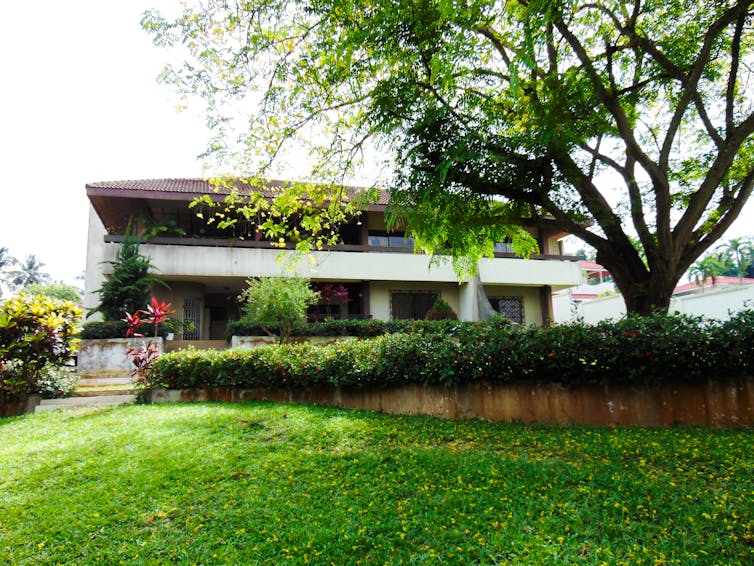
Owusu Addo Residence by John Owusu Addo. Kuukuwa Manful, CC BY-NC-ND
Kuukuwa Manful, SOAS, University of London

As curator of the 2023 Venice architecture biennale, the Ghanaian-Scottish architect, Lesley Lokko, has chosen to highlight the African continent as “the laboratory of the future”.

But as well as looking at the future of architecture on the continent, visitors will also be able to explore its history, through an exhibition at the Arsenale, entitled Tropical Modernism: Architecture and Power in West Africa.

Early 20th-century modernism in Europe saw architects using large expanses of unshaded glass and flat roofs. Practitioners in warmer, humid climates, such as in Africa and Asia, meanwhile, had to adapt their designs to withstand heavier rainfall and warmer temperatures. In late colonial Africa and during the independence era, this style became known as “tropical modernism” or “tropical architecture”.

In the African context, this is possibly the best researched and well-documented architectural movement. When people discuss it further afield, however, it is mostly through a white lens. The focus is on what European architects practising in these regions were doing – African architects of the same era are largely overlooked.

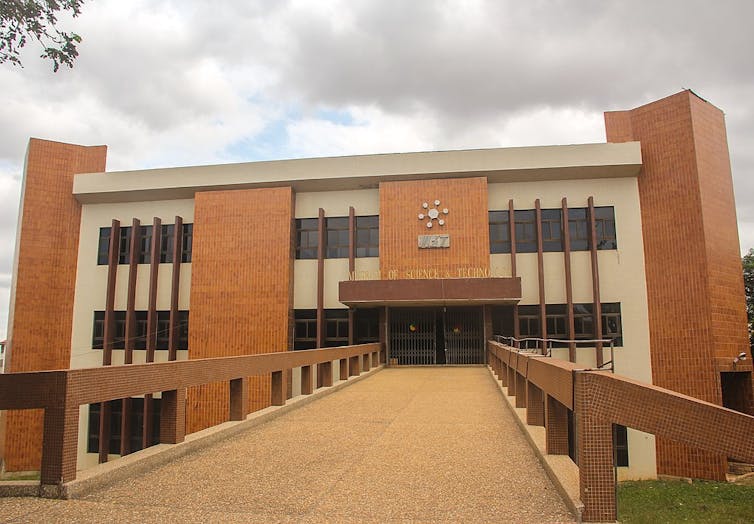
A large building of brick and plaster.
Museum of Science Technology in Accra, designed by Daniel Sydney Kpodo-Tay. Mun85/Wikimedia, CC BY-NC-ND

Putting Europe at the centre of African stories is a choice that echoes the very colonial histories it seeks to elucidate, where European architects operated as though the continent were a blank slate, devoid of pre-existing architecture worthy of note.

My research shows how architects in Ghana in particular aligned with, adapted, or rejected Western colonial ideas. They created modernist buildings that reflected their visions for their nation, their experiences and their global outlook.

Ghanaian expertise

John Owusu Addo, the first black head of department of Ghana’s first architecture school, and Samuel Opare Larbi, another prominent educator and architect, embodied what I term the dominant Ghanaian tropical modernism. Their practice was most similar to, and aligned with, the practice of the white British tropical modernists.

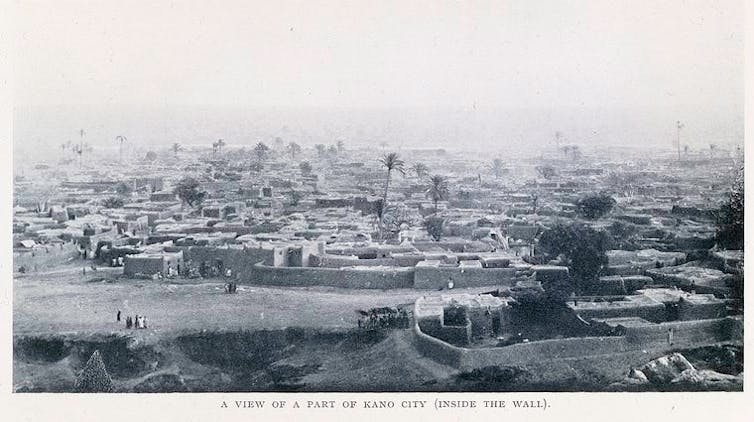
The former Department of Tropical Architecture was established at the Architectural Association (AA) in London in 1954 by the British wife and husband duo Jane Drew and Maxwell Fry, and James Cubbitt. Although Fry described the city of Kano, in present day Nigeria, as a “complete realisation of urban harmony”, he and Drew nonetheless declared having “invented” architecture in West Africa. Their work was coloured by the imperial, racist and sexist notions of the time.

An archival photograph of an ancient city.
Kano city, Nigeria, in 1911. Digital Collections, The New York Public Library

Owusu Addo and Larbi both trained at the AA. They counted among their contemporaries the German architect Otto Koenisberger and the Australian-born British architect Kenneth Mackensie Scott. Although they faced racial discrimination in Europe and back home, their UK education put them in a position of relative privilege in Ghana.

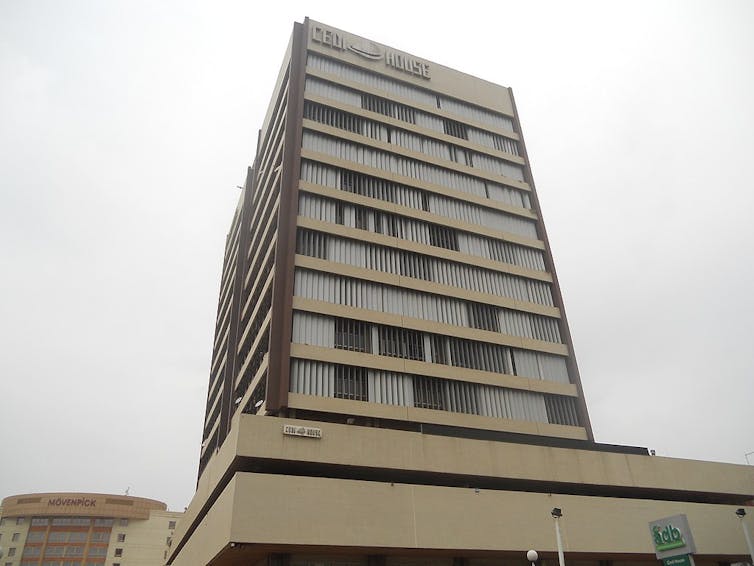
From the outside, many of the institutional and corporate buildings they designed, including Cedi House in Accra (a high-rise tower that now houses the Ghana Stock Exchange) featured elements of tropical modernism: solar shading devices, rhythmic facades, breeze blocks, cross ventilation and east-west orientation.

A high-rise building.
Cedi House in Accra. Simon Ontoyin/Wikimedia, CC BY-NC-ND

But it is in the interiors of their domestic architecture that their keen understanding of the people for whom they were designing becomes most apparent. When I interviewed Owusu Addo and Larbi in 2015, they recounted how they took Ghanaian societies into account. And they spoke of the pride they felt at being African architects.

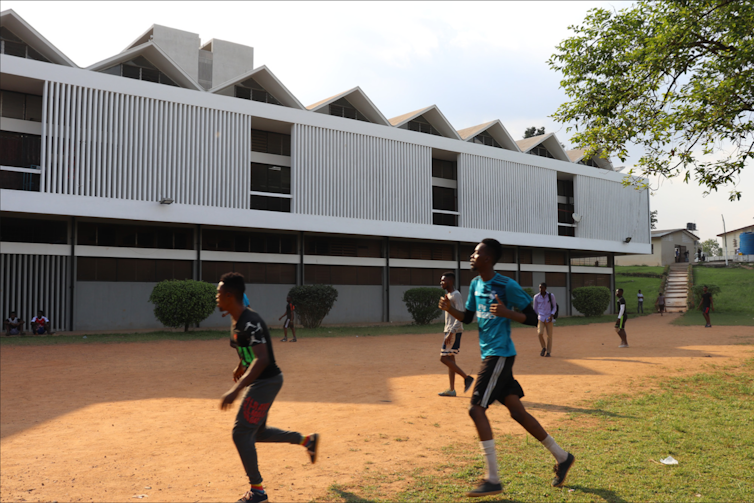
For the Unity Hall student accommodation at the Kwame Nkrumah University of Science and Technology, Owusu Addo created shaded outdoor space, with courtyards and verandas. As he put it: “Rarely do we stay in our rooms in the daytime. If in the daytime anyone was in the room, then he was sick.”

A building with boys playing in the foreground.
Unity Hall, Kwame Nkrumah University of Science and Technology, Kumasi. Łukasz Stanek, CC BY-NC-ND

Creative dissent

Other architects sought to establish an aesthetic that was visually distinct from European-driven tropical modernism. They accepted the climatic control and other technological and material aspects of the style. However, in the aesthetics they pursued, they were decidedly expressive.

Anyako-born architect Daniel Sydney Kpodo-Tay’s confidence was grounded in his centuries-long family history of building design and construction. Together with his anti-colonial politics and a desire for recognition, this informed an approach that the Ghana Institute of Architects termed “revolutionary”, upon his death in 2018.

Kpodo-Tay was fascinated by symbolism. His designs rejected ornamentation. Instead, he sought to make the buildings themselves sculptural. His projects that were built were often not as bold as his proposals – a compromise he put down to the limited finances and conservatism of clients in Ghana.

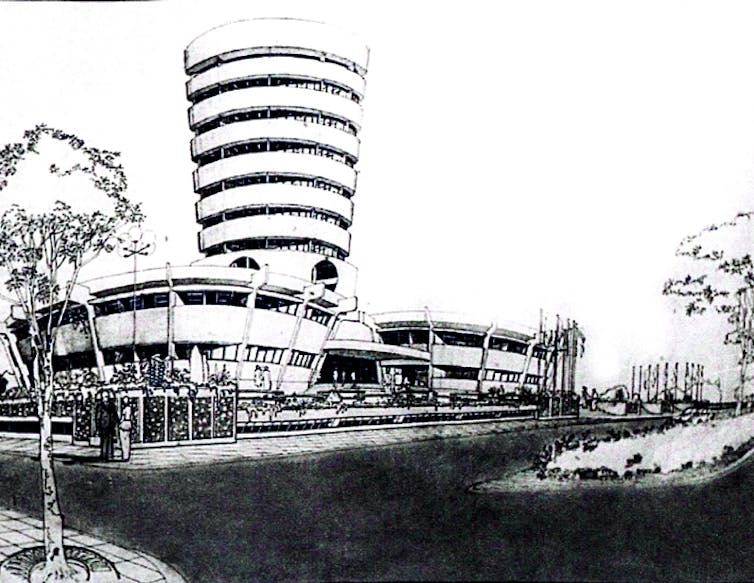
When a competition was held, in the late 1980s and early 1990s, to design the headquarters for the Economic Community of West African States organisation, Kpodo-Tay’s proposal drew on the form of a bowl as symbolic of communality and unity. His design for the complex, which was to house offices, a bank and a conference venue, featured bold inverted conical forms with internal spaces arrayed radially.

A drawing of an architectural proposal.
Daniel Sydney Kpodo-Tay’s proposal for the ECOWAS headquarters. Kuukuwa Manful, Author provided

Owusu Addo, Kpodo-Tay, and Larbi are not the only Ghanaian architects of their generations whose practice was informed by tropical modernism. Many stories are yet to be brought to light, especially those of the women.

Only a few women were trained at the Kwame Nkrumah University of Science’s architecture school. Sexism in the industry saw some leave. But others, including the late Alero Olympio who designed Accra’s Kokrobitey Institute, struck out in bold new ways. These visionaries challenged the Euro-centric assumptions of what tropical modernism was, in particular through their use of materials.

As scholars, practitioners and visitors from around the world turn to architecture on the African continent, they must be careful not to treat it as a blank slate in the way previous generations did. Africans have been creating, studying, teaching, and documenting architecture in Africa since time immemorial. Their work matters.

Kuukuwa Manful, Postdoctoral Researcher in Politics of Architecture, SOAS, University of London

This article is republished from The Conversation under a Creative Commons license. Read the original article.

Originally published here https://theconversation.com/venice-architecture-biennale-how-pioneering-ghanaian-architects-reckoned-with-tropical-modernism-202092

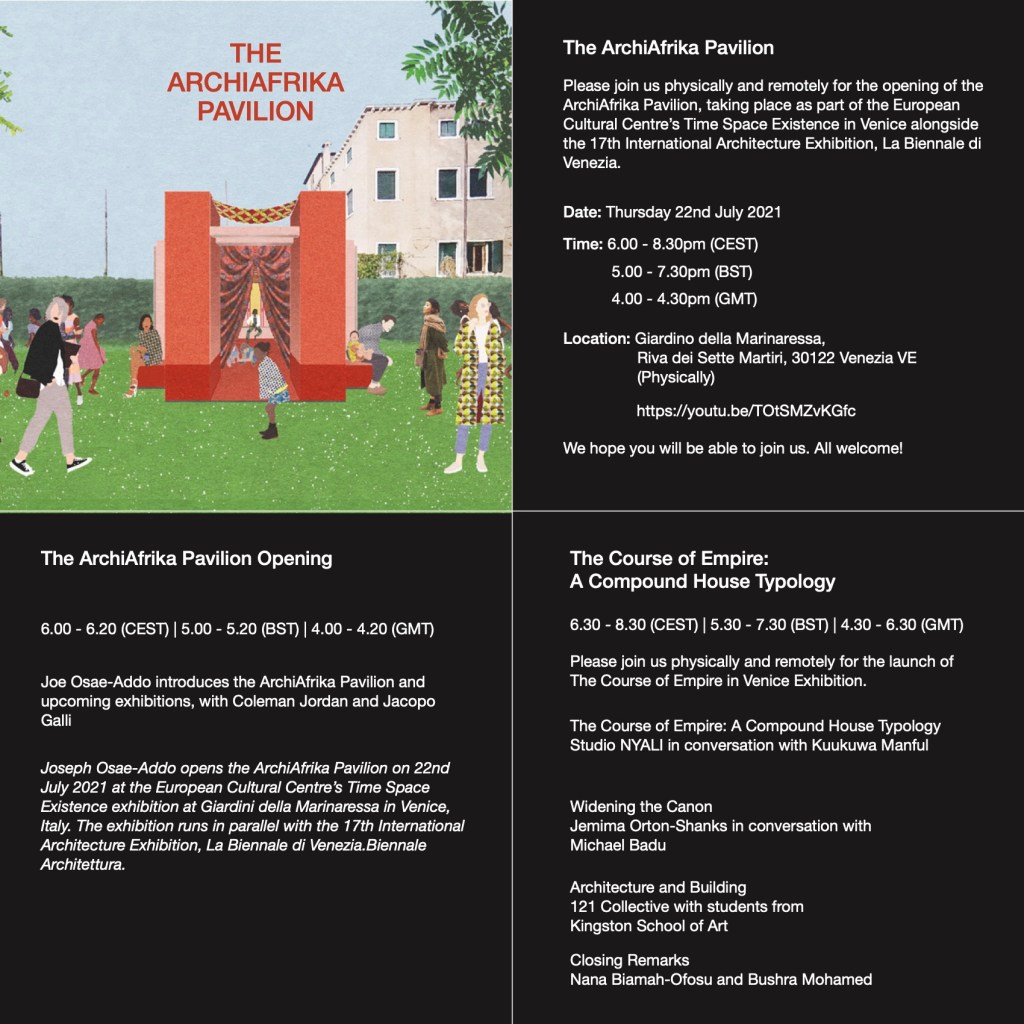
Join Joe Osae-Addo, Coleman Jordan and Jacopo Galli as they introduce the latest ArchiAfrika Pavilion and exhibitions, followed by a series of presentations from the https://registerarchitecturelandscape.uk/course-of-empire . This is going to be a rare treat, and it’s all live via Youtube if you can’t get to Venice in time.