I’ve been visiting buildings in Accra that I don’t know much about today.
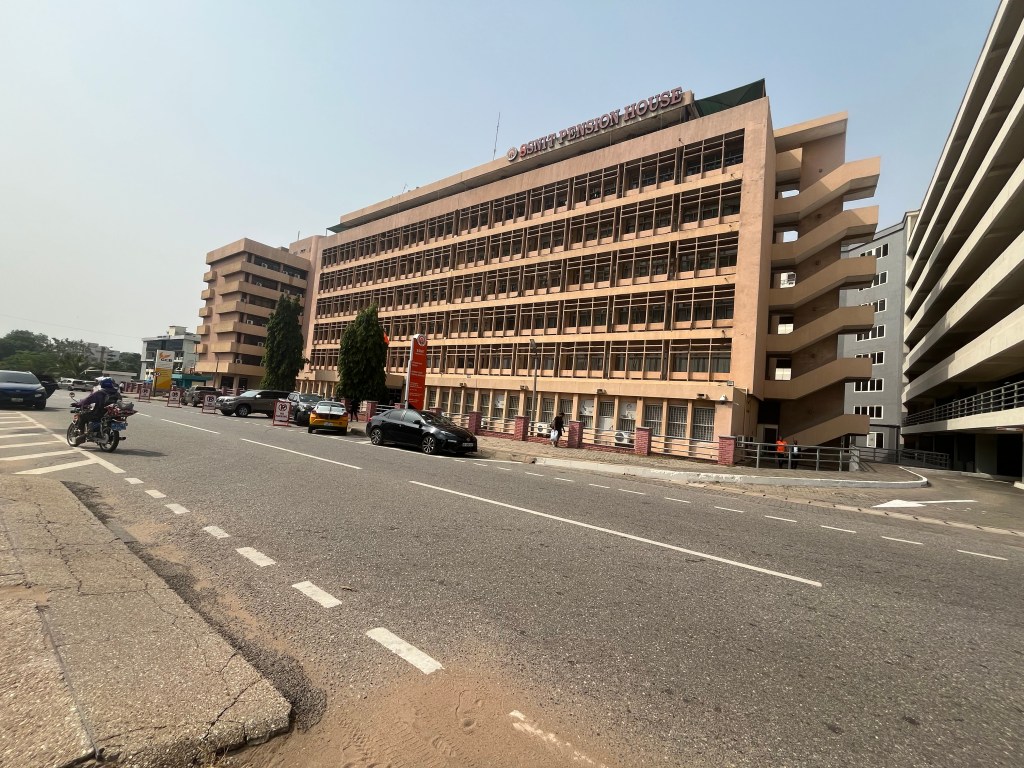
SSMIT Pension House: super bit of brutalism near the ministries. This building looks after the state pensions – but who designed it? Perhaps a forgotten Nickson & Borys? Rather nice open staircase and precise brise soleil…. I can’t find any references to it in my collections or at the RIBA library catalogue. I’ll have to check WABA Journal again, but don’t recall ever reading about this significant building?
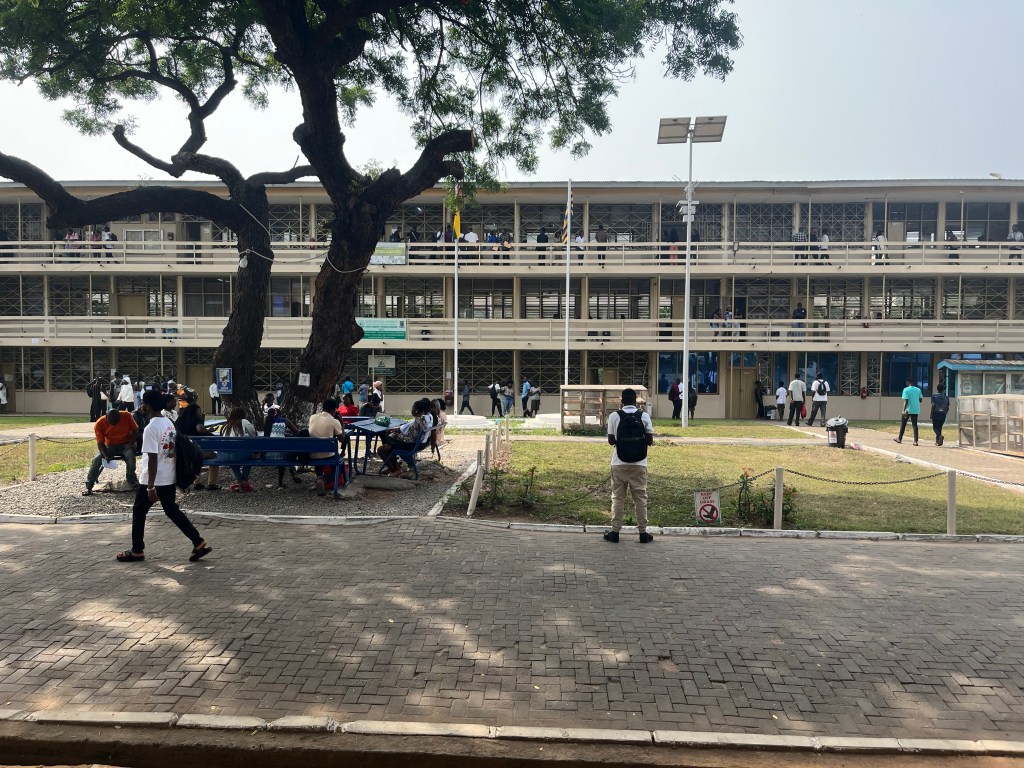
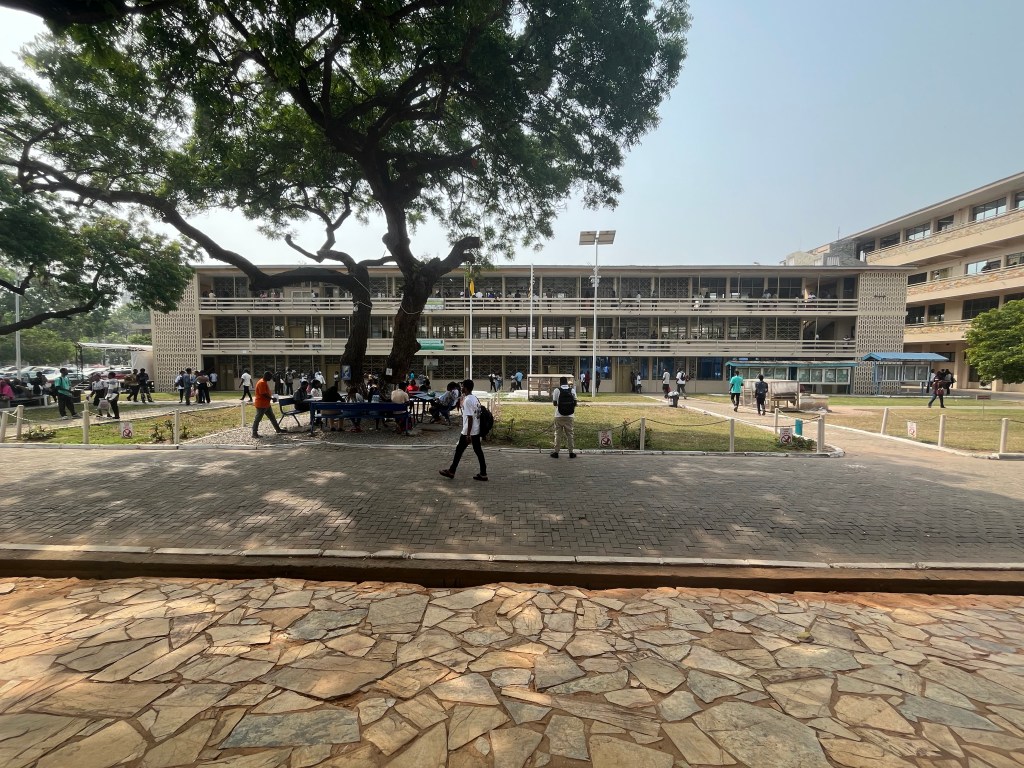
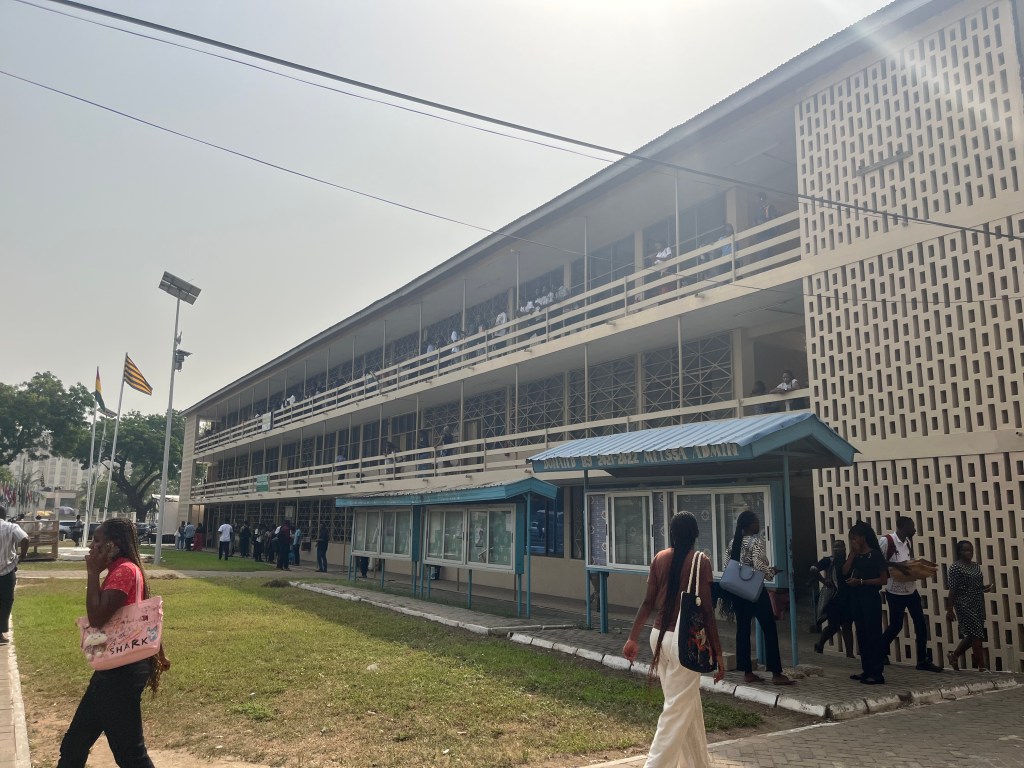
Accra Technical Institute. My reliable sources say it’s designed by none other than James Cubitt. Could be – it resembles his early work at KNUST, Kumasi. OR should I have gone to the Accra Technical College? But the dates for that institution don’t seem to add up.
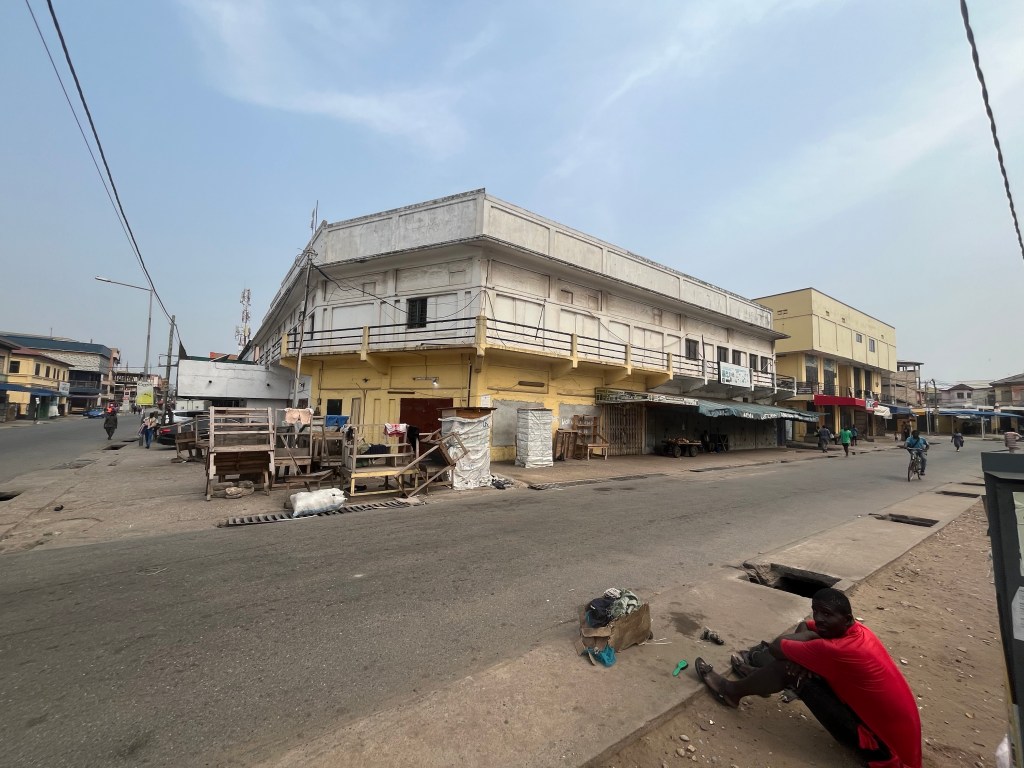
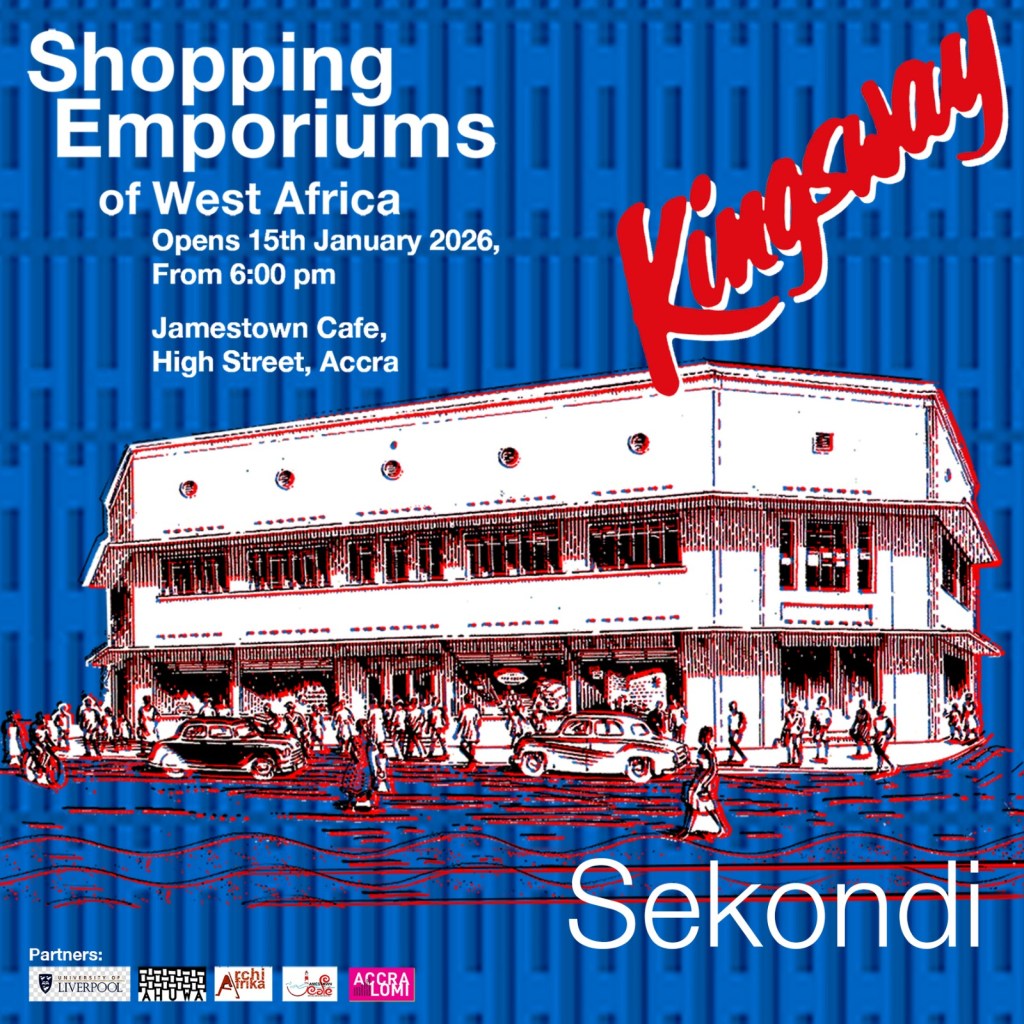
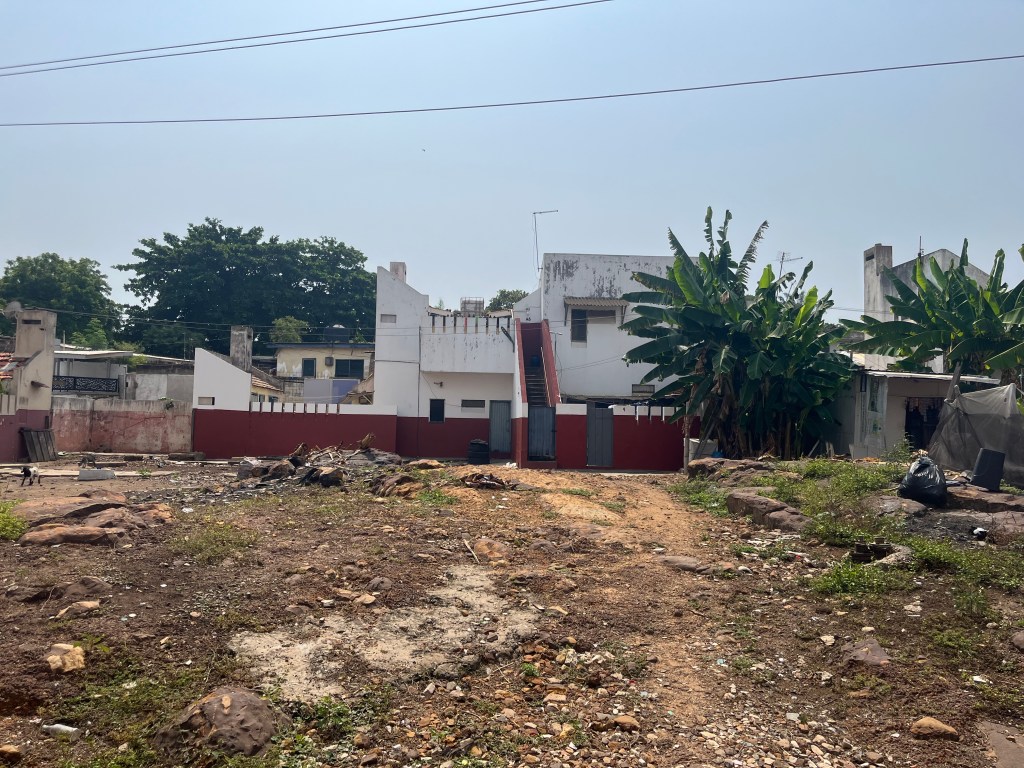
Then there’s a delightful commercial building in Jamestown. It resembles the UAC Kingsway Store in Sekondi. It definitely wasn’t a Kingsway, but perhaps was linked to the UAC?
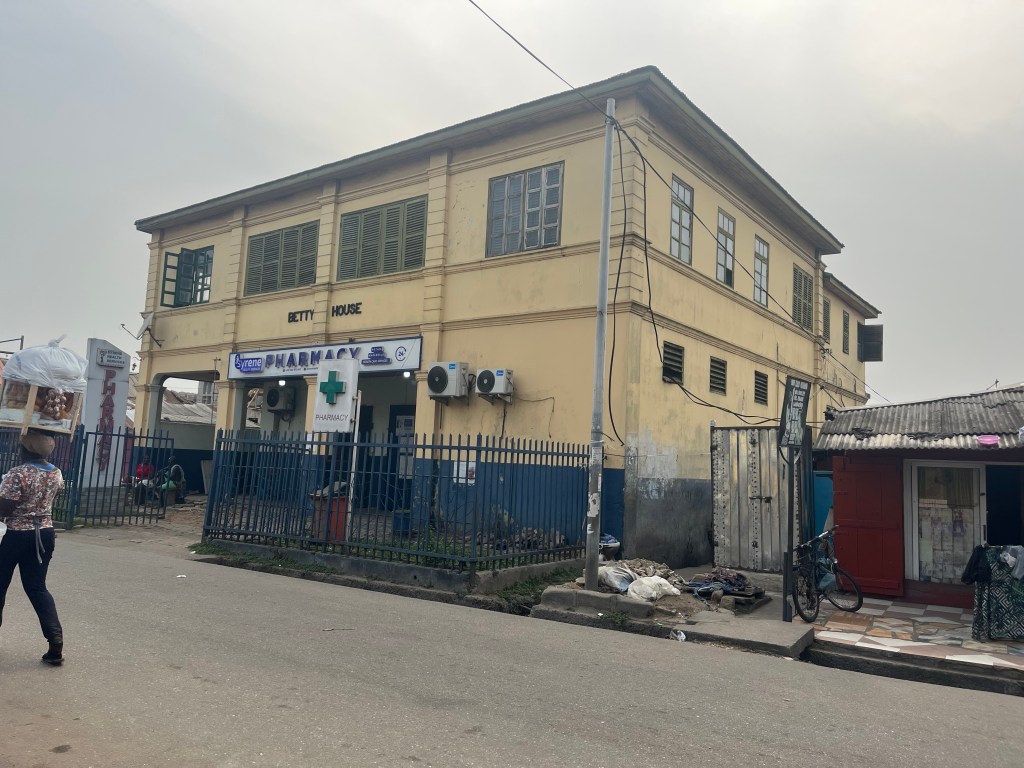
Finally “Betty House”. A rather large house in what was a prestigious neighbourhood in Jamestown at Korle Wokon. Historically important as the residence of Nana Akufo-Addo’s father and served as HQ for Ghana’s first political party, the United Gold Coast Convention (UGCC) after its formation in 1947.
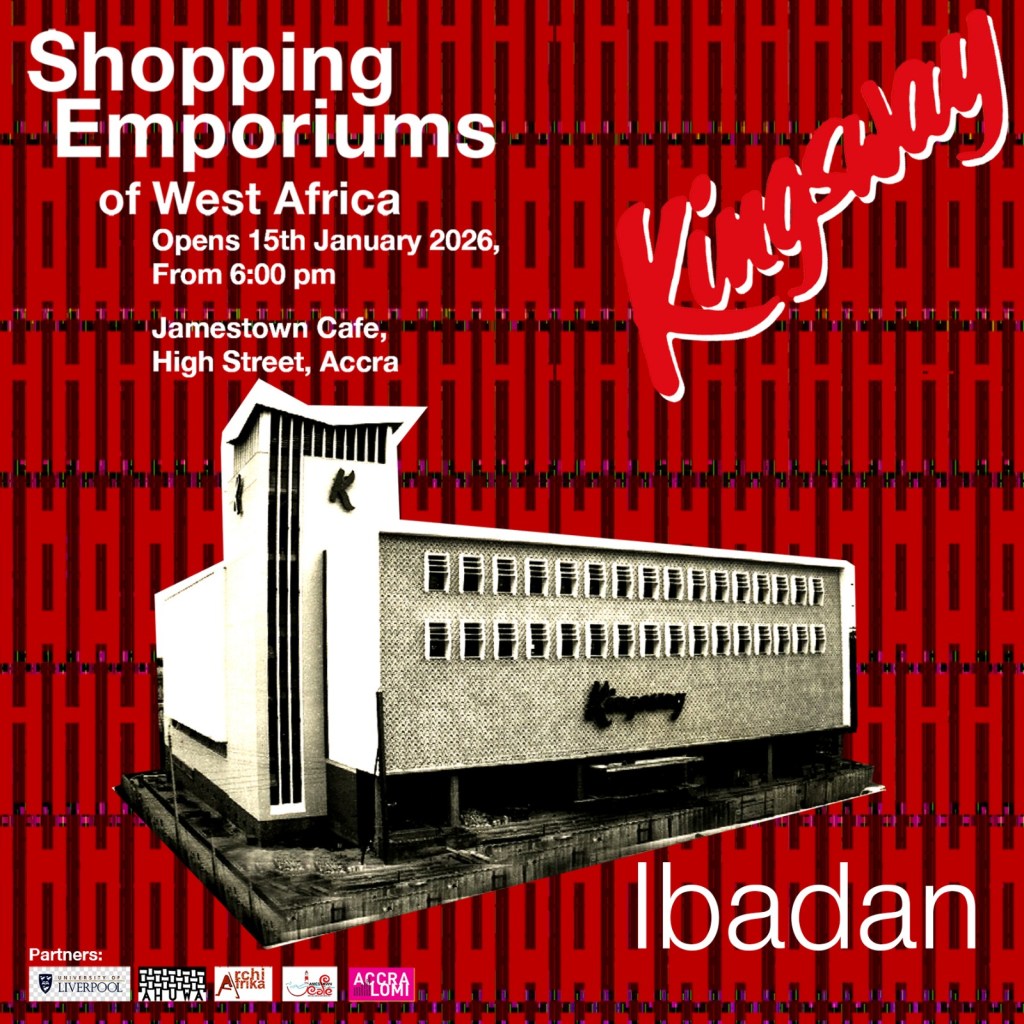
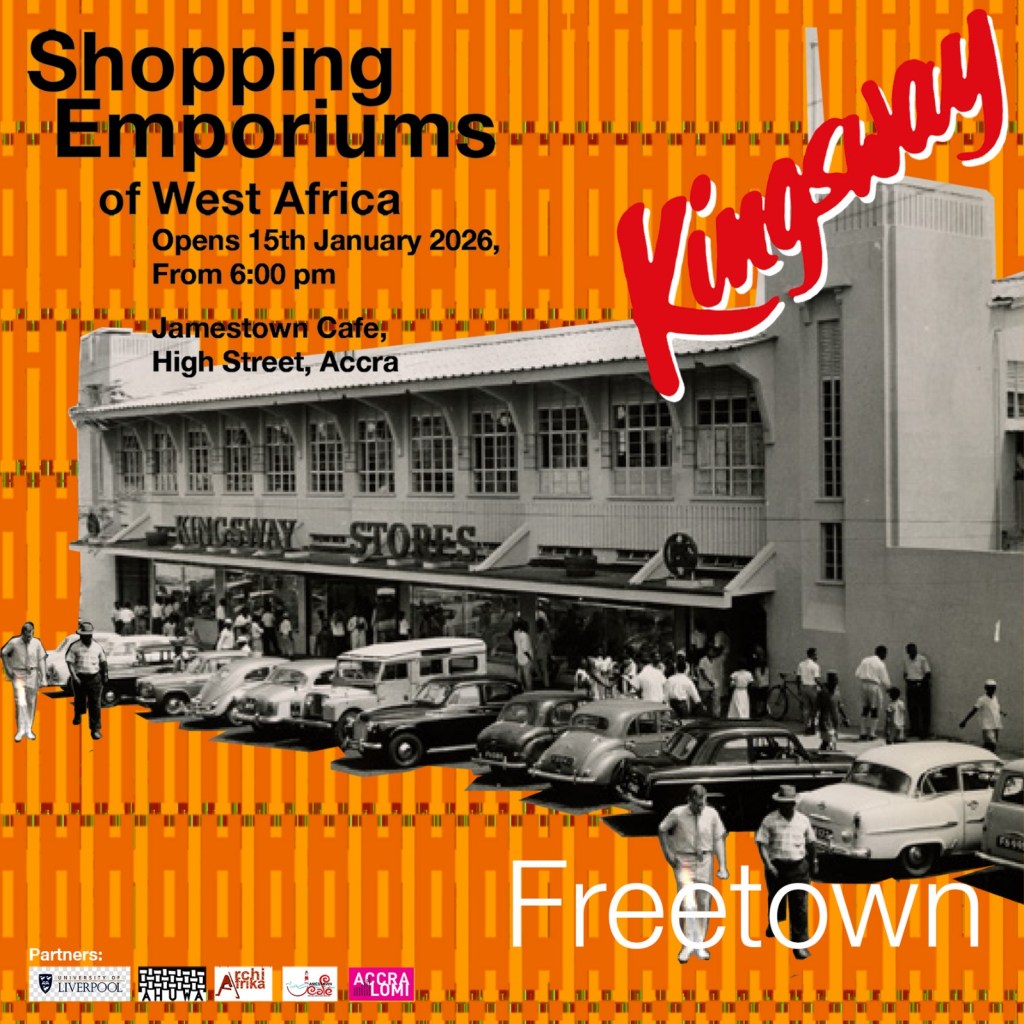
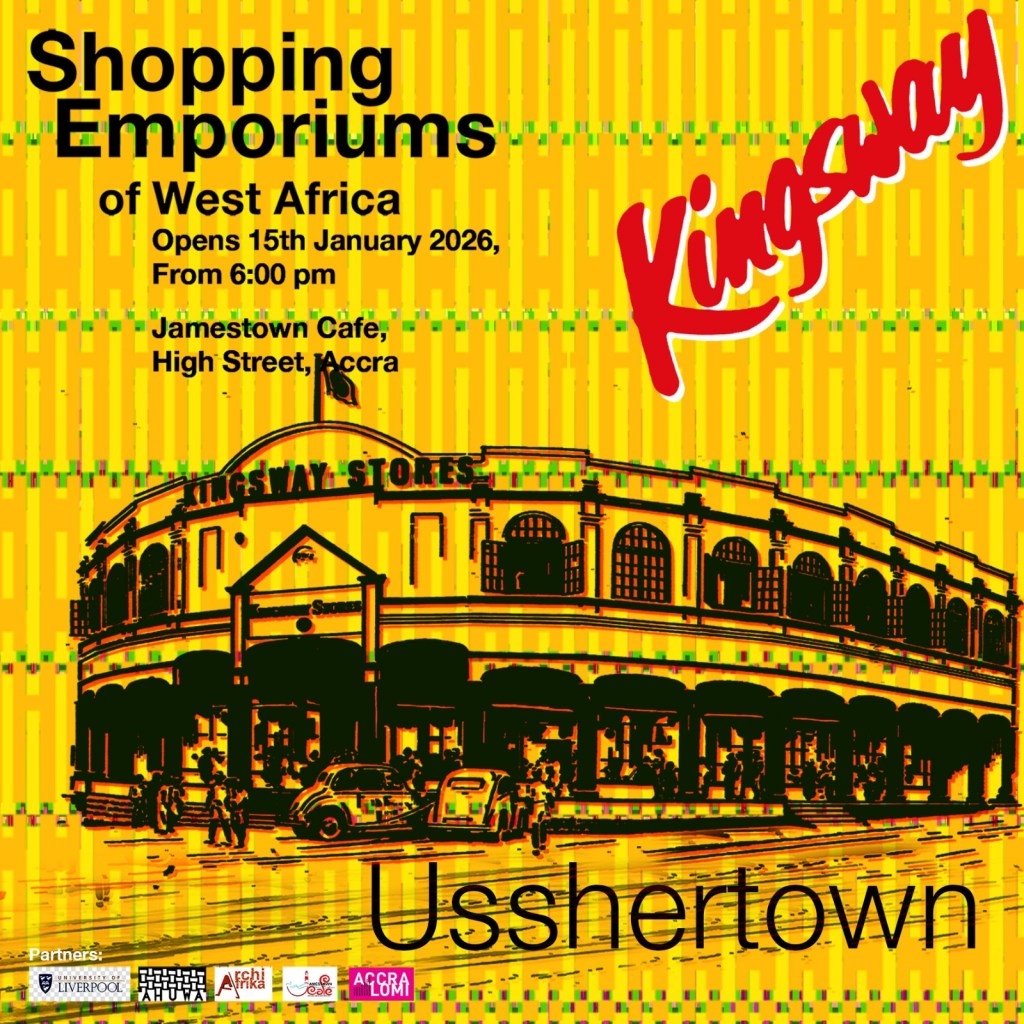
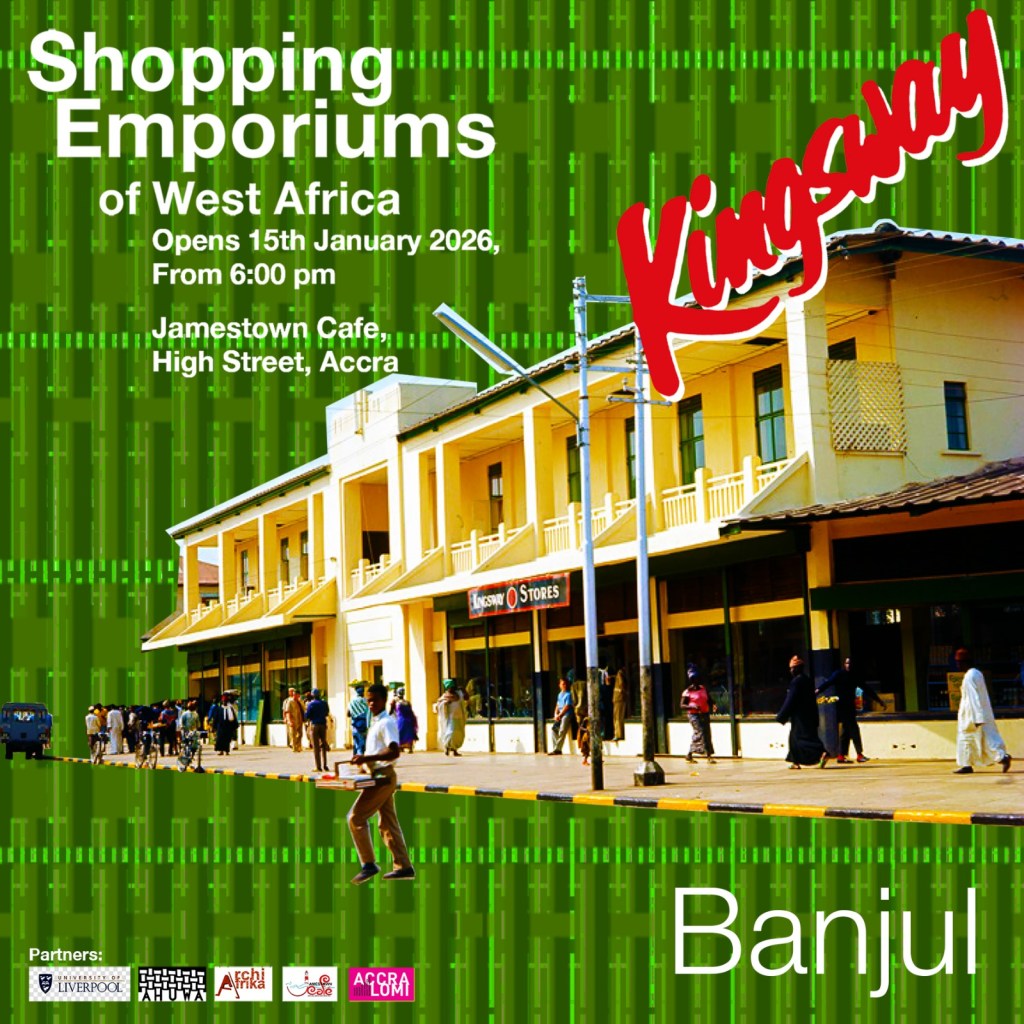
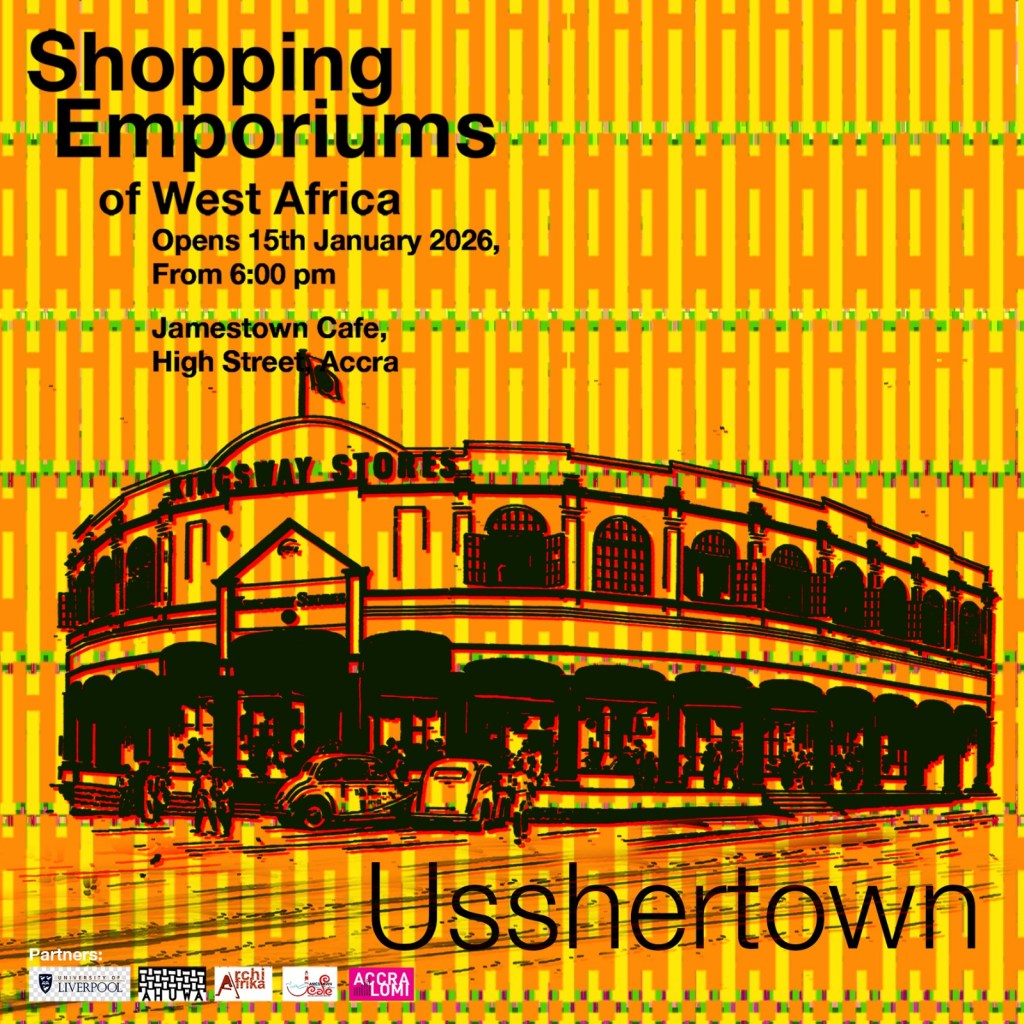
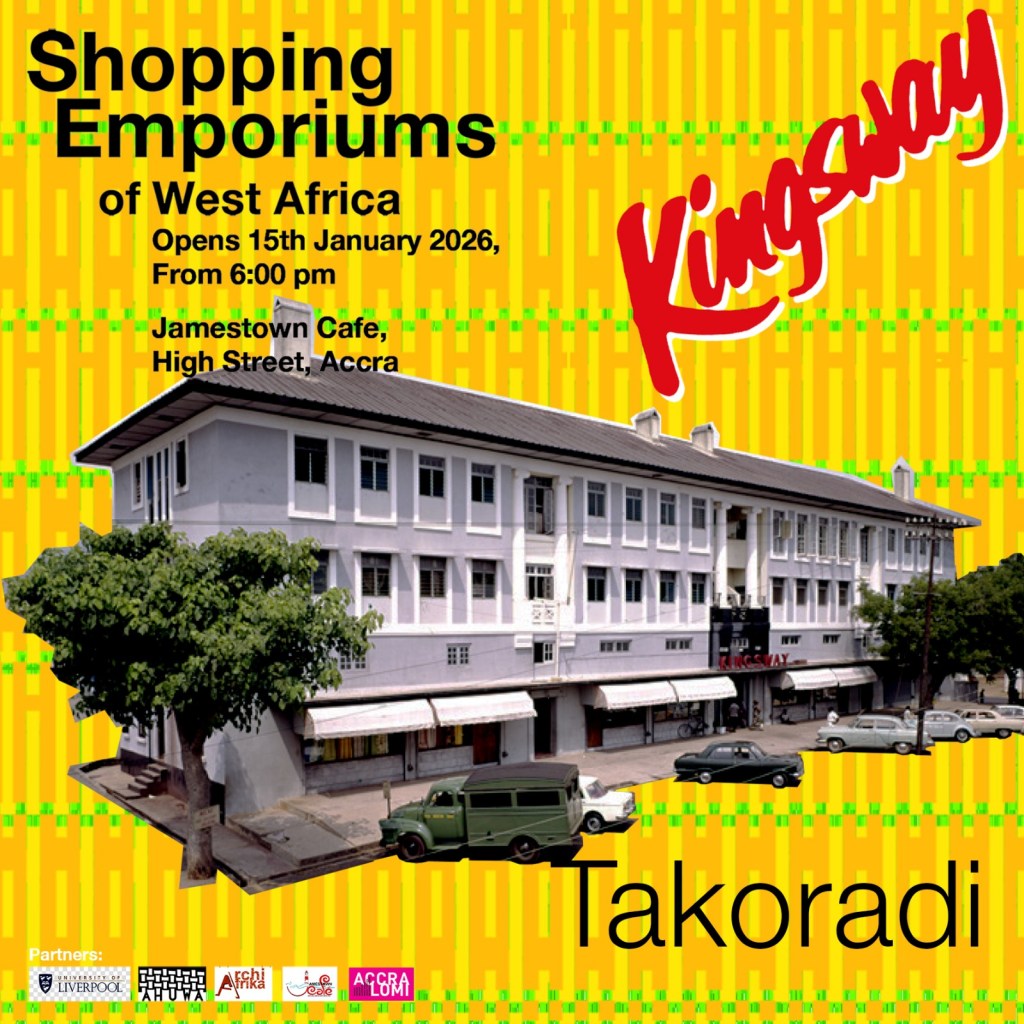
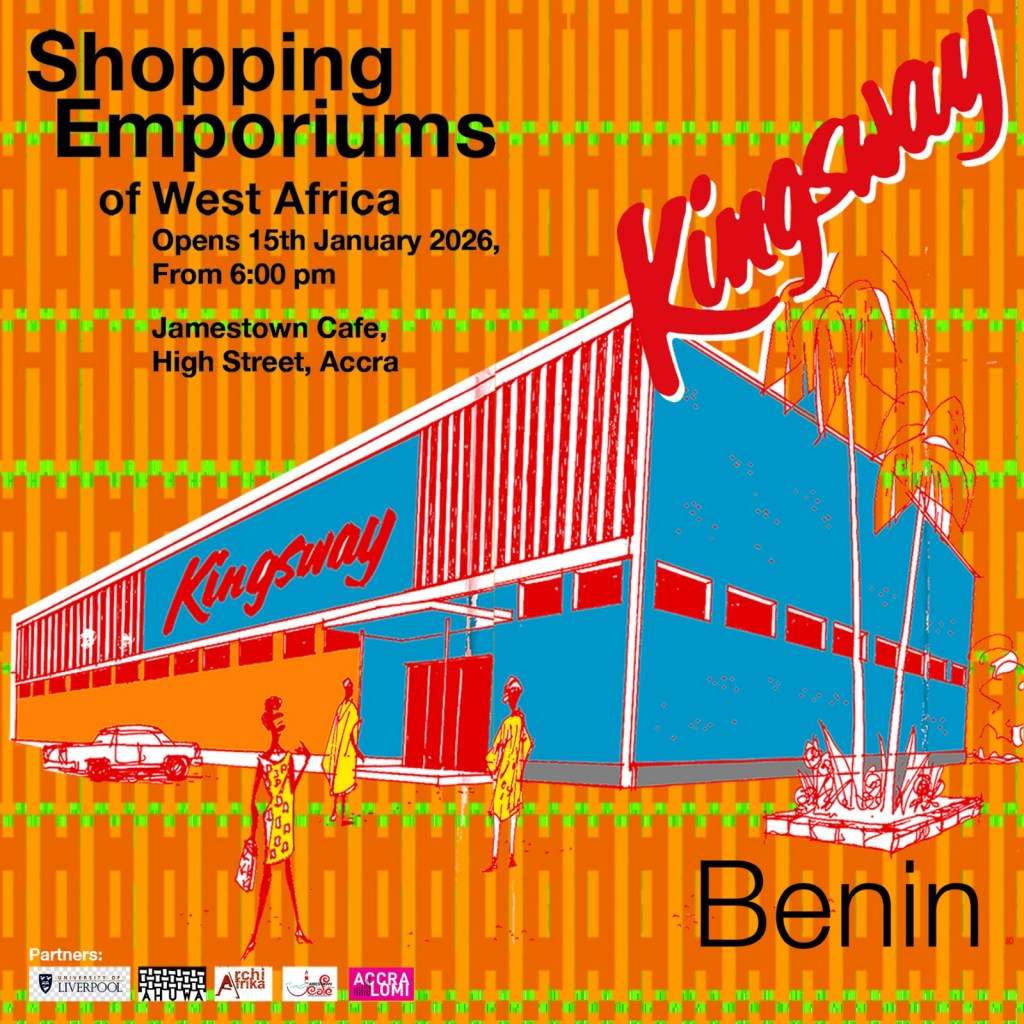
Bringing the Kingsway Stores Home: Our Exhibition Opens in Accra15 Jan – Easter
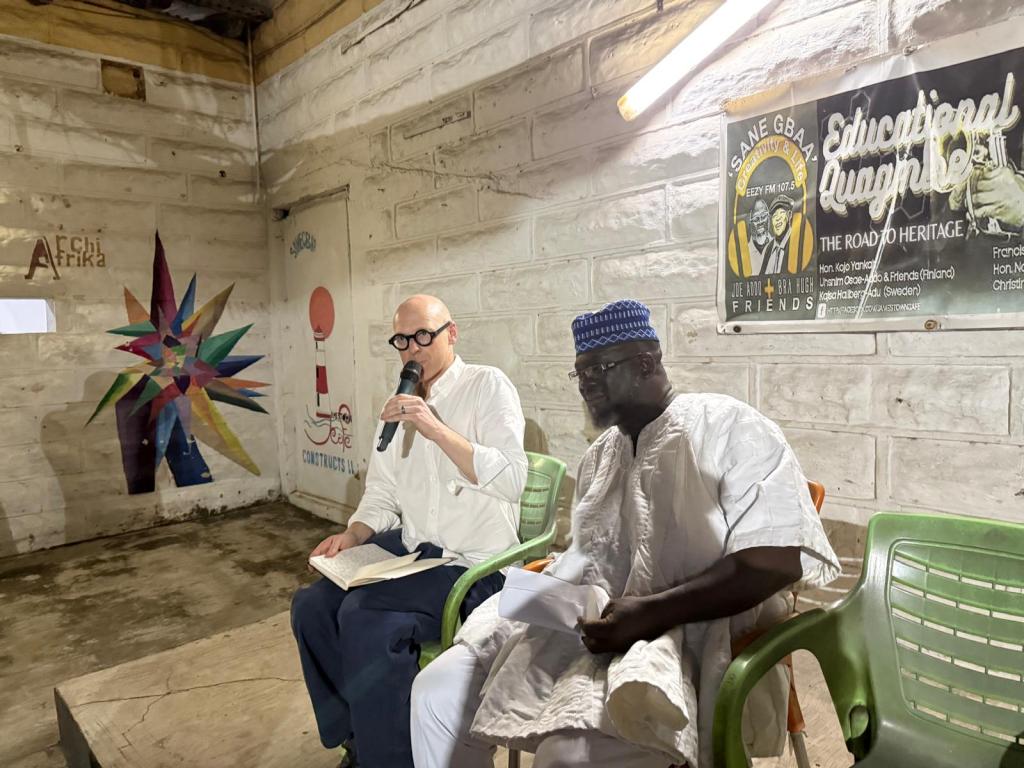
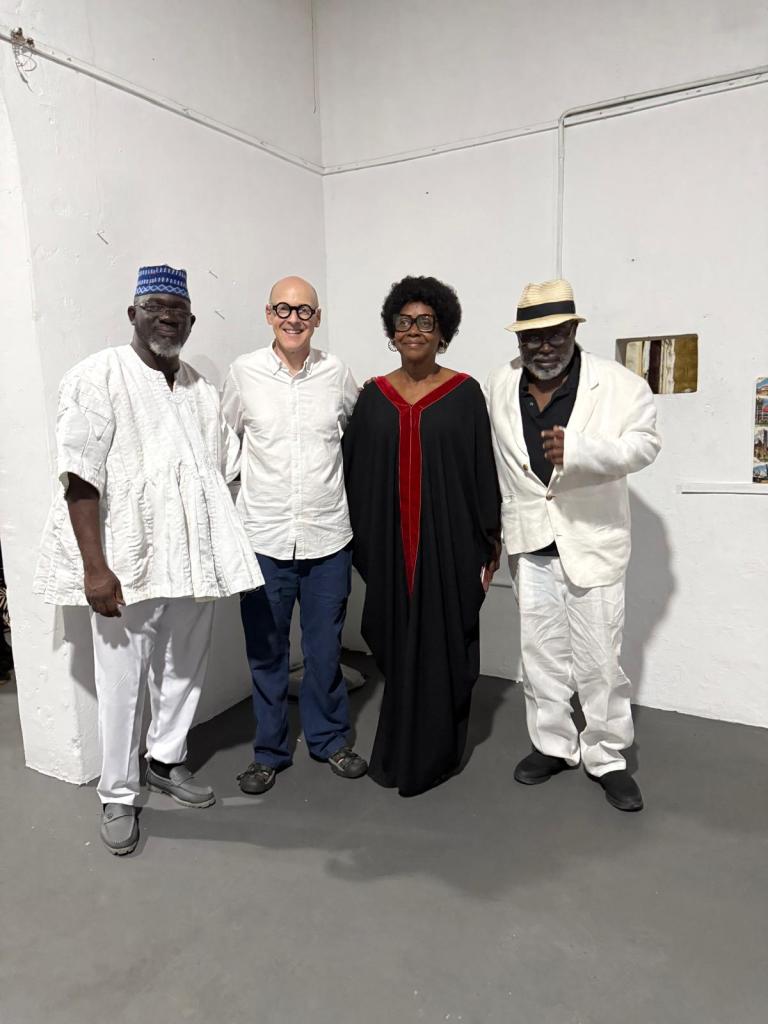
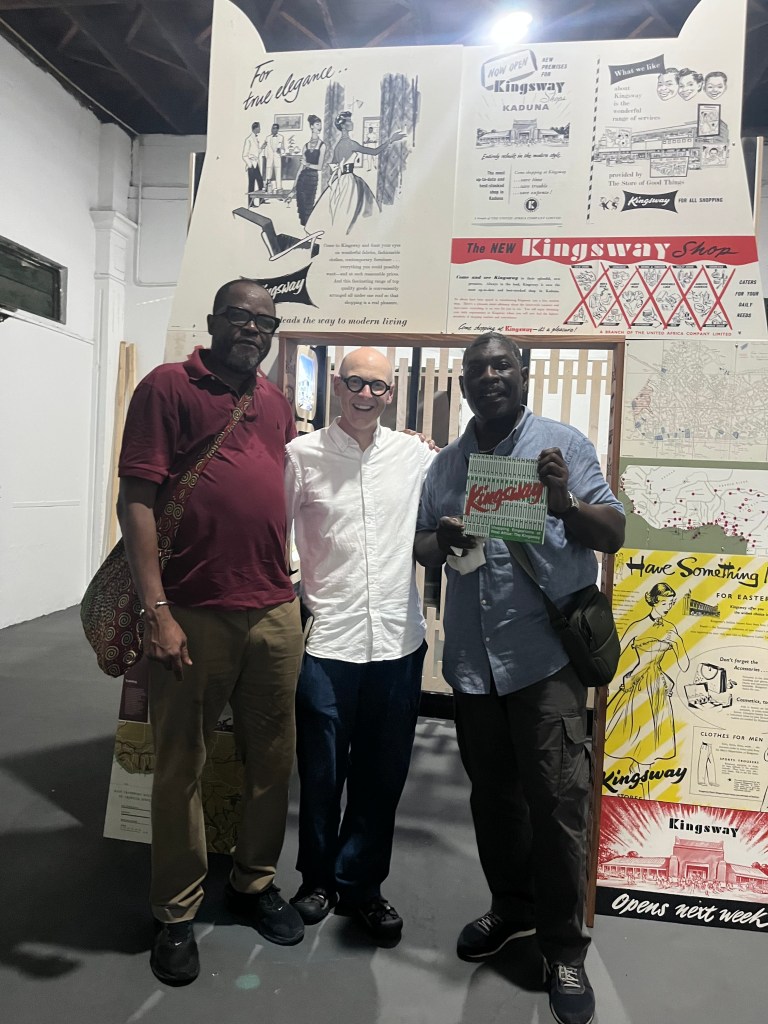
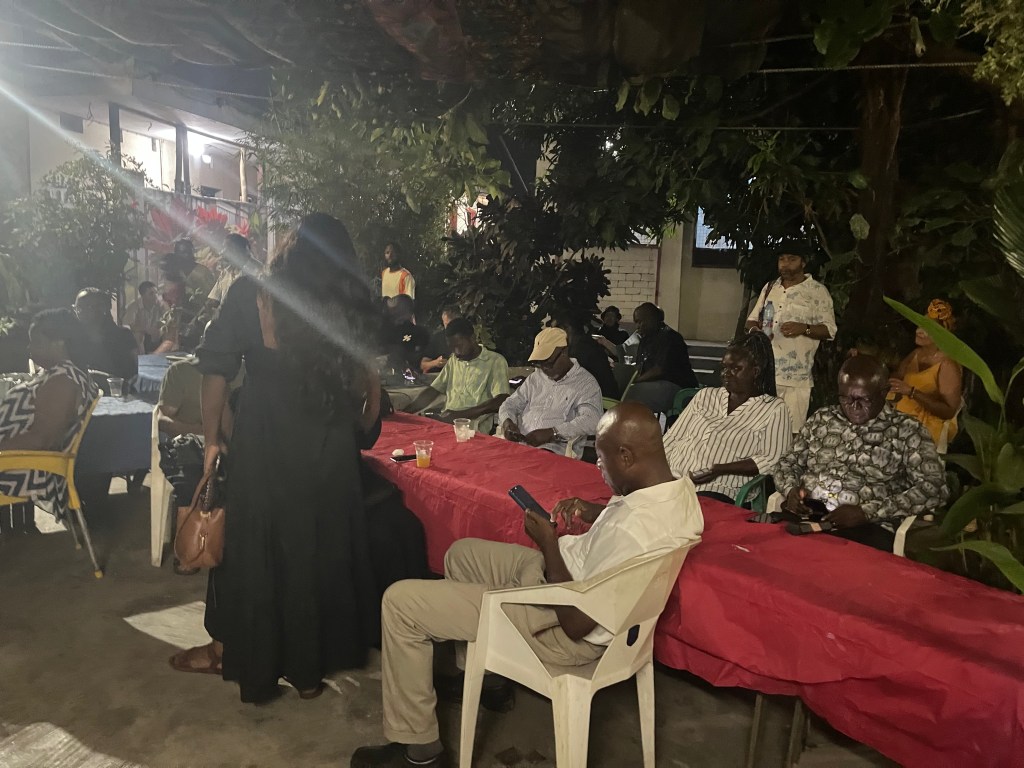
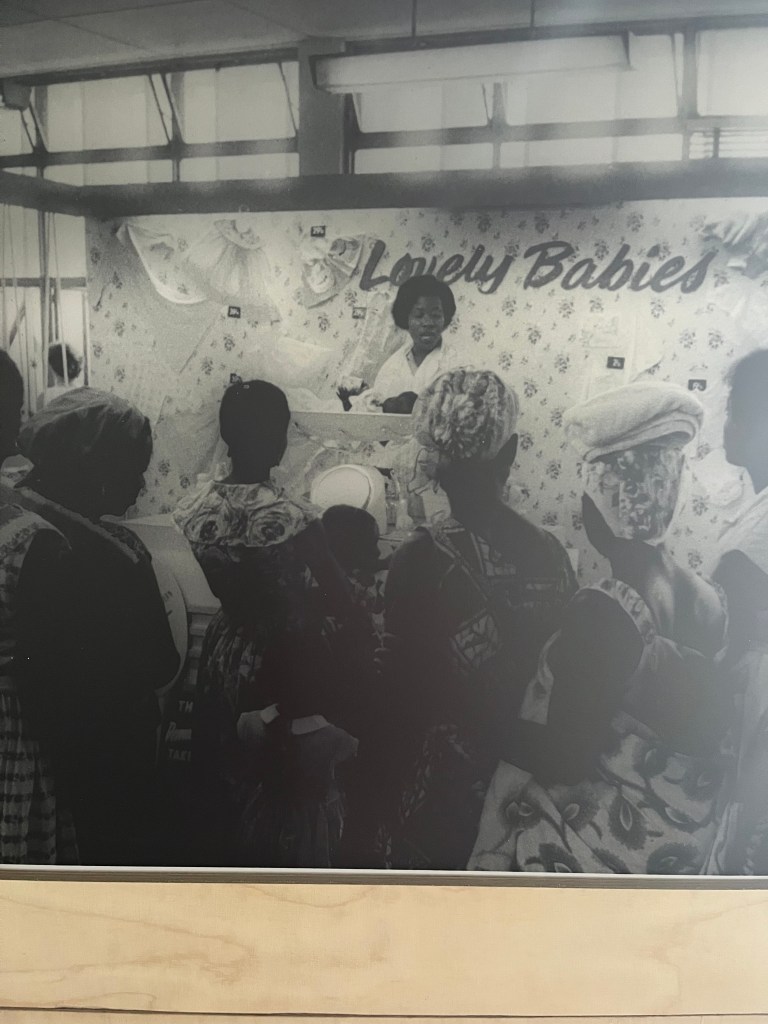
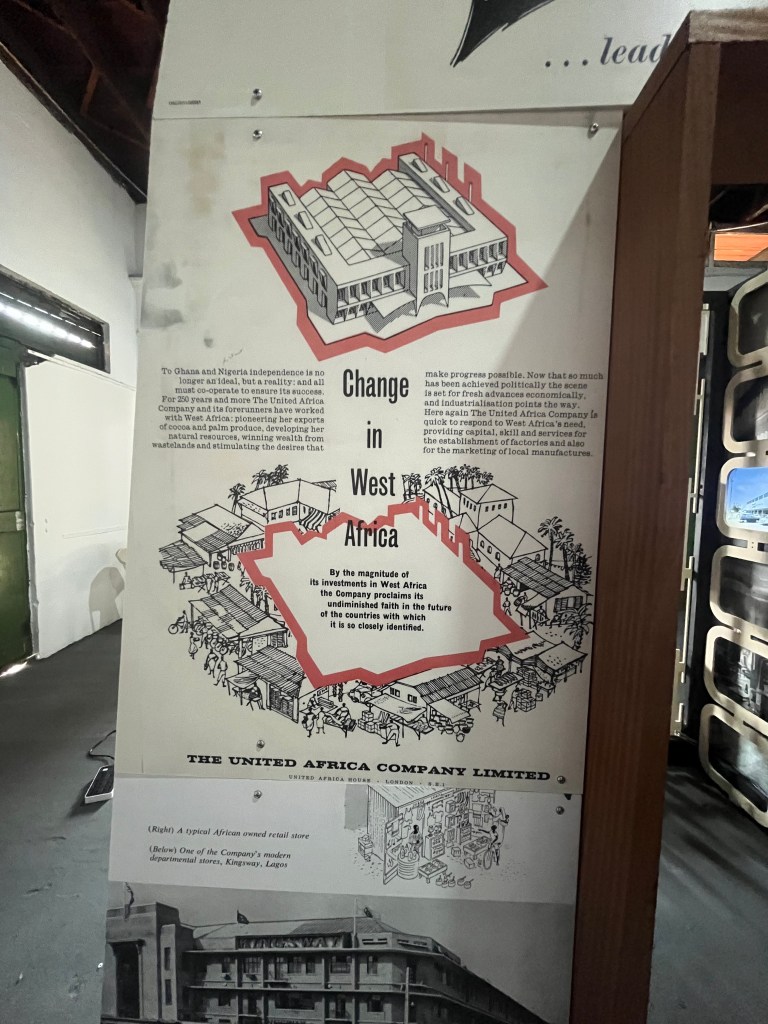
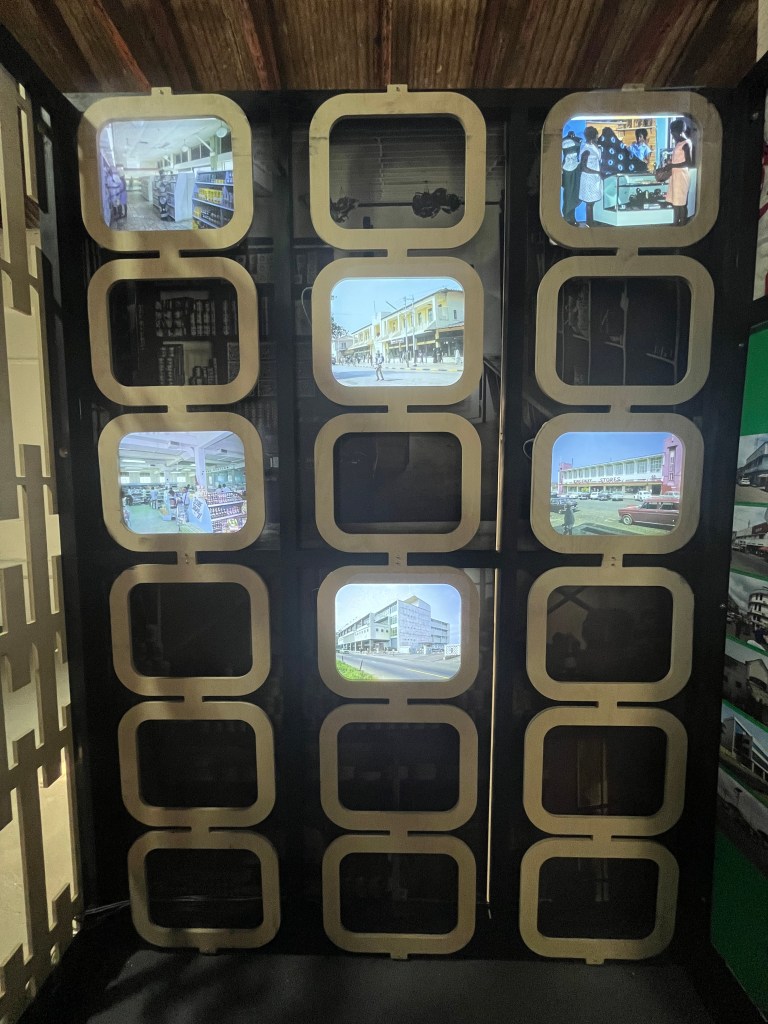
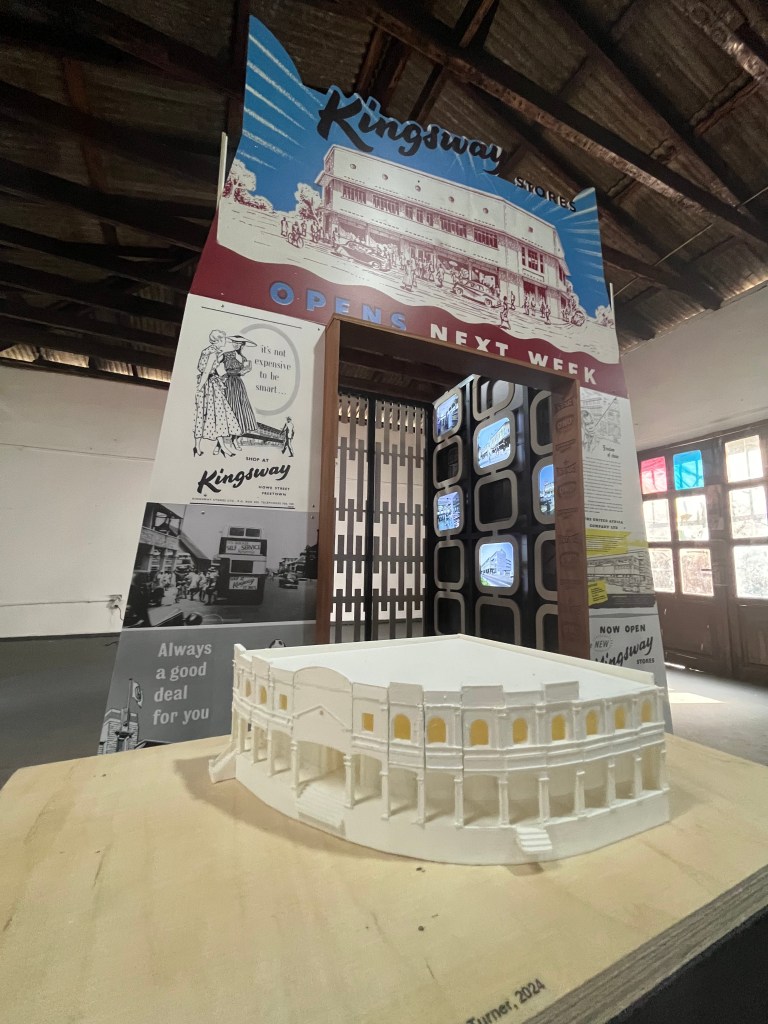
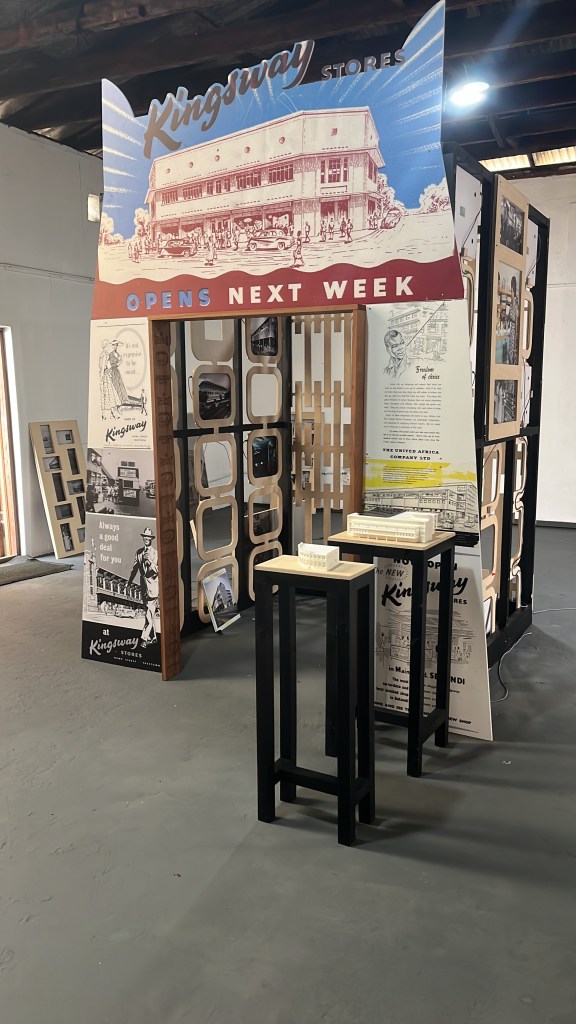
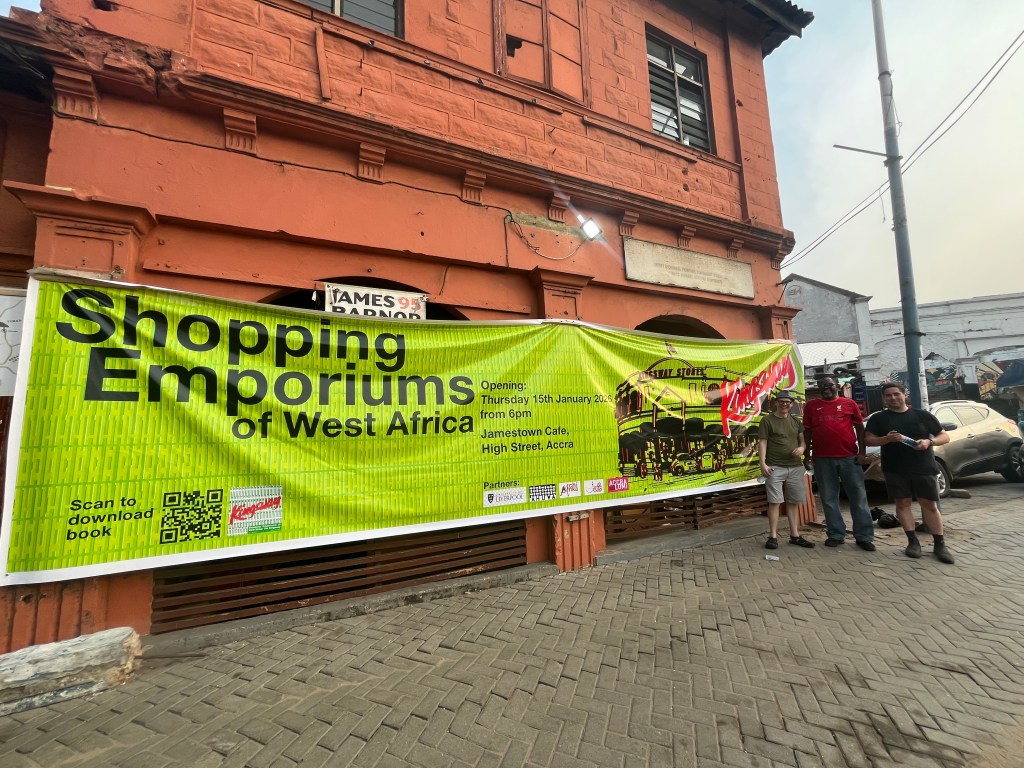
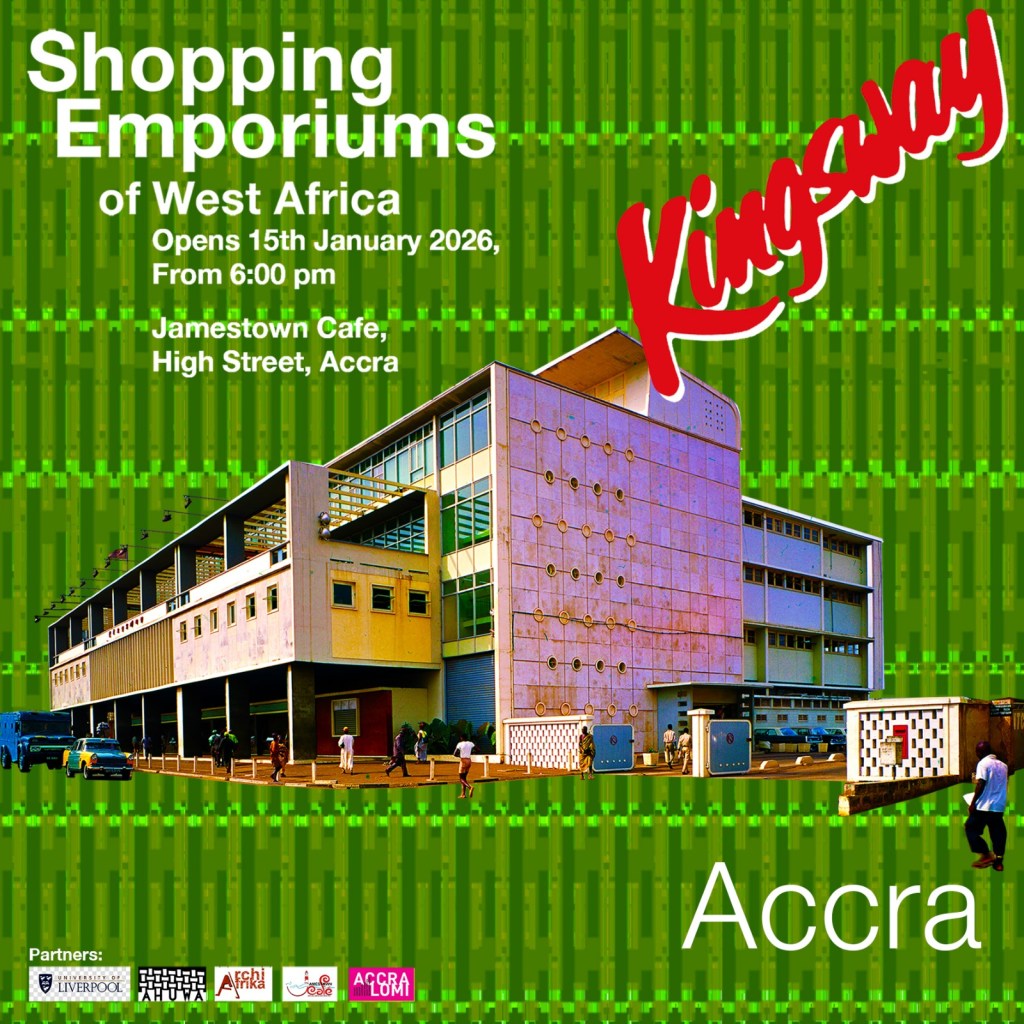
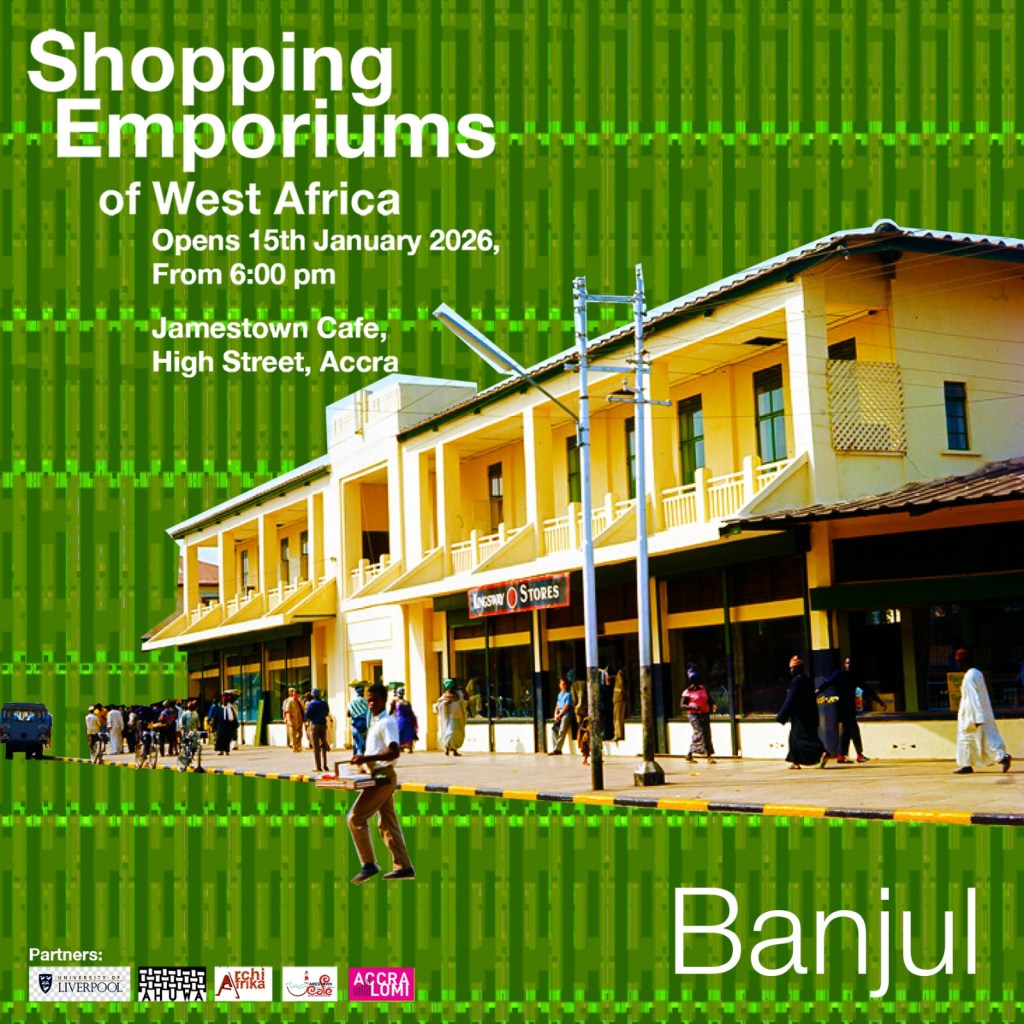
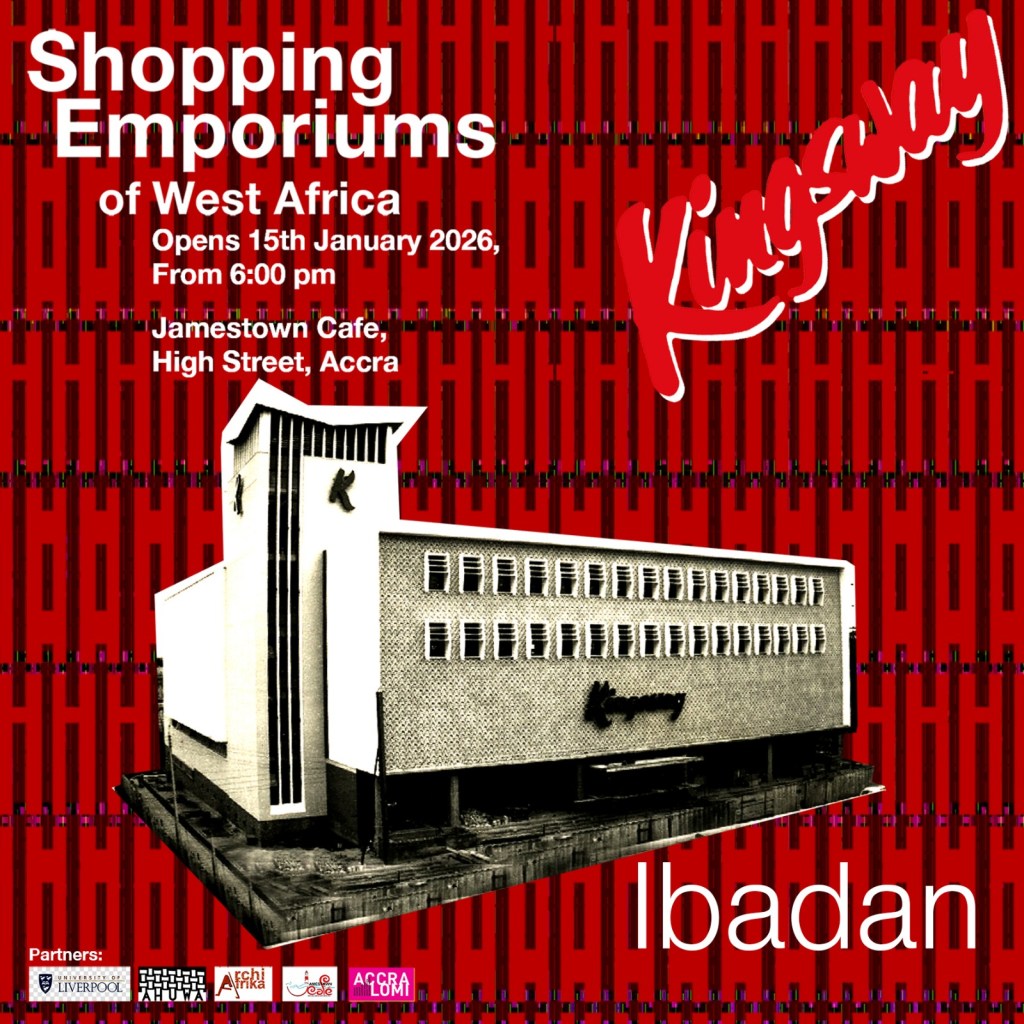
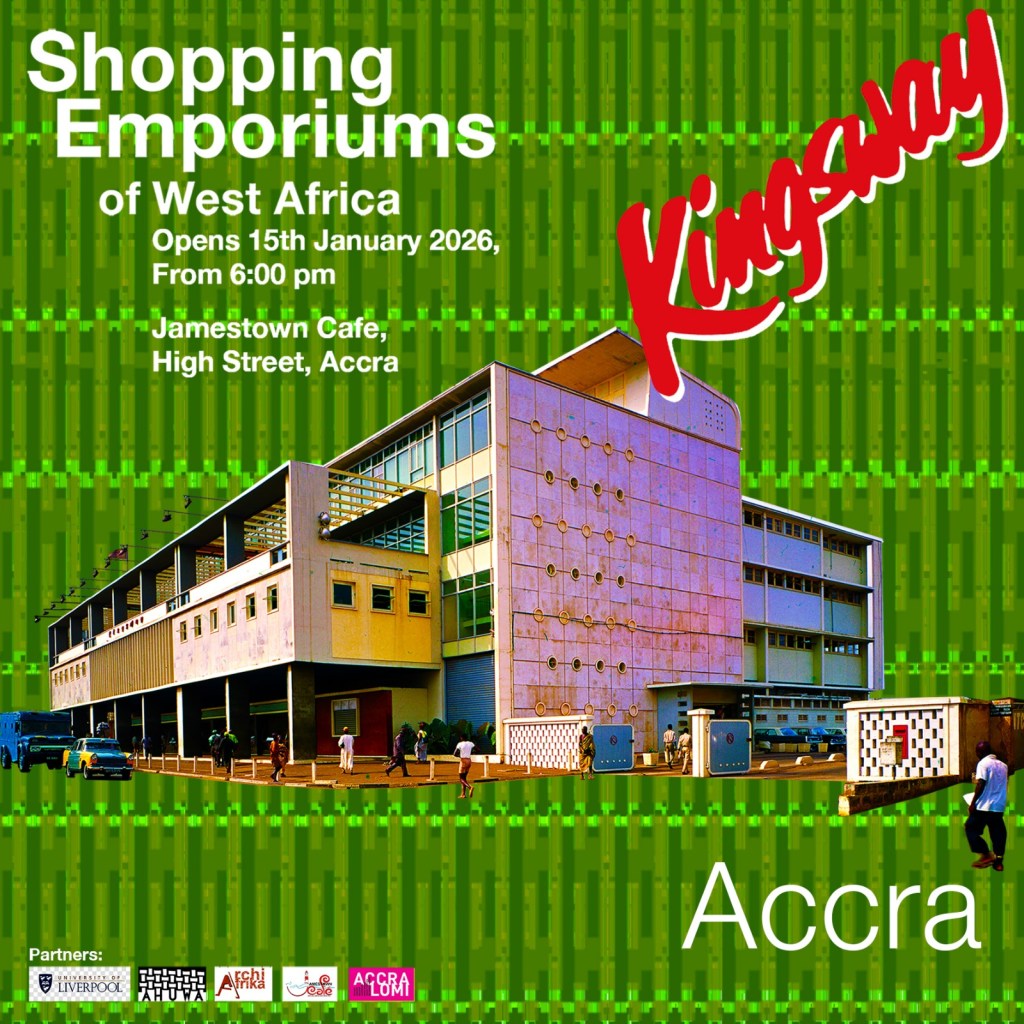
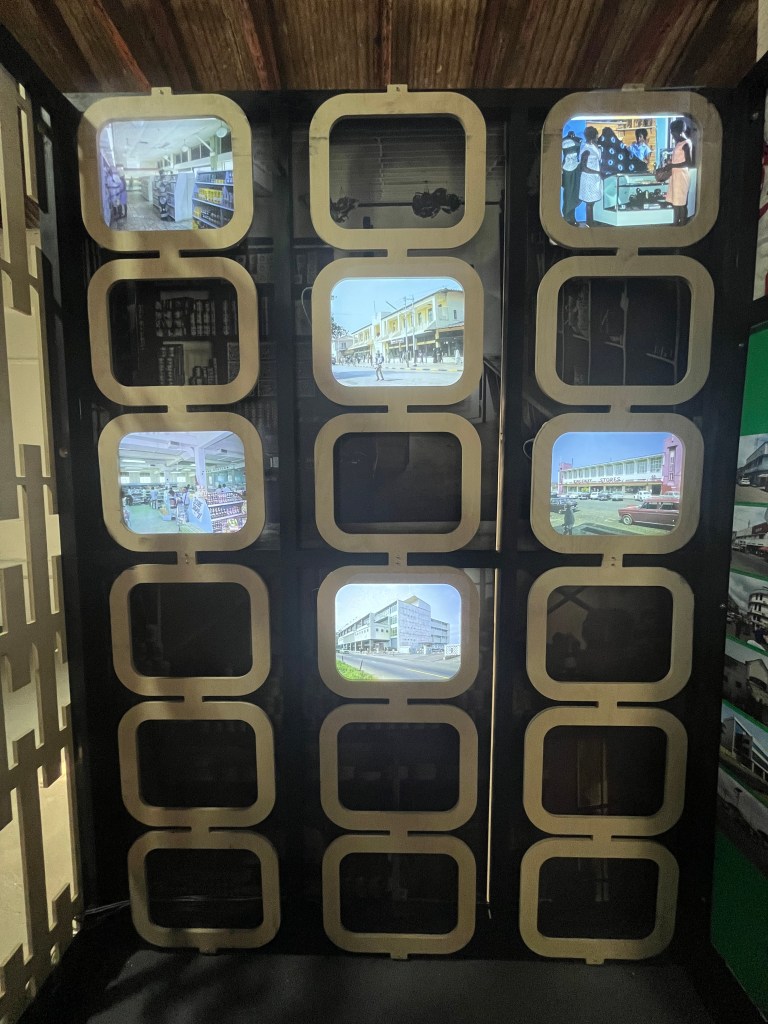
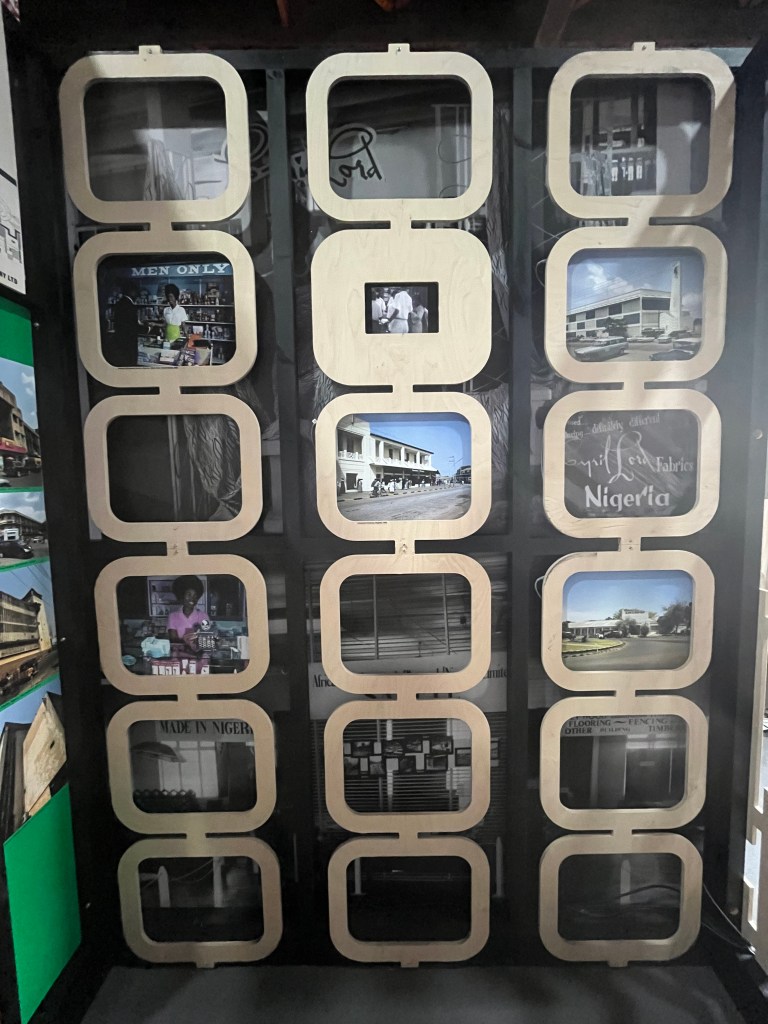
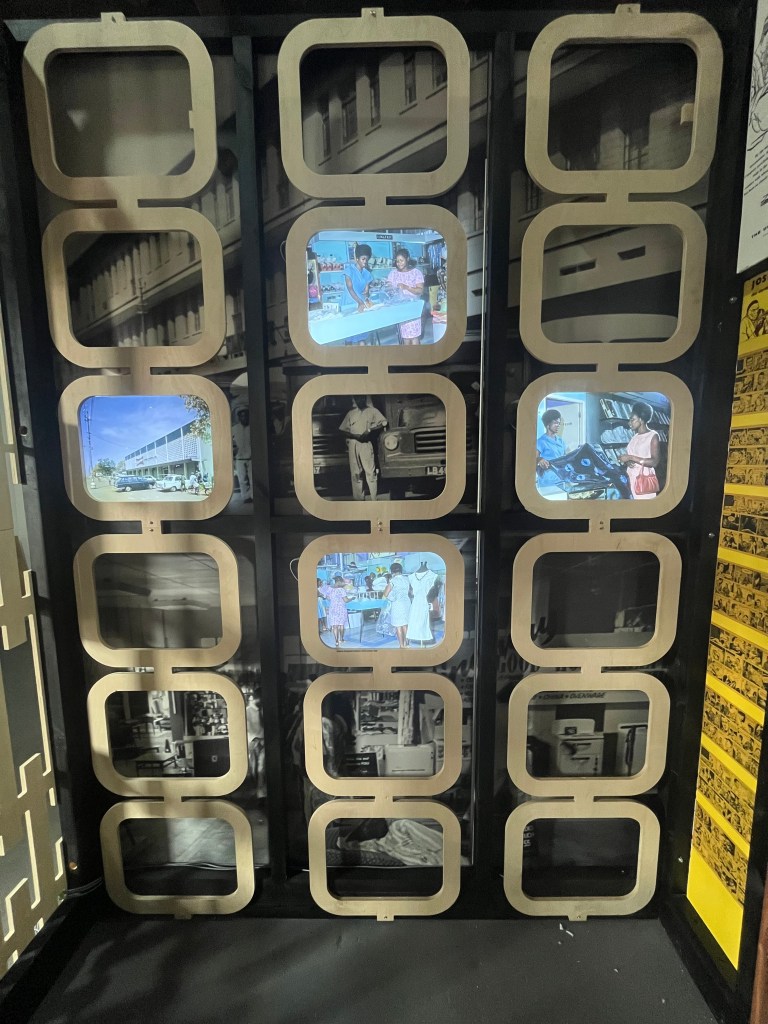
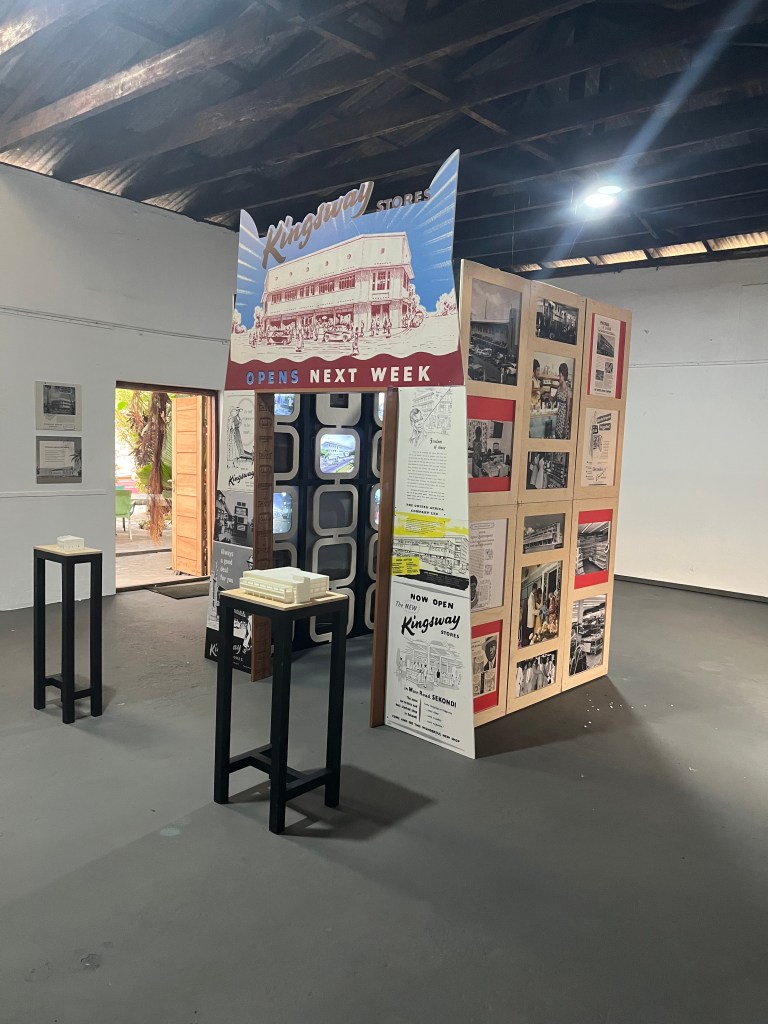
On 15th January, we celebrated the opening of “Shopping Emporiums of West Africa: The Kingsway Stores” at Jamestown Cafe and Gallery in Accra, marking a significant milestone in our ongoing research into the architectural and commercial legacy of the United Africa Company. The launch evening brought together an engaged audience including President of the Ghana Institute of Architects Tony Asare, Dr Abena Busia, and Ronnie Micallef, the incoming High Commissioner of Malta in Accra, for what proved to be a thought-provoking discussion about retail modernism, colonial commerce, and architectural heritage in West Africa. David Kojo Derban gave a wonderful opening talk to contextualise the exhibition, along with a wider welcome from cafe and gallery owner architect Joe Owusu Addo.
The exhibition represents the culmination of over 5 years of collaborative research examining the Kingsway department store chain, which operated across West Africa throughout much of the twentieth century. Working alongside Unilever archivist Claire Tunstall and colleagues Ewan Harrison, Rixt Woudstra, Paul Robinson, and Michele Tenzon, we’ve traced the fascinating story of these iconic shopping emporiums from their inception through the independence periods of West Africa and beyond.
This work forms part of our broader investigation into the United Africa Company, published last year by Bloomsbury as “Architecture, Empire, Trade.” In our recent Journal of Design History article, co-authored with Ewan Harrison, Irene Appeaning Addo, and Oluwaseun Muraina, we wrote that “Kingsway responded to independence by instrumentalizing a particularly modernist domesticity through a series of didactic marketing efforts and the construction of boldly modernist new stores.” The article reveals how these stores weren’t simply places of commerce but architectural statements where “modernism is here revealed as complexly imbricated with colonial and neocolonial profit-seeking.”
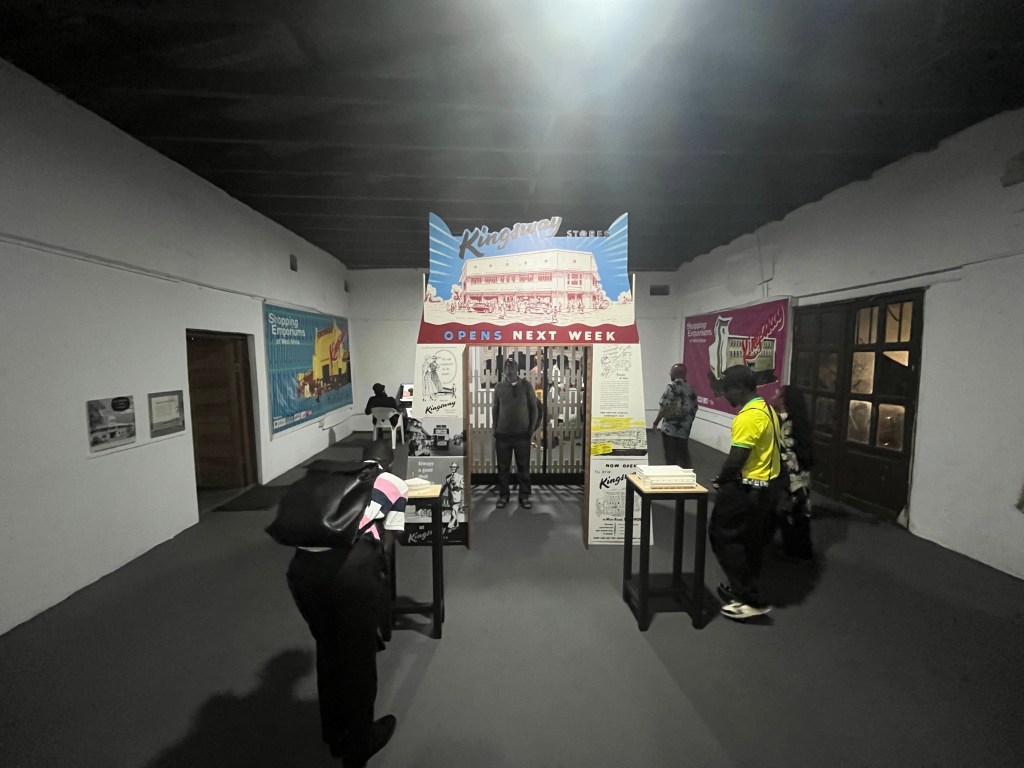
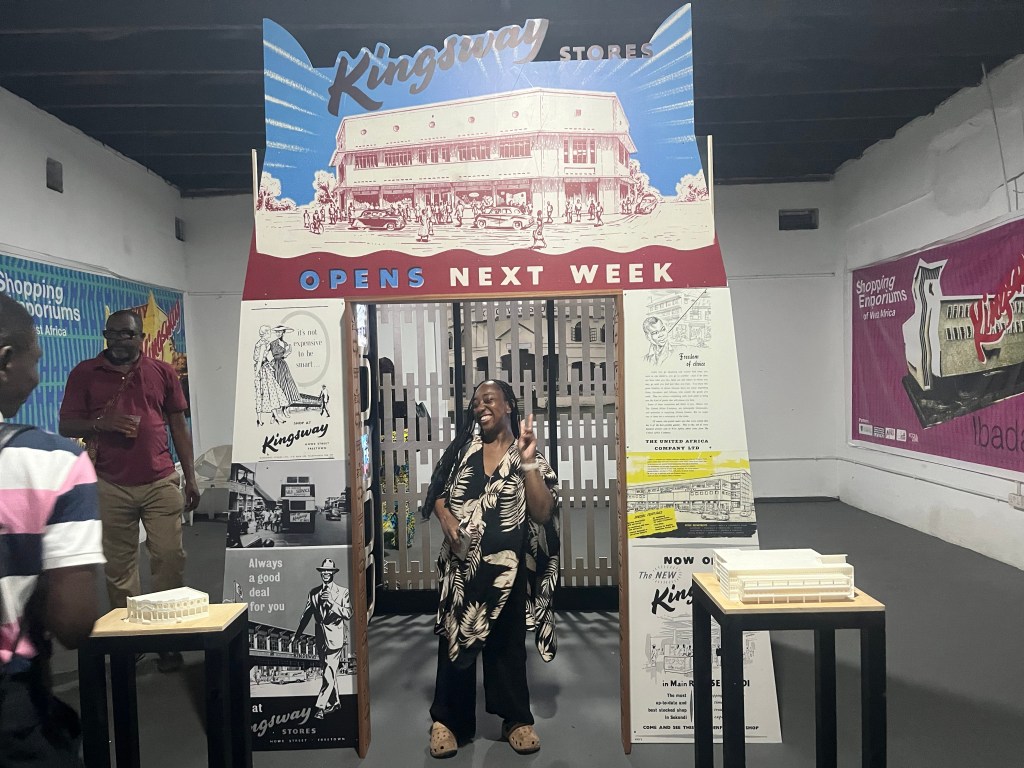
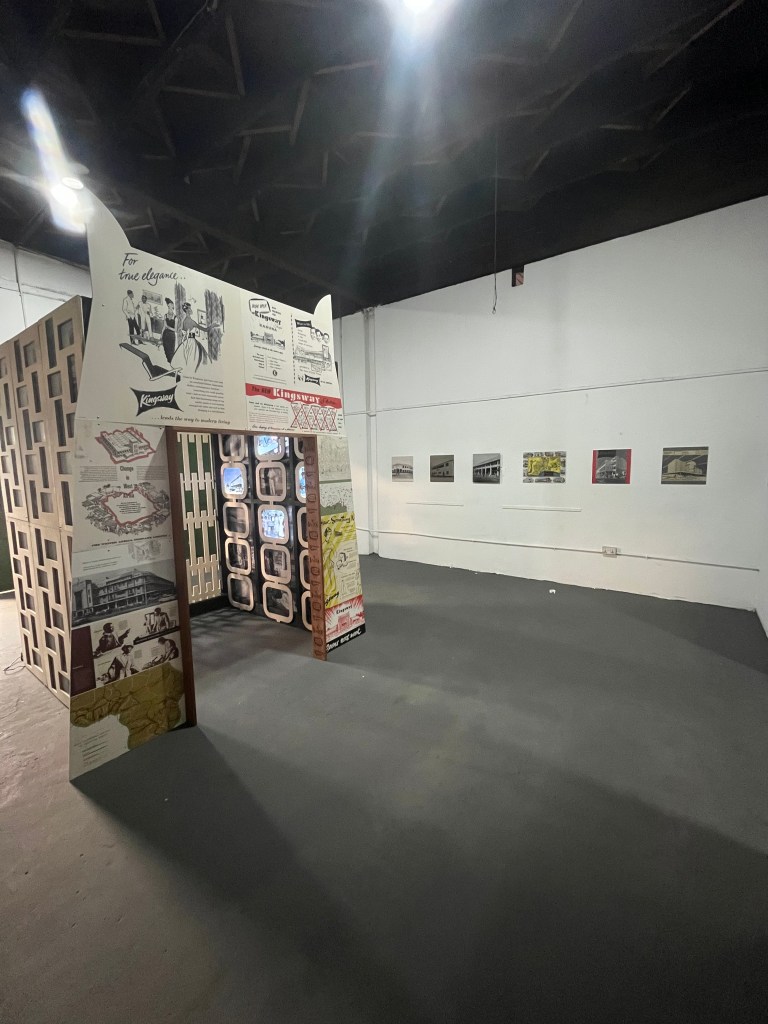
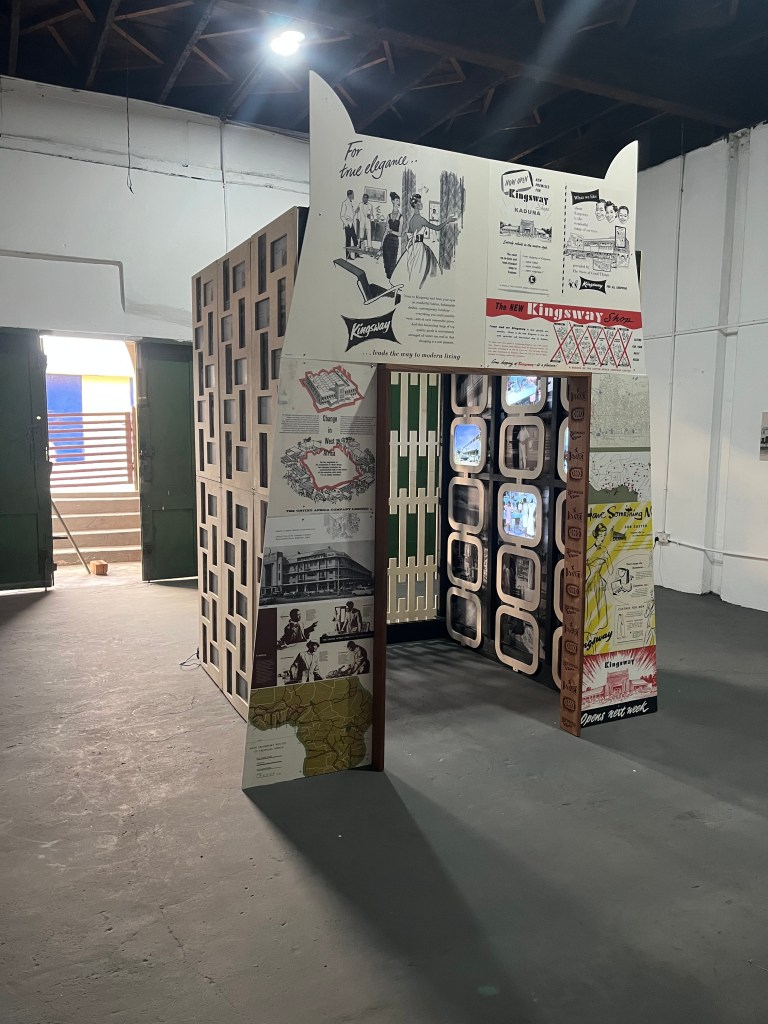
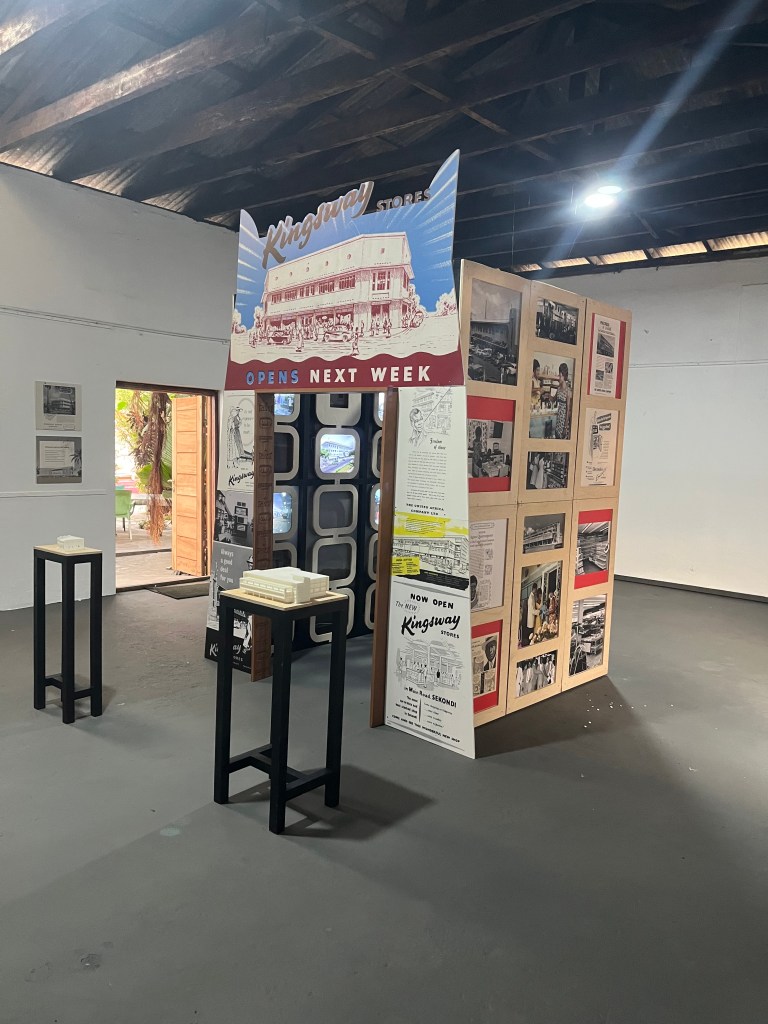
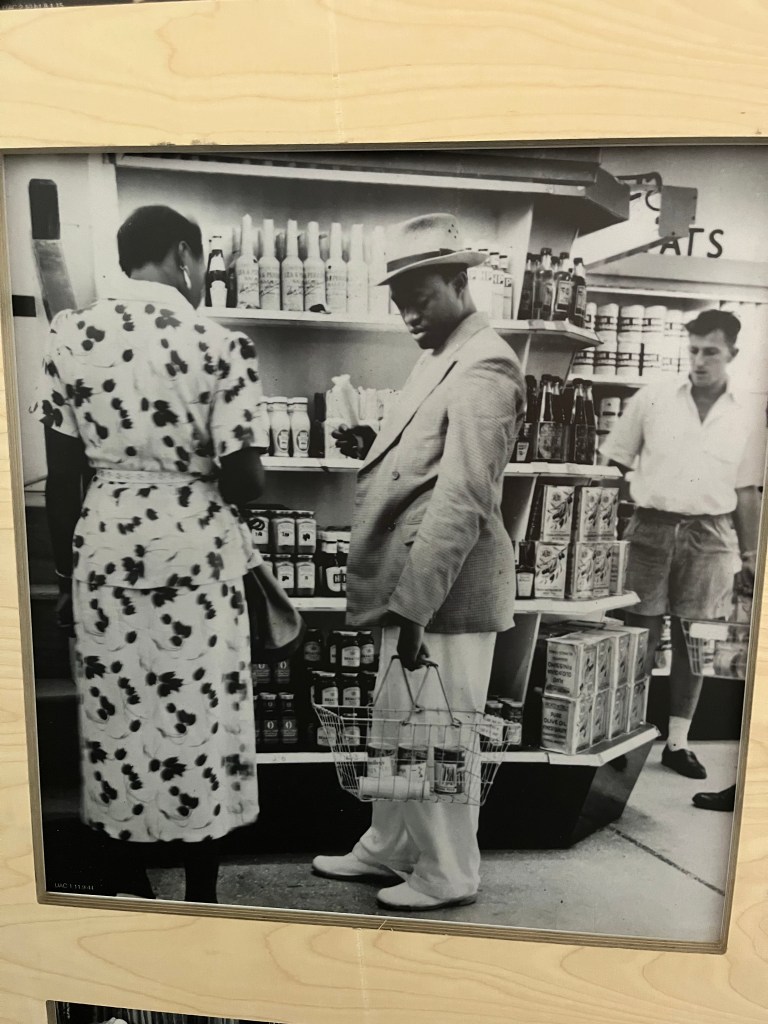
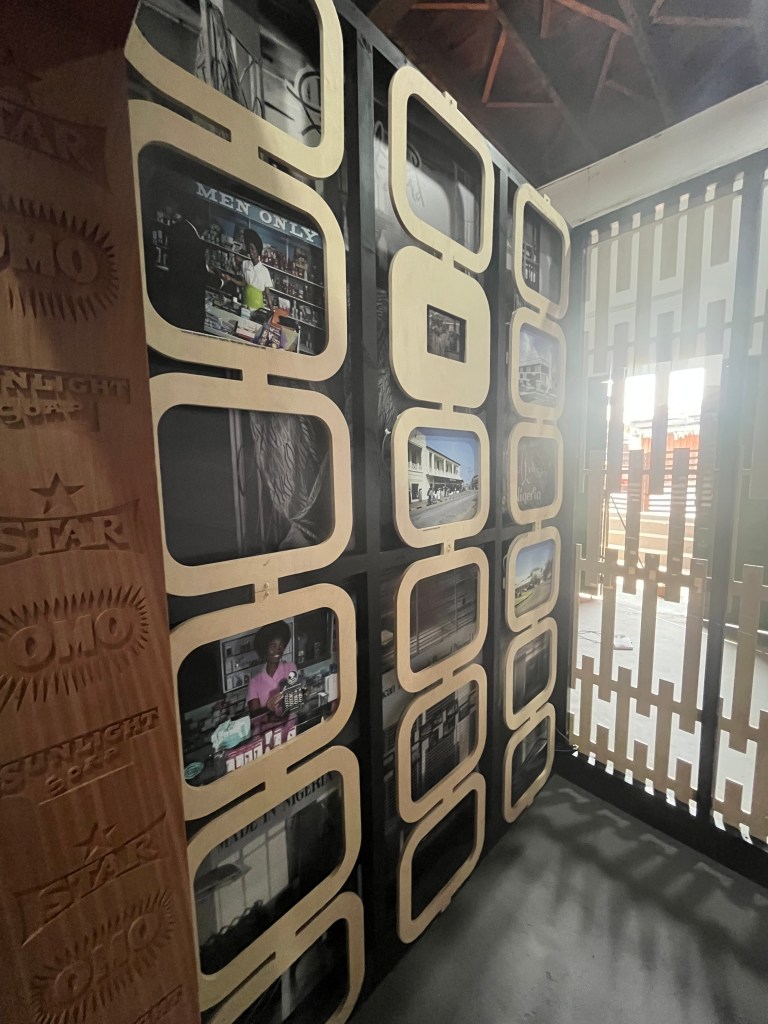
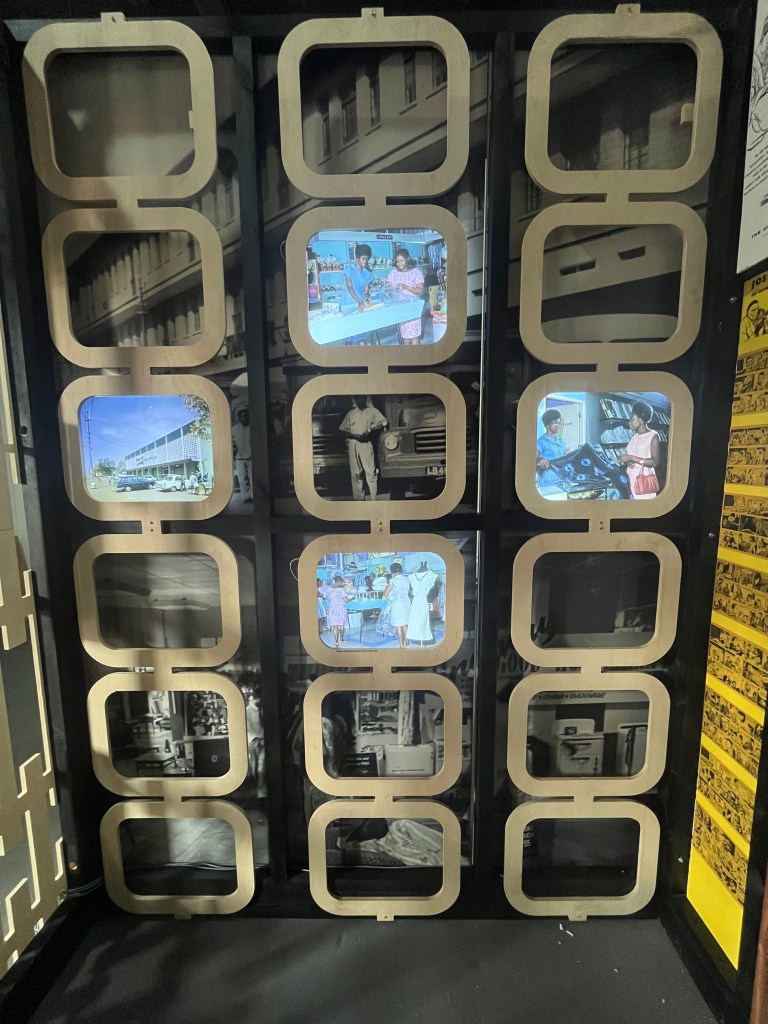
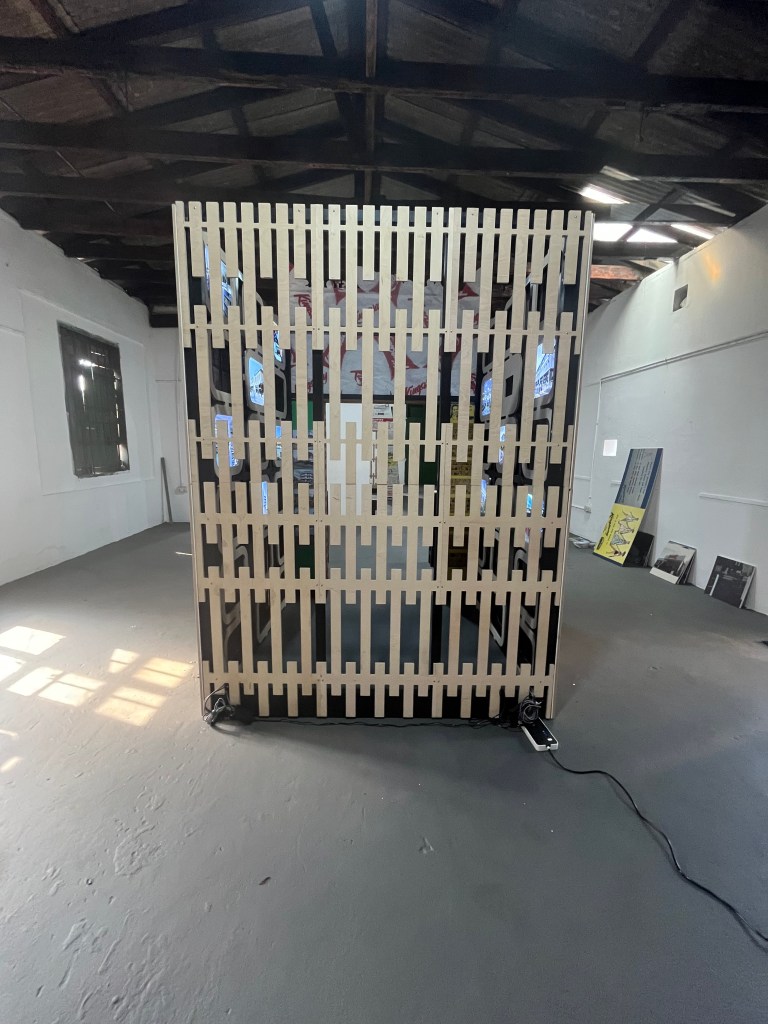
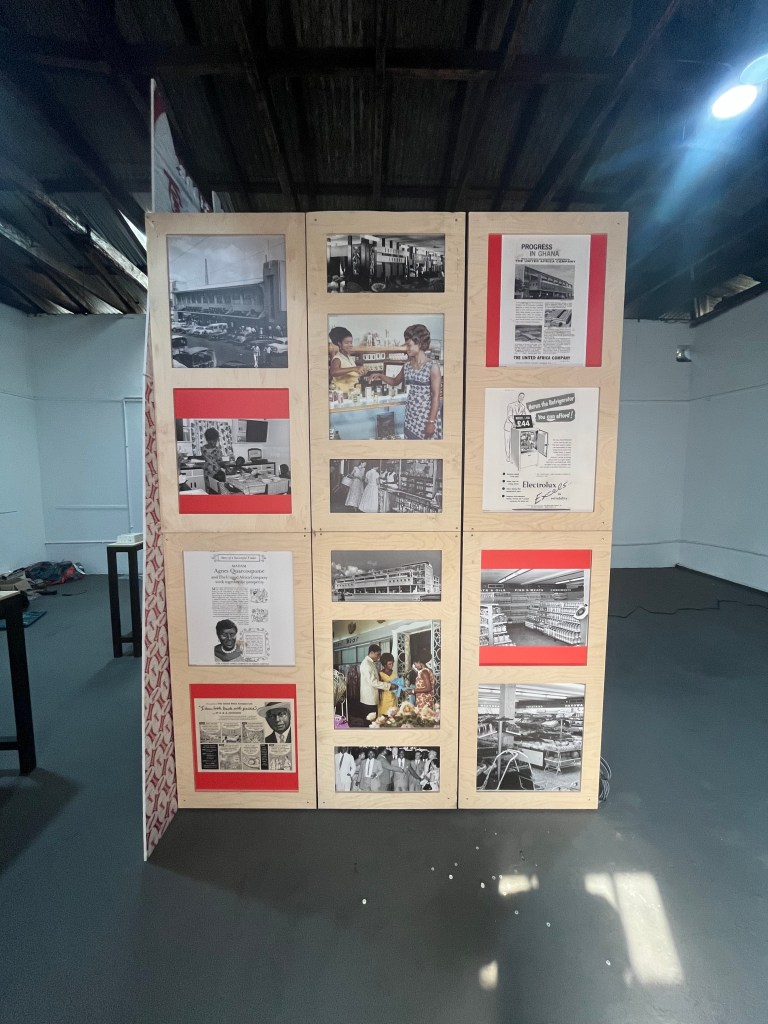
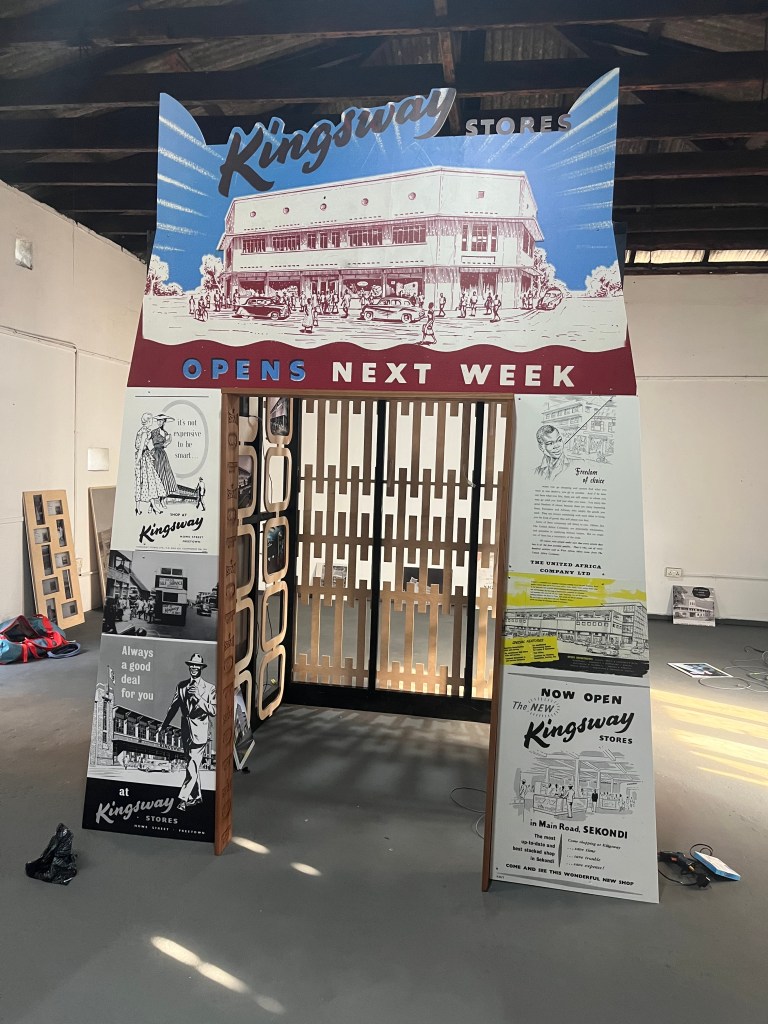
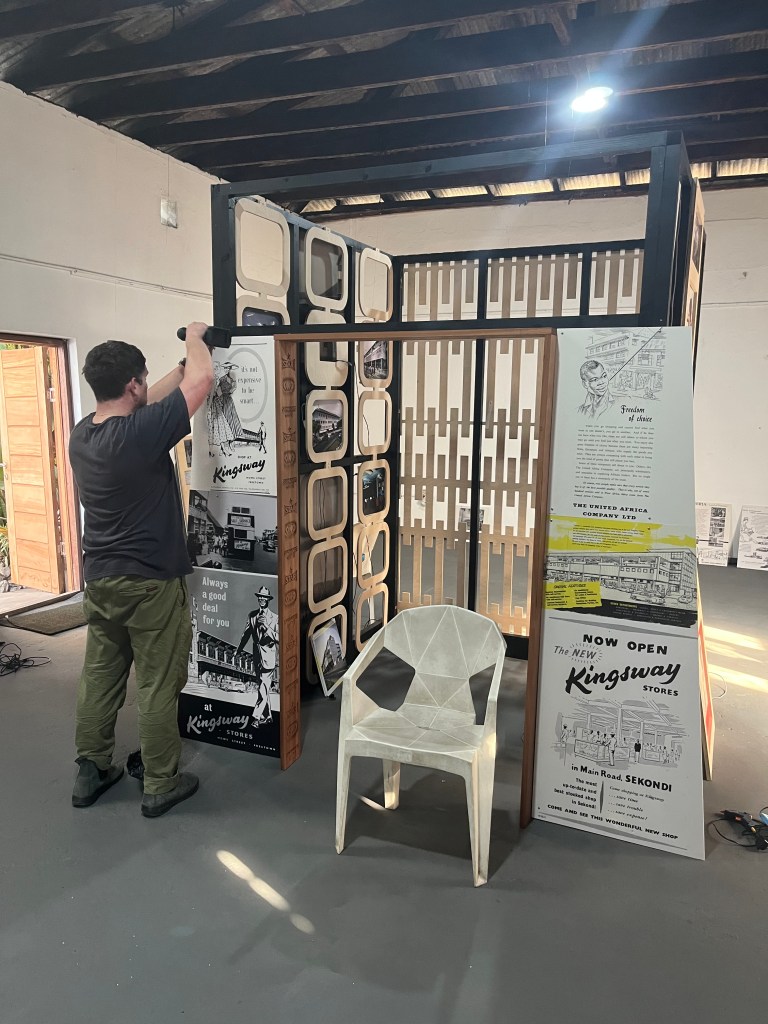
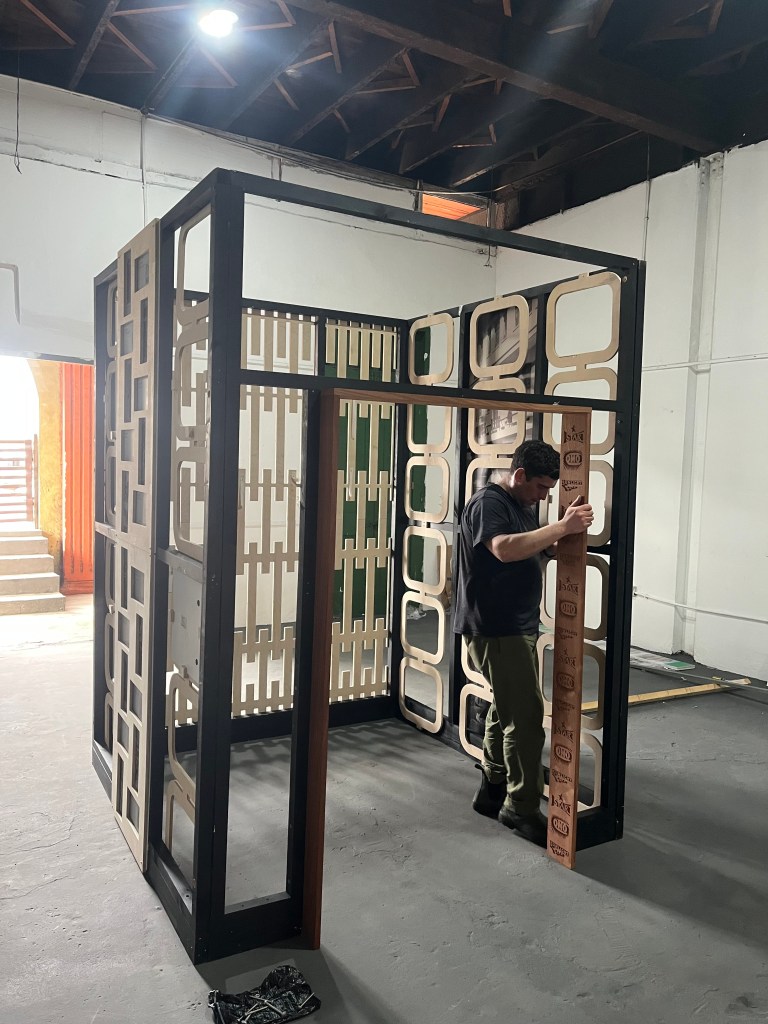
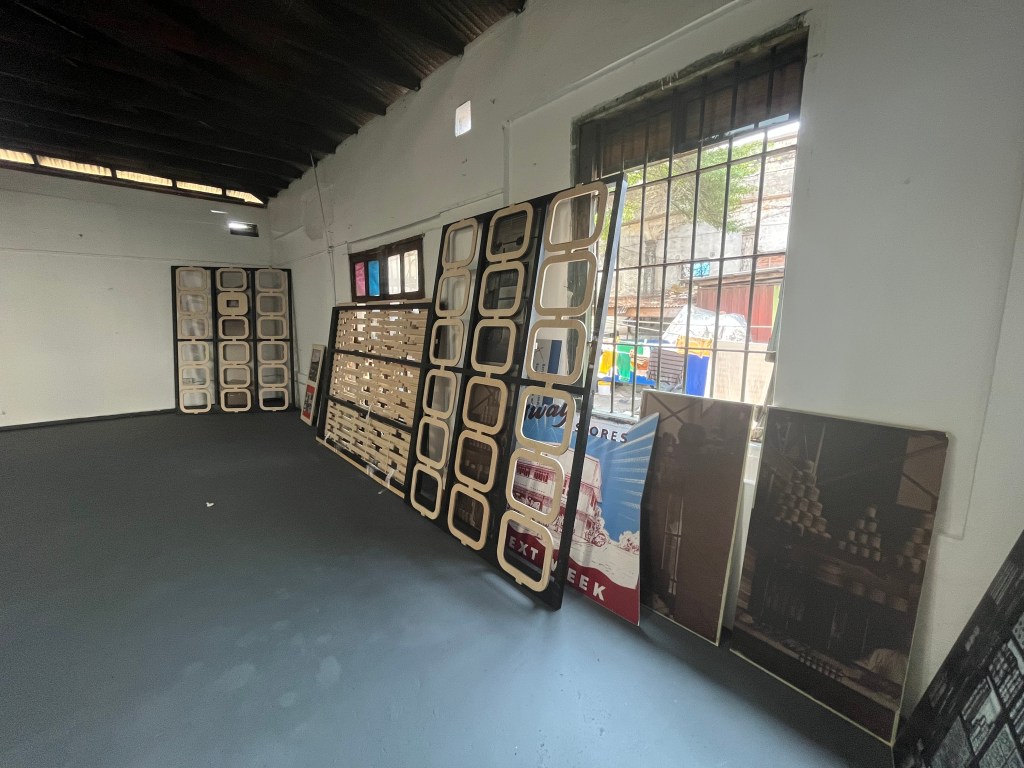
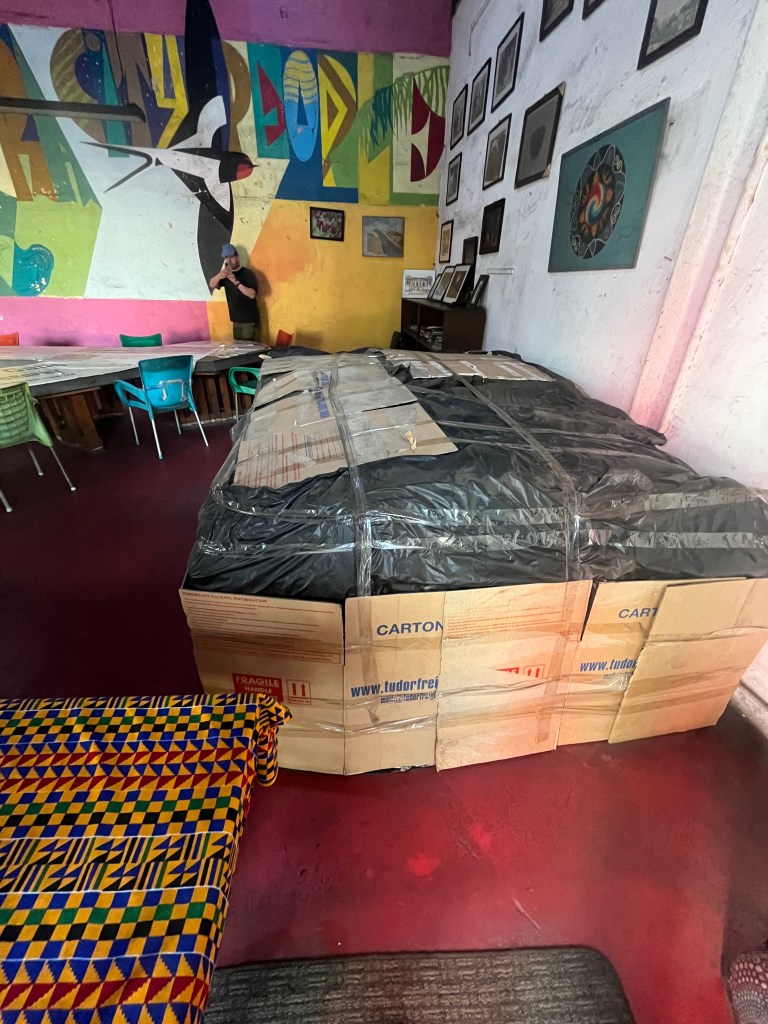
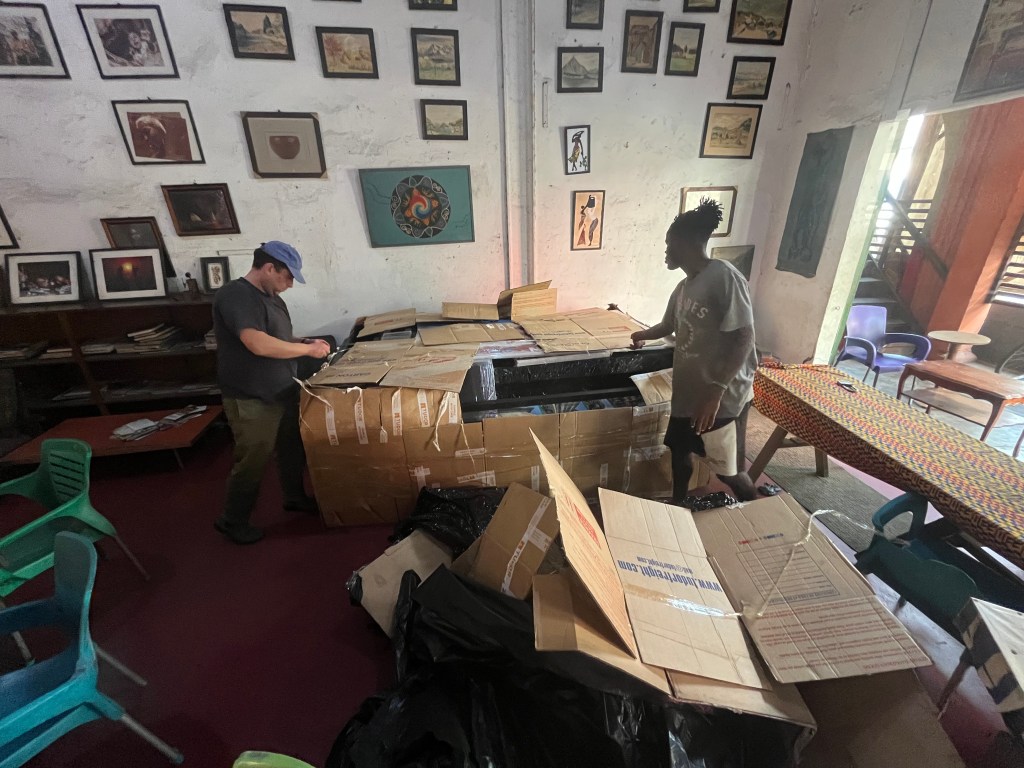
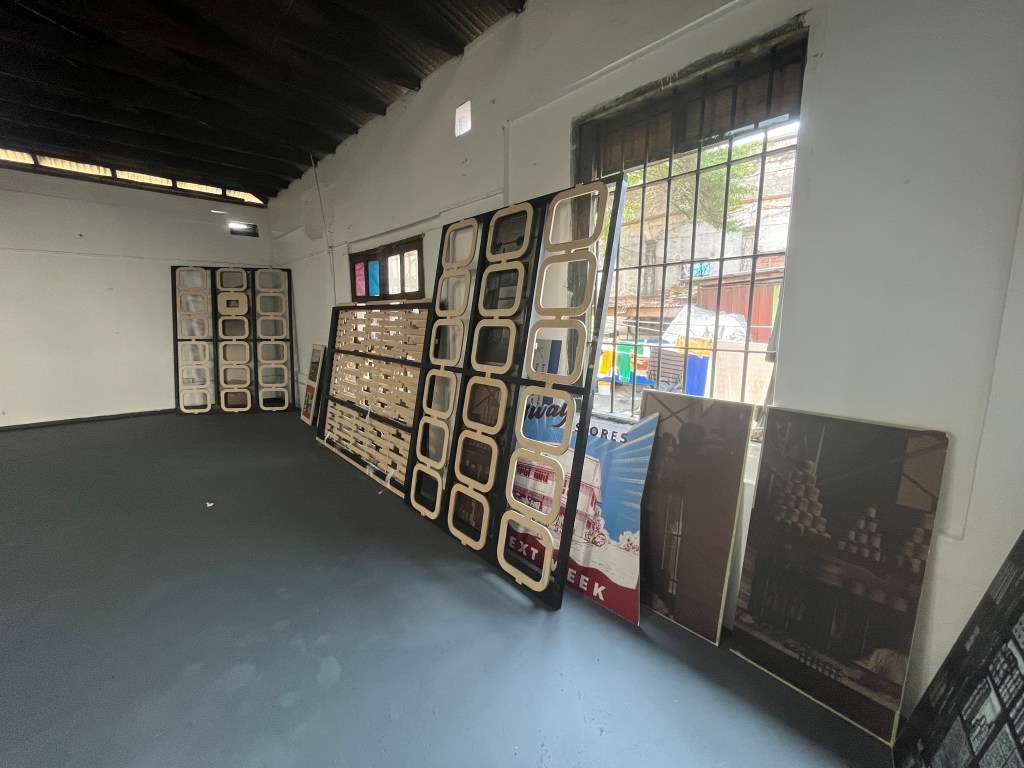
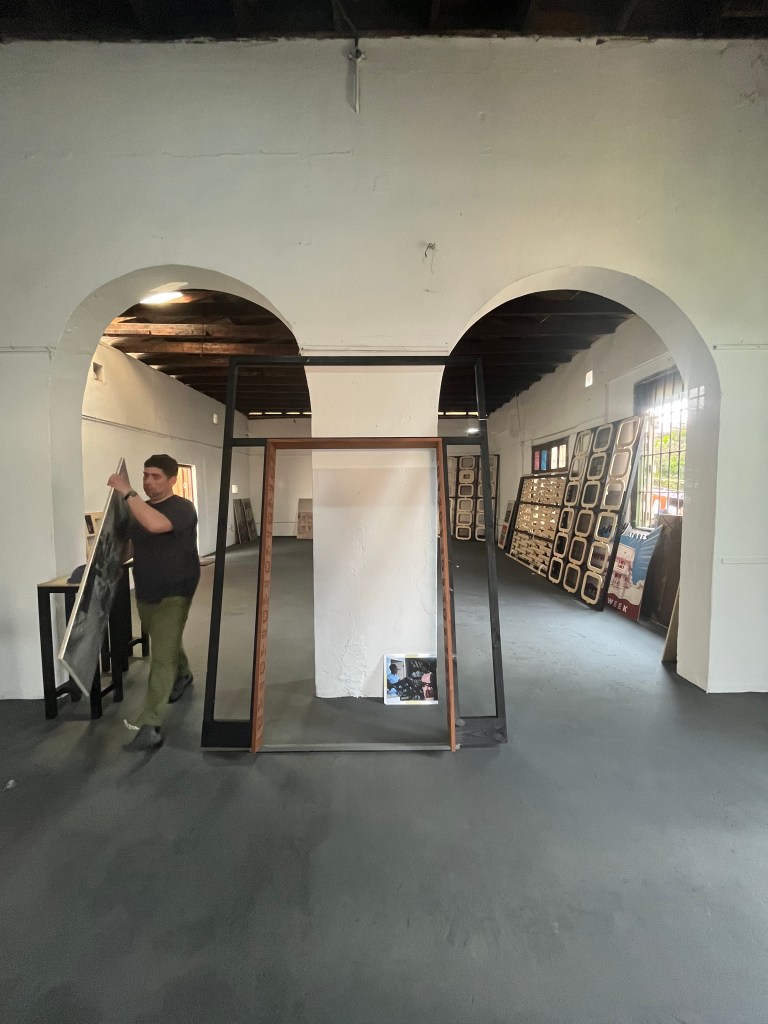
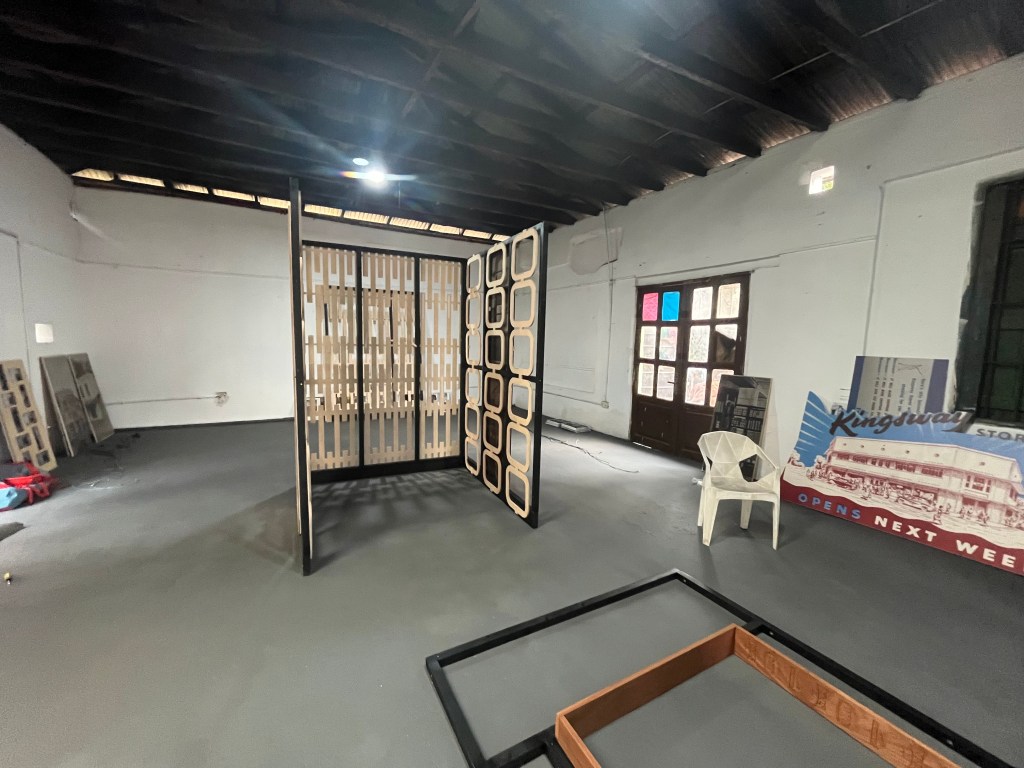
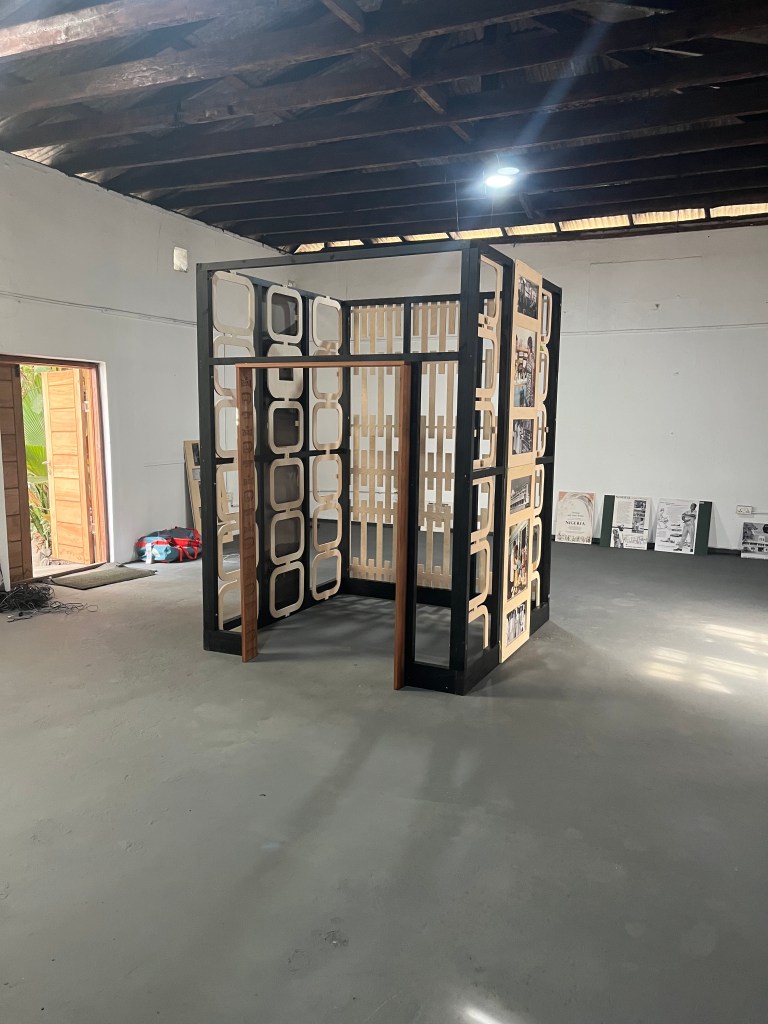
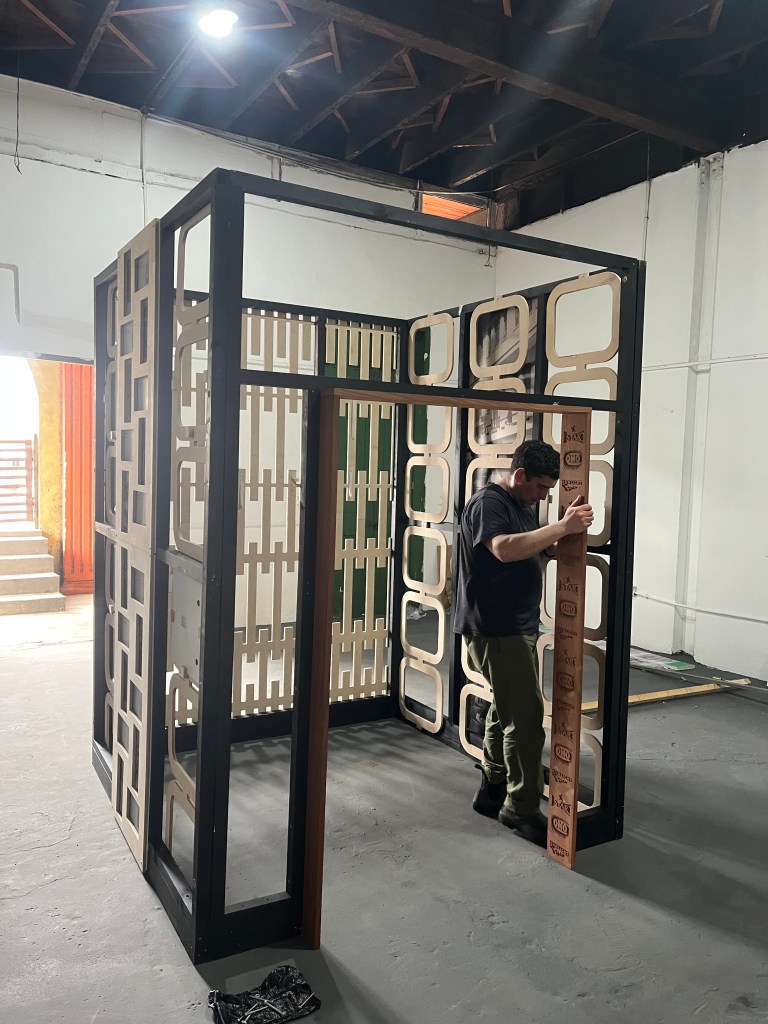
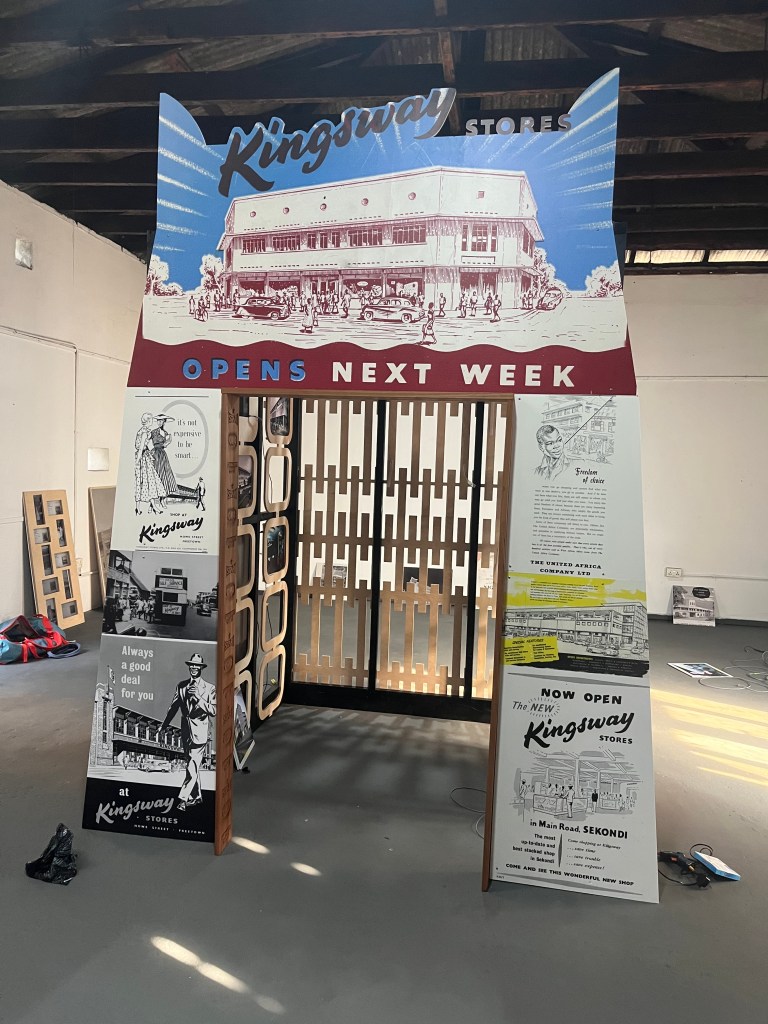
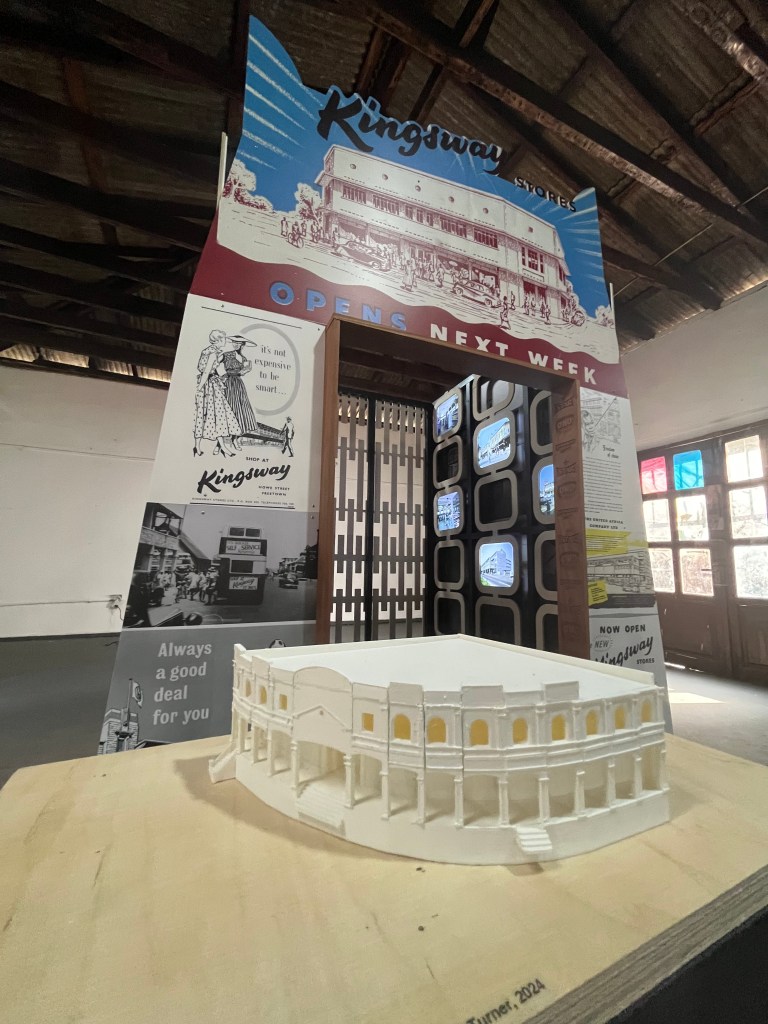
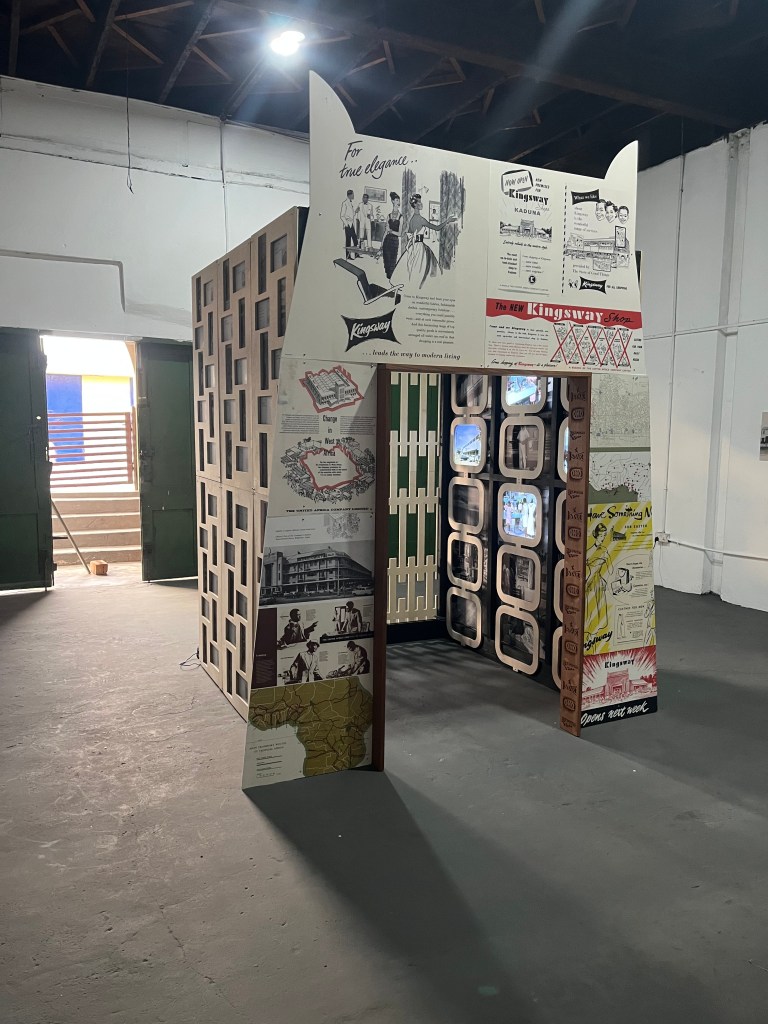
The exhibition itself has journeyed from Liverpool to Ghana, carefully packed and stored at Jamestown Cafe before being installed in early January. Two freestanding pavilions display archival photographs from the Unilever Archive, accompanied by newly commissioned 3D-printed models created by Liverpool School of Architecture students and archival films that bring the stores’ bustling atmosphere to life. The pavilions themselves, fabricated using CNC routers by our expert technical team at Liverpool lead by James Galliford, echo the modernist architectural language of the stores they document.
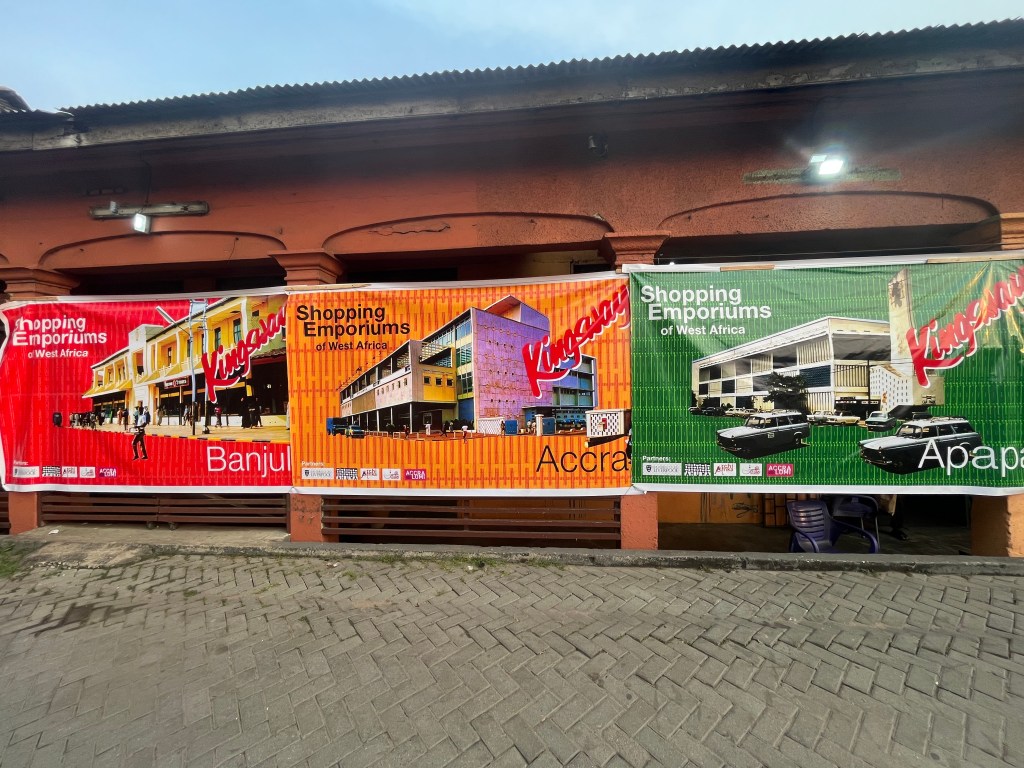
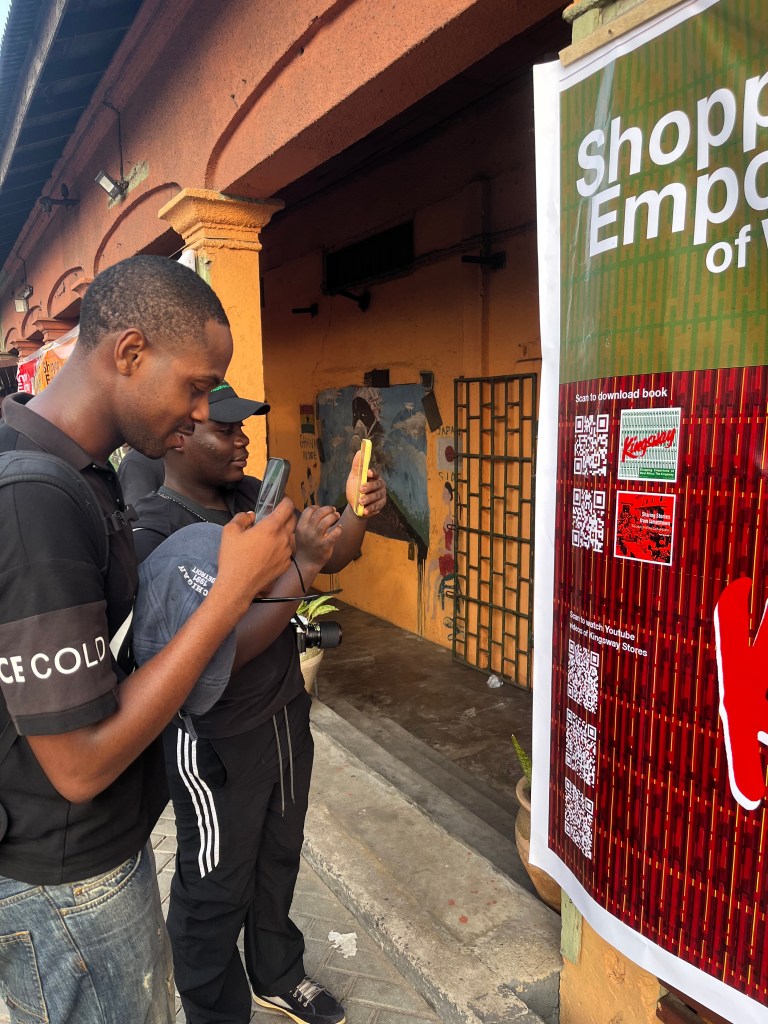
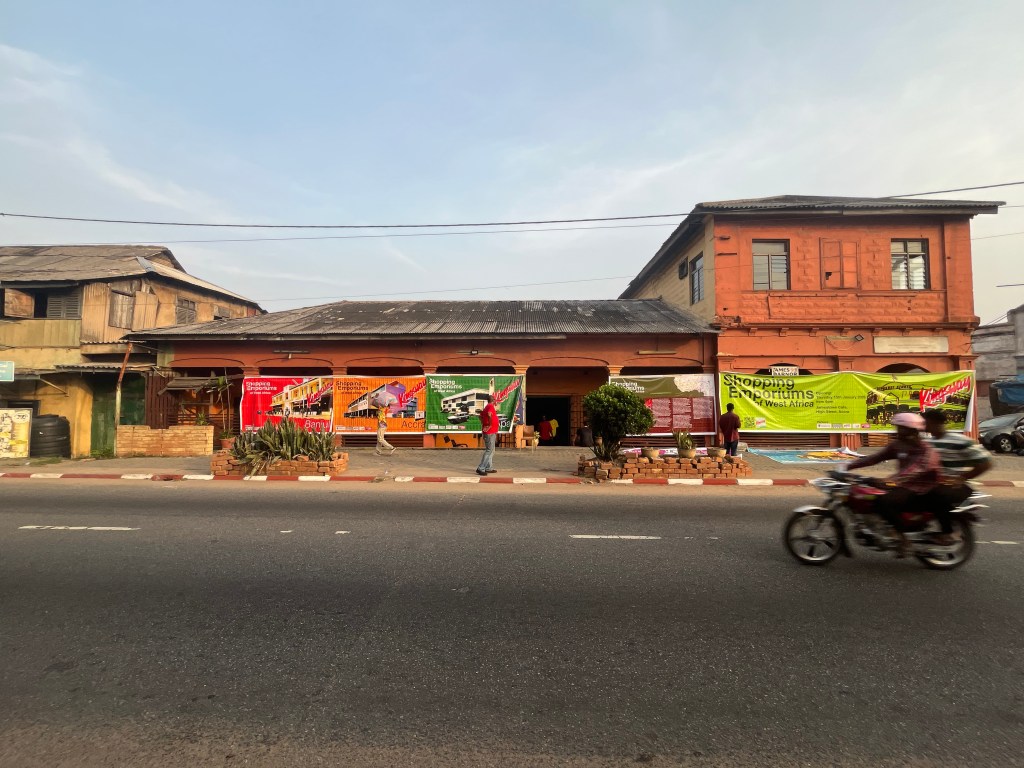
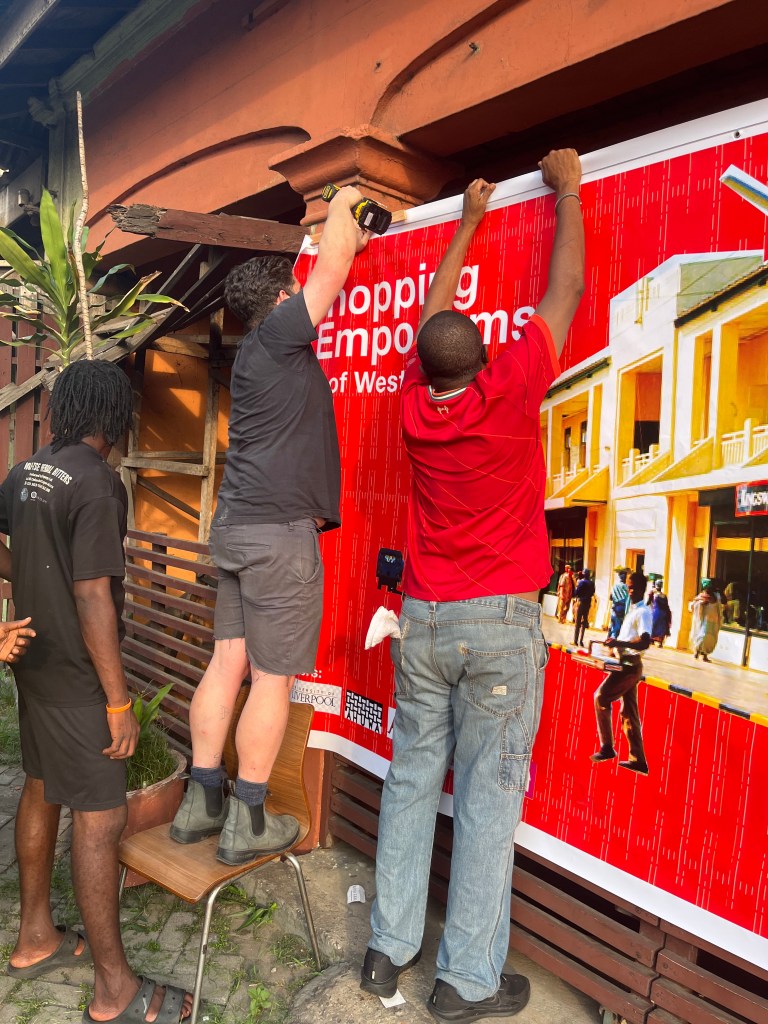
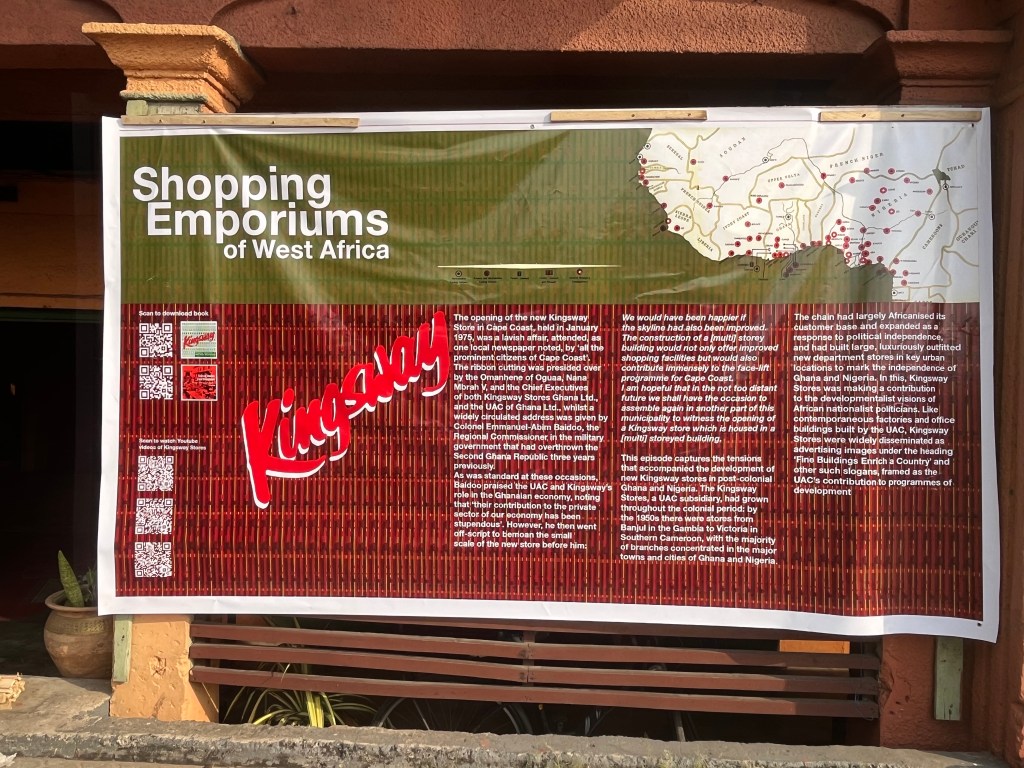
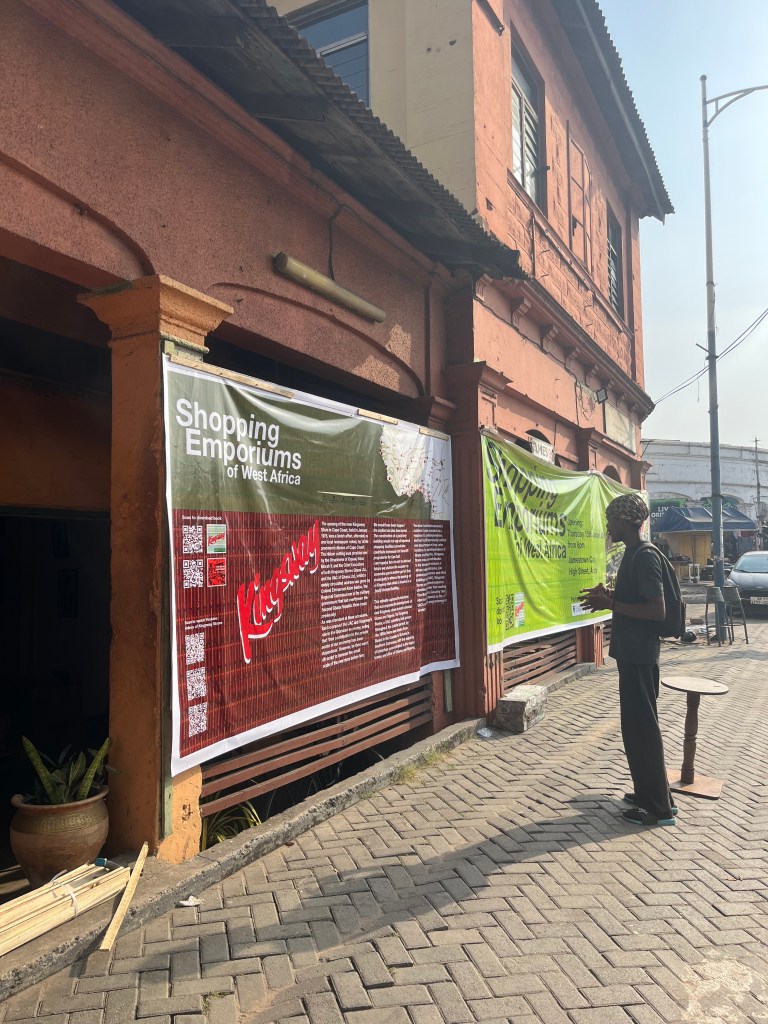
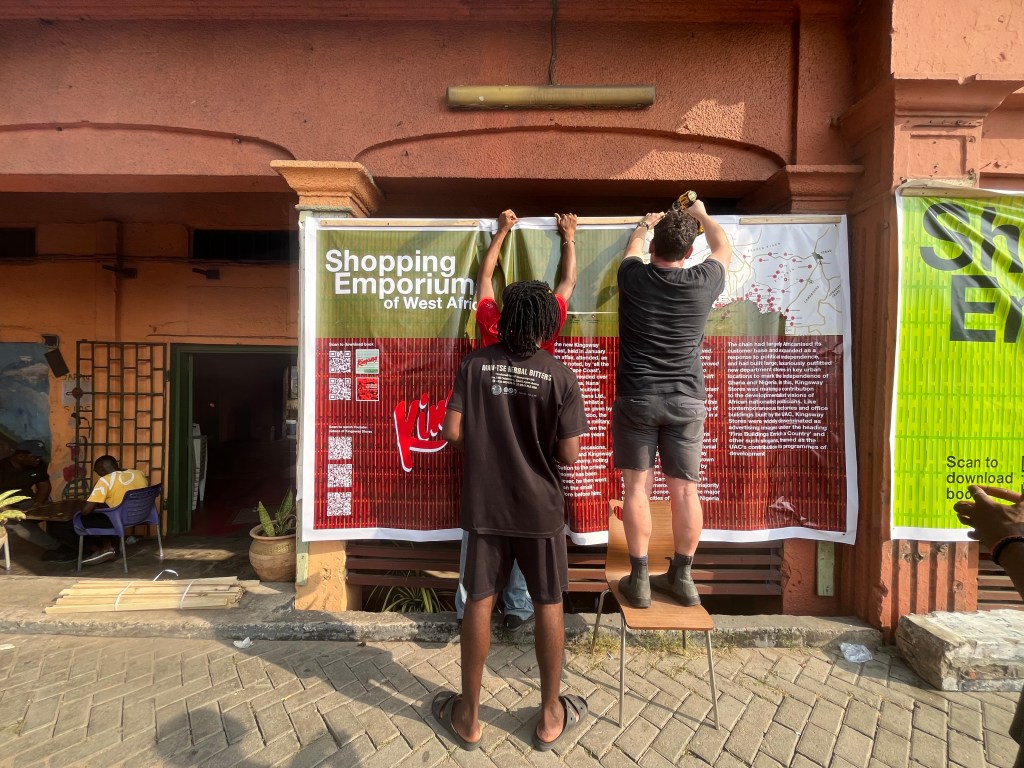
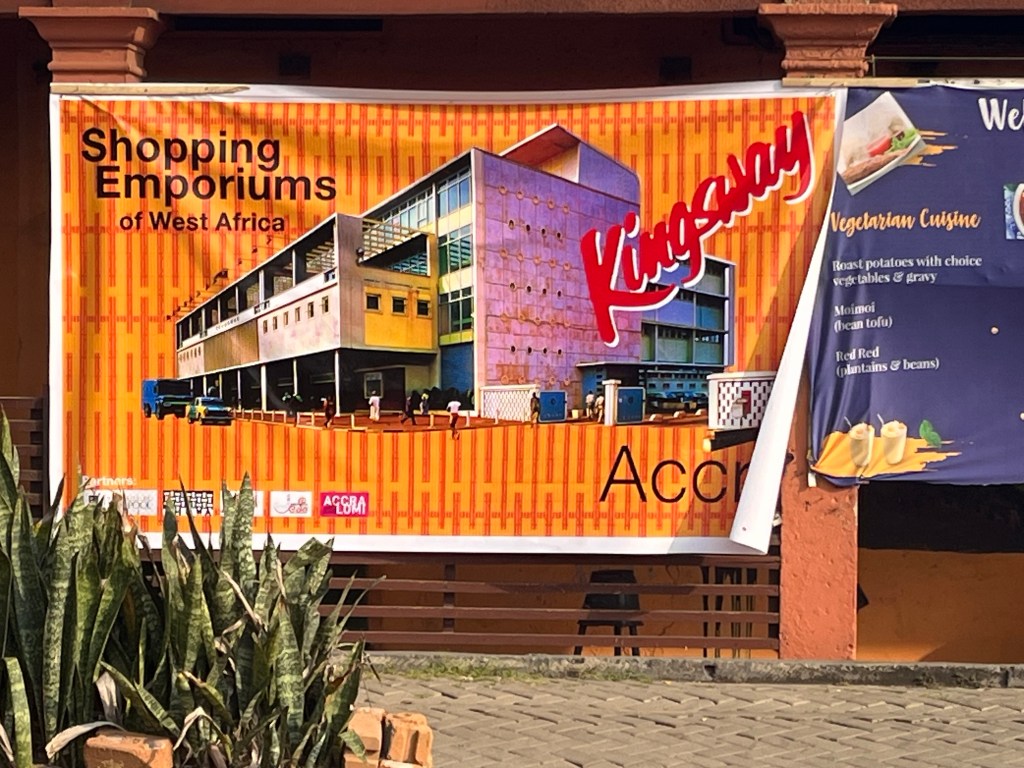
What makes presenting this exhibition in Accra particularly meaningful is the opportunity to share this research in the very city where the first Kingsway store stood. The ruins stand next door to the gallery – a poignant reminder of this commercial and architectural heritage. Through collaboration with Allotey Bruce Konuah, we’ve extended the exhibition beyond the gallery walls with vinyl street banners installed on both the gallery exterior, creating a dialogue between past and present. The banners also contain QR codes so visitors and passers-by can freely download the catalogue.
Our commitment to sharing this research extends beyond this single exhibition. We were interviewed on Asaase Radio morning show and it was great to share our work with a broader audience across Ghana. Following the exhibitions run in Accra through to Easter, we hope to tour the exhibition to other venues, continuing the conversation about how retail modernism, colonial commerce, and architectural heritage intersect. This exhibition reminds us that architecture is never merely about buildings; it’s about the economic, social, and political systems that produce them.
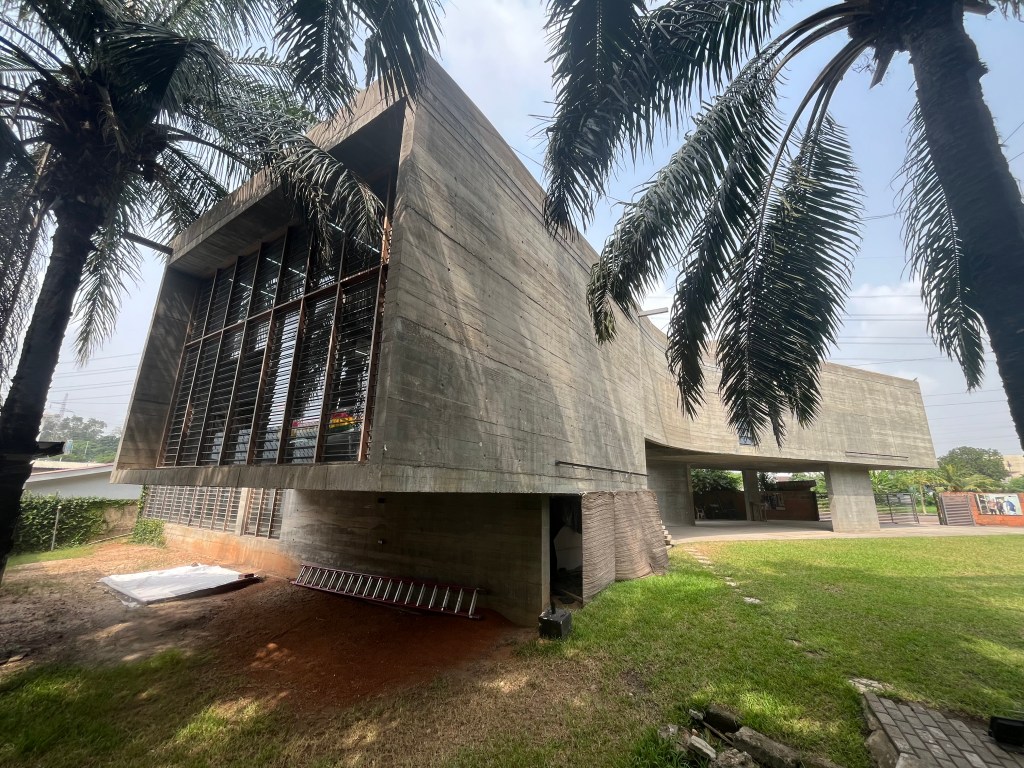
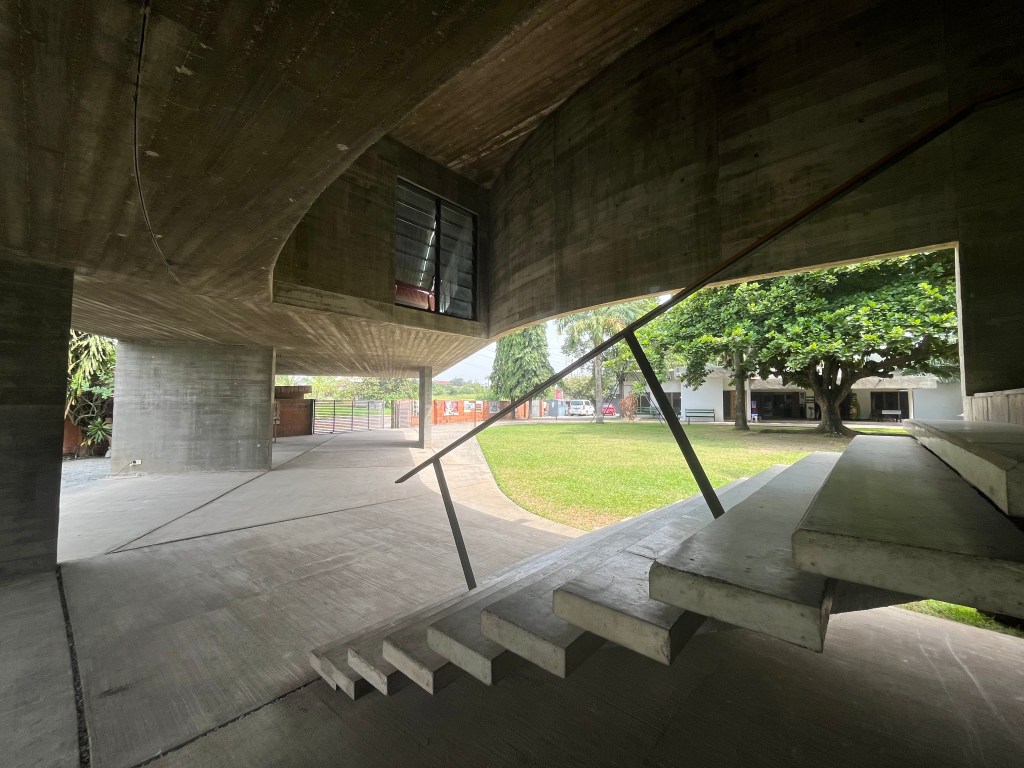
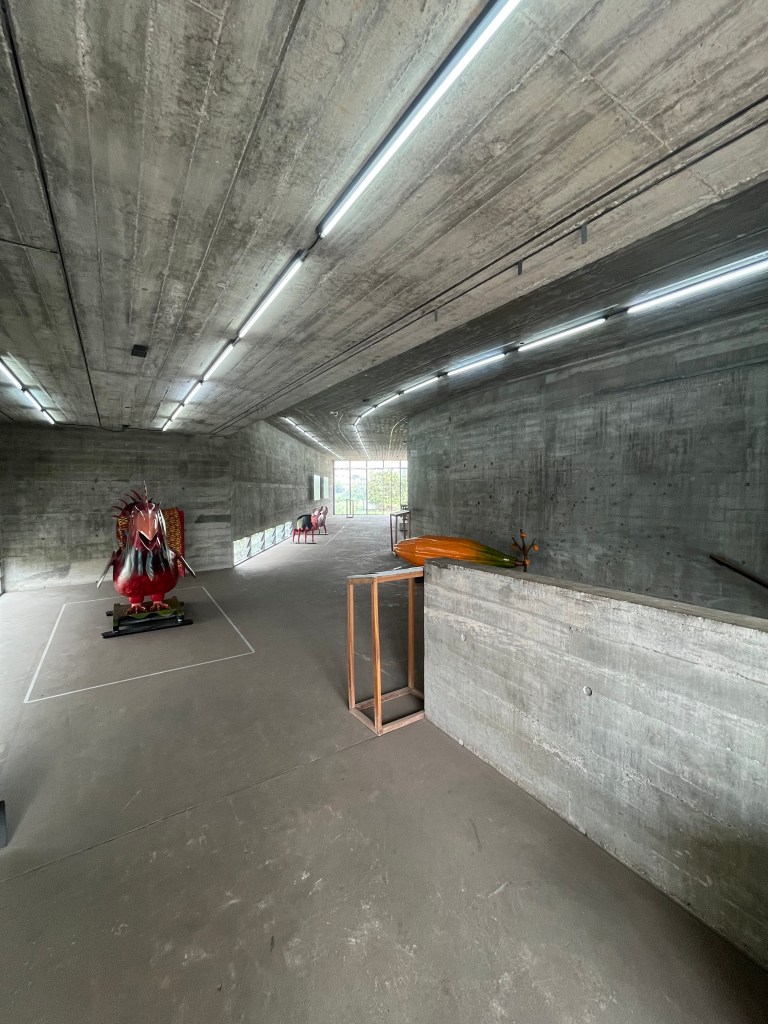
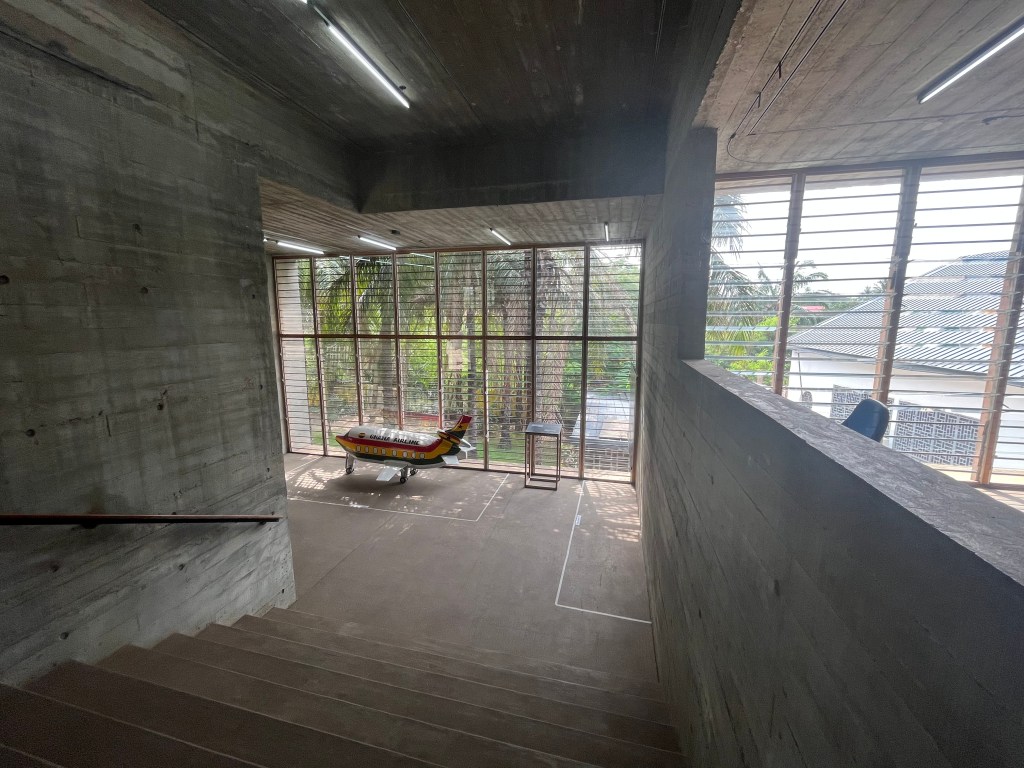
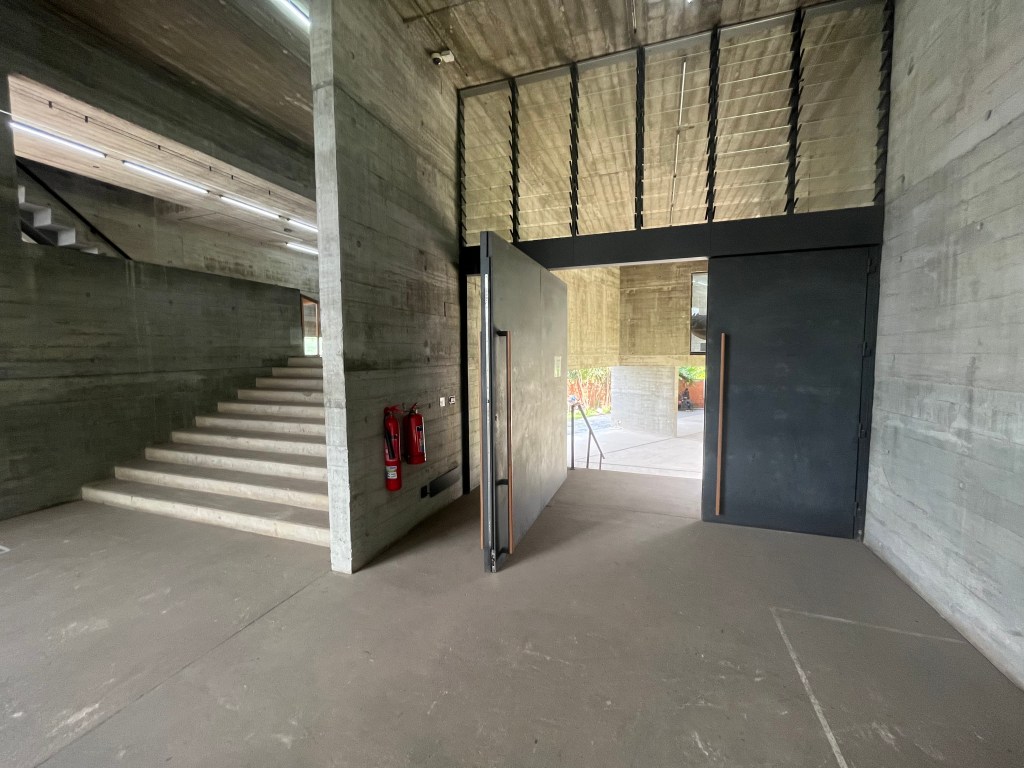
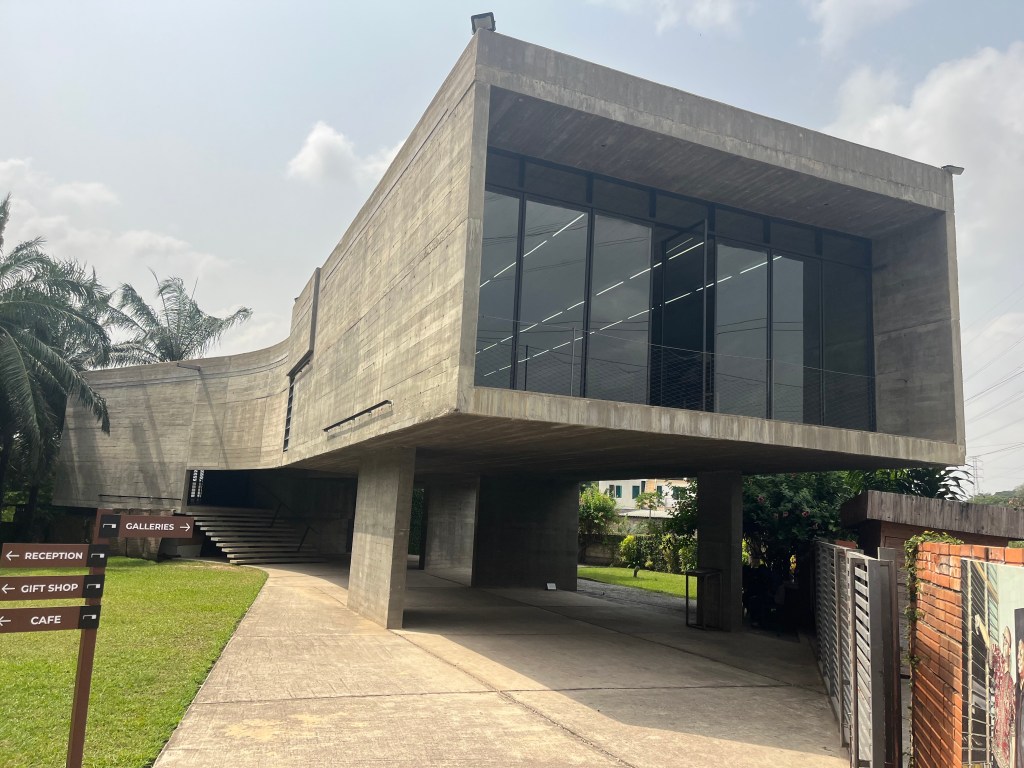
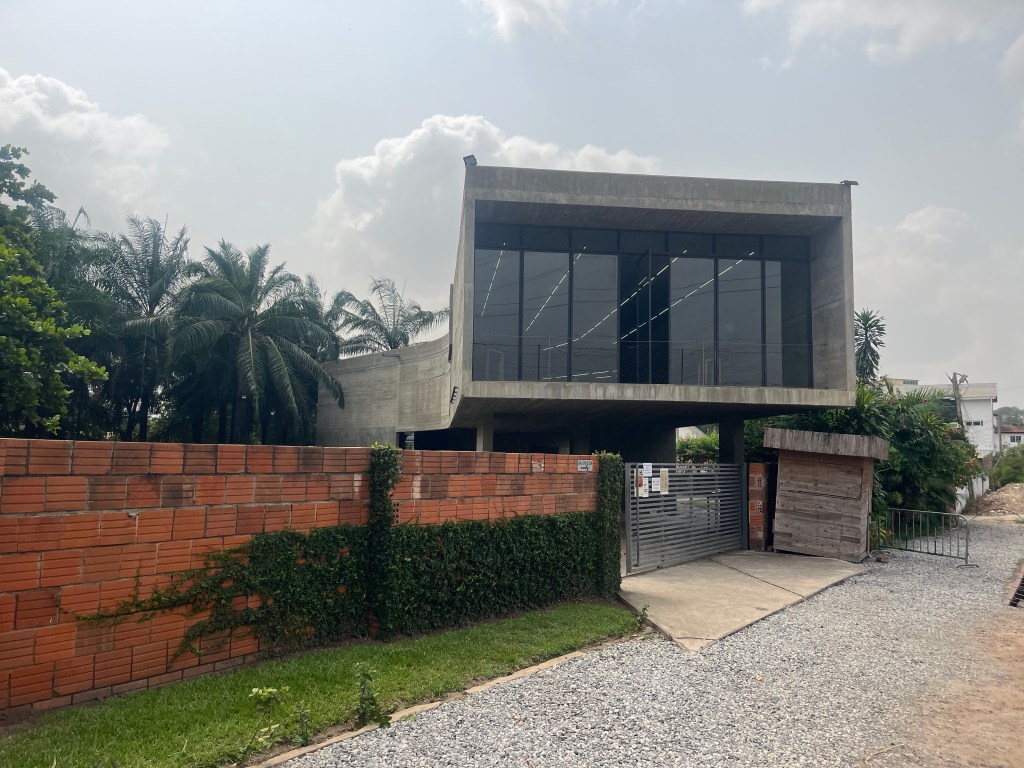
I finally visited the Nubuke_foundation today – a contemporary arts centre in East Legon, Accra . A very exciting structure that was fun to explore . I got there early and had the entire place to my self. Exclusively en situ concrete with the main gallery on piloti the space is lit from the large windows at either end of the linear structure. The shaded outside space under the gallery creates an exterior garden gallery (and cinema), and a carefully cast cantilevered staircase leads up the main entrance. The doors have the Le Corbusier inspired eccentric pivot, found frequently in Chandigarh, and there are certainly other motifs redeployed from the Modernist 5 points. It’s not derivative or cliched though – far from it. The building responds very well to the site and the vast -louvred window facades at each end offer fine views whilst being shaded from the concrete that projects beyond.
The campus was designed by Baerbel Mueller of http://www.nav-s.net/ and Foreign Affairs ([A]FA), Institute of Architecture, University of Applied Arts Vienna.
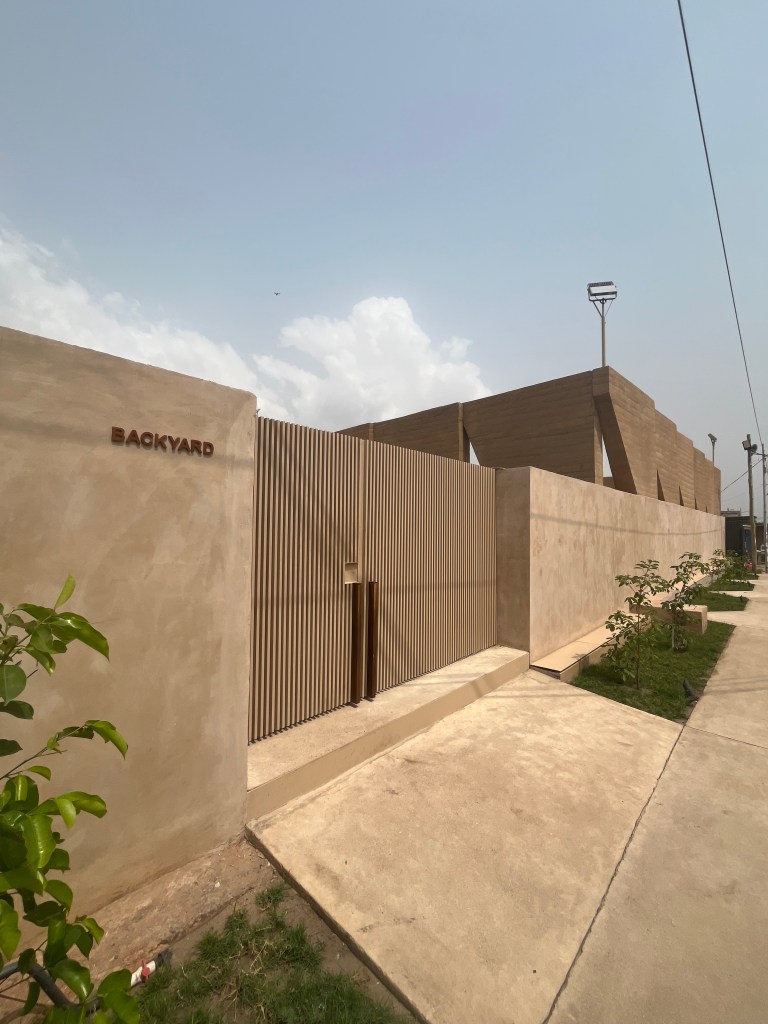
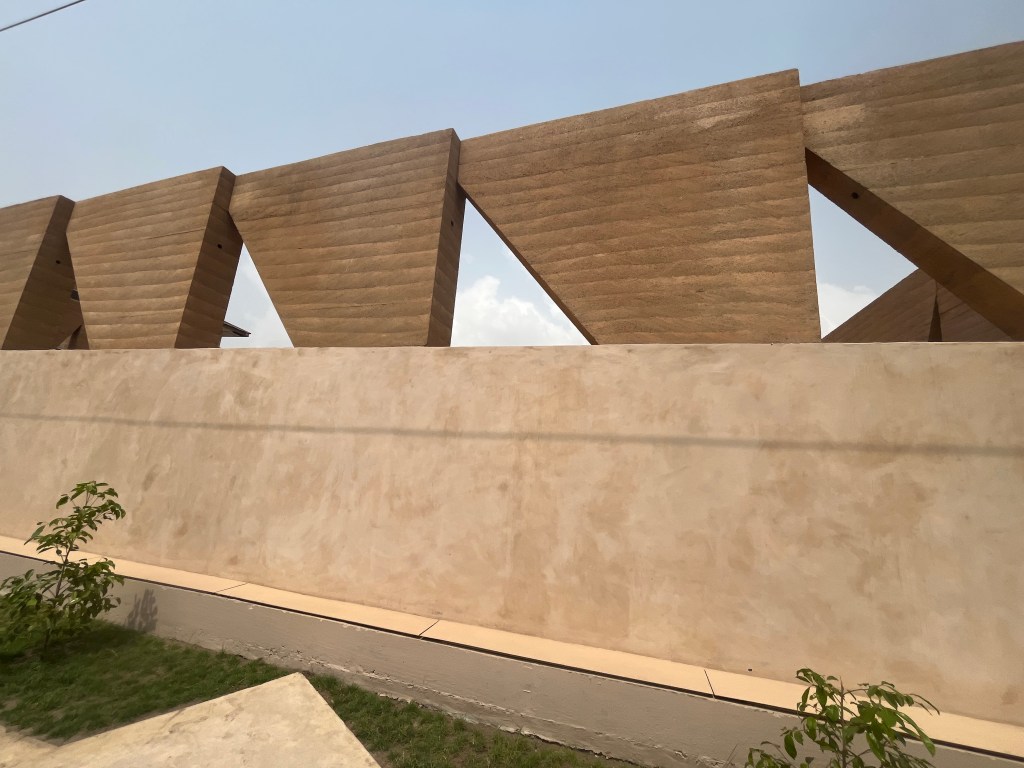
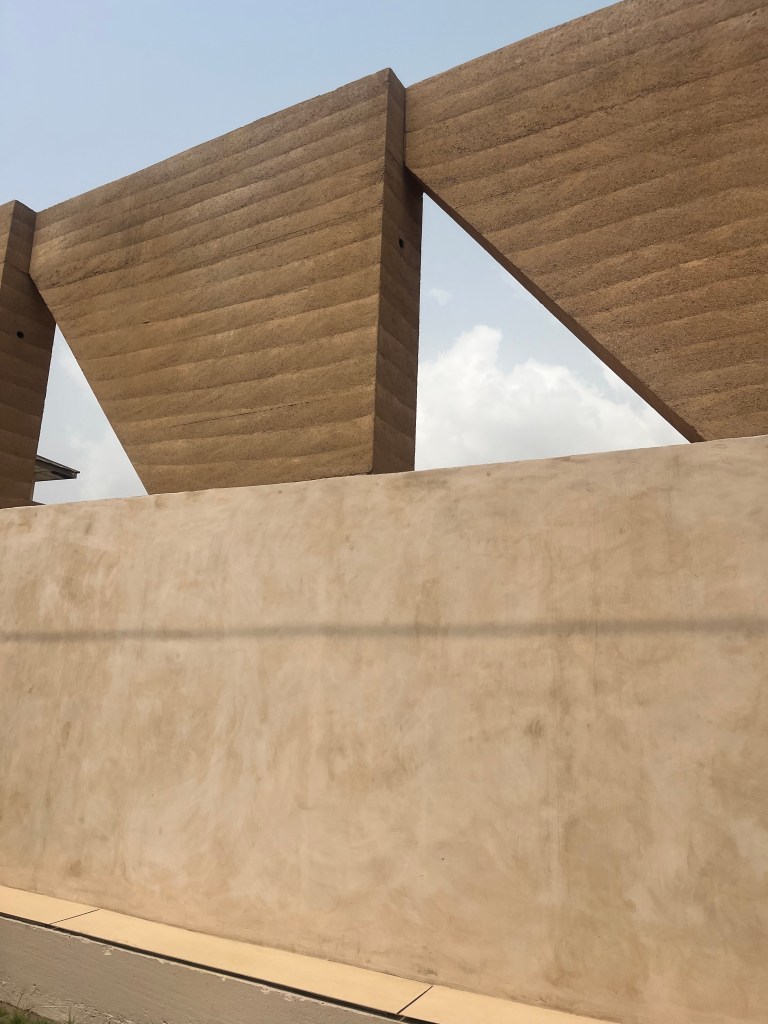
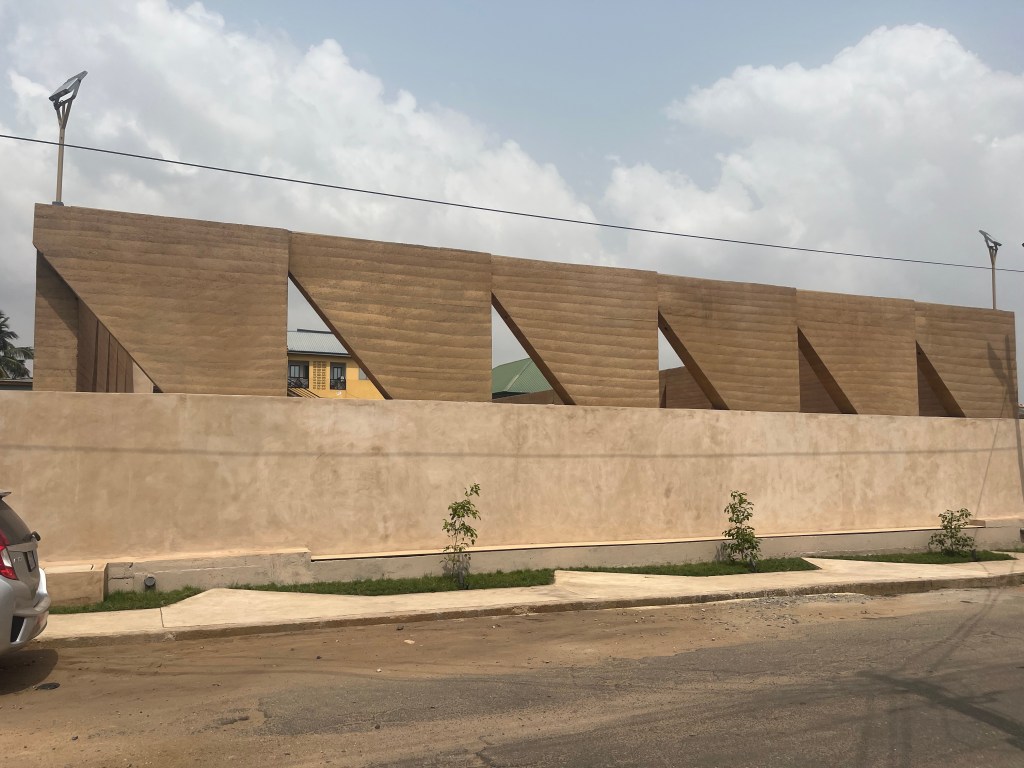
Elsewhere I had a less successful attempt to visit the Backyard Community Club – every time I visit it’s closed – but hopefully I’ll get full access soon. Designed by DeRoche Projects, it is the first project in Ghana using a precast rammed earth system. The modular precast elements provide shade whilst allowing cross ventilation. They also integrate cleverly into a bench for observers to watch the games. As well as tennis, there’s a kitchen garden and other gathering spaces for coaching and social events.
I’m intrigued by the precast panels and would like to learn more about the detailing. How was it possible to transport rammed earth – surely there’s a significant amount of cement in these panels to hold them together, and how is the top of the panels protected from the heavy rain? I’ll have to investigate further. Read more and see far better photos here: https://www.archdaily.com/1036713/backyard-community-club-deroche-projects. We saw at nearby Dot Atelier the flashing interventions being made around the windows to project the adobe ‘sandcrete’. I admire both buildings for experimenting and developing such uplifting and carefully designed spaces.
The two major projects under construction in the city that we reported on in 2022 – Cathedral and Marine Drive have both stalled, and both projects are now under-review and reassessment – leaving behind faded hoardings and large vacant sites. At least the Community Centre and Ghana Club have some reprieve.
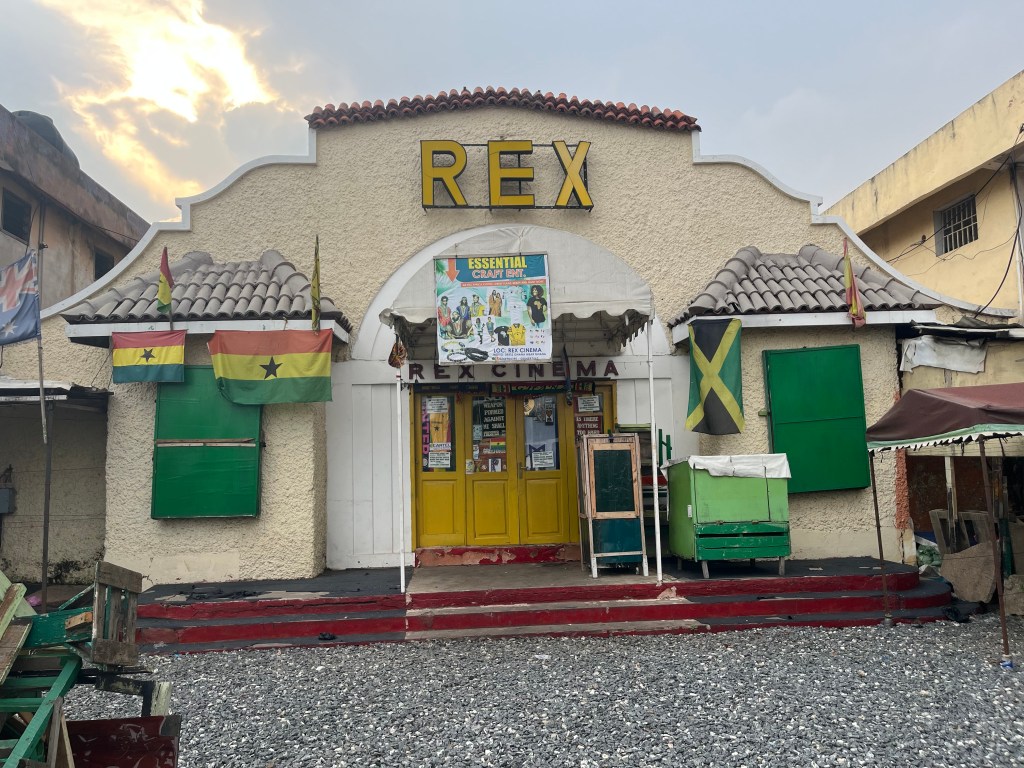
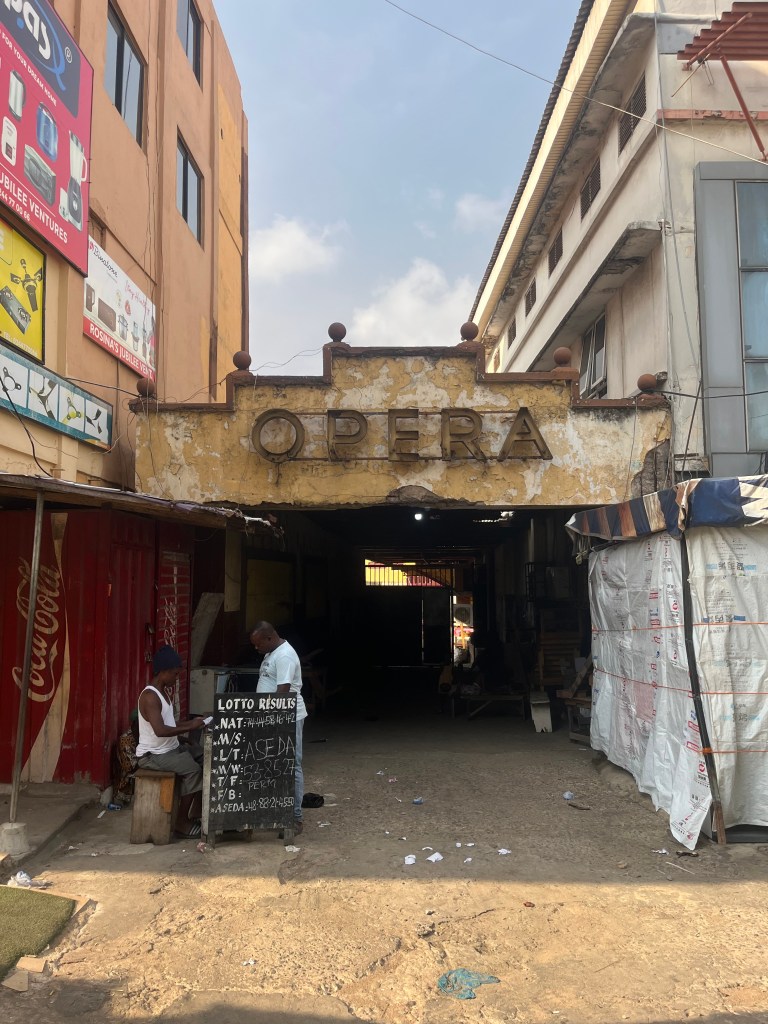
I also visited the Rex Cinema and Opera Cinema – both still looking excellent with their small scale intriguing entrance portals hiding their vast open-air screening areas.
The Kingsway Exhibition has been sent to Accra and carefully stored at the Jamestown Cafe for a few months now. We were finally able to unpack the vast pallet on Friday morning and spent the weekend constructing the two pavilions and installing the light boxes and panels.
The exhibition is being extended and reimagined through a further collaboration with Allotey Bruce Konuah on a series of vinyl street banners that will be installed on the exterior walls of the gallery space, as well as on the old ruined Kingsway Stores portico located next door.
The opening night is 15th January and all welcome. The exhibition will remain until Easter before it moves on…
Thank you to James Galliford and the Liverpool School of Architecture Technical Team for their expertise on the fabrication and installation, and to Claire Tunstall and Unilever Archives team for all their help and support sourcing the images and visuals.
During the 1960s, Accra stood at the center of the anticolonial world. As the capital of Ghana—the first independent country in sub-Saharan Africa following European colonization—the city drew revolutionaries, intellectuals, and artists from across the continent and the Cold War divides. Ghana’s first leader, Kwame Nkrumah, envisioned Accra as a showcase of African statehood and invited architects to help shape its future.
Exhibition Photograph, courtesy of Łukasz Stanek, 2025.
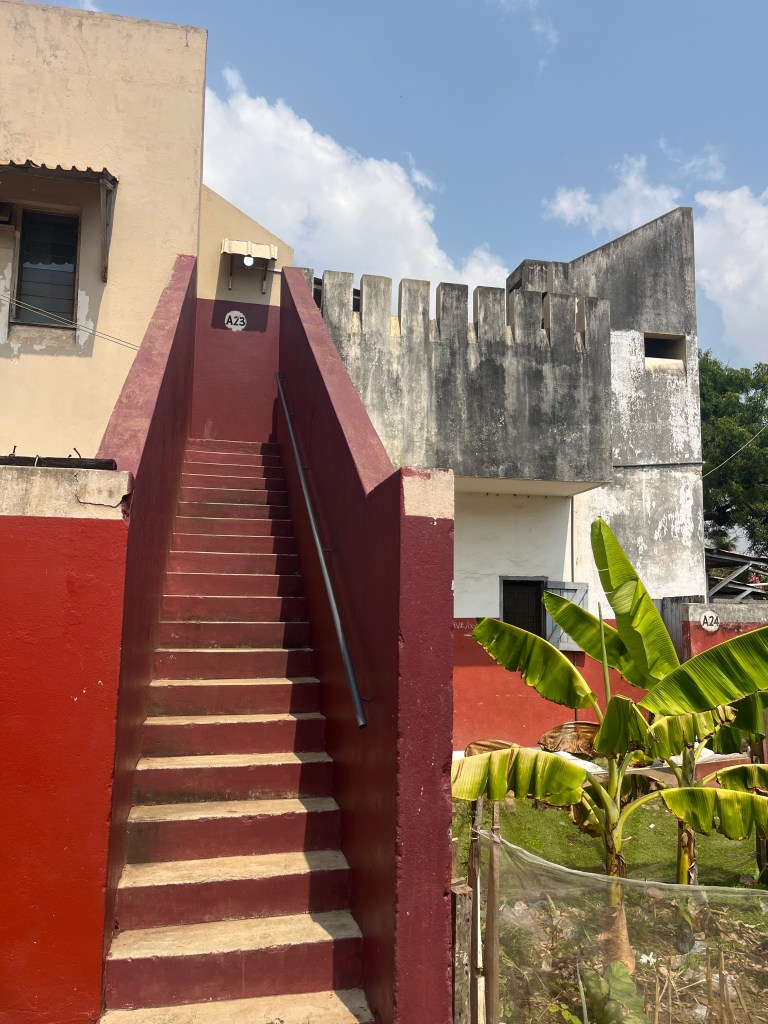
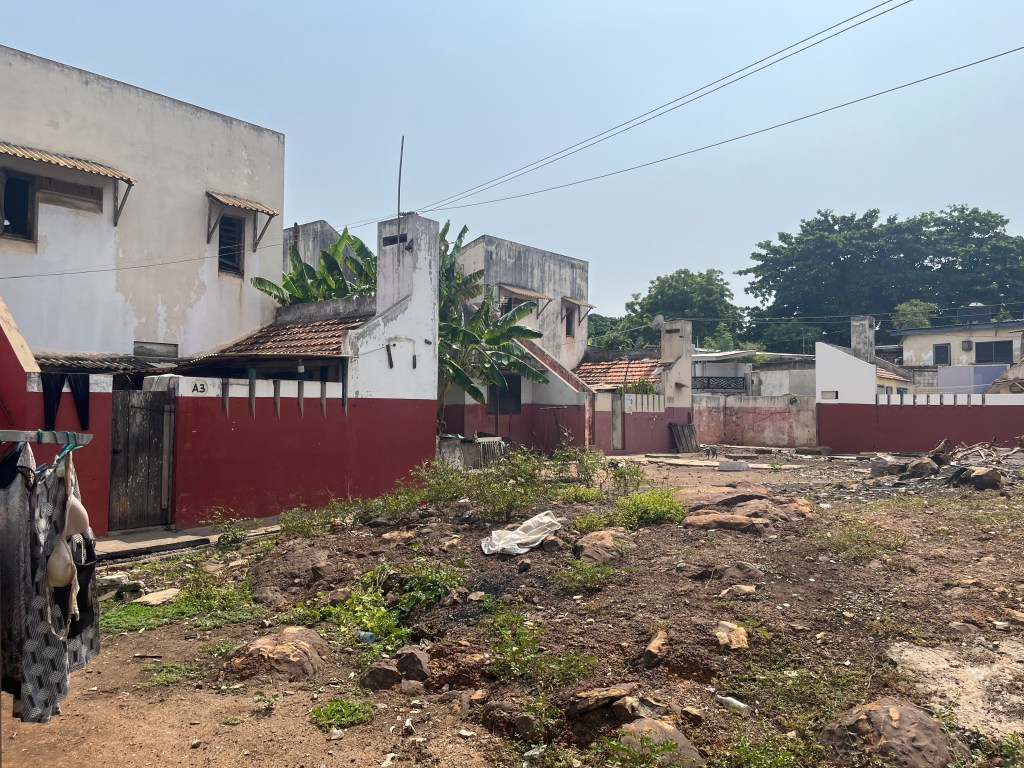
Intersections traces the collaboration of two architects who responded to that call: Ghanaian Victor Adegbite (1925–2014) and Hungarian Charles Polónyi (1928–2002). Polónyi arrived in Accra as part of Eastern European technical assistance programs supporting Ghana’s transition to socialism. He worked for the Ghana National Construction Corporation (GNCC), where Adegbite—a Howard University graduate—served as chief architect. In their work at the GNCC they mobilized architectural resources from the socialist, capitalist, and non-aligned countries and designed buildings that responded to Ghana’s needs, means, and aspirations.
The exhibition centers on the housing projects designed by Adegbite and Polónyi, which embodied the many dimensions of independence—from representing a new elite to the state’s provision of housing for all social groups. By juxtaposing family archives from the United States and Hungary—preserved by the architects’ daughters—the exhibition both reconstructs and reenacts an encounter from sixty years ago. By recording how the buildings designed by Adegbite and Polónyi have been appropriated by their inhabitants, it shows how the architects’ work continues to impact Accra’s urban landscapes.
Curators: Michael Dziwornu and Łukasz Stanek, in collaboration with Dana Salama.
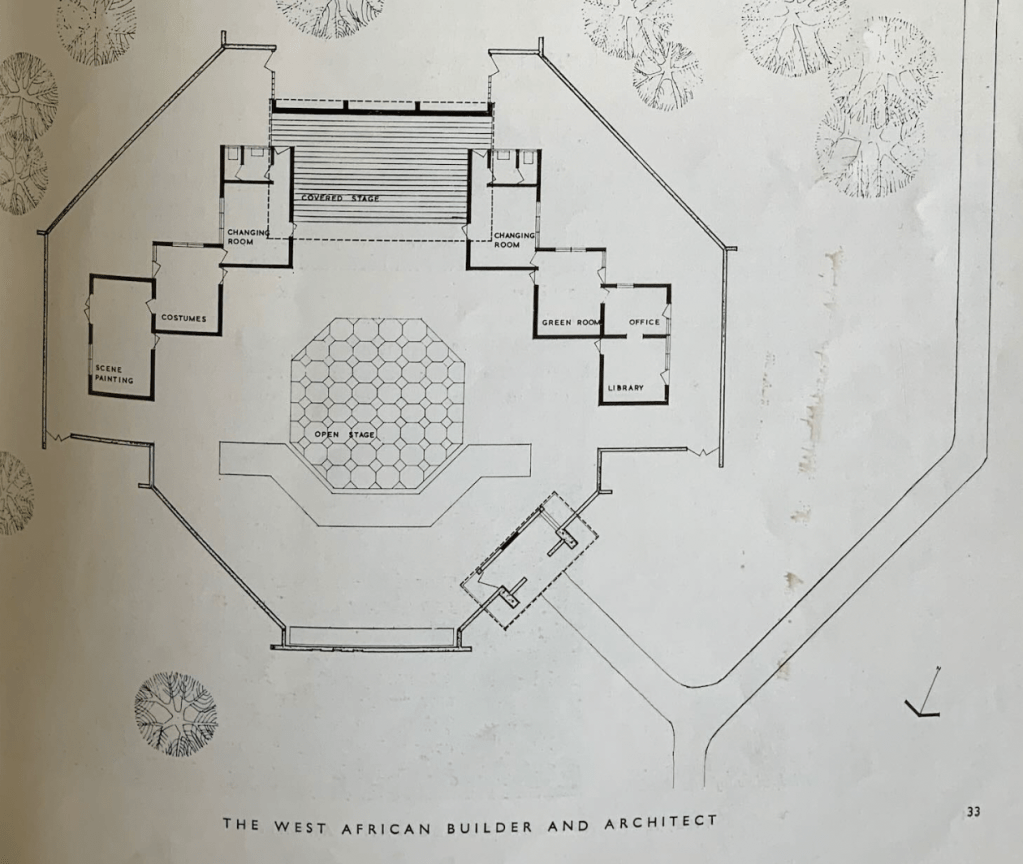
In 1958, the Ghana Arts Council and the Rockefeller Foundation provided the necessary funding to set up ‘the Experimental Theatre Players’ spearheaded by Efua Sutherland and Joe Degraft. Architects Gerlach and Gillies-Reyburn were commissioned to design the structure which was based around two performance stages – one ‘in the round’ and the other a proscenium arch theatre. It was Sutherland who generated the design strategy,
“Conceptualized by Sutherland, the dominance of traditional motifs in the architectural design of this theatre edifice was a statement of cultural renaissance, independence, and nationalism because she believed “political independence suggested cultural autonomy”
(Anku, S. S. (2022). (Post) Colonial Ghanaian Attitudes Towards Ibsen: An Overview of Ibsen Reception in Ghana Between 1930 and 1966. Ibsen Studies, 22(1), 3–30. https://doi.org/10.1080/15021866.2022.2063977).
The stages are enclosed by a series of interlocked rooms built from sandcrete and providing changing, offices, and other ancillary functions. The project received a full write up in the West African Builder and Architect journal in 1962.
Images from West African Builder and Architect, 1962
“It was a small structure, unpretentious but handsome, traditional in inspiration yet modern in design. The dazzling whitewashed walls with their dark trim resembled a village compound and were meant to. Inside, at one end, a platform stage was covered by an overhanging roof; but the auditorium, with its seats of carved Ghanaian stools, was open to the night sky. It stood in a rough, weedy place approached by dusty footpaths, its simplicity contrasting sharply with the gaudy grandeur of Accra’s nearby Ambassador Hotel. The crowds were gathering at the entrance that was shaped like a huge traditional stool and flanked by two massive Akuaba dolls, sculpted male and female symbols of fertility”
(Anku, S. S. (2022). (Post) Colonial Ghanaian Attitudes Towards Ibsen: An Overview of Ibsen Reception in Ghana Between 1930 and 1966. Ibsen Studies, 22(1), 3–30. https://doi.org/10.1080/15021866.2022.2063977)
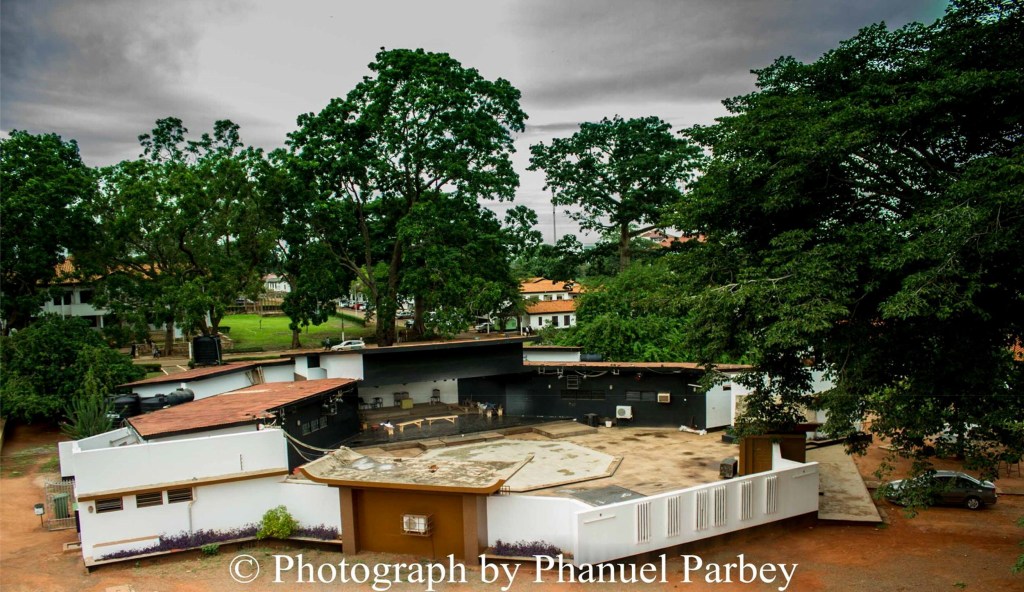
Anku further notes that the theatre was “replicated and relocated to the School of Performing Arts premises at the University of Ghana” – it’s unusual for a building to be entirely remade in a new location. The old site, as Anku notes, was near the Ambassador Hotel – this is now where the Mövenpick Hotel is located. Was the structure physically demolished, moved, and rebuilt? Perhaps the old site is where the National Theatre is located today?
The new Drama Studio at University of Ghana, Legon. Photograph by Phanuel Parbey
The July-August 2025 edition of the Architectural Review has published an extended 9-page feature article written by Lois Quartey and Julia Gallagher on the Accra Community Centre, Ghana. The building designed by Maxwell Fry and Jane Drew, with Theo Crosby as the lead assistant, opened in 1951 and quickly became an important educational, cultural, and social hub in the city. It was paid for by the United Africa Company in an attempt to foster local support after its ‘Swanmill’ HQ was looted and burned following the 1948 Accra riots. TAG provided some drawings and photographs that accompany the article.
The primary thrust of the piece is to raise awareness of this significant historic structure – especially how it was used in the independence campaigns and beyond – and to stress just how vulnerable this building is. Currently being used as a mere store and at risk from the Marine Drive development plan – the article expands on what we covered here https://transnationalarchitecture.group/2022/06/22/accras-renaissance-fishing-harbour-marine-drive-and-a-new-cathedral/ back in 2022.
It’s a deceptively simple and even ordinary building at first sight – but after spending time exploring it’s two interconnected courtyards and assembly hall it quickly begins to feel at home, climatically comfortable, and a nice place to be. It’s also a significant structure because of its design pedigree and especially because of its political significance – so many important speeches, gatherings, and events took place here in the advent to independence and beyond. It’s also home to one of the largest installations by leading artist Kofi Antubam – that alone should secure its future. Our model that replicates one made by Fry and Drew featured in the recent V&A Tropical Modernism exhibition too.
If foreign and leading agencies such as the V&A museum and Architectural Review are prepared to give this seemingly humble building exposure, critique, and cause for preservation – surely the case can be made to restore this heritage structure and to weave it into the wider Marine Drive masterplan. Champions of Ghanaian culture https://www.design233.com/articles/in-trust-for-the-people are behind saving these works and raising awareness, but much more needs to be done.
To deliberately allow a ‘managed decline’ and slow demolition is a tragic waste and short sighted view of the building’s rich political history.
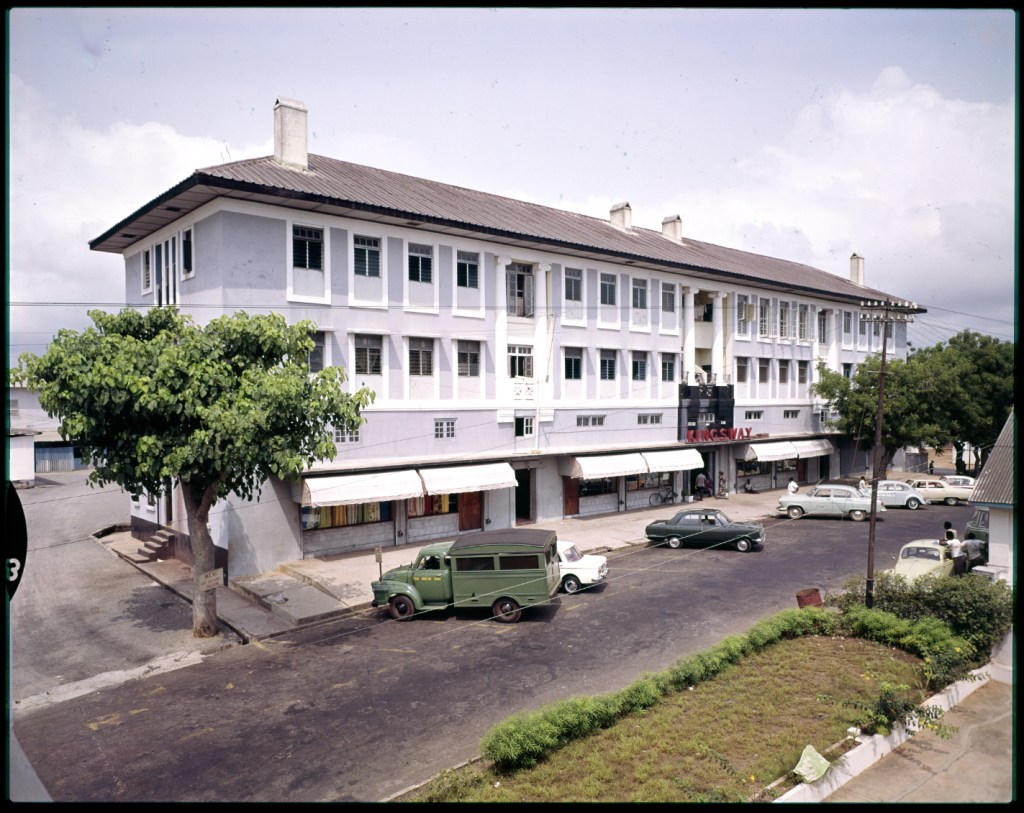
When I was scanning the images for the Kingsway Stores exhibition and recent article, I came across the Takoradi Kingsway in a colour slide. It wasn’t a building I was familiar with and hadn’t seen any other references to it within the wider UAC archive. The design is also different to the other branches – it doesn’t seem to fit with the earlier Millers (old Accra) or F&A Swanzy (Kumasi) stores – nor with the James Lomax-Simpson designs found at neighbouring Sekondi and Cape Coast. The branch at Sekondi complicates things further – why would there be a Kingsway at both Sekondi and Takoradi when they’re so physically close together? The Takoradi branch is also a substantial structure – far larger than might be expected for a town of this scale. Perhaps it was used as a warehouse or depot for the wider enterprise, receiving the imported goods from the neighbouring port that had opened in the 1920s, or was it used as a regional office and retail outlet for the UAC (or one of its predecessors) when the new town and port was set out? The archives include some replanning and refurbishment plans from the 1960s but nothing on the structure’s history and design. The neo-classical facade with ionic columns in antis is also unusual – contrasting with the more moderne 1930s turrets and cantilevered canopies.
Kingsway Takoradi, Ghana: reproduced from an original in the Unilever Archive UAC/1/11/10/1/10, 1958.
I began to look at the maps of Takoradi to try to locate the structure, but couldn’t find anything on this scale – it was only when I reviewed my photos of the town that I found a contemporary image. The building is still standing and largely unaltered. It’s located amongst the other large European trading properties that were built around the customs house, train station and post office. There’s also shipping offices for Palm Line and Elder Dempster, along with a Barclays bank within this commercial cluster.
Stanek Ł. Hegemony by Adaptation: Decolonizing Ghana’s Construction Industry. Comparative Studies in Society and History. Published online 2024:1-34. Full paper available here: doi:10.1017/S0010417524000185
Soviet Uzbekistan Today (Through the Republican Press Pages). August. (Tashkent: The Uzbek Society of Friendship and Cultural Relations with Foreign Countries, 1963).
This paper discusses competing visions of the decolonization of Ghana’s economy during the first decade of the country’s independence from Britain (1957–1966), and the agency and horizon of choice available to the Ghanaian decision-makers in charge of implementing these visions. It focuses on Ghana’s construction industry, both as an important part of the national economy and as a condition for Ghana’s broader social and economic development in the context of colonial-era path-dependencies and Cold War competition. By taking the vantage point of mid-level administrators and professionals, the paper shows how they negotiated British and Soviet technological offers of construction materials, machinery, and design. In response to Soviet claims about the adaptability of their construction resources to Ghana’s local conditions, the practice of adaptation became for Ghanaian architects and administrators an opportunity to reflect on the needs, means, and objectives of Ghana’s construction industry, and on broader visions of Ghana’s economic and social development. Beyond the specific focus on the construction industry, this paper conceptualizes the centrality of adaptation in enforcing technological hegemony during the period of decolonization, and discusses African agency beyond the registers of extraction and resistance that have dominated scholarship on the global Cold War.











 Transnational Architecture Group