Archive

Tag Archives: Heritage

Livelihoods and culture under threat in Ghana’s historic port of Jamestown
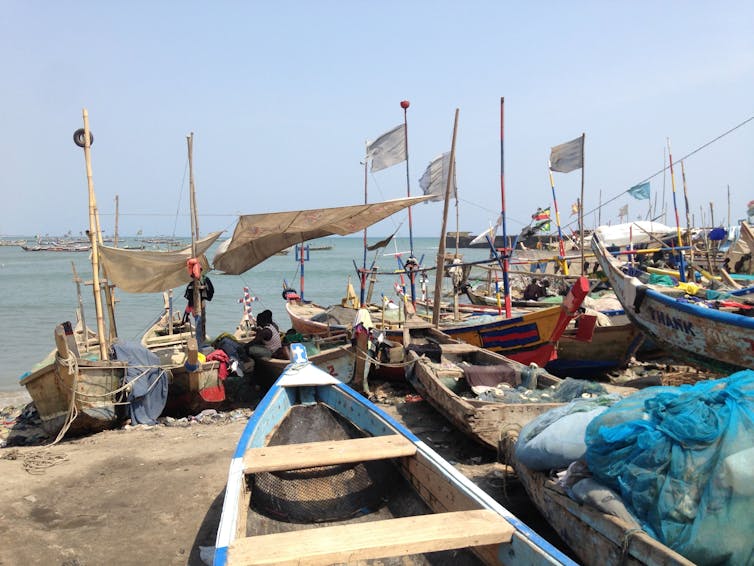
The beachfront of historical Jamestown, Ghana.

Plans are afoot to replace the historic Ghanaian fishing port of Jamestown with a Chinese-backed mechanised factory.

This is a move that will destroy traditional livelihoods, as well as damage the historic built environment. It will drastically change not only the tangible fabric of this historic town, but also impact the fishing methods, market traders and community that’s reliant on the sea.

Since 2011 I have been researching the history of Ghanaian architecture and urbanism, and have been particularly struck by its impressive collection of heritage structures and associated narratives.

The harbour at Accra’s district of Jamestown was built to provide shelter from the heavy surf that pounds this part of the coast. The breakwater and pier were equipped with railway tracks, gantries and cranes to handle the large produce exports following the cocoa boom of the early 1900s. The wealth created from this trade saw some fine buildings being built. An array of warehouses, stores and villas survive (some very precariously) in Jamestown to this day.
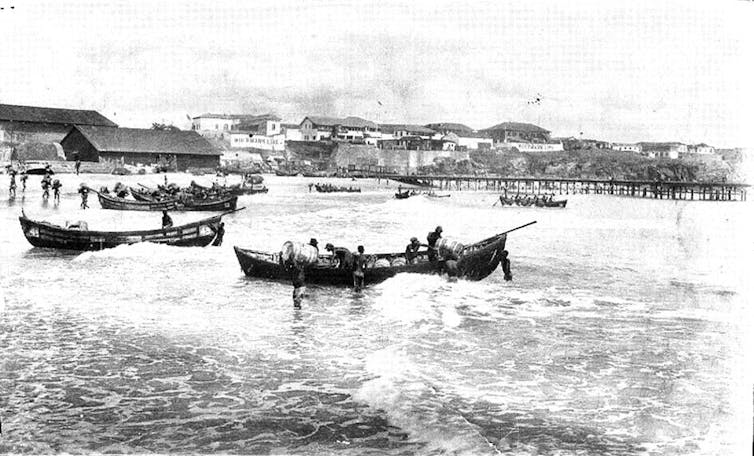
Historical photograph of Jamestown.
Courtesy of Wirral Archives

The shallow waters of the harbour utilised smaller surf boats who ferried the goods in and out to the ships anchored in deeper water. The creation of new ports rendered the Jamestown harbour superfluous by the 1950s and it was no longer used for international trade.

While this profoundly affected the livelihoods of the surf boat owners, as well as the economic prosperity of the Jamestown area, it has still remained an active harbour, returning its focus to fishing. New canoes are still built on the beach, nets are made, repaired and dried, and a large, if casual, fishing market trades off the shore.

Although described as a beach, it’s still a working harbour rather than a place for leisure. Businesses, residences, schools, places of worship and bars have all been established on the beach and a large population considers it their home and community. The place has a very different feel to the rest of the city. It has an intimate connection to the sea, dictated by the tides, rituals, songs and danger that accompanies all fishing communities.

It is “informal”, sometimes appears anarchic, and while not suitable in its current format for freight shipping, its potential for commercial development has caught the attention of the municipality and international investors.

New development

Earlier this year a billboard was suddenly erected on the beach displaying an “artist’s impression” of how the beach is to be developed. It’s a disturbing image in many ways, showing the beach completely cleared of its inhabitants. There’s also a large car park and a series of somewhat bland sheds or factories. There is not one single canoe in sight.
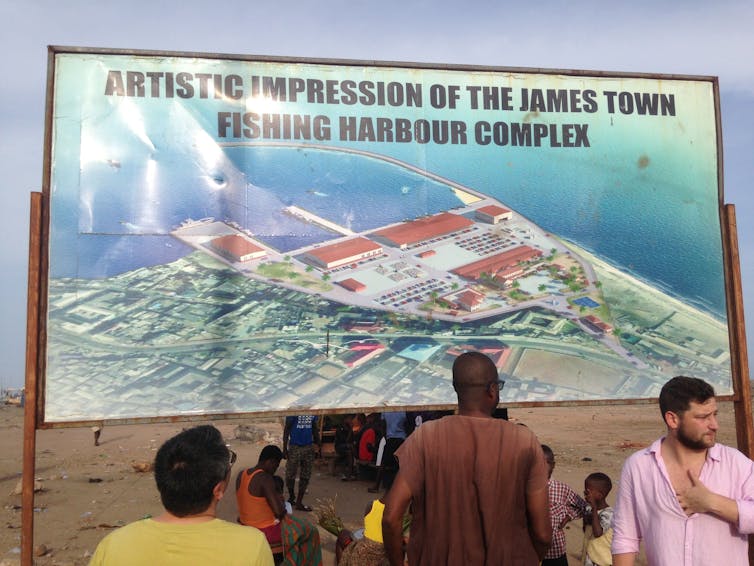
An artist’s impression of the new Jamestown development.
Iain Jackson

The proposal (and its backers) see this site as a convenient place to construct a new factory for the mechanised processing of fish. There is nothing inherently wrong with this as an idea. But the current proposal would not only occupy a prime site with historical significance: it would displace a large community along with their heritage, skills and traditions.

There are four main considerations that have not been addressed by the current proposal. And with the beach already being cleared of its residents and traders, time is running short.

Seafront heritage site: A shoreline development with an historic waterfront requires sensitive and appropriate proposals. A failure to deliver this undersells the site’s potential. It is not appropriate for a factory and car park to be placed on this important plot.

It is hard to imagine any other international port city using its most important natural features in this way. The attractive view over the ocean offers lots of possibility for this site. Reducing it to a fish-gutting production line is shortsighted and lacks ambition.

Community discussion and liaison: The settlements and businesses located on the beach are “informal” (like most of Ghana’s economy). But this must not discount or invalidate their contribution to future development. No one is more invested in this place than the current population, part of the minority Gā community, with their own language and traditions, who have lived and traded here for centuries.

Individual fishing boats and their small hauls may not be the most efficient or lucrative methods of extracting the bounty of the sea. But they bring many advantages. The main traders (and controllers) are women affectionately known as “mammies”, who set the prices and manage supply.

This matriarchal system has been largely responsible for ensuring a strong community. Whilst these traders are fiercely competitive, they care for each other and their lives. Memories and stories are inherently bound to this place – the proposed factory would completely undermine and destroy this market and cohesion.

Mechanised production would also result in fewer employment opportunities. The power would be taken from market traders and fewer fishermen would be required.

Fish stock: Environmentally the mechanised processing and trawlers would be disastrous for the fish stock. The existing method marries periods of fallow with festivals, allowing the sea to recuperate and replenish. There is a rhythm to the current fishing method that responds to the seasons and traditions. It is unlikely this approach will be respected by the new process and the factory’s profit driven approach.

Tourist potential: The first place tourists visit when arriving in Ghana is usually Jamestown and the harbour area. Its two former slaving forts and the historic mercantile core of the town, coupled with the array of festivals and events, have so much potential as revenue creators.


Read more:
Igniting public space at the Chale Wote street art festival in Accra


They must be treated as rare commodities, not as cheap development plots. If this district is gradually eroded, its natural features, historic charm and engaging community dismissed, then what else is there for visitors to see in Accra?

In the last six months eviction processes have started to clear the beach. This is an earnest plea for this proposal to be rethought – and for this fascinating part of the city to be regenerated in a way that celebrates and respects the history and people of Jamestown.

This article is republished from The Conversation under a Creative Commons license. Read the original article.

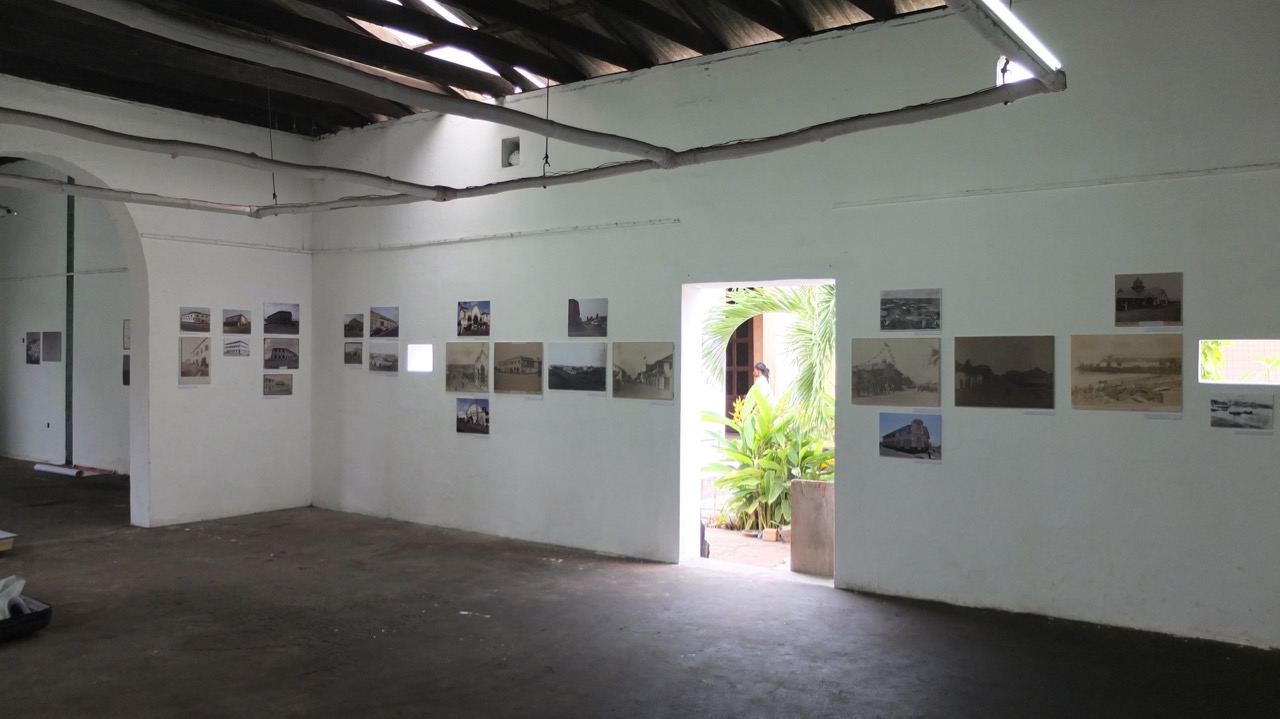
 

Thank you to Prof. Ola Uduku of Manchester School of Architecture for reviewing the ‘Sharing Stories from Jamestown’ exhibition. The exhibition has been extended to run until the end of June 2019. Below I’ve uploaded a 360 degree panoramic view – you can ‘click and drag’ the film to have a look around….

ouduku's avatarWARUH: West African Rapid Urbanisation and Heritage Conservation Research Network

Iain Jackson’s exhibition co-curated by Allotey Konuah-Bruce and Joe Addo opened to great acclaim on Saturday evening at the Jamestown Café, venue, near Ussher Fort. Curiously the café it was confirmed by local elders who attended the opening is accurately in Usshertown; the exhibition launch providing a great forum for these questions to be aired and for detailed discussions to be had.

Historic photographs and maps of ‘old’
Jamestown buildings have been placed next to those which show their age,
condition and use, in ‘contemporary’ Jamestown have been displayed in the lower
gallery of the Jamestown Café, which itself features in the exhibition as Tarquah
house, the dwelling and warehouse of one of Jamestown’s wealthy local
merchants, who had originally had it built. The exhibition represents a true
joint collaboration between Iain Jackson and Allotey Konuah-Bruce who have
formed a close and productive working relationship as they have spent the…

View original post 244 more words

Architecture in the Age of Mechanical Reproduction: Glasgow School of Art and its Future

Like many people, I was again saddened, shocked, and frankly annoyed to see Charles Rennie Mackintosh’s masterpiece, the Glasgow School of Art, engulfed in smoke and flame for the second time in just four years. It was a radical piece of architecture that helped to shape the development of early 20thC Modernist architecture, and unlike a lot of contemporary and experimental work it was much loved and held a popular appeal.
The charred remains have yet to cool, but a fierce debate has erupted on the future of the building. On the one hand there is an impassioned plea to demolish and rebuild a new structure that would be something of ‘our time’; with any attempts to refabricate the ‘original’ resulting in a ‘replica’, that is, a fake.

Glasgow school of Art

Glasgow School of Art, by Charles Rennie Mackintosh

This faction argues that a rebuilt school would be rendered a ‘museum piece’, and that a new school would somehow respond better to the needs of today’s students.  For sure, it is a compelling argument and after the shock of the tragic event it shows a fighting spirit and an optimism that all architects possess to create a better future. If an architect were to design a new building today that mimicked, or somehow parodied the ‘Mackintosh style’, then for sure, that would not be the way forward for architecture. But this is not a newly commissioned project, rather it should be a restoration of a dilapidated shell.

“The handle has been replaced several times, and the blade was changed once, but this knife has been in our family for centuries”

Unlike other works of art, such as painting or sculpture, there is a utilitarian, designerly approach in building, and buildings are made of many components, materials and finishes. They can all be replaced or remade. Certain parts of a building inevitably wear-out and have to be replaced; lead flashing is carefully reinserted, roofs are precisely re-laid, window frames rot, and sometimes windows are smashed and replaced. We accept this continual, sensitive remaking and in the case of buildings like the GSA undertake this process with extreme diligence. This is all part of a building’s ability to endure time and survive, and whilst a fire rapidly accelerates this process, it need not be the end. Buildings are never complete, they are always unfinished and being continually remade through the acts of everyday use. They develop patina, tarnishes, stains, and are weathered, changing all buildings for better or for worse. This aging cannot be replicated of course, but it demonstrates that a building is not a pristine artefact, there is a spectrum of aging and renewal.

The surviving GSA structure could be retained and kept in its ruinous state as a kind of memorial to what we once had. Some of the ‘original’ fabric would be retained and fixed to commemorate Mackintosh’s genius. It could become a shrine with a steady pilgrimage of architects’ eager to touch the stone relics with their direct link back to the hand of the Mackintosh. This would surely be the worst type of preservation – for whilst we would have the vestiges of the School there would be no joy, no use, just a sad lament. The surviving stones might enable a façade to be retained, or possibly form a similar condition to that deployed by Basil Spence at Coventry Cathedral, in the aftermath of World War Two. Whilst this might preserve the outer shell, or image, it wouldn’t suffice because the interiors at GSA were so rich and possibly even more important than the building’s skin.

We should not be afraid to remake architecture, because architecture as a concept is detached from its manifestation as a building. There is the idea and its representation often in the form of drawings and physical models, and then there is the physical construct. The physical entity is of course very important, but it is an outworking of an idea. Unlike painting, where the hand of the artist is important (but not essential) architecture is always remote from the act of construction. Architects make drawings that are then interpreted and fabricated by teams of artisans, technicians and craftspeople into the built object. Inevitably there are gaps between the artist’s intentions and the drawings they produce, and then of course there are numerous clefts between the drawings and the constructed piece. Decisions are made ‘on site’ and changes made on the hoof – this is all part of the construction process. In many buildings there is even a devolution of some parts of the design to the craftspeople on site, especially in decorative pieces, or commissioned artworks and sculptures. The core idea remains and is entirely the responsibility (and gift) of the designer, but it is important not to overly fetishize the object as a fixed, pristine artefact.

A burned out Jaguar E-Type can be fully restored, and even enhanced to suit modern environmental standards as the ‘Concept Zero’ illustrates. In no way does this detract from the ‘original’ duplicated model, nor the enjoyment of driving the vehicle. Indeed, there is pleasure and pride to be had from such a restoration. There is certainly room to manoeuvre here in construction and many buildings are sensitively restored and enhanced for modern living and reduced energy use. The drawings produced by Mackintosh (and his wife Margaret) survive and the recent scans and computer models of the building produced in response to Fire no.1 will enable a faithful rebuilding of the GSA. There is no technical reason why this school could not be rebuilt. Other art forms revel in this ability to be remade and enjoyed; music is recorded, plays are performed, artists issue facsimile casts and photographers offer limited edition prints. Walter Benjamin foresaw this in his seminal writing, ‘Art in the age of mechanical reproduction’. I’m not suggesting that multiple GSAs are licensed, but rather the single edition we had is carefully remade in honour of Mackintosh and the city which this building has helped to define and create.

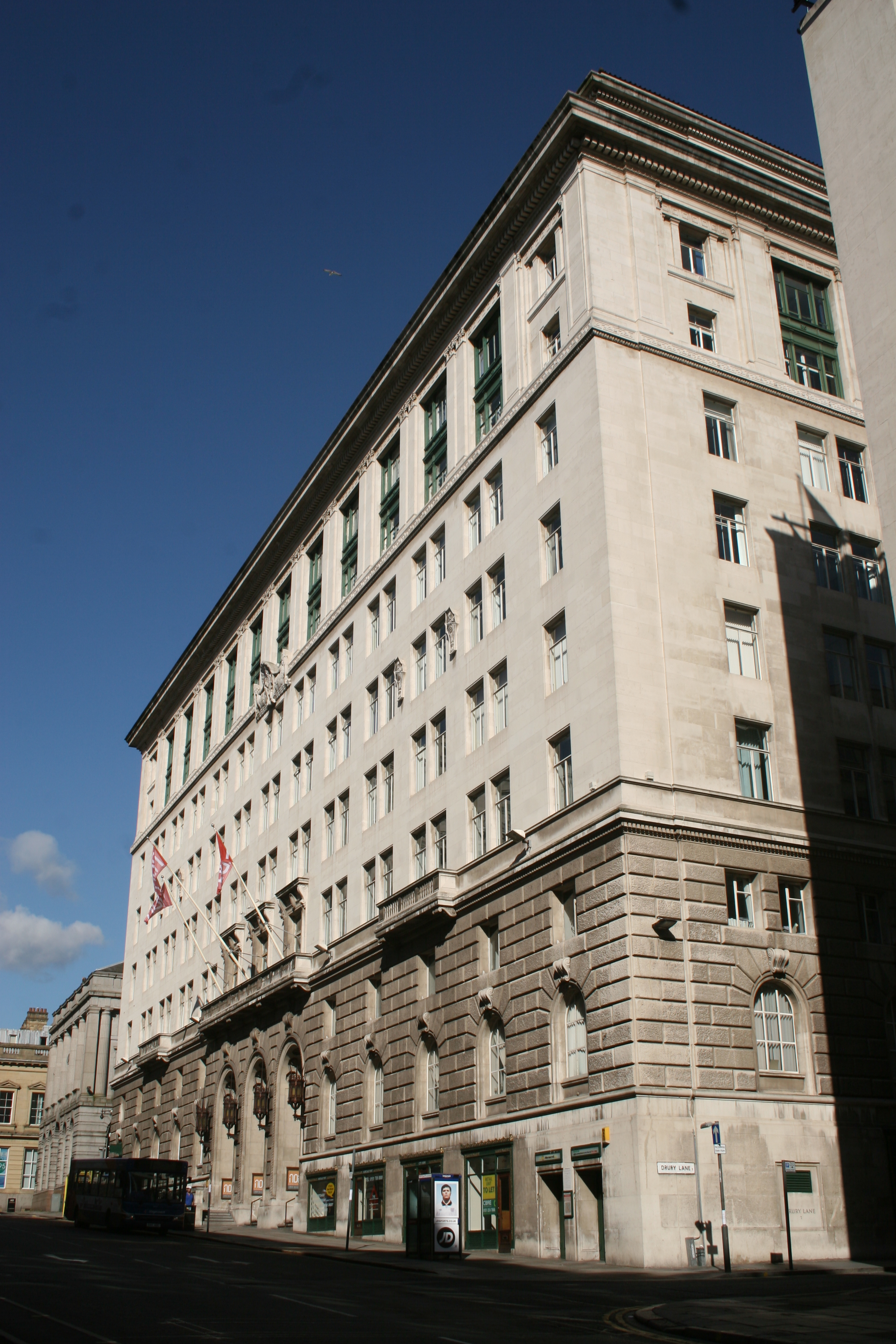
India Buildings by Herbert Rowse

India Buildings by Herbert Rowse

There are claims that a rebuilt School would not be ‘of our time’. Some, like eminent architect Alan Dunlop have claimed that Mackintosh’s would indeed want ‘to see a new school of art fit for the 21stcentury’ – but we can never truly know the wishes of the deceased. Surely the GSA is an excellent didactic tool for today’s students, and in any case it is not very old – it’s a mere blink of an eye in the broader scheme of things. To remake it now would not be a disservice to ‘our time’ but would be a measure of how we value and cherish such works of art. So many buildings have been regrettably erased following fire – to the detriment of our built environment. Gavin Stamp’s publication, Britain’sLost Citiesis a roll call of this approach, whereas when the decision to rebuild has been made the results are rarely questioned. We do not hear claims of, ‘we should have pulled this down and replaced it with something else’. Herbert Rowse’s India Buildings in Liverpool was carefully rebuilt after the effects of incendiary bombs – its authenticity is not questioned because of this; it simply becomes part of the building’s story. Mies van der Rohe’s Barcelona Pavilion was also famously remade and it continues to bring pleasure and delight to all who see it. It is far better to experience this wonderful design than to imagine it’s ‘spirit’ or look at the old photographs.  Plus, we live in an age when this is possible – it is ‘of our time’ to replicate and reproduce components and objects that are better than the ‘originals’.


SaveSave

Notes from James Town, Accra.

Hansen Road, James Town

Hansen Road looking towards the Methodist cathedral

James Town is an old district in Accra running along the coast and associated with the British during the early colonial period – when the Dutch and Danish were also grappling for control of the town. Set behind the Usher Fort are many warehouses, trading posts and residences. A fine array of historical buildings can still be found here, but much of its rich tangible and intangible heritage is at risk through insensitive development, lack of maintenance and the departure of large businesses from the area. Despite this, it remains a vibrant and charming district full of markets, traders and the cultural epicentre that is the James Town Café, recently frequented by Emmanuel Macron during his visit to Accra.

James Town Cafe

James Town Café

Led by the charismatic Allotey Bruce-Konuah we weaved our way through the markets and informal structures that now occupy the gaps and leftover sites, punctuated by a vast collection of colonial-era buildings. Our first stop is a stone obelisk encased within an old market hall. The obelisk was built shortly after 1900 to commemorate the last of the Anglo-Ashanti wars. One of the plaques is in Arabic script, perhaps in recognition of Nigerian-Islamic troops who fought the Ashanti with the British. From here we went to the adjacent market hall. It was used until quite recently – and with some minor repairs could make for a very fine market venue today, perfectly sited on a strong axis and at the centre of the district.

We visited Azumo house, built in 1914 – the original owner’s escapades of shipwrecks and ‘salvaging’ are apparently recorded in the Red Book of West Africa. The quality and number of historical buildings is surprising – a case of preservation by leaving-be. The warehouses of the Compagnie Francaise de L’Afrique Occidentale (based in the Royal Liver Building in Liverpool) occupy a prominent site, and Ellen House built in 1918 boasts a rich history – we will attempt to uncover more.

Our trip concluded with a visit to the studio of Deo Gratias. You may remember some of the photos from this studio featuring in The Guardian (and here) not so long ago. It was extraordinary to see these images printed and in large format. Kate Aku Tamakloe, the granddaughter of the studio’s founder, JK Bruce Vanderpuije, and curator of the collection kindly gave us a tour. Kate told us there are many, many more images to scan, some from glass plates. We look forward to seeing more of this important work.

Deo Gratias Studio

Deo Gratias Studio James Town

Ola Uduku and colleagues at Edinburgh University hosted an excellent workshop this week on West African Modernism, combining some of the sessions with Docomomo Africa. The result was a very rich series of encounters, exchanges and discussions.

IMG_1676

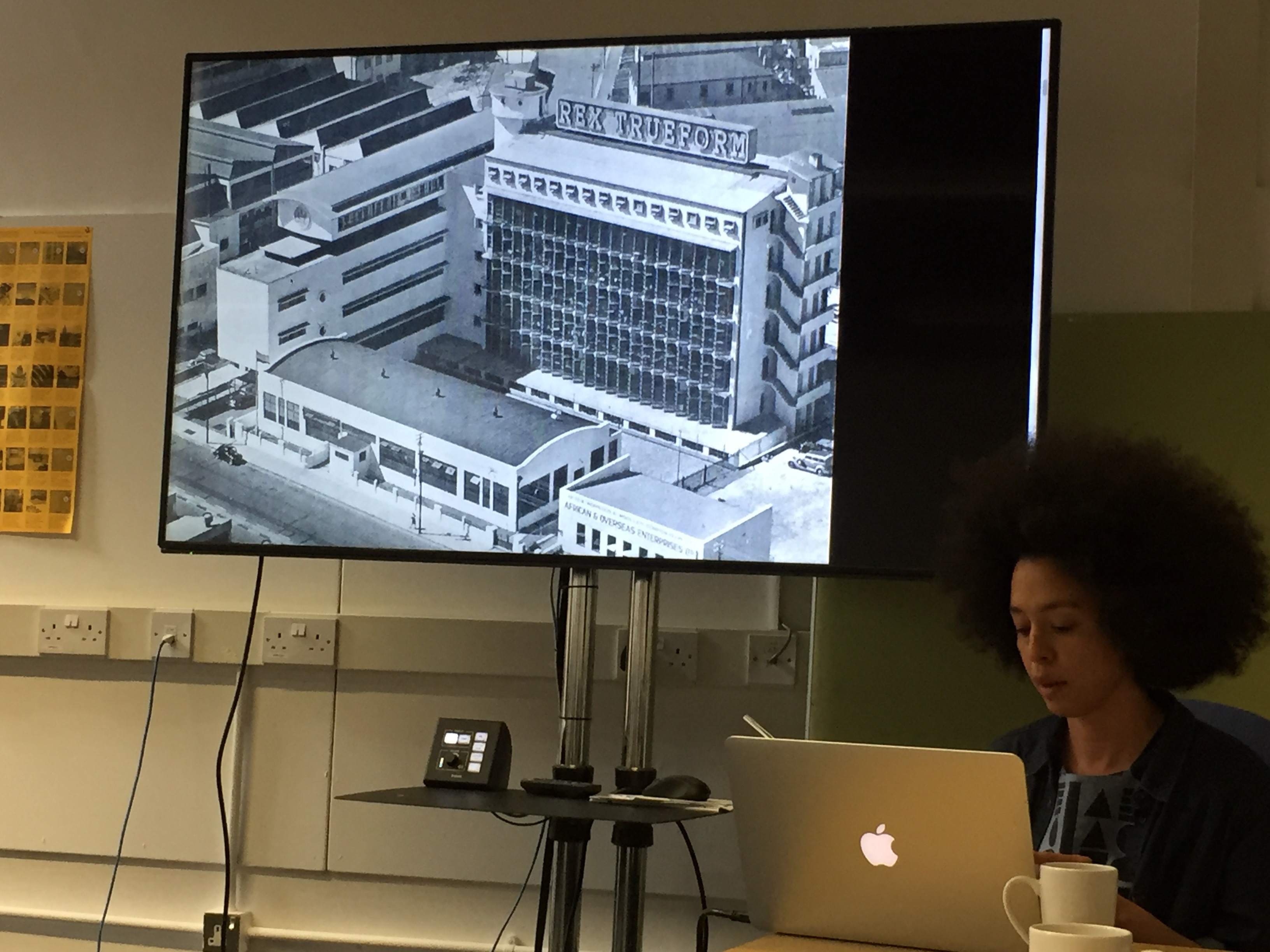
Ilze Wolff presenting Rex Truform’s factory in Cape Town

Ilze Wolff gave a very poignant paper on Rex Truform, the clothing factory in Cape Town designed by Max Policansky in 1937. Ilze’s investigation goes beyond the built fabric and stylistic qualities of the structure – it considers the workers’ stories and what it was like to be a part of the everyday life of this significant building in the city. Ilze is also publishing her findings and interventions through a series of booklets: see Open House Architecture for more details.

IMG_1674

Shantanu Subramaniam’s presentation on Community Centres and Libraries in Ghana

Shantanu Subramaniam presented his recent fieldwork on the community centres and libraries of Ghana. In addition to architectural surveying and cataloguing Shantanu is also considering the environment performance of these structures and testing their ability to modify climate and interior temperatures.

IMG_1675

Joe Addo’s skype presentation on modern architecture in Accra

Joe Osae-Addo joined us via Skype and shared his film on modern architecture in Accra. The film presented an autobiographical account of Accra and its modern architecture, as seen and experienced by Joe from his childhood onwards. It is a compelling piece that will deliver far more impact in changing ‘hearts and minds’ than reports and conservation legislation.

You can watch the film here: https://stream.liv.ac.uk/s/hav96uun

We also discussed the DOCOMOMO presence in Africa and whether there should be regional groups [such as West Africa, Southern Africa and so on], to generate a more critical mass and greater influence. The reliance on the fiche methodology was also questioned – or at least its limits acknowledged – and we considered the use of ‘narrative’ and social history as a means of generating meaning, significance and connection to these structures beyond the fetishisation of the physical attributes, and tangible qualities.

IMG_1697

Cumbernauld townscape

On the final day we were treated to a site visit to the new town of Cumbernauld, and Stirling University.

New Film: Citizen Jane: Battle for the City

CJ-Jane2-Quotes.png

In 1960 Jane Jacobs’ book The Death and Life of Great American Cities sent shockwaves through the architecture and planning worlds, with its exploration of the consequences of modern planners’ and architects’ reconfiguration of cities. Jacobs was also an activist, who was involved in fights in mid-century New York to stop ‘master builder’ Robert Moses from running roughshod over the city. This film retraces the battles for the city as personified by Jacobs and Moses, as urbanization moves to the very front of the global agenda. Many of the clues for formulating solutions to the dizzying array of urban issues can be found in Jacobs’ prescient text, and a close second look at her thinking and writing about cities is very much in order. This film sets out to examine the city of today though the lens of one of its greatest champions.

DIRECTOR’S STATEMENT

In the face of developers and the overzealous parks commissioner Robert Moses, who, in
the 1950s, wanted to run a four-lane highway through the middle of the park, Jacobs and
other Greenwich Village residents and activists organized a formal opposition to the city’s plans.
Through community-driven support, a large neighborhood coalition, a series of public protests, and a years-long letter-writing campaign to officials at every level of city government, Jacobs and her compatriots eventually triumphed and Moses’s park-destroying plan was shelved.
It was a battle much like the one Sanders’s campaign has framed today: a grassroots coalition of regular people fed up with the top-down impositions of the powers that be running roughshod over regular citizens.

Jacobs, whose centenary will be celebrated on May 4, is something of a spiritual soul mate to Sanders. The parallels between their underlying ideologies are striking. And as
Sanders’s popularity and fame continues to skyrocket, it’s time to give his fellow New
Yorker, Jacobs, her due. Jacobs’s fight for Washington Square Park—and for the people’s right to the city—is a story I tell in Citizen Jane (which is produced by one of New
York’s newer grassroots activists, High Line co-founder Robert Hammond).

Like the modern-day opposition to the role of big banks and the political influence of the wealthiest one percent, Jane Jacobs and the Greenwich Village community members were fighting against a power structure that valued its own perseverance over the public it was ostensibly serving. She, more than anyone else of her era, deserves credit for unmasking this unseemly cabal.

A BATTLE FOUGHT IN THE STREETS 

Citizen Jane: Battle for the City is a story about our global urban future, in which nearly three-fourths of the world’s population will live in cities by the end of this century. It’s also a story about America’s recent urban past, in which bureaucratic, “top down” approaches to building cities have dramatically clashed with grassroots, “bottom up” approaches. The film brings us back mid-century, on the eve of the battles for the heart and soul of American cities, about to be routed by cataclysmically destructive Urban Renewal and highway projects.

The film details the revolutionary thinking of Jane Jacobs, and the origins of her magisterial 1961 treatise The Death and Life of Great American Cities, in which she single-handedly undercuts her era’s orthodox model of city planning, exemplified by the massive Urban Renewal projects of New York’s “Master Builder,” Robert Moses. Jacobs and Moses figure centrally in our story as archetypes of the “bottom up” and the “top down” vision for cities. They also figure as two larger-than-life personalities: Jacobs—a journalist with provincial origins, no formal training in city planning, and scarce institutional authority—seems at first glance to share little in common with Robert Moses, the upper class, high prince of government and urban theory fully ensconced in New York’s halls of power and privilege.

Yet both reveal themselves to be master tacticians who, in the middle of the 20th century, became locked in an epic struggle over the fate of the city. In three suspenseful acts,

Citizen Jane: Battle for the City gives audiences a front row seat to this battle, and shows how two opposing visions of urban greatness continue to ripple across the world stage, with unexpectedly high stakes, made even higher and more unexpectedly urgent in the suddenly shifting national political landscape of 2017, in which the newly inaugurated U.S. President is a real estate developer, who is calling for a new era Urban Renewal, echoing the traumatic period in which this film takes place. In perilous times for the city and for civil rights, Citizen Jane offers a playbook, courtesy of Jane Jacobs, for organizing communities and speaking the truth to entrenched and seemingly insurmountable powers.

https://dogwoof.com/citizenjane#screenings

hall-of-nations-demolished_a3308b4a-2908-11e7-bd89-19cc2c5d765e.jpg

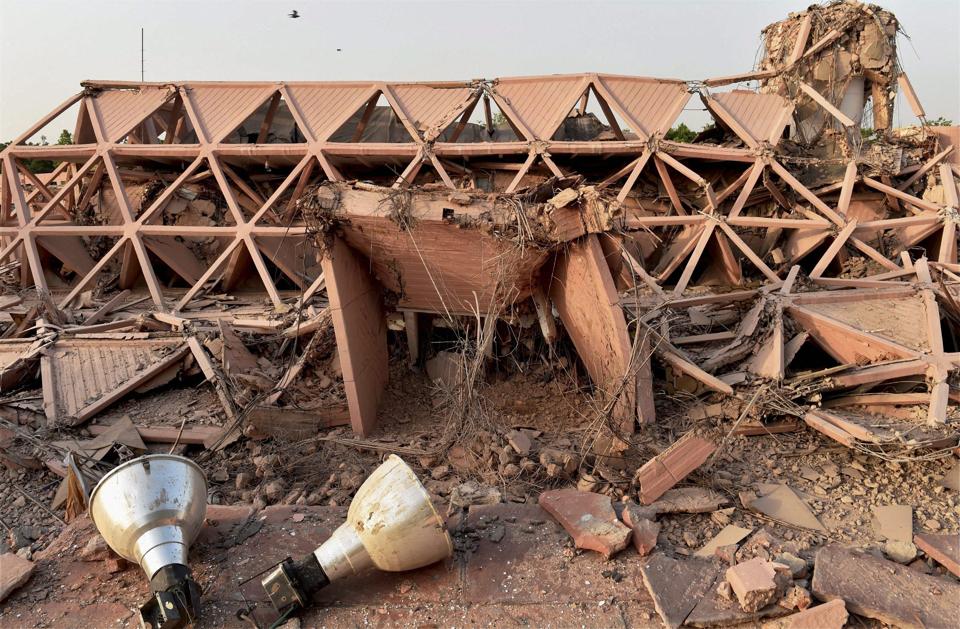
We included an article on these structures exactly one year ago today – and were still hopeful that the Indian Government would see sense and agree to retain these important pieces of architecture. Alas, they made a terrible decision and sent in the wrecking ball.

There was no real justification for this act of cultural vandalism. It is a disgraceful destruction of modern heritage, not to mention the environmental waste.

Next month the AHRC and Indian Council for Historical Research will be sponsoring a workshop on ‘Cultural Heritage and Rapid Urbanisation in India‘ in Delhi. Its too late for the Maidan but let’s hope the workshop can provoke some much needed change.

asia-72-exhibition_0f931730-290e-11e7-bd89-19cc2c5d765e

Read and see more at the Hindustan Times.

The 6th Conference on Infrastructure Development in Africa, has just concluded with a particular focus this year on ‘Building Resilience through African Urban Culture’. Held at KNUST in Kumasi, Ghana the conference welcomed speakers from Nigeria, South Africa and UK, as well as a host of research papers presented from scholars based in Ghana.

Key note speakers (including Prof. Chike Oduoza, Dr Obuks Ejohwomu and Prof. Mugendi M’Rithaa) lucidly presented the varied and many challenges facing African cities today – with particular focus on energy use, digital infrastructure and the internet of every/things.

Prof. M’Rithaa’s presentation included some very striking map visuals, including the image below that shows the true size of Africa relative to other countries – something that Mercator projection of the world fails to reveal. You can just make out on the poor quality photo below the outlines of USA and India. He also spoke very eloquently on how our solutions must be people centred, rather than imposed solutions. Dr Ejohwomu also challenged us with many provocative questions and themes – including a cartoon showing an emaciated cow and a worker abandoning it in pursuit of an obese cattle. His challenge was that we can’t simply walk away from the problem and that Africa needs us to focus on its problems rather than attempting to flee them in the ‘global north’. This message also reinforced by Prof. David Edwards and Dr. Erica Parn in their presentation.

IMG_1313

IMG_1322

I gave a presentation on the rich modern architectural history of Ghana, and the infrastructure of culture that exists here. I focused on a series of building types including education, community centres, and libraries, as well as the town planning and historical development of Kumasi.

IMG_1309

Nearly 50 papers followed on a vast array of topics as well as a striking art installation on the plight of the African Giant Snail’s ecosystem. A new journal was launched ‘Journal of Built Environment (ISSN: 2026-5409) and next year the conference will migrate to Lagos – we look forward to hearing more from this important gathering.

img_2077

Simulizi Mijini/Urban Narratives is an interdisciplinary inquiry into urban heritage in Dar es Salaam, Tanzania, and Berlin, Germany. Through artist residencies, student exchanges and discursive events, the project seeks to develop a more inclusive approach to urban heritage that embraces multiple voices and supports diverse readings of urban environments from a ‘bottom-up’ perspective. For more information about the project and the programme of events, which have already included two summer schools, 10 artist residencies and a one-day symposium in Dar es Salaam, please visit our website: www.urbannarratives.org

We now announce a call for abstracts for a two-day international conference at the Technical University Berlin from 16-17 March 2017, which, together with a coinciding exhibition at ZK/U, will culminate the project.

For the Berlin conference we invite contributions that focus on heritage activism in diverse geographical and cultural contexts. Abstracts that address the political ramifications of urban heritage, particularly in postcolonial environments, are particularly welcome. We wish to engage the grassroots movements around the world that are demanding a more inclusive approach to heritage, redefining how places in the built environment are valued and preserved. In addition we will question the role of research and scholarship as well as other forms of political, cultural and arts practice in supporting heritage movements. Rather than convening an academic event, we will create a multidisciplinary platform for activists, scholars, artists, cultural producers, students and local residents to debate urban heritage, present innovative approaches and put forward inclusive solutions.

Abstracts are invited that address case studies in urban heritage activism in relation to the following topics:

(curating urban heritage)

How can information about urban heritage be gathered in diverse urban contexts at a community level? What are appropriate methods and tools for data collection? What role does oral history play? How can the data be archived in an open, accessible and transformable way? What strategies for curating urban heritage ‘from below’ have been successfully tried and tested?

(media and protest)

What can new technologies, such as augmented reality or virtual reality, offer to urban heritage research, curation and communication? What effects have social media had on documenting and archiving urban heritage? How have they affected protest movements? How can technologies be employed to hack or amend existing official heritage narratives?

(activating urban heritage)

Building on the Faro Convention, how can awareness be raised about urban heritage as a common cultural good and human right? What tactics can be used to increase public consciousness and foster local participation in the heritage discourse? How do we begin to (re)determine what is preserved and what is recognised as ‘historically relevant’ at a community level, thereby including diverse, minority and forgotten, ignored, or silenced voices?

(performing and preserving)

How can urban heritage be communicated to a wider audience effectively? How can its significance be understood and supported beyond the community level? What artistic, performative and curatorial strategies have been developed to convey the significance of certain places and practices within communities and neighbourhoods? How can these be used to protect and support their continued presence?  

Submissions and Deadline
Please submit a 300 word abstract including contact details and a brief CV to rachel.lee@tu-berlin.de by 15 December 2016.

Travel Bursaries
A limited number of travel bursaries will be available towards covering the costs of traveling to Berlin.

Book Publication
A selection of contributions will be included in a book publication, forthcoming in 2017. Authors interested in contributing to the book will be expected to submit a 1500 word synopsis of their conference presentation by 15 February 2017.

Dar es Salaam Symposium
The Berlin conference picks up on issues raised at the Reconfiguring Heritage from Below symposium held in Dar es Salaam in April 2016. There speakers from Tanzania, Zanzibar, Kenya, South Africa, Turkey, Belgium and the UK presented heritage case studies and projects from postcolonial contexts.

http://urbannarratives.org/en/events/

Notes
As an interdisciplinary, transnational programme, we encourage contributions from all horizons to apply. We seek to increase the number of women, people with disabilities and non-Western contributors in those areas where they are underrepresented and therefore explicitly encourage them to apply.

This project is funded by the TURN Fund of the German Federal Cultural Foundation.

ksb_sw-kopie


INVITATION – International Symposium on Urban Heritage: Simulizi Mijini/Urban Narratives

The Dar Centre for Architectural Heritage (DARCH) in collaboration with the Technical University Berlin and the Architects Association of Tanzania have the pleasure of inviting you to participate in the:

International Symposium “Simulizi Mijini/Urban Narratives“

1 April 2016, 9:00 – 17:00 hrs
@ The British Council, Samora Avenue
urban narratives
Urban Heritage: What is it? Whose is it? Who defines it?
How can it build inclusive cities?
We will look at international examples of inclusive heritage practices and discuss their relevance for the context of Dar es Salaam.
The detailed programme will follow soon, kindly share with your network and RSVP to darch.tz@gmail.com
We will be delighted to welcome you to the event!
Sincere regards,
Aida Mulokozi
CEO DARCH