In the UAC archive amongst the Public Relations files is ‘Nigeria Magazine‘. From within the mat brown cardboard of the archive box springs a collection of beautifully designed and printed set of publications. The magazine was a Government sponsored venture, published by the Cultural Division of the Ministry of Information in Lagos. It was issued quarterly from around 1937 until the mid-1980s “for everyone interested in the country and its peoples”. The focus of the editorial was varied and wide ranging, covering topics across the arts, history, architecture, literature, and culture in Nigeria. There was a strong commitment and celebration of ‘local’ art, as well as extensive articles on planning, housing, and architecture from across the ages. The contributing authors were often experts and highly regarded scholars. Ulli Beier was a frequent writer, and the quality and tone of the editorial was consciously accomplished, supplemented by some striking images and high quality graphics.

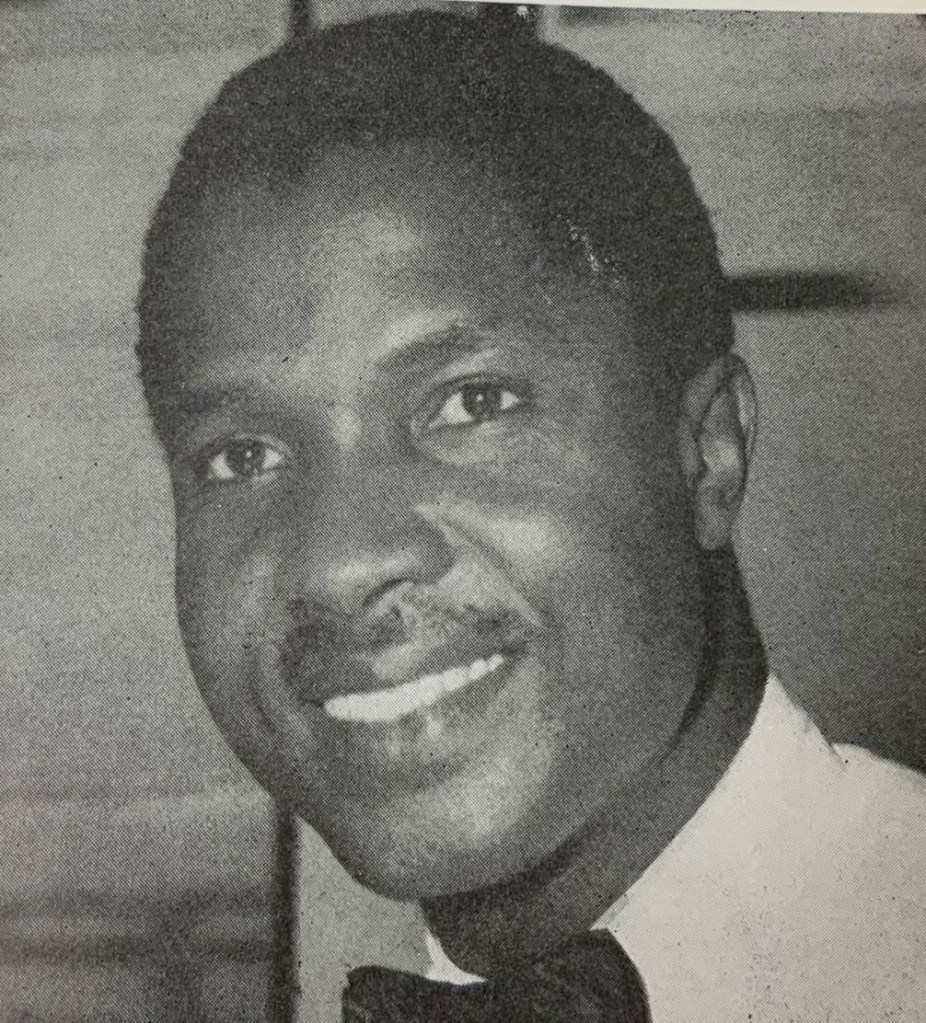
Articles were published on the history of cities, including “Ibadan, Black Metropolis” in 1961, relishing in the city’s longevity and traditions, as well as welcoming its position as a new centre for finance and media (see Design Group’s Finance building below). Other sections included biographies on key personalities, such as June 1966 with its feature on architect Alex Ifeanyichikwu Ekwueme (1932-2017).
Ekwueme studied at Washington University on a Fullbright Scholarship in 1952, and went onto to work at Nickson and Partners in London (is this Nickson and Boris?) before setting up a firm in Nigeria that grew to 16 offices. He designed the United Christian College at Apapa, Universal Insurance Building Enugu, and the Administration Building for the Nigerian Petroleum Refinery Company, amongst others. Ekwueme’s architectural career ended when he was elected Vice-President of Nigeria in 1979.
Whilst there was a lofty desire to promote local art, culture, and history, other articles appear to focus on trade and industry, presenting what are effectively op-eds or public relations pieces as historical accounts. In 1960 there was a special report on The Niger River Transport Company and Burutu, “Nigeria’s Timber Industry” featured in December 1962, focusing on the work and settlements of the African Timber and Plywood company – both subsidiary companies of of United Africa Company (UAC). Again, the Company features in various other articles, such as “The UAC in Nigeria’s economic growth” in December 1965. It’s a thorough and detailed account, going to some length to stress how the company is ‘inseparable’ from Nigeria’s economic growth. The article was also eager to stress the restructuring of the company and how it now operated as a series of smaller locally managed entities ‘to encourage the growth of industry and trade in local Nigerian hands’.
It seems that the magazine had a mandate beyond art and culture, and sought to shape opinion (particularly in the emerging and educated middle classes) on business and trade matters. The seductive and authoritative format of the journal gave these opinions validity, and allowed a particular and curated message to be carefully presented. The advertisements within the journal also reinforced these messages and narratives of progress through industry.

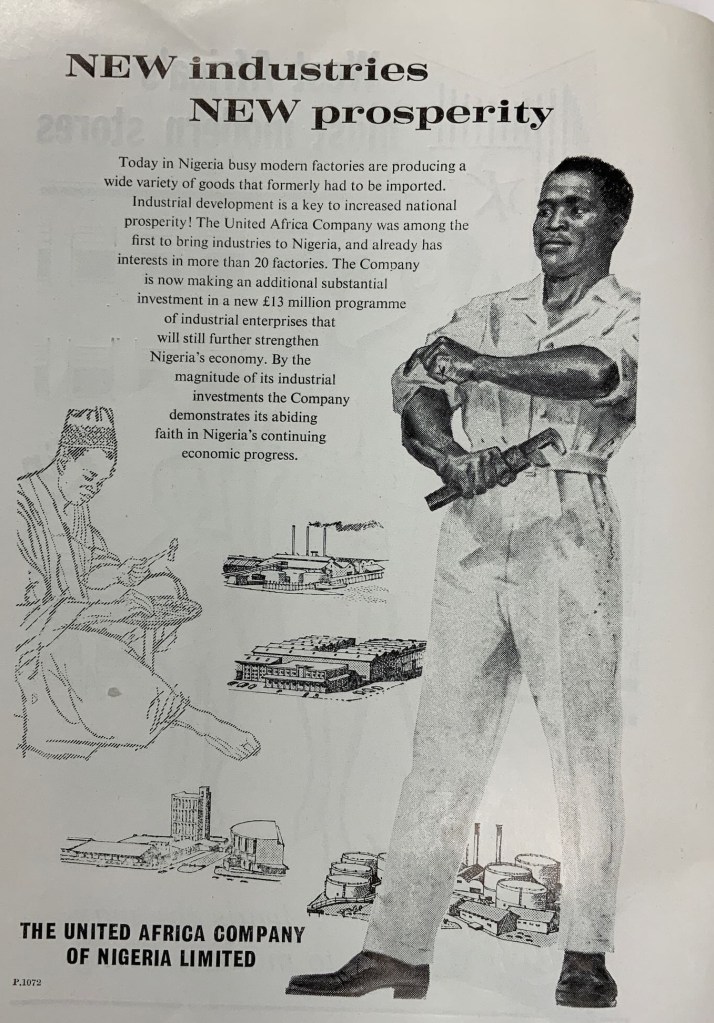
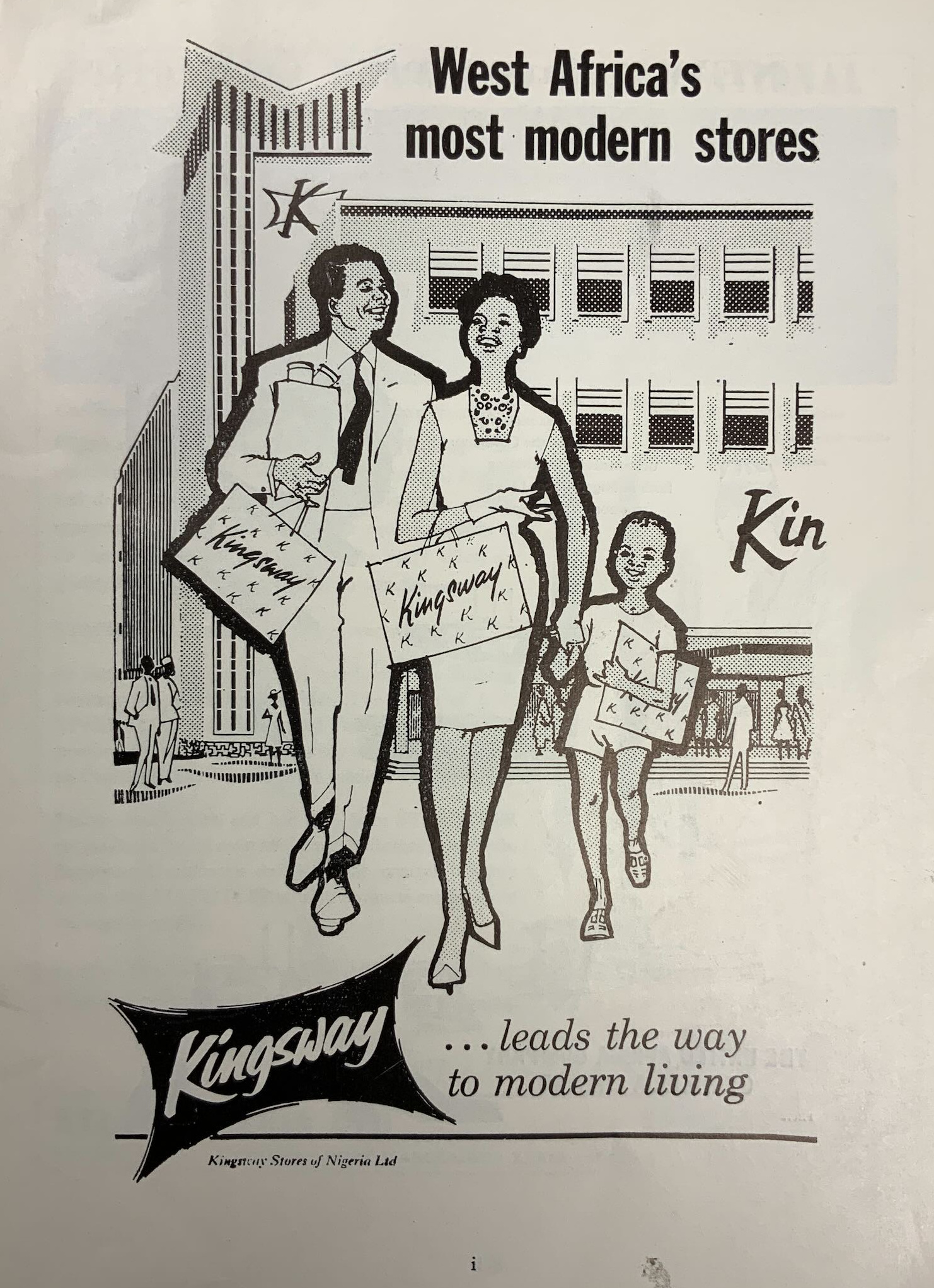
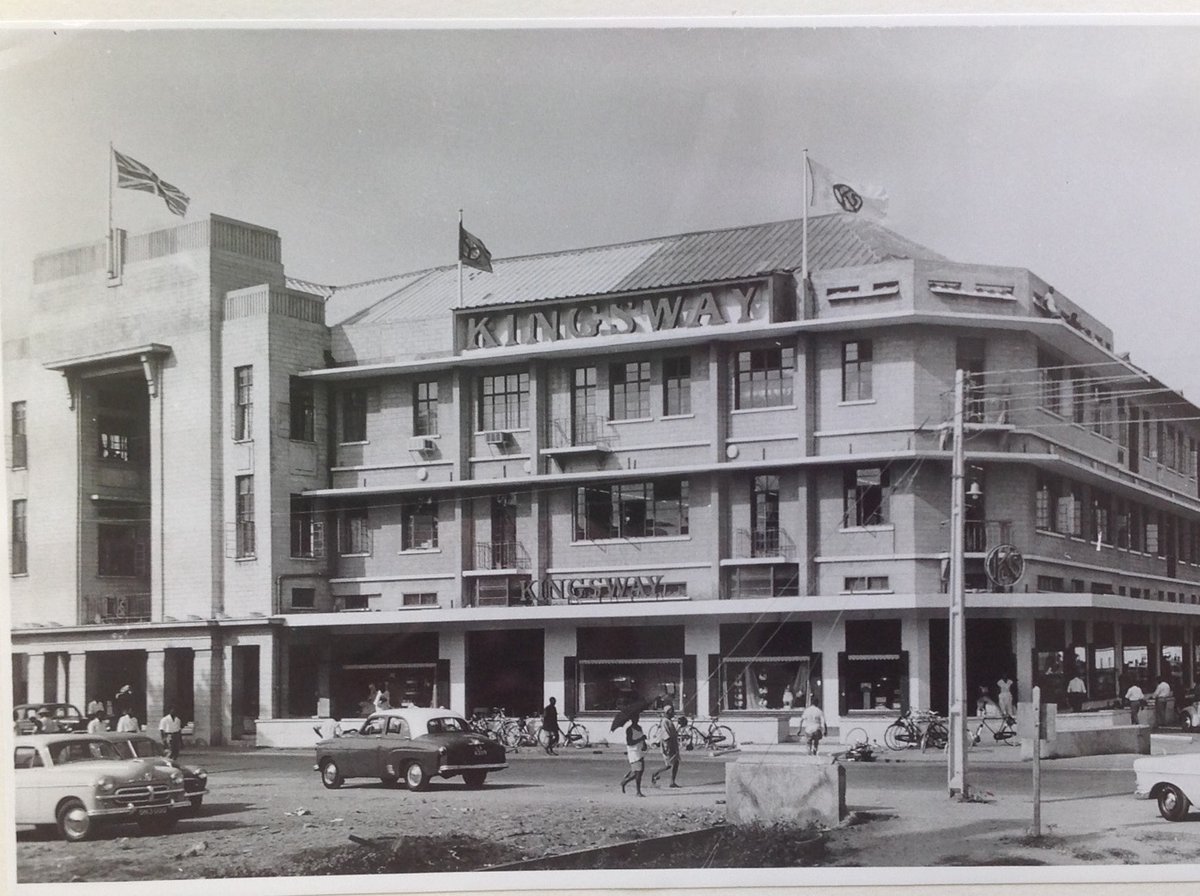
At the same time, ‘traditional’ and ‘local’ practices were celebrated and discussed. There is something disarming in this technique. An ahistorical image was usually shown on the front cover, often a decontextualised figure in traditional dress sometimes playing an instrument – followed on the inner leaf by an advertisement for the latest fashions from Kingsway department store. The advertisers tended to belong to, or were in partnership with, the UAC group (e.g. Taylor Woodrow, Guinness, Kingsway Stores), and it seems likely their extensive patronage held some sway over the editorial content. The adverts were not geared towards selling specific products, but were there simply to bolster public opinion and shift attitudes towards modernity, progress, and societal advancement alongside a romanticised nationalist sense of history and culture.
The articles on architecture were also propagandist and concerned with presenting Nigeria as a place of rapid progress and impatient ambition. Again, the UAC story is followed with interest, and their newly proposed offices in Lagos (by Watkins and Gray) demonstrates the Company’s commitment to ongoing business in the newly independent country, and also the shift in its focus from import/export to real estate and property development.

John Godwin, wrote an article entitled, “Architecture in Nigeria” in December 1966. It’s a potted history that starts with the regional building types, local materials, and climatic responses before moving onto the impact of corrugated iron sheeting (pan) and its limitations. Godwin sets out this story to demonstrate the sudden change in scale, building types, and growth of the construction industry in West Africa post-1945,
“Tower cranes were on the scene in 1955 and by 1961 two twenty-five-storey buildings had been completed in Ibadan and Lagos built by Italian firms who thirty years earlier were struggling with their labour force to build small houses”
Whilst acknowledging this rapid growth and exciting possibilities, he also goes on to caution that more ‘research’ is required, greater collaboration should exist between architects, and that building components and materials were still being imported at prohibitive costs. Overly extravagant “prestige building” was also targeted whilst low-cost housing problems remained unresolved. Whilst the claims and hopes for air-conditioning now seem somewhat out-dated, his desire for a civic pride and community spirit, tree planting, and care of the environment is pertinent and all the more urgent. Godwin’s approach was to propose an “architecture of ventilators and sun breakers”, a lexicon that he viewed as, “increasingly identifiable as West African.”

Contributing to this West African style was the Design Group’s “Nigerian Institute of International Affairs” (located on Lagos’s Kofo Abayomi Street). It was discussed at length by Alan Vaughan-Richards in the March/May 1968 edition of the magazine, where he particularly admired the sculptural mural, ‘The Art of Understanding” by Erhabor Emokpae in tooled concrete that revealed the granite aggregate. Inside the Institute are further sculptural elements, including a bronze figure representing Knowledge by Ben Enwonwu and positioned hovering above an evaporation pool. The interior includes some grand double-height spaces, dramatic cantilevered spiral staircases and travertine marble cladding (donated by the Italian contractor). At the rear of the plot there is an octagonal conference room with a dramatic star-shaped roof (still visible on Google maps).
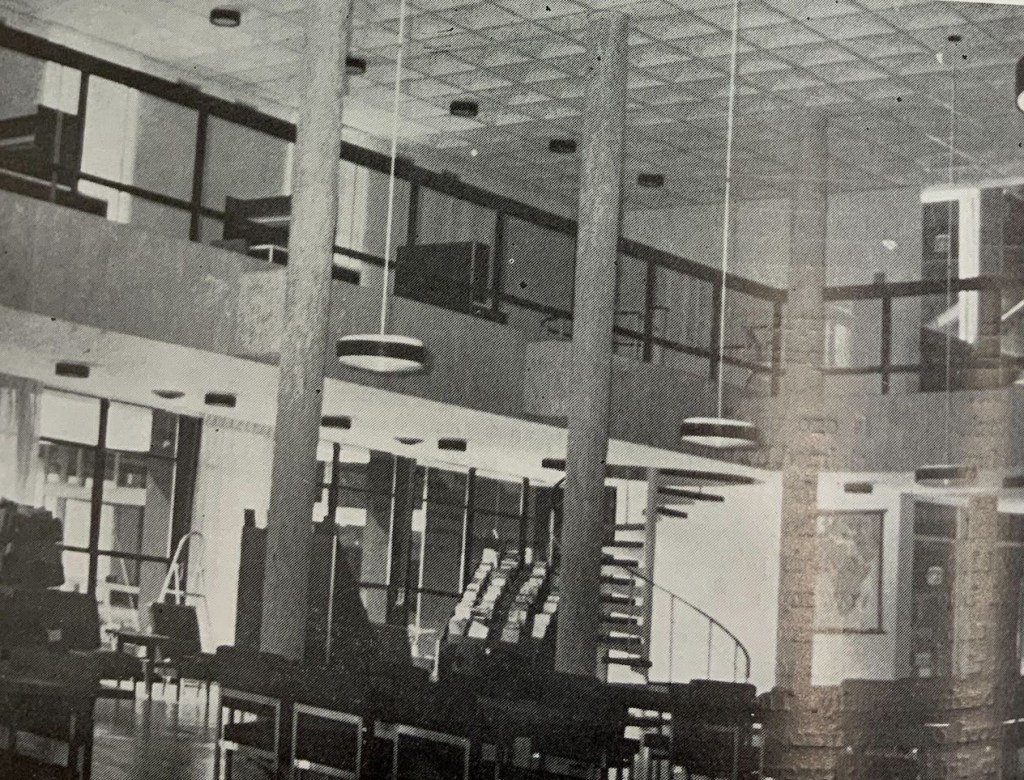
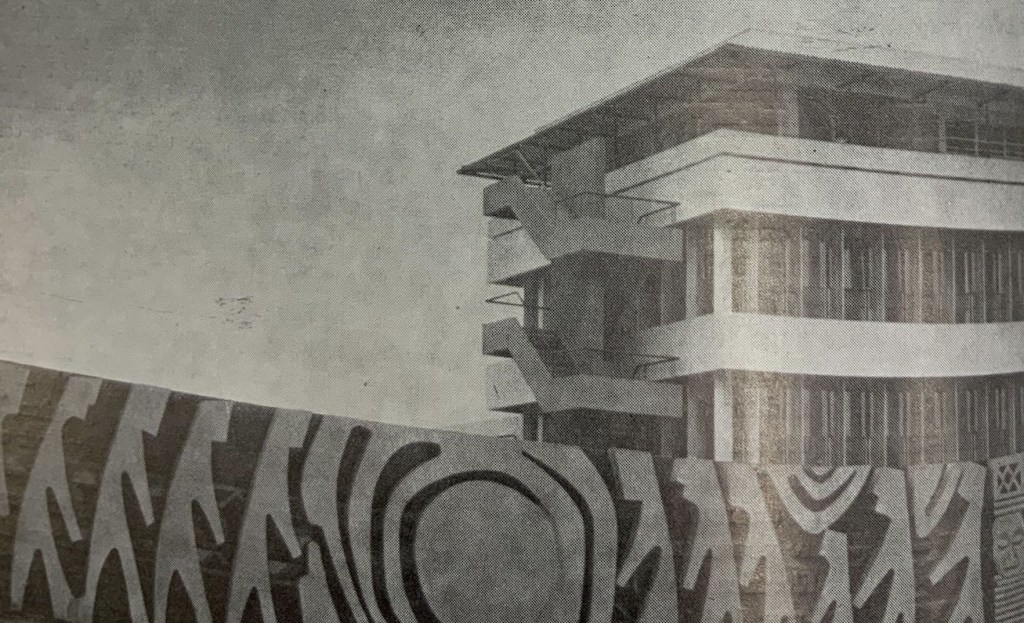
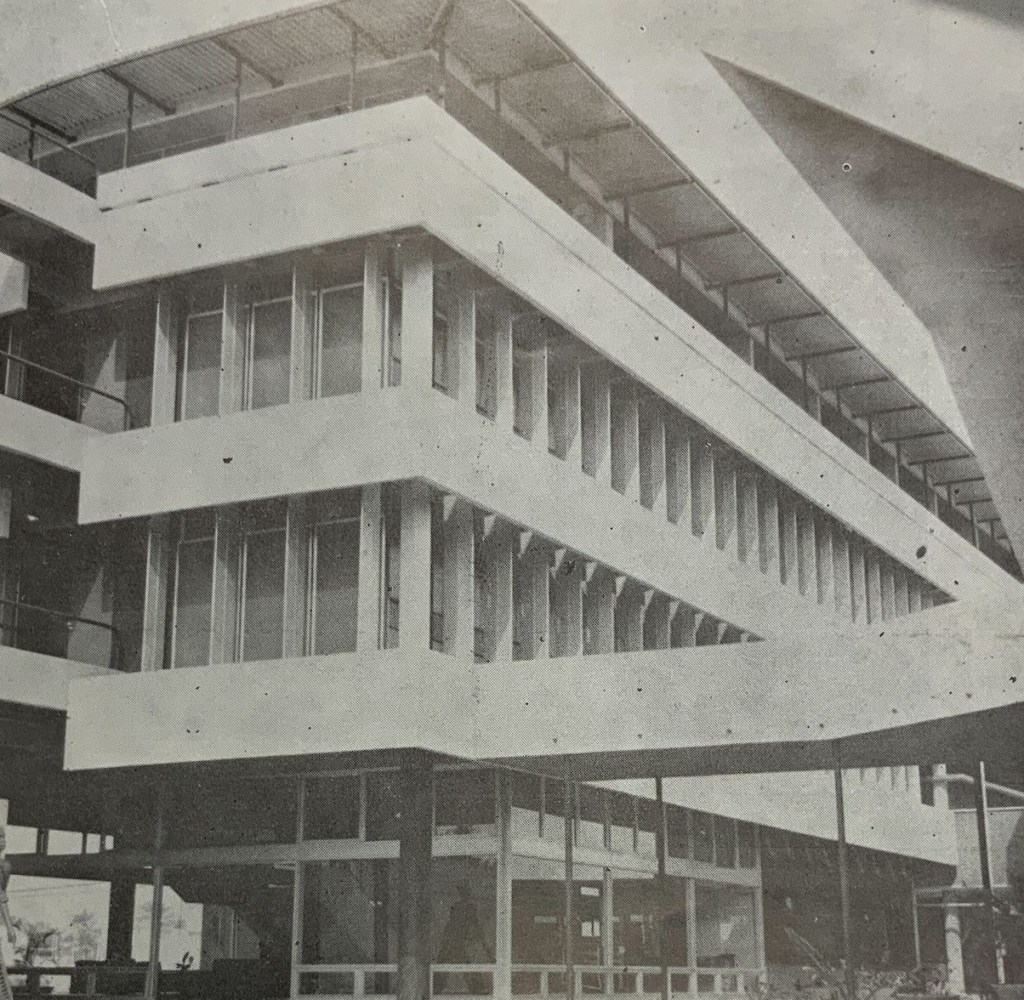

The Institute was to promote peace and progress (the internal conflict taking place in Nigeria at that time was not mentioned), and was to operate as a centre for learning, research, and debate on global affairs.
June 1962 edition included an article on “Contemporary Nigerian Architecture” by D. J. Vickery, the former Head of Department at Singapore Polytechnic (did he then go on to work in Nigeria?). This is an exceptional article covering some of the latest construction in Nigeria, and Lagos in particular. As a gazetteer of the latest building work – including the work from recently qualified Nigerian architects – it formed one of the most detailed architectural surveys of the country. Although the crude categorisation of the works under three types; ‘Climate’, ‘Traditional Spirit’, and ‘Skyline’ is somewhat limited, it gets the message across, and more importantly illustrates what the Independence Boom meant to the towns and cities across Nigeria.


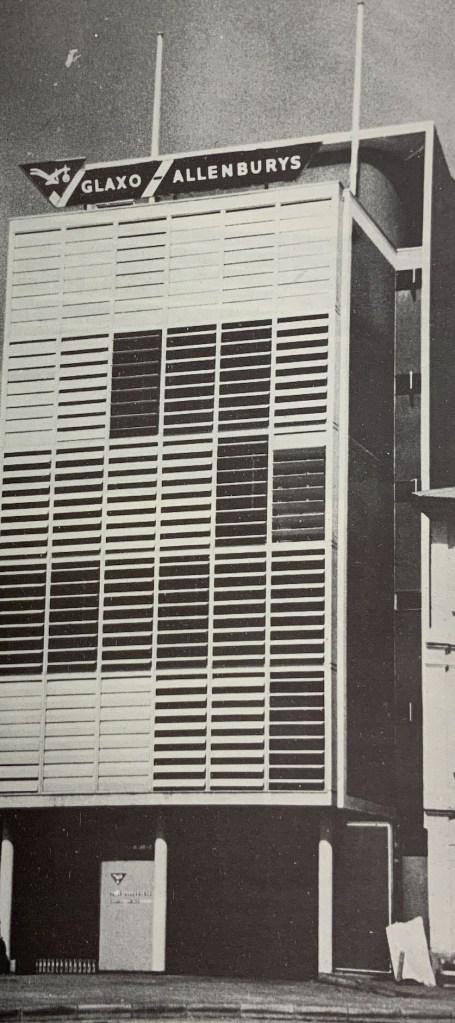
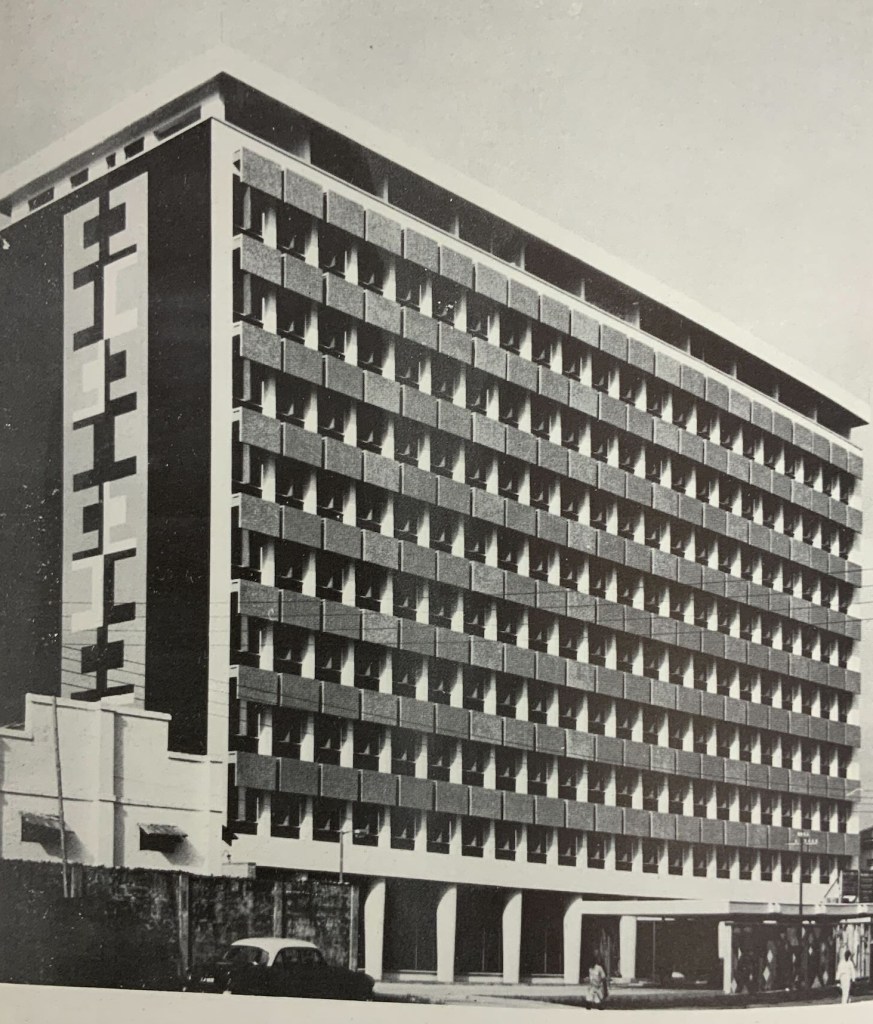
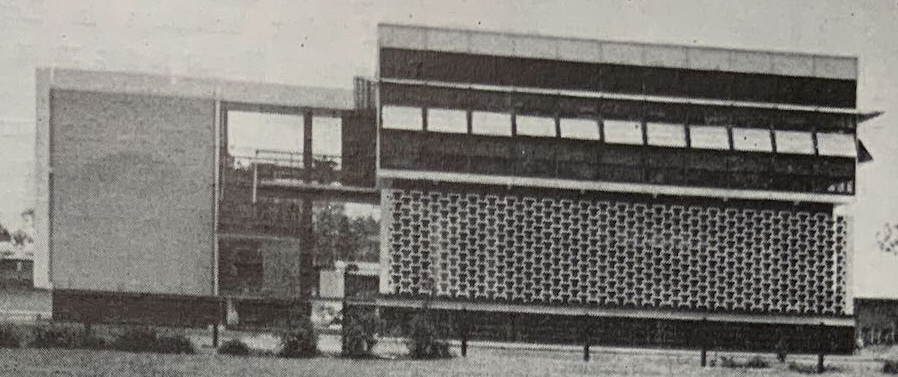


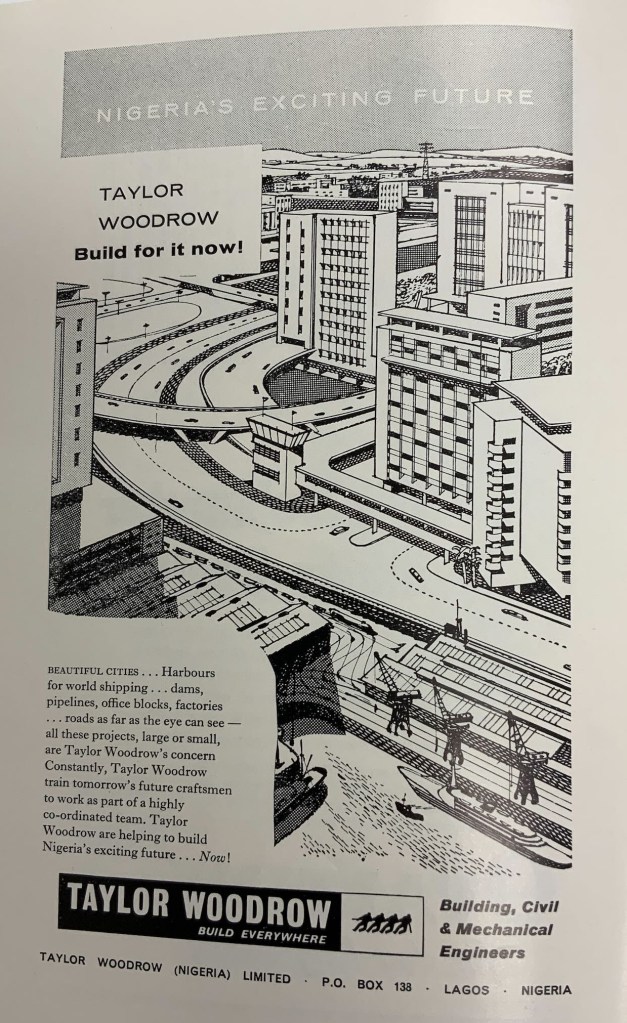
In addition to the speculative offices, headquarters and banking halls there was an impressive array of schools and libraries (many designed by James Cubitt who had also designed similar works in Sekondi and Koforidua, Ghana), but the focus here was undoubtedly on real estate and speculative construction.


Nigeria magazine illustrates how UAC and other global companies shifted their approach and emphasis during the early Independence period. UAC was presenting its suite of businesses as nationalist, pro-development, and key partners in the country’s future. They rapidly placed an emphasis on real estate, finance, and industrial development, whilst curating a sophisticated advertisement and public relations campaign, through an arts and culture journal, to bolster their local credentials and legitimacy in the history of Nigeria.

 Transnational Architecture Group